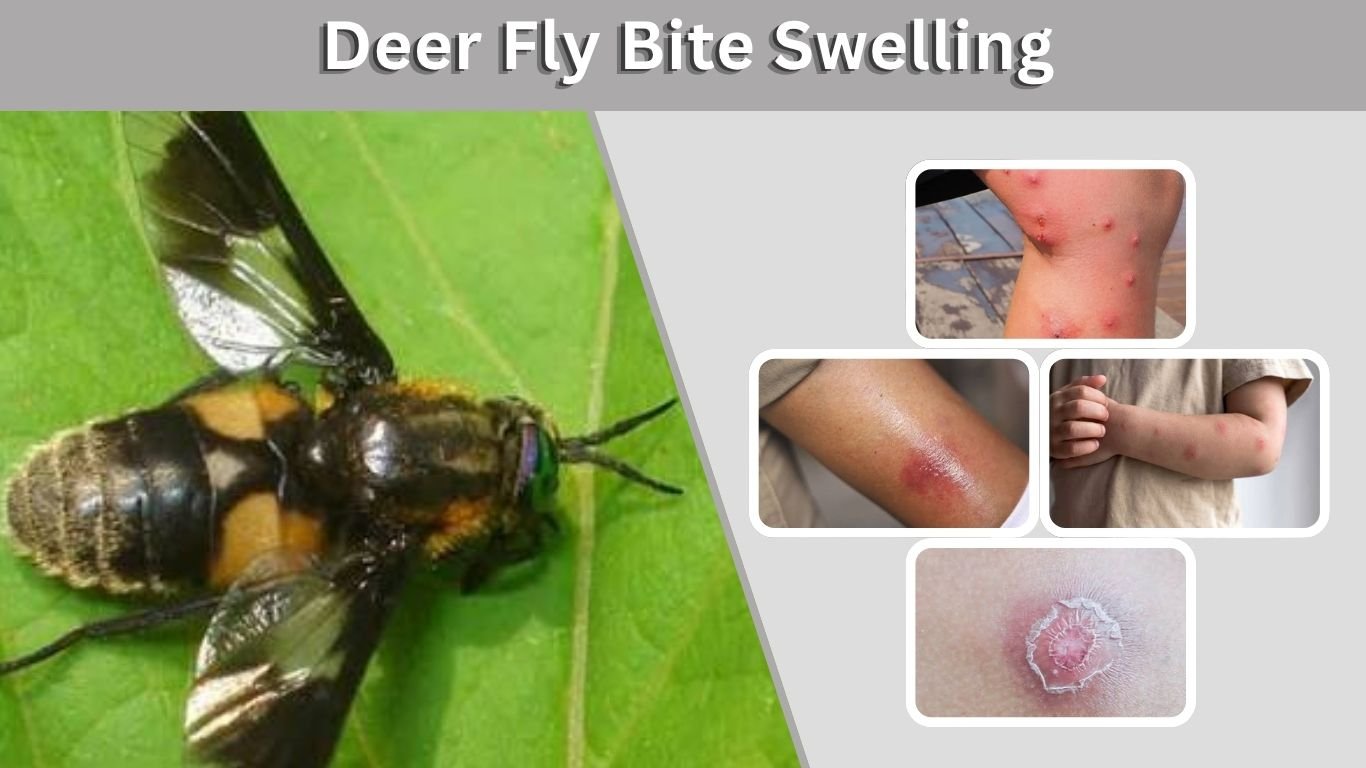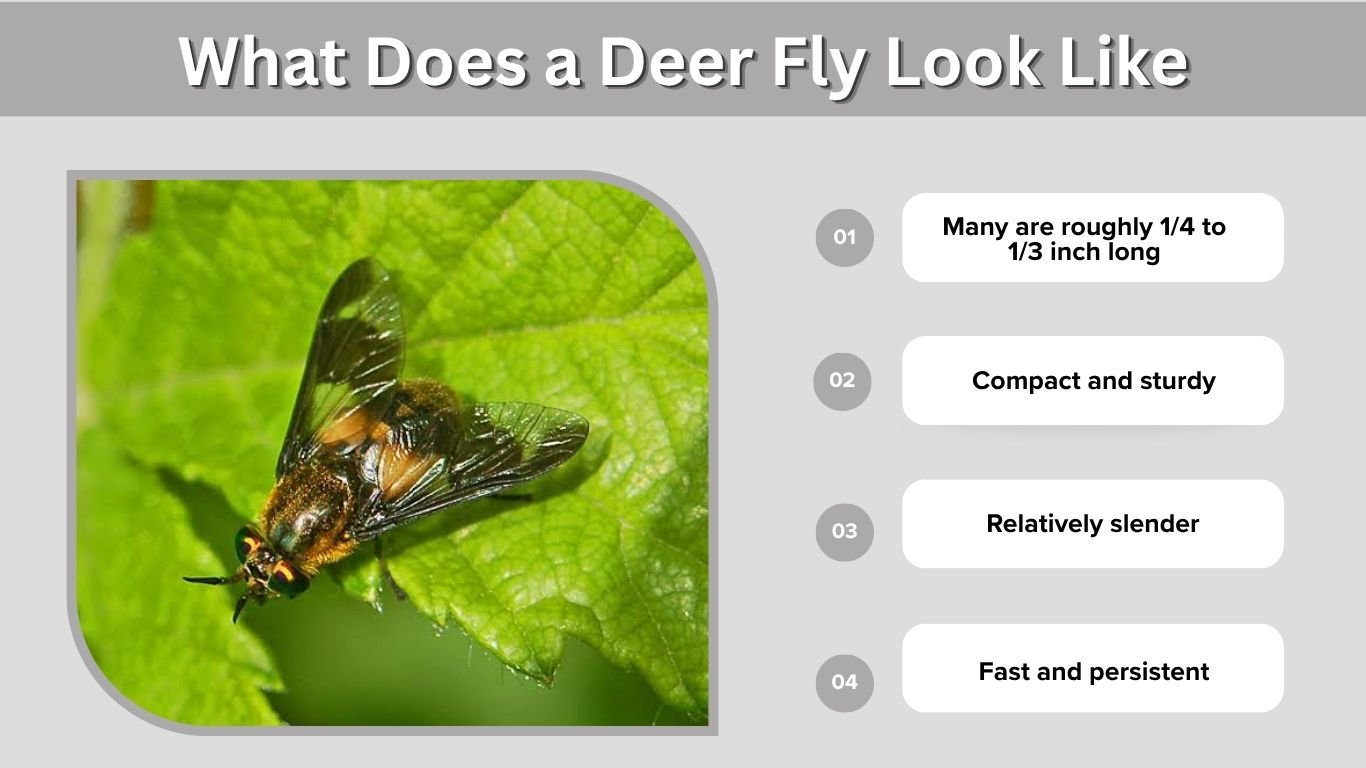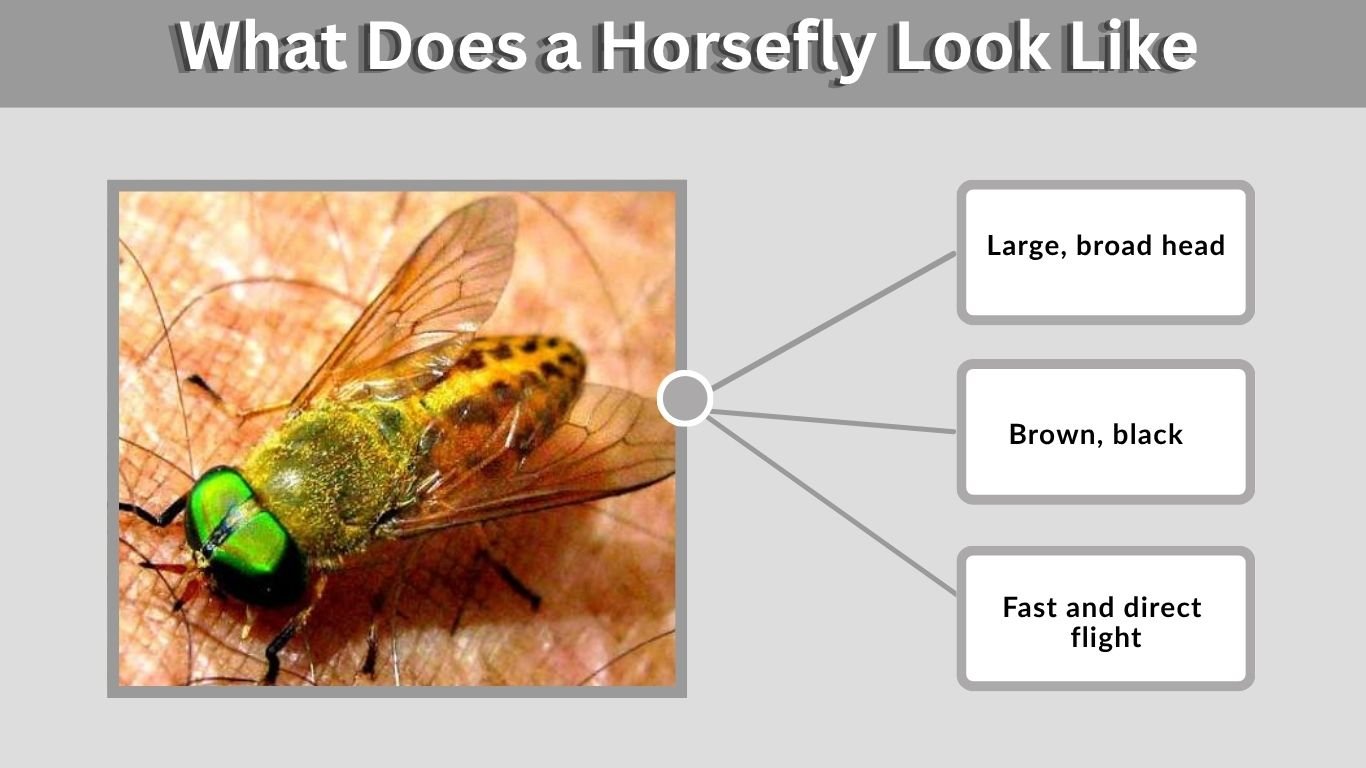
A horsefly is a large, heavy-bodied fly with enormous colorful eyes, short antennae, six strong legs, and one pair of clear or dark-patterned wings. Most species are brown, black, gray, or yellowish and measure noticeably larger than common houseflies. Female horseflies have sharp, cutting mouthparts used to obtain blood, while males primarily feed on nectar. Their bites are painful, but horseflies do not sting or build nests.
Horsefly Identification at a Glance
Horseflies belong to the family Tabanidae, which also includes deer flies and yellow flies. Species vary in appearance, but most share a robust body and unusually large compound eyes.
| Feature | What It Looks Like |
| Size | Commonly 10–25 mm long, depending on species |
| Body | Broad, muscular, and heavy-looking |
| Color | Black, brown, gray, yellow, or patterned |
| Eyes | Very large and sometimes green, purple, copper, or striped |
| Wings | One pair; clear, smoky, or dark-patterned |
| Antennae | Short and thick |
| Legs | Six sturdy legs with gripping claws |
| Mouthparts | Cutting and sponging structures in females |
| Flight | Fast, strong, and persistent |
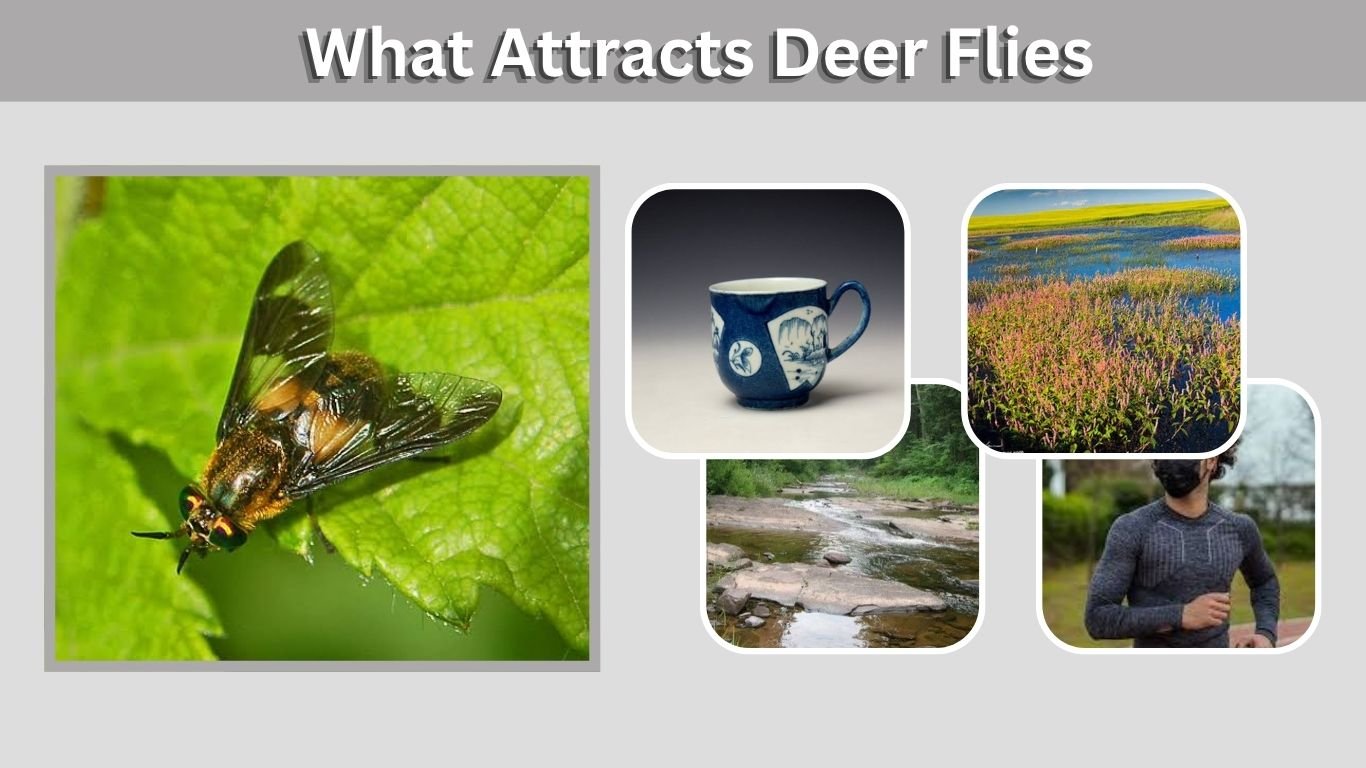
Horseflies are strong fliers and are commonly found around livestock, wetlands, ponds, streams, marshes, and other moist environments where their immature stages develop.
What Does a Horsefly Look Like?
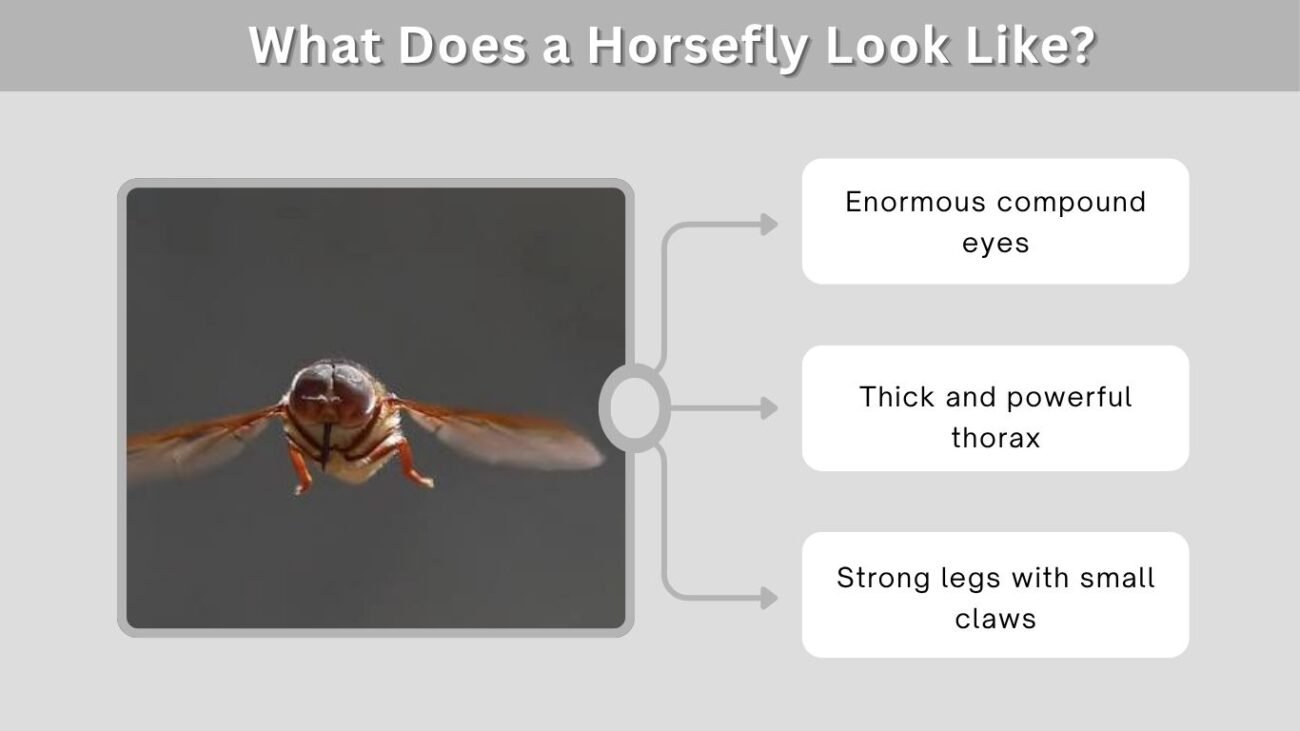
A typical horsefly resembles an oversized housefly but has a broader head, thicker body, and much larger eyes. Its body is usually divided into a prominent head, muscular thorax, and rounded or slightly tapered abdomen.
Key Identification Features
- Large, broad head
- Enormous compound eyes
- Short, forward-pointing antennae
- Thick and powerful thorax
- Broad, segmented abdomen
- One functional pair of wings
- Strong legs with small claws
- Brown, black, gray, or yellow body markings
- Fast and direct flight
- Size noticeably larger than most common flies
The largest species may approach 25 mm in length, although many are smaller. Their bodies can appear smooth or covered with fine hairs. Some have striped or spotted abdomens, while others are almost entirely black.
What Does a Horsefly Look Like Up Close?
The eyes are the most striking feature when a horsefly is viewed closely. They may appear metallic green, blue, purple, bronze, or reddish and can contain horizontal bands or colorful patterns.
Male and female eyes are sometimes arranged differently. In many species, a male’s eyes meet or nearly meet at the top of the head. A female’s eyes are more widely separated, leaving a visible space between them.
The fly also has short antennae and prominent mouthparts below the head. Its legs end in claws that help it remain attached to skin or fur while feeding.
What Does a Horsefly Mouth Look Like?
A female horsefly does not have a needle-like feeding tube like a mosquito. Instead, she has blade-like mouthparts that slice the surface of the skin. Blood pools in the shallow wound and is absorbed through a sponge-like structure.
This cutting action explains why a horsefly bite is usually noticed immediately. The female releases saliva containing substances that slow clotting while she feeds. Male horseflies lack the same effective blood-feeding equipment and mainly consume nectar and other plant sugars.
From the side, the mouthparts may resemble a short, thick projection beneath the head rather than a long needle. They are much easier to see in a magnified photograph than with the unaided eye.
Male vs Female Horsefly Appearance
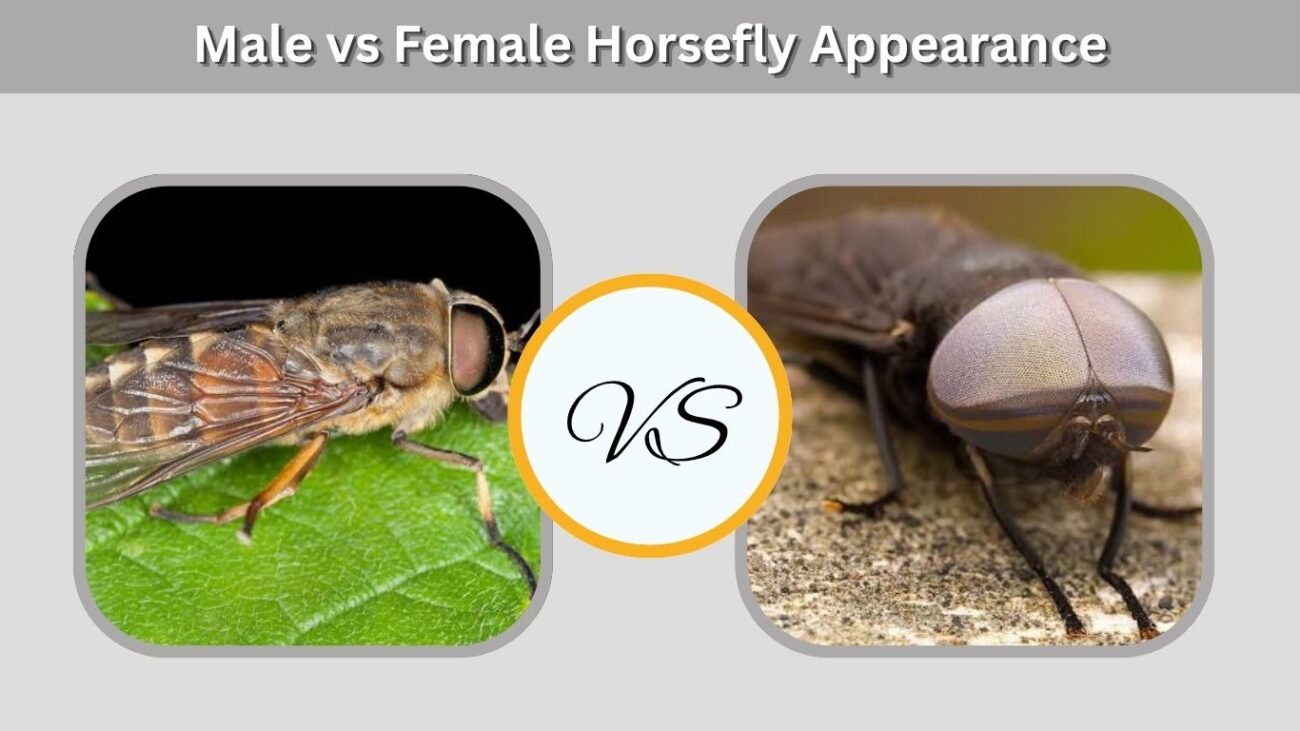
Male and female horseflies have similar bodies, but only females normally bite animals and people.
Female Horsefly
A female generally has separated compound eyes with a visible strip between them. Her mouthparts are adapted to cut skin, and her abdomen may expand after she consumes blood.
Females seek blood because it provides nutrients needed for egg development. They commonly target horses, cattle, deer, dogs, and people.
Male Horsefly
A male often has eyes that touch or nearly touch at the top of the head. He does not normally bite because his mouthparts are not adapted for cutting the skin.
Males feed primarily on nectar, pollen-associated fluids, and other plant sugars. Seeing a horsefly does not therefore guarantee that it is capable of biting.
What Does a Horsefly Bite Look Like?
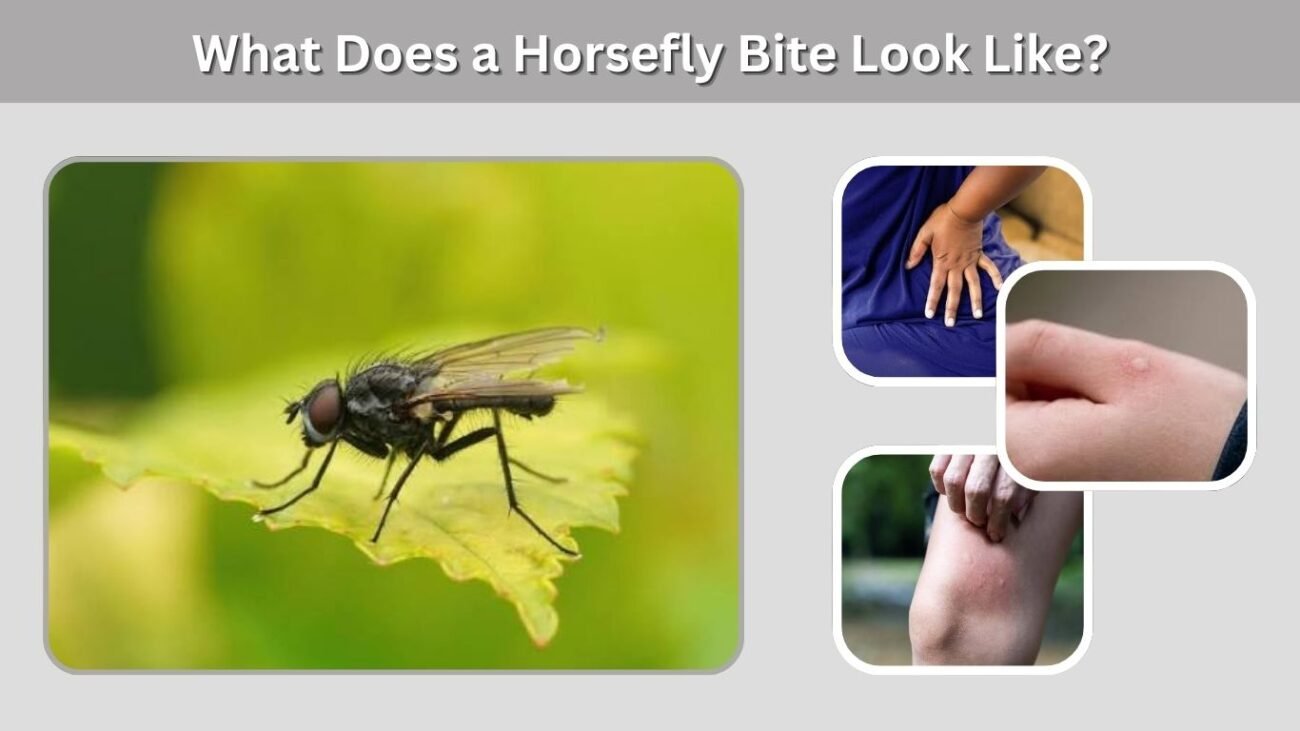
A horsefly bite usually appears as a painful, red, raised area. Because the skin is physically cut rather than pierced cleanly, the center may look scraped, torn, or slightly bloody.
Common signs include:
- Immediate sharp or burning pain
- A red, raised bump or welt
- Swelling around the bite
- Itching or tenderness
- A small cut or bleeding point in the center
- Warmth around the affected skin
- A larger swollen patch in sensitive individuals
The appearance varies considerably. Insect bites cannot always be identified accurately from the skin mark alone, especially after swelling or scratching develops. Most uncomplicated bites cause a localized reaction, but insect saliva can occasionally trigger a larger allergic response.
What Does a Horsefly Bite Look Like on a Human?
On human skin, the bite commonly develops into a round or irregular red welt. The area may be larger and more painful than an ordinary mosquito bite. A tiny open wound, crust, or spot of dried blood may remain in the center.
Wash the area with soap and water, apply a wrapped cold pack, and avoid scratching. Seek urgent medical assistance for breathing difficulty, faintness, widespread hives, or swelling of the face, lips, tongue, or throat. Medical advice is also appropriate if redness continues spreading, pain becomes worse, pus develops, or fever occurs.
What Does a Horsefly Bite Look Like on a Dog?
On a dog, the bite may appear as a small red bump, swollen patch, scab, or bleeding spot beneath the fur. Bites frequently affect exposed or thinly haired areas such as the ears, belly, inner legs, nose, and area around the eyes.
A dog may lick, scratch, shake its head, or become restless after being bitten. Contact a veterinarian when there is substantial swelling, breathing difficulty, weakness, repeated vomiting, facial swelling, persistent bleeding, or signs of infection. A skin mark on a dog should not be assumed to be a horsefly bite without considering ticks, fleas, wounds, and other possible causes.
What Does a Horsefly Sting Look Like?
Horseflies cannot sting. They do not possess stingers or inject venom through the abdomen. A so-called horsefly sting is actually a bite produced by the female’s cutting mouthparts.
The pointed end of the abdomen is sometimes mistaken for a stinger, but it is associated with reproduction and egg-laying rather than attacking people.
What Does a Horsefly Nest Look Like?
Horseflies do not make nests like wasps, hornets, or bees. Female horseflies usually place clusters of eggs on vegetation, leaves, rocks, or other surfaces positioned above water or wet ground.
After hatching, the larvae drop into mud, saturated soil, ponds, marshes, or streams. Because the larvae are distributed through these damp habitats, there is normally no single horsefly nest that can be located and removed. Most horsefly and deer fly species have aquatic or semi-aquatic immature stages.
Horsefly vs Similar Insects
Horsefly vs Housefly
A horsefly is usually larger, broader, and more powerfully built than a housefly. It also has much larger, often colorful eyes. Houseflies do not cut the skin or take blood meals.
Horsefly vs Deer Fly
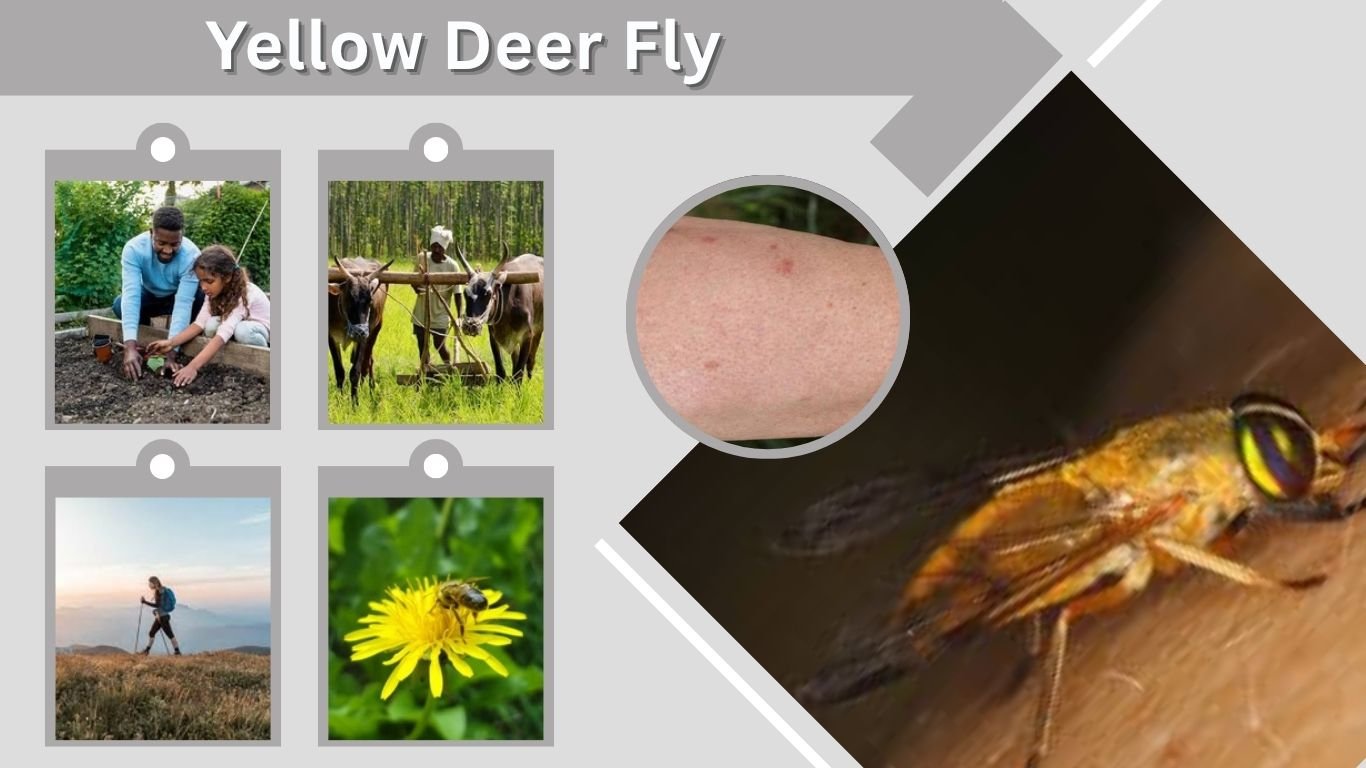
Deer flies belong to the same family but are generally smaller and frequently have dark bands or patches across their wings. Many also have yellow or black body patterns. Horseflies tend to be larger and may have clearer wings, although appearance varies among species.
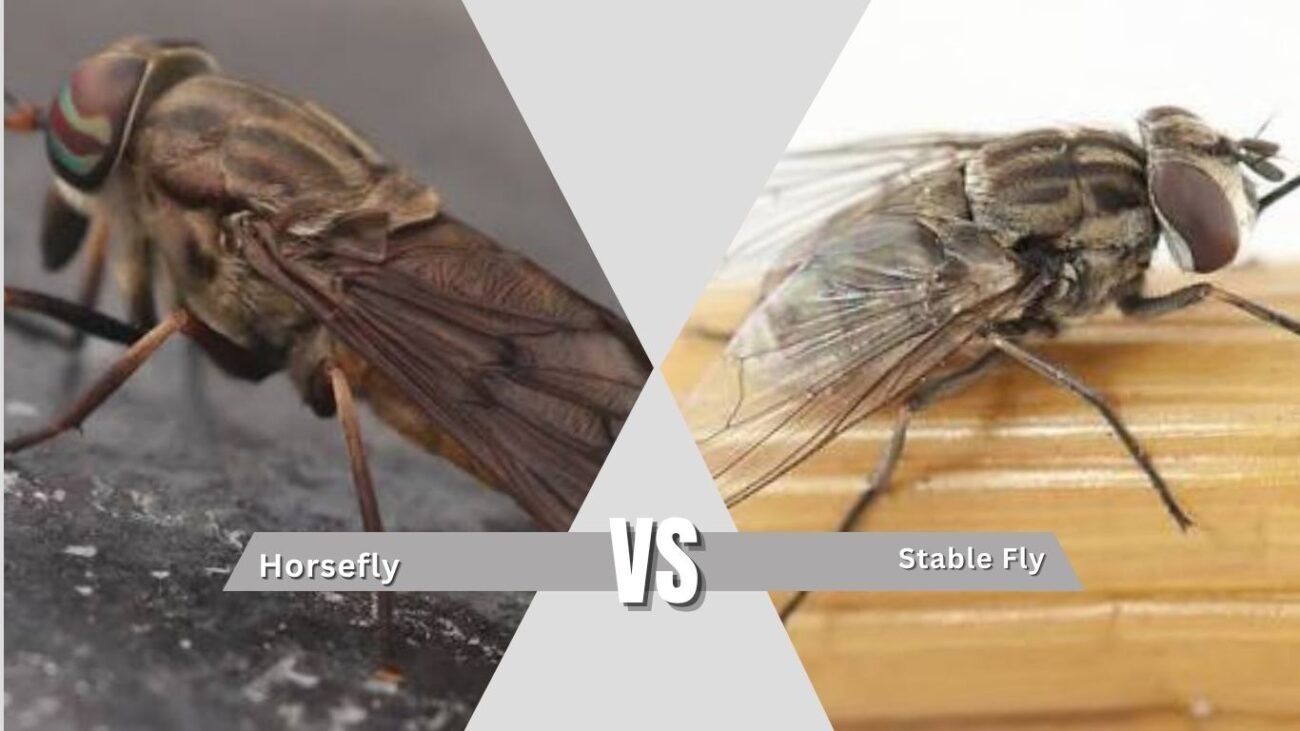
Horsefly vs Stable Fly
A stable fly looks similar to a housefly and has a long, rigid, forward-pointing mouthpart. Both male and female stable flies bite. Horseflies are normally larger and broader, and only females take blood meals.
Horsefly vs Bee
Some horseflies have yellow-brown bodies and may resemble bees. However, a horsefly has only one functional pair of wings, very large fly-like eyes, short antennae, and no narrow waist. Bees have two pairs of wings, longer antennae, and generally hairier bodies.
FAQs
Are horseflies black?
Some species, including the black horsefly, are almost completely black. Others are brown, gray, yellowish, striped, or spotted. Their appearance varies significantly between species.
How large is a horsefly?
Many horseflies measure approximately 10–25 mm long. The largest species can be around an inch long, making them substantially larger than ordinary houseflies.
Do all horseflies bite?
No. Only adult females normally bite and consume blood. Males feed mainly on nectar and other plant-based liquids.
Can a horsefly bite through clothing?
A horsefly may bite through very thin or tightly stretched fabric, but covering the skin with loose, thick clothing provides better protection.
Are horseflies dangerous?
Most bites cause temporary pain, redness, itching, and swelling. Serious allergic reactions or secondary infections are possible but uncommon. Horseflies should not be handled, and worsening symptoms should be evaluated by a medical professional.