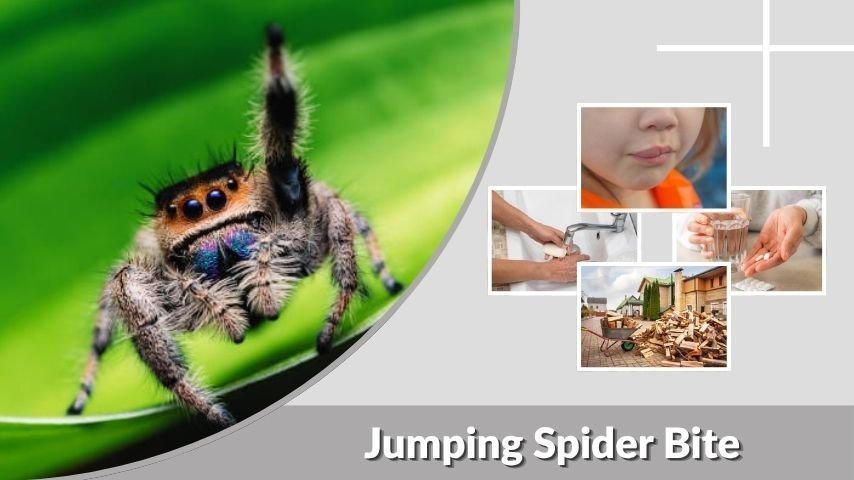
A jumping spider bite can sound scary because these spiders move fast, leap suddenly, and sometimes look bold or fuzzy. The good news is that jumping spiders are not considered dangerous to most people. They can bite if trapped, squeezed, or handled, but bites are uncommon and usually mild. This guide explains what a jumping spider bite looks like, how it feels, what symptoms to watch for, and how to treat it safely at home.
Do Jumping Spiders Bite?
Yes, jumping spiders can bite, but they rarely bite humans. Like most spiders, they have small fangs and venom used to catch prey. However, they are not aggressive toward people. A jumping spider usually prefers to jump away, hide, or escape rather than bite.
Most bites happen by accident. For example, a spider may be pressed against skin inside clothing, trapped under a hand, or handled roughly. Pet jumping spiders may also bite if they feel threatened, although many keepers never experience a bite.
Why Jumping Spiders Bite
A jumping spider bite is usually defensive, not aggressive. These spiders are hunters, but humans are far too large to be prey. They may bite only when they believe they are in danger.
Common bite situations include:
- Accidentally squeezing the spider
- Picking it up with bare hands
- Trapping it inside clothing or bedding
- Pressing it against skin while cleaning or moving objects
- Handling a wild spider that is trying to escape
If a jumping spider is walking near you, it is not looking for a chance to bite. It is usually hunting insects, exploring, or trying to find shelter.
What Does a Jumping Spider Bite Look Like?
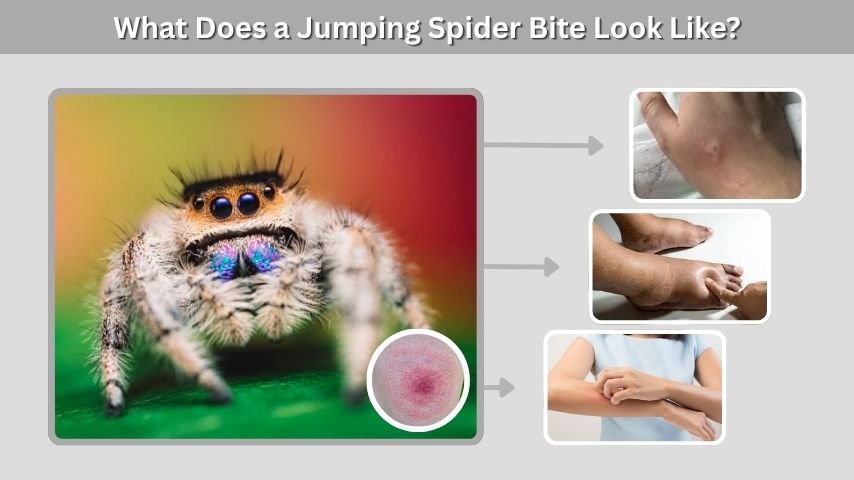
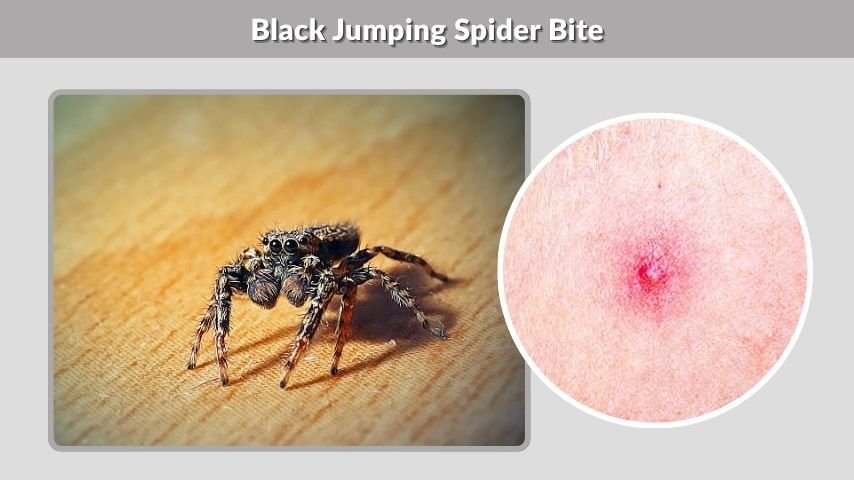
A jumping spider bite usually looks like a small insect bite. It may appear as a tiny red bump, a slightly swollen spot, or a small irritated area on the skin. Some people may notice two tiny puncture marks, but these are often too small to see clearly.
The bite may look similar to a mosquito bite, ant bite, mild bee sting, or other small bug bite. Because many skin reactions look alike, it is difficult to confirm a jumping spider bite unless you saw the spider bite you.
Common Appearance
A typical jumping spider bite may show:
- A small red or pink bump
- Mild swelling around the bite
- Slight tenderness
- Itching or irritation
- A small raised welt
- Minor redness that stays near the bite area
The skin reaction is usually local. That means it stays around the bite site instead of spreading across the body.
Jumping Spider Bite Pictures and Photos
Many people search for jumping spider bite pictures or images to compare their skin mark. Pictures can help, but they can also be misleading. A bite mark from a jumping spider can look almost identical to bites from mosquitoes, fleas, ants, mites, bed bugs, or other spiders.
If your skin mark is spreading, blistering, producing pus, becoming very painful, or causing fever or illness, do not rely on pictures alone. Get medical advice.
Jumping Spider Bite Symptoms
Most jumping spider bite symptoms are mild and short-lived. Some people may feel a quick pinch or sting, while others may not feel the bite at all.
Symptoms Table
| Symptom | What It May Feel or Look Like | Usually Serious? |
|---|---|---|
| Mild pain | Quick pinch, sting, or burning feeling | Usually no |
| Redness | Small red area around the bite | Usually no |
| Swelling | Slight raised bump or puffiness | Usually no |
| Itching | Similar to a mosquito bite | Usually no |
| Tenderness | Sore when touched | Usually no |
| Allergic reaction | Hives, major swelling, breathing trouble | Yes, seek care |
| Infection signs | Pus, warmth, spreading redness, fever | Yes, seek care |
Does a Jumping Spider Bite Hurt?
A jumping spider bite may hurt a little, but it is usually not severely painful. Some people describe it as a tiny pinch, mild sting, or brief burning sensation. Others may only notice redness or itching later.
The pain level can depend on the spider’s size, the bite location, and your skin sensitivity. Larger jumping spiders may cause a more noticeable bite than tiny ones.
What Does a Jumping Spider Bite Feel Like?
A jumping spider bite may feel like:
- A quick needle-like prick
- A small ant bite
- A mild bee sting
- A tiny burning spot
- A slight itch that appears later
The feeling usually improves with basic care. If the pain becomes intense, spreads, or continues to worsen, another cause may be involved.
Are Jumping Spider Bites Dangerous?
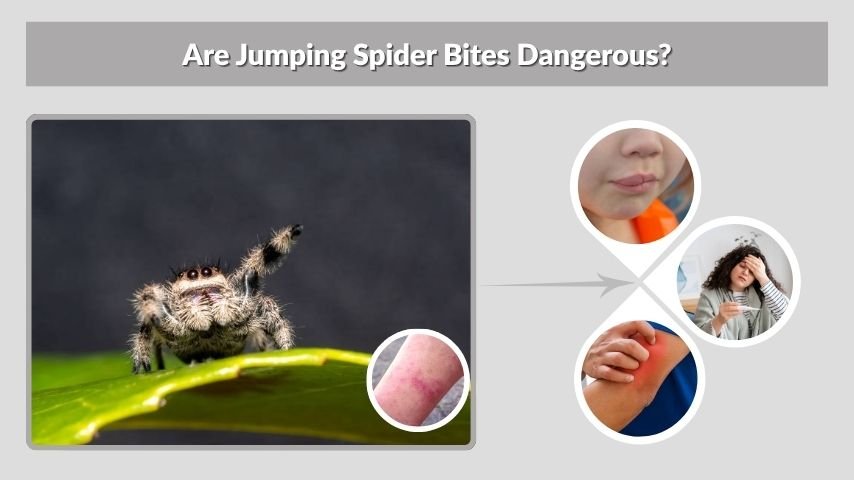
Jumping spider bites are usually not dangerous. These spiders are not in the same risk category as medically important spiders such as black widows or brown recluses. For most people, the bite causes only minor local irritation.
However, any bite can become a concern if the person has an allergic reaction, the bite becomes infected, or the spider was misidentified.
When a Bite May Be More Serious
Get medical help if you notice:
- Trouble breathing
- Swelling of the lips, face, tongue, or throat
- Widespread hives
- Dizziness or fainting
- Severe pain
- Fever or chills
- Spreading redness
- Pus or drainage
- A wound that keeps getting worse
- A dark or ulcer-like sore
These symptoms are not typical of a simple jumping spider bite. They may point to an allergy, infection, or a different type of bite.
How to Treat a Jumping Spider Bite
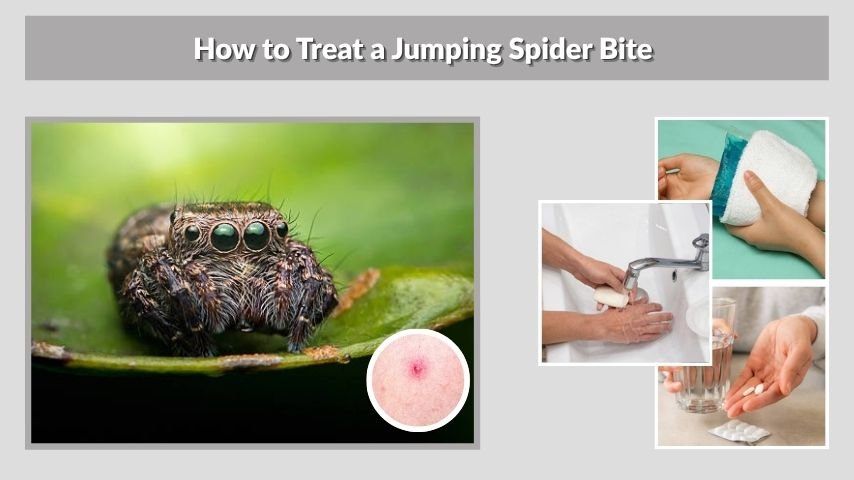
Most jumping spider bites can be treated at home with simple first aid. The goal is to clean the area, reduce swelling, and prevent infection.
Home Treatment Steps
Follow these steps if symptoms are mild:
- Wash the bite with soap and water.
- Apply a cold compress for 10 to 15 minutes.
- Keep the area clean and dry.
- Avoid scratching the bite.
- Use an over-the-counter anti-itch cream if needed.
- Take an appropriate pain reliever if the bite is sore.
- Watch the bite for changes over the next 24 to 48 hours.
Do not cut the bite, squeeze it, or apply harsh chemicals. These actions can irritate the skin and increase infection risk.
How Long Does a Jumping Spider Bite Last?
A mild jumping spider bite may improve within a few hours to a couple of days. Itching or redness may last a little longer, especially if the area is scratched.
If symptoms last more than a few days, worsen, or turn into an open sore, it is safer to speak with a healthcare provider.
Bold Jumping Spider Bite
The bold jumping spider, also called the daring jumping spider, is one of the most searched species related to bites. It is often black with white or orange markings and may have shiny green or blue mouthparts.
A bold jumping spider can bite, but it is not considered aggressive. A bite may cause mild pain, redness, swelling, or itching. Most cases can be handled with basic first aid unless symptoms become severe.
What Does a Bold Jumping Spider Bite Look Like?
A bold jumping spider bite usually looks like a small red bump or irritated spot. It may resemble a mosquito bite or mild ant bite. Pictures of bold jumping spider bites can vary because people react differently to bites.
If the bite becomes very painful, spreads, or develops a blister or open wound, do not assume it is from a bold jumping spider without professional advice.
Black Jumping Spider Bite
A black jumping spider bite is another common concern because black spiders are often associated with danger. However, many black jumping spiders are harmless to people.
A small black jumping spider, tiny black jumping spider, or black-and-white jumping spider may bite only if trapped or handled. The bite is usually mild and local.
Black Jumping Spider vs Black Widow
A black jumping spider is not the same as a black widow. Jumping spiders usually have compact, fuzzy bodies and large front-facing eyes. Black widows have smoother, rounder bodies and are known for their red hourglass marking on the underside of the abdomen.
If you suspect a black widow bite, especially with severe pain, muscle cramps, sweating, nausea, or high blood pressure symptoms, seek medical care.
Regal, Zebra, Tan, and Gray Wall Jumping Spider Bites
Many species-specific searches come from people trying to identify the spider that bit them. In most cases, the bite risk is similar across common jumping spiders.
Regal Jumping Spider Bite
Regal jumping spiders are larger and colorful, especially females. Because they are bigger than many small house spiders, their bite may feel more noticeable. Still, they are not usually dangerous to people.
Zebra Jumping Spider Bite
Zebra jumping spiders are small black-and-white spiders often found on walls, fences, and sunny surfaces. A zebra jumping spider bite is uncommon and usually mild.
Tan Jumping Spider Bite
Tan jumping spiders may be found around homes, gardens, and outdoor structures. A bite can cause slight redness, swelling, or itching, but serious symptoms are unusual.
Gray Wall Jumping Spider Bite
Gray wall jumping spiders are often seen on walls, tree trunks, fences, and buildings. They may look large or flat compared with some other jumping spiders. Their bites are generally treated the same way as other mild jumping spider bites.
Can a Jumping Spider Bite a Human?
Yes, a jumping spider can bite a human, but it usually will not unless it feels threatened. These spiders rely on eyesight and jumping ability to hunt insects, not people. They may even appear curious, turning toward movement or watching nearby objects.
This behavior can make them seem bold, but it does not mean they want to attack.
Will a Jumping Spider Bite Me?
A jumping spider is unlikely to bite you if you leave it alone. If one is indoors, use a cup and paper to move it outside. Avoid picking it up with your fingers, especially if you are nervous or might squeeze it.
How to Prevent Jumping Spider Bites
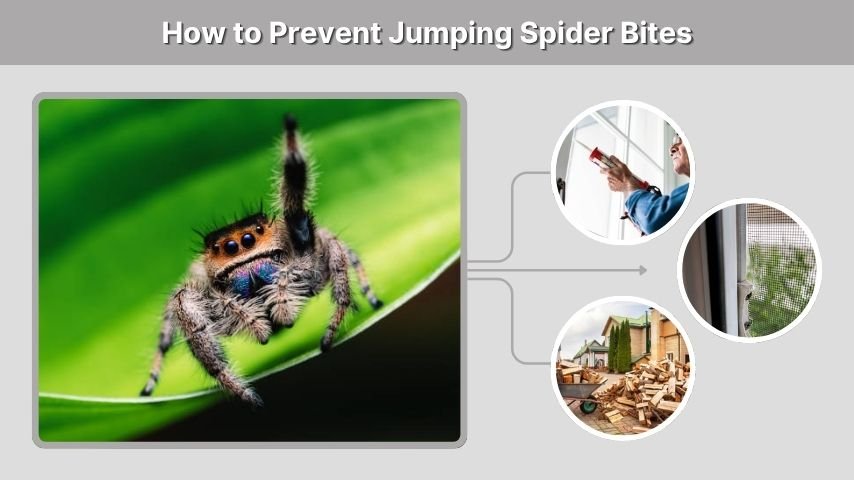
Preventing bites is mostly about avoiding accidental contact. Jumping spiders are not usually a pest that requires heavy treatment, but you can reduce indoor encounters.
Useful prevention tips include:
- Seal gaps around windows and doors
- Repair torn screens
- Shake out stored clothing, shoes, and gloves
- Reduce insects around indoor lights
- Keep storage areas less cluttered
- Move firewood and outdoor items away from the house
- Use a cup and paper to relocate spiders safely
If you see many spiders indoors, the bigger issue may be insect activity. Reducing prey insects often reduces spider sightings too.
FAQs
Are jumping spider bites poisonous?
Jumping spider bites are not considered dangerous or medically significant for most people. Their venom is mainly used for catching small prey. A bite may cause mild redness, swelling, itching, or brief pain, but serious reactions are uncommon.
What does a jumping spider bite look like?
A jumping spider bite usually looks like a small red bump, raised welt, or mildly swollen spot. It can resemble a mosquito bite, ant bite, or other minor insect bite. It is hard to identify the bite with certainty unless you saw the spider bite you.
Do jumping spider bites hurt?
A jumping spider bite can hurt a little, but the pain is usually mild. Some people feel a quick pinch, sting, or burning sensation. Others may only notice itching or redness later. Severe or worsening pain should be checked by a medical professional.
How do you treat a jumping spider bite?
Wash the bite with soap and water, apply a cold compress, and avoid scratching. Over-the-counter anti-itch cream or pain relief may help if symptoms are mild. Seek medical care if swelling spreads, the bite becomes infected, or you develop allergic symptoms.
Can a bold jumping spider bite you?
Yes, a bold jumping spider can bite if trapped or handled, but it is not aggressive toward humans. A bite usually causes mild local symptoms such as redness, swelling, itching, or brief pain. Most cases improve with simple home care.