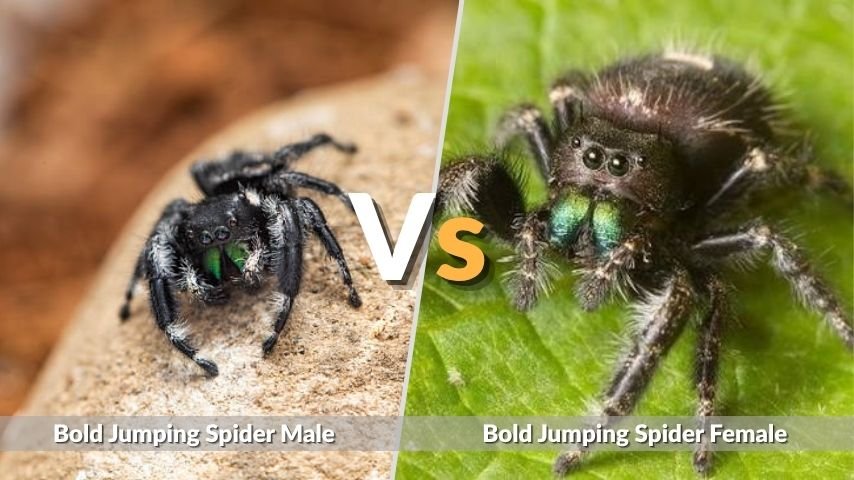
Telling a male bold jumping spider from a female can be tricky at first, especially when both are small, black, fuzzy, and marked with white or orange spots. The easiest clues are usually the spider’s size, pedipalps, body shape, color pattern, and behavior. This guide explains the main differences between male and female bold jumping spiders and how those clues compare with other jumping spider species.
What Is a Bold Jumping Spider?
The bold jumping spider, also called the daring jumping spider, is a common North American jumping spider known for its black body, white markings, and bright metallic chelicerae. Its scientific name is Phidippus audax. These spiders are active hunters, using excellent eyesight and short jumps to catch prey instead of spinning webs to trap insects.
Male and female bold jumping spiders look similar when young, but differences become easier to see as they mature. Adults are much easier to sex than juveniles because mature males develop enlarged pedipalps, while adult females usually have a larger abdomen and heavier body shape.
Why Sexing Jumping Spiders Can Be Difficult
Sexing a jumping spider is not always simple from one quick glance. Young spiders may not show mature male or female features yet. Lighting, camera angle, age, molt stage, and individual variation can also make identification harder.
In many cases, the best approach is to look at several traits together rather than relying on one clue.
Bold Jumping Spider Male vs Female: Quick Comparison
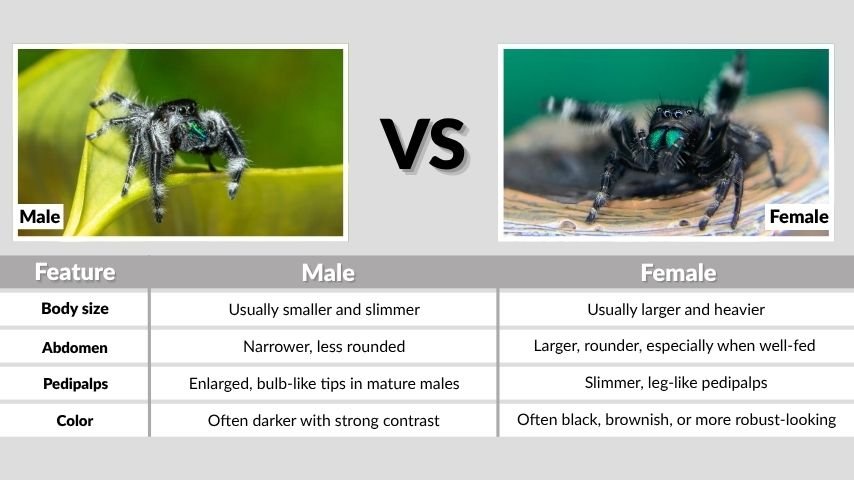
The easiest way to compare male and female bold jumping spiders is to look at size, pedipalps, abdomen shape, color, and behavior. Pedipalps are often the most reliable external clue in mature spiders.
| Feature | Male Bold Jumping Spider | Female Bold Jumping Spider |
|---|---|---|
| Body size | Usually smaller and slimmer | Usually larger and heavier |
| Abdomen | Narrower, less rounded | Larger, rounder, especially when well-fed or gravid |
| Pedipalps | Enlarged, bulb-like tips in mature males | Slimmer, leg-like pedipalps |
| Color | Often darker with strong contrast | Often black, brownish, or more robust-looking |
| Behavior | More active, may wander looking for females | More likely to stay near a retreat or egg sac |
| Lifespan | Often shorter after maturity | Often longer, especially if well cared for |
| Mating role | Searches and courts females | May accept or reject males; may produce egg sacs |
How to Tell If a Jumping Spider Is Male or Female
To tell if a jumping spider is male or female, start with the pedipalps. Pedipalps are the small leg-like appendages near the spider’s mouth. In mature male jumping spiders, the pedipalps often look swollen or rounded at the ends, almost like tiny boxing gloves. Female pedipalps are usually slimmer and more evenly shaped.
After checking the pedipalps, look at the abdomen. Females often have a larger, rounder abdomen, especially when mature, well-fed, or gravid. Males usually look leaner, with longer-looking legs and a more compact body.
Main Clues to Check
Use these clues together:
- Look for enlarged, rounded male pedipalps.
- Compare abdomen size and shape.
- Notice whether the spider looks slim or heavy-bodied.
- Watch behavior, especially wandering or guarding an egg sac.
- Consider the spider’s age and molt stage.
- Compare markings only after checking body shape.
Markings can help, but they are not always enough. Some females can be dark and bold-looking, while some males may have less obvious contrast.
Male Bold Jumping Spider Features
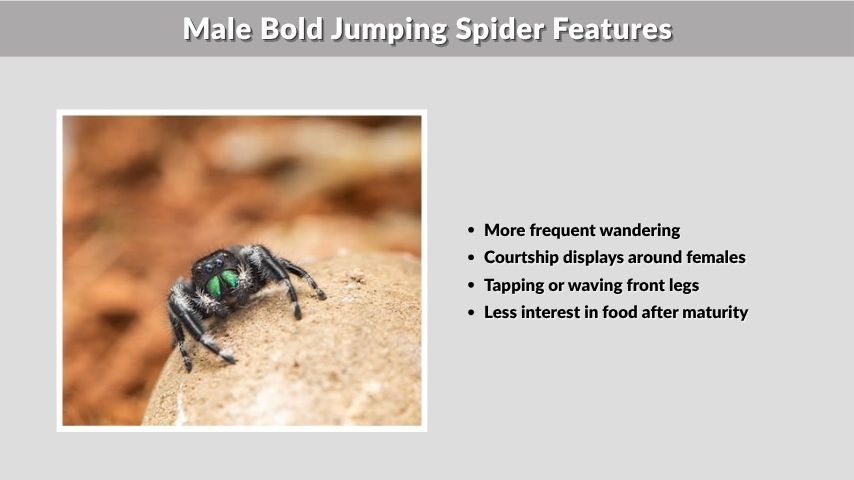
Male bold jumping spiders are usually slimmer than females. Their bodies may look more compact, and their legs may seem proportionally longer. Mature males often appear more restless because they search for females after reaching adulthood.
The most important male feature is the pedipalps. In adult males, the tips of the pedipalps become enlarged because they are used during mating. This is one of the clearest signs that a bold jumping spider is male.
Male Pedipalps
Male jumping spider pedipalps can look like small round bulbs near the face. People often describe them as “boxing gloves.” This feature is most obvious in mature males. Immature males may not have fully developed bulbous pedipalps yet.
If your spider has big, rounded pedipalps and a slim body, it is probably male.
Male Behavior
Male bold jumping spiders are often active and curious. They may wander more, explore the enclosure, or spend time searching instead of staying in one place. In the wild, this helps them find females.
Common male behaviors include:
- More frequent wandering
- Courtship displays around females
- Tapping or waving front legs
- Less interest in food after maturity
- Shorter adult lifespan than females
A male may also refuse food more often once mature because his main biological focus becomes mating.
Female Bold Jumping Spider Features
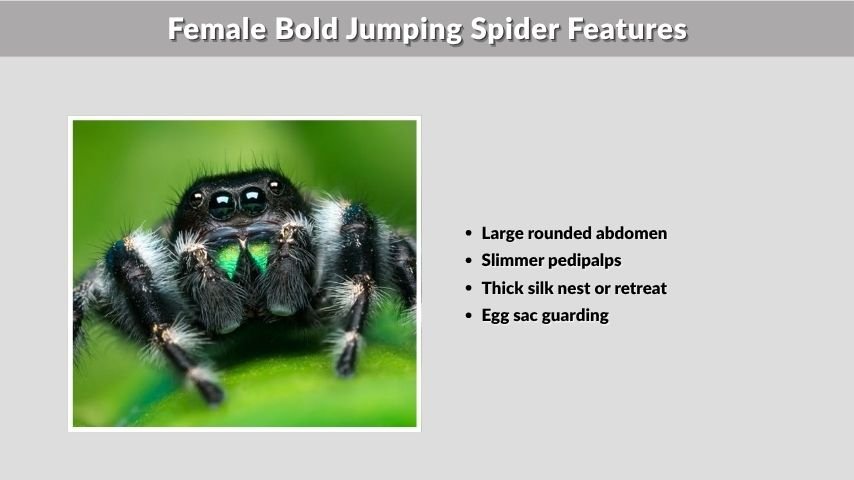
Female bold jumping spiders are usually larger and more robust than males. Their abdomen is often rounder and fuller, especially after feeding. If the female is gravid, meaning carrying eggs, her abdomen may become noticeably swollen.
Females also have slimmer pedipalps compared with mature males. Their pedipalps may still look fuzzy or noticeable, but they do not have the same rounded “boxing glove” shape seen in adult males.
Female Body Shape
A female bold jumping spider usually has a heavier body. The abdomen can look wide, oval, or round. This is especially noticeable when comparing an adult female with an adult male of the same species.
However, a full abdomen does not always mean female. A well-fed male can also look plump, and a hungry female can look slimmer. That is why pedipalps are still the better clue.
Female Reproductive Signs
Adult female jumping spiders may build thicker silk retreats when preparing to lay eggs. A gravid female may become less active and spend more time hidden. After laying eggs, she may guard the egg sac and refuse food.
Signs of a mature female may include:
- Large rounded abdomen
- Slimmer pedipalps
- Thick silk nest or retreat
- Egg sac guarding
- Less wandering than males
- Longer adult survival in captivity
A female may lay infertile eggs even if she has not mated, although those eggs will not hatch.
Jumping Spider Pedipalps: Male vs Female
Pedipalps are the best place to start when comparing male vs female jumping spiders. These small appendages sit near the mouth and can be seen from the front or side if the spider is calm.
In mature males, pedipalps are enlarged at the tips. In females, they remain thinner and more leg-like. This difference is important across many jumping spider species, not only bold jumping spiders.
Why Pedipalps Matter
Male spiders use their pedipalps for reproduction. Once a male reaches maturity, the palps become specialized and easier to recognize. Female pedipalps do not develop the same swollen tips.
For pet owners, this means your spider may be hard to sex until its final molt. After maturity, the difference is much clearer.
Female vs Male Jumping Spider Behavior
Behavior can give helpful clues, but it should not be the only method of sexing a jumping spider. Individual spiders have different personalities. Some females are very active, and some males are calm.
Still, general patterns can help.
Typical Behavior Differences
Male jumping spiders often:
- Wander more after maturity
- Search for mates
- Eat less as adults
- Perform courtship displays
- Mature into slimmer bodies
Female jumping spiders often:
- Eat more regularly
- Build larger retreats
- Guard egg sacs
- Stay in one area more often
- Live longer after maturity
If a spider is guarding an egg sac, it is female. If it is performing courtship and has swollen pedipalps, it is male.
Female Bold Jumping Spider vs Female Daring Jumping Spider
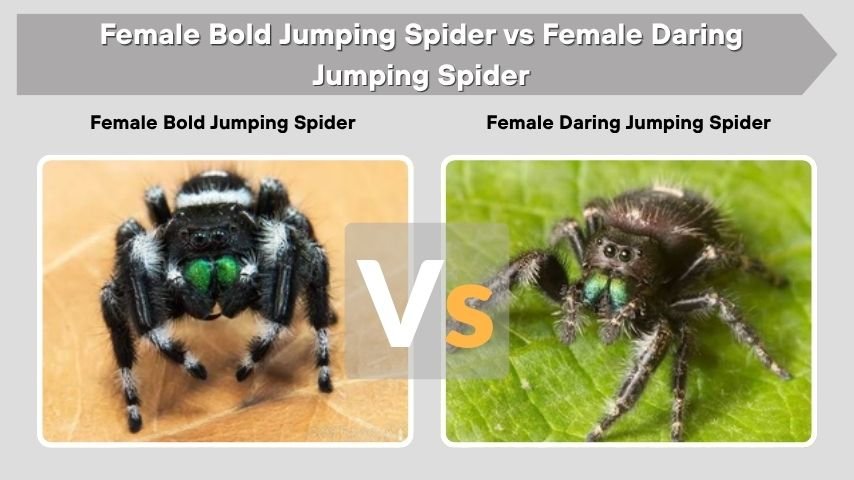
The terms “bold jumping spider” and “daring jumping spider” usually refer to the same species, Phidippus audax. So, a female bold jumping spider and a female daring jumping spider are generally the same thing.
A female daring jumping spider may appear black with white or orange markings. Younger females sometimes have orange spots that become whiter after later molts. Adults can vary in color, but females are usually larger and rounder than males.
Common Female Bold Spider Traits
A female bold jumping spider may have:
- Black or dark body color
- White, cream, or orange abdominal markings
- Metallic green or blue chelicerae
- Large round abdomen
- Fuzzy legs and body
- Slim pedipalps
- Strong jumping ability
These traits can vary, so use several clues together before deciding.
Regal Jumping Spider Male vs Female
Regal jumping spiders are another popular pet species, and males and females can look very different. Female regal jumping spiders are often larger and may show bright orange, gray, or patterned bodies. Males are commonly darker and slimmer.
In regal jumping spiders, sex differences can be easier to notice than in some other species because females often grow larger and show more color variation. Still, pedipalps remain an important clue.
Female Regal Jumping Spider
A female regal jumping spider is usually larger than the male. She may have a rounded abdomen and can show attractive orange, gray, tan, or patterned coloration. Many pet keepers prefer females because they often live longer and have a larger, more visible body.
Tan Jumping Spider Male vs Female
Tan jumping spiders can be more difficult to sex by color alone. Both males and females may be brown, tan, grayish, or patterned for camouflage. In these spiders, body shape and pedipalps are more useful than color.
A male tan jumping spider may look slimmer, with more noticeable mature pedipalps. A female may look broader and heavier, especially when mature.
Why Color Is Not Always Reliable
Color varies by species, age, molt stage, and individual spider. Some female jumping spiders are dark. Some males can be lighter than expected. Environmental lighting can also change how markings appear in photos.
For tan, zebra, twin-flagged, pantropical, emerald, apache, and other jumping spiders, use pedipalps and body shape first.
Can a Male and Female Jumping Spider Live Together?
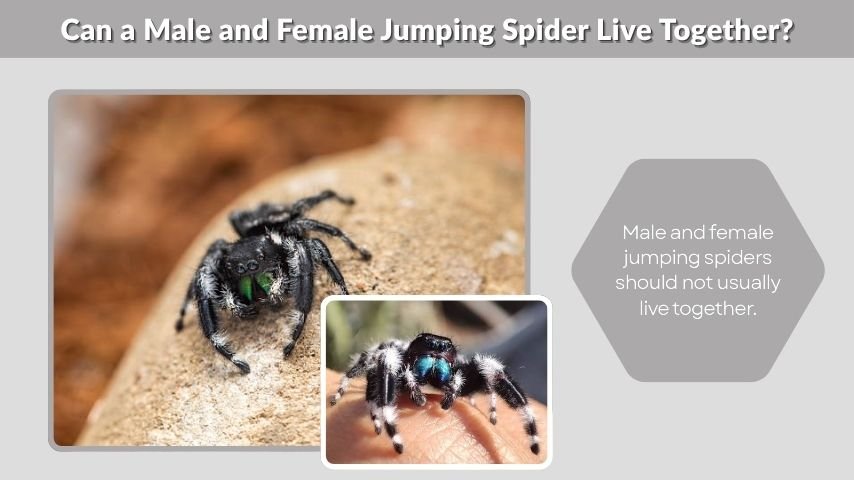
Male and female jumping spiders should not usually live together. Jumping spiders are solitary, and keeping two together can lead to stress, fighting, injury, or one spider eating the other.
Even during breeding, keepers usually introduce a male and female only under close supervision. After mating or if either spider acts aggressively, they are separated.
Why Cohabitation Is Risky
Keeping male and female jumping spiders together can be dangerous because:
- One may attack the other.
- The female may eat the male.
- Food competition can cause stress.
- One spider may disturb the other’s retreat.
- Molting spiders are vulnerable.
- Courtship can fail and turn aggressive.
For pet care, each jumping spider should have its own enclosure.
Should You Get a Male or Female Jumping Spider?
Both male and female jumping spiders can make interesting pets, but they have different advantages. Females are often preferred by keepers because they usually live longer after maturity and may be larger. Males can be very active and entertaining, but they may wander more and eat less as adults.
A beginner may prefer a captive-bred juvenile or female from a reputable breeder. However, personality varies from spider to spider.
Male vs Female Pet Jumping Spider
Choose a male if you want a spider that may be active, curious, and display interesting courtship behavior. Choose a female if you want a larger spider that may live longer and eat more reliably.
Avoid buying wild-caught spiders when possible, especially adult females, because they may already be mated and could produce egg sacs.
FAQs
How do you tell if a bold jumping spider is male or female?
Check the pedipalps first. Mature male bold jumping spiders have enlarged, rounded pedipalps that look like tiny boxing gloves. Females have slimmer pedipalps and usually a larger, rounder abdomen. Body size, behavior, and egg sac guarding can also help.
Are female bold jumping spiders bigger than males?
Yes, female bold jumping spiders are usually bigger and heavier-bodied than males. Their abdomen is often rounder, especially when well-fed or gravid. Males are typically slimmer and may look more leggy, especially after reaching maturity.
What do male jumping spider pedipalps look like?
Male jumping spider pedipalps usually have enlarged, bulb-like tips when mature. They sit near the spider’s mouth and may look like small boxing gloves. Female pedipalps are slimmer and more leg-like, making this one of the best sexing clues.
Can male and female jumping spiders live together?
No, male and female jumping spiders should not normally live together. They are solitary and may fight, stress each other, or cannibalize one another. Breeding introductions should only be done carefully and briefly under close supervision.
Should I get a male or female jumping spider?
A female jumping spider is often better for beginners because females are usually larger, may live longer, and often eat more consistently. Males can be active and interesting, but mature males may wander more and eat less while searching for mates.