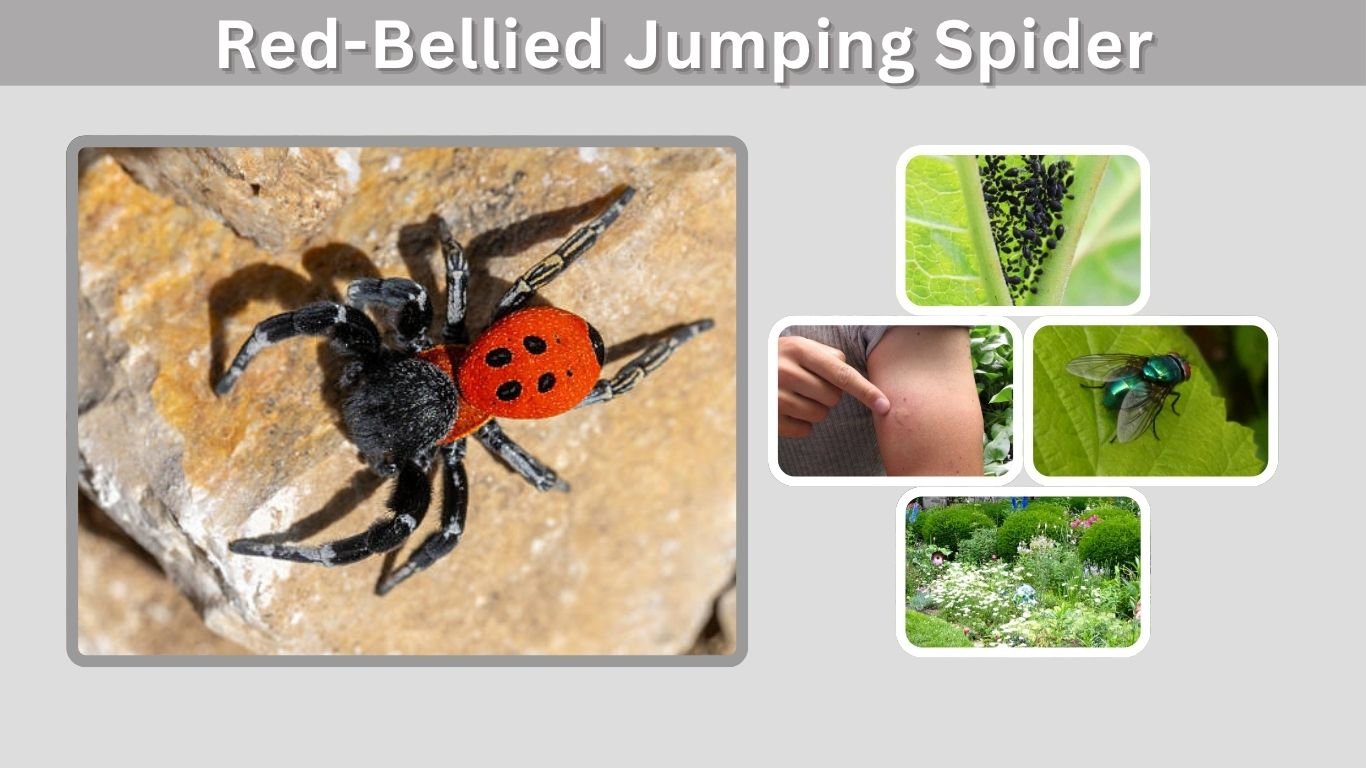
The red-bellied jumping spider is a striking little hunter known for its bold red abdomen, black body, and alert personality. This name is often used for the red-backed jumping spider, scientifically known as Phidippus johnsoni. Although its bright coloring may look alarming, this spider is not considered dangerous to humans. Like other jumping spiders, it relies on sharp eyesight, quick reflexes, and accurate leaps instead of a prey-catching web.
What Is a Red-Bellied Jumping Spider?
The red-bellied jumping spider is a small, active spider in the family Salticidae. Jumping spiders are famous for their large forward-facing eyes, curious behavior, and ability to jump many times their body length. The red-bellied type stands out because of its vivid red abdomen, which contrasts strongly with its dark body and legs.
This spider is most often associated with western North America, where it can be found in gardens, grasslands, shrubs, fences, walls, and other sunny habitats. It may also be called the Johnson jumping spider or red-backed jumping spider.
Scientific Classification
Although common names can vary, the red-bellied jumping spider is usually linked with Phidippus johnsoni. It belongs to a genus that includes many bold, colorful, and active jumping spiders.
| Feature | Details |
|---|---|
| Common Name | Red-Bellied Jumping Spider |
| Other Names | Red-Backed Jumping Spider, Johnson Jumping Spider |
| Scientific Name | Phidippus johnsoni |
| Family | Salticidae |
| Main Colors | Red, black, white, metallic green or teal |
| Adult Size | About 7–13 mm |
| Hunting Style | Active stalking and jumping |
| Human Danger | Low, not considered dangerous |
Red-Bellied Jumping Spider Identification
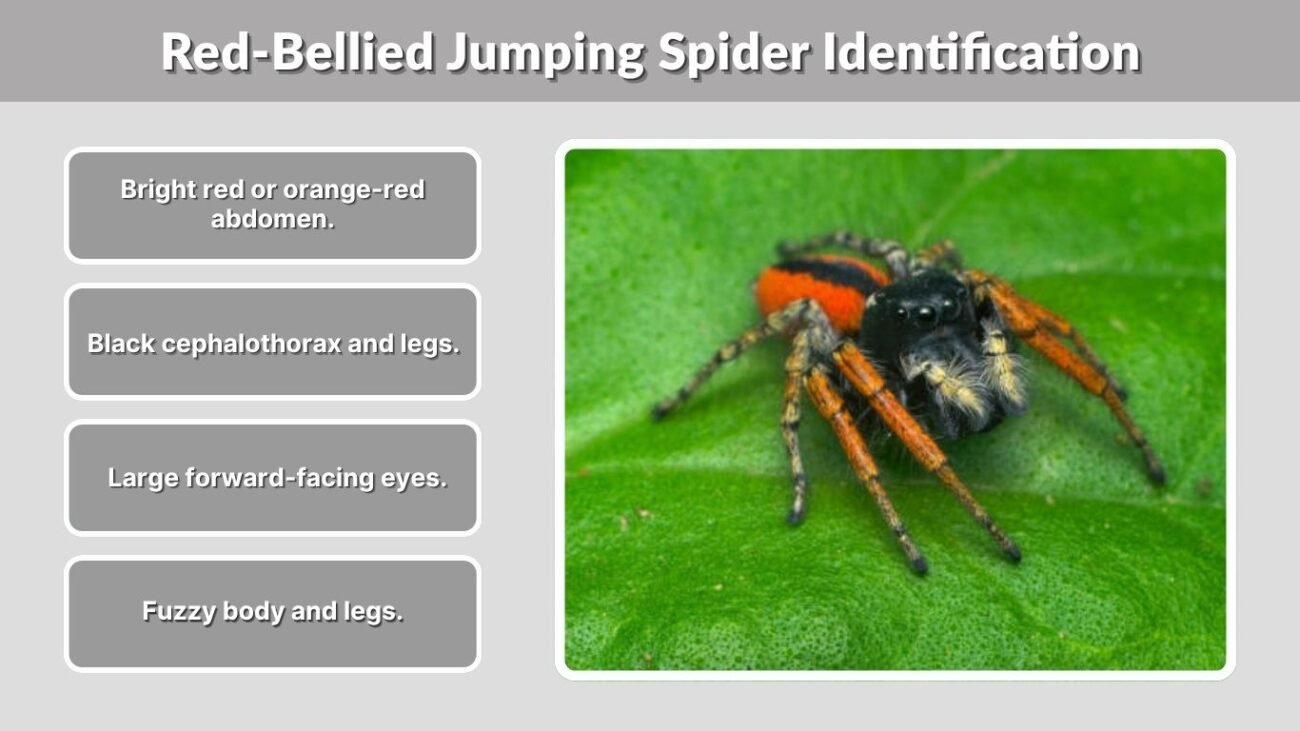
The red-bellied jumping spider is one of the easier jumping spiders to recognize because of its bold color pattern. The body is usually mostly black, while the abdomen is bright red or orange-red. Some individuals have white markings, and many have shiny green or teal chelicerae near the mouthparts.
Key Identification Features
Look for these traits when identifying a red-bellied jumping spider:
- Bright red or orange-red abdomen
- Black cephalothorax and legs
- Large forward-facing eyes
- Fuzzy body and legs
- Compact body shape
- Quick, jerky walking movements
- Sudden controlled jumps
- Metallic green or teal mouthparts
The color pattern can vary slightly depending on age, sex, and individual genetics. Some spiders may look darker, while others may have a brighter abdomen.
Male and Female Differences
Males and females look similar at first glance, but there are important differences. Males often have a more evenly red abdomen, while females commonly have a red abdomen with a black stripe or central marking. Females may also have a fuller, rounder body, especially after feeding or when gravid.
Males are usually more active when mature because they search for females. Females may stay closer to sheltered areas, especially when preparing to lay eggs.
Why Is It Called Red-Bellied?
The name “red-bellied jumping spider” comes from its red abdominal area. However, the red color is more commonly seen on the top of the abdomen, which is why many guides call it the red-backed jumping spider. In casual use, people may describe the spider as red-bellied, red-bodied, or red-backed because the bright red abdomen is the most noticeable feature.
This can cause confusion with other red spiders. It should not be confused with the Australian redback spider, which is a different and medically important widow spider. The red-bellied jumping spider is a jumping spider, not a widow spider.
Habitat and Range
The red-bellied jumping spider is commonly associated with western North America. It prefers warm, sunny places where it can hunt insects and use visual cues. Because it depends heavily on eyesight, it is often active during the day.
Common Places to Find It
You may find this spider in:
- Gardens and yards
- Shrubs and bushes
- Dry grasslands
- Fences and walls
- Tree trunks and bark
- Outdoor furniture
- Rocky areas
- Woodpiles
- House siding
- Sunny windowsills
It may enter homes occasionally, especially while searching for prey or shelter. Finding one indoors does not usually mean there is an infestation. Jumping spiders are solitary hunters and do not gather in large colonies.
Behavior of the Red-Bellied Jumping Spider
Red-bellied jumping spiders are active, alert, and highly visual. They often turn toward movement, giving the impression that they are watching you. This behavior is normal for jumping spiders and is one reason many people find them charming rather than frightening.
Daytime Hunter
Unlike many spiders that hide during the day, jumping spiders are often active in daylight. They use their large eyes to scan for flies, moths, gnats, and other small insects. Once they spot prey, they move carefully into position before jumping.
Their hunting method usually includes:
- Spotting prey from a short distance
- Turning the body toward the target
- Moving forward in short bursts
- Attaching a silk safety line
- Jumping onto the prey
- Using venom to subdue the insect
This makes them excellent natural pest controllers in gardens and around homes.
Does It Make Webs?
The red-bellied jumping spider produces silk, but it does not build large webs to catch prey. Instead, it uses silk for other purposes. It may create a small retreat for resting, molting, or protecting eggs. It also uses silk as a safety line before jumping.
This safety line helps the spider avoid injury if it misses a jump or falls from a surface.
Diet and Feeding Habits
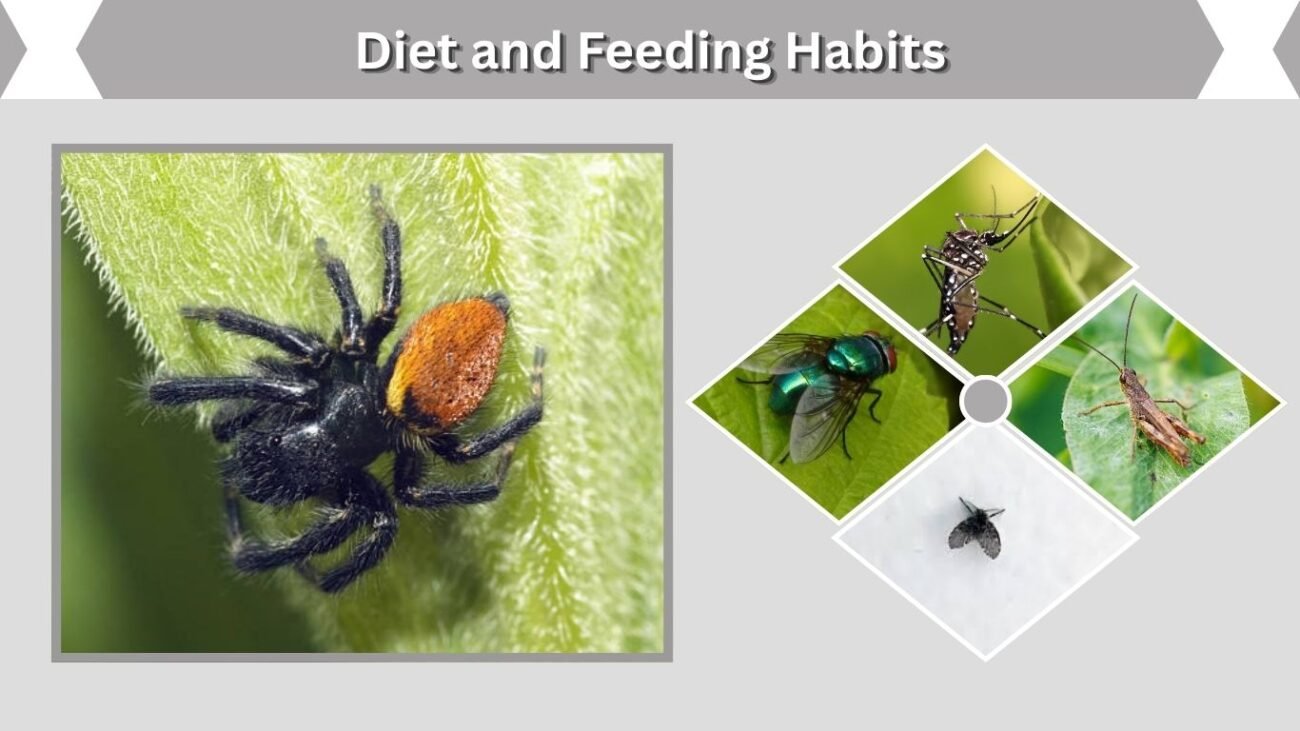
The red-bellied jumping spider is carnivorous. It feeds on insects and small arthropods. Its diet helps control pest populations naturally.
What It Eats
Common prey includes:
- Flies
- Gnats
- Mosquitoes
- Small moths
- Small crickets
- Leafhoppers
- Tiny beetles
- Other small spiders
- Soft-bodied insects
In the wild, it chooses prey based on size, movement, and opportunity. In captivity, prey should be appropriately sized and not too aggressive.
Feeding in Captivity
If kept as a pet, the red-bellied jumping spider can eat small feeder insects. Fruit flies may be used for juveniles, while adults may accept small crickets, flies, roaches, or moths. Avoid prey that is larger than the spider or capable of injuring it.
Never leave crickets inside the enclosure for long periods, especially if the spider is molting. Crickets can bite and injure vulnerable spiders.
Red-Bellied Jumping Spider Bite
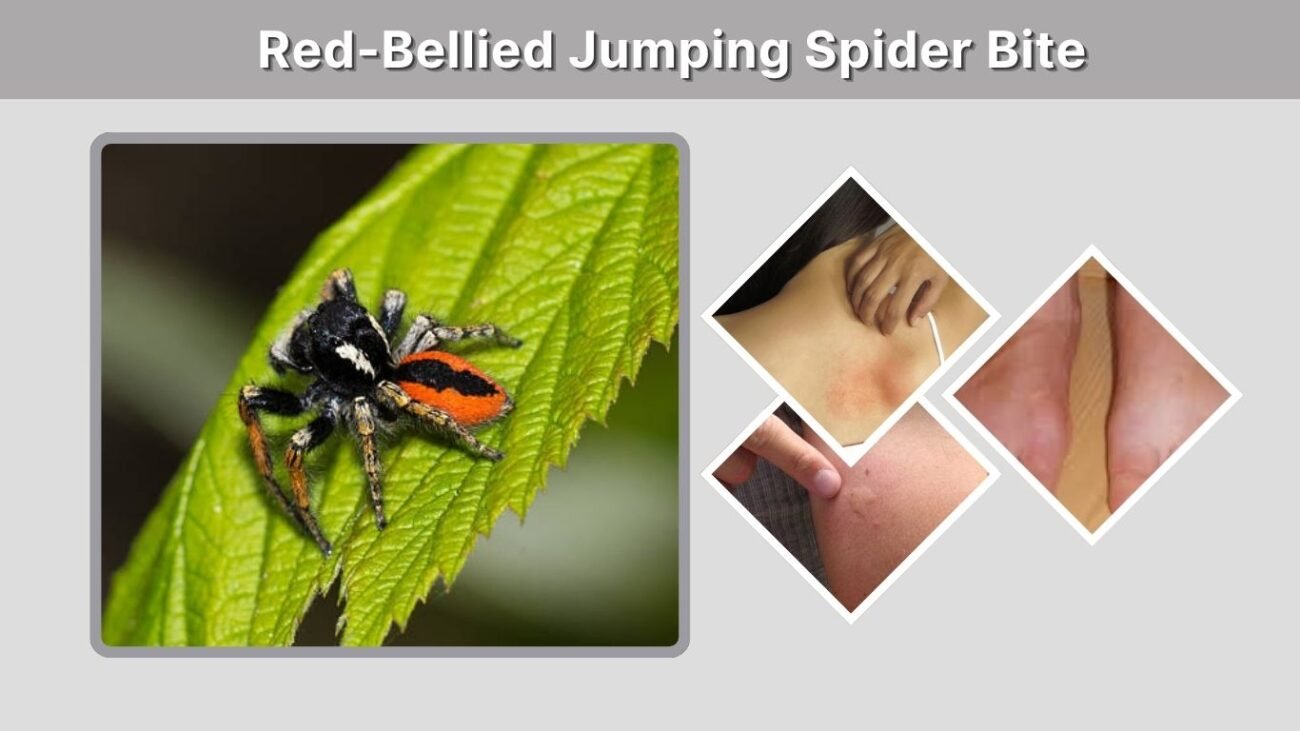
The red-bellied jumping spider can bite, but bites are uncommon. It is not aggressive toward humans and usually prefers to escape. A bite is most likely if the spider is squeezed, trapped, or handled roughly.
Is the Bite Dangerous?
For most people, a bite is not medically significant. It may cause mild pain, redness, itching, or slight swelling. These symptoms usually remain local. However, anyone with severe symptoms, allergic reactions, or worsening pain should seek medical advice.
The spider’s venom is designed for small insect prey. It is not meant for large animals or people.
How to Avoid Bites
The easiest way to avoid a bite is to handle the spider gently or not handle it at all. If you need to move one, use a cup and paper rather than your fingers. Place the cup over the spider, slide paper underneath, and release it outside in a safe, sheltered area.
Red-Bellied Jumping Spider as a Pet
Some people enjoy keeping red-bellied jumping spiders because they are colorful, active, and interesting to watch. However, they may not be as commonly sold as regal jumping spiders or bold jumping spiders. If you find one in the wild, always check local rules and consider whether it is better to observe and release it.
Enclosure Setup
A small, secure enclosure is usually enough for a jumping spider. The enclosure should offer climbing space, ventilation, and safe surfaces.
A good setup includes:
- Small vertical enclosure
- Secure lid
- Cross ventilation
- Cork bark or twigs
- Artificial or live plants
- Top hide or silk-retreat area
- Soft landing surface
- Light misting for water droplets
Avoid overly tall, empty enclosures with hard bottoms. Jumping spiders are good climbers, but falls can still injure them.
Temperature and Humidity
A comfortable room-temperature environment is often suitable, but the spider should be protected from direct hot sunlight and cold drafts. Light misting can provide drinking droplets, but the enclosure should not stay wet. Too much moisture can lead to mold and stress.
Good airflow is important. Ventilation helps keep the enclosure clean and reduces the risk of stagnant humidity.
Molting and Growth
Like all spiders, red-bellied jumping spiders grow by molting. Molting is the process of shedding the old exoskeleton and forming a new one. Young spiders molt more often than adults because they are still growing.
Signs of Molting
Before molting, the spider may:
- Stop eating
- Stay inside its silk retreat
- Move less than usual
- Appear duller in color
- Avoid prey
- Build a thicker shelter
Do not disturb the spider during this time. Remove feeder insects and avoid handling. After molting, wait until the spider becomes active again before offering food.
Reproduction and Egg Sacs
Female red-bellied jumping spiders create silk retreats for egg sacs. A female may guard her eggs and refuse food during this period. Once the spiderlings hatch, they are extremely small and need tiny prey.
Baby Red-Bellied Jumping Spiders
Baby jumping spiders are delicate and difficult to sex. They may not show clear adult colors at first. As they molt and grow, their markings become more noticeable. Young spiders need tiny prey, secure housing, and careful moisture control.
If a wild-caught female lays an egg sac in captivity, the keeper may suddenly have many spiderlings. This is why wild-caught adult females require extra planning.
Benefits Around Homes and Gardens
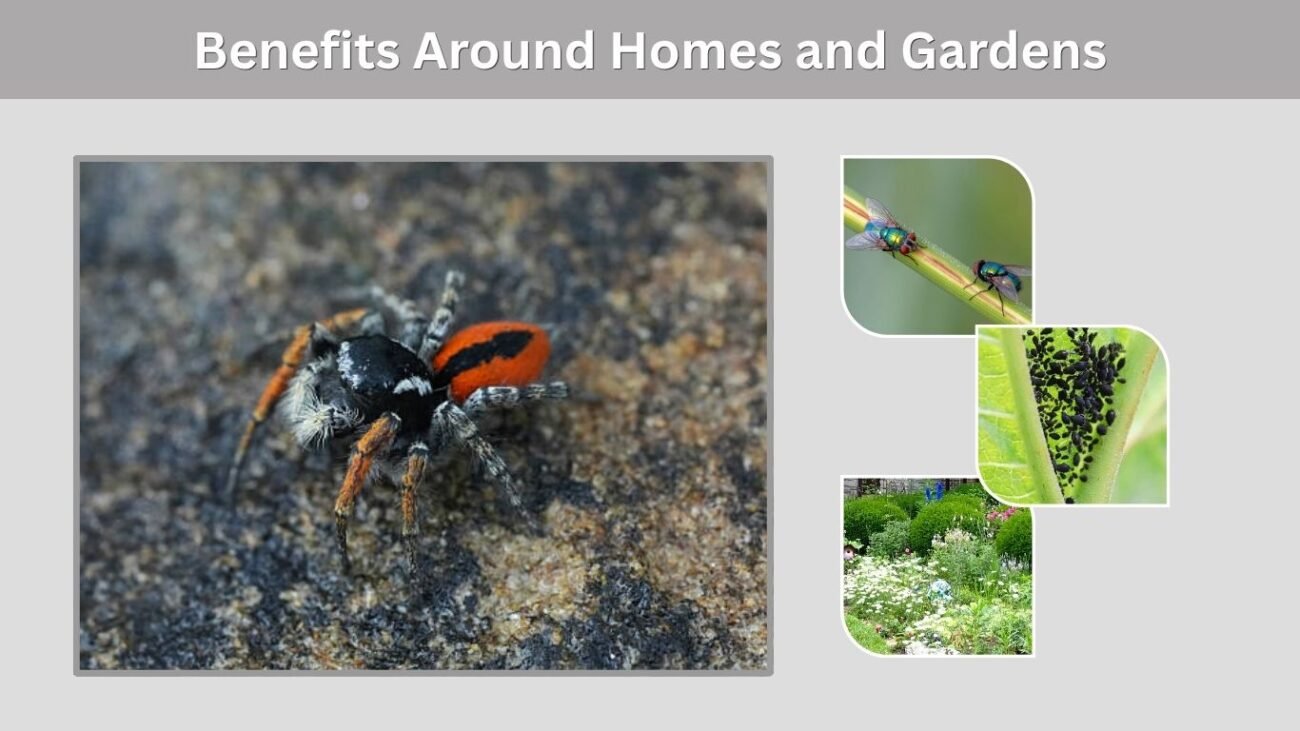
The red-bellied jumping spider is beneficial because it eats pest insects. It does not damage wood, clothing, plants, or food. It does not create messy web systems in corners, and it does not infest homes.
Its benefits include:
- Eating flies and gnats
- Reducing small pest insects
- Helping garden ecosystems
- Serving as food for birds and lizards
- Avoiding large nuisance webs
Because of these benefits, it is usually better to relocate the spider than kill it.
Red-Bellied Jumping Spider vs Similar Spiders
This spider is sometimes confused with other red or black spiders. The most important difference is body shape and behavior. Jumping spiders have large forward-facing eyes, compact bodies, and active daytime hunting behavior.
Similar-Looking Spiders
It may be confused with:
- Redback spiders
- Black widows with red markings
- Other Phidippus jumping spiders
- Velvet ants because of mimic-like coloring
- Small red-and-black beetles or insects
If the spider has large front eyes, a fuzzy body, and jumps actively, it is likely a jumping spider. Widow spiders have a very different body shape and web-building behavior.
FAQs
Is the red-bellied jumping spider dangerous?
The red-bellied jumping spider is not considered dangerous to humans. It has venom for catching insects, but bites are uncommon and usually mild. It is more likely to run or jump away than attack.
What does a red-bellied jumping spider eat?
It eats small insects such as flies, gnats, mosquitoes, moths, and other tiny arthropods. In captivity, it can eat small feeder insects, but prey should never be too large or aggressive.
Can you keep a red-bellied jumping spider as a pet?
Yes, some people keep them as pets. They need a secure, ventilated enclosure, climbing surfaces, small prey, and light misting for water. They should be handled carefully because they are small and delicate.
Why is the red-bellied jumping spider red?
The red abdomen may help with recognition, warning coloration, or mimicry. Some red-and-black jumping spiders resemble velvet ants, which are wasps known for painful stings. This resemblance may help discourage predators.
Does the red-bellied jumping spider make webs?
It makes silk but does not build large prey-catching webs. It uses silk for safety lines, resting shelters, molting retreats, and egg sacs. It catches prey by stalking and jumping.