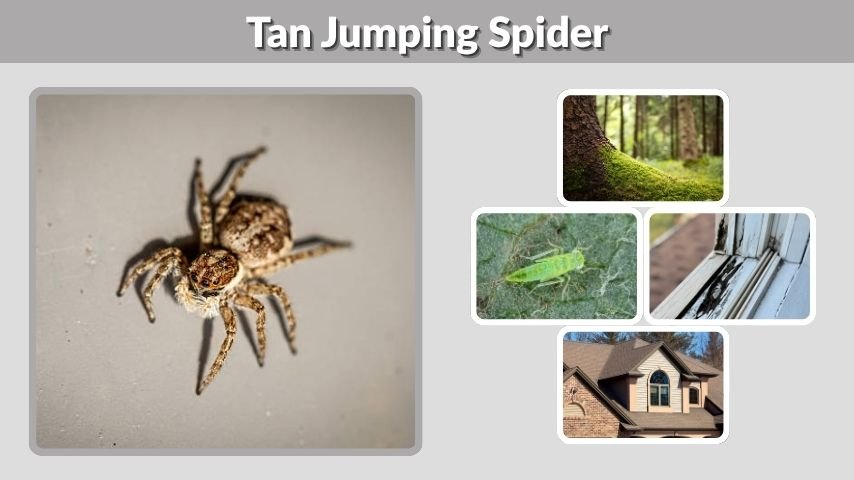
The tan jumping spider is a small, quick, and surprisingly charming spider often found on tree trunks, fences, walls, and outdoor structures. Scientifically known as Platycryptus undatus, this species belongs to the jumping spider family, Salticidae. It is known for its mottled tan and brown body, excellent eyesight, active hunting style, and ability to blend into bark and wood. Although it may look bold, the tan jumping spider is generally harmless and beneficial around homes and gardens.
What Is a Tan Jumping Spider?
The tan jumping spider is a North American jumping spider commonly seen in wooded areas, yards, barns, and houses. It is sometimes called the familiar jumping spider because it often lives close to people. Unlike web-building spiders that wait for insects to become trapped, this spider actively searches for prey and jumps to catch it.
Scientific Classification
The tan jumping spider belongs to one of the most recognizable spider families because of its large front-facing eyes and alert behavior.
| Feature | Details |
|---|---|
| Common Name | Tan Jumping Spider |
| Scientific Name | Platycryptus undatus |
| Family | Salticidae |
| Body Color | Tan, gray, brown, black markings |
| Common Habitat | Tree bark, walls, fences, woodpiles |
| Diet | Flies, moths, mosquitoes, small insects |
| Hunting Style | Active stalking and jumping |
| Danger to Humans | Low, not considered dangerous |
Tan Jumping Spider Identification
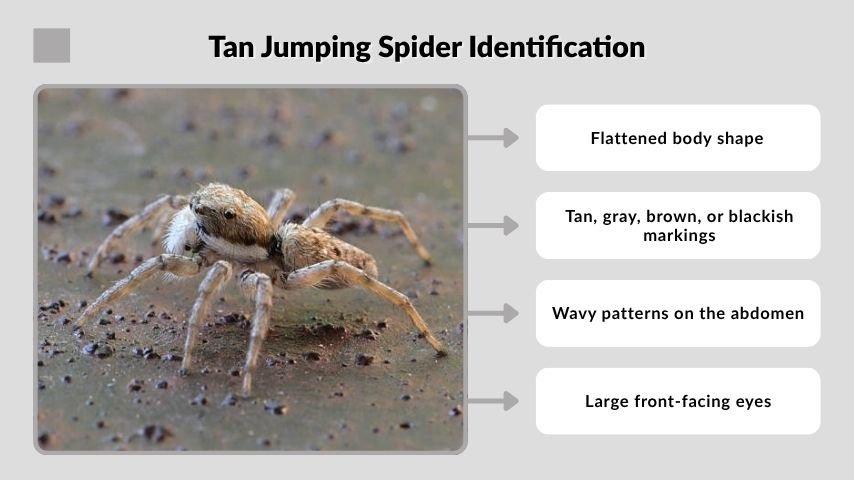
Identifying a tan jumping spider is usually easiest when you look at its body shape, color pattern, and behavior. It has a flattened body, mottled colors, and a wavy or chevron-like pattern on the abdomen. This pattern helps it disappear against tree bark, weathered wood, and rough surfaces.
Key Identification Features
A tan jumping spider may have:
- Flattened body shape
- Tan, gray, brown, or blackish markings
- Wavy patterns on the abdomen
- Large front-facing eyes
- Hairy legs with bands or spots
- Quick, short movements
- Sudden jumps when hunting or escaping
Because of its camouflage, it can be difficult to spot when sitting still on bark. However, once it moves, its jumping spider behavior becomes easier to recognize.
Tan Jumping Spider Size
The tan jumping spider is small but noticeable compared with many tiny household spiders. Females are usually larger than males, and their bodies may look rounder or fuller. Males tend to be slimmer and sometimes appear darker.
Adult females are often around 10 to 13 mm in body length, while males are usually a little smaller. The legs make the spider appear larger when it spreads out on a wall or tree trunk.
Female vs Male Size
Female tan jumping spiders are usually larger because their bodies support egg production. Males may look longer-legged and flatter. During the breeding season, males may wander more as they search for females.
What Does a Tan Jumping Spider Look Like?
The tan jumping spider has a rough, bark-like appearance. Its body is not brightly colored like some other jumping spiders. Instead, its beauty comes from subtle camouflage.
Common Colors
Tan jumping spider colors may include:
- Light tan
- Gray
- Dark brown
- Cream
- Blackish patches
- Rusty brown tones
- White or pale markings
The abdomen often has a broken or wavy pattern. This helps the spider hide from predators and sneak up on prey.
Eyes and Face
Like other jumping spiders, the tan jumping spider has large forward-facing eyes. These eyes give it excellent vision and a curious expression. When it notices movement, it may turn toward the object and appear to watch carefully.
This behavior is one reason people often find jumping spiders less frightening than other spiders. They seem aware, alert, and interactive.
Tan Jumping Spider Habitat
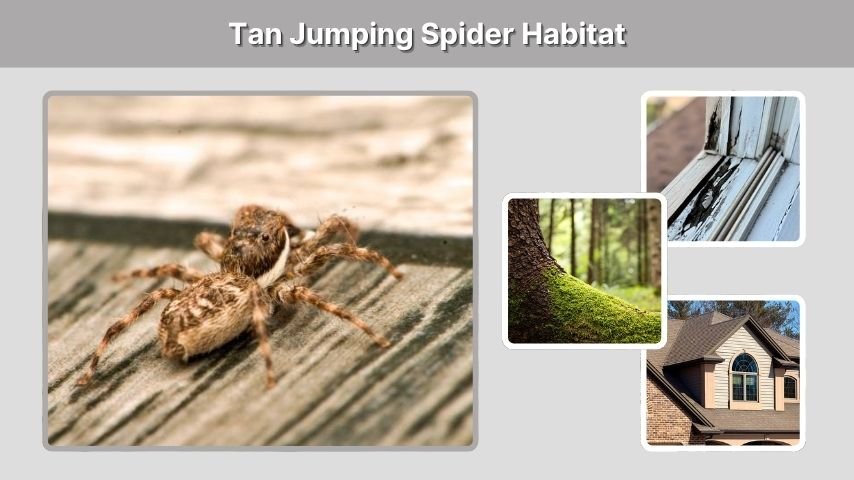
Tan jumping spiders prefer places where their camouflage works well. They are commonly associated with tree bark, wooden structures, and vertical surfaces. Their flattened bodies help them slip into tight cracks and under loose bark.
Where They Are Commonly Found
You may find tan jumping spiders in:
- Tree trunks
- Fence posts
- Woodpiles
- Barns and sheds
- House siding
- Window frames
- Deck railings
- Stone walls
- Loose bark
- Outdoor furniture
They can also enter homes, especially around windows and doors. Indoors, they may be seen on walls, ceilings, or near sunny windows where small insects gather.
Tan Jumping Spider Behavior
The tan jumping spider is active during the day. It relies heavily on vision, so daylight helps it find prey and avoid danger. Instead of spinning a web to trap food, it walks, watches, stalks, and jumps.
Hunting Style
A tan jumping spider hunts with patience and precision. When it sees prey, it slowly moves closer, judges the distance, attaches a silk safety line, and then leaps.
Its hunting steps usually include:
- Spotting movement with its large eyes
- Turning toward the prey
- Moving closer in short bursts
- Attaching a silk dragline
- Jumping quickly
- Grabbing the prey with its front legs
This style makes jumping spiders excellent natural pest controllers.
Does It Make Webs?
Tan jumping spiders do make silk, but they do not use large webs to catch prey. Instead, they use silk for shelters, egg sacs, molting spaces, and safety lines. A spider may build a small silk retreat under bark, in cracks, or inside corners of outdoor structures.
What Do Tan Jumping Spiders Eat?
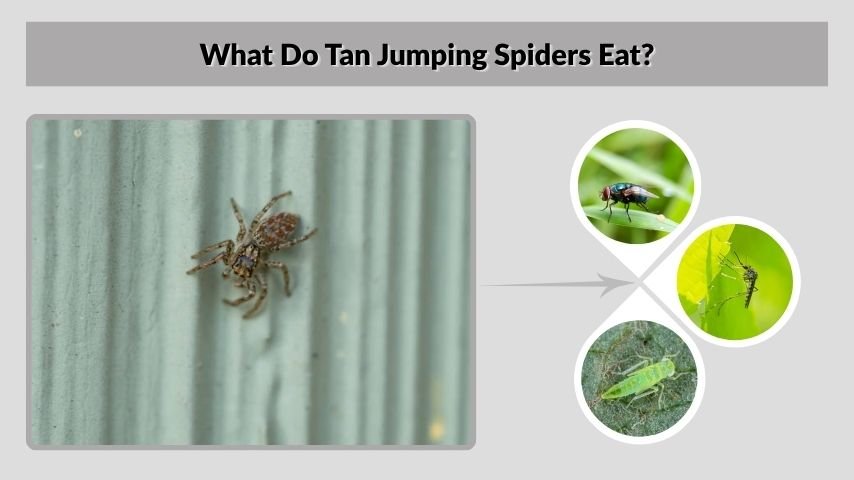
Tan jumping spiders eat small insects and other tiny arthropods. They help reduce pest populations in gardens, yards, and around homes.
Common Prey
Their diet may include:
- Flies
- Mosquitoes
- Gnats
- Small moths
- Leafhoppers
- Small beetles
- Ants
- Other tiny insects
Because they hunt actively, they can catch insects on walls, bark, fences, and plants. Their presence is usually helpful rather than harmful.
Tan Jumping Spider Bite
Many people worry when they find a jumping spider indoors, but the tan jumping spider is not considered dangerous to humans. It is not aggressive and usually tries to escape rather than bite.
Can a Tan Jumping Spider Bite?
Yes, it can bite if it is trapped, squeezed, or handled roughly. However, bites are uncommon. If a bite happens, symptoms are usually mild, such as slight redness, swelling, or brief pain.
People with allergies or unusual reactions should seek medical advice. For most people, the best response is simple: avoid grabbing the spider and gently relocate it if needed.
Is It Poisonous?
The better word is venomous, not poisonous. Like most spiders, the tan jumping spider has venom to subdue prey. However, its venom is not medically significant to humans. It is designed for small insects, not people or pets.
Tan Jumping Spider in the House
Finding a tan jumping spider in the house is usually not a problem. These spiders do not infest homes like cockroaches or ants. They may wander inside while searching for food, shelter, or warmth.
Should You Remove It?
You can leave it alone if you do not mind its presence. It may catch small flies or gnats. If you prefer to remove it, use a cup and paper method. Place a cup over the spider, slide paper underneath, and release it outside near a tree, fence, or garden area.
Avoid crushing it, because it is harmless and beneficial.
Tan Jumping Spider Lifespan
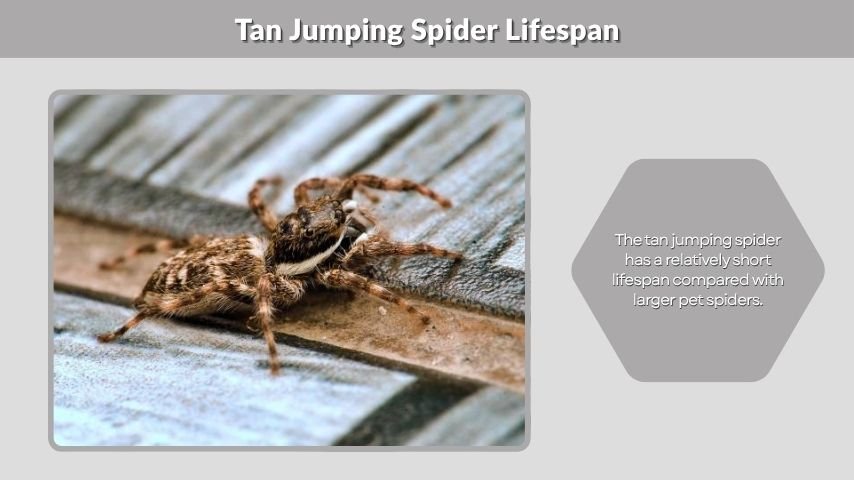
The tan jumping spider has a relatively short lifespan compared with larger pet spiders. Many jumping spiders live around one year, though exact lifespan can vary depending on sex, environment, food, and survival through winter.
In colder areas, tan jumping spiders may overwinter in silk shelters. They often hide under bark or in protected cracks to survive cold weather.
Reproduction and Egg Sacs
Female tan jumping spiders create silk shelters for eggs. The female may guard the egg sac until the spiderlings hatch. Young spiders are tiny and must hunt very small prey.
Life Cycle
The life cycle includes:
- Egg stage
- Tiny spiderlings
- Multiple molts
- Juvenile stage
- Adult stage
- Mating and egg production
As the spider grows, it molts by shedding its old exoskeleton. During molting, it is vulnerable and usually stays hidden.
Are Tan Jumping Spiders Good Pets?
Some people keep tan jumping spiders as pets, although they are less commonly sold than regal jumping spiders or bold jumping spiders. Their small size, bark-like camouflage, and active behavior can make them interesting to observe.
Basic Pet Care
A tan jumping spider needs:
- A small ventilated enclosure
- Vertical climbing surfaces
- Cork bark or textured wood
- Small feeder insects
- Light misting for water droplets
- A safe place to build a silk retreat
They should not be overhandled. While they are curious, they are also delicate and can be injured by falls or rough movement.
Tan Jumping Spider vs Other Jumping Spiders
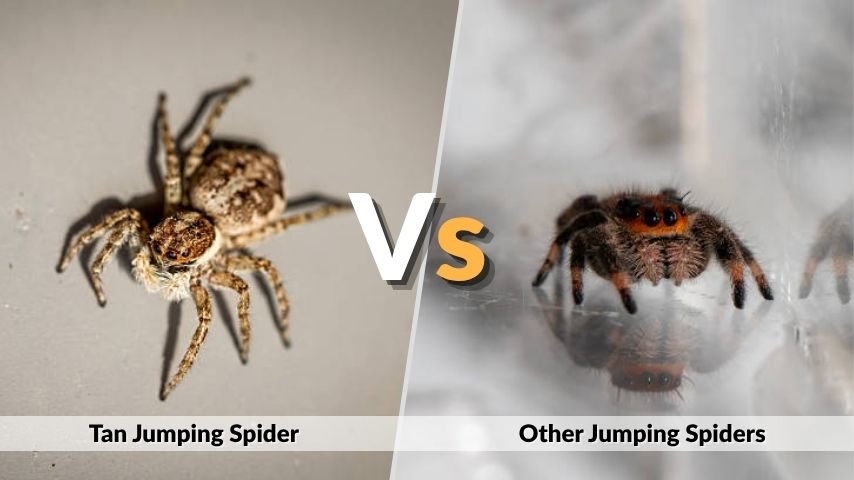
The tan jumping spider may be confused with other jumping spiders, especially bold jumping spiders and gray wall jumpers. The main difference is its flattened, bark-colored body and wavy abdominal pattern.
How It Differs
Compared with other jumping spiders, the tan jumping spider is:
- Flatter-bodied
- More bark-like in color
- Less brightly marked
- Common on wood and tree trunks
- Well-camouflaged on rough surfaces
Bold jumping spiders are often black with white spots, while regal jumping spiders are larger and more colorful. The tan jumping spider is more subtle and better suited for hiding on bark.
Benefits of Tan Jumping Spiders
Tan jumping spiders are useful predators. They help control small insect populations and do not damage wood, plants, clothing, or food. They are part of a healthy outdoor ecosystem and can be helpful around gardens and homes.
Their benefits include:
- Eating pest insects
- Reducing flies and mosquitoes
- Supporting natural food chains
- Avoiding messy web buildup
- Living peacefully near humans
Because they are harmless and beneficial, they are usually better relocated than killed.
FAQs
Are tan jumping spiders dangerous?
Tan jumping spiders are not considered dangerous to humans. They may bite only if trapped or squeezed, and most bites are mild. They are generally shy, alert, and more likely to jump away than attack.
What do tan jumping spiders eat?
Tan jumping spiders eat small insects such as flies, mosquitoes, gnats, moths, and other tiny arthropods. They hunt by sight instead of trapping prey in webs, making them active and useful predators.
Why is there a tan jumping spider in my house?
A tan jumping spider may enter your house while searching for insects, warmth, or shelter. It does not usually mean you have an infestation. You can gently relocate it outside using a cup and paper.
How can I identify a tan jumping spider?
Look for a small, flattened spider with tan, gray, and brown markings. It often has a wavy or chevron-like pattern on the abdomen and large front-facing eyes. It is commonly found on bark, walls, and wooden surfaces.
Do tan jumping spiders make webs?
Tan jumping spiders make silk, but they do not build large prey-catching webs. They use silk for shelters, egg sacs, molting retreats, and safety lines before jumping.