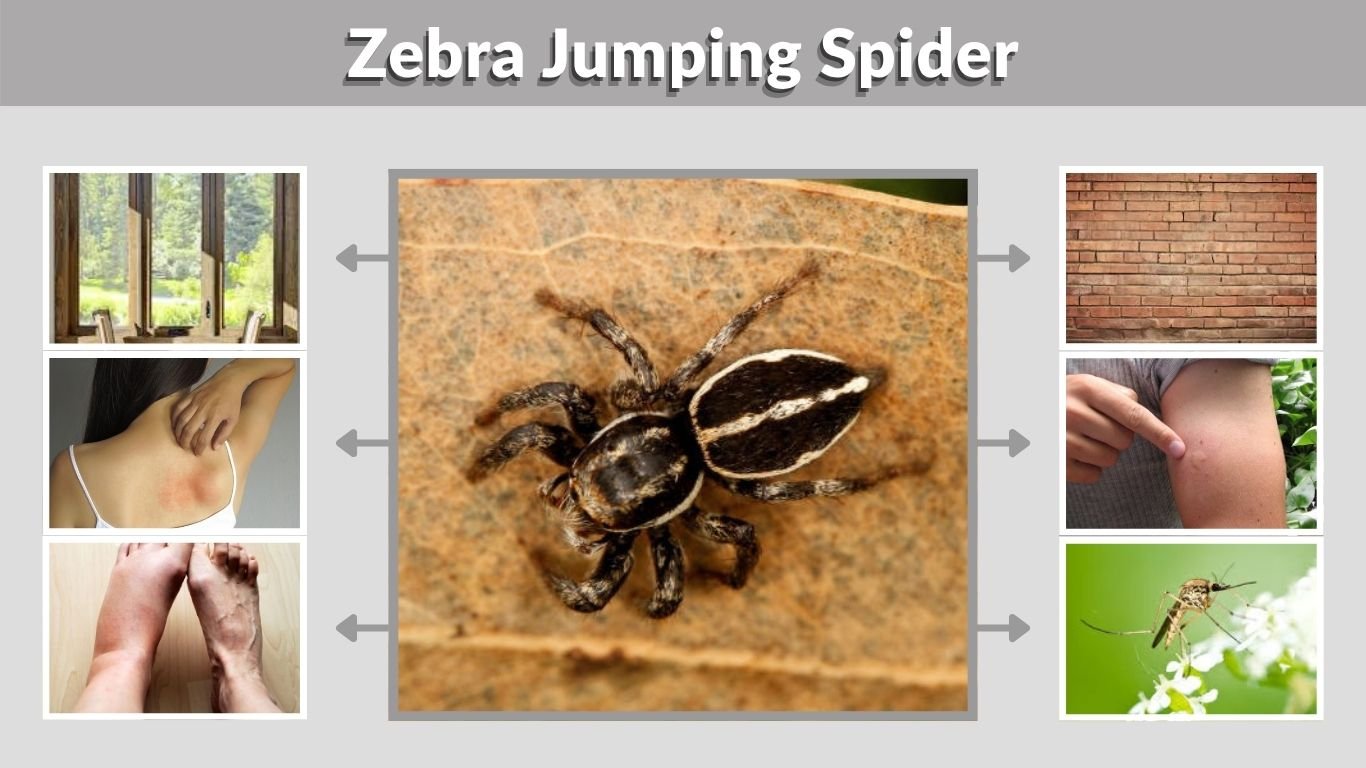
The zebra jumping spider is a tiny but eye-catching spider known for its black-and-white striped body, alert movements, and impressive jumping ability. Scientifically called Salticus scenicus, this species belongs to the jumping spider family, Salticidae. It is commonly found on walls, fences, windowsills, decks, and sunny outdoor surfaces. Although it may look bold when it turns to face you, the zebra jumping spider is harmless to humans and helpful because it hunts small insects.
What Is a Zebra Jumping Spider?
The zebra jumping spider is a small, active hunting spider. Its common name comes from the pale and dark bands across its body, which resemble zebra stripes. This spider is widely recognized in the Northern Hemisphere and is especially familiar around buildings, gardens, and sunny walls. Penn State Extension lists the zebra jumper as Salticus scenicus in the family Salticidae and notes that it is beneficial and does not have a medically significant bite.
Unlike web-building spiders that wait for insects to become trapped, zebra jumping spiders hunt by sight. They watch prey, move closer, attach a silk safety line, and then jump. Their behavior makes them one of the most interesting small spiders to observe.
Zebra Jumping Spider Facts
The zebra jumping spider is small, but it has several features that make it easy to recognize. Its striped body, large eyes, and jerky movements are classic signs of a jumping spider.
| Feature | Details |
|---|---|
| Common Name | Zebra Jumping Spider |
| Other Names | Zebra Spider, Zebra Jumper |
| Scientific Name | Salticus scenicus |
| Family | Salticidae |
| Common Size | About 1/4 inch; females often 5–9 mm |
| Main Colors | Black, dark brown, white, gray |
| Habitat | Walls, fences, decks, windows, buildings |
| Diet | Flies, gnats, mosquitoes, small insects |
| Human Risk | Low; bite is not medically significant |
Zebra Jumping Spider Identification
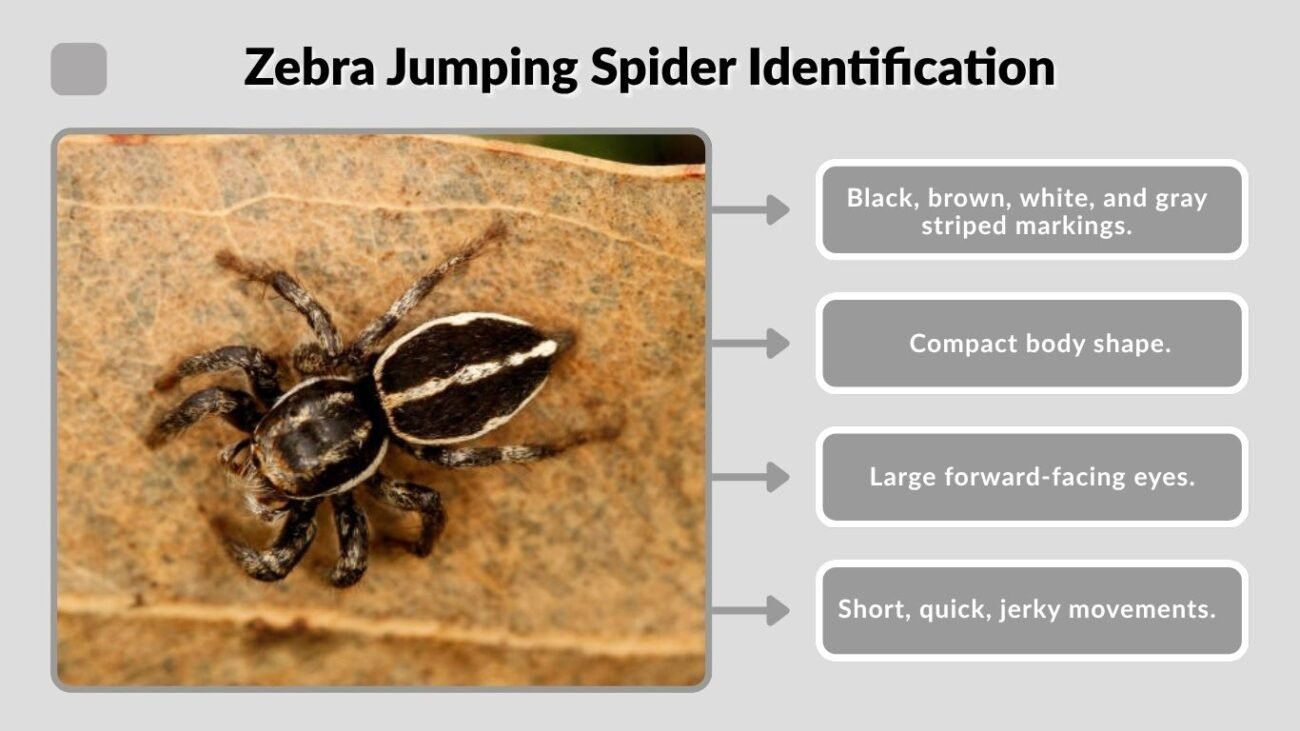
The zebra jumping spider is usually easy to identify once you know what to look for. Its body is compact, dark brown to black, and marked with pale white or gray stripes. The University of Minnesota Extension describes it as about 1/4 inch long, compact, dark brown to black with white stripes, with two especially large eyes among its eight eyes.
Key Identification Features
A zebra jumping spider may have:
- Black, brown, white, and gray striped markings
- Compact body shape
- Large forward-facing eyes
- Short, quick, jerky movements
- Ability to jump suddenly
- Hairy legs and body
- Pale bands across the abdomen
- Active daytime behavior
Because of its size, it may be mistaken for a tiny black speck until it moves. Once it turns toward you or jumps, its identity becomes clearer.
Male vs Female Zebra Jumping Spider
Male and female zebra jumping spiders can look similar, but there are differences. Females are generally larger, with fuller abdomens. Males are often smaller and may have enlarged chelicerae, which are the mouthparts near the front of the face. In many descriptions, females measure about 5–9 mm, while males are closer to 5–6 mm.
Males may appear more active during mating season because they search for females. They may also perform courtship displays involving leg movements and body signals.
What Does a Zebra Jumping Spider Look Like?
The zebra jumping spider has a bold striped appearance. Its body is usually dark with pale bands, giving it a high-contrast look. These markings help it blend into surfaces such as stone, bark, wood, and building materials.
Eyes and Face
One of the most recognizable parts of a zebra jumping spider is its face. Like other jumping spiders, it has large front eyes that give it excellent vision. These eyes help it judge distance, track prey, and react to movement.
When a zebra jumping spider notices you, it may turn and face you directly. This does not mean it is aggressive. It is simply using its vision to understand what is nearby.
Body and Legs
The body is short, compact, and slightly flattened. The legs are usually banded and covered with fine hairs. These hairs help the spider sense vibrations and grip different surfaces. Jumping spiders also have specialized hairs on their feet that help them cling to vertical and smooth surfaces; Animal Diversity Web notes that dense scopulae on the feet help jumping spiders stick to smooth vertical substrates.
Zebra Jumping Spider Habitat
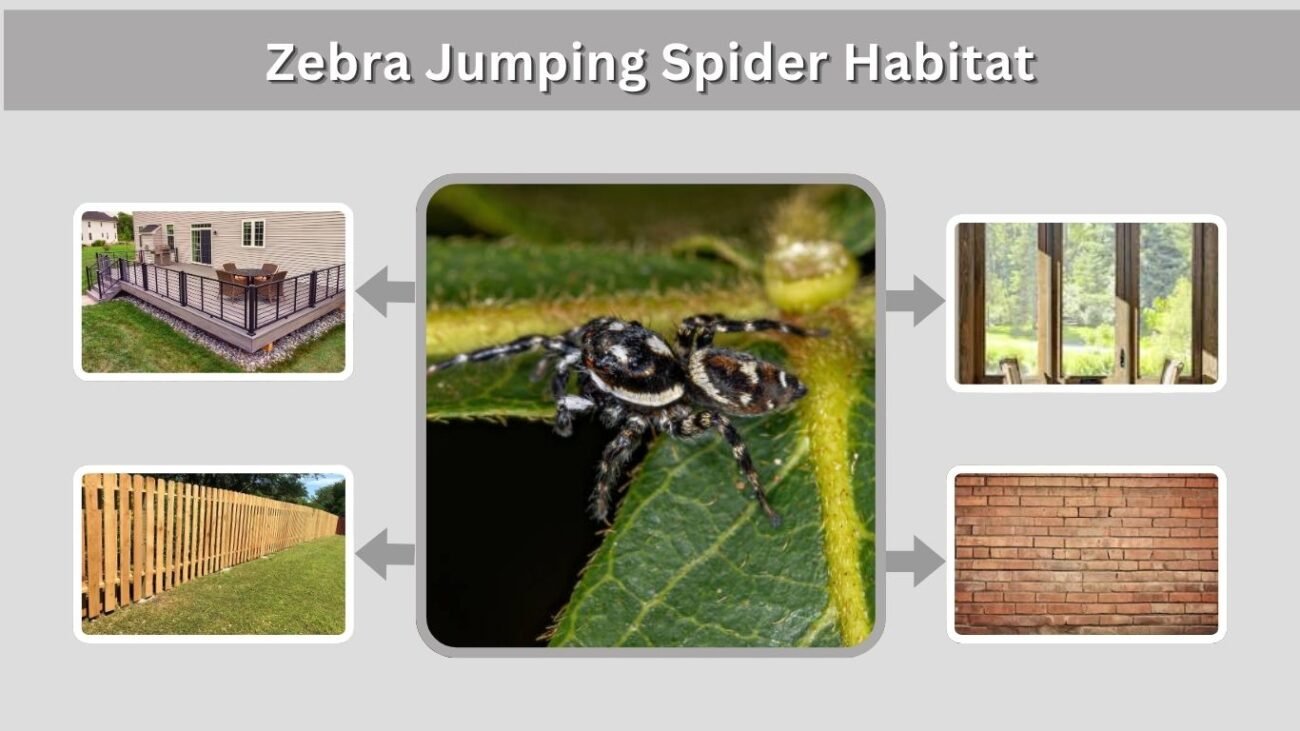
Zebra jumping spiders are highly adaptable and often live close to people. They are commonly seen on sunny walls, fences, window frames, garden structures, decks, and outdoor furniture. The University of Minnesota Extension notes that they can be found hunting on fences, decks, and around buildings, especially near windows during summer.
Common Places to Find Them
You may see zebra jumping spiders in:
- Window frames
- Sunny walls
- Deck railings
- Fences
- Garden sheds
- Tree bark
- Stone walls
- Outdoor furniture
- House siding
- Door frames
- Around porch lights
They are often found where small insects gather. Windows and lights attract flies and gnats, which makes these areas useful hunting grounds.
Indoor Sightings
A zebra jumping spider inside the house is usually not a problem. It may have wandered in while chasing prey or looking for shelter. These spiders do not infest homes in large numbers and do not damage food, furniture, clothing, or wood.
If you do not want it indoors, you can gently relocate it outside with a cup and paper.
Zebra Jumping Spider Behavior
The zebra jumping spider is active during the day. It relies on vision rather than vibration-based web hunting. This daytime activity makes it easier for people to notice compared with many night-active spiders.
Hunting Style
Zebra jumping spiders are skilled hunters. They do not spin prey-catching webs. Instead, they stalk insects like tiny cats.
Their hunting process usually includes:
- Spotting a small insect
- Turning toward the prey
- Moving closer in short bursts
- Pausing to judge distance
- Attaching a silk safety line
- Jumping onto the prey
- Using venom to subdue it
The jump is controlled rather than random. Before leaping, the spider often secures itself with silk, which acts like a safety rope.
Why They Move in Jerks
Many people notice that zebra jumping spiders move in short, sudden bursts. This jerky movement helps them scan, stop, watch, and reposition. It also helps them avoid predators by making their path less predictable.
What Do Zebra Jumping Spiders Eat?
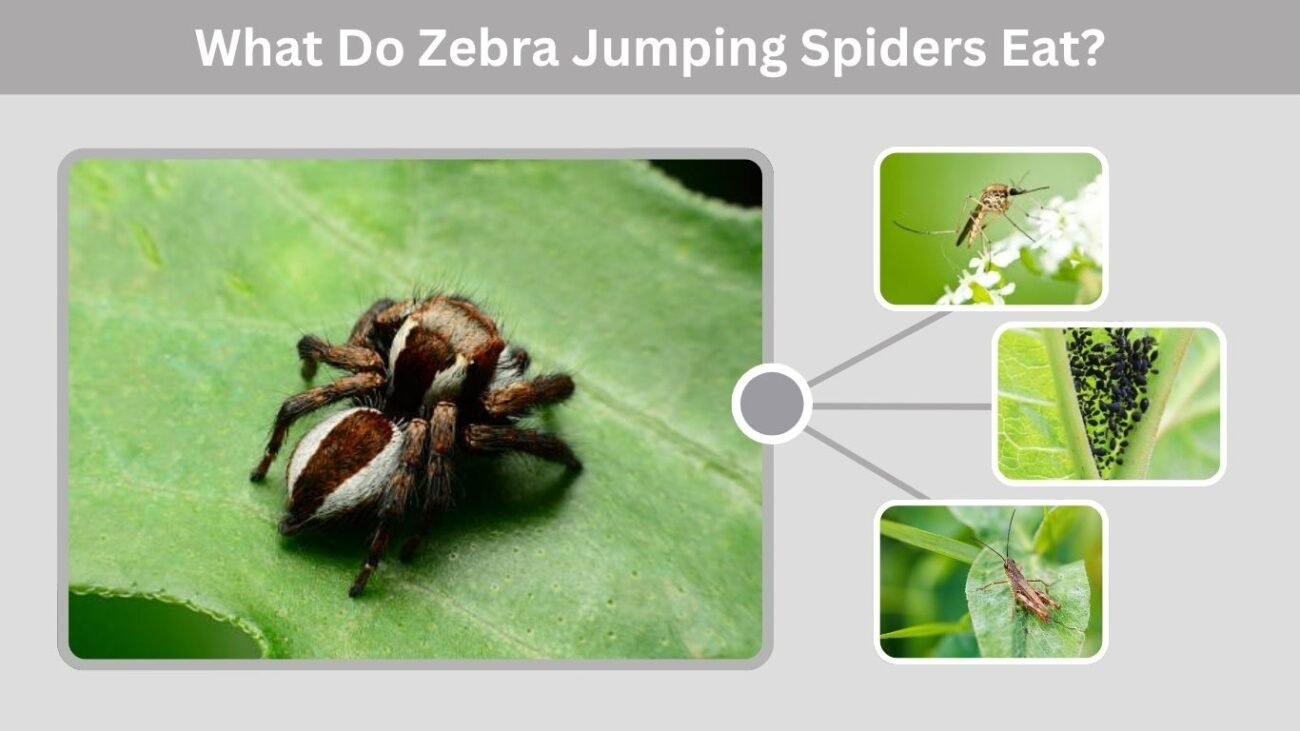
Zebra jumping spiders are carnivores. They eat small insects and other tiny arthropods. Their diet makes them helpful around homes and gardens.
Common Prey
A zebra jumping spider may eat:
- Flies
- Gnats
- Mosquitoes
- Small moths
- Aphids
- Leafhoppers
- Tiny beetles
- Other small spiders
- Soft-bodied insects
They are beneficial because they naturally reduce pest insects. Since they do not create messy webs in corners, many people prefer to leave them alone.
Zebra Jumping Spider Bite
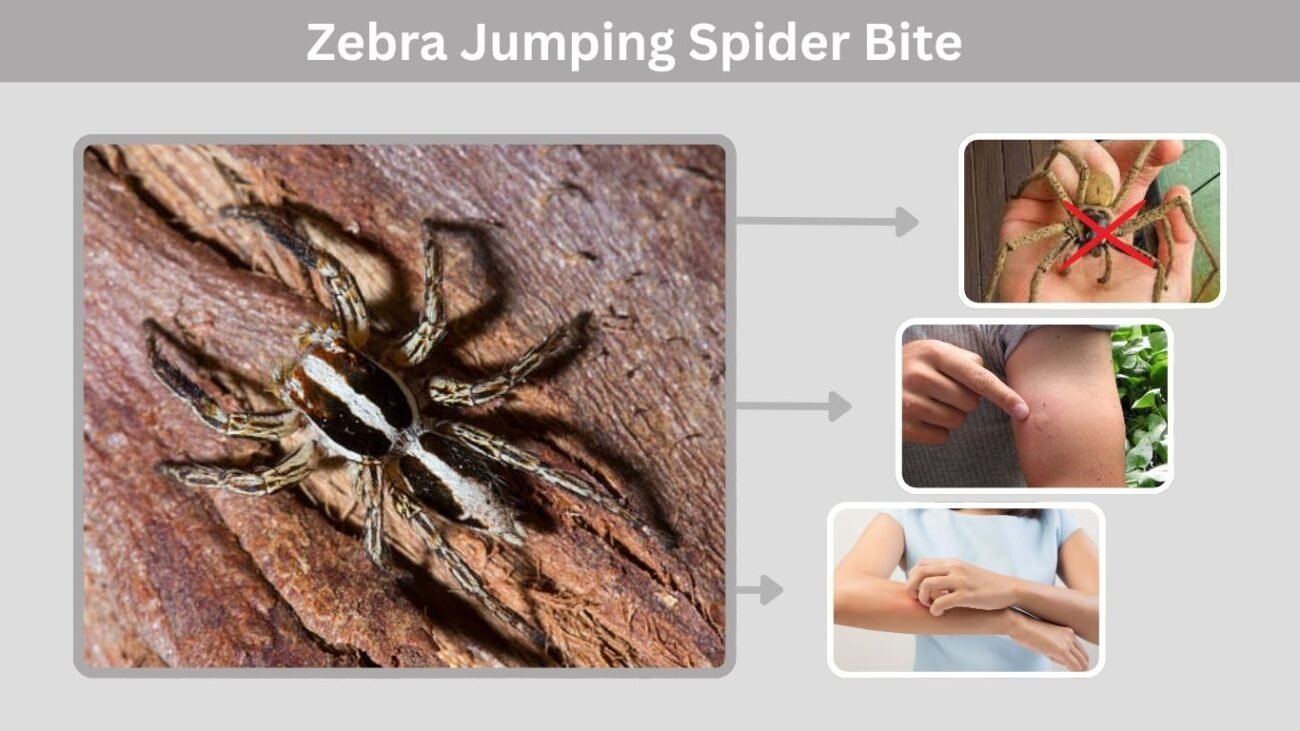
The zebra jumping spider is not considered dangerous to humans. It can bite, but bites are rare and usually happen only when the spider is trapped, squeezed, or handled roughly. Penn State Extension states that zebra jumpers do not have a medically significant bite and are considered beneficial.
What Happens If It Bites?
Most people experience little to no serious reaction. A bite may cause mild redness, slight swelling, or brief irritation. Anyone who experiences severe pain, allergic symptoms, spreading swelling, or breathing difficulty should seek medical advice, but this is unusual.
How to Avoid Bites
The best way to avoid a bite is simple: do not squeeze or grab the spider. If you need to move it, use the cup-and-paper method. This protects both you and the spider.
Does the Zebra Jumping Spider Make Webs?
Yes, zebra jumping spiders make silk, but they do not use large webs to catch prey. Instead, they use silk for practical purposes. They may build small silk retreats in cracks, corners, or sheltered spaces.
They use silk for:
- Safety lines before jumping
- Resting shelters
- Molting retreats
- Egg sacs
- Protection during bad weather
A small silk retreat near a window or door frame may belong to a zebra jumping spider.
Life Cycle and Reproduction
Zebra jumping spiders reproduce like other spiders. Males search for females and may perform courtship displays. These displays can include leg movements, body vibrations, and careful approaches. Courtship is important because females may treat a careless male as prey.
Egg Sacs and Spiderlings
After mating, the female creates a silk egg sac in a protected spot. She may guard it until the young hatch. Baby zebra jumping spiders, called spiderlings, are extremely small. They begin hunting tiny prey soon after dispersing.
As they grow, they molt several times. Molting allows them to shed their old exoskeleton and form a larger one. During molting, they are vulnerable and usually stay hidden.
Zebra Jumping Spider Lifespan
The zebra jumping spider has a relatively short lifespan compared with larger pet spiders. Many live around one year, though survival depends on weather, food supply, predators, and shelter. In cooler areas, they may use protected spaces to survive unfavorable conditions.
Indoors, they may survive for a time if small prey is available, but dry indoor conditions can be stressful.
Are Zebra Jumping Spiders Good Pets?
Some people keep zebra jumping spiders as temporary observation pets. They are small, active, and interesting to watch. However, they are not as commonly kept as regal jumping spiders or bold jumping spiders.
Basic Care Needs
A zebra jumping spider kept briefly for observation needs:
- A small secure enclosure
- Good ventilation
- Small climbing surfaces
- A hiding place
- Tiny feeder insects
- Light misting for drinking droplets
- Protection from overheating
Because they are very small, they are easy to lose and should not be handled much. They are best enjoyed through observation.
Zebra Jumping Spider vs Other Jumping Spiders
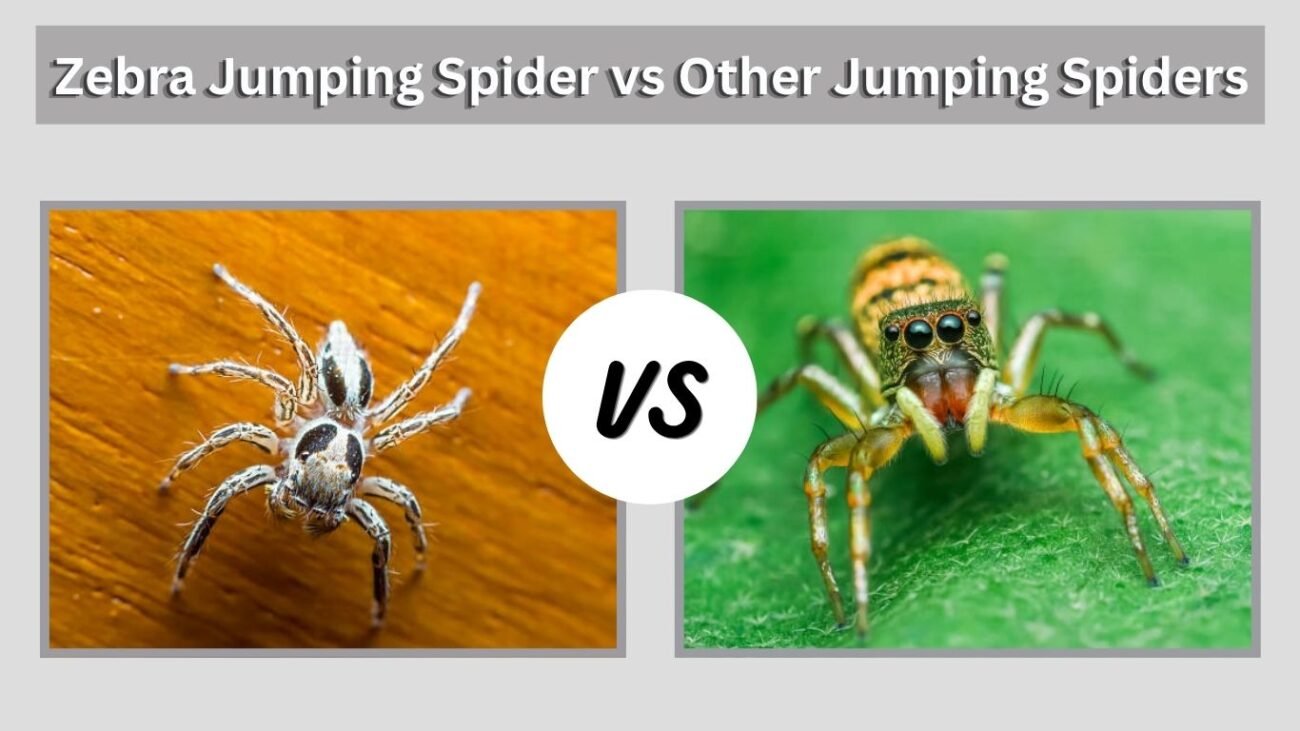
The zebra jumping spider can be confused with other small jumping spiders. Its most important identifying feature is the high-contrast striped pattern.
Zebra Jumping Spider vs Bold Jumping Spider
The bold jumping spider is usually larger and mostly black with bright white spots. It may also have metallic green or blue chelicerae. The zebra jumping spider is smaller and has a more striped, banded appearance.
Zebra Jumping Spider vs Tan Jumping Spider
The tan jumping spider is usually flatter and more camouflaged with brown, gray, and tan markings. The zebra jumping spider has stronger black-and-white striping and is often seen on sunny walls and windows.
Benefits of Zebra Jumping Spiders
Zebra jumping spiders are useful predators. They eat small insects and help maintain balance in gardens, yards, and around buildings.
Their benefits include:
- Reducing flies and gnats
- Hunting mosquitoes and small pests
- Avoiding messy prey-catching webs
- Living peacefully near humans
- Supporting local food chains
They do not chew wood, spread disease, or infest stored food. In most cases, they should be left alone or gently moved outside.
How to Safely Relocate a Zebra Jumping Spider
If you find a zebra jumping spider indoors and want it outside, avoid crushing or grabbing it. Place a small cup over the spider, slide a piece of paper underneath, and carry it outdoors. Release it near a sheltered wall, garden plant, fence, or tree bark.
This method is safe, easy, and prevents unnecessary harm.
FAQs
Are zebra jumping spiders dangerous?
Zebra jumping spiders are not dangerous to humans. Their bite is not considered medically significant, and they usually avoid people. They may bite only if trapped or squeezed, but most encounters are harmless.
What do zebra jumping spiders eat?
Zebra jumping spiders eat small insects such as flies, gnats, mosquitoes, tiny moths, aphids, and other small arthropods. They hunt by sight and jump on prey instead of catching it in webs.
Why are zebra jumping spiders in my house?
They may enter homes while hunting insects or looking for shelter. They are often found near windows because sunlight and small insects attract them. Their presence does not usually mean there is an infestation.
Can zebra jumping spiders jump far?
Yes. Zebra jumping spiders can jump many times their body length. They use these jumps to catch prey, escape danger, and move between surfaces. Before jumping, they often attach a silk safety line.
Do zebra jumping spiders make webs?
They make silk, but they do not build large webs to trap insects. They use silk for safety lines, resting shelters, egg sacs, and molting retreats. Their main hunting method is stalking and jumping.