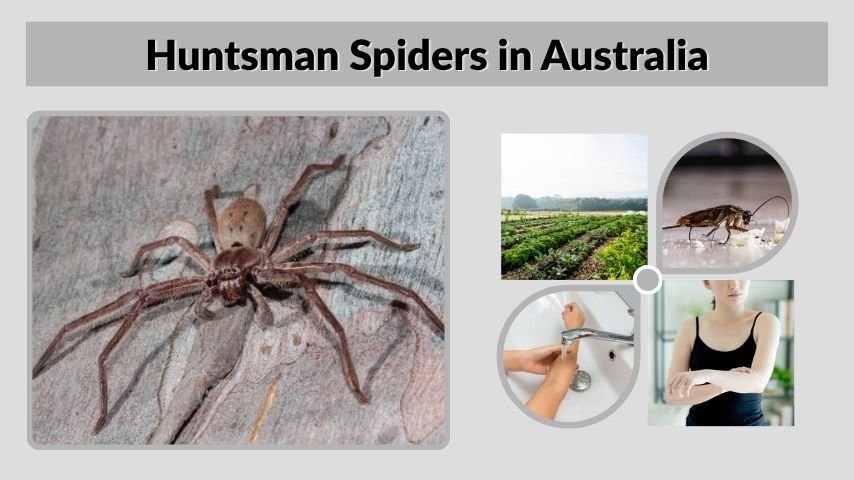
Huntsman spiders in Australia are famous for their large size, long legs, and sudden appearances on walls, ceilings, curtains, and even cars. Although they look alarming, these spiders are usually not aggressive toward people and are often helpful around homes because they hunt insects. This guide explains how common Australian huntsman spiders are, how big they get, where they live, whether they are dangerous, and what to do if you find one indoors.
What Are Huntsman Spiders in Australia?
Huntsman spiders are a group of large, fast-moving spiders from the family Sparassidae. In Australia, they are among the most recognisable household spiders because they often appear on walls, ceilings, fences, tree trunks, and inside sheds or garages.
They are sometimes called “wood spiders” because many species naturally live under loose bark, in logs, and around woody spaces. Their flat bodies and sideways-spreading legs help them squeeze into narrow cracks. This is one reason they can suddenly appear from behind curtains, picture frames, cupboards, car sun visors, or furniture.
Despite their frightening appearance, huntsman spiders are not the same as highly dangerous Australian spiders such as funnel-web spiders. They are active hunters rather than web-building trap spiders. Instead of spinning a web to catch prey, they chase or ambush insects and other small arthropods.
How Common Are Huntsman Spiders in Australia?
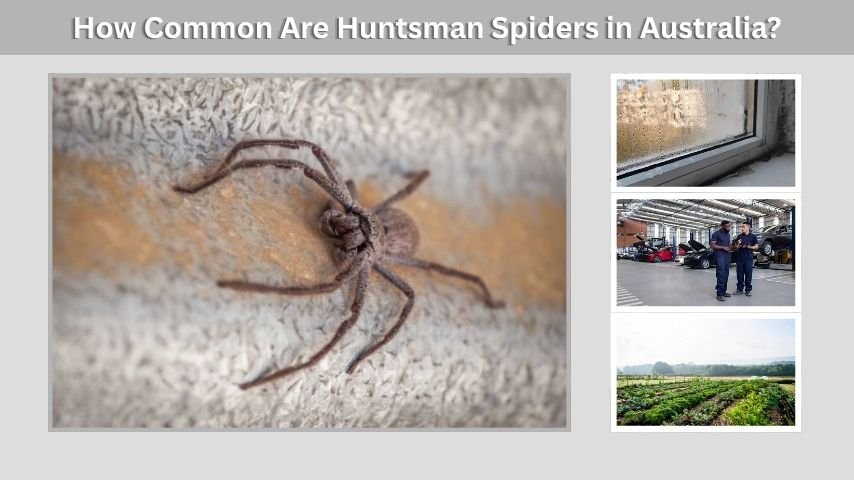
Huntsman spiders are very common in Australia, especially in warm areas and places with plenty of insects. Many Australians have seen one at least occasionally inside a house, shed, garage, garden, or car.
They are more noticeable because of their size and speed. A small spider may go unseen, but a large huntsman on a pale wall is hard to miss. This does not mean a house is “infested.” Often, a single huntsman has wandered indoors while searching for food, shelter, or a mate.
Places You May See Them
Huntsman spiders may appear in many everyday areas, including:
- House walls, ceilings, curtains, and window frames
- Garages, sheds, storage rooms, and outdoor furniture
- Gardens, fences, tree trunks, and under bark
- Cars, especially behind visors, dashboards, or door frames
- Wood piles, logs, and loose outdoor materials
They are especially active at night. During the day, they often hide in sheltered cracks or dark spaces, then come out after sunset to hunt.
How Big Are Huntsman Spiders in Australia?
Australian huntsman spiders are known for their impressive leg span. The body itself is usually much smaller than the full spread of the legs, but because the legs extend outward, the spider can look huge.
Many huntsman spiders have a body length of around 1.5 to 2 cm, while some can have a leg span reaching around 15 cm. This makes them look much larger than many other common house spiders.
| Feature | Typical Huntsman Spider in Australia |
|---|---|
| Family | Sparassidae |
| Body shape | Flattened body with long sideways legs |
| Common size | Body around 1.5–2 cm |
| Large leg span | Up to about 15 cm in some species |
| Movement | Fast, sideways, and sudden |
| Main diet | Insects and other arthropods |
| Web use | Does not build a web to catch prey |
| Human danger level | Usually low, but bites can hurt |
The phrase “giant huntsman spider” is often used online, but not every large huntsman in Australia is a true giant species. Many simply look enormous because of their long legs.
Are Australian Huntsman Spiders Dangerous?
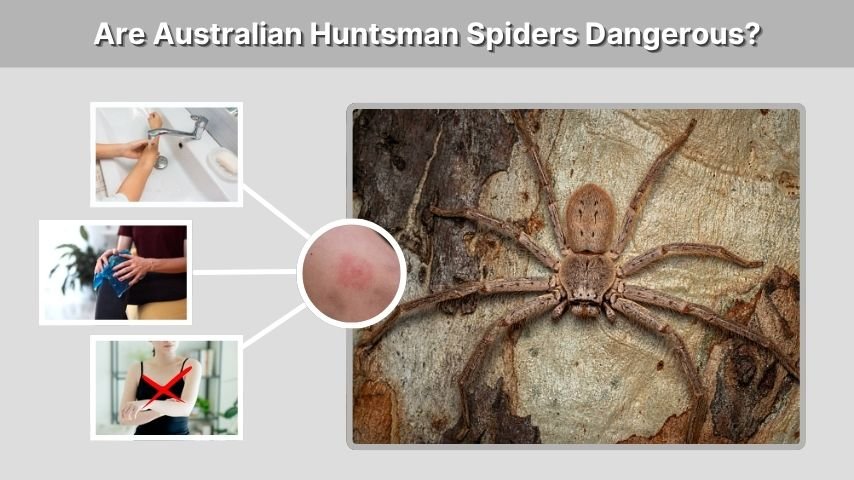
Australian huntsman spiders can bite, but they are not considered highly dangerous to humans. Their venom is used to subdue prey, not to hunt people. Most bites happen when a spider is trapped, handled, squeezed, or accidentally pressed against the skin.
A huntsman bite may cause pain, redness, swelling, or mild local symptoms. Serious reactions are uncommon, but any spider bite should be treated carefully, especially if symptoms worsen or the person bitten is a child, elderly person, or has allergies.
What To Do If You Are Bitten
If you think a huntsman spider has bitten you:
- Wash the bite area with soap and water.
- Apply a cold pack to reduce pain or swelling.
- Avoid scratching the bite.
- Monitor symptoms for changes.
- Seek medical advice if pain, swelling, illness, or allergic symptoms develop.
Do not try to handle the spider for identification if doing so puts you at risk. A clear photo from a safe distance can be more useful than trying to catch it.
Are Huntsman Spiders Poisonous or Venomous?
People often ask whether huntsman spiders are poisonous or venomous. Technically, huntsman spiders are venomous, not poisonous.
A venomous animal injects venom through a bite or sting. A poisonous animal causes harm when touched or eaten. Huntsman spiders have venom, but their venom is mainly used against insects and other small prey.
This distinction matters because many searchers ask, “Are huntsman spiders in Australia poisonous?” The more accurate question is, “Are huntsman spiders in Australia venomous?” The answer is yes, but they are not usually dangerous to healthy adults.
Where Do Huntsman Spiders Live in Australia?
Huntsman spiders are found across much of Australia. They live in forests, gardens, woodlands, suburban homes, sheds, and dry outdoor spaces. Their natural habitat often includes bark, tree trunks, rocks, logs, and cracks where they can hide during the day.
They are adaptable spiders, which is why people see them in both natural and human-made environments. Homes can provide warmth, shelter, and food, especially where insects such as cockroaches, moths, and flies are present.
Common Indoor Hiding Spots
Inside homes, huntsman spiders may hide in:
- Behind curtains or picture frames
- Inside cupboards or wardrobes
- Under furniture
- Around ceiling corners
- Near windows and doors
- In garages, sheds, or storage boxes
In cars, they may hide behind sun visors, mirrors, dashboards, and door seals. Their sudden movement inside a vehicle can startle drivers, so it is safest to pull over calmly if one appears while driving.
What Do Huntsman Spiders Eat in Australia?
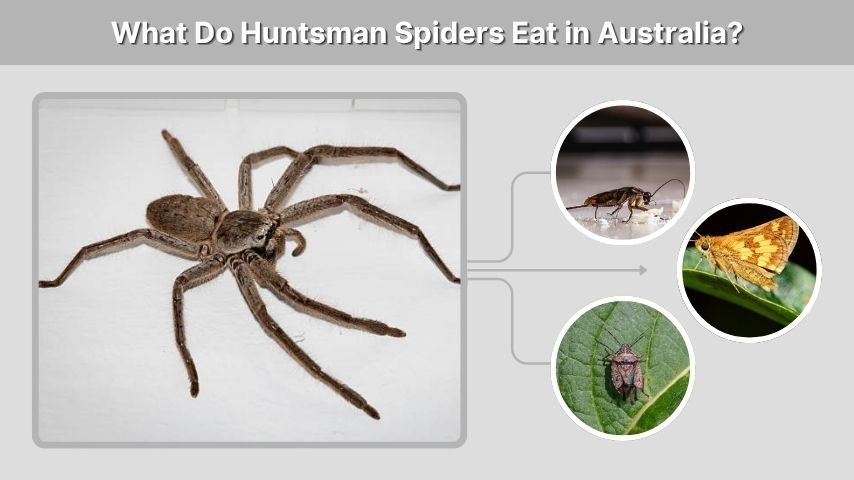
Huntsman spiders are carnivorous hunters. They mostly eat insects and other arthropods, making them useful natural pest controllers.
Their diet may include cockroaches, moths, beetles, flies, crickets, and other small invertebrates. Larger huntsman spiders may take larger prey, but they still primarily target creatures much smaller than humans.
Because they help control insects, some people choose to leave huntsman spiders alone if they are in a low-risk area such as a shed, garage, or garden. However, if someone in the home is afraid of spiders, has young children, or the spider is in a bedroom or car, relocation may be better.
Types of Huntsman Spiders in Australia
Australia has many huntsman spider species. They can vary in colour, size, pattern, and preferred habitat. Some are grey or brown with mottled markings that help them blend into bark and stone. Others may look flatter, darker, or more banded.
The most familiar huntsman spiders are the large brown or grey spiders seen around houses. Their long legs often angle forward and sideways, giving them a crab-like stance. This body shape helps them move quickly across flat surfaces and into narrow spaces.
Not every large spider in Australia is a huntsman, so identification should be cautious. Wolf spiders, trapdoor spiders, and other groups may be confused with huntsman spiders by people who are not familiar with spider features.
Are Huntsman Spiders Native to Australia?
Many huntsman spiders are native to Australia, but huntsman spiders as a group are not found only in Australia. The family Sparassidae occurs in many parts of the world, especially in warm climates.
Australia is strongly associated with huntsman spiders because they are common, large, and often visible in homes. Viral photos and travel stories have also made them one of the best-known Australian spiders internationally.
So, the answer is: huntsman spiders are common and many are native to Australia, but they are not exclusive to Australia.
Do Australians Keep Huntsman Spiders as Pets?
Some spider enthusiasts keep huntsman spiders, but they are not typical pets for most Australians. Many people simply tolerate them around the home because they eat pests. Others prefer to remove them because of fear or because the spider is in an inconvenient place.
Keeping a huntsman spider requires proper knowledge, secure housing, suitable humidity, safe feeding, and ethical sourcing. Wild spiders should not be collected casually, and local rules may apply depending on the species and location.
For most people, the better option is to admire huntsman spiders from a distance or relocate them safely outdoors.
How To Get Rid of Huntsman Spiders in Australia
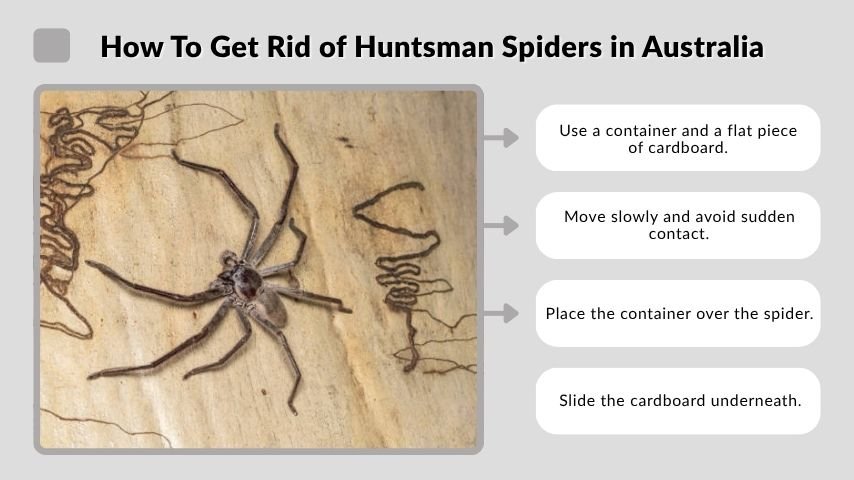
The safest way to deal with a huntsman spider is usually relocation rather than killing it. These spiders are beneficial predators, and most are not looking to harm people.
Safe Removal Tips
To remove a huntsman spider:
- Use a container and a flat piece of cardboard.
- Move slowly and avoid sudden contact.
- Place the container over the spider.
- Slide the cardboard underneath.
- Release the spider outside near trees, shrubs, or shelter.
- Keep doors and windows sealed to reduce future entry.
If you are afraid of spiders or the spider is in a difficult spot, ask someone confident to help. For repeated spider problems, reduce insect numbers, seal gaps, clear clutter, and keep outdoor lights from attracting too many bugs near entry points.
Why Huntsman Spiders Enter Homes and Cars
Huntsman spiders usually enter homes and cars by accident or while searching for food, shelter, or mates. They may slip through gaps around doors, windows, vents, roof spaces, or stored items brought inside.
Cars can attract huntsman spiders because they provide tight hiding spots and warmth. A spider may crawl into a vehicle parked near trees, gardens, or garages. Once inside, it may stay hidden until movement, vibration, or heat causes it to emerge.
To reduce the chance of spiders entering, park away from dense vegetation when possible, check sun visors before driving in spider-prone areas, and avoid leaving car windows open overnight.
FAQs
Are huntsman spiders common in Australia?
Yes, huntsman spiders are common in many parts of Australia. They are often seen in homes, gardens, sheds, garages, and cars. Their large size makes them more noticeable than many other spiders, but seeing one does not always mean there is a spider infestation.
How big do huntsman spiders get in Australia?
Some Australian huntsman spiders can reach a leg span of around 15 cm, although the body is much smaller. Their long, sideways-spreading legs make them look larger than they really are. Size varies depending on the species, age, and sex of the spider.
Are Australian huntsman spiders dangerous to humans?
Huntsman spiders can bite, but they are not usually considered dangerous to humans. A bite may be painful and cause local swelling or redness. Serious symptoms are uncommon, but medical advice is recommended if symptoms worsen or if the person bitten feels unwell.
What do huntsman spiders eat in Australia?
Huntsman spiders mainly eat insects and other arthropods. Their prey can include cockroaches, moths, beetles, flies, and crickets. Because of this, many people see them as helpful natural pest controllers, especially around garages, sheds, and gardens.
Where are huntsman spiders found in Australia?
Huntsman spiders are found across much of Australia in natural and urban environments. They live under bark, in trees, around logs, in gardens, and inside buildings. Indoors, they may hide behind curtains, furniture, wall frames, cupboards, and ceiling corners.