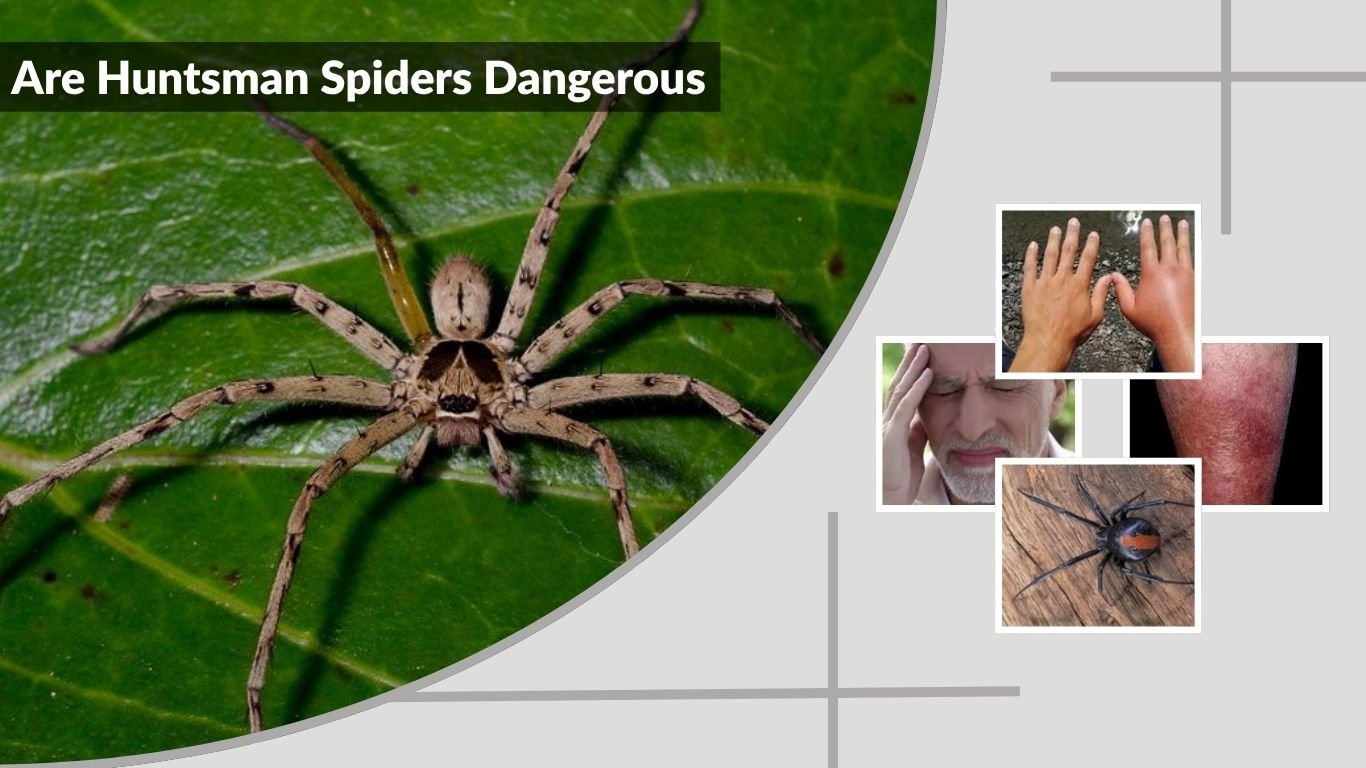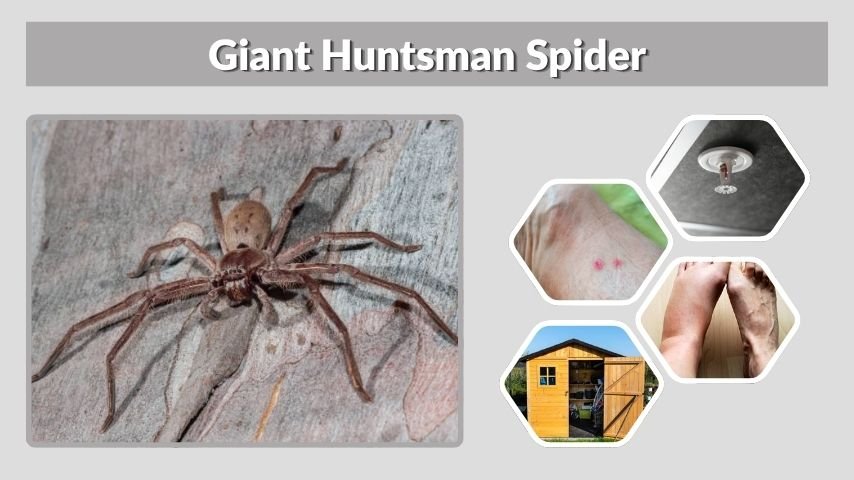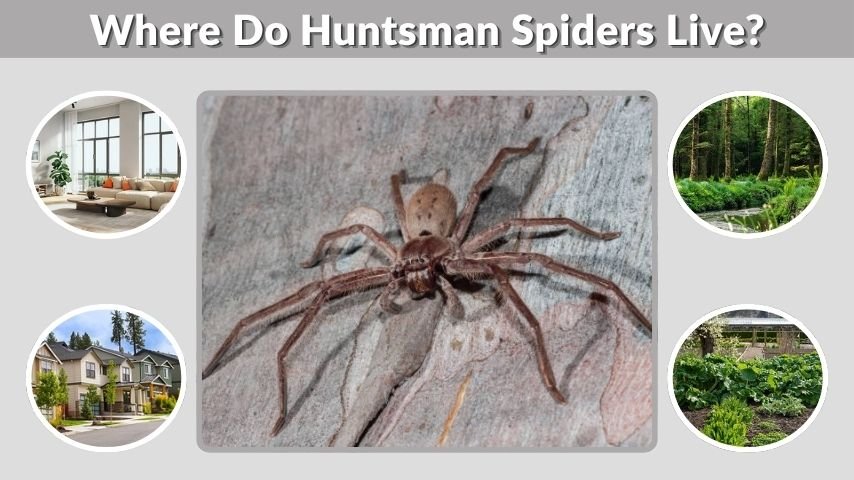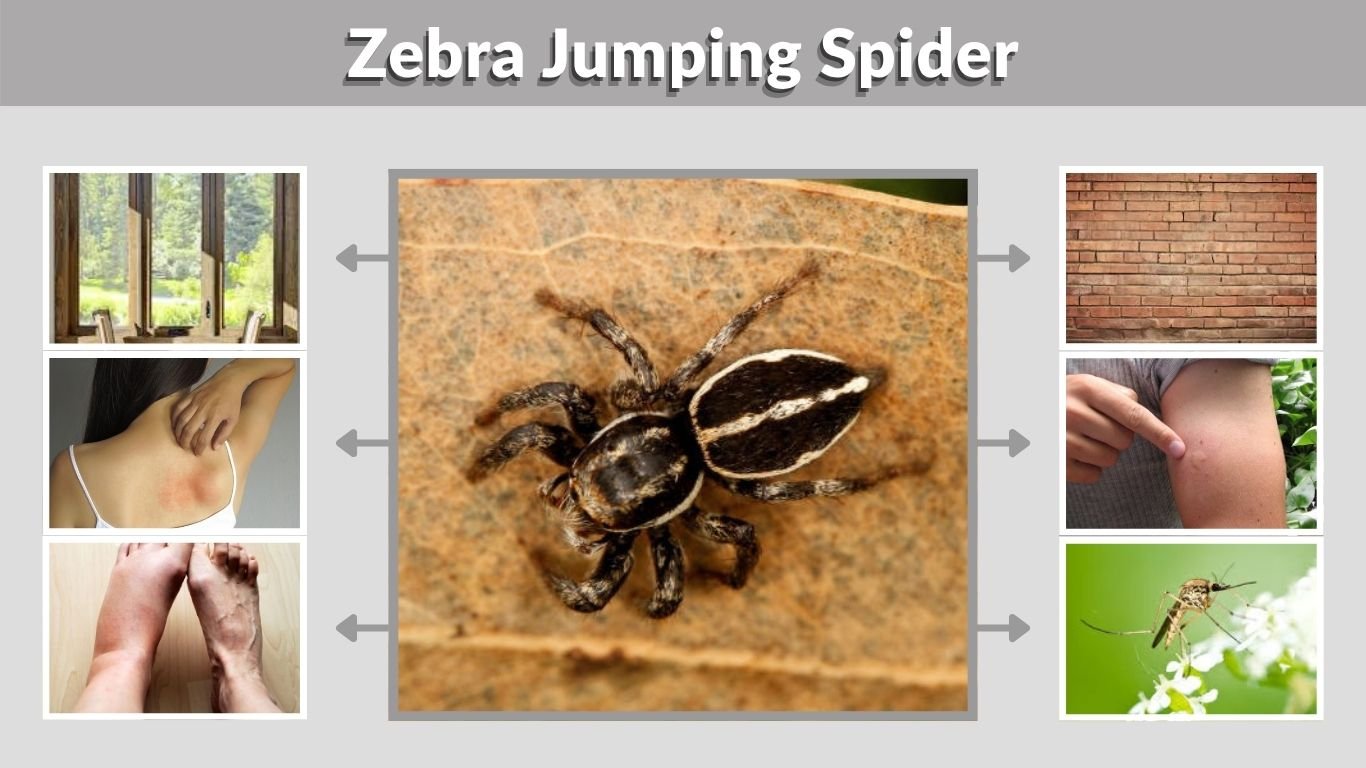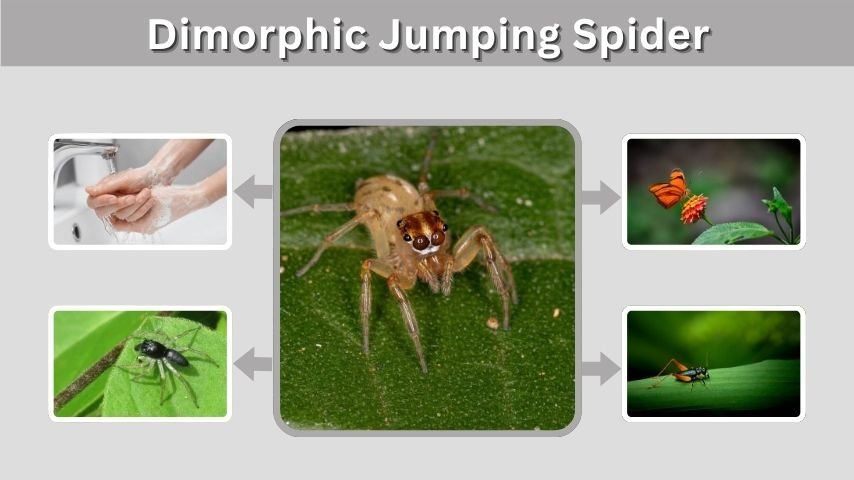
The dimorphic jumping spider is one of the most unusual jumping spiders in North America. Its name comes from the fact that adult males appear in two very different forms, which is rare among spiders. Some males are dark and tufted, while others are gray and striped. This guide explains how to identify them, where they live, how big they get, and whether their bite is dangerous.
What Is a Dimorphic Jumping Spider?
The dimorphic jumping spider, also called the dimorphic jumper, is a species of jumping spider known scientifically as Maevia inclemens. It belongs to the family Salticidae, the jumping spider family. Like other jumping spiders, it has large front-facing eyes, strong vision, and a habit of stalking prey instead of building a web to trap it.
This spider is especially interesting because of its males. Most spider species have males and females that look different, but the dimorphic jumping spider goes a step further. Adult males come in two separate visual forms, often called morphs. One male form is dark with tufts, while the other is gray or striped.
These two male forms are so different that they can look like separate species at first glance. However, both are the same species and both can mate successfully with females.
Dimorphic Jumping Spider Identification
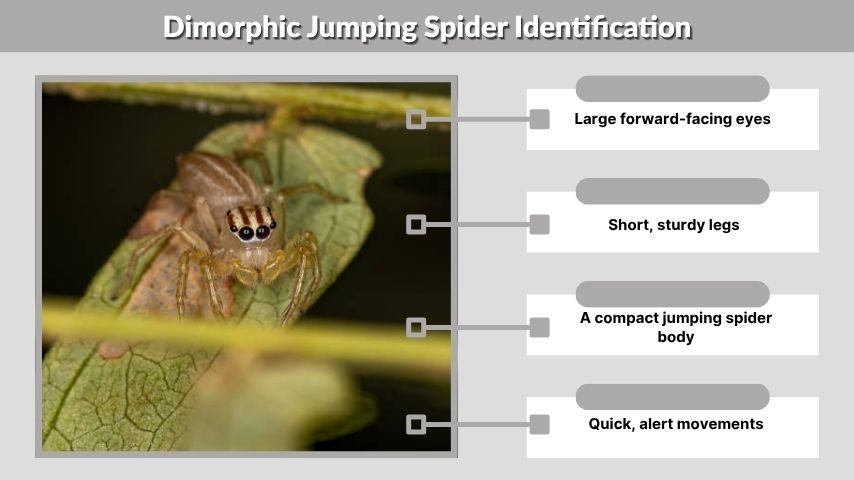
Identifying a dimorphic jumping spider depends on whether you are looking at a male, female, or juvenile. Males are usually the easiest to recognize because of their two distinct forms. Females are less dramatic but still have recognizable markings.
General Appearance
A dimorphic jumping spider has the typical compact body shape of a jumping spider. It is small, alert, and usually hairy or slightly fuzzy. Its body is divided into two main parts: the cephalothorax at the front and the abdomen at the back.
Common features include:
- Large forward-facing eyes
- Short, sturdy legs
- A compact jumping spider body
- Quick, alert movements
- Fuzzy or hairy body texture
- A habit of turning toward movement
Because jumping spiders rely heavily on vision, they may appear curious when they notice a person nearby. They often stop, turn, and seem to watch what is happening around them.
Where They Are Found
The dimorphic jumping spider is found in North America, especially in the eastern United States and parts of southeastern Canada. It may be seen on tree trunks, fences, walls, garden structures, low vegetation, and sometimes around buildings.
Like many jumping spiders, it is active during the day. It hunts by sight and may be found in sunny spots where small insects are available.
Dimorphic Jumping Spider Size
The dimorphic jumping spider is small, but its size can vary slightly depending on sex and maturity. Adult females are generally larger than males. Males are usually slimmer and more delicate-looking, while females tend to look fuller.
| Type | Approximate Size | Key Appearance |
|---|---|---|
| Adult male | About 4.75–6.5 mm | Smaller body, either dark tufted or gray striped form |
| Adult female | About 6.5–8 mm | Larger body, pale brown to rusty abdomen, less dramatic markings |
| Juvenile | Smaller than adults | Harder to identify, markings may not be fully developed |
Size alone is not enough for accurate identification. A young female may be smaller than a mature male, and a well-fed spider may look larger than usual. For the best ID, compare size with body shape, color pattern, and sex-specific features.
Male Dimorphic Jumping Spider
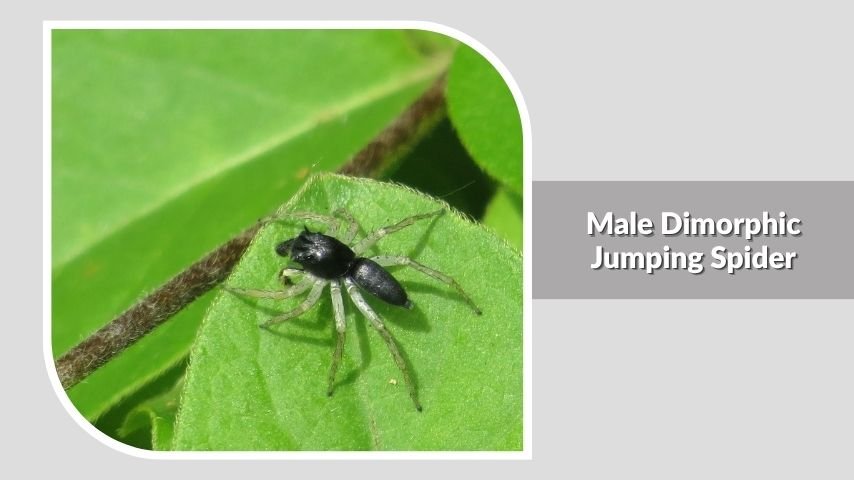
The male dimorphic jumping spider is the most famous part of this species. Unlike many spiders where males have only one main appearance, this species has two male morphs.
Both types are adult males of Maevia inclemens. They differ in color, body markings, and courtship behavior.
Tufted Dimorphic Jumping Spider Male
The tufted male is also sometimes called the dark morph. This form is usually black or very dark, with pale legs and noticeable tufts on the front part of the head area.
The tufted dimorphic jumping spider male may have:
- A dark or black body
- Pale or whitish legs
- Black pedipalps
- Three noticeable tufts on the head region
- A bold, high-standing courtship display
The tufts are one of the most important clues. If you see a small jumping spider with a black body, pale legs, and little tufts above the face, it may be a tufted male dimorphic jumping spider.
Gray Male Dimorphic Jumping Spider
The gray male morph looks completely different from the tufted form. Instead of being dark and tufted, this male is more striped and patterned.
A gray male dimorphic jumping spider may show:
- Gray, white, black, or striped body markings
- Striped legs
- Orange or reddish pedipalps
- No head tufts
- A lower, gliding courtship display
The gray male can be mistaken for another species because it lacks the dramatic black body and tufts of the dark morph. However, both male forms belong to the same species.
Female Dimorphic Jumping Spider
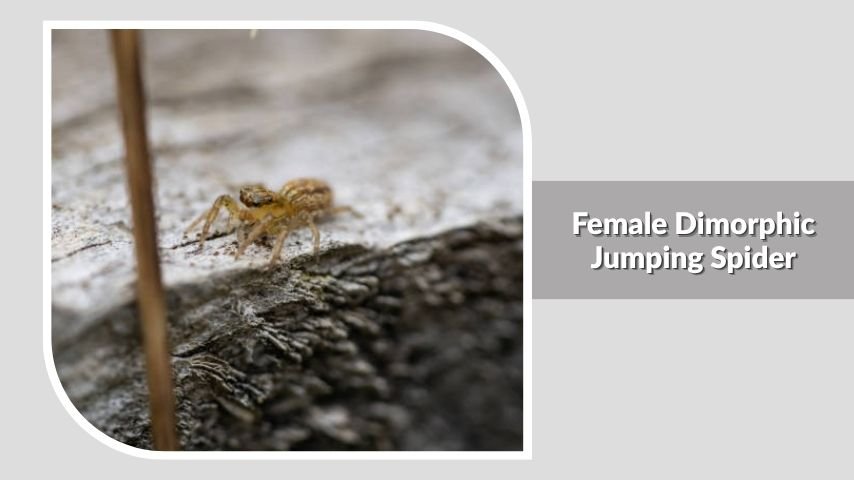
The female dimorphic jumping spider does not have the two dramatic forms seen in males. She is usually larger and less visually extreme. Her body is often pale brown, tan, rusty, or chalky in color, with darker side bands on the abdomen.
Females may have a white stripe below the front eyes and a softer overall pattern than males. Their legs are usually pale and less strongly marked.
A female dimorphic jumping spider may be identified by:
- Larger body size than males
- Tan, brown, rusty, or pale abdomen
- Dark bands along the sides of the abdomen
- No head tufts
- No orange male-style palps
- Fuller, rounder body shape
Females are important to recognize because they can be confused with the gray male morph. The easiest way to separate them is to look at the palps and overall body shape. Adult males have more developed pedipalps, while females tend to have a larger abdomen.
Juvenile Dimorphic Jumping Spider
A juvenile dimorphic jumping spider can be difficult to identify. Young spiders may not show the full adult color pattern yet. Male juveniles may not clearly show whether they will become tufted or gray adults until they mature.
Juveniles are also smaller, and their markings can look faint, incomplete, or slightly different from adults. Because of this, many young dimorphic jumping spiders are misidentified as other small jumping spiders.
When looking at a juvenile, pay attention to:
- Body shape
- Eye arrangement
- Early abdominal markings
- Location where it was found
- Whether adults of the same species are nearby
If you are trying to identify a baby dimorphic jumping spider, it is best to take clear photos and compare them after the spider molts and grows. Adult features become much easier to see later.
Dimorphic Jumping Spider Baby
A baby dimorphic jumping spider is very small and can be hard to identify without magnification. Like other spiderlings, it will go through several molts before reaching adult size. During this stage, sexing the spider is usually unreliable.
Baby jumping spiders are active hunters once they begin feeding. They prey on very small insects and other tiny arthropods. They may use silk for safety lines and resting retreats, but they do not build large prey-catching webs.
If you find tiny spiderlings near a window, wall, fence, or garden structure, they may be young jumping spiders. However, exact species identification can be difficult until they grow.
Dimorphic Jumping Spider Bite
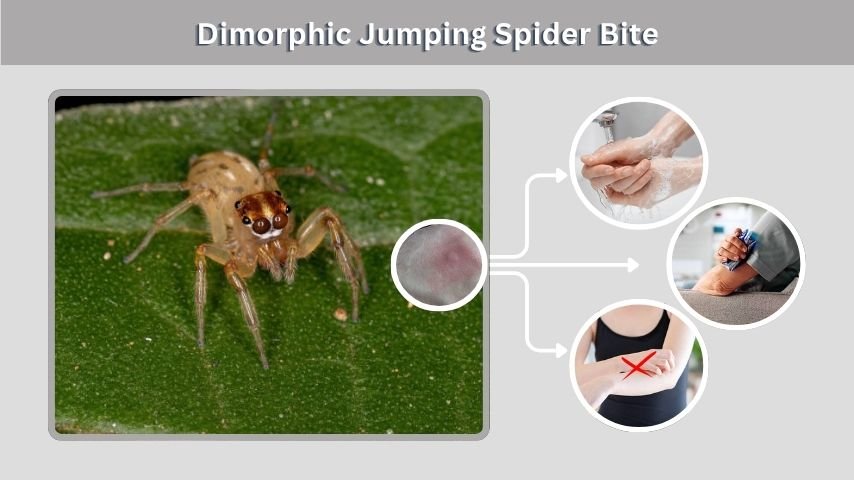
A dimorphic jumping spider bite is possible, but it is unlikely. These spiders are not aggressive toward humans. Like other jumping spiders, they would rather escape than bite. A bite may happen if the spider is pressed against the skin, trapped in clothing, or handled roughly.
If a bite occurs, symptoms are usually mild and local. A person may notice a small red spot, slight swelling, itching, or a brief stinging feeling. For most people, it is not a serious medical issue.
Basic care for a minor bite may include:
- Wash the area with soap and water
- Apply a cold compress
- Avoid scratching the bite
- Watch for unusual swelling or irritation
- Seek medical advice if symptoms worsen
People who are sensitive to insect or spider bites should be more cautious. If there is severe swelling, trouble breathing, dizziness, spreading redness, or signs of infection, medical help is important.
Is the Dimorphic Jumping Spider Poisonous?
The dimorphic jumping spider is not poisonous in the way people often use the word. Technically, jumping spiders are venomous because they use venom to subdue small insect prey. However, they are not considered dangerous to humans.
“Poisonous” usually means something is harmful if touched or eaten. “Venomous” means the animal injects venom through a bite or sting. The dimorphic jumping spider has venom for hunting insects, but its venom is not considered medically significant for people.
So, the simple answer is: the dimorphic jumping spider is venomous to tiny prey, but not dangerously poisonous to humans.
What Do Dimorphic Jumping Spiders Eat?
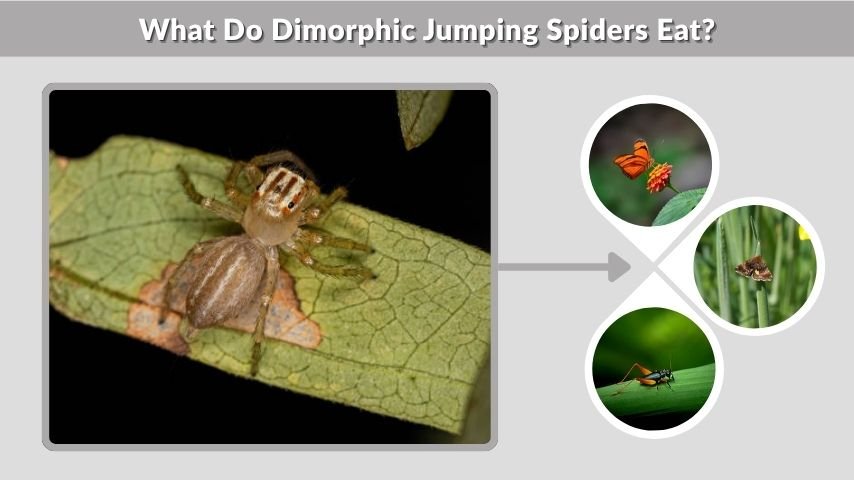
Dimorphic jumping spiders are active hunters. They do not sit in a web and wait for prey. Instead, they use their excellent eyesight to spot insects, stalk them, and jump at the right moment.
Their diet may include:
- Small flies
- Gnats
- Tiny moths
- Aphids
- Small insects
- Other tiny arthropods
This makes them helpful predators in gardens and around homes. They can reduce small insect populations naturally without causing problems for people.
Behavior and Courtship
The most fascinating behavior of the dimorphic jumping spider is its courtship. The two male morphs do not just look different; they also court females in different ways.
The tufted male tends to raise itself higher and display with its front legs and palps. Its dark body, pale legs, and head tufts make the display visually striking.
The gray male uses a different style. It tends to crouch lower and display with its striped legs and colored palps. Instead of looking like the tufted form, it creates a different visual signal for the female.
Both male types can be successful. This is one reason the species is so interesting to researchers and spider enthusiasts.
Dimorphic Jumping Spider vs Tan Jumping Spider
Some people search for “tan jumping spider sexual dimorphism” because they may confuse the dimorphic jumping spider with other tan or brown jumping spiders. The female dimorphic jumping spider can look tan or rusty, while the gray male may also appear pale or striped.
The key difference is the male dimorphism. If you find both tufted black males and gray striped males in the same species group, you may be looking at Maevia inclemens. Other tan jumping spiders may have male and female differences, but they do not usually show the same two distinct male forms.
For identification, use multiple features rather than color alone. Look at body shape, palps, markings, location, and whether head tufts are present.
Are Dimorphic Jumping Spiders Good to Have Around?
Yes, dimorphic jumping spiders are generally beneficial. They help control small insects and do not damage homes, plants, furniture, or clothing. They do not infest food, and they do not create messy web systems like some other spiders.
If one enters your home, you can gently relocate it outside using a cup and paper. There is usually no need to kill it. These spiders are small, harmless, and useful predators.
FAQs
What is a dimorphic jumping spider?
A dimorphic jumping spider is a small North American jumping spider known scientifically as Maevia inclemens. It is famous because adult males occur in two different forms: a dark tufted form and a gray striped form. Both are the same species.
Is a dimorphic jumping spider bite dangerous?
A dimorphic jumping spider bite is not usually dangerous. Bites are rare and normally happen only if the spider is trapped or handled roughly. Symptoms are usually mild, such as slight redness, swelling, itching, or a brief stinging feeling.
Is the dimorphic jumping spider poisonous?
No, the dimorphic jumping spider is not dangerously poisonous to humans. Like other jumping spiders, it is venomous to small prey, but its venom is meant for insects. It is not considered medically significant for people.
How big is a dimorphic jumping spider?
Adult males are usually about 4.75 to 6.5 mm long, while adult females are often around 6.5 to 8 mm. Females are generally larger and fuller-bodied. Juveniles and baby dimorphic jumping spiders are much smaller and harder to identify.
How can you tell a male dimorphic jumping spider?
A male dimorphic jumping spider may appear in one of two forms. The tufted male is dark with pale legs and head tufts. The gray male is striped and often has orange or reddish palps. These two male forms are the main reason the species is called dimorphic.