The bold jumping spider is one of the most recognizable jumping spiders, but telling a male from a female can still be tricky. Both sexes may look black, fuzzy, compact, and marked with bright white abdominal spots. The easiest way to compare them is to look at size, body shape, pedipalps, front legs, and maturity. This guide explains how to identify a male bold jumping spider vs female with confidence.
Male vs Female Bold Jumping Spider
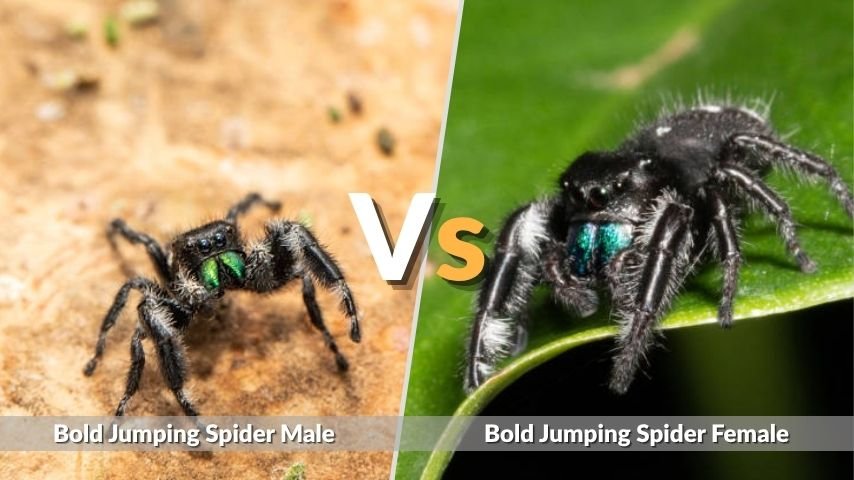
A male bold jumping spider is usually smaller, slimmer, and has enlarged pedipalps that look like tiny boxing gloves near the mouth. Males often have longer-looking front legs and may appear more active or restless when mature. A female bold jumping spider is usually larger, rounder, heavier-bodied, and has normal, thinner pedipalps.
However, the difference is not always obvious in young spiders. Juveniles are harder to sex because their reproductive features are not fully developed. For the most accurate identification, check an adult spider from the front and side, not just from the top.
Bold Jumping Spider Male vs Female Comparison Table
| Feature | Male Bold Jumping Spider | Female Bold Jumping Spider |
|---|---|---|
| Body size | Usually smaller and leaner | Usually larger and bulkier |
| Abdomen shape | Narrower, less rounded | Rounder, fuller abdomen |
| Pedipalps | Enlarged, bulb-like in mature males | Slimmer and less swollen |
| Front legs | Often appear longer or more prominent | Usually less exaggerated |
| Behavior | More likely to roam when mature | More likely to stay near retreat or nest |
| Best ID clue | “Boxing glove” pedipalps | Larger body and rounded abdomen |
What Is a Bold Jumping Spider?
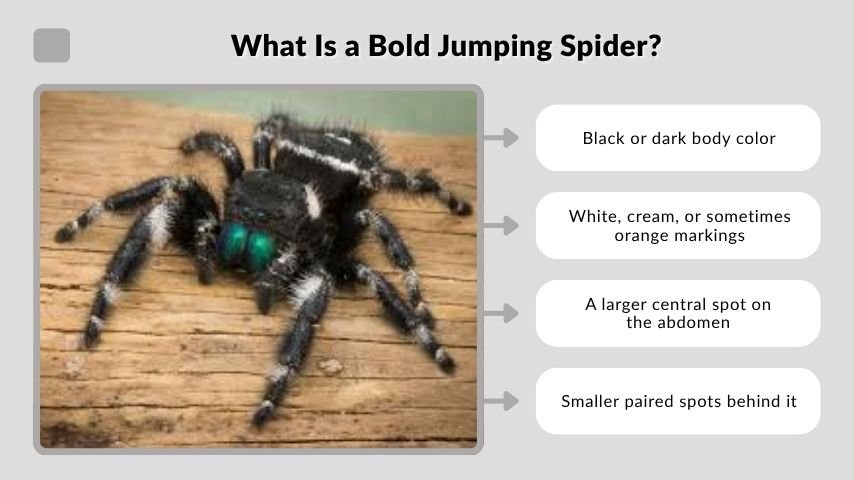
The bold jumping spider, also called the bold jumper, is scientifically known as Phidippus audax. It is a small, active hunting spider known for its large front-facing eyes, fuzzy body, quick jumps, and shiny green or blue-green chelicerae.
Unlike web-building spiders, bold jumping spiders do not build webs to catch prey. Instead, they stalk insects during the day and pounce when close enough. Their excellent eyesight makes them curious-looking spiders, and they often turn toward movement, which is why many people feel like the spider is “watching” them.
Common features of bold jumping spiders include:
- Black or dark body color
- White, cream, or sometimes orange markings
- A larger central spot on the abdomen
- Smaller paired spots behind it
- Iridescent green or blue mouthparts
- Short, sturdy, hairy legs
These traits are found in both males and females, which is why sexing them requires a closer look.
How to Tell If a Bold Jumping Spider Is Male or Female
The most reliable way to identify a bold jumping spider as male or female is to compare several features at once. Do not depend on only one clue, especially if the spider is young, stressed, molting, or photographed from a poor angle.
Look at the Pedipalps First
Pedipalps are the small leg-like structures near the spider’s mouth. In mature male bold jumping spiders, the pedipalps become enlarged at the ends. They often look like small rounded gloves or bulbs.
This is one of the strongest signs of a male bold jumping spider. If the spider has clearly swollen palps, especially when viewed from the front, it is likely an adult male.
Female pedipalps are slimmer and more even in shape. They may still be fuzzy, but they do not have the same rounded, bulb-like ends that mature males show.
Compare the Body Size
Female bold jumping spiders are usually larger than males. Their bodies often look heavier, and the abdomen may appear rounder or fuller. This difference is especially noticeable in adult females that are well-fed or carrying eggs.
Males are usually smaller and more streamlined. Their abdomen may look narrower compared with the cephalothorax, which is the front body section where the eyes and legs attach.
Size alone is not perfect, though. A young female can be smaller than an adult male, and feeding status can change how round the abdomen looks.
Study the Abdomen Shape
A female bold jumping spider often has a wider, rounder abdomen. This is one of the easiest clues when viewing the spider from above. Females may look more compact and plump, especially after eating.
Males tend to have a slimmer abdomen. Their overall body shape may look more athletic or narrow. In mature males, the body can seem front-heavy because the front legs and pedipalps stand out more.
Check the Front Legs
Male bold jumping spiders often have more noticeable front legs. They may appear longer, darker, or more dramatic than the female’s legs. During courtship, males use their front legs and palps in visual displays.
Females still have strong jumping legs, but they usually do not look as exaggerated in the front. Their body proportions often seem more balanced, with the rounded abdomen drawing more attention than the legs.
Male Bold Jumping Spider: Key Signs
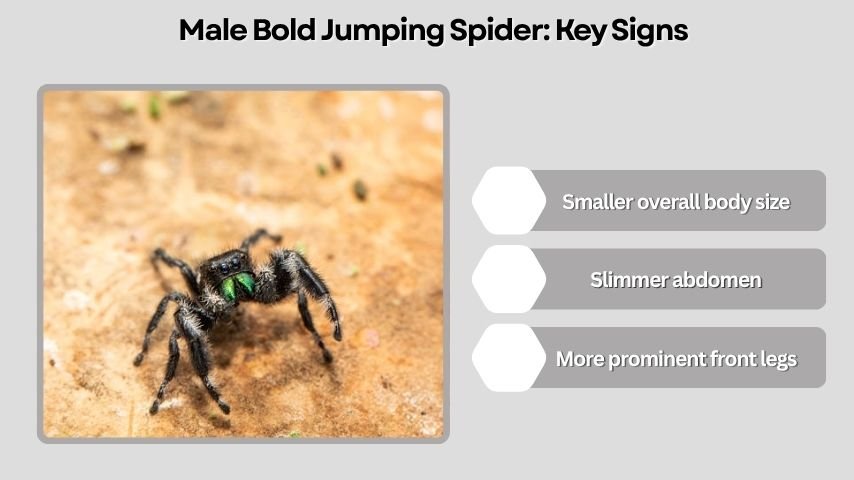
A male bold jumping spider is best identified by mature pedipalps. These enlarged palps are used in reproduction and are the most dependable visual sign once the spider is fully mature.
Other signs of a male bold jumping spider include:
- Smaller overall body size
- Slimmer abdomen
- More prominent front legs
- More active wandering behavior
- Mature “boxing glove” pedipalps
- Sometimes bolder courtship movements
Male bold jumping spiders may wander more because they search for females. If you keep bold jumpers as pets, a mature male may spend more time exploring his enclosure rather than staying hidden in one area.
Female Bold Jumping Spider: Key Signs
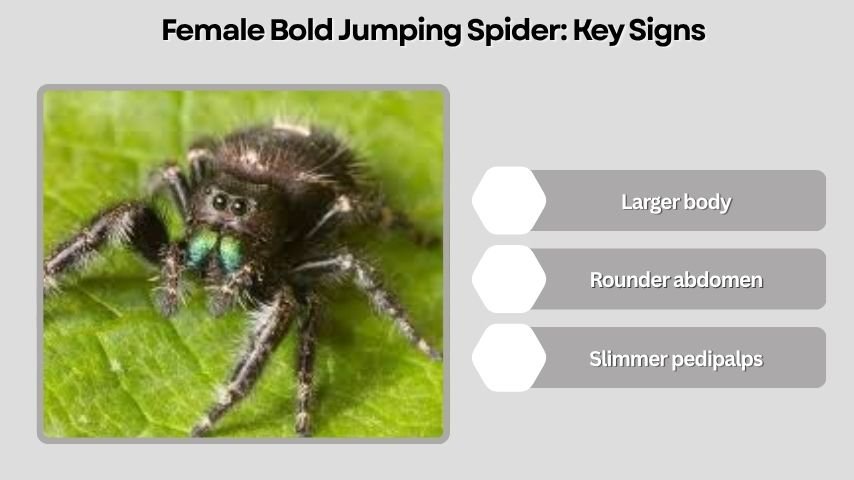
A female bold jumping spider is usually larger and rounder than a male. Her abdomen may look fuller, especially if she is mature, well-fed, or preparing to produce eggs.
Key signs of a female bold jumping spider include:
- Larger body
- Rounder abdomen
- Slimmer pedipalps
- Less exaggerated front legs
- More settled behavior
- Possible egg sac production if mature
Females may build thicker silk retreats for molting, resting, or egg laying. A mature female can produce an egg sac even if she was paired before you found or bought her, so keepers should be aware of this possibility.
Can You Tell by Color Alone?
Color is not the best way to tell a male bold jumping spider from a female. Both sexes can have black bodies, white abdominal markings, and shiny green chelicerae. Some individuals may show orange markings when young, and those markings can change as they mature.
Many people assume that brighter chelicerae mean male, but that is not reliable by itself. Females can also have beautiful iridescent mouthparts. Lighting, angle, age, and camera quality can make the color look different from one photo to another.
Use color as a supporting clue only. For sexing, pedipalps and body shape matter much more.
Juvenile Bold Jumping Spider Male or Female
Young bold jumping spiders are much harder to sex than adults. Their bodies are still developing, and the male pedipalps may not yet be enlarged. Juveniles may also have orange or reddish markings that later become white.
If your spider is still small, the safest answer may be “unknown” until it molts again. After the final molt, the sex becomes much clearer. Mature males show enlarged palps, while mature females keep slimmer palps and often develop a fuller body.
Signs your spider may still be juvenile include:
- Very small body size
- Orange markings instead of bright white
- No obvious mature palps
- Recent frequent molts
- Unclear body proportions
For young spiders, take clear photos after each molt and compare the pedipalps over time.
Bold Jumping Spider Male vs Female Pictures: What to Look For
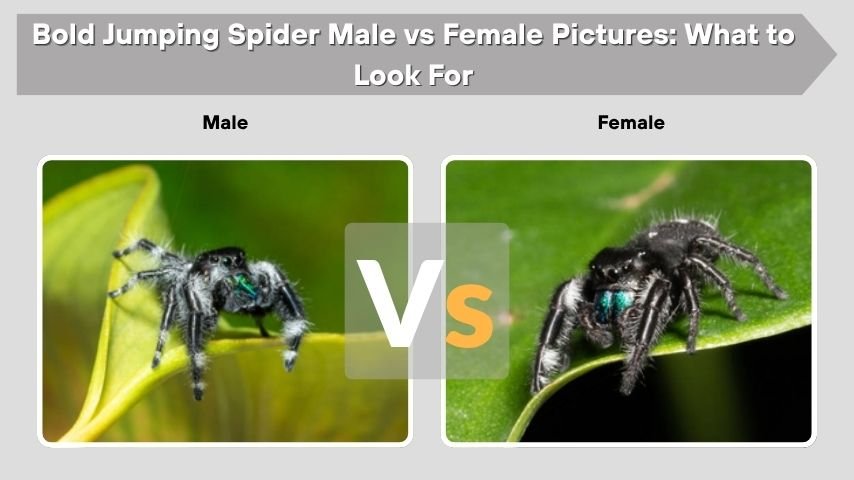
When comparing pictures, focus on angles that show the front and side of the spider. A top-down photo may show abdomen size, but it may hide the pedipalps.
For the best identification photo, try to capture:
- A front view of the face and pedipalps
- A side view of body shape
- A top view of abdomen size and markings
- A clear image in natural or bright light
- The spider at rest, not curled up or mid-jump
A male will usually show rounded palps near the mouth. A female will usually show a fuller abdomen and thinner palps. If the photo is blurry or the spider is immature, identification may not be certain.
Behavior Differences Between Male and Female Bold Jumpers
Behavior can support your identification, but it should not be your only method. Mature males are often more restless because they are searching for females. They may climb, roam, and show more interest in movement outside their enclosure.
Females may be more settled, especially if they have built a retreat. A mature female may spend time guarding an egg sac or staying near her silk hide.
Still, behavior varies by individual. Temperature, hunger, age, enclosure setup, and stress can all affect how active a spider appears.
Are Male or Female Bold Jumping Spiders Better Pets?
Both male and female bold jumping spiders can be interesting pets, but they may suit different keepers.
A female is often preferred by keepers who want a larger spider with a longer display life. Females are usually easier to see because of their fuller size. They may also be calmer once settled.
A male can be fascinating because of his courtship behavior, active movement, and distinctive palps. However, mature males may be more restless and may not live as long after maturity.
Choose based on your goal:
- For size and visibility, choose a female.
- For active behavior, choose a male.
- For breeding, you need a mature male and mature female.
- For a beginner pet, either sex can work if care is correct.
Common Mistakes When Sexing Bold Jumping Spiders
Many people misidentify bold jumping spiders because they rely on one visual clue. The most common mistake is using color alone. Another mistake is trying to sex a juvenile too early.
Avoid these errors:
- Calling every large spider female
- Calling every colorful spider male
- Ignoring pedipalp shape
- Judging from only one blurry photo
- Sexing a spider before maturity
- Confusing a full abdomen with a gravid female
The best method is to combine multiple clues: pedipalps, body size, abdomen shape, leg proportions, and maturity.
FAQs
How do I know if my bold jumping spider is male or female?
Look at the pedipalps near the mouth. Mature males have enlarged, rounded palps that look like tiny boxing gloves. Females have slimmer palps and usually a larger, rounder abdomen. If your spider is still young, you may need to wait until it matures.
Are male bold jumping spiders smaller than females?
Yes, males are usually smaller and slimmer than females. Females often have a rounder, heavier abdomen, while males tend to look narrower. However, size alone is not always reliable because age, feeding, and maturity can affect body shape.
Do female bold jumping spiders have green fangs?
Yes, females can have shiny green or blue-green chelicerae just like males. The color of the mouthparts is not a dependable way to tell sex. Pedipalp shape and abdomen size are much better identification clues.
Why does my male bold jumping spider keep wandering?
A mature male may wander because he is searching for a female. This is normal behavior in many jumping spiders. He may explore more, climb the enclosure, or appear restless compared with a female that spends more time near her retreat.
Can you sex a juvenile bold jumping spider?
Juvenile bold jumping spiders are difficult to sex accurately. Their adult reproductive features are not fully developed, and male palps may not yet look enlarged. It is best to wait until the spider reaches maturity and compare the pedipalps after its final molt.