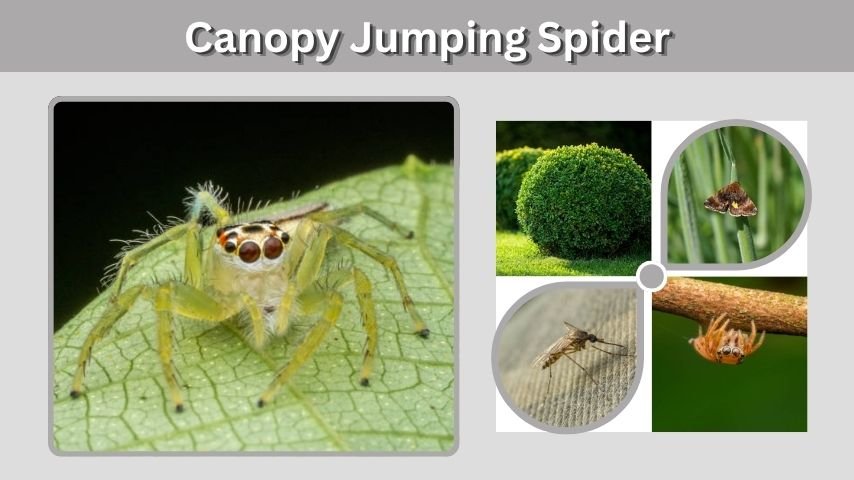
The canopy jumping spider is a colorful, tree-loving jumping spider known for its bright mouthparts, alert personality, and strong hunting behavior. Scientifically called Phidippus otiosus, this spider is found mostly in the southeastern United States. It is often compared with the regal jumping spider because both are large, attractive Phidippus species. This guide explains its size, habitat, bite risk, food, behavior, and male vs female differences.
What Is a Canopy Jumping Spider?
The canopy jumping spider is a species of jumping spider in the family Salticidae. Its scientific name is Phidippus otiosus. Like other jumping spiders, it does not build a web to catch prey. Instead, it uses excellent eyesight to stalk insects and leap when close enough.
The name “canopy” fits this species well because it is strongly associated with trees. It is often described as a tree-living spider, especially in the southeastern part of North America. In the wild, it may be found on tree trunks, bark, branches, shrubs, fences, and other outdoor surfaces near wooded or leafy areas.
This spider is admired by hobbyists because of its size, color, and curious behavior. Its chelicerae, or mouthparts, may shine green, purple, or blue-green depending on the individual and lighting.
Canopy Jumping Spider Identification
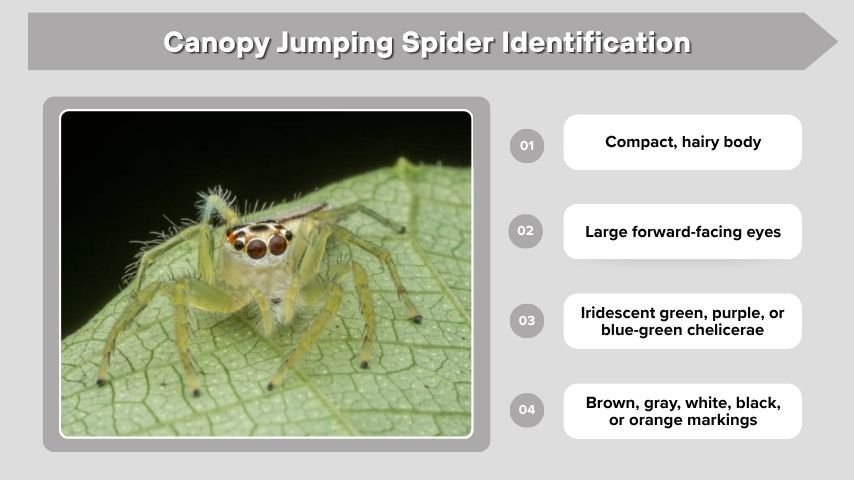
A canopy jumping spider has the compact, fuzzy body shape typical of many jumping spiders. It has large front-facing eyes, short strong legs, and a quick, alert way of moving.
Common identifying features include:
- Compact, hairy body
- Large forward-facing eyes
- Iridescent green, purple, or blue-green chelicerae
- Brown, gray, white, black, or orange markings
- Strong jumping ability
- Tree-loving behavior
- Active daytime hunting
Some canopy jumping spiders show orange or rusty markings, especially on the abdomen. Others may look darker or paler depending on sex, age, and individual variation. Because color can vary, identification should not be based on color alone.
Canopy Jumping Spider Size
The canopy jumping spider is considered a medium to large jumping spider. Females are usually larger and heavier-bodied than males. Some references report adult females reaching about 16 mm in body length, making them one of the larger Phidippus species found in the southeastern United States.
| Feature | Canopy Jumping Spider |
|---|---|
| Scientific name | Phidippus otiosus |
| Family | Salticidae |
| Adult size | Often around 8–16 mm, with females larger |
| Main habitat | Trees, bark, shrubs, wooded areas |
| Range | Southeastern North America |
| Bite risk | Low, usually mild if it happens |
| Pet suitability | Possible for experienced keepers |
Size can vary based on sex, maturity, and feeding condition. A well-fed female may look especially round and large, while a mature male may appear slimmer.
Canopy Jumping Spider Male vs Female
Male and female canopy jumping spiders can look different, especially when mature. Females are typically larger, rounder, and heavier-bodied. Males are often smaller, slimmer, and may have more noticeable pedipalps near the mouth.
Male Canopy Jumping Spider
A male canopy jumping spider is usually more slender than a female. Mature males may have enlarged pedipalps, which are the small leg-like structures near the face. These palps are used in reproduction and can help identify adult males.
Male canopy jumping spiders may also roam more often, especially when searching for females. If kept as pets, mature males may seem more restless than females.
Female Canopy Jumping Spider
A female canopy jumping spider is usually larger and fuller-bodied. Her abdomen may look rounder, especially after feeding or when carrying eggs. Females may spend more time near a silk retreat, particularly before molting or laying eggs.
Female canopy jumpers are often preferred by hobbyists because they are larger, easier to observe, and may live longer after maturity than males.
Canopy Jumping Spider Habitat
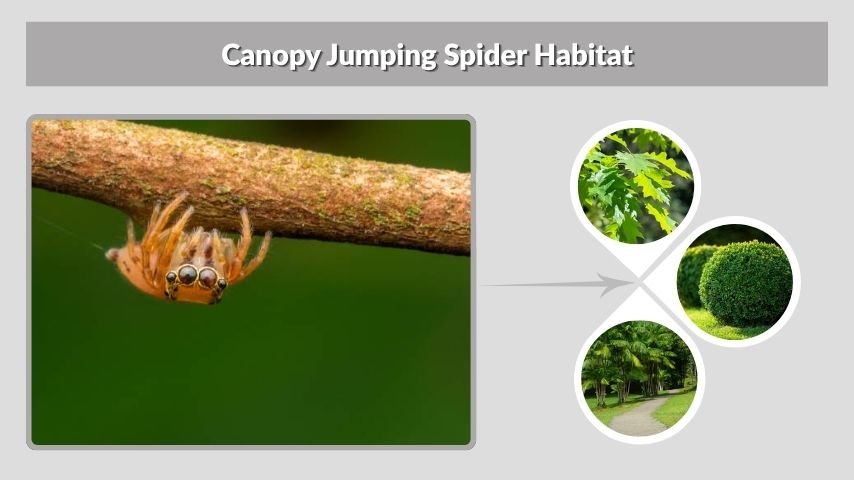
The canopy jumping spider habitat is mostly arboreal, meaning it is connected to trees and elevated vegetation. In nature, this spider is often associated with bark, tree trunks, limbs, shrubs, and forest edges.
You may find canopy jumping spiders in:
- Oak and pine trees
- Bark crevices
- Shrubs and woody plants
- Garden edges
- Fence posts near trees
- Outdoor walls near wooded areas
- Leafy southeastern landscapes
Because they hunt by sight, they are often active in bright areas where insects are present. They may rest in small silk retreats when inactive, molting, or protecting eggs.
Canopy Jumping Spider Florida, NC and Virginia
The canopy jumping spider is mainly associated with the southeastern United States. Searches for “canopy jumping spider Florida,” “canopy jumping spider NC,” and “canopy jumping spider Virginia” make sense because this species is part of the southeastern spider fauna.
Florida is especially important because warm weather and abundant vegetation provide suitable habitat. North Carolina is also within the broader southeastern range often associated with this species. Virginia may be near the northern edge depending on local records and habitat conditions.
If you find a large, colorful Phidippus spider in these areas, especially on trees or outdoor wooden surfaces, Phidippus otiosus may be a possibility. Still, careful identification is needed because several jumping spiders can look similar.
Canopy Jumping Spider Behavior
Canopy jumping spider behavior is typical of many active jumping spiders. They are visual hunters that rely on eyesight more than webs. Instead of waiting in a web, they stalk prey, judge distance, and jump with accuracy.
Common behaviors include:
- Turning toward movement
- Watching nearby objects with large front eyes
- Stalking small insects
- Making quick jumps
- Using silk as a safety line
- Building retreats for rest or molting
- Hiding under bark or in sheltered spaces
Many people describe jumping spiders as having a curious personality. A canopy jumping spider may pause and look at you, but this does not mean it is aggressive. It is simply using its excellent vision to study movement.
Canopy Jumping Spider Food
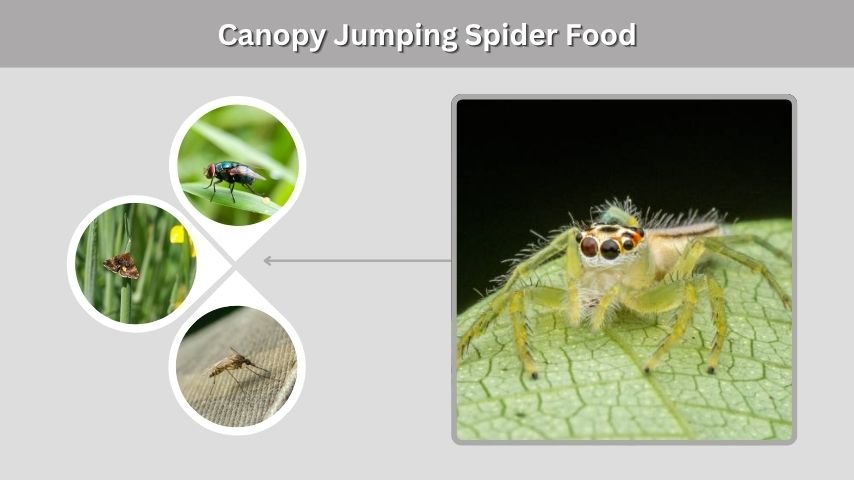
In the wild, canopy jumping spiders eat small insects and other tiny arthropods. They are useful predators because they help control small pest populations around trees, gardens, and outdoor structures.
Their natural food may include:
- Flies
- Gnats
- Small moths
- Mosquitoes
- Small crickets
- Aphids
- Tiny roaches
- Other small arthropods
As pets, they are commonly fed appropriately sized live prey. Suitable feeder insects may include small crickets, fruit flies for juveniles, house flies, blue bottle flies, and small roaches. Prey should never be too large, because oversized insects can stress or injure the spider.
Is the Canopy Jumping Spider Venomous?
Yes, the canopy jumping spider is venomous in the biological sense, but it is not considered dangerous to humans. Like other jumping spiders, it uses venom to subdue small insect prey. That venom is meant for tiny animals, not people.
Many people also ask, “Is the canopy jumping spider poisonous?” The answer is no in the common sense. Poisonous means harmful if touched or eaten. Venomous means venom is injected through a bite. A canopy jumping spider is venomous to prey, but it is not dangerously poisonous to humans.
Canopy Jumping Spider Bite
A canopy jumping spider bite is possible but uncommon. These spiders are not aggressive and usually prefer to escape. A bite might happen if the spider is trapped against the skin, squeezed, or handled roughly.
If a bite occurs, symptoms are usually mild. Possible reactions include:
- Slight redness
- Mild swelling
- Itching
- Brief stinging
- Local tenderness
Basic care includes washing the area with soap and water, using a cold compress, and monitoring the bite. Medical help is recommended if symptoms are severe, spreading, infected-looking, or if the person has a strong allergic reaction.
For most people, the canopy jumping spider is not a medical concern.
Canopy Jumping Spider Pet Care
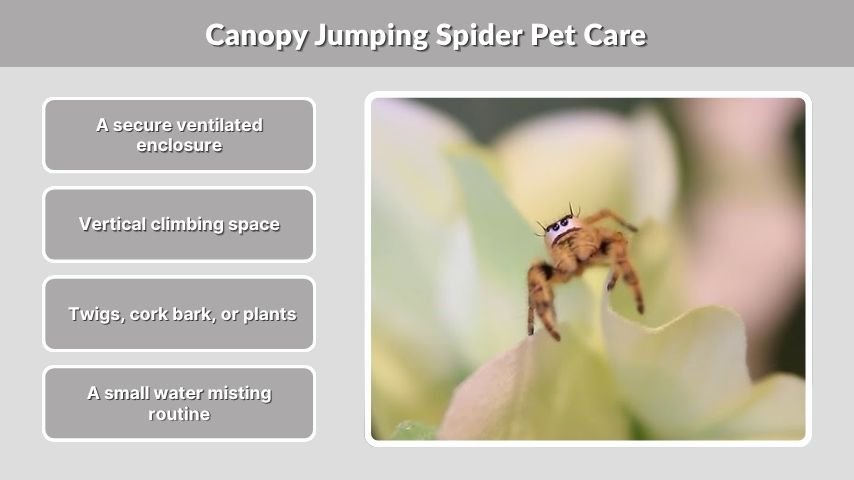
A canopy jumping spider can be kept as a pet by people who understand jumping spider care. It is active, visual, and attractive, but it still needs proper housing, food, humidity, and safety.
Basic pet care needs include:
- A secure ventilated enclosure
- Vertical climbing space
- Twigs, cork bark, or plants
- A small water misting routine
- Properly sized live prey
- Good light during the day
- No direct overheating
- A quiet place during molting
Because this is a tree-living species, vertical space and climbing surfaces are important. The enclosure should allow the spider to explore upward and build a silk retreat near the top or along bark.
Avoid handling unless necessary. Jumping spiders are delicate, and a fall from a hand or desk can injure them.
Canopy Jumping Spider for Sale
People searching for “canopy jumping spider for sale” are usually looking for a pet spider. Before buying one, make sure the seller is reputable and that the spider was sourced responsibly.
A good seller should clearly provide:
- Scientific name
- Approximate age or instar
- Sex if known
- Feeding history
- Captive-bred or wild-caught status
- Care requirements
- Safe shipping conditions
Captive-bred spiders are usually better for hobbyists when available. Wild-caught spiders may be stressed, older than expected, or already gravid. In some places, collecting or shipping spiders may also be regulated, so buyers should check local rules.
Canopy Jumping Spider vs Regal Jumping Spider
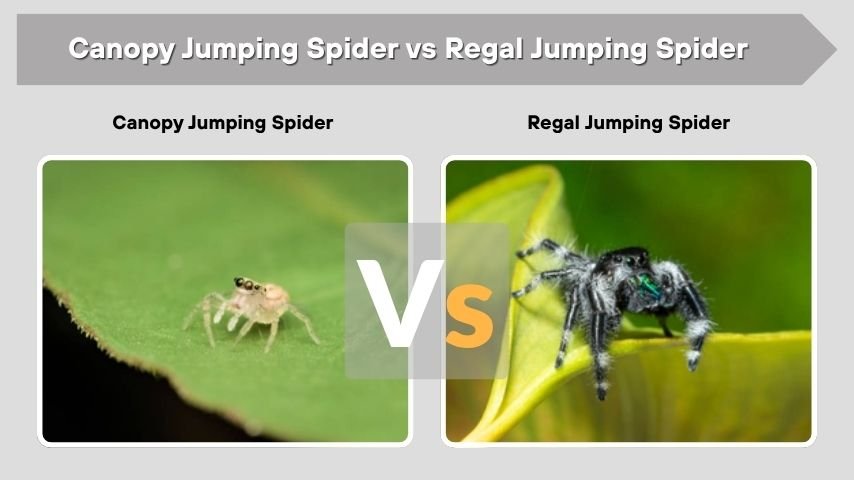
The canopy jumping spider and regal jumping spider are often compared because both belong to the genus Phidippus. The regal jumping spider, Phidippus regius, is one of the most popular pet jumping spiders, especially in the hobby trade.
The canopy jumping spider, Phidippus otiosus, is more strongly associated with tree habitats and the southeastern United States. It can have green to purple iridescent chelicerae and may show orange or brown markings.
The regal jumping spider is also large and colorful, but it is more commonly bred and sold as a pet. Female regals are often orange, gray, or white, while males are commonly black and white with bright chelicerae.
Main differences include:
- Canopy jumping spiders are strongly tree-associated.
- Regal jumping spiders are more common in the pet trade.
- Female regals are often more boldly orange, white, or gray.
- Canopy jumpers may be less available for sale.
- Both are visual hunters and need similar care basics.
Correct identification can be difficult from one photo, so compare markings, location, size, sex, and source.
Canopy Jumping Spider Orange Color
Some canopy jumping spiders may show orange or rusty markings, especially on the abdomen. This can make them look similar to other orange jumping spiders, including female regal jumping spiders or certain bold jumping spider juveniles.
Orange color alone is not enough for identification. Lighting, age, sex, and camera settings can all affect appearance. To identify a canopy jumping spider, look at the whole spider: body shape, markings, chelicerae color, location, and habitat.
Are Canopy Jumping Spiders Good to Have Around?
Yes, canopy jumping spiders are generally beneficial. They eat small insects and do not damage homes, plants, wood, or clothing. They do not create messy webs for catching prey, and they are not aggressive toward people.
If you find one indoors, it likely wandered in by accident. You can relocate it outside using a cup and paper. Place it near shrubs, trees, or a sheltered outdoor area where it can hunt naturally.
FAQs
What is a canopy jumping spider?
A canopy jumping spider is a tree-living jumping spider scientifically known as Phidippus otiosus. It belongs to the jumping spider family, Salticidae, and is found mostly in southeastern North America. It is known for its large eyes, active hunting behavior, and iridescent mouthparts.
How big is a canopy jumping spider?
A canopy jumping spider is a medium to large jumping spider. Adult females may reach about 16 mm in body length, while males are usually smaller and slimmer. Size can vary depending on age, sex, and feeding condition.
Is the canopy jumping spider venomous?
Yes, it is venomous to small insect prey, but it is not considered dangerous to humans. Its venom helps it hunt insects. For people, a bite is rare and usually causes only mild local symptoms if it happens at all.
Can a canopy jumping spider be kept as a pet?
Yes, experienced keepers may keep canopy jumping spiders as pets. They need a secure, ventilated enclosure with climbing space, proper humidity, and small live prey. Because they are delicate, handling should be limited and careful.
What is the difference between a canopy jumping spider and a regal jumping spider?
The canopy jumping spider is Phidippus otiosus, while the regal jumping spider is Phidippus regius. Both are large, colorful jumping spiders, but regals are more common in the pet trade. Canopy jumpers are more strongly associated with trees and southeastern habitats.