





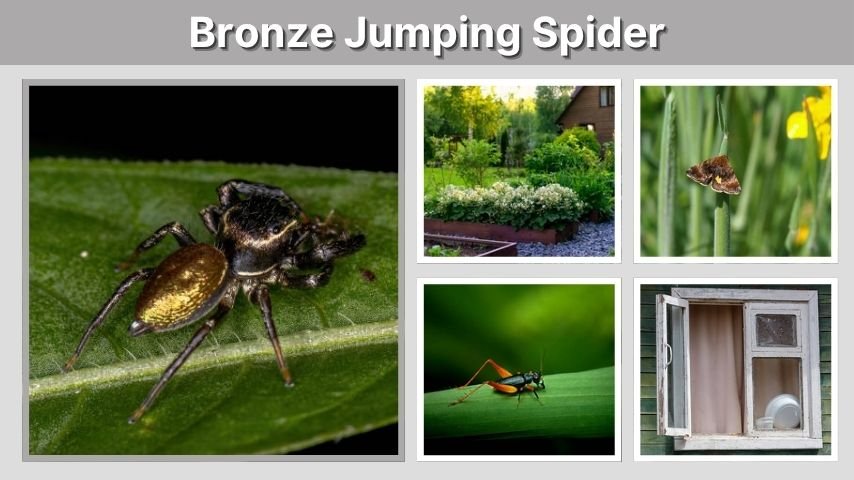
The bronze jumping spider is a small, alert jumping spider known for its bronze-brown color, quick movements, and excellent eyesight. Also called the bronze jumper spider or bronze lake jumping spider, it is scientifically known as Eris militaris. This species is found in the United States and Canada and is often seen around homes, fields, woods, shrubs, and outdoor structures.
What Is a Bronze Jumping Spider?
The bronze jumping spider is a member of the jumping spider family, Salticidae. Like other jumping spiders, it does not use a large web to catch prey. Instead, it actively hunts insects by sight, stalks them carefully, and jumps when close enough.
Its common name comes from its bronze, coppery, or brownish appearance. At first glance, it may look plain compared with brighter jumping spiders, but a closer look shows fine markings, white bands or spots, and a sturdy little body built for jumping.
The scientific name of the bronze jumping spider is Eris militaris. This species may also be called the bronze jumper, bronze jumper spider, or bronze lake jumping spider.
Bronze Jumping Spider Identification
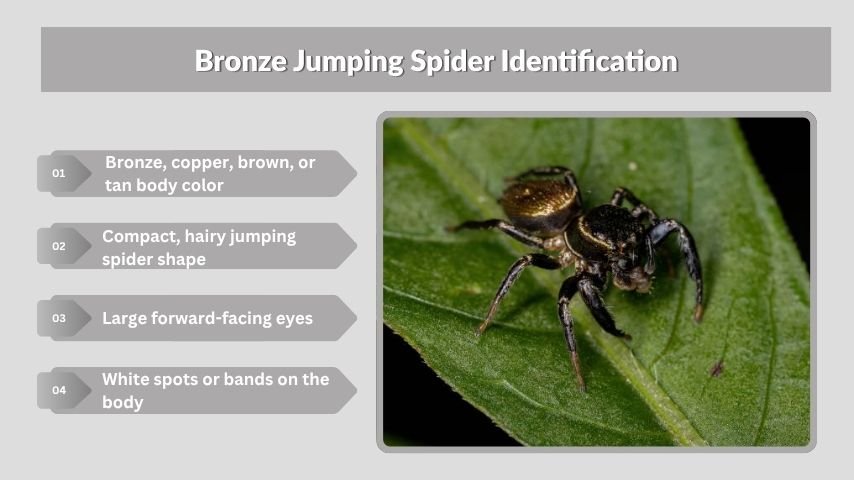
Bronze jumping spiders are small and can be easy to overlook. Their brown, tan, and bronze tones help them blend into bark, dead wood, dry vegetation, building siding, and outdoor surfaces.
They have the classic jumping spider look: a compact body, large front-facing eyes, short strong legs, and a curious habit of turning toward movement.
Common identification features include:
- Bronze, copper, brown, or tan body color
- Compact, hairy jumping spider shape
- Large forward-facing eyes
- White spots or bands on the body
- Strong, quick jumps
- Active daytime hunting behavior
- Often seen on buildings, plants, dead wood, or outdoor surfaces
Because several small jumping spiders can look similar, identification should be based on the whole spider, not color alone. Body shape, markings, location, sex, and size all help.
Bronze Jumping Spider Size
The bronze jumping spider is small, even as an adult. Females are usually larger than males. Adult females are often about 6 to 8 mm long, while adult males are usually about 4.7 to 6.7 mm long.
| Type | Approximate Size | Main Features |
|---|---|---|
| Adult male bronze jumping spider | 4.7–6.7 mm | Smaller, darker front body, lighter abdomen, side bands |
| Adult female bronze jumping spider | 6–8 mm | Larger, lighter cephalothorax, darker abdomen, white spots |
| Juvenile bronze jumping spider | Smaller than adults | Harder to identify, adult markings not fully developed |
Size can vary depending on maturity, feeding, and sex. A well-fed female may appear rounder and larger, while a mature male may look slimmer and more active.
Bronze Jumping Spider Male vs Female
Male and female bronze jumping spiders can be separated by size, color pattern, and body proportions. Females are generally larger and fuller-bodied. Males are usually smaller and may show more contrast between the cephalothorax and abdomen.
Bronze Jumping Spider Male
A bronze jumping spider male is usually smaller than the female. Males often have a darker cephalothorax, which is the front body section where the eyes and legs attach. Their abdomen may look lighter, and they may have pale or white bands along the sides.
Males may also appear more active when mature, especially when searching for females. Like many male jumping spiders, they may use leg movements and body displays during courtship.
Key signs of a male bronze jumping spider include:
- Smaller body size
- Darker cephalothorax
- Lighter abdomen
- White side bands
- Slimmer body shape
- More active wandering behavior
Bronze Jumping Spider Female
A bronze jumping spider female is usually larger and rounder than a male. Females often have a lighter cephalothorax and a slightly darker abdomen. The abdomen may show a short white band near the front and several elongated white spots on top.
Females may look heavier-bodied, especially after feeding or when carrying eggs. They may also spend more time in sheltered areas, such as vegetation, bark spaces, or silk retreats.
Key signs of a female bronze jumping spider include:
- Larger size
- Fuller abdomen
- Lighter cephalothorax
- Darker abdomen
- White spots on the abdomen
- Less obvious side bands than males
Juvenile Bronze Jumping Spider
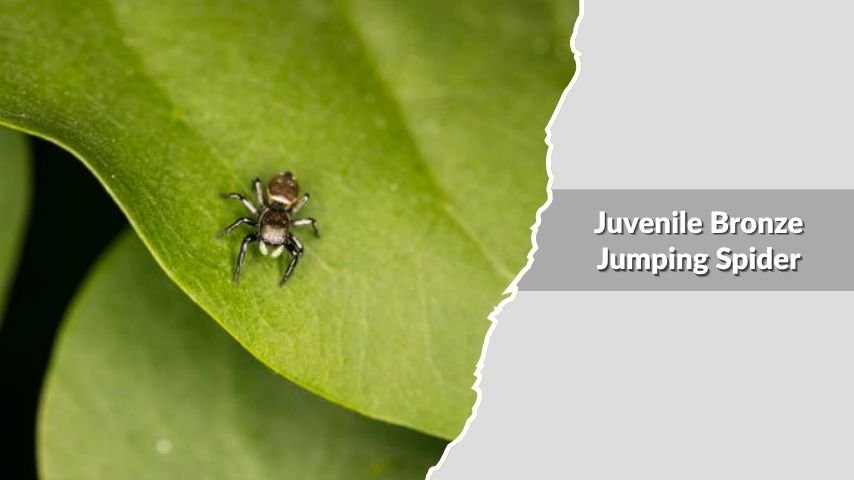
A juvenile bronze jumping spider can be difficult to identify because it has not yet developed all adult features. Young spiders are smaller, and their markings may be faint or incomplete.
Juveniles may still show a bronze or brownish tone, but they can be confused with other small jumping spiders. Sexing juveniles is usually unreliable because mature reproductive features are not fully developed.
When identifying a juvenile bronze jumping spider, look for:
- Small compact jumping spider shape
- Bronze or brown body color
- Early white markings
- Large forward-facing eyes
- Jumping rather than web-trapping behavior
- Location near adults of the same species
If you keep a juvenile as a pet, it may become easier to identify after several molts.
Bronze Jumping Spider Baby
A bronze jumping spider baby, or spiderling, is very small and hard to identify without close-up photos. Like other baby jumping spiders, it will pass through multiple molts before becoming an adult.
Baby bronze jumping spiders use silk for safety lines and resting shelters, but they do not build large prey-catching webs. Once they begin feeding, they hunt tiny insects and other very small arthropods.
Because baby jumping spiders are delicate, they should not be handled. If found indoors, they can usually be moved outside gently with a small container.
Bronze Jumping Spider Habitat and Range
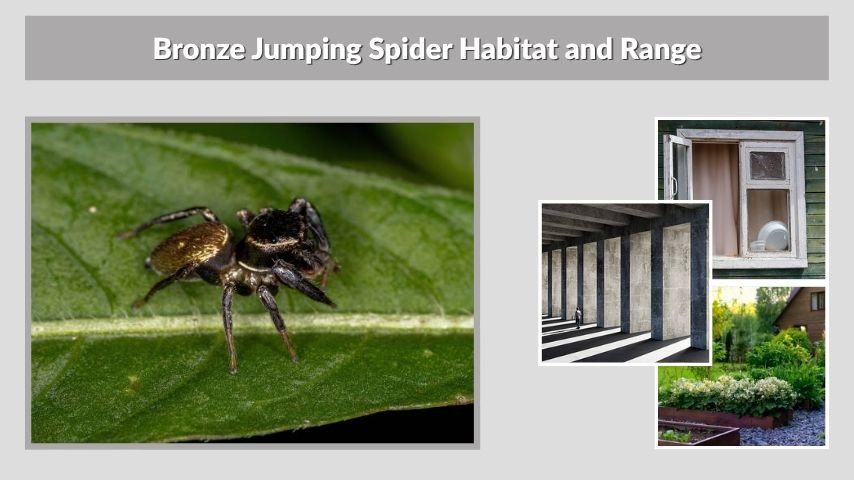
The bronze jumping spider is found in the United States and Canada. It can live in both rural and suburban environments and is often noticed around homes, fields, woods, shrubs, and sheltered vegetation.
People searching for a bronze jumping spider range map are usually trying to confirm whether this species occurs in their area. While exact local records vary, the species is broadly distributed across much of North America.
Common places to find bronze jumping spiders include:
- Exterior walls of buildings
- Window frames and siding
- Fields and grassy edges
- Woods and forest margins
- Shrubs and blackberry bushes
- Dead wood and bark
- Gardens and vegetation
They are often noticed in fall, including around the outside or inside of buildings. Their bronze-brown color helps them blend into natural surfaces, so they are easy to miss.
Bronze Jumping Spider Bite
A bronze jumping spider bite is possible but uncommon. These spiders are not aggressive toward humans. Like most jumping spiders, they usually prefer to run or jump away rather than bite.
A bite may happen if the spider is trapped against the skin, squeezed, or handled roughly. For most people, symptoms are mild and local.
Possible bite symptoms include:
- Brief stinging
- Slight redness
- Mild swelling
- Itching
- Local tenderness
Basic care is simple. Wash the area with soap and water, apply a cold compress, and avoid scratching. Seek medical help if symptoms are severe, if swelling spreads, if infection develops, or if the person has a strong allergic reaction.
Is the Bronze Jumping Spider Poisonous?
The bronze jumping spider is not poisonous in the common sense. “Poisonous” means harmful if touched or eaten. “Venomous” means an animal injects venom through a bite or sting.
Like other jumping spiders, the bronze jumping spider is venomous to small insect prey. Its venom helps it subdue insects. However, it is not considered dangerous to humans.
So the simple answer is: bronze jumping spiders have venom for hunting, but they are not dangerously poisonous to people.
What Do Bronze Jumping Spiders Eat?
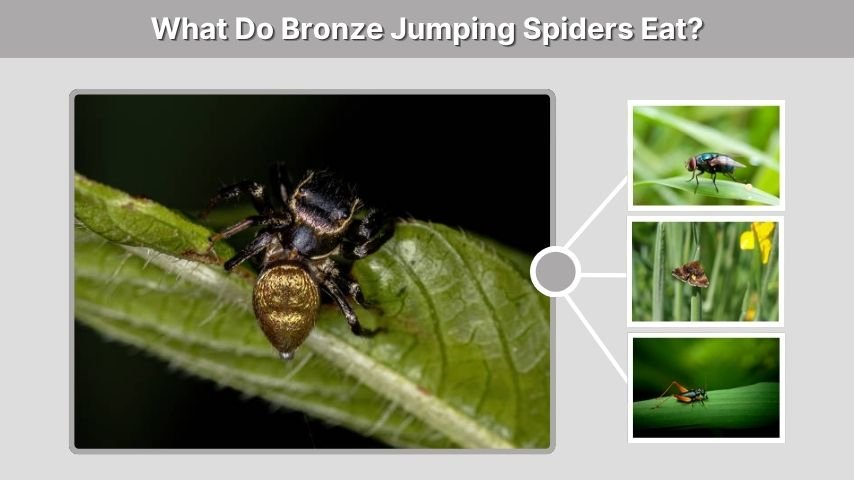
Bronze jumping spiders are active predators. They eat small insects and other tiny arthropods. Instead of catching prey in a web, they stalk their target, judge the distance, and jump.
Their diet may include:
- Small flies
- Gnats
- Moths
- Leafhoppers
- Aphids
- Small crickets
- Tiny beetles
- Other small spiders
Because they eat pest insects, bronze jumping spiders are beneficial around gardens, fields, orchards, and homes. They do not damage plants, wood, clothing, or furniture.
Bronze Jumping Spider Care
Some people keep bronze jumping spiders as pets, though they are less common in the pet trade than regal or bold jumping spiders. A bronze jumping spider pet needs a small, secure, well-ventilated enclosure with climbing space and hiding spots.
Basic care needs include:
- Small ventilated enclosure
- Twigs, bark, or cork for climbing
- Safe hiding places
- Light misting for moisture
- Properly sized live prey
- No oversized feeder insects
- No pesticide exposure
- Minimal handling
Because this species is small, escape prevention is important. The enclosure should not have gaps large enough for the spider to slip through. Prey should be smaller than the spider’s body or easy for it to overpower.
Bronze Jumping Spider for Sale
Searches for “bronze jumping spider for sale” usually come from hobbyists looking for a pet. This species may not be as commonly sold as Phidippus regius or Phidippus audax, but it may appear through breeders, hobby groups, or local collectors.
Before buying one, ask the seller for:
- Scientific name
- Sex, if known
- Approximate age or instar
- Captive-bred or wild-caught status
- Feeding history
- Molt history
- Shipping method
- Care recommendations
Captive-bred spiders are usually preferable when available. Wild-caught spiders may be older, stressed, gravid, or exposed to pesticides. Always check local rules before buying, selling, or collecting native spiders.
Australian Bronze Jumping Spider
Some people search for “Australian bronze jumping spider” or “bronze Australian jumping spider.” This can be confusing because the North American bronze jumping spider is Eris militaris. Australia has many jumping spiders, and some may appear bronze or metallic, but they are not necessarily the same species.
If the spider is from the United States or Canada, “bronze jumping spider” usually refers to Eris militaris. If it is from Australia, identification should be based on local Australian species, not the North American bronze jumper.
Bronze Lake Jumping Spider
The name “bronze lake jumping spider” is another common name connected with Eris militaris. It may appear in searches, image captions, or local spider guides. In most cases, bronze jumper, bronze jumping spider, bronze jumper spider, and bronze lake jumping spider refer to the same species.
This is why scientific names are useful. Common names can vary, but Eris militaris gives a clearer identification.
FAQs
What is the scientific name of the bronze jumping spider?
The scientific name of the bronze jumping spider is Eris militaris. It is also called the bronze jumper, bronze jumper spider, or bronze lake jumping spider. It belongs to the jumping spider family, Salticidae.
How big is a bronze jumping spider?
Adult females are usually about 6 to 8 mm long, while adult males are about 4.7 to 6.7 mm long. Females are generally larger and fuller-bodied, while males are smaller, slimmer, and often more active when mature.
Is a bronze jumping spider bite dangerous?
A bronze jumping spider bite is not usually dangerous. Bites are rare and usually happen only if the spider is trapped or handled roughly. Symptoms are typically mild, such as slight redness, swelling, itching, or brief stinging.
How can you tell a male from a female bronze jumping spider?
Males are usually smaller, with a darker cephalothorax, lighter abdomen, and white side bands. Females are usually larger, with a lighter cephalothorax, darker abdomen, and white spots on top. Size and markings together give the best clue.
Can you keep a bronze jumping spider as a pet?
Yes, a bronze jumping spider can be kept as a pet by careful keepers. It needs a secure ventilated enclosure, climbing surfaces, small live prey, and light moisture. Handling should be limited because jumping spiders are small and delicate.