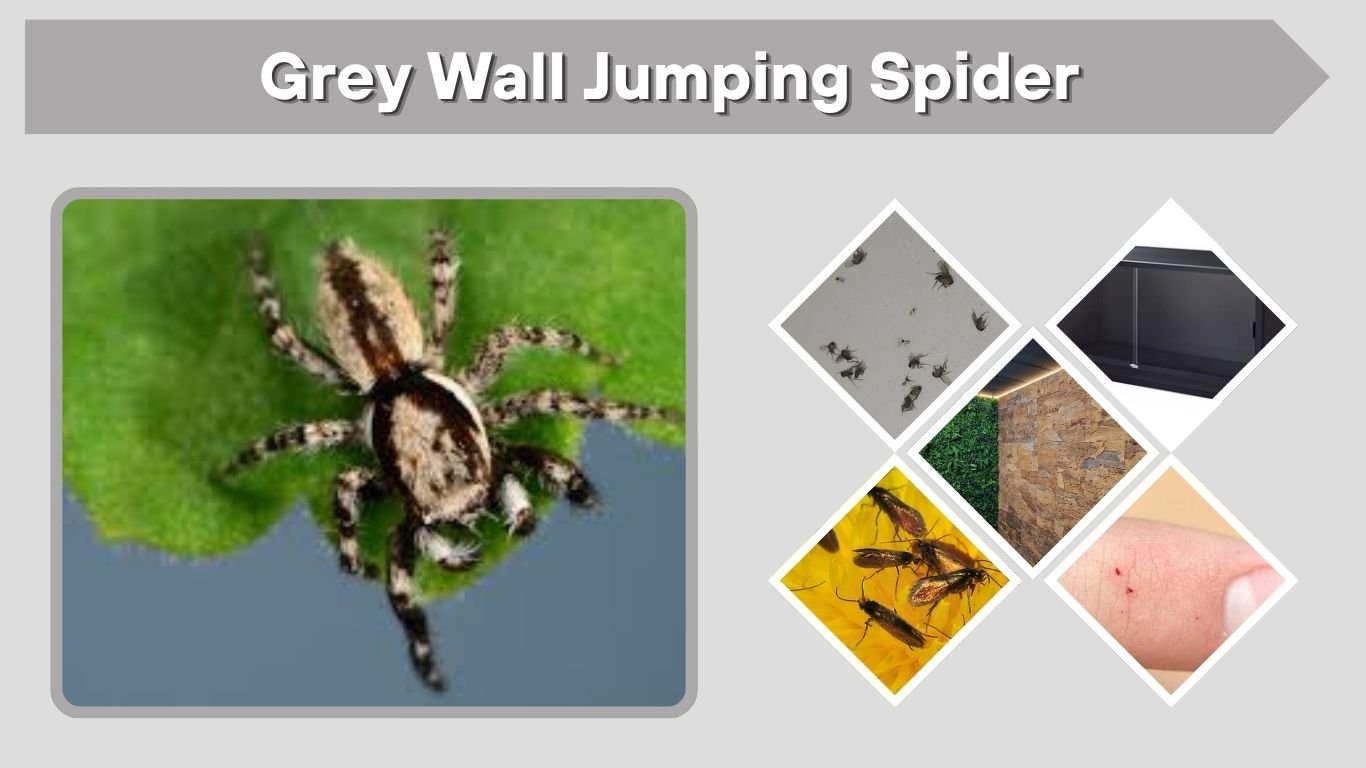
The grey wall jumping spider is a small, fast, flat-bodied spider often seen on walls, fences, tree trunks, and outdoor buildings. Also called the gray wall jumper, it is scientifically known as Menemerus bivittatus. This spider is not aggressive toward people and is usually helpful because it hunts flies and other small insects. This guide explains its size, bite risk, appearance, habitat, behavior, and pet care basics.
What Is a Grey Wall Jumping Spider?
The grey wall jumping spider is a member of the jumping spider family, Salticidae. Like other jumping spiders, it has large forward-facing eyes, sharp vision, and a habit of stalking prey before jumping.
Unlike web-building spiders, it does not make a large web to catch insects. Instead, it hunts visually during the day. It waits on vertical surfaces, watches for movement, and leaps toward small insects that land nearby.
Its common name comes from its grey color and wall-loving behavior. It is often found on walls because flat vertical surfaces are good hunting grounds for flies, gnats, moths, and other small insects.
Grey Wall Jumping Spider Identification
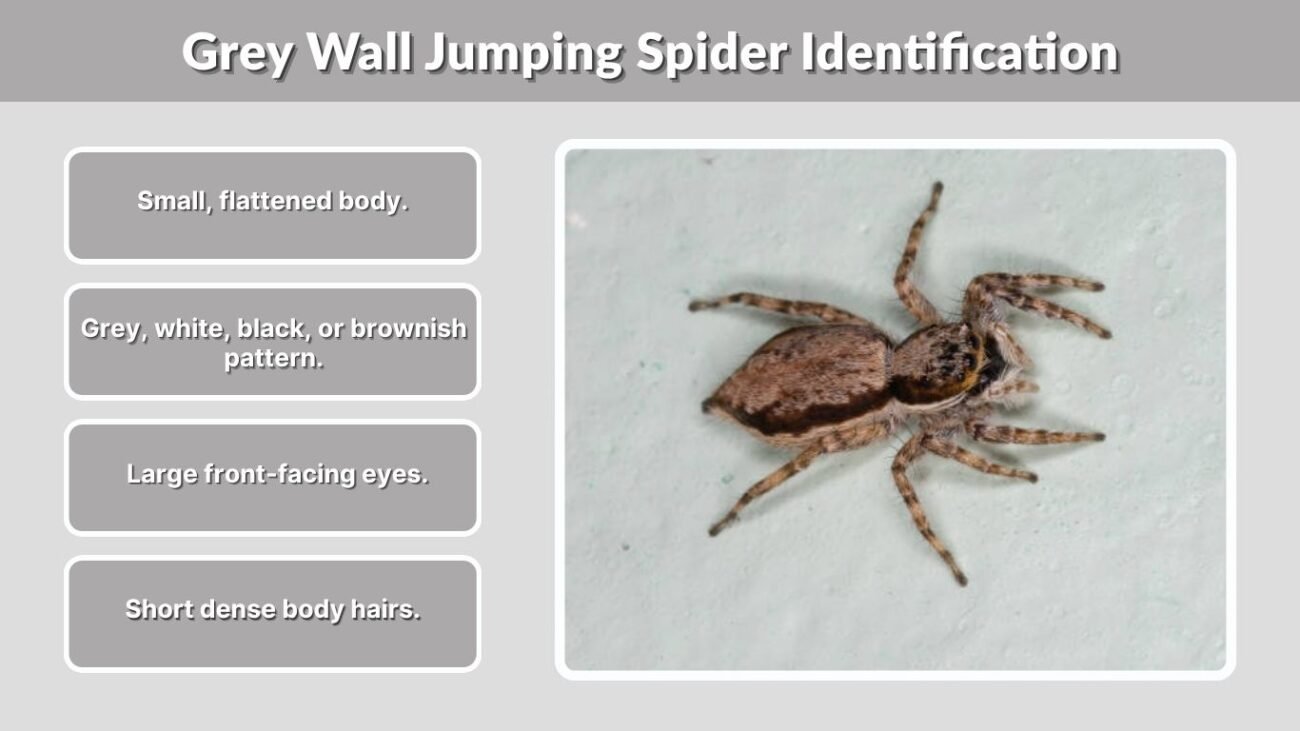
A grey wall jumping spider has a flattened body covered with short greyish-white hairs. This flat shape helps it move easily across walls, bark, and narrow spaces. The spider may look grey, white, brown, black, or banded depending on sex, age, lighting, and local variation.
Common identification features include:
- Small, flattened body
- Grey, white, black, or brownish pattern
- Large front-facing eyes
- Short dense body hairs
- Banded legs
- Quick jumping movements
- Habit of sitting on walls or tree trunks
- Active daytime hunting
Some people describe it as a grey fuzzy jumping spider because the body is covered in short pale hairs. Others search for black and grey jumping spider or grey and white jumping spider because males often show strong black-and-white patterning.
Grey Wall Jumping Spider Size
The grey wall jumping spider is small. Adults are often around 9 mm long, with males usually slightly smaller than females. The spider can look larger when its legs are spread out on a wall, but its actual body length is modest.
| Type | Approximate Size | Main Appearance |
|---|---|---|
| Adult male grey wall jumping spider | Slightly under 9 mm | Darker, black-and-white pattern, banded legs |
| Adult female grey wall jumping spider | Around 9 mm or slightly larger | Paler, brownish-grey, larger abdomen |
| Baby or juvenile grey wall jumping spider | Much smaller than adults | Often resembles a pale female but less developed |
Size alone is not the best identification method. A small grey jumping spider may be a juvenile, a male, or a different species. Look at the wall-dwelling habit, flattened body, banded markings, and eye arrangement.
Male vs Female Grey Wall Jumping Spider
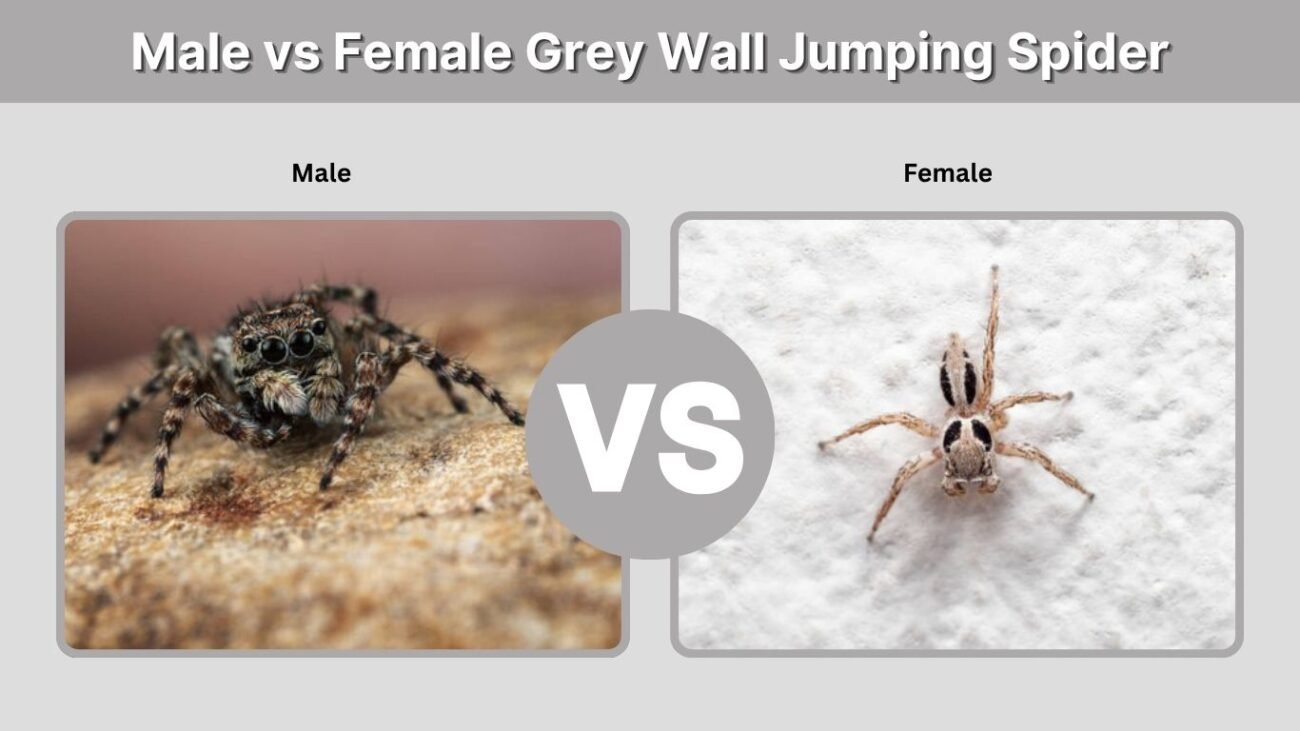
Male and female grey wall jumping spiders look different enough that people may mistake them for separate species. This is common in jumping spiders because males and females often have different markings, body shapes, and behaviors.
Male Grey Wall Jumping Spider
A male grey wall jumping spider is usually darker and more strongly patterned. Males often have a blackish stripe down the back with pale or brownish-white stripes on either side. The legs are commonly banded in black and white.
A male may also have more noticeable pedipalps near the mouth. These small leg-like structures become more developed in mature males.
Key signs of a male include:
- Slightly smaller body
- Darker black-and-white pattern
- Banded legs
- Strong central dorsal stripe
- More active wandering behavior
- Mature palps near the face
Female Grey Wall Jumping Spider
A female grey wall jumping spider is usually paler, browner, and larger-bodied. Her carapace and abdomen tend to look broader, and the abdomen may be edged with darker stripes. Immature spiders often resemble females, which can make juvenile identification difficult.
Key signs of a female include:
- Larger body
- Paler brownish-grey color
- Larger abdomen
- Dark side bands on the abdomen
- Less dramatic black-and-white contrast
- More settled behavior near sheltered areas
Baby and Juvenile Grey Wall Jumping Spiders
A baby grey wall jumping spider is very small and difficult to identify without close-up photos. Young spiders may look like tiny pale versions of the female. Their sex is usually hard to determine until they mature.
Female grey wall jumpers lay eggs in hidden places such as cracks or protected gaps. The eggs are kept in a silk case, and the female may guard them until the spiderlings hatch. After hatching, the young disperse and begin hunting tiny prey.
Juvenile spiders may be seen on:
- Exterior walls
- Window frames
- Tree bark
- Garden structures
- Fences
- Warm outdoor surfaces
- Cracks near buildings
Because they are tiny and quick, many people only notice them when they move or jump.
Grey Wall Jumping Spider Bite
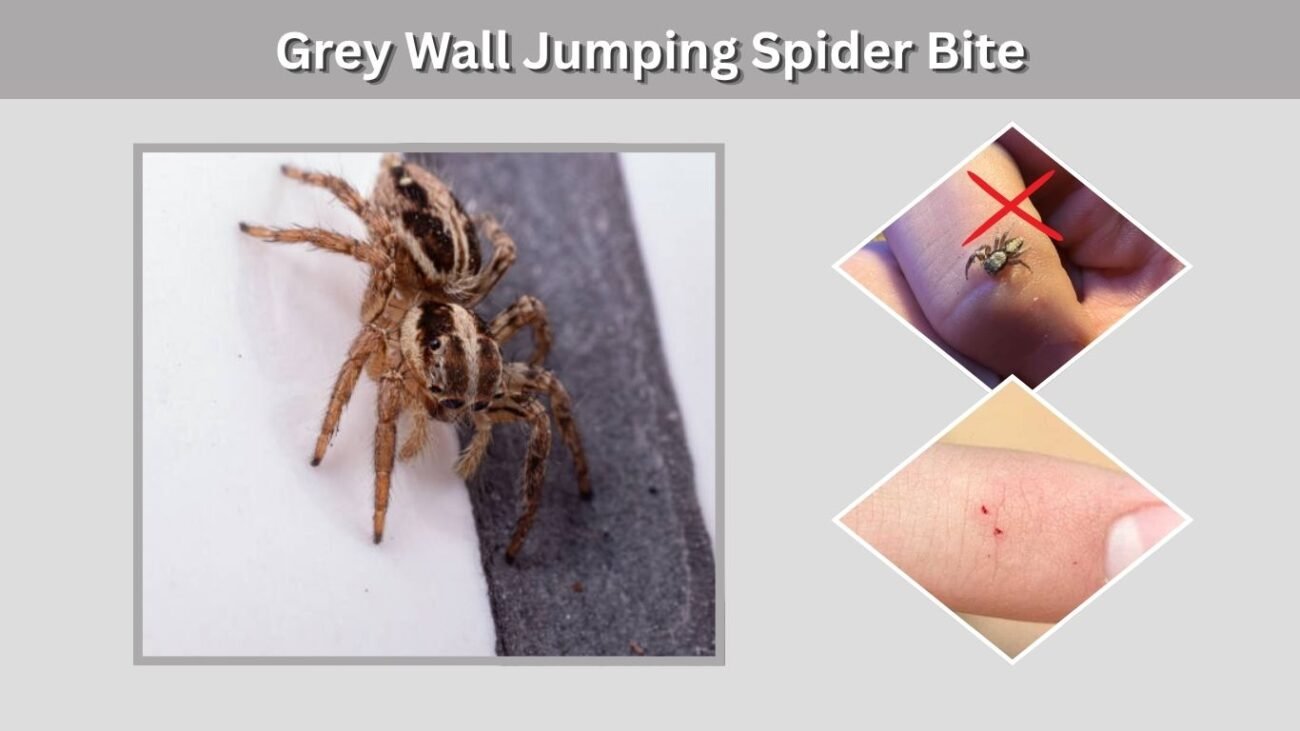
A grey wall jumping spider bite is possible, but it is uncommon. These spiders are not aggressive toward humans and usually prefer to run, jump away, or hide. A bite may happen if the spider is trapped against the skin, squeezed, or handled roughly.
Most jumping spider bites are mild. A person may notice brief stinging, slight redness, mild swelling, itching, or local tenderness. Serious reactions are rare, but any bite should be watched if symptoms worsen.
For a minor bite:
- Wash the area with soap and water.
- Use a cold compress to reduce swelling.
- Avoid scratching the bite.
- Watch for spreading redness or infection.
- Seek medical help if symptoms are severe or unusual.
People searching for “small grey jumping spider bite” or “bites from a grey jumping spider” are usually dealing with mild irritation or uncertainty about what bit them. If the spider was not seen biting, another insect may be responsible.
Is the Grey Wall Jumping Spider Poisonous?
The grey wall jumping spider is not poisonous in the common sense. Poisonous means harmful if touched or eaten. Venomous means an animal injects venom through a bite. Like other jumping spiders, the grey wall jumping spider is venomous to its insect prey, but it is not considered dangerous to people.
Its venom helps it subdue flies and other small insects. For humans, the risk is low. It does not seek out people, does not infest food, and does not damage homes.
So, the simple answer is: the grey wall jumping spider has venom for hunting, but it is not dangerously poisonous to humans.
What Do Grey Wall Jumping Spiders Eat?
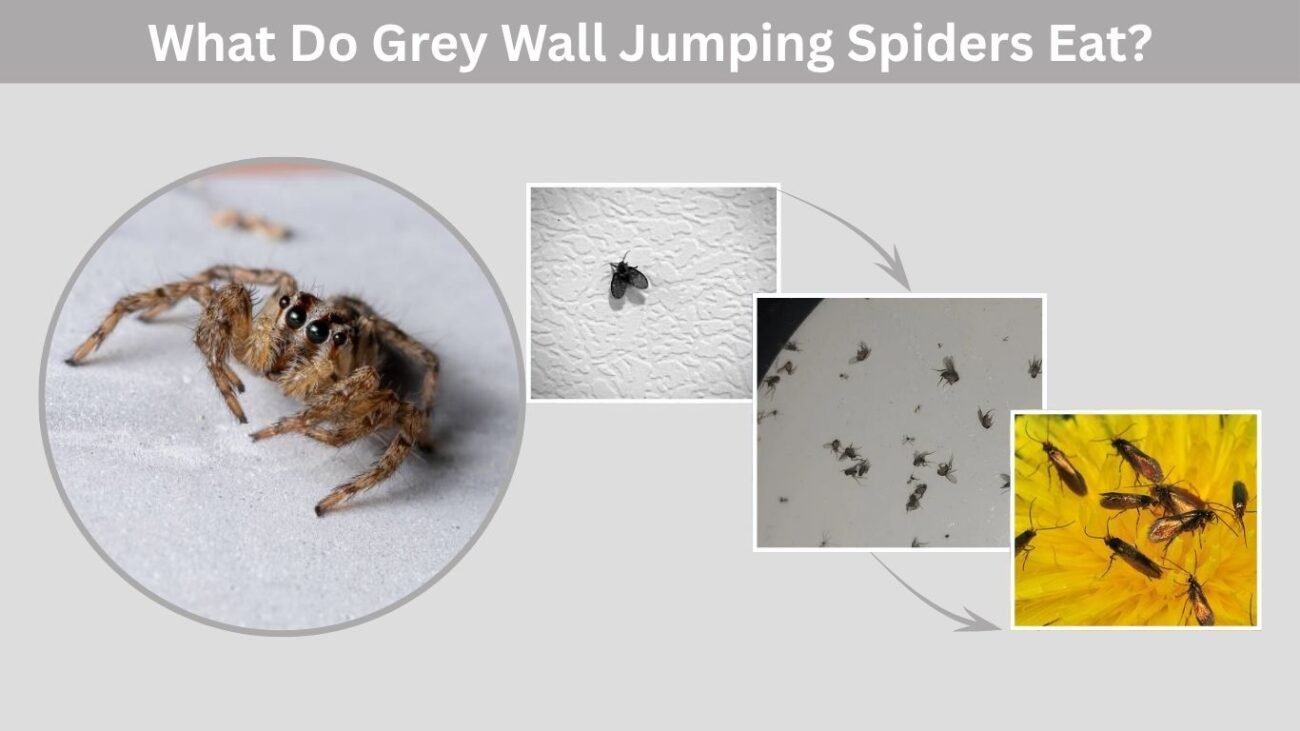
Grey wall jumping spiders are active predators. They feed mainly on small insects that land on walls and tree trunks. Because they do not build prey-catching webs, they depend on sight, stealth, and quick jumps.
Their diet may include:
- Small flies
- Gnats
- Mosquitoes
- Tiny moths
- Crane flies
- Small beetles
- Other tiny arthropods
This makes them useful around homes. A grey wall jumping spider on your porch or outside wall may help reduce small flying insects.
Grey Wall Jumping Spider Habitat
Grey wall jumping spiders are often found on buildings, walls, fences, and tree trunks. They prefer flat surfaces where insects land and where the spider can easily stalk prey.
They are commonly associated with warm climates and are considered pantropical, meaning they occur across many tropical and subtropical regions. In the United States, records are especially associated with warmer states such as Florida, Texas, California, and other southern areas.
Common habitats include:
- House walls
- Garden walls
- Tree trunks
- Fence posts
- Window frames
- Outdoor lights
- Sheds and garages
- Warm sunny building surfaces
Outdoor lights can attract flying insects, which may also attract these spiders.
Grey Jumping Spider Species and Similar Spiders
Many people search for “grey jumping spider species” because not every grey jumping spider is a grey wall jumper. Several jumping spiders can appear grey, black, white, brown, orange, red, or yellow depending on age and species.
A black and grey jumping spider with white dots may be a bold jumping spider or another Phidippus species. A grey and orange jumping spider may be a juvenile or female of a different species. A pygmy grey jumping spider may refer to a much smaller species entirely.
Similar search descriptions include:
- Grey and black jumping spider
- Grey and white jumping spider
- Brown grey jumping spider
- Grey and yellow jumping spider
- Grey and red jumping spider
- Light grey jumping spider
- Tiny grey jumping spider
- Banded grey jumping spider
Because color names are subjective, a clear photo is usually needed for exact identification. Location also matters. A grey jumping spider in Texas may not be the same species as a small grey jumping spider in the UK.
Grey Jumping Spider in the UK, NY, CT and PA
The term “grey jumping spider” is broad, so regional searches need care. In the UK, a small grey jumping spider may be a different native or introduced jumping spider. In New York, Connecticut, Pennsylvania, or Oregon, grey-and-white or black-and-grey jumping spiders could belong to several genera.
The true grey wall jumping spider, Menemerus bivittatus, is more strongly associated with warm, tropical, subtropical, and introduced urban areas. Reports exist in parts of the United States, but not every northern grey jumper is this species.
For regional identification, compare:
- Local range
- Body shape
- Wall-dwelling behavior
- Male and female markings
- Size
- Eye arrangement
- Clear close-up photos
Grey Wall Jumping Spider Pet Care
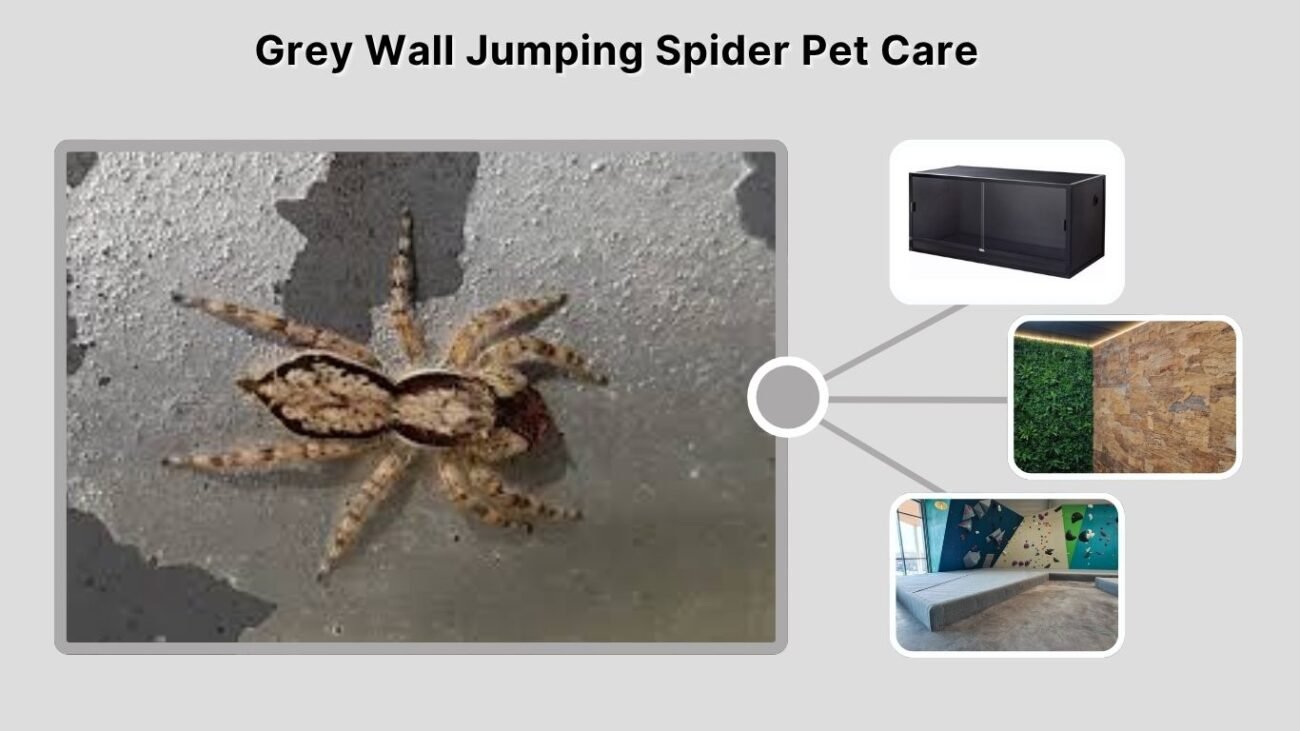
A grey wall jumping spider can be kept as a pet by careful keepers, though it is not as commonly sold as regal or bold jumping spiders. Because it is small and fast, it needs a secure enclosure with tiny ventilation holes and good climbing space.
Basic care needs include:
- Small escape-proof enclosure
- Vertical surfaces for climbing
- Cork bark, sticks, or textured décor
- Light misting for drinking droplets
- Properly sized prey
- Good ventilation
- No pesticides or chemical cleaners nearby
- Minimal handling
Feeder insects should be small enough for the spider to safely catch. Fruit flies, small house flies, and tiny crickets may be used depending on the spider’s size. Do not leave large prey loose in the enclosure, especially during molting.
Grey Jumping Spider Props and Halloween Searches
Some keyword searches, such as “grey jumping spider Spirit Halloween,” “grey jumping spider prop,” and “white grey animated giant attacking jumping spider Halloween,” refer to decorations rather than real spiders. These searchers may be looking for a toy, animated prop, or seasonal product.
A real grey wall jumping spider is tiny, harmless, and not giant. If your page targets living spiders, it is helpful to clarify the difference. A Halloween prop may look like an oversized fuzzy grey jumping spider, but real jumping spiders are small predators that hunt insects and avoid people.
Should You Remove a Grey Wall Jumping Spider?
In most cases, you do not need to remove it. Grey wall jumping spiders are beneficial, non-destructive, and unlikely to bite. If the spider is outside, leaving it alone is usually the best choice.
If one comes indoors, use a cup and paper to move it outside gently. Place it on a wall, fence, shrub, or tree trunk where it can continue hunting.
FAQs
What is a grey wall jumping spider?
A grey wall jumping spider is a small jumping spider commonly known as the gray wall jumper. Its scientific name is Menemerus bivittatus. It is often found on building walls and tree trunks, where it hunts small insects by sight.
Is the grey wall jumping spider bite dangerous?
A grey wall jumping spider bite is not usually dangerous. Bites are uncommon and usually happen only if the spider is trapped or handled roughly. Mild redness, swelling, itching, or brief stinging may occur, but serious symptoms are rare.
Is the grey wall jumping spider poisonous?
No, it is not dangerously poisonous to humans. It has venom for hunting tiny insect prey, but it is not considered medically significant for people. The spider is shy, small, and more likely to run away than bite.
How big is a grey wall jumping spider?
Adult grey wall jumping spiders are usually around 9 mm long, with males slightly smaller than females. Females often look broader and paler, while males are darker and more strongly patterned with black-and-white markings.
Can a grey wall jumping spider be kept as a pet?
Yes, it can be kept as a small display pet by careful keepers. It needs a secure ventilated enclosure, vertical climbing surfaces, light misting, and tiny live prey. Handling should be limited because the spider is small, fast, and delicate.