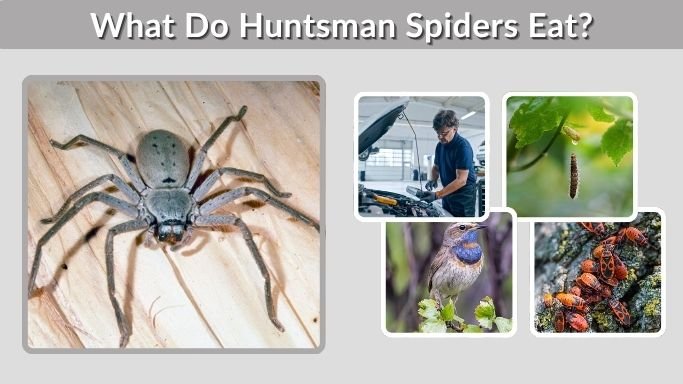
Huntsman spiders are fast, active predators that eat insects, other arthropods, and sometimes small animals. Unlike web-building spiders, they chase and ambush prey using speed, strong legs, and quick reflexes. Most huntsman spiders feed on cockroaches, moths, crickets, beetles, and other household or forest insects. Larger huntsman spiders may occasionally catch lizards, geckos, small frogs, or even tiny mammals, but these bigger meals are rare.
Huntsman Spider Diet: What They Usually Eat
Huntsman spiders are carnivorous spiders. Their main food source is insects and other invertebrates. The Australian Museum lists huntsman spiders as arthropod-feeders, carnivorous, and insectivorous, meaning their normal diet is mostly insects and similar small creatures.
Common Prey of Huntsman Spiders
Huntsman spiders usually eat prey they can overpower quickly. They do not depend on sticky webs to catch food. Instead, they roam at night, hide during the day, and attack moving prey when it comes close.
Common foods include:
- Cockroaches
- Crickets
- Moths
- Beetles
- Grasshoppers
- Flies
- Caterpillars
- Other spiders
- Small insects around lights
- Household pests
Cockroaches are one of the most common foods for huntsman spiders inside homes. This is why many people consider them useful natural pest controllers, even though their large size can be frightening.
Do Huntsman Spiders Eat Cockroaches?
Yes, huntsman spiders eat cockroaches. In fact, cockroaches are one of their best-known prey items. Huntsman spiders are fast enough to chase roaches across walls, floors, ceilings, sheds, garages, and tree trunks.
They are especially helpful in warm places where cockroaches are common. A huntsman spider may hide behind furniture, under bark, inside sheds, or near outdoor lights where insects gather. When a cockroach moves nearby, the spider rushes forward, grabs it with its legs, and bites it.
This does not mean you should keep huntsman spiders in your house as a pest-control method, but their diet does help reduce insect numbers naturally.
How Huntsman Spiders Catch Their Food
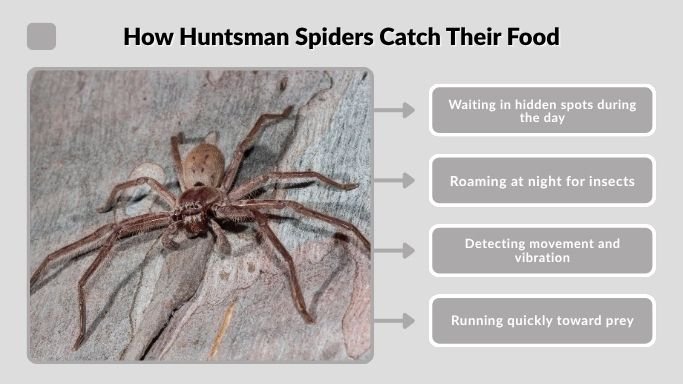
Huntsman spiders are active hunters. They do not build prey-catching webs like orb-weavers or house spiders. Instead, they rely on speed, camouflage, and ambush hunting. Wikipedia’s overview of Sparassidae notes that adult huntsman spiders hunt and forage for food rather than using webs to catch prey.
Hunting Style
Huntsman spiders often wait quietly on walls, ceilings, tree trunks, logs, or under bark. Their flat bodies allow them to squeeze into narrow hiding places. At night, they become more active and search for prey.
Their hunting method includes:
- Waiting in hidden spots during the day
- Roaming at night for insects
- Detecting movement and vibration
- Running quickly toward prey
- Grabbing prey with long legs
- Delivering a venomous bite
- Feeding after the prey is subdued
Their venom helps immobilize small prey, but huntsman spiders are not considered dangerously venomous to humans. A bite may cause local pain, swelling, or irritation, but serious effects are uncommon.
Why They Are Good Hunters
Huntsman spiders have long sideways legs, which give them a crab-like shape. This leg structure helps them move quickly across flat surfaces. They can run on walls, ceilings, tree trunks, rocks, and house surfaces.
They also have excellent reaction speed. Instead of waiting for prey to become trapped, they actively chase it. This makes them very effective against fast-moving insects such as cockroaches and crickets.
Do Huntsman Spiders Eat Larger Animals?
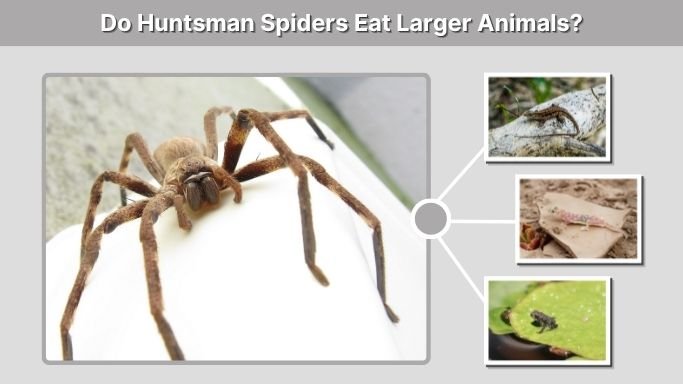
Most huntsman spiders eat insects. However, larger species can sometimes catch small vertebrates. These events are uncommon but possible when the spider is large enough and the prey is small, weak, or trapped.
Larger Prey Huntsman Spiders May Eat
Larger huntsman spiders may occasionally eat:
- Small lizards
- Geckos
- Small frogs
- Young mice
- Small birds in rare cases
- Tiny possums in unusual reports
- Other spiders
- Scorpions or similar arthropods
These larger meals are not their normal diet. Most huntsman spiders survive mainly on insects and other invertebrates. Reports of huntsman spiders eating mice, birds, or possums usually attract attention because they are unusual, not because they happen every day.
Huntsman Spider Eating Possum: Is It Real?
There have been viral stories and images of large huntsman spiders appearing to eat small possums, especially pygmy possums in Australia. A huntsman spider can overpower a very small animal if the spider is large enough and the animal is vulnerable. However, this is rare.
A possum is not a regular food source for huntsman spiders. Most possums are far too large. When people search for “huntsman spider eating possum,” they are usually looking for unusual wildlife events, not everyday feeding behavior.
Do Huntsman Spiders Eat Birds?
Huntsman spiders may rarely catch very small birds, but this is not common. Birds are usually too large, too strong, and too mobile for most huntsman spiders. A very large spider may attack a small nestling or weak bird if the opportunity appears, but insects remain the main diet.
The phrase “huntsman spider eats bird” is popular because it sounds shocking. In real life, it is an exceptional event rather than normal behavior.
Huntsman Spider Food by Habitat
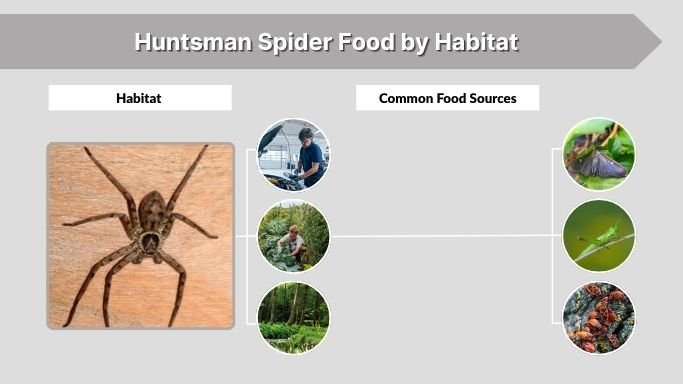
A huntsman spider’s diet depends heavily on where it lives. Spiders in homes may eat cockroaches and moths, while forest huntsman spiders may catch beetles, caterpillars, and other bark-dwelling insects.
| Habitat | Common Food Sources |
| Homes and garages | Cockroaches, moths, flies, crickets, small spiders |
| Gardens | Grasshoppers, beetles, caterpillars, moths, flies |
| Forests | Bark insects, beetles, moths, other arthropods |
| Tree trunks and logs | Roaches, larvae, beetles, ants, small invertebrates |
| Warm outdoor lights | Moths, flies, mosquitoes, flying insects |
| Tropical areas | Large insects, geckos, small frogs, other spiders |
Indoor Huntsman Spider Diet
Inside houses, huntsman spiders often eat pests that humans dislike. They may hide behind curtains, furniture, picture frames, cabinets, and wall corners. At night, they come out to hunt.
Indoor prey may include cockroaches, moths, flies, silverfish, crickets, and other spiders. Because they do not make messy prey-catching webs, people often notice the spider itself more than any web.
Outdoor Huntsman Spider Diet
Outdoors, huntsman spiders eat a wider variety of prey. They may hunt on tree bark, under loose bark, among rocks, in sheds, and around gardens. The Australian Museum notes that huntsman spiders are often found under loose bark, in crevices, under rocks, on foliage, and sometimes inside houses.
Outdoor huntsman spiders feed on insects that live in these areas. Beetles, moths, cockroaches, grasshoppers, and caterpillars are common targets.
Do Huntsman Spiders Eat Other Spiders?
Yes, huntsman spiders can eat other spiders. They are opportunistic predators, meaning they eat available prey they can catch. If another spider is small enough, a huntsman may attack and eat it.
Spiders They May Eat
Huntsman spiders may eat:
- Small house spiders
- Web-building spiders
- Juvenile spiders
- Other huntsman spiders in rare cases
- Weak or molting spiders
- Small wandering spiders
Cannibalism can happen among spiders, especially when food is limited or when one spider is much larger than the other. However, insects remain the main part of a huntsman spider’s diet.
How Often Do Huntsman Spiders Eat?
Huntsman spiders do not need to eat every day. Like many spiders, they can survive for some time without food if necessary. Their feeding frequency depends on prey availability, temperature, age, size, and season.
A huntsman spider may eat several insects in a good hunting period, then go days without another meal. Young spiders need smaller prey more often because they are growing. Adults can handle larger prey and may eat less frequently.
Factors That Affect Feeding
Feeding depends on:
- Spider size
- Age and growth stage
- Temperature
- Season
- Prey availability
- Habitat type
- Mating season
- Whether the female is guarding eggs
Female huntsman spiders may become less active when guarding egg sacs. During this time, they may stay close to their eggs and hunt less often.
What Do Baby Huntsman Spiders Eat?
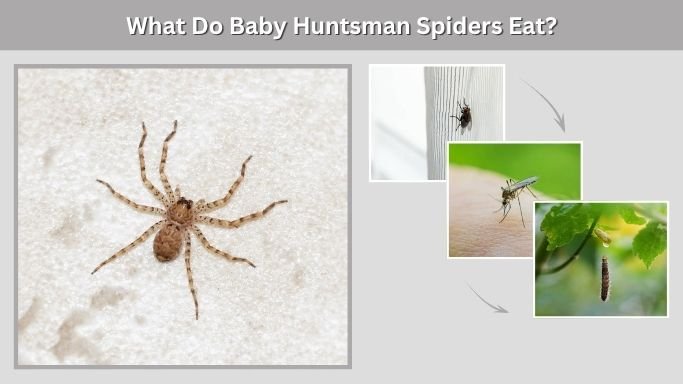
Baby huntsman spiders, also called spiderlings, eat very small prey. They cannot catch large cockroaches or beetles at first. Instead, they feed on tiny insects and small arthropods.
Baby Huntsman Spider Food
Young huntsman spiders may eat:
- Tiny flies
- Small gnats
- Mosquitoes
- Fruit flies
- Tiny moths
- Small insect larvae
- Springtails
- Very small spiders
As they grow and molt, they can attack larger prey. Their diet slowly changes from tiny insects to bigger insects such as crickets, roaches, moths, and beetles.
Do Giant Huntsman Spiders Eat Different Food?
The giant huntsman spider is famous because of its huge leg span. Like other huntsman spiders, it mainly eats insects and other small animals. Its larger size may allow it to catch bigger prey than smaller huntsman species.
However, even giant huntsman spiders do not normally hunt large animals. Their usual food still includes insects, cockroaches, moths, crickets, beetles, and similar prey. A giant huntsman may occasionally take a lizard, gecko, frog, or tiny mammal if the opportunity appears.
Giant Huntsman Spider Diet
A giant huntsman spider may eat:
- Large cockroaches
- Big moths
- Crickets
- Beetles
- Grasshoppers
- Other spiders
- Small geckos
- Small lizards
- Tiny mammals in rare cases
Large size helps the spider overpower bigger prey, but it still chooses food based on availability and risk. A dangerous or struggling animal can injure the spider, so insects are usually safer meals.
Do Huntsman Spiders Eat Humans or Pets?
No, huntsman spiders do not eat humans. They also do not hunt dogs or cats. Searches like “huntsman spider eat dog” or “huntsman spider eat human kidney” are based on fear, myths, or internet exaggeration.
A huntsman spider may bite if it is trapped, squeezed, or handled roughly, but it does not see humans as food. Humans are far too large. Dogs and cats are also not prey. In fact, pets are more likely to injure or kill the spider.
Can Pets Eat Huntsman Spiders?
Some pets, such as cats, dogs, or bearded dragons, may try to eat huntsman spiders. This is not ideal because the spider may bite in defense. If a pet eats one and shows swelling, drooling, vomiting, pain, or unusual behavior, contact a veterinarian.
For most homes, the safest option is to gently relocate the spider outside instead of letting pets attack it.
What Eats Huntsman Spiders?
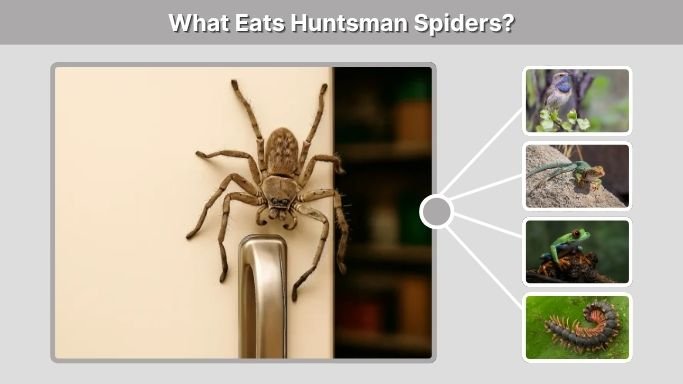
Huntsman spiders are predators, but they also have predators of their own. Many animals hunt or attack huntsman spiders in nature.
Predators of Huntsman Spiders
Animals that may eat or attack huntsman spiders include:
- Birds
- Lizards
- Geckos
- Frogs
- Larger spiders
- Scorpions
- Centipedes
- Spider wasps
- Small mammals
- Reptiles
Spider wasps are especially interesting. Some wasps sting huntsman spiders, paralyze them, and use them as food for their larvae. This is why searches like “wasp eating huntsman spider” and “hawk wasp eats huntsman spider” appear with this topic.
Are Huntsman Spiders Helpful?
Huntsman spiders can be helpful because they eat pests. Their diet includes many insects that people do not want in homes or gardens. Cockroaches, moths, flies, and crickets are common prey.
They are not aggressive hunters of humans. Their scary appearance comes from their size, speed, and long legs. In most cases, they are more useful than harmful.
Benefits of Huntsman Spiders
Huntsman spiders help by:
- Eating cockroaches
- Reducing household insects
- Controlling moths and flies
- Feeding on garden pests
- Balancing local food webs
- Serving as food for birds, reptiles, and wasps
Still, not everyone wants a large spider inside the house. If you find one indoors, use a container and cardboard to move it outside safely.
FAQs
What does a huntsman spider eat?
A huntsman spider mainly eats insects and other arthropods. Common prey includes cockroaches, crickets, moths, beetles, flies, grasshoppers, caterpillars, and other spiders. Larger huntsman spiders may occasionally eat small lizards, geckos, frogs, or tiny mammals, but insects are their normal food.
Do huntsman spiders eat cockroaches?
Yes, huntsman spiders eat cockroaches. Cockroaches are one of their most common prey items inside homes, sheds, and garages. Huntsman spiders are fast hunters, so they can chase and catch roaches on walls, floors, ceilings, and outdoor surfaces at night.
Can a huntsman spider eat a mouse?
A large huntsman spider may rarely catch a very young or small mouse, but this is unusual. Mice are not a regular part of its diet. Most huntsman spiders eat insects, spiders, and other small invertebrates because those prey are easier and safer to catch.
Do huntsman spiders eat birds?
Huntsman spiders do not normally eat birds. Rare cases may involve very small, weak, or young birds, but this is not common feeding behavior. The usual huntsman spider diet is made up of insects, cockroaches, moths, crickets, beetles, and other small arthropods.
What eats a huntsman spider?
Huntsman spiders may be eaten by birds, lizards, frogs, geckos, centipedes, scorpions, larger spiders, and small mammals. Spider wasps can also attack huntsman spiders by stinging and paralyzing them. Even though huntsman spiders are strong predators, they are also part of the food chain.