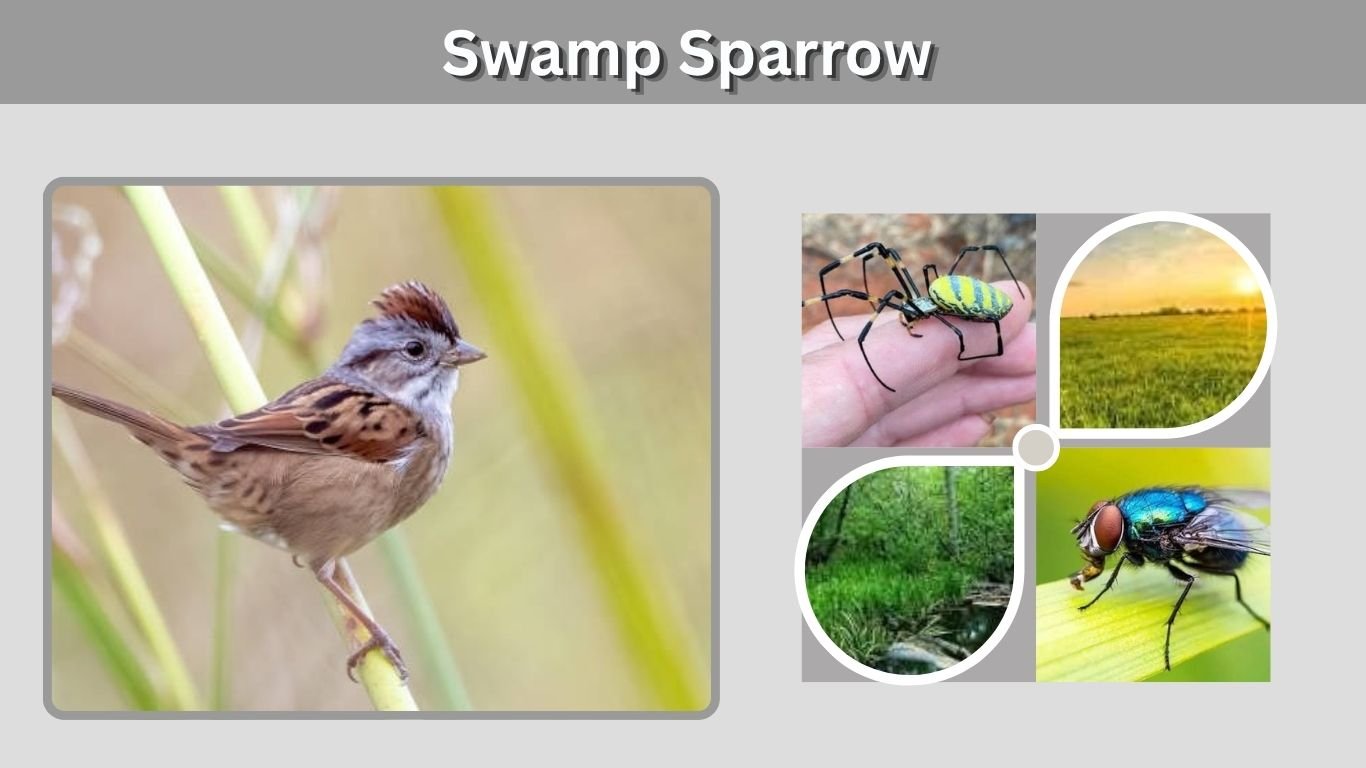
The Swamp Sparrow (Melospiza georgiana) is a small North American songbird closely associated with marshes, bogs, wet meadows, and brushy watersides. Although its rusty wings and reddish crown can be striking, the bird often remains hidden among cattails and sedges. Birdwatchers may hear its musical trill or sharp call before seeing it. Learning its plumage, habitat, behavior, and voice makes distinguishing a Swamp Sparrow from Song, Lincoln’s, and Chipping Sparrows much easier.
Swamp Sparrow Overview
Swamp Sparrows belong to the New World sparrow family, Passerellidae. They breed mainly across Canada and the northern and eastern United States, then migrate south to spend winter in milder wetlands, brushy fields, and streamside thickets. Their relatively long legs help them walk through muddy vegetation and shallow water while searching for food.
| Feature | Description |
| Scientific name | Melospiza georgiana |
| Length | Approximately 5–6 inches |
| Wingspan | Approximately 7–8 inches |
| Weight | About 0.5–0.7 ounces |
| Main colors | Rusty brown, gray, buff, black and white |
| Preferred habitat | Freshwater marshes, bogs and wet thickets |
| Main foods | Insects, aquatic invertebrates and seeds |
| Conservation status | Least Concern |
Swamp Sparrow Identification
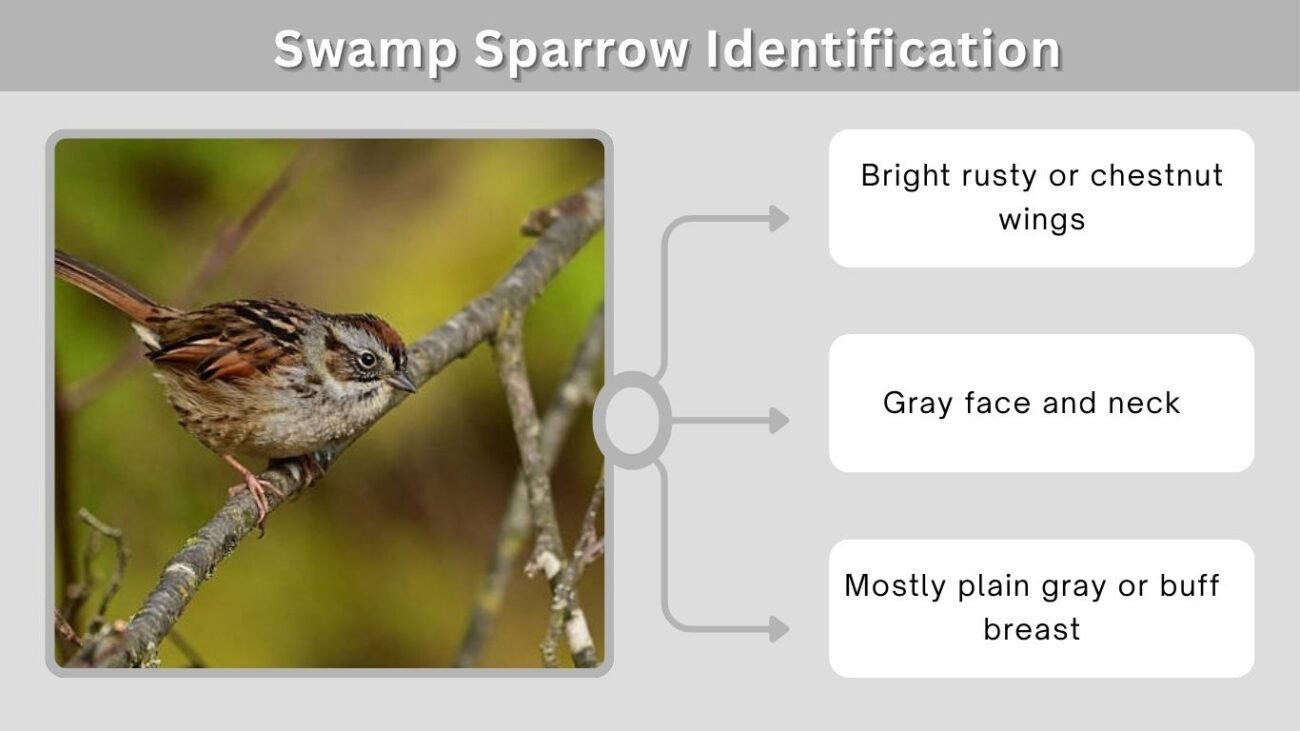
The Swamp Sparrow is a compact, medium-sized sparrow with a rounded body, moderately long tail, and sturdy legs. Its warm reddish wings and grayish face are among the most useful identification marks.
Key Identification Features
- Bright rusty or chestnut wings
- Reddish crown during the breeding season
- Gray face and neck
- Whitish throat
- Mostly plain gray or buff breast
- Dark streaks across the back
- Medium-length, rounded tail
- Pinkish or brownish legs
- Small, conical seed-eating bill
Unlike many other sparrows, an adult Swamp Sparrow usually lacks strong, crisp streaking across the center of its breast. Some individuals show faint or blurry markings along the sides, but the underparts generally appear much plainer than those of a Song Sparrow.
Breeding and Winter Plumage
During spring and summer, breeding adults usually have a rich reddish-brown crown that contrasts with the gray face. A dark line may pass behind the eye, while the throat looks noticeably pale.
In fall and winter, the crown becomes duller and more heavily streaked. A narrow pale stripe may appear down its center. The face can also become browner or buffier, making winter Swamp Sparrows more difficult to identify.
Male vs Female Swamp Sparrow
Male and female Swamp Sparrows look very similar. Females may have slightly less reddish coloring on the crown and more dark streaking, but these differences are usually difficult to recognize unless a bonded pair is observed together.
The male is easier to notice during the breeding season because he sings repeatedly from an exposed cattail, shrub, or other raised perch.
Juvenile and Immature Swamp Sparrow
Juveniles look buffier and more heavily streaked than adults. Dark marks may cover the crown, breast, neck, flanks, and back. Because of this streaking, a juvenile Swamp Sparrow can initially resemble a young Song Sparrow or Lincoln’s Sparrow.
As the bird matures, its breast becomes plainer, the face turns grayer, and reddish coloring develops on the wings and crown. First-winter birds often remain less colorful than older adults.
Swamp Sparrow Habitat
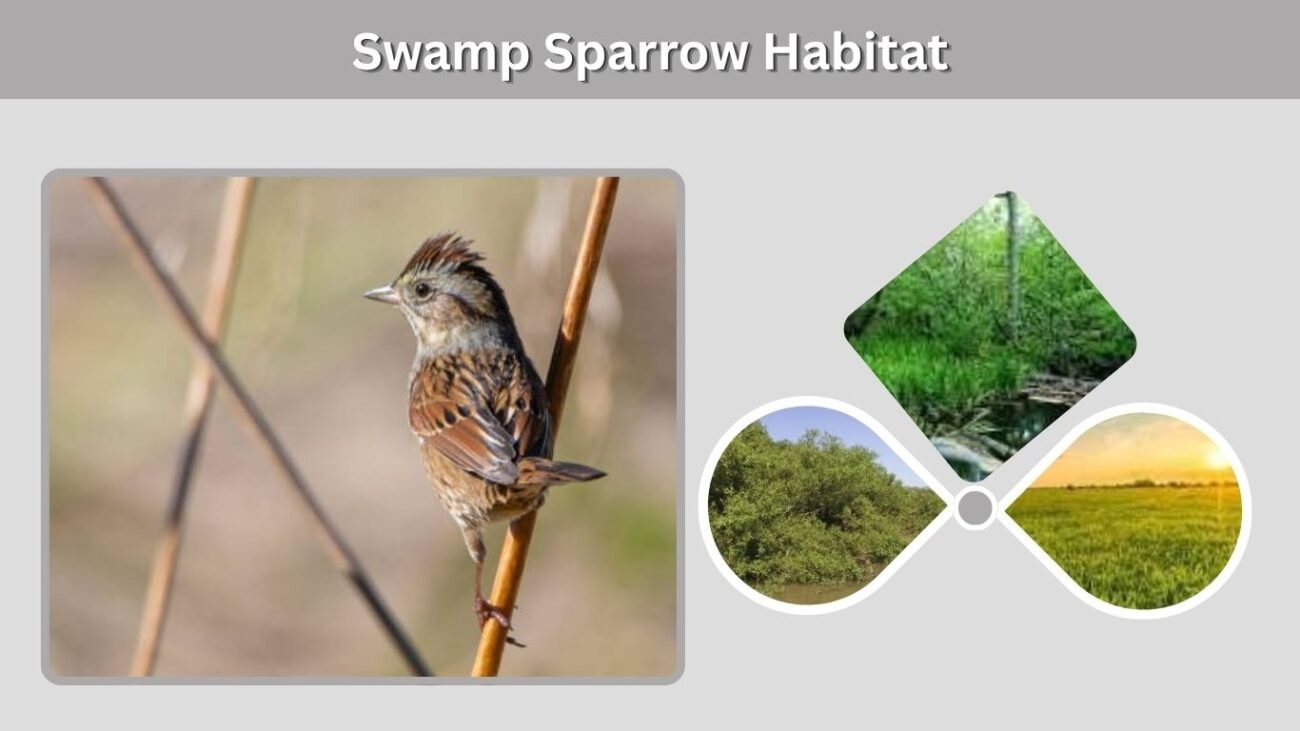
As its name suggests, the Swamp Sparrow strongly favors wet environments. It breeds in freshwater marshes containing cattails, sedges, grasses, alders, or willows. It also occupies bogs, wet meadows, swampy lake margins, and brushy edges of slow-moving streams.
A coastal subspecies breeds in brackish marshes along parts of the mid-Atlantic coast. These birds generally occupy higher marsh sections with scattered shrubs rather than exposed mudflats or low areas that flood frequently.
Winter Habitat
During winter, Swamp Sparrows become less closely tied to standing water. They may inhabit:
- Marsh edges
- Damp woodland openings
- Streamside thickets
- Overgrown fields
- Dense roadside vegetation
- Weedy areas near ponds
- Moist gardens with thick ground cover
They usually remain close to dense vegetation where they can quickly hide from predators.
Swamp Sparrow Range and Migration
Swamp Sparrows breed across much of Canada and the northeastern and north-central United States. Their breeding distribution reaches from boreal wetlands into the Great Lakes, New England, and parts of the mid-Atlantic region.
Most populations migrate south during autumn. Their main winter range includes the eastern and southeastern United States, with some birds continuing into Mexico. Smaller numbers may appear in western regions during migration or winter.
Spring migration brings them north to their breeding marshes, where males establish territories and begin singing. During migration, birds may temporarily appear in small wetlands, damp fields, gardens, or brushy parks outside their usual breeding habitat.
What Do Swamp Sparrows Eat?
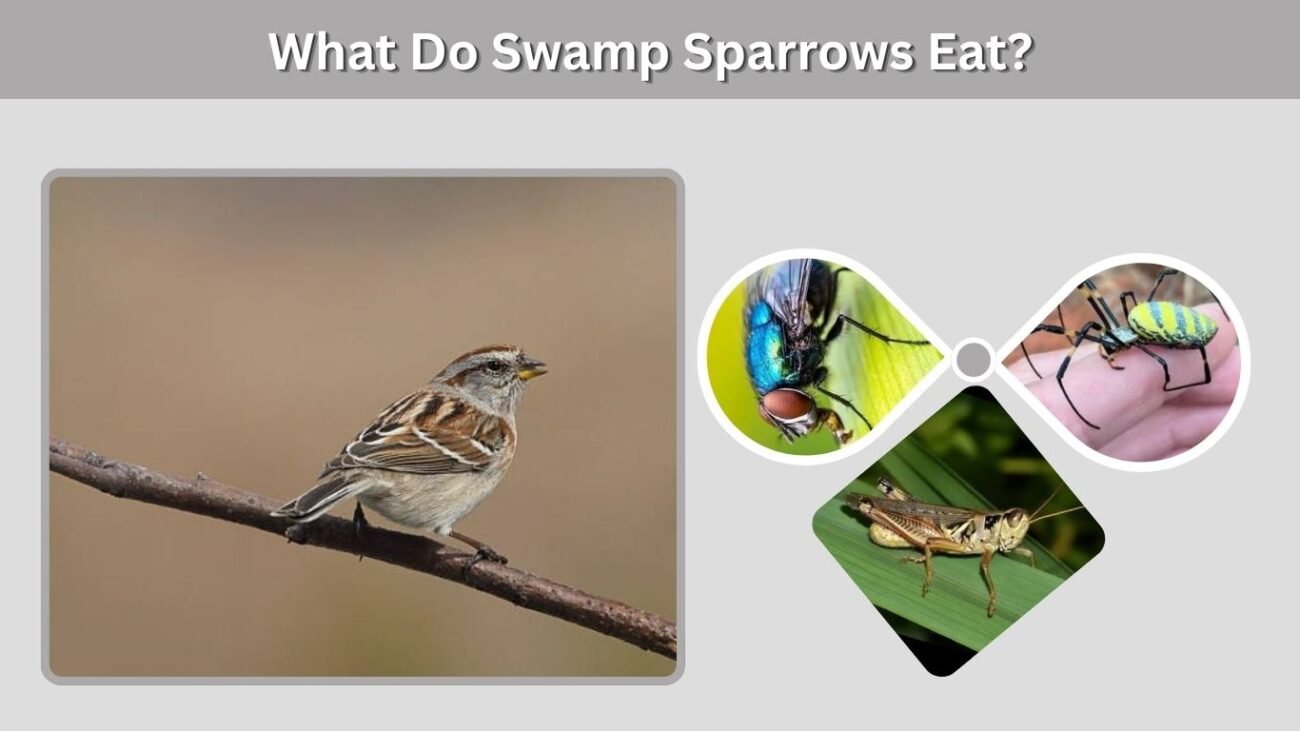
Swamp Sparrows eat both animal and plant matter, but their diet changes with the seasons. In spring and summer, they consume large numbers of insects and other invertebrates. Seeds become more important during fall and winter.
Common Foods
Their diet includes beetles, caterpillars, ants, crickets, grasshoppers, flies, spiders, aquatic insects, small snails, grass seeds, sedge seeds, weed seeds, smartweed and small fruits.
Swamp Sparrows mainly forage on muddy ground, among fallen vegetation, or along the water’s edge. Their longer legs allow them to wade into shallow water. They may pick prey from the surface and have even been observed placing their heads underwater to capture aquatic invertebrates.
Swamp Sparrow Song and Call
The Swamp Sparrow’s song is a simple, musical trill delivered at a slow, steady pace. All the notes are usually at approximately the same pitch, producing a rich sound that may be repeated several times.
Males often sing from the top of a cattail, reed, or low shrub during spring and early summer. The uncomplicated trill differs from the more varied song of a Song Sparrow.
Its common call is a sharp, metallic “chink” or “chip.” Because Swamp Sparrows frequently remain hidden, this call may be the first indication that one is nearby. A bird may climb into view after hearing squeaking or other curious sounds along a marsh edge.
Nesting and Reproduction
The female usually builds a cup-shaped nest in cattails, sedge tussocks, marsh grass, or low shrubs. Most nests are placed close to the ground or water, although some may be several feet above the surface.
The nest has a bulky outer foundation made from coarse marsh plants and a smaller inner cup lined with fine grass. Overhanging cattail leaves sometimes form a natural roof, forcing the adults to enter from the side.
Swamp Sparrow Eggs
A typical clutch contains four or five eggs, although clutches may range from three to six. The eggs are pale green or greenish-white with reddish-brown markings.
The female incubates the eggs for approximately 12–15 days. The male may bring food to her while she remains on the nest. Both parents feed the chicks after hatching.
Young Swamp Sparrows usually leave the nest about 10–13 days later, even though their flight skills are still developing. A pair may raise two broods in a breeding season.
Swamp Sparrow vs Similar Sparrows
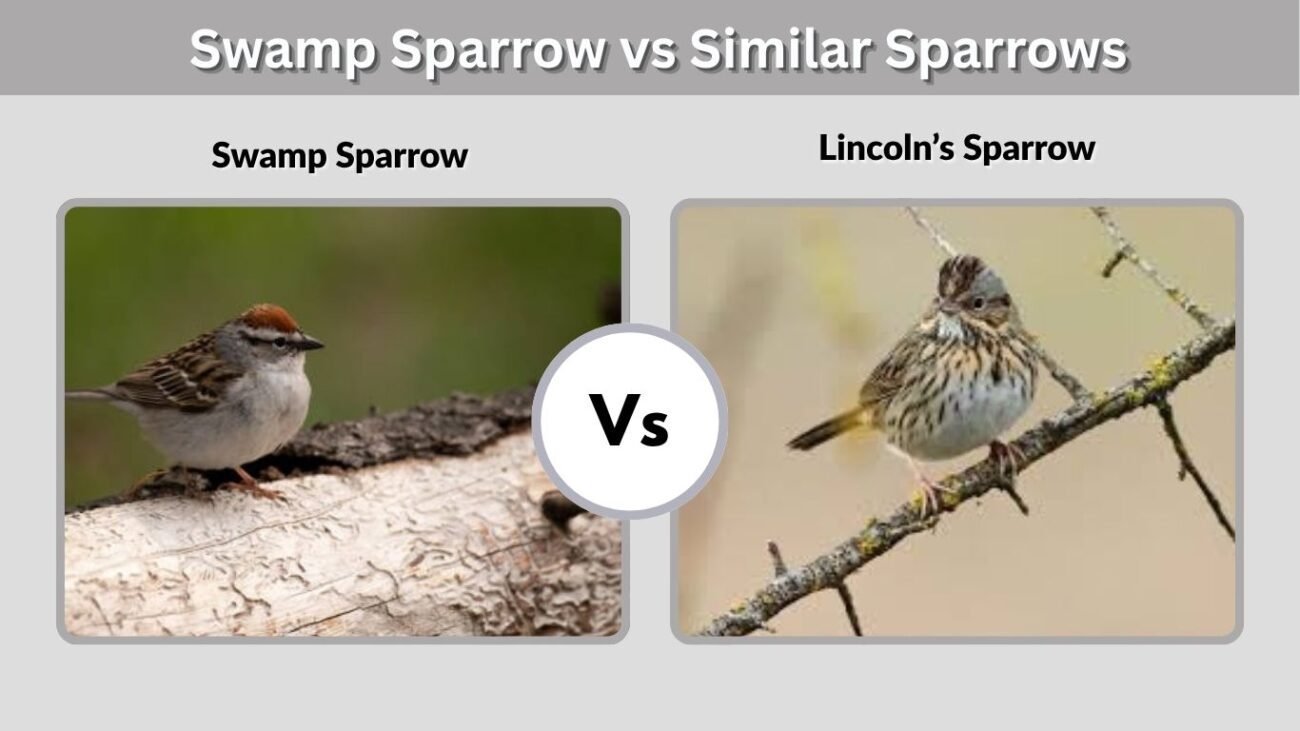
Swamp Sparrow vs Song Sparrow
A Song Sparrow normally has heavy dark streaking across its white breast, often forming a central dark spot. It also tends to have a longer, more rounded tail. The Swamp Sparrow has a grayer, plainer breast, brighter rusty wings, and a stronger connection to dense marsh vegetation.
Swamp Sparrow vs Lincoln’s Sparrow
Lincoln’s Sparrow has a buff-colored chest band covered with fine dark streaks. Its face also shows contrasting buff, gray, and brown markings. A Swamp Sparrow usually has a plainer gray chest, a whiter throat, and more extensive rusty coloring on the wings.
Swamp Sparrow vs Chipping Sparrow
Both species can have reddish crowns, but the Chipping Sparrow is smaller and slimmer. A breeding Chipping Sparrow has a clean white eyebrow, strong black eye line, and pale unstreaked underparts. It usually occupies parks, gardens, woodland edges, and open pine habitats rather than dense marshes.
Swamp Sparrow Behavior
Swamp Sparrows are shy birds that spend much of their time close to the ground. They run or hop through tangled vegetation, occasionally climbing a stalk to look around. When disturbed, they normally fly low for a short distance before disappearing into cover.
They are often solitary during the breeding season. Migrating and wintering birds may form loose groups or forage near Song Sparrows and other small birds. They seldom remain exposed for long, except when males sing from raised perches.
FAQs
Are Swamp Sparrows rare?
Swamp Sparrows are not generally considered rare. They are fairly common across suitable North American wetlands, but their secretive behavior can make them seem scarce. They often remain concealed in dense cattails, sedges, or brush and are detected more easily by their calls.
Do Swamp Sparrows visit bird feeders?
They do not regularly visit elevated feeders. During migration or winter, however, they may search beneath feeders for fallen seeds, especially when moist ground cover is nearby. Dense plantings, weedy borders, and shallow water can make a yard more attractive to them.
Where do Swamp Sparrows sleep?
Swamp Sparrows usually roost inside dense marsh vegetation, low shrubs, reeds, or thick grass. These concealed locations provide protection from wind, cold weather, and predators. Their exact sleeping spot may change depending on water levels, vegetation density, and seasonal habitat.
How long do Swamp Sparrows live?
Many small wild birds survive only a few years because of predators, severe weather, migration hazards, and habitat loss. However, the oldest recorded Swamp Sparrow was at least 7 years and 10 months old when it was recaptured during bird-banding work.
What predators eat Swamp Sparrows?
Adult Swamp Sparrows may be hunted by hawks, owls, snakes, and small mammals. Eggs and nestlings are vulnerable to snakes, raccoons, rodents, and other nest predators. Dense vegetation and nests positioned over water can provide some protection, although flooding creates another risk.