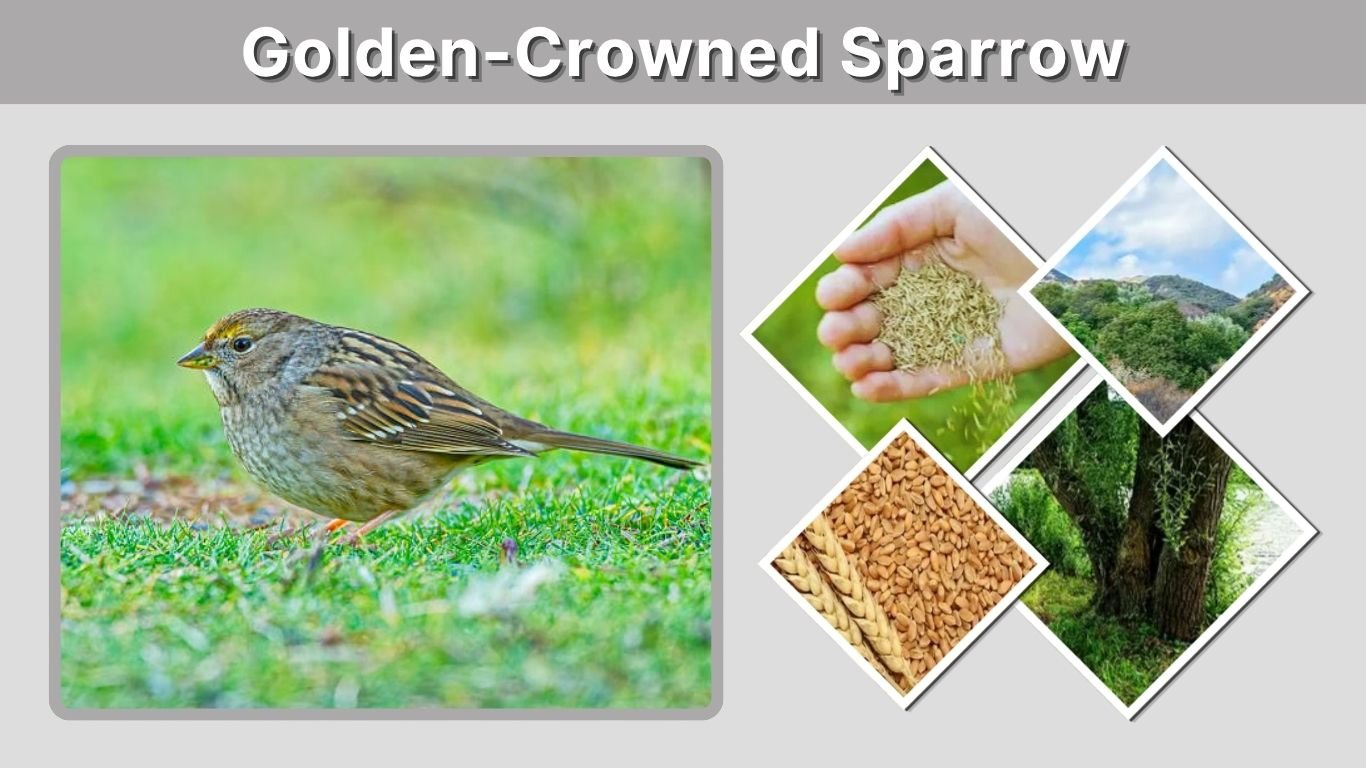
The Golden-crowned Sparrow (Zonotrichia atricapilla) is a large North American sparrow recognized by the yellow patch on its forehead. It breeds in remote parts of Alaska and western Canada before migrating south along the Pacific Coast for winter. During the colder months, these social birds gather beneath shrubs, in gardens, and around woodland edges, often alongside White-crowned Sparrows. Their slow, descending whistles give their song a distinctly mournful quality.
Golden-Crowned Sparrow Overview
The Golden-crowned Sparrow belongs to the New World sparrow family, Passerellidae. It is mainly a western North American species, although occasional individuals wander far beyond their usual range. The scientific name Zonotrichia atricapilla refers to its striped crown and dark breeding-season head pattern.
| Feature | Description |
| Scientific name | Zonotrichia atricapilla |
| Family | Passerellidae |
| Length | 5.9–7.1 inches |
| Weight | 1.1–1.2 ounces |
| Main colors | Brown, gray, black and yellow |
| Diet | Seeds, fruits, buds and insects |
| Breeding habitat | Shrubby tundra and boreal forest edges |
| Winter habitat | Chaparral, thickets, gardens and fields |
Measurements vary slightly among individuals, but this species is generally considered a fairly large, long-tailed sparrow with a rounded body and small conical bill.
Golden-Crowned Sparrow Identification
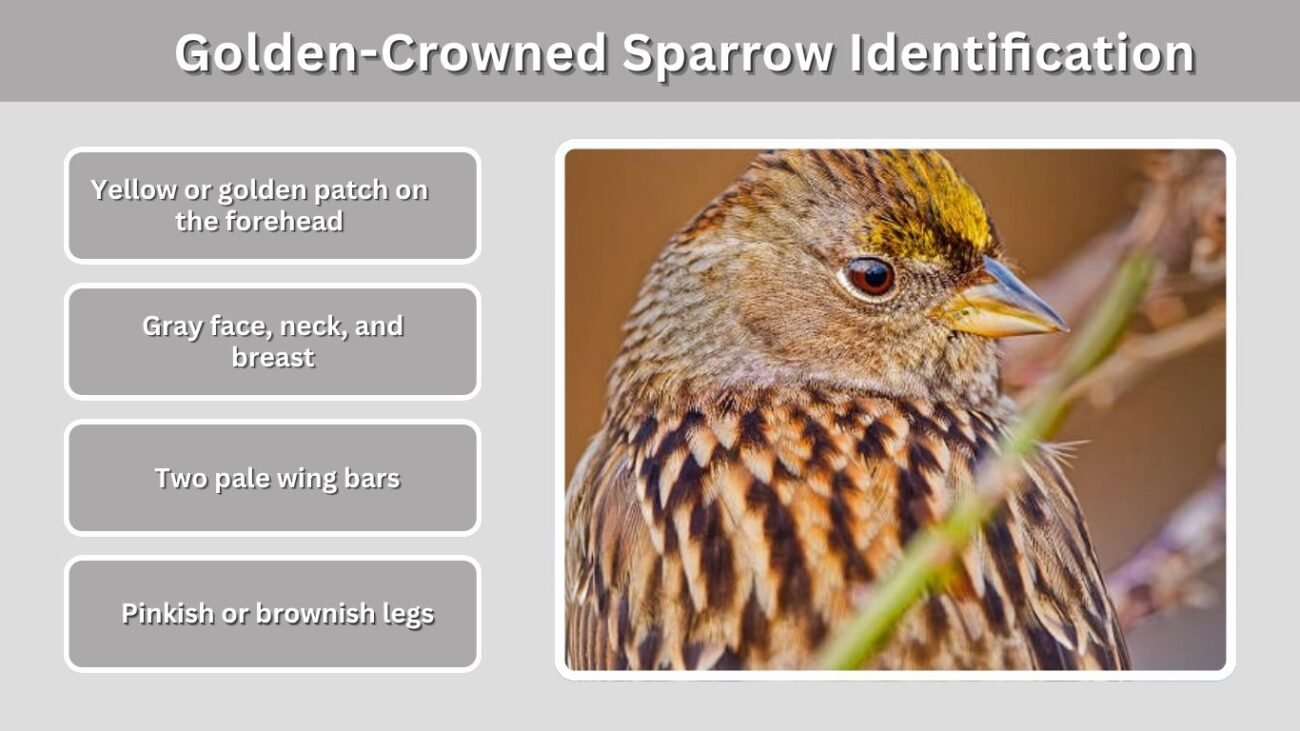
The golden forehead is the bird’s most recognizable feature, but its brightness changes with age and season. Looking at the head, breast, wings, bill, and overall body shape helps distinguish it from other crowned sparrows.
Key Identification Features
- Yellow or golden patch on the forehead
- Black crown surrounding the yellow patch in breeding adults
- Gray face, neck, and breast
- Brown, heavily streaked back
- Two pale wing bars
- Long brown tail
- Small, mostly dark bill
- Pinkish or brownish legs
Breeding adults have a bold black crown and a bright yellow forehead. The underparts are mostly smooth gray or gray-brown without heavy breast streaking. Their wings and back are brown with darker streaks and pale edging on the feathers.
Winter Plumage
Golden-crowned Sparrows look less dramatic in winter. The black crown becomes brown or dark gray, and the yellow forehead patch may look smaller and duller. Some winter adults retain enough yellow to be identified immediately, while others require closer examination.
The face and breast remain relatively plain, and the bird’s large size helps separate it from smaller sparrows. Winter is when most people along the Pacific Coast encounter this species.
Male vs Female Golden-Crowned Sparrow
Male and female Golden-crowned Sparrows look very similar. Both sexes can develop black-and-yellow breeding crowns, although males may average slightly brighter or more strongly marked. Plumage alone is usually not reliable enough to determine sex in the field.
Behavior can provide clues during the breeding season. Males commonly sing from visible perches and defend territories, while females collect nesting material and perform most incubation duties. Both parents help feed the young.
Juvenile and Immature Golden-Crowned Sparrow
Young birds lack the bold head pattern of breeding adults. A juvenile or first-winter bird has a brown-streaked crown, a weak yellow wash on the forehead, and generally dull brown-gray plumage. The black crown stripes are absent or poorly developed.
Immature Golden-crowned Sparrows may resemble female House Sparrows or young White-crowned Sparrows. Their plain grayish underparts, dark bill, large body, and faint yellow forehead are useful identification clues.
Golden-Crowned Sparrow Habitat and Range
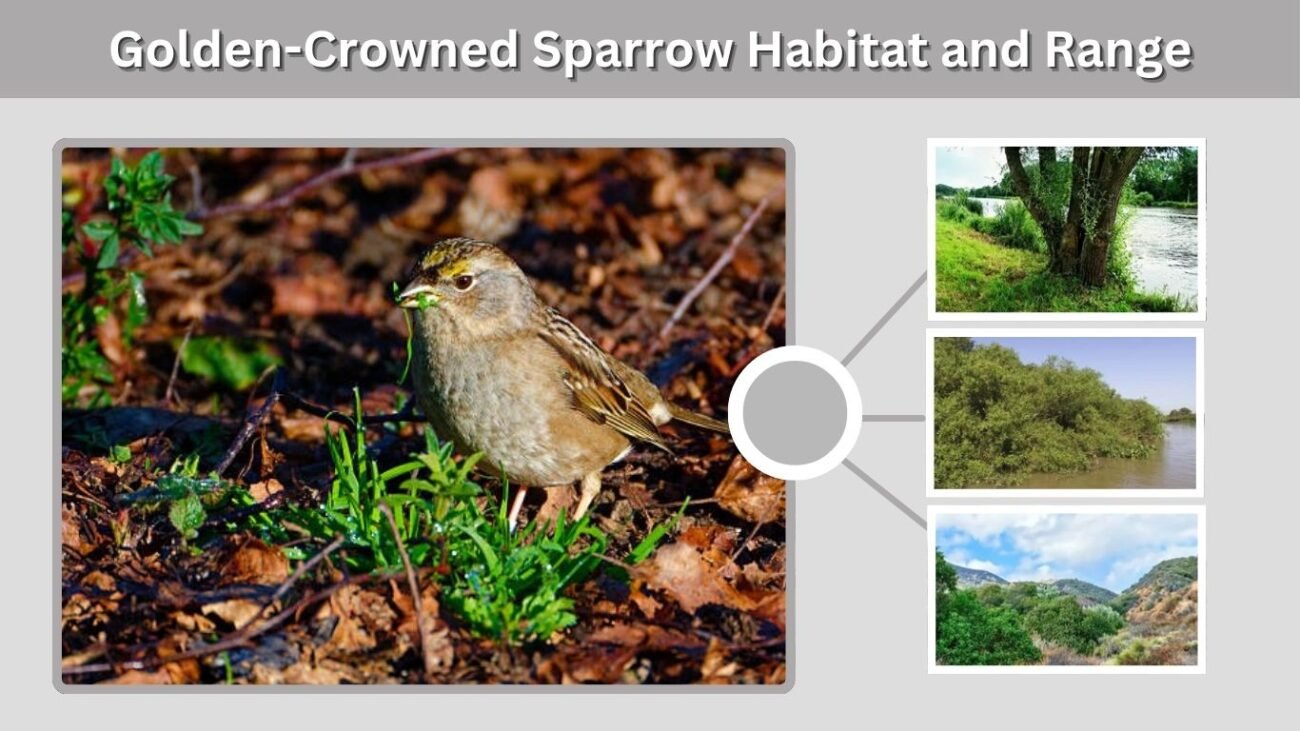
Golden-crowned Sparrows use very different environments during summer and winter. Their breeding grounds are remote and difficult to access, so much of what researchers know about the species comes from observations made on its wintering grounds.
Breeding Habitat
These sparrows breed in Alaska and western Canada, especially in shrubby tundra, willow thickets, low birch growth, and open areas near the edge of boreal forests. They also occur around treeline, where stunted shrubs provide nest cover and singing perches.
Breeding birds usually remain in pairs and defend territories. Because their northern nesting grounds are remote, they are less frequently observed in summer than many other North American sparrows.
Winter Habitat
During winter, Golden-crowned Sparrows occupy dense brush, chaparral, woodland edges, overgrown fields, orchards, parks, farms, and suburban gardens. They generally stay close to shrubs where they can escape from predators.
They are especially common along the Pacific Coast from southwestern Canada through California. Winter flocks often feed beneath vegetation or mix with White-crowned Sparrows, Dark-eyed Juncos, and other ground-feeding birds.
Migration and Seasonal Range
Golden-crowned Sparrows migrate between northern breeding areas and Pacific Coast wintering grounds. Most travel south during fall and return north in spring. Migration is thought to occur mainly at night.
The regular winter range extends from southern British Columbia through Washington, Oregon, California, and into Baja California. Birds are most numerous on wintering grounds from late October through early April. Occasional wanderers appear in central or eastern North America, but these sightings are uncommon.
What Do Golden-Crowned Sparrows Eat?
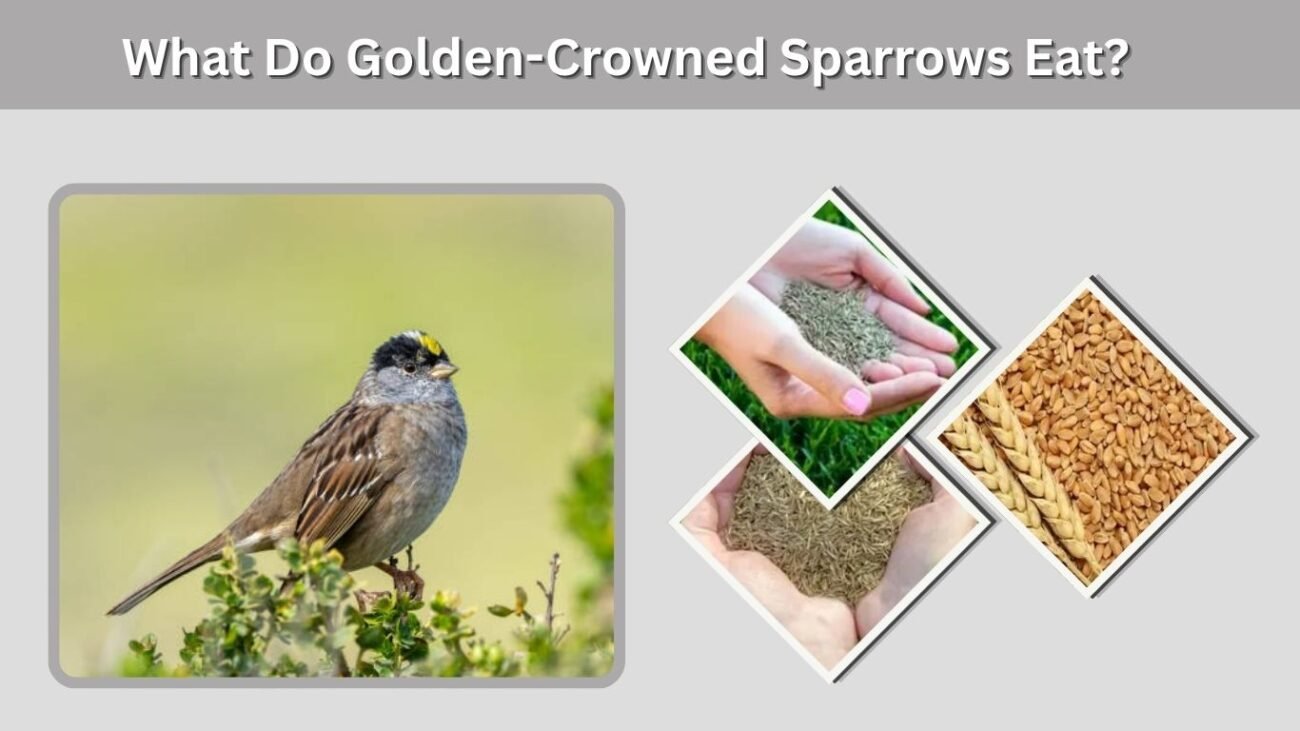
Golden-crowned Sparrows are omnivorous ground feeders. Their diet changes seasonally, with seeds and other plant materials dominating in winter and more insects becoming available during the breeding season.
Common Foods
Their diet can include:
- Grass and weed seeds
- Wheat, oats, barley and corn
- Apples, grapes, elderberries and olives
- Plant buds, flowers and young shoots
- Ants, bees and wasps
- Beetles and termites
- Moths, butterflies and crane flies
- Spiders and other small invertebrates
The birds hop across the ground, pick food from low plants, and scratch through leaf litter. They commonly forage in cultivated fields, lawns, orchards, gardens, and beneath dense shrubs.
Do They Visit Bird Feeders?
Golden-crowned Sparrows readily eat seeds scattered on the ground or offered on low platform feeders. Millet, cracked corn, and sunflower pieces may attract them, particularly when the feeding area is near dense vegetation.
They may also eat buds, flowers, and young garden plants. Cabbage, beets, and peas can occasionally be nibbled when sparrows forage in vegetable gardens.
Golden-Crowned Sparrow Song and Calls
The song consists of several clear, descending whistles. It is often interpreted as “oh, dear me” or “I’m so tired.” The falling notes create a sad or weary quality that is quite different from the rapid trills and complicated phrases of many other sparrows.
Males sing from exposed shrubs or other elevated perches, especially on their northern breeding grounds. The most common calls include a thin “tseet” and a sharper “chink,” used while feeding, maintaining contact, or reacting to danger.
Nesting, Eggs and Reproduction
Golden-crowned Sparrows usually form monogamous breeding pairs. Males establish and defend territories, while females gather nesting material. Both adults contribute to caring for the nestlings.
Nest Location and Construction
Most nests are built on the ground beneath willow, alder, birch, ferns, grasses, or low branches. When snow still covers the ground, a pair may place its nest slightly higher in a shrub or small tree.
The nest is a thick cup constructed from grass, bark, twigs, moss, leaves, and fern material. Fine grasses, feathers, and animal hair may be used to line the interior.
Golden-Crowned Sparrow Eggs
| Nesting feature | Details |
| Clutch size | 3–5 eggs |
| Number of broods | Usually 1–2 |
| Egg color | Pale blue or greenish blue |
| Egg markings | Reddish-brown and gray speckles |
| Incubation | 11–13 days |
| Nestling period | 9–11 days |
The female performs most incubation, and the male may bring food to her. After the eggs hatch, both parents feed the nestlings until they leave the nest. Young birds are poorly developed at hatching, with closed eyes and only sparse down.
Golden-Crowned Sparrow vs White-Crowned Sparrow
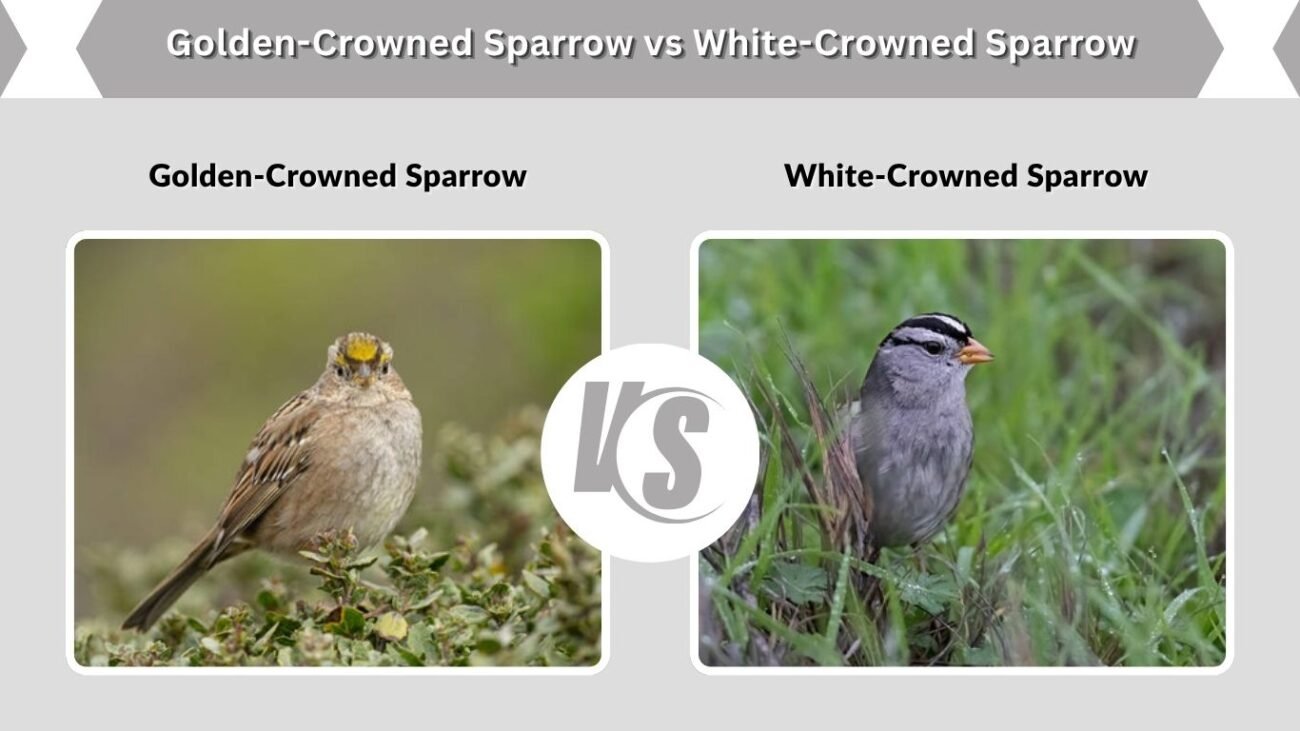
These closely related species frequently occur together during winter. Both are large, gray-breasted sparrows, but their head patterns provide the easiest distinction.
| Feature | Golden-Crowned Sparrow | White-Crowned Sparrow |
| Adult crown | Yellow center with black borders | Bold black-and-white stripes |
| Bill | Mostly dark | Usually pink, orange, or yellowish |
| Winter head | Brown with dull yellow patch | Brown-and-tan or black-and-white stripes |
| Song | Slow, descending whistles | Clear whistles followed by buzzes or trills |
| Winter habitat | Often dense brush | Frequently more open ground and brush |
Immature birds can be more challenging. Young White-crowned Sparrows have obvious brown crown stripes, while immature Golden-crowned Sparrows usually show a faint yellow wash near the forehead and a less sharply striped crown.
Behavior and Social Life
Golden-crowned Sparrows spend much of their time on or near the ground. When alarmed, they run into thick vegetation or make a low, direct flight to another patch of cover. Outside the breeding season, they form loose flocks and can become competitive around concentrated food.
Individuals may raise their crown feathers and run toward rivals during disputes. The black-and-yellow crown appears to communicate social status, with more strongly marked birds often dominating less boldly colored individuals.
FAQs
Are Golden-Crowned Sparrows rare?
Golden-crowned Sparrows are common within their normal western range, particularly along the Pacific Coast during winter. They may seem rare elsewhere because their breeding grounds are remote and their usual migration route remains close to western North America.
How long do Golden-Crowned Sparrows live?
Many small birds do not survive their first few years because of predators, weather, and migration hazards. However, the oldest recorded Golden-crowned Sparrow was at least 10 years and 6 months old when encountered through bird-banding research.
Do female Golden-Crowned Sparrows have yellow crowns?
Yes. Adult females can have yellow forehead patches and dark crown markings similar to males. The sexes overlap considerably in appearance, so crown brightness alone cannot reliably identify a bird as male or female.
Are Golden-Crowned Sparrows monogamous?
They generally form monogamous breeding pairs. The male defends a territory and may feed the female during incubation, while both parents provide food and protection for their chicks. Occasional mating outside the established pair has also been documented.
What predators eat Golden-Crowned Sparrows?
Predators include Cooper’s Hawks, Sharp-shinned Hawks, Merlins, owls, shrikes, domestic cats, and some ground-dwelling mammals. Staying near dense vegetation and feeding in groups can help the sparrows detect danger and quickly reach protective cover.