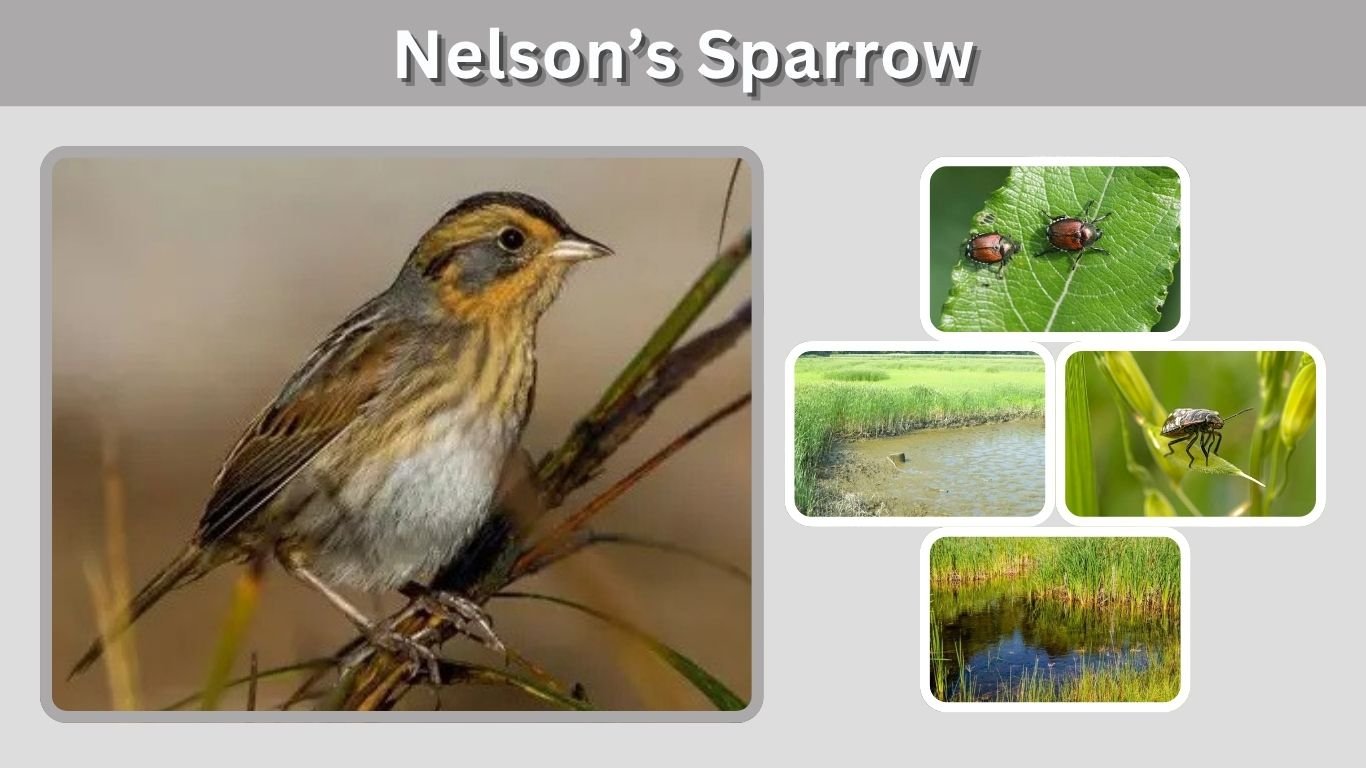
Nelson’s Sparrow (Ammospiza nelsoni) is a small, secretive marsh bird distinguished by its orange-buff face, gray cheek patches, finely streaked breast, and short tail. It breeds in scattered freshwater and coastal wetlands across northern North America before migrating to salt and brackish marshes along the Atlantic and Gulf coasts. Older field guides may call it Nelson’s Sharp-tailed Sparrow because it was once grouped with the Saltmarsh Sparrow.
Nelson’s Sparrow Quick Facts
Nelson’s Sparrow belongs to the New World sparrow family, Passerellidae. Males and females look similar, but their breeding behavior differs considerably because males do not form lasting pairs or help raise the young.
| Feature | Description |
| Scientific name | Ammospiza nelsoni |
| Family | Passerellidae |
| Length | 4–5 inches or 11–13 cm |
| Wingspan | 7–8 inches or 18–20 cm |
| Weight | 0.4–0.5 ounces or 11–14 grams |
| Main foods | Insects, spiders, small invertebrates, and seeds |
| Habitat | Freshwater marshes, wet meadows, and salt marshes |
| Nest location | Low in dense marsh vegetation |
| Conservation status | Least Concern |
Measurements and conservation status follow the National Audubon Society’s species profile.
What Does a Nelson’s Sparrow Look Like?
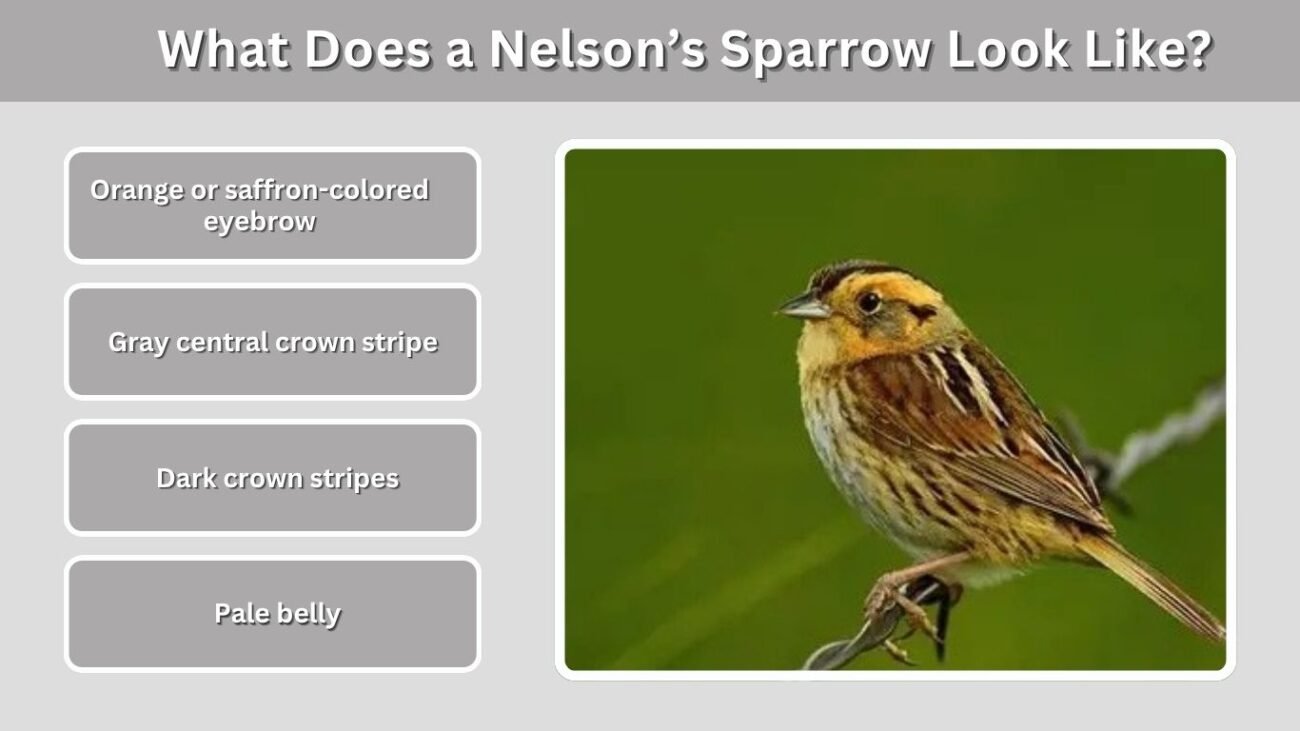
Nelson’s Sparrow is a compact bird with a rounded head, small pointed bill, short wings, and a narrow tail. Its warm facial colors contrast sharply with the gray cheek patch, creating one of its most recognizable features.
Key Identification Features
- Orange or saffron-colored eyebrow
- Gray cheek surrounded by orange-buff markings
- Gray central crown stripe
- Dark crown stripes
- Buffy throat, breast, and sides
- Fine brown streaks across the breast and flanks
- Dark back with pale gray or white stripes
- Pale belly
- Short, pointed-looking tail
Interior birds are usually brighter orange and more heavily streaked. The Atlantic or Acadian form is paler, with a grayish back, lighter buff underparts, and much weaker breast streaking.
Nelson’s Sparrow Behavior
This sparrow spends most of its time walking or running beneath dense wetland vegetation. It feeds on the ground, around marsh debris and occasionally higher on grass stems. When disturbed, it usually makes a short, low flight before disappearing into the vegetation again.
Male, Female, and Juvenile Nelson’s Sparrows
Male and female Nelson’s Sparrows are nearly identical in plumage. Behavior is usually more useful than appearance for identifying the sexes during the breeding season.
Male vs. Female Nelson’s Sparrow
Males travel across overlapping areas of marsh rather than defending conventional territories. They sing to advertise themselves and may perform display flights above the vegetation. A male does not form a lasting pair bond, build the nest, incubate eggs, or feed the chicks.
The female selects the nesting site, constructs the nest and raises the young without help from the male. The species has an unusual breeding system in which both sexes may mate with multiple partners.
Juvenile Nelson’s Sparrow
Juveniles generally look softer and less clearly patterned than adults. They have buffy or brownish underparts with streaking and less distinct facial markings. As they mature, the gray cheek, orange eyebrow, dark crown and finely streaked sides become more obvious.
Nelson’s Sparrow Habitat and Range
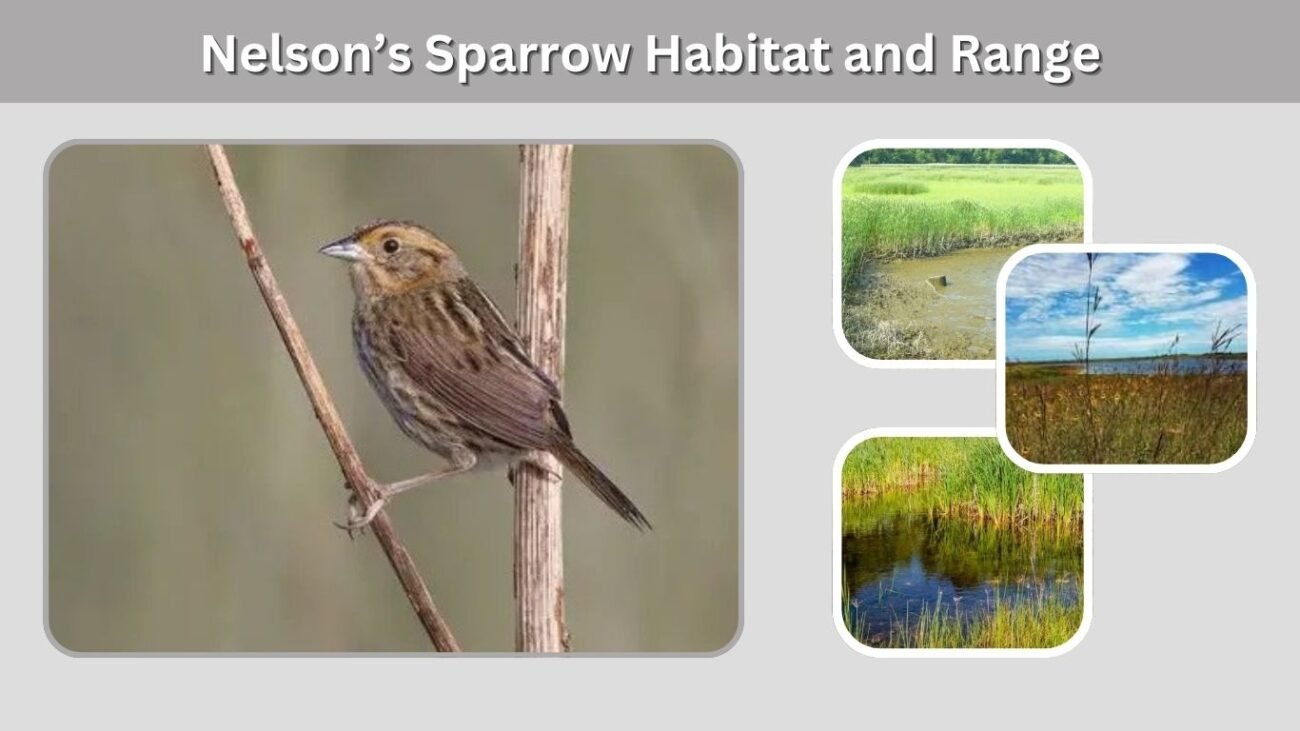
Nelson’s Sparrows require wet habitats with dense grasses, sedges, reeds or rushes. However, the type of wetland used during summer depends on the bird’s geographic population.
Preferred Habitat
Common habitats include:
- Freshwater prairie marshes
- Wet sedge meadows
- Prairie potholes
- Boreal wetlands
- Cattail and rush marshes
- Coastal salt marshes
- Brackish tidal wetlands
- Wet agricultural fields
- Coastal marshes used during migration and winter
Interior populations breed in freshwater wetlands from the northern prairies into the boreal forest. Atlantic birds primarily breed in salt or brackish tidal marshes, although they sometimes use wet fields and grasslands beside rivers.
Nelson’s Sparrow Range
Its breeding distribution is divided into several separated regions. Interior birds breed from parts of the Yukon and western Canada through the northern Great Plains. Other populations breed around Hudson and James bays, while the Atlantic form nests from eastern Canada south into coastal Maine.
During fall, Nelson’s Sparrows migrate toward the Atlantic and Gulf coasts. Most spend winter in tidal salt and brackish marshes in the southeastern United States.
What Do Nelson’s Sparrows Eat?
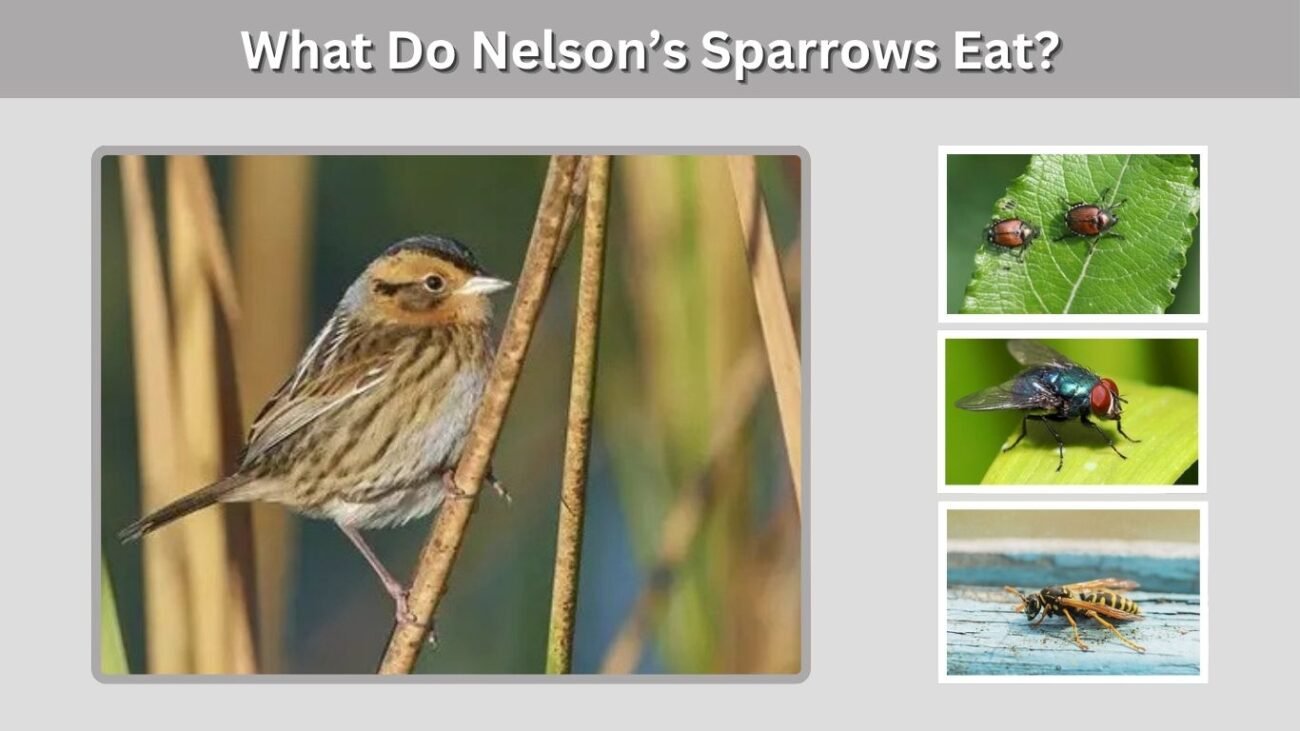
Nelson’s Sparrows eat a mixture of animal prey and plant material. Insects and other invertebrates are especially important during the breeding season, while seeds become a greater part of the winter diet.
Common Foods
Their diet includes:
- Beetles
- Grasshoppers and crickets
- Caterpillars and moths
- Flies, ants and wasps
- Spiders
- Amphipods
- Small crabs and mollusks
- Cordgrass seeds
- Wild rice
- Smartweed and panicgrass seeds
They collect food from the ground, mud, shallow water and marsh plants. Birds may probe soft mud, search through vegetation deposited by high tides or cling to stems while removing seeds from grass heads.
Nelson’s Sparrow Song and Call
The male’s song is a brief, high-pitched hiss or rasp. It is sometimes compared to steam escaping from a pipe and may be written as psssssssssstk. The sound can easily be overlooked among wind, insects and moving marsh grasses.
Males often sing from within vegetation, although they sometimes use an exposed perch. During a flight display, a male rises above the marsh while producing short calls, sings near the top of the flight and then descends. All three subspecies regularly sing at night. The typical call is a soft tic, tuc or chip note.
Nelson’s Sparrow Nest and Eggs
The nest is built low in thick marsh vegetation, where surrounding grass provides support and concealment. In tidal areas, placement must also protect the nest from ordinary high water.
Nest Construction
The female places the nest approximately 2–10 inches above the ground. It is supported by upright stems or a layer of bent grass. She builds its outer structure from coarse dead grasses and lines the inside with finer material.
The finished structure may be an open cup or have a partial grass dome. Females approach their nests through concealed paths beneath the vegetation, reducing the chance of revealing the location to predators.
Eggs and Young
A typical clutch contains two to six greenish eggs covered with dark speckles. The species may produce one or two broods per season. Newly hatched chicks are helpless, and young birds normally remain in the nest for approximately 8–11 days. The female provides all parental care.
Nelson’s Sparrow Subspecies
Three subspecies are currently recognized:
- A. n. nelsoni breeds from the Yukon eastward toward Minnesota and represents the brightly colored interior form.
- A. n. alter breeds around Hudson and James bays and resembles the interior form.
- A. n. subvirgata breeds from the Canadian Maritime provinces south to Massachusetts and is known as the Atlantic or Acadian form.
The Atlantic form is paler and genetically distinctive. It also occasionally hybridizes with Saltmarsh Sparrows where their breeding ranges overlap in New England.
Nelson’s Sparrow vs. Saltmarsh Sparrow
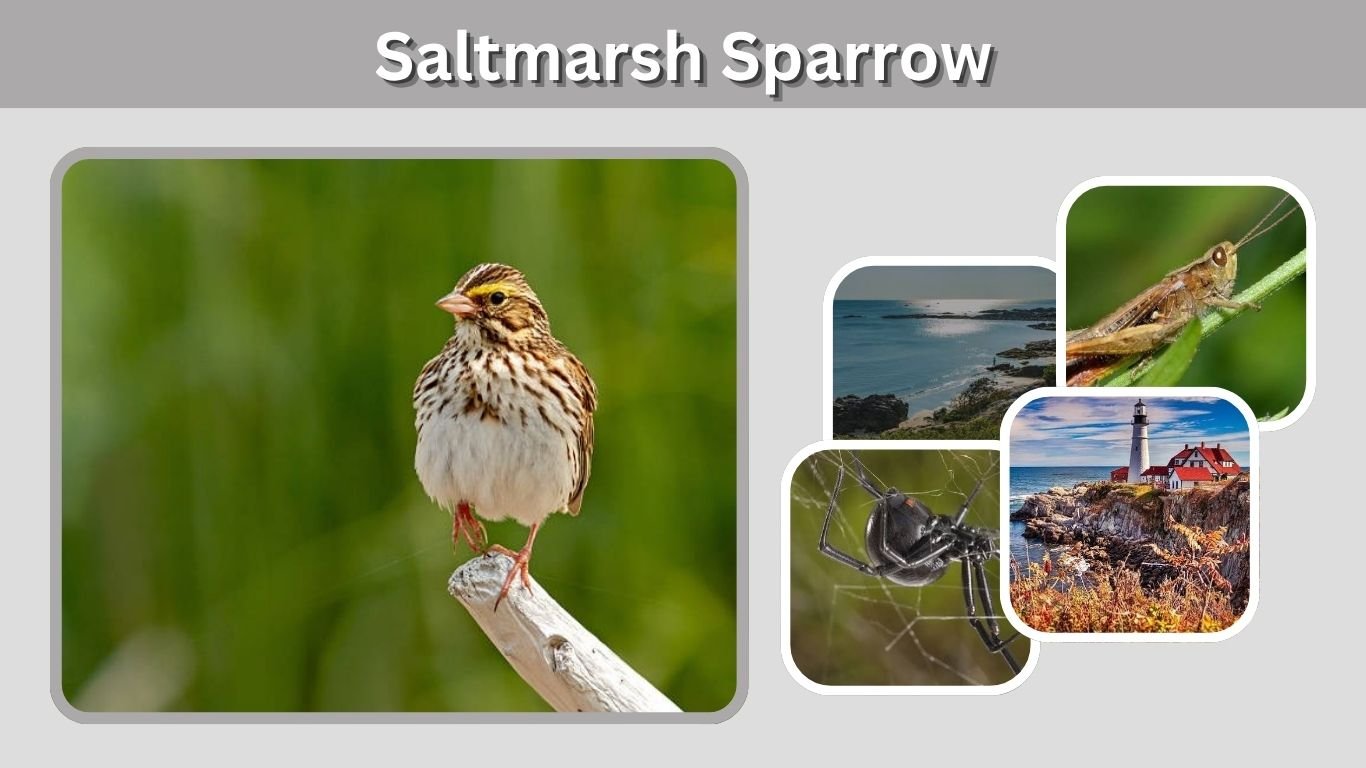
These closely related birds were treated as a single species called the Sharp-tailed Sparrow until 1998.
| Feature | Nelson’s Sparrow | Saltmarsh Sparrow |
| Breast color | Usually buffy or orange-washed | Generally whiter |
| Breast streaking | Fine or limited | Darker and more extensive |
| Face | Softer orange with a gray cheek | Brighter orange with stronger contrast |
| Breeding habitat | Freshwater and coastal marshes | Primarily Atlantic salt marshes |
| Range | Interior Canada, northern plains and Atlantic coast | Mainly Atlantic coast |
| Song | Short hissing buzz | Quiet, complicated and wheezy |
Identification can be difficult where the two species overlap because Atlantic Nelson’s Sparrows are paler than interior birds and hybrids may show mixed characteristics.
Nelson’s Sparrow vs. LeConte’s Sparrow
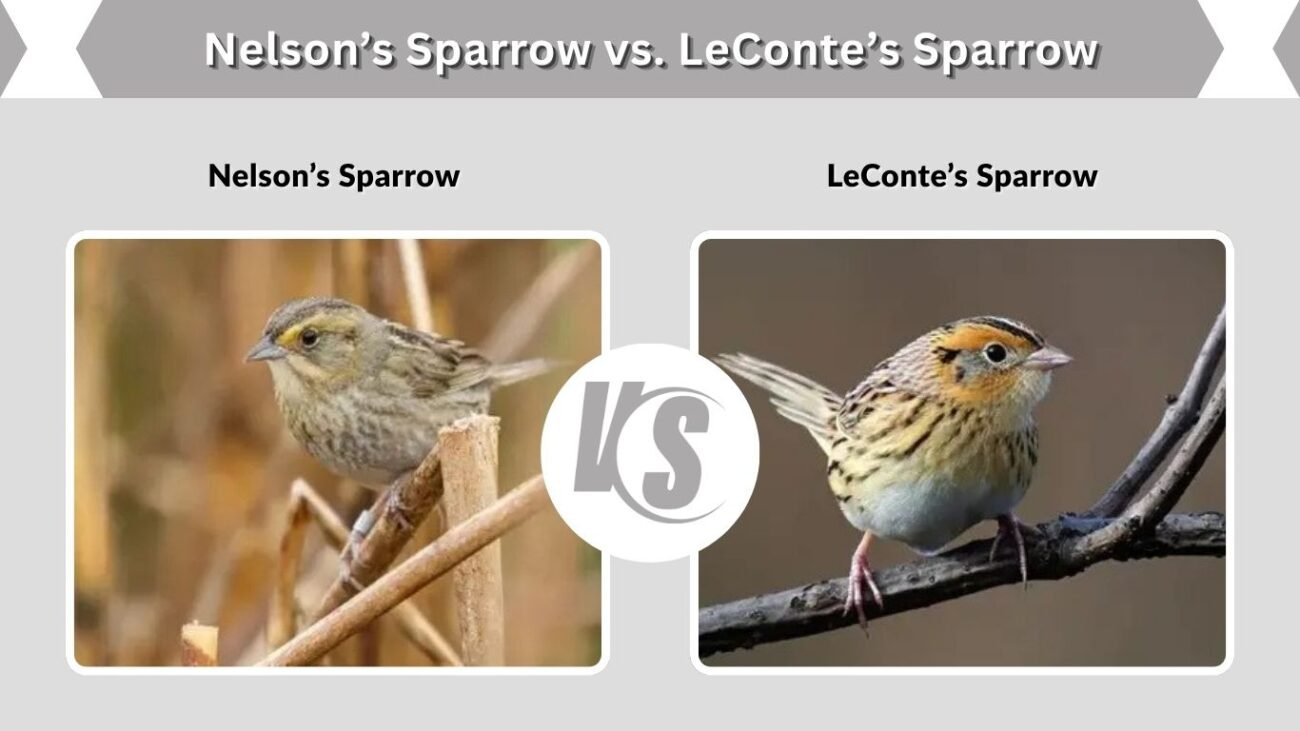
Both species have orange facial markings and occupy wet grasslands. Nelson’s Sparrow has a gray central crown stripe, while LeConte’s Sparrow has a white central stripe bordered by black. LeConte’s also shows a finely striped gray-and-pink nape and sharper dark streaking along its sides.
Conservation
Nelson’s Sparrow is currently categorized as Least Concern, but wetland destruction remains a significant threat. Drainage, mowing, development and other alterations can remove nesting and feeding habitat.
The Atlantic or Acadian population is particularly vulnerable because most of its birds nest in tidal marshes threatened by sea-level rise and increasingly frequent flooding. Protecting both freshwater wetlands and coastal marshes is essential for maintaining the species across its unusual range.
FAQs
Is Nelson’s Sparrow the same as Nelson’s Sharp-tailed Sparrow?
Yes. Nelson’s Sharp-tailed Sparrow is an older name for the same bird. Nelson’s and Saltmarsh Sparrows were once treated as one species called the Sharp-tailed Sparrow, but differences in genetics, plumage and songs led to their separation in 1998.
Where can you find Nelson’s Sparrows?
During summer, look in freshwater marshes and wet meadows across northern inland regions or tidal wetlands in eastern Canada and Maine. During migration and winter, search salt and brackish marshes along the Atlantic and Gulf coasts.
What does a Nelson’s Sparrow sound like?
Its song is a short, thin, hissing buzz that resembles steam escaping from a pipe. Males often sing while hidden in vegetation and may also perform aerial songs. Their contact call is a soft tic or tuc.
Do male Nelson’s Sparrows care for their young?
No. Males do not build nests, incubate eggs or feed chicks. The female chooses the nest site, builds the nest and raises the offspring alone. Males mainly concentrate on singing, displaying and seeking mating opportunities.
Is Nelson’s Sparrow endangered?
The species as a whole is classified as Least Concern. However, some populations face greater risks than others. The relatively small Atlantic population depends heavily on tidal marshes that are vulnerable to habitat loss, flooding and rising sea levels.