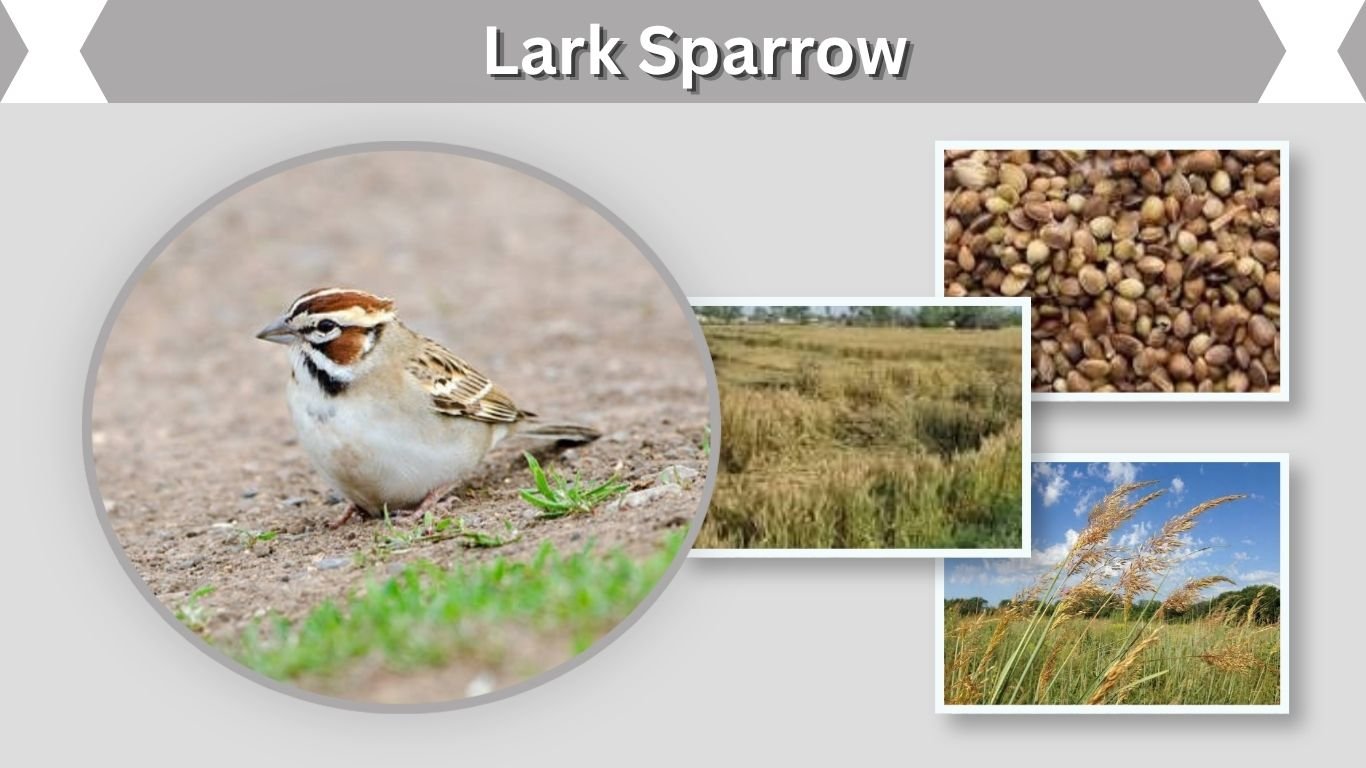
The Lark Sparrow (Chondestes grammacus) is a large, boldly patterned North American sparrow known for its chestnut-and-white face, dark breast spot, and white-edged tail. It lives mainly in open grasslands, pastures, farmland, and shrub-covered country across western and central North America. Unlike many plain brown sparrows, the Lark Sparrow is relatively easy to recognize once its distinctive facial markings and flashing white tail corners are seen.
Lark Sparrow Quick Facts
The Lark Sparrow belongs to the New World sparrow family, Passerellidae. Despite its name and lark-like musical song, it is a sparrow rather than a true lark. Adults spend much of their time walking over open ground while searching for seeds and insects.
| Feature | Description |
| Scientific name | Chondestes grammacus |
| Family | Passerellidae |
| Length | 5.9–6.7 inches or 15–17 cm |
| Weight | 0.8–1.2 ounces or 24–33 grams |
| Wingspan | About 11 inches or 28 cm |
| Main foods | Seeds and insects |
| Nest location | Ground, shrubs, or low trees |
| Conservation status | Least Concern |
Measurements and conservation status are based on information from the Cornell Lab of Ornithology and National Audubon Society.
What Does a Lark Sparrow Look Like?
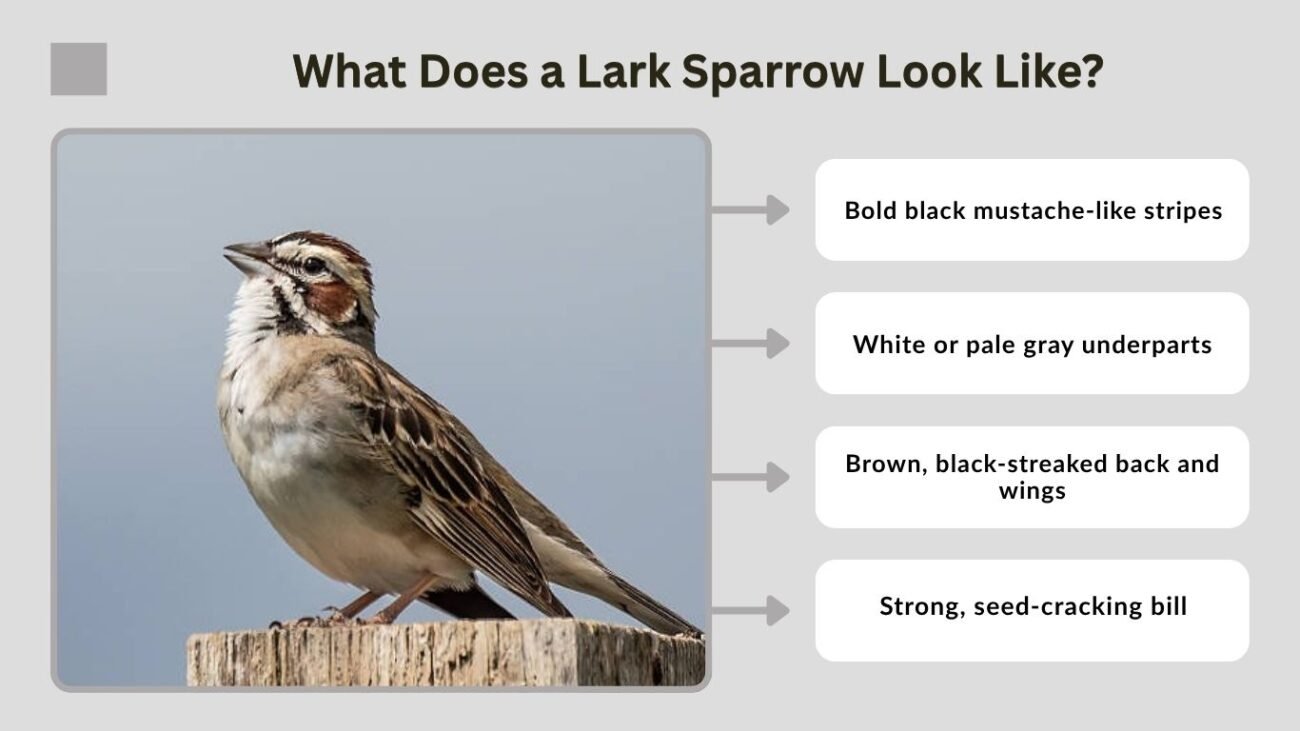
The Lark Sparrow is larger and longer-tailed than many familiar sparrows. Its upright posture, thick bill, rounded head, and elaborate facial pattern provide several dependable identification clues.
Key Identification Features
- Chestnut crown divided by a pale central stripe
- Chestnut cheek patches bordered by white
- Bold black mustache-like stripes
- White or pale gray underparts
- Single dark spot in the center of the breast
- Brown, black-streaked back and wings
- Long, rounded tail with white outer corners
- Strong, seed-cracking bill
The white tail corners are particularly helpful when the bird flies away. Adults also have one of the boldest facial patterns found among North American sparrows.
Lark Sparrow in Flight
A flying Lark Sparrow often reveals broad white tips or corners on its outer tail feathers. These markings flash noticeably as the bird takes off. It generally flies higher between locations than many ground-dwelling sparrows and may produce a sharp chip-like call while passing overhead.
Male, Female, and Juvenile Lark Sparrows
Male and female Lark Sparrows look remarkably similar, so plumage alone usually cannot determine the bird’s sex. Age, however, causes more visible differences.
Male vs. Female Lark Sparrow
Both sexes have the familiar chestnut, black, and white facial markings. During the breeding season, males are easier to recognize through behavior. A male commonly sings from a fence post, wire, bush, or another exposed perch while defending his territory.
Courtship males perform an unusual ground display involving hopping, crouching, drooping the wings, and spreading the tail to expose its white corners. The display may last several minutes.
Juvenile Lark Sparrow
Juveniles are duller than adults. Their facial pattern is brown and white rather than rich chestnut, while the breast and sides are heavily streaked. Young birds still show a faint version of the adult face pattern, helping distinguish them from other juvenile sparrows.
Lark Sparrow Habitat and Range
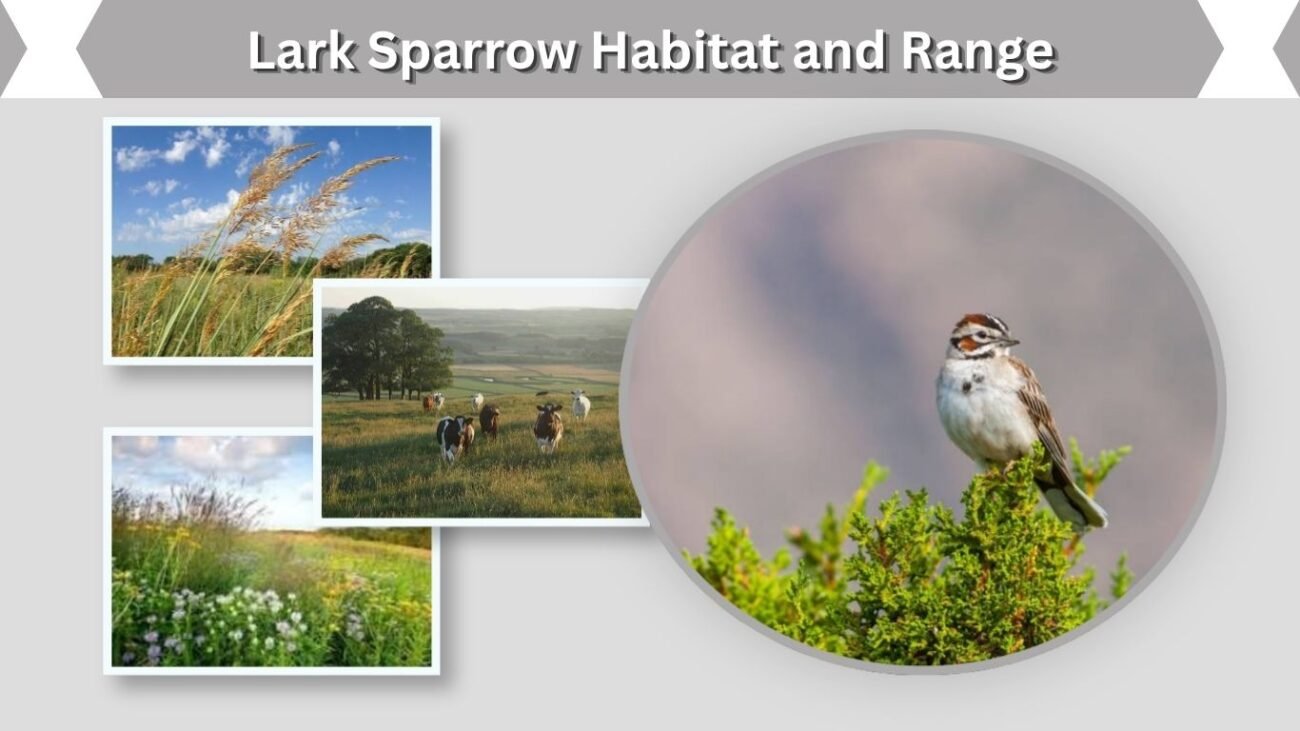
Lark Sparrows favor open places containing bare ground, short vegetation, scattered bushes, and occasional trees. These features provide feeding space, song perches, nesting cover, and quick shelter from predators.
Preferred Habitat
Common Lark Sparrow habitats include:
- Prairies and native grasslands
- Pastures and livestock fields
- Open farmland and fallow fields
- Roadsides and hedgerows
- Sagebrush and desert scrub
- Open woodland and savanna
- Orchards and brushy field edges
They are often seen walking on exposed soil or short grass rather than hiding continuously in dense vegetation.
Lark Sparrow Range
The species breeds mainly across the western United States, Great Plains, parts of the Midwest, southern Canada, and northern Mexico. Some southern populations remain in the same general region year-round, while northern birds migrate south for winter.
Wintering Lark Sparrows occur in the southern United States, Mexico, and parts of Central America. Small numbers may appear far outside the normal range, including along the Atlantic Coast during migration.
What Do Lark Sparrows Eat?
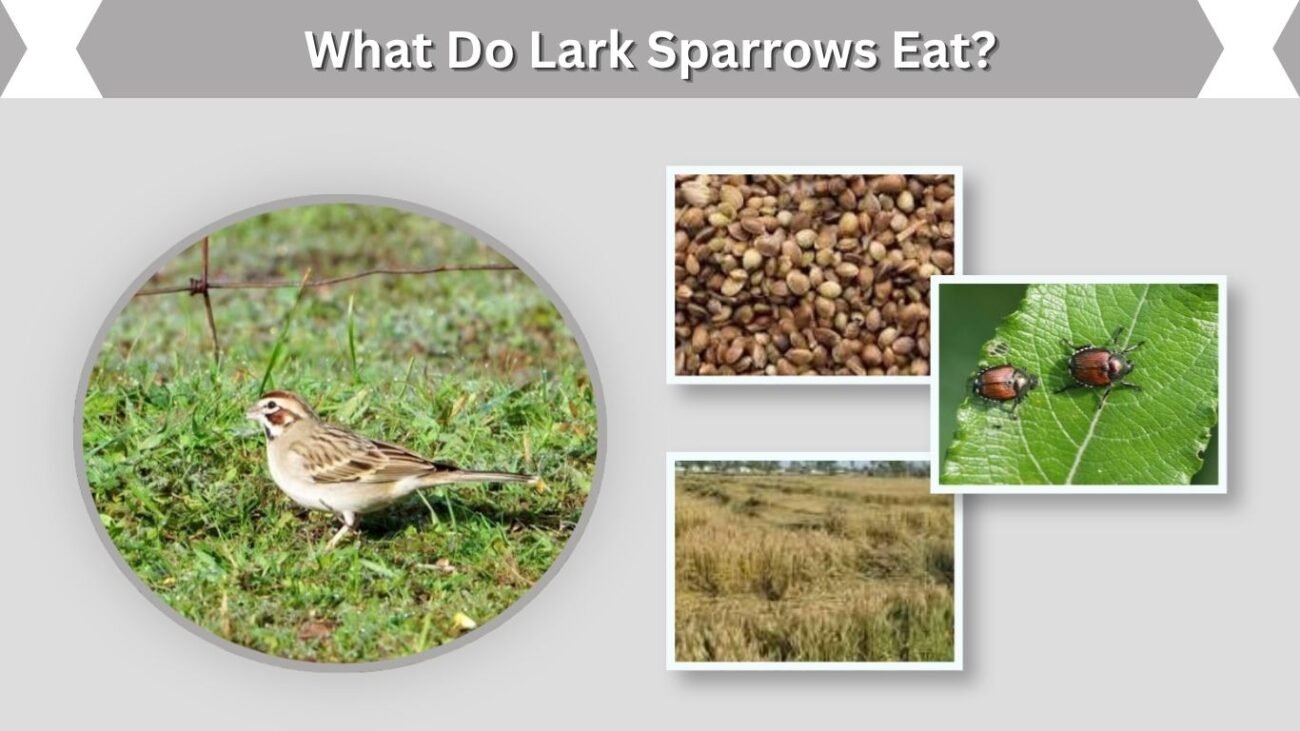
Lark Sparrows have a seasonal diet. Seeds become especially important during autumn and winter, while insects form a larger portion of their food during spring and summer.
Common Foods
Their diet may include grass seeds, weed seeds, fallen grain, beetles, caterpillars, grasshoppers, and other small insects. Nestlings are fed mainly protein-rich insects, although parents may occasionally bring small seeds.
Most food is collected by walking and hopping across the ground. Birds may also pick insects or seeds from low leaves and twigs. Outside the breeding season, they often feed in small flocks and may join White-crowned or Vesper Sparrows.
Lark Sparrow Song and Call
The Lark Sparrow song is a varied combination of clear whistles, musical trills, buzzing sounds, rattles, and rapid notes. Individual phrases may change frequently, creating a lively and somewhat unpredictable performance.
Males normally sing from elevated, visible perches during the breeding season. The complex song is one reason the bird was given the name “Lark Sparrow,” since its musical delivery reminded observers of true larks. Its common call is a short, thin, sharp chip.
Lark Sparrow Nest and Eggs
Lark Sparrows frequently nest on the ground, although some pairs place their nests in shrubs or low trees. The female performs most or all of the actual nest construction.
Nest Placement and Construction
A ground nest is usually positioned in a shallow depression near a weed, grass clump, small shrub, or other protective cover. Elevated nests may be placed in shrubs or trees, sometimes several feet above the ground.
The cup-shaped nest is made from grasses, weeds, stems, and small twigs. The inside is lined with softer materials such as fine grass, rootlets, feathers, or animal hair. Females may occasionally reuse an abandoned mockingbird, thrasher, kingbird, or flycatcher nest.
Lark Sparrow Eggs
A typical clutch contains four or five eggs, although three to six are possible. The eggs are creamy or grayish white with brown and black markings. The female incubates them for approximately 11–12 days.
Both parents feed the nestlings. Young Lark Sparrows normally leave the nest around 9–10 days after hatching, although they continue depending on their parents after fledging.
Lark Sparrow vs. House Sparrow
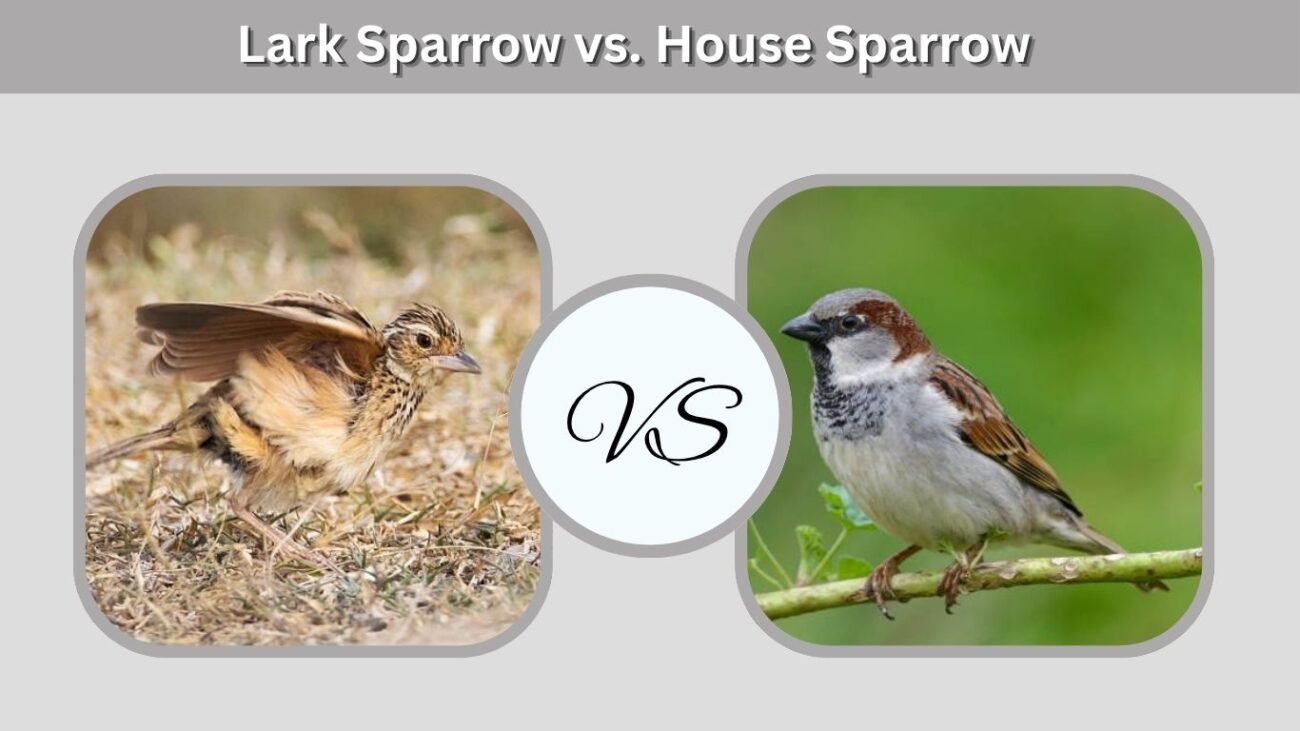
Although both birds are called sparrows, they differ greatly in appearance, habitat, and behavior.
| Feature | Lark Sparrow | House Sparrow |
| Face | Bold chestnut, black, and white pattern | Plainer gray and brown pattern |
| Breast | Pale with one central dark spot | Male has a black bib |
| Tail | Long with white corners | Shorter without bold white corners |
| Habitat | Grasslands, pastures, open country | Cities, farms, and buildings |
| Native range | Native to North America | Introduced to North America |
| Behavior | Often forages in open natural habitats | Strongly associated with people |
A Lark Sparrow’s harlequin-like face and white-edged tail usually separate it quickly from a House Sparrow.
FAQs
Is a Lark Sparrow a true lark?
No. The Lark Sparrow is a New World sparrow in the family Passerellidae. Its name refers mainly to its rich, varied song, which includes trills, buzzes, whistles, and other notes that can sound somewhat like the songs of true larks.
How can you identify a female Lark Sparrow?
Female Lark Sparrows look almost identical to males. Both have chestnut cheeks, a boldly striped head, black mustache marks, a central breast spot, and white tail corners. Behavior is often more useful than appearance because males sing and perform courtship displays during breeding season.
Where do Lark Sparrows build their nests?
They usually nest on the ground near grass, weeds, or shrubs. However, nests may also be built in bushes and low trees. Females occasionally use abandoned nests constructed by other birds instead of building an entirely new nest.
Do Lark Sparrows visit bird feeders?
They occasionally visit feeders or backyard feeding areas within their normal range. Ground-level seed, cracked grain, and native seed-producing plants may attract them, particularly during winter when seeds form a larger percentage of their diet.
What is the difference between a lark and a sparrow?
Larks and sparrows belong to different bird families. True larks are generally open-country birds belonging to the family Alaudidae. The Lark Sparrow belongs to the New World sparrow family and received its name because of its varied, lark-like song rather than a close biological relationship.