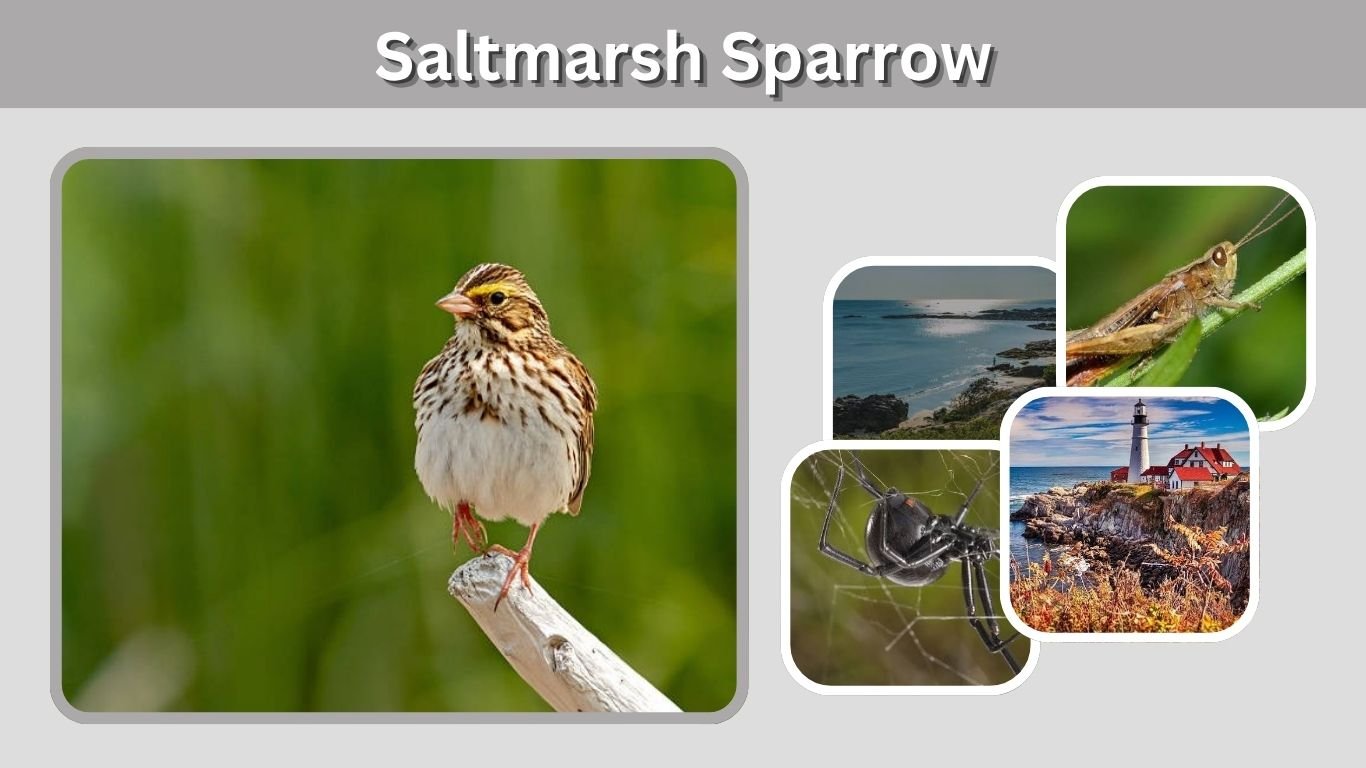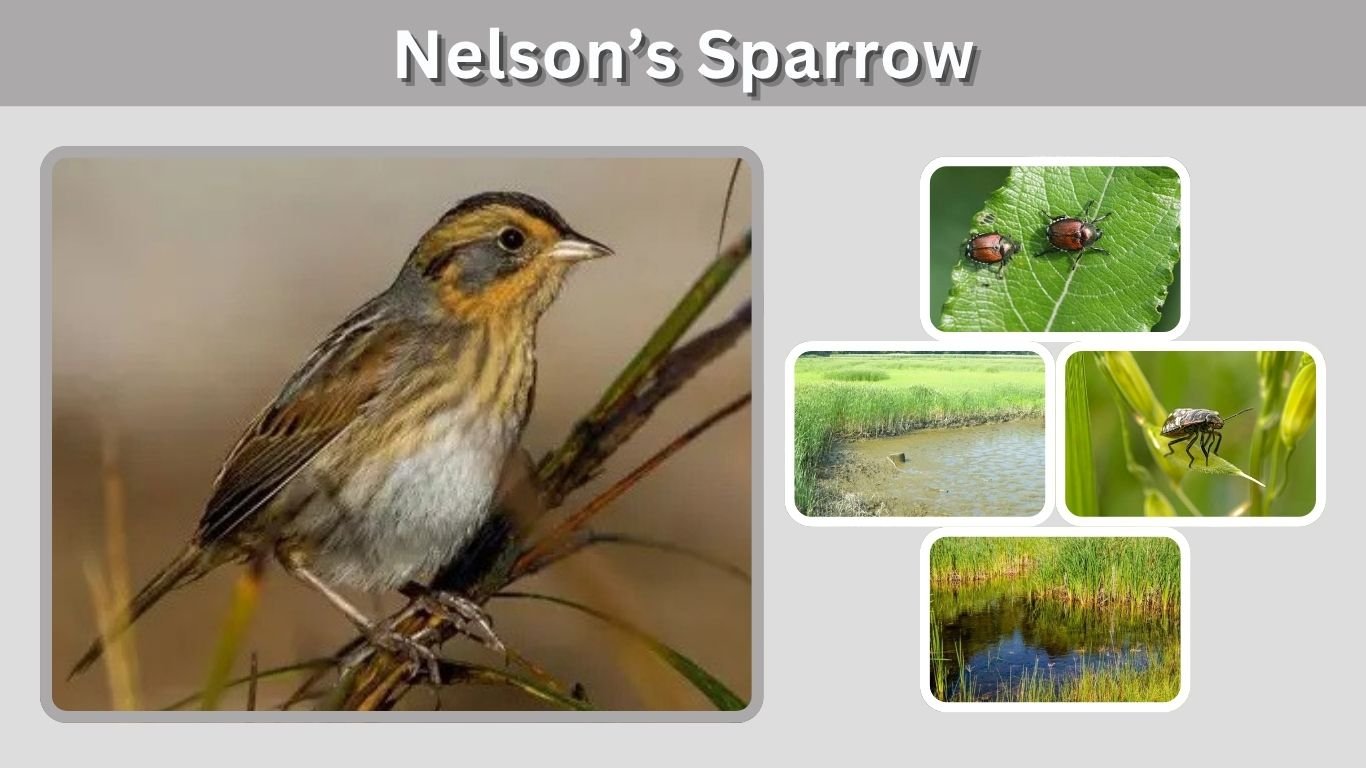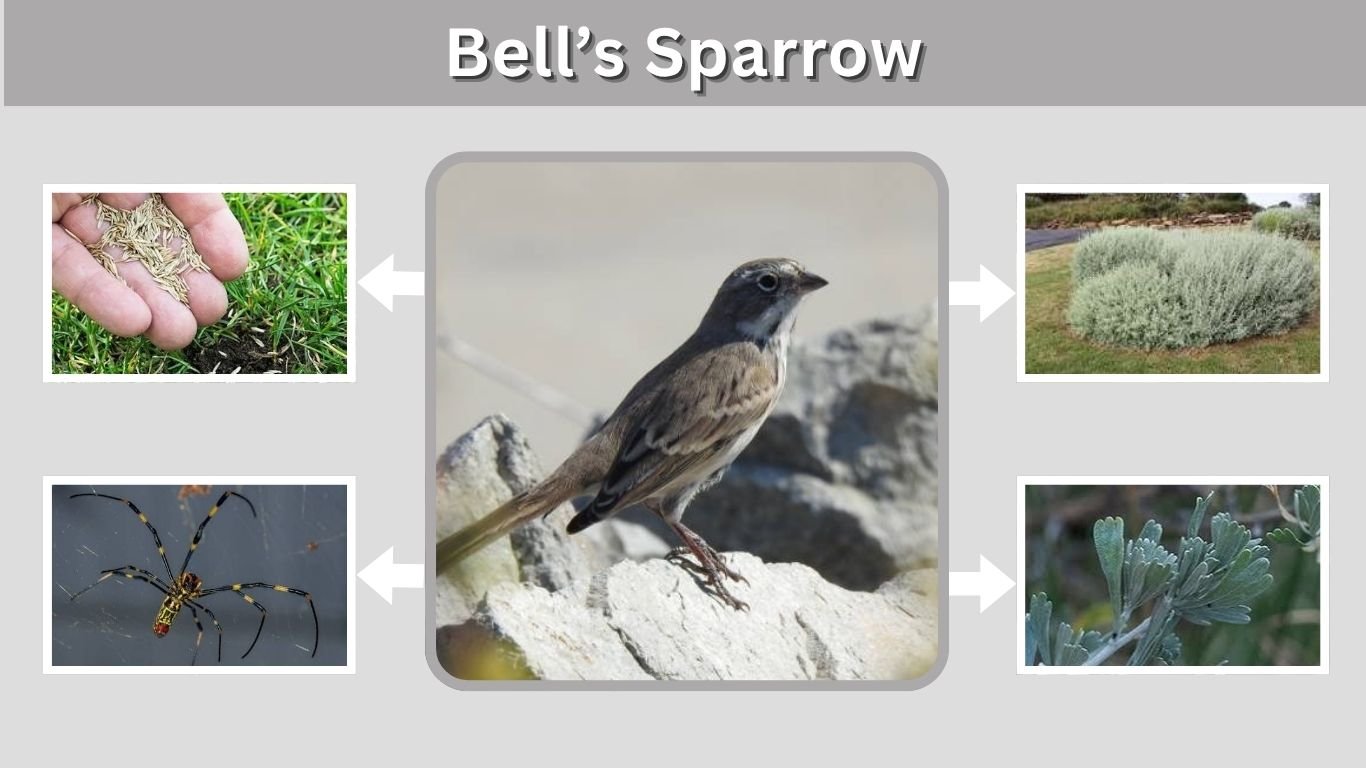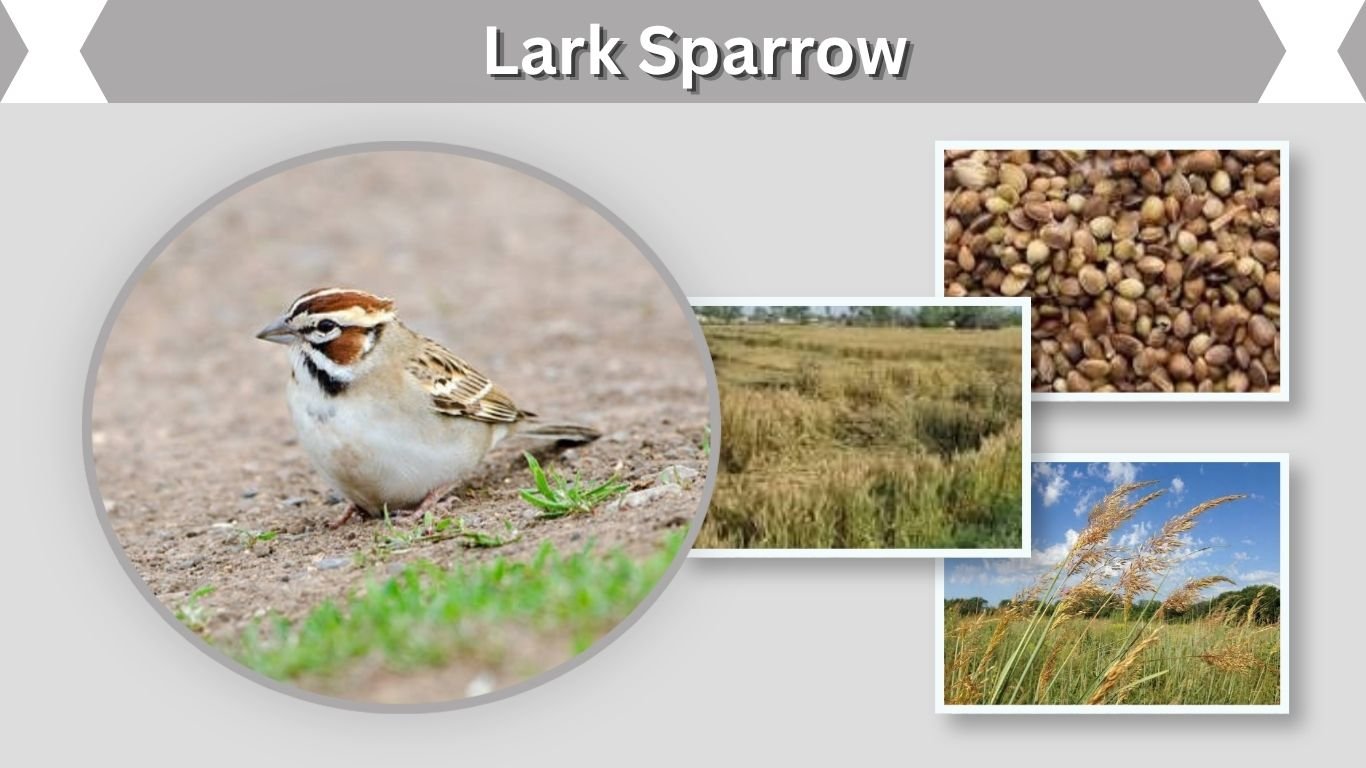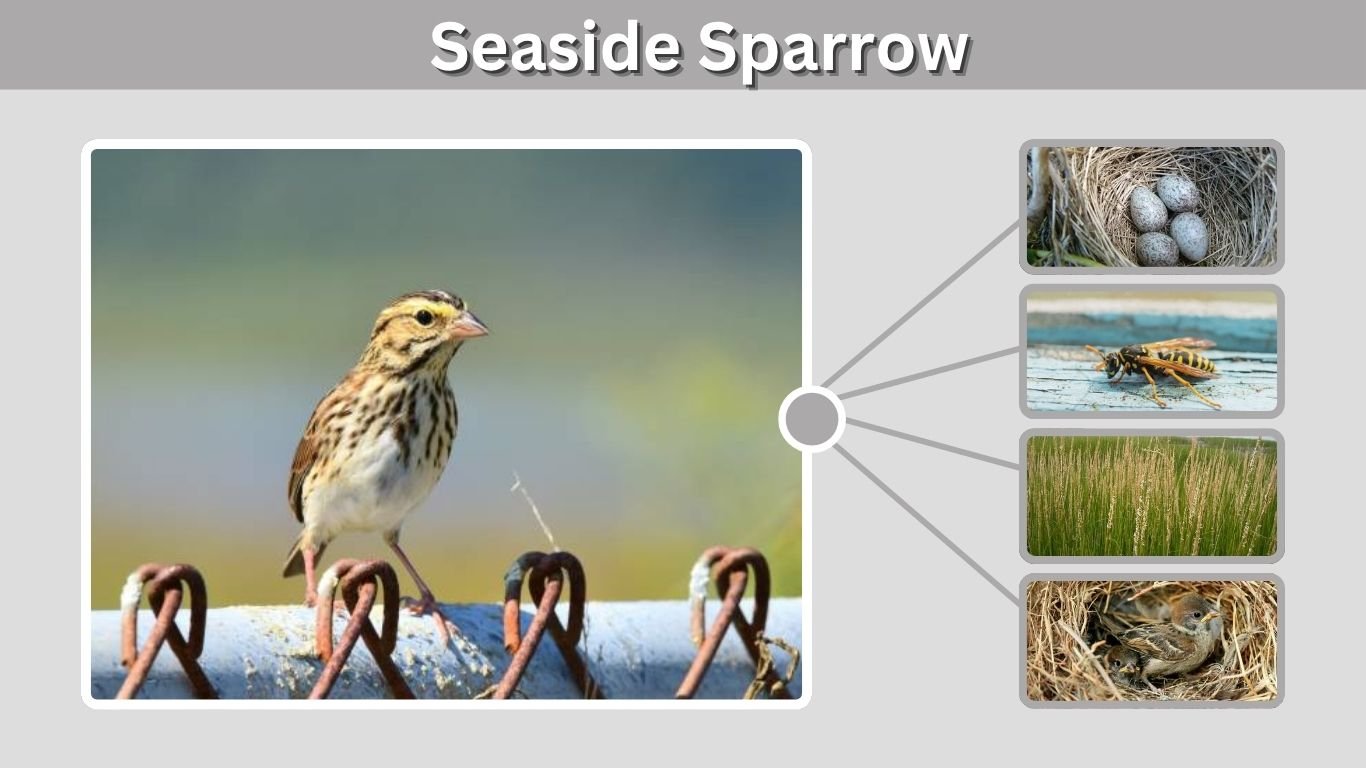
The Seaside Sparrow (Ammospiza maritima) is a dark, secretive songbird adapted to coastal marshes along the eastern and Gulf coasts of North America. Its unusually large bill, yellow facial marking, short tail, and buzzy song help separate it from other marsh sparrows. Although the species survives today, individual populations face serious threats from habitat loss, changing water levels, pollution, and rising seas. One subspecies, the Dusky Seaside Sparrow, has already become extinct.
Seaside Sparrow Quick Facts
Seaside Sparrows belong to the New World sparrow family, Passerellidae. Most populations remain closely tied to tidal salt marshes, although the Cape Sable subspecies occupies freshwater wetlands in southern Florida.
| Feature | Description |
| Scientific name | Ammospiza maritima |
| Family | Passerellidae |
| Length | About 5–6 inches |
| Weight | Approximately 0.4–0.6 ounces |
| Wingspan | About 7–8 inches |
| Main foods | Insects, spiders, crustaceans, snails, and seeds |
| Habitat | Coastal salt marshes and brackish wetlands |
| Nest location | Low marsh vegetation above normal high tides |
| Overall status | Least Concern, with vulnerable local populations |
Measurements and general status are based on the National Audubon Society’s species profile.
What Does a Seaside Sparrow Look Like?
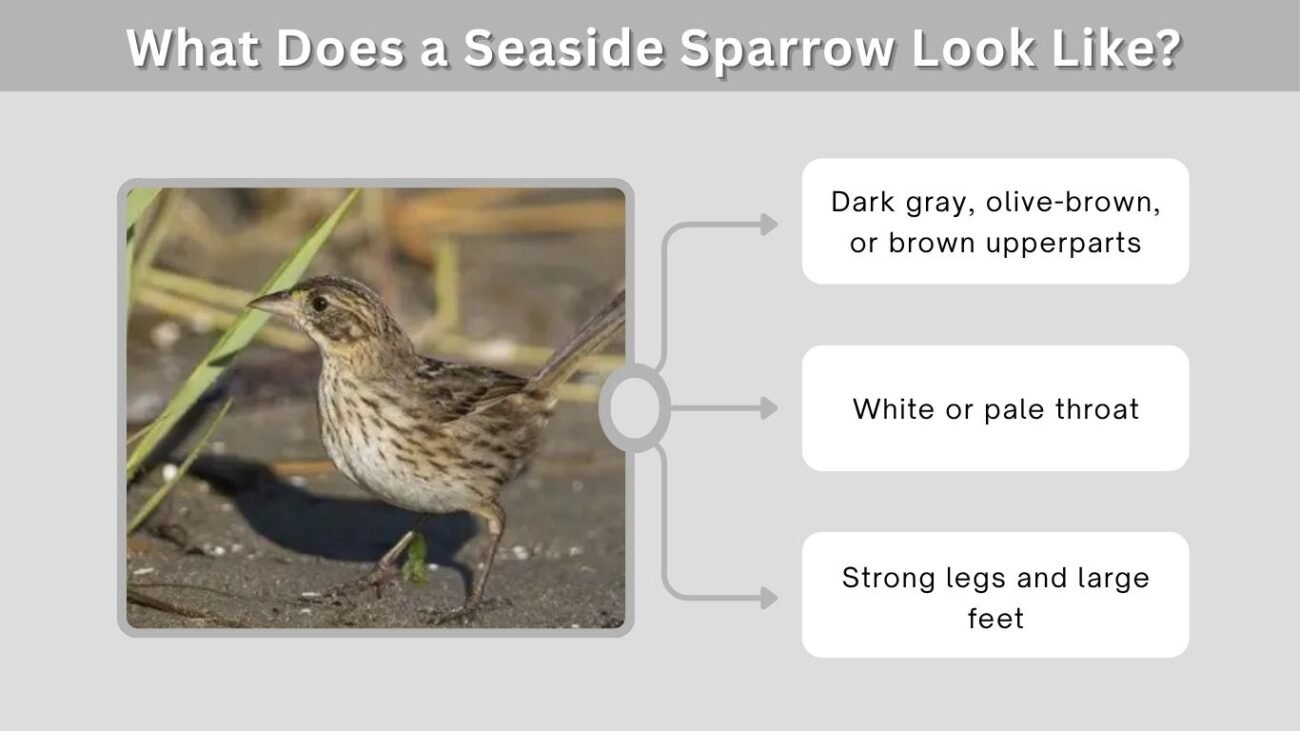
The Seaside Sparrow is a relatively chunky bird with a rounded head, large pointed bill, short wings, strong feet, and a short, narrow tail. Its dark coloring blends well with wet mud, cordgrass, rushes, and other marsh vegetation.
Key Identification Features
- Dark gray, olive-brown, or brown upperparts
- Large and comparatively long bill
- Yellow or pale mark between the bill and eye
- Pale eyebrow and mustache stripe
- White or pale throat
- Grayish breast with dark streaking
- Short, pointed-looking tail
- Strong legs and large feet
Its exact coloring varies geographically. Some populations look dark and heavily streaked, while others appear paler or more olive-colored. Habitat is one of the most valuable identification clues because this species is rarely found far from coastal marshes.
Male, Female, and Juvenile
Adult males and females look very similar, making them difficult to separate by appearance alone. During the breeding season, males are more noticeable because they climb marsh plants and sing from exposed perches.
Juveniles are generally browner and may show softer, less clearly defined facial markings. As they mature, their characteristic yellow facial patch, pale throat, dark streaking, and gray-brown coloring become more apparent.
Seaside Sparrow Habitat and Range
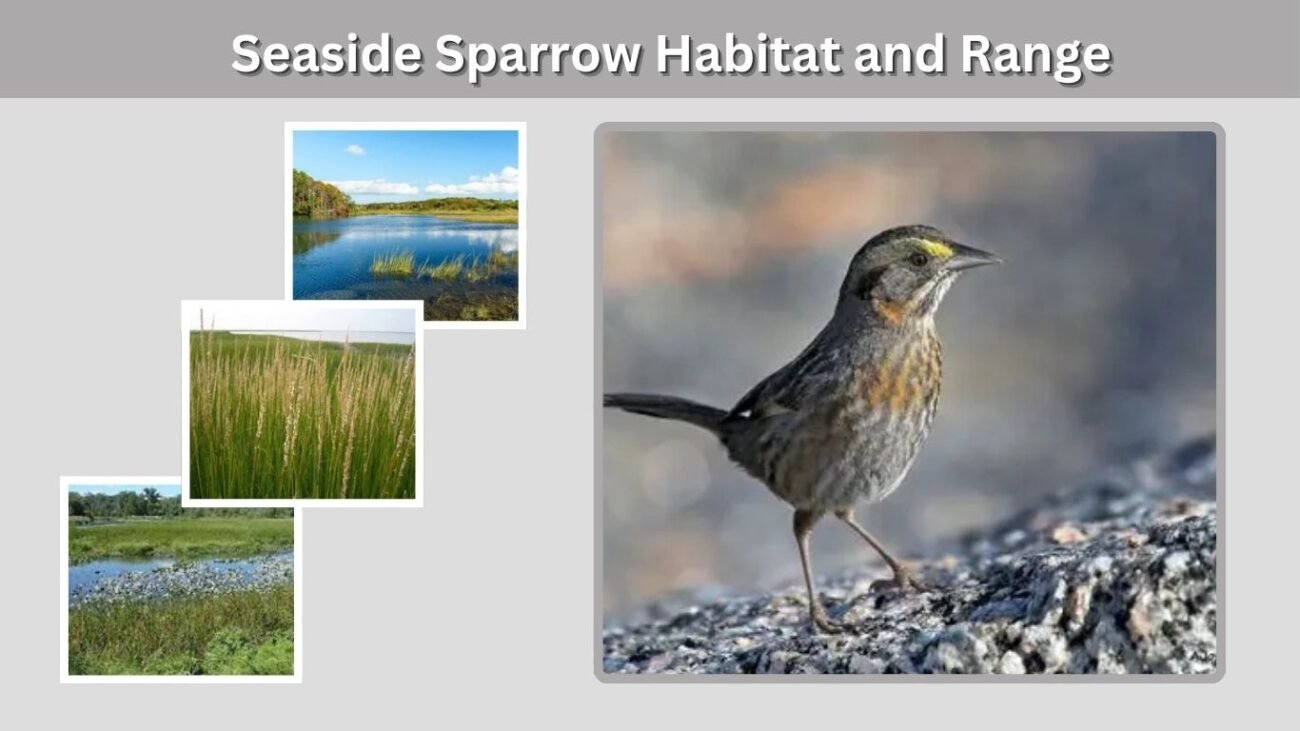
Seaside Sparrows are among the North American songbirds most closely associated with salt marshes. They need tall vegetation for nesting and nearby open mud, marsh edges, creeks, and shallow water for feeding.
Preferred Habitat
Common habitats include:
- Tidal salt marshes
- Brackish coastal wetlands
- Smooth cordgrass marshes
- Saltgrass and rush-covered flats
- Marsh creeks and muddy openings
- High marsh areas above regular tides
- Freshwater marl prairies in southern Florida
The best habitat contains different plant heights, small creeks, muddy openings, and elevated nesting areas that remain above the highest normal tides. Very low marshes are unsuitable when nests flood repeatedly.
Seaside Sparrow Range
The species occurs mainly along the Atlantic and Gulf coasts of the United States. Its range extends from the northeastern coast south through the Mid-Atlantic states and Florida, then west along the Gulf Coast into Texas.
Many southern populations remain in their territories throughout the year. Birds from the northern end of the range migrate south after breeding and may winter along the southeastern coast, Florida, and Texas.
What Do Seaside Sparrows Eat?
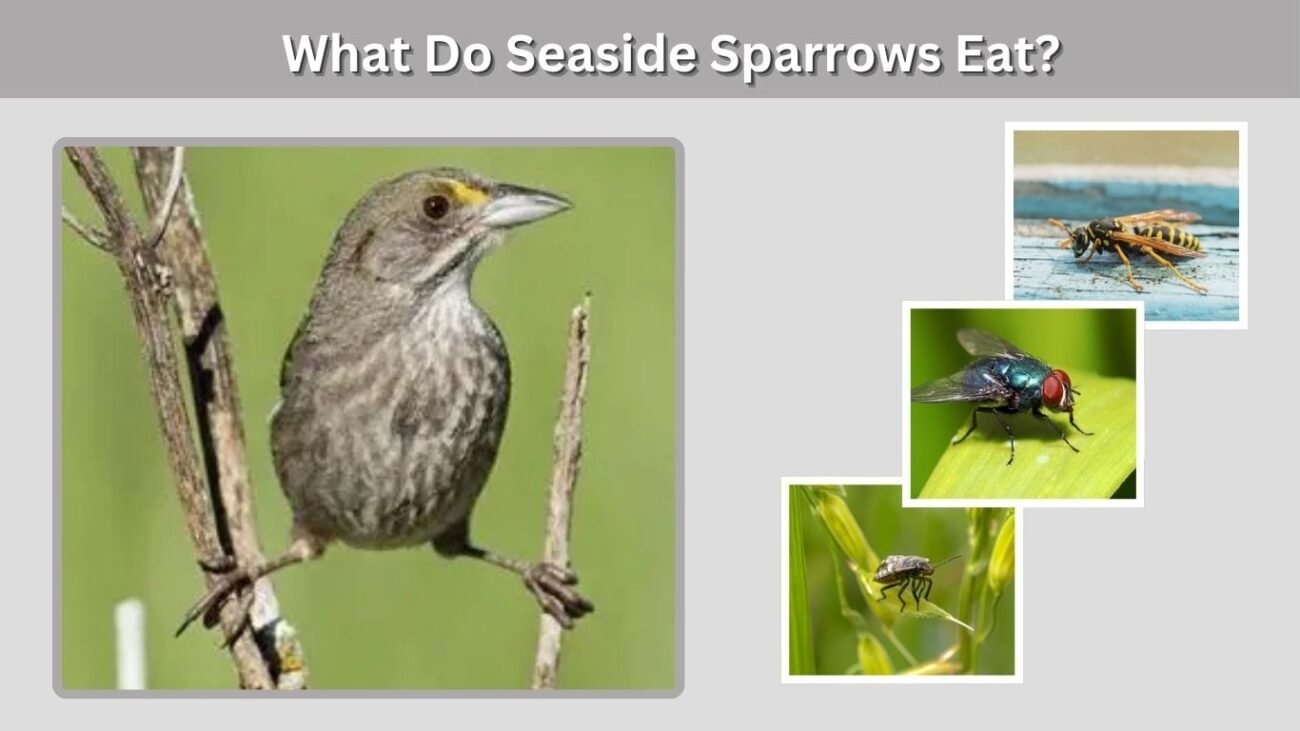
Seaside Sparrows eat both animal prey and plant material. Their diet changes by season, with insects and other invertebrates becoming particularly important during the breeding period. Seeds form a larger proportion of their food during autumn and winter.
Common Foods
Their diet includes:
- Grasshoppers and crickets
- Beetles and caterpillars
- Flies, ants, wasps, and true bugs
- Spiders and spider eggs
- Small crabs and amphipods
- Snails and marine worms
- Cordgrass and saltbush seeds
- Seeds from other marsh plants
The birds normally feed on mud, in low vegetation, or along the edges of shallow water. Their large bill helps them probe into mud, packed grasses, and plant debris for hidden prey. They may even wade into shallow water and briefly submerge their heads while searching for food.
Seaside Sparrow Behavior
Seaside Sparrows spend much of their time running through vegetation instead of flying above it. Their quick, low movements are sometimes described as mouse-like. They use their large feet to balance on wet mud and may scratch through dead grass and tidal debris to uncover insects.
During courtship or territorial disputes, the birds communicate through body movements as well as sound. They may lift one wing, spread or shake the tail, or raise both wings to expose small yellow patches near the joints.
Seaside Sparrow Song and Call
The male’s song is short, quiet, and buzzy. It usually begins with one or two sharp introductory notes followed by a drawn-out rasp. Many listeners compare it to a distant or subdued Red-winged Blackbird.
Males normally sing from elevated stalks during spring and summer. They are especially vocal during the early morning, although singing may also continue at night. Other sounds include chips, chatter, whinny-like notes, and calls used during courtship or when danger approaches.
Seaside Sparrow Nest and Eggs
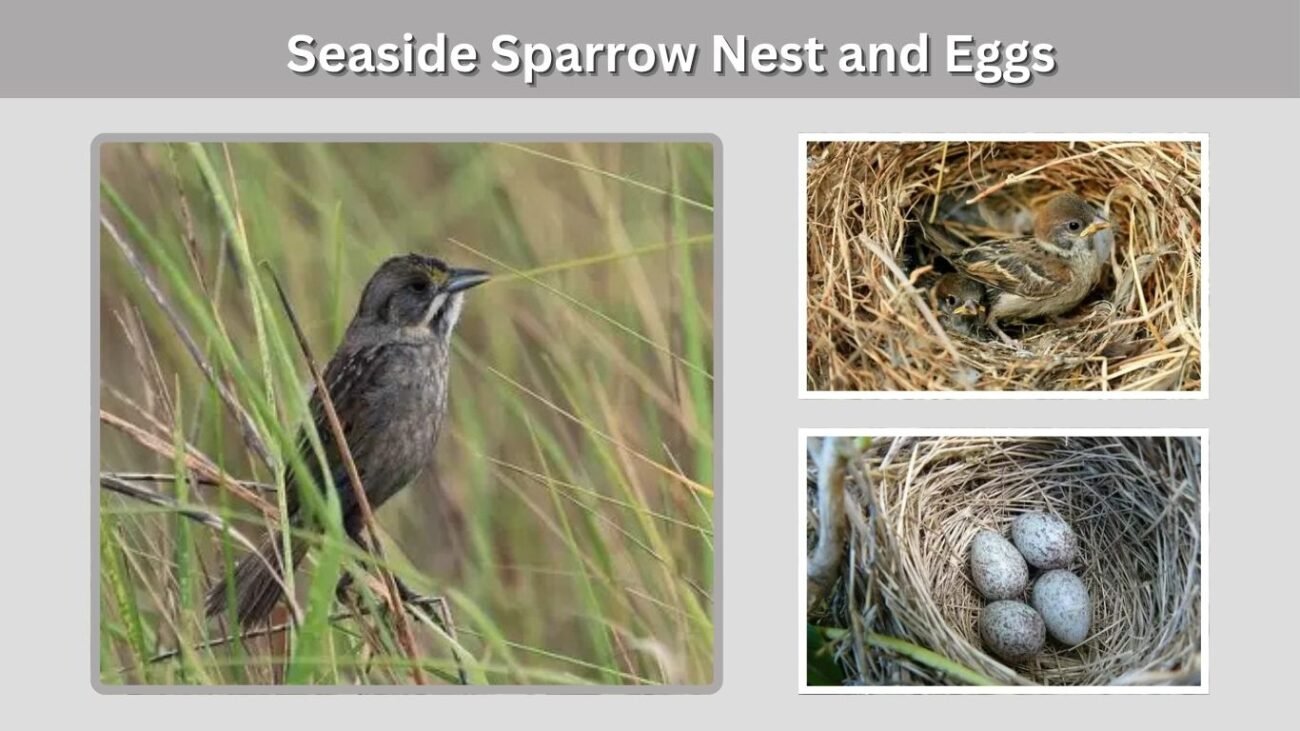
The female normally chooses a nesting site inside tall marsh vegetation. Most nests are positioned approximately 6–12 inches above the ground or mud and high enough to avoid ordinary tidal flooding.
Nest Construction
The nest is a tightly woven cup made from marsh grasses and lined with finer plant material. Surrounding live grasses are often pulled over the top, creating a partial canopy that hides the eggs and nestlings from view.
A typical nest is roughly four inches wide. However, its height and exact position may vary with vegetation, water level, and the risk of flooding.
Eggs and Young
A clutch normally contains two to five eggs, with three or four being common. The eggs are bluish or grayish white and marked with brown spots and blotches, often concentrated near the larger end.
The eggs generally hatch after approximately 12–13 days. Young birds leave the nest roughly 9–11 days after hatching, although they cannot fly strongly at first. Both parents feed the nestlings and continue caring for fledglings after they leave the nest.
Cape Sable Seaside Sparrow
The Cape Sable Seaside Sparrow is a distinctive subspecies found only in southern Florida. Unlike most Seaside Sparrows, it primarily occupies freshwater marl prairies in and around the Everglades rather than ordinary tidal salt marshes.
It is approximately five inches long and has dark olive-gray upperparts, a pale underside with dark streaks, yellow markings in front of the eyes, and a white throat bordered by dark whisker stripes. Males and females have no obvious plumage differences.
The Cape Sable Seaside Sparrow remains federally listed as endangered. Its successful nesting depends on carefully balanced water conditions: prolonged flooding can destroy nests, while drought, severe fires, woody plant growth, altered freshwater flow, and sea-level rise can damage its specialized habitat.
What Happened to the Dusky Seaside Sparrow?
The Dusky Seaside Sparrow was a non-migratory Florida subspecies that lived around Merritt Island and the St. Johns River. It was considerably darker than many other Seaside Sparrow populations.
Its decline resulted mainly from severe habitat alteration. Marshes on Merritt Island were flooded for mosquito control, while other wetlands were drained for development and highway construction. Pollution and pesticide exposure added further pressure. By 1979, only six known birds remained, and all were males.
The last known individual, called Orange Band, died on June 17, 1987. The subspecies was subsequently removed from the endangered species list because it was extinct. The loss of the Dusky Seaside Sparrow demonstrates how quickly a highly localized marsh bird can disappear when its habitat and natural water cycles are altered.
Are Seaside Sparrows Endangered?
The Seaside Sparrow as a whole is not currently classified as endangered and is listed as Least Concern. However, that broad status can hide serious regional problems. Coastal development, marsh drainage, mosquito-control ditches, chemical runoff, stronger flooding, erosion, and rising seas continue to reduce suitable nesting habitat.
The Cape Sable subspecies is federally endangered, and the Dusky subspecies is extinct. Protecting large, connected marshes with natural water movement is therefore essential for the species’ long-term survival.
FAQs
Where do Seaside Sparrows live?
Seaside Sparrows live mainly in salt and brackish marshes along the Atlantic and Gulf coasts of the United States. Northern populations may migrate south for winter, while many southern birds remain year-round. The Cape Sable subspecies occupies freshwater wetlands in the Florida Everglades.
How can you identify a Seaside Sparrow?
Look for a dark, chunky sparrow with a large bill, short tail, pale throat, streaked breast, and a yellow or pale patch in front of the eye. Finding the bird inside a coastal salt marsh is also a strong identification clue.
What does a Seaside Sparrow sound like?
Its song consists of short introductory notes followed by a soft, raspy buzz. It resembles a quieter and more distant version of a Red-winged Blackbird’s song. Males usually sing from exposed marsh vegetation during the breeding season.
Are Seaside Sparrows extinct?
No, the Seaside Sparrow species still survives. However, the Dusky Seaside Sparrow subspecies became extinct after the last known bird died in 1987. The Cape Sable Seaside Sparrow survives in southern Florida but remains federally endangered.
Why are Seaside Sparrows vulnerable to flooding?
They build nests only a short distance above the marsh surface. Unusually high tides, storms, altered water management, and rising sea levels can submerge nests before eggs hatch or young birds are ready to leave, greatly reducing nesting success.