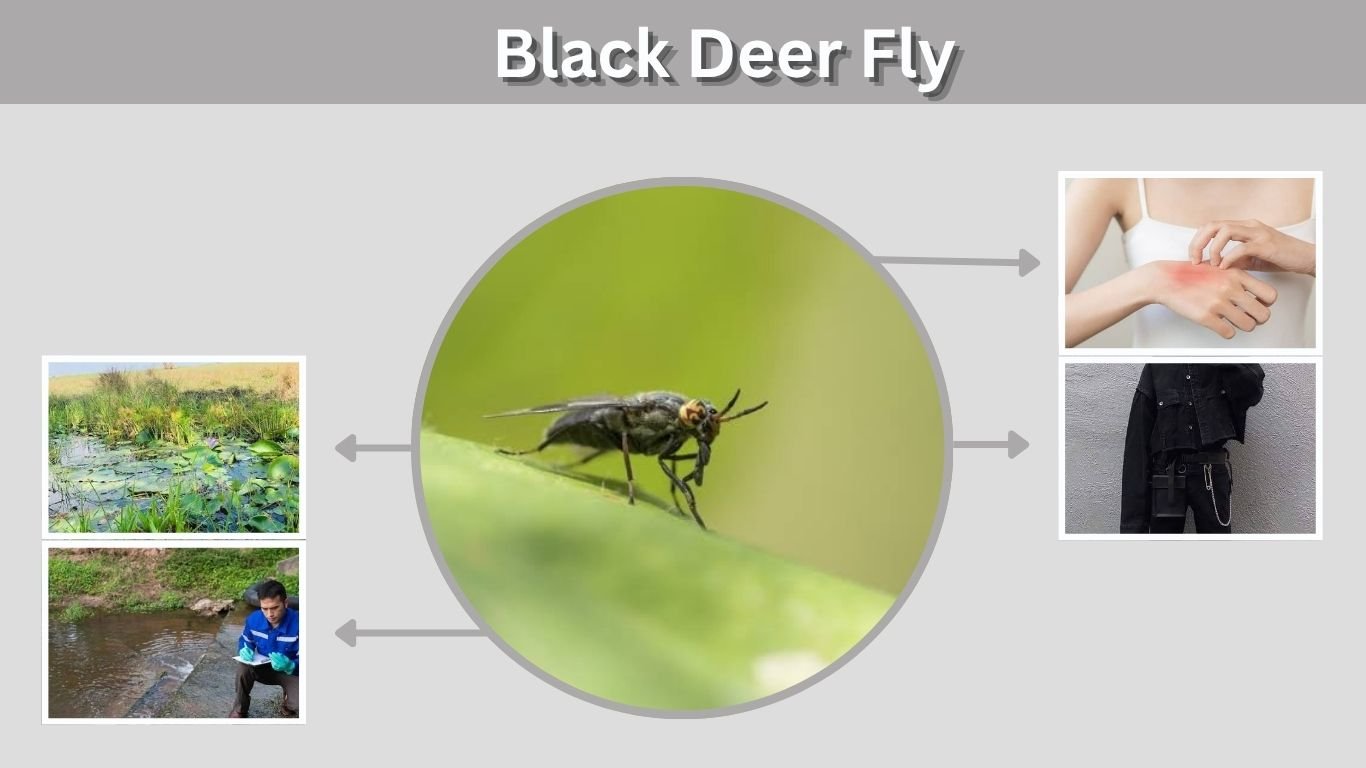
A black deer fly is usually a dark-colored member of the deer fly group rather than a single species officially named “black deer fly.” Deer flies belong to the family Tabanidae and are recognizable by their patterned wings, large colorful eyes, and painful bites from females. They are often confused with black flies and horse flies, but these insects differ considerably in size, appearance, and behavior. Knowing what you are looking at can help you identify the insect, understand its bite, and choose the right way to avoid it.
What Is a Black Deer Fly?
Deer flies are blood-feeding flies belonging mainly to the genus Chrysops. Many species have yellow, brown, gray, or black markings, and some individuals can look almost completely dark from a distance.
The phrase “black deer fly” may therefore describe several dark deer fly species rather than one specific insect.
Black Deer Fly Identification
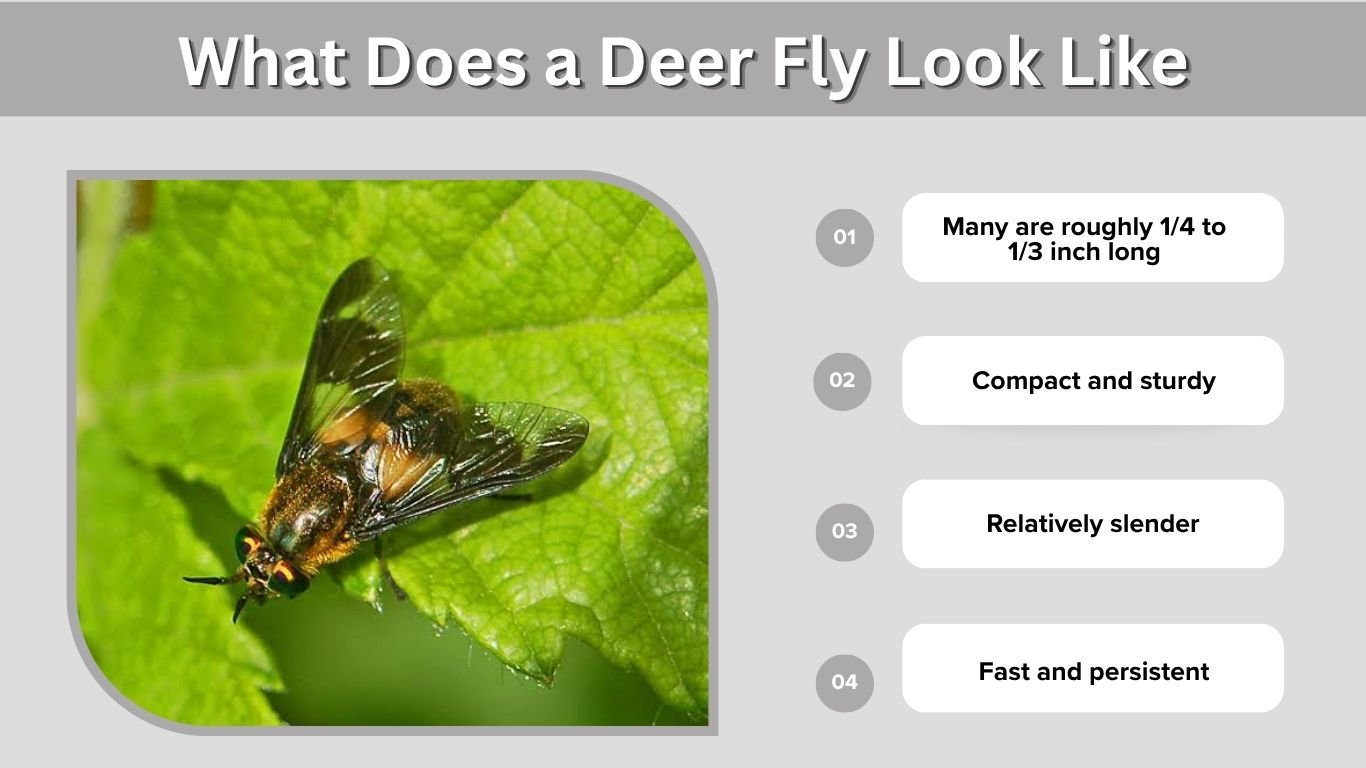
Look for these characteristics:
- Dark brown or black body
- Medium-sized fly
- Broad head
- Large compound eyes
- Dark patterns across otherwise clear wings
- Short antennae
- Strong, fast flight
- Compact but sturdy body
- Females attracted to mammals and humans
One of the most useful clues is the wing pattern. Many deer flies have distinct dark bands or patches across their wings.
Their eyes can also appear brightly colored or patterned when viewed closely.
How Big Is a Black Deer Fly?
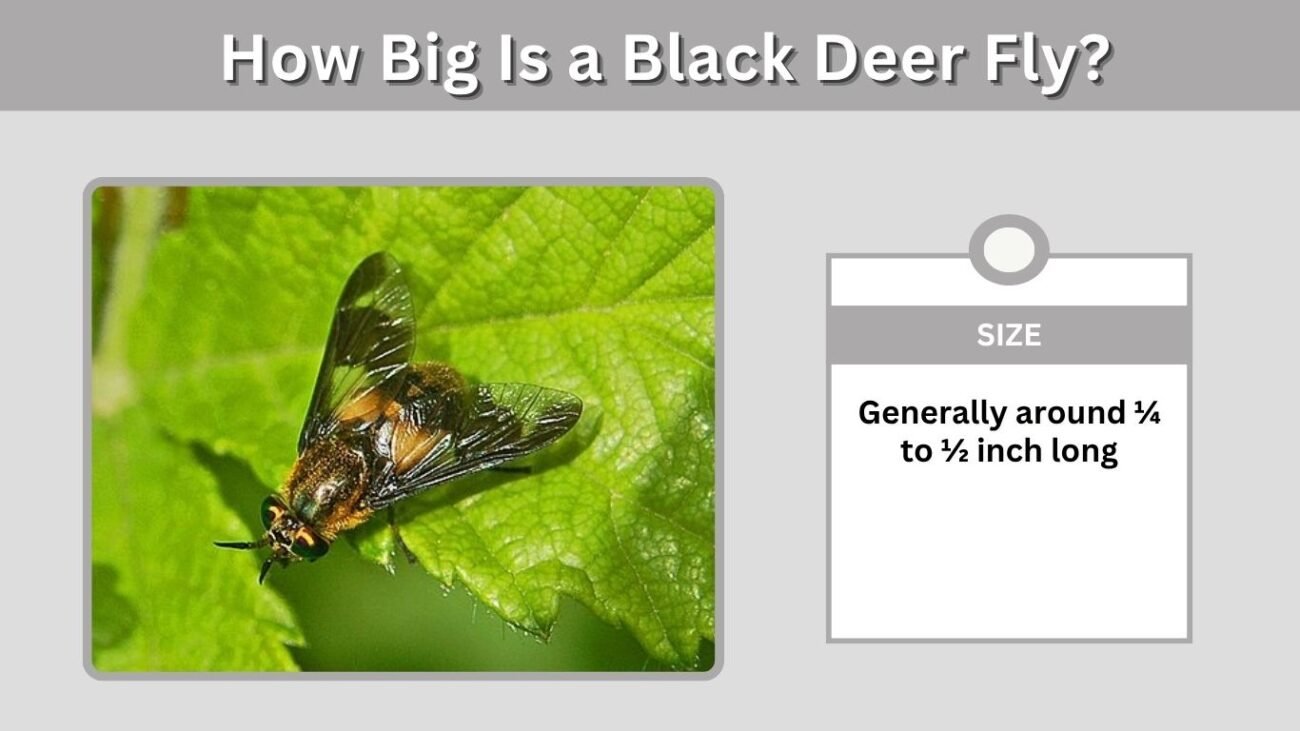
Most deer flies are noticeably larger than common house flies but smaller than many horse flies.
Depending on the species, they are generally around ¼ to ½ inch long.
Big Black Deer Fly
A particularly large dark fly may be mistaken for a “giant black deer fly,” but it could actually be a horse fly.
Typical size differences are:
| Fly | Approximate Size |
| Black fly | 1/8–1/4 inch |
| Deer fly | 1/4–1/2 inch |
| Horse fly | 1/2–1+ inch |
Size alone is not enough for identification, but it is a useful starting point.
Large black horse flies generally have heavier bodies and less obviously patterned wings than many deer flies.
Black Deer Fly Bite
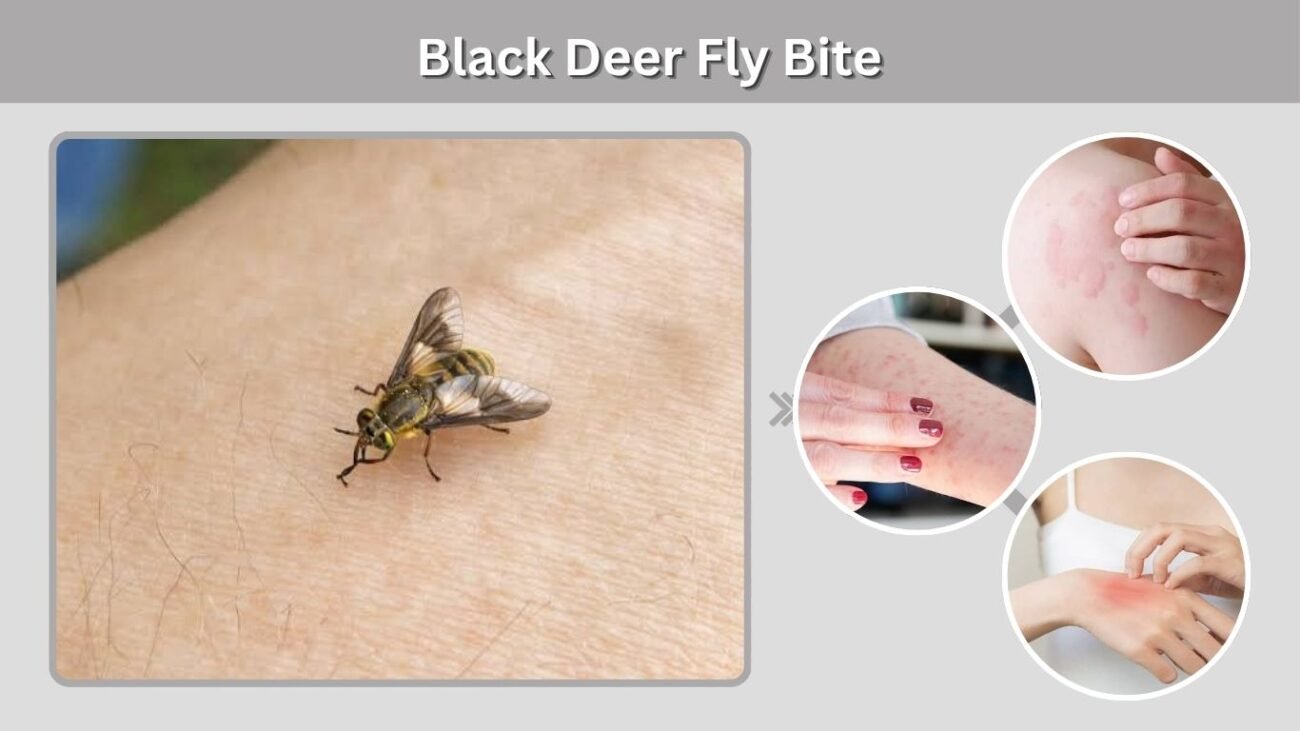
Female deer flies bite humans and other mammals because they need blood to help produce eggs.
They do not simply pierce the skin like mosquitoes. Their mouthparts cut or slice the skin, producing a small wound from which they feed.
This feeding method explains why deer fly bites can feel immediately painful.
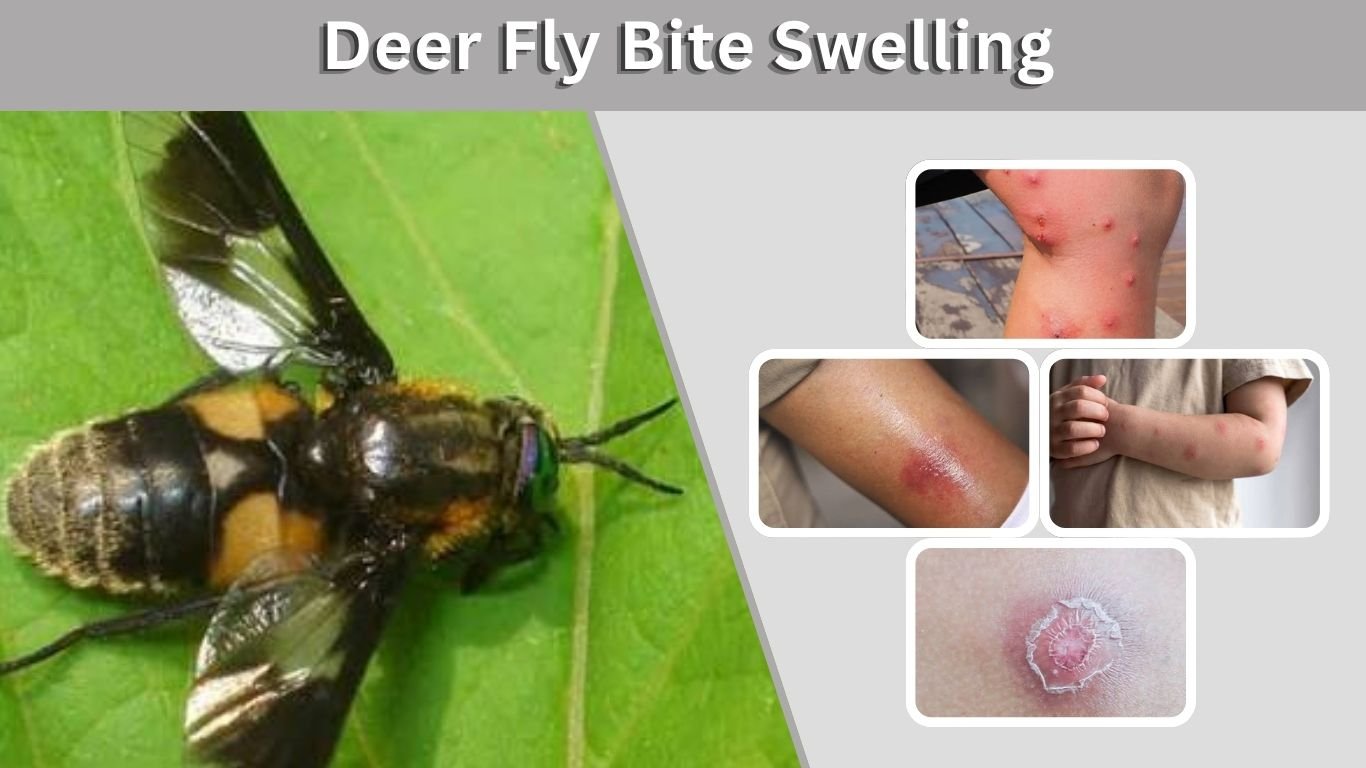
Black Deer Fly Bite Symptoms
A bite may cause:
- Sharp or burning pain
- Redness
- Swelling
- Itching
- Small raised bump
- Soreness
- Minor bleeding
- Warm skin around the bite
The bite may remain itchy or irritated for several days.
Some people develop much larger swollen areas because they react strongly to substances in the fly’s saliva.
What to Do After a Deer Fly Bite
For a typical bite:
- Wash the area with soap and water.
- Apply a cold compress.
- Avoid scratching.
- Keep the area clean.
- Use an appropriate anti-itch treatment if needed.
Seek medical care if you develop severe swelling, increasing pain, spreading redness, signs of infection, or symptoms of a serious allergic reaction.
Black Fly vs Deer Fly
Black flies and deer flies are completely different insects, even though both can deliver painful bites.
Black flies belong to the family Simuliidae, while deer flies belong to Tabanidae.
They also differ in body shape, size, habitat, and flight behavior.
Main Differences
| Feature | Deer Fly | Black Fly |
| Family | Tabanidae | Simuliidae |
| Size | Medium | Small |
| Body | Slender to sturdy | Compact and humpbacked |
| Wings | Often patterned | Usually clear |
| Eyes | Large, often colorful | Smaller-looking |
| Bite | Painful cutting bite | Small painful bite |
| Flight | Strong and fast | Often swarm-like |
| Breeding habitat | Wet soil, marshes | Flowing water |
If the fly is relatively large with patterned wings, it is more likely to be a deer fly.
If it is tiny, dark, and humpbacked, a black fly is more likely.
Deer Fly vs Black Fly Bite
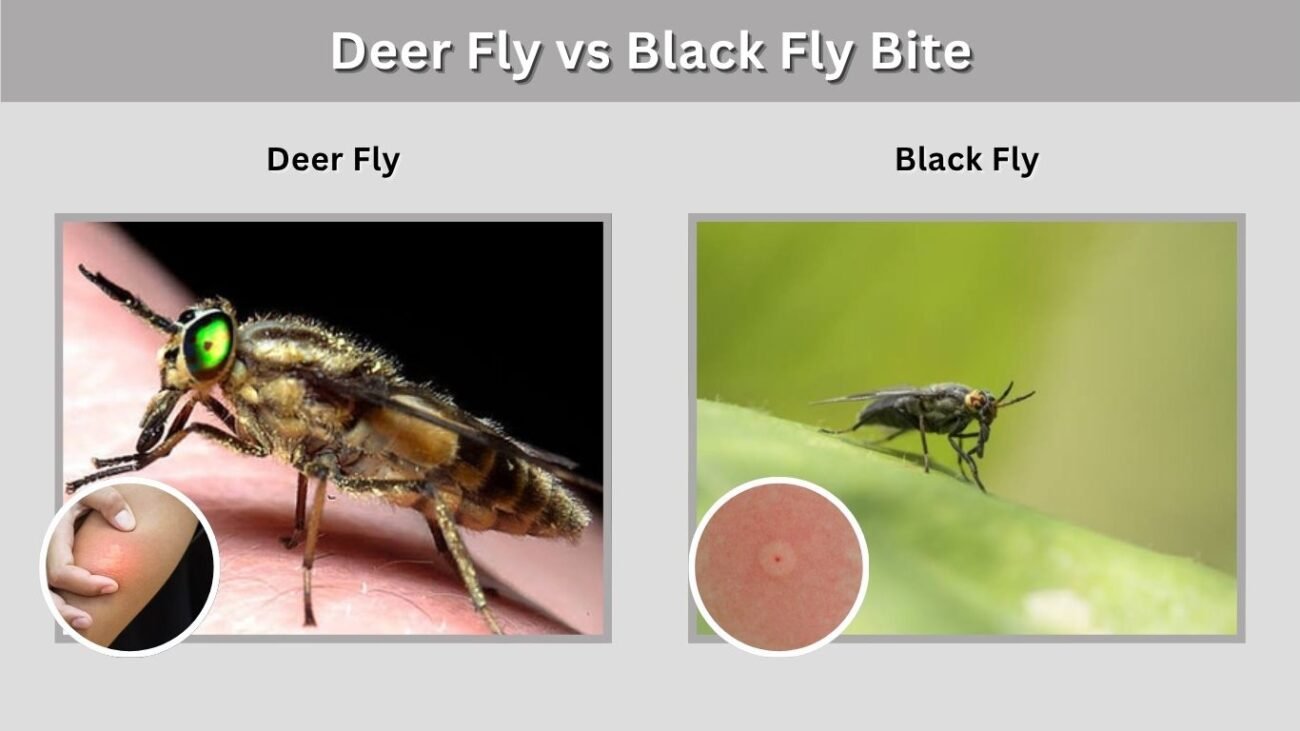
Both insects are blood feeders, and bites from either can become swollen or itchy.
However, the experience can differ.
Deer Fly Bite
A deer fly bite is often immediately noticeable.
The female cuts into the skin with blade-like mouthparts and feeds from the resulting blood pool.
Bites are commonly found on exposed areas such as:
- Head
- Neck
- Shoulders
- Arms
- Legs
Because deer flies are persistent, they may repeatedly circle a person before landing.
Black Fly Bite
Black flies are smaller and often attack in larger numbers.
Their bites can create small red, itchy, swollen areas, and people may experience several bites within a relatively short period.
Black flies often concentrate around the head, hairline, ears, neck, and other exposed areas.
The appearance of the bite alone is not always enough to identify which fly caused it.
Black Fly vs Deer Fly vs Horse Fly
Horse flies, deer flies, and black flies are among the biting flies people commonly encounter during warm weather.
Although deer and horse flies are closely related, black flies belong to a separate insect family.
Quick Identification
Deer fly:
- Medium-sized
- Often patterned wings
- Colorful eyes
- Very fast flyer
- Painful female bite
Horse fly:
- Usually larger
- Heavy body
- Extremely large eyes
- Powerful flight
- Painful female bite
Black fly:
- Much smaller
- Dark body
- Humpbacked appearance
- Often occurs in groups
- Common near flowing water
The large black flies people see around horses, cattle, or deer are often horse flies rather than true black flies.
Are Deer Flies and Black Flies the Same?
No. Deer flies and black flies are not the same insects.
Deer flies belong to the family Tabanidae, which also contains horse flies.
Black flies belong to Simuliidae.
Their larvae also develop in different environments. Black fly larvae generally live attached to surfaces in running water, while deer fly larvae are commonly associated with wet soil, muddy wetlands, marsh edges, and similar environments.
Adults also look distinctly different once you know what characteristics to check.
Are Deer Flies Attracted to Black?
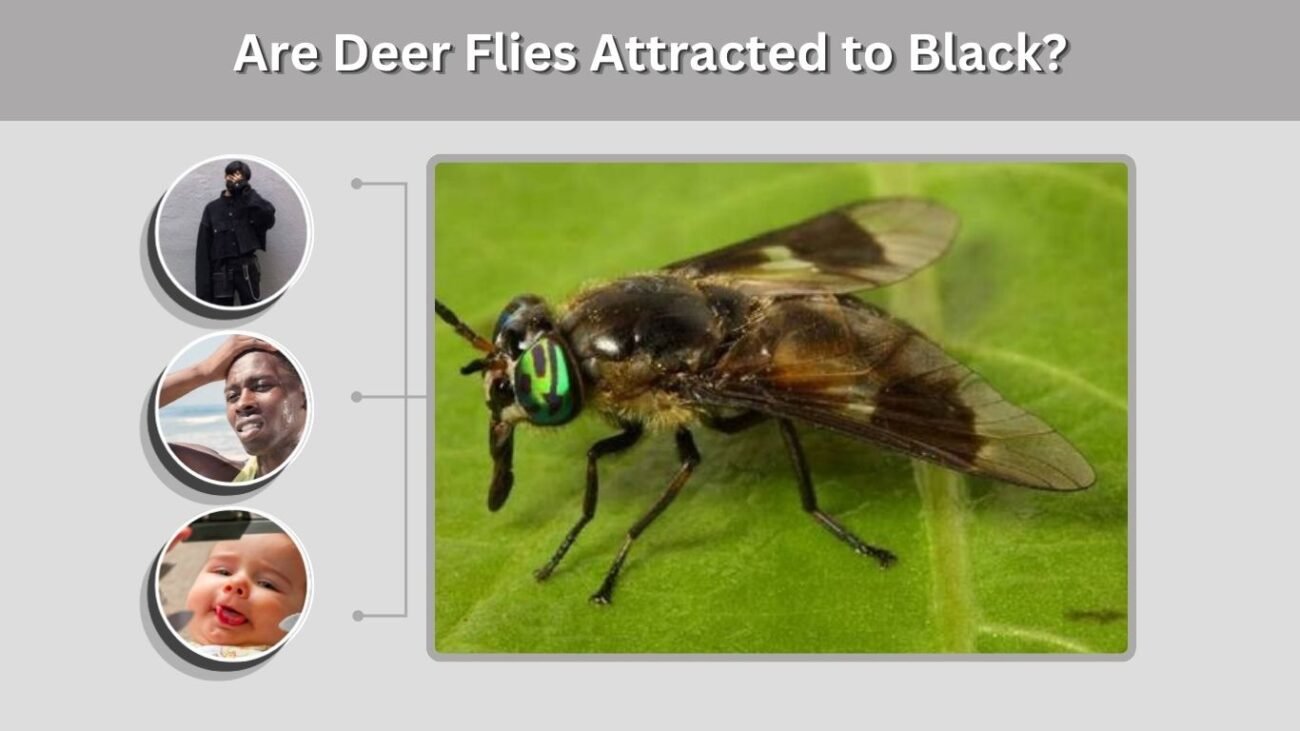
Deer flies can be strongly attracted to dark colors and moving objects.
Dark blue and black objects may be especially noticeable to host-seeking flies, which is why many deer fly traps use dark moving targets.
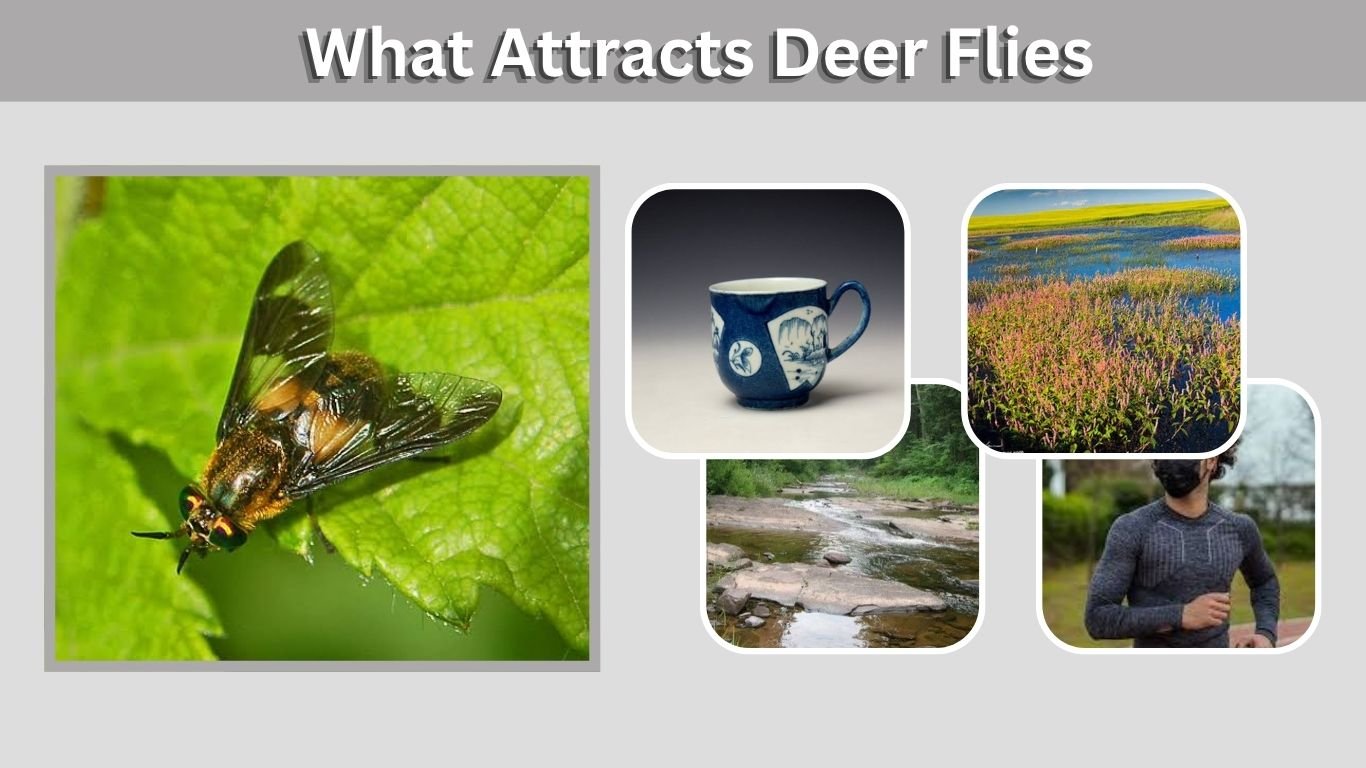
What Attracts Deer Flies?
Deer flies may respond to:
- Dark clothing
- Movement
- Body heat
- Carbon dioxide
- Large moving animals
- Dark-colored objects
- Visual contrast
Wearing lighter-colored clothing may therefore reduce how noticeable you are, although it cannot guarantee protection.
Repellent and physical barriers are still valuable when deer flies are abundant.
Why Do Deer Flies Follow Humans?
People sometimes report deer flies repeatedly circling their heads or following them down trails.
This behavior is related to host seeking.
Female deer flies use movement, visual cues, carbon dioxide, and other signals to locate animals that may provide a blood meal.
Why They Keep Coming Back
A deer fly may continue pursuing you because:
- You are moving through its territory.
- Your dark clothing is visually attractive.
- Your body produces heat.
- Your breathing releases carbon dioxide.
- Movement makes you easier to track.
Swatting at the fly may drive it away temporarily, but persistent individuals sometimes return repeatedly.
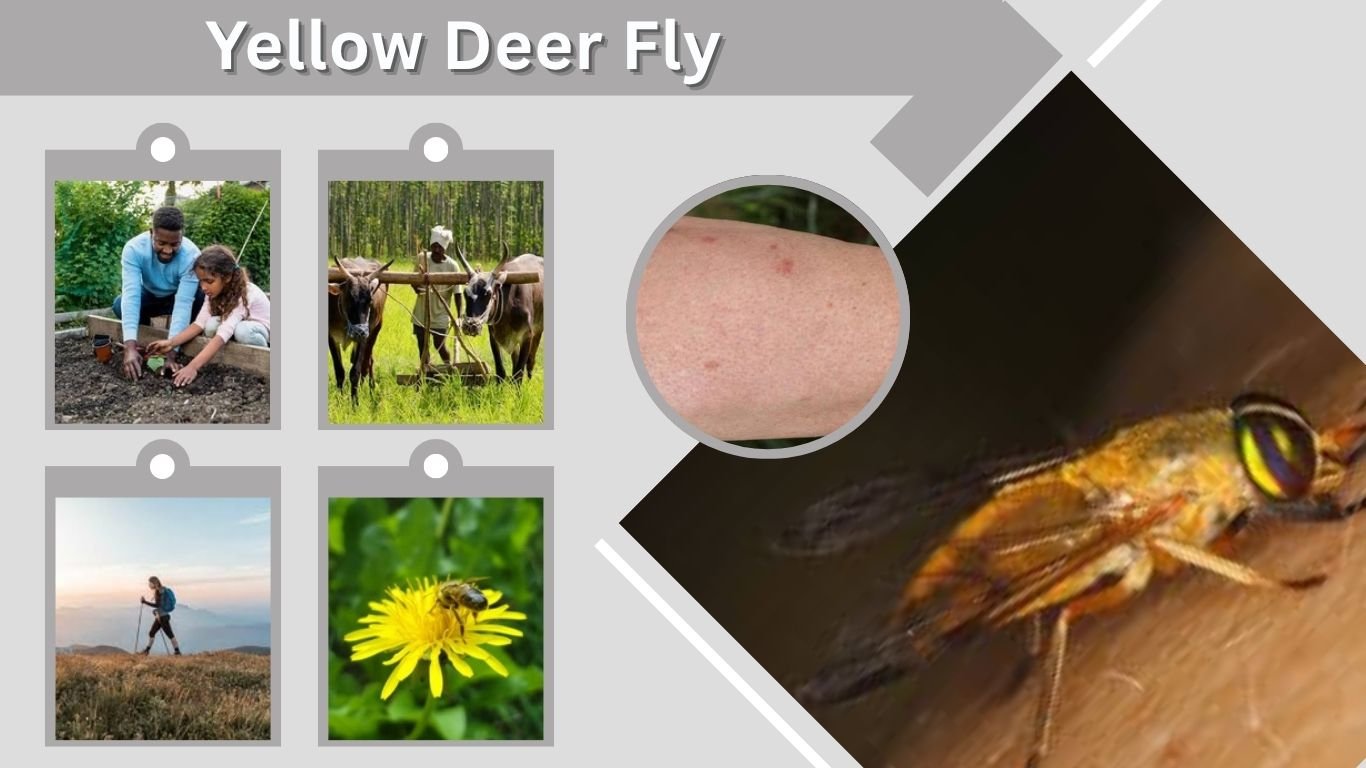
Where Do Black Deer Flies Live?
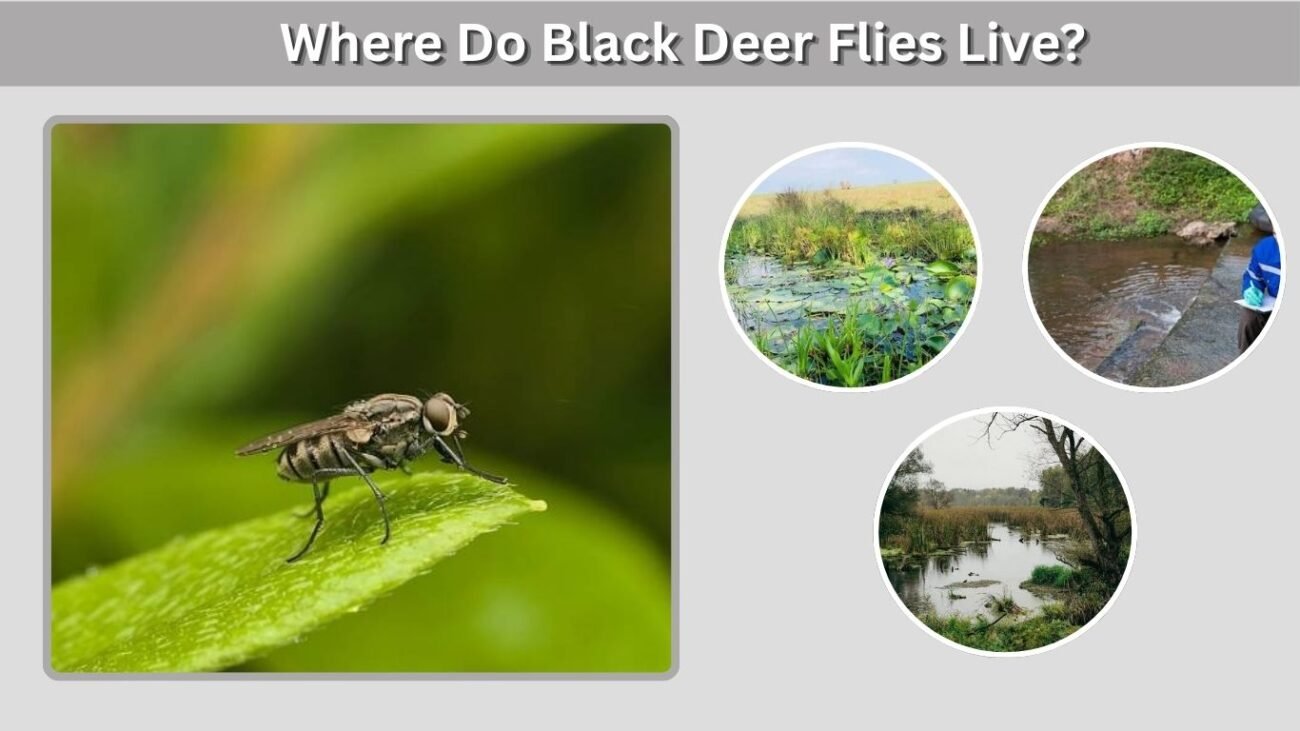
Deer flies are frequently associated with moist landscapes because their immature stages develop in wet environments.
Adults, however, can travel away from breeding sites while searching for food and hosts.
Common Habitats
Look for deer flies around:
- Marshes
- Swamps
- Pond edges
- Wet forests
- Streams
- Lakeshores
- Muddy areas
- Wooded trails
- Farms
- Fields near wetlands
They are particularly noticeable during warm weather.
Activity varies according to species and geographic region.
What Do Black Deer Flies Eat?
Male and female deer flies do not have exactly the same feeding habits.
Both sexes may consume plant sugars, but females of many species also require blood for reproduction.
Male vs Female Diet
Male deer flies feed mainly on:
- Nectar
- Plant juices
- Other sugary liquids
Females may feed on the same foods but also obtain blood from:
- Deer
- Cattle
- Horses
- Humans
- Other mammals
Only females normally bite for blood.
How to Get Rid of Black Deer Flies
Completely eliminating deer flies from an outdoor property can be difficult because they may breed in nearby wetlands and fly considerable distances.
The most useful strategy usually combines trapping and bite prevention.
Deer Fly Control Methods
Try:
- Visual deer fly traps
- Sticky traps
- Outdoor fans
- Fine-mesh screens
- Appropriate insect repellents
- Light-colored clothing
- Long sleeves and pants
- Permethrin-treated clothing where appropriate
- Targeted insecticides labeled for deer flies
Place traps away from areas where people sit because attractive traps can draw flies toward them.
Are Black Deer Flies Dangerous?
For most people, deer flies are primarily a painful nuisance rather than a serious danger.
Their bites can cause substantial local swelling and itching, and scratching can introduce bacteria into the wound.
Deer flies can also mechanically transmit certain pathogens between animals, and some species are associated with disease transmission in particular regions.
For ordinary outdoor encounters, preventing bites remains the simplest approach.
FAQs
Is a Black Fly the Same as a Deer Fly?
No. Black flies belong to the family Simuliidae, while deer flies belong to Tabanidae. Black flies are generally much smaller and often have a humpbacked appearance. Deer flies are larger and frequently have patterned wings and conspicuous eyes.
What Does a Black Deer Fly Bite Look Like?
A deer fly bite can produce a red, swollen, itchy bump with a small central wound. Because the fly cuts the skin rather than simply piercing it, the bite is often immediately painful and may occasionally bleed slightly.
Are Big Black Flies Deer Flies?
Not always. Very large black biting flies are frequently horse flies. Deer flies are typically smaller and often have noticeable dark patterns across their wings. Examining body size, wing markings, eyes, and behavior can help distinguish them.
Which Bite Is Worse, a Black Fly or Deer Fly Bite?
Both can be uncomfortable, but individual reactions vary. Deer fly bites are often immediately painful because the fly cuts the skin. Black flies may attack in greater numbers, potentially resulting in many small swollen and itchy bites.
Are Deer Flies Attracted to Black Clothing?
Deer flies can be attracted to dark colors, particularly when combined with movement. Wearing light-colored clothing may make you less visually noticeable to them, although repellents and protective clothing are still recommended in areas with large deer fly populations.