Finding the same fly buzzing around your kitchen or bedroom for several days can make it seem as though flies live forever. In reality, the average house fly has a relatively short lifespan, although warm indoor conditions can help it survive and reproduce quickly. A house fly may live for several weeks inside a home when food, moisture, and suitable temperatures are available. Understanding how long a fly can live in a house, where it lays eggs, and how its life cycle works can help you prevent a small fly problem from becoming an infestation.
How Long Can a Fly Live in a House?
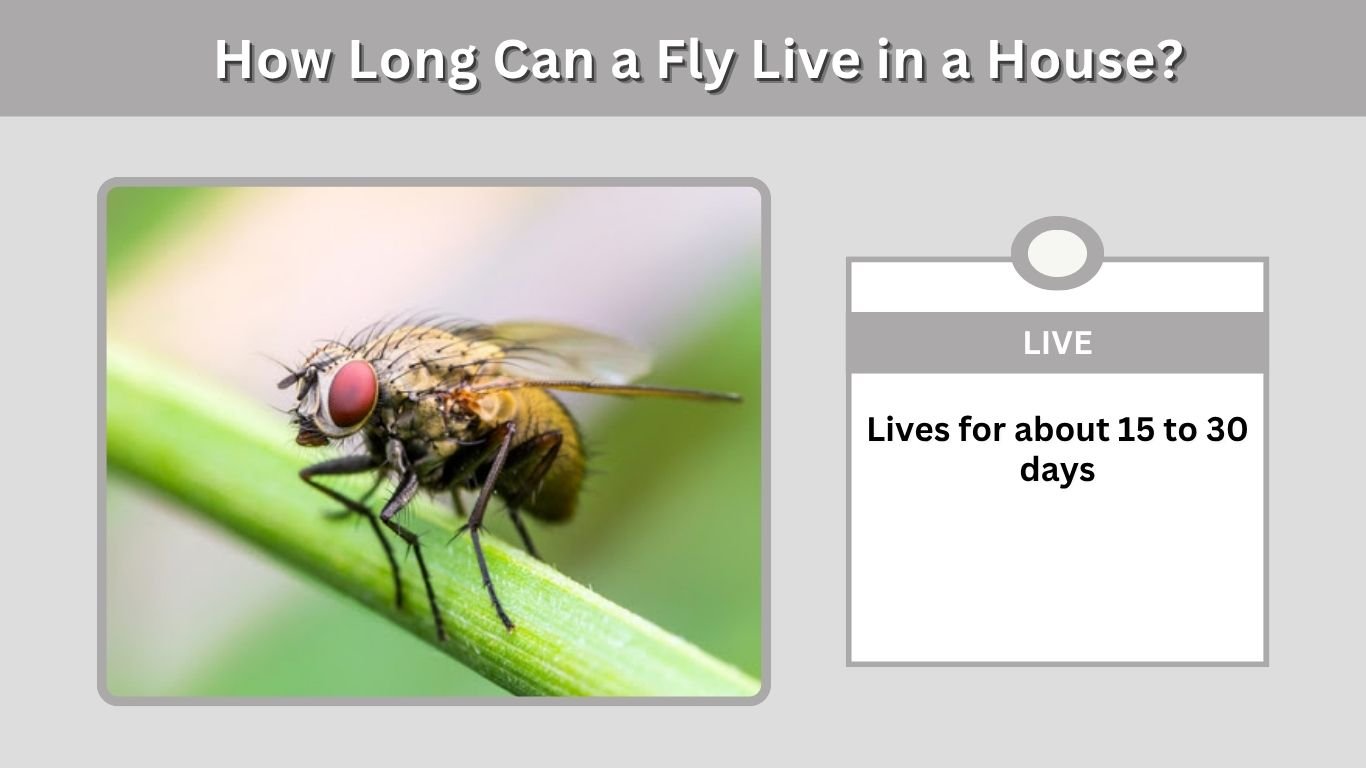
An adult house fly typically lives for about 15 to 30 days, although some may survive for roughly a month or slightly longer under favorable conditions. A warm home with easy access to food and water can provide nearly everything a fly needs to survive.
Average House Fly Lifespan
The average adult house fly usually survives for approximately 2 to 4 weeks. Its exact lifespan depends heavily on temperature, humidity, food availability, and whether predators or pest-control measures are present.
Indoors, flies may have an advantage because they are protected from heavy rain, strong wind, sudden cold temperatures, and many natural predators.
However, a fly trapped inside a clean room without food or moisture will usually die much sooner.
How Long Can a Fly Live Inside Your House?
A house fly living inside your home may survive for several weeks if it can regularly find:
- Sugary drinks or spills
- Food crumbs
- Overripe fruit
- Garbage
- Pet food
- Animal waste
- Moisture from sinks or drains
Flies are highly mobile and can repeatedly move between kitchens, garbage bins, bathrooms, windows, and other areas looking for resources.
Can House Flies Survive During Winter Indoors?
Yes. Heated homes can provide house flies with conditions that allow them to remain active even when outdoor temperatures become unsuitable.
However, seeing flies during winter does not always mean adult house flies have been living in your home for months. New adults may have emerged from larvae or pupae developing in protected areas.
House Fly Life Cycle
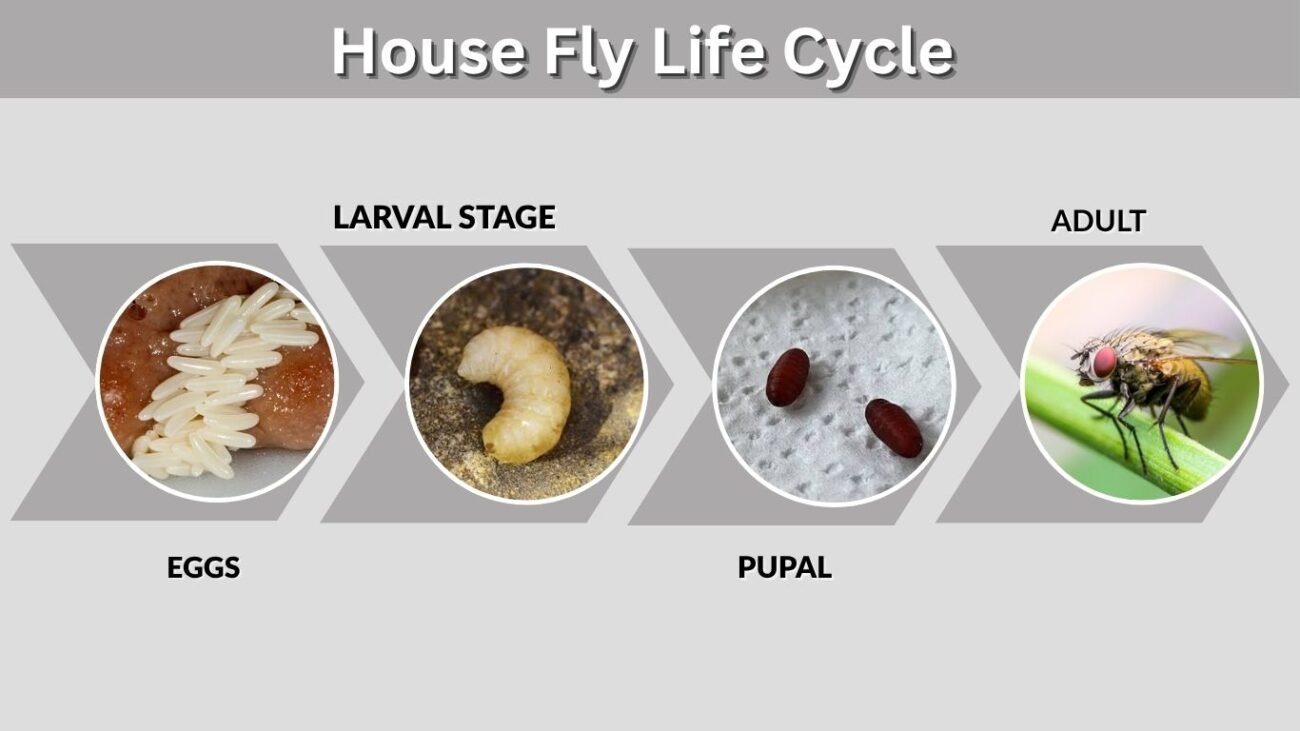
The short lifespan of an individual fly can be misleading because flies reproduce very rapidly. Several generations may appear over a relatively short period, creating the impression that the same flies are living for months.
Egg Stage
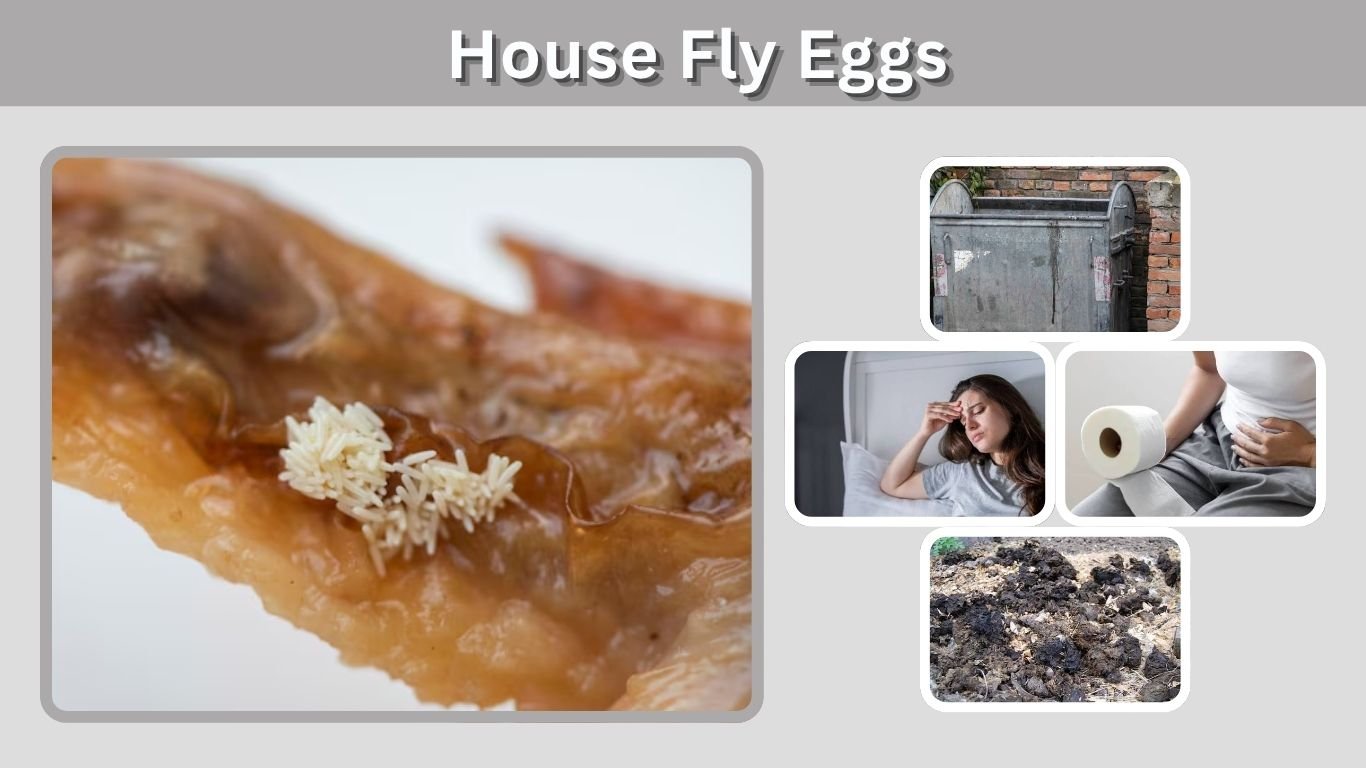
Female house flies lay small, pale eggs in moist organic material where newly hatched larvae can immediately find food.
Common breeding materials include:
- Rotting garbage
- Animal feces
- Decaying food
- Compost
- Spoiled vegetables
- Dirty garbage containers
Under warm conditions, eggs may hatch in approximately 8 to 24 hours.
Larval Stage
The larvae are commonly known as maggots. They have pale, soft bodies and feed heavily on decomposing organic matter.
The larval stage usually lasts several days. During this period, maggots grow rapidly and molt several times before searching for a somewhat drier location in which to pupate.
Pupal Stage
During the pupal stage, the developing fly remains inside a hardened brownish case.
Depending on temperature, an adult fly may emerge within several days. Cooler conditions can slow development considerably.
Because flies develop so quickly in warm environments, a small unnoticed breeding site can continuously produce adults.
Adult Stage
Soon after emerging, adult house flies begin feeding and searching for mates. Females can start producing eggs relatively early in adulthood.
This rapid reproductive cycle explains why eliminating visible adult flies alone may not solve an indoor fly problem.
Can a House Fly Bite You?
House flies can certainly be annoying, especially when they repeatedly land on people. However, the common house fly does not have biting mouthparts.
Do House Flies Bite?
No, ordinary house flies do not bite humans.
Their mouthparts are designed for sponging and consuming liquid or liquefied foods rather than piercing skin.
A house fly may land on your arms, legs, or face because it is attracted to moisture, sweat, salts, or odors.
Why Does It Feel Like a Fly Is Biting Me?
If a fly-like insect appears to bite you, it may actually be another species.
Stable flies, horse flies, deer flies, and some other flies possess mouthparts capable of piercing or cutting skin.
Stable flies can look somewhat similar to house flies, which sometimes causes confusion.
Can a Fly Lay Eggs in Your House?
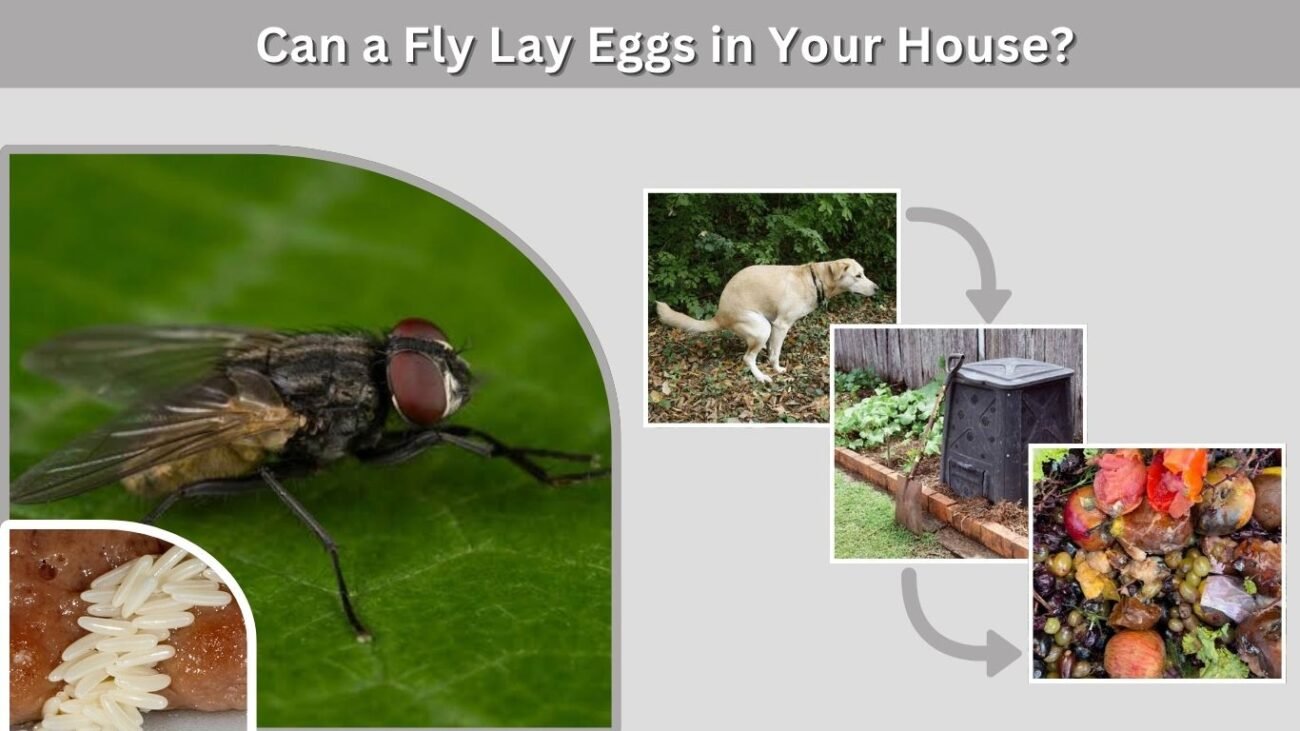
Yes. House flies can reproduce indoors whenever they find suitable organic material.
A single adult fly entering through a door or window is usually not an infestation. Repeatedly seeing many flies, however, may indicate that breeding material exists somewhere nearby.
Where Do Flies Lay Eggs Indoors?
Common indoor or household breeding locations include:
- Garbage cans containing food waste
- Forgotten food beneath appliances
- Pet waste
- Compost containers
- Spoiled produce
- Dirty recycling containers
- Decaying organic material
Flies usually do not build traditional nests. Instead, females deposit their eggs directly into material that provides food for their larvae.
Can You Have a Fly Infestation in Your House?
Yes. A fly infestation can develop when adult flies consistently find places to reproduce.
Signs may include numerous flies appearing every day, maggots near garbage, groups of flies around a particular room, or flies continuing to appear even when windows and doors remain closed.
Locating the breeding source is usually more important than simply killing individual adult flies.
How Long Can a House Fly Live Without Food?
Although flies can survive for weeks under ideal conditions, their survival decreases significantly when food and moisture are unavailable.
Food and Water Requirements
House flies regularly need water and energy-rich food. Water availability can be especially important.
A fly trapped in an extremely dry room without access to food may survive only a few days. Conditions vary, however, so there is no exact survival time for every fly.
Even tiny amounts of liquid or food residue can keep a fly alive longer than expected.
How Big Can a House Fly Get?
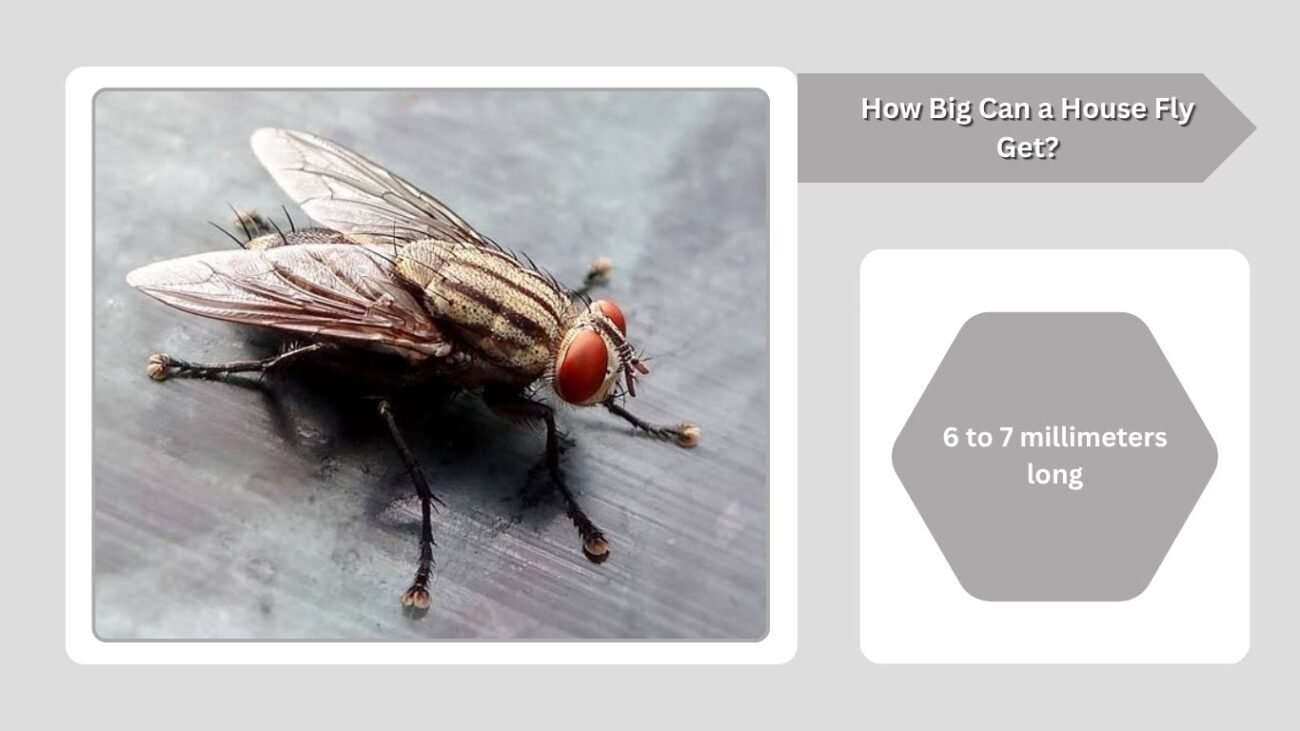
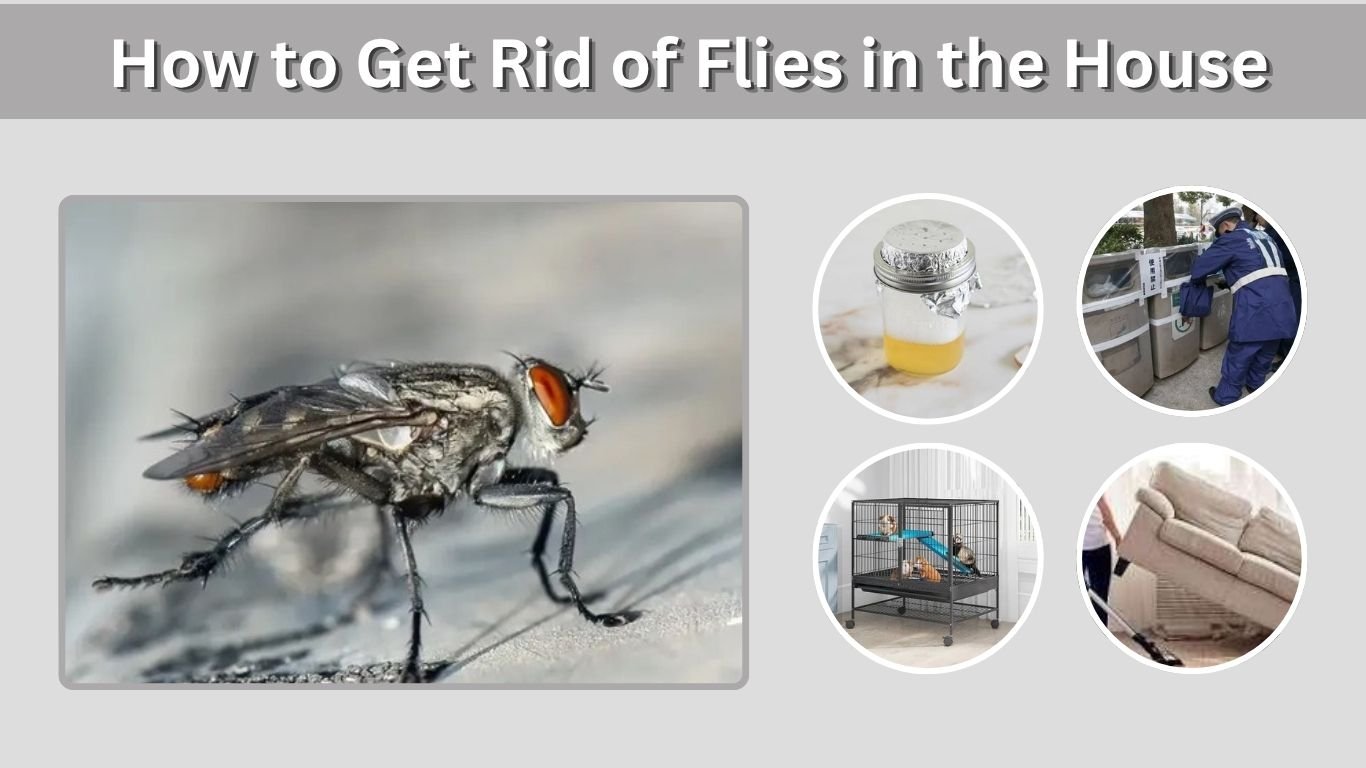
Adult house flies are relatively small insects, generally measuring around 6 to 7 millimeters long, although individual size varies.
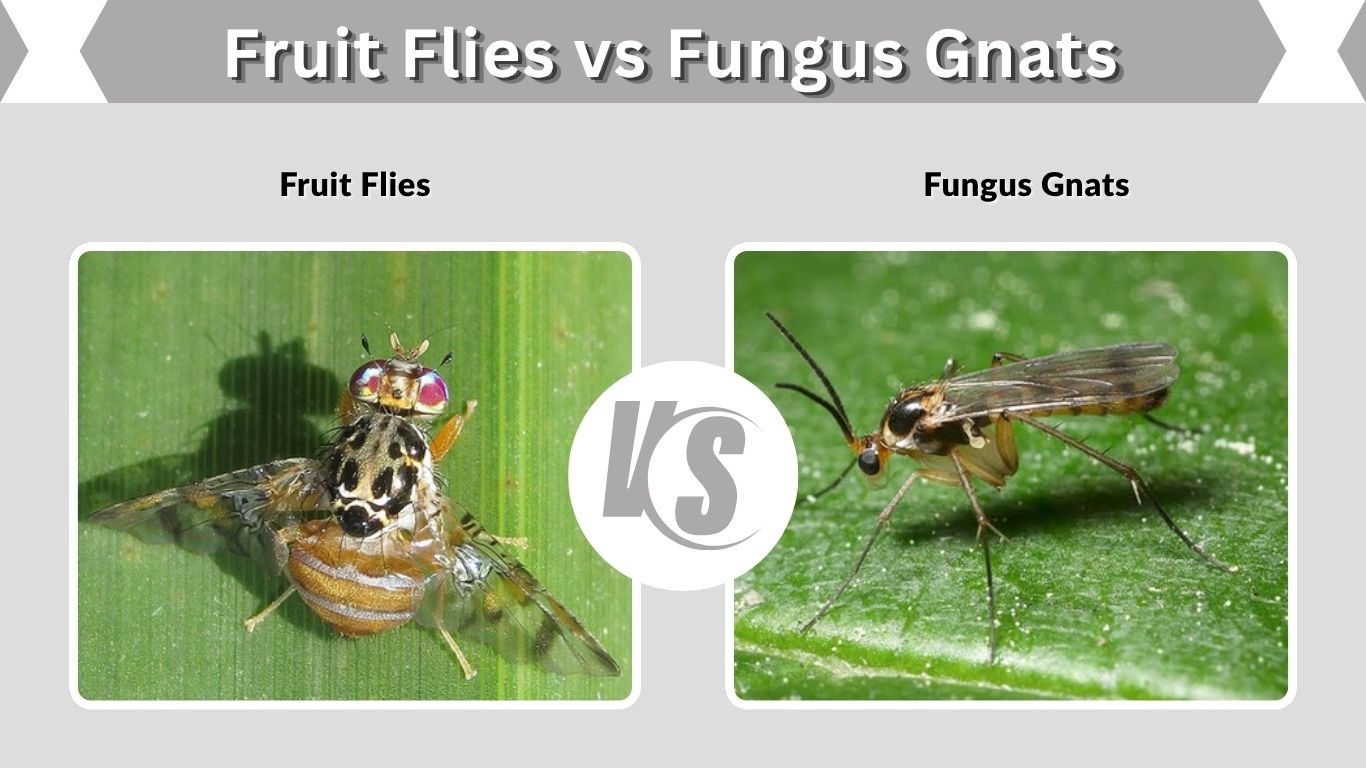
They usually have grayish bodies, large reddish compound eyes, and four darker longitudinal stripes on the upper part of the thorax.
House flies have only one functional pair of wings.
An unusually large fly in your home may therefore be a different species, such as a blow fly, flesh fly, or another common indoor visitor.
Can House Flies Fly in the Dark?
House flies rely heavily on their vision and generally become less active when surroundings are dark.
What Flies Do at Night
At night, house flies usually rest rather than continuously flying. They may settle on:
- Ceilings
- Walls
- Curtains
- Window frames
- Beams
- Furniture
- Hanging objects
When lights return or daylight arrives, they normally become active again.
Artificial lighting can sometimes encourage indoor flies to remain active later than they otherwise would.
How to Kill or Remove a Fly in Your House
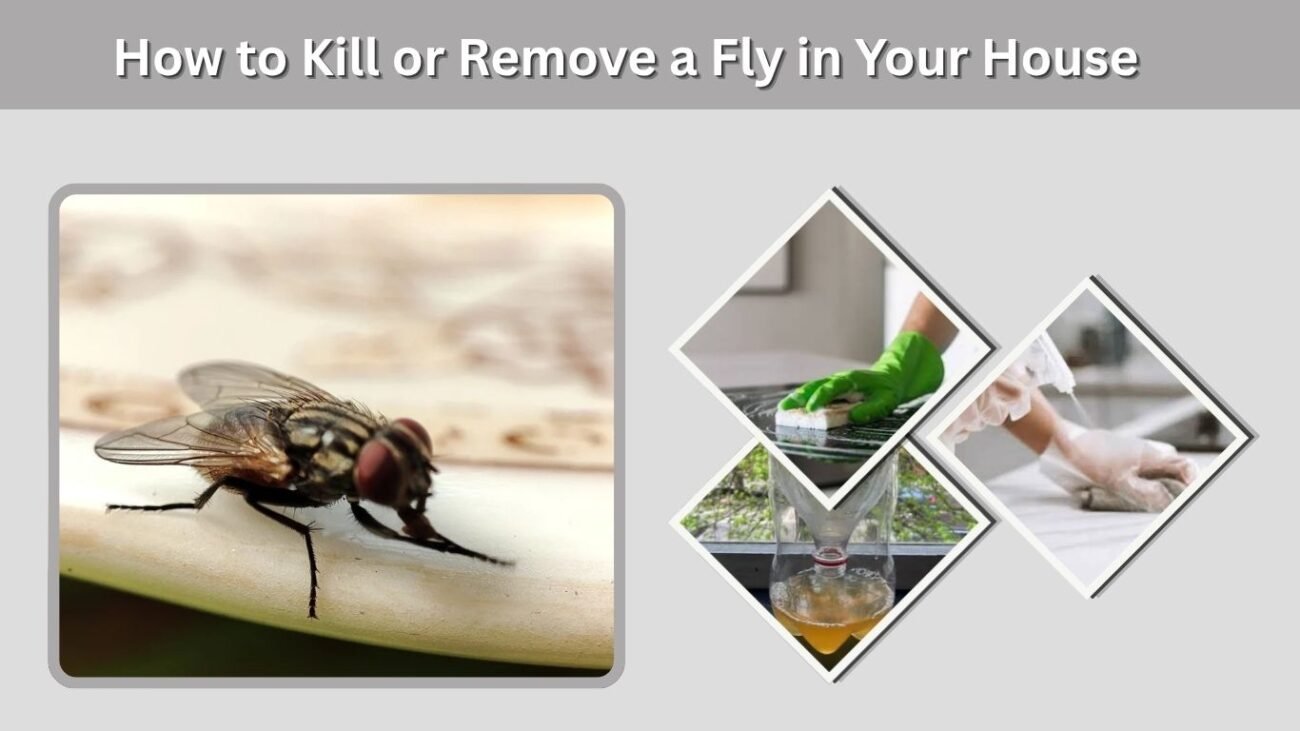
Seeing one fly occasionally is normal, but persistent flies should be addressed by removing both adults and potential breeding sources.
Remove Food Sources
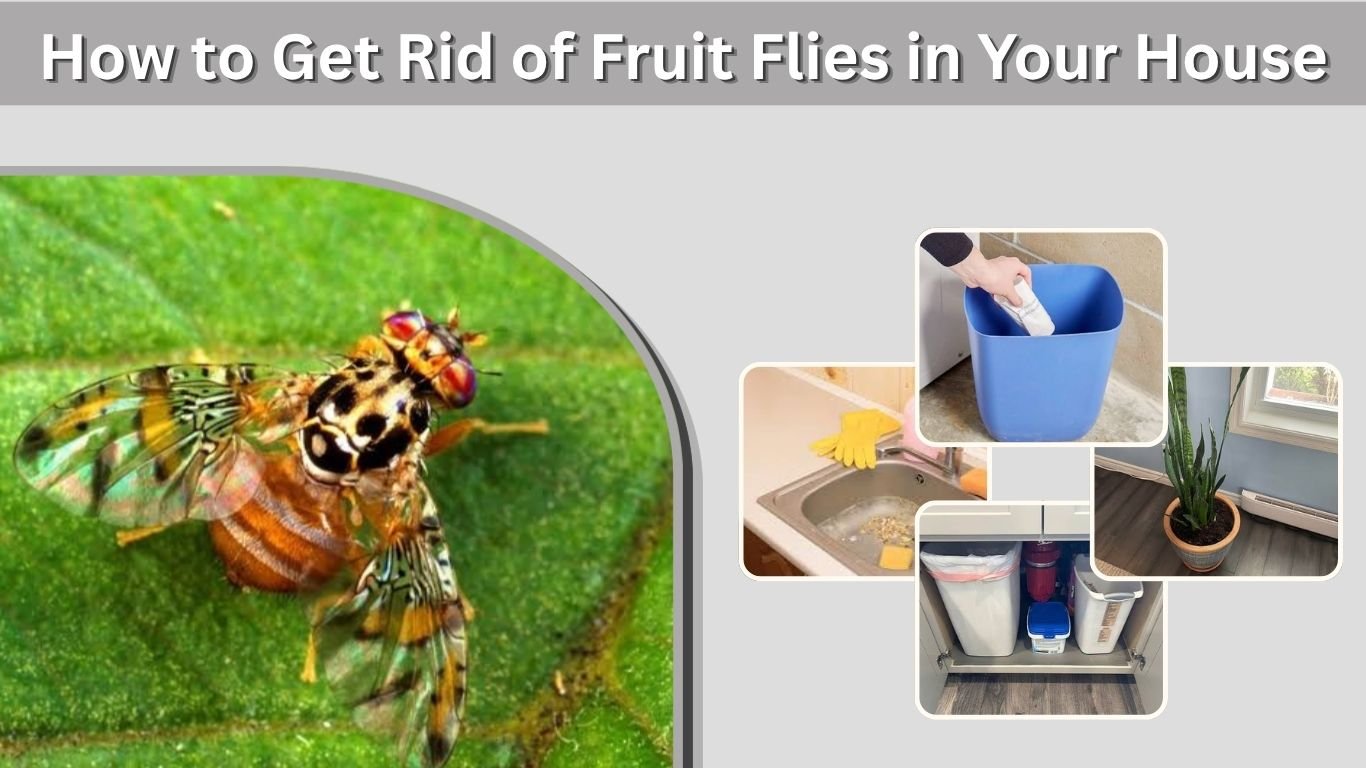
Clean countertops, wipe up drink spills, and avoid leaving uncovered food sitting out.
Store fruit and other foods appropriately and rinse containers before placing them in recycling bins.
Empty Garbage Frequently
House flies are strongly attracted to decomposing organic material.
Use garbage cans with tight-fitting lids and regularly clean residue from inside the container.
Use Simple Fly Traps
Sticky fly traps or appropriately placed indoor fly traps can help capture adults.
A fly swatter can also be effective when dealing with one or two flies rather than an infestation.
Block Entry Points
Check window screens and repair holes or gaps.
Keep doors closed when possible and consider weather stripping around doors that allow insects to enter.
Find the Breeding Source
If many flies continue appearing, inspect your home carefully.
Look underneath appliances, around trash containers, near pet areas, and anywhere organic material could have been forgotten.
Removing the breeding material interrupts the fly life cycle and is often the most important step in long-term control.
FAQs
How long can a fly live in your house?
A typical adult house fly can live approximately 15 to 30 days. Warm temperatures and consistent access to food and water may help it survive toward the longer end of that range.
Can a house fly bite you?
No. Common house flies do not have mouthparts capable of biting people. If a fly-like insect bites you, it may be a stable fly, horse fly, deer fly, or another biting species.
Can a fly lay eggs in your house?
Yes. House flies may lay eggs indoors if they find moist, decaying organic matter such as garbage, spoiled food, pet waste, or other decomposing material.
Can there be a fly nest in my house?
House flies do not construct nests like birds or wasps. However, many flies can develop in one breeding area, which may make the location seem like a fly nest.
Why do flies keep appearing in my house?
Repeated fly activity can result from open doors or windows, damaged screens, accessible garbage, pet waste, spoiled food, or an unnoticed breeding source. Finding and removing the source usually provides better long-term control than killing adult flies alone.