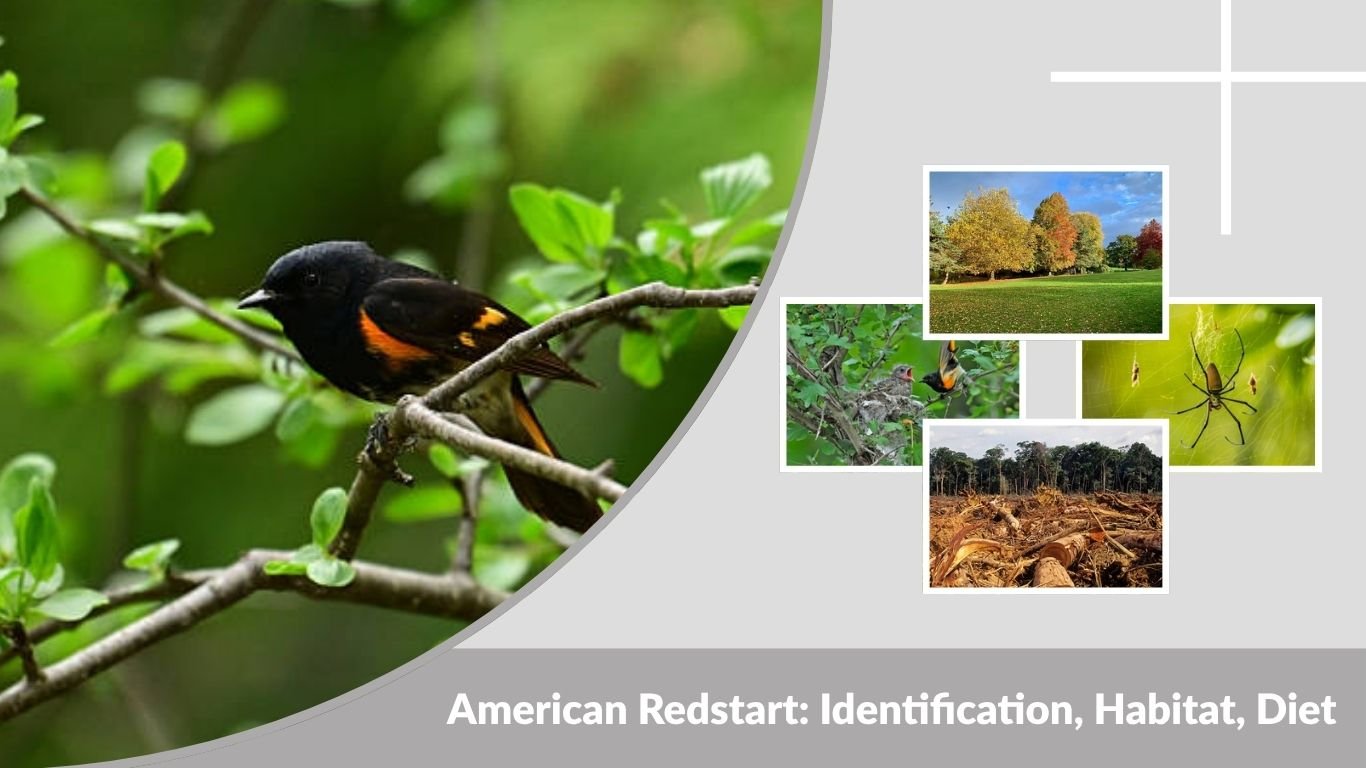
The American redstart (Setophaga ruticilla) is a small, energetic songbird known for its striking colors and active behavior. Common across North America during the breeding season, this warbler stands out for its unique hunting style and constant movement through trees and shrubs. One of its most fascinating features is the clear difference between males and females, making identification easier for birdwatchers. From dense forests to woodland edges, the American redstart plays an important role in controlling insect populations.
American Redstart Physical Characteristics and Identification
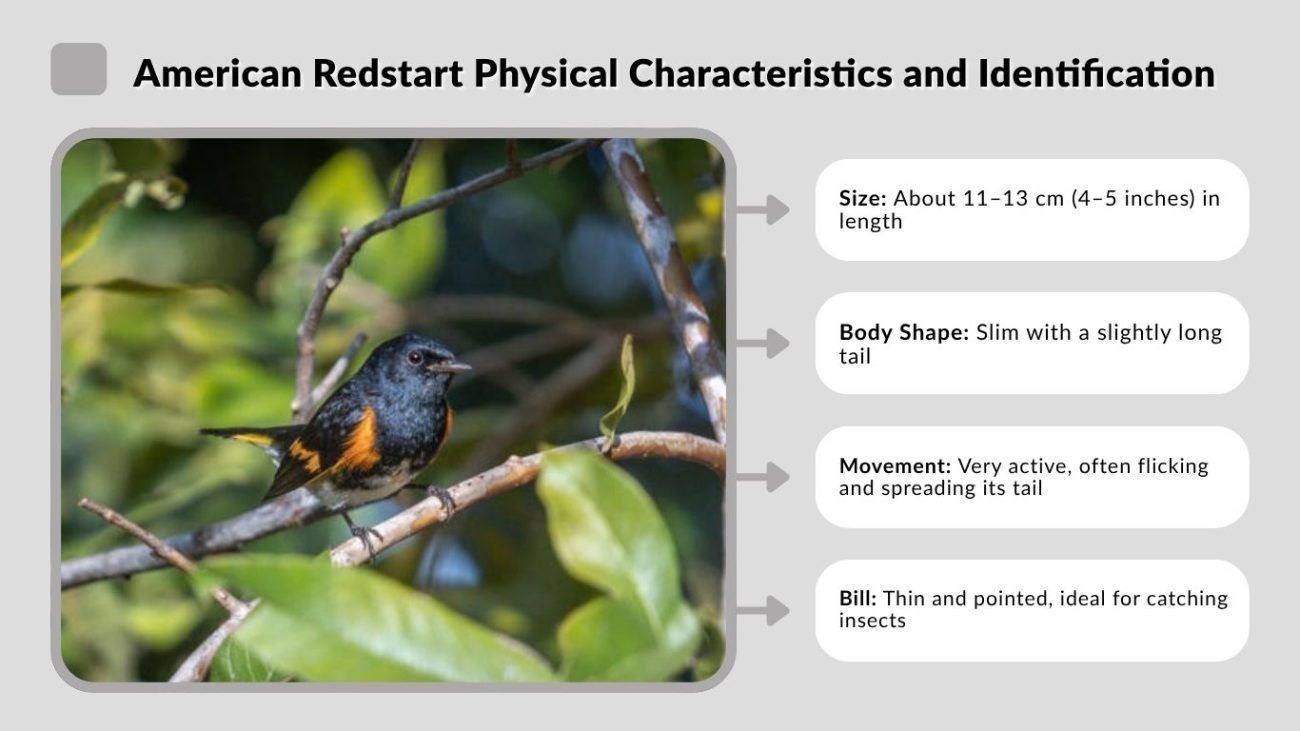
The American redstart is a small warbler with a lively personality and distinctive appearance. Its constant tail movement and flashes of color make it easier to spot compared to many other songbirds.
Key Identification Features
- Size: About 11–13 cm (4–5 inches) in length
- Body Shape: Slim with a slightly long tail
- Movement: Very active, often flicking and spreading its tail
- Bill: Thin and pointed, ideal for catching insects
American Redstart Male
Male American redstarts are highly recognizable due to their bold and contrasting colors. They have a glossy black body with bright orange patches on the wings, sides, and tail. These vivid markings are especially visible when the bird fans its tail or spreads its wings. Adult males are among the most striking warblers in North America and are often easier to identify in the field.
American Redstart Female
Female American redstarts have a more subtle appearance, which helps them blend into their surroundings. Instead of black and orange, they display olive-gray upperparts with yellow patches on the wings and tail. Their softer coloration provides camouflage, especially during nesting, making them less noticeable to predators.
Male vs Female Comparison
- Male: Black with bright orange patches, more vibrant and eye-catching
- Female: Olive-gray with yellow patches, more subdued
- Visibility: Males are easier to spot, while females blend into foliage
- Purpose: Female coloration helps with nesting protection
American Redstart Habitat and Distribution
Geographic Range
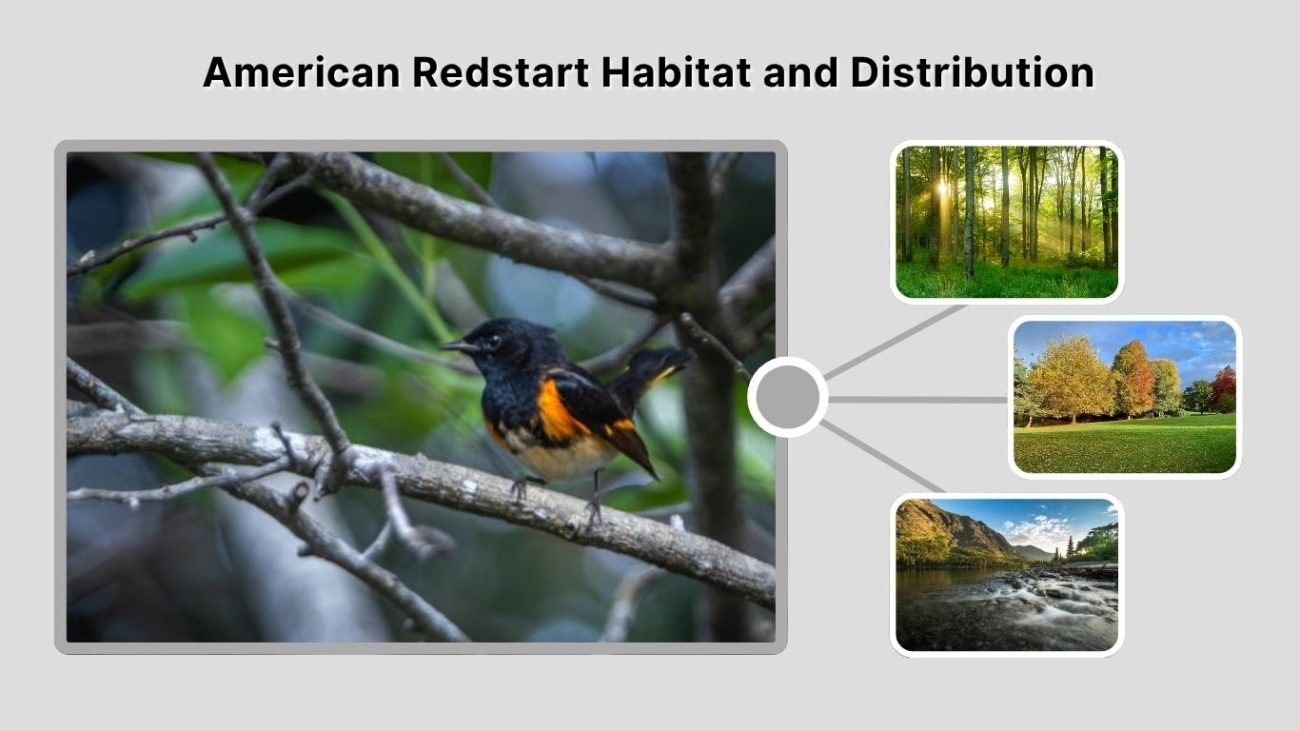
The American redstart breeds widely across North America, from southern Canada to parts of the United States. During the winter, it migrates to Central America, the Caribbean, and northern South America. This long-distance migration makes it a familiar species across multiple regions throughout the year.
American Redstart Habitat
This species prefers deciduous forests, mixed woodlands, and forest edges where there is a rich supply of insects. It is commonly found near streams, wetlands, and areas with dense vegetation. The American redstart also adapts well to secondary growth forests and can sometimes be seen in parks and gardens.
Seasonal Migration
The American redstart is a long-distance migrant. It travels south in the fall and returns north in the spring for breeding. During migration, it uses stopover habitats such as coastal forests and wetlands to rest and feed. These migration patterns are crucial for its survival, as they allow access to seasonal food resources.
American Redstart Behavior and Unique Traits
Tail-Fanning Behavior
One of the most distinctive behaviors of the American redstart is its tail-fanning display. The bird spreads its tail and wings to reveal bright patches of color, which startles insects and causes them to move. This clever hunting technique helps the bird capture prey more efficiently.
Active Foraging Style
American redstarts are constantly on the move, hopping between branches and making short flights in search of insects. They are highly agile and can catch prey both in the air and on leaves. Their energetic behavior makes them a delight to observe in the wild.
Vocalizations and Song
The American redstart produces a series of high-pitched, musical notes. Its song is often described as lively and variable, with different patterns used for communication and territory defense. Males sing more frequently during the breeding season to attract mates and establish territory.
American Redstart Diet and Feeding Habits
Primary Diet
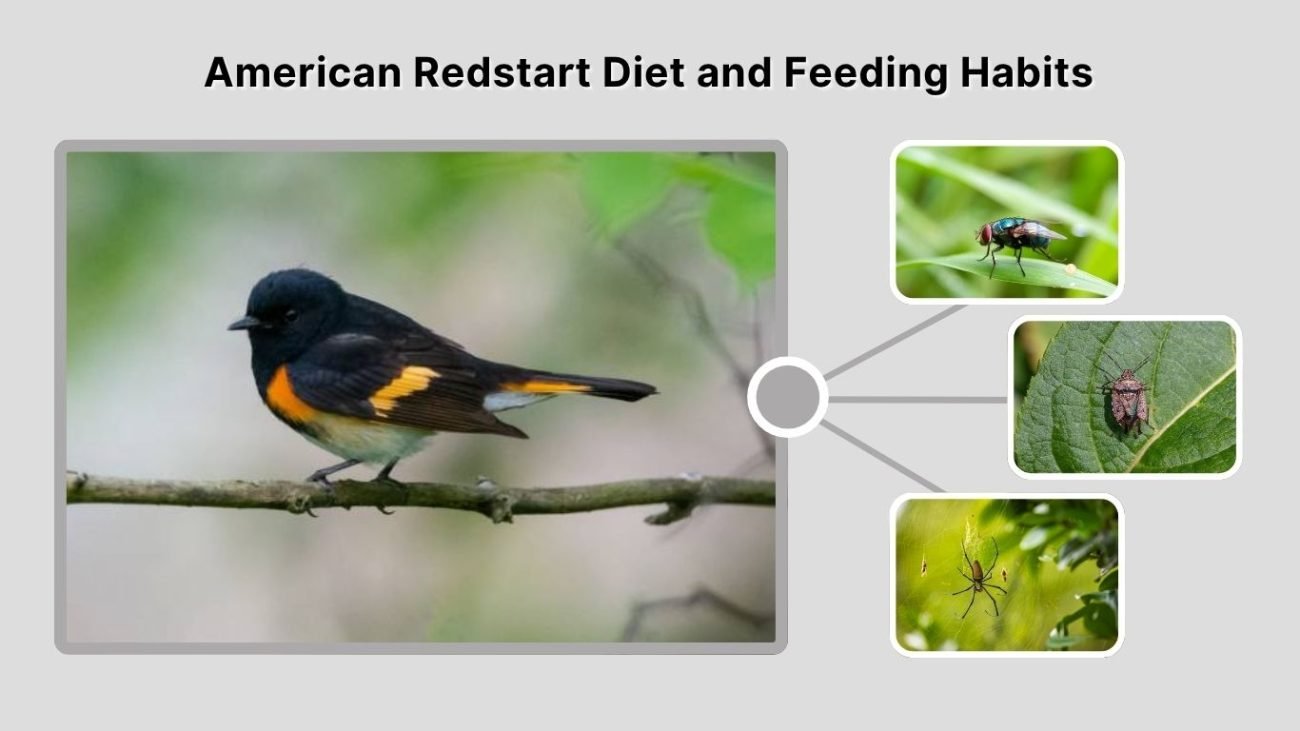
The American redstart mainly feeds on insects and other small invertebrates. Common prey includes flies, beetles, spiders, and caterpillars. These foods provide the protein needed for energy and reproduction.
Feeding Techniques
This bird uses a mix of hunting methods, including aerial catching (hawking) and picking insects from leaves. Its signature tail-fanning behavior helps flush out hidden prey, giving it an advantage over less active hunters.
Seasonal Diet Changes
During migration and in wintering areas, the American redstart may also consume small fruits and berries. This flexibility in diet allows it to adapt to different environments and seasonal changes.
American Redstart Breeding and Nesting
Nesting Sites
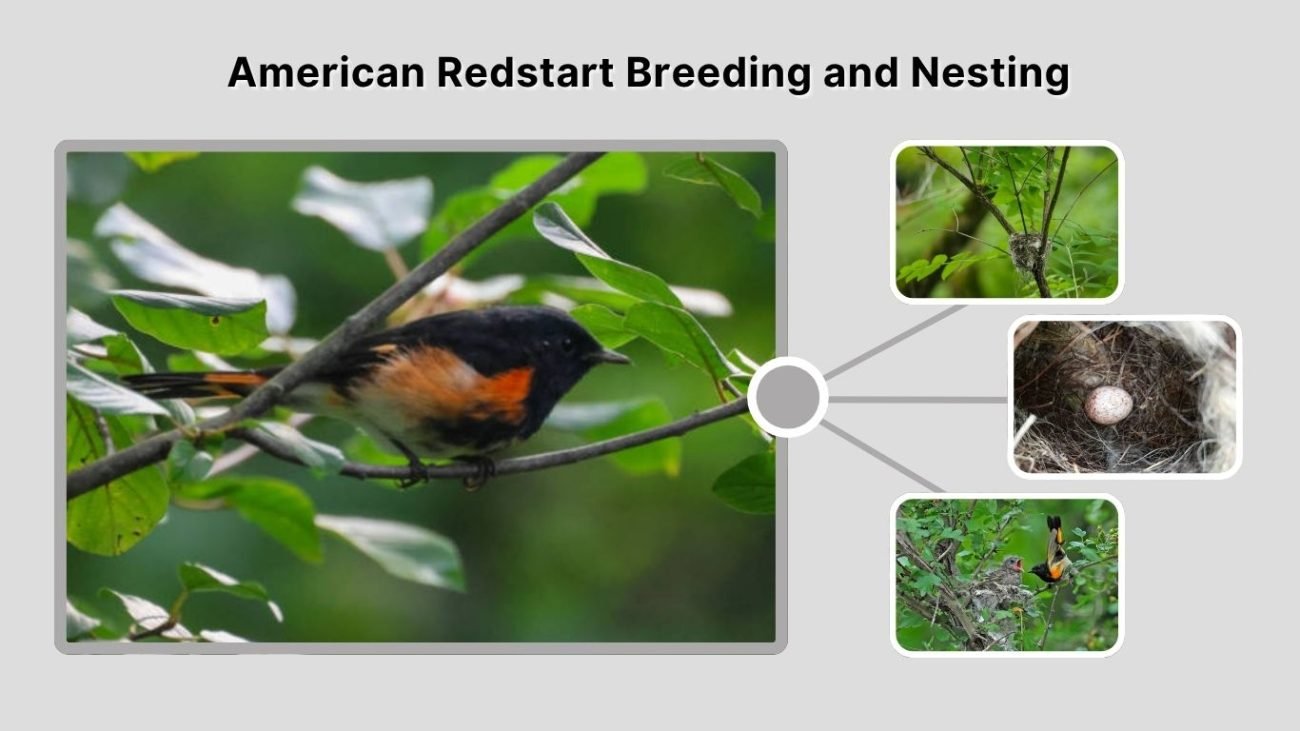
American redstarts typically build their nests in shrubs or small trees, often at low toوسطة heights above the ground. They prefer areas with dense foliage that provide cover and protection from predators. The nest is a compact, cup-shaped structure made from grass, bark fibers, and plant materials, carefully woven together for stability.
Egg Laying and Parental Care
The female usually lays 3–5 eggs, which are pale with small spots. She is mainly responsible for incubation, which lasts around 10–12 days. After hatching, both parents take part in feeding the chicks, bringing insects and other small prey. The young birds grow quickly and leave the nest within a couple of weeks.
Breeding Behavior
During the breeding season, males become highly territorial and actively defend their nesting areas. They use song and visual displays, including tail spreading, to attract females and ward off rivals. In some cases, males may mate with more than one female, a behavior known as polygyny.
Conservation Status and Threats
Population Trends
The American redstart is generally considered a species of least concern, with stable populations across much of its range. However, like many migratory birds, it depends on multiple habitats throughout the year, making it sensitive to environmental changes.
Major Threats
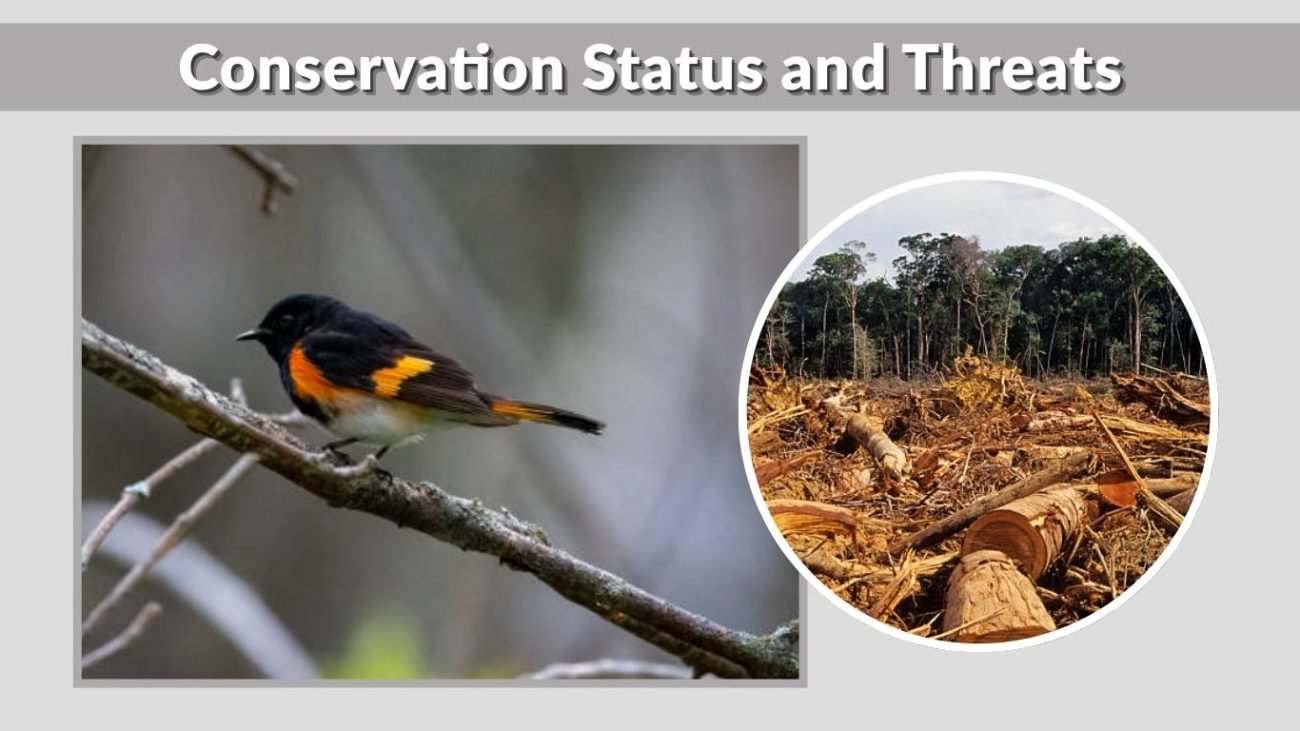
Habitat loss is one of the primary threats, particularly the destruction of forests in both breeding and wintering areas. Deforestation, urban expansion, and climate change can reduce available habitat and food sources. Additionally, changes in migration stopover sites can impact survival during long journeys.
Interesting Facts About the American Redstart
- The American redstart uses its tail to flush insects, a unique hunting strategy among warblers.
- It is one of the most active and energetic songbirds in North America.
- Young males may resemble females until they develop their full adult coloration.
- It migrates long distances between North America and tropical regions.
FAQs About American Redstart
What is the difference between male and female American redstarts?
Males are black with bright orange patches, while females are olive-gray with yellow patches. Males are more colorful and easier to spot, whereas females are more camouflaged.
Where do American redstarts live?
They live in deciduous forests, woodland edges, and areas with dense vegetation across North America during breeding season, and migrate to Central and South America in winter.
What do American redstarts eat?
Their diet mainly consists of insects such as flies, beetles, and spiders. They may also eat small fruits during migration and winter.
Are American redstarts rare?
No, they are fairly common in suitable habitats, although they can be overlooked due to their small size and quick movements.
Conclusion
The American redstart is a vibrant and energetic bird that stands out for both its appearance and behavior. From the bold colors of the male to the subtle tones of the female, it offers a fascinating example of variation within a species. Its unique feeding techniques, long migrations, and adaptability make it an important part of forest ecosystems. While its population remains stable, protecting its habitats is essential to ensure that future generations can continue to enjoy this lively and beautiful songbird.