Texas is home to a surprising variety of woodpeckers, from the tiny Downy to the towering Pileated. Whether you’re wandering through East Texas pine forests, hiking the Hill Country, or watching your backyard feeder, chances are you’ve spotted one of these striking birds. Each species has its own behavior, preferred habitat, and seasonal patterns in the Lone Star State.
In this guide, we’ll explore 9 species of woodpeckers found in Texas, including how to identify them, where they live, when they’re active, and what makes each one unique.
1. Downy Woodpecker
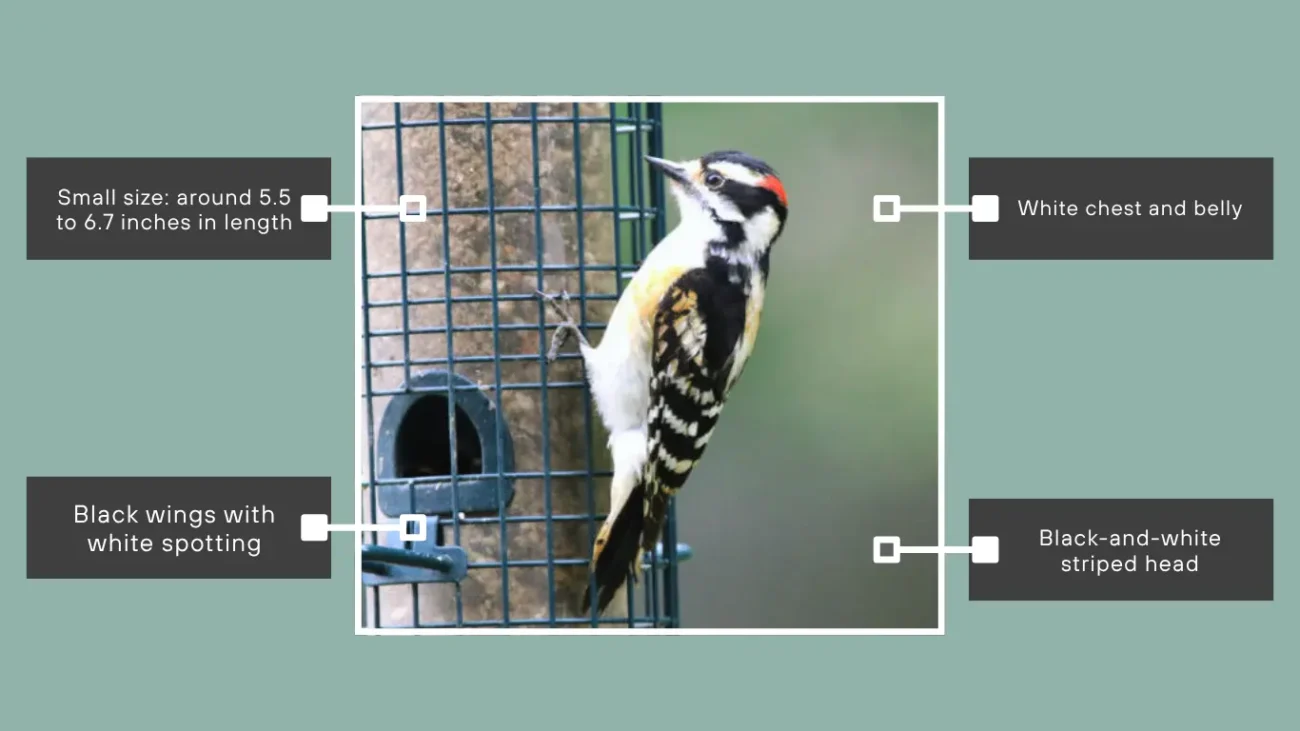
The Downy Woodpecker is the smallest and most widespread woodpecker in Texas. It’s a familiar sight in woodlands, parks, and even backyard feeders. Despite its size, it’s an energetic forager, often seen tapping tree bark in search of insects or pecking suet blocks hung in suburban yards.
Identification
- Small size: around 5.5 to 6.7 inches in length
- Black wings with white spotting
- White chest and belly
- Black-and-white striped head
- Males have a small red patch on the back of the head
- Short, straight bill
Habitat
This woodpecker is found in a variety of habitats, including deciduous forests, river groves, orchards, and even residential neighborhoods. It thrives in areas where trees—especially older ones—are present for nesting and feeding.
When Found in Texas
The Downy Woodpecker is a year-round resident across Texas. It’s especially common in the eastern and central regions of the state but can also be seen in wooded areas of the west.
Activity Pattern
Downy Woodpeckers are diurnal and most active during the early morning and late afternoon. Their pecking is most noticeable in spring during breeding season, but they remain active throughout the year, often visiting bird feeders in winter.
2. Hairy Woodpecker
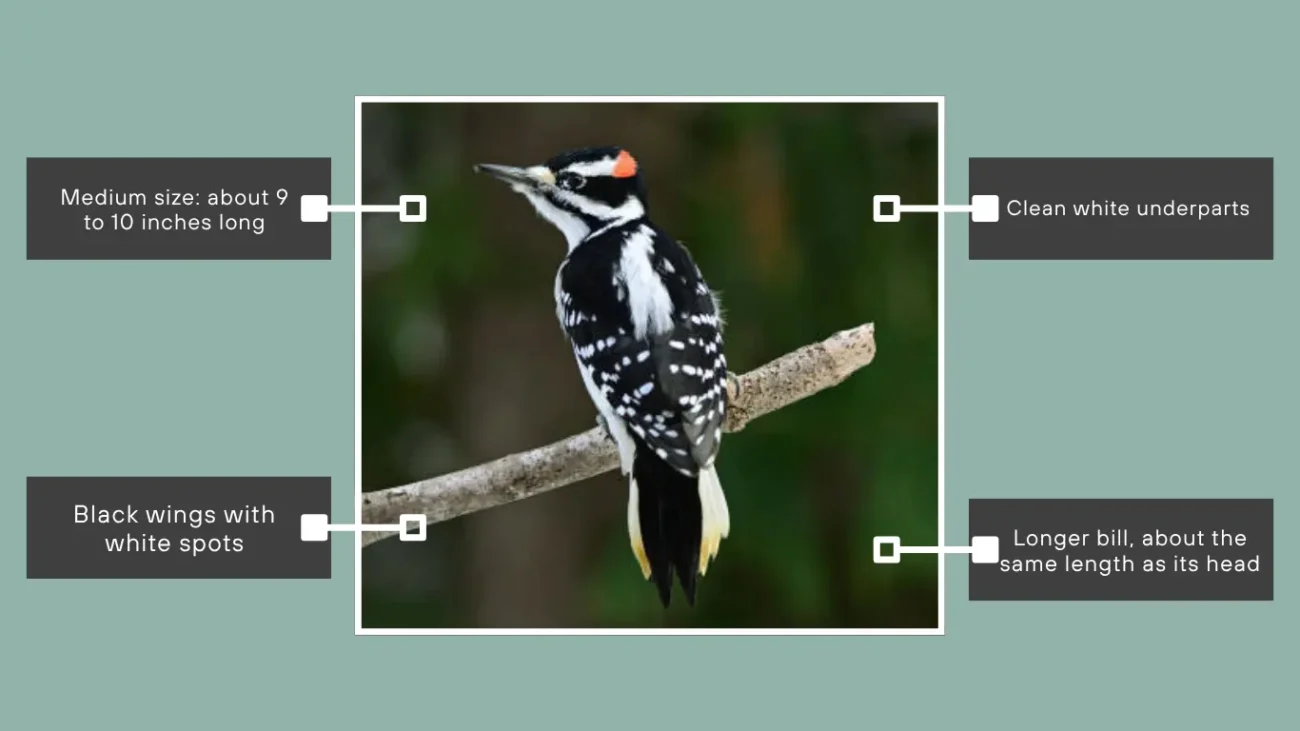
Often mistaken for the Downy Woodpecker, the Hairy Woodpecker is similar in appearance but noticeably larger with a longer bill. It is also more reclusive and prefers mature forests over suburban settings.
Identification
- Medium size: about 9 to 10 inches long
- Black wings with white spots
- Clean white underparts
- Longer bill, about the same length as its head
- Males have a red patch at the back of the head
- Bold facial striping similar to the Downy
Habitat
Hairy Woodpeckers prefer mature deciduous and mixed forests but are occasionally spotted in wooded suburbs and parks. They are drawn to areas with large trees, especially those with dead wood for nesting.
When Found in Texas
This species is a permanent resident in the eastern and central woodlands of Texas, though it’s less commonly seen than the Downy.
Activity Pattern
Hairy Woodpeckers are active during the day, particularly in the morning. They forage high in trees and are quieter than other woodpeckers, making them harder to spot.
3. Red-bellied Woodpecker
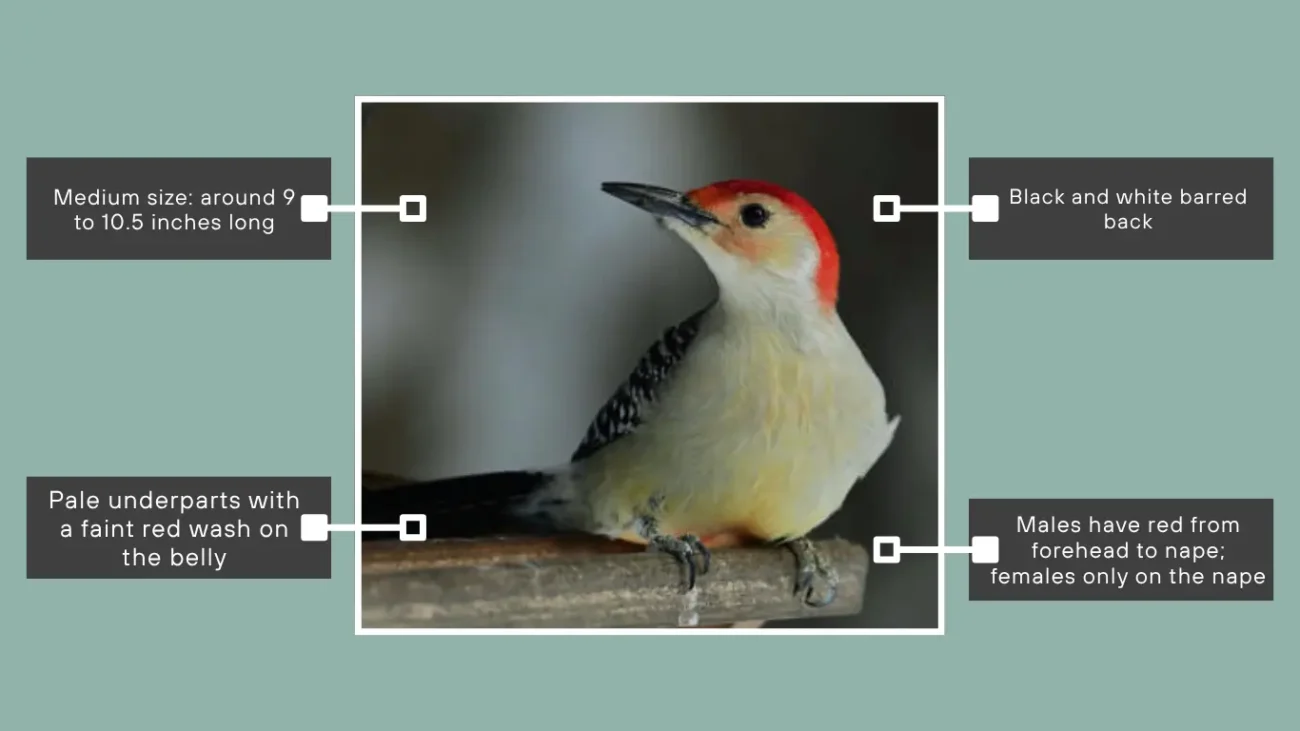
Despite its name, the Red-bellied Woodpecker’s most striking feature is the bright red cap and nape, not the subtle reddish wash on its belly. It’s a bold and vocal species often found in urban areas.
Identification
- Medium size: around 9 to 10.5 inches long
- Pale underparts with a faint red wash on the belly
- Black and white barred back
- Males have red from forehead to nape; females only on the nape
- Strong, chisel-like bill
Habitat
This woodpecker thrives in woodlands, forests, and residential neighborhoods with mature trees. It’s commonly seen in parks and gardens across Texas.
When Found in Texas
The Red-bellied Woodpecker is a year-round resident in most parts of Texas, particularly in the eastern and central regions.
Activity Pattern
They are highly active during the day and often heard before they’re seen, thanks to their loud “churr” calls. They forage on tree trunks and branches and frequently visit bird feeders, especially for suet and peanuts.
Let me know when you’re ready for the next two: Red-headed Woodpecker and Pileated Woodpecker.
4. Red-headed Woodpecker
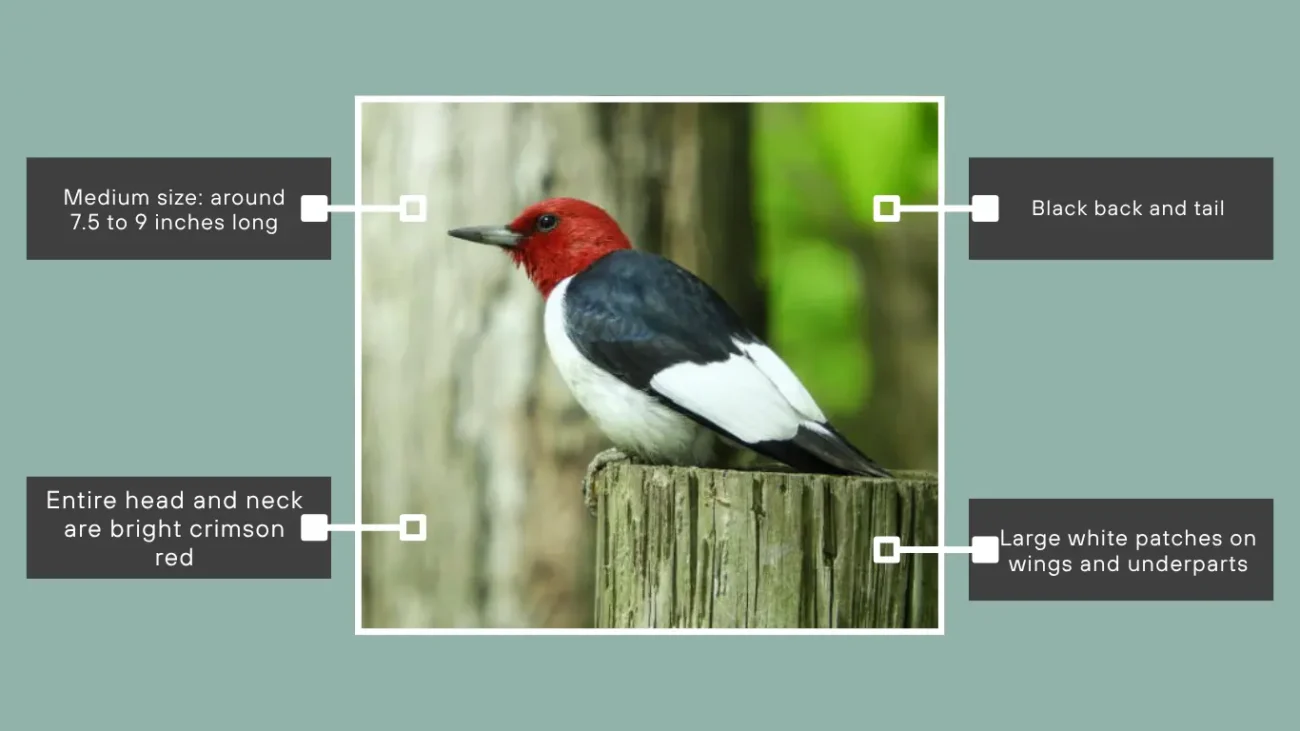
The Red-headed Woodpecker is one of the most visually striking species in Texas. With its deep red head and bold black-and-white body, it’s easily recognizable from a distance. Unlike many woodpeckers, it often catches insects in flight and stores food for later use.
Identification
- Medium size: around 7.5 to 9 inches long
- Entire head and neck are bright crimson red
- Black back and tail
- Large white patches on wings and underparts
- Strong, straight bill
- Both sexes look alike
Habitat
This species prefers open woodlands, oak savannas, orchards, and even farmlands. It’s commonly found near dead trees, where it nests and stores food.
When Found in Texas
The Red-headed Woodpecker is present year-round in eastern Texas but may be more common in spring and summer. In western regions, it is rare or absent.
Activity Pattern
These birds are diurnal and quite active during the day. They often perch in the open and show off acrobatic skills when foraging. They are also one of the few woodpeckers known to cache food in tree bark or crevices.
5. Pileated Woodpecker
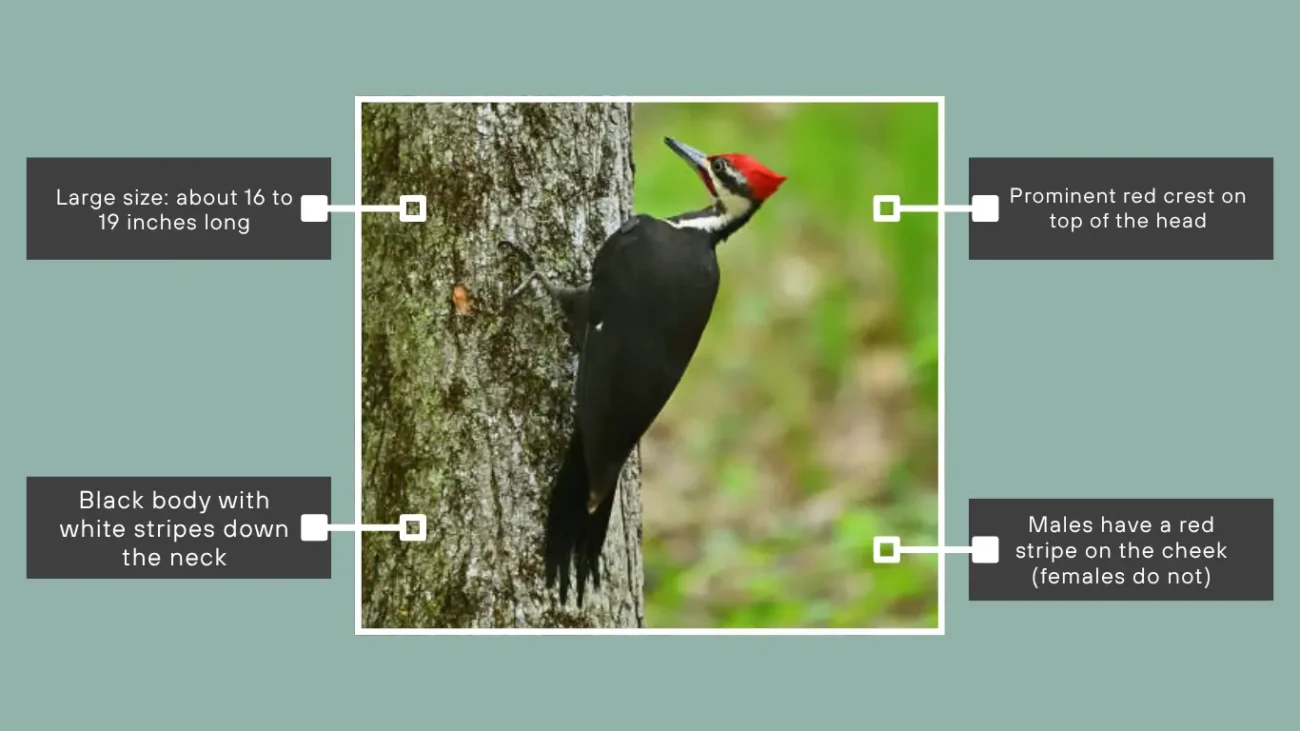
The Pileated Woodpecker is the largest woodpecker species in Texas and is known for its loud, jungle-like call and powerful drumming. Its flaming red crest and strong build make it unmistakable in the forest.
Identification
- Large size: about 16 to 19 inches long
- Black body with white stripes down the neck
- Prominent red crest on top of the head
- Males have a red stripe on the cheek (females do not)
- White underwings visible during flight
Habitat
Pileated Woodpeckers inhabit mature forests with large, old trees, especially those containing dead or decaying wood. They are mostly seen in dense woodlands and river bottom forests.
When Found in Texas
They are permanent residents in the eastern forests of Texas. Rare in the central parts and generally not found in western Texas.
Activity Pattern
They are active during daylight and tend to forage high up in trees, excavating large rectangular holes in search of carpenter ants and other insects. Their presence is often announced by loud calls or heavy, echoing drumming.
6. Northern Flicker
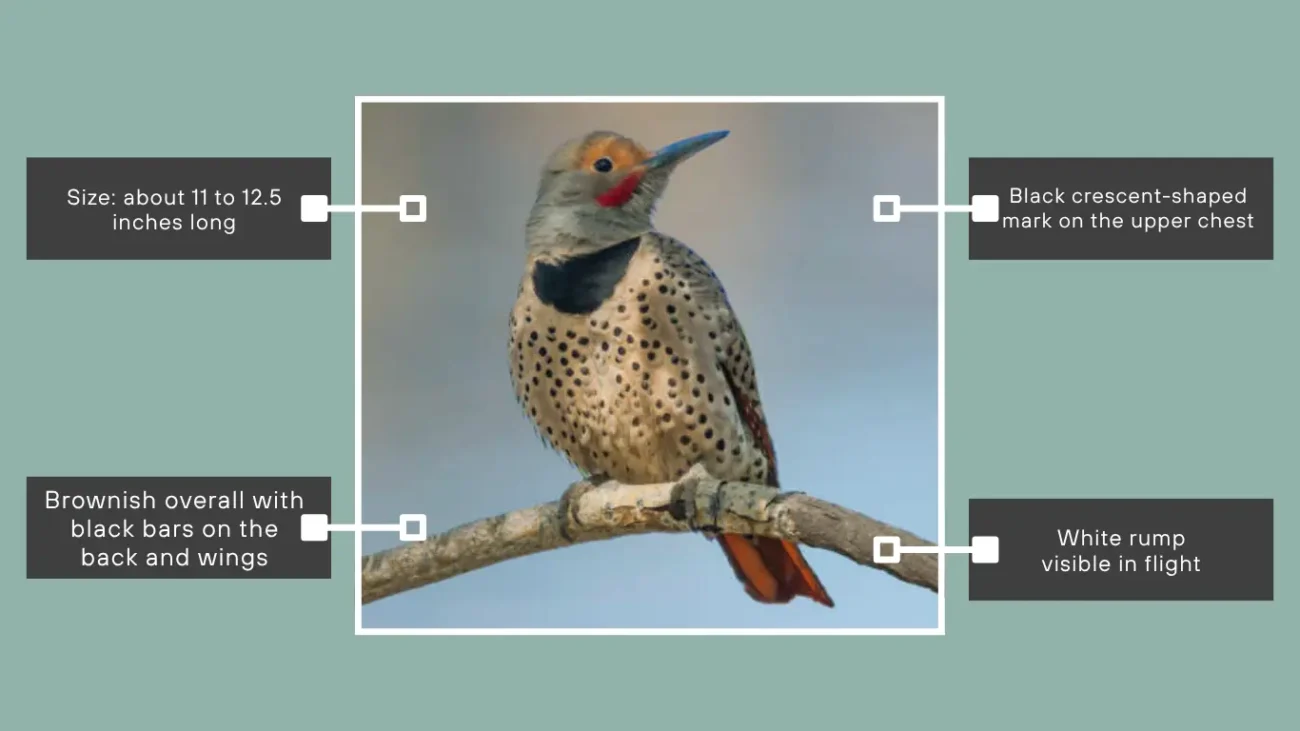
Unlike most woodpeckers, the Northern Flicker is often seen on the ground, where it forages for ants and beetles. In Texas, the “Yellow-shafted” variety is more common in the eastern part of the state, while “Red-shafted” flickers may occasionally appear in the west.
Identification
- Size: about 11 to 12.5 inches long
- Brownish overall with black bars on the back and wings
- Black crescent-shaped mark on the upper chest
- White rump visible in flight
- Yellow (or sometimes red) shafts on flight feathers
- Males have a black or red mustache stripe
Habitat
Northern Flickers prefer open woodlands, forest edges, grasslands with scattered trees, and suburban yards. They are especially attracted to areas with abundant ground insects.
When Found in Texas
They are winter residents throughout most of Texas and year-round in the eastern regions. During migration, their numbers may spike across the state.
Activity Pattern
They are most active during the day, especially in early morning. Flickers can often be spotted hopping on the ground, using their long tongues to dig out ants. Their “wick-a-wick” call and loud, rhythmic drumming are easy ways to locate them.
7. Ladder-backed Woodpecker
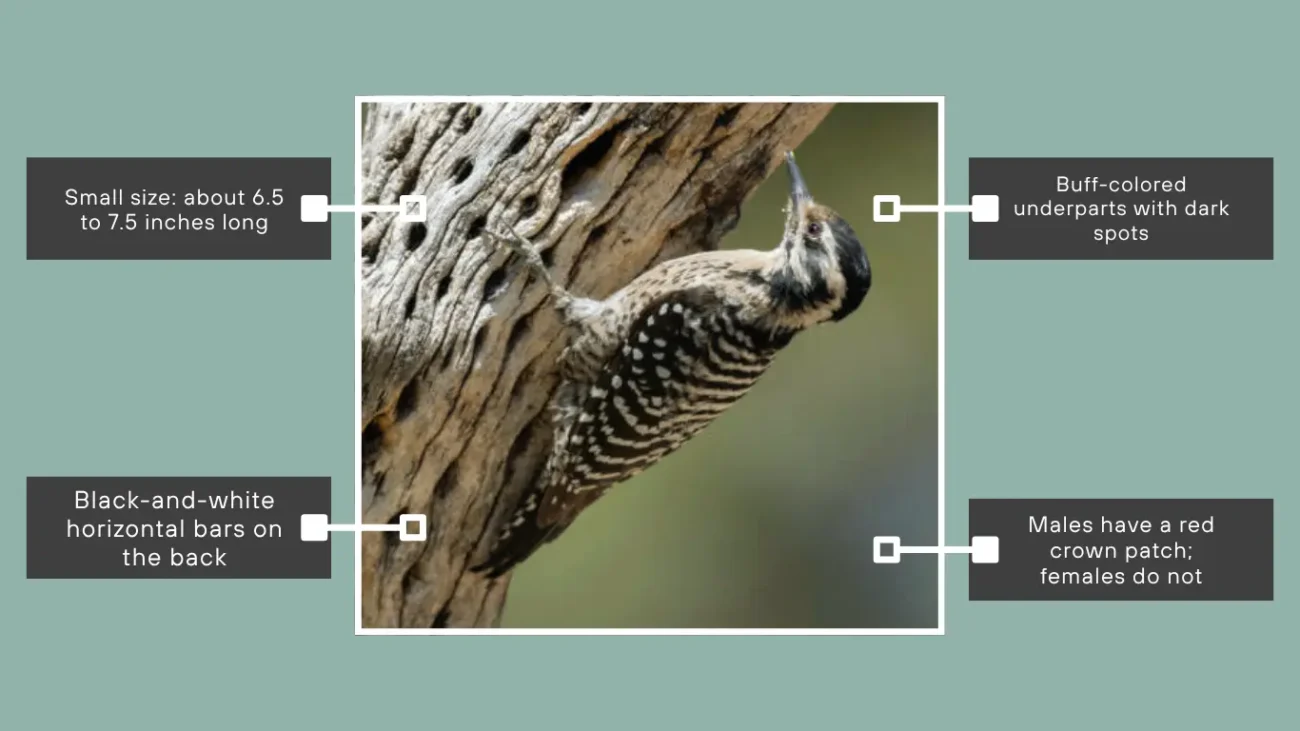
This small desert-dwelling woodpecker is a year-round resident of arid and semi-arid regions in Texas. Its black-and-white barred back resembles the rungs of a ladder, giving the bird its name.
Identification
- Small size: about 6.5 to 7.5 inches long
- Black-and-white horizontal bars on the back
- Buff-colored underparts with dark spots
- Males have a red crown patch; females do not
- Slightly curved, sharp bill
Habitat
Ladder-backed Woodpeckers are found in dry scrublands, deserts, thorn forests, and cactus-rich areas. They prefer mesquite, yucca, and other low desert trees.
When Found in Texas
They are permanent residents in central, western, and southern Texas. Less common in the eastern part of the state.
Activity Pattern
These woodpeckers are busy foragers, often clinging to branches and cacti in search of insects. They are most active during daylight, especially during breeding season when males drum loudly to establish territory.
8. Golden-fronted Woodpecker
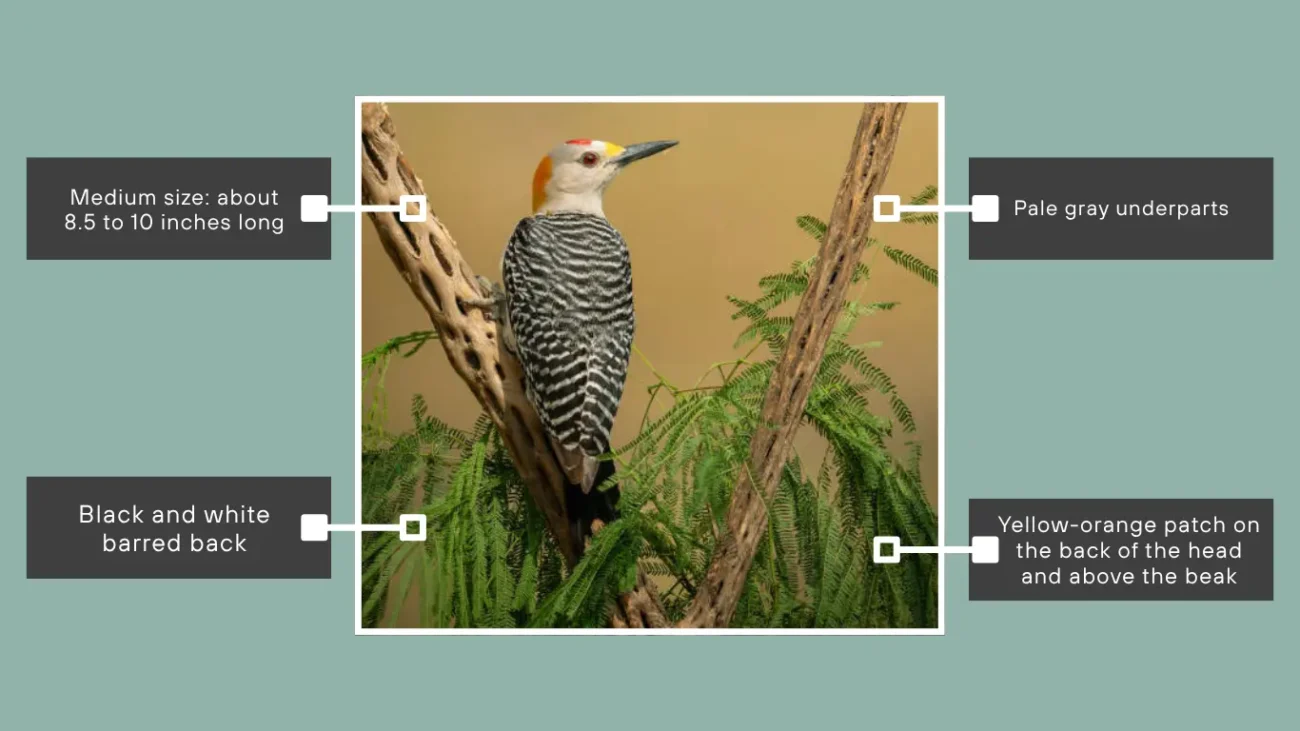
The Golden-fronted Woodpecker is a uniquely Texan bird, commonly found in the southern and central parts of the state. Its vibrant yellow-orange markings on the head and nape make it stand out, especially in dry and open woodlands.
Identification
- Medium size: about 8.5 to 10 inches long
- Black and white barred back
- Pale gray underparts
- Yellow-orange patch on the back of the head and above the beak
- Males also have a red crown
- Strong, slightly curved bill
Habitat
This species prefers mesquite groves, open woodlands, riparian areas, and suburban neighborhoods with scattered trees. It’s especially abundant in the brush country of southern Texas.
When Found in Texas
Golden-fronted Woodpeckers are year-round residents in most of central and southern Texas, including the Hill Country and South Texas Plains.
Activity Pattern
They are active during the day and frequently visit backyard feeders. Their calls are sharp and repeated often. During the breeding season, they drum on tree trunks or poles to claim territory.
9. Yellow-bellied Sapsucker
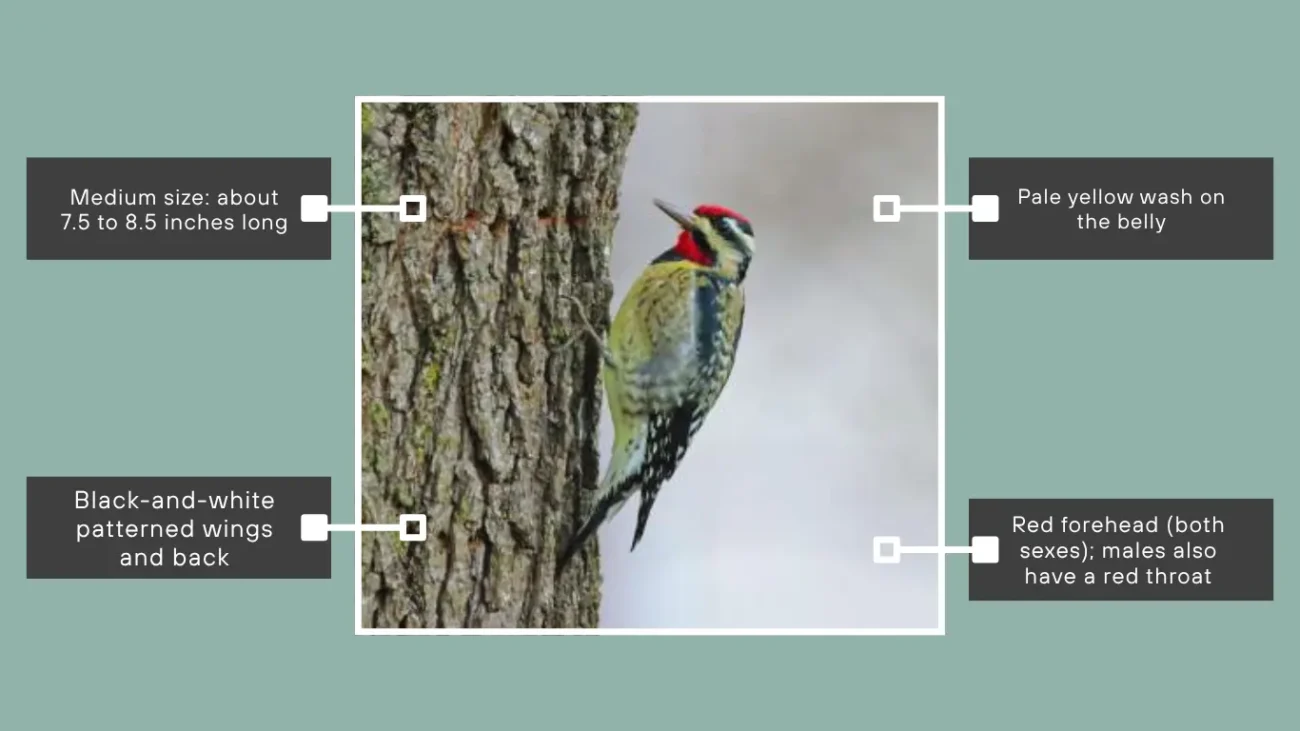
The Yellow-bellied Sapsucker is a migratory woodpecker that drills neat rows of holes into tree bark to drink sap and eat insects drawn to it. Though less conspicuous than some other species, it plays an important role in the forest ecosystem.
Identification
- Medium size: about 7.5 to 8.5 inches long
- Black-and-white patterned wings and back
- Pale yellow wash on the belly
- Red forehead (both sexes); males also have a red throat
- Narrow white stripe on the side of the face
Habitat
This bird favors mixed woodlands, especially areas with birch, maple, or pine trees. In Texas, it’s found in forests, parks, and wooded yards during migration and winter.
When Found in Texas
It is a winter visitor across much of Texas, arriving in fall and leaving by early spring. Not typically found in the state during breeding season.
Activity Pattern
Yellow-bellied Sapsuckers are active during daylight, quietly moving through trees as they drill sap wells. The presence of sap holes in horizontal rows on tree trunks is a telltale sign of their activity.
FAQs
1. What is the most common woodpecker in Texas?
The Downy Woodpecker is one of the most common and widespread species across Texas. It adapts well to urban, suburban, and rural environments.
2. Are woodpeckers protected in Texas?
Yes, all native woodpeckers in Texas are protected under the Migratory Bird Treaty Act, which makes it illegal to harm, capture, or destroy their nests without a permit.
3. Do woodpeckers damage trees or homes in Texas?
Some species like the Pileated Woodpecker or Yellow-bellied Sapsucker may cause minor damage to trees or wooden structures while foraging or nesting, but serious damage is rare and often preventable.
4. Can I attract woodpeckers to my backyard in Texas?
Yes. You can attract woodpeckers by offering suet feeders, planting native trees, and avoiding pesticides so they can find natural insects. Trees like oaks and pecans are especially attractive.
5. Are there any rare woodpecker species in Texas?
Yes, species like the Lewis’s Woodpecker and Williamson’s Sapsucker are considered rare visitors. They are usually seen during unusual migration events or in specific, limited areas of Texas.
Let me know when you’re ready to continue with the remaining woodpeckers: Red-cockaded Woodpecker, Acorn Woodpecker, Lewis’s Woodpecker, and Williamson’s Sapsucker.
.