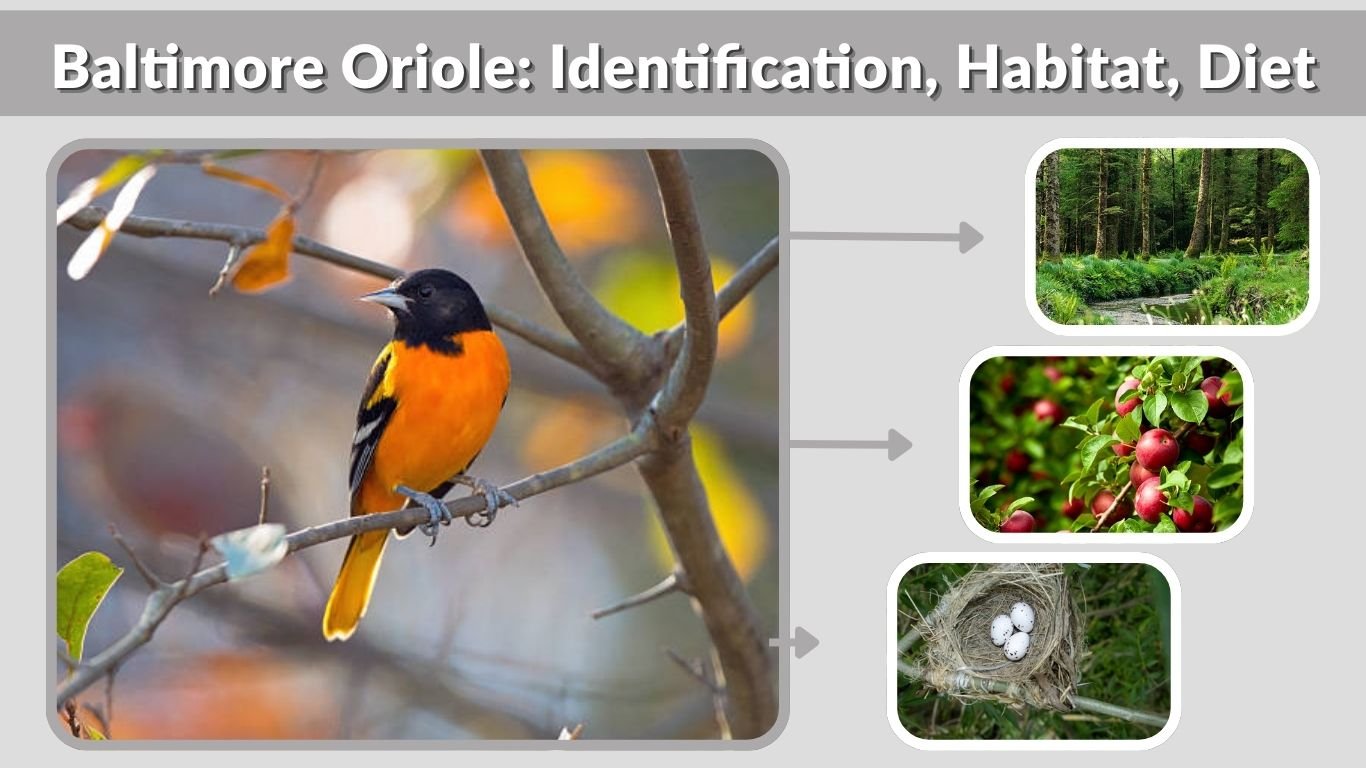
The Baltimore Oriole is a striking and colorful songbird known for its bright orange and black plumage and beautiful flute-like songs. Commonly found in eastern North America, this bird is a favorite among birdwatchers and backyard enthusiasts. Its unique hanging nests and seasonal migration patterns make it especially fascinating to observe. Understanding the Baltimore Oriole’s identification, habitat, diet, and behavior provides valuable insight into one of the most visually stunning birds in the region.
What Is a Baltimore Oriole?
The Baltimore Oriole (Icterus galbula) is a medium-sized songbird belonging to the blackbird family (Icteridae). It is widely recognized for its vibrant coloration and melodious voice, making it one of the most admired birds in North America.
Named after Lord Baltimore due to its resemblance to his coat of arms colors, this bird is commonly associated with open woodlands, gardens, and suburban areas. Baltimore Orioles are migratory birds that travel long distances between their breeding and wintering grounds.
Baltimore Oriole Identification
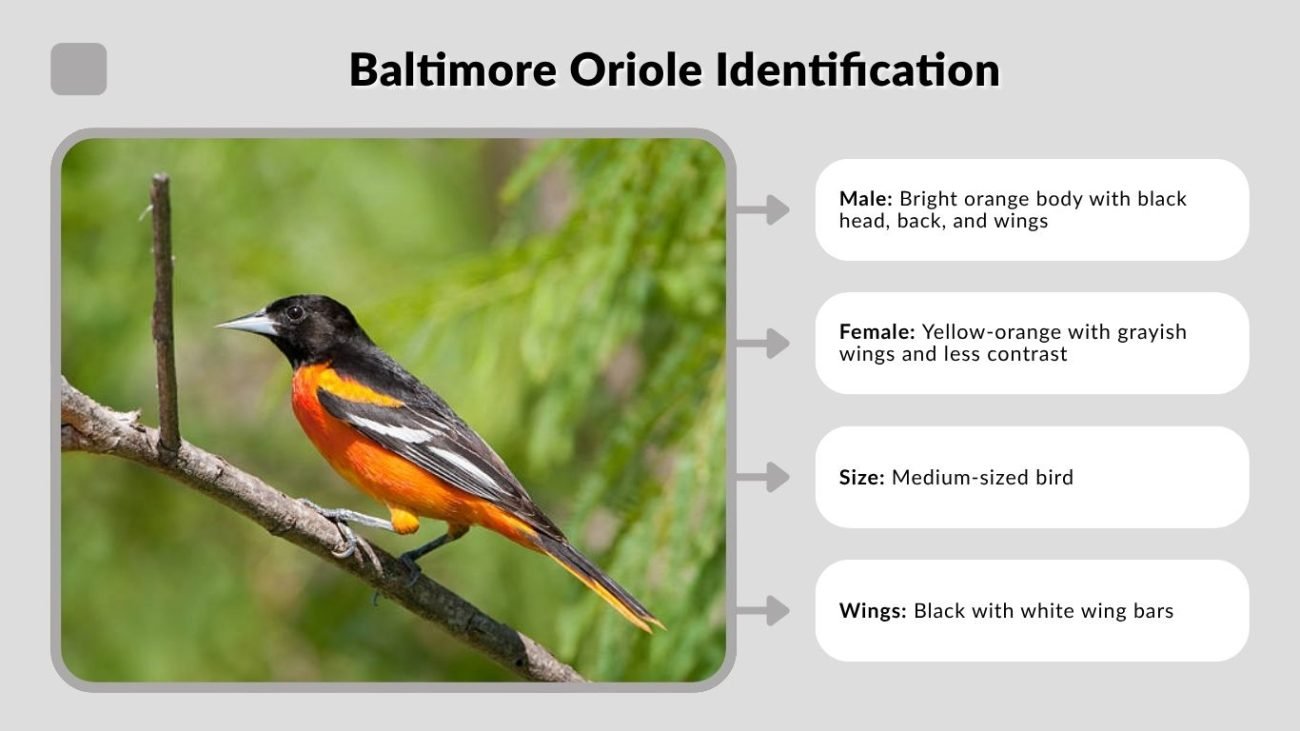
The Baltimore Oriole is a brightly colored songbird that is fairly easy to identify, especially the male with its vivid orange and black plumage. However, females and immature birds are more subtle in appearance, so recognizing key features like color patterns, body shape, and behavior is important for accurate identification.
Quick Identification Features
- Male: Bright orange body with black head, back, and wings
- Female: Yellow-orange with grayish wings and less contrast
- Size: Medium-sized bird (about 7–8 inches long)
- Bill: Straight, slender, and pointed
- Wings: Black with white wing bars
Behavior Clues
- Often seen high in trees rather than on the ground
- Moves actively among branches while foraging
- Produces clear, flute-like whistles
Habitat Clues
- Found in open woodlands, parks, and backyards with tall trees
- Frequently near fruit trees or nectar sources
These simple visual and behavioral cues make it easier to spot and distinguish the Baltimore Oriole, even in dense foliage.
Baltimore Oriole Habitat
Preferred Environments
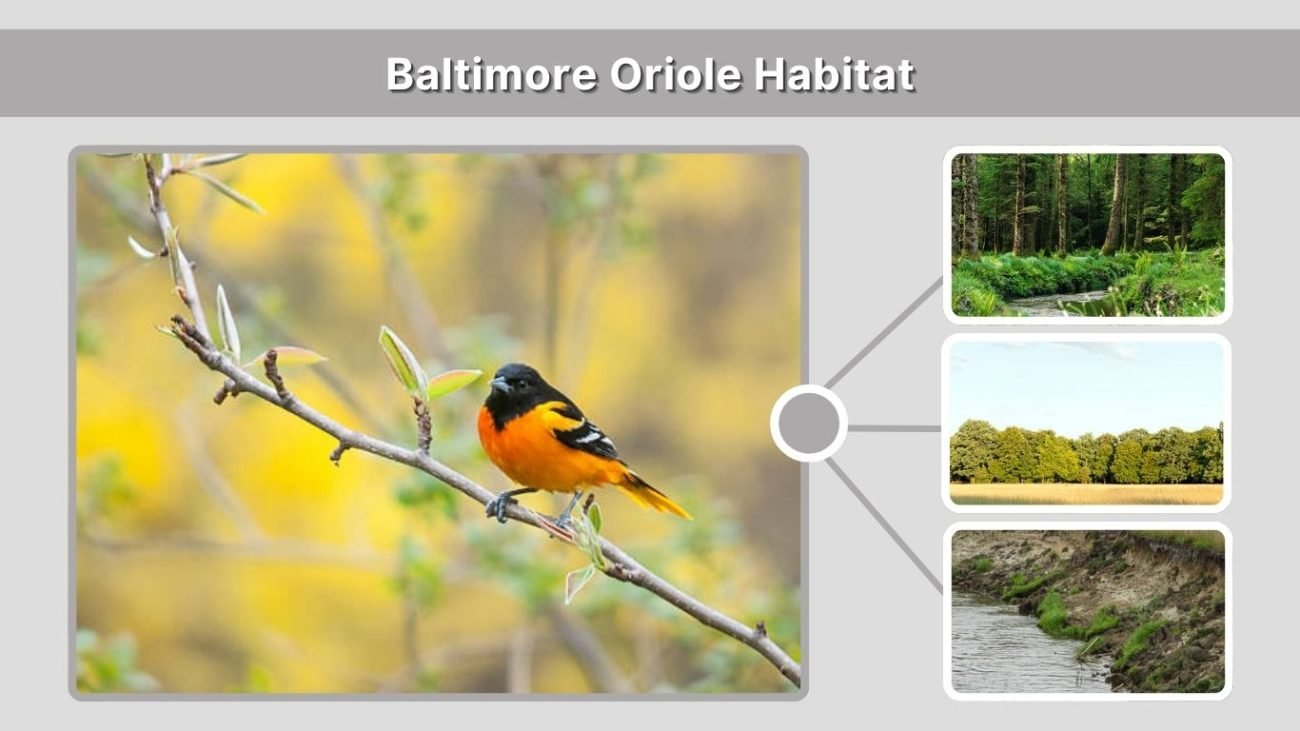
Baltimore Orioles prefer open woodlands, forest edges, riverbanks, and suburban gardens with tall trees. They are often found in areas with deciduous trees, especially elms, maples, and cottonwoods, which provide suitable nesting sites.
Geographic Range
This species breeds across eastern and central North America, including much of the United States and southern Canada. During the non-breeding season, they migrate to Central America and northern parts of South America.
Seasonal Habitat Changes
During the breeding season, Baltimore Orioles inhabit temperate regions with abundant food and nesting opportunities. In winter, they shift to tropical areas where fruits and nectar are more readily available.
Baltimore Oriole Migration
Migration Pattern
Baltimore Orioles are long-distance migrants. They travel from North America to warmer regions in Central and South America for the winter, covering thousands of kilometers each year.
Timing of Migration
In spring, they typically return to their breeding grounds between April and May. In fall, they begin migrating south around August to September.
Migration Behavior
These birds often migrate at night, using the cover of darkness to avoid predators and conserve energy. During migration, they rely heavily on fruit and nectar as energy sources.
Baltimore Oriole Diet
Natural Diet
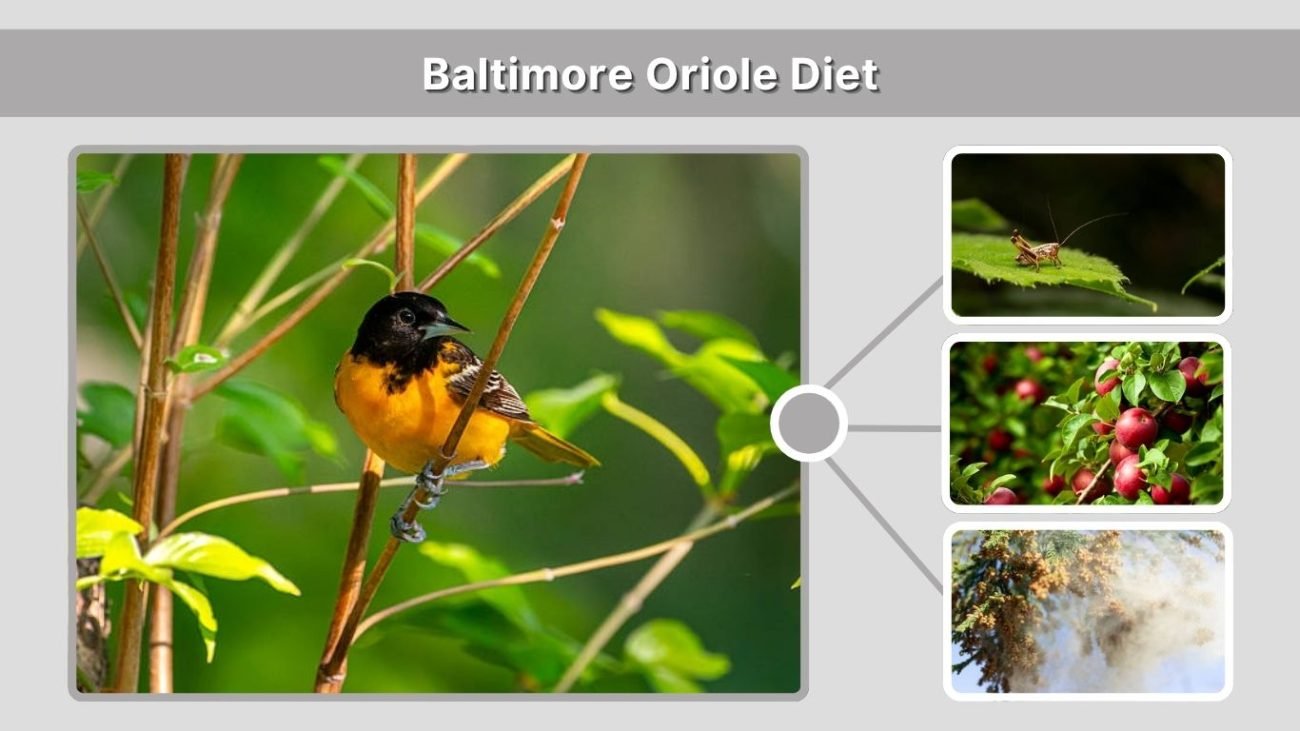
The Baltimore Oriole has a varied diet that includes insects, fruits, and nectar. During the breeding season, insects such as caterpillars, beetles, and ants are especially important as they provide essential nutrients for growing chicks.
Feeding Behavior
Baltimore Orioles are agile feeders and often forage high in trees. They are known for their unique feeding style, sometimes hanging upside down to reach food. They also visit flowers to sip nectar, acting as occasional pollinators.
Seasonal Diet Changes
Their diet changes with the seasons. In spring and summer, they focus on insects, while in migration and winter, they consume more fruits, berries, and nectar to maintain energy levels.
Baltimore Oriole Nest
Nest Location
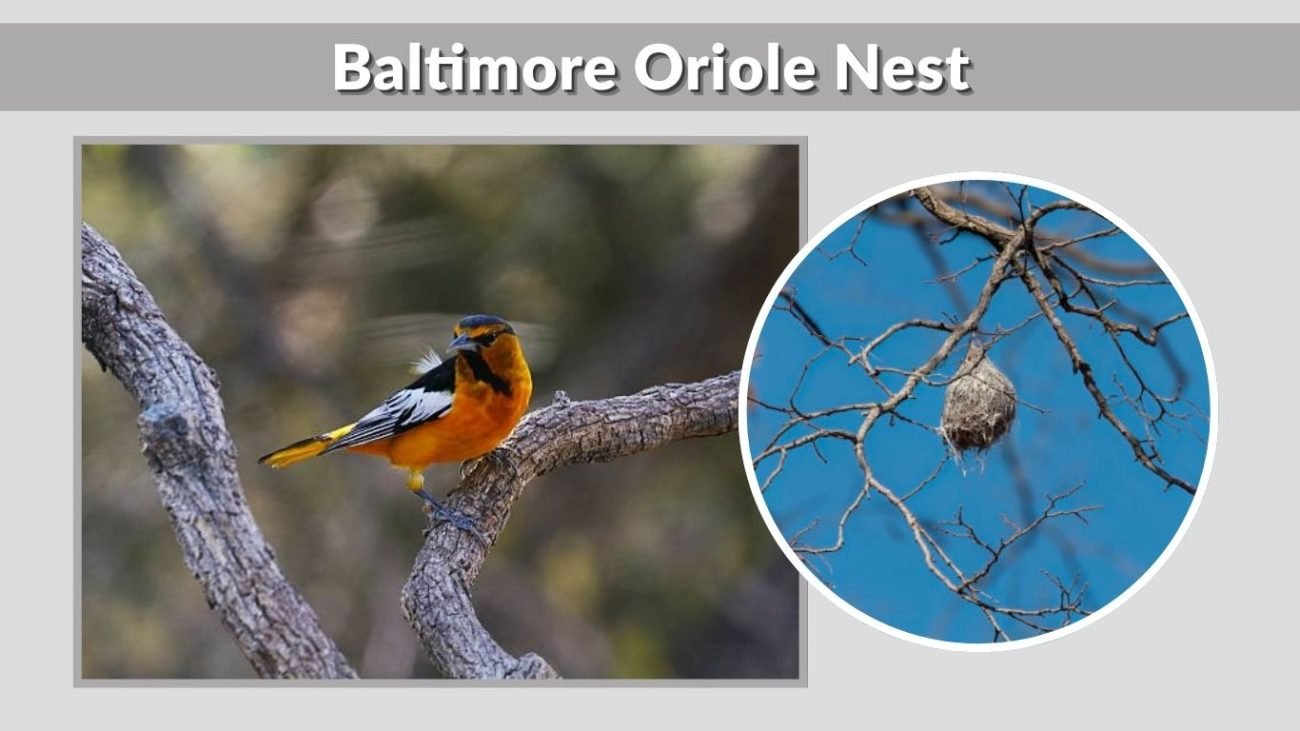
Baltimore Orioles build their nests high in trees, usually at the tips of slender branches. This placement helps protect the nest from predators and provides stability in windy conditions.
Nest Structure
The nest is one of the most distinctive features of this species. It is a hanging, pouch-like structure that dangles from branches, often resembling a woven bag.
Materials Used
Females use plant fibers, grasses, hair, and even human-made materials like string or yarn to construct their nests. The result is a tightly woven and durable structure that can withstand weather conditions.
Baltimore Oriole Nesting Habits
Breeding Season
The breeding season of Baltimore Orioles typically begins in late spring and continues through summer. Males usually arrive first at the breeding grounds to establish territories, followed by females shortly after.
Nest Building Behavior
The female Baltimore Oriole is responsible for building the nest, which can take up to a week to complete. She carefully weaves fibers and materials into a strong, flexible pouch that hangs securely from tree branches. This intricate construction helps protect the eggs and young from predators and harsh weather.
Parental Roles
After the nest is completed, the female lays eggs and handles most of the incubation. The male may assist by bringing food, but both parents share the responsibility of feeding the chicks once they hatch.
Baltimore Oriole Eggs
Egg Appearance
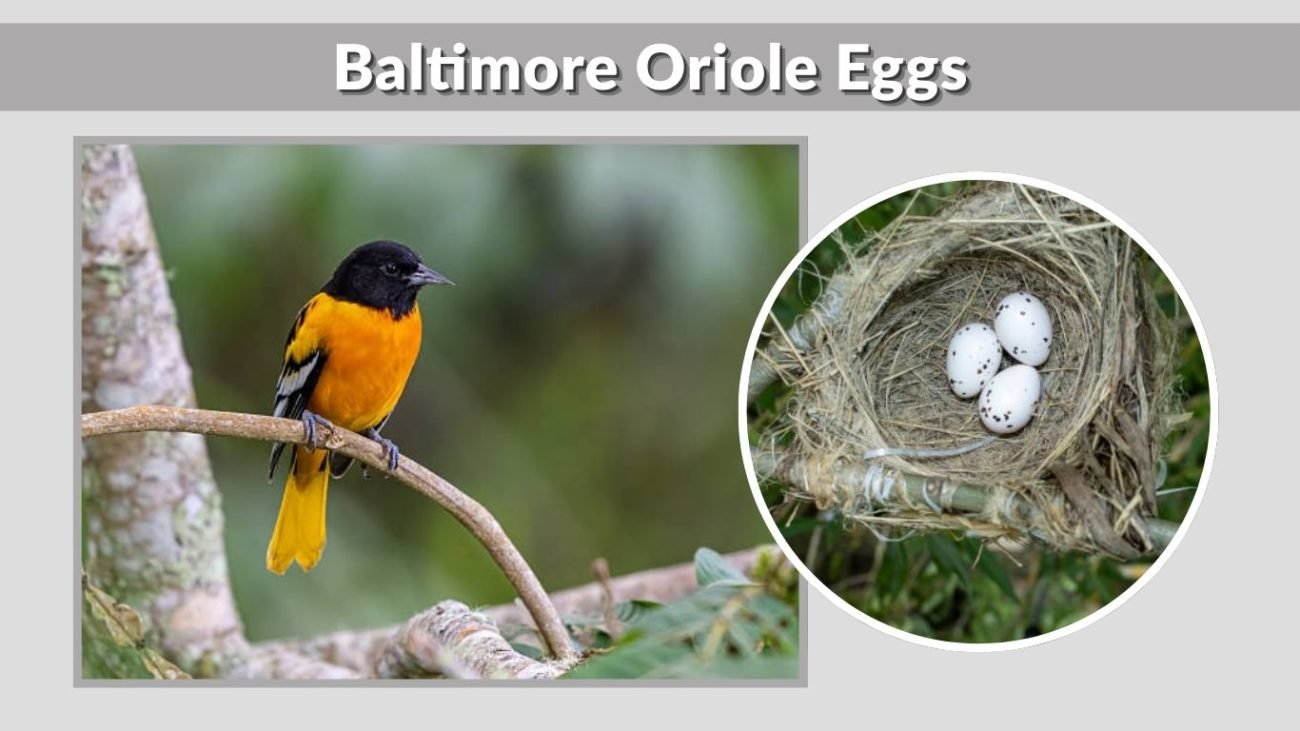
Baltimore Oriole eggs are usually pale grayish or bluish-white with dark streaks or spots. These markings provide camouflage within the woven nest.
Clutch Size
A typical clutch consists of 3 to 5 eggs, depending on environmental conditions and food availability.
Incubation Period
The incubation period lasts about 12 to 14 days. During this time, the female remains on the nest to keep the eggs warm while the male helps guard the territory.
Baltimore Oriole Facts
- Named after Lord Baltimore due to its orange and black coloration
- Known for building unique hanging pouch nests
- Produces beautiful, flute-like songs
- Attracted to fruits like oranges and sweet foods such as nectar
- Plays a role in pollination while feeding on flowers
Behavior and Characteristics
Baltimore Orioles are active, agile birds that spend much of their time high in trees. They are often shy but can be quite vocal, especially during the breeding season.
They are skilled at maneuvering through branches and are known for their acrobatic feeding behavior. Despite their bright colors, they can sometimes be difficult to spot due to their tendency to stay in the upper canopy.
Predators and Threats
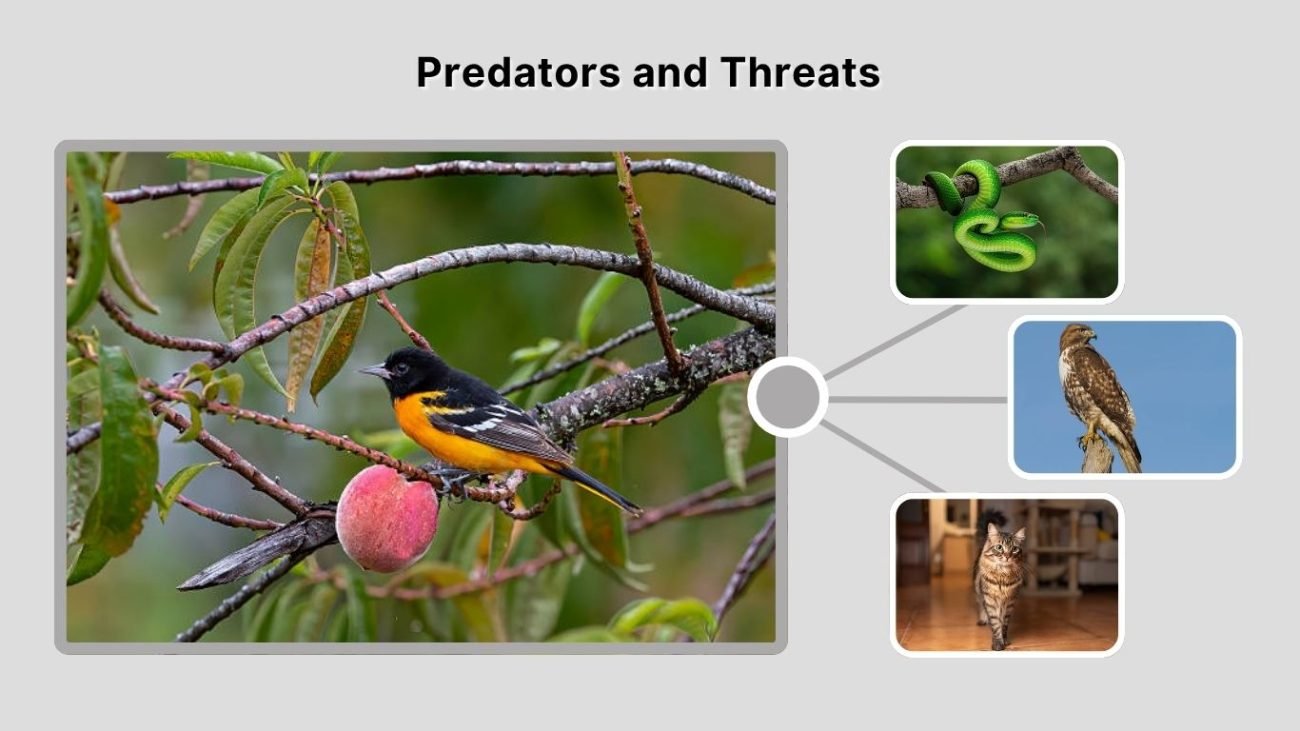
Common predators of Baltimore Orioles include snakes, hawks, domestic cats, and other birds of prey. Eggs and nestlings are particularly vulnerable.
Habitat loss due to urban development and deforestation poses a threat to their populations. Climate change can also affect their migration patterns and food availability.
Importance in Ecosystem
Baltimore Orioles play an important role in maintaining ecological balance. By feeding on insects, they help control pest populations that could damage plants and crops.
They also contribute to pollination when feeding on nectar and assist in seed dispersal through their consumption of fruits, supporting plant growth and biodiversity.
How to Attract Baltimore Orioles
If you want to attract Baltimore Orioles to your yard, you can create a welcoming environment:
- Offer fresh orange halves or slices
- Provide grape jelly in feeders
- Use nectar feeders designed for orioles
- Plant fruit-bearing trees and shrubs
- Ensure access to clean water
These birds are especially drawn to sweet foods and areas with tall trees.
FAQs
What do the Baltimore Orioles eat?
They eat insects, fruits, and nectar, depending on the season.
Where do the Baltimore Orioles live?
They are found in eastern North America during breeding season and migrate to Central and South America in winter.
Are Baltimore Orioles migratory?
Yes, they are long-distance migrants traveling thousands of kilometers annually.
How can I attract the Baltimore Orioles?
Providing oranges, grape jelly, nectar, and suitable habitat can attract them.
Conclusion
The Baltimore Oriole is a remarkable bird known for its vibrant appearance, beautiful songs, and unique nesting behavior. From its long migrations to its ecological importance, this species continues to captivate bird enthusiasts around the world. By learning more about the Baltimore Oriole and supporting bird-friendly environments, we can help ensure its continued presence in our natural landscapes.