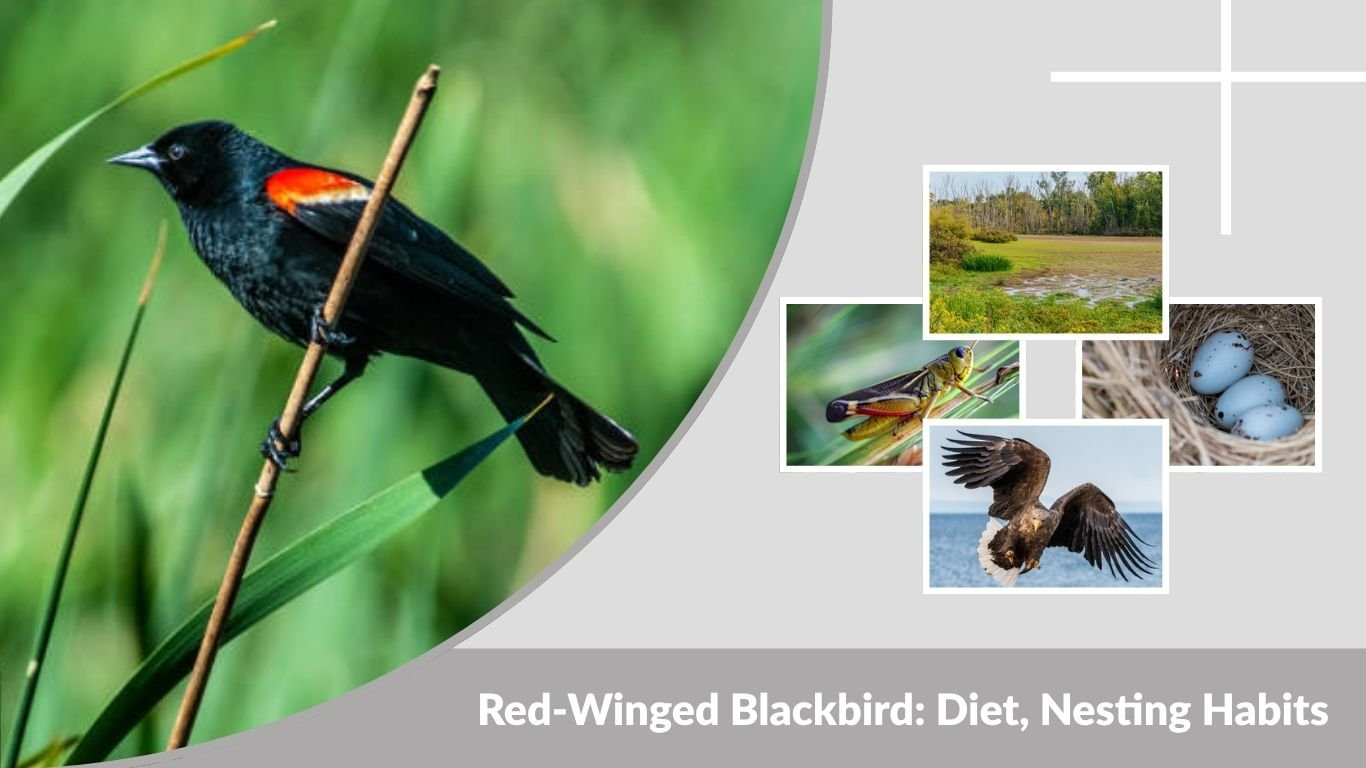
The red-winged blackbird is one of the most recognizable and widespread birds across North America, known for its striking appearance and distinctive call. Commonly found in wetlands and open fields, this species plays an important role in maintaining ecological balance. Whether you’re a birdwatcher or simply curious about wildlife, understanding the red-winged blackbird’s habitat, diet, nesting habits, and behavior offers fascinating insight into one of nature’s most adaptable birds.
What Is a Red-Winged Blackbird?
The red-winged blackbird (Agelaius phoeniceus) is a medium-sized passerine bird belonging to the blackbird family. It is widely distributed across North America and is considered one of the most abundant land birds in the region.
These birds are especially known for their bold territorial behavior and their ability to thrive in a variety of environments. They play a significant role in ecosystems by controlling insect populations and contributing to seed dispersal.
Red-Winged Blackbird Identification
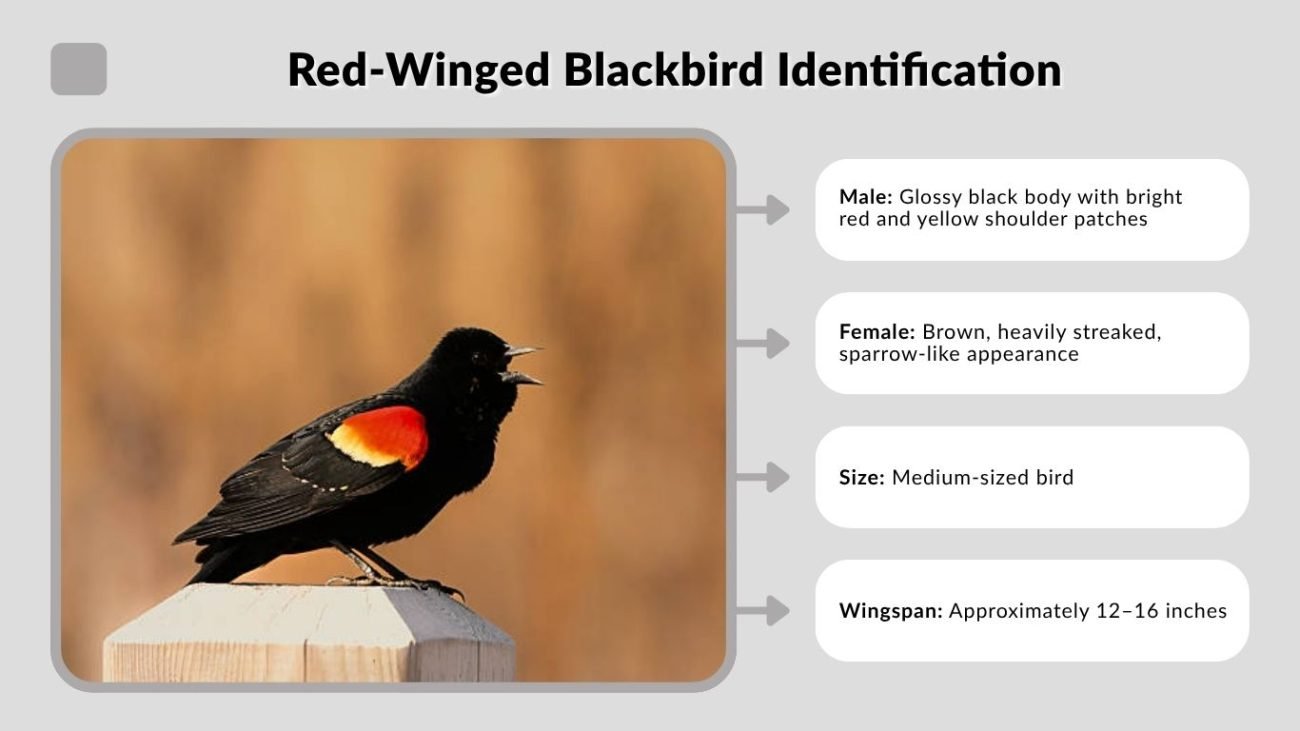
The red-winged blackbird is one of the easiest birds to identify in North America due to its bold coloration, distinctive calls, and noticeable behavior. However, males and females look very different, which can sometimes confuse beginners. Paying attention to color patterns, size, and habitat can help you quickly recognize this species in the wild.
Quick Identification Features
- Male: Glossy black body with bright red and yellow shoulder patches (epaulets)
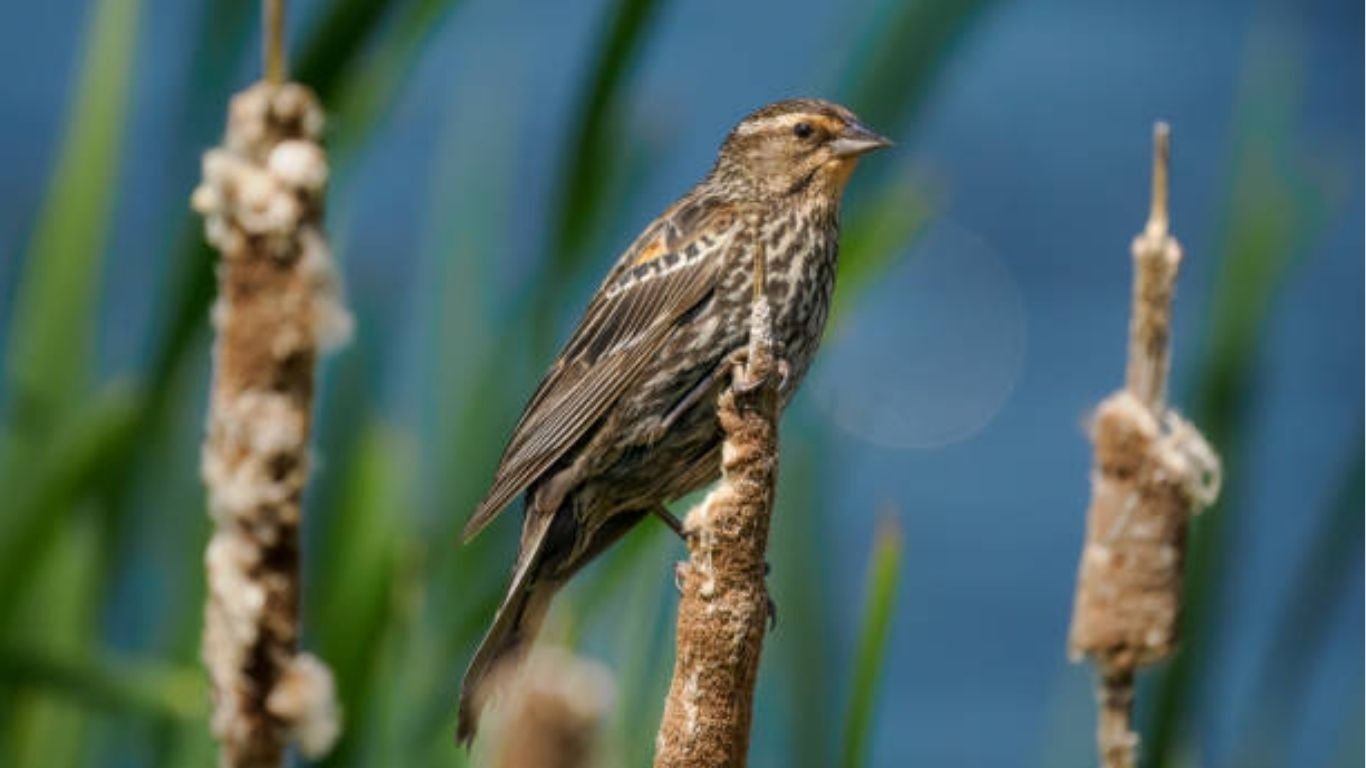
- Female: Brown, heavily streaked, sparrow-like appearance
- Size: Medium-sized bird (about 7–9 inches long)
- Wingspan: Approximately 12–16 inches
- Bill: Thin, pointed, and slightly curved
Behavior Clues
- Perches on tall grasses, reeds, or fence posts
- Frequently sings a loud “conk-la-ree” call
- Males display red shoulder patches when defending territory
Habitat-Based Identification
- Commonly found near wetlands, marshes, and lakes
- Also seen in fields, meadows, and agricultural land
These simple features make it easy to distinguish the red-winged blackbird from other similar species, especially when observing both its appearance and behavior together.
Red Winged Blackbird Habitat
Preferred Environments
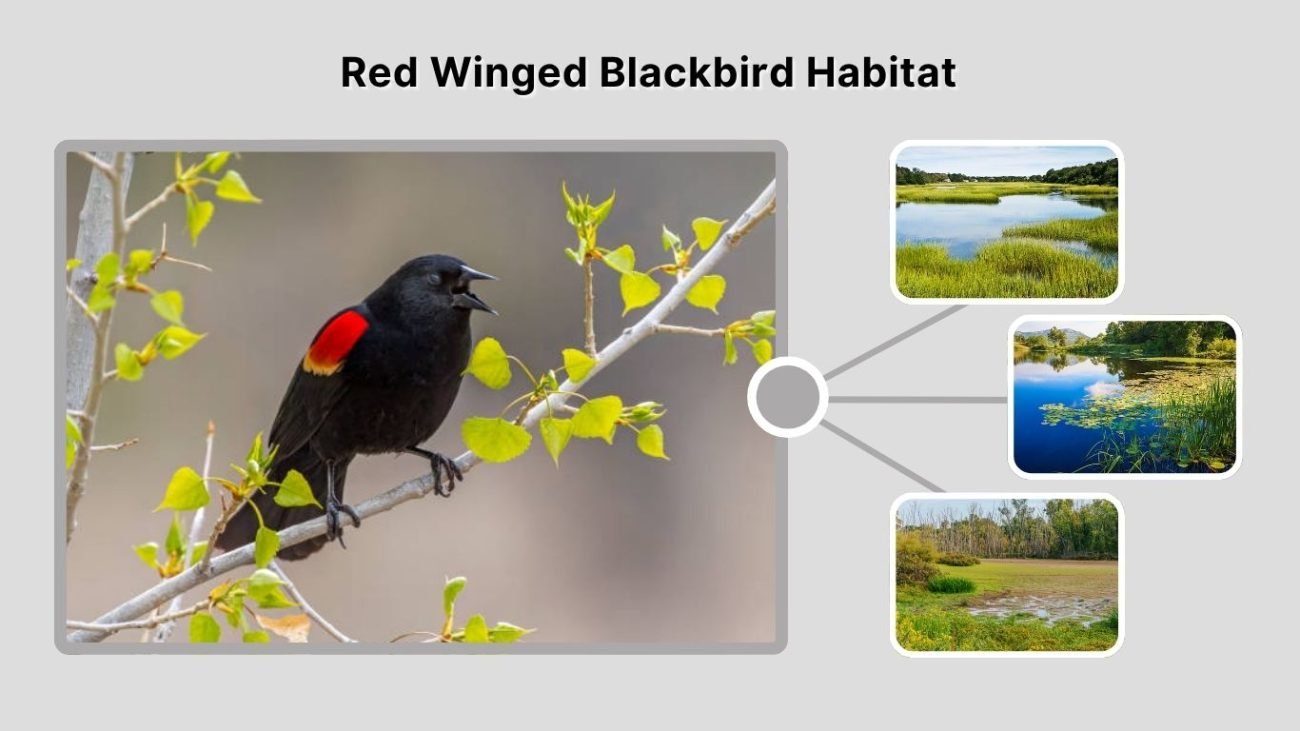
Red-winged blackbirds are most commonly found in wetlands such as marshes, ponds, and lakesides. They favor areas with dense vegetation like cattails and reeds, which provide ideal nesting sites and protection from predators. However, they are highly adaptable and can also be seen in grasslands, agricultural fields, and even roadside ditches.
Geographic Range
This species is widespread across the United States and Canada, extending into parts of Mexico and Central America. Their broad range and adaptability make them one of the most frequently observed birds in North America.
Seasonal Movement
Red-winged blackbirds are partially migratory. Northern populations migrate south during the winter, while southern populations tend to remain year-round. During colder months, they often gather in large flocks, sometimes mixed with other blackbird species.
Red-Winged Blackbird Diet
What Do They Eat?
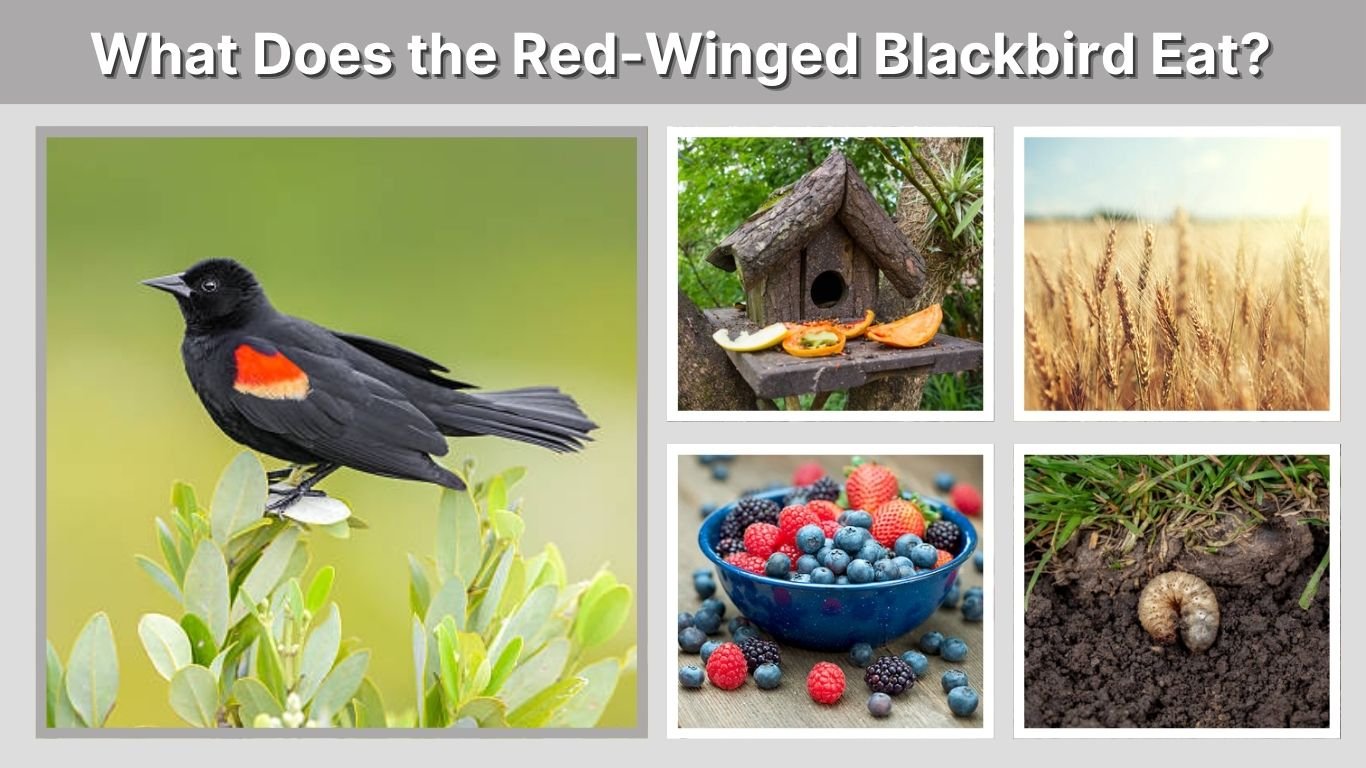
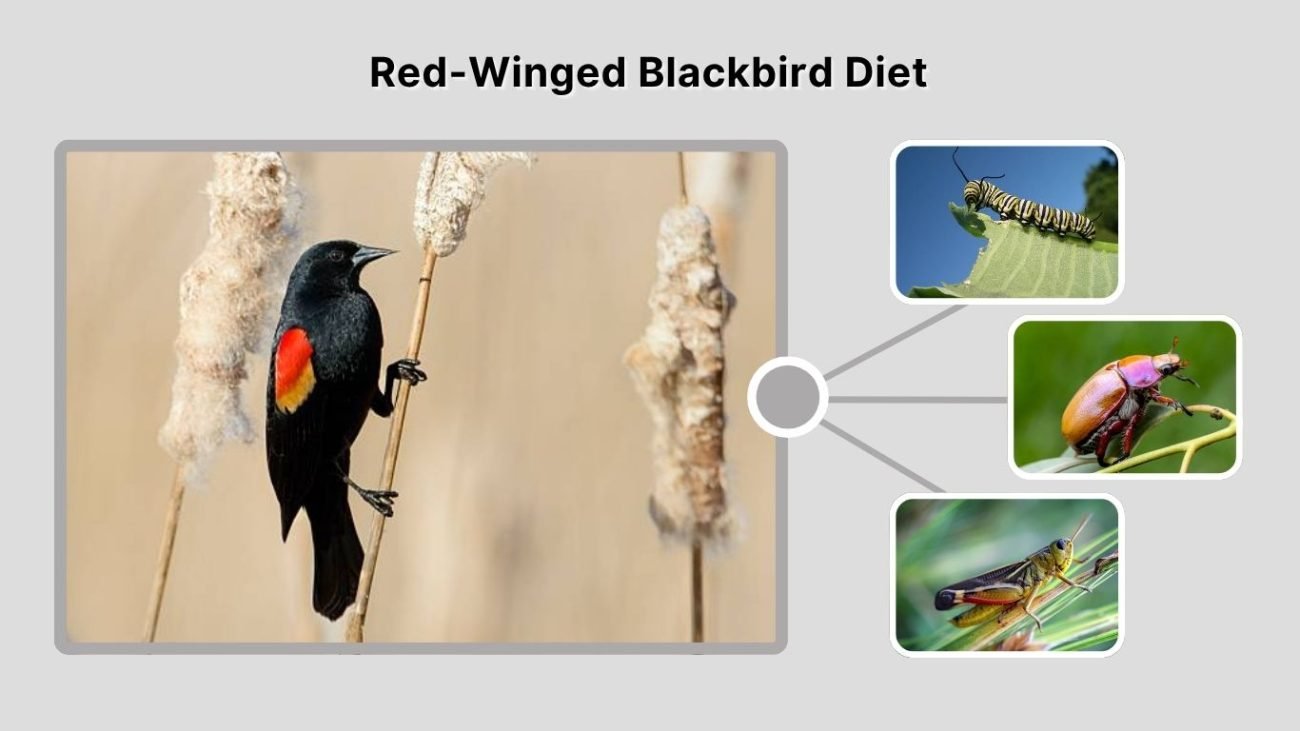
The diet of a red-winged blackbird is quite diverse, consisting of both animal and plant matter. During warmer months, they primarily feed on insects such as beetles, caterpillars, grasshoppers, and flies. These insects provide essential protein, especially during the breeding season.
Feeding Behavior
These birds typically forage on the ground or among vegetation. They may also perch on plants to pick off insects. Outside the breeding season, red-winged blackbirds often feed in large flocks, particularly in agricultural areas where food is abundant.
Seasonal Diet Changes
Their diet shifts with the seasons. In spring and summer, insects dominate their meals, while in fall and winter, they rely more on seeds, grains, and berries. This flexibility allows them to survive in a wide range of environments throughout the year.
Red-Winged Blackbird Nest
Nest Location
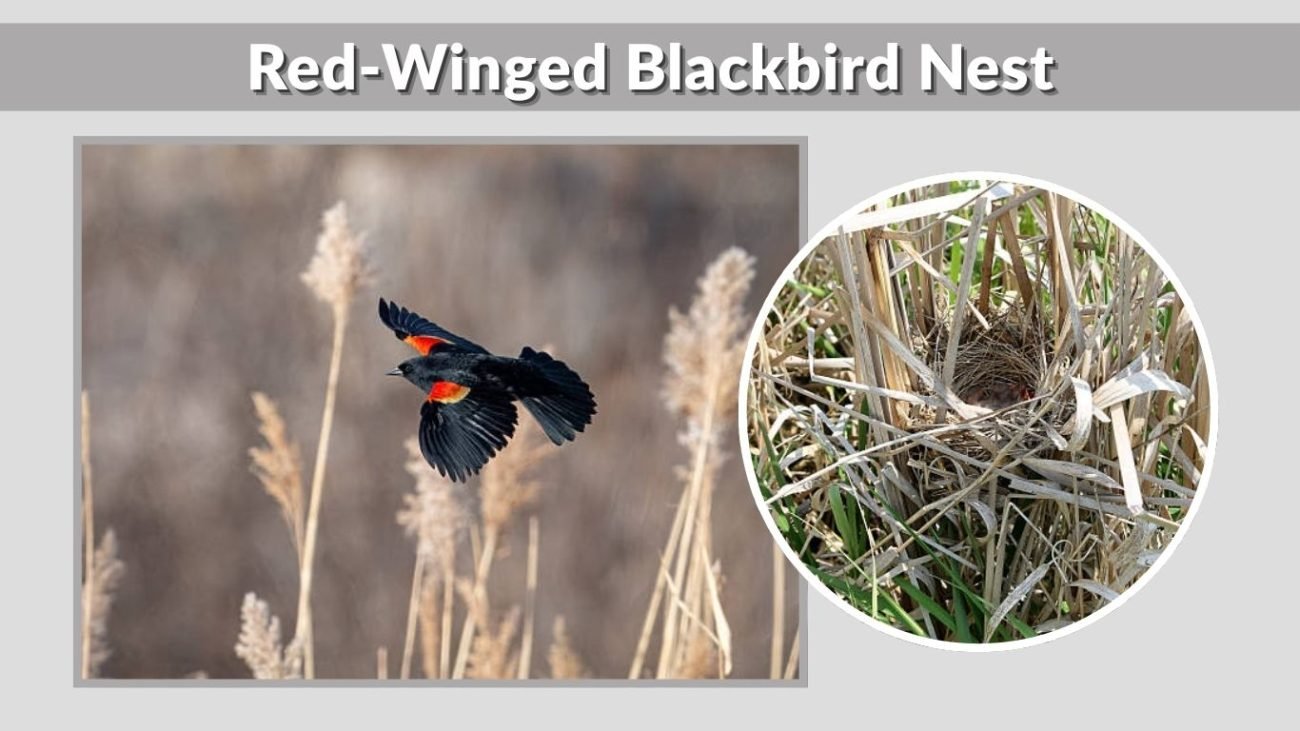
Red-winged blackbirds build their nests in dense vegetation, usually close to water. Common nesting spots include cattails, reeds, shrubs, and low tree branches. The proximity to water helps reduce the risk of predation.
Nest Structure
The nest is typically cup-shaped and carefully woven using grasses, plant stems, and leaves. It is often reinforced with mud to provide stability and durability. The inner lining is softer, offering a comfortable environment for eggs and chicks.
Who Builds the Nest?
The female is responsible for constructing the nest, while the male focuses on defending the territory. Males are highly protective and will aggressively chase away intruders, including much larger animals and even humans.
Red-Winged Blackbird Nesting Habits
Breeding Season
The breeding season of red-winged blackbirds typically begins in early spring and lasts through mid to late summer. During this time, males arrive first to establish and defend territories in suitable habitats, especially wetlands with dense vegetation.
Mating System
Red-winged blackbirds are known for their polygynous mating system, where one male may mate with multiple females within his territory. A single dominant male can oversee several nests at once, each maintained by different females.
Territorial Behavior
Males are extremely territorial and aggressive during the breeding season. They will loudly sing, display their red shoulder patches, and even dive-bomb potential threats—including humans—to protect their nesting area. This bold behavior makes them one of the most defensive bird species in North America.
Red-Winged Blackbird Eggs
Egg Appearance
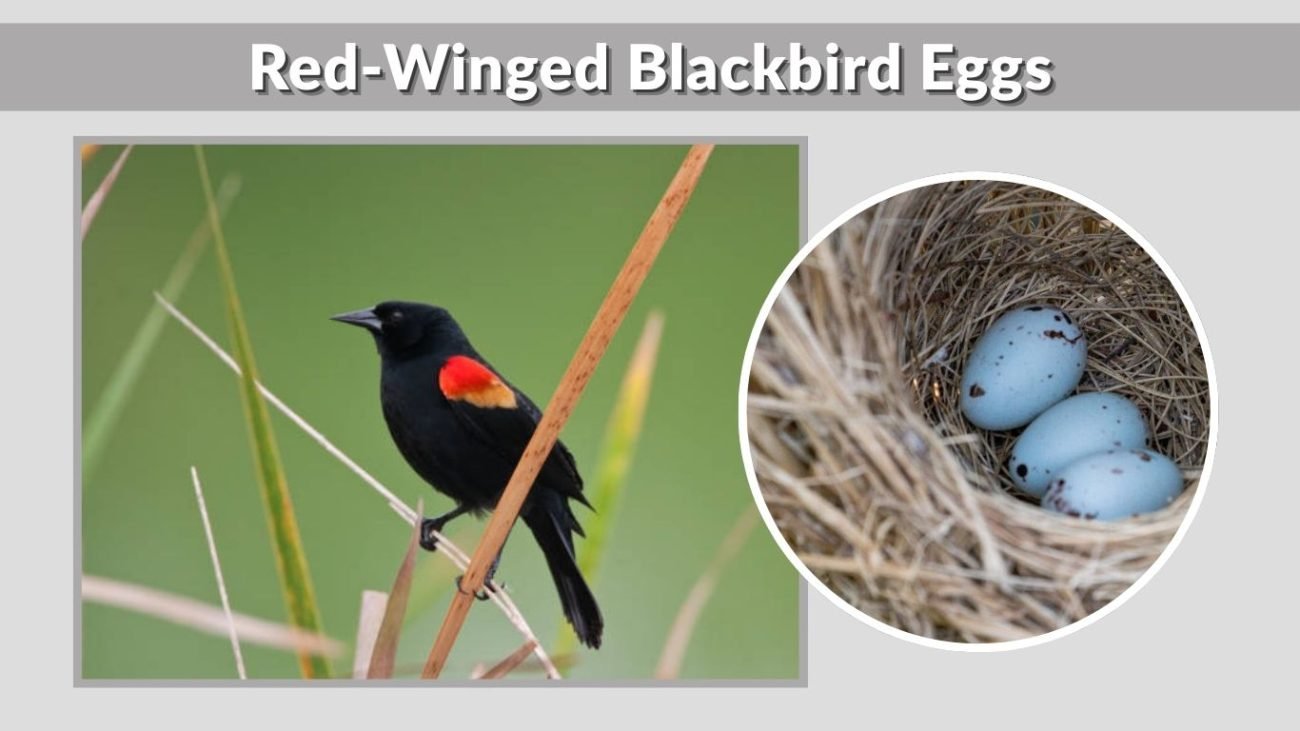
The eggs of red-winged blackbirds are small and oval-shaped, usually pale blue or greenish in color with dark streaks or speckles. These markings help camouflage them within the nest.
Number of Eggs
A typical clutch contains 3 to 4 eggs, though sometimes there may be as few as 2 or as many as 5 depending on environmental conditions.
Incubation & Hatching
The female incubates the eggs for about 11 to 13 days. During this period, she remains mostly in the nest while the male continues to defend the territory. Once hatched, the chicks are fed by both parents and grow rapidly, leaving the nest within 10 to 14 days.
Red-Winged Blackbird Facts
- The red-winged blackbird is among the most abundant bird species in North America.
- Males can have multiple mates during a single breeding season.
- They are highly aggressive and will attack perceived threats near their nests.
- Their distinctive call is one of the most recognizable bird sounds in wetlands.
- They play a vital role in controlling insect populations, especially agricultural pests.
Behavior and Social Structure
Outside the breeding season, red-winged blackbirds become highly social and often gather in large flocks. These flocks can include thousands of individuals and may mix with other blackbird species, starlings, and grackles.
They roost together in dense vegetation, which provides safety from predators and harsh weather. Their social behavior during winter contrasts sharply with their territorial nature during the breeding season.
Predators and Threats
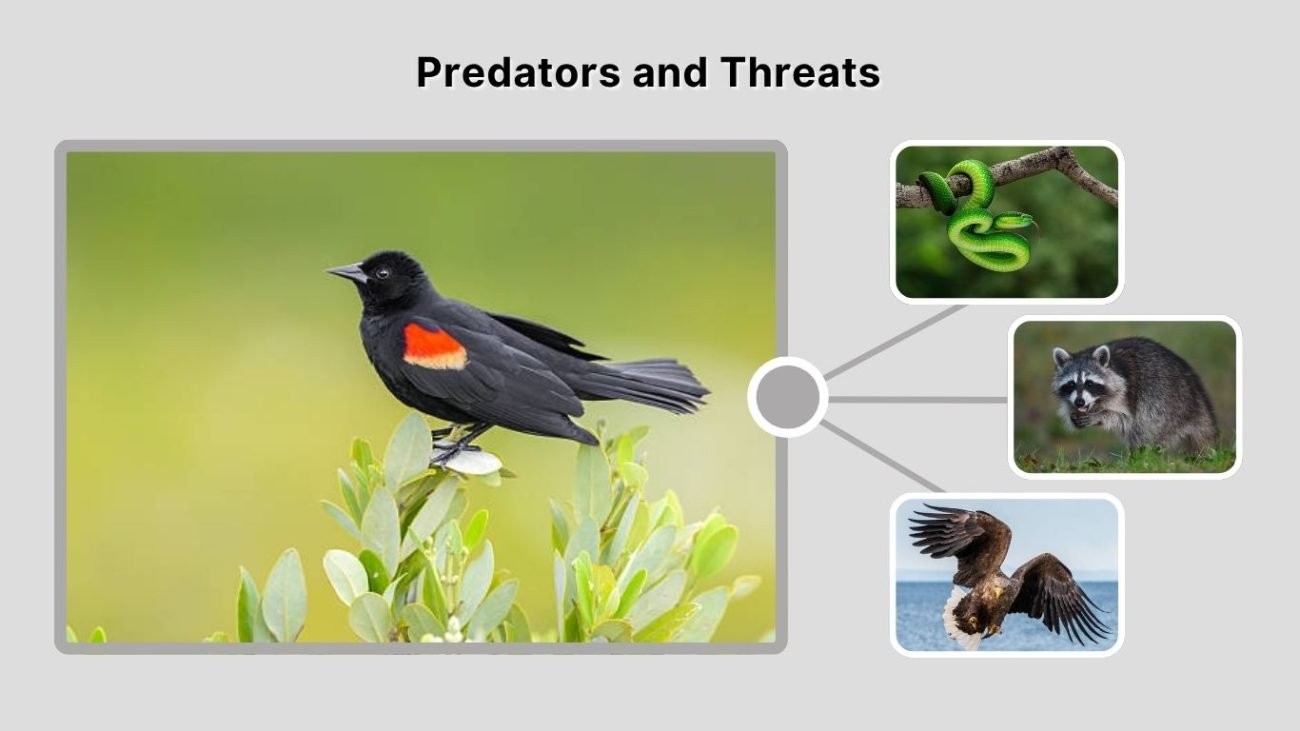
Red-winged blackbirds face threats from various predators, including snakes, raccoons, hawks, and larger birds. Eggs and nestlings are particularly vulnerable.
Human-related threats such as habitat loss, wetland drainage, and pesticide use can also impact their populations. However, due to their adaptability, they remain widespread and relatively stable compared to many other bird species.
Importance in Ecosystem
These birds contribute significantly to ecosystem balance. By feeding on insects, they help control pest populations that could otherwise damage crops. Additionally, they assist in seed dispersal, promoting plant growth and biodiversity.
Because they are closely associated with wetlands, their presence can also serve as an indicator of environmental health.
How to Attract Red-Winged Blackbirds
If you want to attract red-winged blackbirds to your area, consider creating a bird-friendly environment:
- Provide grains and seeds such as corn, millet, or sunflower seeds
- Maintain a water source like a pond or birdbath
- Grow native plants and allow natural vegetation to flourish
- Avoid excessive pesticide use
Keep in mind that they prefer open areas near water and dense vegetation for nesting.
FAQs
Are red-winged blackbirds aggressive?
Yes, especially during the breeding season. Males are known to aggressively defend their territory and may dive at intruders.
Do red-winged blackbirds migrate?
Some populations migrate south during winter, while others remain in their habitat year-round depending on location.
How long do they live?
In the wild, red-winged blackbirds typically live around 2 to 5 years, though some individuals may live longer.
Why are females brown?
Female coloration provides camouflage, helping them stay hidden from predators while nesting.
Conclusion
The red-winged blackbird is a fascinating and highly adaptable species that thrives across a wide range of habitats. From its striking appearance and unique calls to its complex nesting habits and ecological importance, this bird offers valuable insight into the natural world. By understanding and appreciating species like the red-winged blackbird, we can better support conservation efforts and protect the ecosystems they depend on.