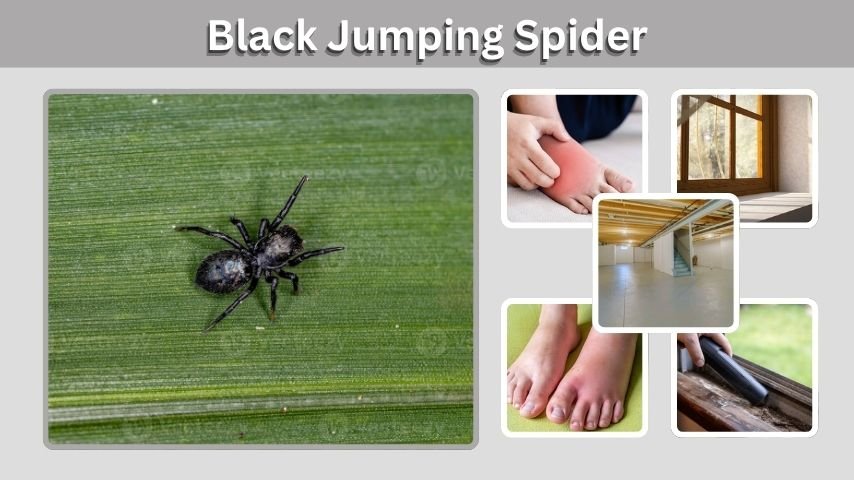
A black jumping spider can look surprising when it suddenly hops across a wall, window, porch, or garden plant. These small spiders are often noticed because of their quick movements, fuzzy bodies, and large forward-facing eyes. Although many people worry when they see a black spider that jumps, most jumping spiders are harmless to humans and can even help control small insects around the home.
What Is a Black Jumping Spider?
A black jumping spider is usually a member of the jumping spider family, known for excellent eyesight, compact bodies, and quick pouncing movements. Instead of building a web to catch prey, jumping spiders actively hunt during the day. They slowly approach insects, then leap forward to grab them.
The most commonly searched black jumping spider is often the bold jumping spider, also called the bold jumper. It is commonly black with pale markings and sometimes has shiny green or blue mouthparts. However, not every small black jumping spider belongs to the same species. Color, markings, location, and size can vary.
Why Do Jumping Spiders Jump?
Jumping spiders jump because that is how they hunt, escape danger, and move between surfaces. Their jumps are controlled and purposeful, not random. Before leaping, they may attach a thin silk safety line to the surface. This helps them recover if they miss a landing.
They are also curious-looking spiders because they often turn toward movement. When one appears to “look” at you, it is usually using its large front eyes to inspect its surroundings.
Black Jumping Spider Identification
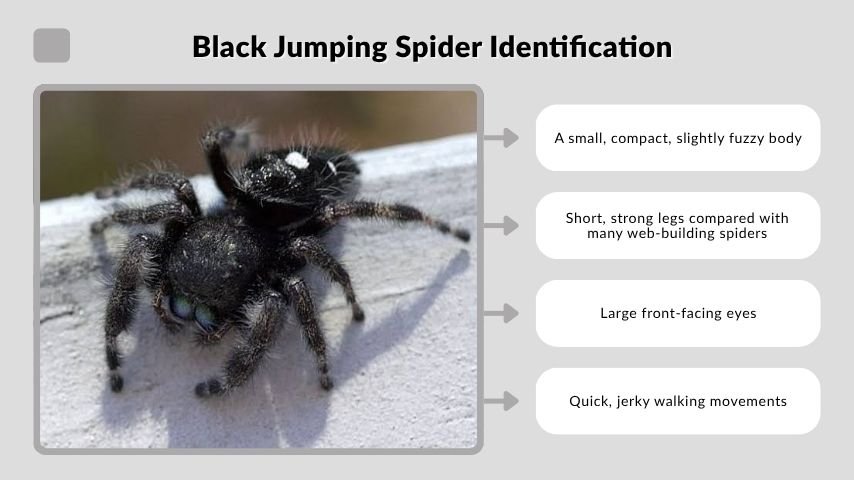
Identifying a black jumping spider is easier when you look at body shape, eyes, movement, and markings. Many people search for terms like “jumping black spider,” “black spider that jumps,” “small black jumping spider,” or “tiny black jumping spider” because they notice the movement before the details.
Common Features to Look For
A black jumping spider may have:
- A small, compact, slightly fuzzy body
- Short, strong legs compared with many web-building spiders
- Large front-facing eyes
- Quick, jerky walking movements
- Sudden short jumps
- White, orange, red, yellow, gray, or metallic markings
- Shiny green, blue, or iridescent mouthparts in some species
These features can help separate jumping spiders from more dangerous-looking spiders. They are usually active in daylight and may be seen on windowsills, siding, fences, garden plants, ceilings, or outdoor furniture.
Quick Identification Table
| Feature | What You May Notice | What It Usually Means |
|---|---|---|
| Body color | Mostly black or dark brown | Common in several jumping spider species |
| Movement | Walks in short bursts and jumps | Typical jumping spider behavior |
| Eyes | Large front eyes | Helps with hunting and identification |
| Markings | White, orange, red, yellow, or gray spots | May vary by species and age |
| Web use | No large prey-catching web | Uses silk mainly for retreats and safety lines |
| Location | Walls, windows, gardens, porches | Common hunting areas |
Types of Black Jumping Spiders People Commonly Notice
Many searches describe color patterns rather than exact species names. This is useful because homeowners usually identify the spider by what they see at first glance.
Black and Orange Jumping Spider
A black and orange jumping spider may be a young jumping spider or a species with orange markings. Some spiders have orange spots when young, and those markings may turn white as they mature. This is why people may search for “orange and black jumping spider” or “black jumping spider with orange dot.”
Black and Red Jumping Spider
A black and red jumping spider may have a red spot or red markings on the abdomen. Some bold jumping spiders can show reddish or orange markings, especially before adulthood. Searchers may describe this as a “black jumping spider with red dot,” “red black jumping spider,” or “black jumping spider with red dot on back.”
Black and Yellow Jumping Spider
A black and yellow jumping spider can be another jumping spider species or a spider with pale yellow markings. Since jumping spiders vary widely in color, yellow markings do not automatically mean the spider is dangerous.
Black Jumping Spider With Green Fangs
Many people search for a “black jumping spider with green fangs.” The bright green or blue parts are usually the spider’s chelicerae, which are mouthparts near the fangs. This feature is especially noticeable in bold jumping spiders and can make the spider look more intimidating than it really is.
Are Black Jumping Spiders Dangerous?
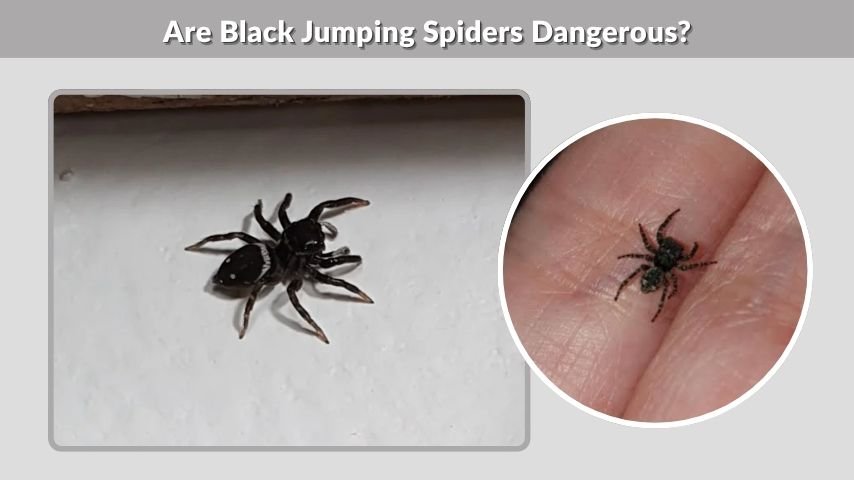
Black jumping spiders are generally not dangerous to people. They are venomous in the technical sense that they use venom to subdue tiny prey, but they are not considered a serious health threat to humans. Most prefer to avoid people and will usually jump away, hide, or freeze when disturbed.
A jumping spider may bite if it is trapped against the skin, squeezed, or handled roughly. Even then, bites are usually mild.
Why They Are Usually Beneficial
Black jumping spiders can be helpful around homes and gardens because they eat small insects and other tiny arthropods. They do not infest food, damage wood, or spread disease in the way some household pests can.
They may help reduce:
- Small flies
- Mosquitoes
- Gnats
- Tiny moths
- Small garden pests
- Other small spiders or insects
Because of this, many people choose to relocate them outdoors rather than kill them.
Black Jumping Spider Bite: What to Know
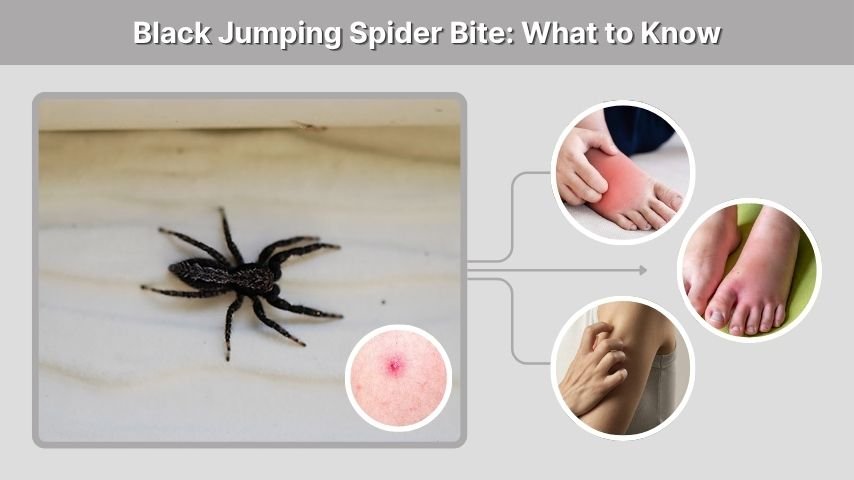
A black jumping spider bite is uncommon, but it can happen. Searches like “black jumping spider bite,” “jumping black spider bite,” “small black jumping spider bite,” and “little black jumping spider bite” show that many people are mainly concerned about safety.
Most bites cause only minor local irritation. A bite may feel like a small pinch or sting, and symptoms usually stay near the bite area.
Possible Bite Symptoms
A mild black jumping spider bite may cause:
- Slight pain or stinging
- Redness
- Mild swelling
- Itching
- Tenderness
- A small raised bump
These symptoms can look similar to many other insect bites, so it is not always possible to identify the cause by the bite mark alone.
What to Do After a Possible Bite
If you think a jumping spider bit you:
- Wash the area with soap and water
- Apply a cold compress to reduce swelling
- Avoid scratching the bite
- Monitor the area for changes
- Seek medical advice if symptoms worsen, spread, or you feel unwell
Get urgent medical help if there are signs of a serious allergic reaction, such as trouble breathing, swelling of the face or throat, dizziness, or rapidly spreading symptoms.
Black Jumping Spider vs Black Widow
Some people search for “jumping spider vs black widow” or “black widow jumping spider” because both can look dark from a distance. However, these spiders are very different.
A black jumping spider usually has a compact, fuzzy body, large front eyes, and active daytime movement. It may jump and turn toward motion. A black widow usually has a smoother, rounder abdomen, longer legs, and a more secretive web-building habit.
The most important difference is medical concern. Black widows can be medically significant, while jumping spiders are usually harmless. If you are unsure about a spider and suspect it may be a black widow, avoid handling it and use caution.
Where Black Jumping Spiders Are Found
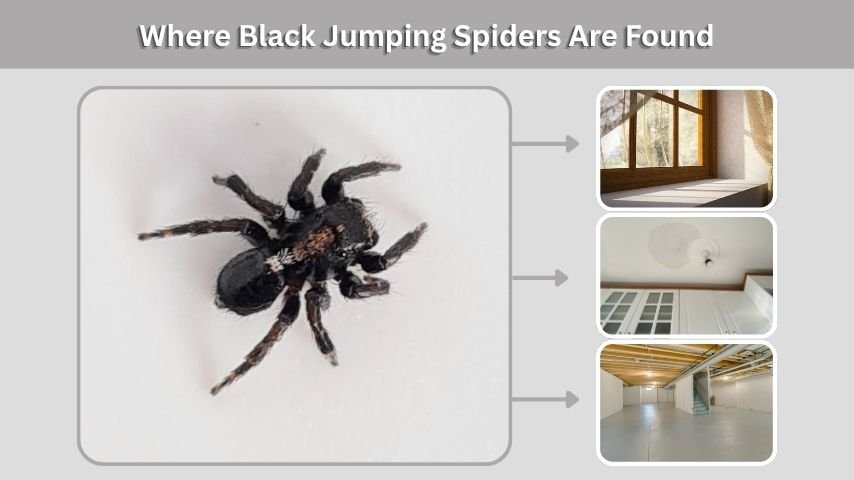
Black jumping spiders can be found in many parts of the United States and other regions. The uploaded keyword list includes searches for states such as Texas, Ohio, California, Michigan, Pennsylvania, Oregon, and Colorado, which suggests users often want local identification help.
Common Indoor Locations
Inside the home, you may see a small black jumping spider in places where insects are present or light attracts prey.
Common areas include:
- Windowsills
- Walls
- Ceilings
- Door frames
- Basements
- Garages
- Sunrooms
- Around indoor plants
They usually do not want to live deep inside homes. Many wander indoors by accident while hunting.
Common Outdoor Locations
Outdoors, black jumping spiders are often found in sunny areas with plenty of insects.
You may see them on:
- Garden plants
- Fences
- Deck railings
- Exterior walls
- Porch lights
- Tree bark
- Shrubs
- Outdoor furniture
They are daytime hunters, so spotting one in bright light is normal.
How Big Is a Black Jumping Spider?
Most black jumping spiders are small. Many are only a few millimeters long, while larger individuals can be more noticeable. Search terms like “large black jumping spider” and “big black jumping spider” usually refer to adult spiders that look bold because of their thick body shape and strong front legs.
A spider may look bigger when it raises its front legs, turns toward you, or jumps suddenly. In reality, most jumping spiders are much smaller than many common house spiders.
What to Do If You Find One in Your Home
If you find a black jumping spider indoors, you usually do not need harsh treatment. A single spider is not a sign of a dangerous infestation. It may have wandered in while hunting flies or other insects.
Safe Removal Steps
To relocate a jumping spider:
- Place a cup or jar gently over the spider
- Slide a piece of paper underneath
- Carry it outside carefully
- Release it near plants, a fence, or a sheltered outdoor area
- Seal gaps around windows and doors if spiders often enter
Avoid crushing or handling the spider with bare hands, especially if you are unsure what species it is.
How to Prevent Black Jumping Spiders Indoors
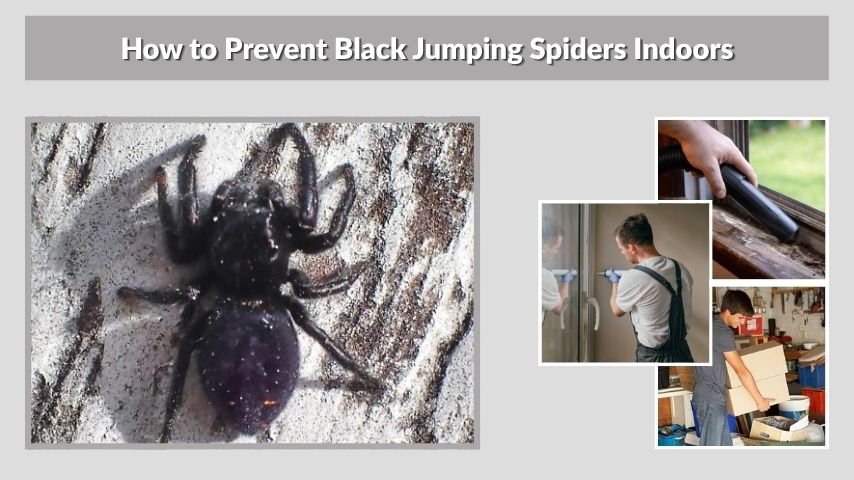
Prevention is mostly about reducing entry points and limiting insects that attract spiders. Since jumping spiders hunt prey, frequent sightings may mean there are small insects around windows, lights, or plants.
Practical Prevention Tips
You can reduce indoor sightings by:
- Repairing torn window screens
- Sealing cracks around doors and windows
- Reducing clutter in garages or storage areas
- Vacuuming corners, windowsills, and baseboards
- Keeping porch lights off when not needed
- Moving dense vegetation away from exterior walls
- Controlling small insects indoors
These steps help reduce both spiders and the insects they eat.
Should You Kill a Black Jumping Spider?
In most cases, you do not need to kill a black jumping spider. These spiders are not aggressive, and they can be useful predators. If the spider is in an inconvenient place, relocation is usually the best option.
However, if you cannot identify the spider or believe it may be a medically important species, avoid touching it. Use a container for removal or contact a pest professional if you are dealing with repeated sightings and cannot determine the cause.
FAQs
Are black jumping spiders poisonous?
Black jumping spiders are not considered dangerous to humans. They have venom for catching small prey, but their bites are usually mild and uncommon. Most will avoid people unless trapped or handled. If a bite causes severe swelling, spreading pain, or allergic symptoms, seek medical advice.
What does a black jumping spider bite look like?
A black jumping spider bite may look like a small red bump with mild swelling, itching, or tenderness. It can resemble a mosquito bite or other minor insect bite, so the bite mark alone may not confirm the spider. Watch for worsening symptoms or unusual reactions.
Why is a black jumping spider looking at me?
Jumping spiders have large front-facing eyes and strong vision, so they often turn toward movement. This can make them seem curious or aware of you. They are usually not preparing to attack. Most are simply watching their surroundings and deciding whether to move away.
Are black jumping spiders good to have around?
Yes, black jumping spiders can be beneficial because they eat small insects. Outdoors, they may help control flies, gnats, mosquitoes, and tiny garden pests. Indoors, they are usually accidental visitors. If one bothers you, gently relocate it outside instead of killing it.
How do I tell a black jumping spider from a black widow?
A black jumping spider usually has a compact, fuzzy body, large eyes, and quick jumping movements. A black widow has a smoother, rounder body, longer legs, and typically stays in messy webs. If you are unsure, do not handle the spider and use careful removal methods.