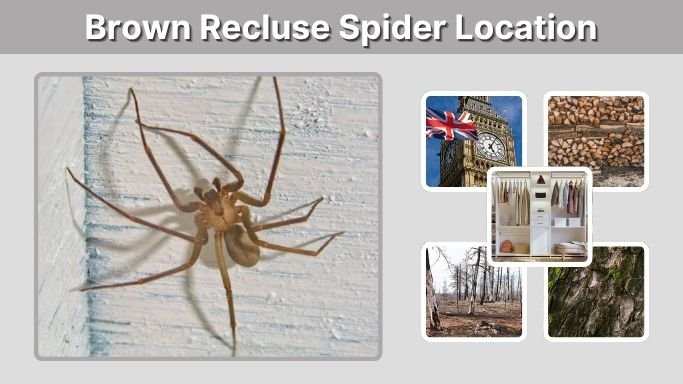
The brown recluse spider is not found everywhere, even though many people report seeing it in different countries and U.S. states. Its true location is mainly the south-central and Midwestern United States. It prefers warm, dry, dark, and undisturbed places, both indoors and outdoors. In homes, it may hide in basements, attics, garages, closets, shoes, storage boxes, and wall cracks. Outdoors, it may live under logs, rocks, boards, bark, and debris. Knowing its real location helps prevent confusion with harmless brown spiders.
Brown Recluse Spider Location in the USA
The brown recluse spider is most strongly linked with the central and south-central United States. It is not a spider that naturally lives across the whole country. This matters because many brown spiders are wrongly identified as brown recluses outside their normal range.
Main USA Locations
The brown recluse is commonly found in parts of the Midwest and South. Its range includes areas around Missouri, Arkansas, Kansas, Oklahoma, Texas, Tennessee, Kentucky, Illinois, Indiana, Iowa, Nebraska, Ohio, Louisiana, Mississippi, Alabama, and Georgia.
However, it is not equally common in every part of these states. A state may have brown recluses in one region but fewer or none in another region. Local climate, buildings, shelter, and food sources affect where they survive.
In strong brown recluse areas, they may live inside homes, barns, sheds, warehouses, garages, schools, and storage buildings. They often stay hidden and are usually noticed when people move old boxes, clothing, or furniture.
Why USA Location Matters
Location is one of the first clues when identifying this spider. If someone finds a brown spider in a state outside the brown recluse’s normal range, it is more likely to be another species. Many harmless spiders are brown, and some have markings that people mistake for a violin shape.
Brown recluses can sometimes travel in boxes, furniture, or luggage. But one transported spider does not mean the species has become established in that area. A real population needs the right shelter, food, temperature, and enough spiders to reproduce.
Brown Recluse Spider Location Map
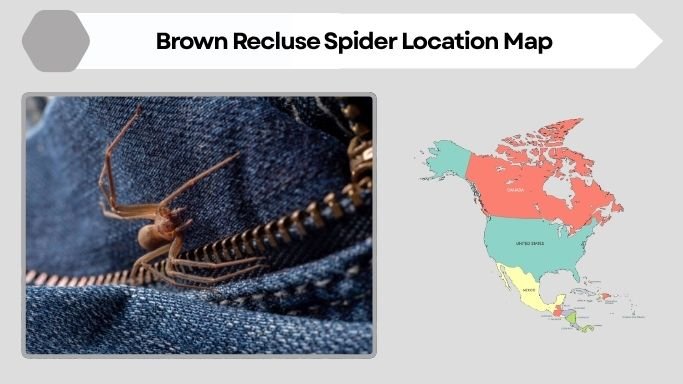
A brown recluse spider location map usually shows the species concentrated in the central and south-central United States. The map does not cover all of North America. It also does not mean the spider appears in every town inside the shaded region.
How to Read a Location Map
A location map shows the general known range of the spider. It helps readers understand where brown recluse spiders are most likely to occur. But maps are not perfect for house-level identification.
A shaded range means the spider may be found in that region. It does not mean every brown spider there is a brown recluse. It also does not mean every home in that area has them. Proper identification still depends on body features, eye pattern, behavior, and habitat.
The brown recluse has six eyes arranged in three pairs, plain unbanded legs, and a violin-shaped mark on the cephalothorax. These features should be checked along with location.
Why Map Searches Can Be Confusing
People often search for “brown recluse spider location map” after finding a brown spider indoors. The problem is that many websites show broad ranges without explaining local variation. Some maps also include related recluse species, which can confuse readers.
For example, other recluse spiders may occur in parts of the southwestern United States, but they are not always the brown recluse. A map should be used as a guide, not the only proof.
Brown Recluse Spider Location in Houses
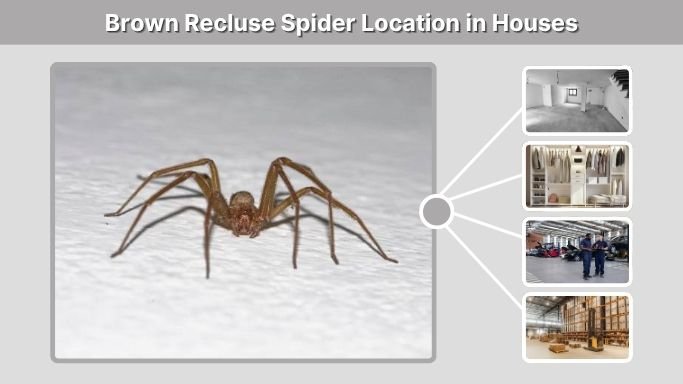
Brown recluse spiders can live indoors when they find dry, quiet, and undisturbed hiding places. Homes and buildings can provide stable temperatures, insects to eat, and many small cracks where spiders can rest during the day.
Common Indoor Locations
Brown recluse spiders may hide in:
- Basements
- Attics
- Garages
- Closets
- Storage rooms
- Crawl spaces
- Cardboard boxes
- Shoes and boots
- Folded clothes
- Stored bedding
- Behind furniture
- Under shelves
- Wall cracks
- Baseboards
- Sheds and barns
They are called “recluse” spiders because they prefer hiding. They are not usually seen walking in bright open areas during the day. Many indoor encounters happen when people disturb stored items.
Why They Like Storage Areas
Storage areas are perfect for brown recluse spiders because they are quiet and full of hiding spaces. Cardboard boxes, paper stacks, old clothing, furniture, and unused items create many small shelters.
These areas may also attract insects. Since brown recluses eat small insects and other arthropods, a cluttered area with prey can become suitable habitat. This is why cleaning and reducing clutter can lower spider activity.
Brown Recluse Spider Location Outdoors
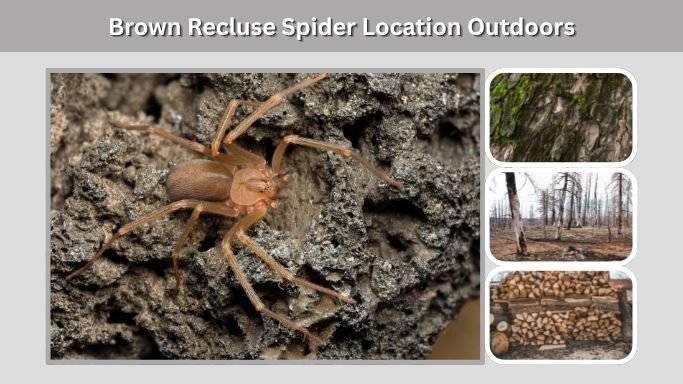
Brown recluse spiders also live outdoors in protected places. They avoid exposed areas and prefer natural cover. Outdoors, they are usually harder to notice because they stay hidden under materials.
Common Outdoor Locations
Outdoors, brown recluse spiders may be found under rocks, logs, bark, boards, dead trees, firewood, old lumber, leaf litter, stones, and debris. They may also hide around sheds, barns, fences, and stored garden materials.
They prefer dry shelter. Wet, open, or heavily disturbed areas are less attractive. A woodpile or pile of boards near the house can provide a good hiding place and may increase the chance that spiders move indoors.
Around Yards and Buildings
Brown recluse spiders may live near foundations if there are many hiding places. Gaps under siding, cracks near doors, and piles of outdoor materials can create shelter.
Keeping firewood and lumber away from the house can help. Removing old boards, sealing cracks, repairing screens, and cleaning outdoor clutter may reduce the chance of spiders entering.
Brown Recluse Spider Locations in the USA by Region
The brown recluse’s U.S. location is regional. Some areas are high-probability zones, while others have only rare reports or misidentifications.
Core Range Areas
The strongest brown recluse locations are in the south-central states. Missouri, Arkansas, Kansas, Oklahoma, and parts of Texas are often considered central to its range. In these places, indoor populations may occur when buildings provide enough hiding places.
Tennessee, Kentucky, Louisiana, Mississippi, Alabama, southern Illinois, Indiana, Iowa, Nebraska, Ohio, and western Georgia may also have brown recluse populations. However, local abundance can vary.
Border and Low-Probability Areas
Some states are near the edge of the range. In these places, brown recluse spiders may be present in some counties but rare or absent in others. Reports should be checked carefully, especially when the spider is found far from the known range.
Many reports from coastal, far northern, and far western states are misidentified spiders. A brown spider in these areas should not be called a brown recluse without clear evidence.
Brown Recluse Spider Location in Canada
Many people search for brown recluse spider location in Canada, especially in Ontario. True brown recluse populations are not generally established across Canada. Most Canadian reports are likely misidentifications or rare transported spiders.
Are Brown Recluses in Ontario?
Ontario is often included in searches because people find brown spiders indoors and worry about recluse bites. However, the brown recluse’s established range is mainly in the United States, not Canada.
A spider may rarely be transported in moving boxes, shipments, or furniture. But this is different from having a stable breeding population. If you find a suspected brown recluse in Canada, it is best to get expert identification before assuming it is one.
Canada Look-Alikes
Canada has many brown spiders that can enter homes. Some may look similar at first glance. House spiders, funnel weavers, wolf spiders, and other species may be mistaken for brown recluses.
Location is a strong clue. If the spider is found far outside the normal brown recluse range, identification should be handled carefully.
Brown Recluse Spider Location in the UK, Europe, and Australia
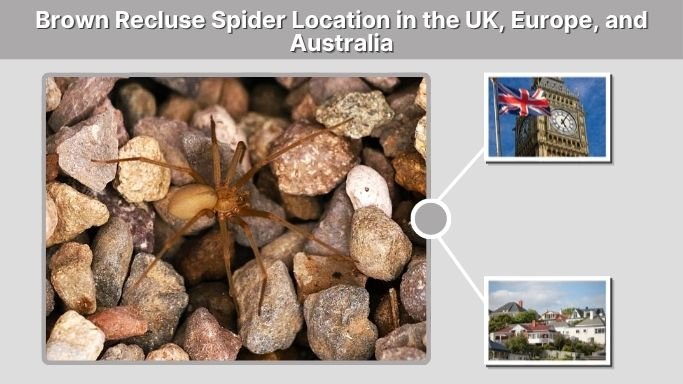
The brown recluse spider is not naturally found in the UK, most of Europe, or Australia. Searches for “brown recluse spider location UK,” “brown recluse spider location Europe,” and “brown recluse spider location Australia” are common, but they often reflect confusion with other spiders.
UK and Europe
The true brown recluse, Loxosceles reclusa, is a North American species. It is not normally established in the UK. Europe has other recluse-related spiders, especially the Mediterranean recluse in some regions, but that is not the same as the brown recluse.
Because many spiders are brown, people may mistake local house spiders for brown recluses. In the UK, most indoor brown spiders are not brown recluses.
Australia
Australia has many spiders, including some medically important species, but the North American brown recluse is not a normal Australian spider. Reports may involve confusion with other brown spiders or other recluse species introduced in limited situations.
If someone in Australia thinks they found a brown recluse, expert identification is important. A photo, specimen, or local pest professional can help avoid misidentification.
Brown Recluse Spider Location in California and North Carolina
California and North Carolina appear often in searches. Both locations need careful explanation because many brown recluse reports outside the core range are not accurate.
California
The brown recluse is not considered established in California. Other recluse species may occur in parts of the southwestern United States, but they are not the same as the brown recluse. Many California brown recluse reports are misidentifications.
A transported brown recluse can occasionally appear if it arrives in boxes or furniture from another state. But repeated local populations are not typical.
North Carolina
North Carolina is also a place where reports can be confusing. It is not usually considered a strong brown recluse state compared with central and south-central states. Some reports may involve look-alike spiders, transported individuals, or related species.
If you live in North Carolina and find a suspected brown recluse, do not rely only on color. Check the eye pattern, violin mark, plain legs, and get expert confirmation if needed.
Brown Recluse Spider Bite Location on the Body
Some searches use the phrase “brown recluse spider bite location.” This can mean where on the body bites happen. Brown recluse bites usually occur when the spider is trapped against the skin.
Common Bite Situations
Bites may happen when a person puts on shoes, clothing, or gloves where a spider is hiding. They can also happen when someone moves boxes, handles stored bedding, or rolls onto a spider in bed.
Common bite locations may include arms, legs, hands, feet, torso, or areas covered by clothing. The spider does not seek people to bite. Most bites happen by accident when it is pressed or trapped.
What to Do After a Suspected Bite
If you suspect a bite, wash the area with soap and water, apply a cool compress, and monitor symptoms. Seek medical help if pain increases, a blister develops, the wound spreads, or symptoms such as fever, chills, nausea, or weakness appear.
Do not assume every skin wound is a brown recluse bite. Many infections, allergies, and skin conditions can look similar.
Brown Recluse Spider Location and Identification
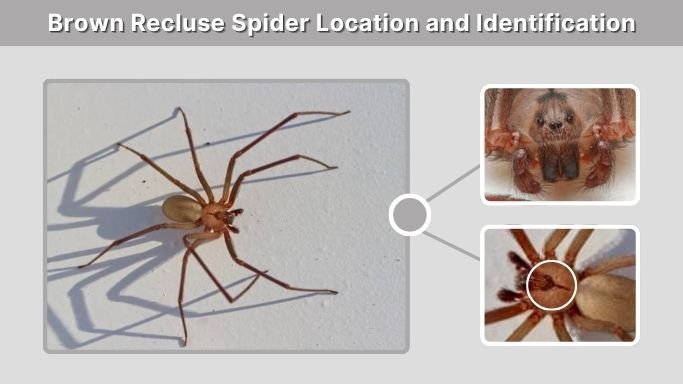
Location helps, but it is not the only clue. A spider should match both the correct range and the correct body features before being identified as a brown recluse.
Identification Features
A brown recluse usually has a tan to brown body, plain abdomen, plain unbanded legs, and a violin-shaped mark on the front body section. It also has six eyes arranged in three pairs.
Many other spiders have eight eyes, banded legs, patterned abdomens, or visible webs. These clues can help separate look-alikes from true brown recluses.
When Location Is Not Enough
A spider found inside the brown recluse range still may not be a brown recluse. Common house spiders, wolf spiders, cellar spiders, grass spiders, and southern house spiders can all appear indoors.
A spider found outside the range is less likely to be a brown recluse, but transport is possible. For safety, use location as one clue, not the whole answer.
Brown Recluse Spider Location Table
This table gives a simple view of common location questions.
| Location Search | Likelihood of Brown Recluse | Notes |
| South-central USA | High | Core range in many areas |
| Midwest USA | Moderate to high | Depends on state and county |
| California | Very low | Usually misidentified or transported |
| Canada | Very low | Not broadly established |
| Ontario | Very low | Most reports need confirmation |
| UK | Very low | Not a normal UK species |
| Europe | Very low for brown recluse | Other recluse species may occur |
| Australia | Very low | Not normally established |
| Inside houses | Possible in range | Especially dry, cluttered storage areas |
| Outdoor debris | Possible in range | Under logs, rocks, boards, and bark |
How to Reduce Brown Recluse Locations Around Your Home
If you live in a brown recluse area, reducing hiding places can lower the chance of indoor encounters. The goal is to make your home less suitable for spiders and their prey.
Indoor Control Steps
Keep clothing, towels, and shoes off the floor. Store items in sealed plastic bins instead of cardboard boxes. Vacuum closets, corners, basements, and under furniture. Shake out shoes, gloves, and stored clothes before using them.
Move beds slightly away from walls in high-risk homes. Avoid bed skirts touching the floor. Use sticky traps along walls and storage areas to monitor spider activity.
Outdoor Control Steps
Move firewood, stones, lumber, and old boards away from the foundation. Seal cracks around doors, windows, vents, pipes, and utility openings. Repair damaged screens and install door sweeps.
Reducing insects around the home also helps because spiders follow food sources. Cleaner, drier, less cluttered spaces are less attractive to brown recluses.
FAQs
Where is the brown recluse spider located?
The brown recluse spider is mainly located in the south-central and Midwestern United States. It is most common in states such as Missouri, Arkansas, Kansas, Oklahoma, Texas, Tennessee, Kentucky, and nearby areas. It is not naturally found everywhere in the U.S. or worldwide.
What is the brown recluse spider location in a house?
Inside a house, brown recluse spiders may hide in basements, attics, garages, closets, cardboard boxes, shoes, folded clothes, stored bedding, wall cracks, and behind furniture. They prefer dark, dry, quiet places where they are rarely disturbed.
Is the brown recluse spider found in Canada?
The brown recluse spider is not broadly established in Canada. Reports from Canada are often misidentified spiders or rare transported individuals. If someone finds a suspected brown recluse in Canada, expert identification is recommended before assuming it is truly a brown recluse.
Is the brown recluse spider found in the UK or Australia?
The North American brown recluse spider is not normally found in the UK or Australia. Some other brown spiders may look similar, and other recluse-related species may occur in certain regions. Proper identification is needed because many reports are misidentifications.
What outdoor locations do brown recluse spiders prefer?
Outdoors, brown recluse spiders prefer dry, sheltered locations. They may hide under rocks, logs, bark, boards, firewood, lumber, leaf litter, and debris. Around homes, clutter near foundations, sheds, and garages can provide good hiding places.