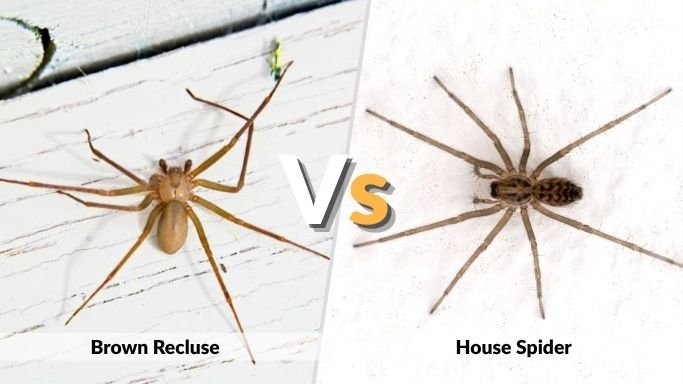
A brown spider inside the home can quickly cause worry, especially when people fear it may be a brown recluse. However, many harmless house spiders are brown and are often misidentified. A true brown recluse has specific features, including six eyes, plain legs, a violin-shaped mark, and a smooth-looking body. Common house spiders usually have rounded abdomens, tangled webs, and more visible body patterns. Learning the difference helps you avoid panic, identify spiders more safely, and know when professional help may be needed.
Brown Recluse or House Spider: Quick Answer
Brown recluse spiders and common house spiders may both appear indoors, but they are not the same. A brown recluse is a medically important spider with a plain body, six eyes, and a violin-shaped marking. A common house spider is usually harmless, web-building, and more patterned.
Main Difference
The main difference is body pattern and risk level. A brown recluse has a plain tan to brown body, smooth legs, and a dark violin-shaped mark on the front body section. It also has six eyes arranged in three pairs. Most house spiders have eight eyes, a rounder abdomen, and visible patterns such as spots, mottling, or chevron marks.
House spiders also spend more time in webs. They often build loose, tangled cobwebs in corners, basements, garages, and window frames. Brown recluses may make irregular silk retreats, but they are more active hunters and usually hide in dark, quiet places during the day.
Identification
- Brown recluse has six eyes in three pairs.
- Common house spiders usually have eight eyes.
- Brown recluse has plain, unbanded legs.
- House spiders often have patterned or slightly banded legs.
- Brown recluse has a violin-shaped mark on the cephalothorax.
- House spiders may have chevron marks or mottled patterns on the abdomen.
- Brown recluse has a flatter, smoother body.
- House spiders often have a rounder abdomen.
- Brown recluse hides in quiet storage areas.
- House spiders usually sit in tangled webs.
What Does a Brown Recluse Look Like?
A brown recluse is a small to medium-sized brown spider with a simple appearance. It does not have bold stripes, bright colors, or heavy hair. Its most famous feature is the dark violin-shaped mark on the cephalothorax, which is the front body part where the legs attach.
Body Shape and Color
The brown recluse is usually tan, light brown, or medium brown. Its abdomen is plain and oval-shaped. The body is not shiny like some cobweb spiders and not thick or fuzzy like many wolf spiders. Its legs are long, thin, and evenly colored.
A true brown recluse should not have striped legs, a spotted abdomen, or strong body patterns. If the spider has bold markings on the abdomen, it is probably not a brown recluse. Many harmless brown spiders are mistaken for recluses because people focus only on the color.
Eye Pattern
The eye pattern is one of the best clues. Brown recluse spiders have six eyes arranged in three pairs. Most other common house spiders have eight eyes. This difference is important, but it can be hard to see without a close photo or magnifying lens.
Never handle a suspected brown recluse with bare hands just to check the eyes. If possible, take a clear photo or safely trap the spider in a container for identification.
What Does a Common House Spider Look Like?
The common house spider is a small indoor spider that often builds tangled cobwebs. It is usually brown, tan, grayish, or mixed in color. Unlike the brown recluse, it often has a rounder abdomen with faint markings.
Body Features
Common house spiders usually have a rounded or teardrop-shaped abdomen. Their body may show mottled patterns, pale and dark patches, or chevron-like markings. These marks can make them look more patterned than a brown recluse.
They are generally not aggressive and are usually harmless to people. Most house spiders prefer to stay in their webs and wait for small insects. They are more likely to be noticed in corners, ceilings, garages, basements, sheds, and window areas.
Web-Building Habit
One of the easiest clues is the web. Common house spiders often build messy, tangled cobwebs. They may hang upside down in the web and wait for insects.
A brown recluse does not usually sit in an open cobweb in the same way. It may create irregular silk retreats, but it spends much of its time hidden in cracks, boxes, clothing, shoes, or dark storage areas.
Brown Recluse vs House Spider Identification Table
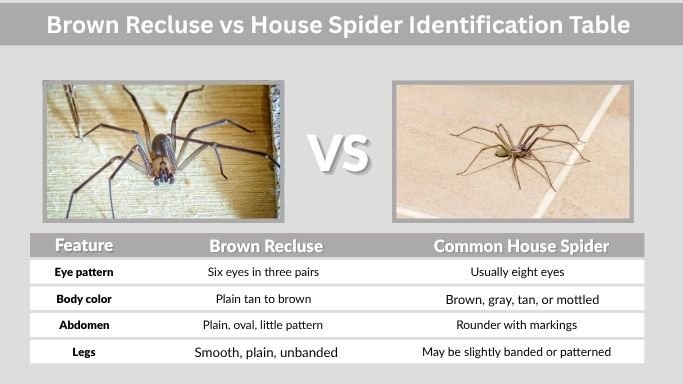
Use several features together before deciding whether a spider is a brown recluse or a house spider. One feature alone is not enough.
| Feature | Brown Recluse | Common House Spider |
| Eye pattern | Six eyes in three pairs | Usually eight eyes |
| Body color | Plain tan to brown | Brown, gray, tan, or mottled |
| Abdomen | Plain, oval, little pattern | Rounder with markings |
| Legs | Smooth, plain, unbanded | May be slightly banded or patterned |
| Main mark | Violin mark on front body | No true violin mark |
| Web | Irregular hidden retreat | Loose tangled cobweb |
| Behavior | Hides in dark quiet places | Often stays in web |
| Risk level | Medically important | Usually harmless |
Brown Recluse or Common House Spider?
The phrase “common house spider” usually refers to harmless cobweb-building spiders found in and around buildings. These spiders are much more likely to be seen in many homes than brown recluses, especially outside the brown recluse’s normal range.
How to Tell Them Apart
A common house spider usually has a more rounded abdomen and lives in a visible tangled web. Its abdomen may show soft patterns, mottling, or chevron marks. It may look brown, but it does not have the clean, plain body shape of a recluse.
A brown recluse has a flatter, more uniform body and plain legs. Its violin mark is on the cephalothorax, not the abdomen. It also has six eyes, which is a key feature.
If you see a brown spider sitting in a messy web in the corner, it is more likely to be a house spider than a brown recluse. If you find a plain brown spider hiding in a shoe, box, closet, or storage area within the brown recluse’s range, it deserves more careful attention.
Common Mistakes
Many people mistake house spiders for brown recluses because they are brown. This is not enough for identification. Brown color is common among many spider species.
Another mistake is looking for any dark mark and calling it a violin. Some house spiders have body patterns that may look like shapes from a distance. A real recluse violin mark is on the front body section and points toward the abdomen.
Brown Recluse or Southern House Spider?
The southern house spider is one of the most common brown recluse look-alikes. Males are often confused with brown recluses because they are brown, slim, and may wander indoors. However, they are different spiders.
Southern House Spider Appearance
Male southern house spiders can look similar to brown recluses at first glance. They may have long legs and a brown body. However, they usually lack the true six-eye recluse pattern and do not have the same clean violin marking.
Female southern house spiders are often darker and more robust. They may stay near crevices and webbed retreats. Their appearance is usually different from the plain, smooth look of a brown recluse.
Behavior Difference
Southern house spiders are not considered dangerous like brown recluses. They may live in cracks, gaps, windows, garages, and around buildings. Males may wander while searching for females, which is why people often see them indoors.
A brown recluse is more secretive and is strongly linked with dark, undisturbed storage areas. It is also more medically important, so proper identification matters.
Brown Recluse or Brown House Spider?
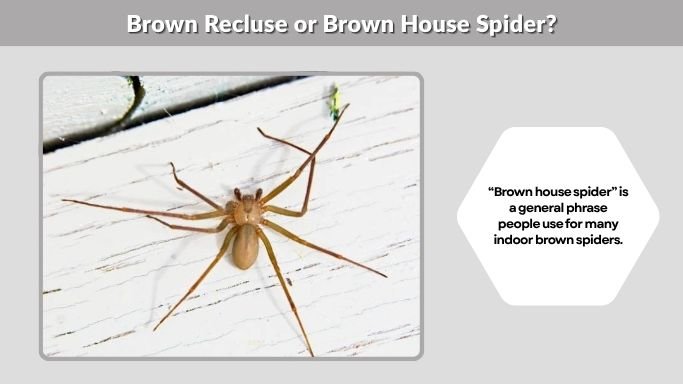
“Brown house spider” is a general phrase people use for many indoor brown spiders. It may refer to a common house spider, southern house spider, cobweb spider, or another harmless species. Because the term is broad, careful identification is important.
Why Brown Color Is Not Enough
Many spiders are naturally brown because it helps them blend into wood, soil, leaves, and indoor corners. A spider being brown does not mean it is a brown recluse.
Check body markings, eye pattern, web type, leg bands, and location. If the spider has a patterned abdomen or banded legs, it is probably not a brown recluse. If it sits in a visible tangled web, it is also more likely a house spider.
Better Clues to Use
The best clues are the six-eye pattern, plain legs, plain abdomen, violin mark, and geographic range. These features should match together. If only one feature matches, do not assume it is a brown recluse.
A clear photo can help. Try to photograph the spider from above, showing the body and legs. Do not handle it directly.
Brown Recluse or Giant House Spider?
A giant house spider can look frightening because of its large size and speed. However, it is not the same as a brown recluse. In many cases, a very large brown spider is less likely to be a brown recluse.
Size and Shape Difference
Brown recluses are not giant spiders. They are usually small to medium-sized. Giant house spiders are often larger, longer-legged, and faster-moving. They may also show more visible body patterns.
Giant house spiders often belong to funnel-weaver groups and may build sheet-like or funnel-like webs. Their markings and web habits are different from the brown recluse.
Risk Difference
Giant house spiders may scare people, but they are generally not considered medically important like brown recluses. They prefer to avoid people and are usually beneficial because they eat insects.
If a spider is very large, patterned, and found near a web, compare it carefully before calling it a brown recluse.
Brown Recluse or House Spider: Habitat Differences
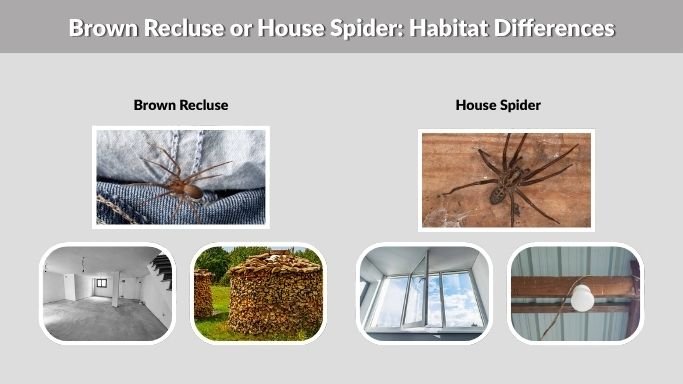
Where you find the spider can give useful clues. Brown recluses and house spiders may both live indoors, but they often use different hiding and web-building habits.
Indoor Locations
Brown recluses prefer dark, quiet, and undisturbed places. They may hide in basements, attics, garages, closets, cardboard boxes, shoes, folded clothing, stored bedding, and behind furniture.
Common house spiders prefer protected corners and web-friendly areas. They are often found in ceiling corners, window frames, basements, garages, crawl spaces, sheds, and behind objects where they can build cobwebs.
Outdoor Locations
Brown recluses may hide under rocks, logs, bark, boards, firewood, and debris. They like dry, sheltered spaces. Common house spiders may also live around buildings, under eaves, in sheds, or near outdoor lights where insects gather.
If outdoor clutter is close to the house, both types of spiders may find shelter nearby. Reducing clutter can help lower spider activity.
Brown Recluse Range vs House Spider Range
Location is very important. Brown recluses are not found everywhere. Common house spiders, however, are widespread and much more likely in many homes.
Brown Recluse Range
Brown recluses are mainly established in the south-central and Midwestern United States. They are common in some areas but rare or absent in many others. Reports outside the known range are often misidentifications.
A brown spider found far outside the brown recluse range is more likely to be a house spider or another harmless species. Transported brown recluses can occasionally appear in boxes or furniture, but that does not always mean there is an established population.
House Spider Range
Common house spiders are found in many parts of the world and are very common around buildings. They can live indoors year-round in protected places. Because they are widespread, they are often the more likely answer when someone finds a brown spider in a home.
Bite Risk: Brown Recluse vs House Spider
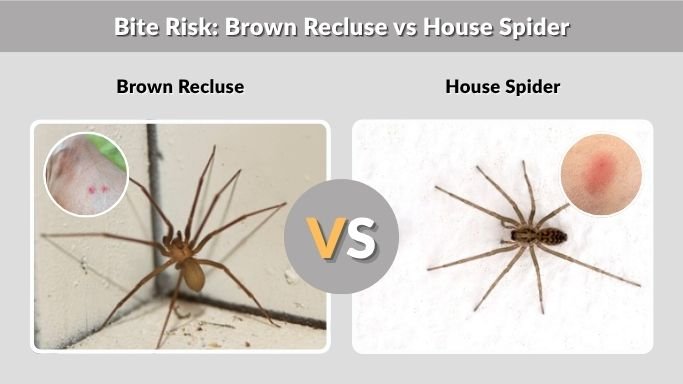
The bite risk is one of the biggest reasons people want to know the difference. Brown recluse bites can sometimes cause serious skin reactions, while common house spiders are usually not a major concern.
Brown Recluse Bite Risk
Brown recluses are not aggressive, but they may bite if trapped against the skin. This can happen when someone puts on clothing, reaches into a box, or rolls onto a spider in bed.
Some bites may cause pain, redness, blistering, or skin damage. Serious reactions are possible but not every bite becomes severe. Medical care is important if symptoms worsen, a wound spreads, or systemic symptoms appear.
House Spider Bite Risk
Common house spiders are usually harmless. They may bite if handled or pressed, but bites are uncommon and usually mild. Many skin marks blamed on spiders are caused by other insects, irritation, infection, or skin conditions.
If a bite-like wound is painful, spreading, infected-looking, or accompanied by fever or illness, seek medical advice instead of guessing the cause.
Safety Tips If You Are Not Sure
If you cannot tell whether the spider is a brown recluse or house spider, avoid touching it directly. Safe handling is better than panic.
Safe Steps
- Do not pick up the spider with bare hands.
- Trap it with a clear cup or jar.
- Slide stiff paper under the container.
- Take a clear photo from above.
- Check the eye pattern only if it can be done safely.
- Shake out shoes and clothing in storage areas.
- Wear gloves when moving boxes or firewood.
- Reduce clutter in closets, garages, and basements.
- Use sticky traps to monitor hidden spider activity.
- Contact a pest expert if you find many suspected recluses.
When to Call a Professional
Call a professional if you repeatedly find plain brown spiders in bedrooms, closets, storage boxes, or shoes, especially if you live in a brown recluse region. A pest expert can confirm the species and suggest safe control steps.
Professional help is also useful if there are children, pets, or someone with medical sensitivity in the home.
Prevention and Control Around the Home
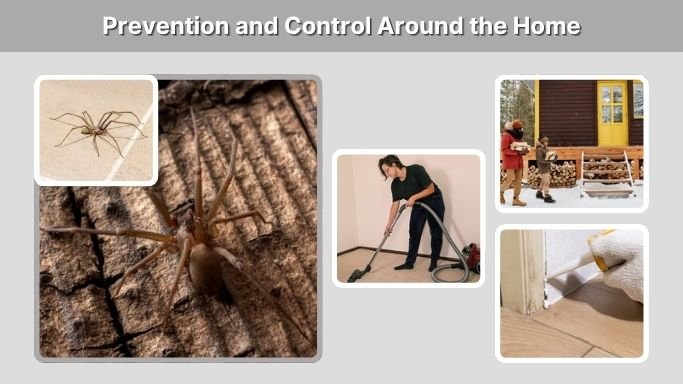
Whether the spider is a brown recluse or house spider, reducing hiding places can help. Most indoor spiders are attracted to quiet spaces, insects, and clutter.
Indoor Prevention
Keep floors clear of clothing, towels, and shoes. Store seasonal items in sealed plastic bins instead of cardboard boxes. Vacuum corners, baseboards, closets, and under furniture. Move beds slightly away from walls and avoid bed skirts touching the floor in high-risk areas.
Remove old webs when you see them. This helps reduce house spider activity and makes it easier to notice new web-building.
Outdoor Prevention
Move firewood, boards, stones, and debris away from the foundation. Seal cracks around doors, windows, vents, and utility openings. Repair torn screens and install door sweeps.
Reducing insects around the home can also reduce spider activity because spiders follow food sources.
FAQs
Is it a brown recluse or house spider?
Check the eye pattern, body markings, legs, web, and location. A brown recluse has six eyes, plain legs, a plain abdomen, and a violin-shaped mark on the front body section. A house spider usually has eight eyes, a rounder patterned abdomen, and a tangled web.
Can a common house spider look like a brown recluse?
Yes, some common house spiders can look similar because they are brown or tan. However, house spiders usually have more visible abdomen markings and often sit in tangled webs. A true brown recluse has a plainer body and six eyes arranged in three pairs.
Is a southern house spider a brown recluse?
No, a southern house spider is not a brown recluse. Male southern house spiders are sometimes mistaken for recluses because they are brown and may wander indoors. However, they are different spiders and are not considered medically important like brown recluses.
What is the easiest way to tell a brown recluse from a house spider?
The easiest clues are the eye pattern, body pattern, and web behavior. Brown recluses have six eyes, plain legs, and a violin mark. House spiders usually have eight eyes, patterned abdomens, and messy cobwebs in corners or quiet indoor areas.
Should I kill every brown spider in my house?
No, not every brown spider is dangerous. Many house spiders are harmless and help control insects. If you are unsure, take a clear photo or safely trap the spider for identification. If you repeatedly find suspected brown recluses, contact a pest professional.