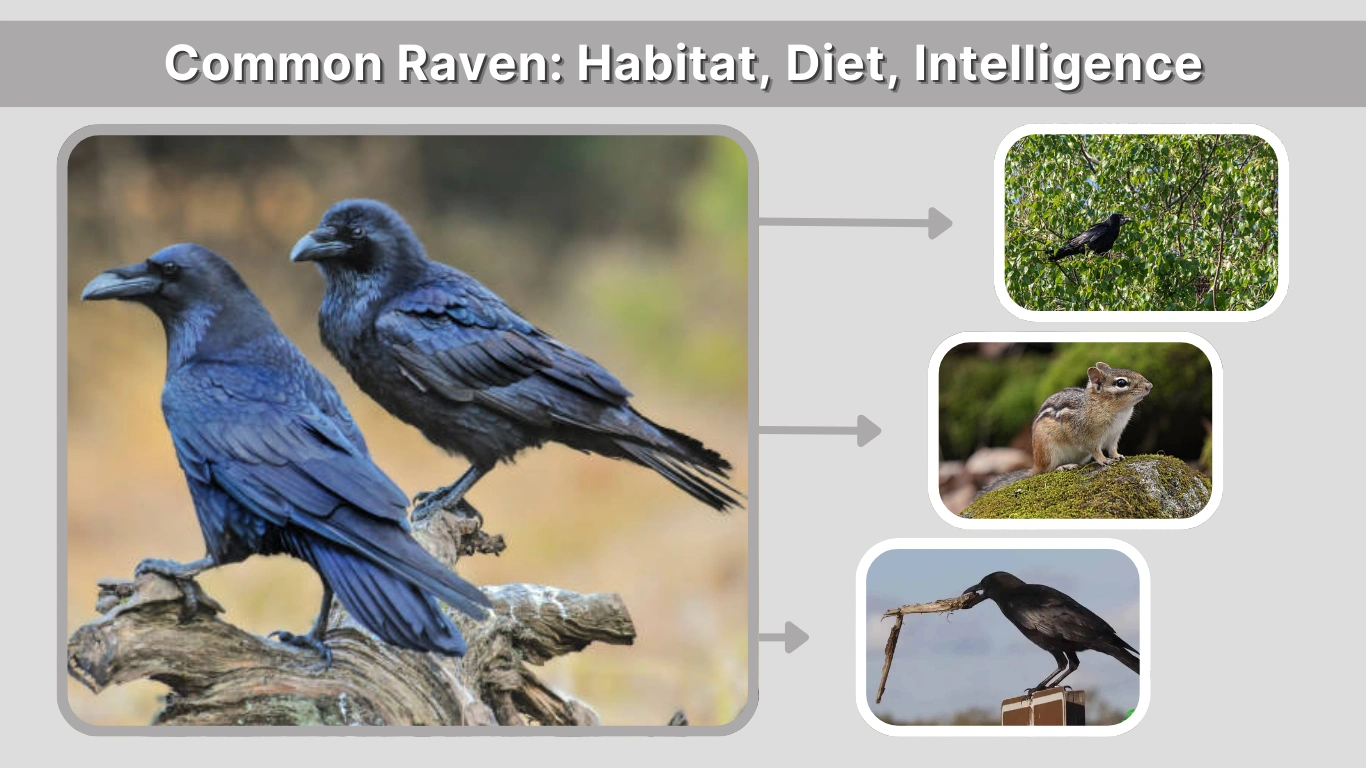
The Common Raven (Corvus corax) is one of the most intelligent and recognizable birds in the world. Known for its glossy black feathers, thick bill, and deep croaking voice, this large member of the corvid family has fascinated people for centuries. Ravens are highly adaptable birds that can survive in a wide range of environments, from remote mountains and forests to deserts and even areas near human settlements. Their remarkable intelligence, complex social behavior, and strong problem-solving abilities make them one of the most studied birds by scientists and wildlife enthusiasts alike.
What Is the Common Raven?
The Common Raven is the largest species in the crow family and is widely known for its intelligence and adaptability. These birds belong to the Corvidae family, a group that also includes crows, magpies, and jays. Ravens are often mistaken for crows, but they are noticeably larger and have several unique physical features that make them easy to identify.
Scientific Classification
The scientific name of the Common Raven is Corvus corax. It belongs to the genus Corvus, which includes several intelligent bird species known for their advanced cognitive abilities. Birds in this family are famous for their problem-solving skills, strong memory, and complex communication systems.
Scientists have long been interested in studying corvids because their intelligence often rivals that of some mammals. Ravens in particular have demonstrated the ability to learn from experience, remember food locations, and even plan for future events.
Physical Characteristics
The Common Raven has a striking appearance that makes it easy to recognize. Its entire body is covered in glossy black feathers that may show shades of blue or purple when sunlight reflects off them. Ravens have a large, strong beak that helps them tear food and access different types of prey or carrion.
One distinctive feature of the raven is the shaggy feathers on its throat, often referred to as “hackles.” These feathers give the bird a slightly rough or shaggy appearance compared to the smoother neck feathers of crows. Ravens also have powerful wings that allow them to soar and glide gracefully through the air.
Size and Wingspan
Common Ravens are among the largest perching birds in the world. Adult ravens typically measure 22 to 27 inches (56–69 cm) in length. Their wingspan can reach 3.5 to 4 feet (about 1–1.2 meters), which gives them impressive flight capability.
Because of their size and strong wings, ravens often soar high above landscapes, riding air currents with minimal effort. This ability allows them to travel long distances while searching for food.
Habitat and Distribution

One reason the Common Raven is so successful as a species is its ability to live in many different environments. Unlike some birds that require very specific habitats, ravens are extremely adaptable and can survive in both remote wilderness areas and regions influenced by human activity.
Geographic Range
The Common Raven has one of the largest distributions of any bird species. It can be found across much of the Northern Hemisphere, including North America, Europe, Asia, and parts of North Africa.
In North America, ravens are commonly seen in the western United States, Canada, and Alaska. In Europe and Asia, they inhabit forests, mountains, and tundra regions. Their wide geographic range demonstrates their ability to adapt to different climates and landscapes.
Preferred Habitats
Ravens are highly flexible when it comes to choosing where they live. Some of the environments where they are commonly found include:
- Mountain regions and cliffs
- Dense forests
- Arctic tundra
- Coastal areas
- Deserts and open plains
Cliffs and tall trees are especially important for nesting because they provide safety from predators and a good view of the surrounding area. Ravens often build large nests made of sticks, twigs, and other materials.
Ravens in Urban Areas
Although ravens are traditionally associated with wild landscapes, they are increasingly appearing near towns and cities. Human settlements can provide reliable food sources such as garbage, roadkill, or leftover food.
However, ravens generally prefer quieter areas where they have more space and fewer disturbances. When they do live near humans, they often remain cautious and alert, using their intelligence to avoid potential threats.
Diet and Feeding Behavior

The Common Raven is an omnivore, meaning it eats a wide variety of foods. This flexible diet plays a major role in the bird’s survival and success across many habitats.
Ravens feed on insects, small mammals, birds, eggs, fruits, seeds, and grains. They are also well known as scavengers, frequently feeding on carrion, which is the remains of dead animals. By consuming carcasses, ravens help clean up the environment and prevent the spread of disease.
These birds are also opportunistic feeders. If they find an easy food source, they will quickly take advantage of it. Ravens have been observed stealing food from other animals or waiting for predators such as wolves to leave behind remains of their prey.
Food Storage
Another fascinating aspect of raven behavior is their habit of storing food for later use. Ravens sometimes hide extra food in small caches such as holes in the ground, tree bark, or under rocks.
Their excellent memory allows them to return later and retrieve the stored food when resources become scarce. This ability to plan ahead is another sign of their advanced intelligence.
Intelligence and Behavior
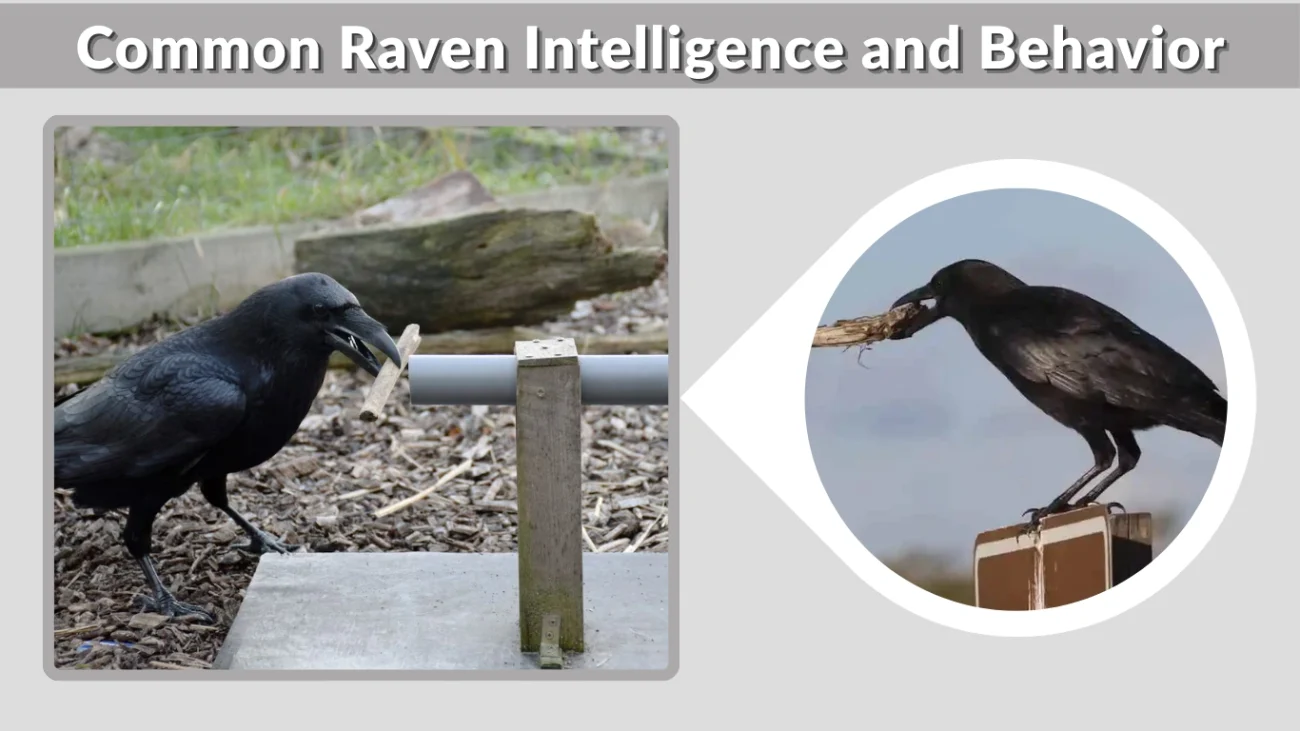
One of the most fascinating aspects of the Common Raven is its exceptional intelligence. Scientists often rank ravens among the smartest birds in the world. Their brain-to-body ratio is relatively large compared to many other bird species, allowing them to perform complex tasks and solve problems in ways that were once thought possible only for mammals.
Problem-Solving Skills
Ravens are known for their impressive problem-solving abilities. In scientific studies, they have demonstrated the capacity to solve puzzles in order to access food. For example, ravens have been observed pulling strings, opening containers, and even using sequences of actions to reach hidden food.
Researchers believe ravens can understand cause-and-effect relationships. This ability allows them to learn quickly from experience and adapt to new situations in the wild.
Tool Use
Another remarkable trait of ravens is their occasional use of tools. Some ravens have been observed using sticks or other objects to help them obtain food from difficult places. Although tool use is more commonly associated with certain other corvids, ravens have shown similar abilities in both laboratory experiments and natural environments.
This behavior highlights the bird’s capacity for creative thinking and problem solving.
Communication
Common Ravens are also excellent communicators. They produce a wide range of sounds including croaks, knocks, and clicking noises. Their deep, harsh call is one of their most recognizable features.
Ravens can also mimic certain sounds from their environment, including other birds and sometimes human-related noises. Their complex vocal system allows them to communicate warnings, attract mates, and maintain social connections with other ravens.
Social Behavior
Ravens display interesting social behaviors depending on their age and life stage. Adult ravens often live in pairs, especially during the breeding season, and many pairs stay together for life.
Younger ravens, however, may gather in larger groups where they interact, learn social skills, and compete for food. These social groups help young birds develop survival strategies before they establish their own territories.
Common Raven vs Crow
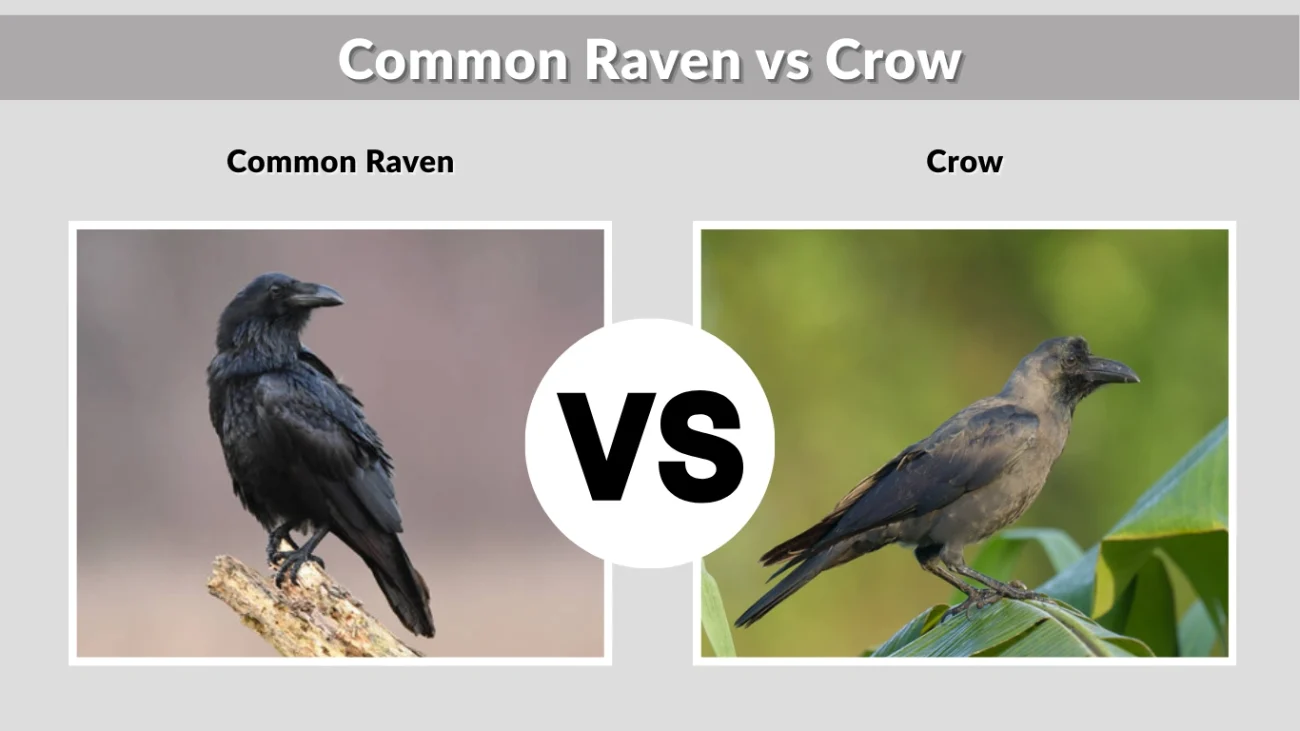
Many people confuse ravens with crows because both birds are black and belong to the same family. However, there are several noticeable differences between the two.
Size
One of the easiest ways to tell them apart is size. Ravens are significantly larger than crows, with heavier bodies and thicker beaks.
Tail Shape
Tail shape is another helpful clue. When flying, a raven’s tail appears wedge-shaped or diamond-shaped, while a crow’s tail looks more fan-shaped.
Voice
The sounds made by these birds are also different. Ravens produce a deep, croaking call, while crows make the familiar higher-pitched “caw” sound.
Flight Style
Ravens often soar and glide through the air, sometimes performing acrobatic movements. Crows, on the other hand, usually flap their wings more steadily and rarely soar for long periods.
Reproduction and Lifespan
The Common Raven has a relatively strong pair bond, and many pairs mate for life. During the breeding season, which usually begins in late winter or early spring, ravens work together to build a nest.
These nests are typically constructed on cliffs, tall trees, or high structures, providing protection from predators. The nests are large and made from sticks, branches, and softer materials such as grass, moss, or fur.
Eggs and Chicks
A female raven usually lays three to seven eggs in each breeding season. The eggs are incubated for about 20 to 25 days, mainly by the female while the male provides food.
After hatching, both parents help care for the chicks. The young birds grow quickly and remain in the nest for several weeks before they are ready to fly.
Lifespan
In the wild, Common Ravens typically live 10 to 15 years. However, in protected environments such as zoos or research facilities, they may live much longer. Some captive ravens have been known to survive more than 40 years.
Role in Ecosystems
Ravens play an important role in maintaining healthy ecosystems. As scavengers, they help remove animal carcasses from the environment. This natural cleanup process helps reduce the spread of disease and keeps ecosystems balanced.
Ravens also interact with many other animals. For example, they sometimes follow large predators like wolves or bears, waiting for leftover food from their kills. In return, ravens may help predators locate prey by calling attention to animals in the area.
Additionally, ravens can help spread plant seeds when they consume fruits and berries, contributing to plant growth in different habitats.
Interesting Facts About the Common Raven
The Common Raven has many unique traits that make it one of the most fascinating birds in the world.
- Ravens can recognize individual human faces and remember them for long periods.
- They sometimes play in the air, sliding on wind currents or performing acrobatic flips.
- Ravens have been observed working together to obtain food or distract predators.
- Their intelligence is often compared to that of young children in problem-solving tasks.
Conclusion
The Common Raven (Corvus corax) is far more than just a large black bird. It is an intelligent, adaptable species that thrives in many different environments across the Northern Hemisphere. With its remarkable problem-solving skills, complex social behavior, and flexible diet, the raven has become one of the most successful bird species in the world.
Beyond its ecological importance, the raven has also captured human imagination for centuries through myths, stories, and scientific curiosity. As research continues, scientists are discovering even more about the impressive intelligence and behavior of this extraordinary bird.