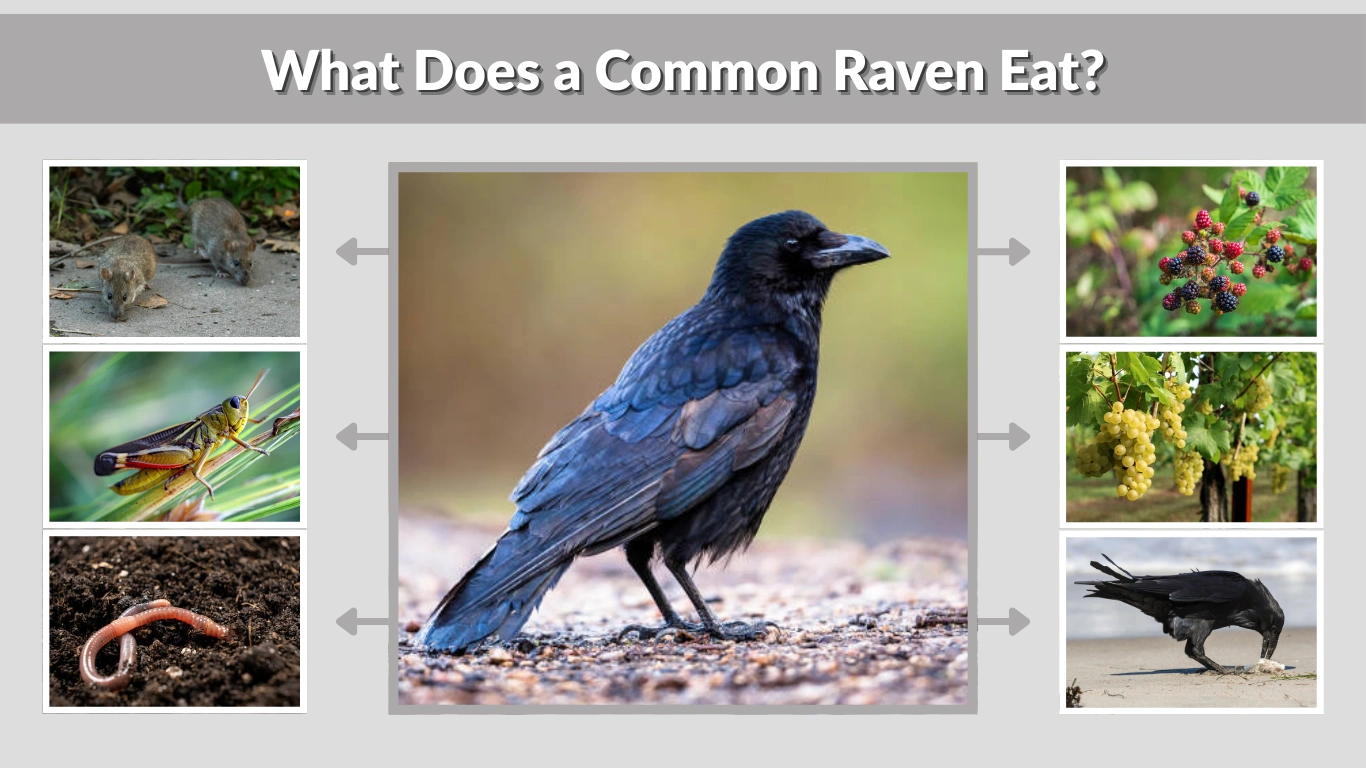
The Common Raven (Corvus corax) is one of the most adaptable and intelligent birds in the world. One key reason for its survival across many environments is its extremely flexible diet. Ravens are omnivores, meaning they eat both plant and animal foods. They are also opportunistic feeders, which means they will eat whatever food is available in their surroundings. From small animals and insects to fruits and carrion, ravens consume a wide variety of foods. Understanding what common ravens eat helps explain how they thrive in forests, mountains, deserts, and even areas close to human settlements.
Overview of the Common Raven Diet
The diet of the Common Raven is very diverse. Unlike birds that depend on a single type of food, ravens can eat many different things depending on what is available. This flexibility allows them to survive in harsh conditions and adapt to different habitats.
Ravens are known as opportunistic omnivores, meaning they take advantage of many food sources. Their diet typically includes animal matter such as small mammals, insects, and carrion, as well as plant-based foods like fruits, seeds, and grains.
Because ravens are intelligent and resourceful, they are excellent at locating food. They often search large areas while flying and use their sharp eyesight to detect potential meals on the ground. Their ability to eat almost anything makes them one of the most successful bird species across the Northern Hemisphere.
Animals and Meat in the Raven Diet
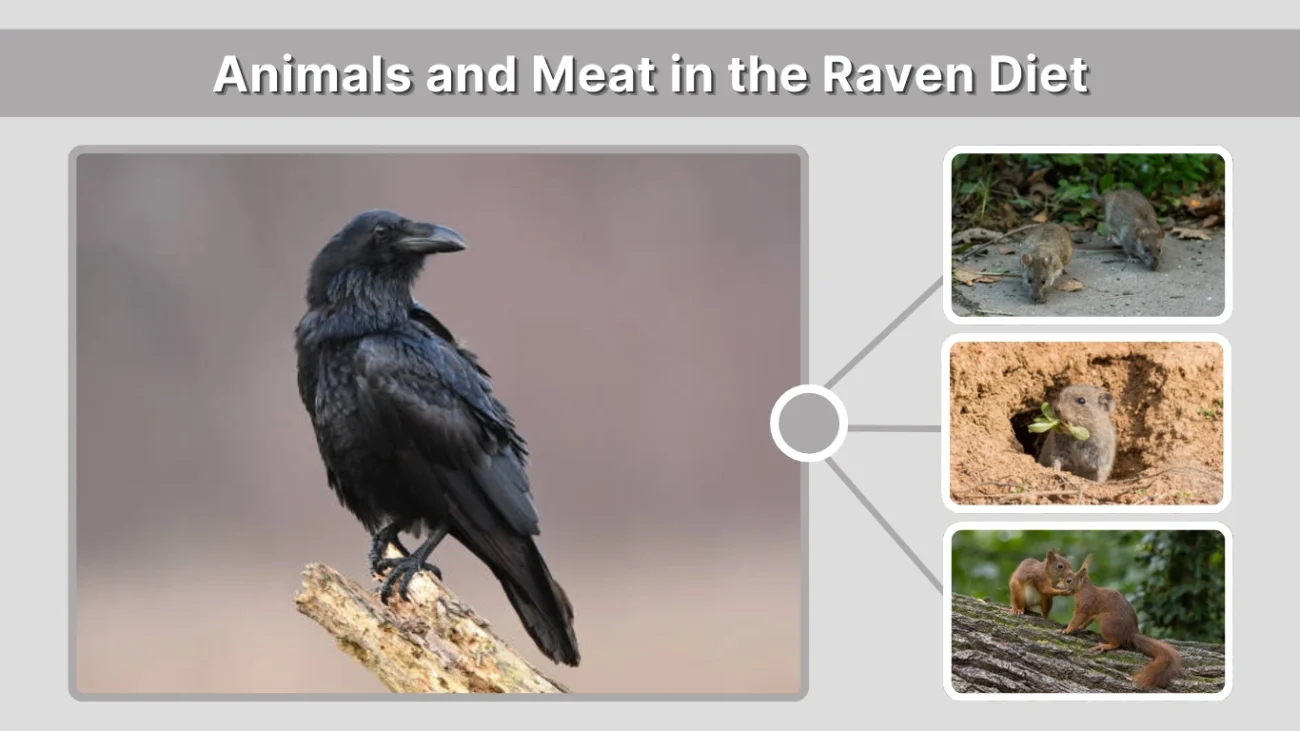
Animal-based food makes up a significant portion of the raven’s diet. Ravens frequently hunt small animals or feed on remains left behind by predators. Their strong beaks allow them to tear meat and access food that many smaller birds cannot handle.
Carrion (Dead Animals)
One of the most common food sources for ravens is carrion, which refers to the bodies of dead animals. Ravens are well-known scavengers and often feed on carcasses they find in the wild.
They may locate carrion by spotting it from the air or by following large predators such as wolves, bears, or foxes. After predators finish eating, ravens often feed on the leftover remains. In this way, ravens play an important role in cleaning up the environment by removing dead animals.
In areas near roads, ravens sometimes feed on roadkill, which provides an easy food source.
Small Mammals
Ravens are also capable hunters and may catch small animals when the opportunity arises. Some of the small mammals they commonly eat include:
- mice
- voles
- squirrels
- rabbits
Ravens usually hunt these animals on the ground. They may watch from above and swoop down quickly when they see movement.
Although they are not specialized hunters like hawks or eagles, ravens can still capture small prey thanks to their intelligence and quick reactions.
Birds and Bird Eggs
Another part of the raven diet includes birds and bird eggs. Ravens are known to raid nests, especially during the breeding season when eggs and young chicks are available.
They may search trees, cliffs, or other nesting areas for unattended nests. Once they find one, they can eat the eggs or young birds inside. While this behavior may seem harsh, it is a natural part of the food chain and helps maintain balance within ecosystems.
Fish and Marine Animals
In coastal regions, ravens may also eat fish and other marine animals. Sometimes they catch small fish themselves in shallow water, but more often they feed on fish remains washed ashore or left behind by other predators.
Ravens living near rivers, lakes, or coastlines may include fish more frequently in their diet compared to ravens living inland.
Insects and Invertebrates
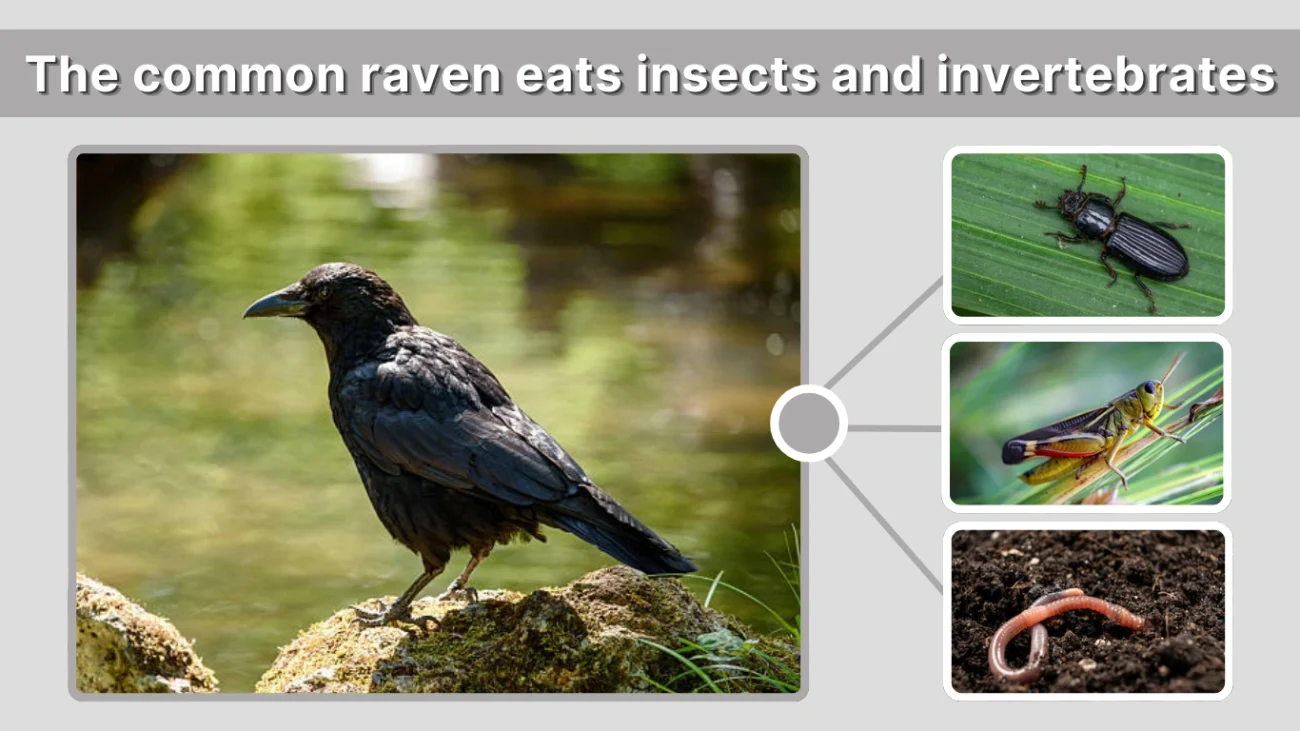
In addition to larger prey, ravens consume many types of insects and invertebrates. These smaller food sources are especially important during warmer months when insects are abundant.
Common insects and invertebrates eaten by ravens include:
- beetles
- grasshoppers
- ants
- worms
- spiders
Ravens may search the ground, flip over small rocks, or dig in soil to find these creatures. Insects provide important nutrients and are often easier to capture than larger animals.
Young ravens may rely heavily on insects while learning to hunt, since they are plentiful and easier to catch than mammals or birds.
Plant-Based Foods Ravens Eat
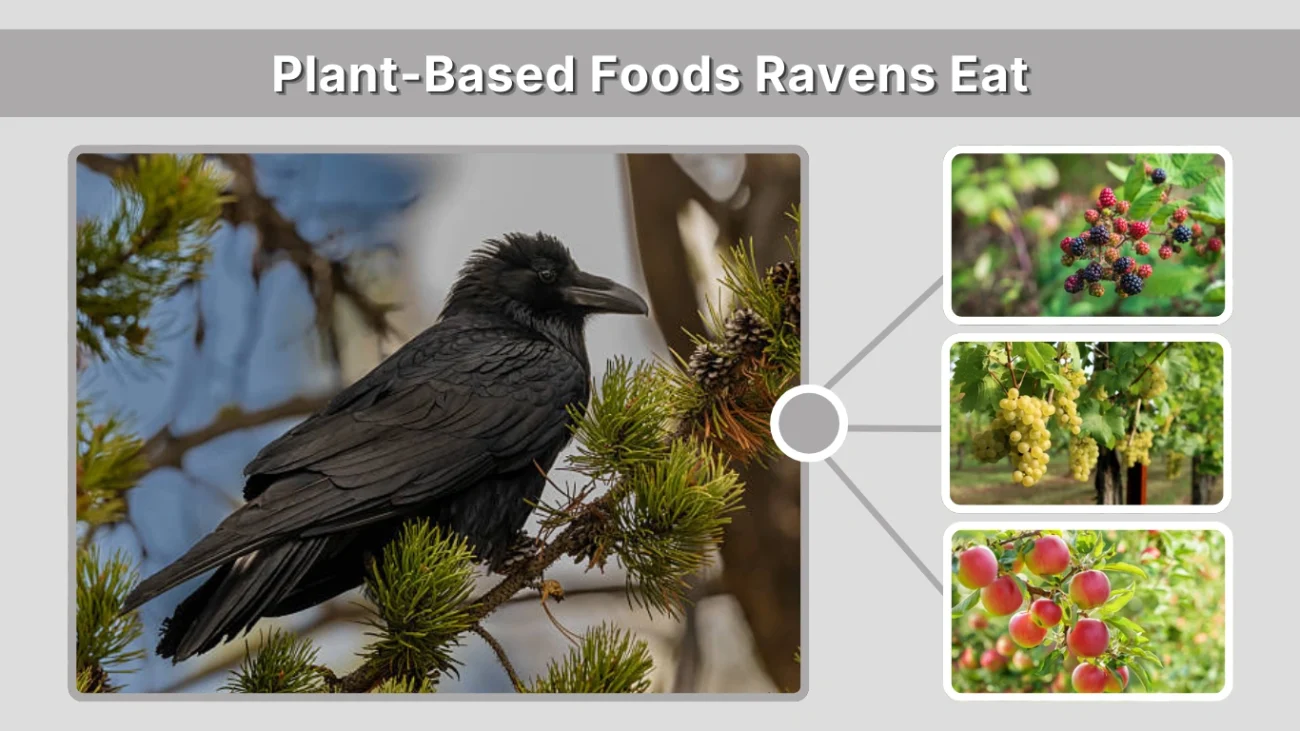
Although animal foods make up a large part of their diet, Common Ravens also eat many plant-based foods. These foods are especially important when animal prey is scarce. Fruits, seeds, and grains provide energy and help ravens survive during different seasons.
Fruits and Berries
Ravens frequently eat fruits and berries that grow in forests, fields, and shrublands. These foods are particularly common in the warmer months when plants produce fruit.
Some fruits and berries eaten by ravens include:
- wild berries
- grapes
- apples
- cherries
Fruits are easy to find and provide important nutrients such as vitamins and natural sugars. Ravens may eat fruit directly from plants or collect fallen fruit from the ground.
Seeds and Grains
Ravens also consume seeds and grains, especially in agricultural areas. Farms and open fields can provide large amounts of grain that birds can easily access.
Examples of grains and seeds ravens may eat include:
- corn
- wheat
- barley
- sunflower seeds
These foods are often found in harvested fields or storage areas. Because ravens are intelligent and curious, they quickly learn where such food sources are located.
Nuts
In some regions, ravens also eat nuts, including acorns and other tree nuts. Nuts provide a high-energy food source that helps birds maintain strength during colder months.
Ravens sometimes carry nuts to higher places and drop them on hard surfaces to crack them open. This behavior demonstrates their problem-solving skills and adaptability.
How Ravens Find Food
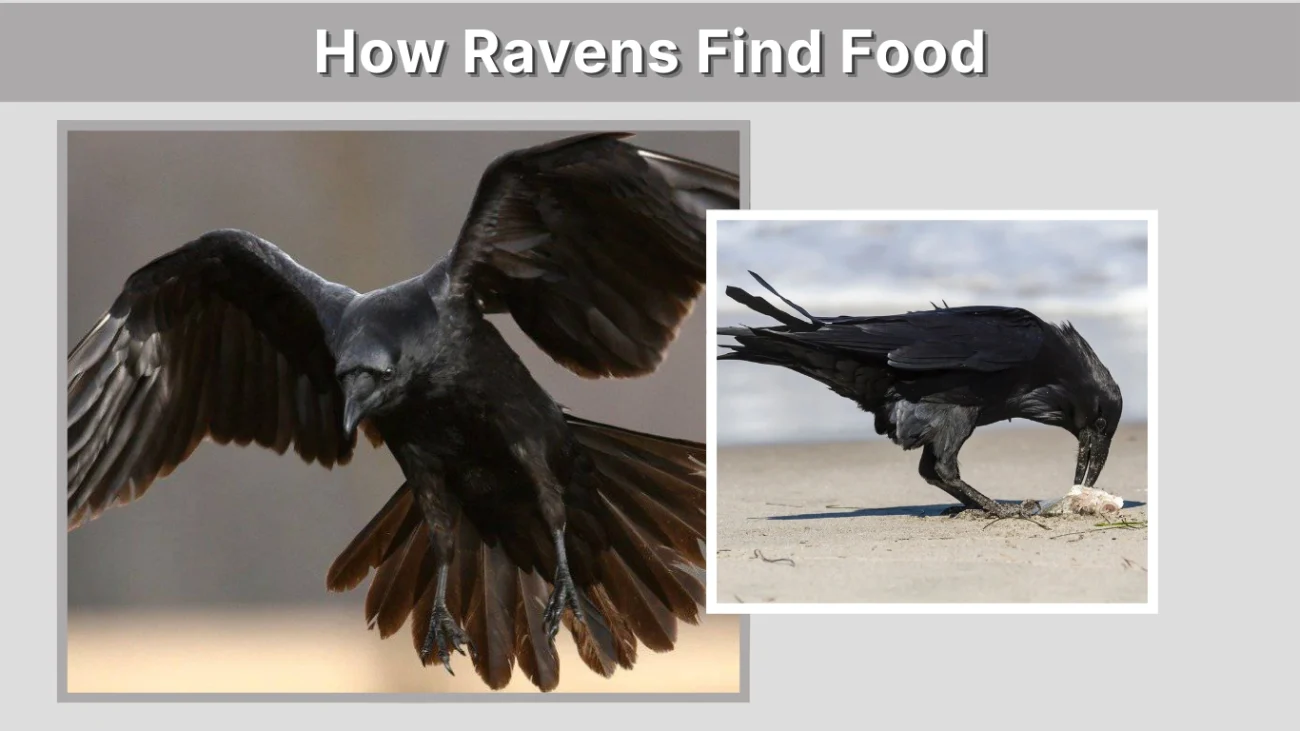
Ravens use a combination of intelligence, observation, and experience to locate food. Their excellent eyesight allows them to spot food sources from long distances while flying.
Hunting Techniques
When hunting small animals, ravens often search from the air. They may fly over open land and watch for movement on the ground. Once they notice prey, they quickly swoop down to capture it.
Sometimes ravens hunt by walking along the ground and exploring areas where insects or small animals may be hiding.
Scavenging Behavior
Scavenging is one of the most common ways ravens obtain food. They frequently feed on animals that have already died or leftovers from predator kills.
Ravens may even follow large predators such as wolves or bears, waiting for them to finish feeding before approaching the carcass. Their patience and awareness help them access food that would otherwise be difficult to obtain.
Intelligence in Finding Food
The intelligence of ravens also helps them find food efficiently. They are capable of remembering locations where food was previously found and returning to those places later.
Ravens can also observe other animals and follow them to potential food sources. This ability to learn and adapt makes them extremely successful foragers.
Food Storage Behavior
One remarkable behavior of the Common Raven is food caching, which means storing food for later use. When ravens find more food than they can eat at once, they sometimes hide the extra portions.
They may bury food in the ground, hide it under rocks, or place it in cracks in tree bark. Ravens rely on their strong memory to remember these hiding spots and return to them when food becomes scarce.
However, ravens are also aware that other birds might try to steal their stored food. Because of this, they sometimes hide their food in multiple locations or pretend to hide it in one place while actually storing it somewhere else.
Seasonal Changes in the Raven Diet
The diet of the Common Raven can change depending on the season and availability of food.
Summer Diet
During the summer months, ravens often eat more insects, fruits, and berries. These foods are widely available and easier to obtain.
Young animals and bird eggs are also more common during this season, providing additional food sources.
Winter Diet
In winter, food can be harder to find. Ravens rely more heavily on carrion, stored food, and any available scraps. Their scavenging ability becomes especially important during cold months when many insects and plants are no longer available.
Their adaptability allows them to survive even in harsh winter environments.
Do Ravens Eat Human Food?
Ravens sometimes eat food associated with humans, particularly in areas where people live or travel. They may search for food in garbage containers, campsites, or picnic areas.
Common human-related foods eaten by ravens include:
- food scraps
- garbage waste
- pet food
Although this behavior can help ravens survive, wildlife experts often encourage people not to feed wild animals intentionally. Natural food sources are healthier and help maintain normal animal behavior.
Conclusion
The Common Raven has one of the most flexible diets among birds. As omnivores, ravens eat a wide variety of foods including small animals, insects, carrion, fruits, seeds, and grains. Their intelligence and adaptability allow them to locate food in many different environments and even store extra food for later use.
This diverse diet plays a major role in the raven’s success as a species. By taking advantage of many food sources, ravens can survive in forests, mountains, deserts, and coastal regions. Their feeding habits also help ecosystems by removing carcasses and spreading seeds, making the Common Raven an important part of the natural world.