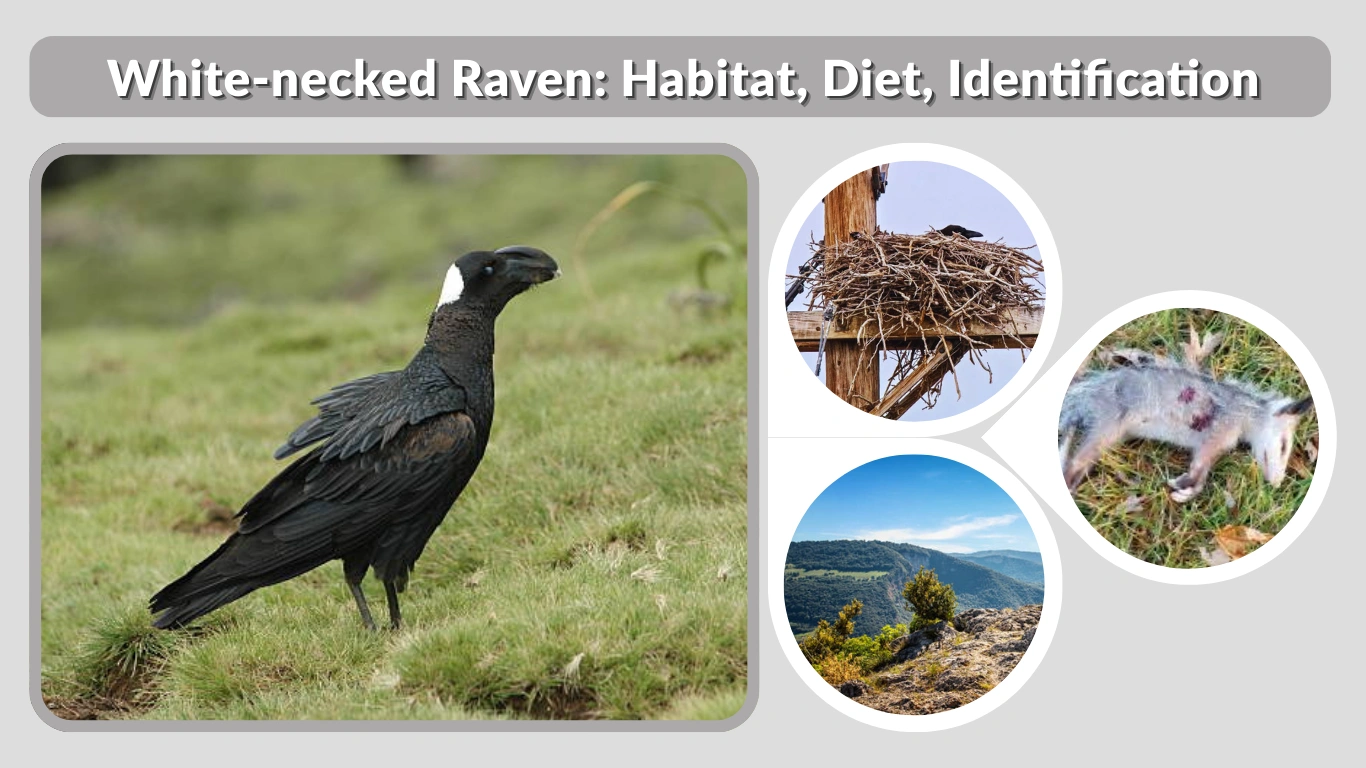
The White-necked Raven (Corvus albicollis) is one of the largest raven species found in Africa. Known for its glossy black feathers and distinctive white patch on the back of its neck, this impressive bird stands out among members of the corvid family. White-necked Ravens are commonly seen in mountainous and rocky regions where they soar across open landscapes searching for food. Like other ravens, they are highly intelligent and adaptable. Learning about their habitat, diet, and behavior helps us better understand how this remarkable bird thrives in challenging environments.
What Is the White-necked Raven?
The White-necked Raven is a large bird belonging to the Corvidae family, a group that includes crows, ravens, magpies, and jays. Birds in this family are well known for their intelligence, problem-solving abilities, and adaptability to different habitats. The White-necked Raven shares many of these characteristics but also has several unique features that make it easy to identify.
Scientific Classification
The scientific name of the White-necked Raven is Corvus albicollis. The species name comes from Latin words meaning “white neck,” referring to the bird’s noticeable white feather patch at the base of its neck.
Like other corvids, the White-necked Raven has a relatively large brain compared to its body size. This contributes to its advanced behavior, including the ability to learn from experience and adapt to different food sources.
The species is closely related to other ravens found around the world, including the Common Raven. However, the White-necked Raven is primarily found across various regions of Africa.
Physical Characteristics
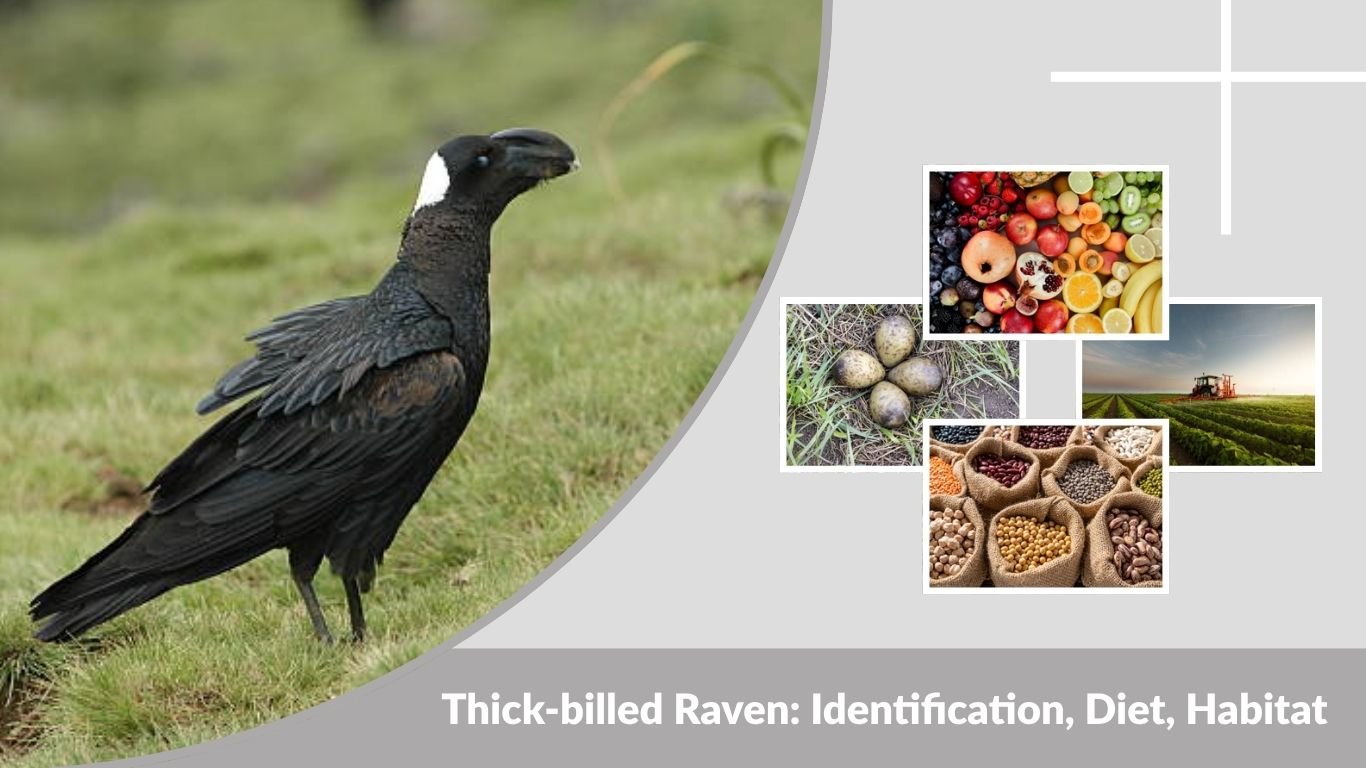
The White-necked Raven has a striking appearance. Its body is mostly covered in shiny black feathers that may appear bluish or purplish when sunlight reflects off them. One of its most distinctive features is the white patch on the back of the neck, which is partly hidden beneath the outer feathers but can often be seen when the bird moves.
Another noticeable feature is the bird’s large and powerful beak. Compared to many other raven species, the White-necked Raven has an especially thick and strong bill. This strong beak allows it to break open tough food items such as hard nuts or animal carcasses.
The bird also has dark eyes and strong legs that help it move across rocky surfaces. These physical traits make the White-necked Raven well suited to its rugged habitat.
Size and Wingspan
The White-necked Raven is considered one of the largest raven species in Africa. Adult birds usually measure around 50 to 54 centimeters (about 20 to 21 inches) in length.
Their wings are broad and powerful, allowing them to glide and soar efficiently. Ravens often take advantage of rising air currents around cliffs and mountains, enabling them to travel long distances while searching for food.
Their strong flight abilities help them cover large territories and locate food sources in environments where resources may be spread out.
Habitat and Distribution
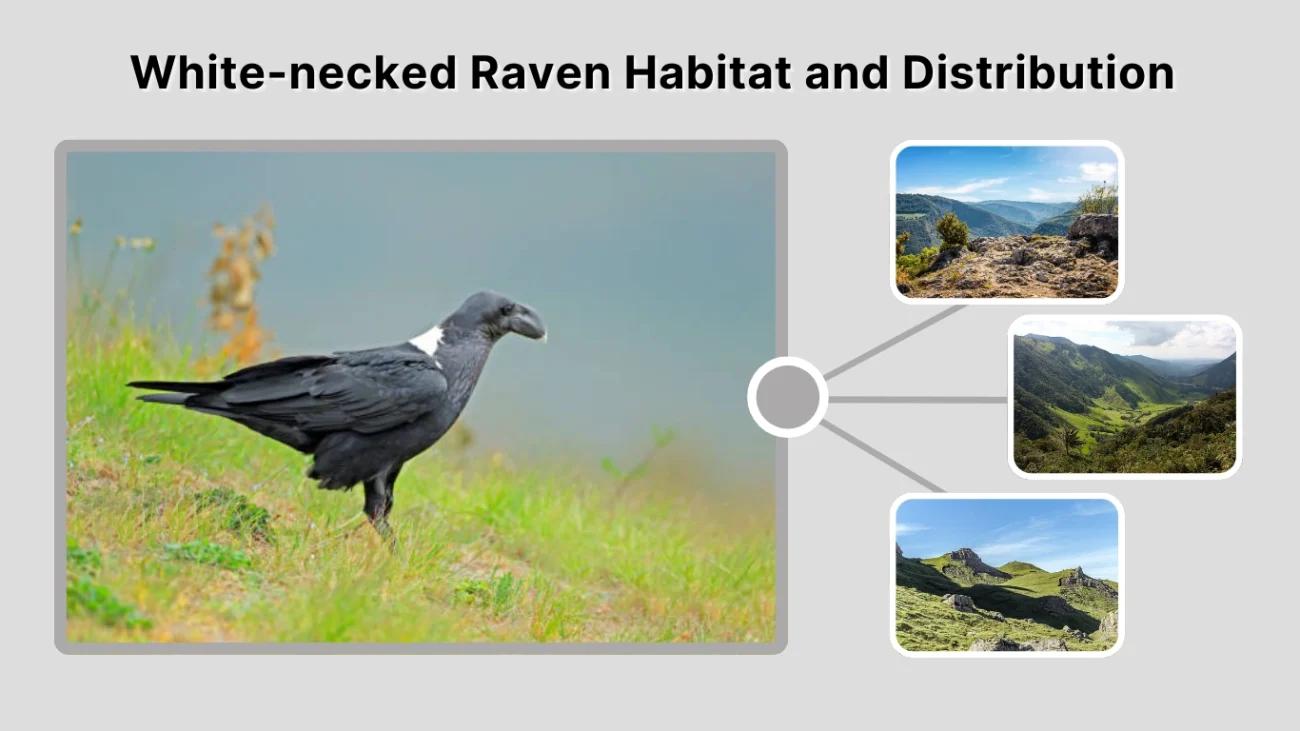
The White-necked Raven is mainly found in eastern and southern Africa. It prefers rugged landscapes where cliffs, rocky hills, and open highlands provide suitable nesting and feeding areas.
Geographic Range
This species occurs in several African countries, particularly in regions with mountainous or rocky terrain. Some of the areas where the White-necked Raven can commonly be found include:
- Ethiopia
- Kenya
- Tanzania
- South Africa
- Namibia
Although their range covers many regions, they are usually more common in areas with cliffs and elevated landscapes where nesting sites are available.
Preferred Habitats
White-necked Ravens prefer environments that provide both good visibility and safe nesting sites. Their most common habitats include:
- rocky cliffs
- mountainous regions
- open highlands
- savannas
Cliffs and rocky ledges are especially important because they offer protected areas where ravens can build their nests safely away from predators.
Open landscapes also make it easier for ravens to locate food while flying overhead. Their strong eyesight allows them to detect potential food sources from long distances.
Elevation and Environmental Adaptation
White-necked Ravens are often found at higher elevations, especially in mountainous regions. These environments provide favorable wind conditions that allow the birds to soar and glide efficiently.
Their adaptability allows them to survive in areas where temperatures and weather conditions can vary significantly. By using cliffs for nesting and open areas for hunting and scavenging, the species successfully occupies habitats that might be difficult for other birds.
Diet and Feeding Habits
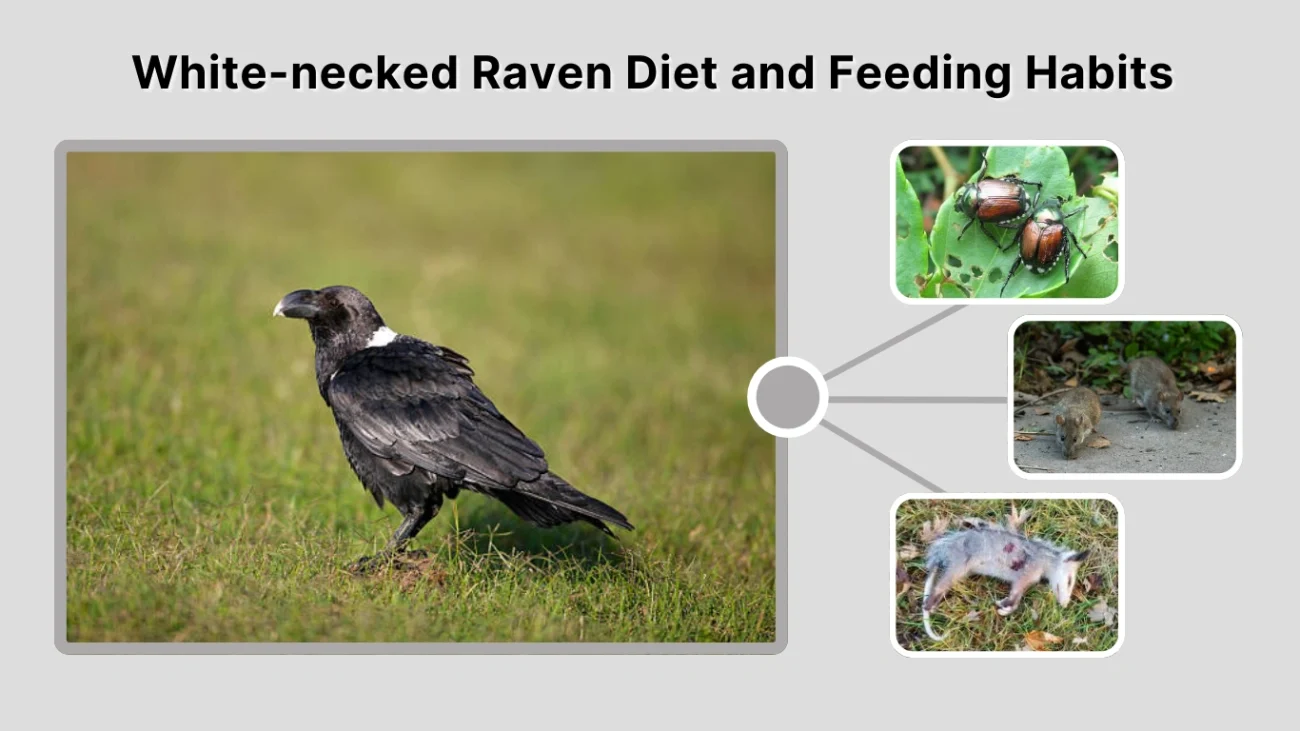
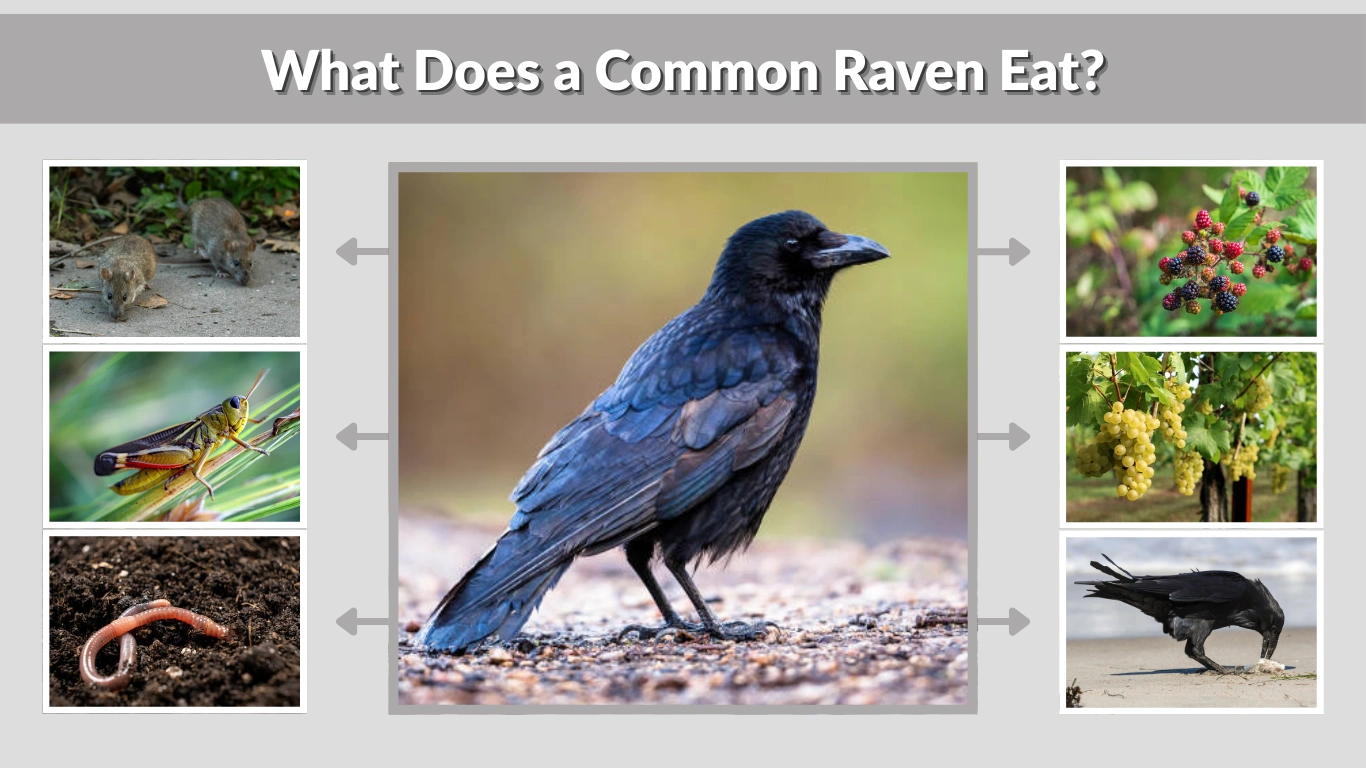
Like most ravens, the White-necked Raven has an omnivorous diet, meaning it eats both animal and plant foods. This flexible diet helps the species survive in environments where food availability may change throughout the year.
Omnivorous Diet
The White-necked Raven eats a wide range of foods depending on what is available in its habitat. Some common food sources include:
- insects
- small animals
- carrion (dead animals)
Insects often make up a significant part of the diet, particularly in warmer seasons when they are abundant. Ravens may search the ground for beetles, grasshoppers, and other insects.
They may also catch small animals such as rodents or lizards. Although they are not specialized hunters like birds of prey, their intelligence and quick reactions allow them to capture smaller prey when the opportunity arises.
Carrion is another important food source. As scavengers, White-necked Ravens frequently feed on the remains of dead animals they find in the wild.
Plant-Based Foods in the White-necked Raven Diet
Although animal foods form an important part of their diet, White-necked Ravens also consume plant-based foods. These foods help supplement their nutrition and provide energy, especially when animal prey is limited.
Fruits and Berries
White-necked Ravens sometimes eat fruits and berries found in their environment. In regions where shrubs and trees produce fruit, these birds may feed on:
- wild berries
- small desert fruits
- figs and other native fruits
Fruits provide natural sugars and nutrients that help sustain the birds during periods when insects or other prey are less available.
Seeds and Grains
Seeds and grains can also be part of the White-necked Raven’s diet. In areas near farms or grasslands, they may feed on leftover grains such as:
- corn
- wheat
- barley
These foods are easy to find in open fields and can provide a reliable food source when other foods are scarce.
Behavior and Intelligence
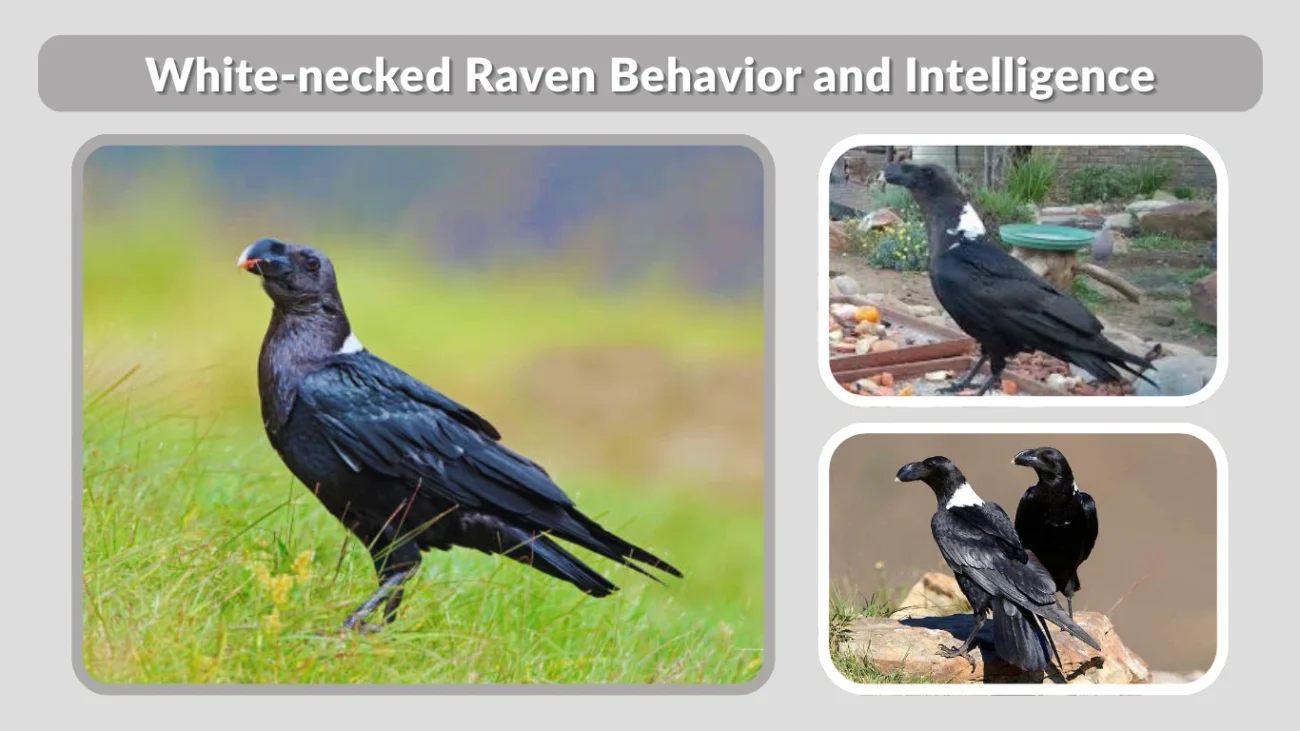
Like other members of the corvid family, the White-necked Raven is highly intelligent. Ravens are known for their problem-solving skills, strong memory, and ability to adapt to different environments.
Social Behavior
White-necked Ravens are usually seen in pairs or small groups. During the breeding season, a pair of ravens may defend a territory where they build their nest and raise their young.
Outside the breeding season, several birds may gather in feeding areas where food is plentiful. These small groups allow ravens to search for food more effectively and warn each other of potential danger.
Vocalizations
The White-necked Raven produces a range of vocal sounds used for communication. Their calls are usually deep and croaking, similar to the calls of other raven species.
These vocalizations help ravens communicate with their mates, signal danger, and maintain contact with other birds in their group.
Intelligence and Adaptability
Ravens are widely recognized as some of the most intelligent birds in the world. White-necked Ravens demonstrate this intelligence through their ability to locate food, remember feeding locations, and adapt to new situations.
Their strong memory allows them to remember areas where food has been found previously. This skill helps them survive in environments where food sources may not always be consistent.
White-necked Raven vs Other Raven Species
The White-necked Raven shares many characteristics with other ravens, but it also has features that make it unique.
Differences from the Common Raven
The Common Raven is found across much of the Northern Hemisphere, while the White-necked Raven is mainly limited to parts of Africa. Another major difference is the white patch on the neck, which gives the White-necked Raven its name.
The White-necked Raven also has a particularly thick and powerful beak, which is slightly larger compared to many other raven species.
Differences from the Pied Crow
In Africa, the White-necked Raven is sometimes compared with the Pied Crow, another large black-and-white bird. However, the Pied Crow has a clearly visible white chest and belly, while the White-necked Raven’s white patch is located on the neck and is partly hidden.
Additionally, the White-necked Raven is generally larger and heavier than the Pied Crow.
Unique Identification Features
Some key features that help identify the White-necked Raven include:
- the white feather bases on the neck
- glossy black plumage
- large and thick beak
- strong soaring flight
These traits help birdwatchers distinguish the species from other birds living in the same region.
Reproduction and Nesting
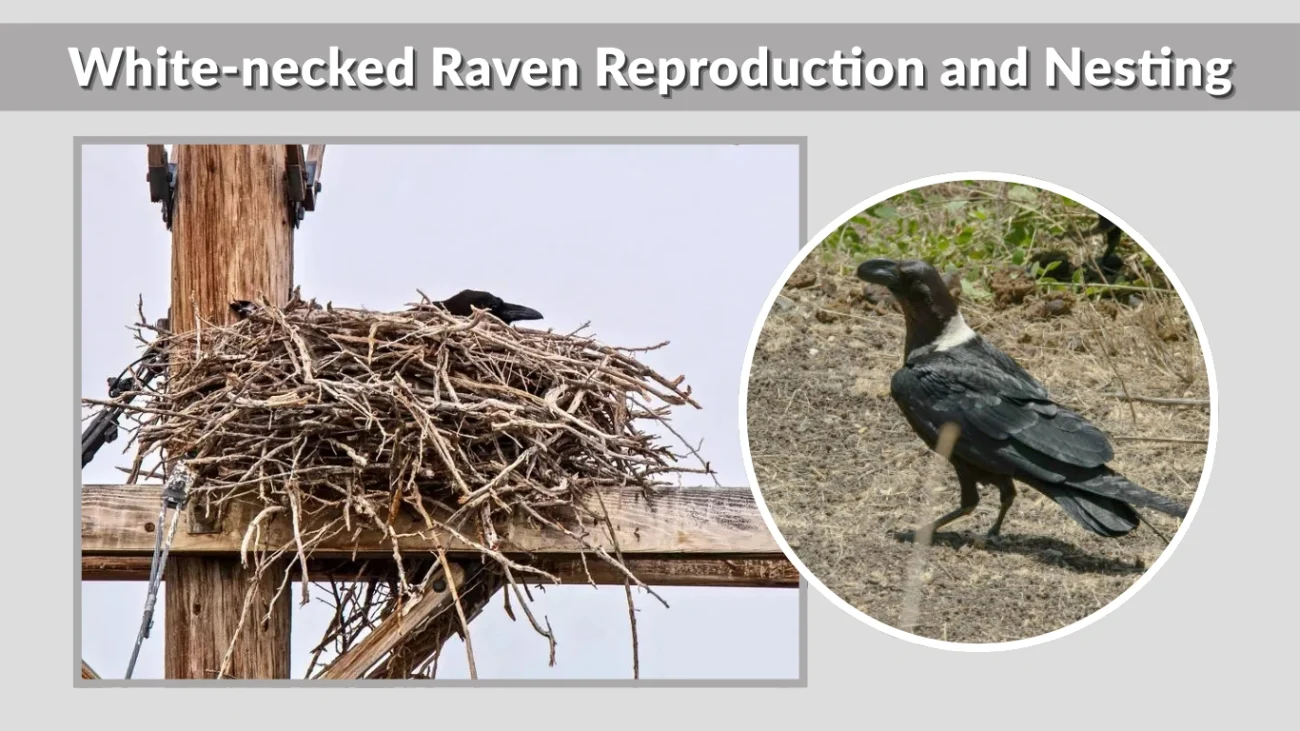
White-necked Ravens usually breed during periods when food availability is favorable, which may vary depending on local climate conditions.
Nest Locations
The birds often build their nests in locations that provide safety and good visibility. Common nesting sites include:
- cliffs and rocky ledges
- tall trees
- large structures in mountainous areas
The nests are typically made from sticks and branches, with softer materials such as grass or fur used to line the inside.
Eggs and Parental Care
A female White-necked Raven usually lays three to five eggs in a single breeding season. The female incubates the eggs while the male often brings food and helps defend the nesting area.
Once the chicks hatch, both parents share the responsibility of feeding and protecting them until they are strong enough to leave the nest.
Role in the Ecosystem
The White-necked Raven plays an important role in maintaining balance in its ecosystem. As a scavenger, it helps clean the environment by feeding on animal carcasses that might otherwise remain in the landscape.
By eating insects and small animals, the raven also contributes to controlling certain pest populations. Additionally, when the bird consumes fruits and seeds, it may help spread plant seeds to new locations.
Interesting Facts About the White-necked Raven
The White-necked Raven has several interesting characteristics that make it a fascinating species.
- It is one of the largest raven species found in Africa.
- Its name comes from the white patch hidden beneath the neck feathers.
- The species has an especially thick and powerful beak, useful for breaking tough food.
- White-necked Ravens often soar for long periods using rising air currents around cliffs and mountains.
Conclusion
The White-necked Raven (Corvus albicollis) is a remarkable bird that thrives in the rocky landscapes and mountainous regions of Africa. With its distinctive white neck patch, powerful beak, and impressive intelligence, this species stands out among members of the corvid family.
Its flexible diet, strong flying ability, and adaptability allow it to survive in environments where food and shelter may be limited. By acting as both scavenger and predator, the White-necked Raven plays an important role in maintaining healthy ecosystems across its natural range.