











Mice might all seem the same at first, especially when one darts across your floor or scurries through the attic. However, field mice and house mice are not identical—they differ in looks, habits, habitats, and behavior. Whether you’re trying to identify the mouse in your garage or just want to understand how to keep them away, this guide breaks down the seven most important differences between these two common types.
The table below offers a quick comparison before we explore each trait in more detail.
Comparison Table: Field Mouse vs House Mouse
| Feature | Field Mouse | House Mouse |
| Habitat | Fields, woods, grassy areas | Indoors, near humans and food sources |
| Appearance | Brown with white belly, larger eyes | Uniform gray or brown, smaller eyes |
| Tail | Shorter and fur-covered | Longer and mostly hairless |
| Droppings | Larger, pointed at ends | Smaller, oval-shaped |
| Behavior | Cautious, prefers outdoors | Bold, thrives indoors |
| Reproduction Rate | Seasonal breeding, fewer litters | Year-round breeding, rapid multiplication |
| Diet Preference | Seeds, berries, grains | Human food, crumbs, pet food |
1. Habitat Preferences

Field Mouse
Field mice, also known as deer mice, are typically found in outdoor environments like meadows, farmlands, grassy fields, woodlands, and gardens. They prefer to build their nests in burrows, tree hollows, or under piles of debris. They generally enter homes only during colder months or when food outside is scarce.
House Mouse
As the name suggests, house mice are highly adapted to indoor living. They prefer warm environments close to food and nesting materials, such as kitchens, basements, attics, and wall voids. Once they find a reliable food source indoors, they often stay and reproduce rapidly.
2. Physical Appearance

Field Mouse
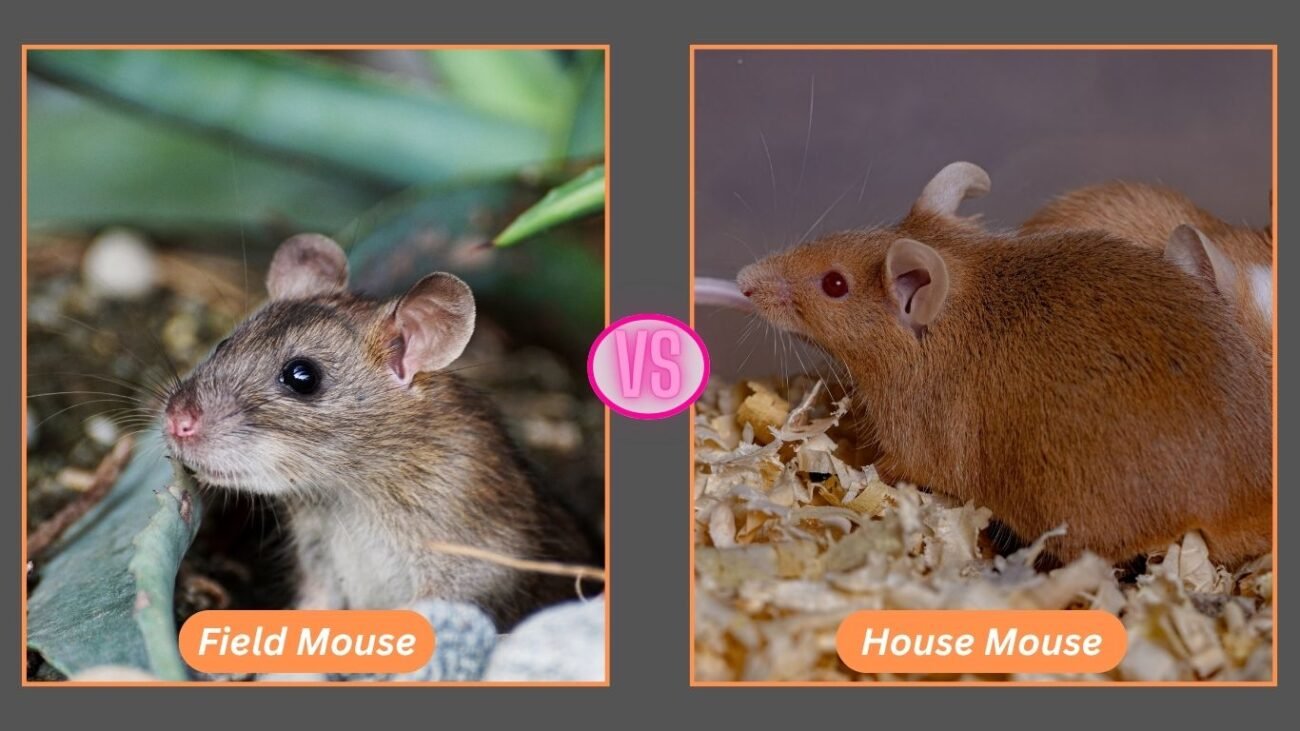
Field mice have a two-toned fur color—usually brown or reddish-brown on top and white or gray on the belly. They also have larger eyes and ears, helping them survive in outdoor environments with low light. Their body is slightly more rounded, and they generally look “cuter” due to these features.
House Mouse
House mice have uniform coloring, typically gray or light brown all over, including the belly. Their eyes and ears are relatively smaller, and their bodies are more slender. This streamlined appearance helps them move quickly through narrow indoor spaces.
3. Tail Characteristics
Field Mouse
The tail of a field mouse is shorter than its body and often covered with a thin layer of fur. This tail structure provides better insulation and protection when living outdoors in cooler climates.
House Mouse
A house mouse has a long, hairless tail that is usually the same length as or longer than its body. This tail helps it maintain balance while climbing, an advantage in indoor settings like cupboards, pipes, and electrical wiring paths.
4. Dropping Differences
Field Mouse
Field mouse droppings are larger and more pointed at the ends. You’re more likely to find these droppings in attics, garages, sheds, or near stored grains and seeds. Their size and shape can be a helpful clue when trying to identify the intruder.
House Mouse
House mouse droppings are smaller, rod-shaped, and more rounded at the ends. You’ll commonly find them along baseboards, inside kitchen cabinets, under sinks, or behind appliances. They often leave behind dozens of droppings per day in areas with frequent activity.
5. Behavior and Lifestyle
Field Mouse
Field mice are more cautious and shy, often avoiding human activity. They’re excellent climbers and jumpers, but prefer staying outdoors unless absolutely necessary. If they do enter a home, they usually retreat once the weather improves.
House Mouse
House mice are bolder and more adaptable. They can live and breed entirely indoors, often becoming active when the house is quiet. Their confidence around human environments makes them harder to spot and control once they’ve established a nest.
6. Reproduction and Infestation Risk
Field Mouse
Field mice breed primarily in spring and summer, with fewer litters per year—typically 2 to 4 litters, each with 4 to 6 young. This slower reproduction rate means infestations are less aggressive and easier to manage if caught early.
House Mouse
House mice can breed year-round, with a single pair producing up to 10 litters per year. Each litter may contain 5 to 8 pups. This high reproduction rate makes house mice a much more serious and fast-growing infestation threat.
7. Diet and Feeding Habits

Field Mouse
Field mice prefer a natural outdoor diet, including seeds, nuts, berries, grains, and small insects. They usually gather food and store it near their nesting area for later use, especially during colder months.
House Mouse
House mice will eat almost anything—from bread and cereal to sweets, grease, pet food, and even soap. They’re opportunistic feeders and are especially attracted to crumbs and unsecured pantry items in homes.
FAQs
How can I tell if I have a field mouse or a house mouse in my home?
Look at the fur color and tail. Field mice usually have two-tone fur (brown top, white belly) and a shorter, fur-covered tail, while house mice are more uniformly gray or brown with a long, nearly hairless tail. Droppings and behavior also provide clues—house mice leave smaller, pellet-like droppings and are more active indoors.
Are field mice or house mice more dangerous to have inside?
House mice are typically more dangerous indoors because they’re more likely to reproduce rapidly, contaminate food, and chew wires or insulation. While field mice may carry diseases from outside, they are less likely to stay long-term inside homes unless it’s cold or food is scarce.
Can field mice become house mice over time?
Not exactly. While field mice may enter homes, especially during winter, they do not typically adapt permanently to indoor life like house mice. House mice are a separate species (Mus musculus) that evolved to live closely with humans and thrive in indoor settings.
Do both field mice and house mice carry diseases?
Yes, both types can carry diseases, including salmonella, hantavirus, and leptospirosis. Field mice, in particular, are known carriers of hantavirus due to their contact with wild environments. Proper cleaning and pest control are essential to minimize risks.
What’s the best way to prevent field and house mice from entering my home?
Start by sealing entry points—any cracks, holes, or gaps near windows, doors, and foundations. Keep food sealed, garbage covered, and pet food stored securely. Also, remove outdoor attractants like birdseed, tall grass, or wood piles close to the house.


