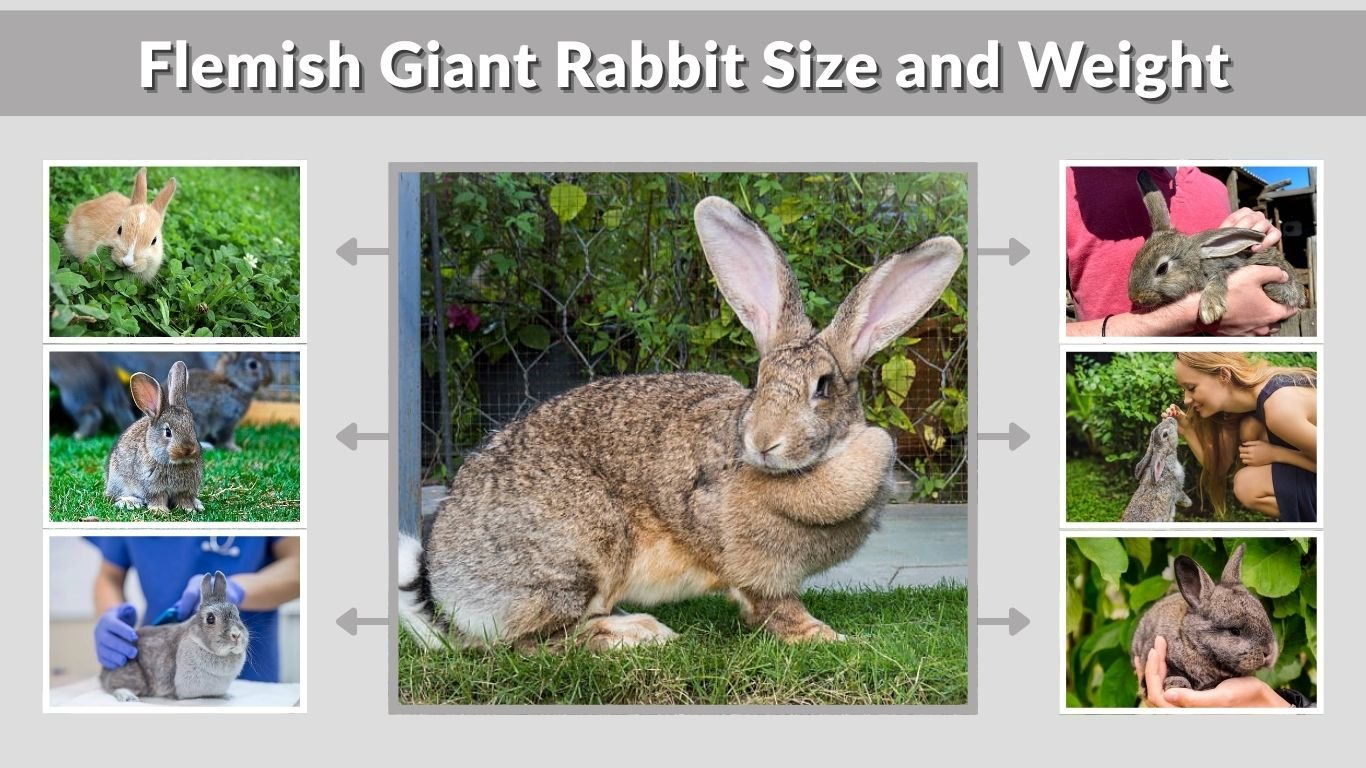
The Flemish Giant rabbit is known as one of the largest rabbit breeds in the world. Famous for its impressive size, gentle nature, and unique appearance, this breed has gained popularity among pet owners and breeders alike. If you are planning to own one or simply want to learn more, understanding the size and weight of a Flemish Giant rabbit is essential.
What Is a Flemish Giant Rabbit?
The Flemish Giant rabbit originated in Belgium and was initially bred for meat and fur production. Over time, it became popular as a domestic pet due to its calm temperament and friendly behavior.
Today, this breed is often called the “gentle giant” because of its large size combined with a docile personality. Despite their massive appearance, they are known to be affectionate and social animals when properly cared for.
Flemish Giant Rabbit Size (Full Grown)
The most defining feature of this breed is its enormous size compared to other rabbits.
Average Size
Flemish Giant rabbits can grow up to 2.5 to 4 feet (75–120 cm) in length, making them one of the longest domestic rabbit breeds.
Physical Characteristics
- Long, powerful body
- Thick bone structure
- Large hind legs
- Broad head with upright ears
Their body is muscular and elongated, giving them a strong and impressive appearance.
Full-Grown Size
Most Flemish Giant rabbits reach their full size between 8 to 12 months of age. However, they may continue to gain muscle and body mass beyond that period.
Male vs Female Size
- Females are usually slightly larger and heavier
- Males tend to be leaner but still very large
This size difference is normal and commonly seen in the breed.
Flemish Giant Rabbit Weight
Along with their length, weight is another key factor that makes this breed stand out.
Average Weight
A typical Flemish Giant rabbit weighs between 6 to 10 kg (13 to 22 pounds).
Maximum and Record Weight
Some rabbits can exceed 25 pounds, especially those bred for show or raised with optimal care. These exceptionally large rabbits often attract attention due to their unusual size.
Weight Differences
- Females are often heavier than males
- Diet and genetics play a major role in weight
- Growth rate varies from rabbit to rabbit
Maintaining a healthy weight is important, as overweight rabbits can develop health problems.
Flemish Giant Rabbit Size Chart
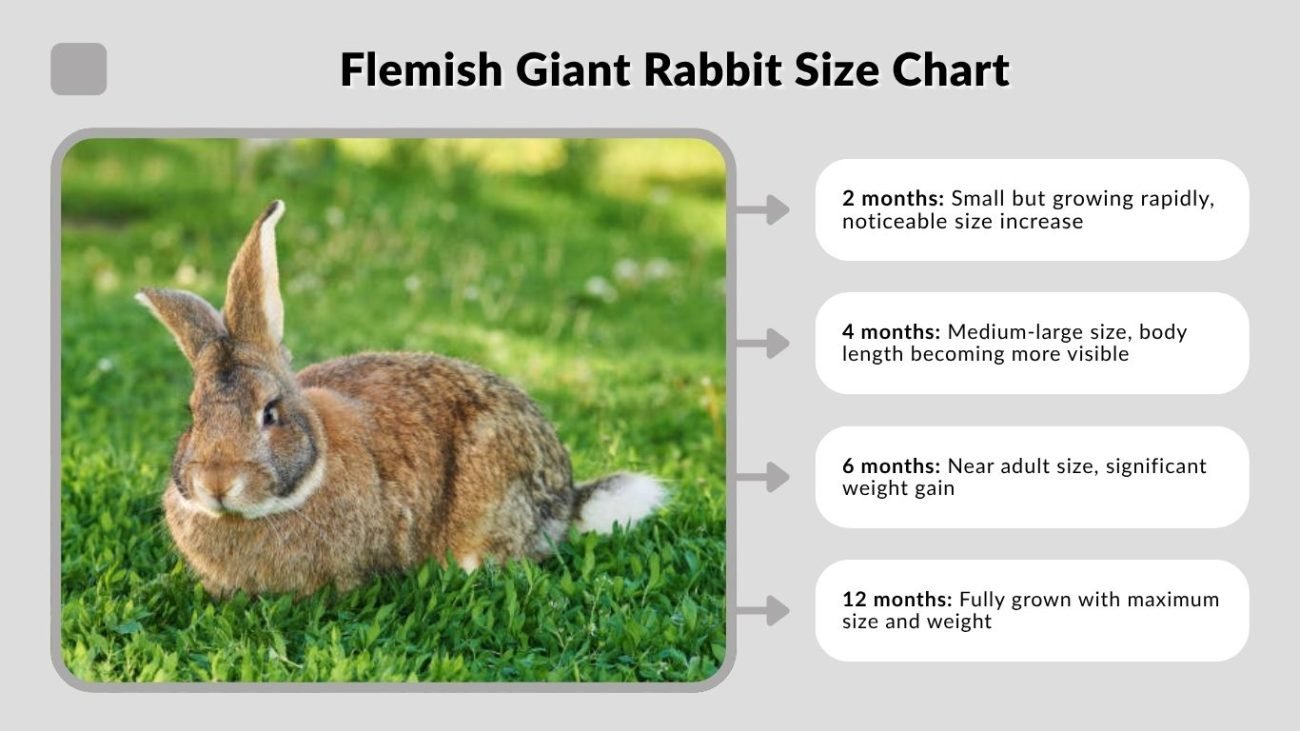
Understanding how these rabbits grow over time can help owners track their development and ensure proper care.
Growth Stages by Age
- 2 months: Small but growing rapidly, noticeable size increase
- 4 months: Medium-large size, body length becoming more visible
- 6 months: Near adult size, significant weight gain
- 12 months: Fully grown with maximum size and weight
Flemish Giant rabbits grow much faster than smaller breeds, especially during the first six months of life.
Baby vs Adult Flemish Giant Rabbit Size

The difference between baby and adult Flemish Giant rabbits is quite dramatic.
Baby Size
At birth, these rabbits are very small and delicate, similar to other rabbit breeds. However, they grow quickly within the first few weeks.
Growth Rate
Their rapid growth is one of their most unique traits. Within a few months, they can become several times larger than their original size.
Adult Size
As adults, they become massive compared to standard rabbits, with long bodies and heavy weight that truly justify their “giant” name.
Flemish Giant Rabbit Size Comparison
Comparing Flemish Giant rabbits to other breeds helps highlight just how large they really are.
Compared to Normal Rabbits
Flemish Giants are typically 2 to 3 times larger than average domestic rabbits. While most rabbits weigh around 2–4 pounds, Flemish Giants can easily exceed 15 pounds.
Compared to Other Giant Breeds
When compared to breeds like the Continental Giant, Flemish Giants are slightly smaller in some cases but still rank among the largest rabbits in the world.
Their size, combined with their calm personality, makes them stand out as one of the most unique rabbit breeds available.
Flemish Giant Rabbit Cage Size Requirements
Due to their large size, these rabbits require significantly more space than smaller breeds.
Recommended Cage Size
A cage for a Flemish Giant rabbit should be at least 4×4 feet, but larger is always better. These rabbits need enough space to stretch, move, and rest comfortably.
Housing Essentials
- Large and sturdy enclosure
- Soft and clean bedding
- Proper ventilation
Keeping them in a cramped space can lead to stress and health problems, so providing a spacious environment is crucial.
Flemish Giant Rabbit Litter Size
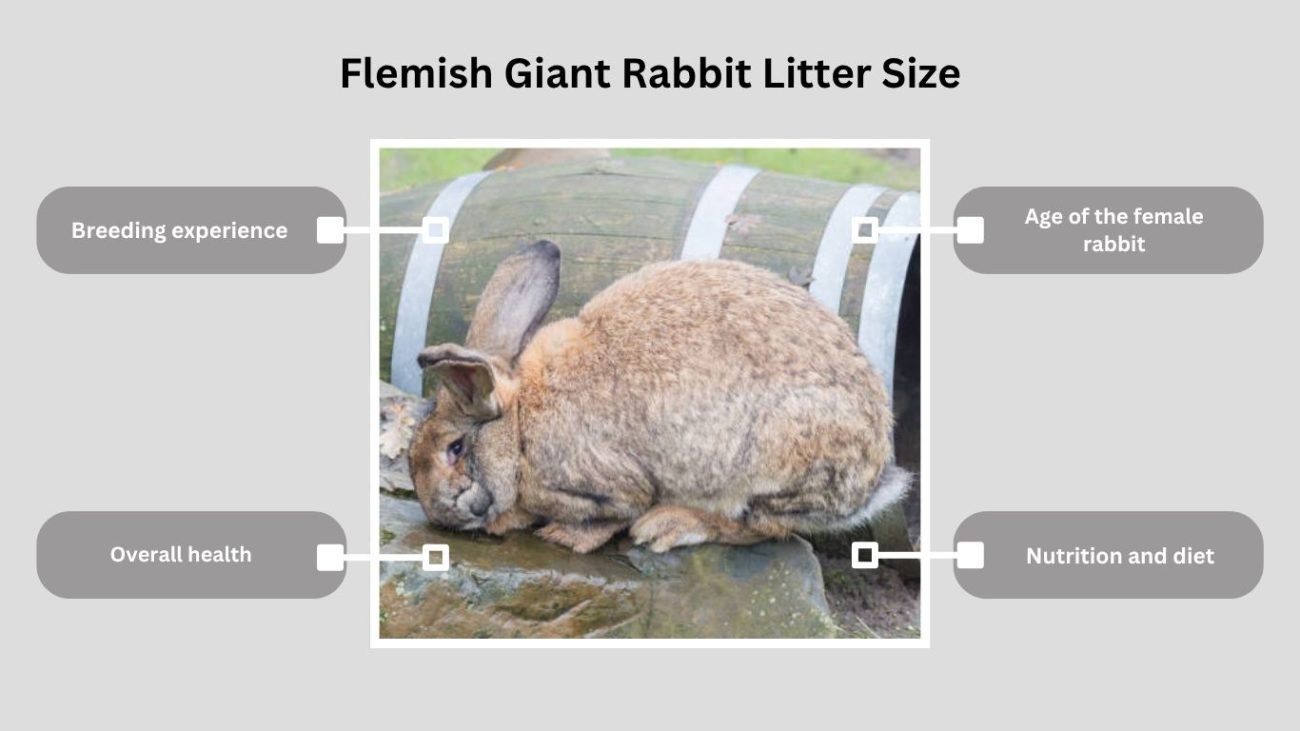
Flemish Giant rabbits are also known for producing relatively large litters compared to smaller breeds. This makes them popular among breeders.
Average Litter Size
A typical Flemish Giant rabbit can have 5 to 12 babies (kits) in a single litter. In some cases, the number may be slightly higher depending on the rabbit’s health and breeding conditions.
Factors Affecting Litter Size
- Age of the female rabbit
- Nutrition and diet
- Breeding experience
- Overall health
Healthy adult females usually produce larger and stronger litters.
Flemish Giant Rabbit Poop Size
This might seem like a strange topic, but it is actually important for monitoring your rabbit’s health.
Flemish Giant rabbits produce larger droppings compared to smaller rabbit breeds. Their poop is typically round, dry, and firm.
What It Indicates
- Large, consistent droppings = healthy digestion
- Small or irregular droppings = possible health issues
A proper diet rich in hay helps maintain normal digestion and healthy waste production.
Factors That Affect Flemish Giant Rabbit Size

Not all Flemish Giant rabbits grow to the same size. Several factors influence how big they become.
Key Factors
- Genetics: Some rabbits are naturally larger due to breeding
- Diet: Proper nutrition supports healthy growth
- Environment: Space and comfort impact development
- Healthcare: Regular checkups prevent growth issues
Providing the right care ensures your rabbit reaches its full potential size.
Flemish Giant Rabbit for Sale (Size Considerations)
If you are planning to buy a Flemish Giant rabbit, understanding its future size is very important.
What to Expect
Many people buy baby rabbits without realizing how large they will grow. A small, cute bunny can quickly turn into a very large pet within months.
Tips Before Buying
- Ask about the parents’ size
- Check growth history if available
- Decide whether you want a baby or adult rabbit
Buying from a reputable breeder helps ensure you get a healthy rabbit with predictable growth.
Pros and Cons of Their Large Size
Owning a Flemish Giant rabbit has both advantages and challenges, especially due to its size.
Pros
- Impressive and unique appearance
- Gentle and calm temperament
- Can form strong bonds with owners
Cons
- Requires large living space
- Higher food and maintenance costs
- Needs more care than smaller breeds
Understanding these factors helps you decide if this breed fits your lifestyle.
FAQs
How big does a Flemish giant rabbit get?
Flemish Giant rabbits can grow up to 2.5 to 4 feet in length and weigh between 13 to 22 pounds on average. Some may grow even larger with proper care, making them one of the biggest rabbit breeds in the world.
What is the average weight of a Flemish giant rabbit?
The average weight of a Flemish Giant rabbit ranges from 6 to 10 kg (13–22 lbs). Females are often slightly heavier than males, although both are significantly larger than standard rabbit breeds.
At what age is a Flemish giant rabbit full grown?
Most Flemish Giant rabbits reach their full size between 8 to 12 months of age. However, they may continue to develop muscle and gain weight gradually even after reaching their full length.
How big should a cage be for a Flemish giant rabbit?
A cage should be at least 4×4 feet, but larger is recommended. These rabbits need plenty of space to move freely, stretch their bodies, and stay healthy in a comfortable environment.
Are Flemish giant rabbits bigger than normal rabbits?
Yes, they are much larger—often 2 to 3 times the size of regular domestic rabbits. Their long bodies and heavy weight make them one of the largest rabbit breeds in the world.