











The Grey Parrot, also known as the African Grey Parrot, is one of the most remarkable bird species in the world. Famous for its intelligence, talking ability, and emotional depth, this parrot is a favorite among bird enthusiasts and researchers. Native to Africa, the Grey Parrot combines beauty, personality, and intellect in one fascinating creature. Let’s explore its identification, natural habitat, behaviors, diet, and lifecycle.
Identification
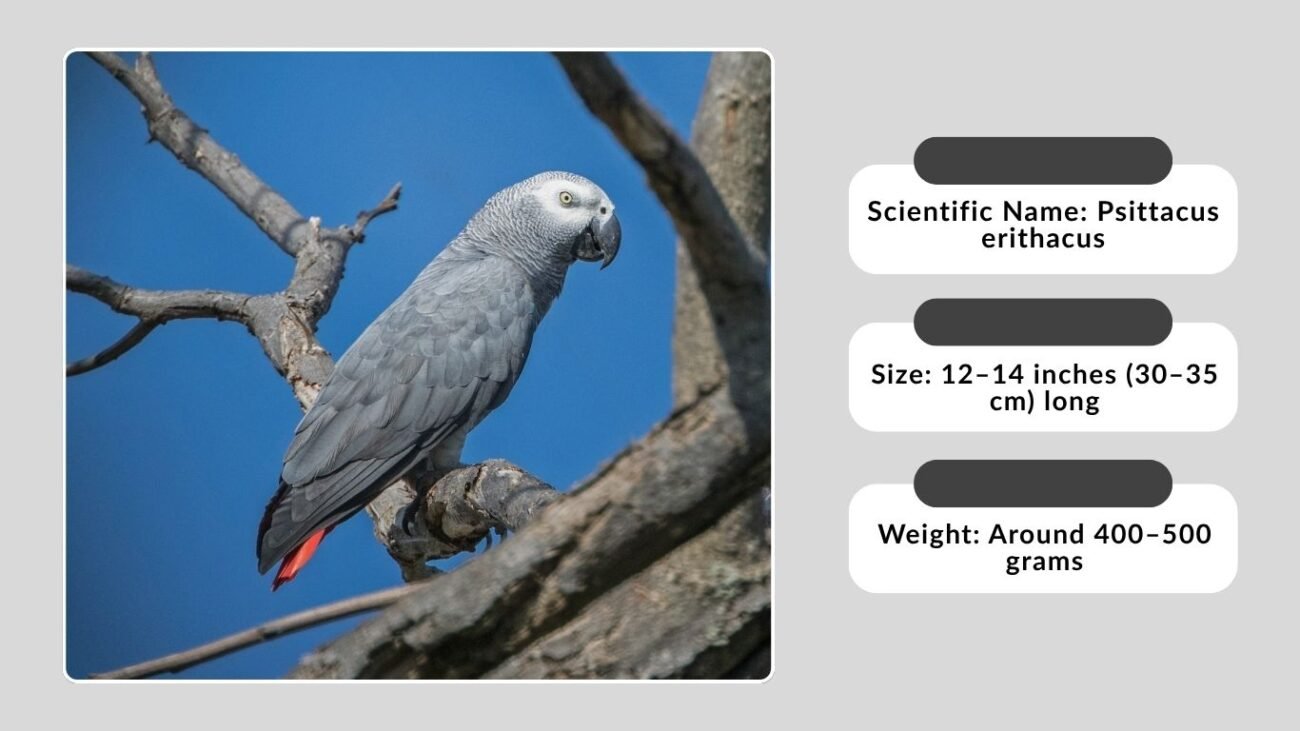
- Scientific Name: Psittacus erithacus
- Common Name: African Grey Parrot (Grey Parrot)
- Size: 12–14 inches (30–35 cm) long
- Wingspan: 18–20 inches (45–50 cm)
- Weight: Around 400–500 grams
- Color: Silver-grey body with bright red tail feathers
- Beak: Strong, curved, and black in color
- Eyes: Dark grey in juveniles, turning yellow in adults
- Lifespan: 40–60 years in captivity, 25–35 in the wild
- Sex Differences: Males slightly larger; females rounder head
- Subspecies:
- Congo African Grey: Larger, light grey, vivid red tail
- Timneh African Grey: Smaller, darker grey, maroon tail, lighter beak
- Congo African Grey: Larger, light grey, vivid red tail
- Distinctive Traits: Excellent talkers, expressive eyes, intelligent demeanor
Habitat

Geographical Range
Grey Parrots are native to the rainforests of Central and West Africa, found in countries such as Ghana, Cameroon, the Democratic Republic of Congo, and the Ivory Coast. They thrive in dense tropical forests, but can also adapt to savanna woodlands and mangrove swamps. In some regions, they are even spotted near farms or urban edges where food sources are abundant.
Preferred Environment
In the wild, African Greys prefer tall trees with dense foliage, where they can nest safely away from predators. They roost in groups at night and travel in small flocks during the day to forage for food. Their high intelligence helps them remember food sources and navigate long distances.
These parrots rely on stable climates with high humidity and plenty of rainfall. In captivity, they should be kept in warm, well-ventilated environments that mimic their natural tropical conditions.
Adaptability
Despite being native to forested regions, Grey Parrots have adapted to a range of environments due to habitat loss and deforestation. In some areas, they inhabit open farmland and plantations. However, this adaptability has made them more vulnerable to capture for the pet trade, which remains one of the major threats to their wild populations.
Behaviors
Social and Communication Patterns
Grey Parrots are extremely social birds that form lifelong pair bonds and live in small family groups or flocks. In the wild, their communication system is complex—they use a range of squawks, whistles, and clicks to signal danger, call mates, or maintain flock coordination.
In captivity, their social nature translates into deep emotional attachment to their human companions. They crave attention and dislike isolation, often developing favorite people within a household.
Intelligence and Problem-Solving
The African Grey is widely recognized as one of the most intelligent birds in existence. Scientific studies have shown that they can understand concepts like colors, shapes, numbers, and even basic reasoning.
One of the most famous examples is Alex the African Grey, who learned over 100 words and demonstrated the ability to identify objects and express preferences. Their intellect is often compared to that of a 3–5-year-old child, making them both delightful and demanding pets.
Emotional and Social Traits
Grey Parrots are highly sensitive and empathetic. They can mimic human speech with remarkable accuracy and seem to understand tone and emotion. They are often described as “one-person birds,” forming strong bonds with a single owner. If neglected or lonely, they can become anxious, pluck their feathers, or refuse to eat.
They also have a playful side—enjoying interactive games, toys, and music. In a loving environment, they are affectionate and responsive companions.
Flight and Movement
In their natural habitat, Grey Parrots are powerful flyers, capable of covering long distances between feeding and nesting areas. Their flight is steady and graceful, marked by rhythmic wingbeats.
In captivity, regular exercise is vital to prevent obesity and maintain muscle tone. Providing time outside the cage, with safe perches and flying space, helps them stay physically and mentally healthy.
Diet
Natural Diet in the Wild
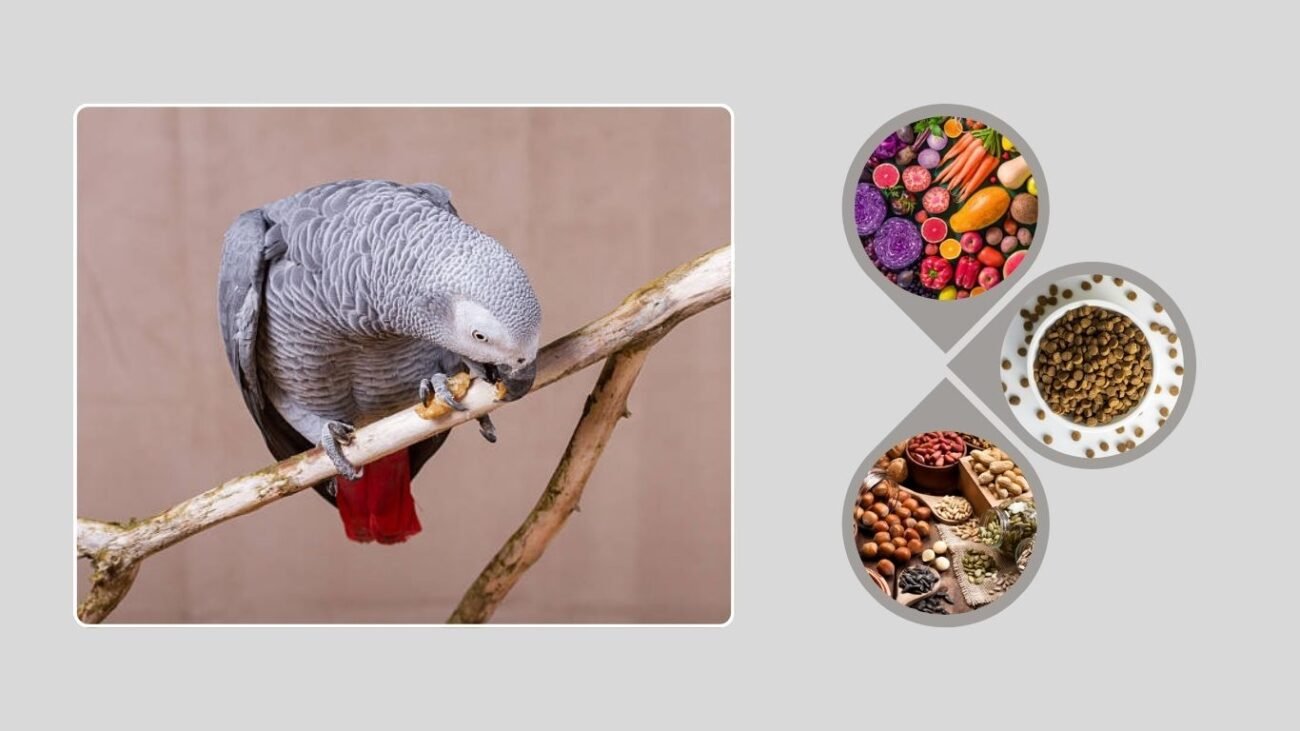
In the wild, African Grey Parrots have a varied diet consisting of fruits, seeds, nuts, berries, and palm oil nuts. They are opportunistic feeders, often foraging in groups. They also consume bark, leaves, and flowers for added nutrients and minerals. Their strong beaks allow them to crack open even the hardest nut shells with ease.
Captive Diet
For parrots living as pets, a balanced diet is essential to maintain health and longevity. Their daily meals should include:
- Pellets (60%): Specially formulated to meet nutritional needs.
- Fresh fruits and vegetables (30%): Apples, bananas, kale, spinach, carrots, mango, and sweet potatoes.
- Seeds and nuts (10%): Sunflower seeds, almonds, or walnuts—best used as treats, not main food.
A high-quality formulated mix, such as Pretty Bird or Volkman Super African Grey Food, ensures they receive essential vitamins and minerals. Avoid all processed or sugary foods.
Foods to Avoid
Certain foods are toxic to Grey Parrots and must be avoided entirely:
- Avocado (contains persin, which is lethal to birds)
- Chocolate (toxic to the nervous system)
- Caffeine and alcohol (dangerous even in small amounts)
- Salty and fried foods (cause dehydration and organ stress)
Feeding Habits
Grey Parrots enjoy eating in the morning and evening. They often use one foot to hold food while nibbling with their beak—a characteristic behavior seen in many parrots. In captivity, foraging toys or automatic feeders can help replicate natural feeding instincts, keeping them both nourished and entertained.
Lifecycle

Breeding and Reproduction
African Grey Parrots typically reach sexual maturity between 4 and 6 years of age. They form lifelong monogamous pairs, meaning they mate with the same partner for life. In the wild, breeding usually takes place during the rainy season, when food is abundant and nesting conditions are ideal.
The female lays 2 to 4 eggs in a hollow tree cavity lined with soft materials like leaves or wood dust. She incubates the eggs for around 28–30 days, while the male provides food and protection. Once hatched, chicks are blind and featherless, relying entirely on their parents for warmth and feeding.
Growth Stages
- Hatchling (0–3 weeks): Featherless and dependent on both parents.
- Fledgling (4–10 weeks): Begins to grow feathers and learn to fly short distances.
- Juvenile (3–6 months): Starts imitating sounds and developing independence.
- Adult (1 year+): Fully developed, capable of breeding and complex communication.
By around 10 to 12 weeks, young parrots begin their first flights, marking a crucial stage of development. In captivity, this process is often guided by breeders to ensure safe fledging.
Lifespan
African Grey Parrots are among the longest-living birds in the parrot family.
- In the wild: They typically live 25–35 years, depending on environmental conditions and predators.
- In captivity: With proper care, many live 40–60 years, and some even reach 70 years or more.
Their long lifespan makes them a lifetime commitment for owners, often outliving their human companions.
Conservation Status
Unfortunately, the African Grey Parrot faces significant threats from deforestation and the illegal pet trade. Their popularity as pets has led to over-trapping in the wild, causing populations to decline sharply.
The species is listed as Endangered on the IUCN Red List and is protected under CITES Appendix I, which restricts international trade. Conservation organizations and sanctuaries are now working to breed them ethically and reintroduce them into protected habitats.
Relationship with Humans
Domestication and Companionship
The Grey Parrot’s ability to talk and connect emotionally has made it one of the most popular pet birds worldwide. Owners describe them as empathetic, affectionate, and highly perceptive. They can recognize voices, mimic laughter, and even respond to their owner’s mood.
However, they are not low-maintenance pets. Their high intelligence requires constant mental stimulation through toys, conversation, or training. Neglect or loneliness can lead to depression and behavioral issues like feather plucking.
In the right environment, though, they thrive as loyal companions—often described as “feathered family members.”
Training and Enrichment
Grey Parrots are quick learners and respond best to positive reinforcement training. Short, consistent sessions with verbal praise or small treats work best.
They love learning words, sounds, and even tricks. Providing interactive puzzles, swings, and mirrors helps them stay mentally active. Playing soft music or leaving the radio on while you’re away can also keep them calm and engaged.
Emotional Sensitivity
African Greys form strong attachments, often preferring one person in the household. They remember people and routines, and any major change in their environment can cause stress. Because of this, they need a stable home and consistent interaction.
They also show empathy—many owners report their parrots comforting them when sad or mimicking laughter during joyful moments. This emotional intelligence is what makes them so fascinating and beloved.
Interesting Facts About the Grey Parrot
- They can understand over 200 words and use them in the proper context.
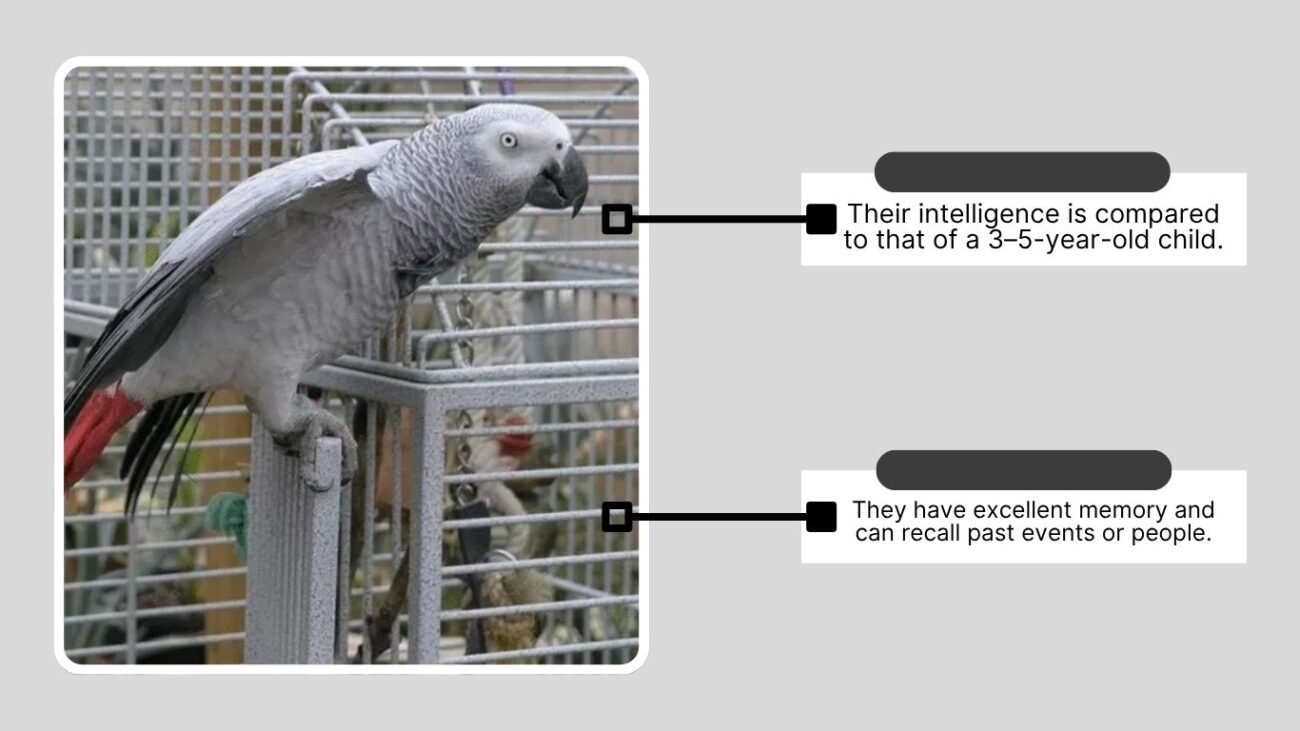
- Their intelligence is compared to that of a 3–5-year-old child.
- Famous parrot Alex helped scientists prove that birds are capable of reasoning and emotional understanding.
- They have excellent memory and can recall past events or people.
- African Greys use mimicry not just for fun but as a way to bond socially with humans or other birds.
- Some parrots have lived with multiple generations of a family, outliving their original owners.
FAQs
How long do African Grey Parrots live?
In captivity, African Greys live 40 to 60 years on average, while wild ones live around 25 to 35 years. Proper diet, care, and emotional stimulation help them reach their full lifespan.
Are Grey Parrots really the smartest birds?
Yes. They’re often considered the most intelligent parrot species, capable of understanding concepts like colors, shapes, and even emotions. Their mimicry and reasoning skills are unmatched among birds.
Can African Grey Parrots live with other birds?
They can coexist with other species, but introductions should be gradual. Due to their territorial nature, close supervision is necessary to avoid stress or conflict.
Are African Grey Parrots good for beginners?
They are not ideal for first-time bird owners. Their intelligence and emotional needs require patience, consistency, and daily engagement.
What do African Grey Parrots eat daily?
A balanced diet includes pellets, fruits, vegetables, and occasional seeds or nuts. Avoid toxic foods like avocado, caffeine, and chocolate.


