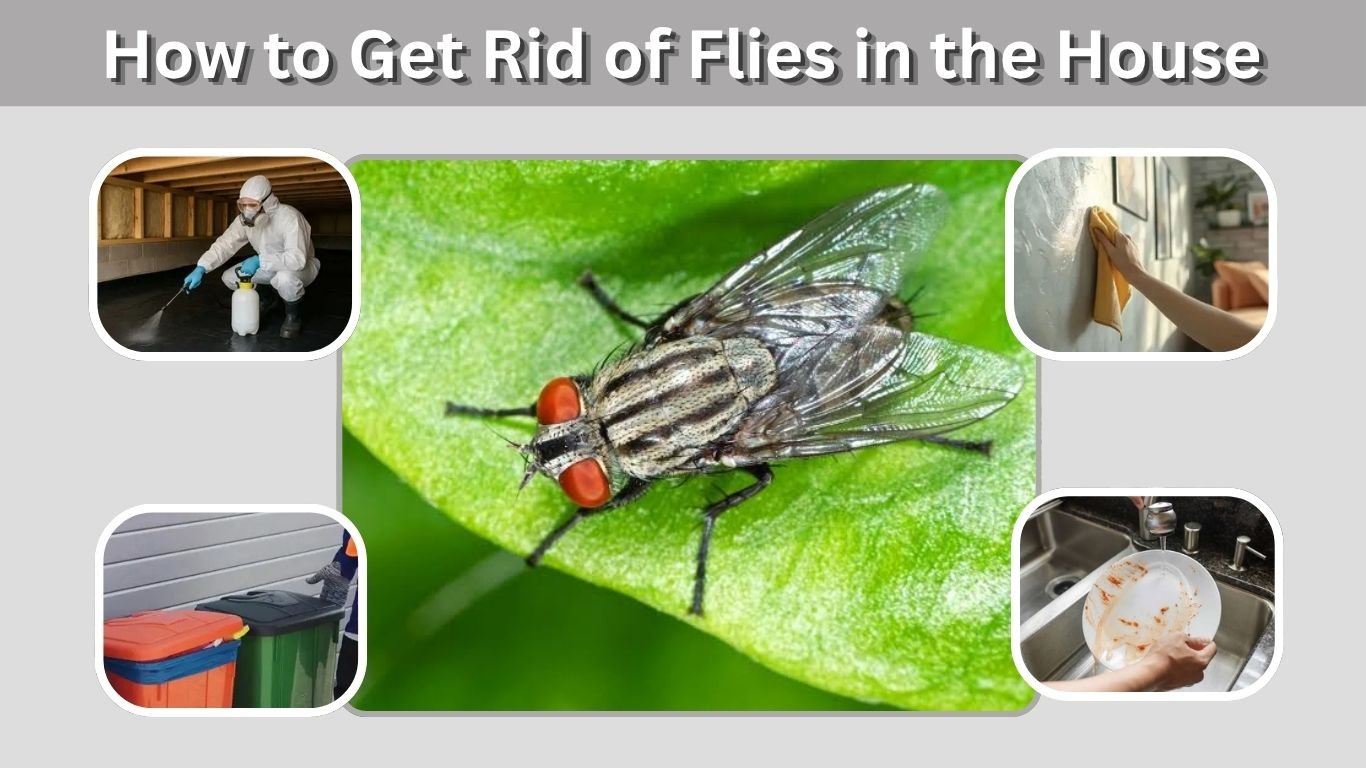
Flies inside the house are more than an annoyance. They can gather around food, trash, drains, houseplants, and windows while potentially carrying bacteria from contaminated surfaces. The fastest way to get rid of flies is to remove whatever is attracting them, clean breeding areas, use traps, and block new flies from entering. Different flies require different approaches, so identifying whether you have house flies, fruit flies, drain flies, fungus gnats, or cluster flies is important. Here is how to eliminate them and prevent future infestations.
Why Are There So Many Flies in My House?
A sudden increase in flies usually means they have found food, moisture, or a suitable breeding location nearby. Adult flies may enter through open doors and windows, but persistent numbers often indicate that something inside or close to the home is supporting them.
Common Things That Attract Flies
Flies may be attracted to:
- Uncovered food
- Overripe fruit
- Dirty garbage cans
- Food spills
- Pet waste
- Dirty drains
- Compost
- Standing water
- Empty beverage containers
- Moist potting soil
- Dead animals
- Rotting organic material
- Open windows and doors
Finding the source is often more effective than simply killing the adult flies you can see.
Identify the Type of Fly
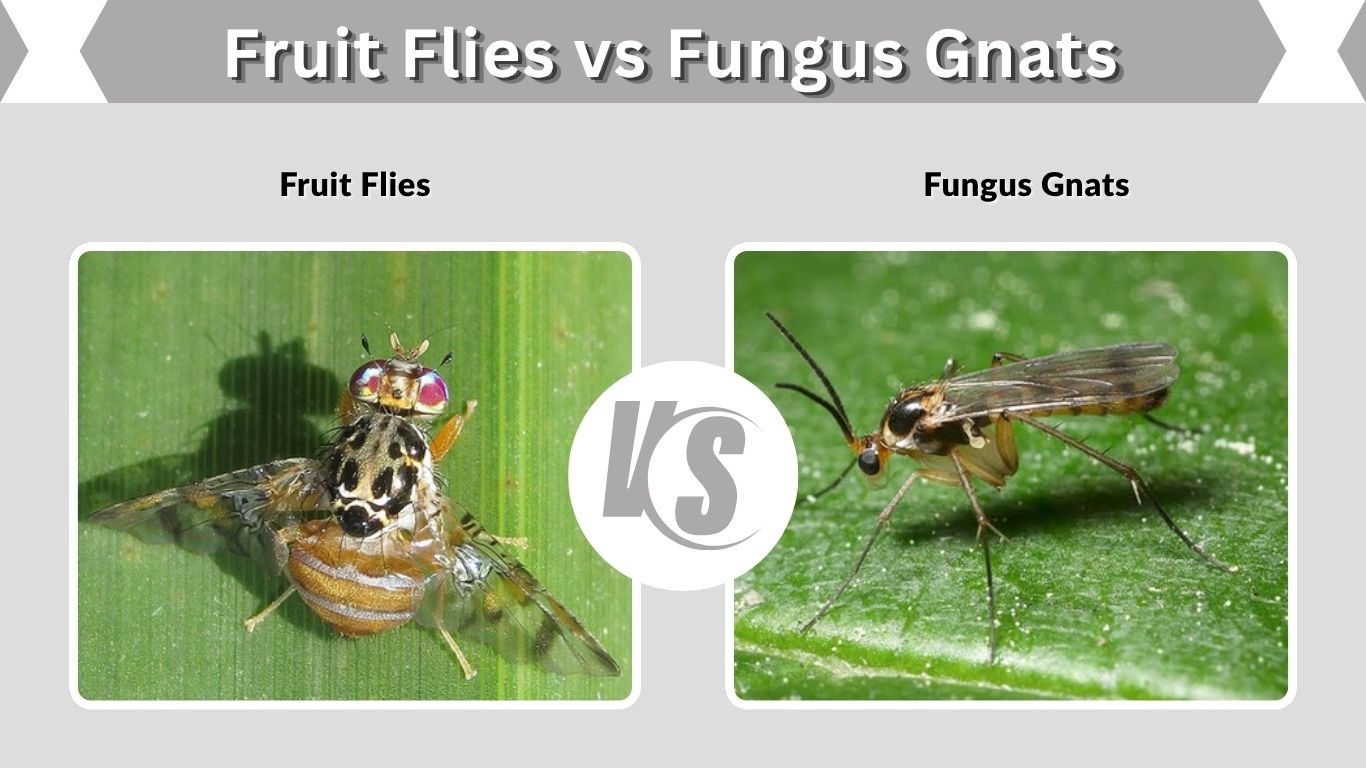
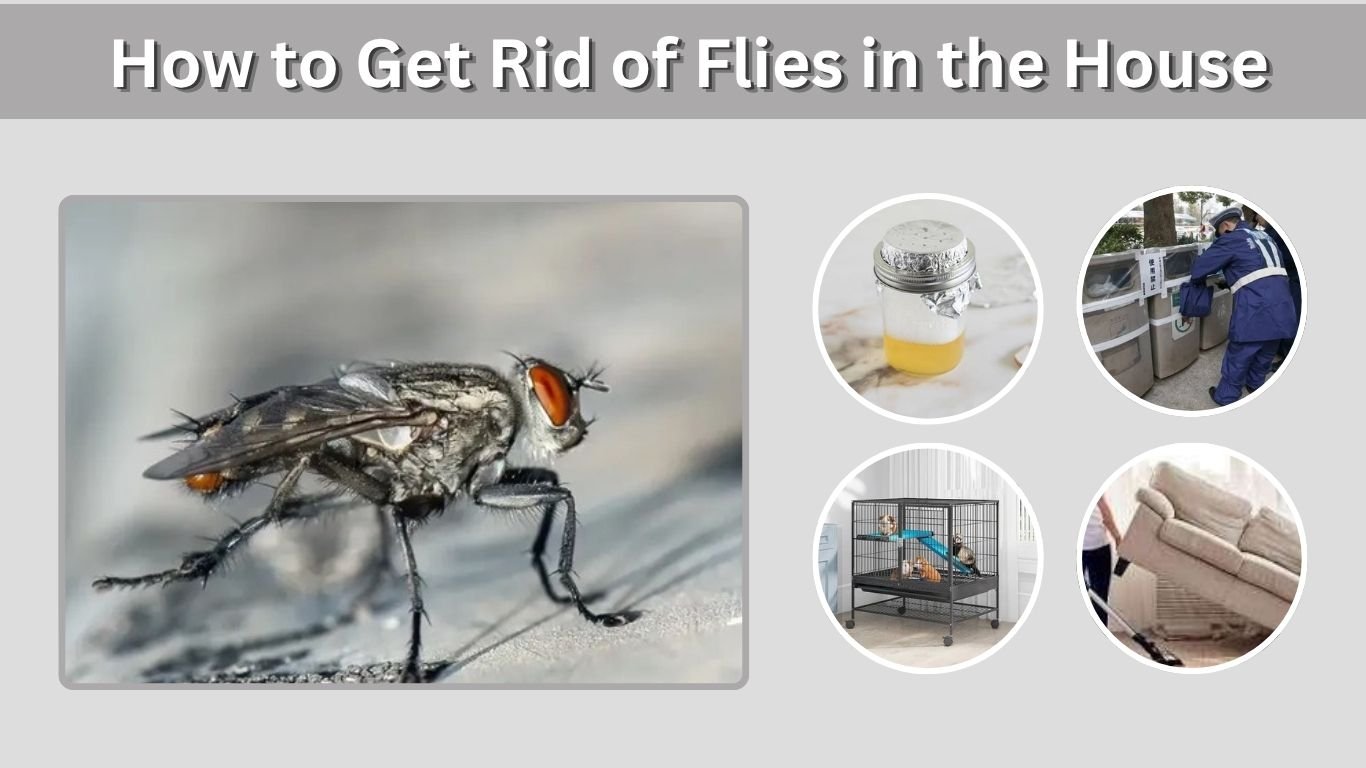
Large gray or black flies buzzing around windows are often common house flies. Tiny flies around fruit and kitchen counters are usually fruit flies.
Small fuzzy flies resting near sinks or showers may be drain flies, while tiny dark flies hovering around houseplants are often fungus gnats.
Large numbers of slow-moving flies around windows, especially during cooler weather, may be cluster flies.
Correct identification helps you target the actual breeding source.
How to Get Rid of Flies in the House Quickly
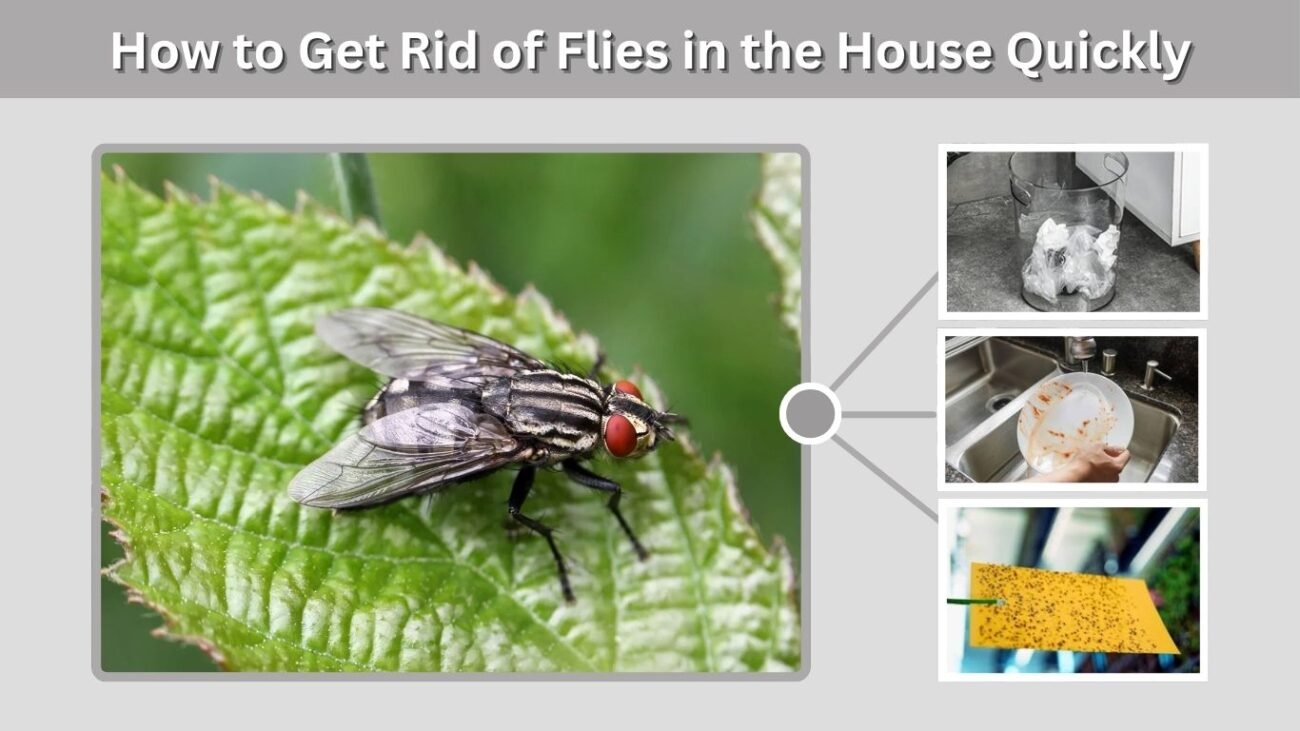
If you need fast results, combine sanitation with physical removal. Killing adult flies provides immediate relief, but eliminating their food and breeding areas prevents another generation from replacing them.
Fast Ways to Remove House Flies
Try these steps:
- Remove exposed food from counters.
- Empty kitchen and bathroom garbage.
- Clean spills and sticky residues.
- Wash dirty dishes immediately.
- Vacuum visible flies around windows.
- Use sticky fly traps where flies gather.
- Install windows or light traps if needed.
- Clean pet feeding areas.
- Keep doors and windows screened.
- Check for hidden organic material.
A fly swatter or vacuum can quickly remove individual adult flies, but sanitation remains essential for longer-lasting control.
Use Fly Traps Strategically
Sticky strips can work well in garages, utility rooms, and other areas where appearance is less important.
Indoor UV light traps can also attract certain flies. Position traps away from frequently opened doors and food preparation surfaces.
For best results, traps should support your cleaning efforts rather than replace them.
How to Get Rid of Fruit Flies in the House
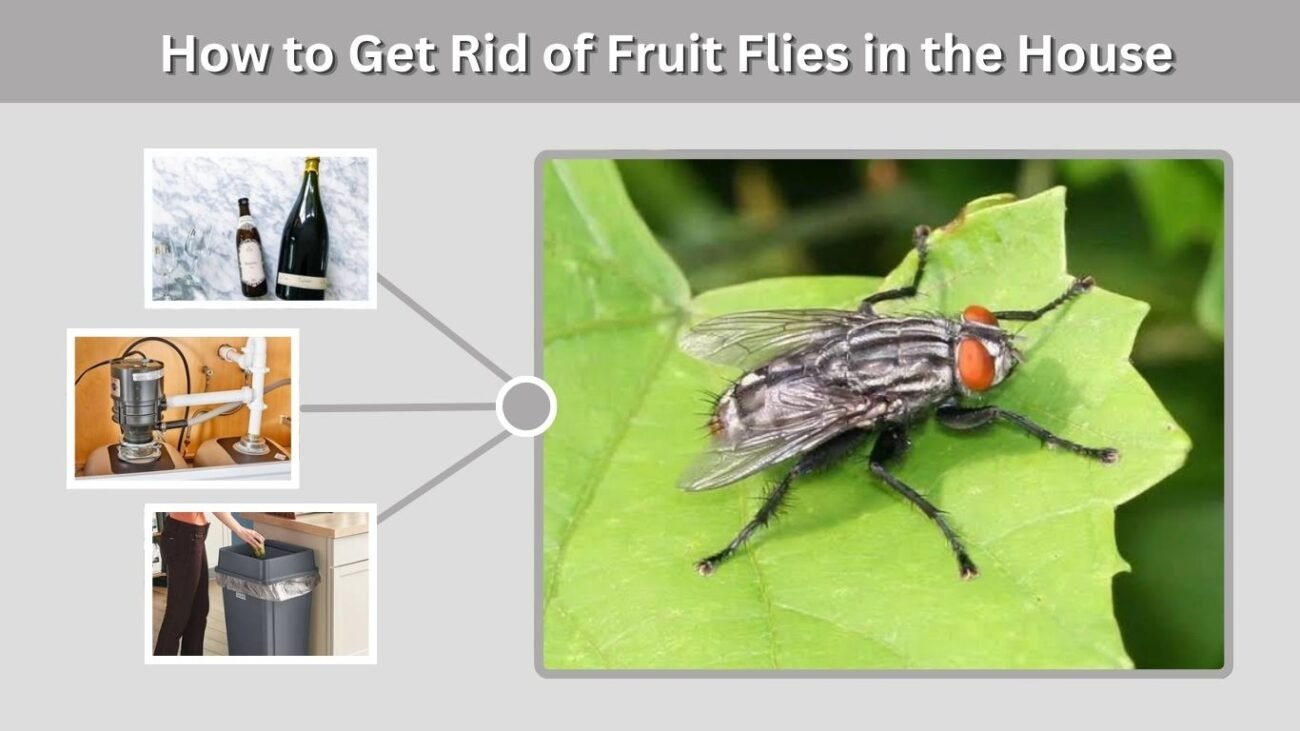
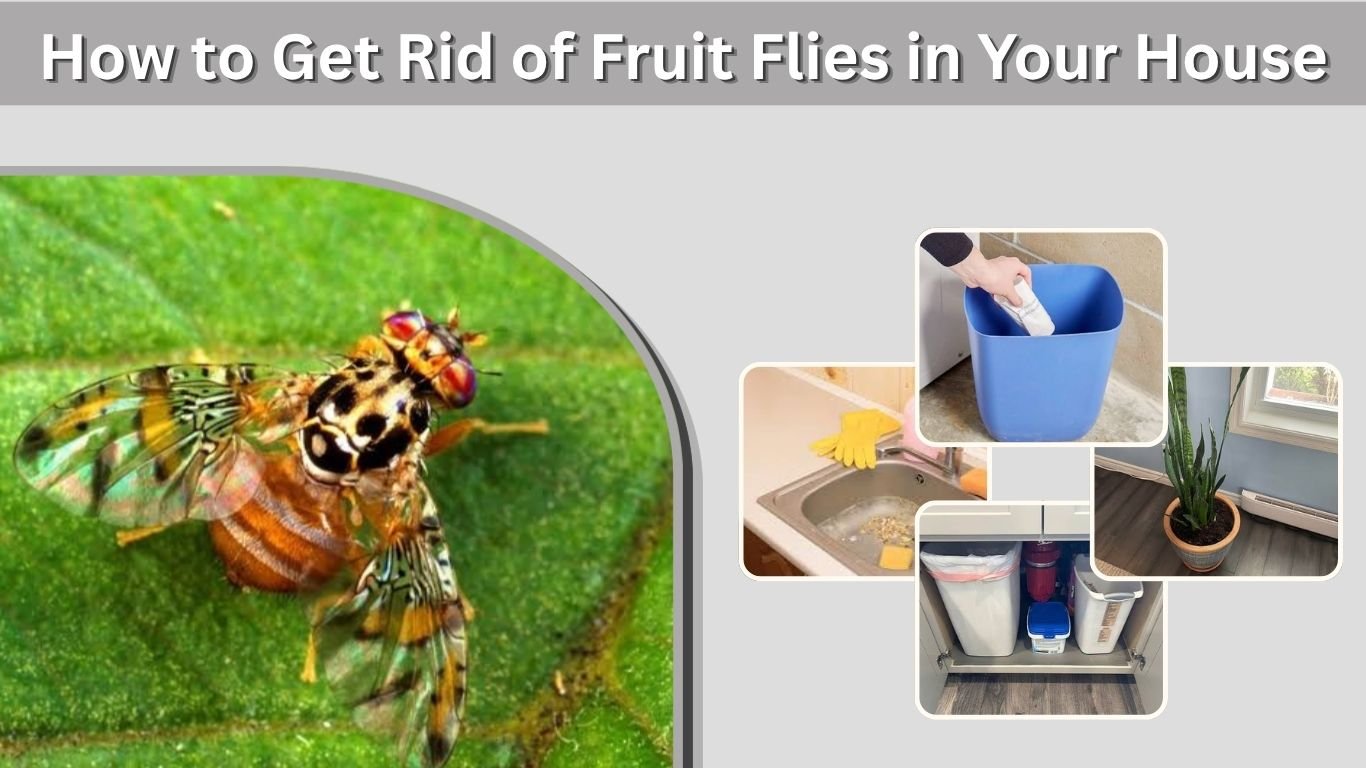
Fruit flies reproduce rapidly around fermenting fruits, vegetables, sugary liquids, and food residue. A few adults can turn into a noticeable infestation surprisingly quickly.
The key is finding and removing every breeding source.
Remove Fruit Fly Breeding Sources
Check:
- Bananas and other ripe fruit
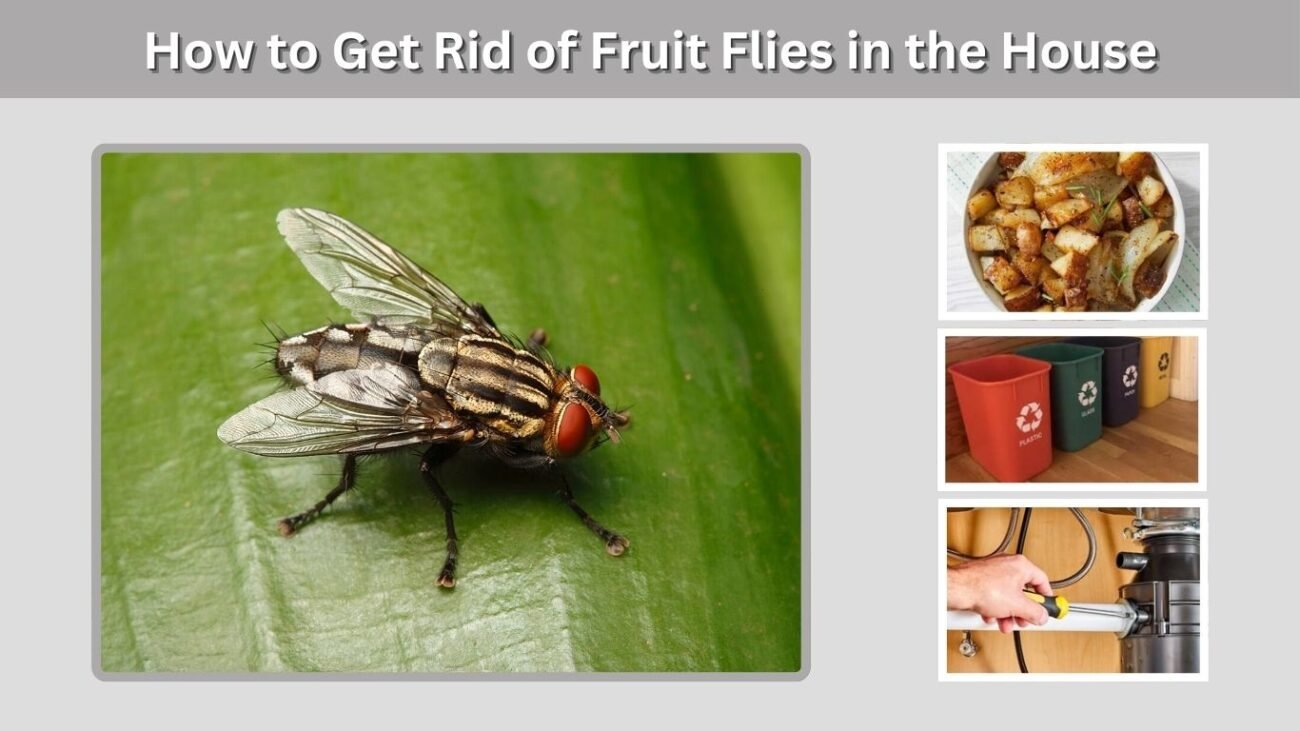
- Potatoes and onions
- Recycling containers
- Wine or beer bottles
- Garbage disposals
- Trash cans
- Mop buckets
- Food trapped beneath appliances
- Damp cleaning cloths
- Sugary spills
Refrigerate ripe produce when possible and discard spoiled fruits or vegetables.
DIY Fruit Fly Trap
A simple trap can help reduce remaining adults.
Pour a small amount of apple cider vinegar into a cup or jar. Add a drop of dish soap to reduce surface tension.
Place the trap near the affected area.
This may capture many adult fruit flies, but it will not solve the problem if breeding material remains elsewhere.
Continue cleaning for several days after adult numbers decline.
How to Get Rid of Drain Flies
Drain flies, sometimes called moth flies or sewer flies, are small fuzzy insects commonly seen around bathroom, kitchen, basement, or laundry drains.
They breed in moist organic buildup rather than simply living inside the water.
Cleaning Drains for Fly Control
To remove them:
- Scrub the inside walls of affected drains.
- Clean underneath drain covers.
- Remove hair and organic debris.
- Clean overflow openings.
- Repair leaking pipes.
- Eliminate standing water.
- Keep rarely used drains maintained.
- Use an enzyme-based drain cleaner if appropriate.
Simply pouring bleach or boiling water down a drain may kill some insects but may not remove the organic film where larvae develop.
Physical scrubbing is often more effective.
Check for Plumbing Problems
If drain flies return after repeated cleaning, inspect for hidden leaks, damaged pipes, floor drains, sewage issues, or stagnant water.
Large numbers emerging from unusual locations can sometimes indicate a plumbing problem requiring professional inspection.
How to Get Rid of Small or Tiny Black Flies
Tiny black flies are not always fruit flies. If they gather around houseplants, fungus gnats are a more likely cause.
Adult fungus gnats usually fly close to the soil, while their larvae live in moist growing media.
Getting Rid of Flies in Houseplants
Use these methods:
- Allow the upper layer of soil to dry between watering.
- Avoid keeping soil constantly saturated.
- Empty standing water from saucers.
- Remove decaying leaves.
- Use yellow sticky traps for adults.
- Improve drainage.
- Check newly purchased plants before bringing them inside.
- Replace badly contaminated potting soil when necessary.
Reducing excess moisture is particularly important because fungus gnat larvae thrive in damp organic material.
Healthy plants should still receive enough water for their needs, so avoid excessively drying moisture-loving species.
How to Get Rid of Flies Naturally
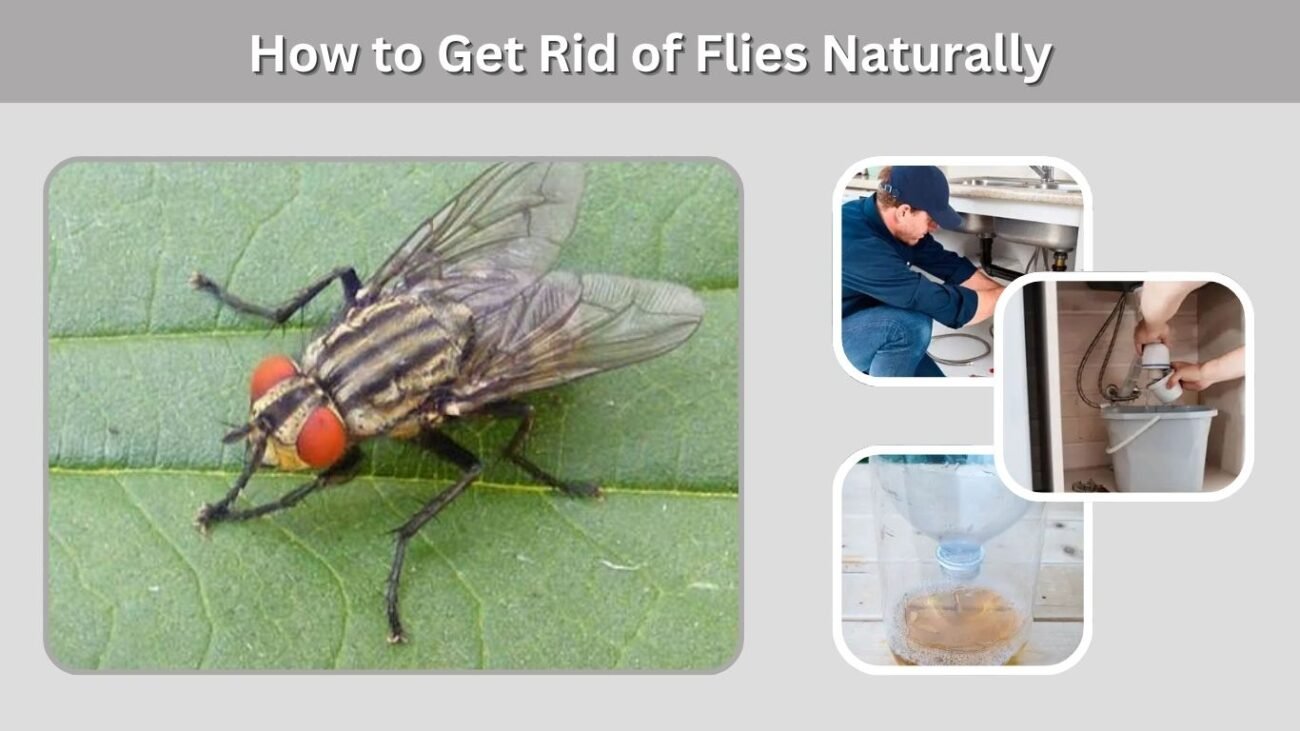
Natural fly control works best when focused on sanitation, exclusion, and traps instead of relying on strong fragrances alone.
Many commonly suggested herbs or essential oils may discourage flies temporarily, but they are unlikely to overcome an active breeding source.
Natural Fly Control Methods
Effective non-chemical options include:
- Keep food covered.
- Store ripe fruit in the refrigerator.
- Empty trash frequently.
- Wash garbage bins.
- Clean kitchen surfaces daily.
- Use vinegar traps for fruit flies.
- Install window screens.
- Use sticky traps.
- Clean drains.
- Keep pet areas sanitary.
- Repair screens and door gaps.
- Reduce excess moisture.
Removing what flies need to reproduce provides much more reliable control than trying to repel them with scent alone.
Do Vinegar and Herbs Repel Flies?
Vinegar is more useful as a fruit fly attractant in traps than as a general house-fly repellent.
Plants and fragrances such as basil, mint, lavender, or eucalyptus may make certain areas less appealing to some flies, but results can vary.
They should be considered supplementary methods rather than permanent solutions.
How to Get Rid of Big, Black or Cluster Flies
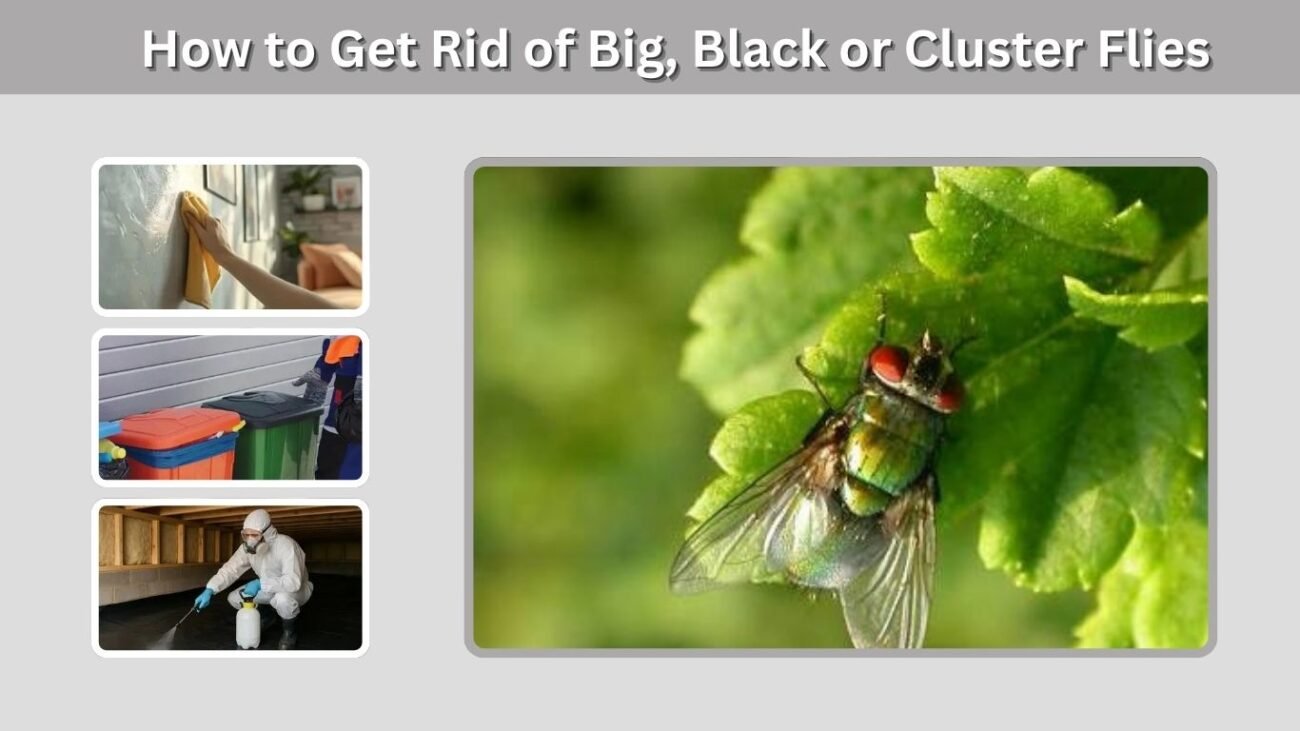
Large flies inside a home may be house flies, blow flies, bottle flies, flesh flies, or cluster flies.
Suddenly finding numerous large flies can sometimes indicate an animal carcass, accumulated garbage, or another hidden source of decay.
Large Flies Appearing Suddenly
Inspect:
- Attics
- Basements
- Chimneys
- Wall voids
- Garbage areas
- Crawl spaces
- Pet areas
- Behind appliances
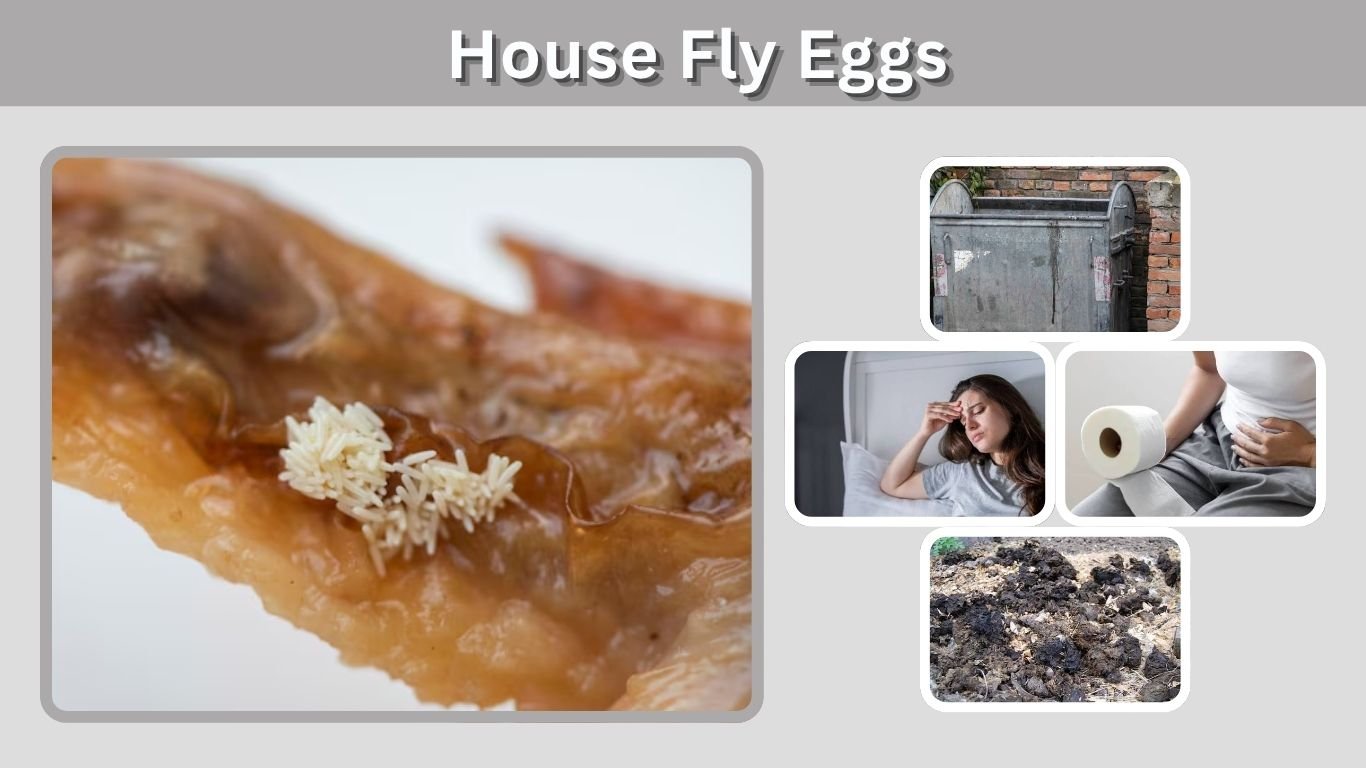
Blow flies and flesh flies can develop in dead animals or decomposing organic matter.
If many appear suddenly and no source is visible, a dead rodent or other animal may be hidden inside a wall, attic, or crawl space.
Cluster Flies
Cluster flies behave differently. They often enter buildings in fall and spend winter inside protected wall spaces or attics.
On warm days, they may emerge around sunny windows.
Vacuum visible adults and seal cracks around windows, siding, rooflines, vents, and utility openings before the next seasonal invasion.
How to Keep Flies Out Permanently
Permanent fly control is mainly about denying access to food, moisture, breeding material, and entry points. Even excellent traps cannot prevent new infestations if doors remain unscreened or garbage continuously provides breeding opportunities.
Fly Prevention Checklist
Follow these habits:
- Install tight-fitting window screens.
- Repair damaged screens.
- Keep exterior doors closed.
- Seal gaps around frames.
- Empty indoor garbage regularly.
- Keep outdoor garbage lids closed.
- Rinse recycling containers.
- Refrigerate ripe produce.
- Clean spills immediately.
- Wash pet bowls.
- Pick up pet waste.
- Keep drains clean.
- Avoid overwatering houseplants.
- Remove rotting vegetation around the home.
- Keep compost properly contained.
Outdoor sanitation matters too. Flies breeding immediately outside can repeatedly enter whenever doors or windows open.
When Should You Call Pest Control?
A few flies usually do not require professional treatment. However, persistent infestations despite thorough cleaning may indicate a hidden breeding source.
Consider professional help if flies continue appearing in large numbers, repeatedly return from wall or ceiling spaces, or seem connected to inaccessible drains, animal remains, or structural problems.
A professional can identify the fly species and locate breeding sites that may be difficult to find yourself.
FAQs
1. What is the fastest way to get rid of flies in the house?
Remove food and garbage, clean breeding areas, vacuum visible adults, and place suitable traps near areas where flies gather. Combining removal with sanitation gives faster and longer-lasting results.
2. Why do I suddenly have lots of flies in my house?
A sudden infestation may come from exposed garbage, spoiled food, dirty drains, pet waste, dead animals, or adults emerging from a hidden breeding site.
3. How do I get rid of flies naturally?
Clean food residue, empty garbage, clean drains, use traps, repair screens, eliminate standing water, and remove breeding materials. These methods can control many household fly problems without routine pesticide use.
4. Why are tiny black flies around my houseplants?
They are often fungus gnats. Their larvae develop in moist potting soil. Allowing the soil surface to dry appropriately, improving drainage, and using yellow sticky traps can reduce them.
5. How can I permanently stop flies from entering my house?
Keep your home clean, remove breeding materials, maintain screens, seal gaps, manage garbage properly, clean drains, and control outdoor sources. Regular prevention is more effective than repeatedly treating adult flies.