The killdeer (Charadrius vociferus) is a distinctive shorebird known for its loud, piercing call that sounds like “kill-deer.” Unlike many shorebirds, it is often found far from water, thriving in open fields, grasslands, and even urban areas. Its bold markings and unique defensive behaviors make it easy to recognize. By exploring its characteristics, habitat, diet, and behavior, we can better understand how this adaptable bird survives in a wide range of environments.
Killdeer Characteristics
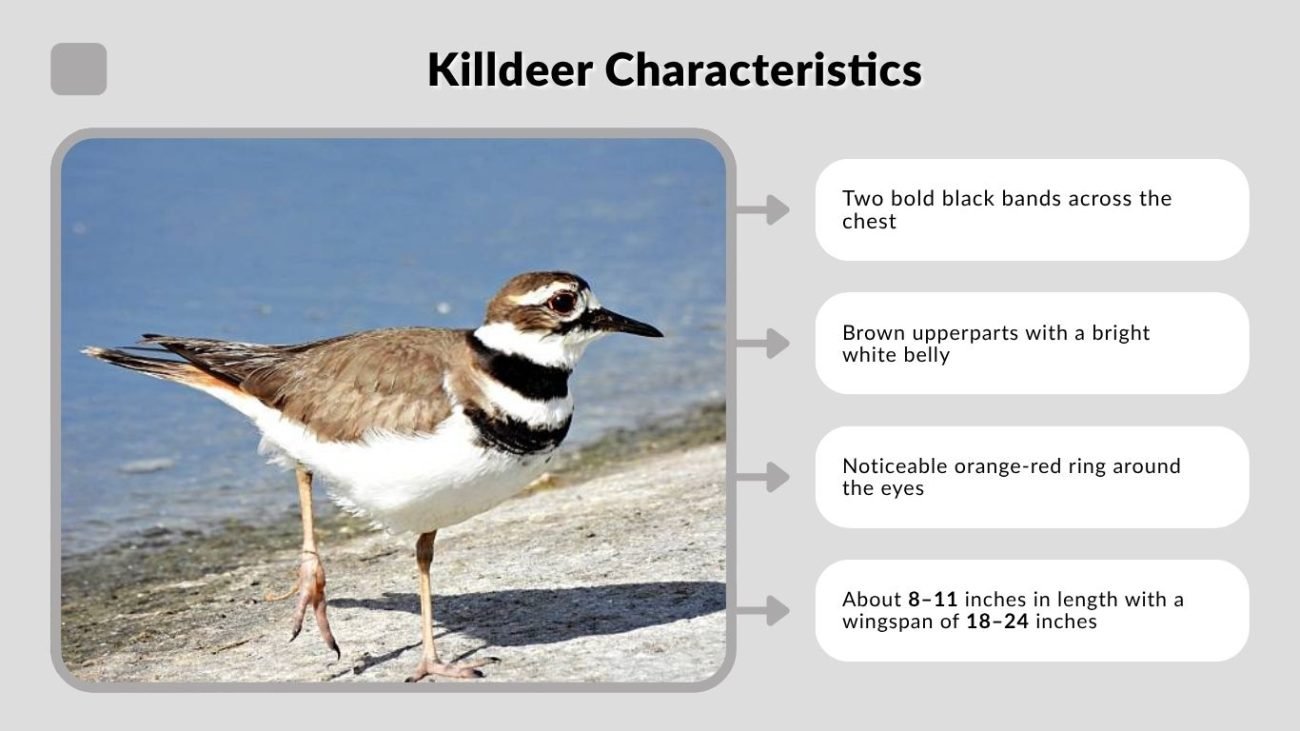
The killdeer is a distinctive and highly adaptable shorebird known for its bold markings and energetic behavior. Although it belongs to the plover family, it is often found far from water and is easily recognized by its loud call and unique defensive strategies. Its physical features and active lifestyle make it one of the most noticeable birds in open landscapes.
Key Characteristics
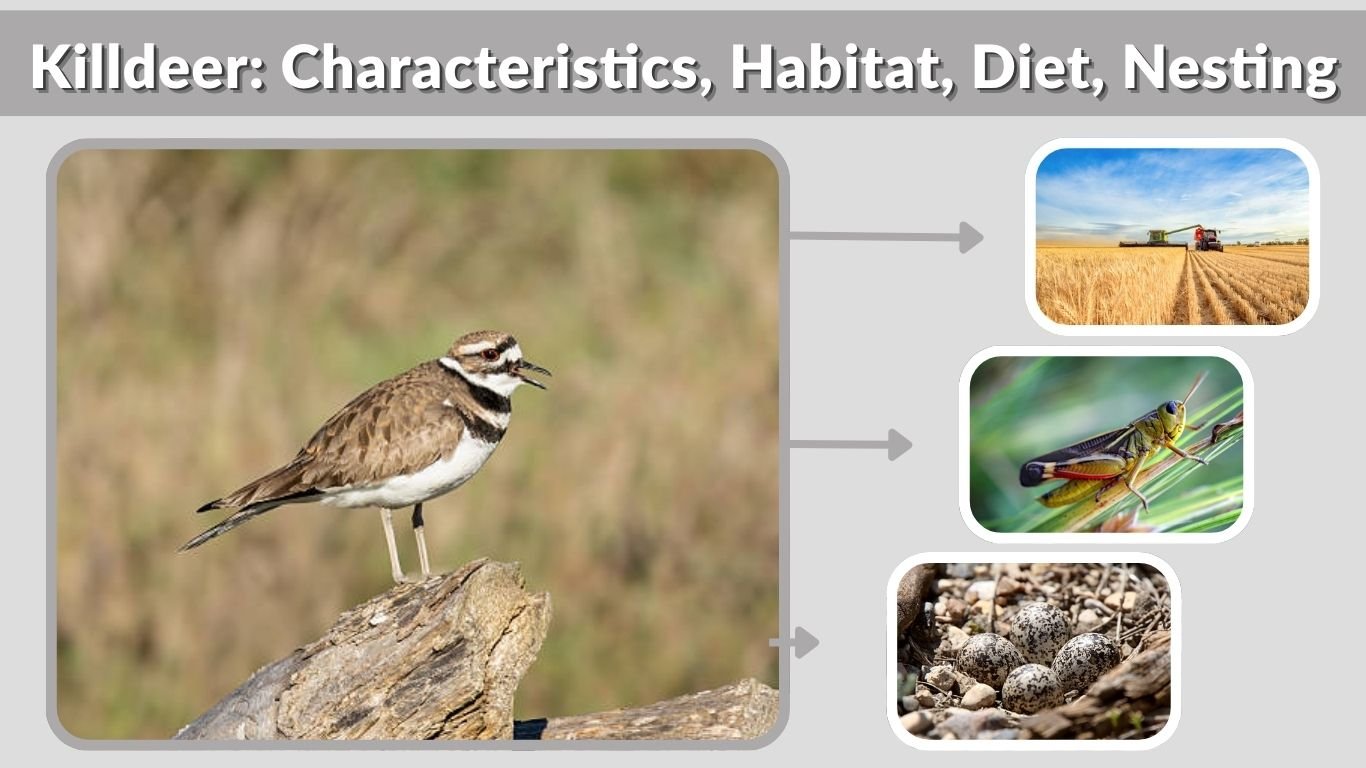
- Double Chest Bands: Two bold black bands across the chest (a key identifier)
- Brown and White Coloring: Brown upperparts with a bright white belly
- Reddish Eye Ring: Noticeable orange-red ring around the eyes
- Long Legs: Adapted for running quickly across open ground
- Medium Size: About 8–11 inches in length with a wingspan of 18–24 inches
- Loud Call: Distinct “kill-deer” sound used for communication and alerts
- Fast Runner: Prefers running over flying when moving short distances
- Ground-Dwelling Behavior: Spends most of its time on land rather than in water
- Strong Camouflage Ability: Blends well with gravel and soil environments
These characteristics make the killdeer a unique and easily recognizable bird, especially in open fields and urban areas.
Killdeer Habitat
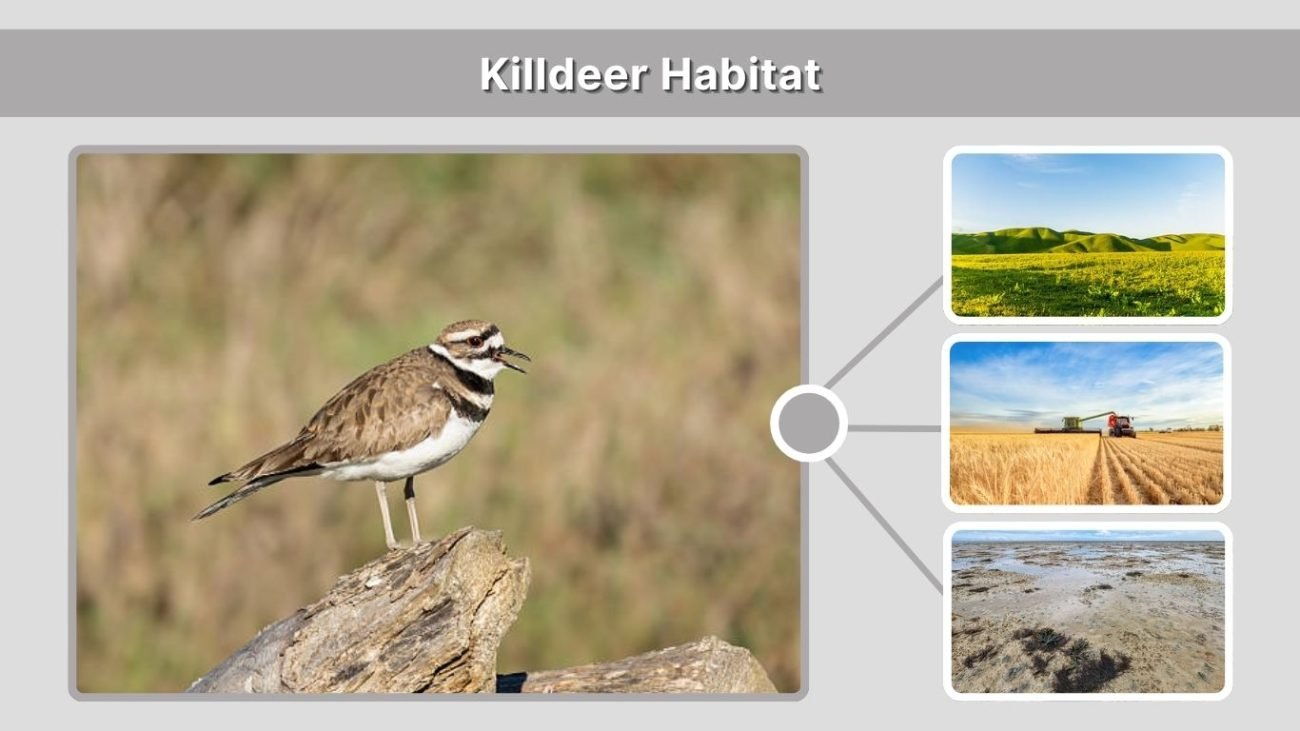
Geographic Range
The killdeer is widely distributed across North and South America. It is commonly found throughout the United States and southern Canada during the breeding season and may migrate southward to Central and South America during winter. Some populations remain in warmer regions year-round.
Preferred Environments
Killdeer prefer open habitats with little vegetation, where they can easily spot predators and find food. Common environments include grasslands, agricultural fields, mudflats, and shorelines. Interestingly, they are also highly adaptable and frequently inhabit urban areas such as parking lots, golf courses, and rooftops.
Adaptability to Human Areas
One of the most notable traits of the killdeer is its ability to live near humans. It often nests in gravel areas or bare ground in developed spaces, showing remarkable flexibility. This adaptability has helped the species maintain stable populations despite habitat changes.
Killdeer Diet
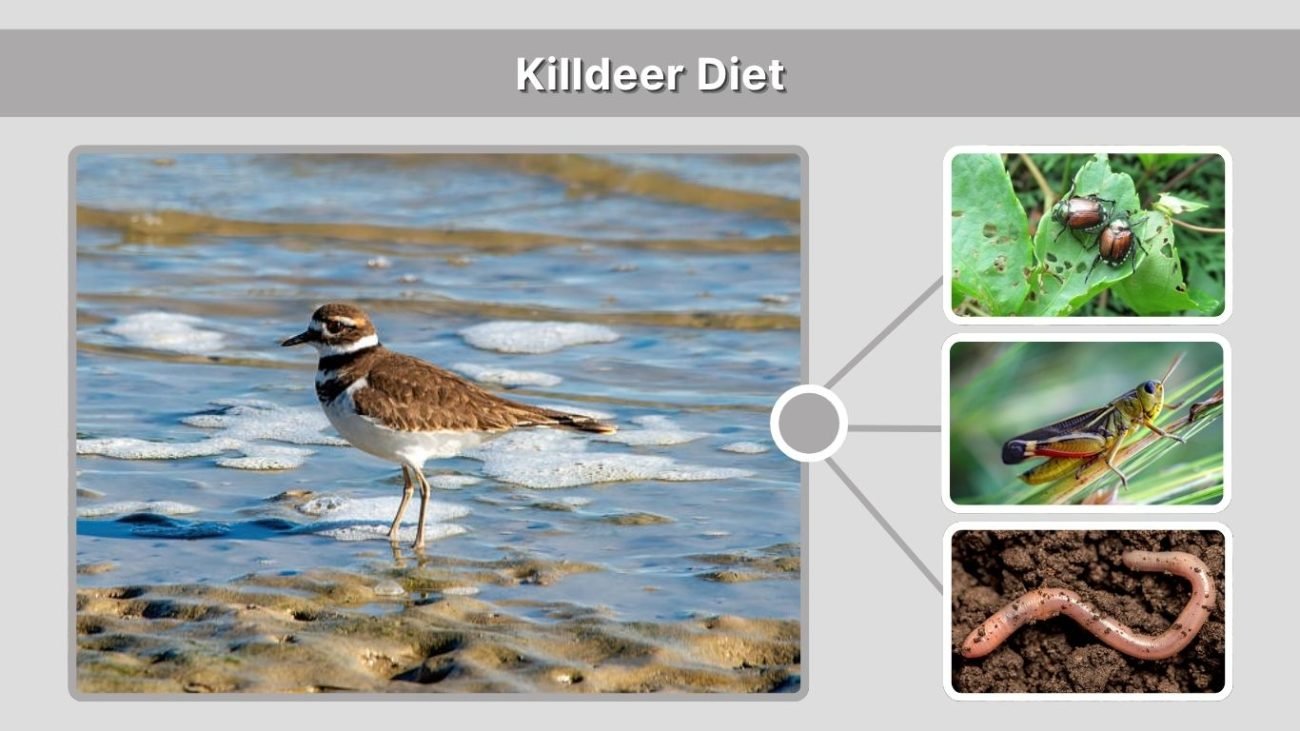
Primary Food Sources
The killdeer primarily feeds on insects and other small invertebrates. Common food items include beetles, grasshoppers, worms, and larvae. These foods provide the energy needed for their active lifestyle.
Feeding Behavior
Killdeer are ground foragers and use a distinctive run-and-stop technique while searching for food. They move quickly across open areas, pause to spot prey, and then pick it up with their beak. This method is highly effective in open habitats where visibility is clear.
Diet Adaptation
In different environments, killdeer adjust their diet based on availability. In agricultural areas, they may feed on insects found in crops, while in urban settings, they rely on insects in lawns, parks, and open spaces. Their flexible diet helps them survive in a variety of conditions.
Killdeer Nest and Nesting Habits
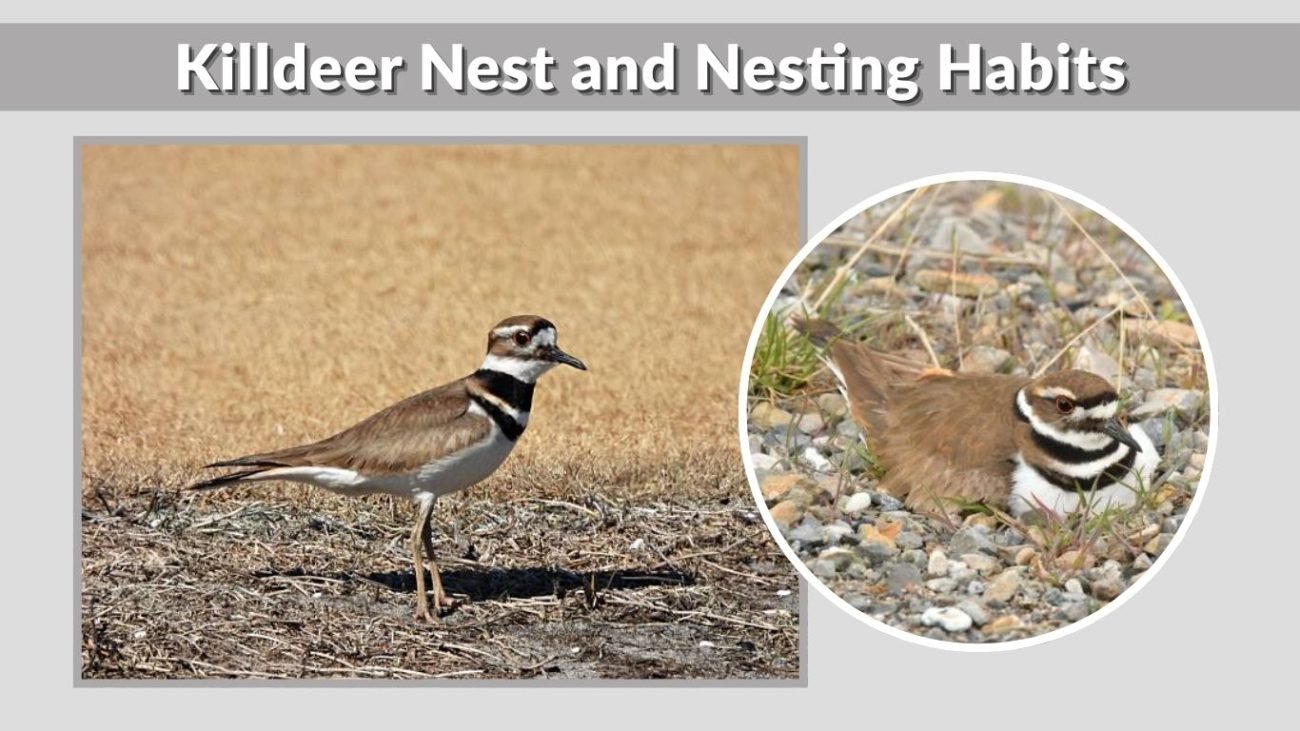
Nest Structure
Unlike many birds, the killdeer does not build a traditional nest. Instead, it creates a simple ground nest known as a “scrape.” This is a shallow depression in the soil, often lined with small stones, shells, grass, or bits of debris. The materials help camouflage the eggs and provide slight insulation.
Nesting Locations
Killdeer choose open, flat areas for nesting where visibility is high. Common nesting sites include gravel patches, farmland, dirt fields, shorelines, and even urban spaces like parking lots or rooftops. Their preference for open ground allows them to detect predators quickly.
Nesting Habits
One of the most fascinating behaviors of the killdeer is its “broken-wing display.” When a predator approaches the nest, the adult bird pretends to have an injured wing, dragging it along the ground to lure the threat away from the eggs or chicks. Once the predator is far enough, the bird suddenly flies away, revealing the deception. This clever strategy greatly increases the survival rate of their young.
Killdeer Eggs
Egg Description
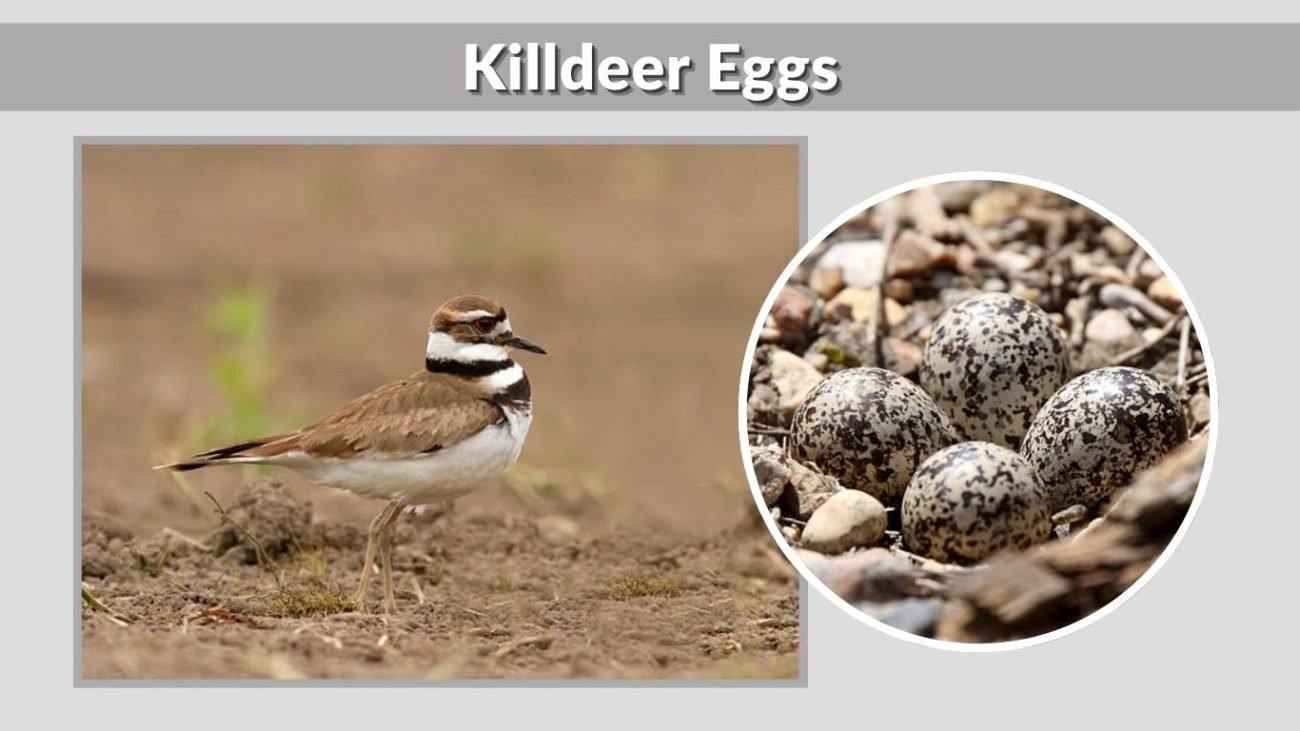
Killdeer typically lay between 3 and 5 eggs per clutch. The eggs are beige or light brown with dark speckles, which help them blend perfectly with their surroundings. This camouflage is essential since the nest is exposed on the ground.
Incubation Process
The incubation period lasts about 24 to 28 days. Both parents take turns incubating the eggs, ensuring they remain warm and protected. Their shared responsibility improves the chances of successful hatching.
Chick Development
Killdeer chicks are precocial, meaning they are relatively mature and mobile shortly after hatching. Within hours, they can walk and follow their parents. Although they can feed themselves, the parents continue to protect and guide them until they are strong enough to survive independently.
Killdeer Lifespan
Average Lifespan
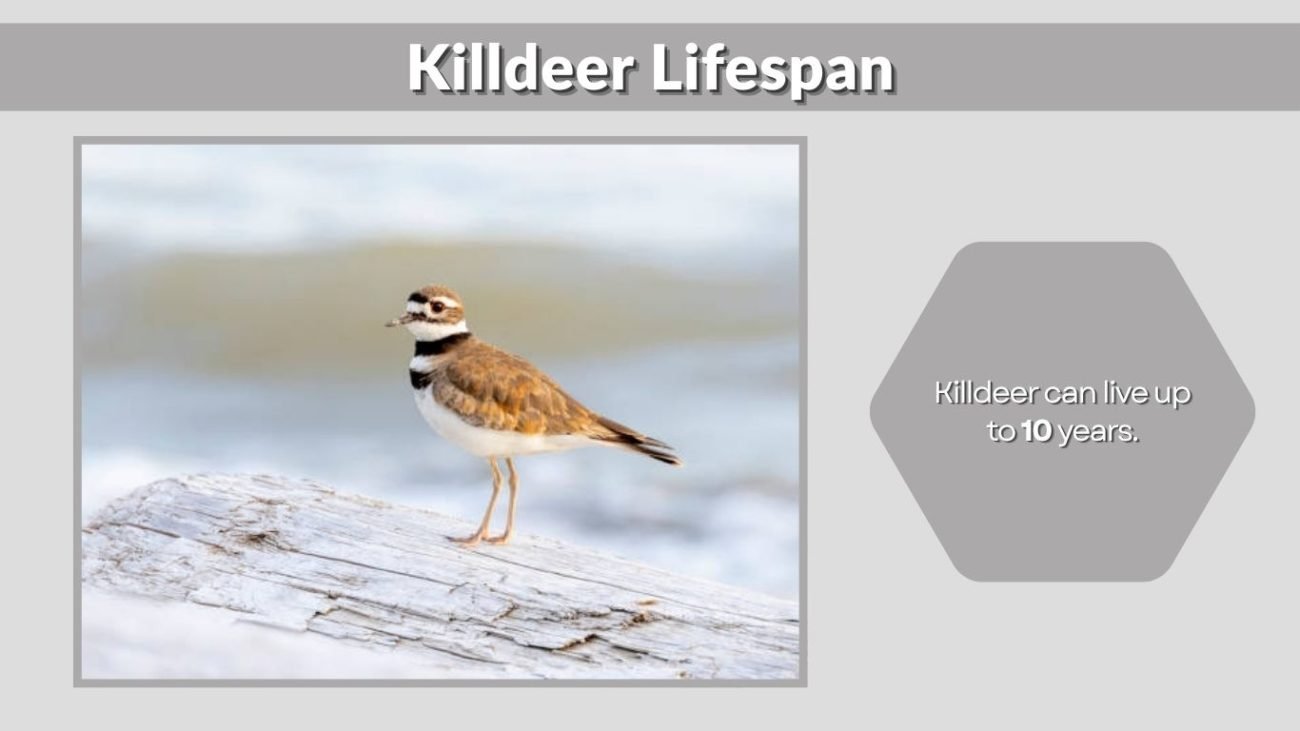
In the wild, killdeer can live up to 10 years, although many do not reach this age due to natural challenges.
Factors Affecting Lifespan
Predators such as foxes, raccoons, birds of prey, and domestic animals pose significant threats, especially to eggs and young chicks. Human activities, including habitat disturbance and vehicle traffic in nesting areas, can also impact survival. Despite these risks, their adaptability helps maintain stable populations.
Lifespan Variation
Killdeer living in safer environments with fewer predators and less disturbance may live longer. Access to food and suitable nesting sites also plays a key role in their longevity.
Killdeer Behavior
Defensive Behavior
Killdeer are highly protective of their nests and young. In addition to the broken-wing display, they use loud calls and distraction techniques to warn off predators. Their alert nature helps them respond quickly to danger.
Movement and Activity
These birds are active during the day and are often seen running rather than flying. Their long legs allow them to move quickly across open ground, making them efficient at both escaping threats and catching prey.
Migration Patterns
Killdeer exhibit partial migration. Birds in northern regions migrate south during winter, while those in warmer climates may remain year-round. Migration is influenced by temperature and food availability.
Interesting Killdeer Facts
Named After Its Call
The name “killdeer” comes from its loud, high-pitched call that sounds like “kill-deer.” This call is often heard when the bird is in flight or feeling threatened.
Master of Distraction
The broken-wing act is one of the most famous bird behaviors in nature. It is an effective survival strategy that helps protect vulnerable eggs and chicks.
Not a Typical Shorebird
Although classified as a shorebird, the killdeer is commonly found far from water. It prefers open land habitats, making it different from many other species in its group.
Important for Ecosystems
Killdeer play a valuable role in controlling insect populations. By feeding on insects and larvae, they help maintain ecological balance in both natural and agricultural environments.
Conclusion
The killdeer is a remarkable bird known for its adaptability, distinctive call, and clever defensive strategies. From its simple ground nest to its ability to thrive in both rural and urban environments, it demonstrates impressive survival skills. Understanding its behavior, habitat, and lifecycle highlights the importance of protecting open spaces where this species can continue to thrive. Its presence is a reminder of how wildlife can adapt alongside human development.
FAQs
What do killdeer eat?
Killdeer mainly eat insects, worms, and other small invertebrates found on the ground.
Where do killdeer build their nests?
They build simple ground nests in open areas like fields, gravel patches, and even parking lots.
Why do killers pretend to be injured?
They use the broken-wing display to distract predators and protect their eggs or chicks.
How long do killdeer live?
They can live up to about 10 years in the wild, depending on environmental conditions.
Are killdeer migratory birds?
Some populations migrate seasonally, while others stay in warmer regions year-round.