The willet (Tringa semipalmata) is a large and easily recognizable shorebird known for its striking wing pattern and loud call. Often found along coastlines, marshes, and wetlands, it is a common sight in North America. Despite its plain gray-brown appearance when standing, the willet reveals bold black-and-white wings in flight, making it truly distinctive. Understanding its characteristics, habitat, and diet helps explain how this adaptable bird thrives in both coastal and inland environments.
Willet Characteristics
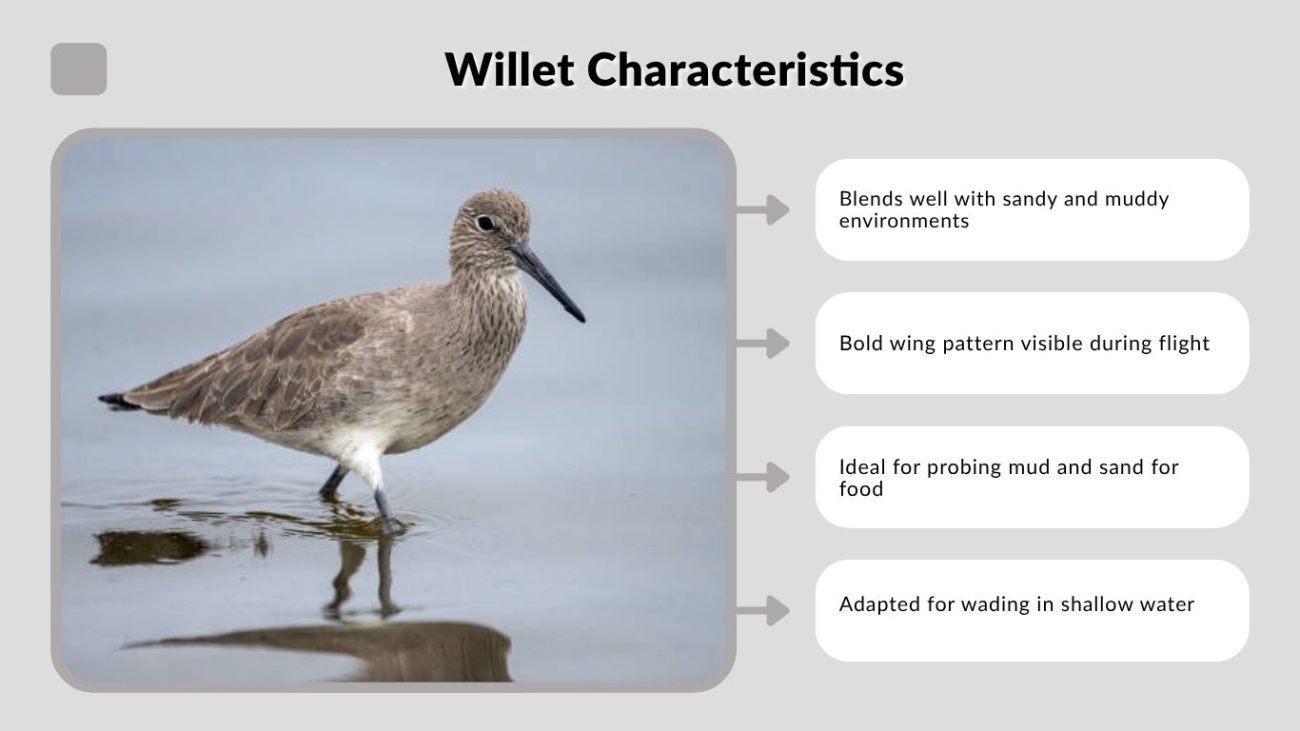
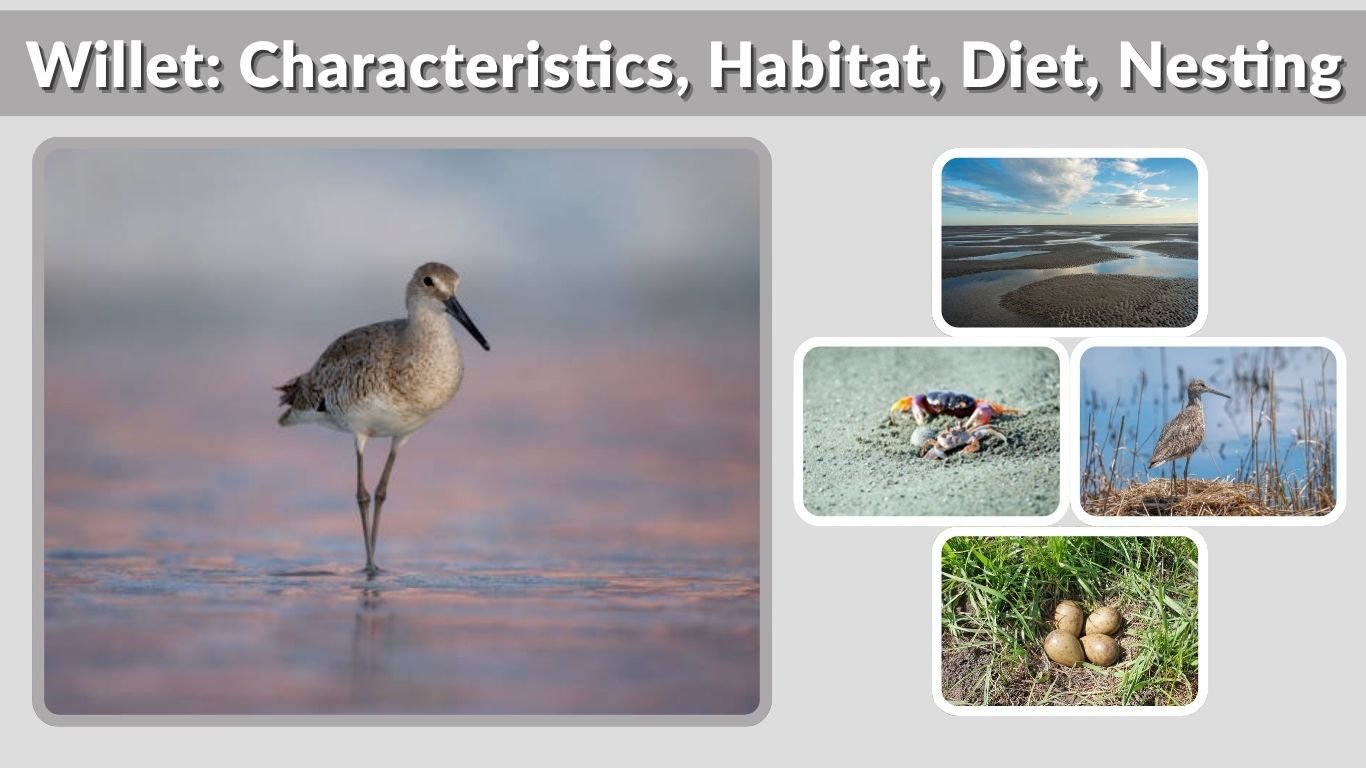
The willet is a large and sturdy shorebird known for its simple appearance and striking wing pattern in flight. While it may look plain when standing, its bold black-and-white wings make it highly recognizable. This bird is well adapted to coastal and wetland environments, using its long legs and bill to forage efficiently. Its strong build, loud call, and active behavior make it one of the most noticeable shorebirds in its range.
Key Characteristics
- Gray-Brown Plumage: Blends well with sandy and muddy environments
- Black-and-White Wings: Bold wing pattern visible during flight
- Long Straight Bill: Ideal for probing mud and sand for food
- Long Legs: Adapted for wading in shallow water
- Large Size: About 13–16 inches long with a wingspan of 27–32 inches
- Loud Call: Distinct “pill-will-willet” sound, especially when alarmed
- Strong Flyer: Capable of long-distance migration
- Active Forager: Walks steadily while searching for food
- Coastal & Inland Adaptability: Found in both shoreline and inland habitats
These characteristics make the willet a versatile and easily identifiable bird among North American shorebirds.
Willet Habitat
Geographic Range
Willets are widely distributed across North America. They breed in both coastal and inland regions, including parts of the United States and Canada. During the winter months, many migrate to warmer coastal areas in the southern United States, Central America, and even South America.
Preferred Environments
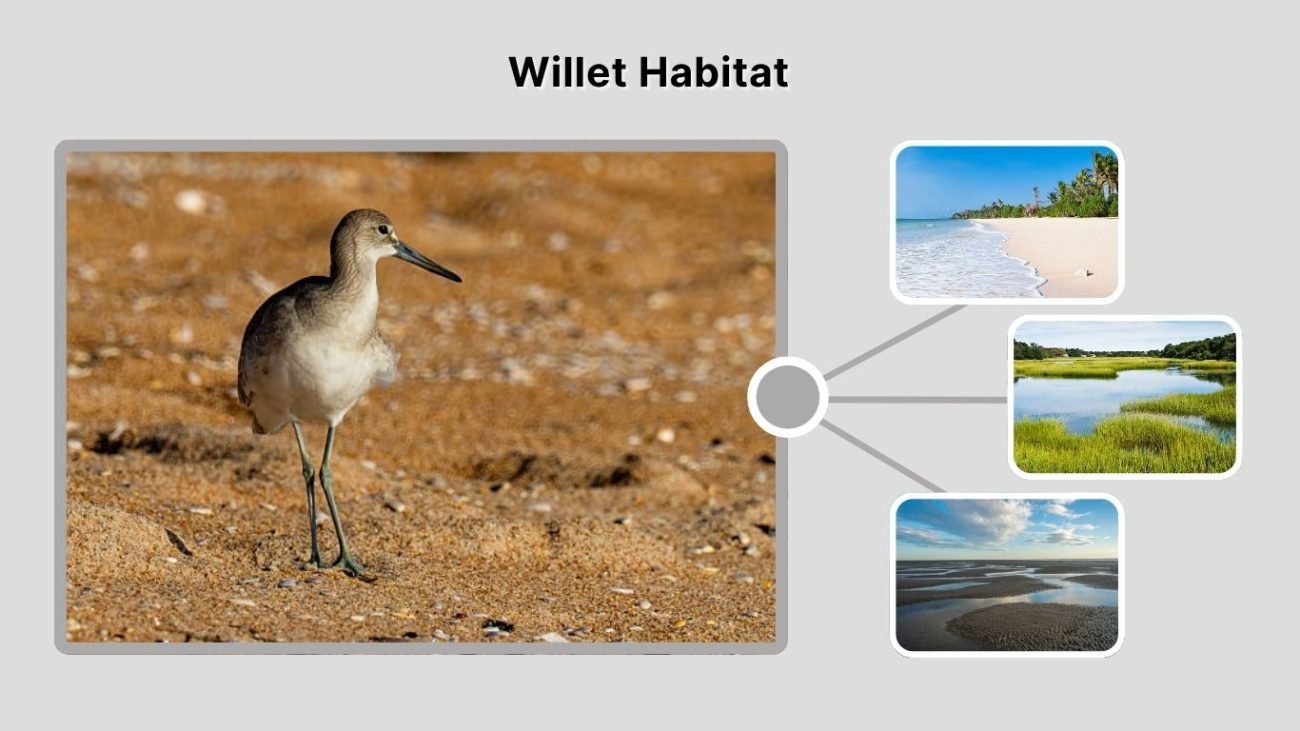
These birds prefer habitats that provide easy access to water and open space for foraging. Common environments include coastal beaches, marshes, mudflats, and estuaries. Inland populations can also be found in wetlands, grasslands, and prairie regions near water sources.
Seasonal Habitat Changes
Willets often shift habitats depending on the season. During the breeding season, they may move inland to grasslands and wetlands. In winter, they are more commonly found along coastlines and tidal flats, where food is abundant.
Migration Patterns
Willets are migratory birds, with many traveling long distances between breeding and wintering grounds. Their migration is influenced by temperature and food availability. Coastal populations may remain closer to their habitats year-round, while inland birds typically migrate south.
Willet Diet
Primary Food Sources
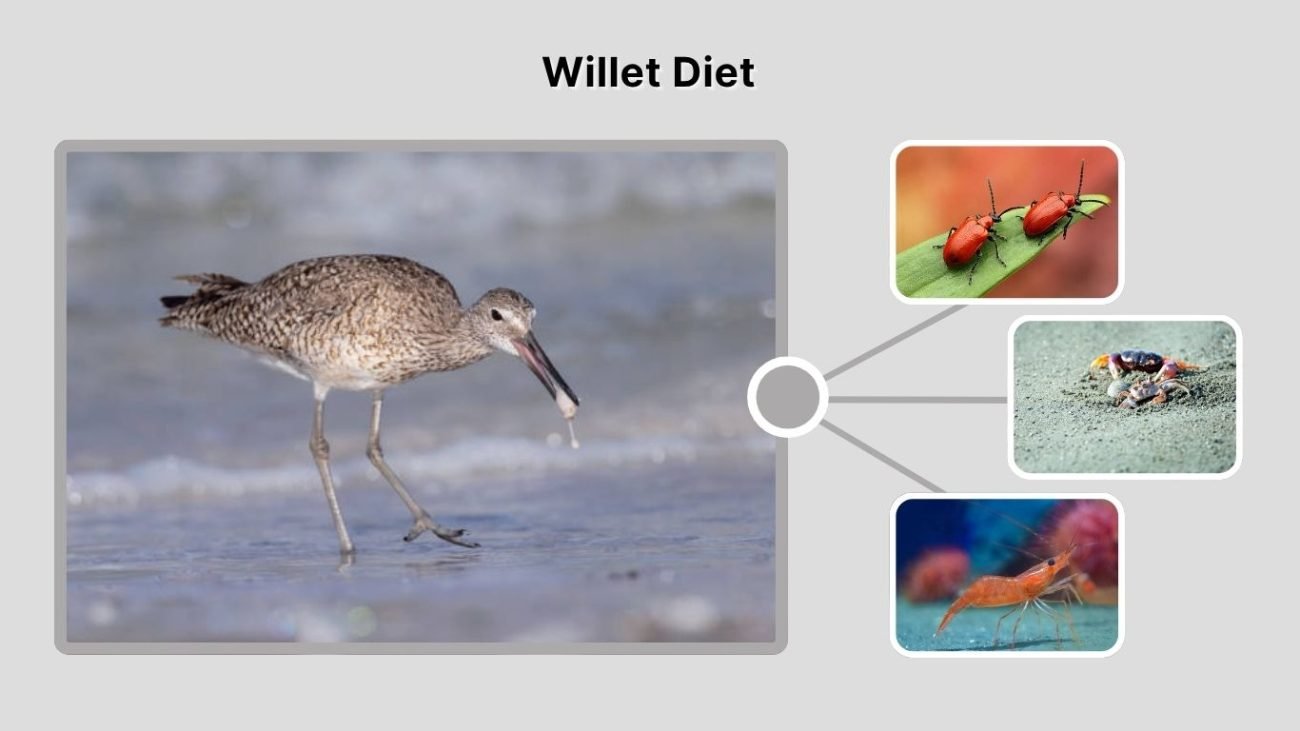
The willet has a varied diet that includes insects, crustaceans, small fish, and other aquatic organisms. In coastal areas, it commonly feeds on crabs, shrimp, and marine worms. In inland habitats, insects and larvae make up a larger portion of its diet.
Feeding Behavior
Willets are active foragers and often search for food by walking through shallow water or along muddy shores. They use their long bills to probe into the ground or pick prey from the surface. Their feeding activity often follows tidal patterns, especially in coastal regions.
Diet Adaptation
One of the willet’s strengths is its ability to adapt its diet based on its environment. Coastal birds rely more on marine life, while inland populations feed mainly on insects and freshwater organisms. This flexibility allows the species to thrive in a wide range of habitats.
Willet Nest and Nesting Habits
Nest Structure
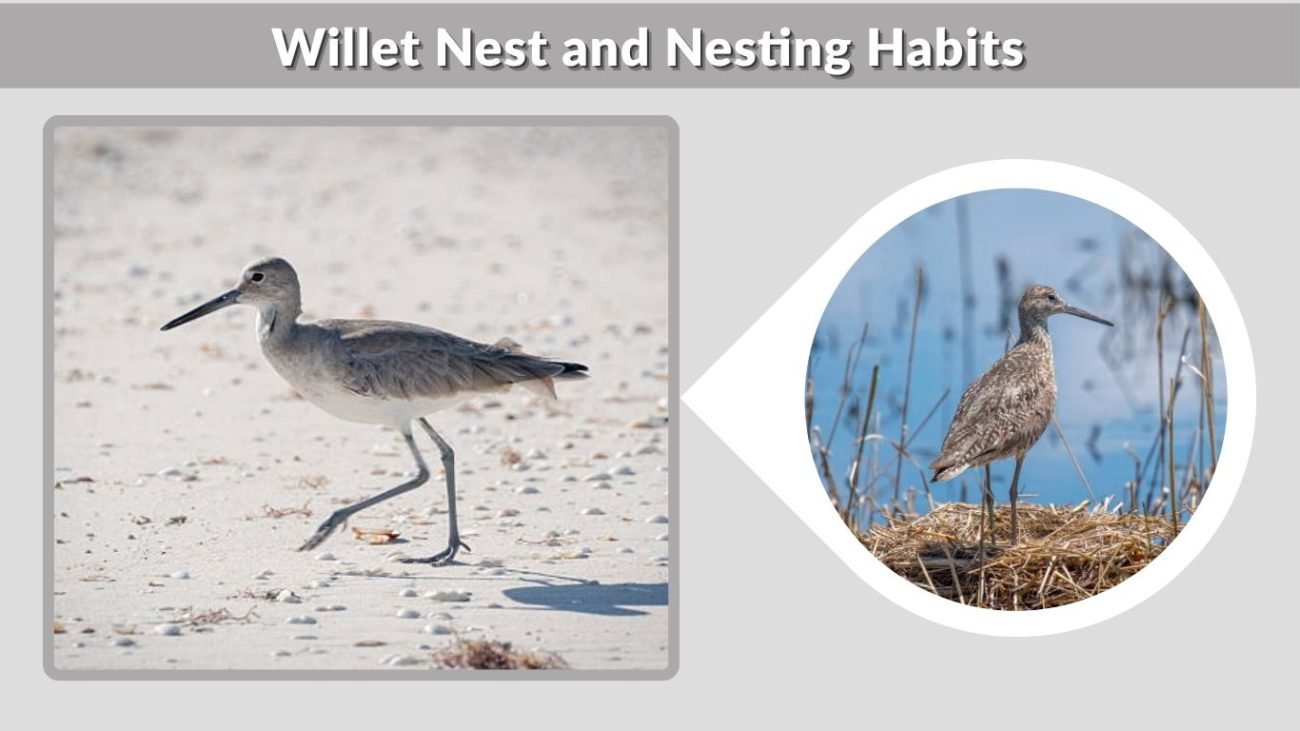
Willets build simple ground nests known as scrapes. These nests are shallow depressions in the soil, usually lined with grass, leaves, or other plant material. The simple design helps the nest blend into its surroundings, providing natural camouflage against predators.
Nesting Locations
Willets typically choose open areas for nesting, such as grasslands, coastal marshes, or sandy shorelines. Inland populations often nest in grassy fields near wetlands, while coastal birds prefer salt marshes and beaches. These locations offer both visibility and quick access to feeding areas.
Nesting Habits
The breeding season usually begins in spring. Willets are territorial birds and will actively defend their nesting area from intruders. Both male and female participate in nest building and protection. They often use distraction displays, such as pretending to be injured, to lure predators away from their nest.
Willet Eggs
Egg Description
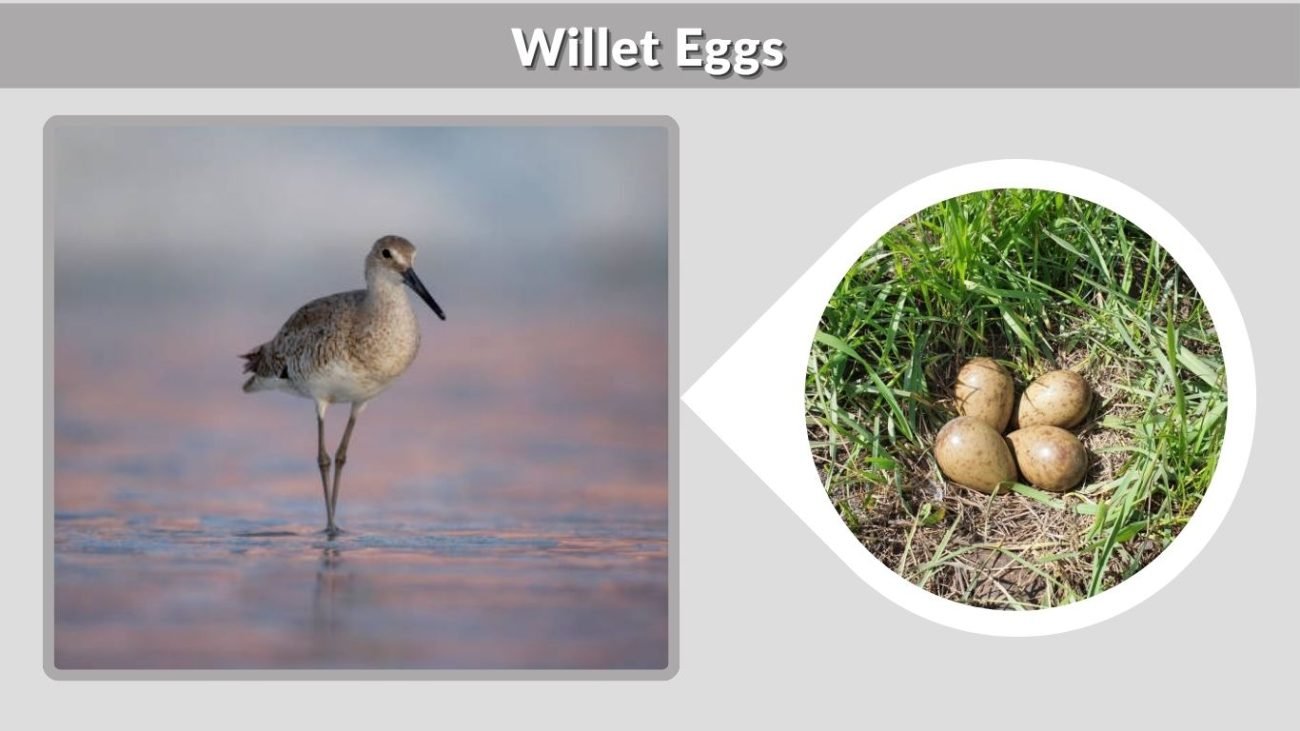
Willets typically lay between 3 and 4 eggs per clutch. The eggs are light-colored, often beige or buff, with dark brown spots and markings. These speckles help camouflage the eggs against the ground.
Incubation Process
The incubation period lasts about 21 to 29 days. Both parents share incubation duties, taking turns to keep the eggs warm and protected. This teamwork increases the chances of successful hatching.
Chick Development
Willet chicks are precocial, meaning they are able to walk and leave the nest shortly after hatching. Although they can feed themselves, the parents continue to guard and guide them. The chicks grow quickly and learn to forage within a short time.
Willet Lifespan
Average Lifespan
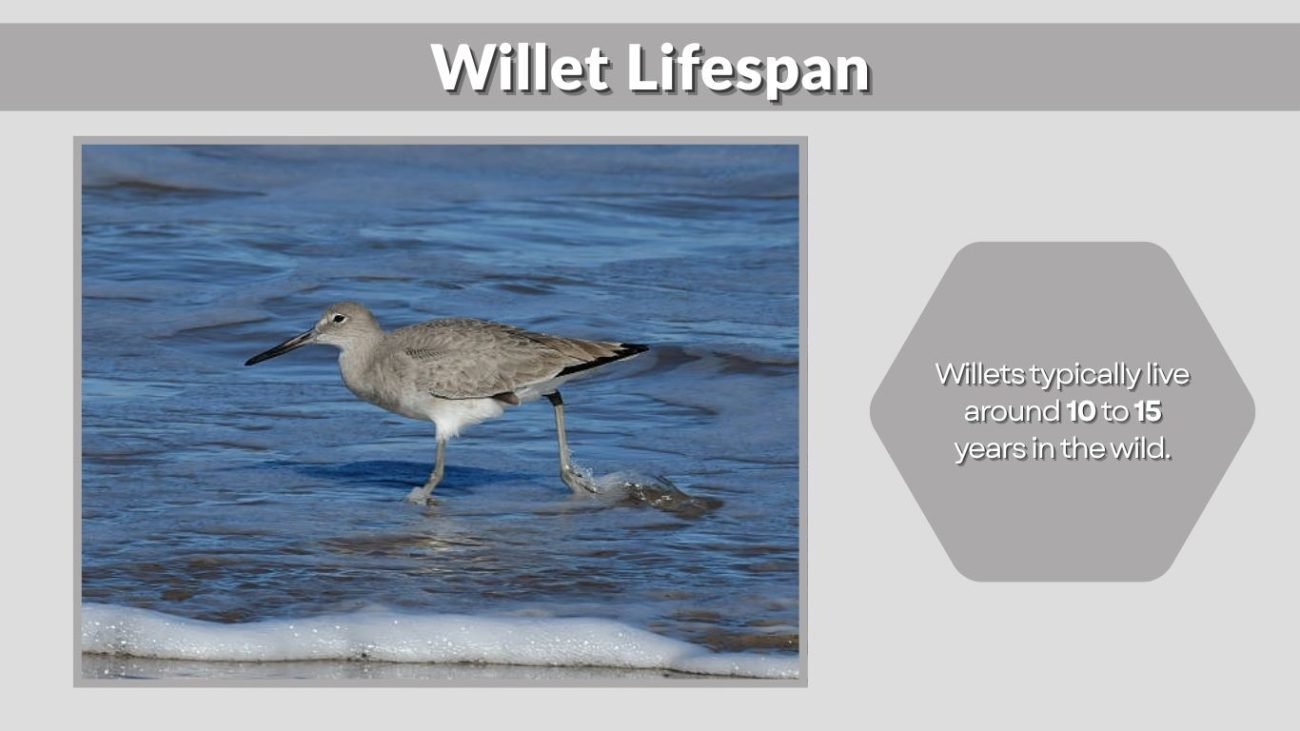
Willets typically live around 10 to 15 years in the wild, depending on environmental conditions and threats.
Factors Affecting Lifespan
Their survival can be affected by predators such as foxes, raccoons, and birds of prey. Habitat loss, human disturbance, and climate changes also play a role in their lifespan. Coastal development can reduce suitable nesting and feeding areas.
Lifespan Variation
Willets living in protected habitats with abundant food and fewer predators tend to live longer. Migration challenges and environmental stress can reduce lifespan in some populations.
Willet Behavior
Feeding and Movement
Willets are active birds that spend much of their time walking along shorelines or wading through shallow water. They move steadily while searching for food and may suddenly probe the ground when prey is detected.
Territorial Nature
During the breeding season, willets become highly territorial and vocal. They defend their nests aggressively, often calling loudly and chasing away potential threats.
Migration and Communication
Willets are known for their strong migratory behavior, traveling long distances between breeding and wintering grounds. Their loud “pill-will-willet” call is commonly used for communication, especially when alarmed or interacting with other birds.
Interesting Willet Facts
Distinctive Wing Pattern
One of the most striking features of the willet is its bold black-and-white wing pattern, which is only visible in flight. This makes it easy to identify even from afar.
Name Origin
The name “willet” comes from the bird’s loud and repetitive call, which sounds like “pill-will-willet.”
Coastal and Inland Species
Willets are unique among shorebirds because they are found in both coastal and inland habitats. This adaptability allows them to occupy a wide geographic range.
Role in Ecosystem
Willets play an important role in controlling insect and small aquatic animal populations. By feeding on these organisms, they help maintain ecological balance in wetlands and coastal environments.
Conclusion
The willet is a remarkable shorebird known for its adaptability, distinctive wing pattern, and loud call. From its flexible diet to its ground-nesting habits, it has developed effective strategies for survival in both coastal and inland environments. Understanding its behavior and habitat highlights the importance of protecting wetlands and shorelines. As ecosystems continue to change, conserving habitats for species like the willet is essential for maintaining biodiversity.
FAQs
What do willets eat?
Willets eat insects, crustaceans, small fish, and other aquatic organisms.
Where do willets live?
They live in coastal areas, marshes, wetlands, and sometimes inland grasslands near water.
How do willets nest?
They build simple ground nests (scrapes) lined with grass and plant material.
How long do willets live?
Willets typically live around 10 to 15 years in the wild.
Are willets migratory birds?
Yes, most willets migrate seasonally, especially those that breed in northern regions.