Black flies, belonging to the family Simuliidae, are small, hump-backed insects commonly found near rivers and streams. While some are mere nuisances, others are significant disease vectors, transmitting parasites like Onchocerca volvulus, the cause of river blindness. This guide explores 20 notable black fly species worldwide, highlighting their identification traits, preferred habitats, and behavioral patterns, offering a clear overview of these persistent and sometimes dangerous insects.
1. Simulium damnosum

The Simulium damnosum complex is one of the most significant groups of black flies, particularly known as a vector of river blindness (Onchocerciasis) in Africa. These flies thrive in fast-flowing rivers and streams where their larvae develop, and they are notorious for their persistent biting behavior.
Identification
- Medium-sized black fly with a hump-backed body.
- The wings are broad and slightly darkened.
- Antennae are short, 11-segmented, often darker in color.
- Thorax is arched, giving the typical “buffalo gnat” appearance.
- Legs are relatively short and stout compared to other fly species.
Habitat
This species is strongly associated with fast-flowing rivers and streams, particularly in tropical and subtropical regions of Africa. Larvae attach themselves to submerged rocks and vegetation, relying on oxygen-rich water.
Behavior
Simulium damnosum is highly aggressive and feeds on the blood of mammals, including humans. The females require blood meals to produce eggs, while males typically feed on nectar. They are daytime biters and often attack in large swarms, making them a serious nuisance as well as a health threat.
2. Simulium venustum

The Simulium venustum species is one of the most widely distributed black flies in North America. It is frequently encountered in wooded areas and near flowing water, where it breeds. While its bites are painful, this species is less medically significant compared to some African vectors.
Identification
- Small to medium-sized fly with a compact, humped thorax.
- Wings are clear to slightly smoky, broad in shape.
- Antennae are short and bead-like.
- Thorax and abdomen often covered with fine hairs, giving a dull appearance.
- Legs are shorter, not elongated, with slightly lighter coloration on joints.
Habitat
This species favors cool, fast-flowing streams and rivers in forested and rural areas. Larvae attach to submerged rocks, logs, and aquatic vegetation. Its presence is a common indicator of clean, well-oxygenated water.
Behavior
Simulium venustum is a persistent biter, targeting both humans and animals during the day. It often emerges in large numbers during the spring and summer months, causing discomfort to people in outdoor environments. Unlike some tropical species, it is not considered a major disease vector but remains a notable biting pest.
3. Simulium vittatum

The Simulium vittatum complex is among the most common and widely studied black flies in North America. It plays a dual role as both a nuisance biter and a potential vector for livestock diseases, making it important in agriculture and entomology.
Identification
- Medium-sized fly with the typical hump-backed thorax.
- Wings are clear, sometimes with faint grayish shading.
- Antennae are short, with uniform dark coloration.
- Thorax often shows faint longitudinal stripes or patterns.
- Legs sturdy, with lighter-colored joints compared to the darker body.
Habitat
This species thrives in running streams, rivers, and creeks, where larvae and pupae attach to submerged stones, vegetation, or debris. It is adaptable to both rural and semi-urban environments, provided there is flowing water for breeding.
Behavior
Simulium vittatum is known for its aggressive daytime biting, affecting humans, livestock, and wildlife. While not a major human disease vector, it has been implicated in transmitting certain livestock parasites and pathogens. In swarms, its attacks can lead to stress, blood loss, and reduced productivity in animals, making it a pest of economic significance.
4. Simulium ornatum

The Simulium ornatum complex is widely distributed across Europe and parts of Asia. It is a frequent biting pest of humans and animals, often emerging in large numbers during warmer months. Though not a major disease vector, it can still cause irritation and discomfort due to its persistent biting.
Identification
- Medium-sized fly with a dark, hump-backed thorax.
- The wings are broad, slightly grayish or smoky in appearance.
- Antennae are short and uniformly dark.
- Thorax is often marked with subtle pale patterns or patches.
- Legs typically dark with lighter joints at the tibiae.
Habitat
This species is associated with fast-flowing rivers, streams, and brooks across temperate regions. The larvae anchor themselves to submerged vegetation, stones, and woody debris in well-oxygenated water. Adults are often abundant near rural and forested watercourses.
Behavior
Simulium ornatum is a daytime blood-feeder that attacks humans, livestock, and birds. Bites are painful and can cause localized swelling or itching. Although it is not a significant vector of human disease, heavy infestations may disturb outdoor activities, reduce livestock health, and impact rural communities where the flies emerge in swarms.
5. Simulium tuberosum

The Simulium tuberosum species group is widely distributed across North America, Europe, and Asia. It is one of the most diverse black fly complexes and is frequently studied because of its medical and veterinary importance. Some members of this group are known vectors of parasites affecting both humans and animals.
Identification
- Medium-sized black fly with a prominent humped thorax.
- Wings broad, slightly cloudy, with fine venation.
- Antennae are short, bead-like, dark-colored.
- Thorax is usually dark, but may show faint pale markings in some forms.
- Legs strong, typically dark with lighter tarsi (feet segments).
Habitat
This species complex inhabits swift-flowing rivers and streams across a variety of climates. The larvae are adapted to attach themselves to submerged rocks, roots, or vegetation in oxygen-rich waters. They are particularly abundant in forested river systems and near rural waterways.
Behavior
Simulium tuberosum is known for its persistent daytime biting, targeting humans, livestock, and wildlife. While many forms are primarily a nuisance, some members of the group are implicated in the transmission of Onchocerca volvulus, the parasite responsible for river blindness in certain regions. Swarming activity is intense during spring and summer, making it a major biting pest in endemic areas.
6. Simulium arcticum

The Simulium arcticum complex is one of the most important black fly groups in North America, particularly in the northern and western regions. It is notable as a vector of onchocerciasis in localized foci and is also recognized for its nuisance biting on both humans and livestock.
Identification
- Medium to large black fly with the characteristic hump-backed thorax.
- Wings generally clear to slightly grayish, broad with distinct venation.
- Antennae are short, uniformly dark.
- Thorax is typically dark and shiny, sometimes with faint pale hairs.
- Legs dark, with lighter joints at the tibiae and tarsi.
Habitat
This species thrives in cold, fast-flowing rivers and streams, especially in mountainous and northern regions. Larvae and pupae develop on submerged rocks, vegetation, and debris where oxygen content is high. It is particularly adapted to cooler climates compared to many other species.
Behavior
Simulium arcticum is an aggressive daytime biter, swarming in large numbers and causing significant irritation to humans, cattle, and horses. Its medical importance lies in its role as a vector of Onchocerca parasites in certain endemic areas of North America. Beyond disease transmission, its swarming attacks also result in livestock stress, reduced feeding, and economic losses.
7. Simulium equinum

The Simulium equinum species is a widespread black fly in Europe and parts of Asia, often found near rural rivers and streams. It is well known as a persistent biter of livestock, particularly horses, which is reflected in its name “equinum.” While less important as a disease vector, it causes considerable nuisance and economic impact in farming regions.
Identification
- Medium-sized black fly with the typical hump-backed thorax.
- Wings broad, slightly darkened, with strong venation.
- Antennae are short, dark, and bead-like.
- Thorax dark, sometimes with pale patches or fine hair covering.
- Legs strong, dark-colored with paler joints at tibiae and tarsi.
Habitat
This species favors fast-flowing streams and rivers in rural and agricultural landscapes. Larvae attach to submerged vegetation, rocks, and woody debris in oxygen-rich waters. Adults are commonly encountered in meadows and pastures near waterways.
Behavior
Simulium equinum is an intense blood-feeder, especially on horses and cattle, though it will also attack humans. Biting occurs mainly during daylight hours, often in swarms. While not a major disease vector, its feeding causes pain, swelling, and irritation, which can lead to restlessness and reduced productivity in farm animals.
8. Simulium reptans

The Simulium reptans group is a common and widespread black fly species in Europe and parts of Asia. It is among the earliest emerging species in spring and is notorious for its biting nuisance in rural and forested areas. While not a primary vector of major human diseases, it can still impact livestock health and outdoor human activities.
Identification
- Small to medium-sized fly with a dark, hump-backed thorax.
- Wings broad, slightly grayish or smoky.
- Antennae are short, bead-like, and uniformly dark.
- Thorax covered with fine pale hairs, giving a dull appearance.
- Legs dark, often with lighter tarsi and joints.
Habitat
This species breeds in fast-flowing rivers and streams, particularly those in wooded and rural landscapes. Larvae and pupae are attached to submerged vegetation, stones, and woody debris. It is often one of the dominant species in spring black fly populations.
Behavior
Simulium reptans is a vigorous daytime biter of humans, cattle, and horses. Its activity peaks in spring and early summer, sometimes causing severe nuisance near rivers and villages. Though not a significant disease vector, large populations can reduce outdoor activity, disturb livestock, and create economic impacts in farming communities.
9. Simulium metallicum
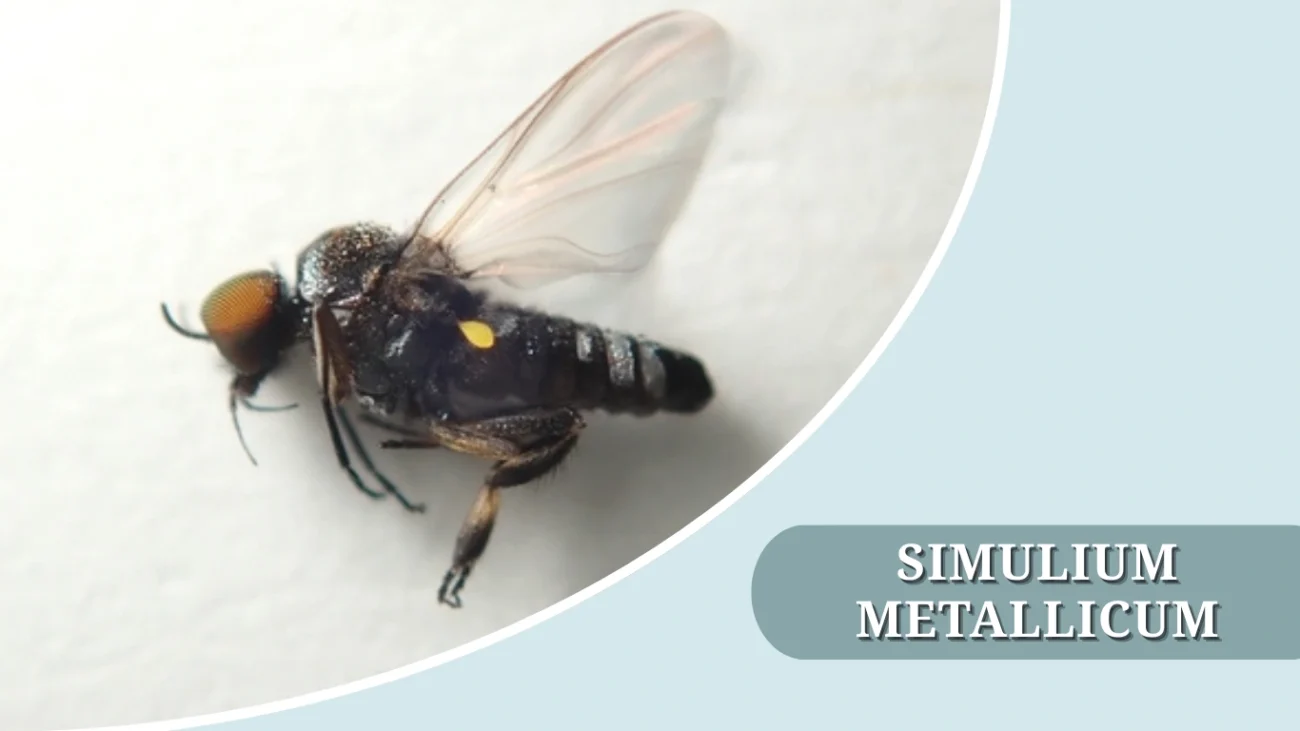
The Simulium metallicum complex is one of the most important black fly groups in Central and South America. It is a well-known vector of onchocerciasis (river blindness) in several endemic regions and is closely monitored in disease control programs.
Identification
- Small to medium-sized fly with a dark, hump-backed thorax.
- Wings clear to faintly grayish, broad, with distinct venation.
- Antennae are short, dark, and bead-like.
- Thorax and abdomen often appear shiny or metallic, giving the species its name.
- Legs dark, with paler joints at tibiae and tarsi.
Habitat
This species thrives in mountain streams, rivers, and fast-flowing creeks in tropical and subtropical regions of Latin America. Larvae develop on submerged rocks, vegetation, and other stable substrates in well-oxygenated water.
Behavior
Simulium metallicum is an aggressive daytime feeder on humans and animals, often attacking in swarms. It is of major medical importance as a vector of Onchocerca volvulus, the causative agent of river blindness. Beyond disease transmission, its swarming bites also lead to irritation, swelling, and reduced outdoor activity in affected areas.
10. Simulium yahense
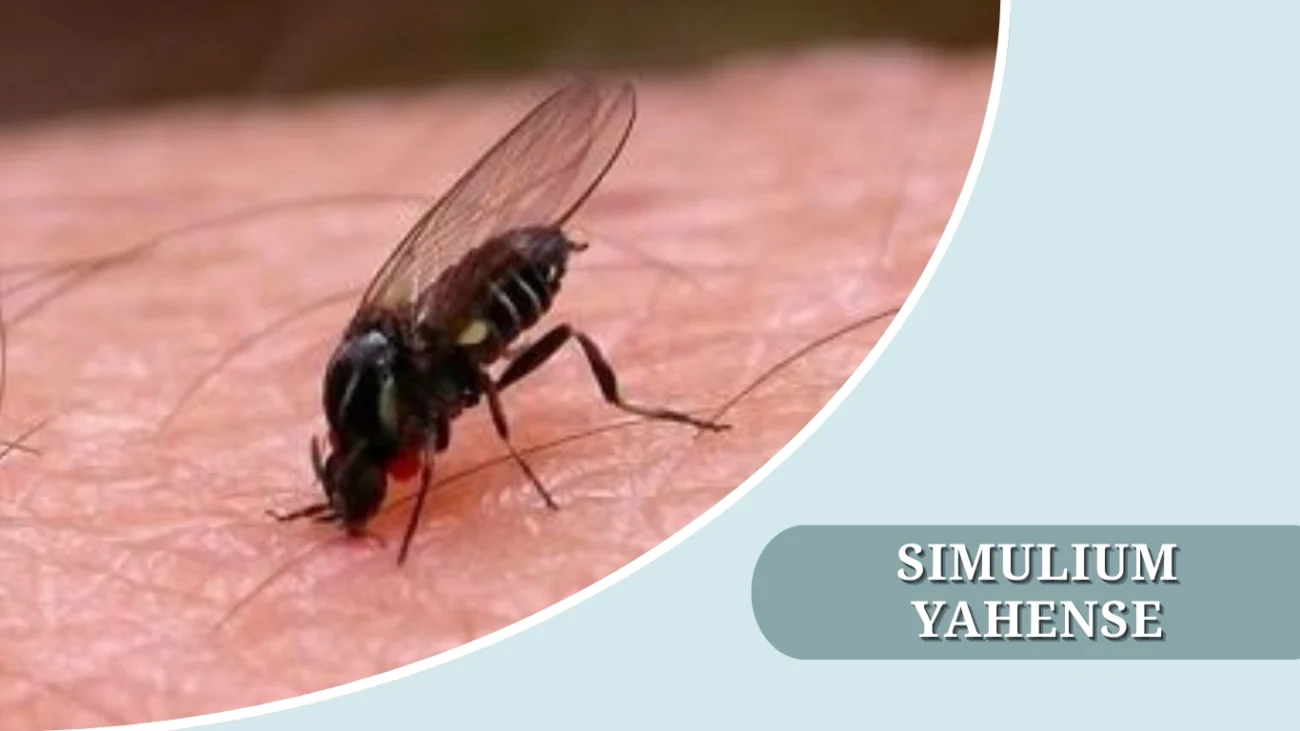
The Simulium yahense is a medically important species found in West and Central Africa. It is one of the major vectors of onchocerciasis (river blindness) in forested regions, making it a priority species for disease surveillance and control programs.
Identification
- Small to medium-sized black fly with a hump-backed thorax.
- Wings broad, slightly grayish or translucent.
- Antennae are short, dark, and compact.
- Thorax is usually dark, with fine pale hairs.
- Legs dark, with lighter tarsi and joints.
Habitat
This species breeds in shaded forest streams and rivers, often smaller waterways compared to savannah-dwelling species. Larvae attach to submerged roots, rocks, and aquatic vegetation in oxygen-rich flowing water. Its presence is strongly tied to forested habitats with stable stream flow.
Behavior
Simulium yahense is an aggressive daytime biter, particularly targeting humans in endemic areas. It is highly significant as a vector of Onchocerca volvulus, contributing to river blindness in affected populations. Beyond disease transmission, its swarms cause severe irritation and disrupt daily outdoor activities in rural communities.
11. Simulium neavei
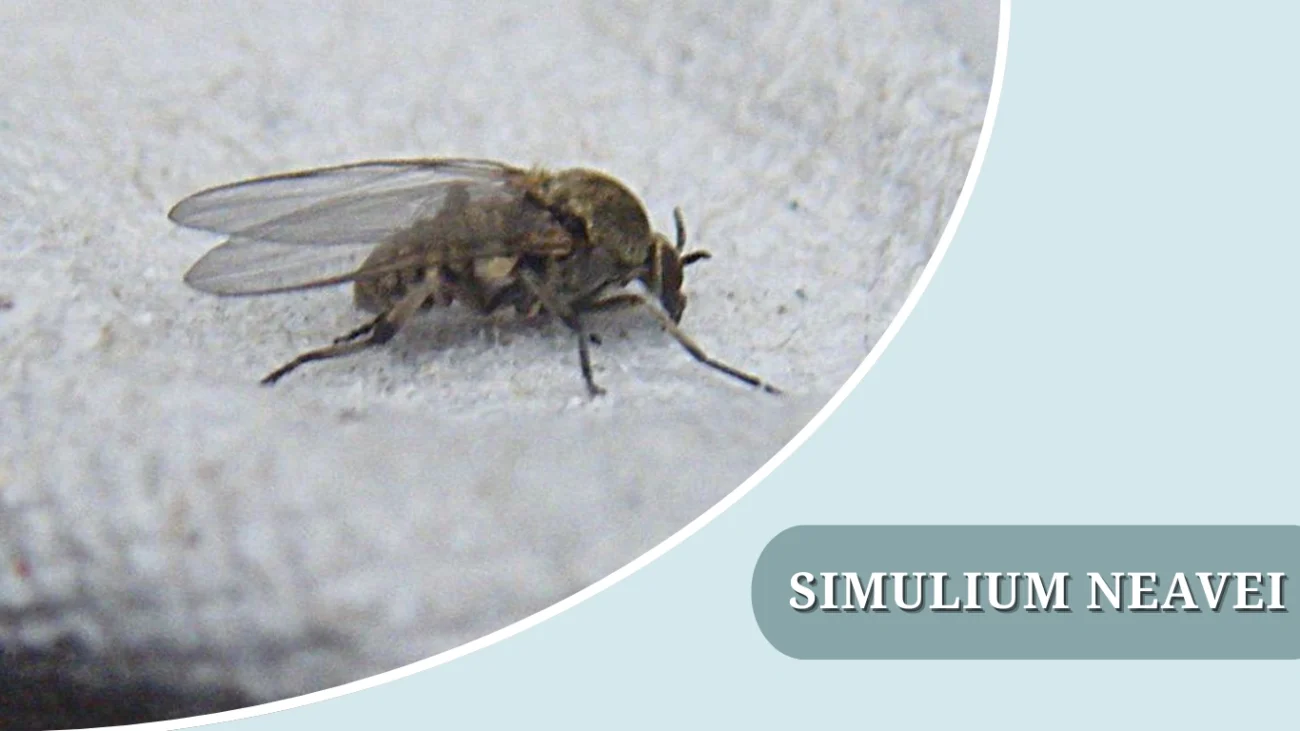
The Simulium neavei group is one of the most important vectors of onchocerciasis (river blindness) in East and Central Africa. It is unique among black flies because its larvae and pupae have a symbiotic relationship with freshwater crabs, attaching themselves to the crabs’ bodies instead of rocks or vegetation.
Identification
- Small to medium-sized black fly with a compact, humped thorax.
- Wings broad, slightly translucent to grayish.
- Antennae are short, dark, and bead-like.
- Thorax dark, sometimes with fine pale hairs.
- Legs relatively short, dark with paler tarsi.
Habitat
This species is restricted to shaded forest streams and rivers where suitable freshwater crabs are present. Unlike most black fly species, S. neavei larvae depend on these crabs as a substrate, making its distribution highly localized and tied to crab populations.
Behavior
Simulium neavei is an aggressive human-biting species, usually swarming during the daytime. Its unique ecology makes it an efficient vector of Onchocerca volvulus, and it plays a central role in the transmission of river blindness in certain African foci. Control efforts often target both the flies and their crab hosts to reduce transmission.
12. Simulium callidum

The Simulium callidum species is a widespread black fly in Central and South America, where it plays a role as both a nuisance biter and a potential vector of onchocerciasis in certain endemic regions. It is frequently studied in association with other members of the Simulium complexes in Latin America.
Identification
- Small to medium-sized fly with a dark, hump-backed thorax.
- Wings are broad, faintly grayish, with clear venation.
- Antennae are short, dark, and compact.
- Thorax dark, sometimes with a shiny or slightly metallic sheen.
- Legs dark, with lighter tarsi and joints.
Habitat
This species thrives in fast-flowing streams, rivers, and mountain creeks across tropical and subtropical zones. The larvae typically attach to submerged vegetation, rocks, and woody debris, developing in highly oxygenated water.
Behavior
Simulium callidum is an active daytime biter, frequently attacking humans and livestock in rural areas. It is medically important as a vector of Onchocerca volvulus in parts of Latin America, contributing to the transmission of river blindness. In non-endemic regions, it remains primarily a biting nuisance, often swarming in large numbers and causing irritation and reduced outdoor activity.
13. Simulium decorum
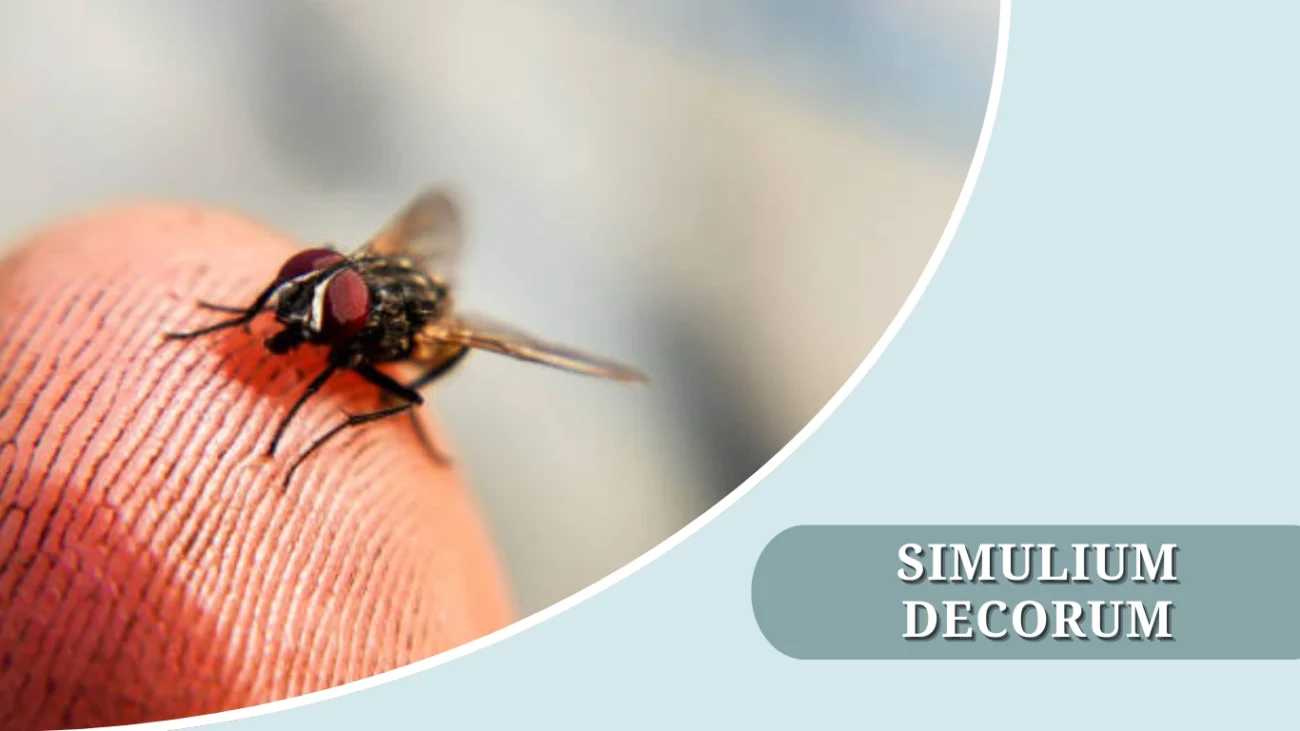
The Simulium decorum species is a common black fly in Europe and parts of Asia, especially in temperate regions. It is not considered a major disease vector but is notorious as a seasonal biting pest, often emerging in swarms during the warmer months.
Identification
- Medium-sized black fly with a typical hump-backed thorax.
- Wings broad, slightly smoky or translucent with strong venation.
- Antennae are short, dark, bead-like.
- Thorax dark, sometimes with faint pale patches or hairs.
- Legs dark, with lighter-colored joints at tibiae and tarsi.
Habitat
This species breeds in clean, fast-flowing rivers, brooks, and streams, usually in rural or semi-forested landscapes. Larvae and pupae attach to submerged vegetation, rocks, and logs, relying on well-oxygenated water for development.
Behavior
Simulium decorum is a vigorous daytime blood-feeder, attacking both humans and livestock. Its bites are painful and may cause local swelling and itching. While not linked to major disease transmission, the species is a considerable nuisance in rural areas where dense populations emerge seasonally, disrupting outdoor activities and livestock grazing.
14. Simulium johannseni

The Simulium johannseni is a North American black fly species often found in colder regions. While it is less notorious than some other species, it still poses a biting nuisance to humans and animals during its seasonal emergence.
Identification
- Small to medium-sized fly with a compact, hump-backed thorax.
- Wings clear to slightly smoky, broad in shape.
- Antennae are short, dark, and bead-like.
- Thorax dark, often covered with fine pale hairs.
- Legs dark, with lighter joints at tibiae and tarsi.
Habitat
This species is associated with cold, fast-flowing streams and rivers in northern and mountainous areas of North America. The larvae and pupae attach to submerged rocks, vegetation, and woody debris, depending on well-oxygenated waters for development.
Behavior
Simulium johannseni is a daytime blood-feeder, primarily attacking mammals, including humans, cattle, and horses. Its bites are painful and irritating, though it is not known as a significant disease vector. In high numbers, its swarming can disturb outdoor activities and affect livestock well-being.
15. Simulium hirtipupa

The Simulium hirtipupa species is a black fly native to South America, where it is recognized as a significant vector of onchocerciasis (river blindness) in endemic zones. It is one of the most studied species in disease control programs across Brazil and surrounding regions.
Identification
- Medium-sized black fly with the characteristic hump-backed thorax.
- Wings broad, faintly grayish, with clear venation.
- Antennae are short, dark, and bead-like.
- Thorax dark, often with fine pale hairs, giving a slightly dull appearance.
- Legs sturdy, dark, with lighter-colored tarsi.
Habitat
This species breeds in fast-flowing rivers and mountain streams of South America, particularly in tropical and subtropical areas. The larvae develop on submerged vegetation, rocks, and logs in well-oxygenated water.
Behavior
Simulium hirtipupa is a persistent daytime biter, frequently attacking humans in endemic areas. It is of medical importance due to its role in transmitting Onchocerca volvulus, the parasite that causes river blindness. Beyond disease risk, its swarms are a major source of irritation and discomfort for rural populations, often affecting agriculture and outdoor activities.
16. Simulium ochraceum

The Simulium ochraceum complex is one of the most important vectors of onchocerciasis (river blindness) in Central America and Mexico. It is a key species in public health surveillance and vector control programs due to its strong role in transmitting Onchocerca volvulus.
Identification
- Small to medium-sized black fly with a hump-backed thorax.
- Wings broad, clear to slightly smoky, with distinct venation.
- Antennae are short, dark, bead-like.
- Thorax is typically dark, sometimes with faint pale hairs or patches.
- Legs dark, with paler tarsi and joints.
Habitat
This species breeds in fast-flowing streams and rivers of mountainous and rural regions in Central America. Larvae attach to submerged rocks, vegetation, and debris, relying on highly oxygenated water. Its distribution is strongly linked to river valleys where endemic human populations reside.
Behavior
Simulium ochraceum is a highly aggressive daytime biter, with a preference for humans over animals. Its strong anthropophilic tendency makes it a highly efficient vector of Onchocerca volvulus, responsible for spreading river blindness in affected areas. Swarming attacks are frequent, causing intense discomfort and limiting outdoor activities in endemic regions.
17. Simulium bivittatum

The Simulium bivittatum is a widely distributed black fly species in North and Central America. While not as medically significant as some tropical species, it is still recognized as a biting pest of both humans and livestock, particularly during seasonal outbreaks.
Identification
- Medium-sized fly with a distinct hump-backed thorax.
- Wings broad, clear to slightly grayish.
- Antennae are short, uniformly dark.
- Thorax often shows two faint longitudinal stripes (the feature behind its name bivittatum).
- Legs dark, with lighter joints at tibiae and tarsi.
Habitat
This species is associated with flowing rivers, creeks, and streams, particularly in open countryside and agricultural landscapes. Larvae and pupae develop on submerged vegetation, stones, and logs, preferring well-oxygenated waters.
Behavior
Simulium bivittatum is a daytime blood-feeder, attacking humans, cattle, and horses. While it is not a major disease vector, it causes considerable irritation during seasonal swarming events. In farming areas, its biting activity can stress livestock, leading to reduced productivity and economic impact.
18. Simulium exiguum

The Simulium exiguum complex is a major black fly species group in Central and South America, where it plays a critical role in the transmission of onchocerciasis (river blindness). Because of its strong medical importance, it has been the subject of extensive research and vector control efforts.
Identification
- Small to medium-sized fly with a compact, hump-backed thorax.
- Wings clear to slightly smoky, with prominent venation.
- Antennae are short, dark, and bead-like.
- Thorax dark, sometimes with fine pale hairs.
- Legs dark, with lighter tarsi and joints.
Habitat
This species breeds in fast-flowing rivers, creeks, and mountain streams across Central and South America. Larvae and pupae attach to submerged rocks, vegetation, and woody debris in oxygen-rich waters, often in tropical and subtropical forested areas.
Behavior
Simulium exiguum is a persistent daytime biter, highly attracted to humans, which makes it an efficient vector of Onchocerca volvulus. Its swarming attacks cause significant irritation and discomfort, and in endemic regions, it contributes directly to the burden of river blindness. Outside of its disease role, it remains a seasonal biting nuisance for both rural and indigenous communities.
19. Simulium pertinax

The Simulium pertinax is a prominent black fly species in South America, particularly in Brazil, where it is infamous for its intense biting nuisance. While not a primary disease vector, its swarming behavior and painful bites make it one of the most troublesome species for local populations.
Identification
- Medium-sized black fly with the classic hump-backed thorax.
- Wings broad, slightly grayish or translucent.
- Antennae are short, dark, bead-like.
- Thorax dark, often with fine pale hairs.
- Legs dark, with lighter tarsi and joints.
Habitat
This species breeds in fast-flowing rivers, creeks, and streams across tropical and subtropical South America. Larvae and pupae are typically attached to submerged stones, vegetation, and woody debris in oxygen-rich waters.
Behavior
Simulium pertinax is a highly aggressive daytime biter, often swarming in huge numbers and attacking humans relentlessly. Its painful bites can cause swelling, itching, and allergic reactions. Although not a major disease vector, its nuisance value is so severe in Brazil that it has been the focus of control measures to protect tourism and outdoor activities in affected regions.
20. Simulium aureum

The Simulium aureum group is a common black fly species across Europe and parts of Asia. While not regarded as a major disease vector, it is recognized as a widespread biting nuisance, especially during its seasonal outbreaks near rivers and streams.
Identification
- Medium-sized black fly with a distinct hump-backed thorax.
- Wings broad, usually clear to slightly smoky.
- Antennae are short, uniformly dark.
- Thorax dark, sometimes with a subtle golden sheen (aureum means “golden”), caused by fine pale hairs.
- Legs dark, with lighter joints at tibiae and tarsi.
Habitat
This species breeds in clean, fast-flowing rivers and streams, particularly in rural and forested environments. Larvae and pupae attach to submerged vegetation, stones, and woody debris in oxygen-rich waters.
Behavior
Simulium aureum is a daytime blood-feeder, attacking humans, cattle, and other animals. Its swarming bites are painful and irritating, leading to local swelling and itching. While it does not play a major role in human disease transmission, its presence in large numbers can cause significant nuisance and disturb outdoor activities in rural communities.