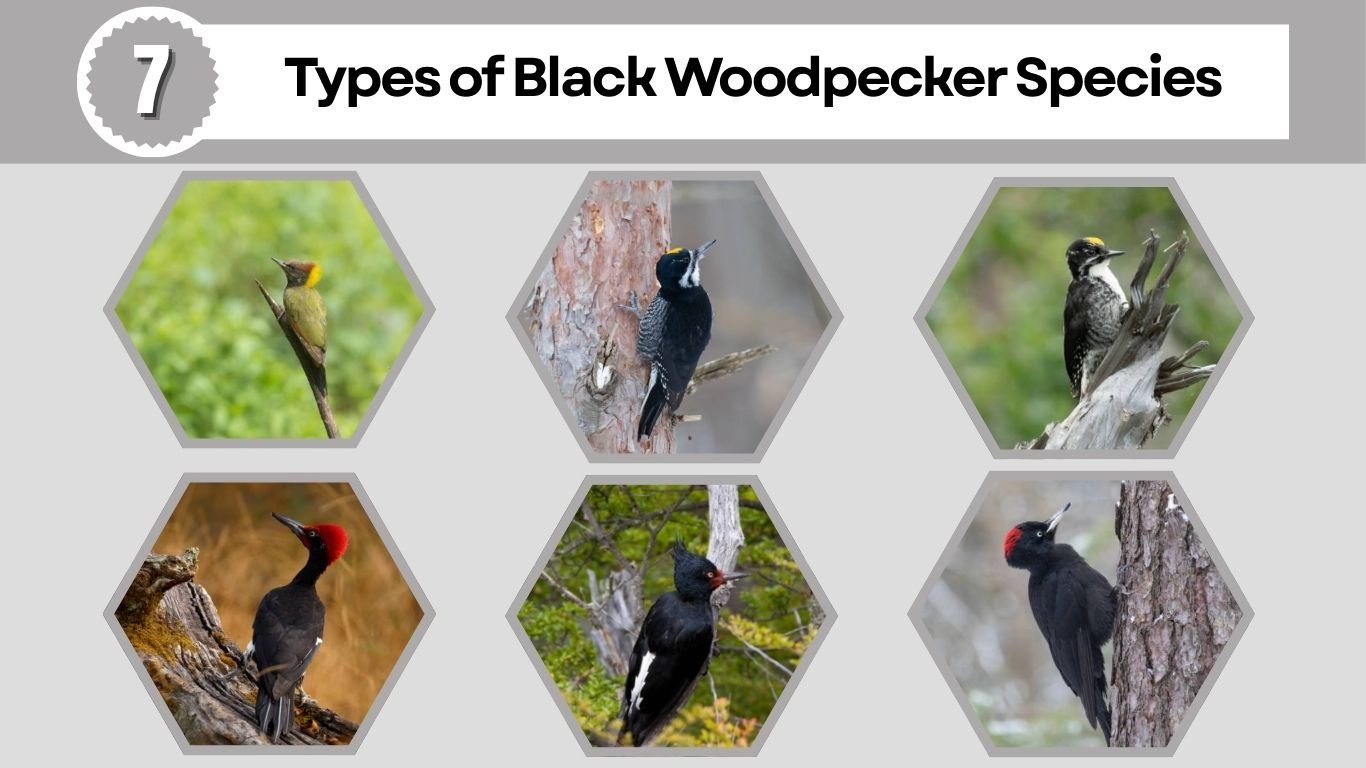
Black woodpeckers are among the most striking and powerful members of the woodpecker family. Known for their dark plumage, strong bills, and loud drumming, these birds are commonly found in forests across different parts of the world. Many species prefer mature woodlands with large trees, where they can easily find insects hidden deep within bark. Besides their bold appearance, black woodpeckers play a key role in ecosystems by controlling insect populations and creating nesting cavities used by other animals.
1. Black Woodpecker
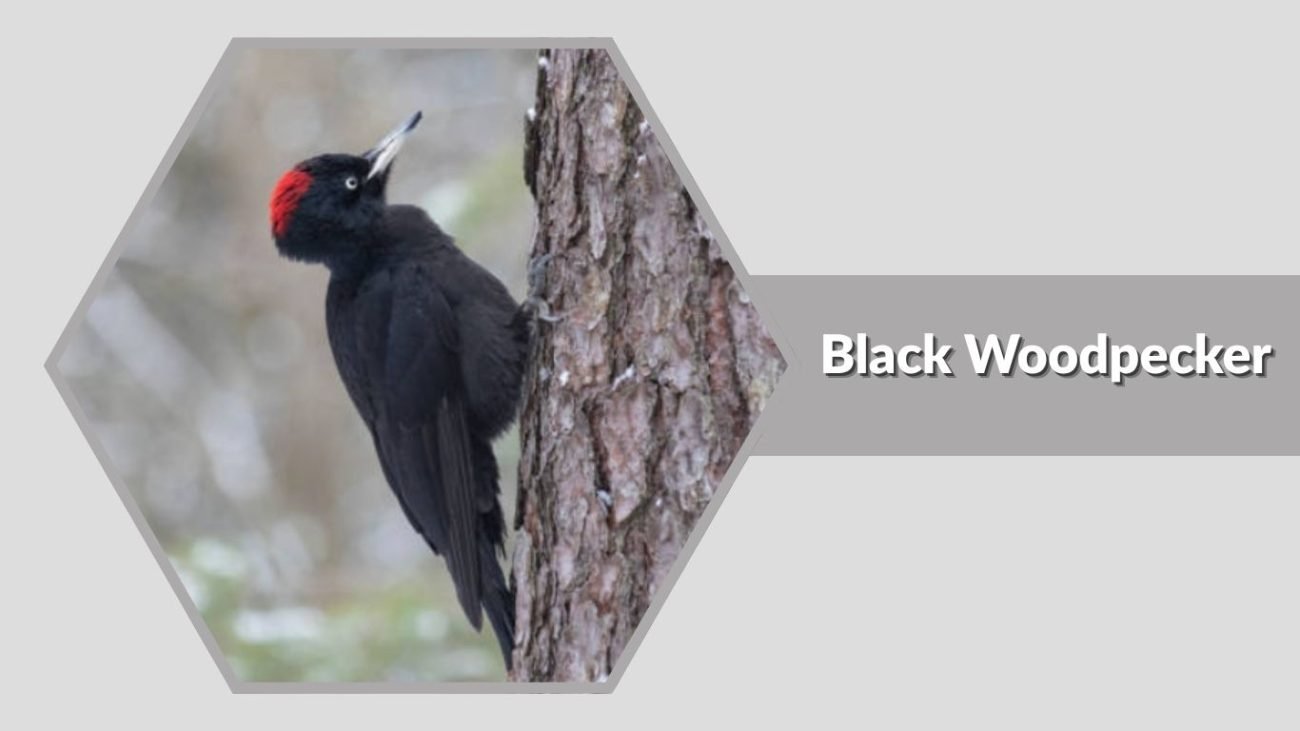
The Black Woodpecker is the largest woodpecker in Europe and one of the most striking due to its entirely black body and bold appearance. It is commonly found in mature forests and is known for its loud calls and powerful drumming. This species plays an important ecological role by creating large tree cavities that are later used by other animals.
Identification
- Entirely black plumage covering body and wings
- Bright red crown in males; females have a smaller red patch
- Long, strong, pale-colored bill
- Pale eyes that stand out against the dark feathers
- Large body with a long neck and sturdy posture
Habitat
The Black Woodpecker prefers mature forests with tall trees, especially beech and pine woodlands. It requires large trees for nesting and feeding, often choosing areas with minimal human disturbance. It is most commonly found in Europe and parts of northern Asia.
Behaviors
This species is known for its powerful drumming and loud, echoing calls. It spends much of its time chiseling into tree trunks to find insects or create nesting holes. The Black Woodpecker is usually solitary and highly territorial, especially during the breeding season.
Size
The Black Woodpecker is a large bird, measuring about 45–57 cm (18–22 inches) in length. It has a wingspan of around 64–84 cm, making it significantly bigger than most other woodpeckers.
Diet and Lifespan
Its diet mainly consists of wood-boring insects, especially ants and beetle larvae found deep within tree trunks. It uses its strong bill to break into wood and extract prey. The Black Woodpecker can live around 7 to 12 years in the wild, depending on habitat conditions and environmental factors.
2. American Three-toed Woodpecker
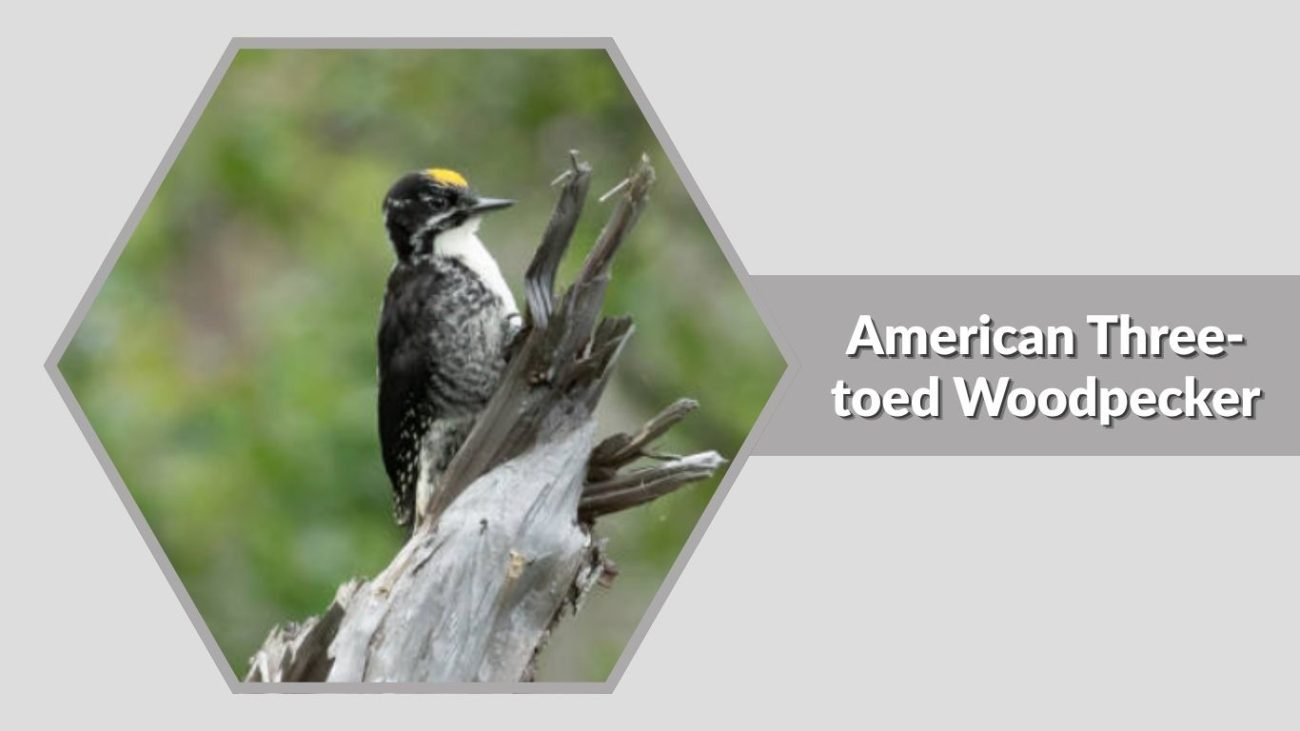
The American Three-toed Woodpecker is a unique black woodpecker found in North America, especially in coniferous forests. It is known for having only three toes instead of the usual four, which helps it cling to tree bark more efficiently. This species is often associated with burned or damaged forests where insect populations are high.
Identification
- Mostly black plumage with white barring on the sides
- White throat and underparts with dark streaking
- Yellow crown patch in males; females lack this marking
- Three toes instead of four
- Medium-sized body with a straight, pointed bill
Habitat
This woodpecker prefers boreal and mountainous coniferous forests, especially areas affected by fire or insect outbreaks. It thrives where dead or dying trees are abundant, providing plenty of food sources.
Behaviors
The American Three-toed Woodpecker is quiet and often goes unnoticed. It spends much of its time flaking bark off trees to find insects. It is less vocal than many woodpeckers but can produce soft drumming sounds.
Size
It measures about 21–24 cm (8–9.5 inches) in length, with a wingspan of around 38–43 cm. Its size is moderate compared to other woodpeckers.
Diet and Lifespan
Its diet mainly consists of wood-boring beetle larvae and other insects found under bark. It rarely visits feeders. The lifespan is typically around 6 to 10 years in the wild, depending on environmental conditions.
3. Black-backed Woodpecker
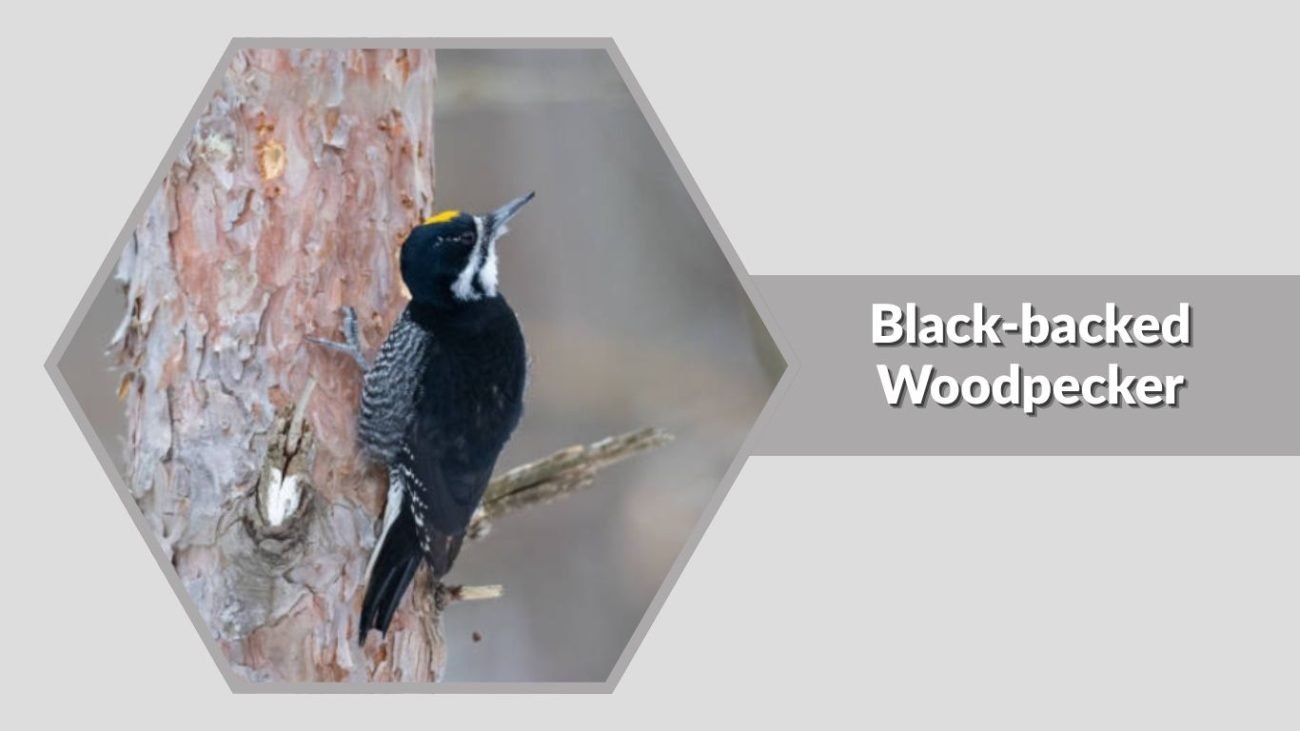
The Black-backed Woodpecker is a striking species known for its mostly black back and strong association with burned forests. It is commonly found in North America, especially in areas recently affected by wildfires. This bird plays a vital role in forest recovery by feeding on wood-boring insects that thrive in dead trees.
Identification
- Solid black back with contrasting white underparts
- White face with black markings
- Males have a yellow crown patch; females lack this feature
- Strong, straight bill adapted for chiseling wood
- Medium-sized body with a sturdy build
Habitat
This species prefers coniferous forests, particularly areas with burned or dead trees. It is often found in post-fire landscapes where insect populations are high. The presence of standing dead trees is essential for its feeding and nesting.
Behaviors
The Black-backed Woodpecker is quiet and focused, spending much of its time peeling bark from trees to find insects. It is less vocal than many woodpeckers and relies more on steady foraging than loud drumming.
Size
It measures about 23–24 cm (9–9.5 inches) in length, with a wingspan of around 40–45 cm. Its body is compact but strong, suited for working on tough bark.
Diet and Lifespan
Its diet mainly includes beetle larvae and other wood-boring insects found beneath bark. It rarely feeds on seeds or fruits. The Black-backed Woodpecker typically lives around 6 to 8 years in the wild, depending on habitat conditions.
4. Magellanic Woodpecker
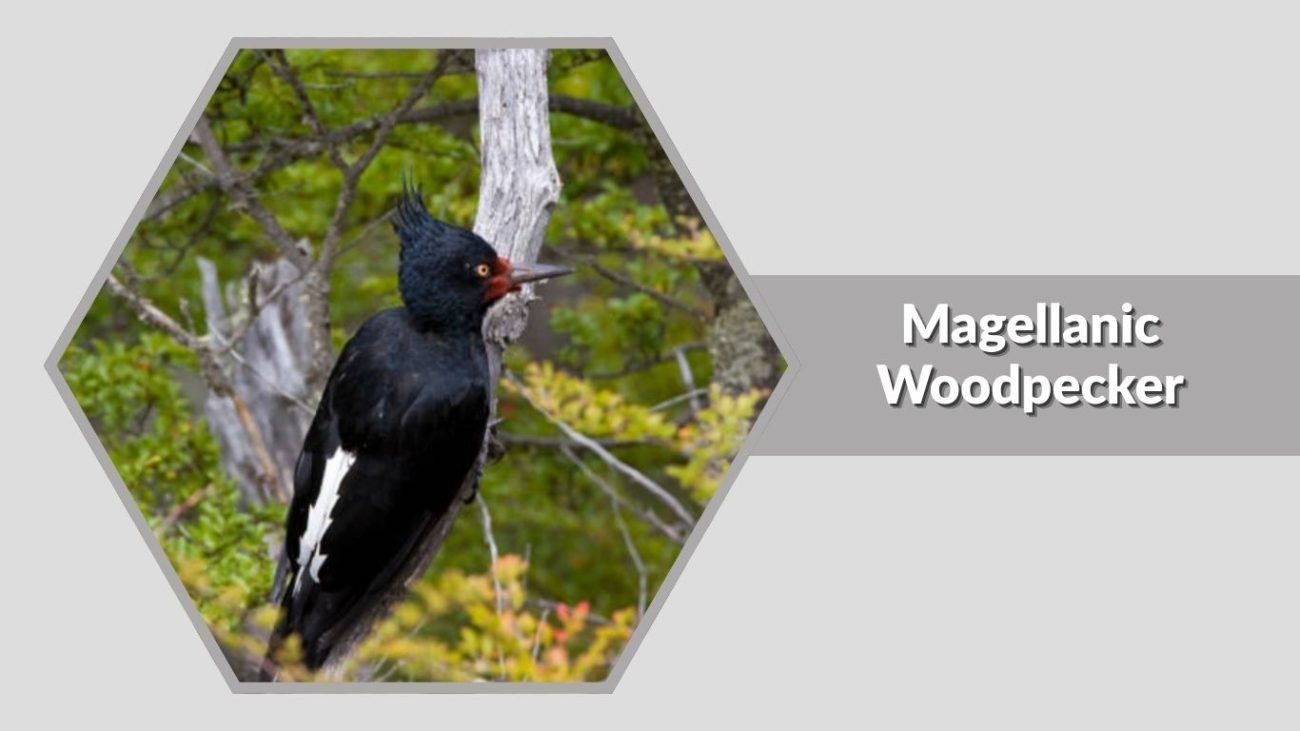
The Magellanic Woodpecker is one of the largest and most impressive black woodpeckers, found in the forests of southern South America. It is known for its striking appearance and strong, powerful movements. This species is closely related to the Black Woodpecker of Europe and plays an important role in forest ecosystems by creating nesting cavities.
Identification
- Mostly black plumage covering the entire body
- Males have a bright red head; females have a black head with a small red area
- Large, strong, pale bill
- White markings on the wings visible in flight
- Large body with a long neck and sturdy stance
Habitat
This species lives in temperate forests, especially in regions with old-growth trees. It prefers dense woodlands with large, mature trees for nesting and feeding. It is commonly found in southern Chile and Argentina.
Behaviors
The Magellanic Woodpecker is often seen in pairs and is less solitary than some other large woodpeckers. It uses powerful blows to break into wood in search of insects. Its calls are loud and can carry long distances through the forest.
Size
It is a very large woodpecker, measuring about 36–45 cm (14–18 inches) in length. Its wingspan is broad, giving it a strong and steady flight.
Diet and Lifespan
Its diet mainly consists of insects such as beetle larvae, ants, and other wood-boring species. It may also eat fruits occasionally. The Magellanic Woodpecker typically lives around 10 to 15 years in the wild, depending on habitat and environmental conditions.
5. White-bellied Woodpecker
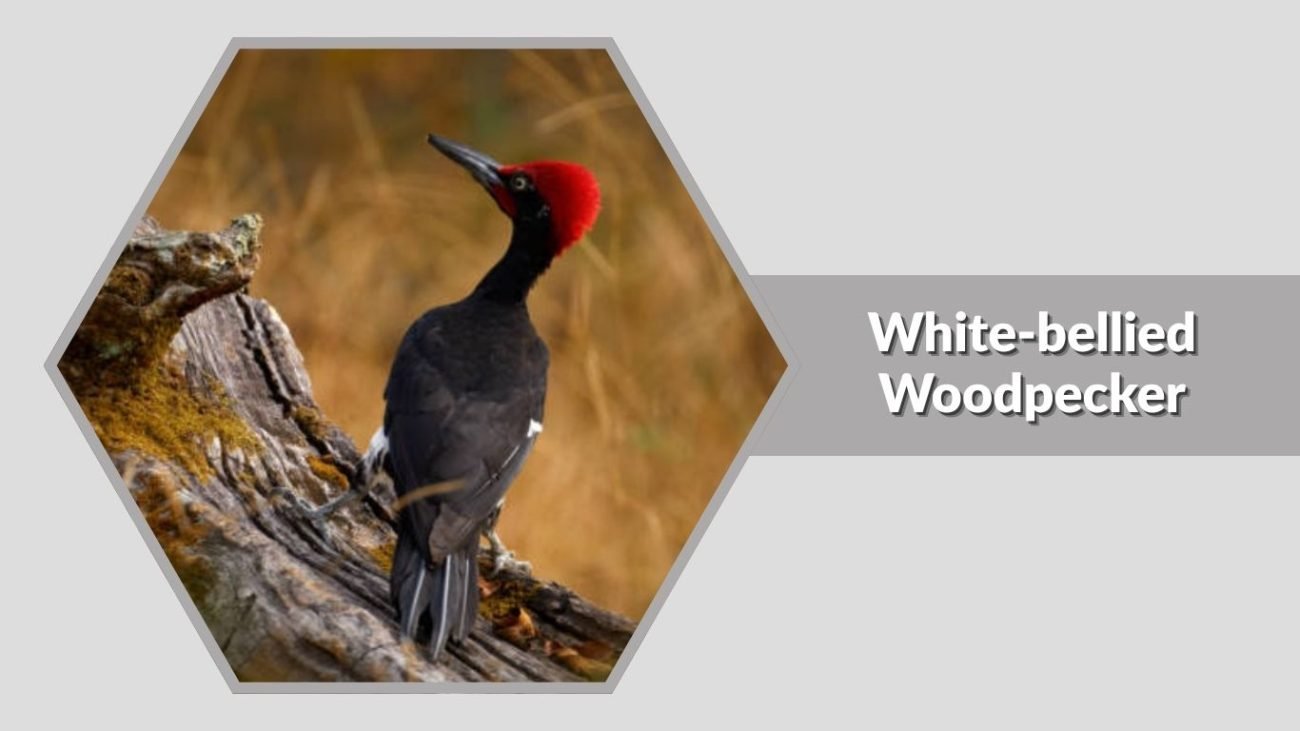
The White-bellied Woodpecker is a large, striking black woodpecker found in South and Southeast Asia. It is known for its glossy black body contrasted with a white belly, making it one of the most distinctive species in its range. This bird is often heard before it is seen, thanks to its loud calls and strong drumming. It plays an important role in forest ecosystems by controlling insect populations.
Identification
- Glossy black upperparts with a clear white belly
- Males have a bright red crest; females have a black crest
- Strong, chisel-like pale bill
- White patches on wings visible during flight
- Large body with a powerful build
Habitat
This species prefers dense tropical and subtropical forests, including evergreen and moist deciduous forests. It is also found in plantations and wooded areas with large trees. It requires mature trees for nesting and feeding, often choosing undisturbed forest habitats.
Behaviors
The White-bellied Woodpecker is active and vocal, often announcing its presence with loud calls. It uses powerful strikes to break into tree trunks in search of insects. It is usually seen alone or in pairs and is highly territorial.
Size
It measures about 40–48 cm (16–19 inches) in length, making it one of the larger woodpeckers in Asia. Its strong body and long bill help it forage efficiently in thick wood.
Diet and Lifespan
Its diet mainly includes insects such as beetle larvae, ants, and termites. It may also eat fruits occasionally. The White-bellied Woodpecker typically lives around 8 to 12 years in the wild, depending on habitat quality and food availability.
6. Lesser Yellownape
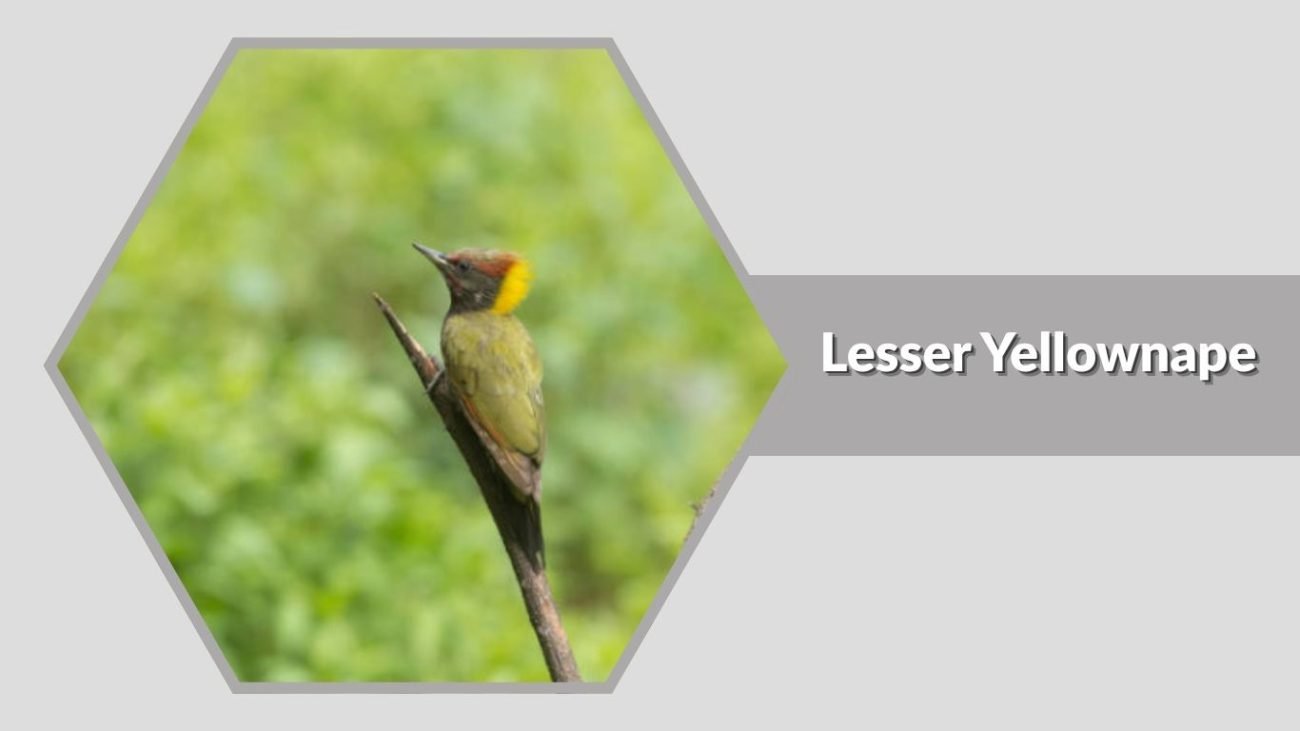
The Lesser Yellownape is a medium-sized woodpecker found across South and Southeast Asia. Although not entirely black, it has a dark body with a distinctive yellow nape that gives it its name. It is commonly seen in forests and wooded areas, where it actively searches for insects. This species is known for its loud calls and energetic behavior.
Identification
- Dark greenish-black body with a contrasting yellow nape
- Males have a red crown; females have a black crown
- Pale throat with dark streaks
- Strong, pointed bill
- Medium-sized body with a slightly elongated shape
Habitat
The Lesser Yellownape inhabits tropical and subtropical forests, including evergreen and deciduous woodlands. It is also found in plantations, bamboo groves, and forest edges. It prefers areas with dense tree cover and plenty of dead wood for feeding.
Behaviors
This species is active and often noisy, frequently calling while moving through trees. It forages by tapping and probing into bark to locate insects. It may be seen alone, in pairs, or occasionally in small groups.
Size
It measures about 26–30 cm (10–12 inches) in length. Its body is slender compared to larger woodpeckers, allowing it to move easily through forest canopies.
Diet and Lifespan
Its diet mainly consists of insects such as ants, termites, and beetle larvae. It may also consume fruits and nectar occasionally. The Lesser Yellownape typically lives around 6 to 10 years in the wild, depending on environmental conditions.
7. Great Slaty Woodpecker
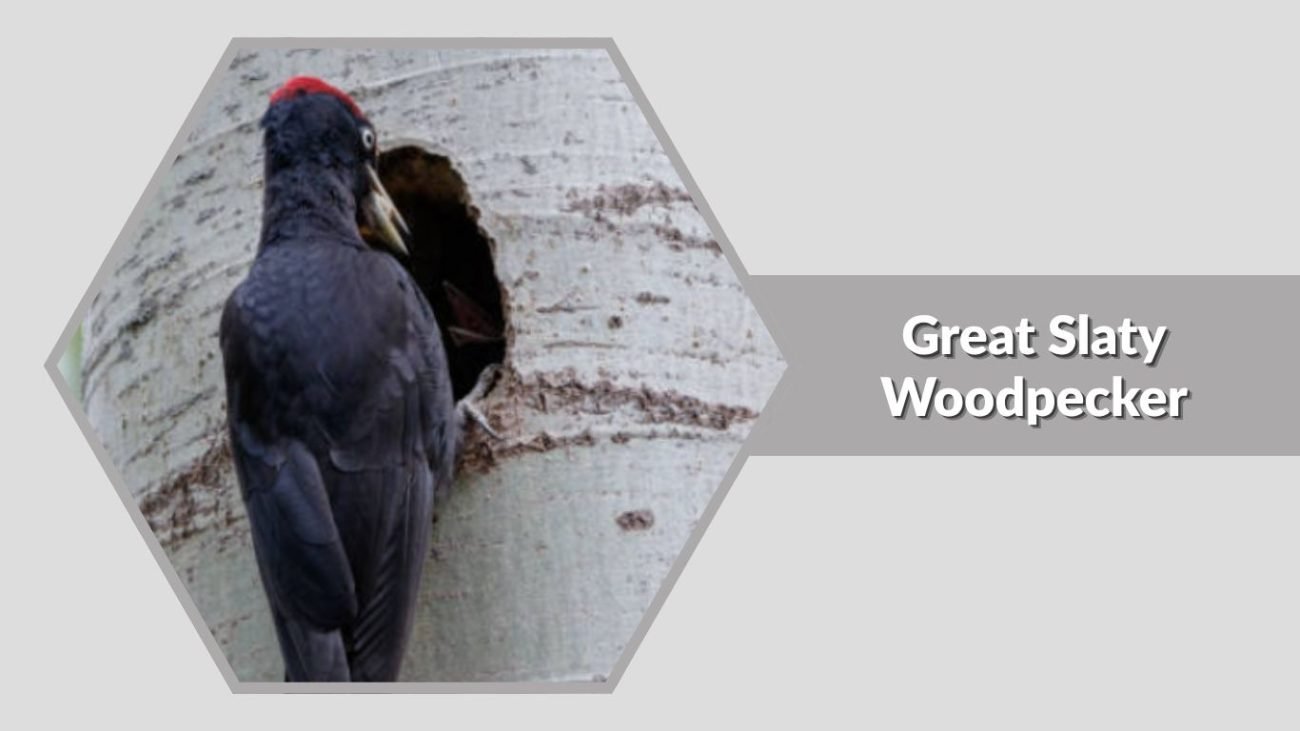
The Great Slaty Woodpecker is one of the largest and most unusual woodpeckers found in South and Southeast Asia. It has a dark, almost blackish-grey appearance and a long neck, giving it a unique look compared to other species. This bird is often found in groups and is known for its loud calls and active foraging behavior.
Identification
- Dark slaty-grey to blackish body coloration
- Long neck and slightly elongated head
- Pale bill that is strong and pointed
- Males have a red patch on the cheek; females lack this marking
- Large, slender body compared to other woodpeckers
Habitat
The Great Slaty Woodpecker prefers mature forests, especially areas with tall trees and plenty of dead wood. It is commonly found in lowland and hill forests, as well as forest edges. This species depends on large trees for feeding and nesting.
Behaviors
Unlike many woodpeckers, it is often seen in small groups rather than alone. It moves actively along trunks and branches, sometimes probing rather than drilling deeply. Its calls are loud and echoing, making it easier to detect in dense forests.
Size
It is a very large species, measuring about 40–50 cm (16–20 inches) in length. Its long neck and large body give it a distinctive profile among woodpeckers.
Diet and Lifespan
Its diet mainly includes insects such as ants, beetles, and larvae found in bark and wood. It may also eat fruits occasionally. The Great Slaty Woodpecker typically lives around 8 to 12 years in the wild, depending on habitat and environmental conditions.
FAQs
What makes a woodpecker “black”?
A woodpecker is often called “black” when most of its body plumage is dark or blackish in color. Some species are completely black, while others have mostly dark bodies with small contrasting patches like white or red markings.
Where do black woodpeckers live?
Black woodpeckers are found across Europe, Asia, North America, and South America. They mainly live in forests, especially areas with large, mature trees. Some species also adapt to plantations and wooded parks.
What do black woodpeckers eat?
Most black woodpeckers feed on insects such as ants, beetles, and larvae found inside tree bark. Some species also eat fruits, seeds, or nuts when insects are less available, depending on the season.
Are black woodpeckers rare?
Some species, like the Black Woodpecker in Europe, are fairly common in suitable habitats. Others, such as the Great Slaty Woodpecker, are considered rare due to habitat loss and limited distribution.
Why are black woodpeckers important?
Black woodpeckers help control insect populations that can damage trees. They also create large nesting holes in trees, which are later used by birds, mammals, and other wildlife, supporting overall forest biodiversity.