Damsel bugs (family Nabidae) are slender, predatory insects widely recognized for their role in natural pest control. Found in grasslands, meadows, and agricultural fields, they feed on aphids, caterpillars, and other soft-bodied pests. With their stealth and speed, damsel bugs are valuable allies in farming ecosystems. This guide explores 12 types of damsel bugs, covering their identification, habitats, behaviors, diets, and lifecycles in detail.
1. Nabis americoferus (Common Damsel Bug)
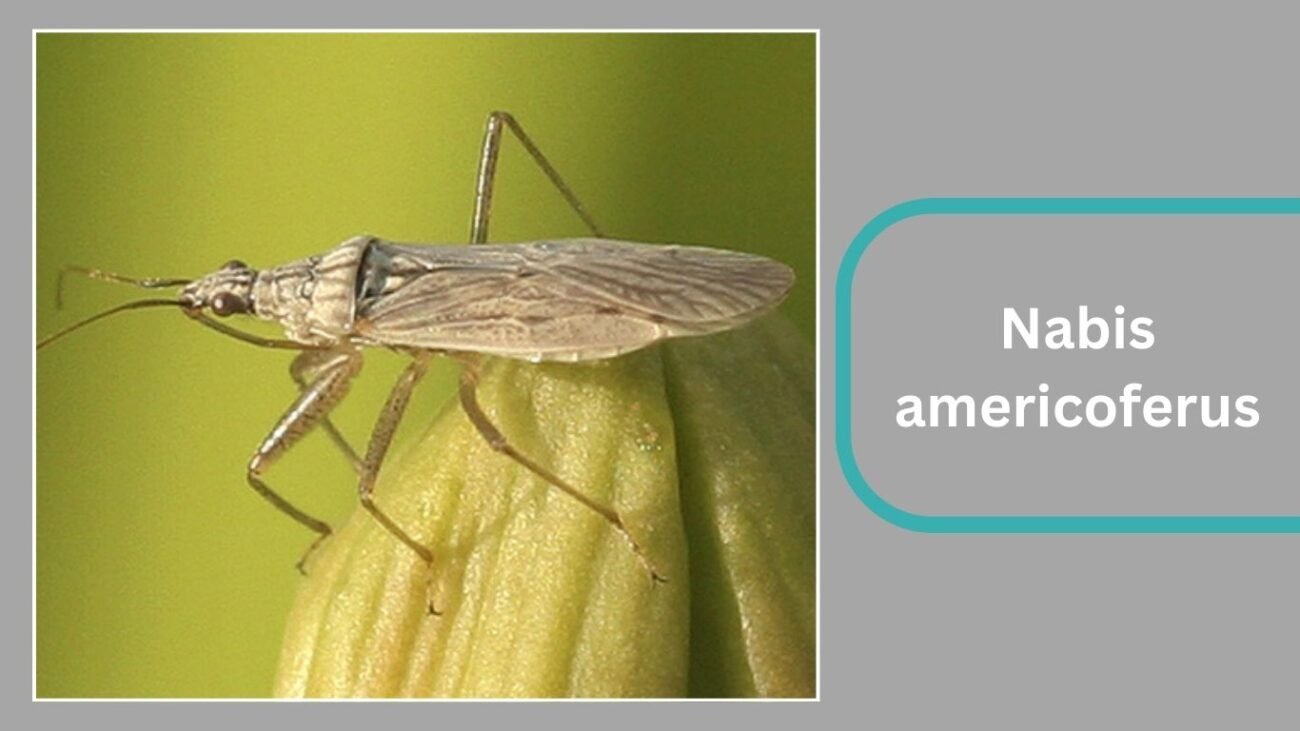
The Common damsel bug (Nabis americoferus) is one of the most widespread species in North America. Known as a beneficial insect in agriculture, it plays an important role in controlling pest populations.
Identification
- Slender, elongated body, typically 8–10 mm long
- Light brown to gray coloration with subtle mottling
- Long, thin legs adapted for grasping prey
- Distinctive beak-like mouthparts used for piercing and sucking
- Membranous wings folded flat over the abdomen when at rest
Habitat
This species thrives in a variety of environments, including agricultural fields, meadows, and gardens. It is particularly abundant in crop fields such as alfalfa, corn, and soybean, where it helps regulate insect pest populations.
Behavior
Nabis americoferus is an active predator, especially during the day. It moves quickly among plants, seeking soft-bodied insects like aphids and caterpillars. It uses stealth and speed to ambush its prey.
Diet
Primarily carnivorous, this damsel bug feeds on aphids, caterpillars, leafhoppers, and other small insects. It is considered a valuable ally to farmers for its role in natural pest control.
Lifecycle
The lifecycle includes egg, nymph, and adult stages. Eggs are typically laid in plant tissues, and nymphs resemble smaller wingless adults. Development takes several weeks, with multiple generations occurring per year depending on the climate.
2. Nabis roseipennis
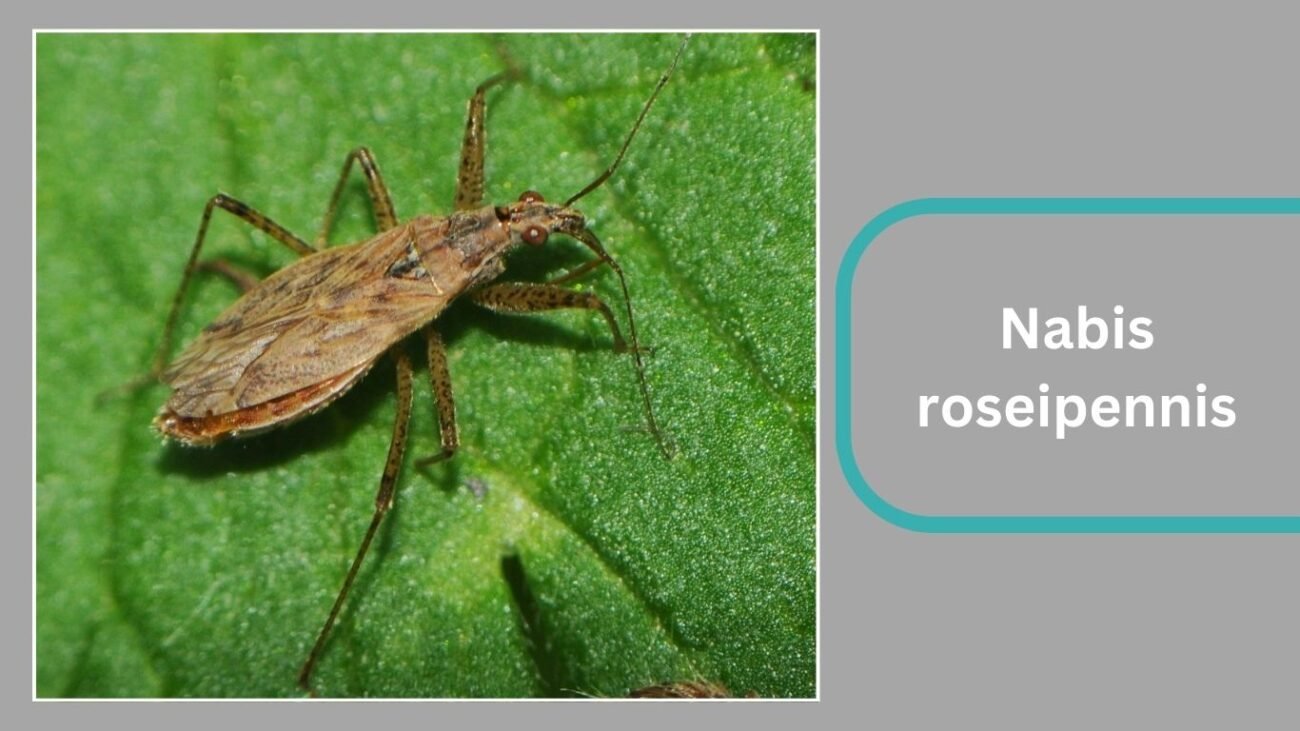
The Nabis roseipennis is a damsel bug species found widely across North America. It is often associated with agricultural fields and natural vegetation, where it plays a vital role in suppressing pest populations.
Identification
- Medium-sized body, about 9–11 mm long
- Pale yellow-brown to reddish coloration
- Characteristic pinkish or rose-colored markings on wings and body (inspired its name)
- Long slender legs, well-adapted for fast movement
- Piercing-sucking mouthparts typical of predatory bugs
Habitat
This species prefers grasslands, meadows, and croplands. It is frequently encountered in areas with dense vegetation, including wheat, soybean, and cornfields, where prey insects are abundant.
Behavior
Nabis roseipennis is an agile hunter, often stalking its prey in foliage. It is known for its ability to adapt to varying habitats and maintain steady populations throughout the growing season.
Diet
Like other damsel bugs, it primarily feeds on aphids, caterpillars, mites, and other soft-bodied pests. Its predatory nature makes it an important biological control agent in farming ecosystems.
Lifecycle
Eggs are deposited in plant stems, with nymphs hatching and developing through five instars before becoming adults. The lifecycle duration depends on temperature and food availability, with multiple generations per year in warmer regions.
3. Nabis alternatus
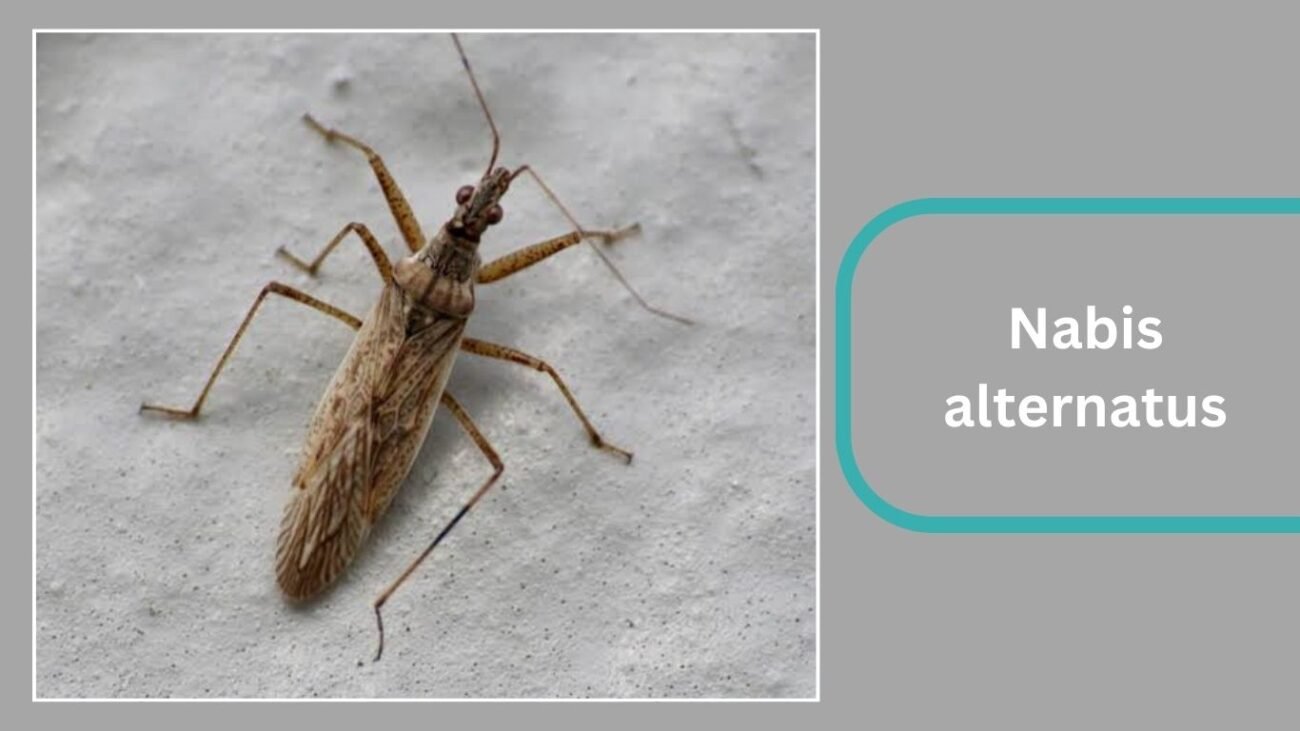
The Nabis alternatus is a widespread damsel bug species commonly found in North America. It is one of the most frequently observed predatory bugs in agricultural and natural habitats, valued for its role in pest control.
Identification
- Slender body, usually 8–11 mm long
- Light brown to grayish coloration with darker mottled patterns
- Alternating pale and dark bands on the legs (source of the name alternatus)
- Long beak (rostrum) for piercing prey
- Wings folded flat, often showing faint mottled markings
Habitat
This species thrives in open habitats such as grasslands, fields, and gardens. It is particularly abundant in cultivated crops including corn, alfalfa, and grains, where it benefits from the dense populations of pest insects.
Behavior
Nabis alternatus is highly active and patrols plant surfaces in search of prey. It relies on speed and ambush strategies, often attacking insects larger than itself. It is especially active during warm summer months.
Diet
Its diet consists of aphids, leafhoppers, caterpillars, mites, and other soft-bodied pests. This predatory nature makes it a natural ally for integrated pest management programs in agriculture.
Lifecycle
Eggs are laid in plant tissues, with nymphs developing through several molts before reaching adulthood. Multiple generations may occur per season, depending on climate and prey availability.
4. Nabis inscriptus

The Nabis inscriptus is a lesser-known species of damsel bug that inhabits various parts of North America and Eurasia. It plays a beneficial role as a predator in natural and cultivated ecosystems.
Identification
- Medium-sized body, typically 7–10 mm long
- Brownish to gray coloration with distinctive dark linear markings on the wings (hence the name inscriptus)
- Long antennae and slender legs for agile movement
- Beak-like rostrum adapted for piercing and sucking prey
- Wing venation often shows subtle “inscribed” or etched-like patterns
Habitat
This species prefers meadows, woodland edges, and crop fields. It is often found on low vegetation and grasses where small insects are abundant.
Behavior
Nabis inscriptus is an opportunistic predator, using stealth to ambush its prey. It tends to be less conspicuous than some other damsel bugs, blending well into vegetation.
Diet
Its diet includes aphids, mites, caterpillars, and small insect larvae. By feeding on a variety of pests, it contributes to natural biological control in both wild and agricultural habitats.
Lifecycle
Eggs are inserted into stems and leaves, with nymphs undergoing several molts before adulthood. Depending on the region, one to two generations may occur annually.
5. Nabis limbatus
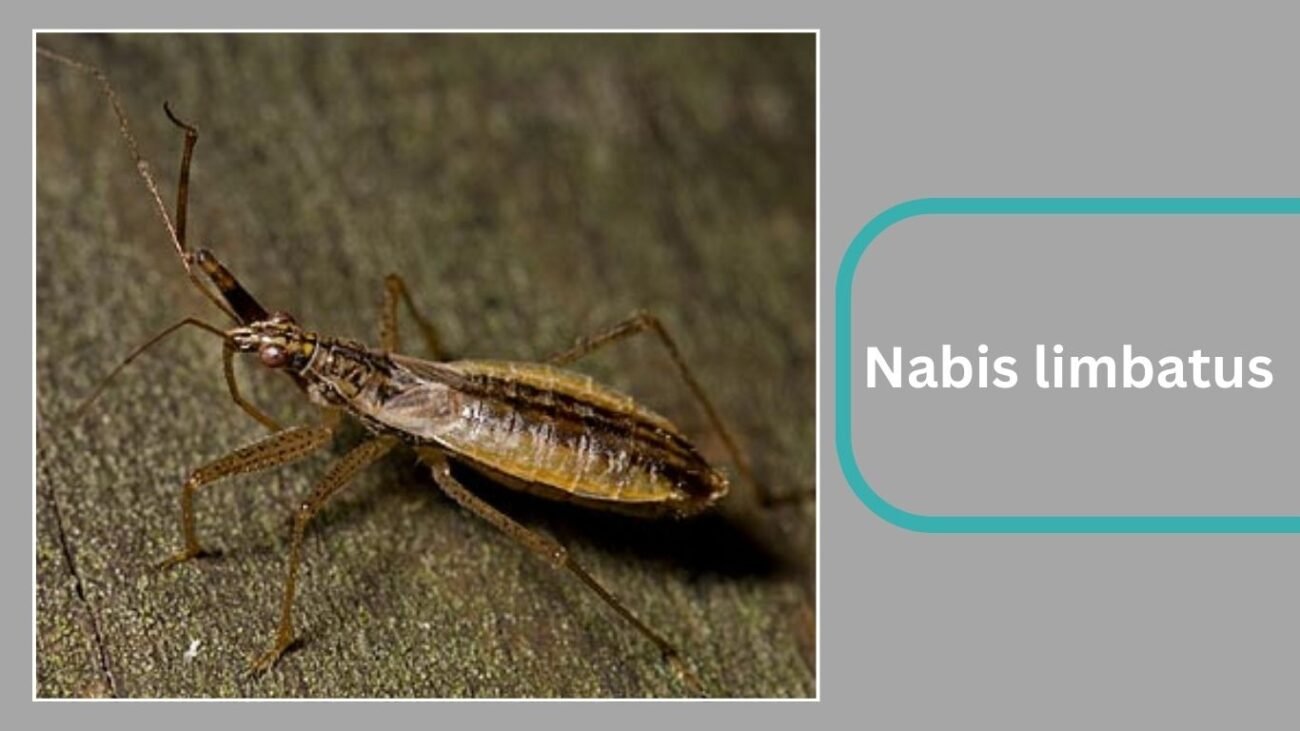
The Nabis limbatus is a predatory damsel bug species distributed across North America. It is recognized for its adaptability and effectiveness in regulating populations of agricultural pests.
Identification
- Slender body, generally 8–11 mm in length
- Light brown to tan coloration with darker markings along the body
- Distinct pale margins (limbs) along the edges of the pronotum and wings, giving rise to the name limbatus
- Long, thin legs suited for quick movement through vegetation
- Piercing-sucking rostrum used to feed on prey
Habitat
This species is typically found in fields, gardens, and grasslands. It is especially common in crops such as alfalfa, wheat, and soybean, where it benefits from abundant prey populations.
Behavior
Nabis limbatus is an active and agile hunter. It moves rapidly over plants, probing with its rostrum to capture and feed on insects. It can survive in diverse environments and is known to disperse widely in search of food.
Diet
The diet consists mainly of aphids, small caterpillars, thrips, and insect eggs. Its broad predatory habits make it an important agent of biological pest control.
Lifecycle
Eggs are laid inside plant tissues. Nymphs resemble smaller, wingless adults and pass through five instar stages before maturing. Multiple generations may develop in a single growing season depending on temperature and prey availability.
6. Nabis propinquus
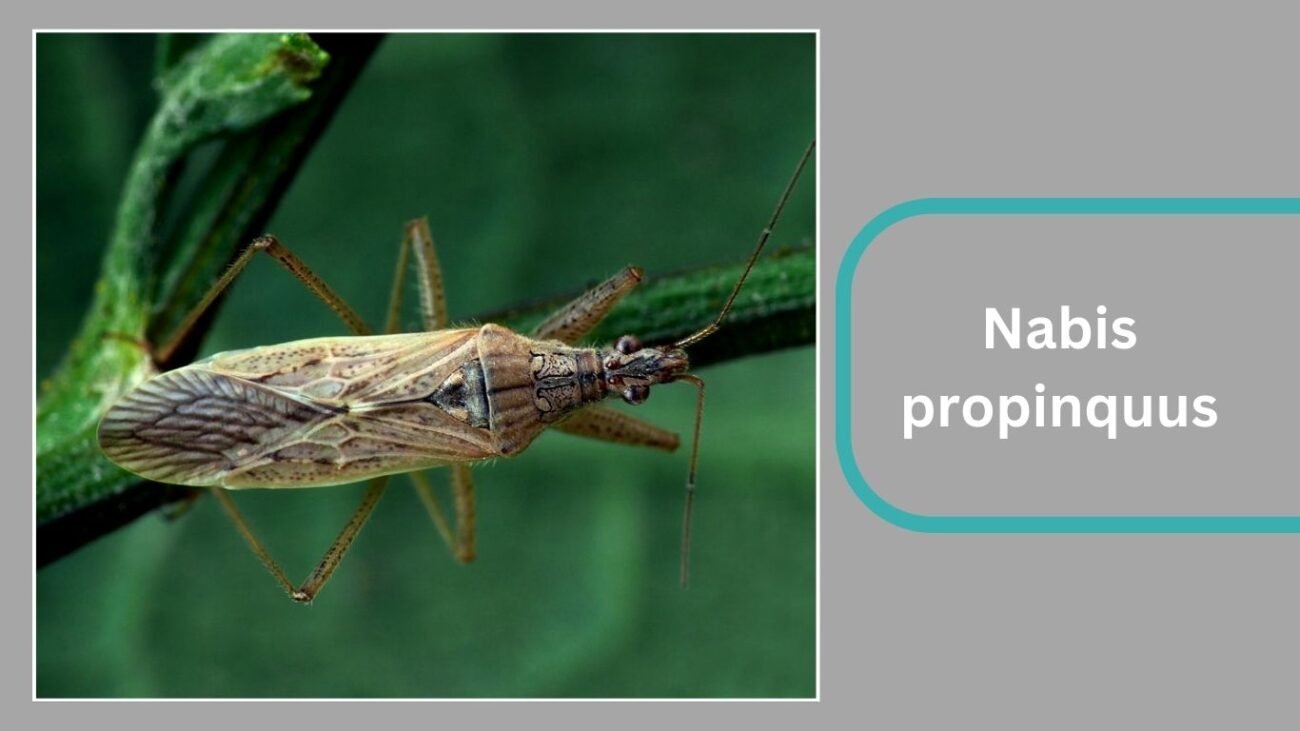
The Nabis propinquus is a common predatory damsel bug species, widely found in North America. It is particularly valued in agricultural systems for its role in controlling pest populations.
Identification
- Medium-sized, slender body about 8–10 mm long
- Light brown to grayish coloration with faint mottled patterns
- Narrow head with long, threadlike antennae
- Distinct rostrum used for piercing prey
- Wings folded flat over the abdomen, often showing subtle venation patterns
Habitat
This species occurs in fields, meadows, and gardens. It is especially abundant in crops such as alfalfa, wheat, and corn, where it helps suppress pest outbreaks.
Behavior
Nabis propinquus is highly mobile and often patrols vegetation in search of prey. It is a voracious predator, capable of reducing pest populations significantly when present in large numbers.
Diet
Its diet includes aphids, thrips, caterpillars, leafhoppers, and other small insects. It is known to occasionally feed on insect eggs, further enhancing its value as a natural pest regulator.
Lifecycle
Eggs are inserted into plant stems, with nymphs emerging to develop through five instar stages. Depending on climate, two or more generations may occur in a season. Adults are commonly active throughout the summer months.
7. Nabis rufusculus
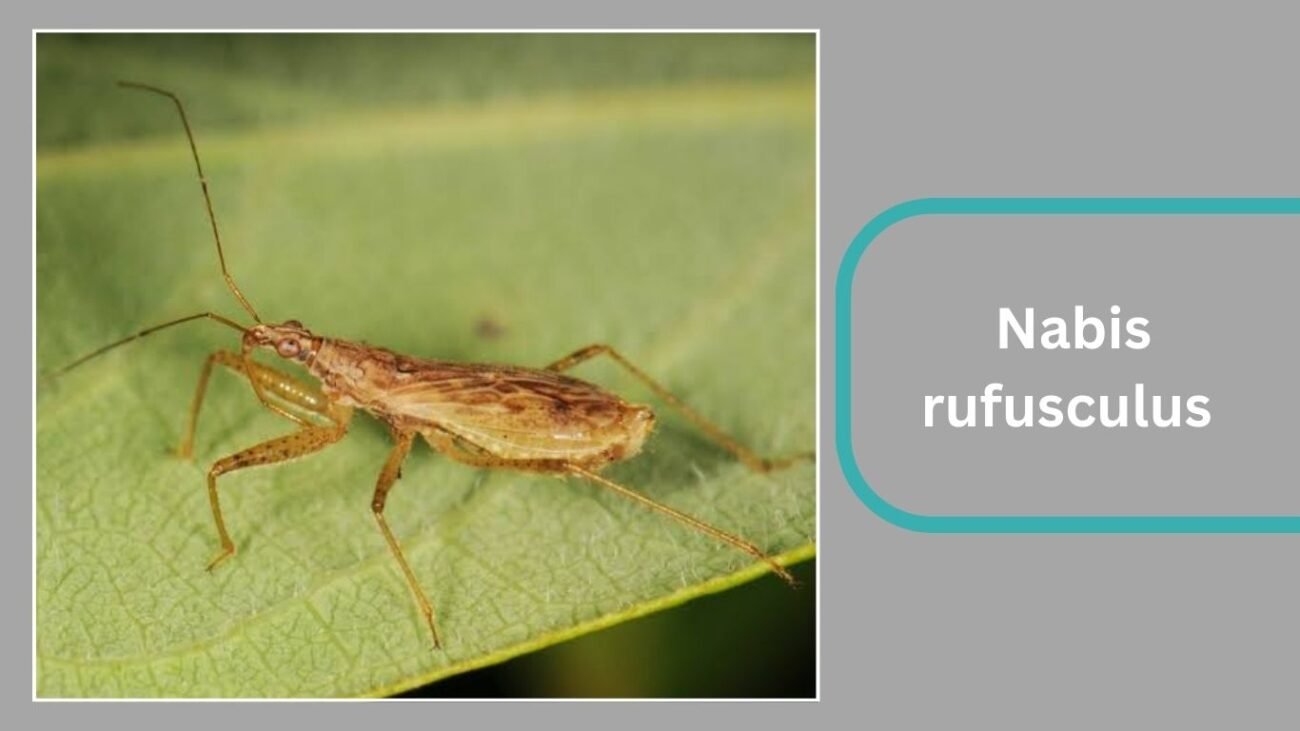
The Nabis rufusculus is a predatory damsel bug species distributed across parts of North America. It is considered an important natural enemy of many agricultural pests.
Identification
- Body length typically ranges from 8–11 mm
- Reddish-brown to rust-colored body, giving rise to the name rufusculus (“reddish”)
- Long, narrow legs adapted for running and grasping prey
- Threadlike antennae, usually darker toward the tips
- Beak-like rostrum for piercing and sucking fluids from prey
Habitat
This species is commonly found in meadows, fields, and agricultural lands. It thrives in habitats with dense vegetation, especially where prey populations are abundant, such as soybean and corn crops.
Behavior
Nabis rufusculus is an active daytime hunter, moving quickly through grasses and crops in search of prey. It often uses ambush tactics, remaining still until an insect comes within striking distance.
Diet
Its diet primarily consists of aphids, caterpillars, mites, and small insect nymphs. By preying on a wide range of pests, it contributes significantly to ecological balance in agricultural systems.
Lifecycle
Eggs are laid in plant tissue, with nymphs emerging after several days to weeks depending on climate. Nymphs develop through multiple instars before becoming adults. Multiple generations can occur in a single season in warmer regions.
8. Nabis kalmii
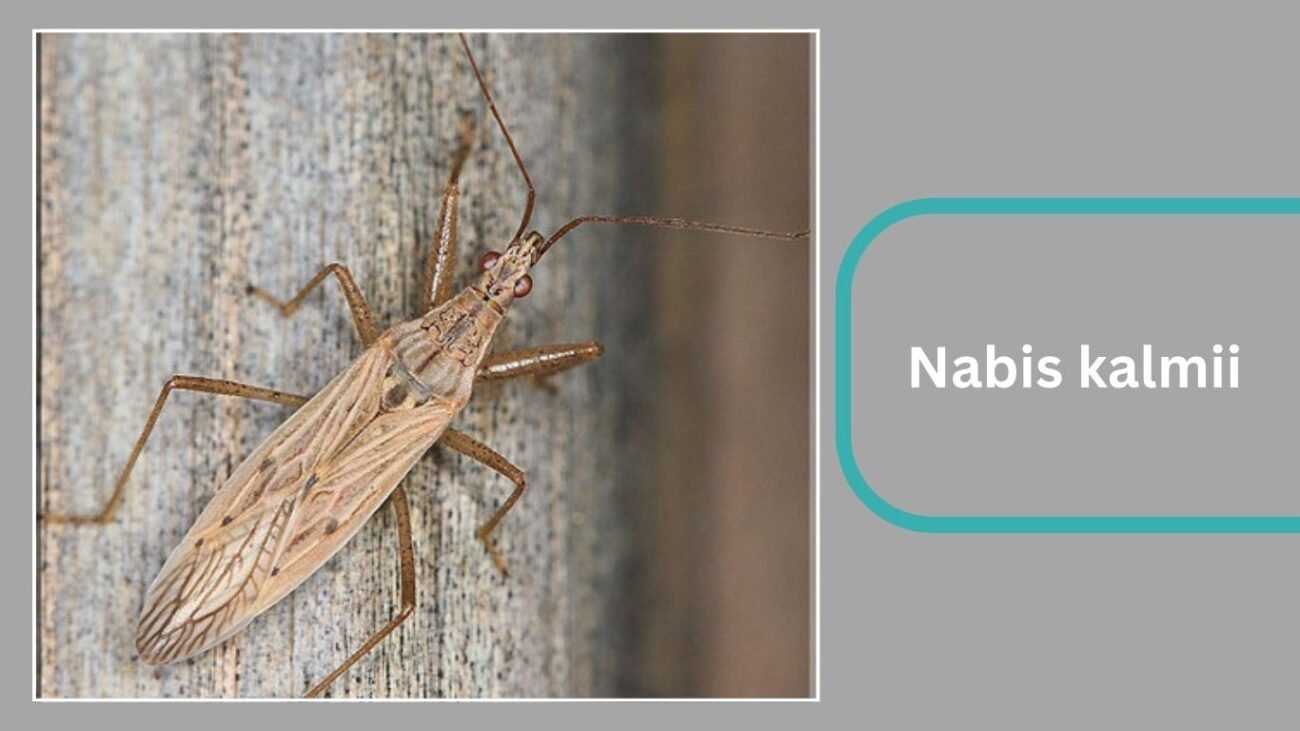
The Nabis kalmii is a small but effective predatory damsel bug, widespread in North America. It is recognized for its ecological role in reducing pest populations in both natural and agricultural habitats.
Identification
- Smaller than many other species, typically 6–8 mm long
- Light brown to yellowish body with faint mottled patterns
- Narrow head with long, thin antennae
- Legs relatively long compared to body size, aiding in mobility
- Distinct rostrum used for piercing and feeding on prey
Habitat
This species is commonly found in fields, pastures, gardens, and forest edges. It thrives in areas with dense grasses and crops such as alfalfa, corn, and soybeans, where it has access to a steady supply of prey.
Behavior
Nabis kalmii is an active hunter, patrolling vegetation during the day. It is particularly known for its adaptability and persistence in controlling pest populations, even in disturbed environments.
Diet
The diet mainly consists of aphids, thrips, caterpillars, and insect eggs. Despite its small size, it is an efficient predator, capable of preying on insects larger than itself.
Lifecycle
Eggs are laid in plant stems and leaves. Nymphs emerge and pass through several instars before becoming adults. Depending on conditions, multiple generations may occur within a single growing season.
9. Nabis ferus
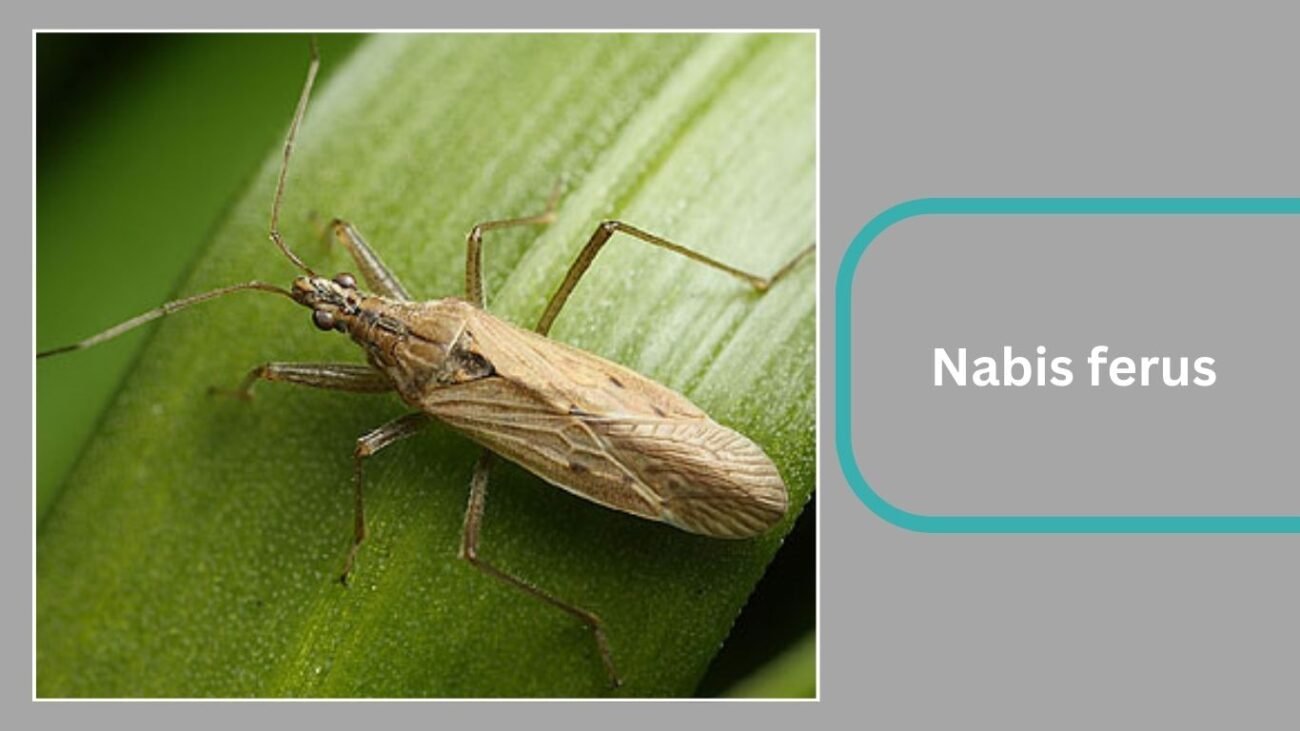
The Nabis ferus is a well-known damsel bug species found across Europe, Asia, and parts of North America. It is an important predator in agricultural ecosystems, widely recognized for its contribution to natural pest control.
Identification
- Medium-sized body, usually 8–11 mm long
- Grayish to light brown coloration, often with mottled patterns
- Elongated body with long legs suited for quick movement
- Narrow head with prominent antennae
- Rostrum adapted for piercing and sucking prey fluids
Habitat
Nabis ferus inhabits meadows, grasslands, gardens, and agricultural fields. It is especially abundant in cereal crops and legumes, where it thrives alongside dense populations of aphids and other pests.
Behavior
This species is an active hunter, frequently observed moving across foliage in search of prey. It is known for its opportunistic predation and can feed on a wide range of insect pests, making it highly beneficial to farmers.
Diet
Its diet consists primarily of aphids, caterpillars, thrips, and leafhoppers. It also preys on insect eggs and larvae, helping reduce pest populations at multiple stages of development.
Lifecycle
Eggs are deposited in stems and leaves. Nymphs hatch and pass through five instar stages before reaching adulthood. Several generations may occur annually, particularly in warmer regions. Adults often overwinter in leaf litter or soil.
10. Nabis capsiformis
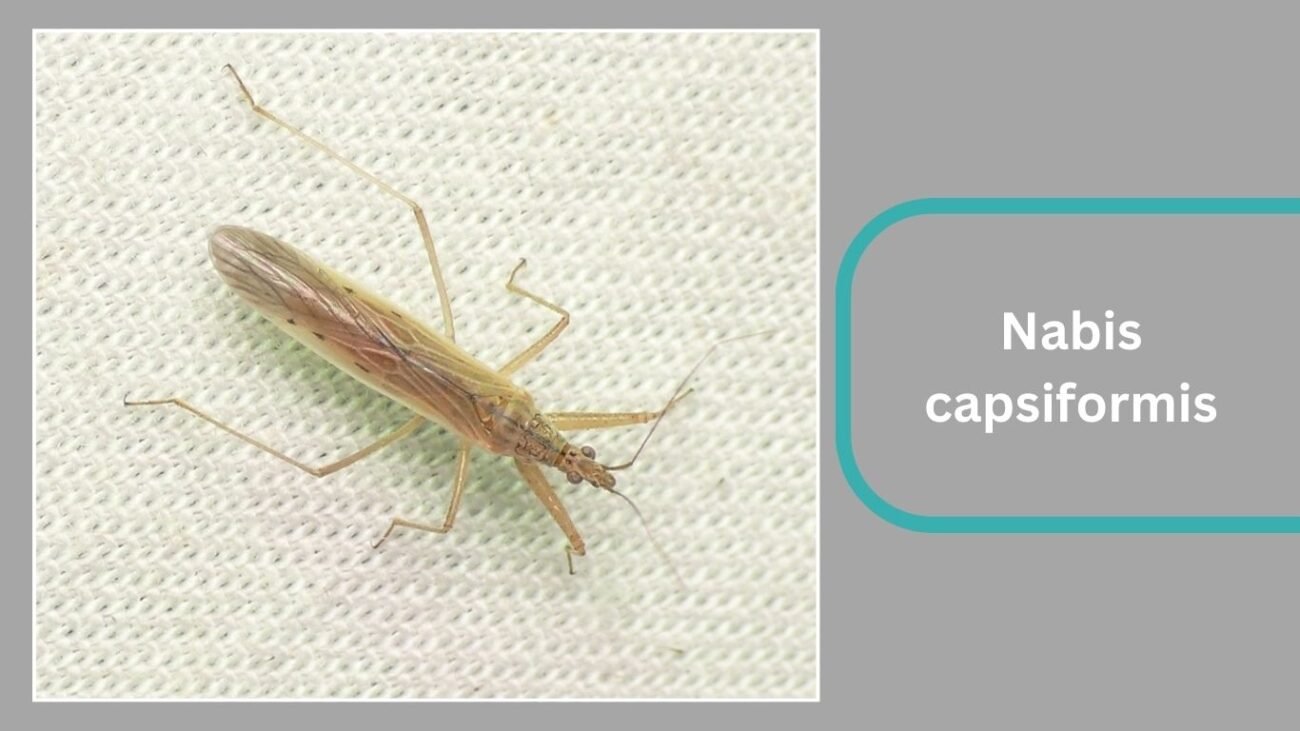
The Nabis capsiformis is a widely distributed species of damsel bug, occurring in parts of Europe, Asia, and North America. It is highly valued for its effectiveness as a biological control agent in agriculture.
Identification
- Body length about 9–11 mm
- Slender, elongated form with a narrow head
- Pale brown to yellowish coloration, sometimes with darker mottling
- Long legs adapted for fast movement through vegetation
- Beak-like rostrum characteristic of predatory true bugs
Habitat
This species inhabits a wide range of environments, including grasslands, meadows, gardens, and crop fields. It is particularly abundant in cereal and legume crops, where it helps suppress pest insect populations.
Behavior
Nabis capsiformis is an active and opportunistic predator. It uses stealth and agility to capture its prey, often attacking insects larger than itself. It is highly adaptable and persists in both wild and cultivated habitats.
Diet
Its diet mainly consists of aphids, small caterpillars, thrips, and insect eggs. It plays an important role in integrated pest management by reducing harmful insect numbers naturally.
Lifecycle
Eggs are deposited within plant tissues. Nymphs resemble miniature adults but lack fully developed wings, molting through five instars before maturing. Depending on climate, multiple generations may develop per year.
11. Nabis flavomarginatus
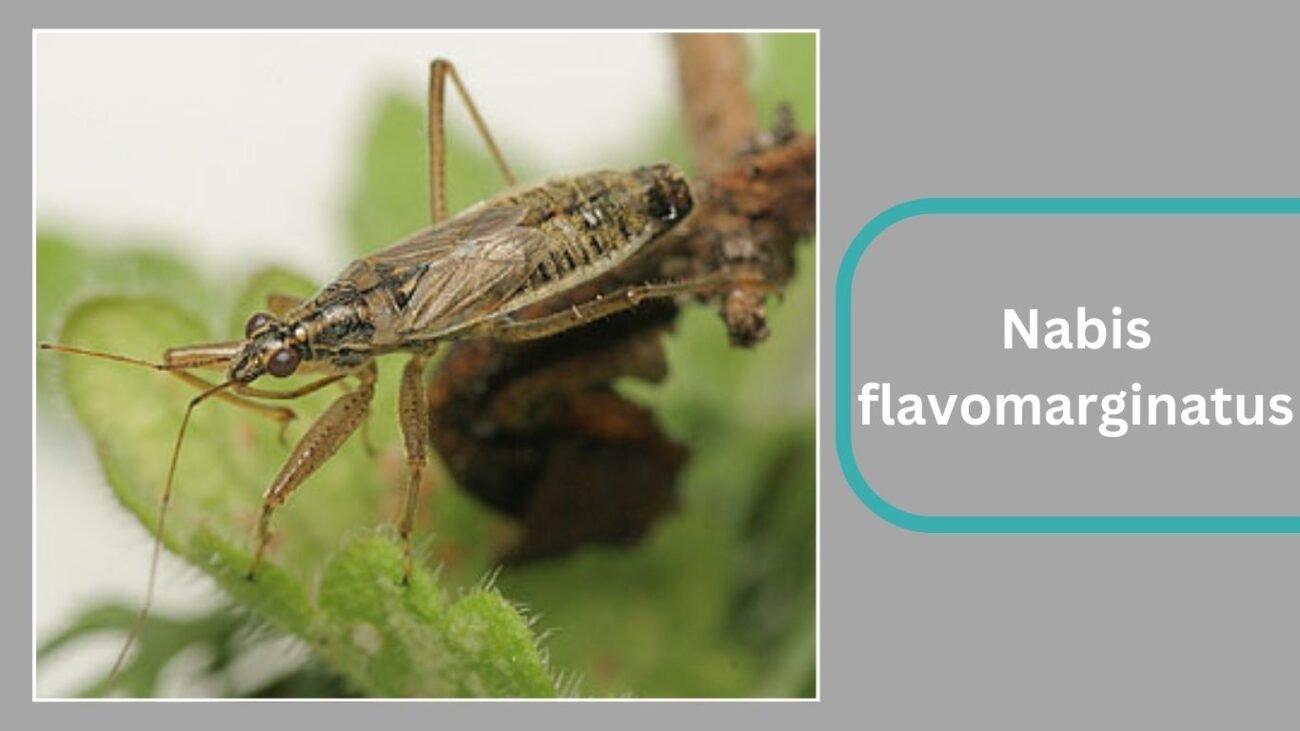
The Nabis flavomarginatus is a predatory damsel bug species widely distributed across Europe, Asia, and introduced in North America. It is one of the most frequently studied damsel bugs due to its importance in pest management.
Identification
- Medium-sized body, about 8–10 mm long
- Brownish to gray coloration with distinctive yellow margins along the pronotum and wings (inspired its name flavomarginatus, meaning “yellow-edged”)
- Slender body with long legs suited for speed and agility
- Thin, elongated antennae
- Piercing-sucking rostrum used for feeding on prey
Habitat
This species thrives in grasslands, meadows, and agricultural landscapes. It is often abundant in cereal crops, legumes, and hayfields, where it encounters large populations of pest insects.
Behavior
Nabis flavomarginatus is a highly mobile hunter, frequently seen patrolling crop fields and grasses. It is especially effective at reducing populations of aphids and other small pests during outbreaks.
Diet
Its diet primarily includes aphids, thrips, caterpillars, and insect eggs. It is a generalist predator and therefore plays a crucial role in integrated pest control programs.
Lifecycle
Eggs are laid within stems or leaves of plants. Nymphs emerge resembling small, wingless adults and undergo several molts before maturing. Multiple generations may occur per season, especially in warm climates.
12. Nabis pseudoferus
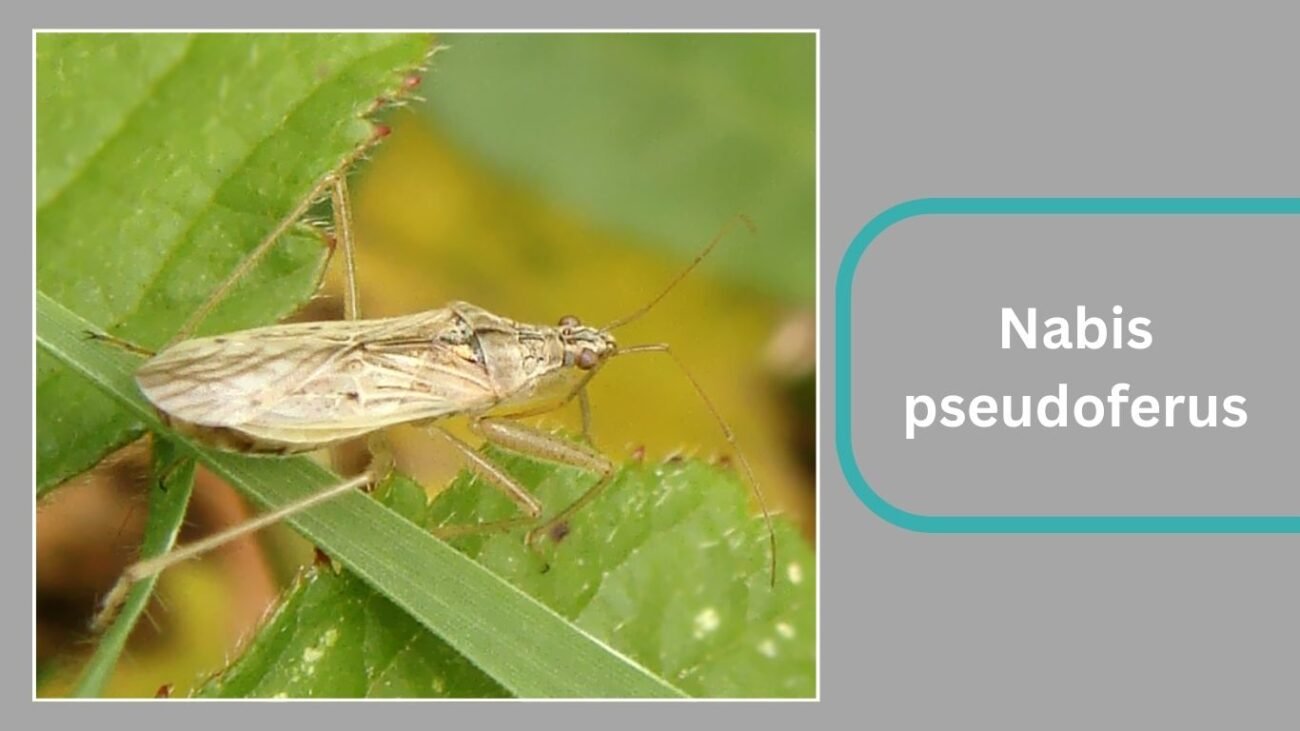
The Nabis pseudoferus is a predatory damsel bug closely related to Nabis ferus. It is widely distributed in Europe, Asia, and North America, where it contributes significantly to natural pest control in crops and grasslands.
Identification
- Medium-sized, slender body about 8–11 mm long
- Light brown to gray coloration, often with subtle mottled patterns
- Narrow head with long, thin antennae
- Long legs designed for speed and grasping prey
- Rostrum adapted for piercing and sucking insect fluids
Habitat
This species is found in fields, gardens, meadows, and agricultural landscapes. It is especially common in cereal and legume crops, where pest populations provide abundant food.
Behavior
Nabis pseudoferus is an active predator, moving swiftly over plants in search of prey. It is known for its adaptability, persisting in both natural habitats and cultivated fields.
Diet
Its diet consists mainly of aphids, caterpillars, thrips, leafhoppers, and insect eggs. Its broad feeding range makes it a valuable biological control agent.
Lifecycle
Eggs are laid in the stems and leaves of plants. Nymphs hatch and pass through five instars before reaching adulthood. Depending on climate and food availability, two or more generations may occur per year.