False widow spiders belong to the genus Steatoda and are often mistaken for the more dangerous black widow due to their similar body shape and glossy appearance. While their venom can cause mild symptoms in some cases, they are generally harmless to humans and play an important role in controlling insect populations. Found in various parts of the world, these spiders adapt well to both natural habitats and human-made environments. In this guide, we’ll explore 25 types of false widow spiders, each with its own distinct appearance, habitat preferences, and behavior.
1. Steatoda nobilis (Noble False Widow)
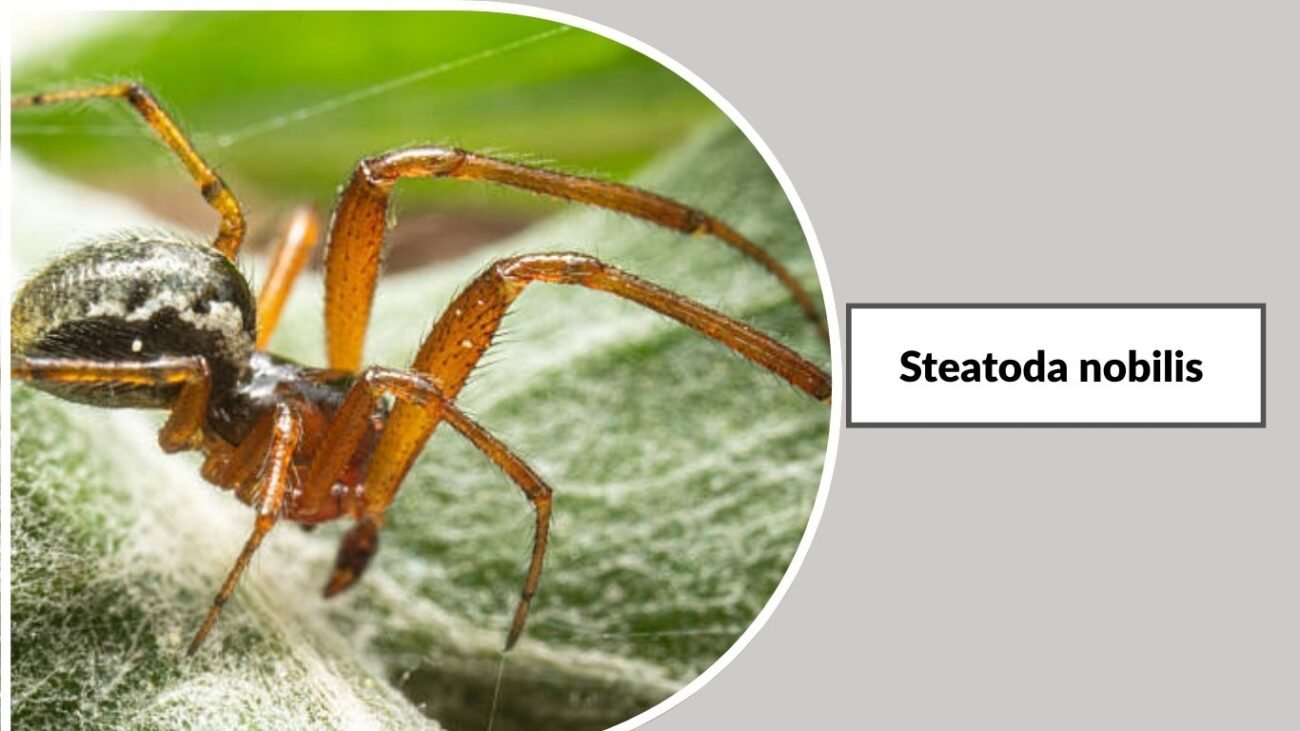
Often called the “noble false widow,” this species is the most talked-about false widow due to its spread beyond its native range. It favors buildings and sheltered outdoor spots and is active year-round in mild climates.
Identification
- Glossy, bulbous abdomen with a cream or tan leaf-shaped pattern on a dark brown/purple-brown background
- Legs orange-brown to reddish with darker joints
- Adult females ~9–14 mm body length; males smaller and slimmer
- Messy, scaffold-style web in corners, sheds, fences, and indoor nooks
- Distinct, smooth carapace with subtle pale edging
Habitat & Range
Common around human structures: eaves, window frames, garages, and garden furniture. Native to Madeira and the Canary Islands; now established in parts of Europe (notably the UK and Ireland), and reported in other temperate regions via human transport.
Behavior & Bite
Nocturnal ambush predator feeding on insects and occasionally other spiders. Shy and largely sedentary; bites are uncommon and typically occur during handling or when trapped in clothing. Symptoms are usually localized pain and swelling, resolving with basic first aid.
Similar Species
Can be confused with Steatoda grossa and S. bipunctata; look for the noble false widow’s characteristic pale leaf-mark and relatively larger, glossy abdomen on females.
2. Steatoda grossa (Cupboard Spider)
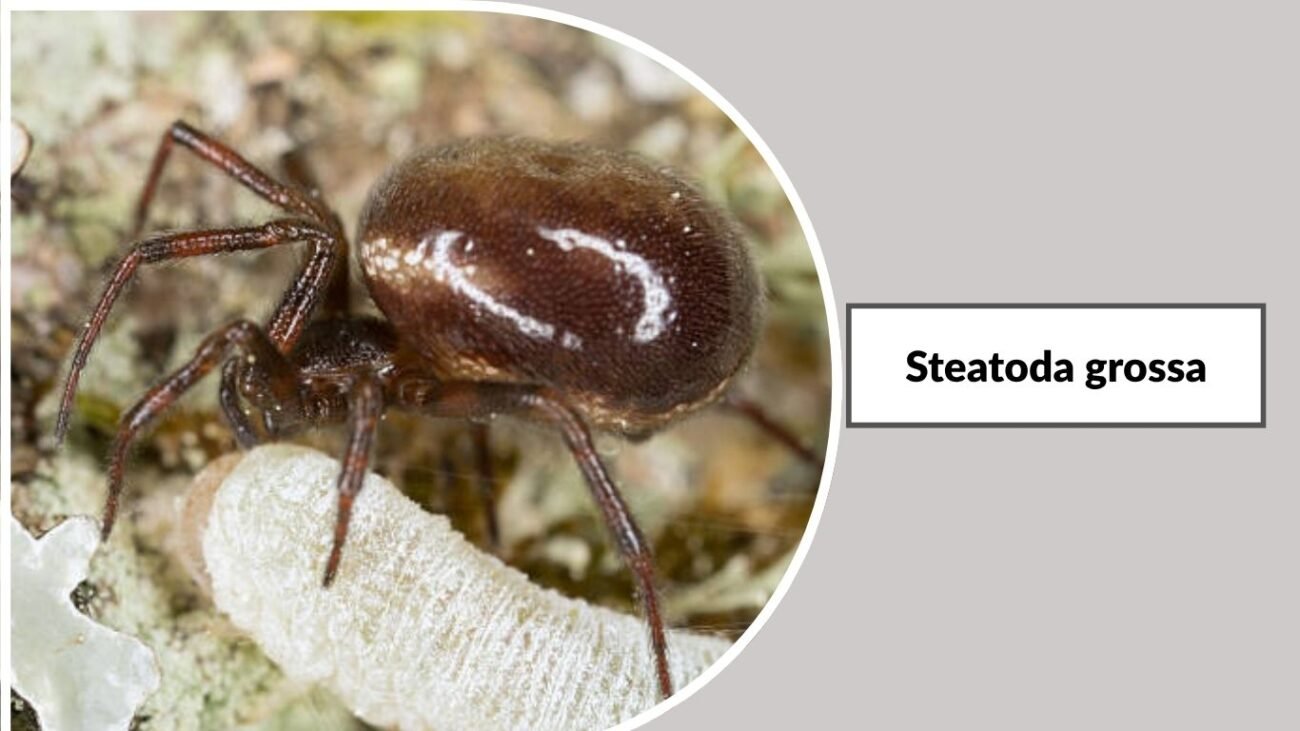
Known as the “cupboard spider,” this species often lives indoors in dark, undisturbed corners. It is one of the most widespread false widows and adapts well to human environments.
Identification
- Dark brown to purplish-black glossy abdomen, sometimes with faint lighter markings
- Legs uniformly dark brown to reddish-brown
- Adult females 6–10 mm body length; males slightly smaller and slimmer
- Irregular cobweb in sheltered areas, often inside cupboards, basements, or sheds
Habitat & Range
Commonly found in homes, garages, and storage areas, but can also live outdoors in sheltered places. Native to Europe but now present in North America, Australia, and other regions due to accidental transport.
Behavior & Bite
Feeds on crawling insects and other spiders. Timid and rarely aggressive; bites are infrequent and cause mild to moderate localized discomfort in most cases.
3. Steatoda bipunctata (Rabbit Hutch Spider)
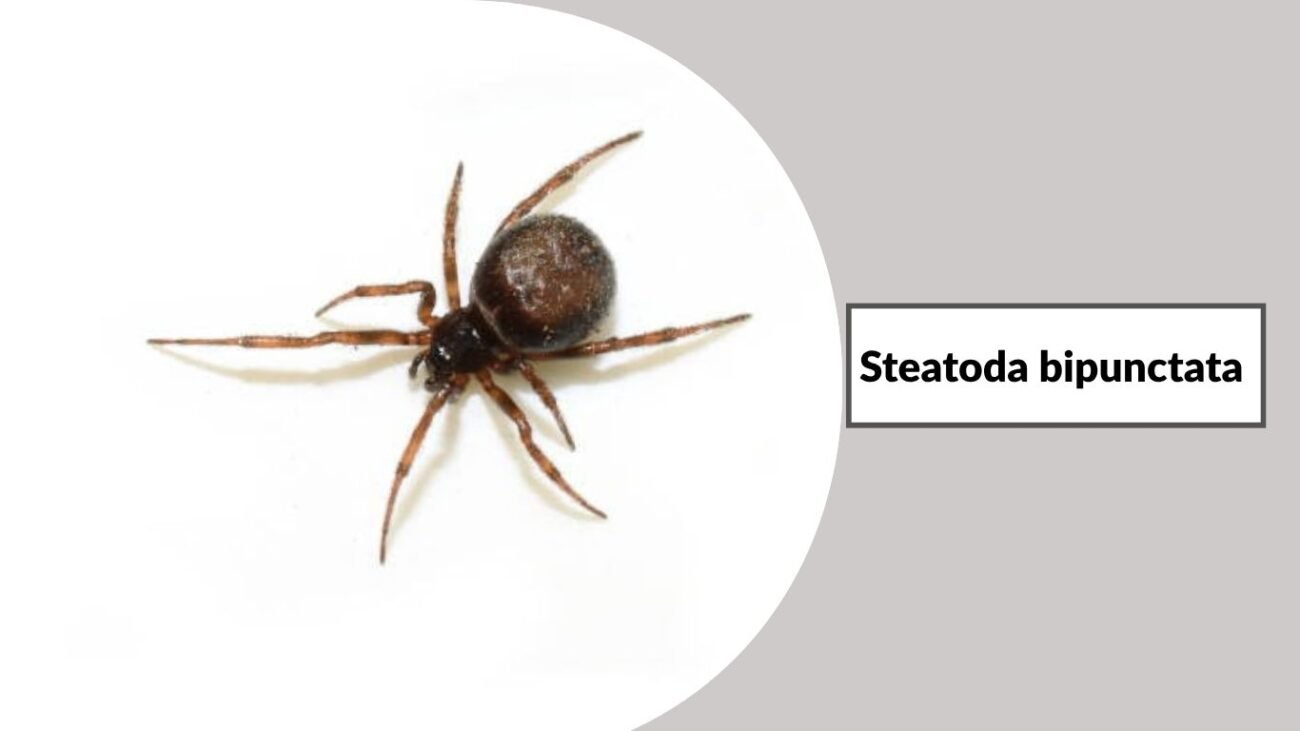
Also called the “rabbit hutch spider,” this species frequently inhabits animal enclosures, fences, and outbuildings. It is well adapted to life around farms and gardens.
Identification
- Brown to reddish-brown body with a round, glossy abdomen
- Two distinct pale spots on the upper abdomen (inspired its name)
- Legs light brown with darker joints
- Adult females around 5–7 mm; males slightly smaller
- Web is irregular and often built in wooden structures or wire mesh areas
Habitat & Range
Often found in rabbit hutches, chicken coops, barns, and outdoor furniture. Distributed across Europe and introduced to parts of North America.
Behavior & Bite
Active mostly at night, preying on small insects that wander into its web. Bites are very rare and cause only mild irritation.
4. Steatoda albomaculata
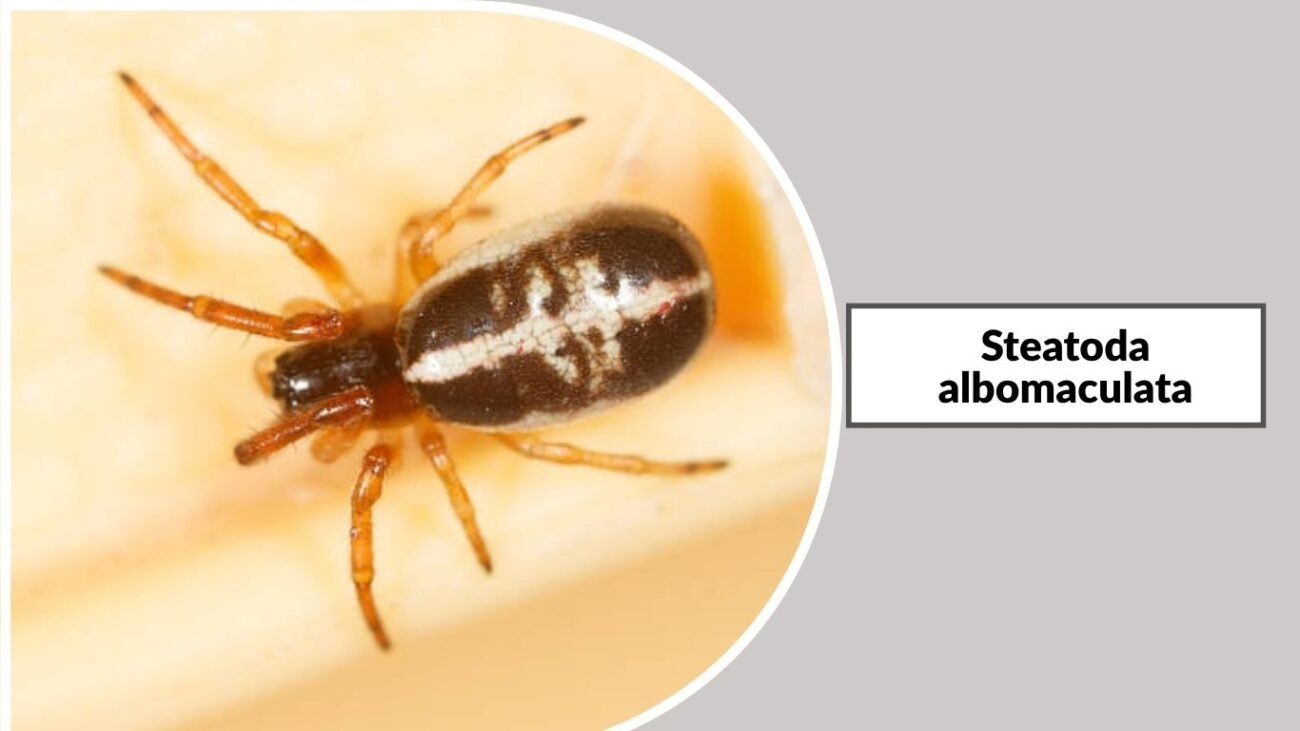
This species is recognizable by its pale-spotted abdomen and preference for low, sheltered spots. It thrives in both rural and suburban areas.
Identification
- Dark brown to black glossy abdomen with distinct white or cream spots
- Legs brown with slightly darker bands at the joints
- Adult females ~4–6 mm; males smaller and more slender
- Webs are messy and low to the ground, often under stones or debris
Habitat & Range
Found under rocks, logs, and leaf litter, as well as around walls, fences, and outbuildings. Distributed across Europe and into parts of Asia and North America.
Behavior & Bite
Feeds on crawling insects and is largely non-aggressive. Bites are rare and mild, typically resolving quickly without medical attention.
5. Steatoda triangulosa (Triangulate Cobweb Spider)
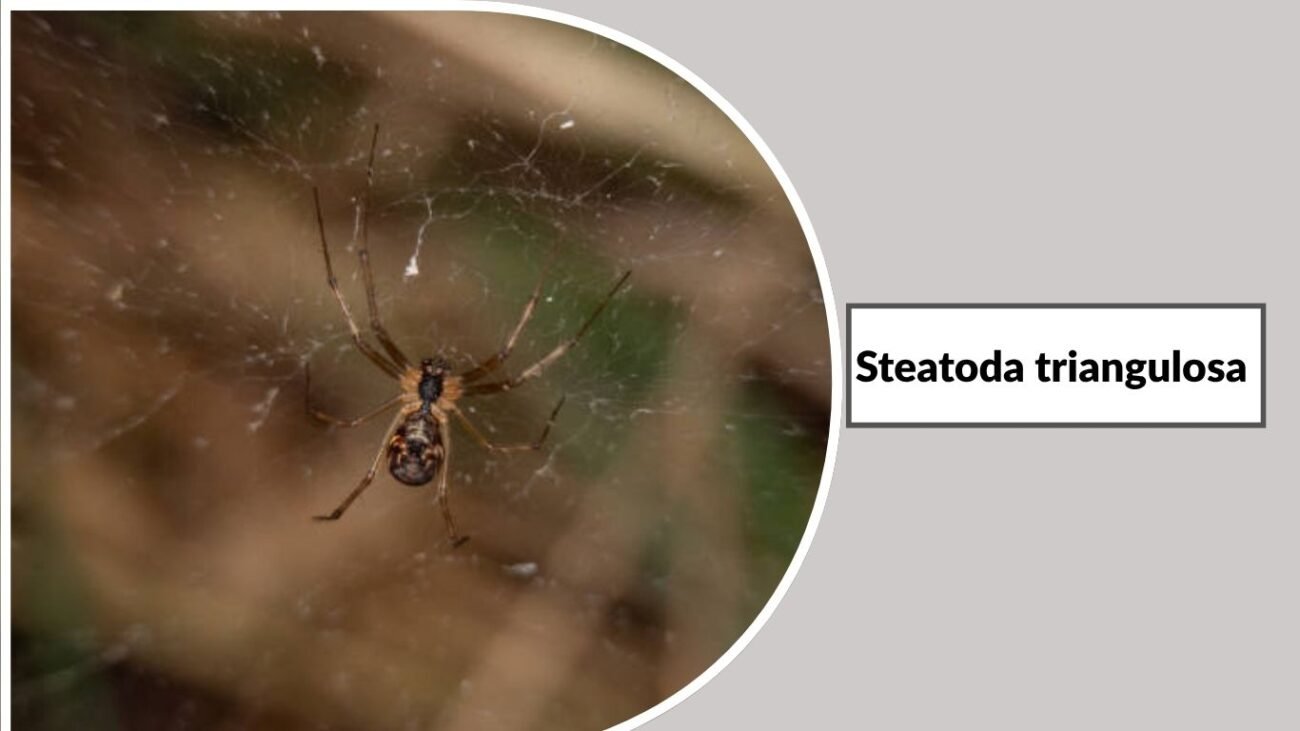
Well-known in North America, this species gets its name from the triangular patterns on its abdomen. It is a frequent occupant of homes and sheds.
Identification
- Light brown to yellowish-brown body
- Abdomen cream-colored with dark brown zigzag or triangular patterns
- Legs pale yellow with darker bands
- Adult females 4–6 mm; males smaller
- Creates irregular cobwebs in quiet, undisturbed areas indoors or in sheltered outdoor spots
Habitat & Range
Widespread in North America and introduced to other temperate regions. Prefers corners, basements, and window sills.
Behavior & Bite
Feeds on ants, woodlice, and other small arthropods. Bites are very uncommon and produce only mild, short-lived symptoms.
6. Steatoda capensis (Cupboard Spider / New Zealand False Widow)
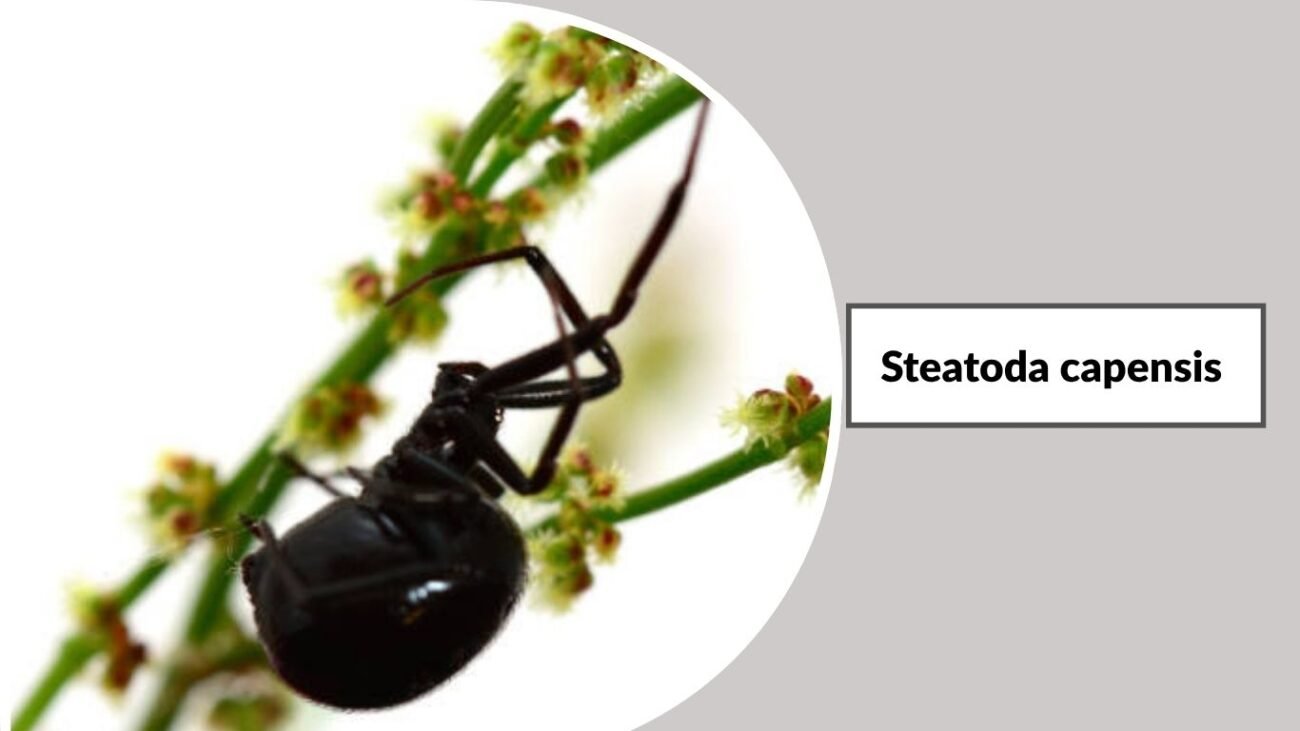
Native to South Africa but now common in New Zealand and parts of Australia, this species has adapted well to urban life. It often lives inside houses and in sheltered outdoor corners.
Identification
- Dark brown to black glossy abdomen with faint pale markings
- Legs dark reddish-brown to black
- Adult females 7–10 mm; males smaller and slimmer
- Builds messy, tangled webs in corners, cupboards, and garages
Habitat & Range
Frequently found indoors in dark areas like basements, cupboards, and under furniture. Outdoors, it lives under eaves, in sheds, and in wood piles.
Behavior & Bite
Shy and non-aggressive, feeding on insects and other small arthropods. Bites are rare but can cause local pain, swelling, and redness.
7. Steatoda borealis
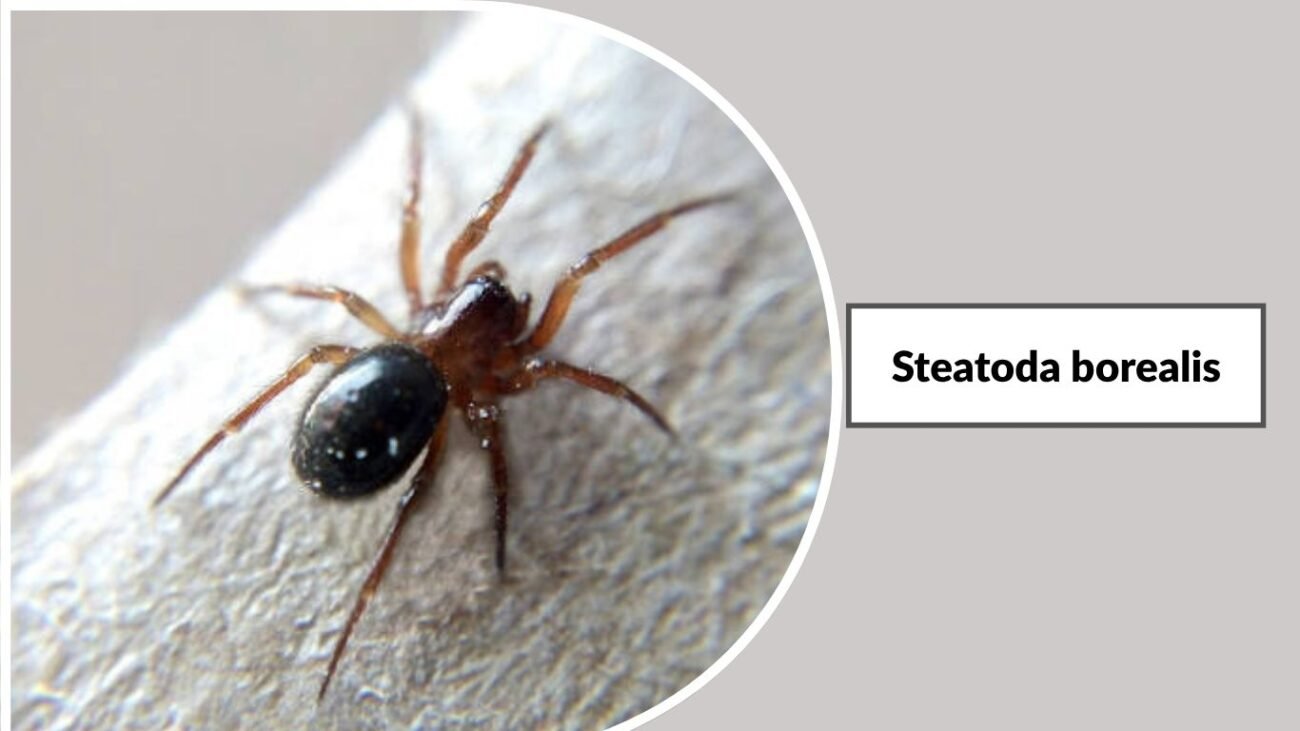
A North American false widow species found mainly in the northern United States and parts of Canada. It prefers cooler climates and outdoor shelters.
Identification
- Dark brown to reddish body with a glossy, rounded abdomen
- Subtle pale markings on the dorsal side of the abdomen
- Legs reddish-brown with slightly darker joints
- Adult females 5–8 mm; males smaller and slimmer
- Web is irregular and often built under logs, stones, or building overhangs
Habitat & Range
Primarily found outdoors in forests, gardens, and near human-made structures. Distributed across northern North America.
Behavior & Bite
Nocturnal predator feeding on insects and occasionally other spiders. Rarely bites humans, and any reaction is generally mild.
8. Steatoda phalerata
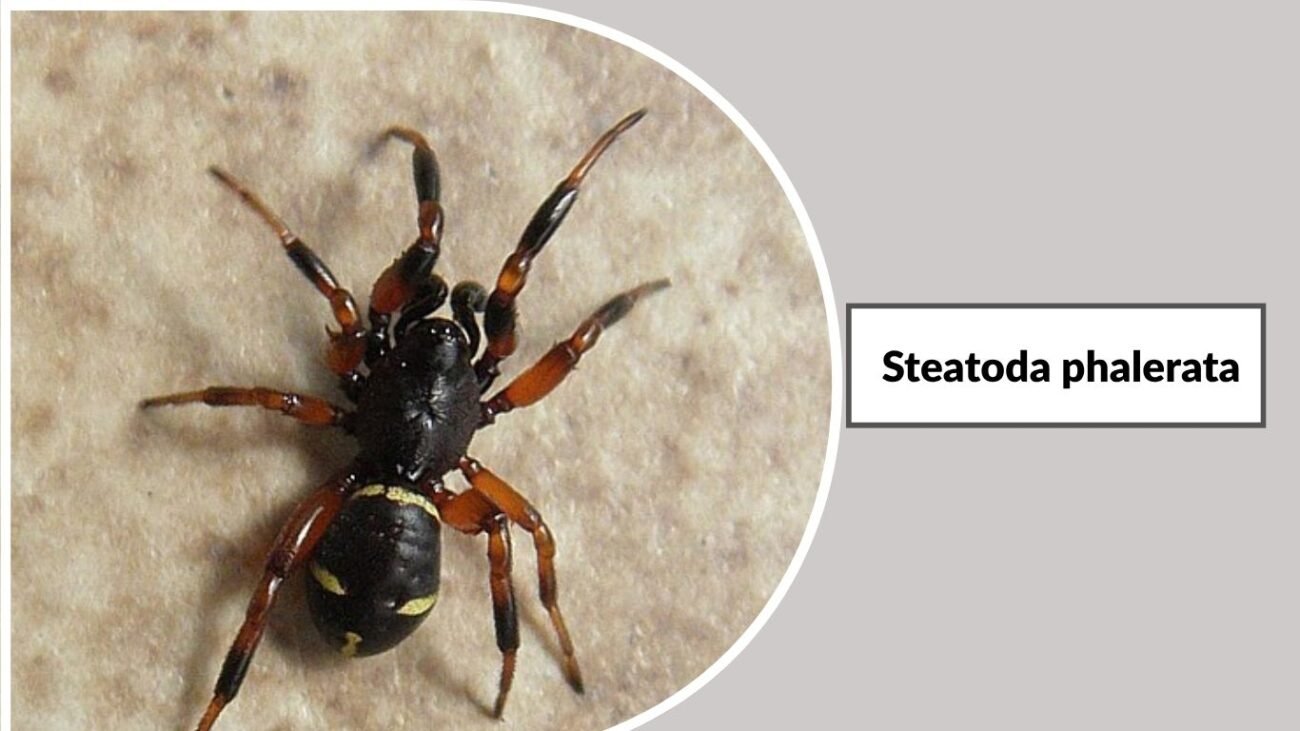
A ground-dwelling false widow often found in low vegetation and under debris. It is more common in rural and semi-natural habitats than in urban homes.
Identification
- Dark brown abdomen with pale or yellowish mottling
- Legs light to medium brown with faint darker bands
- Adult females 4–6 mm; males slightly smaller
- Webs are irregular and usually close to the ground
Habitat & Range
Occurs across Europe and parts of Asia, inhabiting grasslands, gardens, forest edges, and farmland. Often hides under stones, logs, and plant bases.
Behavior & Bite
Feeds on ants, beetles, and small ground-dwelling insects. Harmless to humans, with any bite causing only minor irritation.
9. Steatoda trianguloides
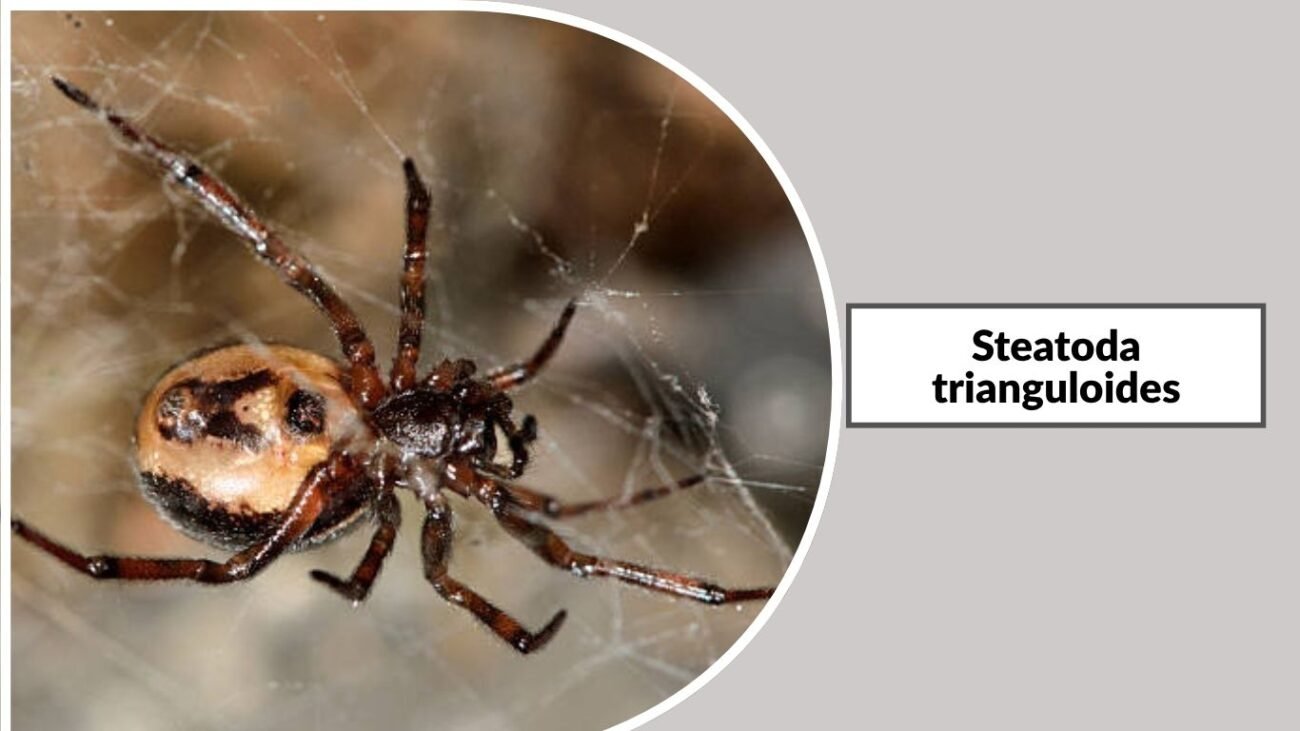
Closely related to the triangulate cobweb spider, this species also features distinct geometric markings on its abdomen. It is less common but found in similar habitats.
Identification
- Light brown to tan body
- Abdomen with cream base color and bold dark brown triangular or zigzag markings
- Legs pale yellowish-brown with darker bands
- Adult females 4–6 mm; males smaller
- Irregular web in secluded indoor corners and sheltered outdoor areas
Habitat & Range
Found in parts of North America and Europe, typically in quiet buildings, barns, and storage sheds.
Behavior & Bite
Active mainly at night, capturing small crawling insects. Not considered dangerous to humans, and bites are rare.
10. Steatoda paykulliana
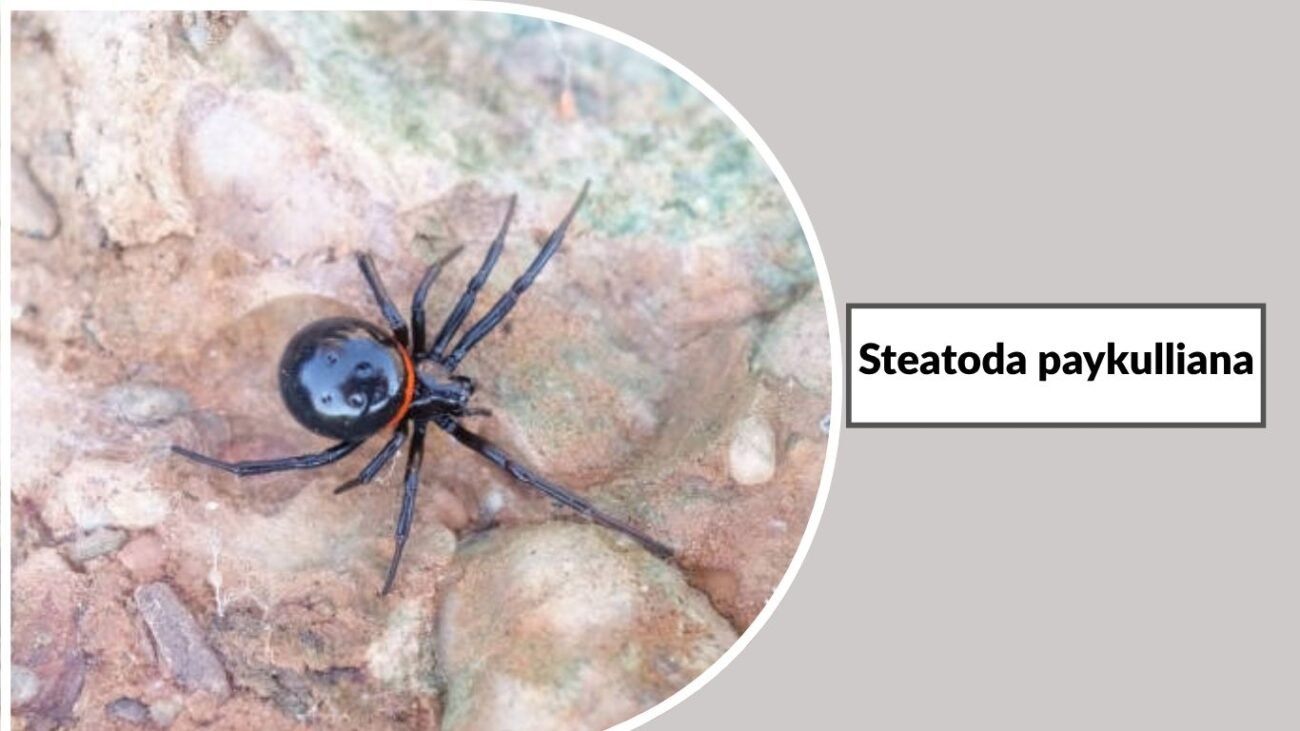
One of the more striking false widow species, known for its bold coloration and larger size compared to many of its relatives.
Identification
- Glossy black abdomen with a vivid red or orange band or spots on the upper side
- Legs dark reddish-brown to black
- Adult females 7–14 mm; males smaller and more slender
- Webs are irregular and usually built close to the ground or in low shrubs
Habitat & Range
Native to the Mediterranean region and parts of southern Europe, extending into the Middle East and Central Asia. Common in dry, sunny areas, under stones, or in low vegetation.
Behavior & Bite
Predatory on insects and other spiders. Rarely bites humans, but when it does, symptoms are typically mild to moderate and short-lived.
11. Steatoda castanea
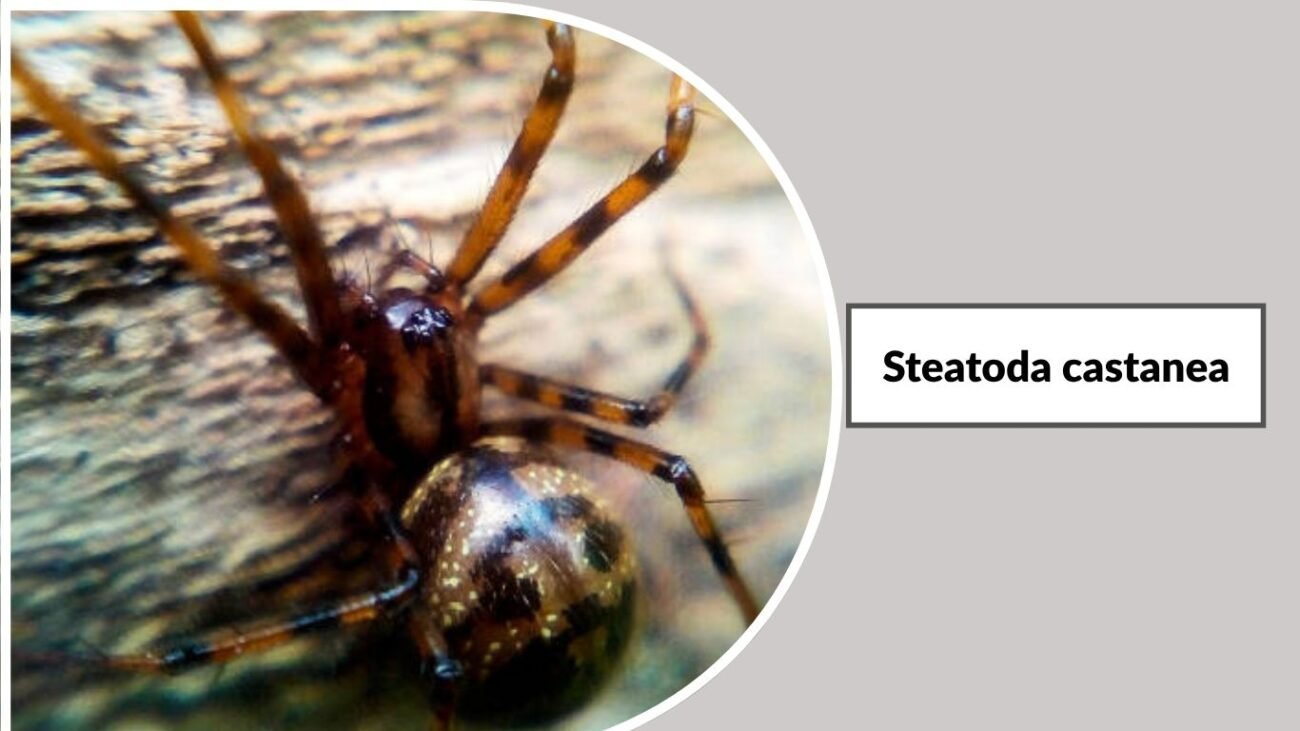
A less conspicuous false widow with a more muted appearance, often blending into leaf litter and natural debris.
Identification
- Brown to reddish-brown body with a rounded, slightly patterned abdomen
- Legs light to medium brown with minimal banding
- Adult females 4–6 mm; males slightly smaller
- Webs are small, irregular, and close to the ground or in hidden crevices
Habitat & Range
Found across Europe, parts of Asia, and introduced to North America. Prefers forest edges, gardens, and low, sheltered areas outdoors.
Behavior & Bite
Feeds on crawling insects, especially ants. Shy and avoids human contact; bites are rare and medically insignificant.
12. Steatoda americana
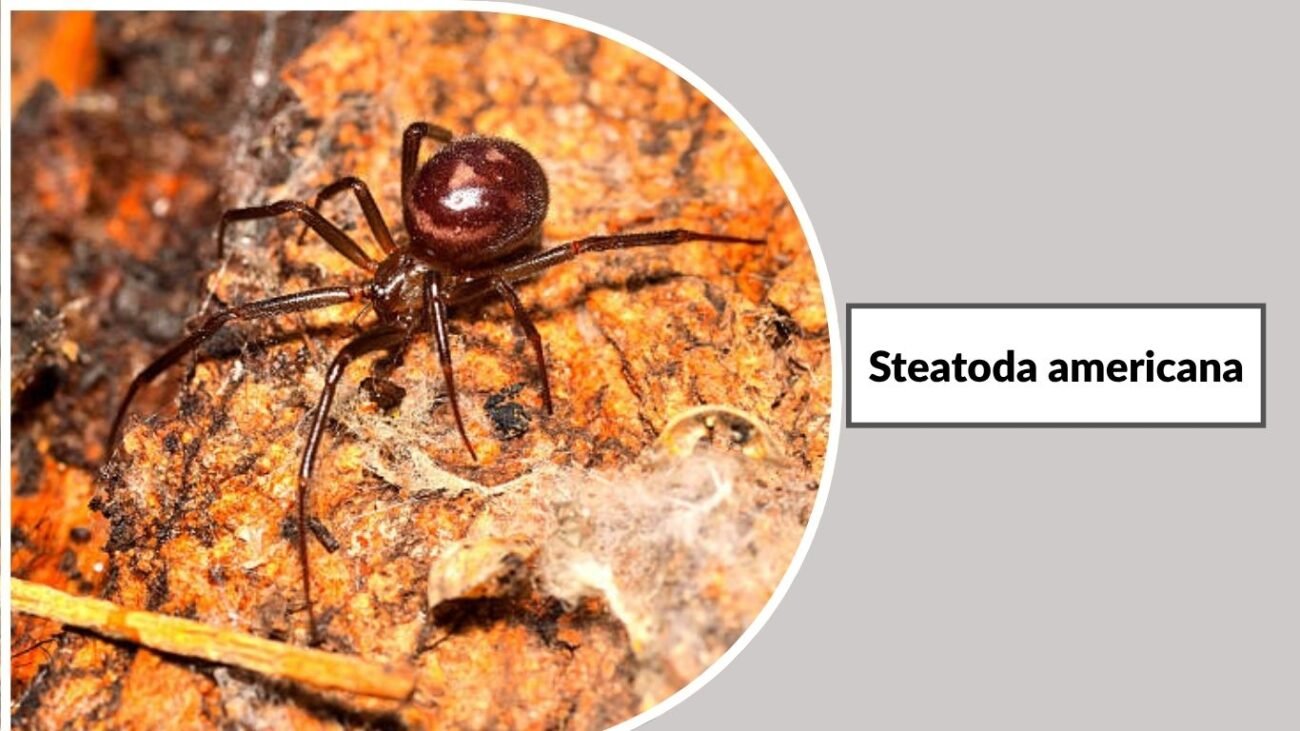
A widespread North American false widow, often seen in and around human dwellings. It adapts easily to both rural and urban settings.
Identification
- Dark brown to black glossy abdomen with faint lighter markings
- Legs reddish-brown to dark brown
- Adult females 5–8 mm; males smaller and slimmer
- Irregular cobwebs in corners, basements, sheds, and under outdoor furniture
Habitat & Range
Native to North America and common throughout the United States, parts of Canada, and Mexico. Found indoors and in sheltered outdoor areas.
Behavior & Bite
Feeds on a variety of small arthropods, including other spiders. Not aggressive toward humans; bites are rare and generally cause only mild local effects.
13. Steatoda hespera
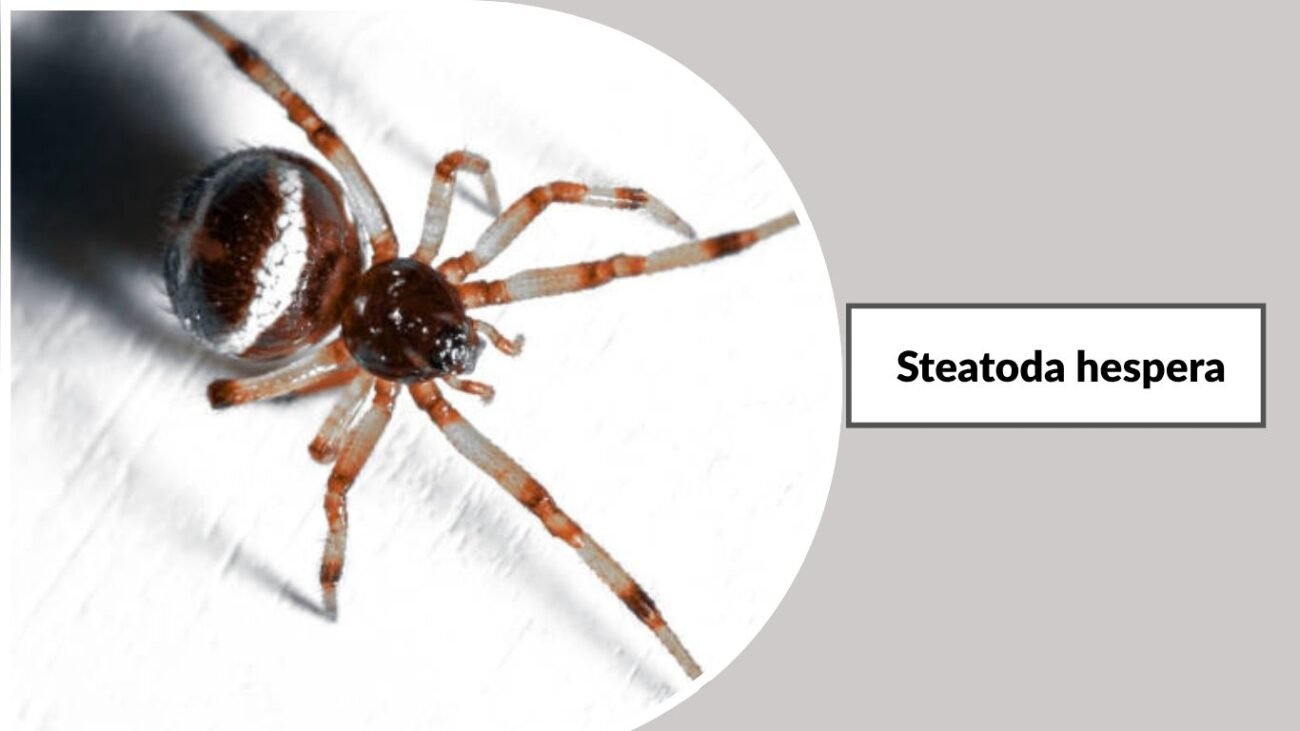
Closely related to Steatoda grossa, this species is found mainly in the western parts of North America.
Identification
- Glossy dark brown or purplish abdomen, sometimes with faint pale markings
- Legs reddish-brown with slightly darker joints
- Adult females 6–9 mm; males smaller and more slender
- Builds tangled, three-dimensional webs in sheltered corners
Habitat & Range
Primarily found in western United States and Canada, inhabiting garages, sheds, and sheltered parts of buildings.
Behavior & Bite
Hunts insects and other spiders at night. Non-aggressive toward humans; bites are rare and cause mild, short-term symptoms.
14. Steatoda latifasciata
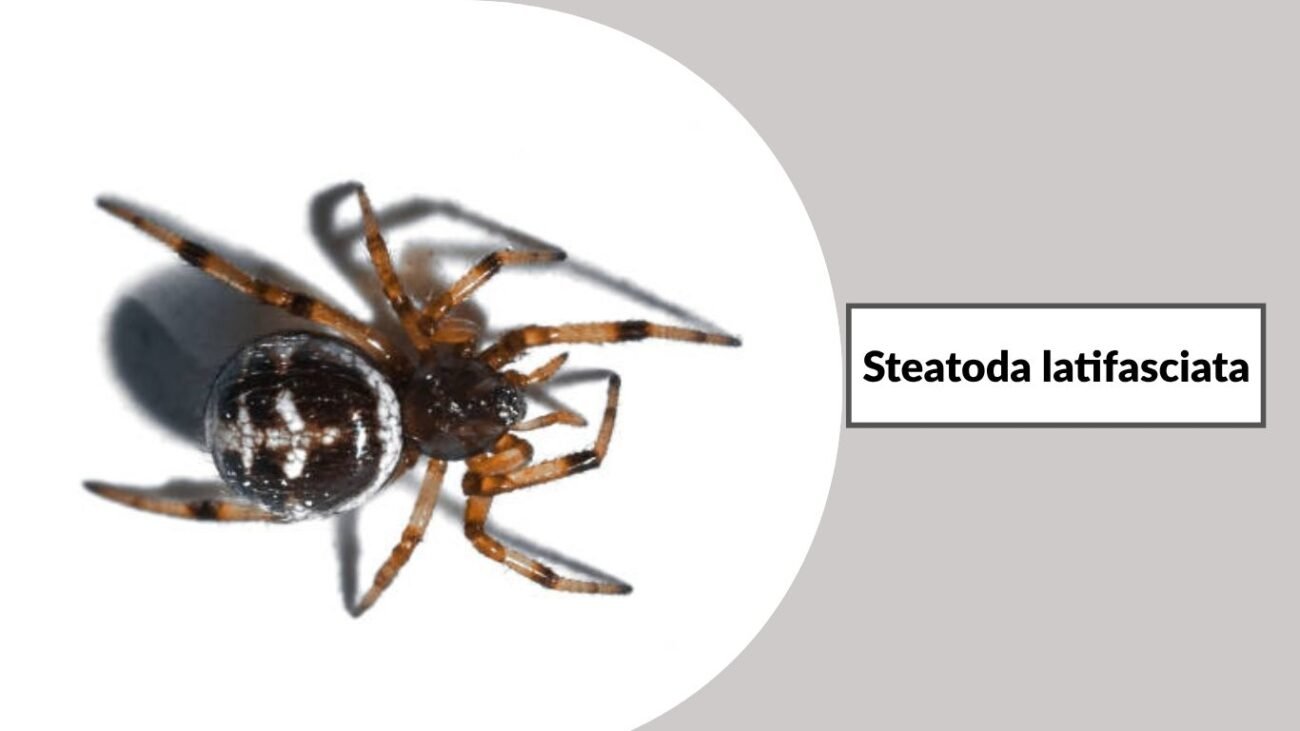
A lesser-known false widow with a distinctive broad-banded abdomen pattern. It often prefers outdoor habitats but can occasionally be found indoors.
Identification
- Dark brown or black abdomen with wide, pale transverse bands
- Legs brown with subtle darker banding at the joints
- Adult females 5–7 mm; males smaller and slimmer
- Webs are messy and located in sheltered outdoor corners or under rocks
Habitat & Range
Found in parts of Europe, Africa, and introduced to other warm regions. Prefers dry, sheltered habitats like rock walls, sheds, and under debris.
Behavior & Bite
Preys on small insects and other spiders. Rarely interacts with humans; bites are uncommon and mild.
15. Steatoda impressa
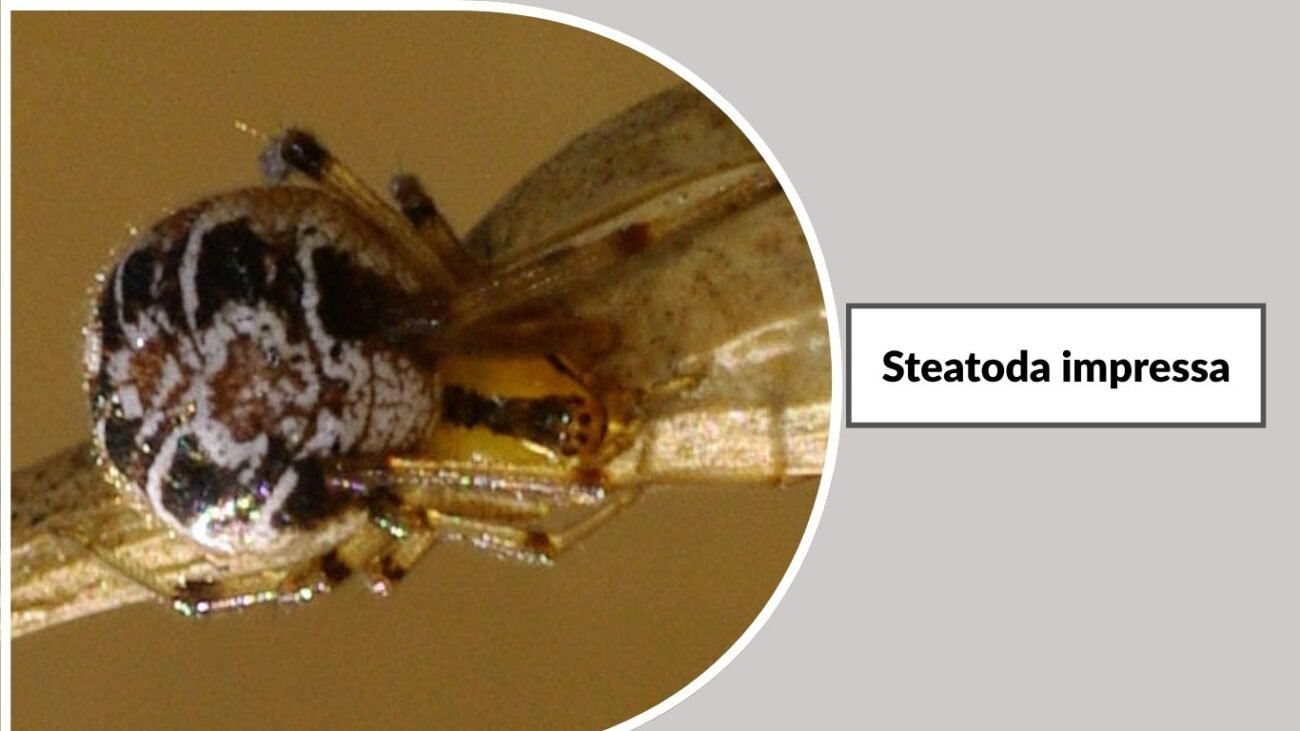
A small false widow with a delicate body and subtle abdominal patterns. More often found outdoors in vegetation than inside homes.
Identification
- Brown to reddish-brown abdomen with fine, pale mottling
- Legs light brown with faint darker bands
- Adult females 4–6 mm; males smaller
- Web is irregular, usually built among low plants or in crevices outdoors
Habitat & Range
Occurs across Europe and parts of Asia, often in gardens, forest edges, and hedgerows.
Behavior & Bite
Nocturnal hunter of small insects and occasionally other spiders. Not considered dangerous; bites are very rare.
16. Steatoda erigoniformis
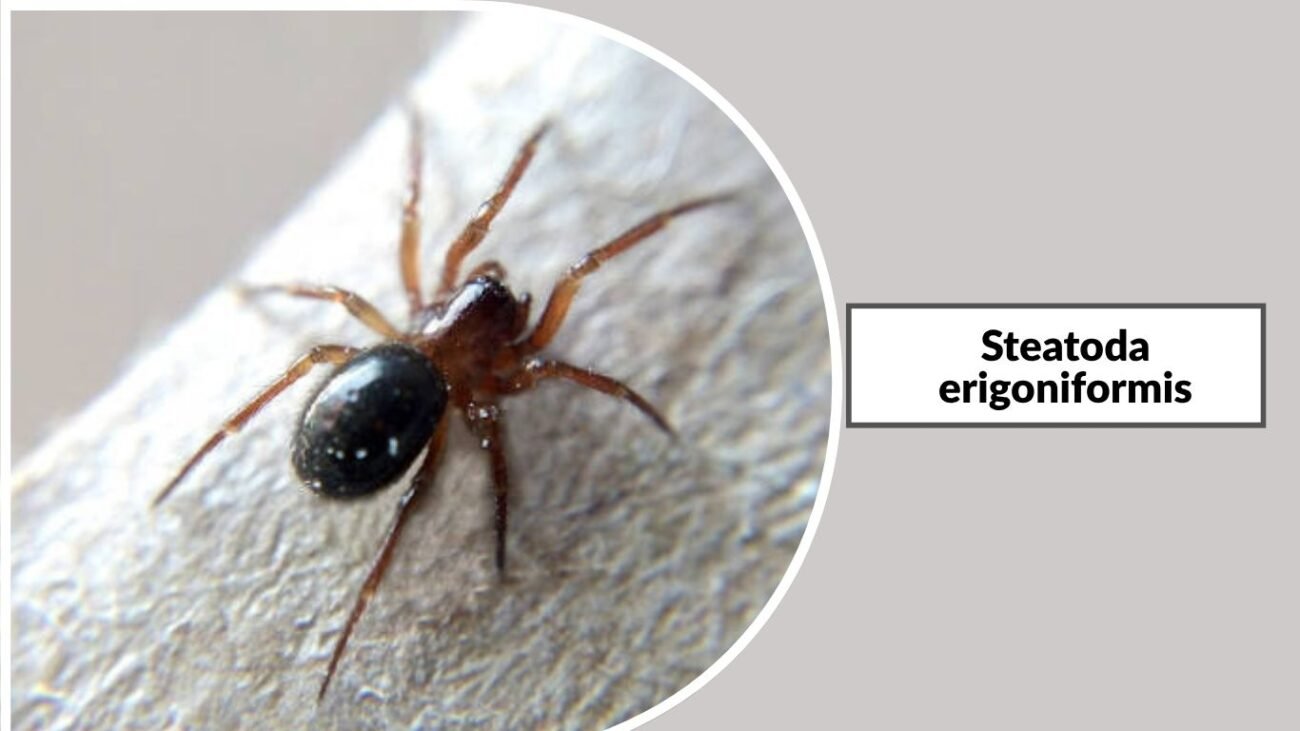
A North American false widow more often encountered in natural outdoor habitats than inside homes.
Identification
- Dark brown to nearly black abdomen with faint pale mottling
- Legs reddish-brown with slightly darker joints
- Adult females 4–5 mm; males smaller and slimmer
- Builds small, irregular webs low to the ground, often in vegetation or under stones
Habitat & Range
Found throughout the eastern and central United States and parts of Canada. Prefers fields, gardens, forest edges, and other undisturbed outdoor sites.
Behavior & Bite
Feeds mainly on ants, beetles, and small insects. Rarely bites humans; effects are mild and short-lived.
17. Steatoda schultzi
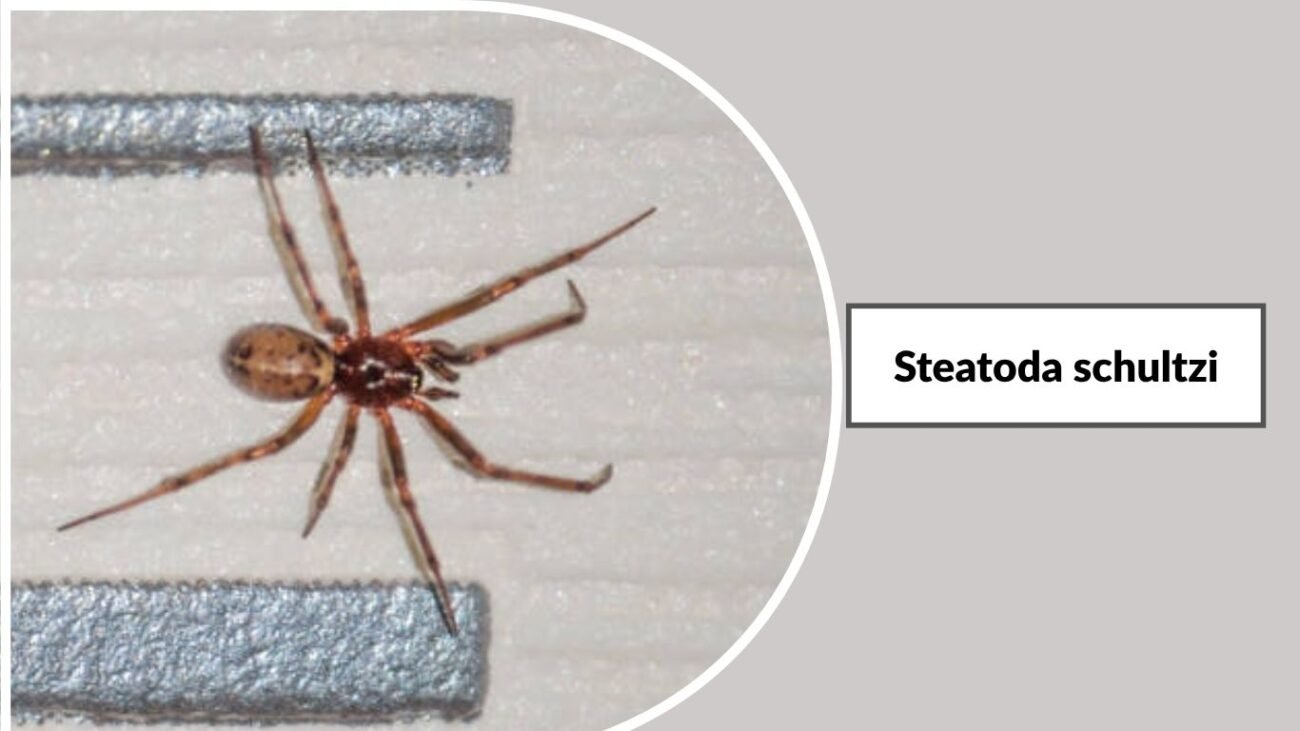
A small, inconspicuous false widow found mainly in Europe and parts of Asia.
Identification
- Brown abdomen with subtle pale or yellowish markings
- Legs light brown with faint darker bands
- Adult females 3–4 mm; males slightly smaller
- Webs are small and irregular, often located in low vegetation or leaf litter
Habitat & Range
Lives in gardens, meadows, and woodland clearings. Occasionally found under stones, logs, or garden debris.
Behavior & Bite
Shy and non-aggressive, preying on small arthropods. Bites to humans are extremely rare and harmless.
18. Steatoda variata
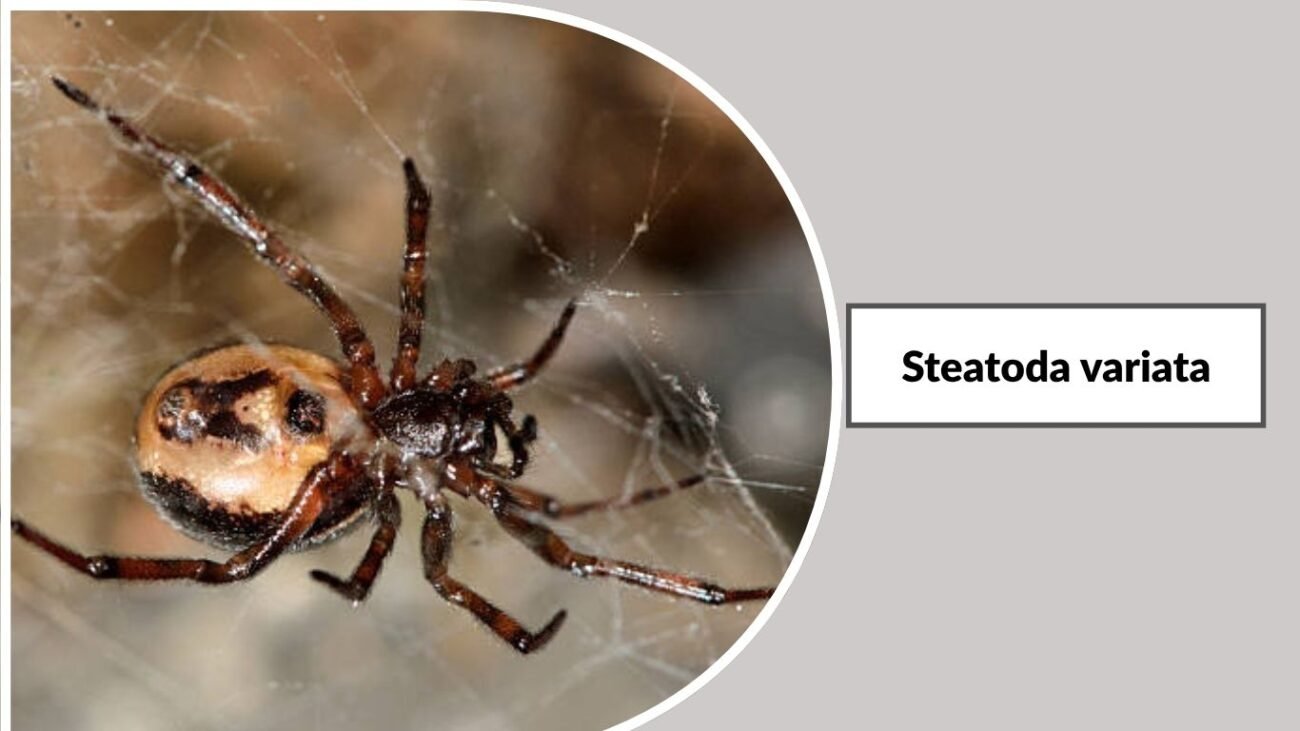
A small false widow species recognized for its variable abdominal markings, which can range from faint mottling to distinct pale patches.
Identification
- Brown to reddish-brown abdomen with variable cream or yellowish patterns
- Legs light brown with subtle darker joints
- Adult females 4–5 mm; males slightly smaller and slimmer
- Irregular, messy webs often constructed near the ground or in sheltered crevices
Habitat & Range
Found across parts of Europe, especially in gardens, hedgerows, and grasslands. Occasionally enters buildings.
Behavior & Bite
Feeds on ants, flies, and other small arthropods. Harmless to humans, with bites being extremely rare and mild.
19. Steatoda transversa
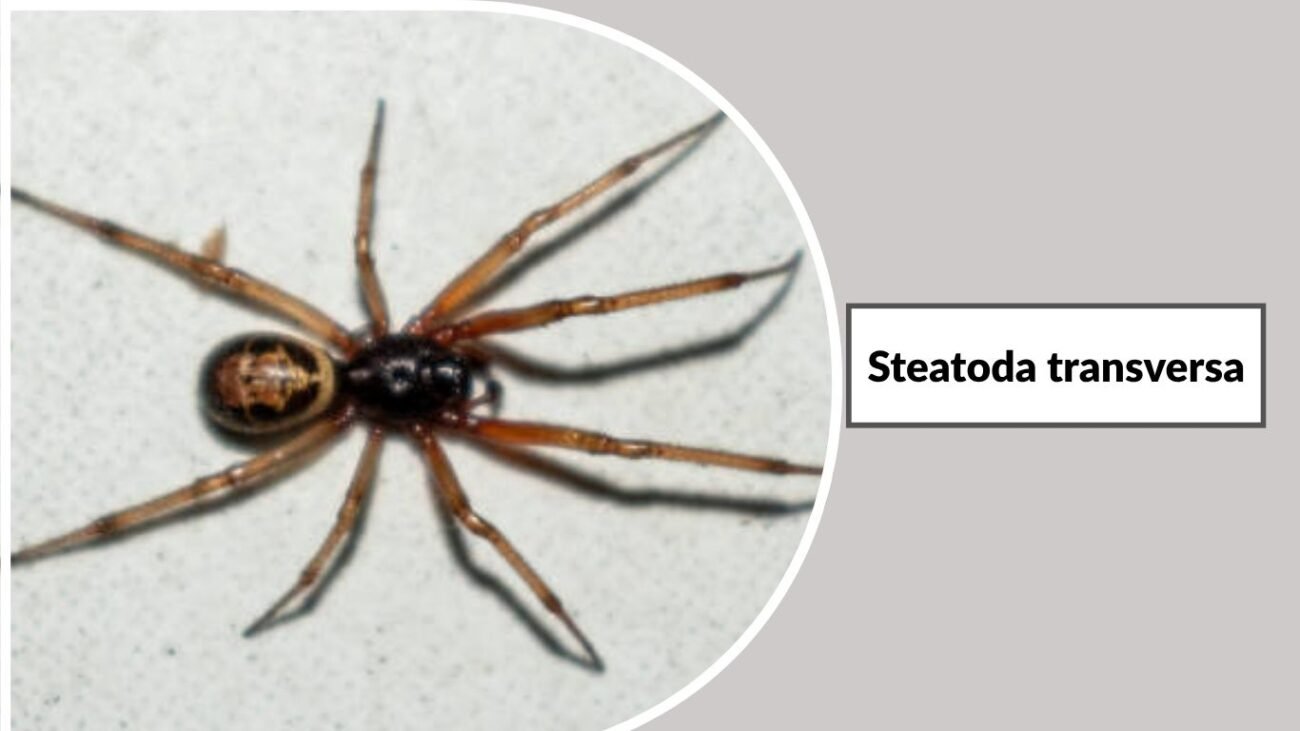
Named for the transverse markings on its abdomen, this species is often encountered in natural, undisturbed outdoor habitats.
Identification
- Dark brown abdomen with pale transverse bands or stripes
- Legs medium brown with faint darker bands
- Adult females 4–6 mm; males slightly smaller
- Web is irregular and built in low vegetation, under stones, or among debris
Habitat & Range
Widespread in Europe and parts of Asia, preferring gardens, forest edges, and fields. Rarely found indoors.
Behavior & Bite
Predatory on small insects, active mostly at night. Not aggressive toward humans; bites are rare and cause minor symptoms.
20. Steatoda cingulata
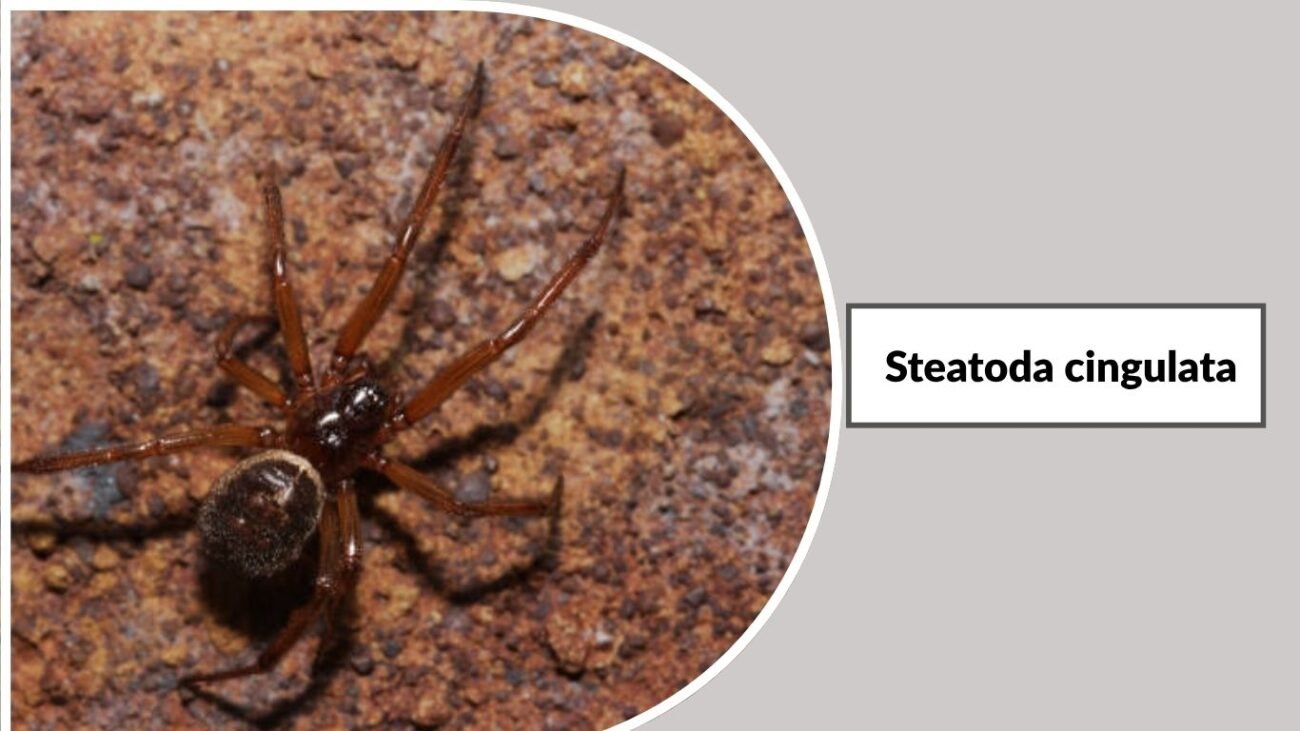
A small false widow known for the distinct light bands encircling its abdomen.
Identification
- Dark brown to black glossy abdomen with pale or cream-colored encircling bands
- Legs brown with faint darker bands at the joints
- Adult females 4–6 mm; males slightly smaller and slimmer
- Webs are messy and located in sheltered outdoor spots or occasionally indoors
Habitat & Range
Found in parts of Europe, North Africa, and the Middle East. Common in rocky areas, walls, and around gardens.
Behavior & Bite
Feeds on crawling insects and other small arthropods. Not considered dangerous; bites are rare and mild.
21. Steatoda delicata
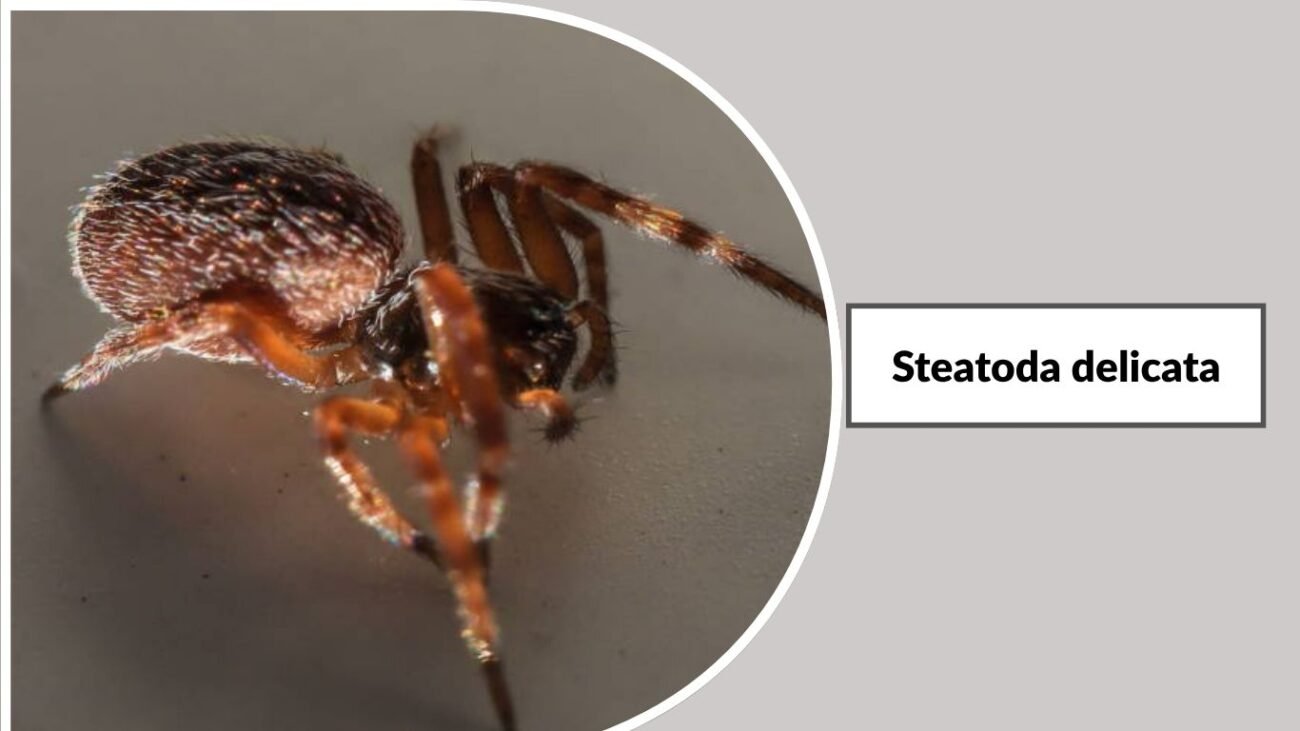
A delicate-bodied false widow more often found in vegetation than around buildings.
Identification
- Pale brown abdomen with faint cream mottling
- Legs light yellowish-brown with subtle darker joints
- Adult females 3–4 mm; males smaller and slimmer
- Webs are small, irregular, and usually hidden in grass or shrubs
Habitat & Range
Occurs in parts of Europe and Asia, mainly in meadows, gardens, and forest clearings.
Behavior & Bite
Feeds on small insects and mites. Harmless to humans, and bites are extremely rare.
22. Steatoda toltica
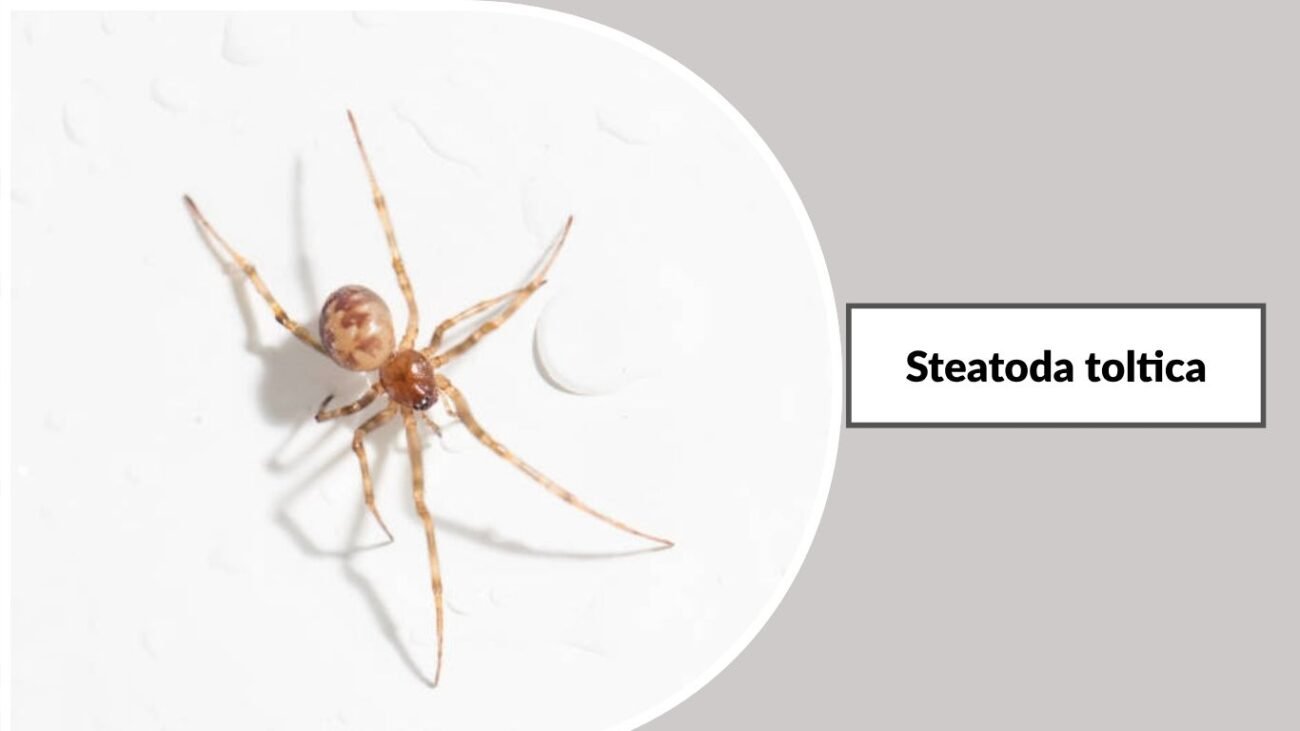
A lesser-known false widow species with limited distribution, often inhabiting natural outdoor shelters.
Identification
- Dark brown abdomen with faint pale or grayish markings
- Legs medium brown with slightly darker joints
- Adult females 4–6 mm; males smaller and more slender
- Builds small, irregular webs in low vegetation or beneath stones and debris
Habitat & Range
Reported mainly from parts of Central and South America. Prefers dry, sheltered habitats away from human disturbance.
Behavior & Bite
Nocturnal predator of small insects and spiders. Rarely bites humans, and effects are mild.
23. Steatoda nigrostriata
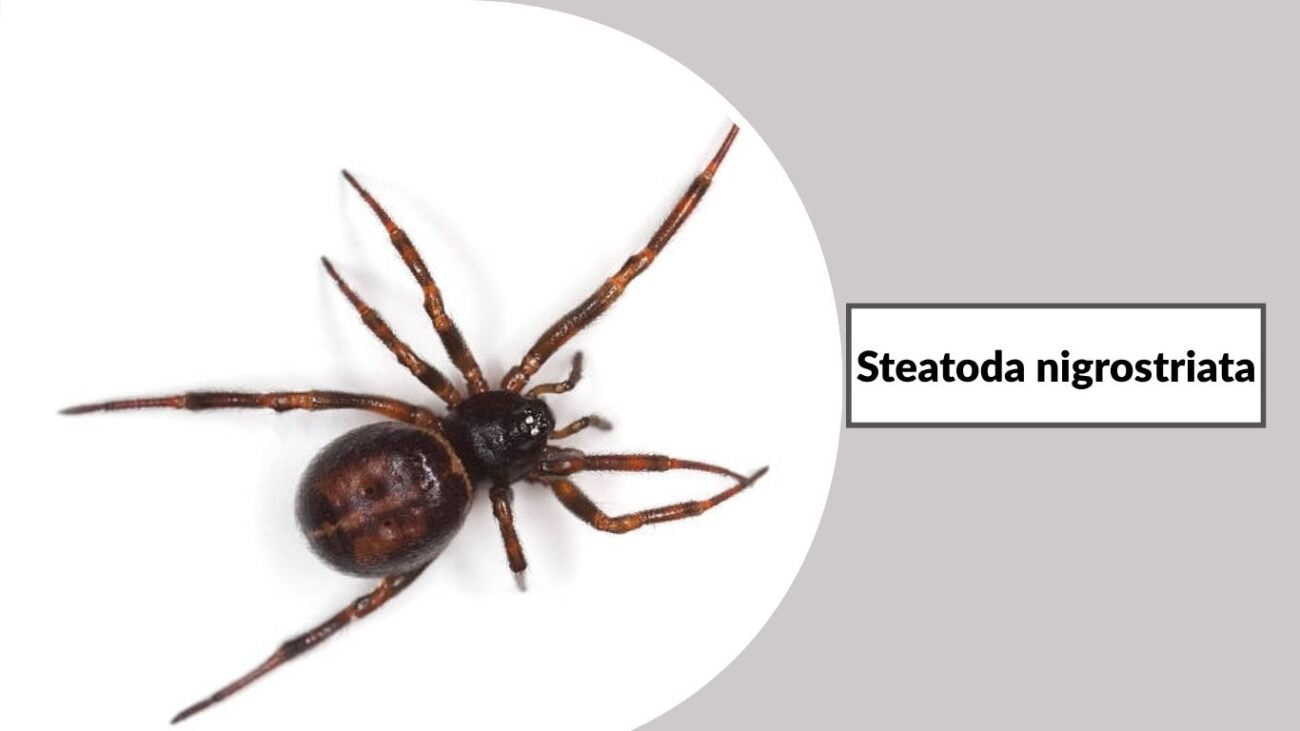
A distinctively patterned false widow known for its dark stripes.
Identification
- Glossy dark brown to black abdomen with thin pale or yellowish stripes
- Legs brown to reddish-brown with faint darker bands
- Adult females 5–7 mm; males smaller and slimmer
- Web is irregular, often built in sheltered outdoor areas or under man-made structures
Habitat & Range
Occurs in parts of Europe, Asia, and Africa, especially in warm, dry environments.
Behavior & Bite
Feeds on crawling arthropods, often overpowering prey larger than itself. Harmless to humans, and bites are very rare.
24. Steatoda distincta
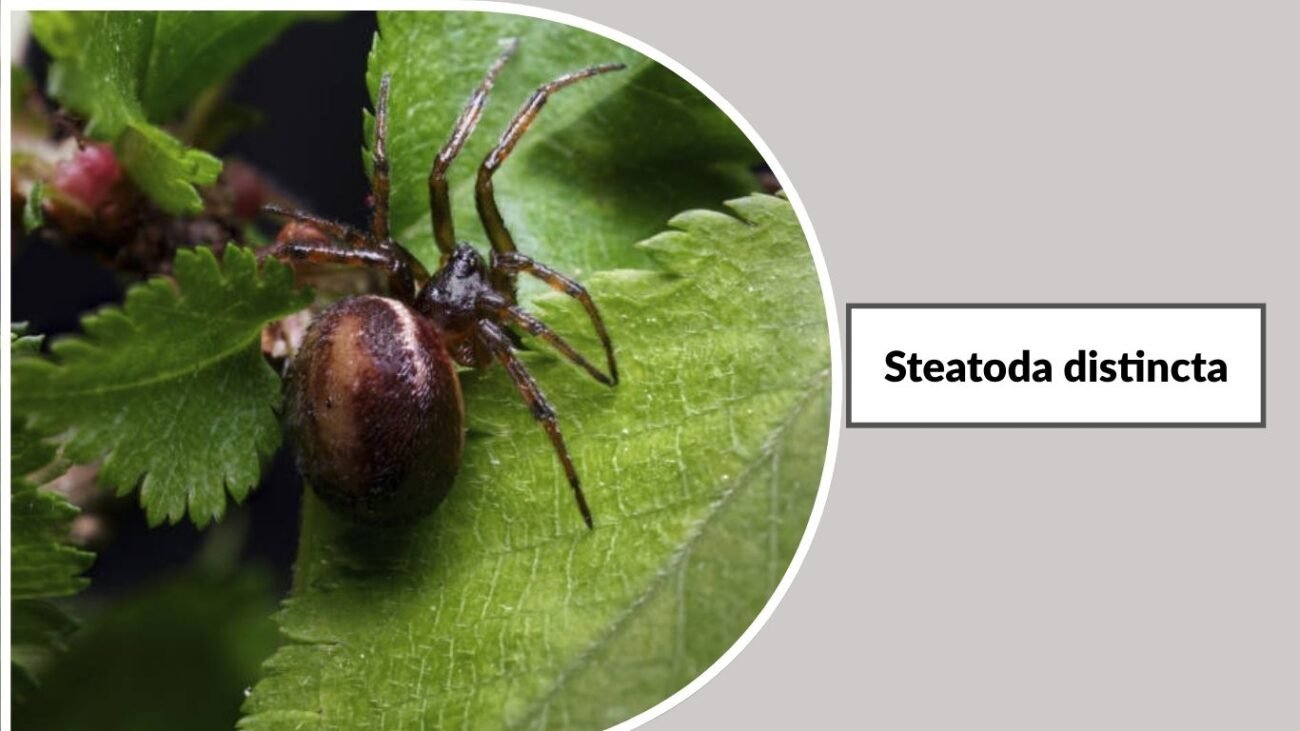
A small false widow with a clean, well-defined abdominal pattern that gives it its name.
Identification
- Dark brown to black abdomen with sharply outlined cream or yellowish markings
- Legs medium to dark brown with faint banding
- Adult females 4–6 mm; males slightly smaller and slimmer
- Builds small, messy webs in sheltered outdoor areas or quiet indoor corners
Habitat & Range
Found across parts of Europe and Asia, favoring gardens, rock walls, sheds, and the undersides of stones.
Behavior & Bite
Preys on small insects and occasionally other spiders. Harmless to humans; bites are uncommon and mild.
25. Steatoda pulchra
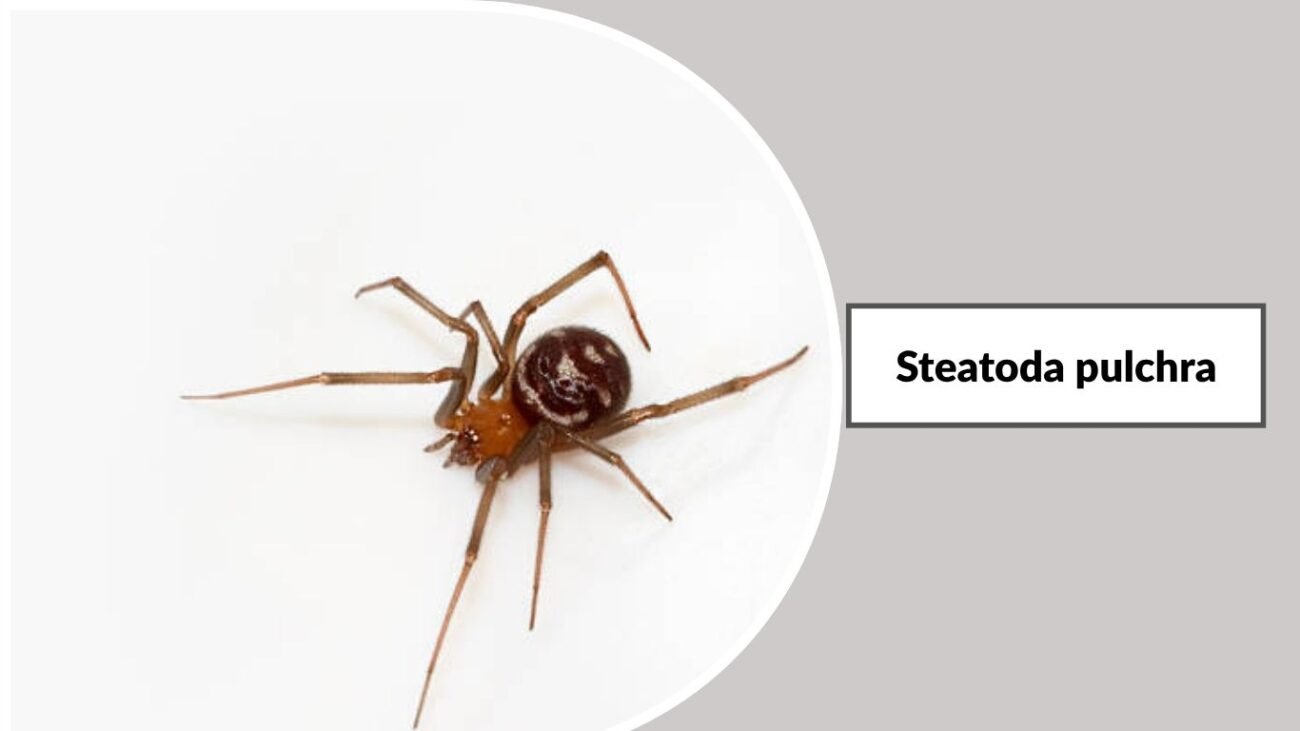
One of the more attractive false widows, its name “pulchra” means “beautiful” in Latin.
Identification
- Glossy dark brown or black abdomen with bright cream or golden markings
- Legs reddish-brown with darker joints
- Adult females 5–7 mm; males smaller and more slender
- Irregular web often built in rock crevices, under logs, or in garden structures
Habitat & Range
Native to parts of Europe and found in grasslands, gardens, and forest edges.
Behavior & Bite
Feeds on small crawling arthropods. Not aggressive toward humans; bites are very rare and mild.