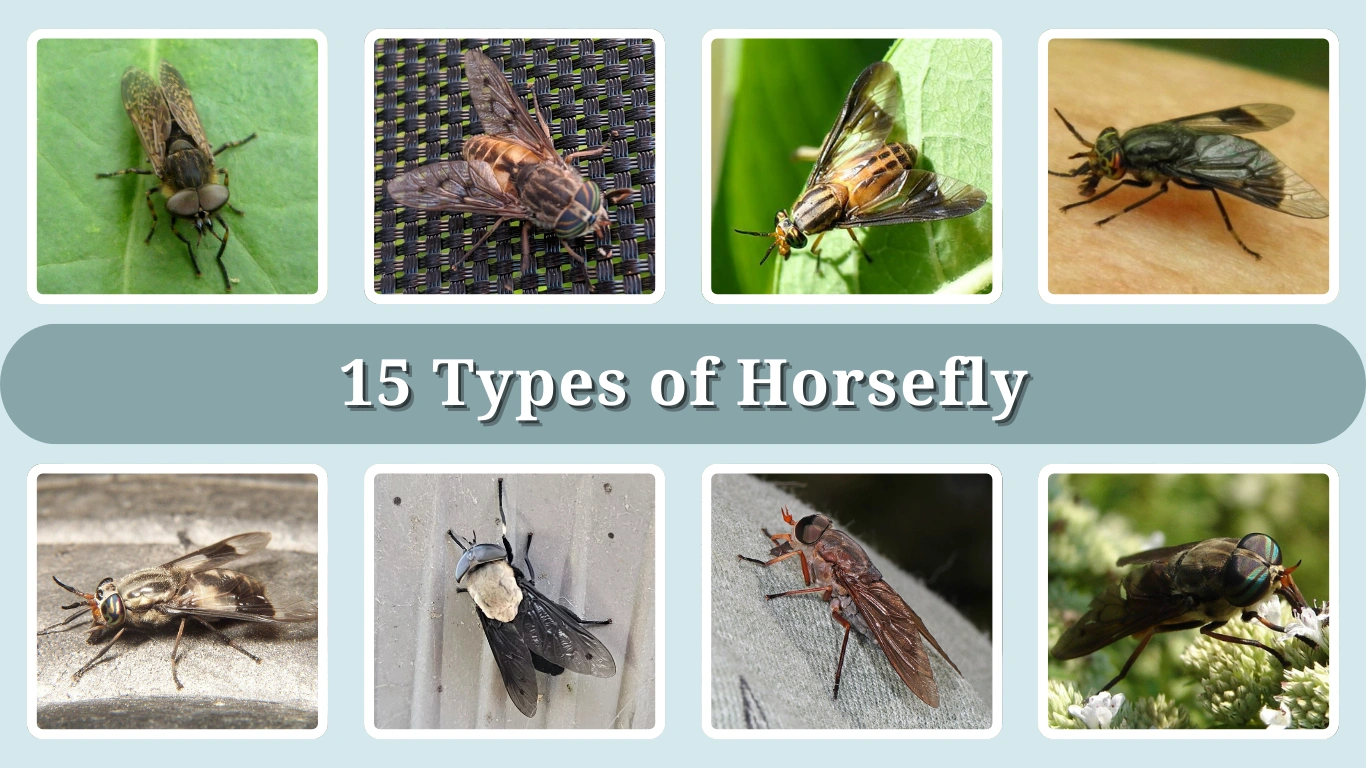
Horseflies are notorious biting insects belonging to the family Tabanidae. Known for their painful bites and persistence, they are a significant nuisance to humans, livestock, and wildlife. These flies thrive in warm, humid environments, especially near water bodies and pastures. This guide explores 15 distinct horsefly species, detailing their identification, habitat, behavior, diet, and lifecycle to help recognize and understand their role in nature and their impact on animals.
1. Tabanus sulcifrons (Slender Horsefly)

The Slender Horsefly (Tabanus sulcifrons) is a widespread species of horsefly recognized for its elongated body and aggressive biting behavior. It is commonly found in warm and humid regions, where it thrives near wetlands, forests, and agricultural lands.
Identification
- Medium-sized horsefly with a slender body shape
- Large compound eyes, often iridescent
- Dark gray to brown coloration with lighter markings on the abdomen
- Clear or lightly tinted wings with visible venation
- Strong, sharp mouthparts adapted for piercing skin and sucking blood
Habitat
The Slender Horsefly is typically found near marshes, rivers, lakes, and damp forests. These areas provide ideal breeding grounds as larvae develop in moist soil or decaying organic matter.
Behavior
Adults are diurnal and highly active during warm, sunny days. Females are blood feeders, often targeting livestock, horses, and humans, while males feed primarily on nectar and plant juices.
Diet
- Females: Blood meals are essential for egg development and reproduction.
- Males: Depend on nectar, pollen, and plant exudates for energy.
Lifecycle
The lifecycle of Tabanus sulcifrons follows a complete metamorphosis that includes egg, larva, pupa, and adult stages. Females lay eggs on vegetation close to water, and once hatched, the larvae develop in damp soil or decaying matter, feeding on small invertebrates. Pupation takes place in drier ground, after which the adult emerges. Adults live for only a few weeks to months, with females capable of producing multiple batches of eggs during their lifespan.
2. Tabanus atratus (Black Horsefly)
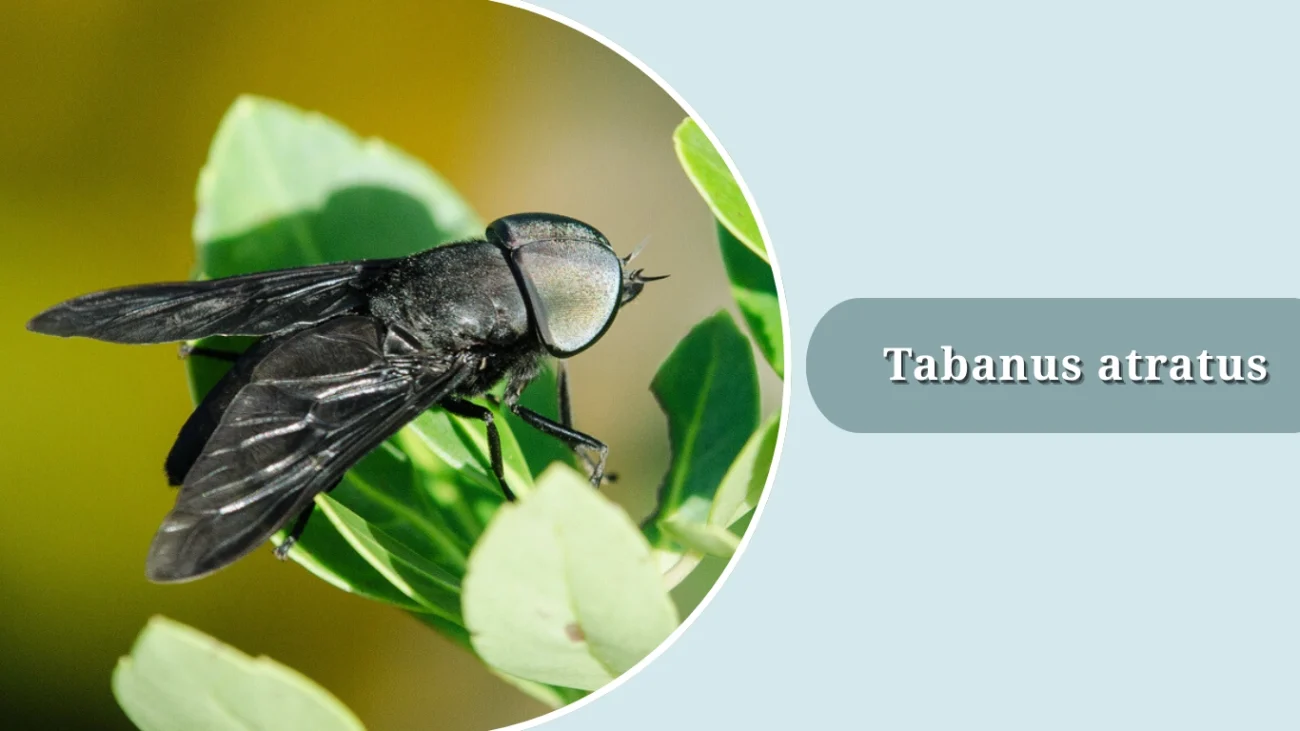
The Black Horsefly (Tabanus atratus) is one of the largest and most aggressive species of horsefly in North America. Known for its solid dark coloration and painful bite, it is a common pest around livestock and can also attack humans in warm summer months.
Identification
- Large, robust body often exceeding 2.5 cm in length
- Shiny black overall coloration with no distinct stripes or bands
- Broad head with very large, dark compound eyes
- Thick, transparent to smoky wings with strong venation
- Powerful piercing-sucking mouthparts designed for blood feeding
Habitat
This species thrives in wetlands, marshes, and areas near rivers or ponds. It is often found in agricultural landscapes where livestock are present, providing an abundant food source for females.
Behavior
Tabanus atratus is highly aggressive and persistent when seeking blood meals. Females actively pursue mammals, including horses, cattle, and humans, often during hot and humid summer days. They are strong fliers and can travel considerable distances in search of hosts.
Diet
- Females: Rely on blood meals from large mammals to produce eggs.
- Males: Feed exclusively on nectar and plant juices, playing no role in biting animals.
Lifecycle
The lifecycle of the Black Horsefly begins when females deposit egg masses on vegetation near water. Once hatched, the larvae drop into moist soil or muddy ground, where they live as predators of small invertebrates. The larval stage may last several months before pupating in drier soil. Adults emerge in late spring or summer and remain active through the warm season, with females reproducing multiple times during their short adult lifespan.
3. Tabanus bovinus (Pale Giant Horsefly)
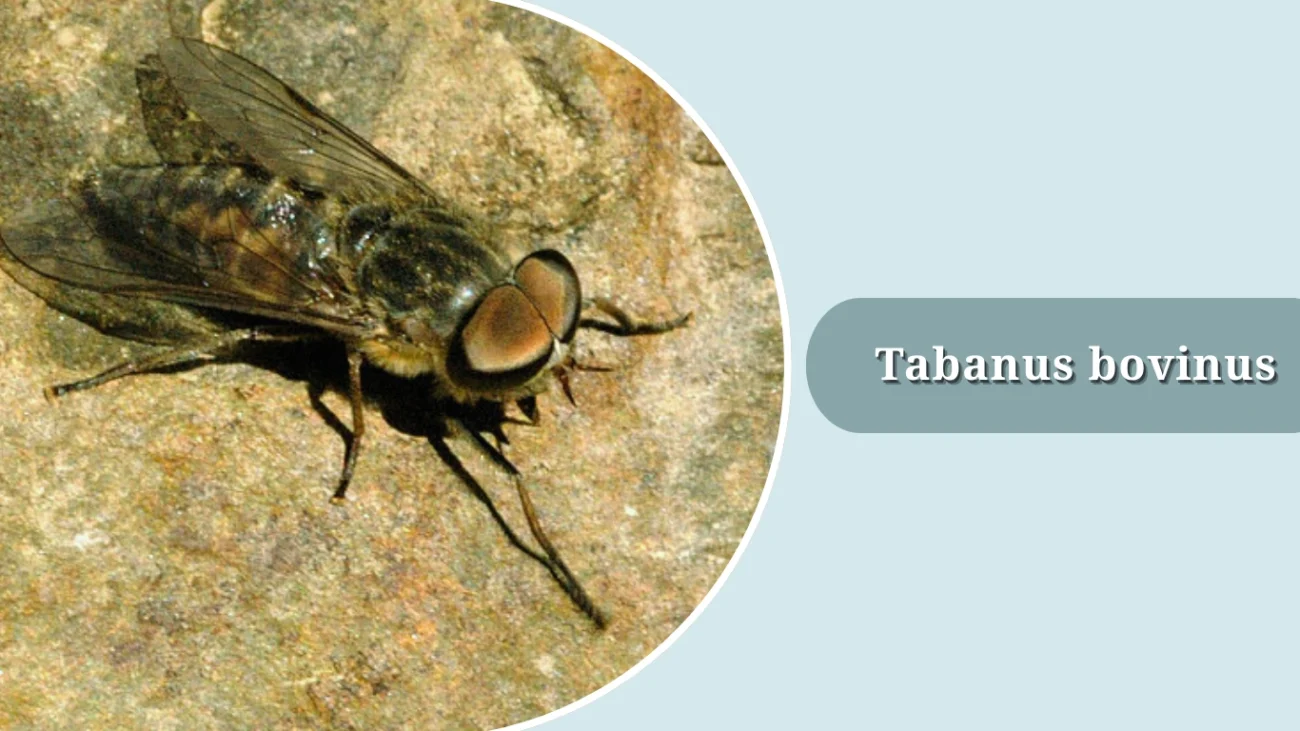
The Pale Giant Horsefly (Tabanus bovinus) is among the largest species of horseflies found in Europe. It is notable for its size, striking appearance, and its preference for feeding on large mammals such as cattle and horses.
Identification
- Large horsefly, reaching up to 25 mm in length
- Pale brown or yellowish body with a broad, sturdy build
- Eyes are brightly iridescent with green and purple horizontal bands
- Wings are translucent with a slightly smoky tint
- Distinctive lighter abdomen compared to darker species like Tabanus atratus
Habitat
This species favors woodlands, pastures, and wetlands, particularly in areas where cattle are raised. They are widespread across Europe and often appear near farm environments during summer.
Behavior
Tabanus bovinus is less aggressive than some other horsefly species but can still deliver painful bites. Females target livestock for blood meals, while males remain harmless. These flies are most active on warm, sunny days and are powerful fliers capable of covering long distances.
Diet
- Females: Feed on the blood of large mammals, especially cattle and horses, to nourish egg production.
- Males: Consume nectar and plant juices for sustenance.
Lifecycle
The lifecycle of Tabanus bovinus begins with egg laying on vegetation near wet ground. The larvae develop in damp soil or mud, preying on smaller invertebrates. After several months of growth, they pupate in dry soil before emerging as adults. Adult activity is mostly limited to the summer months, with females capable of laying multiple clutches of eggs during their short lifespan.
4. Tabanus lineola (Striped Horsefly)
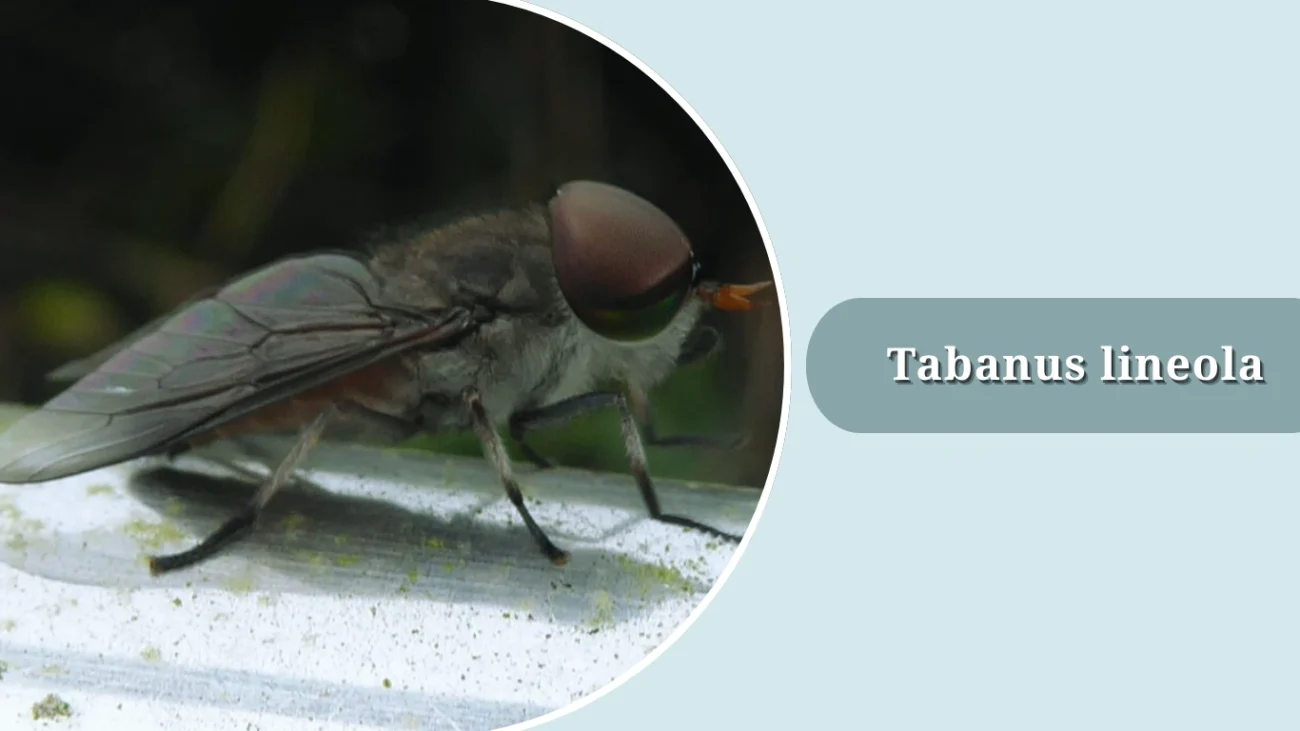
The Striped Horsefly (Tabanus lineola) is a medium-sized species native to North America. It is recognized by the striped pattern on its abdomen and its painful bite, which makes it a nuisance to both humans and livestock.
Identification
- Medium-sized horsefly, about 12–16 mm in length
- Abdomen marked with longitudinal pale stripes
- Eyes are iridescent, often displaying a greenish hue with faint bands
- Wings are clear with strong visible venation
- Body coloration ranges from brownish to gray with lighter markings
Habitat
This species is commonly found in marshlands, wooded areas, and near bodies of water. It is especially abundant in regions where livestock are raised, since females rely on them as a blood source.
Behavior
Tabanus lineola is diurnal and becomes most active on hot summer days. Females are persistent blood feeders, often attacking horses, cattle, and humans. Males, in contrast, avoid animals and are harmless, focusing on floral feeding.
Diet
- Females: Require blood meals from large mammals to develop eggs.
- Males: Feed on nectar, honeydew, and plant juices.
Lifecycle
The lifecycle of the Striped Horsefly follows a complete metamorphosis. Females lay clusters of eggs on vegetation near wet ground, and the larvae drop into moist soil where they grow as predators of small invertebrates. After several developmental stages, larvae pupate in drier soil and emerge as adults. Adults are typically active in the warmer months, with a lifespan of several weeks.
5. Tabanus quinquevittatus (Five-striped Horsefly)
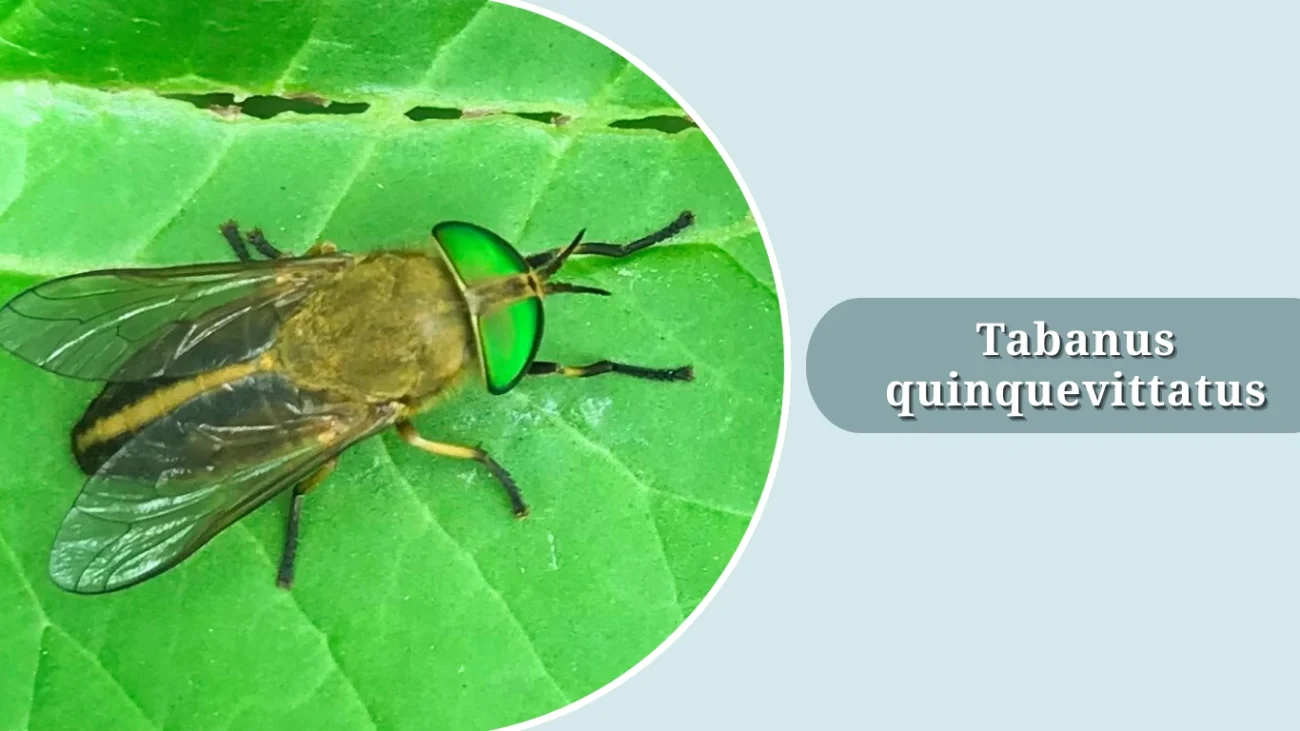
The Five-striped Horsefly (Tabanus quinquevittatus) is a distinctive species recognized by the five clear stripes running along its thorax. It is widespread in North America and is often encountered during the summer months near water bodies and livestock areas.
Identification
- Medium to large size, typically 15–20 mm long
- Five pale stripes on the thorax, giving the species its name
- Abdomen is dark brown with lighter patches
- Eyes are iridescent, often green with subtle horizontal bands
- Transparent wings with well-defined venation
Habitat
This species is commonly found in wetlands, meadows, and wooded areas near rivers or lakes. They are particularly prevalent in regions where livestock are abundant, as females depend on large mammals for their blood meals.
Behavior
Tabanus quinquevittatus is highly active during hot, sunny days and is known for its persistence when feeding. Females aggressively target cattle, horses, and sometimes humans. Males, however, are harmless and remain near flowering plants.
Diet
- Females: Feed on the blood of large mammals, which is essential for egg development.
- Males: Sustain themselves with nectar, plant sap, and other sugary exudates.
Lifecycle
The lifecycle begins when females deposit eggs in clusters on vegetation above moist soil or near water. After hatching, the larvae drop into the soil, where they feed on small invertebrates and organic matter. Once fully grown, they pupate in drier areas before emerging as adults. The adult stage is relatively short, usually lasting only a few weeks, during which females reproduce and repeat the cycle.
6. Tabanus nigrovittatus (Salt Marsh Horsefly)
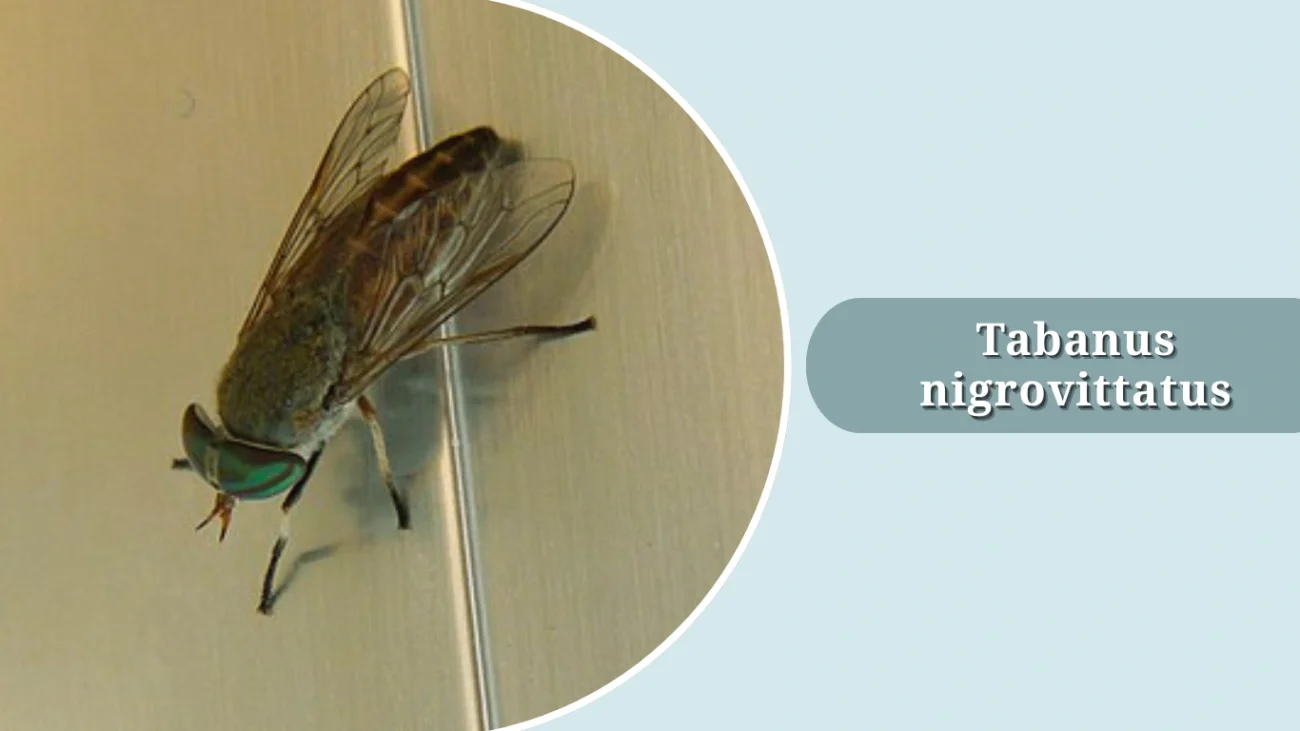
The Salt Marsh Horsefly (Tabanus nigrovittatus) is a coastal species well known for its painful bite and persistence around humans and animals. It is especially abundant in salt marshes along the Atlantic coast of North America, where it can become a serious nuisance during the summer.
Identification
- Medium-sized horsefly, about 12–15 mm in length
- Body generally dark gray to brown
- Abdomen with dark longitudinal stripes
- Large compound eyes, often iridescent green with horizontal bands
- Clear wings with slightly smoky shading
Habitat
This species thrives in salt marshes, estuaries, and coastal wetlands. It is strongly associated with brackish environments, where its larvae develop in moist, saline soil.
Behavior
Tabanus nigrovittatus is extremely aggressive and persistent, especially toward humans. Females are active during the day, with peak activity on hot, sunny, and humid days near coastal regions. Swarms can make outdoor activities in salt marsh areas unbearable.
Diet
- Females: Depend on blood meals, often attacking humans, horses, cattle, and other mammals.
- Males: Feed exclusively on nectar and plant juices, contributing to pollination.
Lifecycle
The lifecycle of the Salt Marsh Horsefly begins when females lay eggs on vegetation near marshy areas. After hatching, the larvae drop into saline or brackish mud, where they act as predators of smaller invertebrates. They remain in this stage for several months before pupating in drier ground. Adults emerge in summer and are highly active, with females reproducing multiple times during their brief adult life.
7. Tabanus bromius (Band-eyed Brown Horsefly)
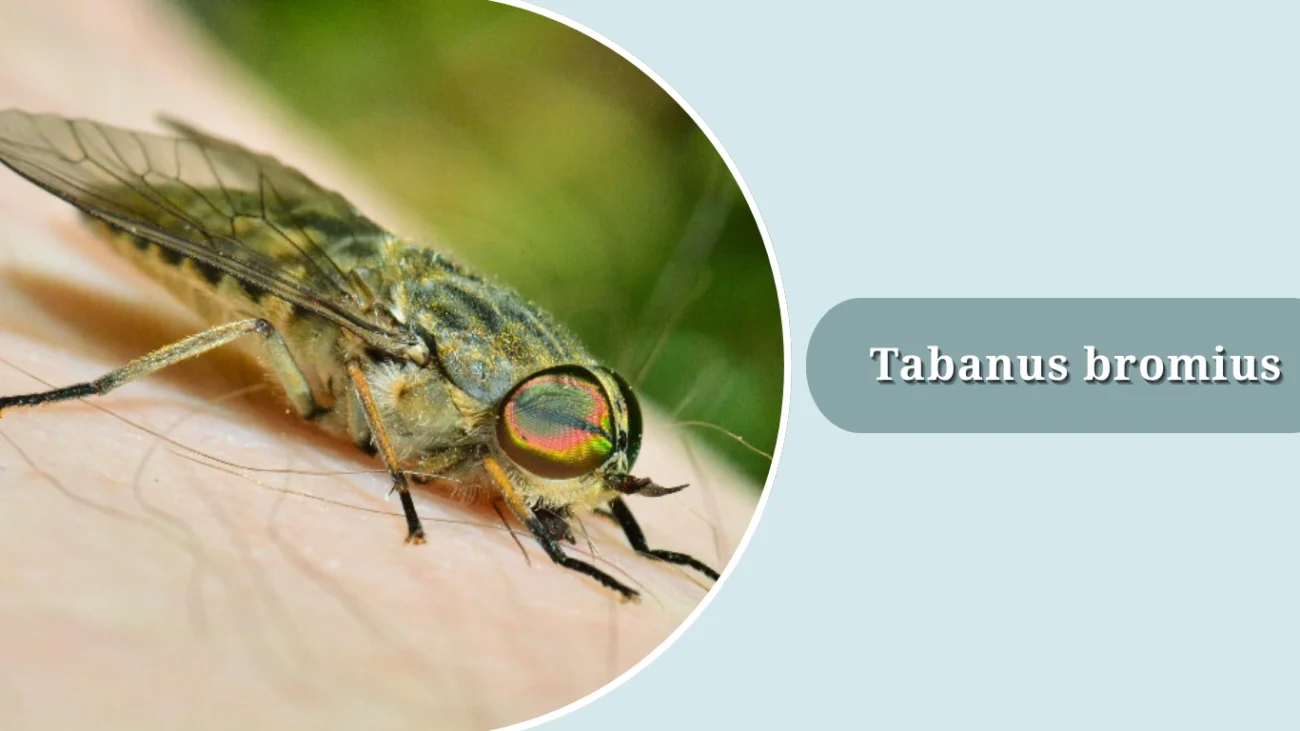
The Band-eyed Brown Horsefly (Tabanus bromius) is a widespread species across Europe and parts of Asia. It is easily identified by the colorful bands across its compound eyes and is one of the most common horseflies encountered in rural areas during the summer months.
Identification
- Medium-sized horsefly, about 10–14 mm in length
- Brownish-gray body with fine hair
- Abdomen patterned with lighter patches or triangles
- Eyes are iridescent with distinct horizontal bands of green, red, or purple
- Wings are transparent with subtle smoky shading
Habitat
This species inhabits meadows, pastures, forest edges, and wetlands. It is particularly common in agricultural landscapes where cattle and horses are present, offering reliable hosts for females.
Behavior
Tabanus bromius is active in daylight, especially during warm and sunny summer days. Females seek blood meals from mammals such as cattle, horses, and sometimes humans. While persistent, they are generally less aggressive than some larger horsefly species. Males avoid animals and spend most of their time near flowering plants.
Diet
- Females: Require blood meals for egg production, targeting livestock and occasionally humans.
- Males: Feed on nectar and plant juices, playing a role in pollination.
Lifecycle
The lifecycle begins with females laying eggs on plants growing near moist soil or water. Upon hatching, larvae drop into damp ground, where they develop as predators of small invertebrates and scavengers of organic matter. They pupate in drier areas, and adults emerge during the warmer months. The adult lifespan is relatively short, lasting only a few weeks, but during this period females may produce several clutches of eggs.
8. Tabanus abdominalis

Tabanus abdominalis is a robust species of horsefly found mainly in North America. It is known for its distinctive abdominal pattern and aggressive biting habits, particularly during the hot summer months when adults are most active.
Identification
- Large-sized horsefly, often reaching 20–25 mm in length
- Abdomen dark brown to black with lighter banding or markings
- Strong, broad body with a powerful appearance
- Eyes are large and iridescent, sometimes with subtle horizontal stripes
- Wings are clear or lightly tinted, with strong venation
Habitat
This species is most common in forests, wetlands, meadows, and areas near rivers or lakes. It thrives in regions with warm climates and abundant livestock, which serve as a primary source of blood meals for females.
Behavior
Tabanus abdominalis is diurnal and highly aggressive. Females actively pursue large mammals such as horses, cattle, and deer, while also attacking humans when disturbed. Their persistence makes them a significant nuisance in outdoor environments.
Diet
- Females: Depend on blood meals to produce and develop eggs. They target livestock and wild mammals but may also bite humans.
- Males: Do not bite; they feed on nectar, pollen, and plant juices.
Lifecycle
The lifecycle of Tabanus abdominalis includes egg, larva, pupa, and adult stages. Females lay eggs on vegetation near moist soil or water. The larvae develop in damp ground, where they feed on small invertebrates and decaying matter. After several growth stages, they pupate in drier soil. Adults emerge during summer and remain active for several weeks, with females capable of laying multiple batches of eggs in a single season.
9. Tabanus calens
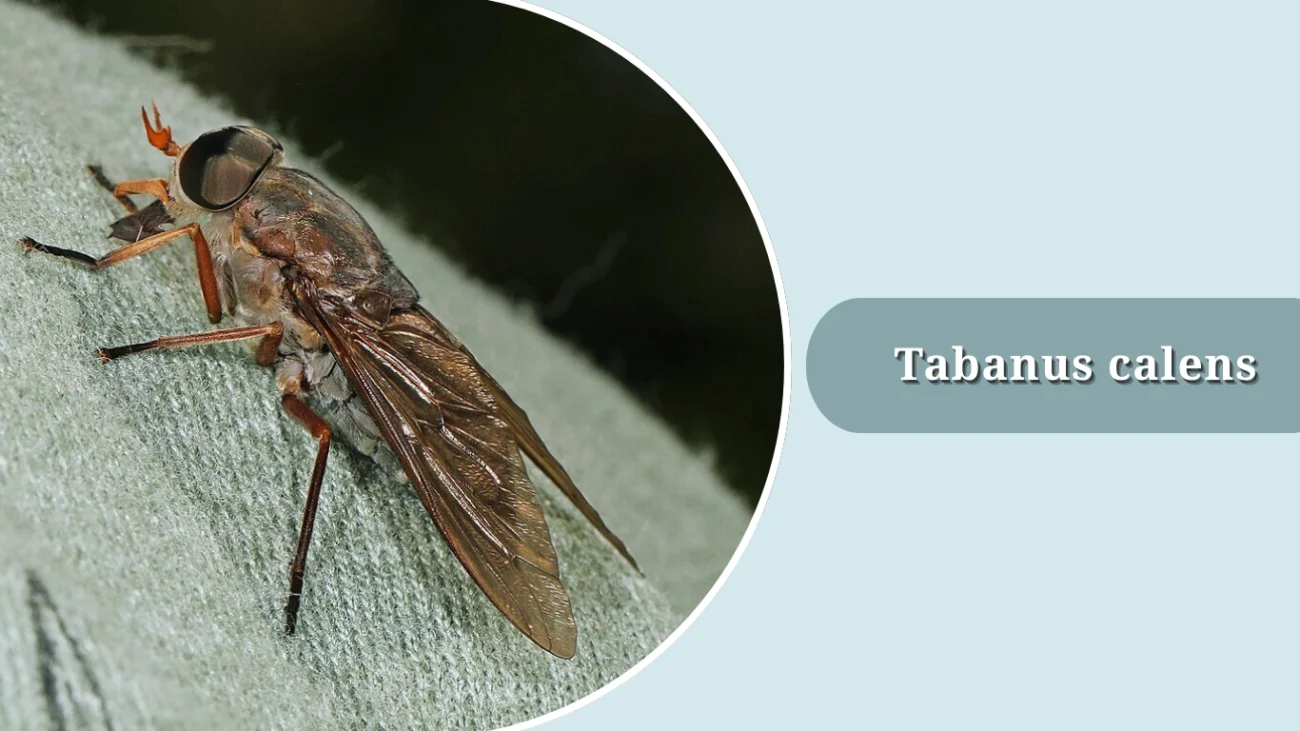
Tabanus calens is one of the largest and most powerful horseflies found in North America. Its imposing size, dark coloration, and painful bite make it a well-known species among both farmers and outdoor enthusiasts.
Identification
- Very large horsefly, often exceeding 25 mm in length
- Body robust and dark brown to nearly black
- Abdomen with subtle lighter bands or markings
- Eyes are large, often iridescent with faint banding
- Wings are clear to slightly smoky with strong venation
Habitat
This species inhabits wetlands, marshes, forests, and areas near rivers or lakes. It is especially common in regions with dense vegetation and abundant mammalian hosts.
Behavior
Tabanus calens is highly aggressive and active during hot, sunny days. Females seek out large mammals such as horses, cattle, and deer for blood meals, but they will also readily bite humans. They are persistent feeders, often returning multiple times even after being swatted away.
Diet
- Females: Rely on blood meals for egg production, targeting livestock and wild mammals.
- Males: Feed only on nectar, honeydew, and plant juices.
Lifecycle
The lifecycle begins when females lay egg masses on vegetation near water or moist soil. After hatching, larvae drop into wet ground, where they grow as predators of small invertebrates and scavengers of decaying matter. Once development is complete, they pupate in drier soil, emerging as strong-flying adults in summer. The adult lifespan is short, lasting only a few weeks, but females can produce multiple generations within a season.
10. Tabanus punctifer

Tabanus punctifer is a large and striking species of horsefly native to North America. It is easily recognized by its spotted wings and strong body, and like many horseflies, it is a serious pest to both livestock and humans due to its painful bites.
Identification
- Large horsefly, typically 18–25 mm in length
- Dark brown to black body with a sturdy build
- Abdomen with lighter bands or mottled markings
- Eyes are iridescent, sometimes with faint horizontal bands
- Wings with distinct dark spots, a key identifying feature
Habitat
This species is usually found in grasslands, open fields, wetlands, and areas near rivers or lakes. It is common in regions with abundant mammals, particularly where livestock are raised.
Behavior
Tabanus punctifer is a day-active species that becomes most aggressive in hot weather. Females are notorious for their painful bites and will persistently attack horses, cattle, deer, and humans. Their strong flight ability allows them to chase hosts over considerable distances.
Diet
- Females: Require blood meals to produce eggs, feeding on large mammals and sometimes humans.
- Males: Do not bite; they survive on nectar, pollen, and plant exudates.
Lifecycle
The lifecycle of Tabanus punctifer begins when females lay eggs on plants near moist soil or water. Once hatched, larvae drop into damp ground, where they prey on small invertebrates and consume decaying organic matter. After several developmental stages, larvae pupate in drier areas before adults emerge. Adults remain active during the summer months, and females can lay multiple clutches of eggs during their short lifespan.
11. Chrysops callidus (Deer Fly)

The Deer Fly (Chrysops callidus) is a smaller but equally troublesome relative of the larger horseflies. Known for its bright eye patterns and painful bite, this species is common across North America and is a frequent pest to both wildlife and humans.
Identification
- Small to medium size, usually 8–12 mm in length
- Slender body with yellowish-brown coloration
- Eyes are brightly iridescent with metallic green and purple bands
- Wings have distinctive dark cross-bands, giving them a patterned look
- Abdomen marked with lighter yellow patches or stripes
Habitat
This species is widespread in woodlands, marshes, meadows, and areas near streams and lakes. It prefers humid environments and is especially active in rural or forested regions.
Behavior
Chrysops callidus is aggressive and persistent, especially during the summer. Females bite during the daytime, targeting mammals such as deer, horses, and cattle, but they readily attack humans as well. Their fast, darting flight makes them difficult to swat.
Diet
- Females: Depend on blood meals to develop eggs, feeding on mammals and sometimes humans.
- Males: Harmless; they feed on nectar and plant juices.
Lifecycle
The lifecycle begins when females deposit eggs on vegetation near wet soil or shallow water. After hatching, the larvae drop into damp ground, where they feed on small invertebrates and decaying matter. Pupation occurs in drier soil, and adults emerge in summer. Adults are short-lived, surviving only a few weeks, but females reproduce rapidly within this period.
12. Chrysops niger

Chrysops niger is a small but aggressive species of deer fly that belongs to the horsefly family. It is named for its predominantly dark coloration and is often encountered in wooded and wetland environments during the summer.
Identification
- Small-sized fly, about 6–10 mm in length
- Body is mostly black or very dark brown
- Eyes are large, iridescent, and may show faint green or purple hues
- Wings are clear with dark cross-bands characteristic of deer flies
- Abdomen is short and dark, with subtle lighter markings at the edges
Habitat
This species is typically found in forested areas, wetlands, and along streams or ponds. It thrives in shaded, humid environments where hosts such as deer and other mammals are abundant.
Behavior
Chrysops niger is an active daytime biter, with females frequently attacking mammals and humans. They are fast fliers and difficult to deter, making them a nuisance during outdoor activities. Males, by contrast, are not aggressive and tend to remain near plants and flowers.
Diet
- Females: Require blood meals to produce eggs, feeding on deer, livestock, and humans.
- Males: Feed only on nectar and plant juices.
Lifecycle
The lifecycle starts when females lay eggs in clusters on vegetation near moist soil or shallow water. After hatching, larvae drop to the ground and feed on small invertebrates and decaying organic matter. They later pupate in drier areas before adults emerge in summer. Adult flies live only a few weeks, with females producing one or more batches of eggs during this time.
13. Chrysops vittatus (Striped Deer Fly)
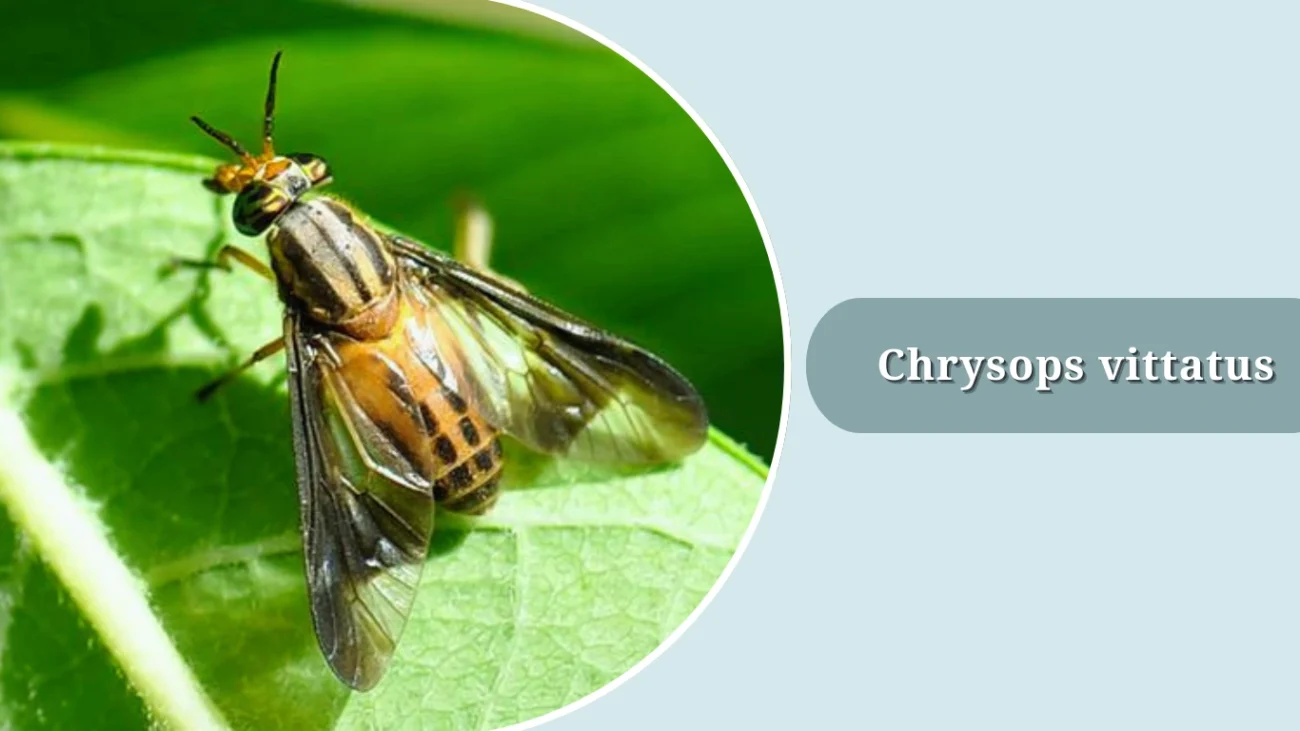
The Striped Deer Fly (Chrysops vittatus) is a visually striking species, recognized for the distinctive stripes running along its body. It is widely distributed in North America and is a persistent pest to both wildlife and humans.
Identification
- Small to medium size, usually 8–12 mm in length
- Abdomen and thorax marked with bold yellow and black stripes
- Eyes are brightly iridescent, often showing green and purple reflections
- Wings have dark cross-bands typical of deer flies
- Slender body with sharp mouthparts adapted for blood feeding
Habitat
This species is most common in wooded areas, marshes, meadows, and near rivers or ponds. It thrives in warm, humid regions where host animals are readily available.
Behavior
Chrysops vittatus is day-active and aggressive, with females persistently biting large mammals such as deer, cattle, horses, and humans. Their quick, darting flight makes them difficult to avoid. Males, in contrast, are harmless and remain close to flowering plants.
Diet
- Females: Depend on blood meals to mature and produce eggs.
- Males: Feed exclusively on nectar, pollen, and plant juices.
Lifecycle
The lifecycle begins when females deposit eggs on vegetation above damp soil or water. After hatching, larvae fall to the ground and feed on small invertebrates and decomposing matter. Once fully developed, they pupate in drier soil and emerge as adults during the summer. Adults live only a few weeks, during which females may lay several clutches of eggs.
14. Hybomitra lasiophthalma

Hybomitra lasiophthalma is a widespread species of horsefly found across North America. It is particularly active in spring and early summer, making it one of the earlier horsefly species to trouble humans and livestock each year.
Identification
- Medium to large horsefly, about 12–18 mm long
- Body is generally dark brown to black with lighter gray markings
- Abdomen has subtle pale patches or triangular patterns
- Eyes are iridescent, often green with faint horizontal bands
- Wings are clear to slightly smoky, with strong venation
Habitat
This species prefers wooded areas, wetlands, and open meadows near water sources. It is especially common in temperate regions with a mix of forest and pastureland.
Behavior
Hybomitra lasiophthalma is a daytime feeder and is most active in late spring and early summer. Females aggressively seek blood meals from cattle, horses, deer, and humans, while males are harmless and remain near flowers. They are strong fliers and can travel long distances in search of hosts.
Diet
- Females: Feed on the blood of large mammals, which is required for egg development.
- Males: Consume nectar and plant juices, playing a minor role in pollination.
Lifecycle
The lifecycle begins when females lay eggs on vegetation close to water or moist soil. After hatching, larvae drop to the ground, where they live in damp soil or mud, preying on small invertebrates and consuming organic debris. They overwinter in the larval stage before pupating in spring. Adults emerge in early summer, with females producing eggs that continue the cycle for the next season.
15. Haematopota pluvialis (Notch-horned Cleg)
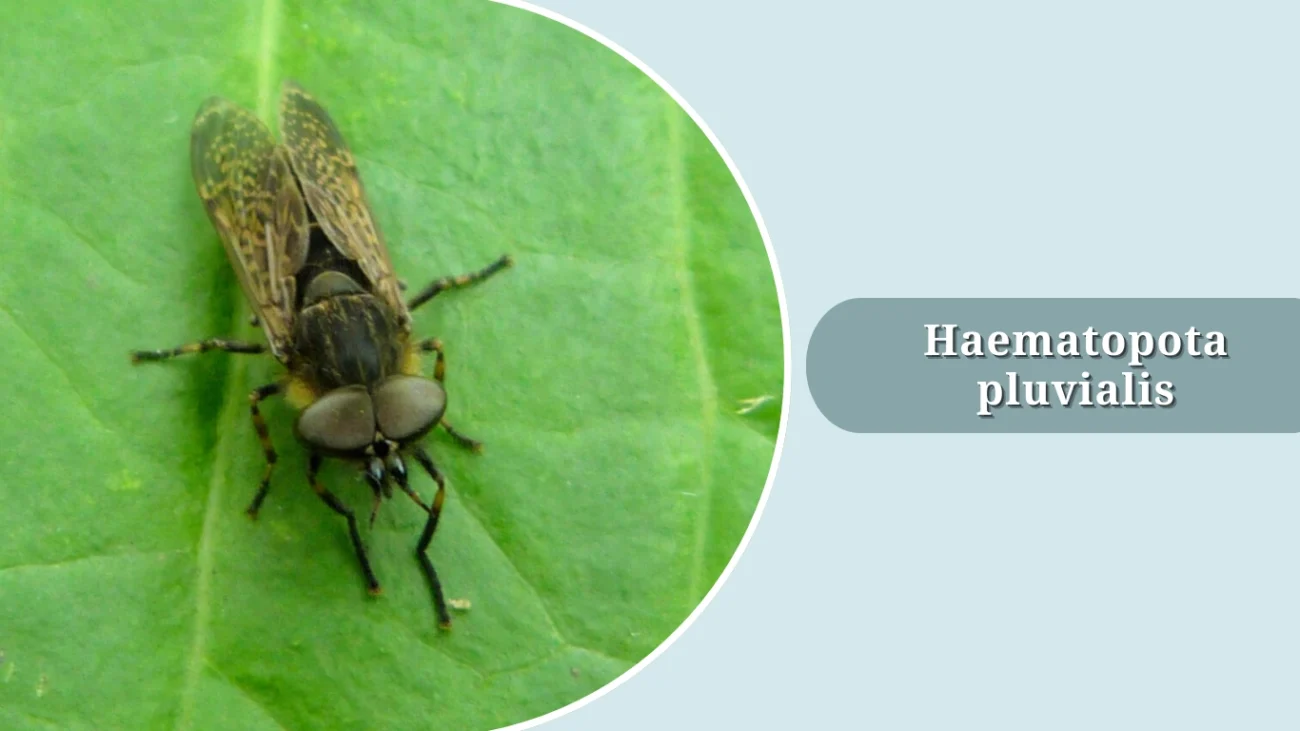
The Notch-horned Cleg (Haematopota pluvialis) is a common horsefly species found throughout Europe and parts of Asia. It is smaller than many other horseflies but is notorious for its painful bite and persistence around humans and livestock.
Identification
- Small to medium size, usually 7–10 mm in length
- Body is grayish-brown with mottled patterns
- Eyes are large, iridescent, and multicolored with spotted patterns
- Wings are distinctively mottled with gray and dark patches
- Antennae with a characteristic “notch,” giving the species its common name
Habitat
This species inhabits wetlands, meadows, woodlands, and areas near rivers or marshes. It thrives in damp environments where hosts and breeding sites are abundant.
Behavior
Haematopota pluvialis is day-active and highly persistent when feeding. Females are particularly aggressive during warm, humid weather, attacking cattle, horses, deer, and humans. Their small size and quick movements make them difficult to detect until they bite.
Diet
- Females: Rely on blood meals for reproduction, targeting both livestock and humans.
- Males: Do not bite and feed only on nectar, plant juices, and pollen.
Lifecycle
The lifecycle begins with females laying eggs on vegetation close to moist soil or water. Larvae hatch and drop to the ground, where they live in damp soil, preying on small invertebrates and consuming organic material. After overwintering in the larval stage, they pupate in drier ground. Adults emerge in the summer and remain active for only a few weeks, with females reproducing rapidly within this time frame.
Conclusion
Horseflies, though diverse in appearance and behavior, share one common trait: their ability to disrupt both humans and animals with their painful bites. From the massive Tabanus atratus to the smaller but persistent Haematopota pluvialis, each species plays a role in the ecosystem, whether as pollinators, prey, or predators in their larval stage. Understanding their identification, habitats, and lifecycles not only aids in managing their nuisance but also highlights their ecological importance.