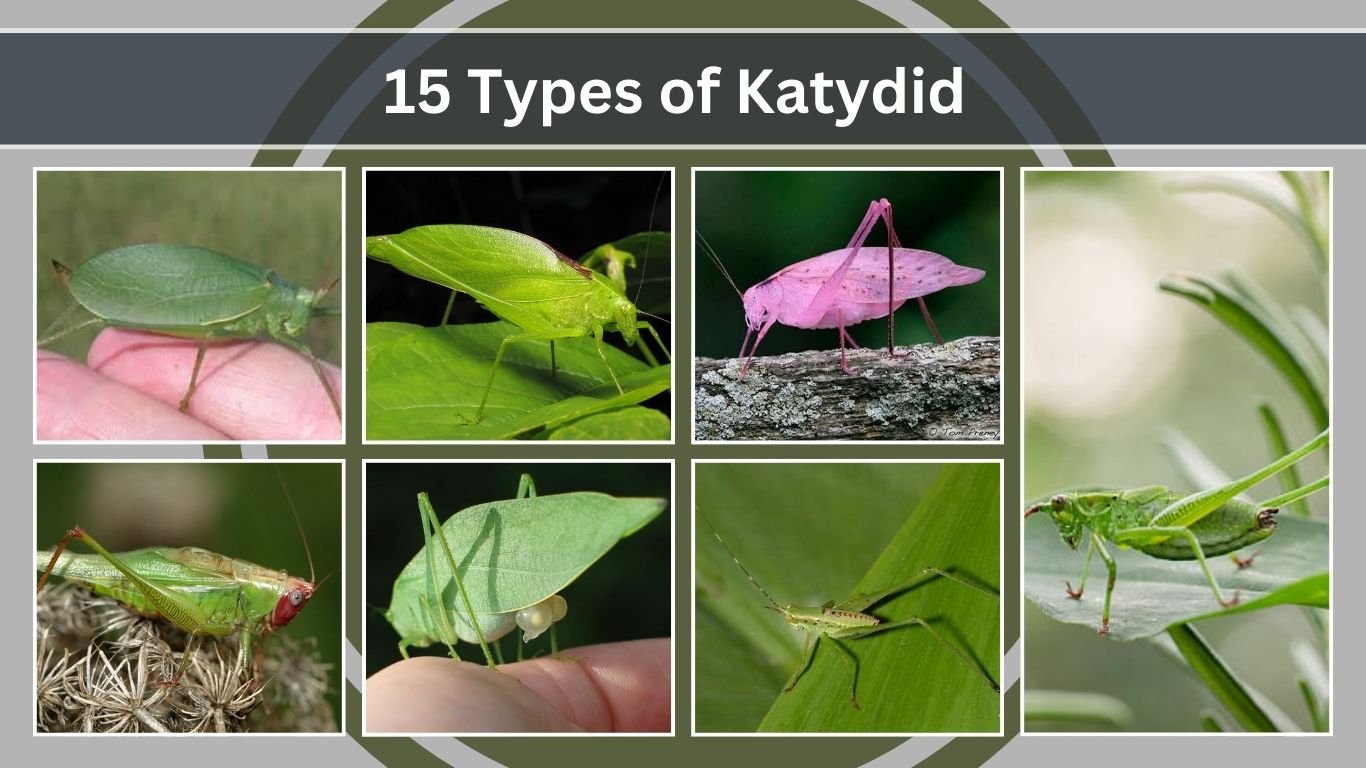
Katydids are fascinating insects known for their leaf-like camouflage, long antennae, and distinctive nighttime songs. Belonging to the family Tettigoniidae, they thrive in a wide range of habitats including forests, meadows, and wetlands. Each type of katydid has unique traits that set it apart, from unusual head shapes to vibrant color morphs. In this guide, we’ll explore 15 notable katydid species, covering their identification, habitat, behavior, and lifecycle.
1. Common True Katydid

The Common True Katydid (Pterophylla camellifolia) is one of the most recognizable katydids in North America, famous for its loud, repetitive “katy-did, katy-didn’t” call. It is often found in treetops, where its leafy appearance helps it blend seamlessly with foliage.
Identification
- Bright green body with leaf-like wings
- Rounded, broad wings resembling tree leaves
- Large size, typically 1.5 to 2 inches long
- Long, threadlike antennae longer than the body
- Males produce the distinctive “katy-did” call
Habitat
This species lives primarily in deciduous forests, woodlands, and suburban areas with plenty of trees. They rarely come down to the ground and prefer the high canopy where they remain hidden among leaves.
Behavior
Common True Katydids are nocturnal and rely on their strong camouflage to avoid predators. They are most notable for their mating calls, which males use to attract females during summer nights.
Lifecycle
Their lifecycle follows incomplete metamorphosis: egg → nymph → adult. Eggs are laid on tree bark and leaves, hatching into nymphs that resemble smaller wingless versions of adults. They molt several times before reaching maturity in late summer.
2. Fork-tailed Bush Katydid
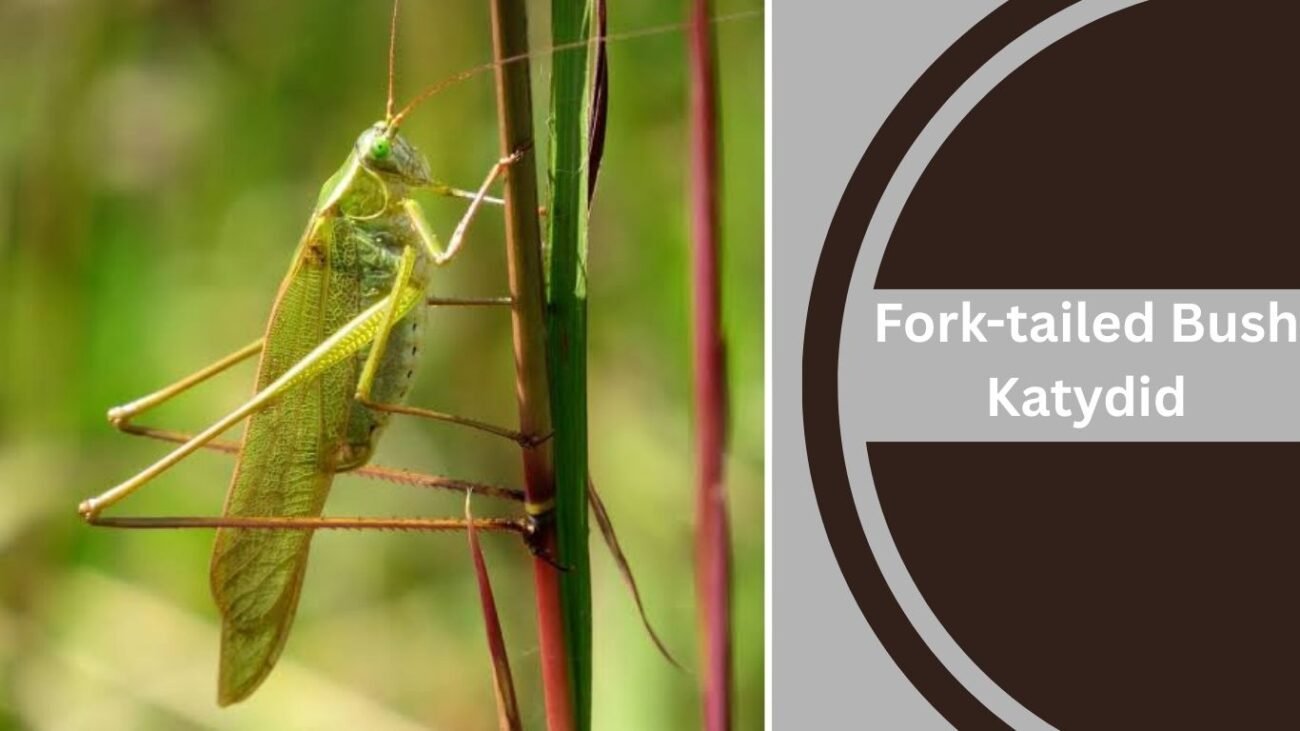
The Fork-tailed Bush Katydid (Scudderia furcata) is a slender and agile katydid species often found in fields, meadows, and gardens. Known for its long hind legs and forked ovipositor in females, this species is commonly spotted among tall grasses and shrubs.
Identification
- Slim, elongated green body
- Long hind legs adapted for jumping
- Distinct forked ovipositor in females
- Narrow wings with a leaf-like texture
- Antennae longer than the body
Habitat
This katydid thrives in grassy fields, shrubby areas, orchards, and gardens. It prefers open spaces with plenty of vegetation where it can hide and feed on plant matter.
Behavior
The Fork-tailed Bush Katydid is primarily nocturnal, feeding on leaves, flowers, and sometimes fruits. Males produce soft, ticking songs to attract females, often heard during warm summer nights.
Lifecycle
Like other katydids, it undergoes incomplete metamorphosis. Eggs are typically laid inside plant stems or leaf edges, hatching into nymphs that resemble wingless adults. They molt several times before reaching maturity.
3. Angle-winged Katydid
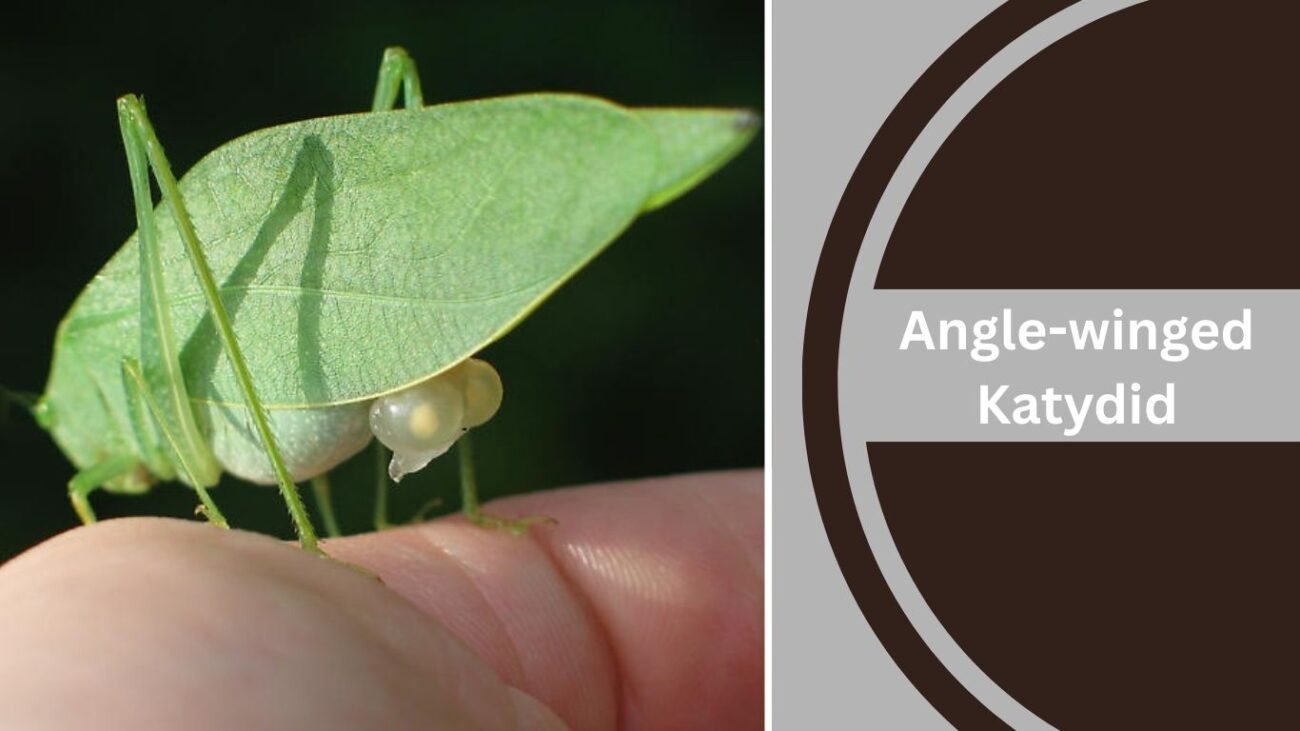
The Angle-winged Katydid (Microcentrum rhombifolium) is easily recognized for its bright green, sharply angled wings that closely mimic the shape of a leaf. This species is among the most common katydids found in North America and is well-known for its camouflage abilities.
Identification
- Bright green body with wings shaped like leaves
- Distinct sharp angle along the wing edges
- Medium to large size, about 1.5–2 inches long
- Very long antennae, often longer than the body
- Leaf-like veins on wings that enhance camouflage
Habitat
Angle-winged Katydids are usually found in forests, woodlands, gardens, and shrublands. They prefer areas with dense vegetation, where their camouflage helps them avoid predators.
Behavior
These katydids are nocturnal and feed on leaves, flowers, and fruit. Males produce a sharp, raspy song during the night to attract females. They are more often heard than seen, as their leafy disguise makes them nearly invisible.
Lifecycle
They follow an incomplete metamorphosis. Eggs are laid on leaves and twigs, hatching into nymphs that molt several times before developing wings. Adults are usually most active during late summer and fall.
4. Broad-winged Katydid
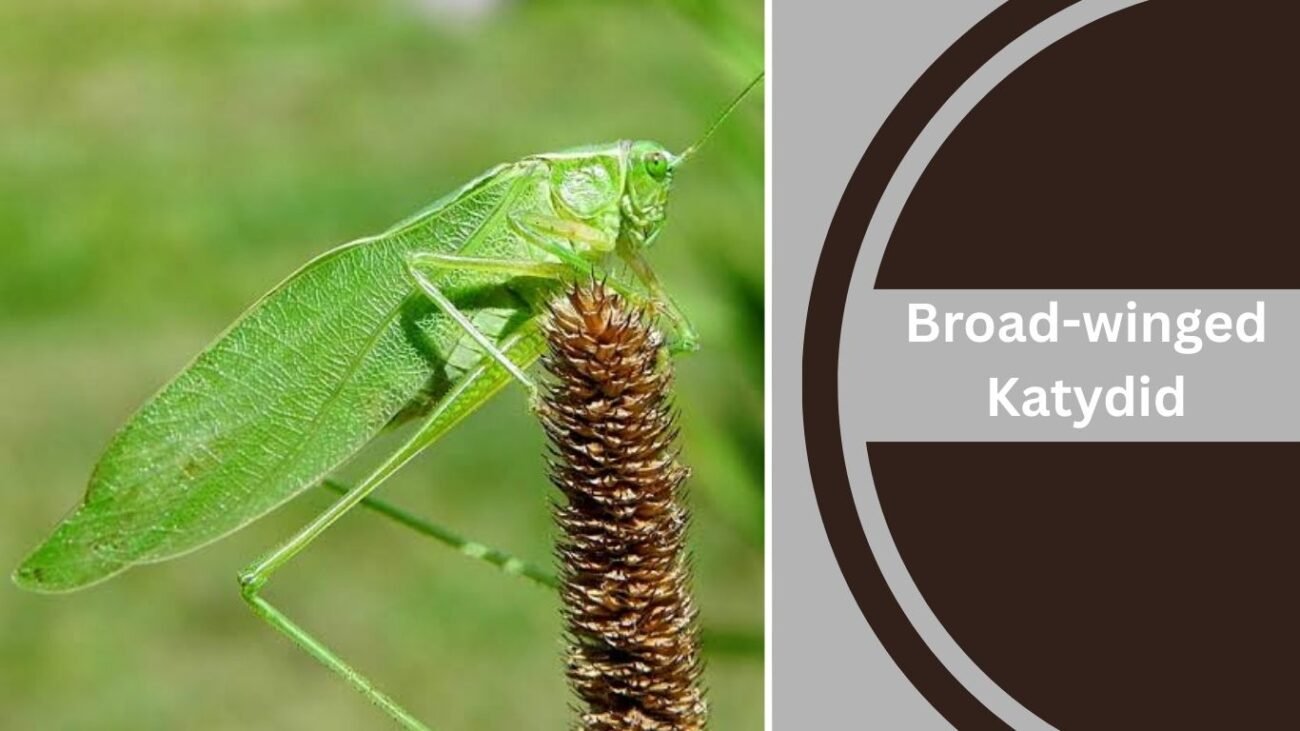
The Broad-winged Katydid (Microcentrum retinerve) is a large, leafy-looking insect distinguished by its wide wings and excellent camouflage. Its wings often resemble broad green leaves, making it nearly indistinguishable from surrounding foliage.
Identification
- Large size, typically 2 inches or more in length
- Broad, green wings with prominent leaf-like veins
- Long, slender antennae extending beyond the body
- Robust body compared to other katydids
- Slightly curved ovipositor in females
Habitat
Broad-winged Katydids inhabit woodlands, gardens, and shrubby areas. They are commonly found on trees and tall vegetation, where their broad wings allow them to blend perfectly with leaves.
Behavior
This species is nocturnal, feeding on leaves, flowers, and occasionally fruit. Males produce a sharp, snapping song during summer nights, which can be heard over short distances. They rely heavily on camouflage to avoid predators.
Lifecycle
Like other katydids, the Broad-winged Katydid undergoes incomplete metamorphosis. Eggs are laid on leaves and stems, hatching into nymphs that molt several times before becoming adults in late summer.
5. Shield-backed Katydid
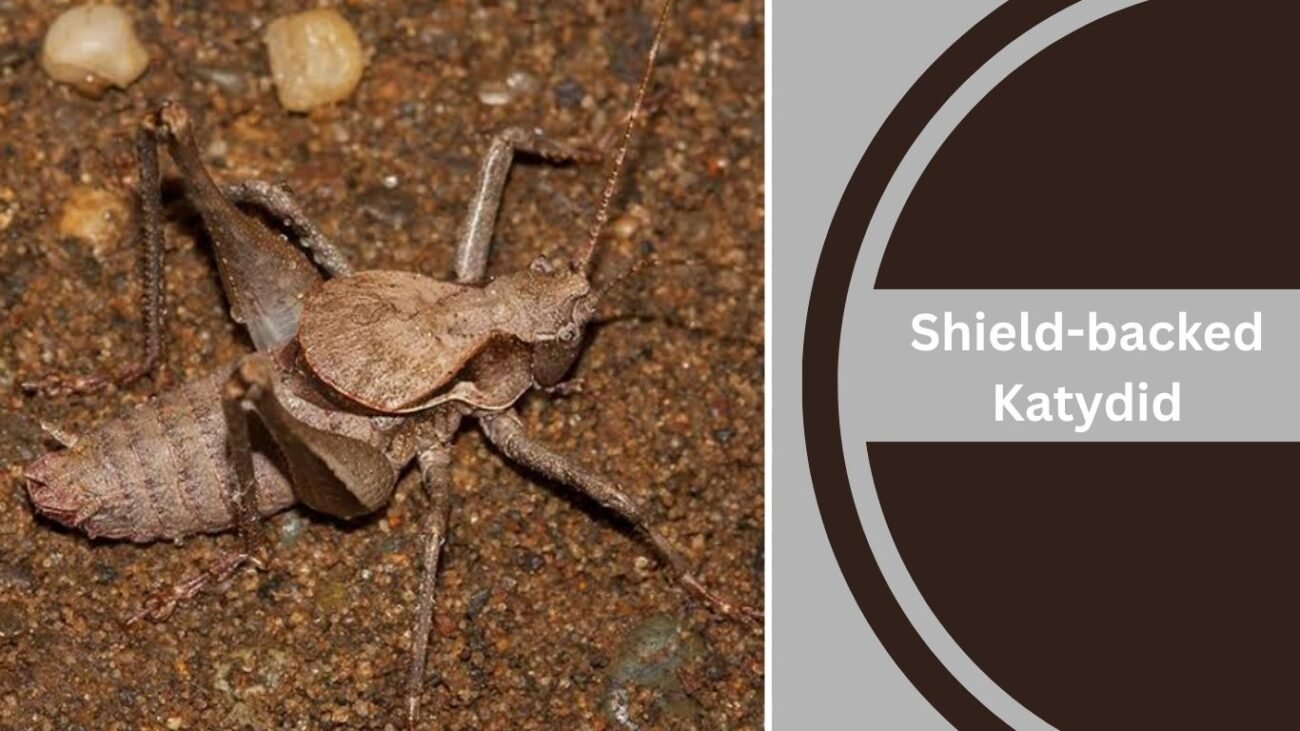
The Shield-backed Katydid (genus Pediodectes and related species) is named for the distinctive enlarged pronotum (a shield-like structure) that extends over part of its back. Unlike many leafy-looking katydids, this species has a more robust build and is often darker in color.
Identification
- Enlarged, shield-like pronotum covering part of the back
- Typically brown, green, or gray in coloration
- Stocky body compared to slender bush katydids
- Long antennae, often longer than the body
- Females have a strong, curved ovipositor
Habitat
Shield-backed Katydids are mostly found in grasslands, prairies, deserts, and open fields. They prefer dry, open habitats rather than dense forests.
Behavior
These katydids are nocturnal and feed on both plants and small insects, making them more omnivorous than many other species. Males produce repetitive songs to attract females, often described as buzzing or ticking.
Lifecycle
The lifecycle involves incomplete metamorphosis. Eggs are laid in soil or plant stems, hatching into nymphs that gradually develop wings. Adults are most active during late summer and early fall.
6. Round-headed Katydid

The Round-headed Katydid (genus Amblycorypha) is a striking species known for its distinctively rounded head and variations in coloration, which can include green, pink, or even bright yellow. These color morphs provide unique camouflage in different habitats.
Identification
- Rounded head, unlike the pointed heads of many katydids
- Can appear in green, pink, or yellow morphs
- Medium-sized, about 1–2 inches long
- Long, threadlike antennae
- Wings with leaf-like veining for camouflage
Habitat
Round-headed Katydids are found in meadows, gardens, and woodland edges. They favor areas with tall grasses, flowering plants, and shrubs that provide food and cover.
Behavior
They are primarily nocturnal and feed on leaves, flower petals, and pollen. Males produce soft, trilling songs to attract females at night. Their unusual color variations make them one of the more visually unique katydid species.
Lifecycle
Their lifecycle follows incomplete metamorphosis: eggs are deposited in plant stems or leaf litter, and nymphs hatch in spring. After several molts, they reach adulthood by midsummer. Adults are most often seen and heard in late summer.
7. Conehead Katydid

The Conehead Katydid (genus Neoconocephalus) is instantly recognizable by its elongated, cone-shaped head. These katydids are strong fliers and are often found in tall grasses and wetlands, where their narrow bodies help them blend in with vegetation.
Identification
- Long, narrow green body
- Distinct cone-shaped head extending forward
- Straight, blade-like wings that lie flat along the body
- Very long antennae, often longer than the body
- Size ranges from 1.5 to 2.5 inches
Habitat
Conehead Katydids live in grasslands, meadows, marshes, and wetland edges. They are often found clinging to grass stems or reeds, where their slim shape provides excellent camouflage.
Behavior
These katydids are nocturnal and feed mainly on grasses, seeds, and sometimes small insects. Males produce high-pitched buzzing songs, which can be heard over long distances on summer nights.
Lifecycle
The lifecycle is incomplete metamorphosis: eggs are laid inside grass stems, hatching into slender nymphs. Nymphs pass through several molts before reaching adulthood by late summer. Adults are most active during midsummer to early fall.
8. Meadow Katydid

The Meadow Katydid (genus Orchelimum and Conocephalus) is a smaller, colorful katydid often found in grassy fields and wetlands. Unlike many leafy-looking katydids, they have slimmer bodies and are often marked with bright colors.
Identification
- Small to medium size, usually 0.5–1.5 inches
- Slender green body with touches of red, yellow, or brown
- Long, narrow wings extending past the body
- Very long antennae
- Females have a noticeable curved ovipositor
Habitat
Meadow Katydids prefer open grassy areas, marshes, and the edges of ponds and streams. They are commonly found clinging to tall grasses and reeds.
Behavior
These katydids are active at night and feed mainly on grasses, seeds, and small insects. Their songs are fast, clicking trills that blend with the nighttime chorus of crickets and frogs.
Lifecycle
They undergo incomplete metamorphosis. Eggs are usually laid inside grass stems, hatching in spring. Nymphs develop through several molts and reach adulthood by midsummer, remaining active until the first frosts of fall.
9. Oblong-winged Katydid

The Oblong-winged Katydid (Amblycorypha oblongifolia) is notable for its elongated, oval-shaped wings that resemble fresh leaves. This species is also famous for its unusual color variations, which can include green, pink, tan, and even bright yellow individuals.
Identification
- Elongated, oblong-shaped wings with leaf-like veins
- Medium size, usually 1.5–2 inches long
- Rounded head, similar to other Amblycorypha katydids
- Long, thin antennae extending past the body
- Color morphs: green (most common), pink, tan, and yellow
Habitat
Oblong-winged Katydids are found in woodlands, gardens, and meadows with tall vegetation. Their camouflage is highly effective, especially when resting among leaves and stems.
Behavior
They are nocturnal and feed on leaves, flower petals, and fruit. Males produce rhythmic trilling songs at night to attract females. Their color morphs make them especially interesting to naturalists, as the rare pink form is often sought after for observation.
Lifecycle
The lifecycle follows incomplete metamorphosis. Eggs are laid in plant stems or leaf litter, hatching in spring. Nymphs pass through several molts before maturing in late summer. Adults are most abundant from July to October.
10. Scudder’s Bush Katydid

The Scudder’s Bush Katydid (Scudderia texensis) is a slim and active katydid commonly found in shrubby areas and fields. It is named after Samuel H. Scudder, a prominent American entomologist. This species is often confused with other bush katydids but can be distinguished by its slender build and long wings.
Identification
- Slender green body with narrow wings
- Long hind legs adapted for jumping
- Antennae much longer than the body
- Females have a distinct, sword-like ovipositor
- Size ranges from 1.5 to 2 inches
Habitat
Scudder’s Bush Katydids inhabit fields, gardens, woodland edges, and shrubby habitats. They are especially common in areas with tall grasses, wildflowers, and low bushes.
Behavior
These katydids are mostly nocturnal, feeding on leaves, flowers, and sometimes fruit. Males produce soft, high-pitched ticking songs during summer nights to attract females. They are quick jumpers and often escape predators by leaping into dense vegetation.
Lifecycle
They undergo incomplete metamorphosis. Eggs are laid inside plant stems or along leaf edges, hatching into nymphs in spring. Nymphs grow through multiple molts before reaching adulthood in midsummer. Adults remain active until early fall.
11. Sword-bearing Katydid
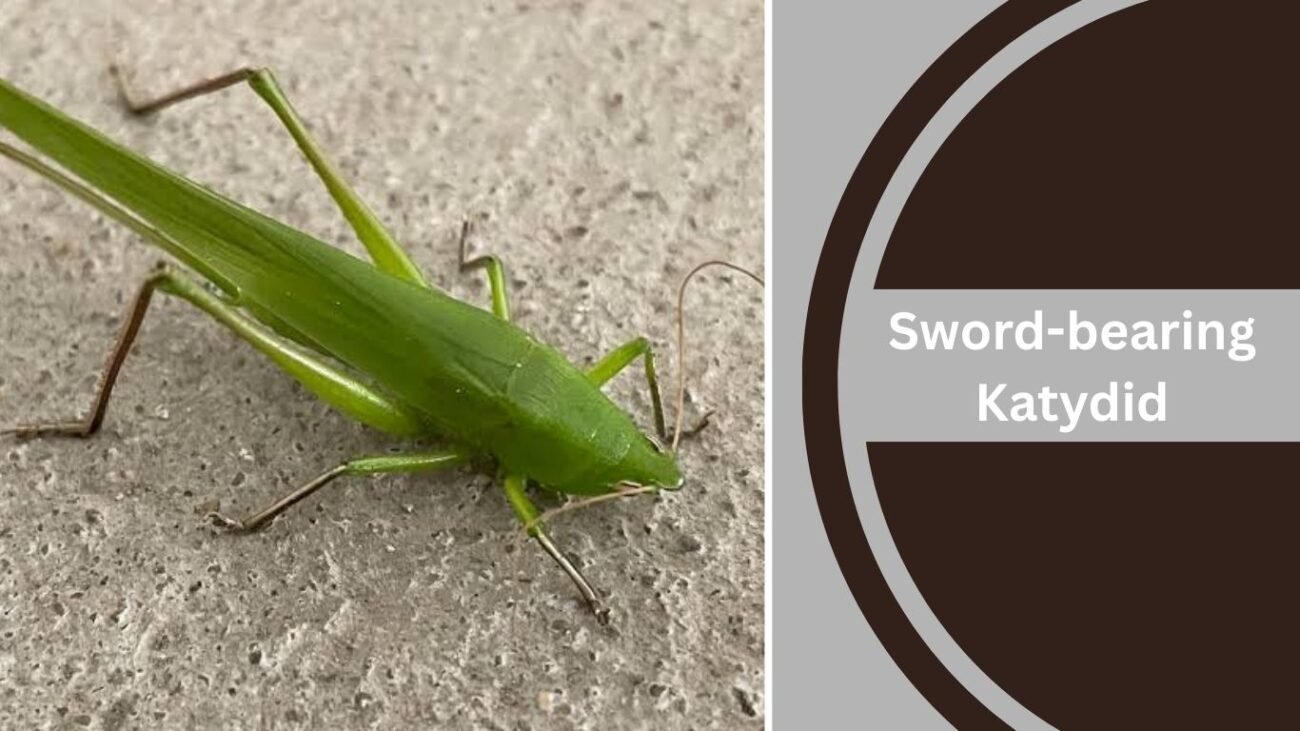
The Sword-bearing Katydid (Amblycorypha oblongifolia – female form, or closely related species) gets its name from the long, sword-like ovipositor of the females. This striking feature makes it easy to recognize compared to other katydids.
Identification
- Medium to large size, usually 1.5–2 inches long
- Green body with wings that resemble leaves
- Very long antennae, often exceeding body length
- Females have a long, straight, sword-shaped ovipositor
- Males lack the sword but share the same leafy appearance
Habitat
Sword-bearing Katydids are typically found in meadows, woodland edges, gardens, and shrubby areas. They prefer places with tall vegetation and plenty of leaves for cover.
Behavior
They are nocturnal and feed mainly on leaves, flowers, and fruit. Males call at night with trilling or ticking songs to attract females. Their sword-like ovipositor is used by females to deposit eggs inside stems or in soil near plants.
Lifecycle
Their lifecycle follows incomplete metamorphosis. Eggs are laid in fall and hatch in spring. Nymphs resemble wingless adults and go through several molts before reaching maturity by late summer. Adults remain active into autumn.
12. Red-headed Meadow Katydid

The Red-headed Meadow Katydid (Orchelimum erythrocephalum) is a colorful species of katydid, best known for its striking red head and thorax paired with a green body. This vibrant contrast makes it one of the most distinctive meadow katydids.
Identification
- Bright red head and thorax
- Green body with long, slender wings
- Long antennae extending past the body
- Small to medium size, typically 0.75–1.25 inches long
- Females possess a noticeable, curved ovipositor
Habitat
This katydid inhabits meadows, wetlands, grassy fields, and the edges of ponds or streams. They are most often seen on tall grasses and low plants, where their colors provide both camouflage and warning-like displays.
Behavior
Red-headed Meadow Katydids are nocturnal and feed on grasses, flower petals, and seeds. Males produce short, sharp trills or ticking sounds during the night to attract females. Their songs are often part of the summer nighttime chorus.
Lifecycle
Their lifecycle follows incomplete metamorphosis. Eggs are deposited in grass stems and hatch the following spring. Nymphs resemble wingless adults and molt multiple times before reaching maturity in midsummer. Adults remain active through early autumn.
13. Texas Bush Katydid
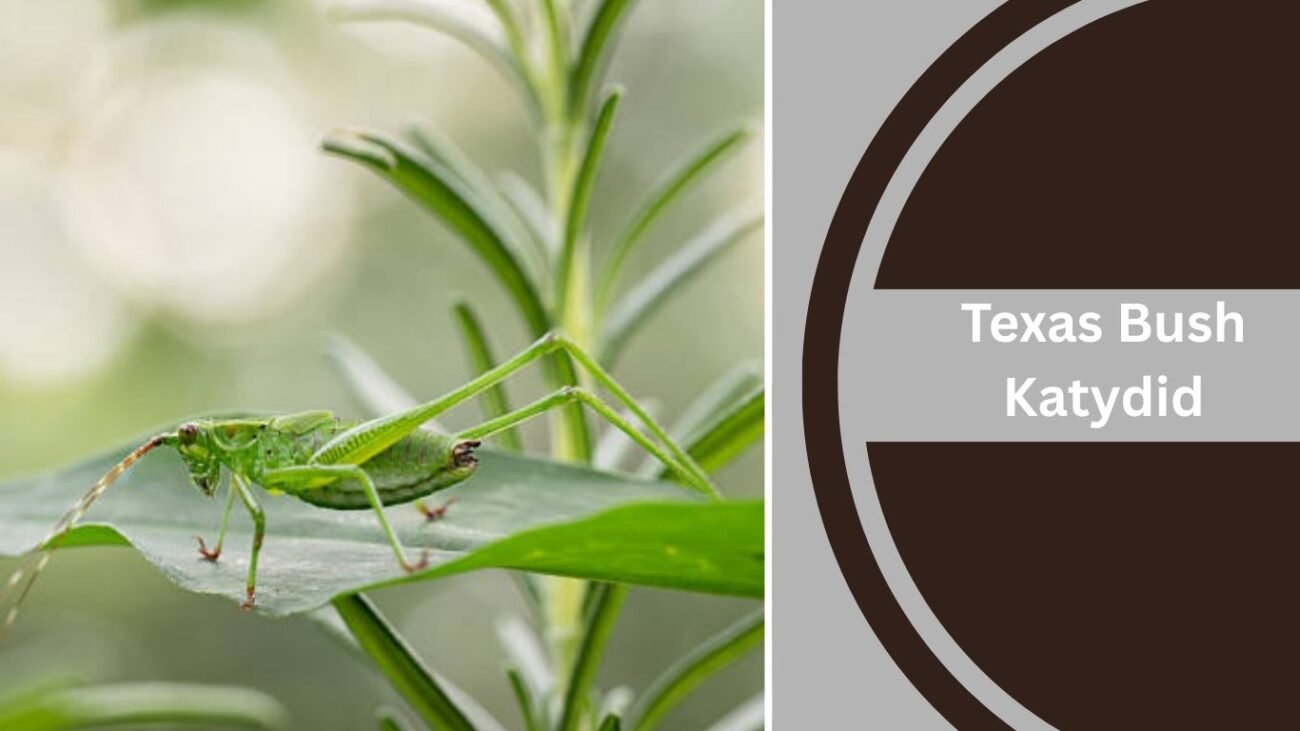
The Texas Bush Katydid (Scudderia texensis or closely related species) is a slender, active katydid that thrives in the southern United States, especially in Texas and nearby regions. It is well-adapted to warm climates and shrubby habitats.
Identification
- Slender green body with narrow wings
- Medium size, usually 1.5–2 inches long
- Long, threadlike antennae
- Hind legs built for strong jumping
- Females have a long, curved ovipositor
Habitat
Texas Bush Katydids live in fields, gardens, woodland edges, and shrubby areas. They are especially common in southern grasslands where vegetation is dense enough to provide food and cover.
Behavior
These katydids are nocturnal and feed on leaves, flowers, and fruits. Males produce soft, high-pitched ticking or trilling calls during warm summer nights. They are excellent jumpers and rely on both quick movement and camouflage to avoid predators.
Lifecycle
Their lifecycle is incomplete metamorphosis. Eggs are laid in late summer or fall within plant stems or leaf edges, hatching in spring. Nymphs resemble smaller adults without wings and develop through several molts before maturing in midsummer.
14. Greater Angle-wing Katydid

The Greater Angle-wing Katydid (Microcentrum rhombifolium) is a large and well-camouflaged species, known for its triangular, leaf-like wings that make it nearly invisible among foliage. It is one of the most commonly encountered katydids in North America.
Identification
- Large size, typically 2–2.5 inches long
- Triangular, bright green wings with leaf-like venation
- Very long antennae extending well beyond the body
- Broad body compared to smaller katydids
- Females possess a curved ovipositor
Habitat
Greater Angle-wing Katydids are most often found in woodlands, gardens, parks, and suburban areas with dense vegetation. They prefer trees and shrubs, where they spend most of their lives concealed among leaves.
Behavior
They are nocturnal and feed on leaves, flowers, and fruit. Males produce loud, raspy calls on warm summer nights to attract females. Their camouflage makes them extremely difficult to spot, even when sitting in plain view.
Lifecycle
The lifecycle is incomplete metamorphosis. Eggs are laid in the bark of trees or on stems, overwintering until spring. Nymphs hatch as wingless versions of adults and undergo several molts before becoming mature by late summer. Adults remain active into early fall.
15. Bush-cricket Katydid
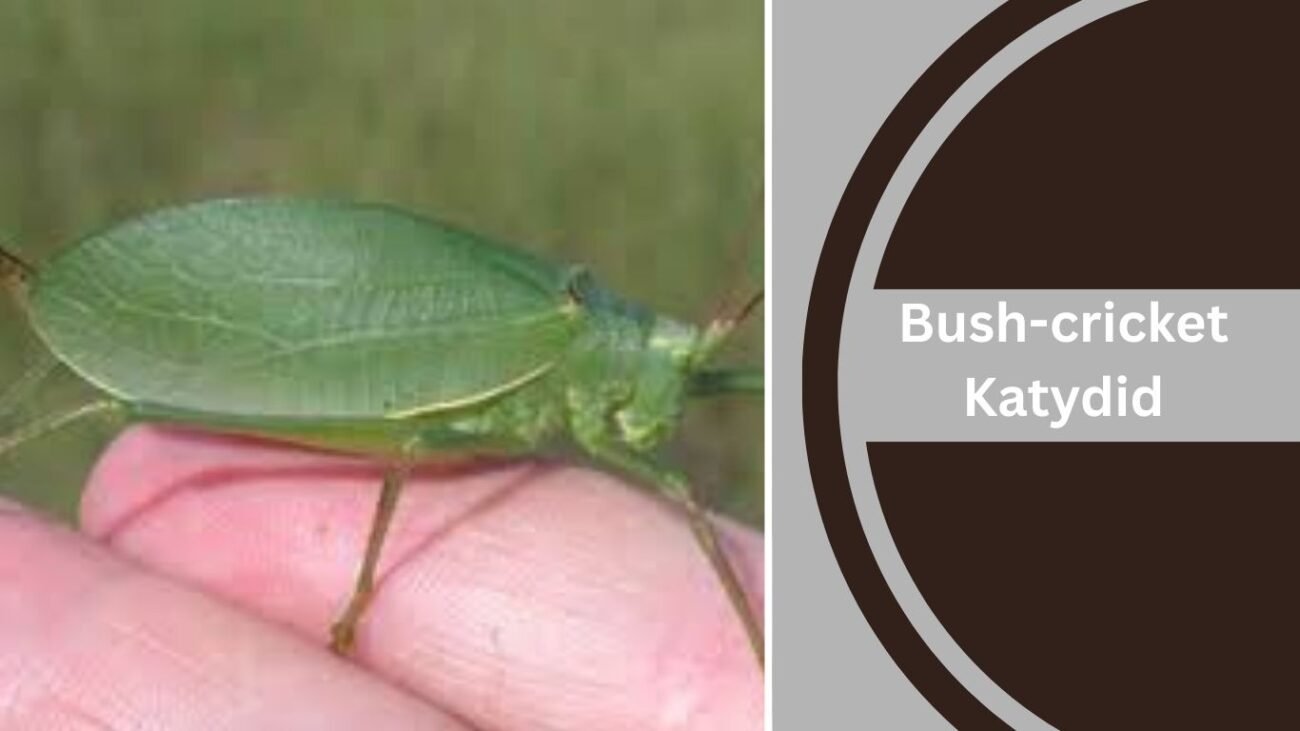
The Bush-cricket Katydid (family Tettigoniidae, often referred to as bush-crickets in Europe) is a broad term for various katydid species that live in shrubby vegetation. These insects are highly adapted for camouflage and are among the most diverse in the katydid family.
Identification
- Medium to large size depending on species (1–2.5 inches)
- Green or brown leafy appearance with wing venation mimicking leaves
- Long, threadlike antennae often exceeding body length
- Robust hind legs designed for jumping
- Females usually possess a long ovipositor for egg-laying
Habitat
Bush-cricket Katydids are widespread, inhabiting shrubs, gardens, meadows, and forest edges. They prefer areas with dense vegetation that provides food, cover, and a place for egg-laying.
Behavior
They are nocturnal feeders, consuming leaves, flowers, and occasionally smaller insects. Males produce songs that vary from soft trills to sharp ticks, depending on the species. These songs are used primarily for courtship.
Lifecycle
Their lifecycle follows incomplete metamorphosis. Eggs are laid on stems, leaves, or in soil, depending on the species. Nymphs hatch in spring, molting several times before becoming adults by summer. Adults remain active until early autumn.