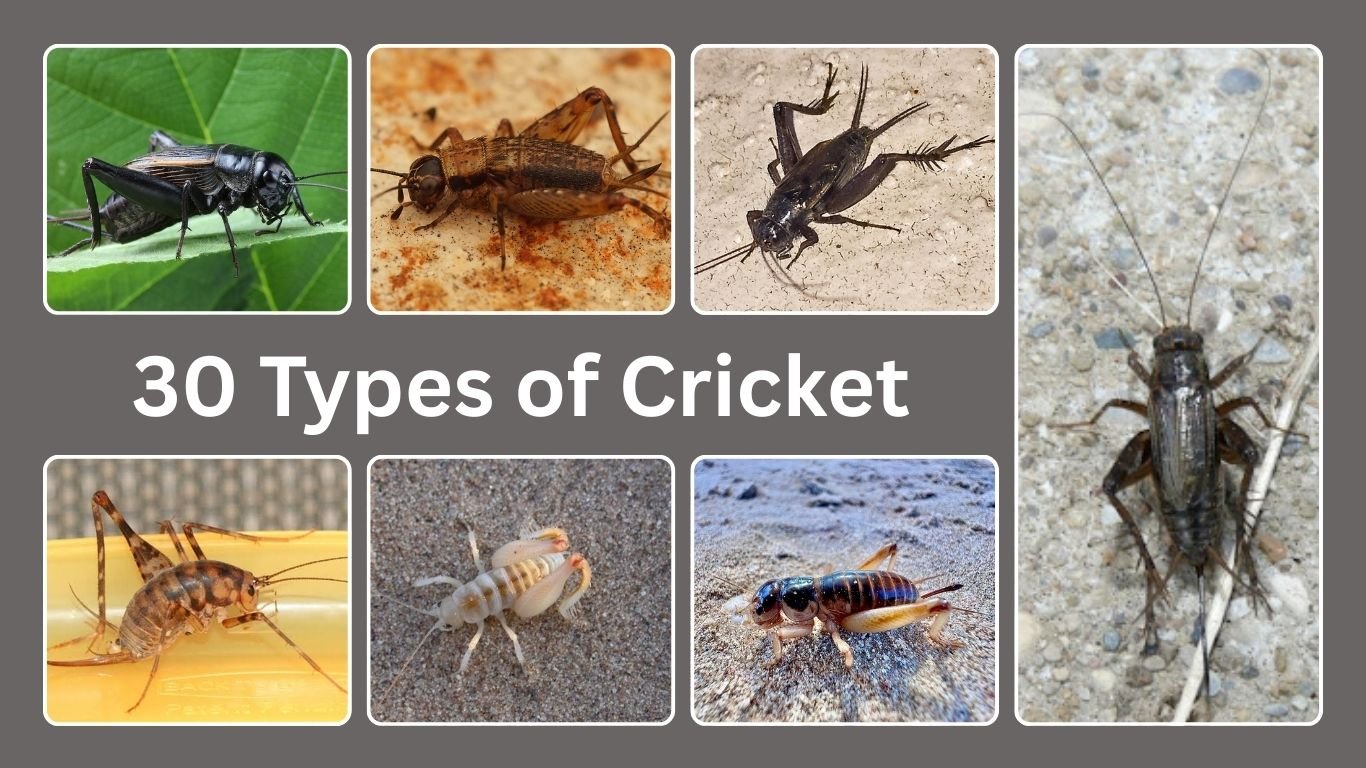
Crickets are fascinating insects known for their chirping songs, diverse habitats, and unique adaptations. Found across the world, they play important roles in ecosystems as both prey and consumers of plants and organic matter. This guide explores 30 different types of crickets, detailing their identification, habitats, behaviors, and lifecycles. From the familiar house cricket to the unusual ant-loving cricket, each species has distinct traits that make it remarkable.
1. House Cricket
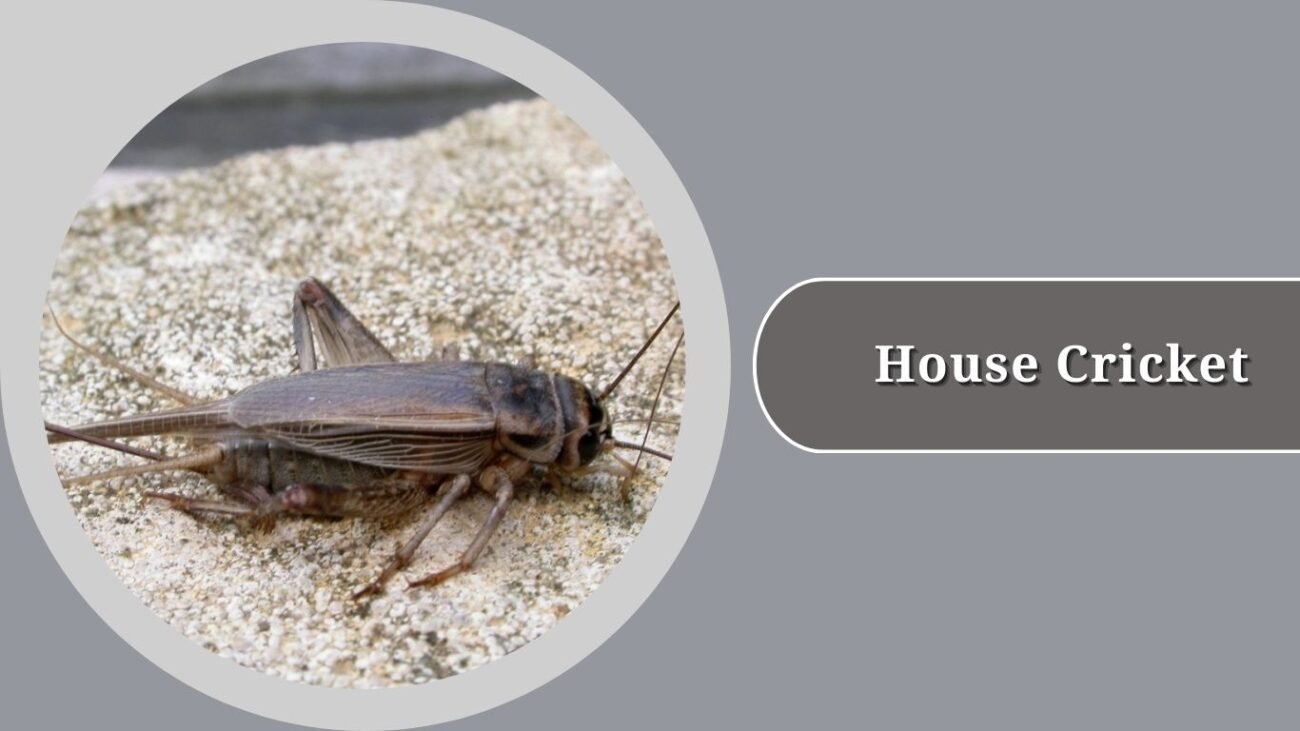
House crickets (Acheta domesticus) are among the most well-known cricket species, often found living close to human environments. They are widely recognized for their distinctive chirping sounds, which are produced by males to attract females.
Identification
- Size: 16–21 mm long
- Color: Light brown to tan with dark bands on the head
- Wings: Long, covering the abdomen
- Antennae: Long and thin, often longer than their body
- Legs: Strong hind legs adapted for jumping
Habitat
House crickets thrive in warm environments and are commonly found in houses, basements, sheds, and around heat sources. They are also bred in large numbers for pet food.
Behavior
These crickets are nocturnal, most active during the night. Male house crickets produce loud, continuous chirping to court females, with the pitch and frequency influenced by temperature.
Lifecycle
House crickets undergo incomplete metamorphosis, moving through egg, nymph, and adult stages. Eggs hatch in about 13–14 days under warm conditions. Nymphs resemble small adults but lack wings, molting several times before reaching maturity.
2. Field Cricket
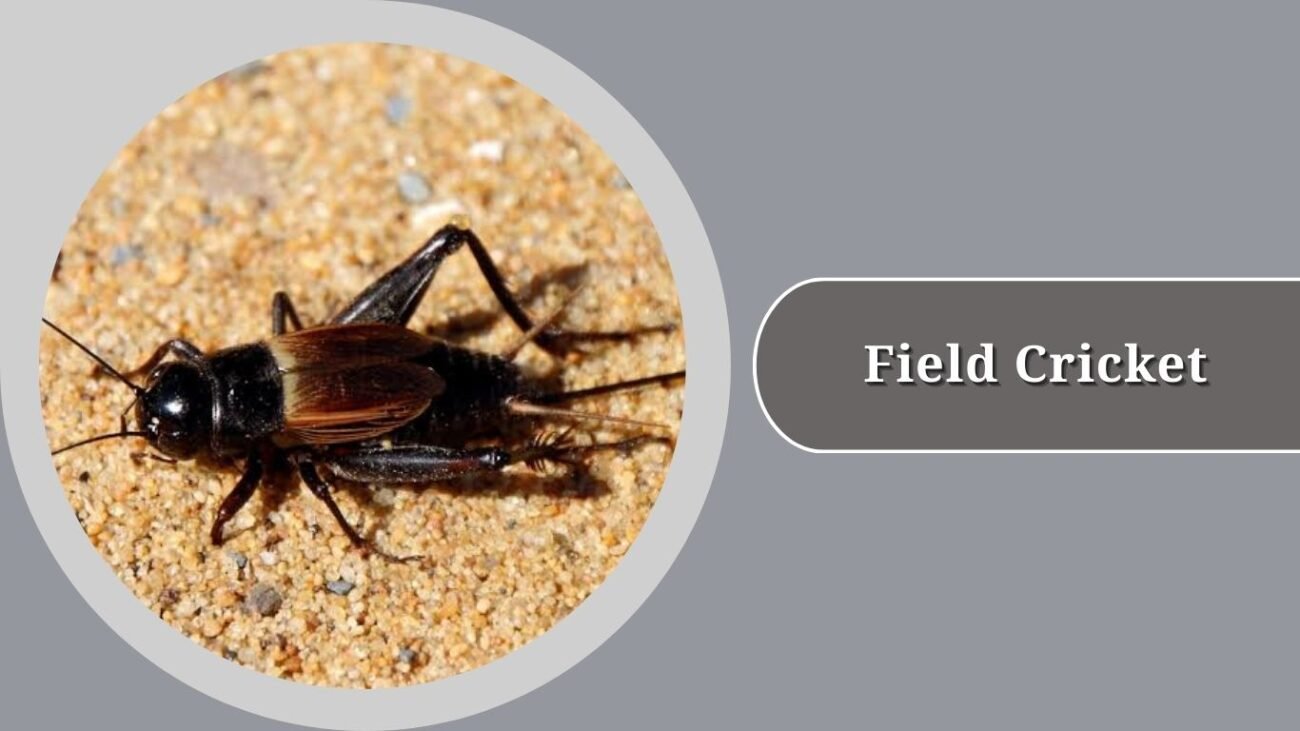
Field crickets (Gryllus spp.) are robust, dark-colored crickets commonly found in grassy fields, gardens, and open landscapes. They are famous for their loud, rhythmic chirping that fills the summer nights.
Identification
- Size: 15–30 mm long
- Color: Dark brown to black
- Wings: Short to moderately long depending on the species
- Antennae: Very long, threadlike, usually longer than the body
- Body: Stocky with a shiny, hardened appearance
Habitat
Field crickets prefer open, grassy areas such as meadows, fields, lawns, and agricultural land. They often burrow into the soil or hide under rocks, logs, or leaf litter.
Behavior
They are mainly nocturnal and are strong singers. Male field crickets produce a loud chirping call to attract females and establish territory. They are omnivores, feeding on plants, seeds, insects, and organic debris.
Lifecycle
Like other crickets, they undergo incomplete metamorphosis. Eggs are laid in soil or plant matter and hatch after several weeks. Nymphs go through multiple molts before reaching adulthood, with the full lifecycle typically lasting 2–3 months depending on climate.
3. Camel Cricket
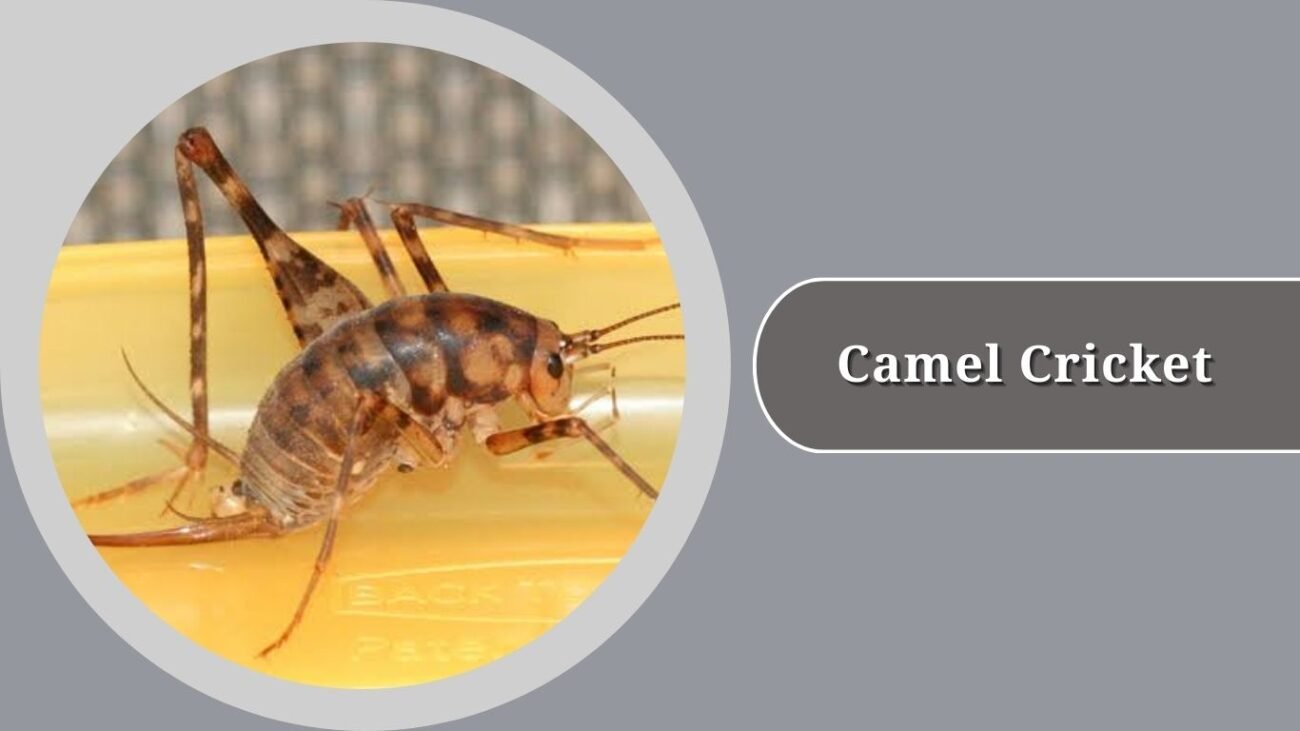
Camel crickets (Rhaphidophoridae family), also known as cave crickets or spider crickets, are unique-looking crickets with arched backs and long legs, giving them a spider-like appearance. Unlike most crickets, they are wingless and do not chirp.
Identification
- Size: 13–33 mm long
- Color: Light to dark brown, often mottled
- Wings: Absent (completely wingless)
- Legs: Extremely long hind legs and antennae
- Body: Hump-backed, resembling the shape of a camel
Habitat
Camel crickets prefer dark, damp, and cool environments. They are commonly found in caves, basements, crawl spaces, under logs, and in leaf litter. Their preference for moisture makes them frequent invaders of homes during hot or dry weather.
Behavior
They are nocturnal and silent, as they lack sound-producing organs. Instead of chirping, they rely on jumping as a defense mechanism. Camel crickets feed on fungi, decaying organic matter, plant material, and even fabrics or stored items when indoors.
Lifecycle
Camel crickets undergo incomplete metamorphosis. Eggs are laid in moist soil or organic debris. Nymphs look similar to adults but smaller, gradually growing larger with each molt until maturity.
4. Mole Cricket
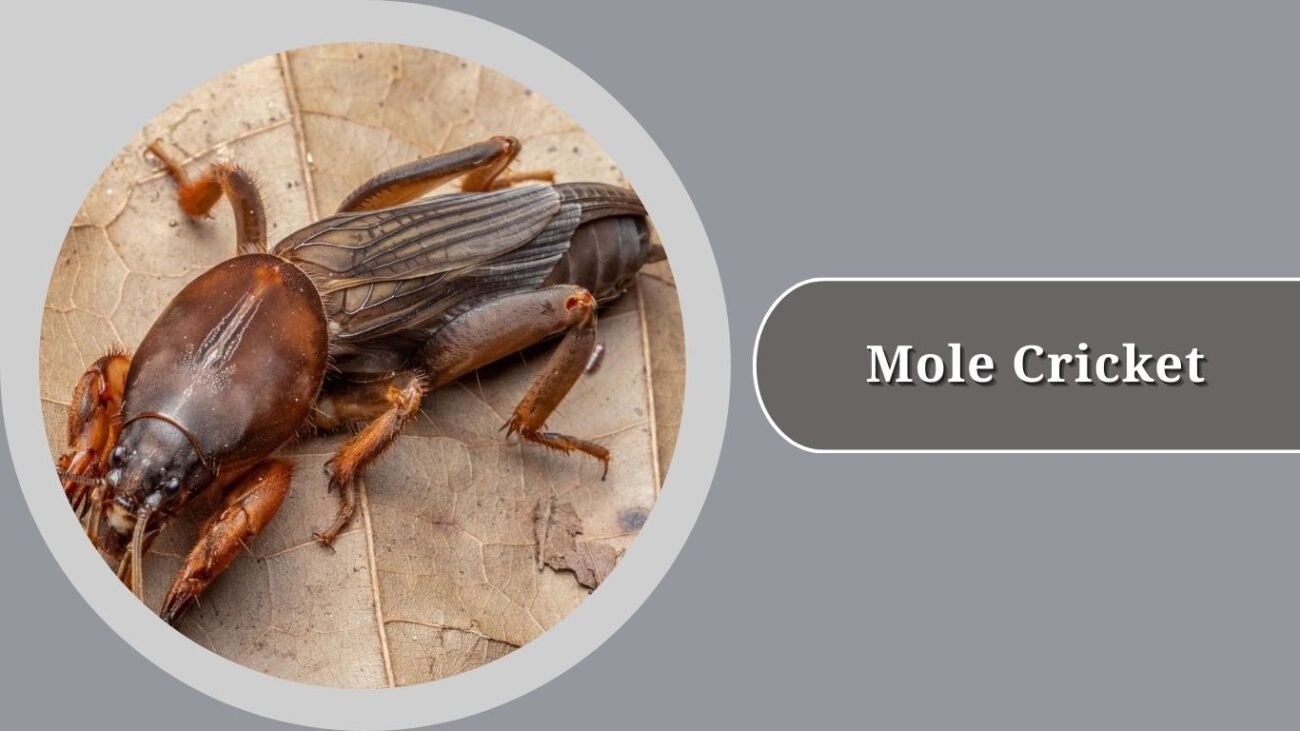
Mole crickets (Gryllotalpidae family) are burrowing insects known for their spade-like forelegs adapted for digging. They are often considered pests because of their root-feeding habits, which can damage lawns, crops, and gardens.
Identification
- Size: 30–50 mm long
- Color: Brown to dark brown, velvety body
- Wings: Well-developed in some species, enabling flight
- Legs: Enlarged, spade-shaped forelegs for digging
- Body: Cylindrical, adapted for a subterranean lifestyle
Habitat
Mole crickets live primarily underground, creating extensive tunnel systems in moist soil. They are often found in lawns, gardens, pastures, and agricultural fields where the soil is soft and easy to burrow.
Behavior
They are nocturnal and emerge mostly at night. Mole crickets use their strong forelegs to dig tunnels that aerate the soil but also damage plant roots. Some species can produce low, drumming calls from their burrows to attract mates.
Lifecycle
Their lifecycle follows incomplete metamorphosis. Females lay eggs in underground chambers. Nymphs hatch and grow through several molts, continuing to live in the soil until they reach adulthood. The full cycle can take a year or more, depending on the species and climate.
5. Jerusalem Cricket
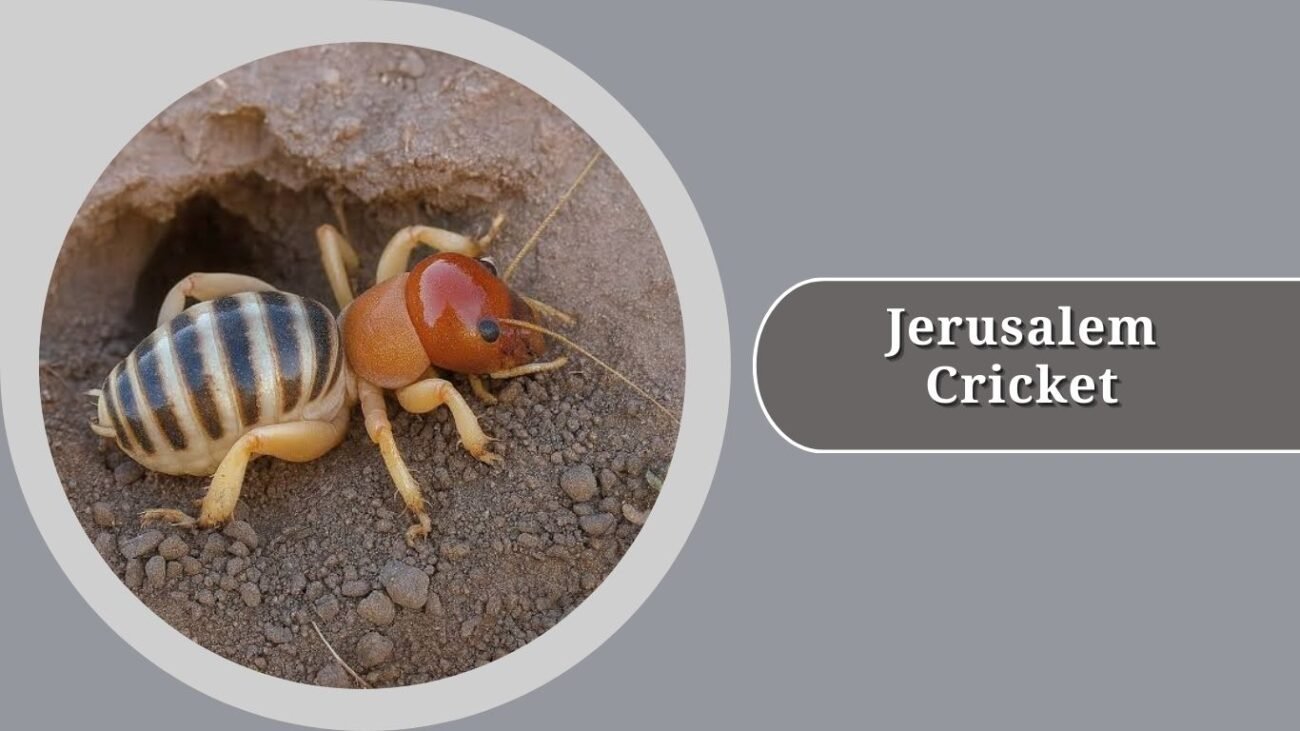
Jerusalem crickets (Stenopelmatidae family), also called “potato bugs,” are large, flightless insects native to the western United States and Mexico. Despite their intimidating size and appearance, they are harmless to humans and do not chirp like other crickets.
Identification
- Size: 20–60 mm long (one of the largest cricket types)
- Color: Yellowish to brown with black stripes on the abdomen
- Wings: Absent (flightless)
- Head: Large, rounded, and orange-brown in color
- Legs: Strong, spiny legs adapted for digging
Habitat
They are typically found in dry, sandy, or loose soils, often under rocks, logs, or within burrows. Jerusalem crickets prefer arid and semi-arid regions but may also be found in gardens and agricultural areas.
Behavior
These crickets are nocturnal and slow-moving. They are not aggressive but can produce a foul odor when threatened. Instead of chirping, they communicate by drumming their abdomens against the ground. Their diet consists of roots, tubers, decaying organic matter, and occasionally small insects.
Lifecycle
Jerusalem crickets undergo incomplete metamorphosis. Females lay eggs in the soil, and nymphs resemble smaller adults, molting multiple times before maturity. Their development is relatively slow, often taking over a year to complete.
6. Tree Cricket
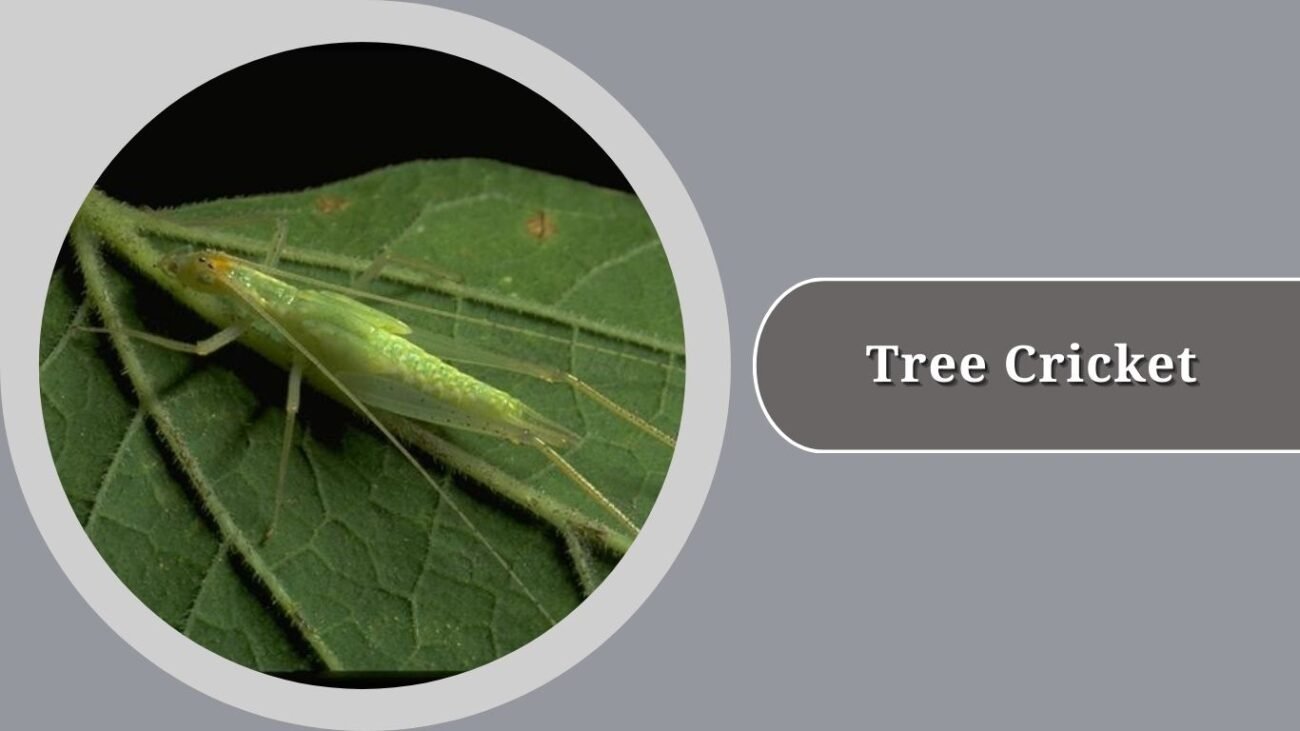
Tree crickets (Oecanthinae subfamily) are delicate, slender-bodied insects best known for their clear, melodic songs often heard on warm summer nights. They are sometimes called the “thermometer crickets” because the rate of their chirping is linked to temperature.
Identification
- Size: 12–20 mm long
- Color: Pale green to whitish, almost translucent
- Wings: Long and delicate, held flat over the body
- Antennae: Very long and thin, longer than the body
- Body: Slender with long legs suited for climbing vegetation
Habitat
Tree crickets live in shrubs, trees, tall grasses, and gardens. They are commonly found resting on leaves and stems where their coloration provides excellent camouflage.
Behavior
Males are famous for their clear, rhythmic chirping, often used to attract females. Interestingly, their chirp rate increases with temperature, making them natural thermometers. They are mostly active at night and feed on plant material, pollen, and small insects.
Lifecycle
Tree crickets undergo incomplete metamorphosis. Females lay eggs inside plant stems or bark using their ovipositors. Nymphs hatch and resemble miniature adults, molting several times before becoming fully developed. The entire life cycle is typically completed in one season.
7. Snowy Tree Cricket
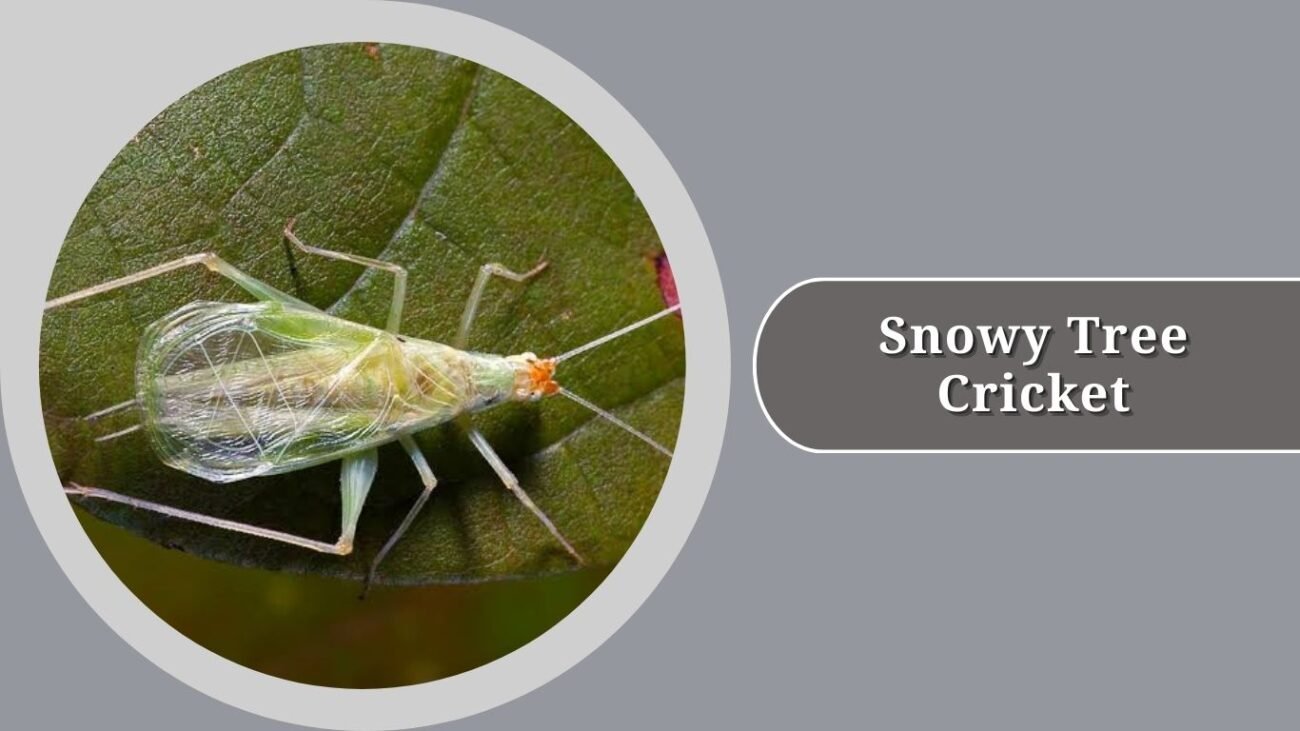
The snowy tree cricket (Oecanthus fultoni) is a small, pale species often referred to as the “thermometer cricket” because its chirping rate closely correlates with temperature. Its gentle, rhythmic song is a familiar sound in late summer and early autumn evenings.
Identification
- Size: 13–16 mm long
- Color: Pale green to whitish, almost translucent
- Wings: Transparent, held flat over the body
- Antennae: Very long and slender, longer than the body
- Body: Slender, delicate, well camouflaged on leaves and stems
Habitat
Snowy tree crickets are found in shrubs, trees, orchards, and gardens. They prefer areas with abundant vegetation where they can blend into the foliage. They are most common in North America, especially in temperate regions.
Behavior
Males produce a soft, melodious trill at regular intervals. The rate of their chirping can be used to estimate the air temperature, with faster chirps indicating warmer conditions. They are nocturnal, feeding on plant material, pollen, and small insects.
Lifecycle
They follow incomplete metamorphosis. Females lay eggs inside twigs or plant stems in late summer and fall. Eggs overwinter and hatch in spring. Nymphs gradually develop into adults through several molts, with adults appearing by late summer.
8. Ground Cricket
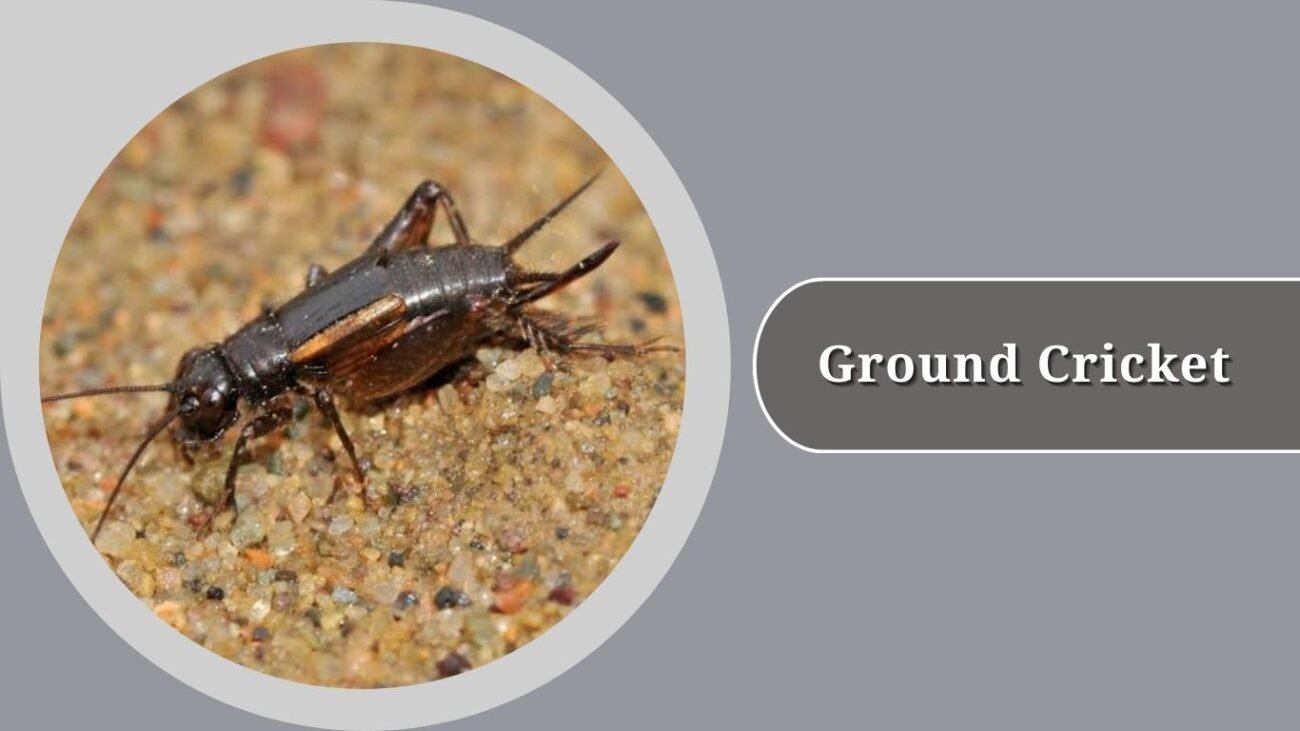
Ground crickets (Nemobiinae subfamily) are small, inconspicuous crickets that live close to the soil surface. Though less noticeable than other species, their faint songs can often be heard in late summer and autumn.
Identification
- Size: 5–12 mm long (much smaller than most crickets)
- Color: Brown to dark brown, sometimes mottled
- Wings: Short or reduced, not covering the entire abdomen
- Antennae: Very long and threadlike
- Body: Compact, adapted for ground-dwelling
Habitat
Ground crickets are usually found in fields, lawns, forests, and along roadsides. They live under leaf litter, stones, or grass clumps, preferring moist and shaded areas near the ground.
Behavior
Their songs are soft and high-pitched, often sounding like a faint buzz or trill. They are mainly nocturnal and feed on decaying plant material, seeds, fungi, and small insects. Their discreet presence makes them less observed compared to louder cricket species.
Lifecycle
Ground crickets undergo incomplete metamorphosis. Eggs are laid in soil or plant debris, hatching in spring. Nymphs mature through several molts over summer, and adults are typically active in late summer through fall.
9. Bush Cricket
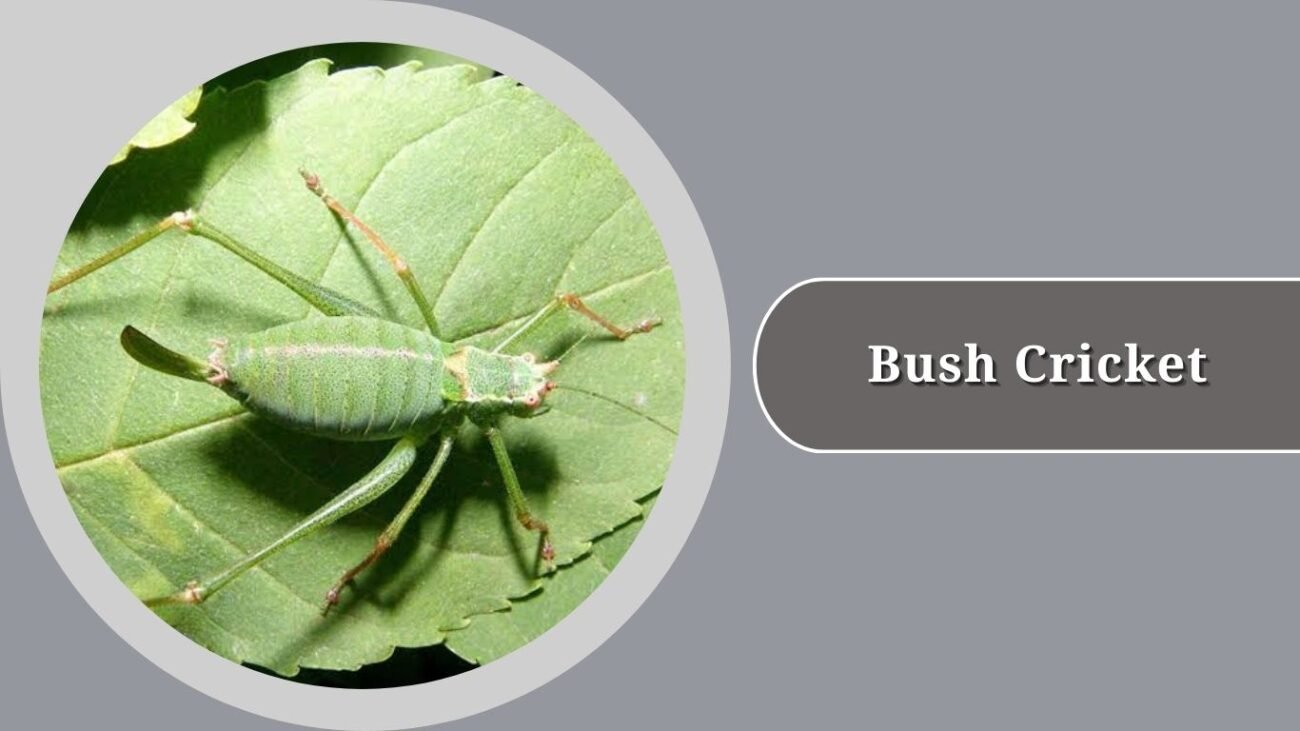
Bush crickets (Tettigoniidae family), also called katydids or long-horned grasshoppers, are cricket-like insects distinguished by their long antennae and leaf-like wings. They are more closely related to crickets than grasshoppers and are known for their loud, varied calls at night.
Identification
- Size: 20–60 mm long (varies by species)
- Color: Usually green, often leaf-like in shape and texture
- Wings: Large and leaf-shaped, used for camouflage
- Antennae: Extremely long, often several times the body length
- Body: Slender, laterally flattened, adapted for vegetation dwelling
Habitat
Bush crickets inhabit forests, meadows, gardens, and shrublands. They live on vegetation such as trees, bushes, and tall grasses, blending seamlessly with leaves thanks to their natural camouflage.
Behavior
They are nocturnal and produce distinctive songs by rubbing their wings together (stridulation). Their calls vary greatly among species, from clicks to continuous trills. Bush crickets are omnivores, feeding on leaves, flowers, seeds, and sometimes small insects.
Lifecycle
Bush crickets undergo incomplete metamorphosis. Females use their sword-like ovipositors to insert eggs into soil, stems, or leaves. Nymphs resemble miniature adults and gradually mature after several molts. Most species complete their life cycle within a year.
10. Sand Treader Cricket
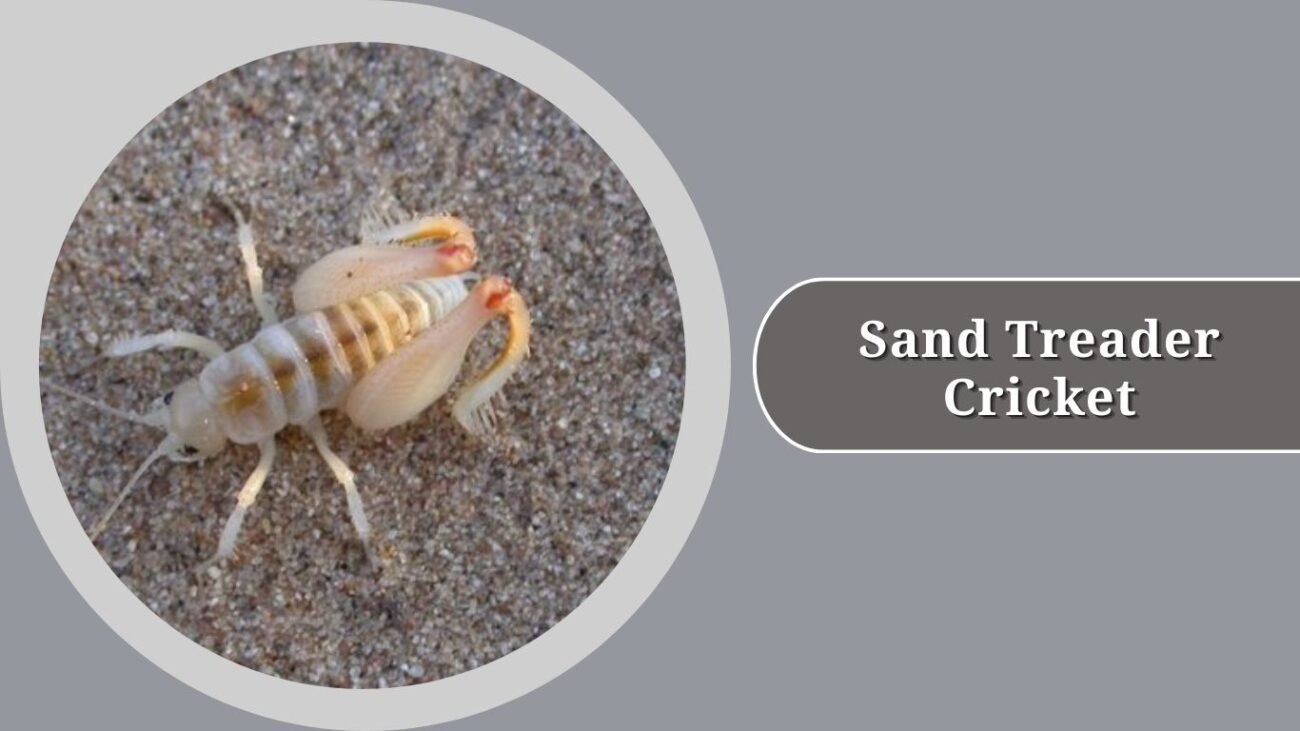
Sand treaders (Ammobaenetes genus) are rare crickets adapted to desert environments. They are specialized for life on loose, sandy soils where few other crickets can survive.
Identification
- Size: 15–20 mm long
- Color: Pale brown to sandy, blending with desert soil
- Wings: Reduced or absent, depending on species
- Antennae: Long and threadlike
- Legs: Strong hind legs for jumping and digging in sand
Habitat
Sand treaders are found in arid desert regions, especially in North America. They live on loose sand dunes, dry washes, and other sandy habitats, often active at night when temperatures are cooler.
Behavior
They are nocturnal and primarily surface after dark to avoid daytime heat. Sand treaders are excellent diggers, using their legs to move through sand. They feed on plant material, seeds, and organic debris found in desert ecosystems.
Lifecycle
Their life cycle follows incomplete metamorphosis. Eggs are laid in sandy soils, where they remain protected from harsh desert conditions. Nymphs emerge and slowly mature, molting multiple times before adulthood. Their survival is closely tied to moisture availability in deserts.
11. Sword-tail Cricket
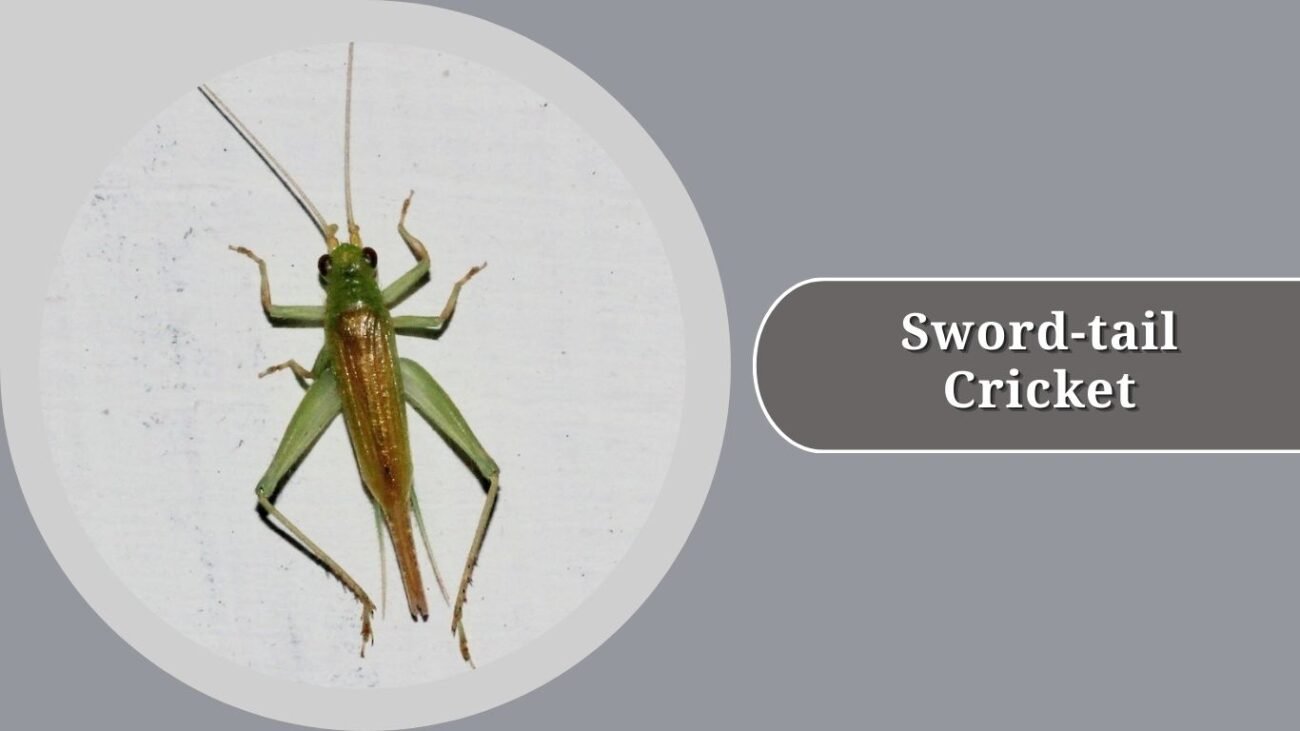
Sword-tail crickets (Trigonidiinae subfamily) are slender-bodied crickets recognized for the elongated, sword-like ovipositors in females. They are often associated with grassy and shrubby habitats and are admired for their delicate structure and chirping.
Identification
- Size: 10–18 mm long
- Color: Brown, yellowish, or green depending on species
- Wings: Present, often transparent and delicate
- Antennae: Very long and thin
- Female feature: Long, sword-shaped ovipositor extending beyond the body
Habitat
Sword-tail crickets are found in warm, humid regions across grasslands, forests, and shrubby areas. They prefer vegetation-rich environments where they can hide among leaves and stems.
Behavior
They are nocturnal singers, with males producing high-pitched calls to attract females. Their songs are typically softer than those of field or house crickets. They feed on small plant parts, seeds, and occasionally tiny insects.
Lifecycle
Sword-tail crickets undergo incomplete metamorphosis. Females insert their eggs into soil or plant stems using their sword-like ovipositors. Nymphs hatch and gradually resemble adults as they molt, completing their development within a season.
12. Raspy Cricket
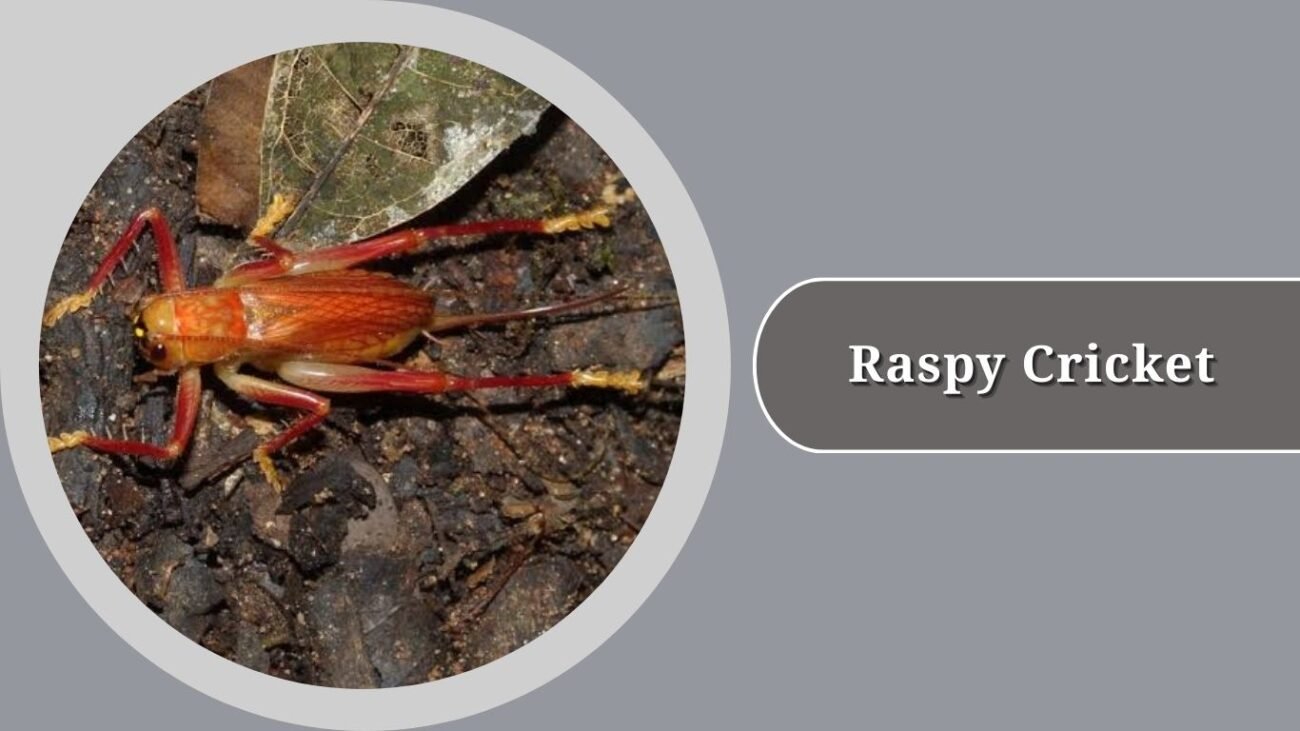
Raspy crickets (Gryllacrididae family) are unusual, wingless crickets known for producing rasping sounds by rubbing body parts together, rather than using wings like most crickets. They are secretive and often nocturnal, hiding during the day.
Identification
- Size: 15–50 mm long (varies by species)
- Color: Brown to gray, often camouflaged with bark or soil
- Wings: Absent (completely wingless)
- Antennae: Very long and fine
- Body: Cylindrical, with strong jaws and spiny legs
Habitat
Raspy crickets live in forests, shrublands, and grasslands. They often hide under bark, rocks, leaf litter, or in burrows during the day. Many are found in Australia, Asia, and Africa.
Behavior
They are nocturnal and use rasping sounds (created by rubbing spines on their legs against their body) for communication and defense. Raspy crickets are omnivorous, feeding on plants, fungi, and small insects. When threatened, they can also produce silk to seal off hiding places.
Lifecycle
Their lifecycle follows incomplete metamorphosis. Eggs are laid in soil or crevices. Nymphs hatch and resemble smaller adults, gradually maturing through successive molts. Their development is relatively slow compared to other cricket species.
13. Ant-loving Cricket
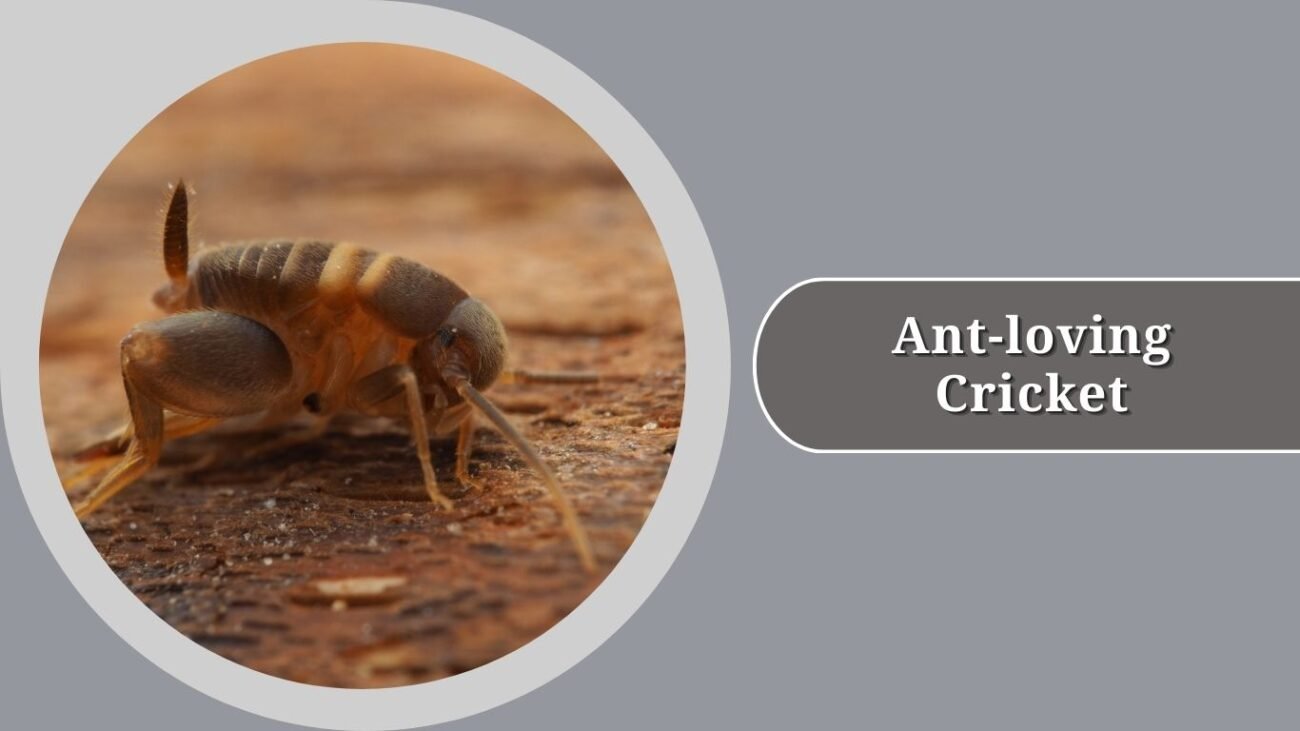
Ant-loving crickets (Myrmecophilidae family) are tiny, wingless crickets that live in close association with ant colonies. They are unusual among crickets because they have adapted to a symbiotic lifestyle, relying on ants for protection and resources.
Identification
- Size: 2–5 mm long (very small compared to other crickets)
- Color: Pale yellow to brown
- Wings: Absent (completely wingless)
- Antennae: Long, slender, adapted for sensing in dark nests
- Body: Small, soft, and compact for moving within ant tunnels
Habitat
They are found exclusively inside ant nests, living among worker ants and queens. Their presence has been recorded worldwide, with different species adapting to local ant hosts.
Behavior
Ant-loving crickets are commensal or parasitic, feeding on food scraps, secretions, or fungal growths within the ant nest. They do not chirp and rely on stealth and chemical mimicry to avoid being attacked by the ants.
Lifecycle
Like other crickets, they undergo incomplete metamorphosis. Eggs are laid inside or near the ant colony, and nymphs develop within the nest. Their entire lifecycle is adapted to coexist with ants, making them highly specialized.
14. Cave Cricket
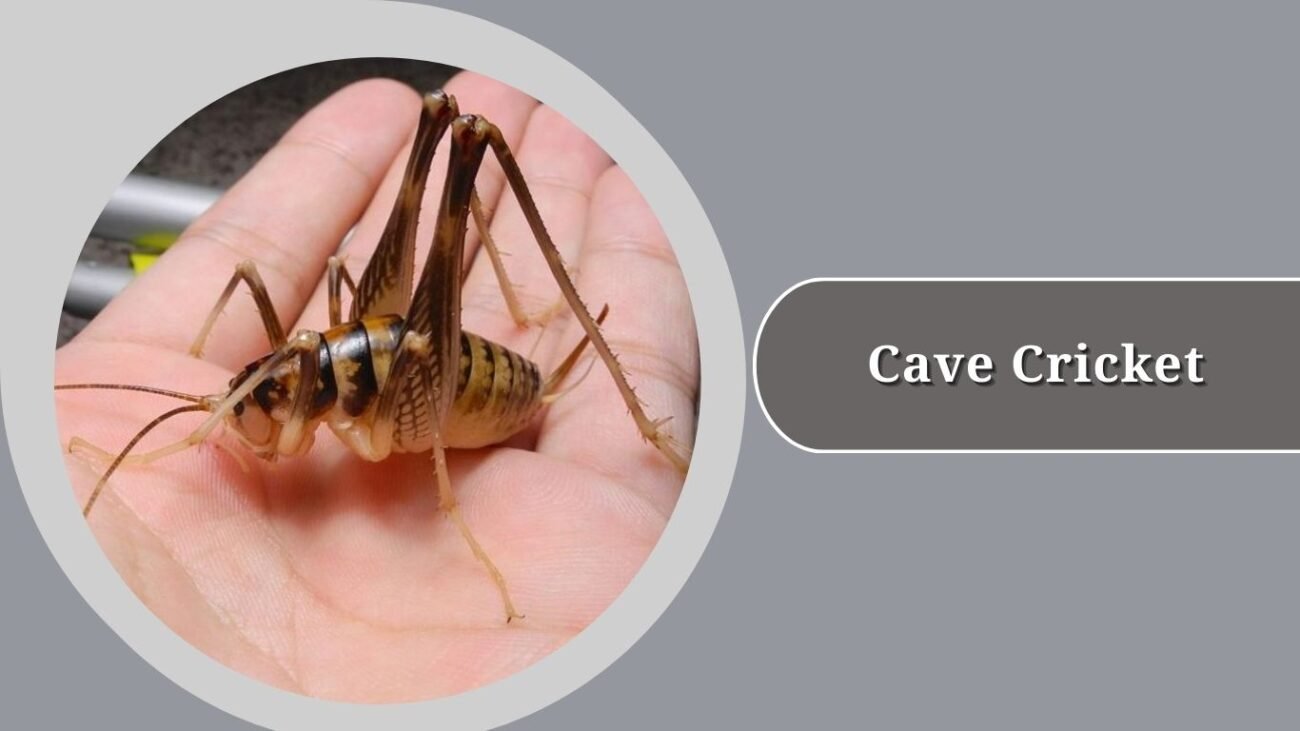
Cave crickets (Rhaphidophoridae family), also called camel crickets or spider crickets, are nocturnal insects adapted to dark, damp environments. Their long legs and antennae help them navigate in low-light conditions.
Identification
- Size: 13–45 mm long (depending on species)
- Color: Light to dark brown, often mottled for camouflage
- Wings: Absent (completely wingless)
- Antennae: Extremely long, used for sensing in darkness
- Body: Hump-backed with long hind legs resembling a spider
Habitat
They are typically found in caves, basements, tunnels, under stones, and in other moist, shaded places. In urban areas, they often invade homes, especially basements and crawl spaces.
Behavior
Cave crickets are silent, as they lack sound-producing organs. They rely on jumping as a defense mechanism when disturbed, sometimes startling intruders. They feed on fungi, decaying organic matter, and plant debris, but indoors they may nibble on fabric or paper.
Lifecycle
They undergo incomplete metamorphosis. Females deposit eggs in moist soil or organic debris. Nymphs resemble miniature adults and gradually grow through multiple molts before becoming mature crickets.
15. Two-spotted Tree Cricket
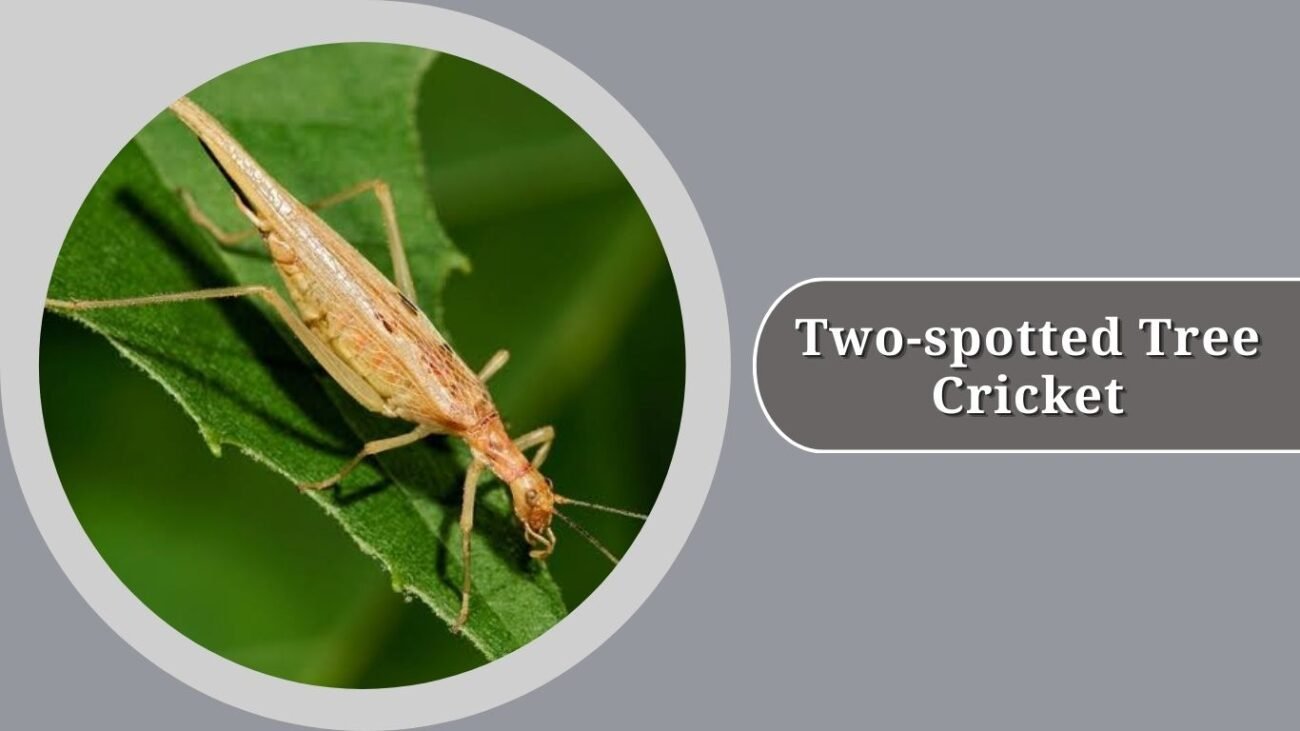
The two-spotted tree cricket (Neoxabea bipunctata) is a delicate, pale green cricket named for the two distinctive dark spots found on the base of its forewings. It is often heard more than seen, thanks to its high-pitched, melodic songs.
Identification
- Size: 12–16 mm long
- Color: Pale green with two dark spots on the forewings
- Wings: Transparent, lying flat over the body
- Antennae: Very long and threadlike
- Body: Slender and well-camouflaged among leaves
Habitat
Two-spotted tree crickets are commonly found in shrubs, vines, orchards, and forest edges across North America. They prefer leafy vegetation where their pale coloring blends into the foliage.
Behavior
Males produce a continuous, high-pitched trill during summer nights to attract females. Their song is one of the clearer and more melodic tree cricket calls. They are nocturnal and feed on plant tissues, pollen, and occasionally small insects.
Lifecycle
Their lifecycle follows incomplete metamorphosis. Eggs are laid in plant stems by females using their ovipositors. Nymphs hatch in spring, resemble miniature adults, and molt several times before becoming fully mature by late summer.
16. Four-spotted Tree Cricket
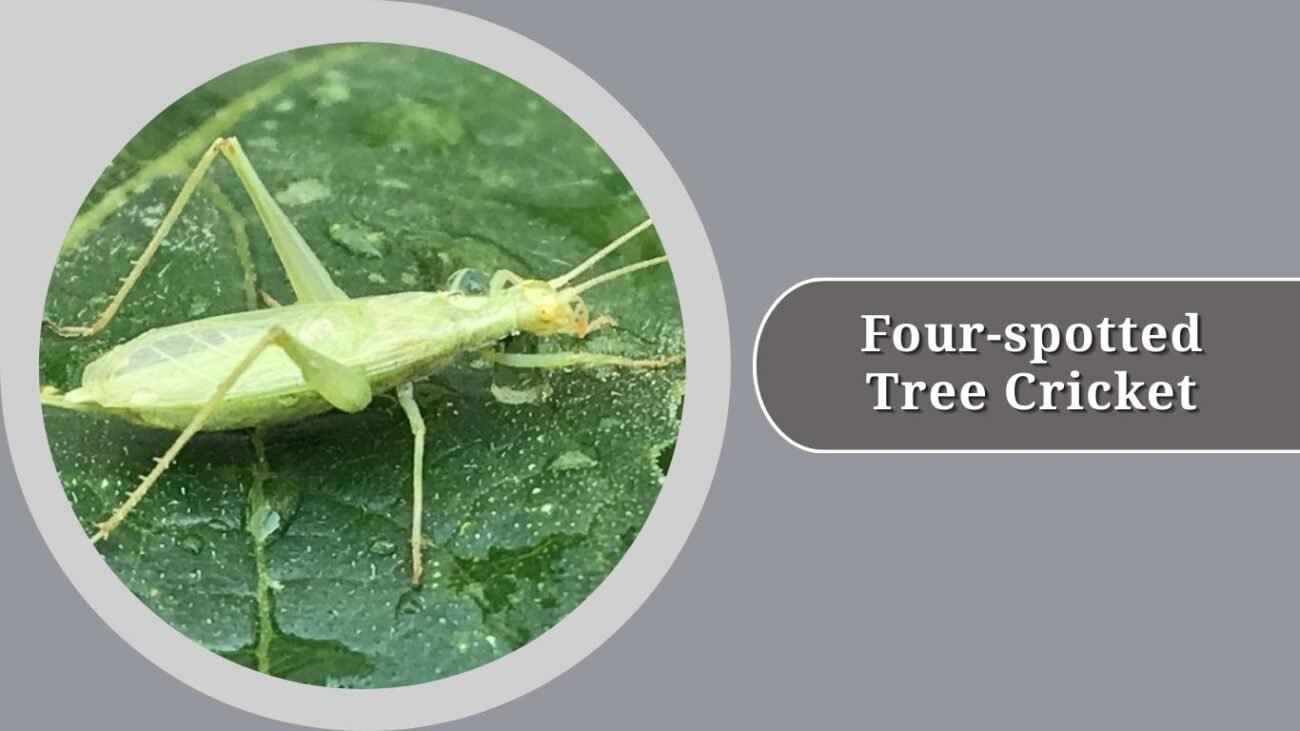
The four-spotted tree cricket (Oecanthus quadripunctatus) is a slender, pale species recognized by the four distinctive dark spots on its wings. Like other tree crickets, it is better known for its soft songs than for being seen.
Identification
- Size: 12–18 mm long
- Color: Pale green to whitish
- Wings: Transparent with four clear dark spots
- Antennae: Very long, thin, extending beyond body length
- Body: Slender, almost delicate in appearance
Habitat
They are found in shrubs, vines, trees, and weedy vegetation, especially in eastern North America. Their pale coloration provides camouflage against leaves and stems, making them difficult to spot.
Behavior
Males produce a soft, melodious trill at night, which is species-specific and helps in mate attraction. They are nocturnal and mostly feed on leaves, pollen, and small plant tissues. Occasionally, they may consume tiny insects.
Lifecycle
Their lifecycle follows incomplete metamorphosis. Eggs are laid in plant stems or woody tissue by females using their ovipositors. Nymphs hatch in spring, developing into adults through successive molts, usually reaching maturity in late summer.
17. Common True Cricket
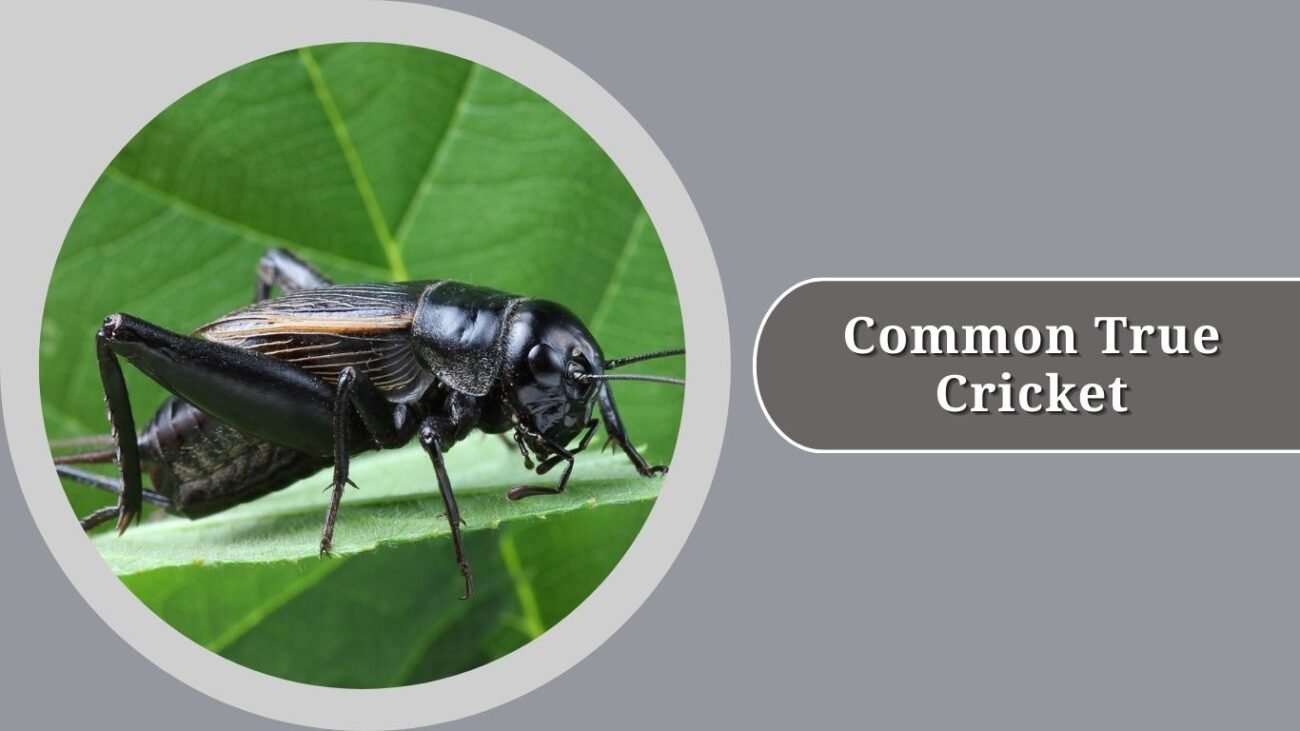
The common true cricket (Gryllidae family) represents the familiar image most people have of crickets—medium-sized, chirping insects with long antennae and powerful jumping legs. They are widely distributed across the world.
Identification
- Size: 15–25 mm long
- Color: Brown to black, often shiny
- Wings: Present, with males using them to produce chirping sounds
- Antennae: Long, slender, and often longer than the body
- Legs: Strong hind legs adapted for leaping
Habitat
Common true crickets are found in fields, gardens, forests, and sometimes inside houses. They prefer warm environments and hide under rocks, logs, or leaf litter during the day, becoming active at night.
Behavior
They are nocturnal and produce chirping sounds by stridulation (rubbing their forewings together). The songs serve different purposes—attracting females, warning rivals, or signaling courtship. They are omnivores, feeding on plants, fungi, and small insects.
Lifecycle
Their lifecycle is incomplete metamorphosis. Eggs are laid in soil or plant matter, hatching into nymphs that resemble small adults. Nymphs go through several molts before maturing. Most species complete their development within a few months, depending on climate.
18. Wingless Cricket
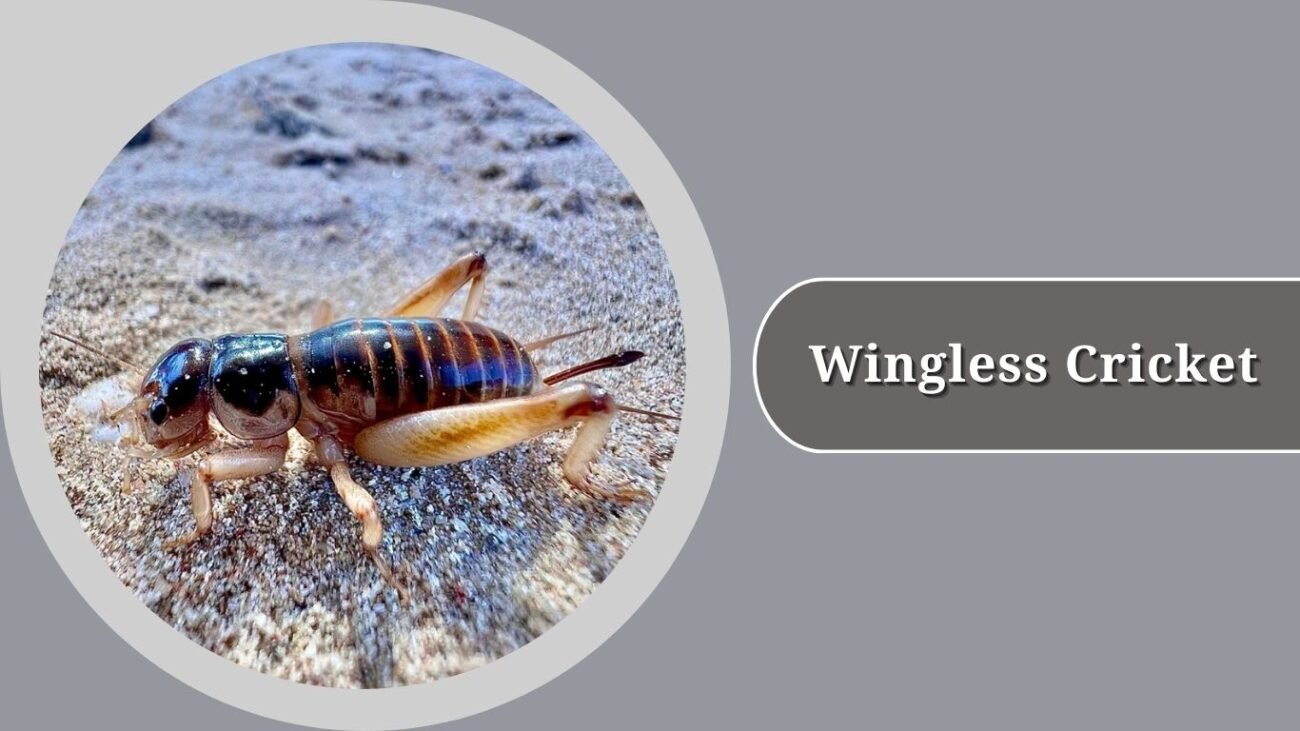
Wingless crickets (Gryllidae family, various genera) are crickets that have either lost their wings through evolution or never developed them. Without wings, they cannot chirp, setting them apart from most cricket species.
Identification
- Size: 10–20 mm long (varies by species)
- Color: Brown to dark brown or black
- Wings: Absent (completely wingless)
- Antennae: Long, slender, typical of crickets
- Body: Compact and slightly more robust than winged crickets
Habitat
Wingless crickets are usually found in moist environments such as under leaf litter, stones, and logs, or within soil and caves. Some species inhabit grasslands and forest floors, where their absence of wings helps them remain hidden from predators.
Behavior
Since they cannot chirp, wingless crickets rely on other methods of communication, such as vibrations or body movements. They are nocturnal and feed on plant material, fungi, and decaying organic matter. Their quiet nature and cryptic habits make them less noticeable than their singing relatives.
Lifecycle
They undergo incomplete metamorphosis. Eggs are laid in soil or organic debris, hatching into nymphs that look like miniature adults. With each molt, they grow larger, eventually reaching maturity without developing wings.
19. Wood Cricket
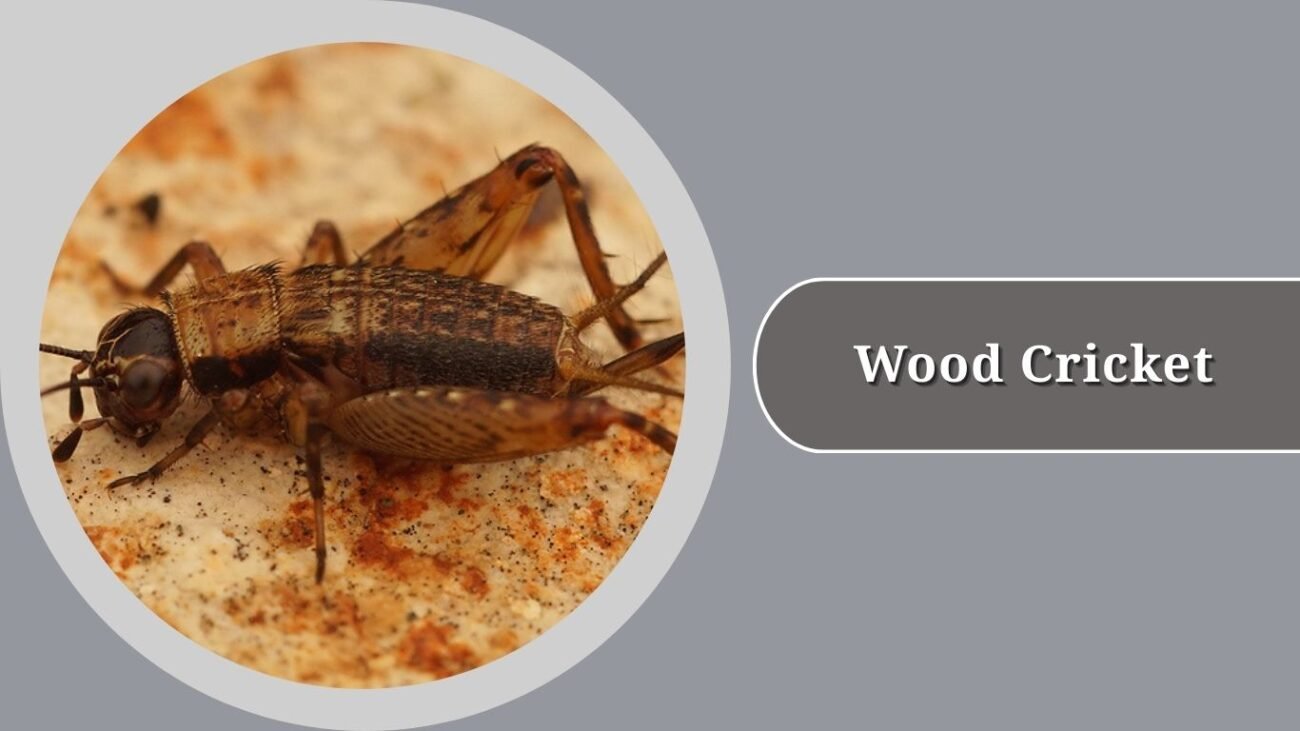
The wood cricket (Nemobius sylvestris) is a small, ground-dwelling cricket native to Europe. It is less commonly seen than field or house crickets, but its faint songs and preference for wooded habitats make it distinctive.
Identification
- Size: 10–15 mm long
- Color: Dark brown to black, sometimes with lighter markings
- Wings: Very short or reduced, not covering the abdomen fully
- Antennae: Long and threadlike
- Body: Slender and adapted for movement among leaf litter
Habitat
Wood crickets inhabit deciduous woodlands, forest edges, and shaded areas with abundant leaf litter. They prefer moist soils and are usually found hiding under logs, bark, or debris on the forest floor.
Behavior
Males produce a faint, high-pitched chirping sound, often difficult for humans to detect. They are mostly nocturnal and feed on decaying plant material, fungi, and occasionally small insects. Their dark coloration helps them blend into the woodland floor.
Lifecycle
Their lifecycle follows incomplete metamorphosis. Eggs are laid in soil or leaf litter. Nymphs emerge in spring and undergo several molts, becoming adults by late summer. Adults are typically active until autumn before the cycle repeats.
20. African Field Cricket
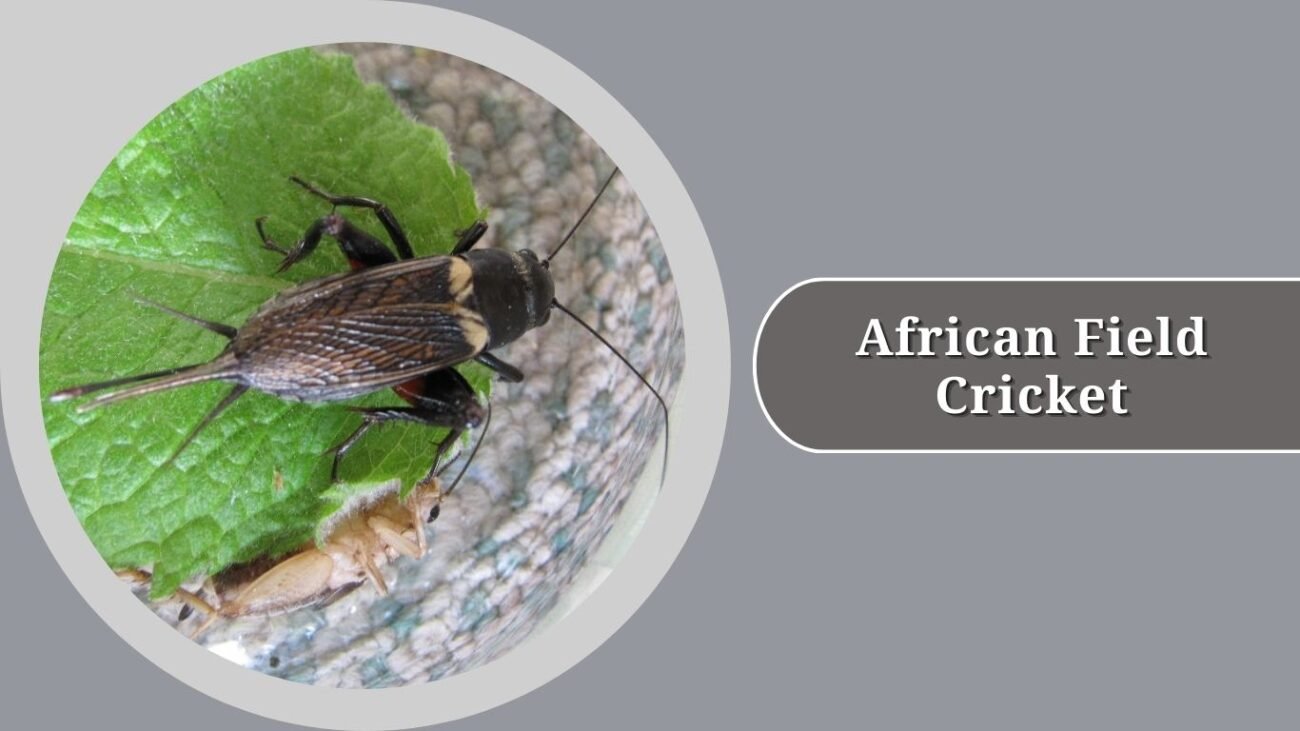
The African field cricket (Gryllus bimaculatus) is a large, robust cricket species widely distributed across Africa and parts of Asia. It is one of the best-known crickets and is often used as feeder insects for reptiles, birds, and amphibians.
Identification
- Size: 20–28 mm long
- Color: Dark brown to black, with a shiny body
- Wings: Well-developed; males use them to produce loud chirping
- Antennae: Very long, threadlike, longer than the body
- Body: Stout and muscular with powerful hind legs
Habitat
African field crickets live in open fields, farmlands, and grasslands. They dig shallow burrows in the soil or hide under stones and vegetation. They are especially abundant in warm, tropical, and subtropical climates.
Behavior
Males are loud singers, producing continuous chirping to attract females and establish territory. They are nocturnal and omnivorous, feeding on plants, seeds, insects, and decaying organic matter. When disturbed, they may quickly burrow into the soil for safety.
Lifecycle
They undergo incomplete metamorphosis. Females use their ovipositors to deposit eggs in soil. Nymphs hatch after a few weeks, resembling miniature adults, and molt several times before reaching maturity. Their life cycle is relatively short, usually completed in 2–3 months in warm climates.
21. Australian Field Cricket
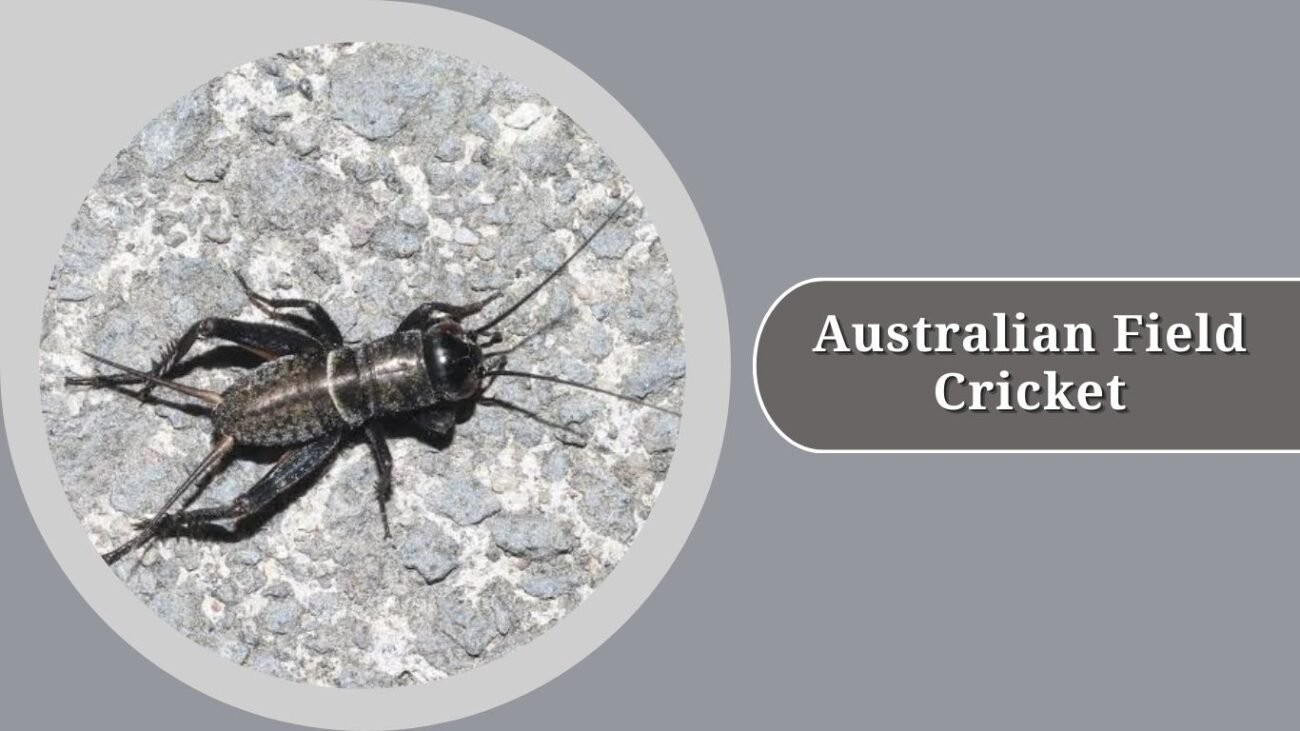
The Australian field cricket (Teleogryllus commodus) is a robust and widespread cricket species native to Australia and nearby regions. Known for its loud and persistent chirping, it is often encountered in gardens, grasslands, and suburban areas.
Identification
- Size: 20–25 mm long
- Color: Dark brown to black with lighter markings on the thorax
- Wings: Well-developed; males use them for chirping
- Antennae: Long and threadlike, longer than the body
- Body: Stout, with powerful hind legs adapted for jumping
Habitat
This species thrives in a variety of habitats, including gardens, fields, roadsides, and farmlands. It prefers warm environments and often shelters in cracks, burrows, or under debris during the day.
Behavior
Males are loud and persistent singers, especially at night, producing a series of high-pitched chirps to attract females. Australian field crickets are omnivorous, feeding on grasses, seeds, and small insects. They are active mostly at night, hiding by day.
Lifecycle
Their lifecycle follows incomplete metamorphosis. Eggs are laid in soil and hatch after several weeks. Nymphs resemble small, wingless adults and pass through multiple molts before reaching maturity. The full cycle typically completes within one season, though in warmer climates, multiple generations may occur in a year.
22. Tropical House Cricket
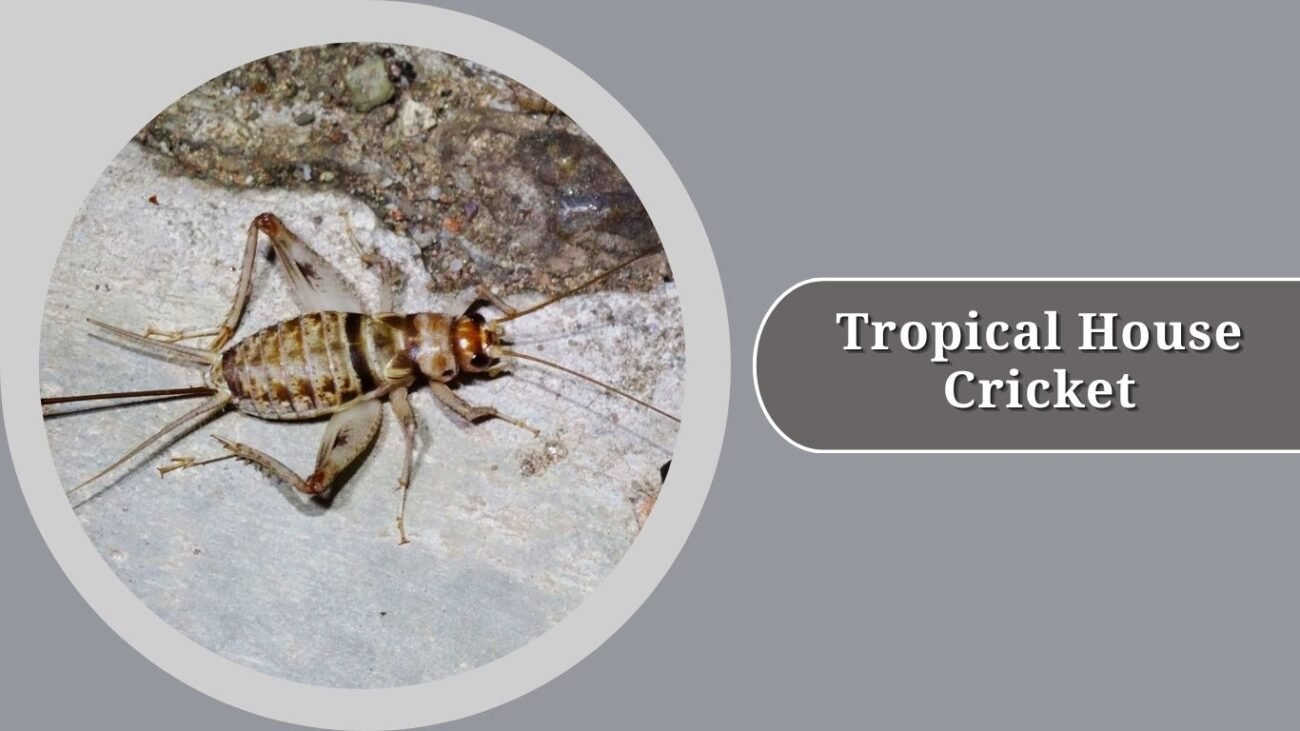
The tropical house cricket (Gryllodes sigillatus), also known as the banded cricket, is a hardy species commonly bred as feeder insects for reptiles, amphibians, and birds. It is smaller and quieter than the common house cricket, making it popular in the pet trade.
Identification
- Size: 12–20 mm long
- Color: Light brown to tan with distinctive dark bands across the abdomen
- Wings: Present; males use them for chirping, though softer than house crickets
- Antennae: Very long and slender
- Body: Slender, with slightly banded appearance
Habitat
Tropical house crickets are native to Asia and Africa but are now found worldwide due to commercial breeding. In the wild, they inhabit warm, dry environments, often around human settlements, fields, and gardens.
Behavior
They are nocturnal and less noisy than house crickets, producing softer songs. Tropical house crickets are omnivorous, feeding on plant material, seeds, and small insects. Their resilience and adaptability make them excellent for captive breeding.
Lifecycle
They undergo incomplete metamorphosis. Eggs are laid in soil or moist substrate and hatch in about 10–14 days under warm conditions. Nymphs grow rapidly, molting several times before reaching adulthood within 6–8 weeks. Their life cycle is shorter than many other cricket species.
23. Texas Field Cricket
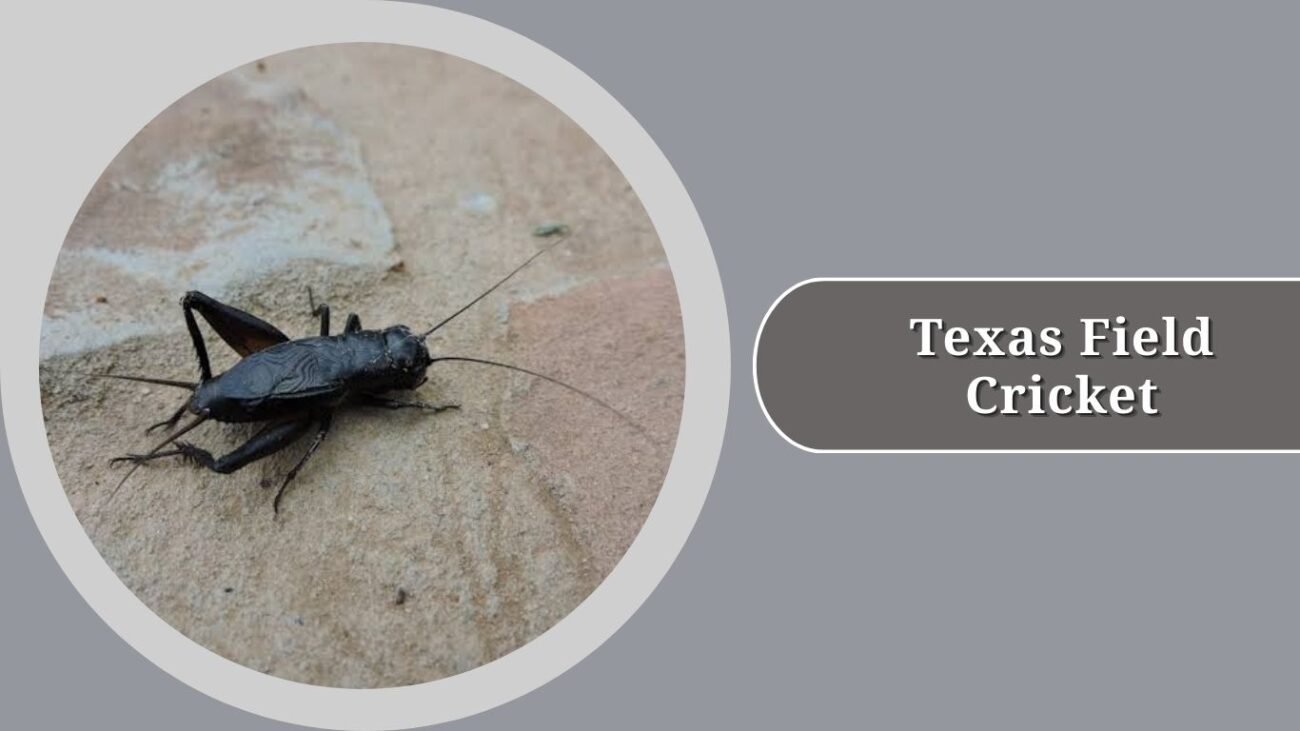
The Texas field cricket (Gryllus texensis) is a common North American species best known for its loud chirping during summer and fall evenings. It is closely related to other field crickets but is distinct in its song and distribution.
Identification
- Size: 16–22 mm long
- Color: Dark brown to black, shiny body
- Wings: Well-developed in males, used for chirping
- Antennae: Very long, threadlike, longer than the body
- Body: Stout with strong hind legs for jumping
Habitat
Texas field crickets are widespread across the southern United States, especially in Texas and surrounding states. They are often found in fields, roadsides, gardens, and occasionally indoors, attracted by lights at night.
Behavior
Males produce loud, repetitive chirps at night to attract females. They are nocturnal and highly active during warm months. Texas field crickets are omnivores, feeding on grasses, seeds, organic matter, and occasionally other insects.
Lifecycle
They undergo incomplete metamorphosis. Eggs are laid in soil, hatching after several weeks. Nymphs resemble miniature adults and molt several times before reaching maturity. Their populations can grow rapidly in late summer and early fall, when adults are most abundant.
24. Jamaican Field Cricket
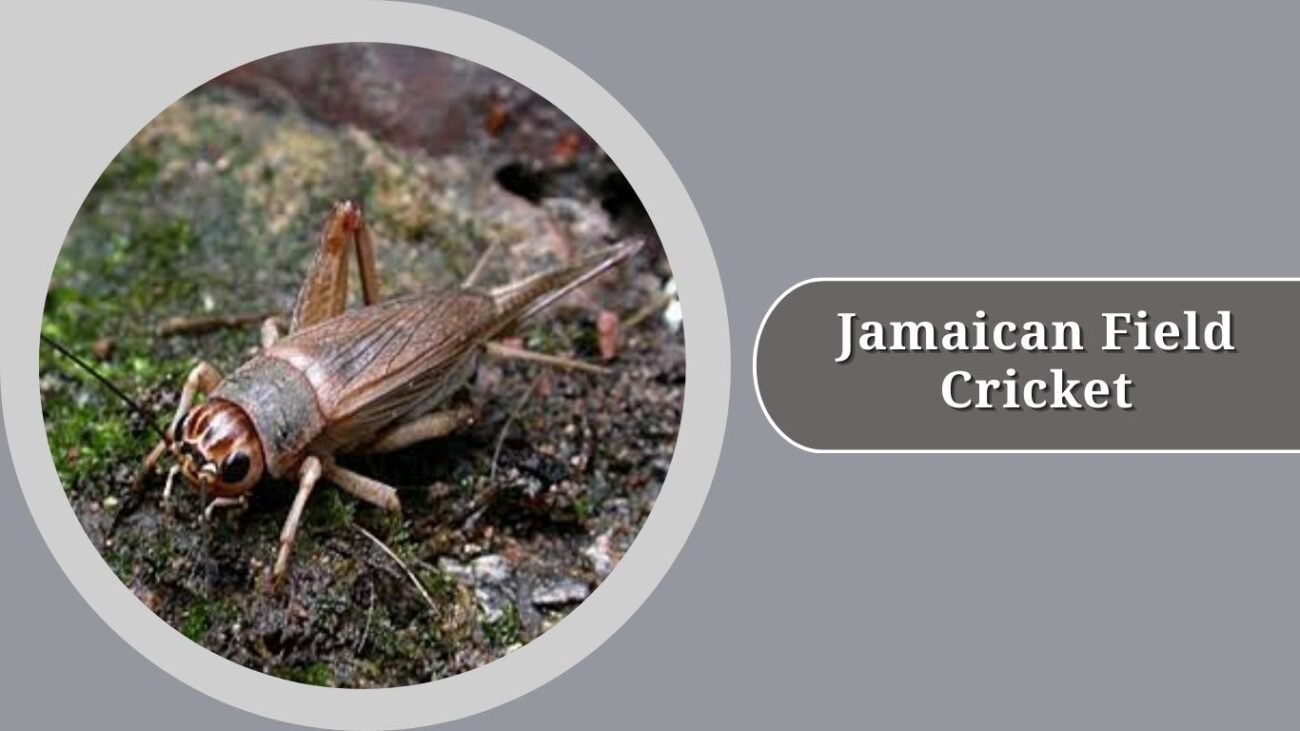
The Jamaican field cricket (Gryllus assimilis) is a large, robust cricket species native to the Caribbean and Central America but now found in many parts of the world due to trade and breeding. It is commonly used as a feeder insect in the pet industry.
Identification
- Size: 18–25 mm long
- Color: Dark brown to black, often shiny
- Wings: Present; males use them to produce loud chirping
- Antennae: Very long and slender
- Body: Strong and muscular with prominent hind legs
Habitat
Jamaican field crickets inhabit fields, gardens, farmlands, and grasslands. They prefer warm, tropical, and subtropical environments and often burrow in soil or hide under rocks and vegetation during the day.
Behavior
They are nocturnal and well known for their loud, continuous chirping at night. Males use their calls to attract females and defend territory. Jamaican field crickets are omnivorous, feeding on plants, seeds, and small insects. They are also highly active and strong jumpers.
Lifecycle
Their lifecycle is incomplete metamorphosis. Females lay eggs in soil, which hatch after 2–3 weeks under warm conditions. Nymphs resemble small adults and molt several times before reaching maturity. Adults typically live for 2–3 months.
25. Banded Ground Cricket
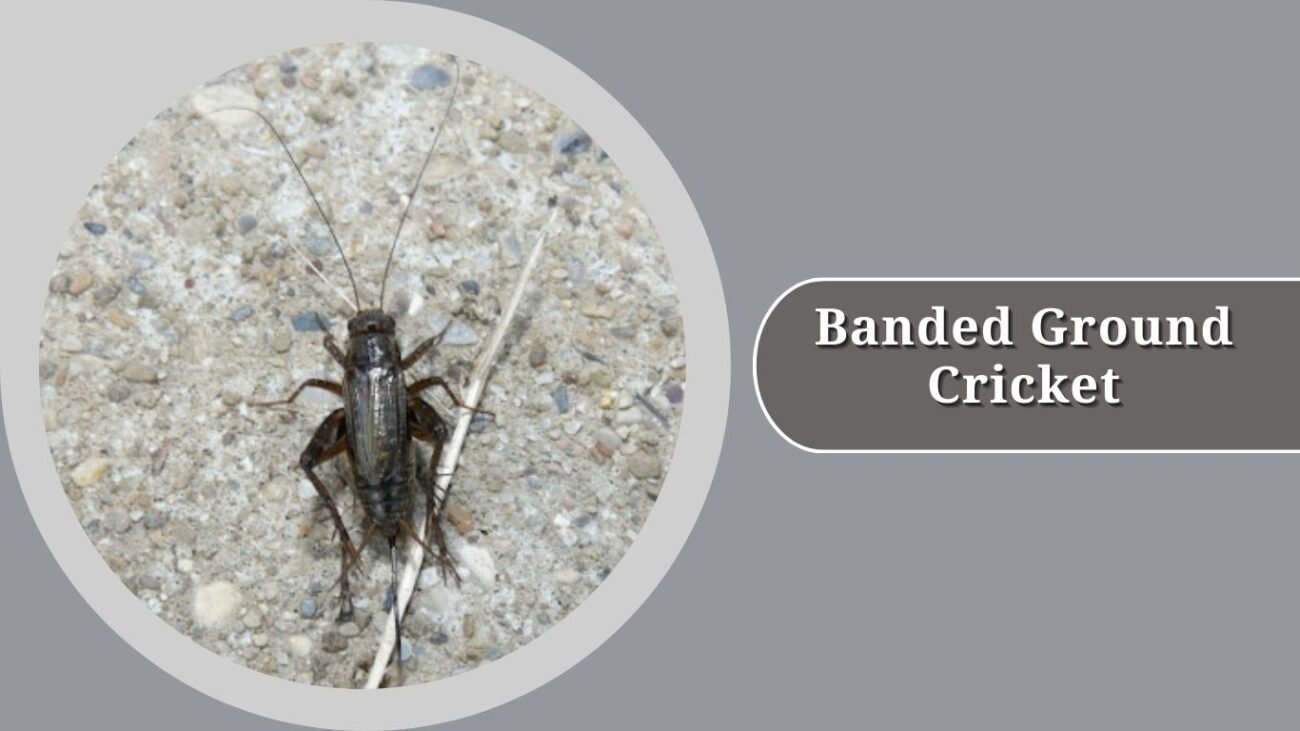
The banded ground cricket (Gryllodes sigillatus, sometimes grouped with tropical house crickets) is a small species named for the dark bands across its body. It is often found in warmer regions and is also widely bred as a feeder insect.
Identification
- Size: 10–15 mm long
- Color: Light brown to tan with distinct dark bands on the abdomen
- Wings: Present but shorter than in many other cricket species
- Antennae: Long and threadlike
- Body: Slender, with a characteristic banded pattern
Habitat
Banded ground crickets prefer warm, dry environments. In the wild, they are found in open fields, gardens, and near human dwellings. Due to their adaptability, they are commonly raised in captivity around the world.
Behavior
They are nocturnal and relatively quiet compared to house or field crickets. Males produce softer chirping sounds. Banded ground crickets are omnivorous, feeding on plants, seeds, and small insects. Their hardy nature makes them suitable for captive breeding.
Lifecycle
They follow incomplete metamorphosis. Eggs are laid in soil or organic matter and hatch within 1–2 weeks in warm conditions. Nymphs mature quickly, reaching adulthood in about 6–8 weeks, allowing several generations per year in warm climates.
26. Striped Ground Cricket
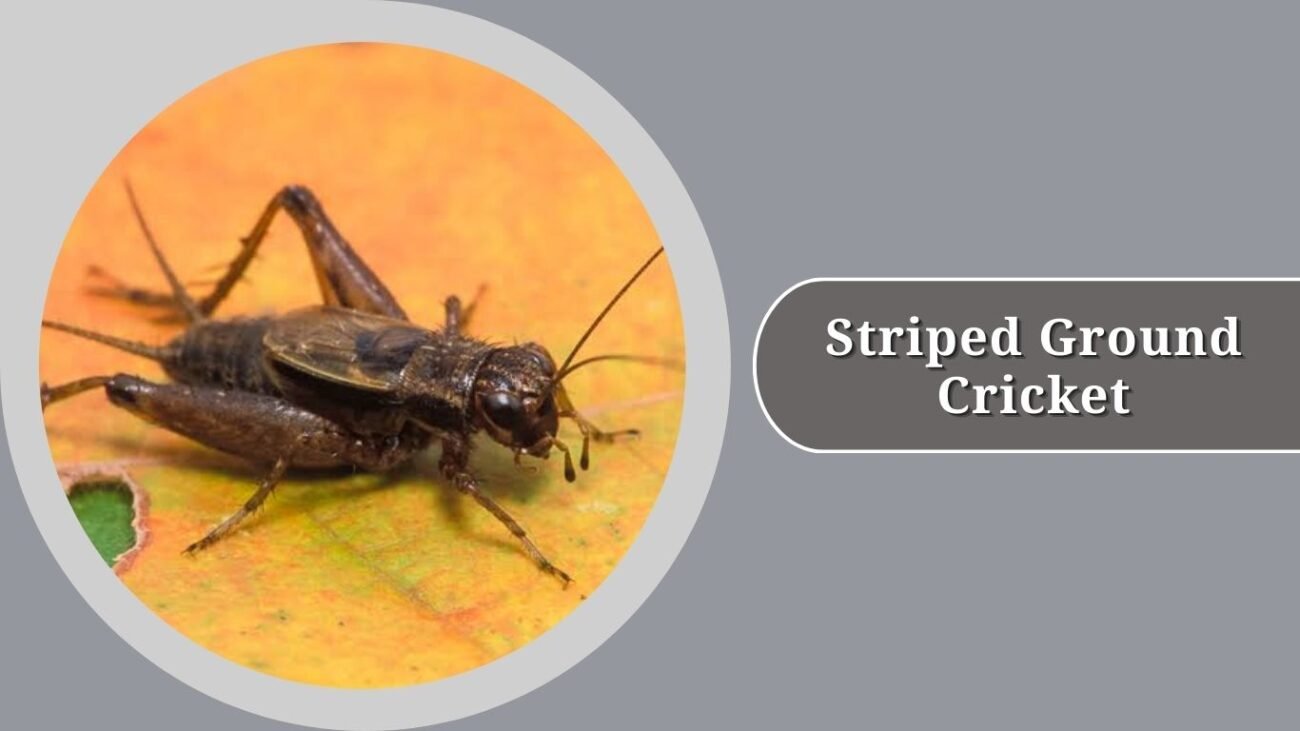
The striped ground cricket (Allonemobius fasciatus) is a small, active cricket species commonly found in North America. It is recognized by the pale stripes running along its body, which set it apart from other ground crickets.
Identification
- Size: 6–10 mm long
- Color: Brown to dark brown with noticeable pale stripes on the thorax
- Wings: Short, not fully covering the abdomen
- Antennae: Long and threadlike
- Body: Small and compact, adapted for ground living
Habitat
Striped ground crickets inhabit grassy fields, forest edges, and gardens. They are often found under leaves, stones, or debris, and prefer moist, shaded habitats close to the soil surface.
Behavior
Their song is a high-pitched, rapid trill that can be heard mostly in late summer and fall. Striped ground crickets are nocturnal and feed on a mix of decaying plant matter, fungi, seeds, and small insects. They are more often heard than seen due to their small size and cryptic habits.
Lifecycle
They undergo incomplete metamorphosis. Eggs are laid in soil during late summer and overwinter before hatching in spring. Nymphs molt several times before becoming adults by late summer, completing their lifecycle in one year.
27. Green Tree Cricket
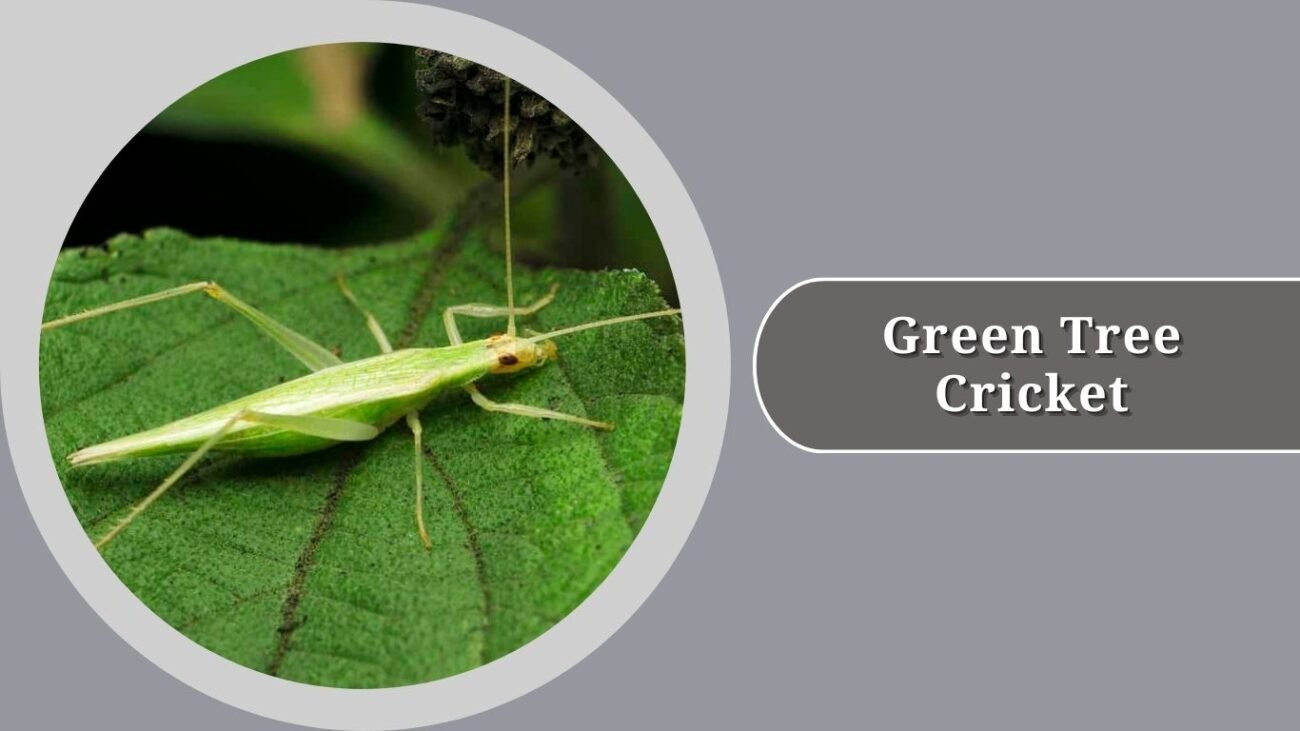
The green tree cricket (Oecanthus spp.) is a slender, leaf-colored cricket species best known for its melodious nighttime songs. Its bright green body provides excellent camouflage among vegetation.
Identification
- Size: 13–19 mm long
- Color: Bright green, blending well with leaves
- Wings: Transparent, held flat along the body
- Antennae: Extremely long and thin
- Body: Slender and delicate, well-suited for climbing vegetation
Habitat
Green tree crickets are found in shrubs, trees, and tall grasses across North America. They prefer areas with abundant vegetation where they can remain concealed among foliage.
Behavior
Males produce soft, rhythmic trills at night to attract females. Their song is temperature-dependent, with chirping increasing in warmer conditions. Green tree crickets feed on leaves, pollen, and occasionally small insects. They are nocturnal and often active during late summer and autumn evenings.
Lifecycle
They undergo incomplete metamorphosis. Eggs are inserted into plant stems or bark by females using their ovipositors. Nymphs hatch in spring, grow through successive molts, and mature into adults by late summer, completing their lifecycle within a single season.
28. Snow Tree Cricket
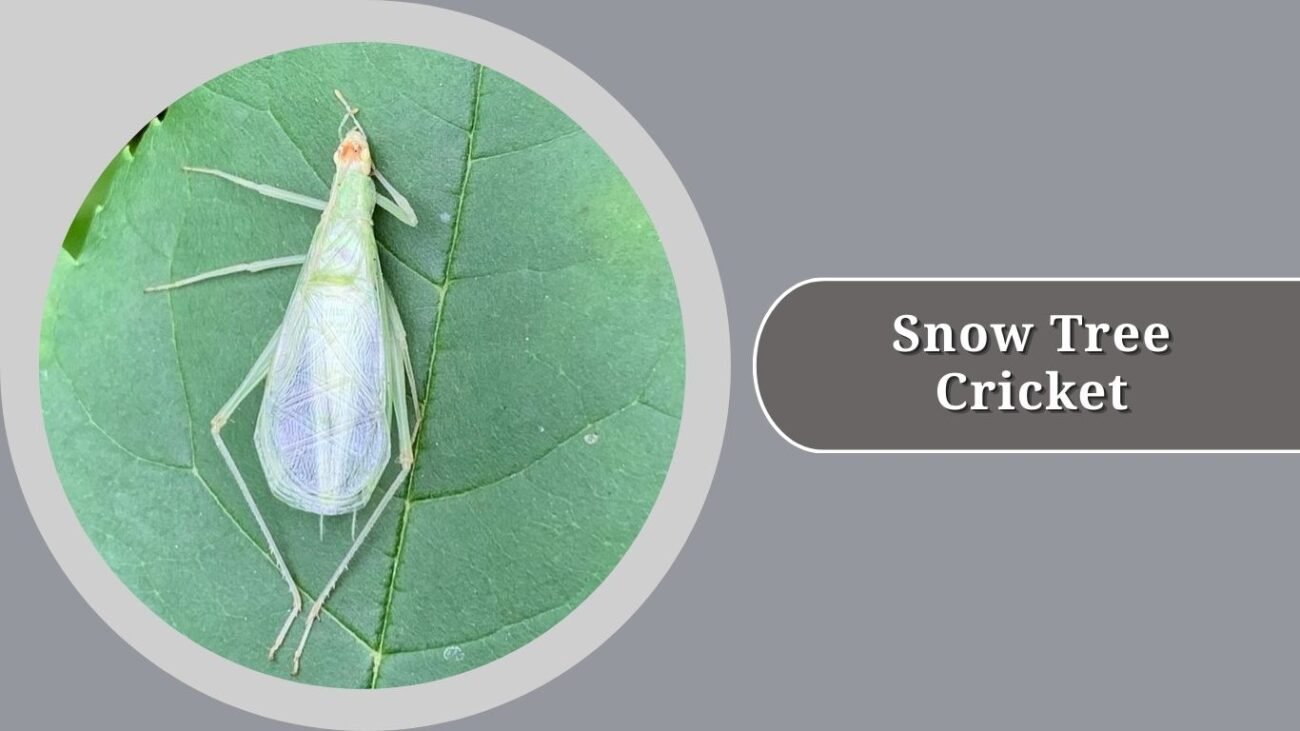
The snow tree cricket (Oecanthus niveus) is a pale, delicate cricket known for its clear, rhythmic chirping that closely correlates with temperature. It is sometimes referred to as the “thermometer cricket.”
Identification
- Size: 12–16 mm long
- Color: Pale green to whitish, almost translucent
- Wings: Transparent, held flat along the body
- Antennae: Very long and threadlike
- Body: Slender, camouflaged against light-colored foliage
Habitat
Snow tree crickets are found in shrubs, orchards, woodlands, and gardens throughout North America. They prefer areas with leafy vegetation where their pale coloring provides excellent camouflage.
Behavior
Males produce a continuous, high-pitched trill at night, often heard in late summer and autumn. The frequency of their chirps increases with temperature, making them natural “living thermometers.” They are nocturnal and feed on leaves, pollen, and small insects.
Lifecycle
Their lifecycle follows incomplete metamorphosis. Eggs are laid inside twigs or plant stems by females using their ovipositors. Eggs overwinter and hatch in spring. Nymphs gradually develop through several molts before reaching adulthood by late summer.
29. Robust Ground Cricket
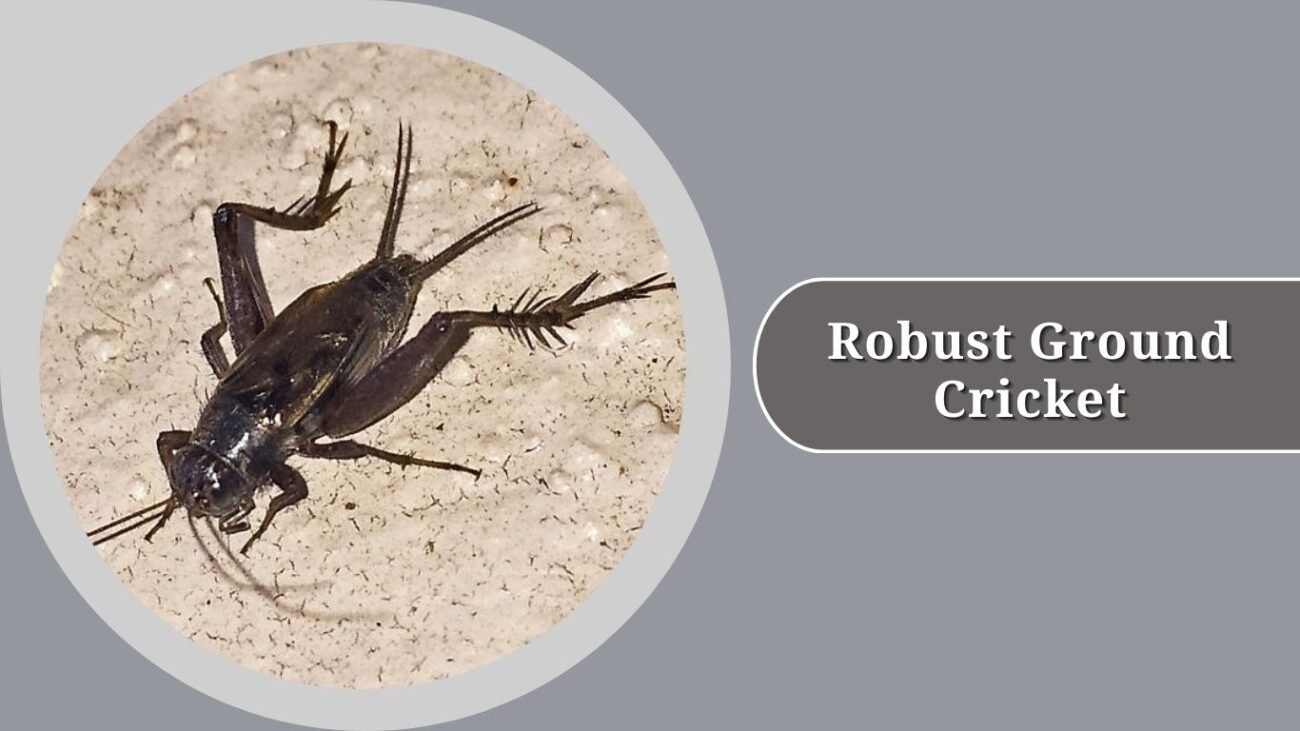
The robust ground cricket (Allonemobius robustus) is a stout species of ground cricket found in North America. It is larger and stronger-built than most of its relatives, giving rise to its name.
Identification
- Size: 8–12 mm long
- Color: Dark brown to black with a slightly glossy appearance
- Wings: Short, not covering the full abdomen
- Antennae: Long and thin, typical of ground crickets
- Body: Stocky and more robust compared to other small ground crickets
Habitat
Robust ground crickets inhabit fields, meadows, and forest edges. They prefer moist soil and can often be found under leaf litter, stones, and logs close to the ground surface.
Behavior
Males produce a distinctive, rapid, and buzzy trill, especially during late summer and fall evenings. They are nocturnal and omnivorous, feeding on decaying plant matter, seeds, fungi, and small invertebrates. Their strong body allows them to thrive in slightly harsher ground conditions than smaller species.
Lifecycle
Their lifecycle follows incomplete metamorphosis. Eggs are laid in the soil during late summer or fall, where they overwinter. Nymphs emerge in spring, molt several times, and reach maturity by late summer, completing a one-year cycle.
30. Common Mole Cricket
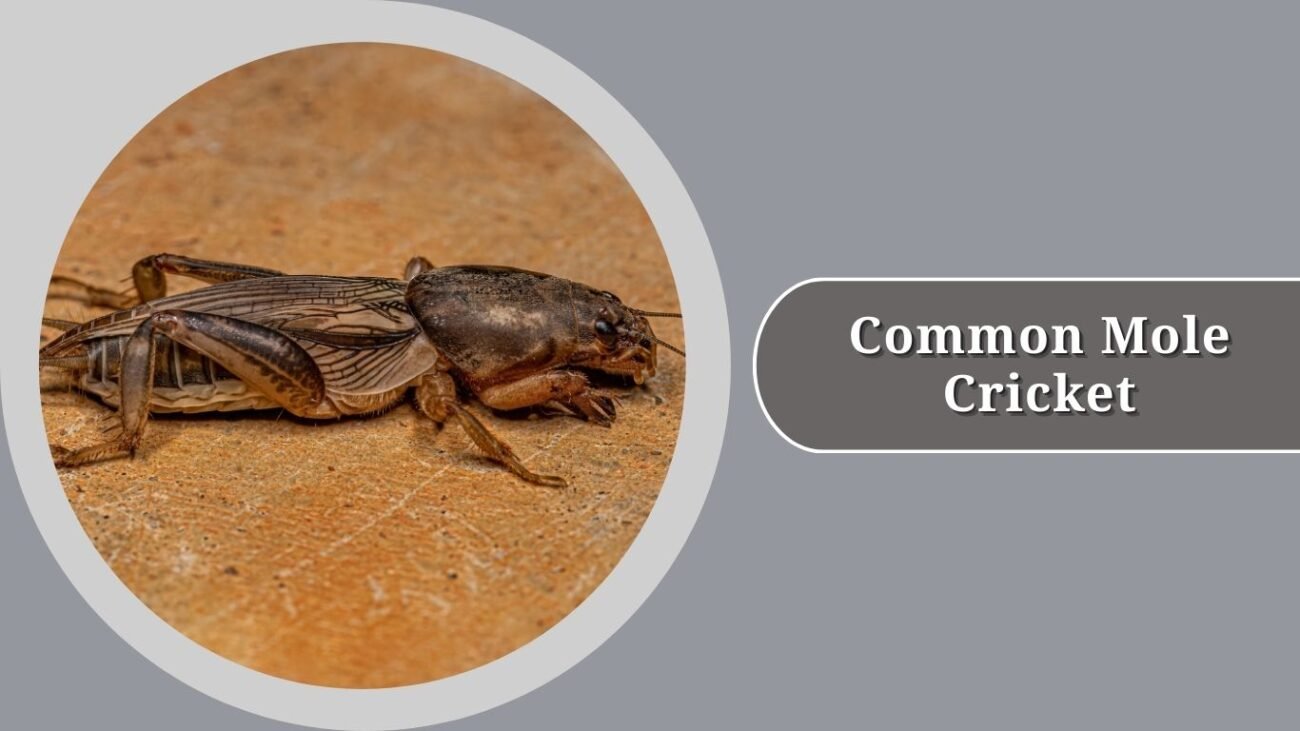
The common mole cricket (Gryllotalpa gryllotalpa) is one of the most widespread mole cricket species, known for its burrowing lifestyle and powerful forelegs adapted for digging. It is often considered an agricultural pest due to the damage it causes to roots and crops.
Identification
- Size: 35–50 mm long
- Color: Brown to dark brown with a velvety body texture
- Wings: Present; capable of short flights
- Antennae: Long and slender
- Legs: Enlarged, spade-like forelegs specialized for digging
- Body: Cylindrical, adapted for subterranean living
Habitat
The common mole cricket lives underground in moist, sandy, or loamy soils. It is found across Europe, Asia, and parts of North Africa, often inhabiting gardens, farmland, and grasslands where the soil is easy to tunnel.
Behavior
Mole crickets are nocturnal and spend most of their lives underground, emerging at night to forage or fly short distances. Males produce deep, drumming calls from their burrows to attract mates. They feed on plant roots, tubers, and sometimes small soil-dwelling invertebrates.
Lifecycle
Their lifecycle follows incomplete metamorphosis. Females lay eggs in underground chambers during spring. Eggs hatch in 2–3 weeks, and the nymphs resemble small adults, molting multiple times before reaching maturity. The full lifecycle may take one to two years, depending on climate.