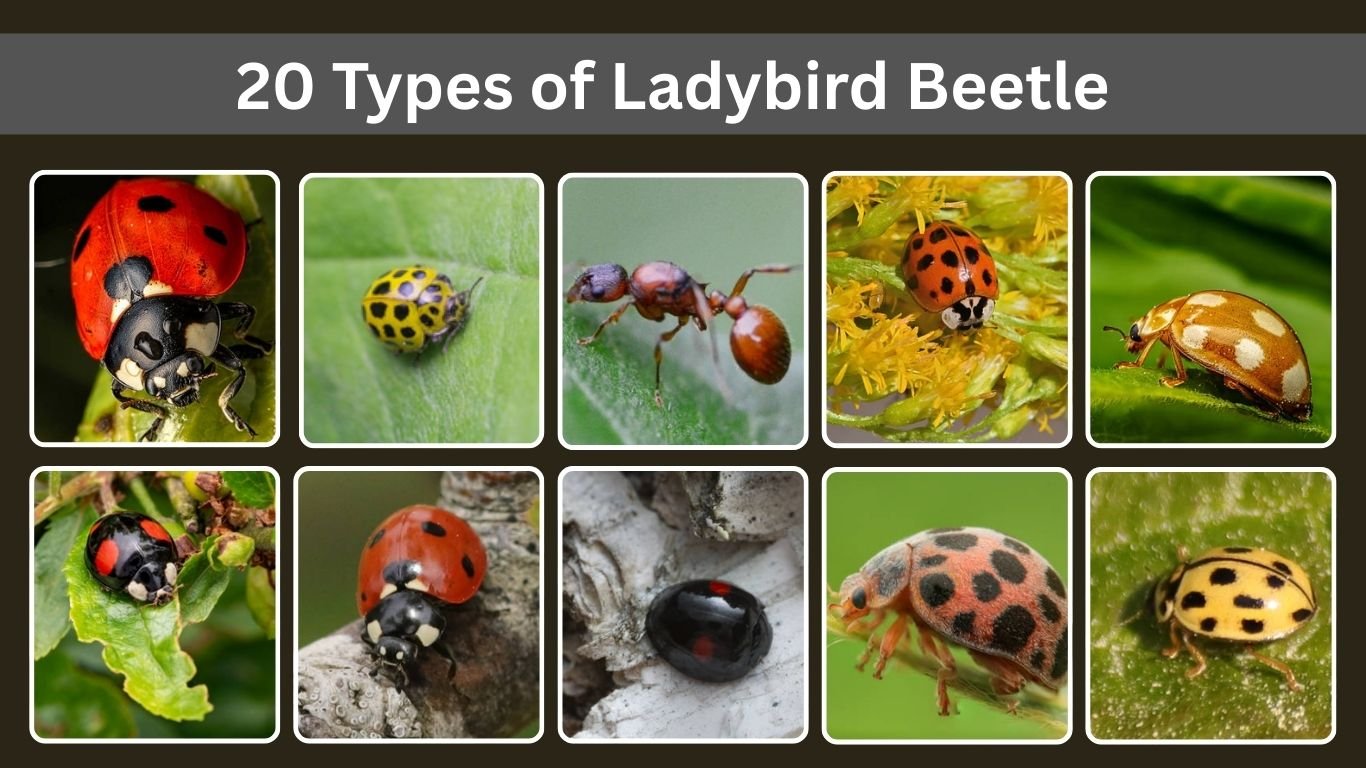
Ladybird beetles, commonly known as ladybugs, are colorful and beneficial insects found worldwide. Renowned for their distinctive spots and dome-shaped bodies, they play a crucial role in controlling garden pests like aphids and scale insects. With over 20 different species, each has unique patterns, colors, and behaviors. Understanding their identification and habits helps gardeners, farmers, and nature enthusiasts appreciate their importance in maintaining a healthy ecosystem.
1. Seven-Spotted Ladybird (Coccinella septempunctata)

The Seven-Spotted Ladybird is one of the most common and recognizable ladybird beetles worldwide. Known for its bright red body with seven distinct black spots, it is often seen in gardens and agricultural fields where it helps control aphid populations. Its vibrant appearance and beneficial nature make it a favorite among gardeners and insect enthusiasts.
Identification:
- Bright red or orange elytra (wing covers)
- Seven black spots (three on each side, one in the middle)
- Black head with small white markings
- Round, dome-shaped body
- Size: 7–10 mm in length
Habitat and Behavior
Seven-Spotted Ladybirds are found in gardens, meadows, and fields across Europe, Asia, and North America. They feed primarily on aphids and other small soft-bodied insects, making them natural pest controllers. They can be found both on plants and under leaves, especially in warm weather.
Lifecycle
The lifecycle includes four stages: egg, larva, pupa, and adult. Adults lay yellow eggs in clusters near aphid colonies. Larvae are dark with orange markings and voraciously feed on pests before pupating and emerging as adults.
2. Two-Spotted Ladybird (Adalia bipunctata)

The Two-Spotted Ladybird is a small but highly beneficial beetle, commonly found in gardens and agricultural areas. It is named for the two prominent black spots on its red or orange wing covers. This species is well-known for its role in controlling aphid populations, making it an essential ally for gardeners and farmers alike.
Identification:
- Red or orange elytra with two distinct black spots
- Black head with small white patches
- Dome-shaped, rounded body
- Size: 4–5 mm in length
- Legs and antennae are black
Habitat and Behavior
Two-Spotted Ladybirds inhabit gardens, orchards, and grassy areas across Europe and North America. They are predators of aphids, mites, and scale insects. Active during the day, they are often seen climbing plants in search of prey.
Lifecycle
Females lay clusters of yellow eggs near aphid colonies. Larvae are dark with orange spots and feed extensively on aphids before pupating. Adults emerge after about a week and continue the cycle of pest control throughout the season.
3. Twenty-Spotted Ladybird (Psyllobora vigintimaculata)
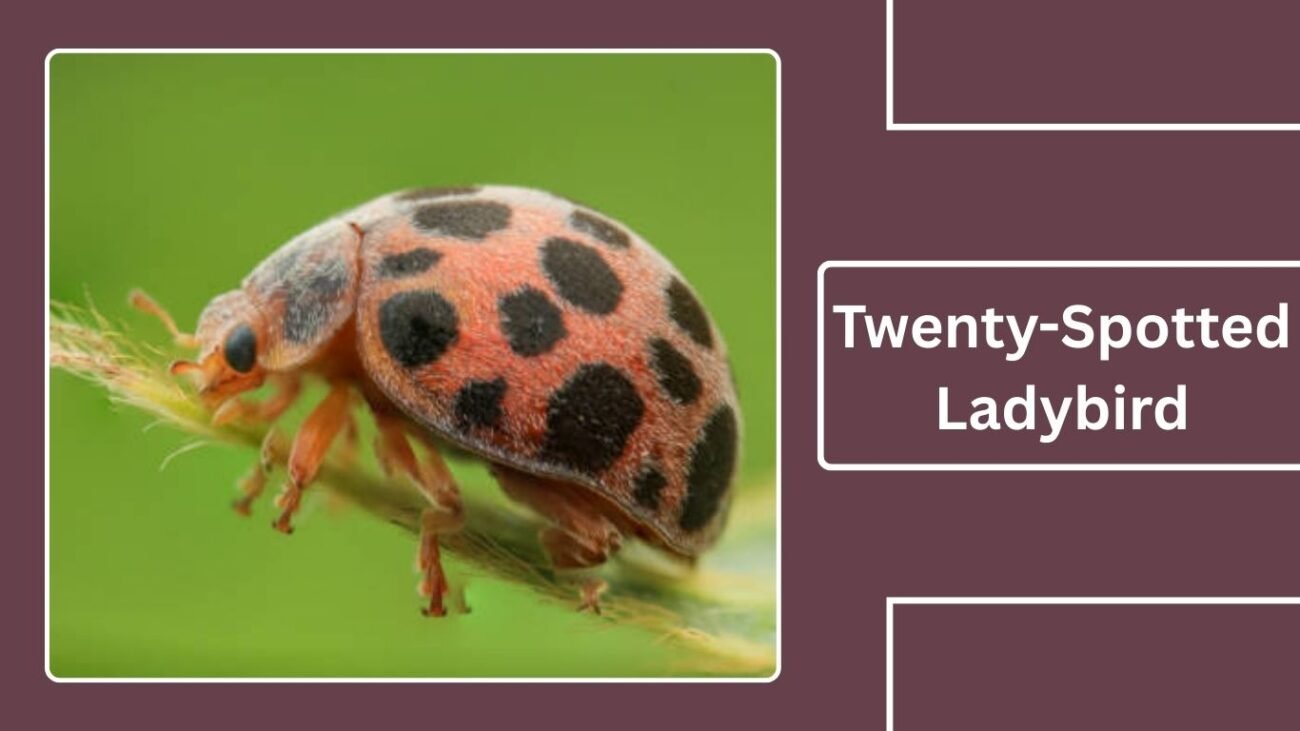
The Twenty-Spotted Ladybird is a small, brightly colored beetle recognized for its numerous black spots on a yellow or orange background. Unlike many ladybirds that are primarily predators, this species mostly feeds on mildew and fungi found on plant surfaces, playing a unique ecological role in controlling fungal growth.
Identification:
- Yellow or orange elytra with approximately 20 small black spots
- Black head with white markings near the eyes
- Oval, dome-shaped body
- Size: 3–5 mm in length
- Legs and antennae are black
Habitat and Behavior
Twenty-Spotted Ladybirds are commonly found in gardens, forests, and fields where mildew is present. They are often seen on leaves affected by powdery mildew, consuming the fungal growth and helping maintain plant health.
Lifecycle
Females lay small clusters of eggs on leaves where mildew is abundant. Larvae are similarly small, with dark bodies and pale markings, feeding on the fungus. After pupation, adult beetles emerge to continue feeding and reproducing.
4. Asian Lady Beetle (Harmonia axyridis)

The Asian Lady Beetle is a highly adaptable and widespread species, originally from East Asia. It is known for its variable coloration, ranging from red to orange with multiple black spots. This beetle is an effective predator of aphids and other garden pests, but it can sometimes become a nuisance when it enters homes in large numbers during colder months.
Identification:
- Color varies from bright red to orange, with 0–19 black spots
- Distinct “M”-shaped black marking on the white pronotum
- Dome-shaped, oval body
- Size: 5–8 mm in length
- Black legs and antennae
Habitat and Behavior
Asian Lady Beetles are found in gardens, orchards, and agricultural fields. They actively hunt aphids and scale insects but may invade buildings during fall to overwinter. They are highly adaptable to different climates and habitats.
Lifecycle
Females lay clusters of yellow eggs near prey colonies. Larvae are spiny and dark with orange markings, feeding on aphids before pupating. Adults emerge after several days and continue the cycle, often reproducing multiple times a year.
5. Eyed Ladybird (Anatis ocellata)

The Eyed Ladybird is a striking species known for its large, eye-like spots on the wing covers. These “eyes” serve as a defensive mechanism, deterring predators by making the beetle appear larger and more threatening. This ladybird primarily preys on aphids and is commonly found in coniferous forests across Europe and Asia.
Identification:
- Red or orange elytra with 12 large black spots, each surrounded by a pale ring resembling eyes
- Black head with small white markings
- Dome-shaped, slightly elongated body
- Size: 8–10 mm in length
- Black legs and antennae
Habitat and Behavior
Eyed Ladybirds are typically found on pine, spruce, and fir trees where aphids are present. They are less common in gardens but play an important role in forest pest control. These beetles are active during the day and often feed in groups when aphid colonies are abundant.
Lifecycle
Females lay yellow eggs near aphid colonies on tree needles or leaves. Larvae are dark with orange markings and feed voraciously on aphids. After pupation, adults emerge ready to hunt and reproduce, continuing the cycle of natural pest control.
6. Fourteen-Spotted Ladybird (Propylea quatuordecimpunctata)

The Fourteen-Spotted Ladybird is a small, oval beetle recognized for its distinctive pattern of black spots on a yellow or orange background. It is a beneficial predator, feeding mainly on aphids and other soft-bodied insects, making it valuable for natural pest control in gardens and agricultural fields.
Identification:
- Yellow or orange elytra with 14 black spots (seven on each side)
- Black head with small white markings
- Oval, slightly domed body
- Size: 3–5 mm in length
- Black legs and antennae
Habitat and Behavior
This ladybird is commonly found on various plants in gardens, fields, and meadows. It actively hunts aphids, scale insects, and mites. Fourteen-Spotted Ladybirds are agile climbers and often move across leaves in search of prey.
Lifecycle
Females lay clusters of eggs near aphid colonies. Larvae are dark with light-colored markings and feed extensively on insects before pupating. Adults emerge after a few days and continue the cycle, contributing to natural pest management.
7. Orange Ladybird (Halyzia sedecimguttata)

The Orange Ladybird is a visually striking beetle, known for its bright orange coloration and numerous white spots on its wing covers. Unlike many other ladybirds that prey primarily on aphids, this species feeds mostly on mildew, helping to control fungal growth on plants and contributing to a healthy ecosystem.
Identification:
- Bright orange elytra with 16 white spots
- Black head with small white markings
- Dome-shaped, oval body
- Size: 5–7 mm in length
- Black legs and antennae
Habitat and Behavior
Orange Ladybirds are commonly found in forests, gardens, and orchards, especially on leaves affected by mildew. They are active during the day, consuming fungal growth, and are often seen on the undersides of leaves.
Lifecycle
Females lay small clusters of eggs on leaves where mildew is present. Larvae are dark with pale spots and feed on fungal matter before pupating. Adults emerge to continue feeding and maintaining the balance of fungal populations on plants.
8. Cream-Spotted Ladybird (Calvia quatuordecimguttata)

The Cream-Spotted Ladybird is a small, attractive beetle characterized by its dark body with pale, cream-colored spots. It is a beneficial predator, primarily feeding on aphids, scale insects, and other small pests, making it a valuable ally for gardeners and farmers.
Identification:
- Dark brown to black elytra with 14 cream-colored spots
- Black head with white markings near the eyes
- Dome-shaped, rounded body
- Size: 4–5 mm in length
- Black legs and antennae
Habitat and Behavior
Cream-Spotted Ladybirds are commonly found in gardens, orchards, and wooded areas. They actively hunt aphids and other soft-bodied insects on plants. These beetles are most active during the day and can often be seen moving across leaves in search of prey.
Lifecycle
Females lay clusters of yellow eggs near aphid colonies. Larvae are dark with orange or pale markings, feeding extensively on pests before pupating. Adults emerge after pupation and continue to help control pest populations throughout the growing season.
9. Pine Ladybird (Exochomus quadripustulatus)
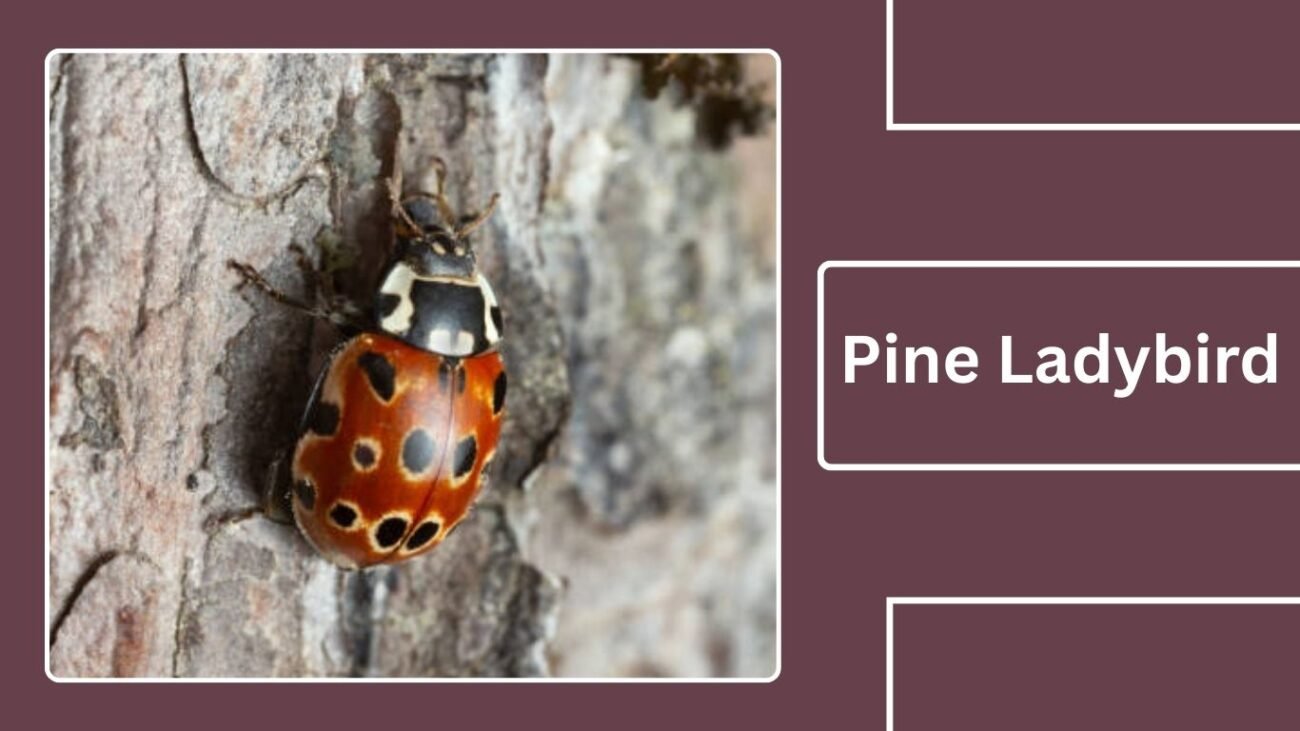
The Pine Ladybird is a small, striking beetle commonly found in coniferous forests. It is easily recognized by its shiny black elytra with four distinctive red spots. This species is a voracious predator of aphids and scale insects, helping maintain the health of pine and spruce trees.
Identification:
- Shiny black elytra with four red spots (two on each side)
- Black head with small white markings
- Dome-shaped, oval body
- Size: 3–5 mm in length
- Black legs and antennae
Habitat and Behavior
Pine Ladybirds inhabit pine, spruce, and other coniferous trees across Europe and Asia. They are primarily found on needles and branches where aphids and scale insects are present. These beetles are active during the day and are important for natural pest control in forests.
Lifecycle
Females lay small clusters of yellow eggs near aphid colonies on tree needles. Larvae are dark with pale markings, feeding on pests before pupating. Adults emerge after several days to continue hunting and reproducing.
10. Scarlet Seven-Spotted Ladybird (Coccinella magnifica)

The Scarlet Seven-Spotted Ladybird is a vibrant and easily recognizable beetle, famous for its bright red elytra and seven distinct black spots. Like other ladybirds, it is a beneficial predator that helps control aphid populations in gardens, fields, and meadows.
Identification:
- Bright red elytra with seven black spots
- Black head with small white markings near the eyes
- Dome-shaped, rounded body
- Size: 7–9 mm in length
- Black legs and antennae
Habitat and Behavior
This ladybird is commonly found in gardens, meadows, and agricultural fields. It actively hunts aphids and other soft-bodied insects, playing a crucial role in natural pest control. Scarlet Seven-Spotted Ladybirds are most active during sunny days and can often be seen on plant leaves and stems.
Lifecycle
Females lay clusters of yellow eggs near aphid colonies. Larvae are dark with orange spots and feed voraciously on pests before pupating. After several days, adults emerge and continue the cycle of pest control throughout the growing season.
11. Fifteen-Spotted Ladybird (Anatis labiculata)

The Fifteen-Spotted Ladybird is a medium-sized beetle notable for its bright red or orange elytra adorned with 15 black spots. This species is a predator of aphids and other small insects, contributing to natural pest control in forests, gardens, and agricultural areas.
Identification:
- Red or orange elytra with 15 black spots
- Black head with small white markings
- Dome-shaped, oval body
- Size: 7–9 mm in length
- Black legs and antennae
Habitat and Behavior
Fifteen-Spotted Ladybirds are commonly found on shrubs, trees, and herbaceous plants where aphids are present. They are active during the day and often move across leaves in search of prey. These beetles help reduce pest populations naturally, minimizing the need for chemical pesticides.
Lifecycle
Females lay small clusters of eggs near aphid colonies. Larvae are dark with orange or pale markings and feed extensively on pests before pupating. Adults emerge to continue hunting and reproducing throughout the season.
12. Eleven-Spotted Ladybird (Coccinella undecimpunctata)
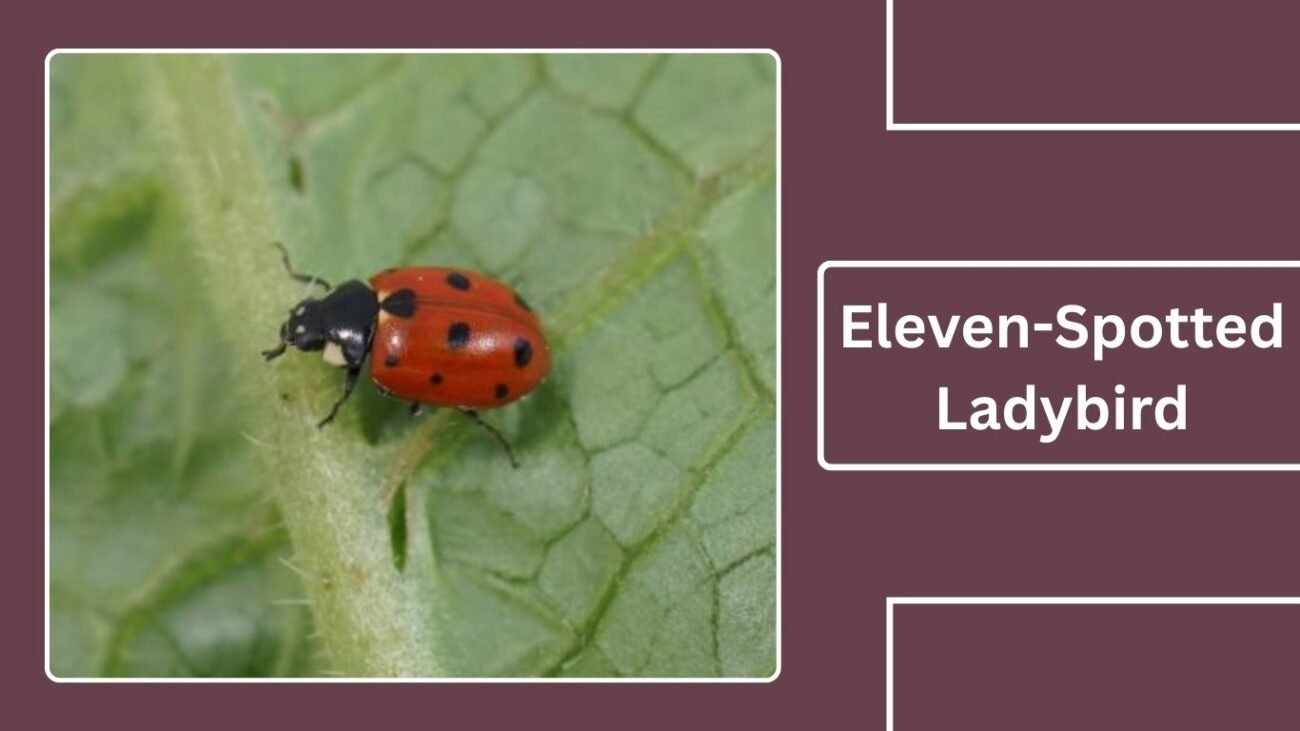
The Eleven-Spotted Ladybird is a small, oval beetle known for its bright red or orange wing covers with eleven distinct black spots. It is a beneficial predator, feeding mainly on aphids and other soft-bodied insects, making it valuable for natural pest control in gardens and fields.
Identification:
- Red or orange elytra with 11 black spots
- Black head with small white markings near the eyes
- Dome-shaped, rounded body
- Size: 4–7 mm in length
- Black legs and antennae
Habitat and Behavior
Eleven-Spotted Ladybirds are commonly found in gardens, meadows, and agricultural areas. They actively hunt aphids and scale insects on plants. These beetles are most active during sunny days and are often seen crawling on leaves and stems in search of prey.
Lifecycle
Females lay clusters of yellow eggs near aphid colonies. Larvae are dark with pale or orange markings and feed extensively on pests before pupating. Adults emerge after pupation and continue controlling pest populations throughout the growing season.
13. Twenty-Two Spotted Ladybird (Psyllobora vigintiduopunctata)
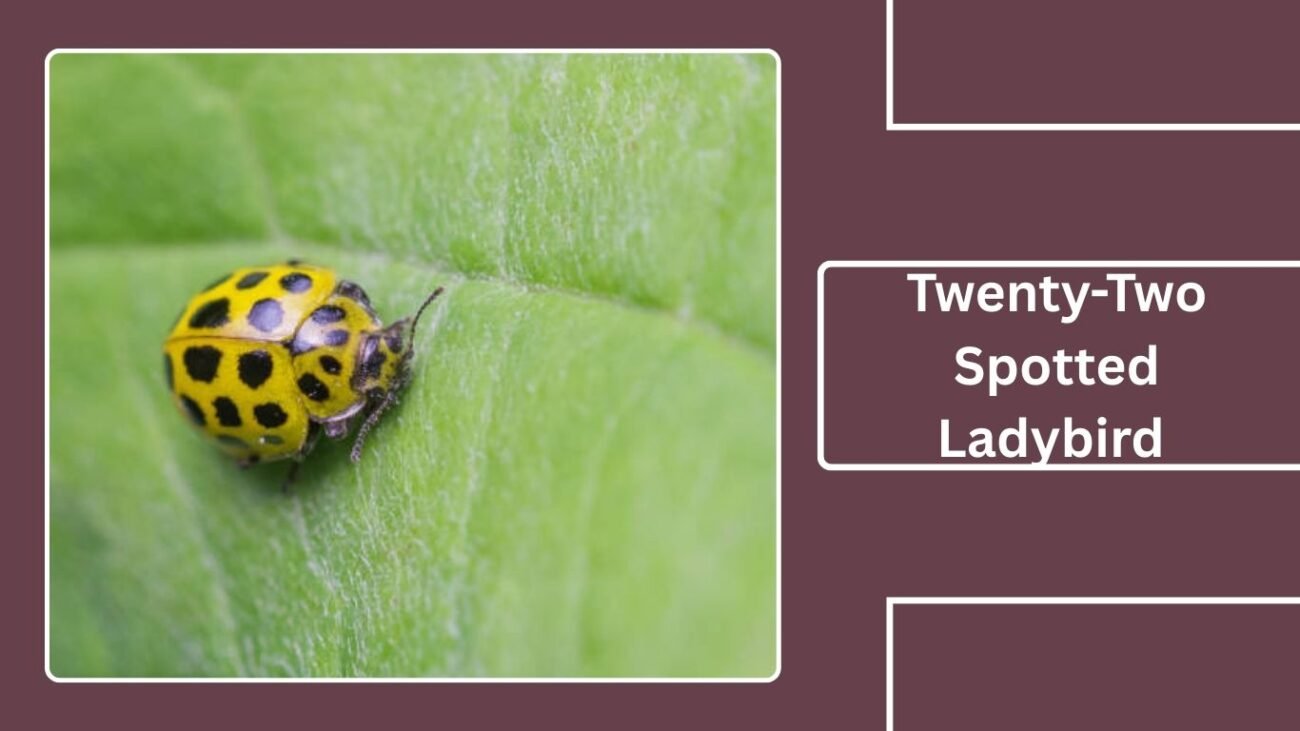
The Twenty-Two Spotted Ladybird is a small, brightly colored beetle known for its yellow wing covers adorned with 22 black spots. Unlike many ladybirds that prey on insects, this species primarily feeds on mildew, helping to control fungal growth on plants.
Identification:
- Yellow elytra with 22 small black spots
- Black head with white markings near the eyes
- Oval, slightly domed body
- Size: 3–5 mm in length
- Black legs and antennae
Habitat and Behavior
Twenty-Two Spotted Ladybirds are commonly found in gardens, fields, and forested areas where mildew is present. They are often seen on leaves affected by powdery mildew, consuming the fungus and contributing to plant health.
Lifecycle
Females lay small clusters of eggs on leaves with fungal growth. Larvae are dark with pale markings and feed on mildew before pupating. Adults emerge to continue feeding and reproducing, maintaining ecological balance.
14. Kidney-Spot Ladybird (Chilocorus renipustulatus)
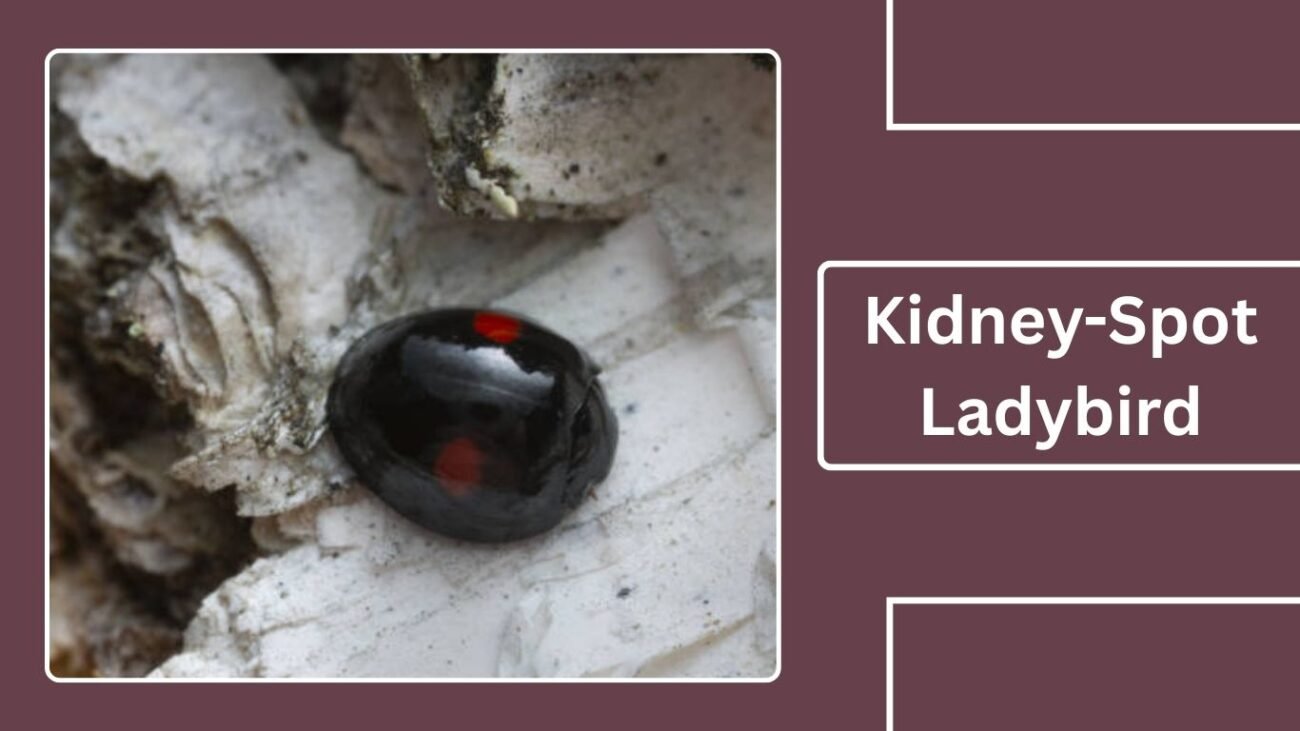
The Kidney-Spot Ladybird is a small, shiny black beetle easily identified by its distinctive red, kidney-shaped spots on the wing covers. It is a beneficial predator that feeds mainly on scale insects, helping protect trees and shrubs from infestations.
Identification:
- Shiny black elytra with two red, kidney-shaped spots
- Black head with minimal markings
- Dome-shaped, rounded body
- Size: 3–5 mm in length
- Black legs and antennae
Habitat and Behavior
Kidney-Spot Ladybirds are commonly found on trees, shrubs, and ornamental plants. They actively hunt scale insects and are particularly useful in gardens and orchards. These beetles are most active during warm, sunny days and are often seen moving across branches and leaves.
Lifecycle
Females lay small clusters of eggs near scale insect colonies. Larvae are dark with pale markings and feed extensively on pests before pupating. Adults emerge to continue hunting and reproducing, contributing to natural pest control.
15. Two-Striped Ladybird (Aphidecta obliterata)

The Two-Striped Ladybird is a small, oval beetle easily recognized by the two black stripes running lengthwise on its yellow or orange wing covers. It is a beneficial predator, feeding primarily on aphids and helping control pest populations in forests and gardens.
Identification:
- Yellow or orange elytra with two black longitudinal stripes
- Black head with small white markings
- Dome-shaped, oval body
- Size: 4–6 mm in length
- Black legs and antennae
Habitat and Behavior
Two-Striped Ladybirds are commonly found on coniferous trees, shrubs, and garden plants where aphids are present. They actively hunt during the day and play an important role in natural pest management.
Lifecycle
Females lay clusters of yellow eggs near aphid colonies. Larvae are dark with pale or orange markings and feed extensively on pests before pupating. Adults emerge to continue controlling aphid populations throughout the season.
16. Cream-Colored Ladybird (Oenopia conglobata)
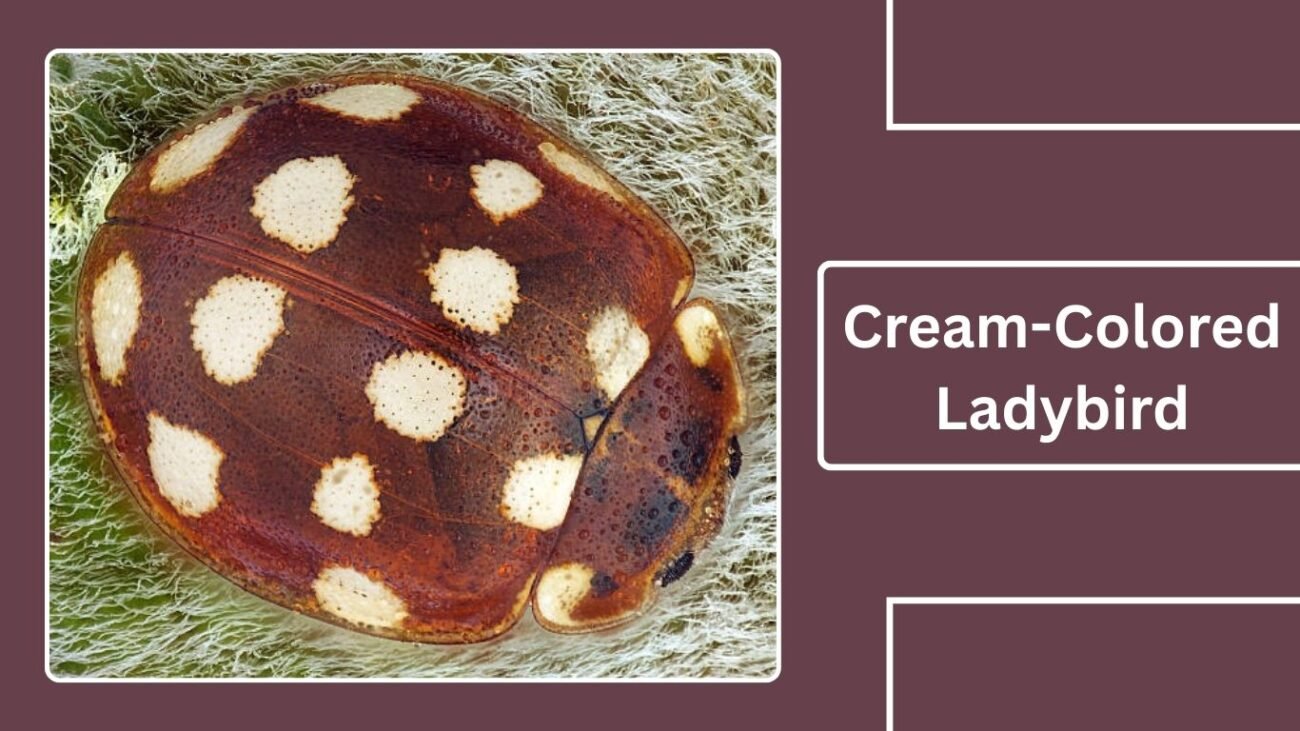
The Cream-Colored Ladybird is a small beetle distinguished by its pale, cream-colored wing covers with black spots. It is a beneficial predator, feeding mainly on aphids and other soft-bodied insects, making it valuable for gardens and agricultural areas.
Identification:
- Cream-colored elytra with several black spots
- Black head with small white markings
- Dome-shaped, rounded body
- Size: 4–6 mm in length
- Black legs and antennae
Habitat and Behavior
Cream-Colored Ladybirds are commonly found in gardens, meadows, and orchards where aphids are present. They actively hunt pests on plant leaves and stems and are most active during sunny days.
Lifecycle
Females lay small clusters of eggs near aphid colonies. Larvae are dark with pale or orange markings and feed on pests before pupating. Adults emerge to continue hunting and reproducing, contributing to natural pest control.
17. Five-Spotted Ladybird (Coccinella quinquepunctata)

The Five-Spotted Ladybird is a small, brightly colored beetle recognized for its red wing covers with five distinct black spots. It is a beneficial predator, feeding on aphids and other soft-bodied insects, making it an important ally in gardens and agricultural fields.
Identification:
- Red elytra with five black spots
- Black head with small white markings near the eyes
- Dome-shaped, rounded body
- Size: 5–7 mm in length
- Black legs and antennae
Habitat and Behavior
Five-Spotted Ladybirds are commonly found on shrubs, herbaceous plants, and garden crops where aphids are present. They actively hunt during the day and help reduce pest populations naturally.
Lifecycle
Females lay clusters of yellow eggs near aphid colonies. Larvae are dark with orange or pale markings and feed voraciously on pests before pupating. Adults emerge to continue hunting and reproducing throughout the season.
18. Spotted Pine Ladybird (Exochomus nigromaculatus)

The Spotted Pine Ladybird is a small, shiny black beetle featuring several red spots on its wing covers. It is a predatory species that feeds mainly on aphids and scale insects, playing a key role in protecting pine and spruce trees.
Identification:
- Shiny black elytra with red spots
- Black head with minimal markings
- Dome-shaped, oval body
- Size: 3–5 mm in length
- Black legs and antennae
Habitat and Behavior
Spotted Pine Ladybirds are commonly found on coniferous trees, shrubs, and garden plants. They actively hunt aphids and scale insects, helping maintain tree health. These beetles are diurnal and often move across branches and leaves in search of prey.
Lifecycle
Females lay small clusters of eggs near prey colonies. Larvae are dark with pale markings and feed extensively on pests before pupating. Adults emerge to continue hunting and reproducing, contributing to natural pest control.
19. Black Ladybird (Adalia decempunctata – black morph)
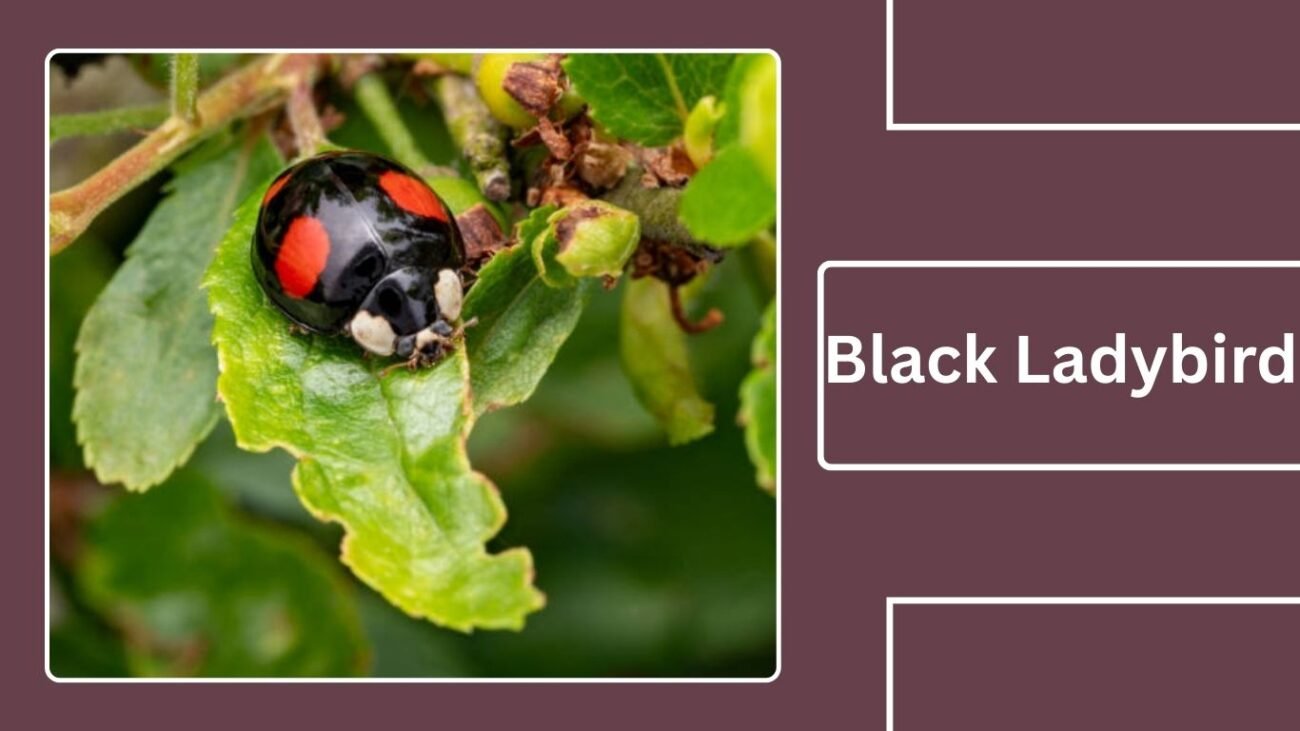
The Black Ladybird is a striking variation of the Ten-Spotted Ladybird, featuring a mostly black body with contrasting red or orange spots. It is a beneficial predator, feeding on aphids and helping control pest populations in gardens and agricultural areas.
Identification:
- Black elytra with red or orange spots (number may vary)
- Black head with small white markings
- Dome-shaped, rounded body
- Size: 4–7 mm in length
- Black legs and antennae
Habitat and Behavior
Black Ladybirds are found in gardens, fields, and forests where aphids are present. They are active during the day, moving across plants in search of prey, and contribute significantly to natural pest control.
Lifecycle
Females lay clusters of yellow eggs near aphid colonies. Larvae are dark with pale or orange markings and feed voraciously on pests before pupating. Adults emerge to continue hunting and reproducing throughout the season.
20. Brown Ladybird (Hippodamia variegata)
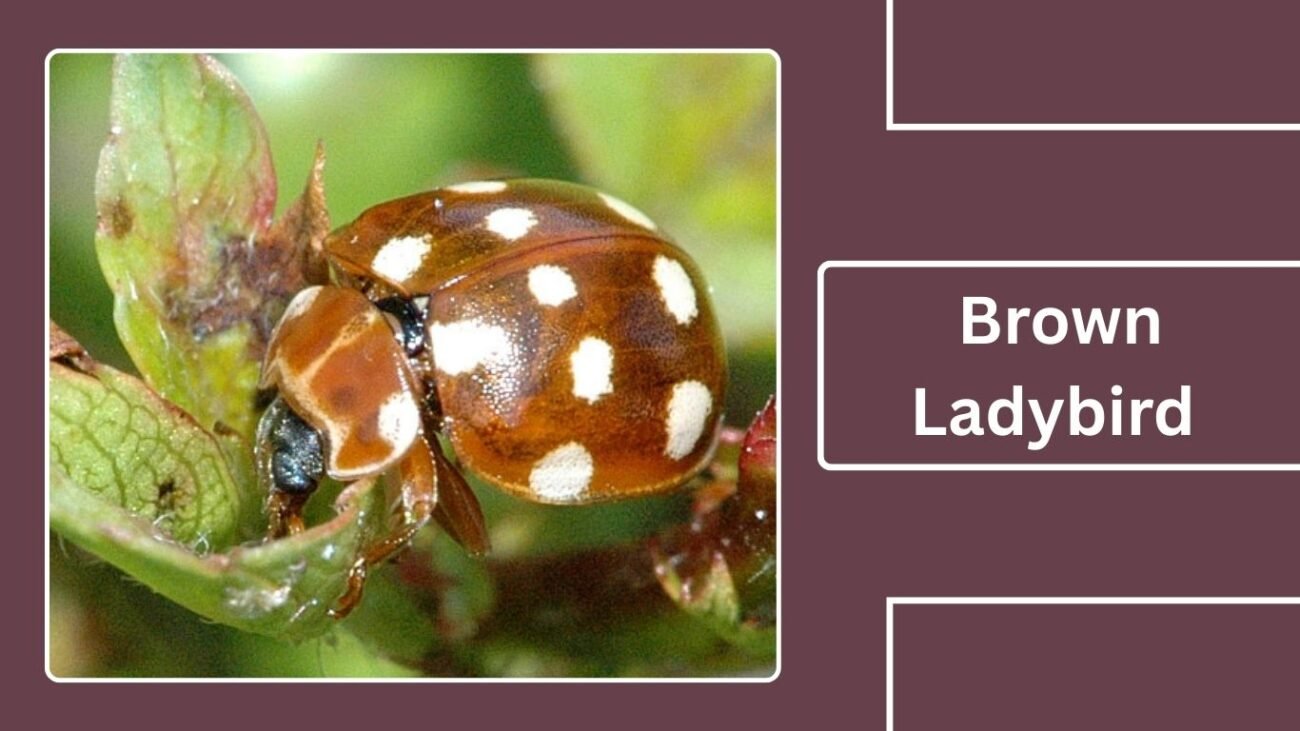
The Brown Ladybird is a small, oval beetle with brown or reddish-brown wing covers marked with several black spots. It is a beneficial predator that feeds on aphids, mites, and other small insects, helping maintain healthy plants in gardens and agricultural fields.
Identification:
- Brown or reddish-brown elytra with multiple black spots
- Black head with small white markings
- Dome-shaped, oval body
- Size: 4–7 mm in length
- Black legs and antennae
Habitat and Behavior
Brown Ladybirds are commonly found on flowering plants, shrubs, and crops where aphids are abundant. They are active during the day and move across leaves and stems while hunting prey, contributing to natural pest control.
Lifecycle
Females lay clusters of yellow eggs near aphid colonies. Larvae are dark with pale or orange markings and feed extensively on pests before pupating. Adults emerge to continue hunting and reproducing throughout the season.