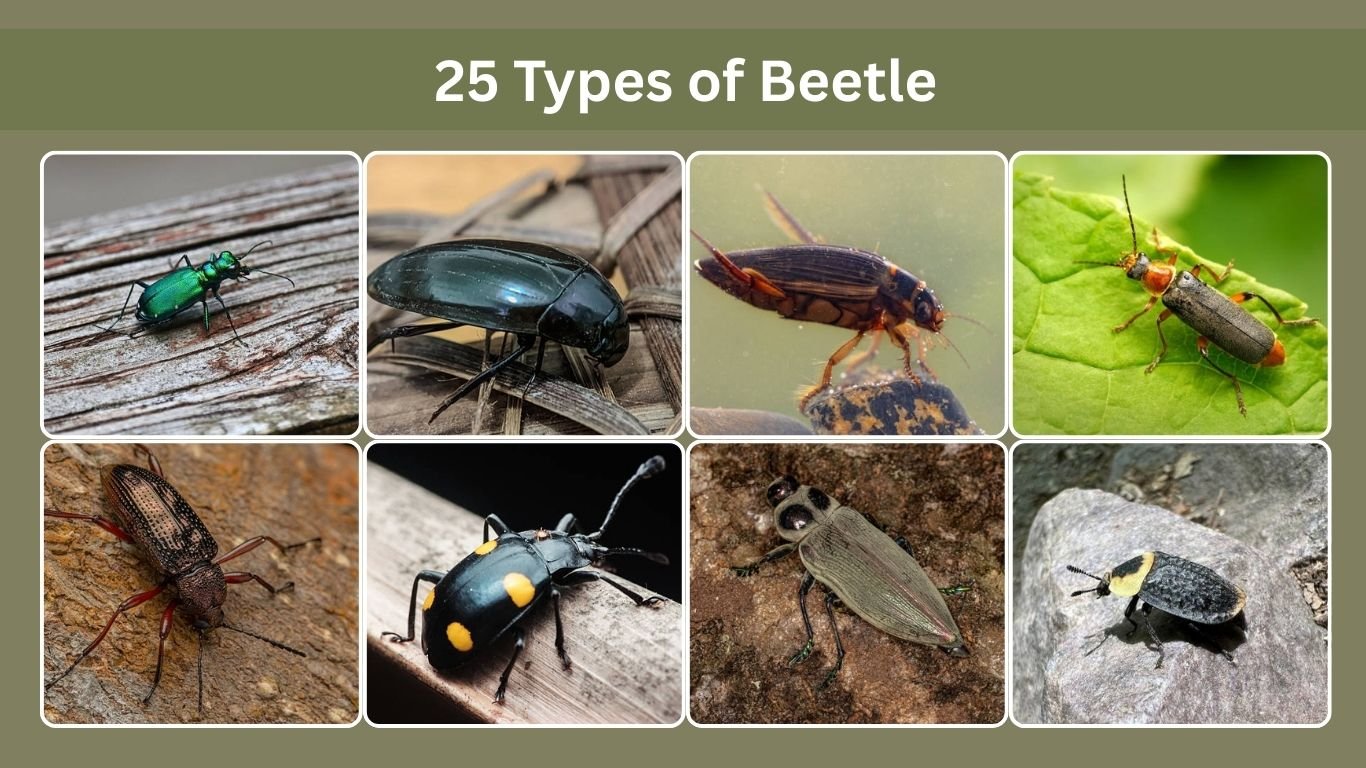
Beetles are one of the most diverse and fascinating groups of insects, with over 350,000 known species worldwide. They inhabit nearly every ecosystem, from forests and grasslands to freshwater and deserts. This guide explores 25 remarkable types of beetles, detailing their identification, habitats, behaviors, and diets. Understanding these beetles not only highlights their ecological importance but also reveals the incredible adaptations that allow them to thrive in diverse environments.
1. Ladybug (Coccinellidae)
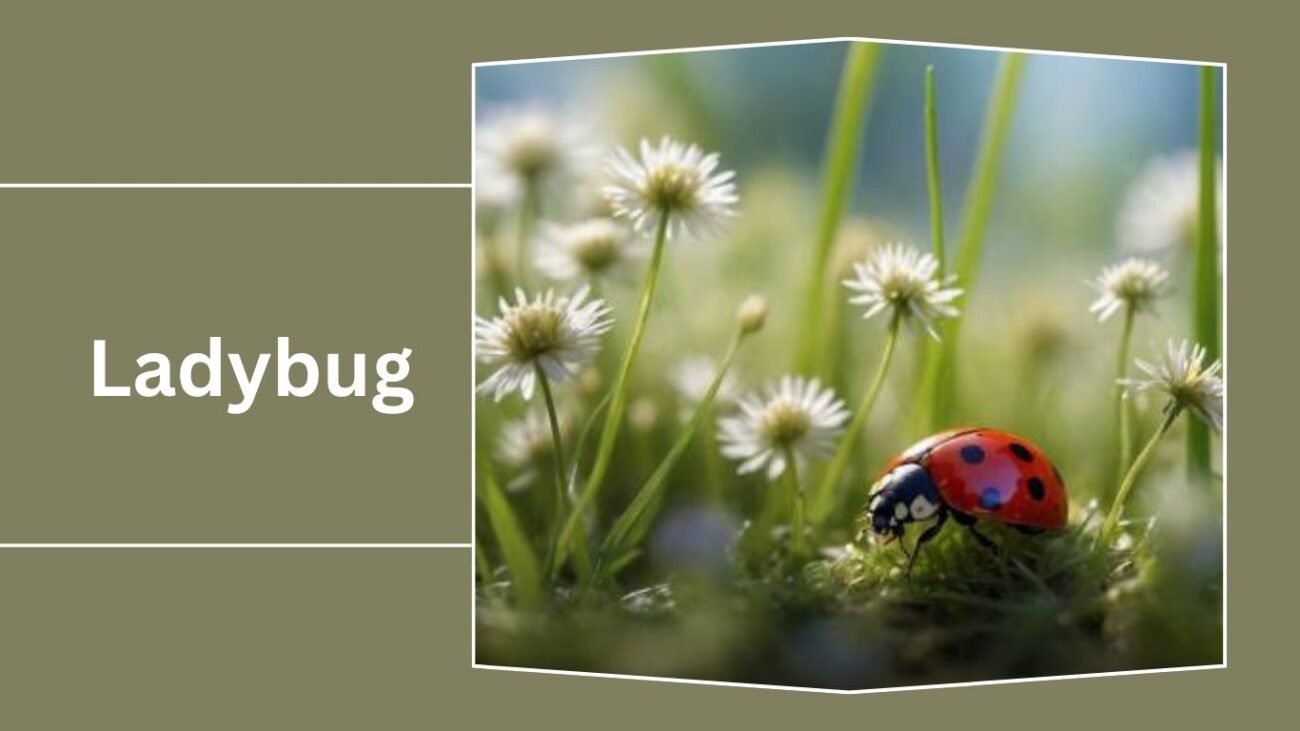
Ladybugs, also known as ladybirds or lady beetles, are small, colorful beetles widely recognized for their bright red or orange bodies with black spots. They are beneficial insects commonly found in gardens and agricultural fields, where they feed on pests like aphids, helping control their population naturally.
Identification
- Small, dome-shaped body
- Bright red, orange, or yellow elytra (wing covers) with black spots
- Black head with white markings
- Six short legs
- Approximately 1–10 mm in length
Habitat
Ladybugs are found in gardens, meadows, forests, and agricultural areas. They prefer plants that host aphids or other soft-bodied insects. During winter, they often gather in large groups under leaves, bark, or inside buildings for hibernation.
Behaviors
Ladybugs are predatory insects, mainly feeding on aphids, mites, and other small insects. They are known for their ability to secrete a yellow fluid from their legs when threatened, which deters predators. Ladybugs are also capable of flight and can migrate to find food.
Diet
Their diet primarily consists of aphids, scale insects, mealybugs, and other soft-bodied pests. Some species also feed on pollen and nectar occasionally.
2. Stag Beetle (Lucanidae)
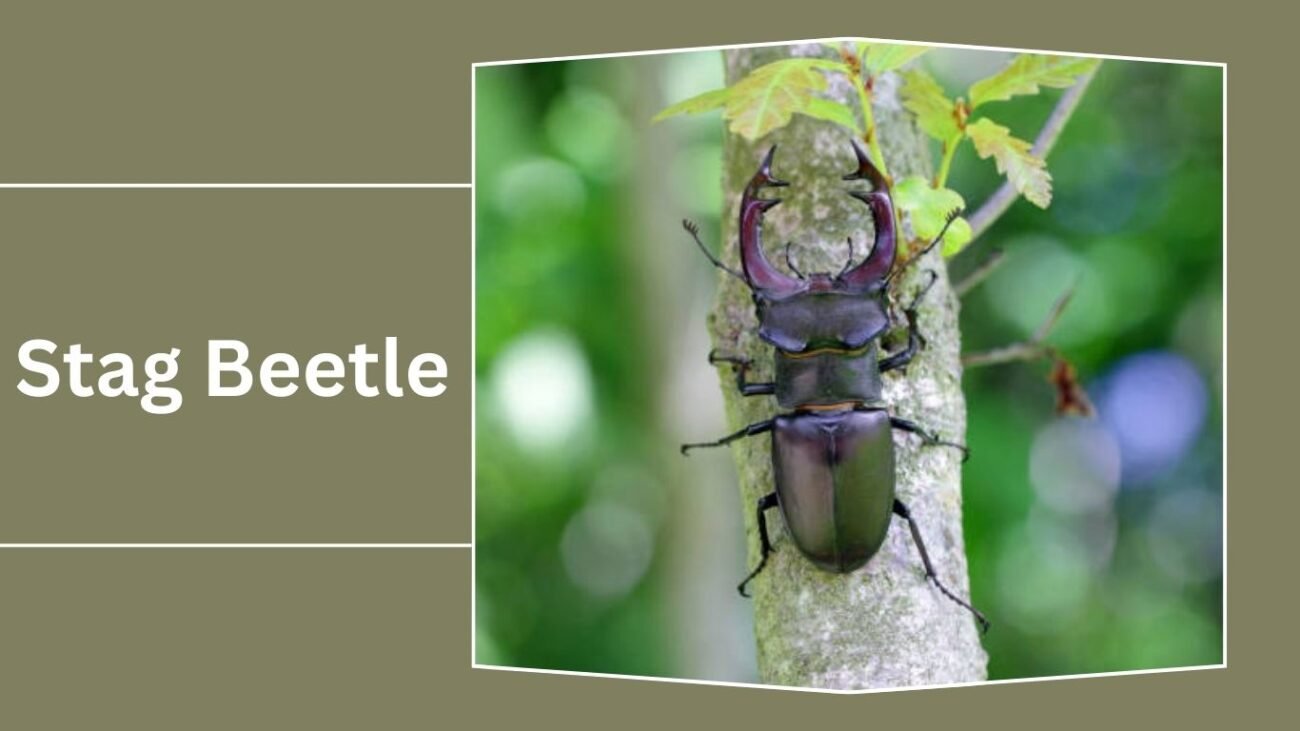
Stag beetles are large, striking beetles named for their prominent mandibles that resemble a stag’s antlers. They are mostly nocturnal and are known for their fascinating life cycle, with larvae that develop in decaying wood for several years before maturing into adults.
Identification
- Large, robust body ranging from 2–12 cm in length
- Males have oversized, antler-like mandibles; females have smaller jaws
- Shiny brown to black exoskeleton
- Six strong legs with claws for gripping
- Pronounced segmented antennae
Habitat
Stag beetles are commonly found in woodlands, forests, and areas with plenty of decaying wood. They prefer old trees and rotting logs, which provide food for larvae and shelter for adults.
Behaviors
Stag beetles are mostly active during dusk and night. Males use their large mandibles to wrestle other males for mates. Adults are not strong fliers but can move short distances. The larvae feed on decaying wood and take several years to develop.
Diet
Adult stag beetles mainly feed on tree sap, nectar, and overripe fruits. Larvae consume decaying wood, playing an essential role in nutrient recycling in their ecosystem.
3. Rhinoceros Beetle (Dynastinae)
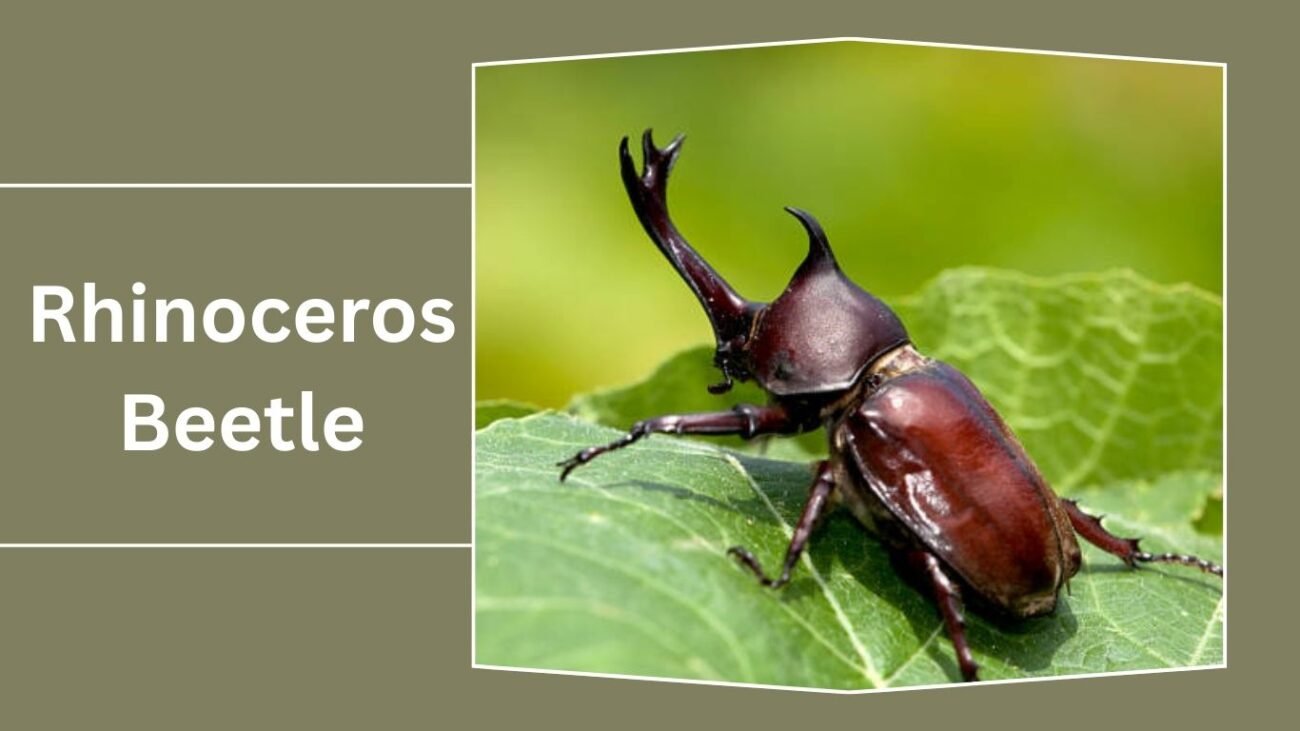
Rhinoceros beetles are among the largest beetles in the world, known for their impressive horn-like structures on the males’ heads. They are harmless to humans and are often admired for their strength, as they can lift objects many times their own weight.
Identification
- Large, robust body ranging from 2–15 cm in length
- Males have prominent horns on the head; females usually lack horns
- Shiny exoskeleton, often dark brown, black, or greenish
- Six strong legs with spines for gripping
- Broad, rounded wings covered by hard elytra
Habitat
Rhinoceros beetles are found in tropical and subtropical forests, plantations, and gardens. They prefer areas with plenty of decaying wood, leaf litter, or compost, which serve as food sources for larvae.
Behaviors
Rhinoceros beetles are mostly nocturnal and are attracted to lights at night. Males use their horns to fight over mates. Adults are capable of flying despite their bulky appearance. Larvae live in soil or rotting wood for months to years before pupating.
Diet
Adults feed on nectar, sap, fruit, and tree juice. Larvae consume decaying wood, compost, and organic matter, contributing to nutrient recycling in the ecosystem.
4. Scarab Beetle (Scarabaeidae)
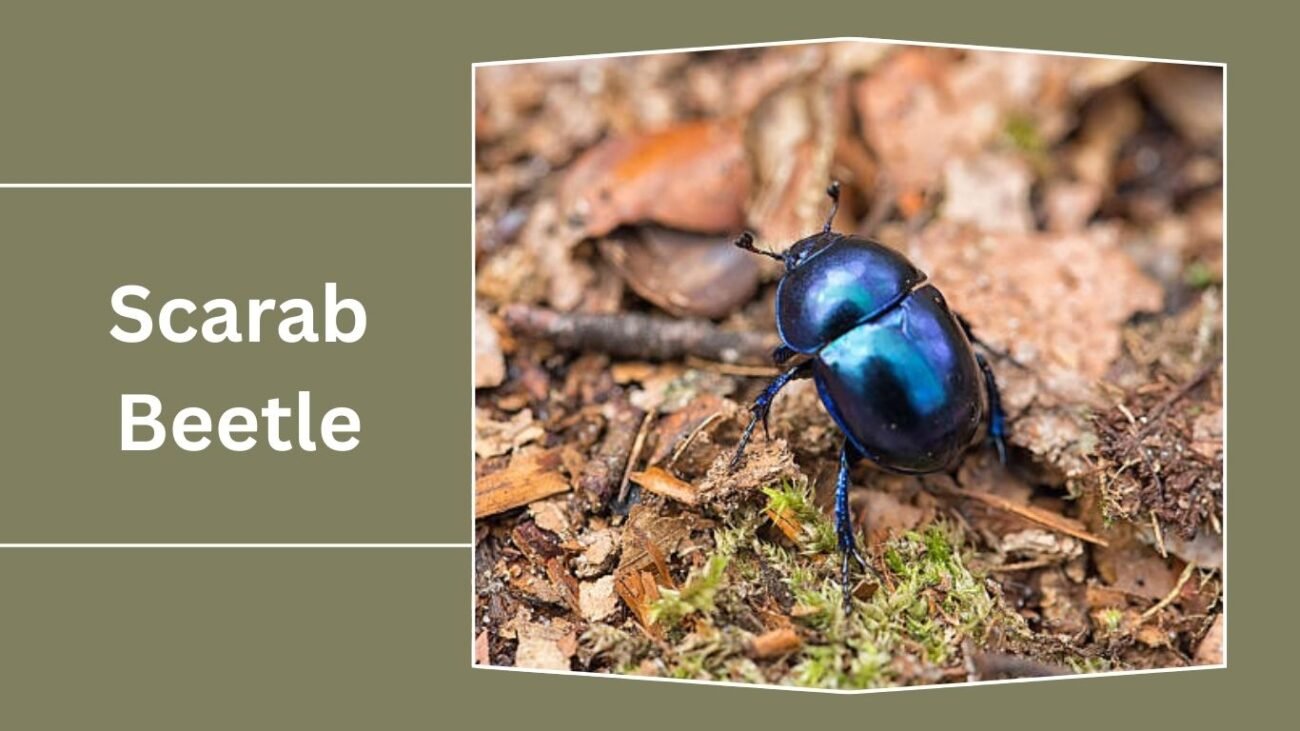
Scarab beetles are a diverse group of beetles known for their rounded bodies and cultural significance, especially in ancient Egypt. They play important ecological roles, particularly in recycling nutrients by feeding on dung, decaying matter, and plant material.
Identification
- Rounded, stout body, typically 1–7 cm in length
- Hard, glossy exoskeleton, often brown, black, or metallic
- Clubbed antennae with fan-like tips
- Six strong legs adapted for digging
- Elytra covering the wings with smooth or slightly ridged surface
Habitat
Scarab beetles are found worldwide, especially in forests, grasslands, farmlands, and deserts. Many species prefer areas with animal dung, compost, or decaying plant matter for feeding and breeding.
Behaviors
Many scarab beetles are known for rolling dung balls, which serve as food and breeding sites. Others burrow into soil or decaying wood. They are mostly active at night and can fly to locate food sources.
Diet
Depending on the species, scarab beetles feed on animal dung, decomposing plant material, fungi, and occasionally living plants. Their feeding habits help recycle nutrients and improve soil fertility.
5. Japanese Beetle (Popillia japonica)
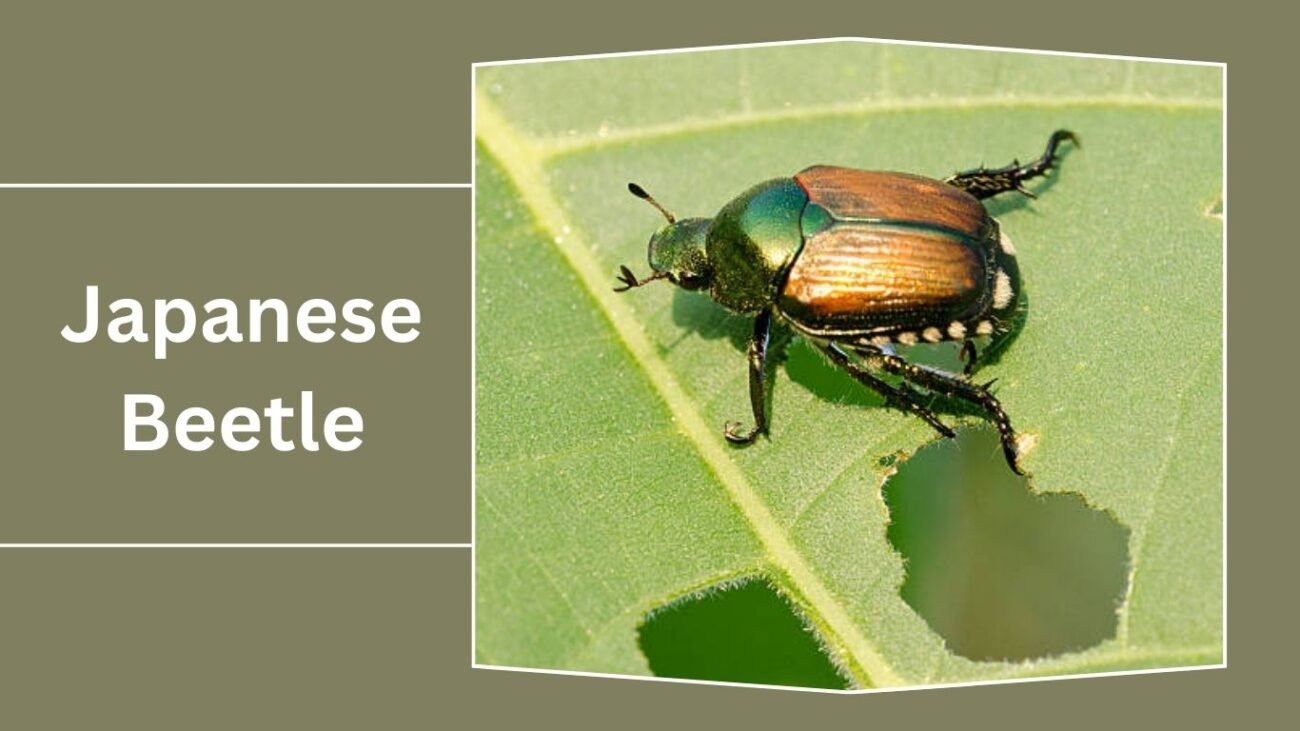
Japanese beetles are small, metallic green beetles with copper-brown wing covers, notorious as agricultural pests. They feed on a wide variety of plants, causing significant damage to gardens, crops, and ornamental plants.
Identification
- Metallic green head and thorax
- Coppery-brown elytra (wing covers)
- White tufts of hair along the sides of the abdomen
- Approximately 10–12 mm in length
- Six legs with tiny spines for gripping plants
Habitat
Japanese beetles are commonly found in gardens, orchards, and agricultural fields. They thrive in areas with plenty of foliage and flowers. Larvae, known as grubs, live in soil and feed on grass roots.
Behaviors
Adults are active during the daytime, often feeding in groups, skeletonizing leaves as they eat. They are strong fliers and can spread rapidly to new areas. Larvae develop in the soil over the winter before emerging as adults in summer.
Diet
Adults feed on leaves, flowers, and fruit of over 300 plant species. Larvae consume the roots of grasses and other plants, which can damage lawns and pastures.
6. Firefly / Lightning Bug (Lampyridae)
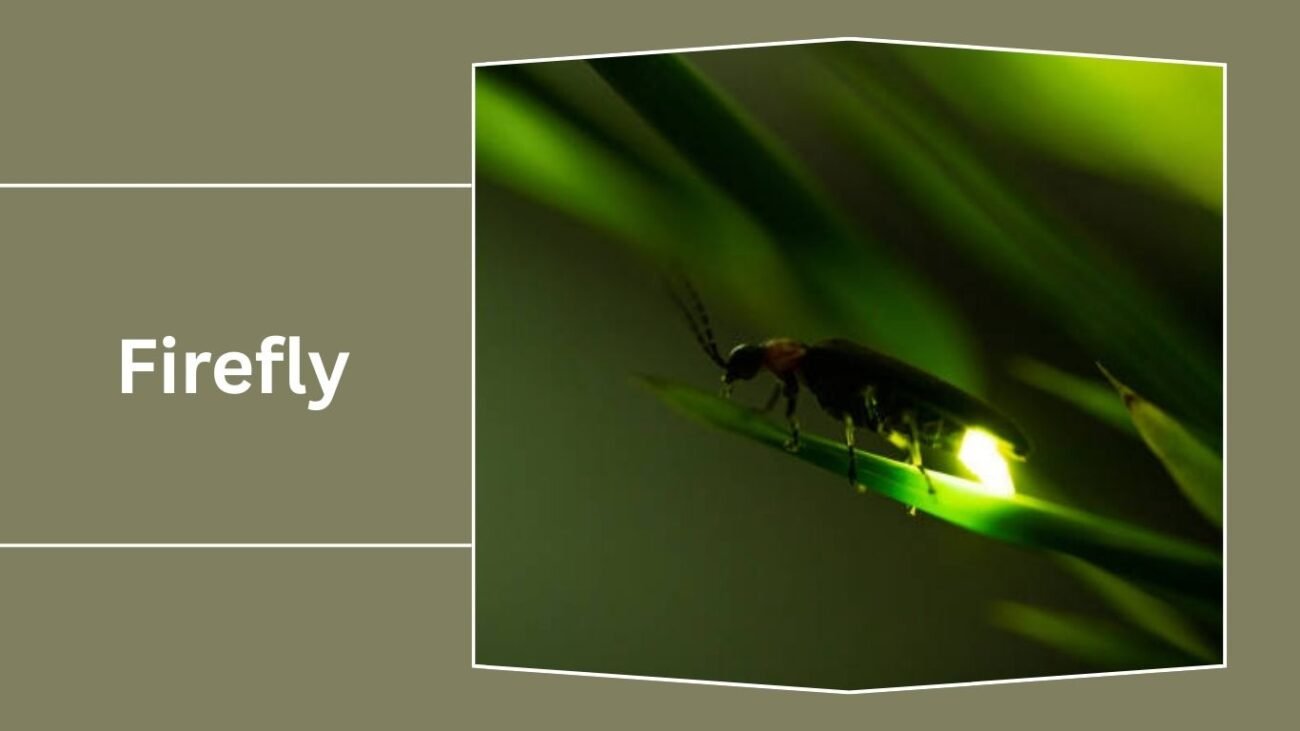
Fireflies, also known as lightning bugs, are beetles famous for their bioluminescent abilities. They produce light through a chemical reaction in their abdomen, primarily for attracting mates and communication.
Identification
- Soft-bodied beetles, 5–25 mm in length
- Usually black or brown with yellow or orange markings
- Bioluminescent organs on the underside of the abdomen
- Six legs and short antennae
- Elytra are soft and flexible compared to other beetles
Habitat
Fireflies are commonly found in forests, grasslands, gardens, and wetlands. They prefer humid environments near water sources, which support their larvae.
Behaviors
Fireflies are primarily nocturnal. Males flash their light in specific patterns to attract females, who respond with their own flashes. Larvae are predatory and often feed at night, while adults may eat nectar, pollen, or other insects depending on the species.
Diet
Larvae feed on soft-bodied insects, slugs, and snails. Adult diets vary: some feed on nectar and pollen, while others continue predatory behavior. Bioluminescence helps them avoid predators and attract mates.
7. Click Beetle (Elateridae)
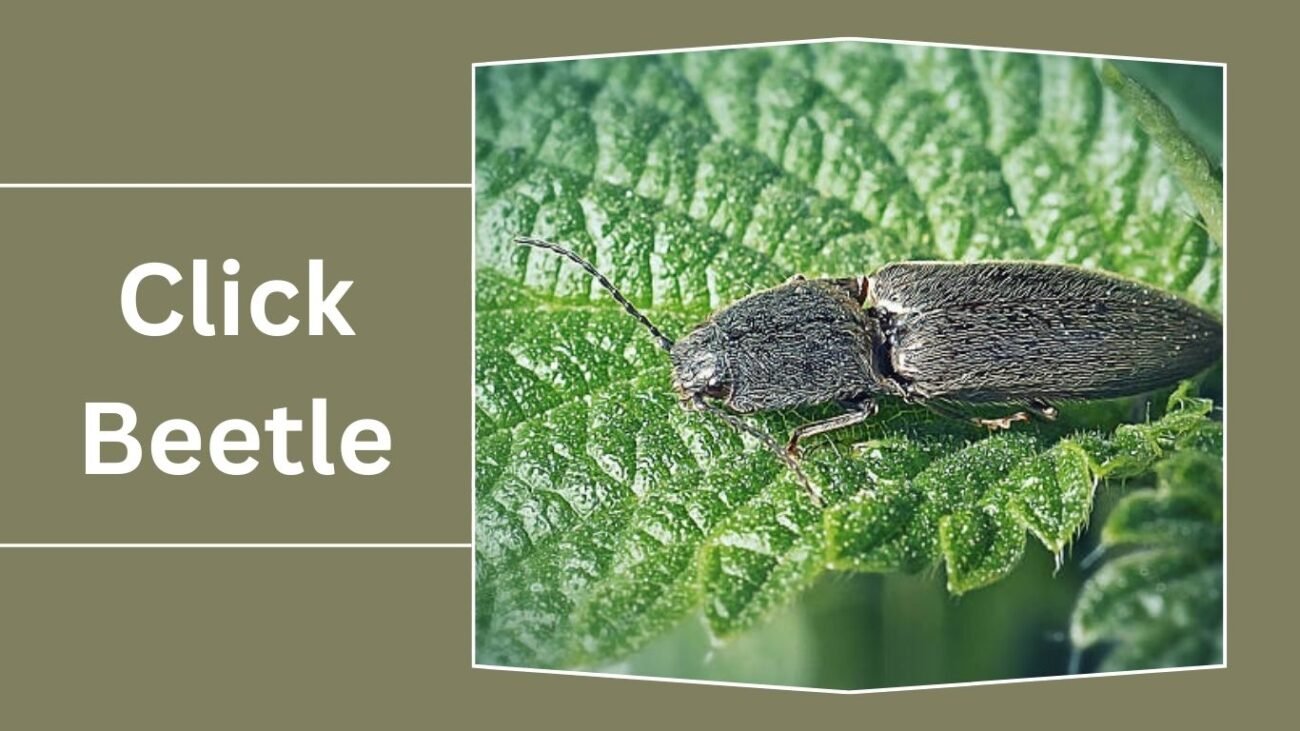
Click beetles are slender, elongated beetles known for their unique clicking mechanism, which they use to flip themselves into the air when threatened or overturned. They are harmless to humans but can be agricultural pests in their larval stage.
Identification
- Elongated, narrow body, typically 1–4 cm in length
- Brown, black, or gray coloration
- Pronounced prothorax with a spine-and-notch mechanism for clicking
- Six legs with small claws
- Elytra are hard and cover the entire abdomen
Habitat
Click beetles are found in forests, grasslands, gardens, and agricultural fields. They prefer moist soil, decaying wood, or leaf litter where their larvae, known as wireworms, can develop.
Behaviors
Click beetles are mostly nocturnal. When threatened, they flex their bodies to produce a “click” sound and flip into the air to escape predators. Larvae live in soil or decaying wood and can damage plant roots.
Diet
Adult click beetles feed on nectar, pollen, or small insects. Larvae (wireworms) feed on roots, seeds, and underground plant parts, sometimes causing damage to crops like corn and potatoes.
8. Weevil (Curculionidae)
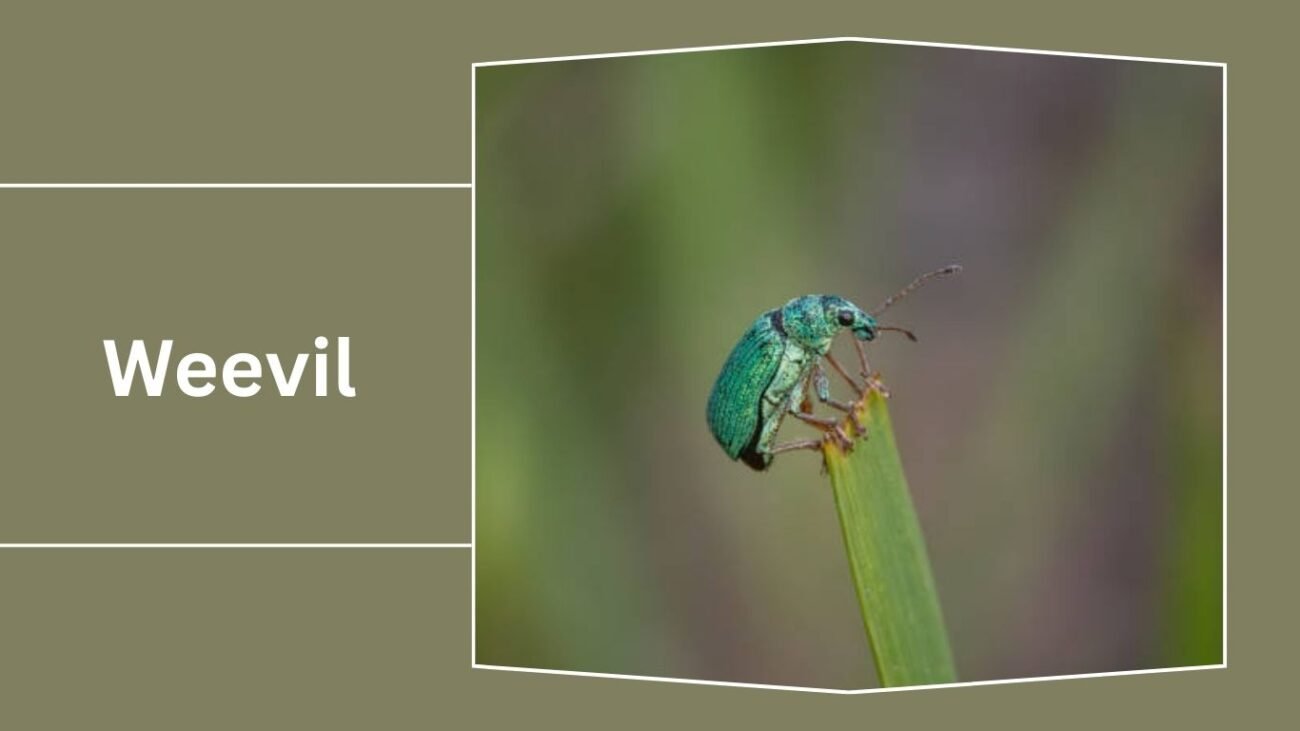
Weevils are small beetles easily recognized by their elongated snouts. Many species are considered pests because they feed on crops, stored grains, and seeds. Despite their small size, they can cause significant agricultural damage.
Identification
- Small, usually 2–12 mm in length
- Elongated snout (rostrum)
- Hard, oval or cylindrical body, often brown, black, or gray
- Six legs and elbowed antennae
- Elytra often ridged or textured
Habitat
Weevils are found worldwide in forests, fields, gardens, and stored grain facilities. They often inhabit areas with abundant plant material or seeds suitable for feeding and laying eggs.
Behaviors
Weevils are typically slow-moving and can infest both living plants and stored products. Females often bore holes into seeds or plants to lay eggs. Larvae develop inside seeds, nuts, or plant tissue, protected from predators.
Diet
Weevils feed on a wide range of plant materials, including grains, seeds, nuts, fruits, and leaves. Their larvae consume the same material where eggs are laid, often causing significant crop losses.
9. Ground Beetle (Carabidae)
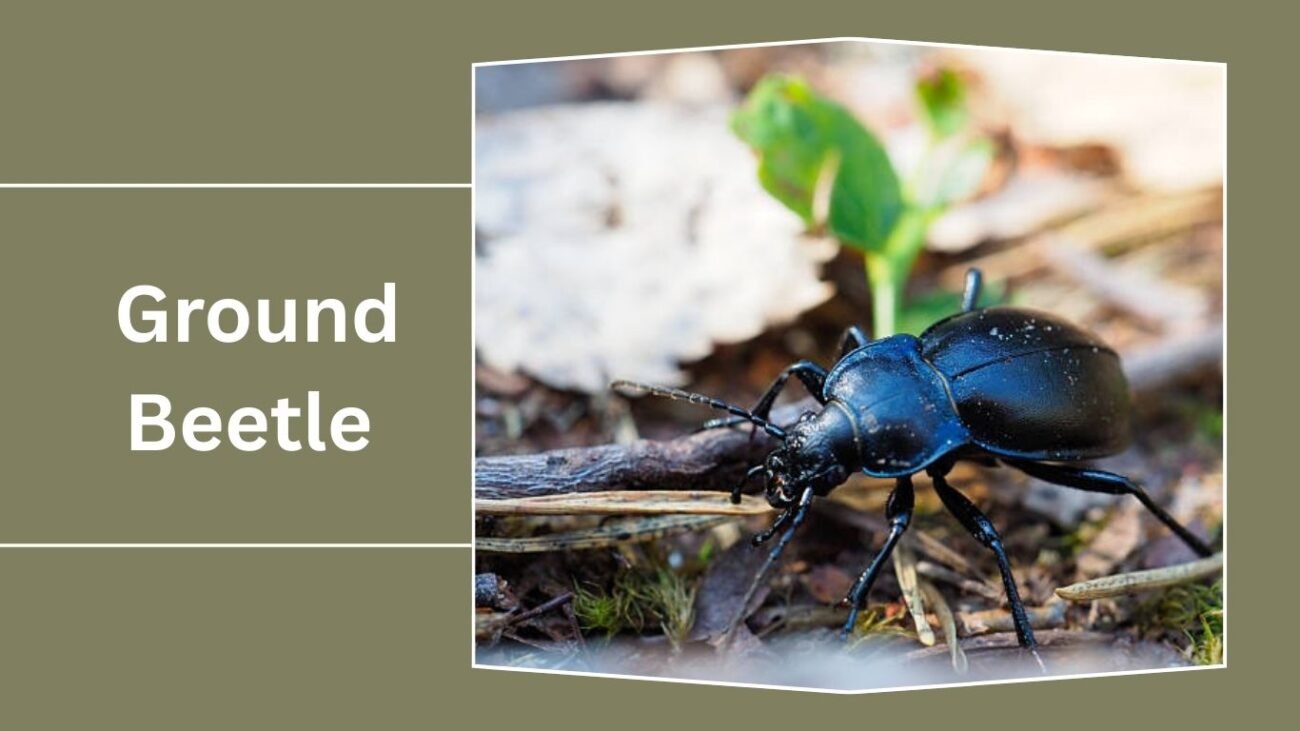
Ground beetles are fast-moving, predatory beetles that play a crucial role in controlling pests. They are usually nocturnal hunters and are commonly found on the soil surface, under rocks, or in leaf litter.
Identification
- Flattened, elongated body, typically 0.5–3 cm in length
- Black, brown, or metallic coloration
- Strong, well-developed legs for running
- Prominent mandibles for hunting prey
- Elytra are hard and cover the abdomen
Habitat
Ground beetles inhabit forests, grasslands, gardens, and agricultural fields. They prefer moist environments with abundant ground cover like leaves, stones, or logs, which provide shelter and hunting grounds.
Behaviors
Mostly nocturnal, ground beetles are active hunters feeding on insects, worms, and other small invertebrates. They are agile runners and often use their speed to capture prey. Some species can secrete chemicals to deter predators.
Diet
Ground beetles are primarily carnivorous, feeding on insects, larvae, slugs, and worms. Some species may also consume seeds and plant material, but their primary ecological role is pest control.
10. Leaf Beetle (Chrysomelidae)
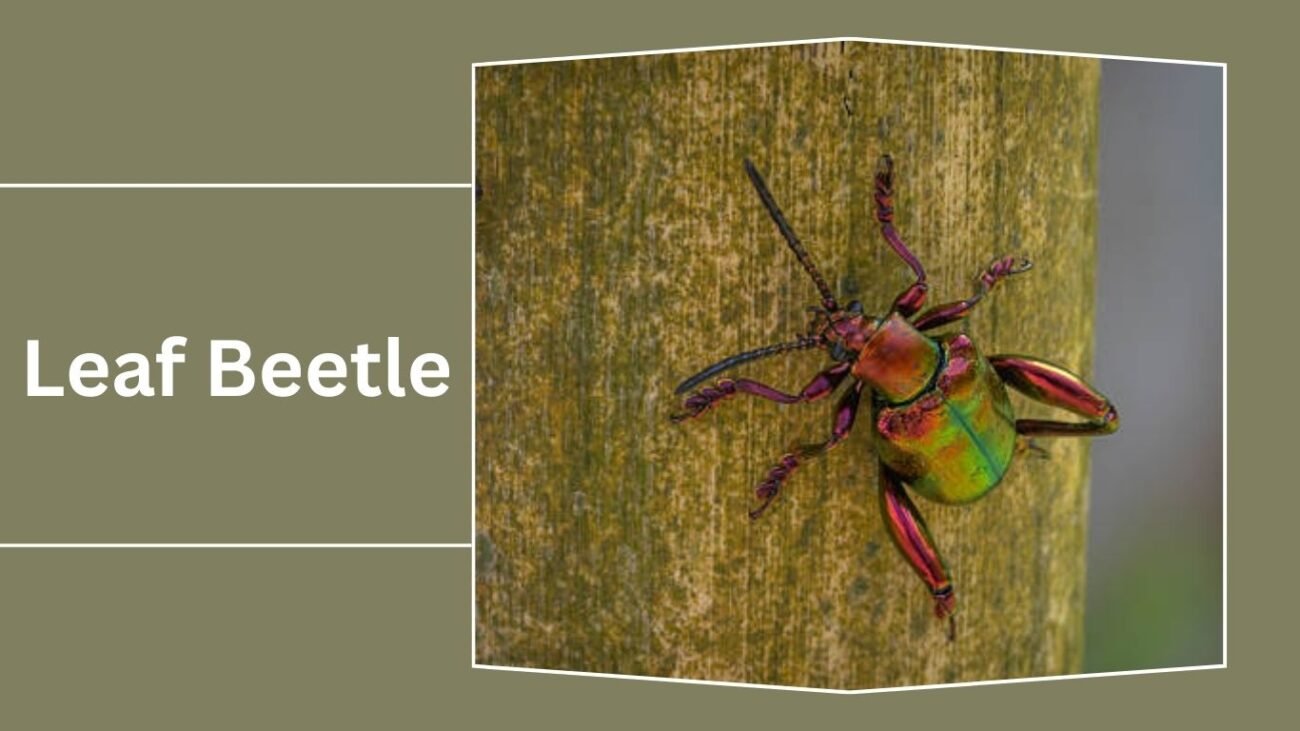
Leaf beetles are a diverse group of brightly colored beetles that primarily feed on plants. Many species are considered agricultural pests because they can cause significant damage to crops and ornamental plants.
Identification
- Small to medium-sized, typically 3–18 mm in length
- Brightly colored or metallic bodies, often red, yellow, green, or blue
- Oval or elongated shape with smooth, shiny elytra
- Six legs and short antennae
- Head partially hidden under the pronotum
Habitat
Leaf beetles are found in forests, grasslands, gardens, and agricultural fields. They prefer areas with abundant foliage, as they feed and lay eggs on host plants.
Behaviors
Leaf beetles are mostly diurnal, feeding actively during the day. Females lay eggs on leaves, stems, or flowers. Some species exhibit gregarious behavior, feeding in groups.
Diet
Leaf beetles primarily feed on leaves, flowers, stems, and sometimes roots of plants. Both adults and larvae consume plant material, which can lead to defoliation in crops and gardens.
11. Longhorn Beetle (Cerambycidae)
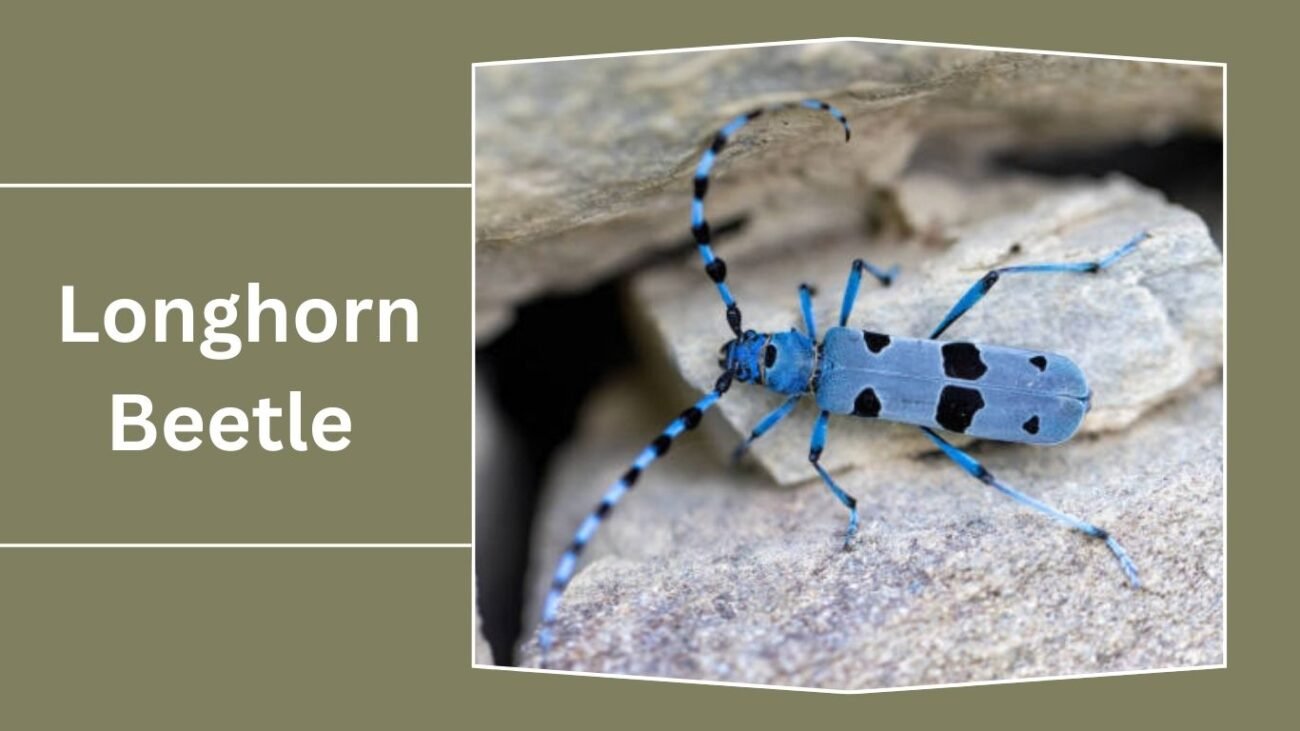
Longhorn beetles are characterized by their exceptionally long antennae, often longer than their bodies. They are wood-boring beetles whose larvae play a key role in decomposing dead or decaying trees.
Identification
- Elongated body, typically 1–15 cm in length
- Very long antennae, often exceeding body length
- Hard, cylindrical or slightly flattened exoskeleton
- Brown, black, or brightly patterned coloration
- Six legs and strong mandibles for chewing wood
Habitat
Longhorn beetles inhabit forests, woodlands, and areas with dead or decaying trees. They are commonly found on tree trunks, logs, and branches, where larvae burrow into the wood.
Behaviors
Adults are often attracted to lights at night and can fly short distances. Larvae tunnel inside wood for several months to years, feeding on the internal tissues. Adults may feed on leaves, bark, or nectar.
Diet
Larvae feed primarily on wood, contributing to the decomposition of trees. Adults feed on leaves, flowers, sap, or bark depending on the species.
12. Bark Beetle (Scolytinae)
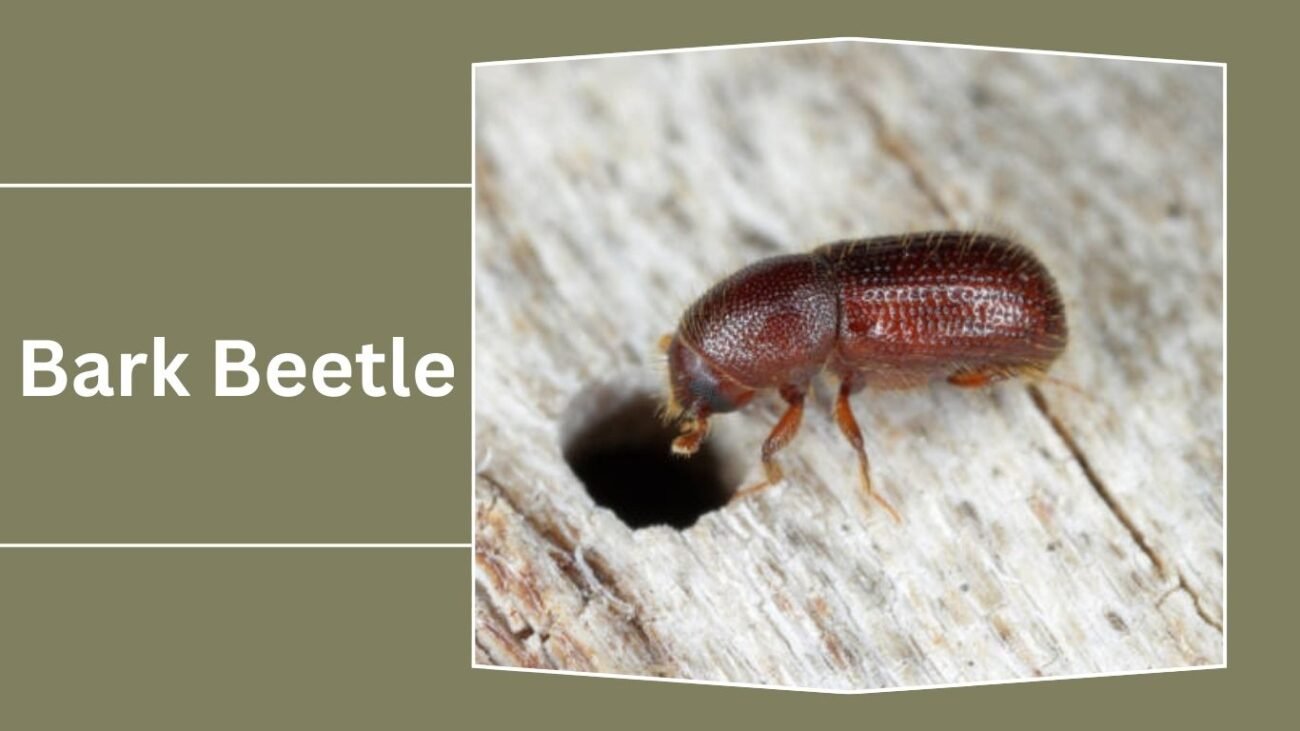
Bark beetles are small, cylindrical beetles that live primarily under the bark of trees. They are important in forest ecosystems for recycling nutrients, but some species can cause severe damage to forests during outbreaks. Bark beetles often target stressed, dying, or weakened trees.
Identification
- Small, typically 2–9 mm in length
- Cylindrical, elongated body, often dark brown or black
- Hard exoskeleton with smooth or slightly textured elytra
- Short legs adapted for tunneling under bark
- Clubbed antennae with a characteristic elbowed shape
Habitat
Bark beetles are found worldwide in forests, woodlands, and plantations. They infest coniferous and deciduous trees, often targeting weakened or damaged trees. Outbreaks can lead to large-scale tree mortality.
Behaviors
Bark beetles bore into tree bark to lay eggs, creating intricate galleries in the wood. Larvae feed on the inner bark (phloem), disrupting nutrient flow. Many species carry symbiotic fungi, which can further damage trees. Adults are usually strong fliers, seeking new host trees for colonization.
Diet
Larvae feed on the inner bark and phloem of trees, sometimes killing the host tree in the process. Adults may feed on bark or small amounts of sap but rely mainly on suitable host trees for reproduction.
Ecological Impact
While bark beetles play a role in recycling nutrients and decomposing dead wood, certain species can cause widespread forest damage. Large infestations, especially in stressed forests, can lead to economic losses in timber and changes in forest structure.
13. Carrion Beetle (Silphidae)
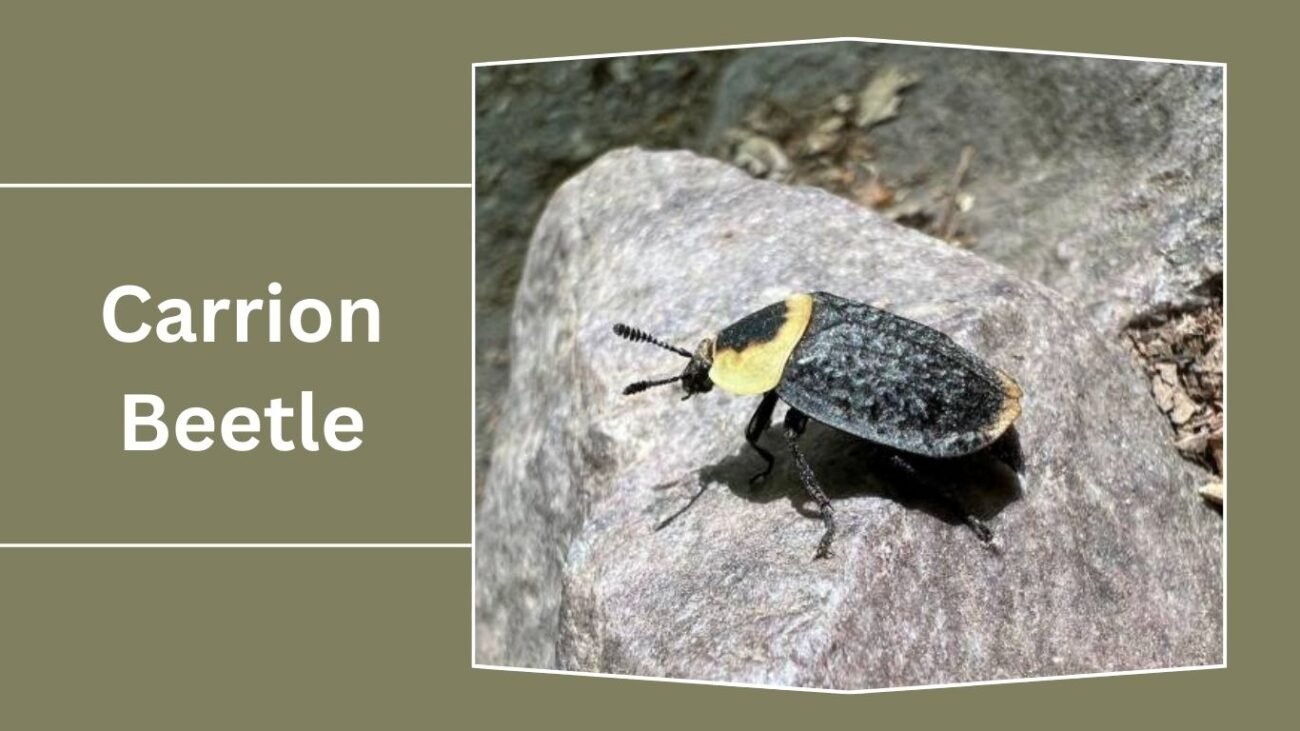
Carrion beetles are scavengers known for feeding on dead animals. They play a vital role in ecosystems by recycling nutrients and helping control decay. Some species are also important in forensic studies to estimate time of death.
Identification
- Medium to large beetles, typically 12–35 mm in length
- Black or dark brown body, often with bright orange or red markings
- Flattened, broad body with clubbed antennae
- Strong legs for digging and handling carcasses
- Elytra are short or cover the abdomen completely
Habitat
Carrion beetles are found in forests, grasslands, gardens, and farmland. They are commonly located near dead animals, decomposing organic matter, or in soil where they can bury small carcasses.
Behaviors
Carrion beetles locate carcasses using their keen sense of smell. They often bury small dead animals to provide food for their larvae. Some species exhibit parental care, guarding the carcass and larvae. Adults are primarily nocturnal and capable of flying long distances to find food.
Diet
Carrion beetles feed on decaying animal flesh. Larvae also consume the carcass, benefiting from the adults’ preparation of the food source. This scavenging behavior helps recycle nutrients back into the ecosystem.
Ecological Importance
By consuming dead animals, carrion beetles prevent the spread of disease, recycle nutrients into the soil, and support a healthy ecosystem. Their presence is often an indicator of ecological balance in natural habitats.
14. Tiger Beetle (Cicindelinae)
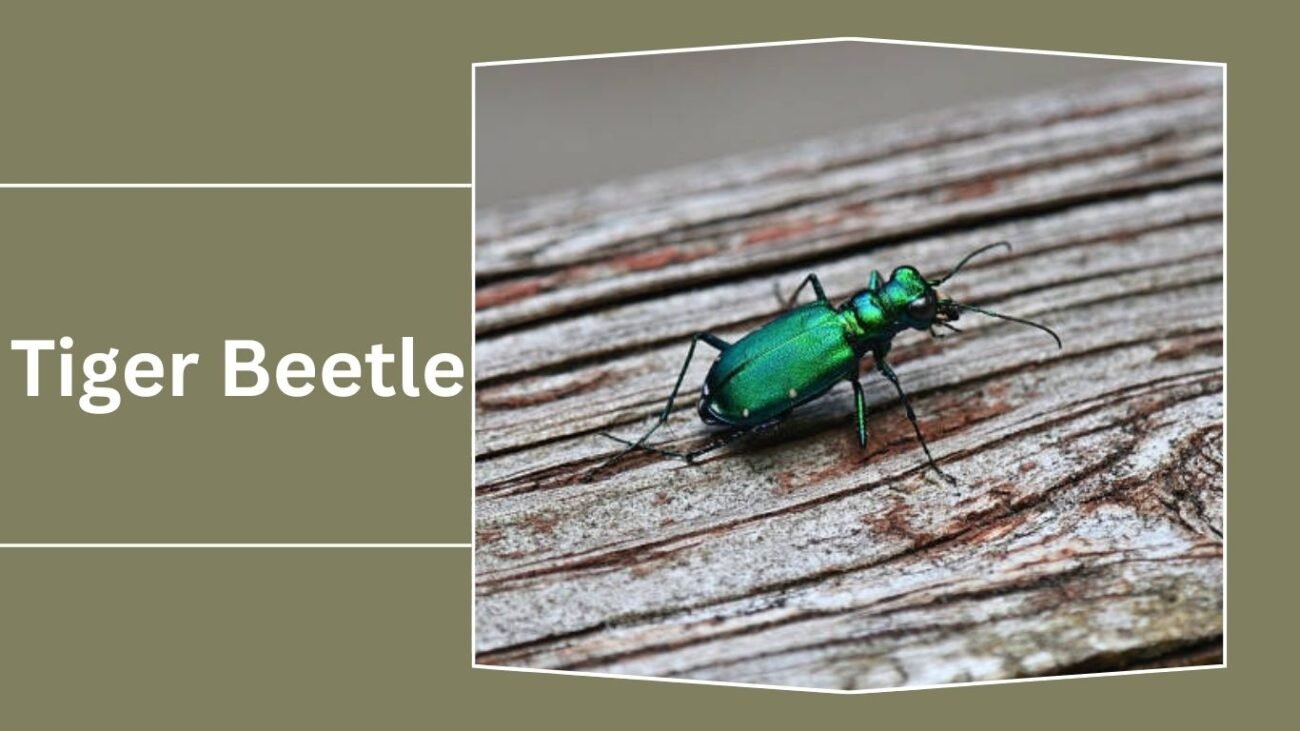
Tiger beetles are fast-moving predatory beetles known for their striking coloration and remarkable speed. They are active hunters and play an important role in controlling insect populations in their habitats.
Identification
- Slender, elongated body, typically 10–20 mm in length
- Brightly colored or metallic, often green, blue, or bronze
- Long legs built for running and capturing prey
- Large, prominent eyes for spotting movement
- Strong mandibles for seizing and chewing prey
Habitat
Tiger beetles are commonly found in sandy areas, riverbanks, forest edges, grasslands, and open fields. They prefer sunny habitats where they can actively hunt insects.
Behaviors
Tiger beetles are diurnal hunters with incredible speed. They chase and capture small insects, often running in bursts and using their mandibles to subdue prey. Adults are capable of flight and can escape predators quickly.
Diet
Both adults and larvae are carnivorous. Adults feed on small insects like ants, flies, and beetle larvae, while larvae live in burrows and ambush passing prey.
15. June Beetle (Phyllophaga)
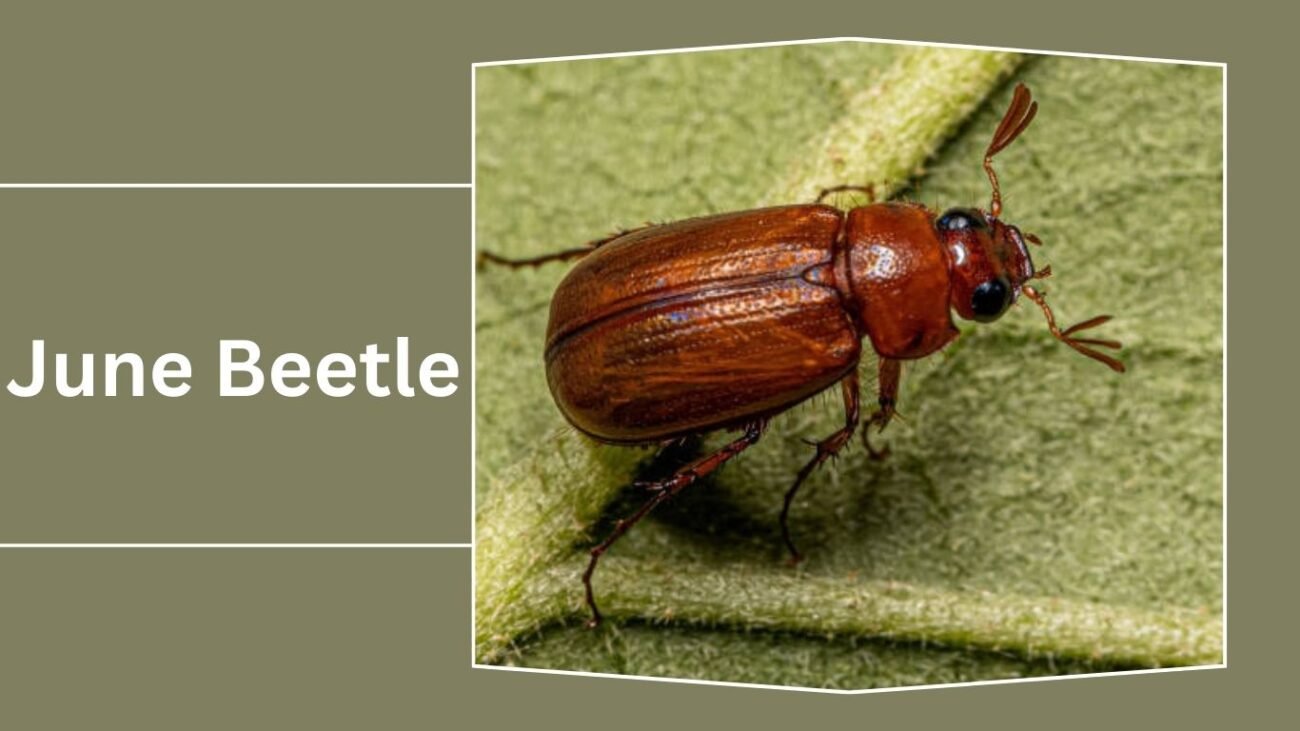
June beetles, also known as May beetles, are nocturnal beetles famous for their seasonal appearance in late spring and early summer. They are commonly found in North America and are known to feed on the foliage of trees and shrubs, while their larvae (white grubs) live underground feeding on roots.
Identification
- Medium-sized beetles, typically 12–25 mm in length
- Brown or reddish-brown elytra and body
- Robust, oval-shaped body with a hard exoskeleton
- Six legs adapted for crawling and digging
- Antennae with clubbed, leaf-like segments
Habitat
June beetles are widely distributed in forests, grasslands, gardens, and agricultural fields. Adults are active at night, often attracted to lights. Larvae live in the soil, feeding on the roots of grasses and other plants for one to three years before pupating.
Behaviors
Adults emerge in late spring and early summer, often flying clumsily around lights at night. Mating occurs shortly after emergence. Larvae live underground, feeding on roots and occasionally damaging lawns, pastures, and crops. Adults may live only a few weeks.
Diet
Adults feed primarily on the foliage of trees and shrubs, occasionally causing defoliation. Larvae (white grubs) feed on roots of grasses, cereals, and other plants, which can lead to significant damage to lawns and crops.
16. Soldier Beetle (Cantharidae)
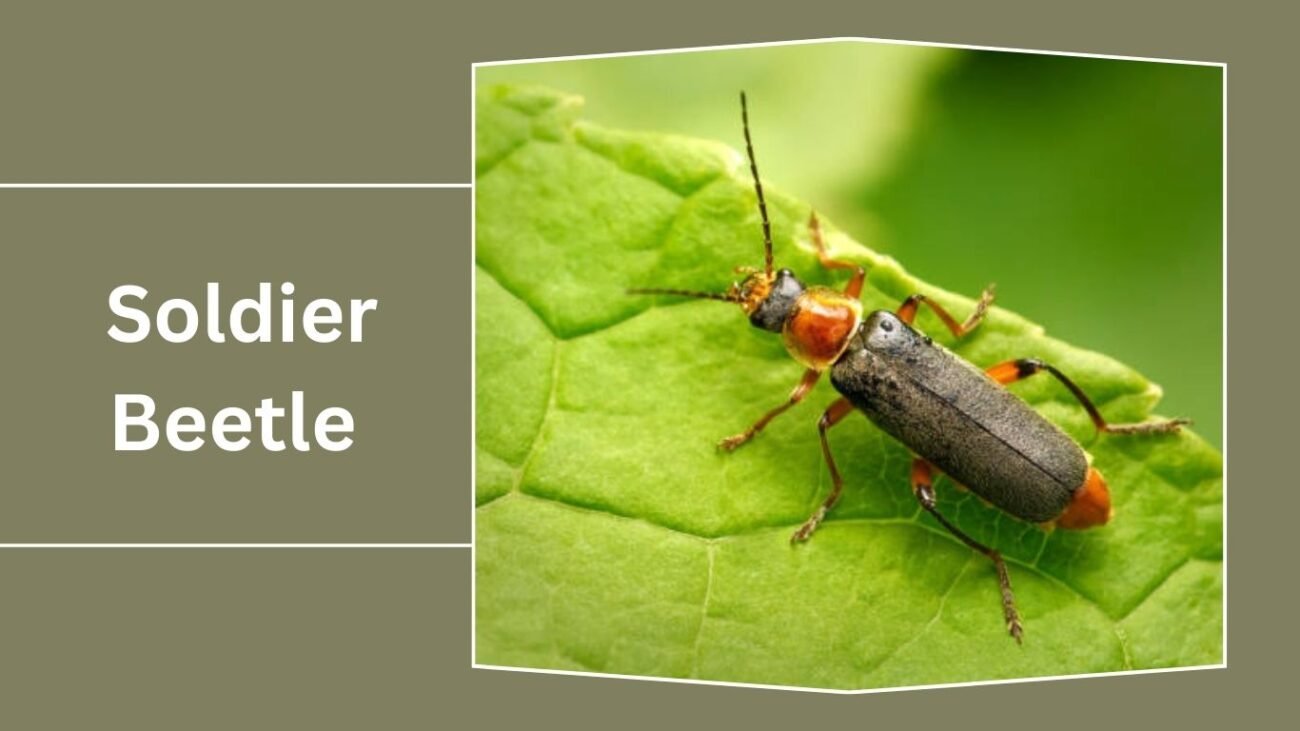
Soldier beetles are soft-bodied beetles often brightly colored in red, orange, or yellow. They are beneficial insects, preying on pests while also acting as pollinators. Their presence in gardens is generally considered positive for ecosystem health.
Identification
- Medium-sized beetles, typically 5–15 mm in length
- Soft, elongated body with flexible elytra
- Bright red, orange, or yellow coloration with black markings
- Six slender legs and long antennae
- Head partially hidden under the pronotum
Habitat
Soldier beetles are commonly found in gardens, meadows, forests, and agricultural fields. They prefer areas with flowering plants, which attract both adults for nectar and prey for hunting.
Behaviors
Adults are active during the day, feeding on nectar, pollen, and small insects. They are often seen on flowers hunting aphids and other soft-bodied insects. Larvae live in soil or leaf litter, feeding on small invertebrates.
Diet
Adults feed on nectar, pollen, and small insects, contributing to both pollination and pest control. Larvae are carnivorous, feeding on slugs, insect eggs, and larvae in the soil.
17. Blister Beetle (Meloidae)
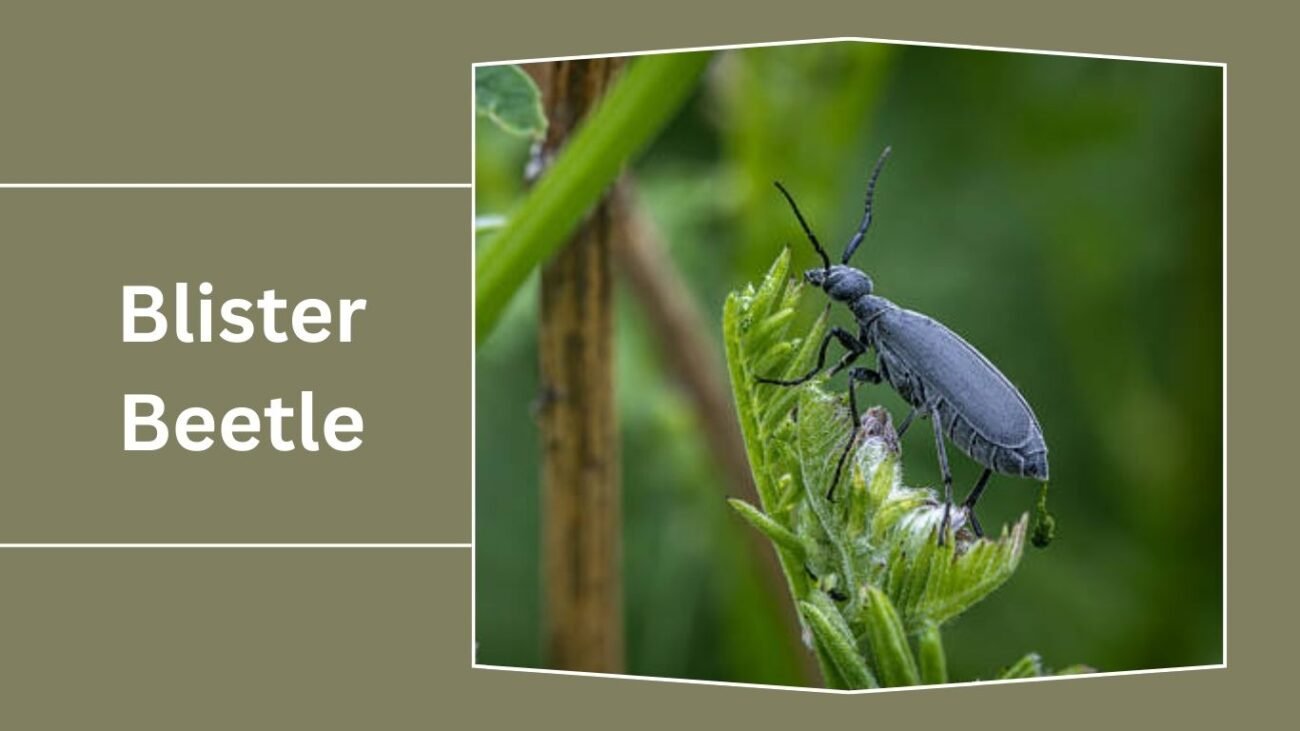
Blister beetles are a group of beetles known for their chemical defense, producing a toxic compound called cantharidin, which can cause blistering on contact. While some species are pests, they also have ecological importance as predators of certain insect larvae.
Identification
- Medium to large beetles, typically 1–4 cm in length
- Soft, elongated body
- Brightly colored, often black, yellow, or orange with patterns
- Six legs and long, flexible antennae
- Elytra are soft and may be shortened in some species
Habitat
Blister beetles are found in gardens, grasslands, agricultural fields, and meadows. They often inhabit areas with flowering plants where adults feed and mate. Larvae are usually parasitic or predatory on other insects.
Behaviors
Adults feed on flowers, leaves, and crops, sometimes causing damage to plants. Larvae are often parasitoids of bee nests or other insect larvae, which helps control populations of certain insects. Blister beetles release cantharidin as a defense against predators.
Diet
Adults feed on leaves, flowers, and occasionally crops like alfalfa. Larvae consume insect eggs or larvae, particularly those of bees or grasshoppers, depending on the species.
18. Diving Beetle (Dytiscidae)
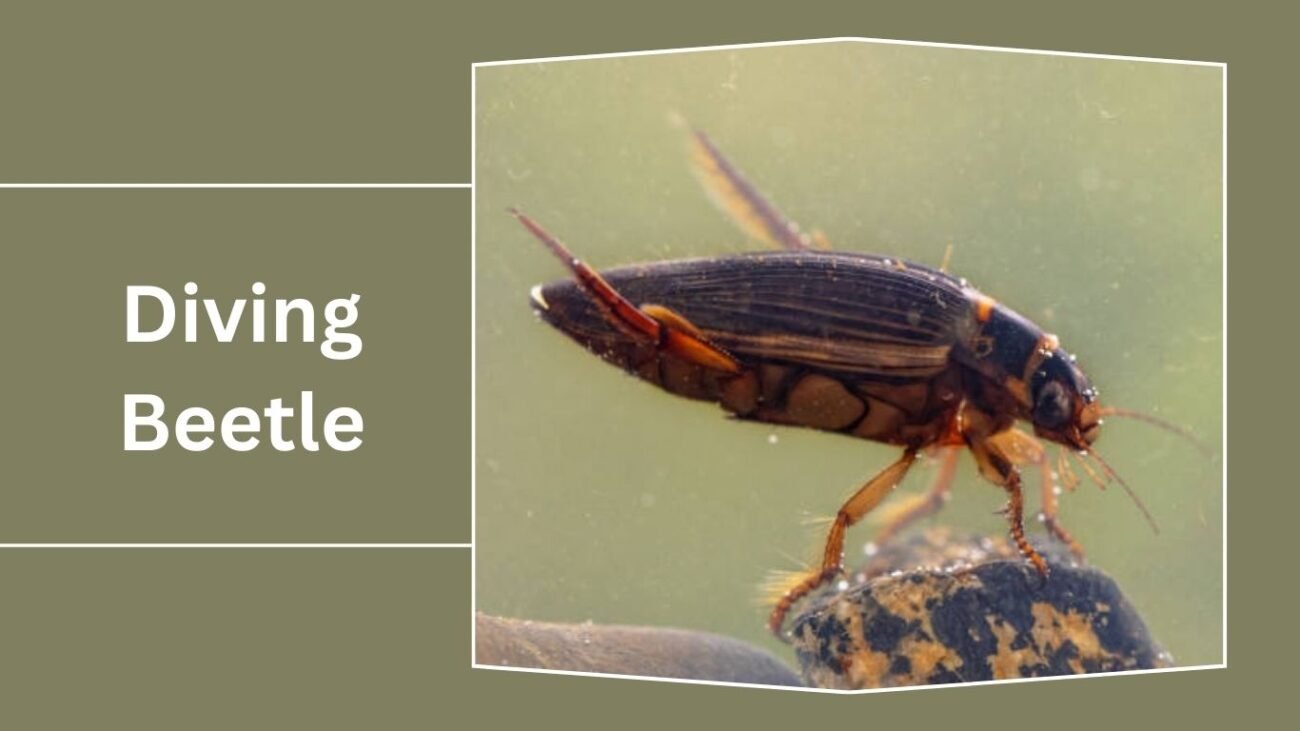
Diving beetles are aquatic beetles known for their strong swimming ability and predatory behavior. They play an important role in freshwater ecosystems by controlling populations of other aquatic invertebrates and small fish.
Identification
- Streamlined, oval-shaped body, typically 1–4 cm in length
- Dark brown to black dorsal surface with lighter ventral side
- Six legs, with hind legs flattened and fringed for swimming
- Hard elytra covering the abdomen
- Well-developed mandibles for capturing prey
Habitat
Diving beetles inhabit ponds, lakes, slow-moving streams, and other freshwater bodies. They are often found under vegetation or near the water surface. Both adults and larvae are aquatic.
Behaviors
Diving beetles are strong swimmers and hunters, surfacing occasionally for air. Adults are capable of flying to colonize new water bodies. Larvae, known as “water tigers,” are aggressive predators, feeding on other aquatic insects and small fish.
Diet
Both adults and larvae are carnivorous. They feed on aquatic insects, tadpoles, small fish, and other invertebrates. Their predatory behavior helps regulate aquatic ecosystems and maintain balance among prey populations.
19. Water Scavenger Beetle (Hydrophilidae)
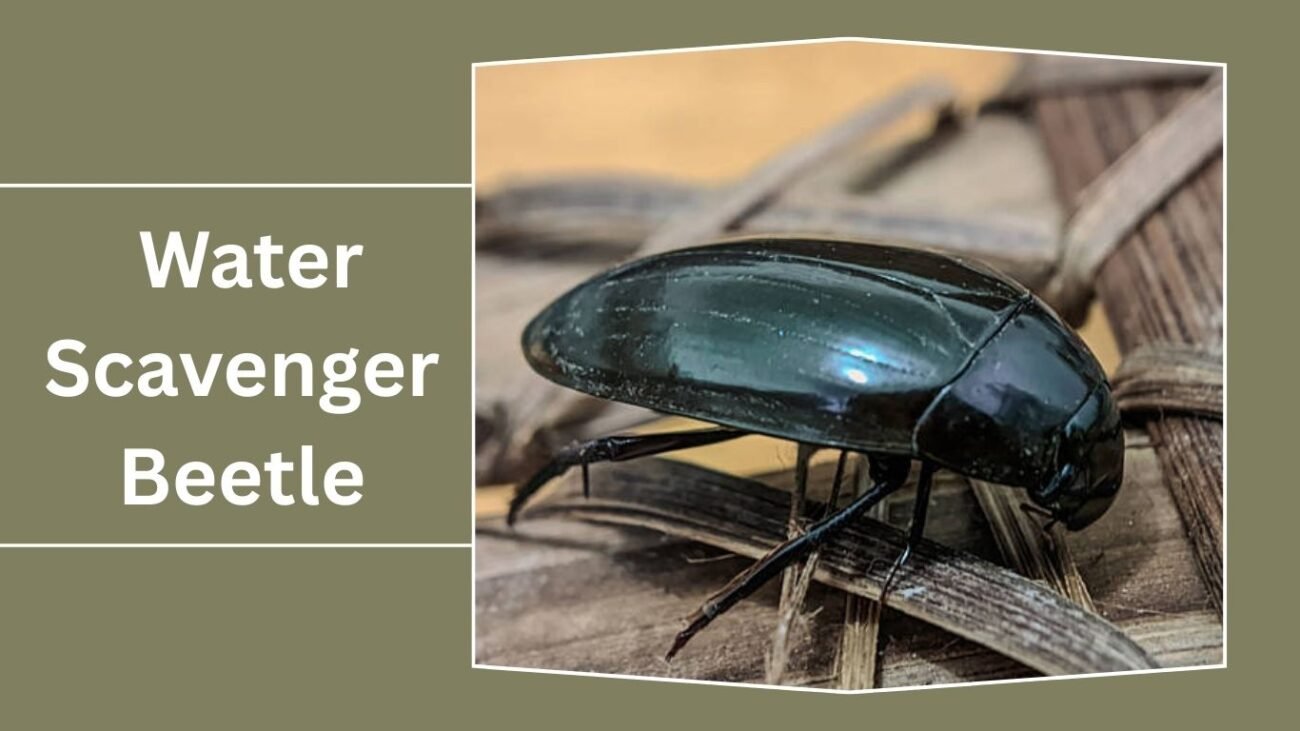
Water scavenger beetles are aquatic beetles that primarily feed on decaying organic matter but can also prey on small invertebrates. They play a key role in nutrient recycling within freshwater ecosystems.
Identification
- Oval or elongated body, typically 5–35 mm in length
- Smooth, dark brown or black exoskeleton with a shiny surface
- Six legs, with hind legs often adapted for swimming
- Short antennae and long maxillary palps
- Hard elytra covering the abdomen
Habitat
Water scavenger beetles inhabit ponds, marshes, slow-moving streams, and other freshwater environments. They are commonly found near submerged vegetation or debris where they search for food.
Behaviors
Adults are strong swimmers and can trap air beneath their bodies to breathe underwater. They are often seen at the water surface, while larvae actively hunt smaller invertebrates. Adults can also fly to move between water bodies.
Diet
Adults feed on decaying plant and animal matter, algae, and sometimes small aquatic invertebrates. Larvae are mostly predatory, feeding on tiny aquatic insects, larvae, and other small organisms.
20. Tortoise Beetle (Cassidinae)
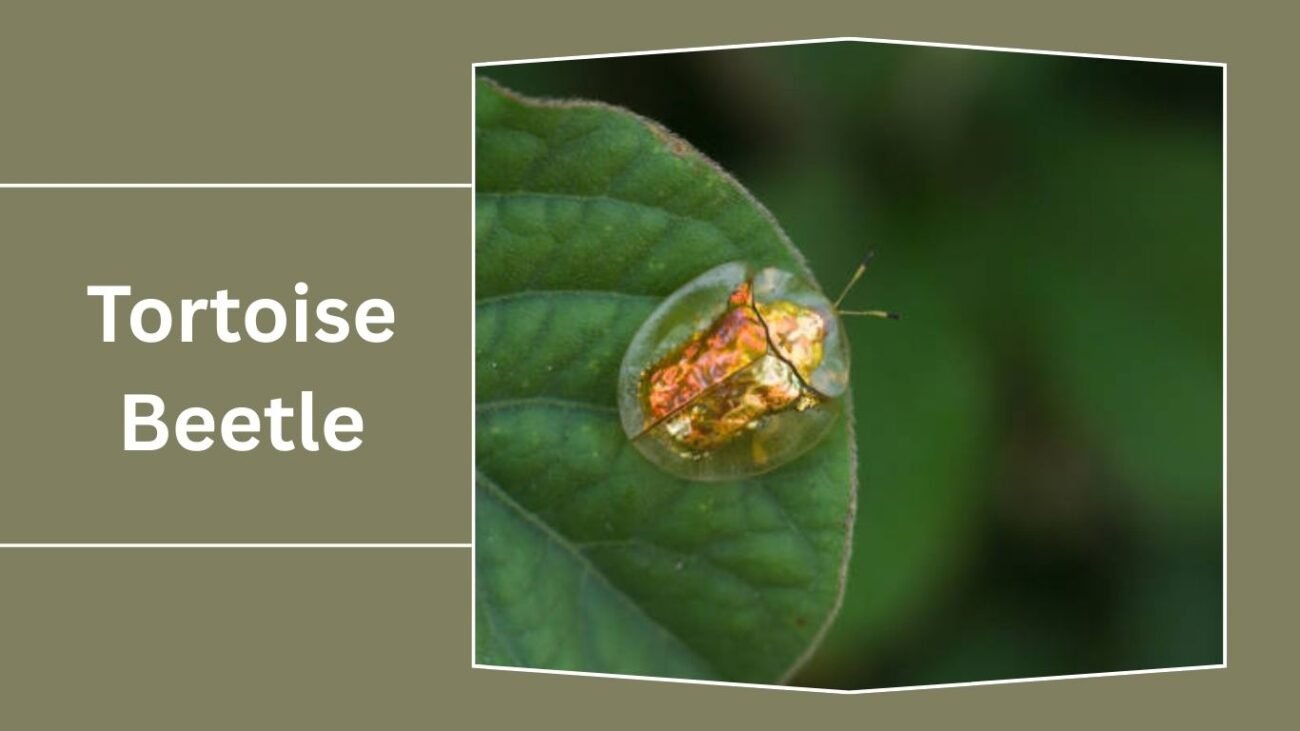
Tortoise beetles are small, often colorful beetles named for their dome-shaped, tortoise-like appearance. Many species exhibit metallic or transparent edges on their elytra, which help in camouflage. They are primarily herbivorous and feed on leaves of specific host plants.
Identification
- Small, usually 5–12 mm in length
- Dome-shaped, rounded body resembling a tortoise shell
- Brightly colored, metallic, or transparent margins on elytra
- Six legs and short antennae
- Elytra cover the entire abdomen, sometimes extending to shield the head
Habitat
Tortoise beetles are commonly found in gardens, forests, and grasslands. They prefer plants from the morning glory and sweet potato families, often staying on the underside of leaves to avoid predators.
Behaviors
Tortoise beetles are mostly diurnal and slow-moving. When threatened, they press tightly against the leaf surface, hiding their legs and head under the elytra to avoid predation. Larvae often carry excrement and shed skins on their backs as a form of defense.
Diet
Adults and larvae feed primarily on leaves, creating small holes or skeletonized patterns. Their feeding can affect plant health if populations are high, but they rarely cause severe damage.
21. Darkling Beetle (Tenebrionidae)
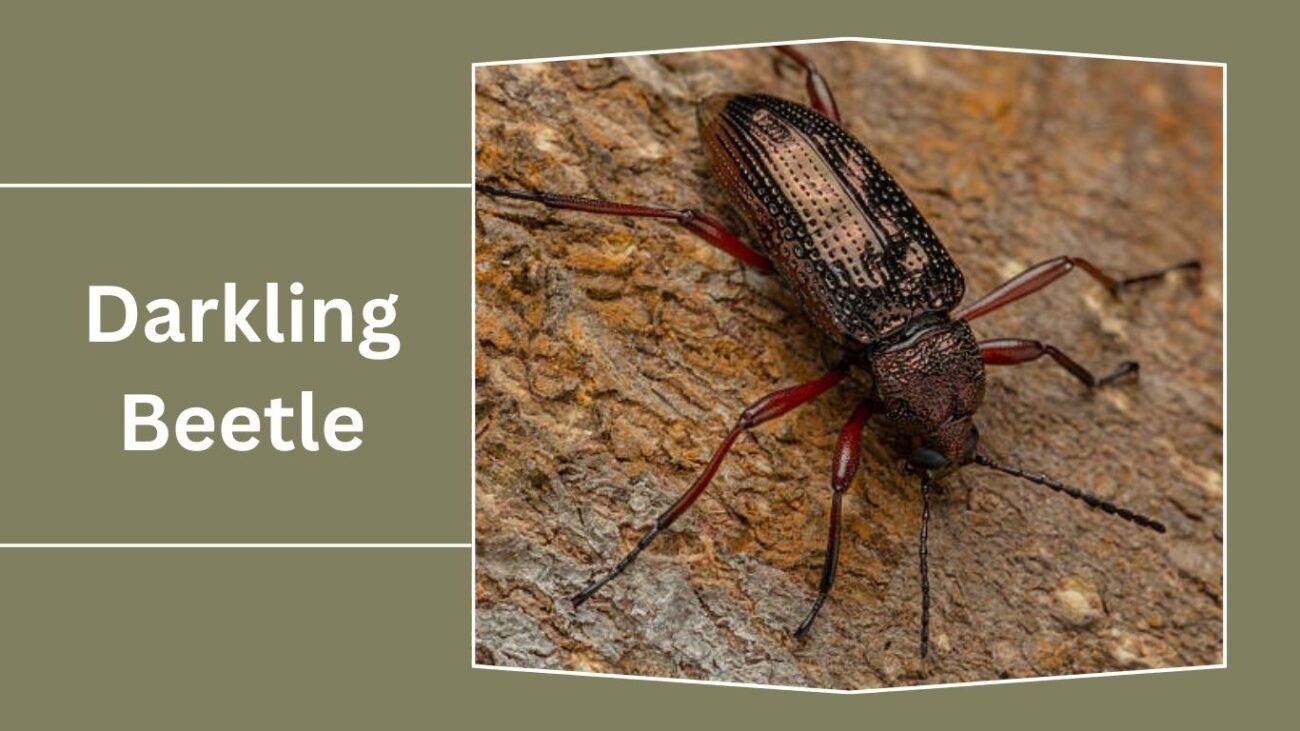
Darkling beetles are a large and diverse family of beetles, often recognized by their dark, hard bodies. They are mostly detritivores, feeding on decaying plant matter, and play a key role in nutrient recycling in various ecosystems. Some species, like the mealworm beetle, are also important in agriculture and as animal feed.
Identification
- Medium to large beetles, typically 1–4 cm in length
- Hard, dark brown or black exoskeleton
- Elongated, oval, or slightly flattened body
- Six legs and well-developed antennae
- Elytra covering the abdomen, often fused and not capable of flight in many species
Habitat
Darkling beetles are found in forests, deserts, grasslands, and agricultural areas. They prefer dry, sheltered environments like under rocks, logs, leaf litter, or inside decaying wood. Some desert species have adaptations to survive arid conditions.
Behaviors
Darkling beetles are mostly nocturnal and avoid sunlight. Many species can release a foul-smelling chemical as a defense mechanism. They are slow-moving but resilient, often surviving in harsh environments with minimal food or water.
Diet
Primarily detritivorous, feeding on decaying plant matter, fungi, and grains. Some species may feed on living plants or stored crops, occasionally becoming pests. Larvae, like mealworms, feed on similar organic material.
22. Rove Beetle (Staphylinidae)
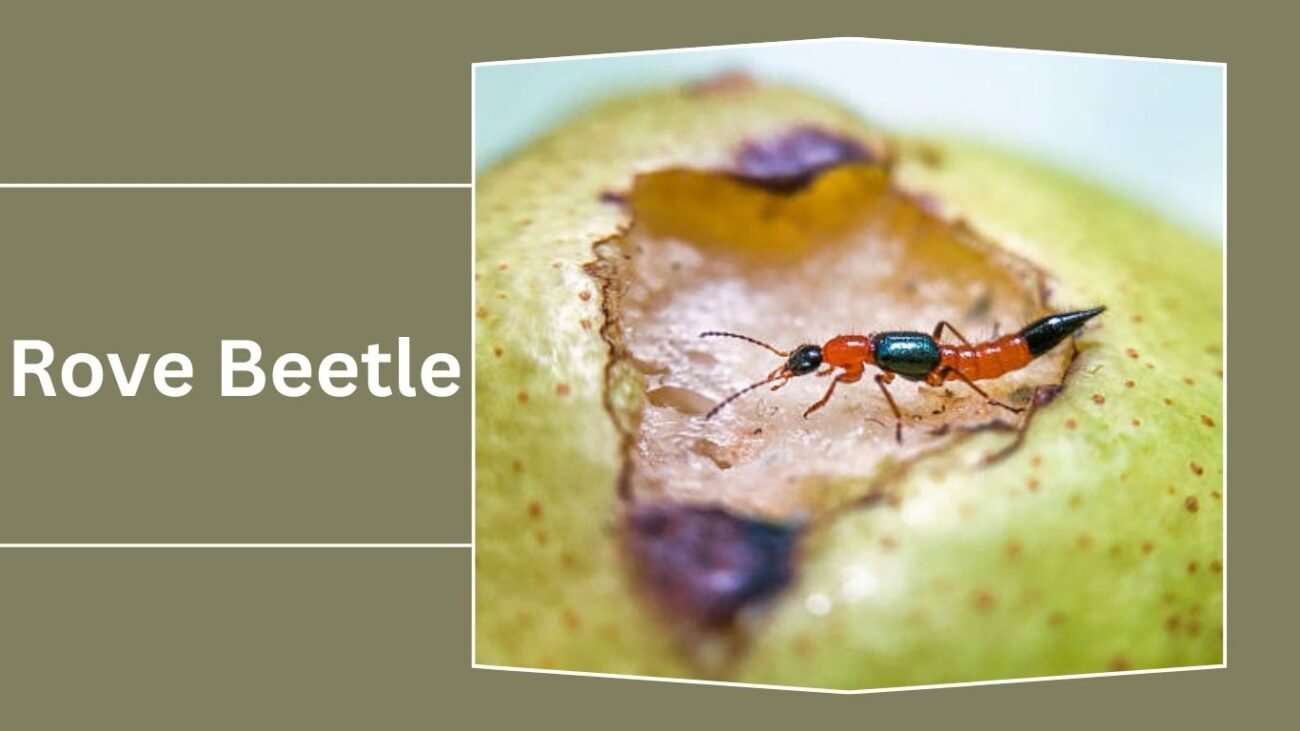
Rove beetles are a highly diverse family of beetles, recognized for their elongated bodies and very short elytra that leave most of their abdominal segments exposed. They are primarily predators and scavengers, playing an important role in controlling insect populations.
Identification
- Small to medium-sized, typically 1–35 mm in length
- Elongated, slender body with short elytra
- Exposed abdominal segments that are flexible and mobile
- Dark-colored, brown, or metallic in appearance
- Six legs and well-developed mandibles for capturing prey
Habitat
Rove beetles inhabit forests, grasslands, gardens, and wetlands. They are commonly found under stones, leaf litter, decaying wood, and compost where prey and organic material are abundant.
Behaviors
Rove beetles are active hunters and scavengers, often moving rapidly to catch prey. They can raise their abdomen defensively, resembling a scorpion, to deter predators. Some species secrete chemicals to protect themselves from threats.
Diet
Primarily carnivorous, feeding on insect larvae, small invertebrates, mites, and other soft-bodied organisms. Some species are scavengers, consuming decaying organic matter.
23. Fungus Beetle (Erotylidae)
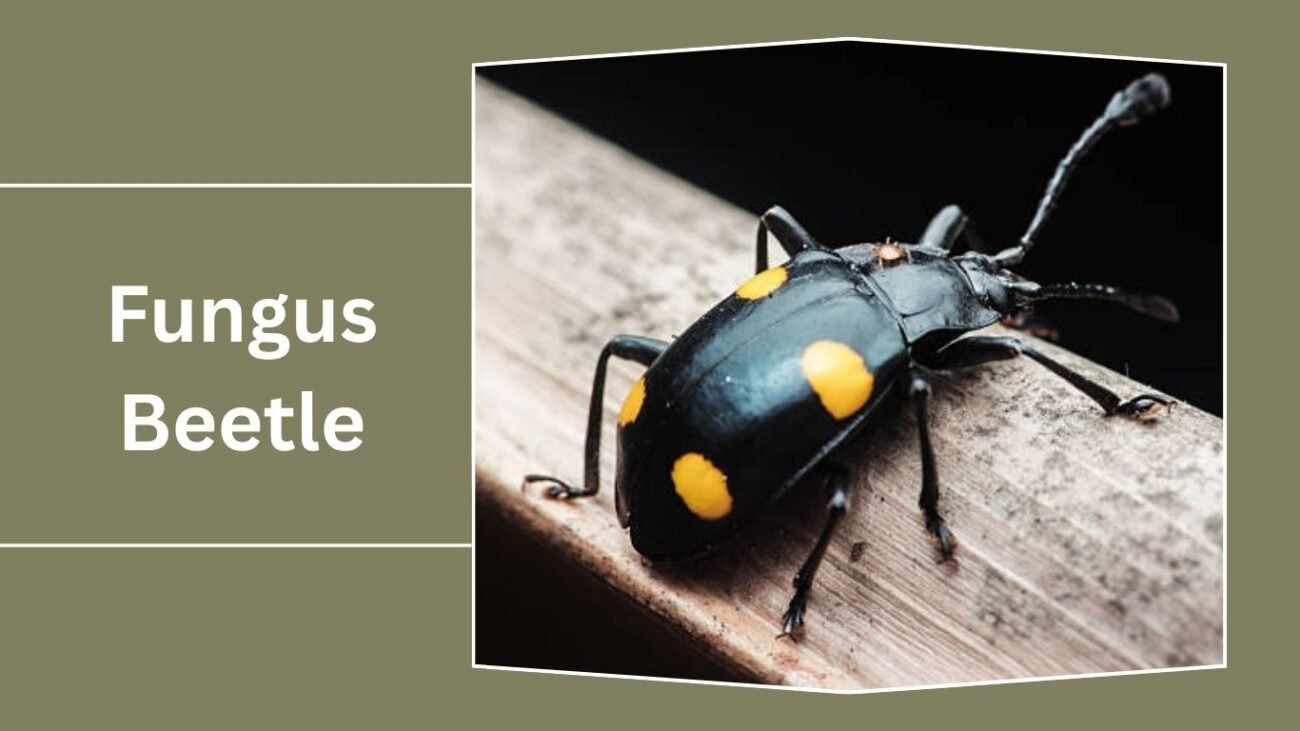
Fungus beetles are small to medium-sized beetles that primarily feed on fungi. They are important in forest ecosystems as decomposers, helping recycle nutrients from decaying wood and fungi. Many species are brightly colored and are often found on mushrooms.
Identification
- Small to medium-sized, typically 5–20 mm in length
- Oval or elongated body, often brightly colored with spots or stripes
- Hard exoskeleton with smooth or slightly textured elytra
- Six legs and clubbed antennae
- Some species have metallic or shiny surfaces
Habitat
Fungus beetles are commonly found in forests, woodlands, and areas with decaying wood. They prefer damp environments where fungi, especially mushrooms, are abundant.
Behaviors
Adults and larvae are often found on or inside fungi, feeding on spores and tissue. Some species play a role in dispersing fungal spores. They are generally slow-moving and rely on camouflage and coloration to avoid predators.
Diet
Both adults and larvae feed primarily on fungi, including mushrooms, bracket fungi, and moldy wood. Their diet contributes to decomposition and nutrient cycling in forest ecosystems.
24. Oil Beetle (Meloe)
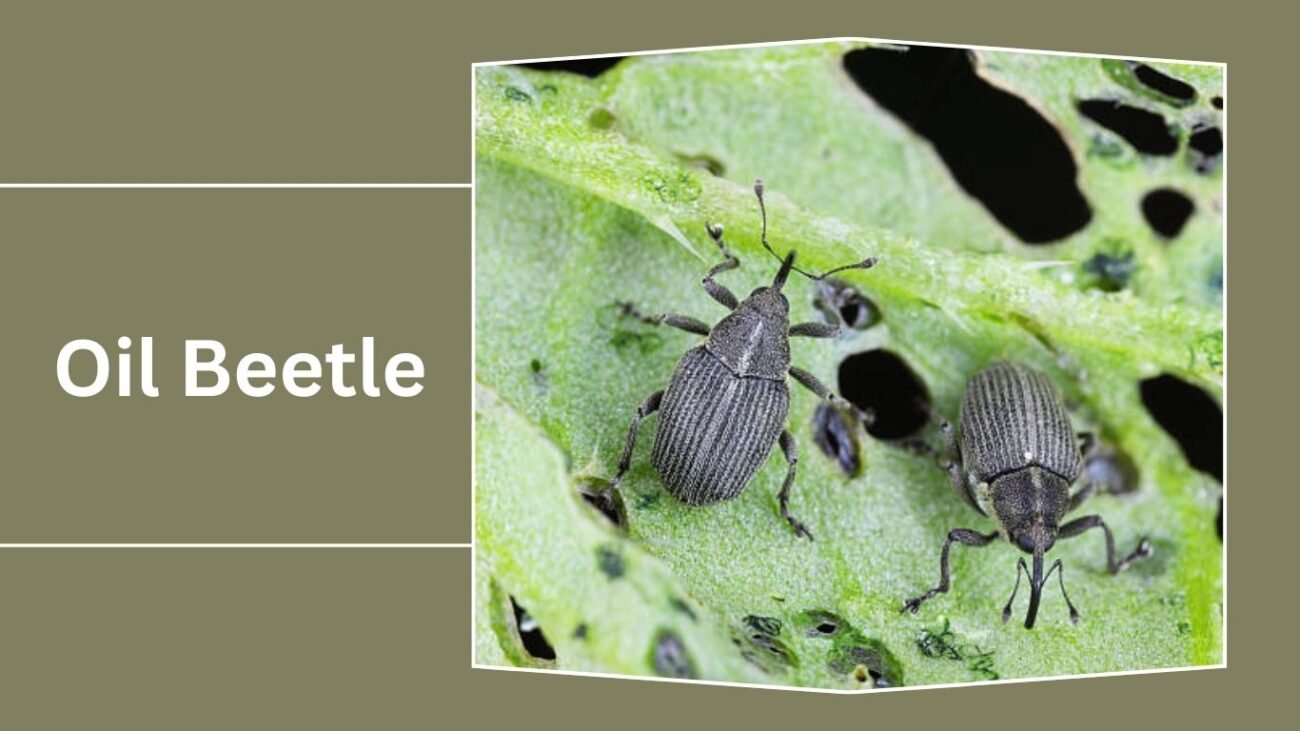
Oil beetles are striking beetles known for their chemical defense mechanism, releasing oily droplets containing cantharidin that can cause skin blisters. They are fascinating insects with a unique life cycle that often involves parasitism on bees during their larval stage.
Identification
- Medium to large beetles, typically 1–4 cm in length
- Soft, elongated, and robust body, often black or dark blue
- Shortened elytra that leave part of the abdomen exposed
- Six legs and relatively short antennae
- Adults can exude a toxic, oily substance when threatened
Habitat
Oil beetles are commonly found in meadows, grasslands, and gardens. They prefer areas with flowering plants, which attract bees that serve as hosts for their larvae. Adults are usually found on vegetation or the ground.
Behaviors
Oil beetles have a complex life cycle. Females lay eggs in soil, and emerging larvae (triungulins) actively seek out bee nests, where they attach to adult bees and are carried back to the nest. There, they feed on bee eggs and stored pollen. Adults secrete cantharidin as a chemical defense against predators.
Diet
Adults feed on foliage and flowers, while larvae are parasitic, feeding on bee larvae and provisions within bee nests.
25. Metallic Wood-boring Beetle (Buprestidae)
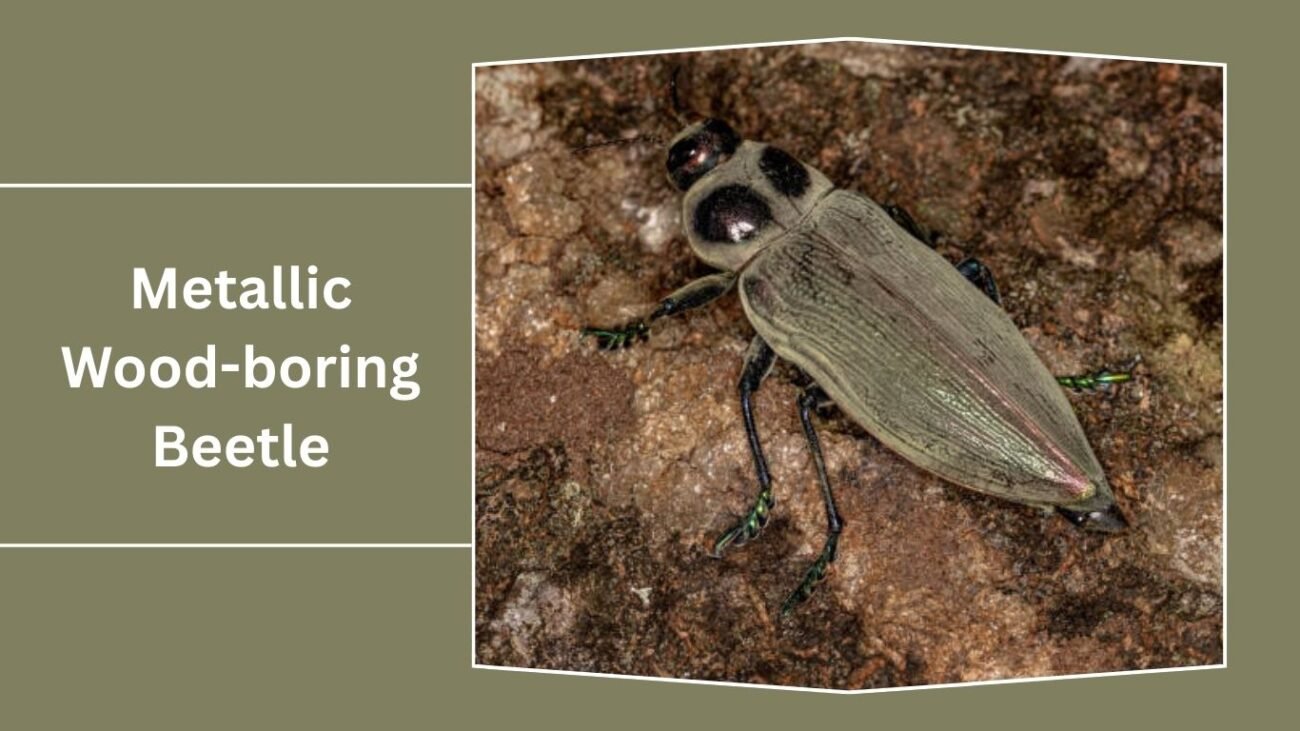
Metallic wood-boring beetles, also known as jewel beetles, are renowned for their brilliant, iridescent colors. They are primarily wood-boring insects whose larvae play a crucial role in decomposing dead or stressed trees, but some species can be serious pests of forests and ornamental trees.
Identification
- Medium to large beetles, typically 3–100 mm in length
- Elongated, cylindrical, or slightly flattened body
- Brilliant metallic or iridescent coloration, often green, blue, gold, or copper
- Hard exoskeleton and elytra covering the abdomen
- Six legs and short, serrate antennae
Habitat
Metallic wood-boring beetles are found worldwide, mainly in forests, woodlands, and areas with dead or dying trees. They prefer trees weakened by disease, fire, or drought, where they lay eggs for larval development.
Behaviors
Adults are active during the day and are strong fliers, often attracted to sunlit areas or recently stressed trees. Larvae, known as flatheaded borers, tunnel under bark and into wood, sometimes causing structural damage to living trees. Adults feed on foliage, nectar, or pollen.
Diet
Larvae feed primarily on the wood of trees, especially under the bark, contributing to decomposition. Adults feed on leaves, nectar, and pollen, depending on the species.