Katydids are fascinating insects known for their incredible camouflage, diverse shapes, and distinctive sounds. Found in grasslands, forests, wetlands, and even suburban gardens, they play an important role in ecosystems as both herbivores and occasional predators. With features ranging from leaf-like wings to spiny bodies, each species has its own unique adaptations. In this guide, we explore 21 different types of katydids, highlighting their identification traits, habitats, and behaviors.
1. Common True Katydid

The common true katydid is one of the most recognizable katydid species in North America, famous for its loud, repetitive nighttime calls that sound like “katy-did, katy-didn’t.” These robust, leaf-like insects are expert mimics of foliage, making them difficult to spot despite their size. They are primarily active at night, feeding on leaves high in the canopy.
Identification
- Scientific Name: Pterophylla camellifolia
- Body Size: 4–5 cm long
- Color: Bright green, resembling a leaf in shape and texture
- Antennae: Very long, often longer than the body
- Wings: Leaf-veined, forming a flat, oval shape
Habitat and Distribution
This species is most common in the eastern United States, especially in deciduous forests and suburban areas with plenty of tall trees. They rarely come to the ground, preferring high branches and dense foliage.
Behavior and Diet
Common true katydids are nocturnal and use their camouflage to avoid predators. Males produce their distinctive calls by rubbing their forewings together, primarily to attract females. Their diet consists mainly of leaves from trees such as oak, maple, and birch.
2. Angular-winged Katydid
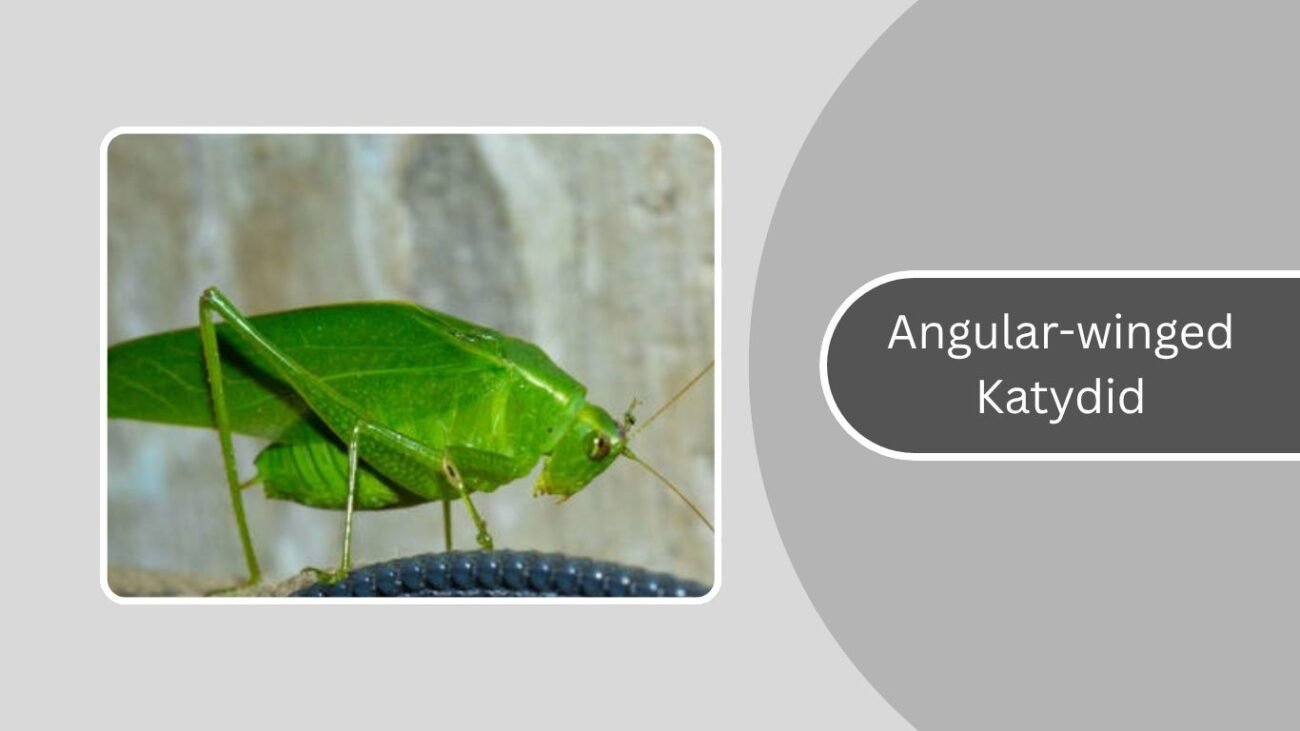
The angular-winged katydid is a large, bright green insect recognized for the distinctive angular shape of its wings. Its excellent leaf mimicry helps it blend seamlessly into vegetation, making it a master of camouflage. These katydids are often found in gardens, parks, and wooded areas, especially in warmer months when their mating calls fill the night air.
Identification
- Scientific Name: Microcentrum rhombifolium
- Body Size: 4–5 cm long
- Color: Bright green with leaf-like veined wings
- Antennae: Extremely long and thread-like
- Wings: Angular-shaped, giving the insect its common name
Habitat and Distribution
This species is widespread across the southern and eastern United States. It thrives in areas with dense shrubs, trees, and tall plants, often perching quietly during the day and becoming active at night.
Behavior and Diet
Angular-winged katydids are nocturnal, producing loud, rasping calls to attract mates. They are mainly herbivorous, feeding on leaves, flowers, and sometimes fruits, but will occasionally nibble on other plant material when available.
3. Fork-tailed Bush Katydid
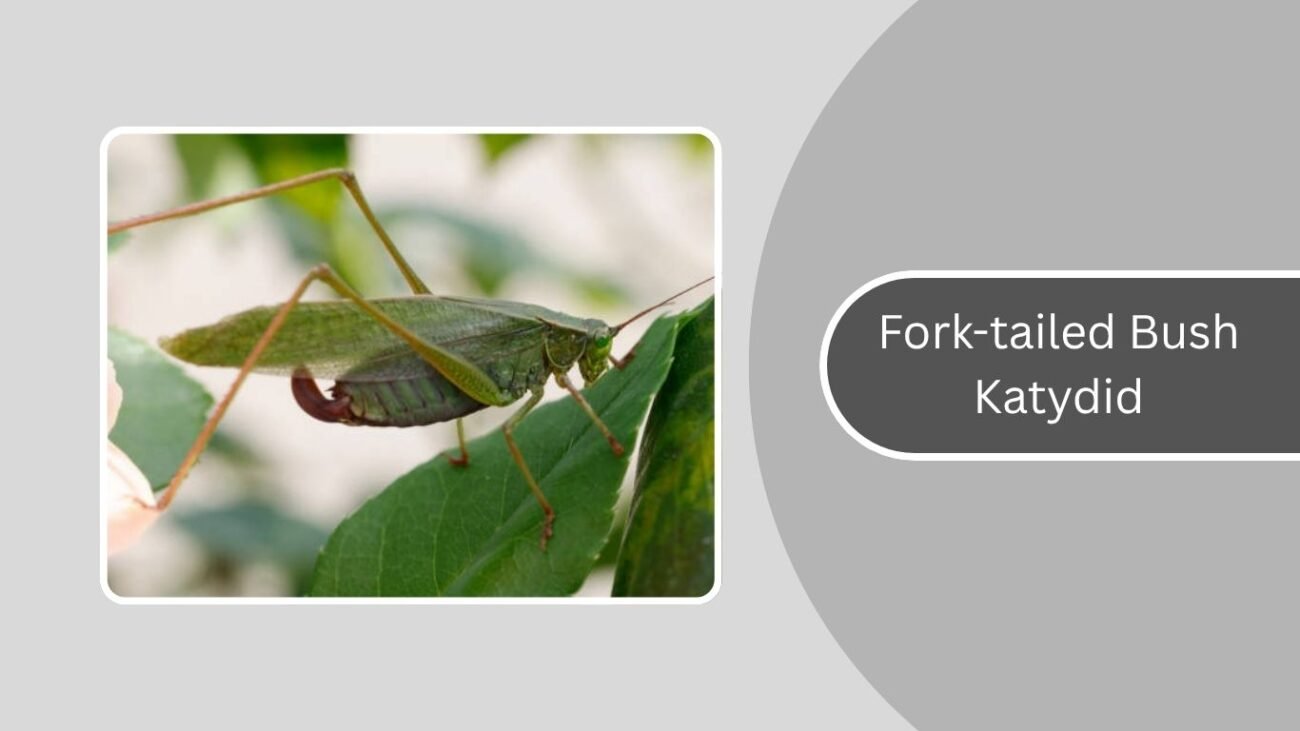
The fork-tailed bush katydid is a slender, green katydid known for the distinctive forked shape at the end of its abdomen, especially visible in males. Its body is built for agility, allowing it to move easily through vegetation. This species is often spotted in gardens, meadows, and shrubby areas, blending perfectly with leaves and stems.
Identification
- Scientific Name: Scudderia furcata
- Body Size: 3–4.5 cm long
- Color: Bright green with delicate leaf-like wings
- Antennae: Long, thin, and flexible
- Tail: Forked structure at the tip of the abdomen (more pronounced in males)
Habitat and Distribution
They are commonly found across North America, particularly in areas with dense plant growth such as meadows, hedgerows, gardens, and forest edges. Their coloration and body shape provide excellent camouflage among leaves.
Behavior and Diet
Fork-tailed bush katydids are active mainly at night, producing soft, high-pitched calls that are difficult for humans to hear. They are primarily herbivorous, feeding on leaves, flowers, and soft plant tissues, but will occasionally consume small insects.
4. Broad-winged Katydid
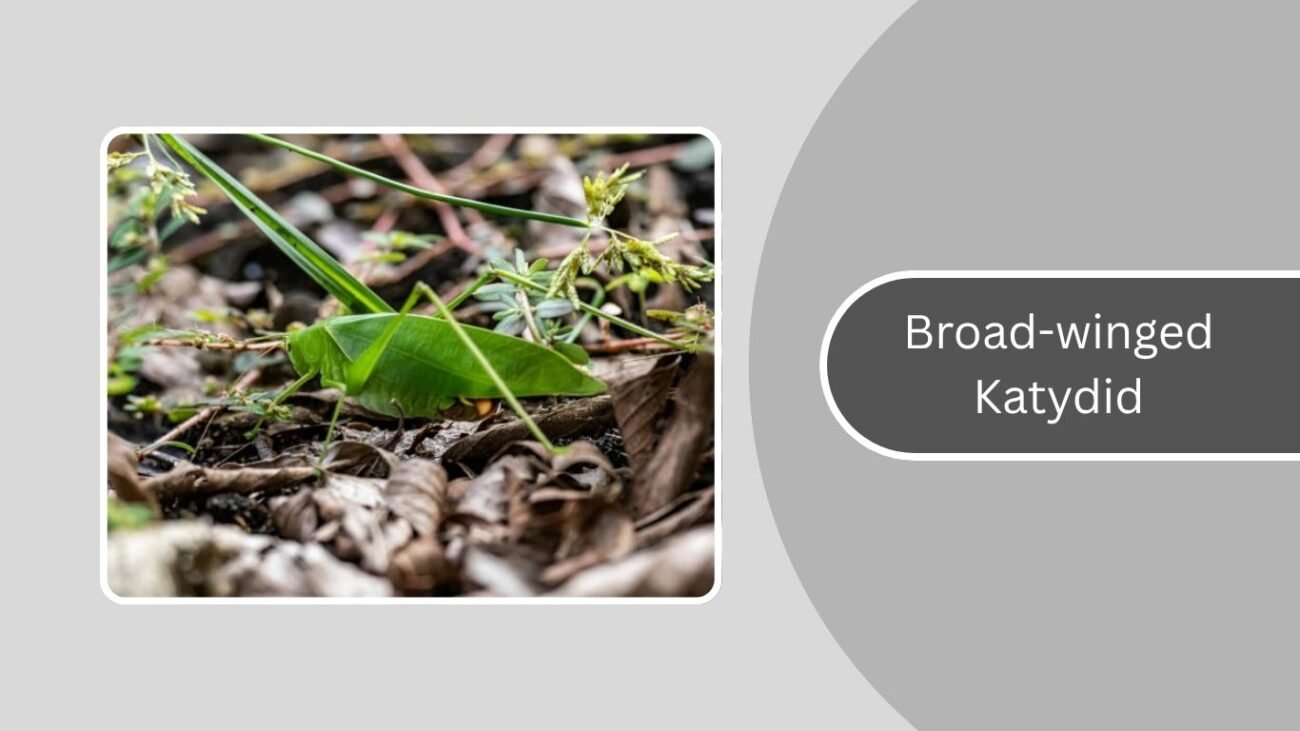
The broad-winged katydid is a large, vibrant green insect notable for its wide, leaf-like wings that offer superb camouflage. Its body structure is bulkier compared to some other katydid species, and its prominent wing veins make it look almost identical to a fresh leaf. These katydids are easy to hear at night but often hard to spot due to their effective disguise.
Identification
- Scientific Name: Microcentrum retinerve
- Body Size: 4–5.5 cm long
- Color: Bright to yellowish-green with bold leaf-like wing veins
- Antennae: Long and thread-like, extending far beyond the body length
- Wings: Broad and oval, resembling a fresh green leaf
Habitat and Distribution
They are commonly found in the eastern United States, especially in deciduous forests, gardens, and shrubby areas. They tend to stay in the upper canopy during the day and become active at dusk.
Behavior and Diet
Broad-winged katydids are nocturnal singers, producing steady, rhythmic calls to attract mates. They feed mainly on leaves, flowers, and occasionally soft fruits, making them both important plant consumers and a food source for birds and bats.
5. Common Meadow Katydid

The common meadow katydid is a small, agile species often found in open grassy areas, meadows, and wetlands. Unlike some of its larger, leaf-mimicking relatives, this katydid has a more slender build and shorter wings, making it well-suited for navigating through tall grasses and reeds. Its songs are soft and high-pitched, often going unnoticed by human ears.
Identification
- Scientific Name: Orchelimum vulgare
- Body Size: 1.5–2.5 cm long
- Color: Green body with brown or reddish accents on the wings
- Antennae: Very long, thin, and whip-like
- Wings: Short to medium length, often extending slightly beyond the abdomen
Habitat and Distribution
Common meadow katydids are found throughout much of North America, particularly in open fields, grassy wetlands, and along the edges of ponds and streams. They prefer sunny habitats with abundant vegetation.
Behavior and Diet
They are diurnal and crepuscular, active both during the day and early evening. Their diet includes grass seeds, tender leaves, and small insects such as aphids, making them both herbivorous and opportunistically carnivorous.
6. Gladiator Meadow Katydid

The gladiator meadow katydid is a colorful and energetic species named for its robust, warrior-like appearance. It stands out among meadow katydids for its bright markings and relatively large size. These katydids are strong jumpers and active hunters, making them more versatile in diet compared to many other katydid types.
Identification
- Scientific Name: Orchelimum gladiator
- Body Size: 2–3 cm long
- Color: Green with reddish or brown accents; some individuals show yellow markings on the legs
- Antennae: Long and thread-like, often exceeding body length
- Wings: Medium-length, partially transparent with a hint of brown or green
Habitat and Distribution
This species is widespread in North America, especially in meadows, tall grass prairies, and wetland edges. They prefer sunny, open habitats with abundant tall grasses and herbaceous plants.
Behavior and Diet
Gladiator meadow katydids are diurnal and crepuscular, often seen hopping or flying between grass stems. They are omnivorous, feeding on grass seeds, leaves, and a variety of small insects, which they capture with quick, precise movements.
7. Straight-lanced Meadow Katydid

The straight-lanced meadow katydid is a slender, long-legged species easily recognized by the female’s exceptionally long, straight ovipositor. Its body is streamlined for moving through tall grasses and reeds, making it an agile insect in dense vegetation. This species thrives in moist, sunny environments and is most active during warm months.
Identification
- Scientific Name: Conocephalus strictus
- Body Size: 1.5–2.5 cm long
- Color: Green body with brown-tipped wings and legs
- Antennae: Long and whip-like, extending well beyond the body
- Ovipositor: Long, straight, and blade-like in females
Habitat and Distribution
They are found across much of North America, especially in meadows, wetlands, and grasslands. They prefer areas with tall grasses and plenty of sunlight, often near streams or ponds.
Behavior and Diet
Straight-lanced meadow katydids are primarily herbivorous, feeding on grass seeds, leaves, and small flower parts. They are active during the day and early evening, often producing soft, high-pitched songs that blend into the background sounds of grassy habitats.
8. Short-winged Meadow Katydid

The short-winged meadow katydid is a small, compact species named for its noticeably short wings, which typically do not cover the entire abdomen. Despite their limited flight ability, they are agile hoppers and climbers, moving with ease through grass stems and low vegetation. Their songs are soft and rapid, often blending into the background noise of wetlands and meadows.
Identification
- Scientific Name: Conocephalus brevipennis
- Body Size: 1.3–2 cm long
- Color: Green body with brown or reddish highlights on wings and legs
- Antennae: Long and thin, extending far beyond body length
- Wings: Short, not reaching the tip of the abdomen
Habitat and Distribution
They are found widely across North America, favoring moist habitats such as marshes, wet meadows, and pond edges. Dense vegetation is essential for their survival, offering both food and protection from predators.
Behavior and Diet
Short-winged meadow katydids are omnivorous, feeding on grass seeds, soft plant matter, and small insects. They are active mainly in late summer and early autumn, with males producing quick, high-pitched songs to attract mates.
9. Cone-headed Katydid

The cone-headed katydid is a slender, long-bodied insect instantly recognizable by its pointed, cone-like head. This feature, combined with its long legs and wings, gives it a sleek, aerodynamic appearance. Known for their loud, buzzing calls on warm summer nights, cone-headed katydids are strong fliers and adept at navigating tall vegetation.
Identification
- Scientific Name: Neoconocephalus ensiger
- Body Size: 3–4.5 cm long
- Color: Bright green, sometimes with a brownish tinge
- Antennae: Extremely long and thread-like
- Head: Elongated and tapering to a pointed “cone” shape
Habitat and Distribution
They are found throughout much of North America, especially in grasslands, meadows, and along roadside vegetation. These insects prefer tall grasses and reeds where their coloration and body shape make them almost invisible.
Behavior and Diet
Cone-headed katydids are mostly nocturnal, producing rapid, buzzing songs to attract mates. They are omnivorous, feeding on grass seeds, leaves, and various small insects, which they capture with quick strikes of their strong mandibles.
10. Robust Cone-headed Katydid

The robust cone-headed katydid is a large, strong-bodied species with the signature pointed head shape typical of coneheads. It is larger and bulkier than many of its relatives, with powerful legs and a commanding presence in tall grassy habitats. Its loud, continuous buzz on warm nights is a familiar sound in summer meadows.
Identification
- Scientific Name: Neoconocephalus robustus
- Body Size: 4–5.5 cm long
- Color: Bright green with occasional brownish markings on wings
- Antennae: Very long and thread-like, extending far beyond the body
- Head: Long, tapering to a sharp, cone-like point
Habitat and Distribution
They inhabit grasslands, wet meadows, marsh edges, and roadside vegetation across much of eastern and central North America. They prefer areas with dense, tall grasses for both camouflage and feeding.
Behavior and Diet
Robust cone-headed katydids are nocturnal and among the loudest katydid singers, producing long, steady buzzes that can be heard from a great distance. They are omnivorous, eating seeds, leaves, and a variety of small insects, often hunting actively within grass stems.
11. Sword-bearing Conehead
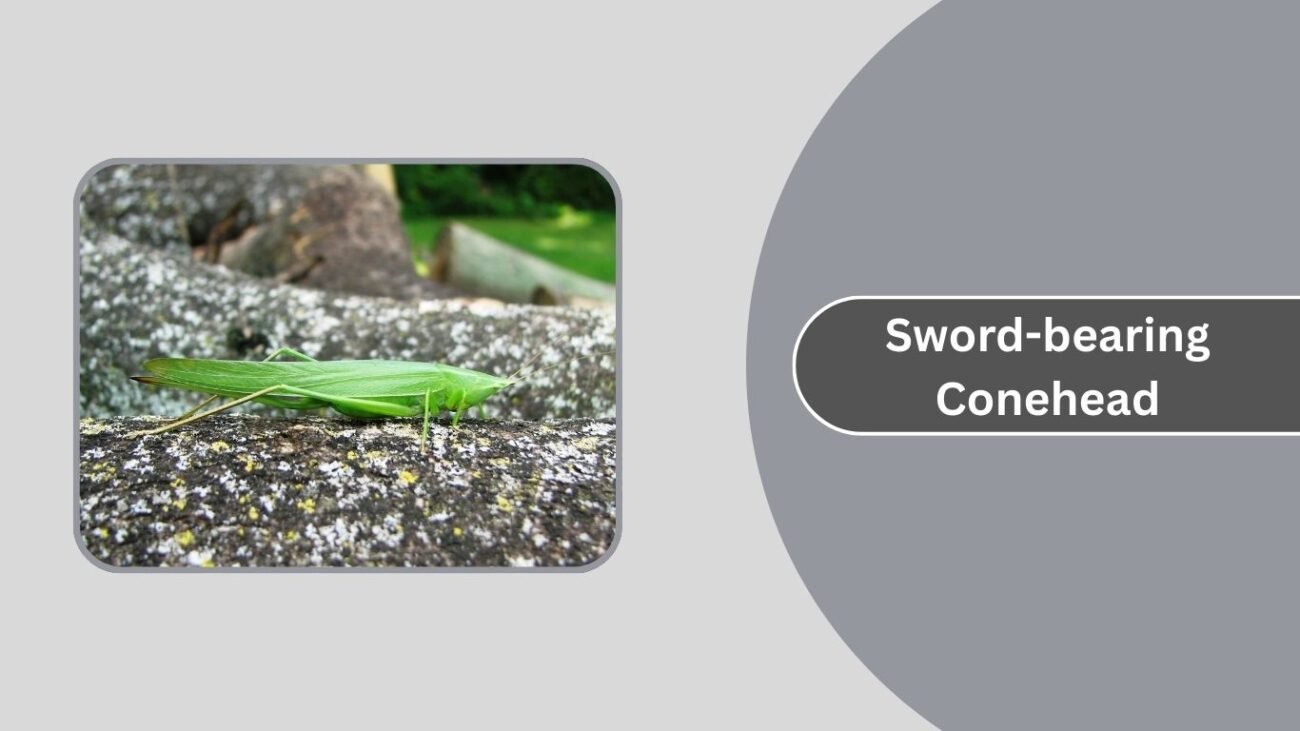
The sword-bearing conehead is a tall, slender katydid named for the female’s exceptionally long, straight ovipositor that resembles a sword. Like other coneheads, it has a distinctive pointed head and excels at blending into tall grasses. Its call is a rapid, continuous buzz often heard on warm summer nights in open grassy areas.
Identification
- Scientific Name: Neoconocephalus ensiger
- Body Size: 3.5–4.5 cm long
- Color: Bright green, sometimes with brown wing tips
- Antennae: Extremely long and thread-like
- Ovipositor: Long, straight, sword-like in females
Habitat and Distribution
They are found widely across North America, especially in tallgrass prairies, meadows, and wetland edges. They prefer habitats with dense vegetation where they can hide from predators while foraging.
Behavior and Diet
Sword-bearing coneheads are primarily nocturnal, using their loud buzzing calls to attract mates. They are omnivorous, feeding on grass seeds, young shoots, and a variety of small insects they encounter while moving through vegetation.
12. Lesser Angle-winged Katydid

The lesser angle-winged katydid is a smaller relative of the greater angle-wing species, sharing the same distinctive angled wings but in a more compact form. Its bright green, leaf-like body provides exceptional camouflage, making it almost invisible among foliage during the day. These katydids are active at night, filling the air with soft, raspy calls.
Identification
- Scientific Name: Microcentrum minus
- Body Size: 3–4 cm long
- Color: Bright green with pronounced leaf-like wing veins
- Antennae: Long, fine, and thread-like
- Wings: Angled and flat, resembling fresh green leaves
Habitat and Distribution
They are found in the southeastern United States, especially in wooded areas, gardens, and shrublands. They prefer habitats with abundant leafy vegetation for both feeding and shelter.
Behavior and Diet
Lesser angle-winged katydids are nocturnal and spend the day hiding among leaves. They feed mainly on foliage and occasionally on flowers. Males produce short, raspy trills to communicate and attract mates, especially during late summer and early autumn.
13. Drumming Katydid

The drumming katydid is a small, delicate species best known for its unique method of communication. Instead of producing the typical stridulating calls by rubbing wings together, males often “drum” by tapping their hind legs on plant stems, creating vibrations that travel through the vegetation. This unusual behavior makes them fascinating among katydid enthusiasts.
Identification
- Scientific Name: Meconema thalassinum
- Body Size: 1.5–2.2 cm long
- Color: Bright green with translucent wings
- Antennae: Very long and thin, longer than the body
- Wings: Transparent with a light green tint, extending beyond the abdomen
Habitat and Distribution
Native to Europe, the drumming katydid has been introduced to parts of North America, where it inhabits parks, gardens, and forest edges. They often dwell in trees and shrubs rather than in grasslands.
Behavior and Diet
Drumming katydids are mostly nocturnal, with males producing their characteristic tapping signals to attract mates. They are largely predatory for katydids, feeding on small insects like aphids, caterpillars, and soft-bodied arthropods, making them beneficial in gardens.
14. Large Cone-headed Katydid

The large cone-headed katydid is a tall, sleek species with a distinct pointed head and a noticeably long, slender body. True to its name, it is one of the larger conehead species, capable of producing extremely loud and continuous buzzing calls that can be heard from far across a meadow on warm summer nights.
Identification
- Scientific Name: Ruspolia differens
- Body Size: 4–6 cm long
- Color: Bright green, occasionally with light brown wing edges
- Antennae: Very long, whip-like, and flexible
- Head: Narrow and sharply pointed, forming a distinct cone
Habitat and Distribution
This species inhabits tall grasslands, meadows, and wetland edges. While most common in parts of Africa and Asia, it can also be found in tropical and subtropical regions worldwide, often in agricultural fields and open countryside.
Behavior and Diet
Large cone-headed katydids are nocturnal and rely on their camouflage to avoid predators during the day. They are omnivorous, consuming grass seeds, soft leaves, and a variety of small insects. In some regions, they are even harvested as a traditional food source due to their size and abundance.
15. Leaf Katydid

The leaf katydid is an elegant insect that perfectly mimics a fresh green leaf, complete with intricate wing veins that resemble natural leaf patterns. This camouflage not only protects it from predators but also allows it to remain undetected while feeding. Its delicate movements among foliage make it appear as though a leaf is swaying in the wind.
Identification
- Scientific Name: Phaneroptera falcata
- Body Size: 3–4 cm long
- Color: Bright green with finely veined, leaf-like wings
- Antennae: Long, thin, and flexible
- Wings: Broad, flat, and shaped like a leaf with subtle veining
Habitat and Distribution
They are native to Europe, Asia, and parts of North Africa, inhabiting meadows, forest edges, gardens, and shrublands. They prefer warm, sunny areas with plenty of vegetation to hide among.
Behavior and Diet
Leaf katydids are mostly nocturnal and use their camouflage to remain hidden during the day. They are herbivorous, feeding on soft leaves, petals, and occasionally fruit. Males produce gentle, high-pitched calls to attract females during warm summer nights.
16. Tropical Katydid

The tropical katydid is a striking species found in warm, humid environments, often displaying more vivid colors than its temperate relatives. While many are green for camouflage, some tropical species can exhibit brown or even pinkish hues that match dried leaves. Their large size and strong legs make them skilled climbers in dense vegetation.
Identification
- Scientific Name: Ancylecha fenestrata
- Body Size: 4–6 cm long
- Color: Usually bright green, but may also be brown or mottled to mimic dried leaves
- Antennae: Long and thread-like, often longer than the body
- Wings: Broad and leaf-like with distinct venation patterns
Habitat and Distribution
Tropical katydids inhabit rainforests, jungle edges, and lush gardens throughout Southeast Asia, Central America, and parts of South America. They are most often found in shrubs, small trees, and dense undergrowth.
Behavior and Diet
These katydids are nocturnal and rely heavily on their camouflage to evade predators. They feed primarily on leaves, flowers, and fruit, though some species will also consume small insects. Their calls vary from soft ticks to loud, repetitive chirps, depending on the species and region.
17. Spiny Katydid

The spiny katydid is an extraordinary-looking species known for the sharp spines covering its legs and body, which serve as both defense and camouflage. Its robust, armored appearance sets it apart from the smooth, leaf-like forms of many other katydids. These spines help deter predators while blending into thorny plants and rugged vegetation.
Identification
- Scientific Name: Panacanthus cuspidatus
- Body Size: 5–7 cm long
- Color: Usually green, but can also be brown or mottled for better camouflage
- Antennae: Very long, whip-like, and flexible
- Body Features: Covered in sharp spines on legs, thorax, and sometimes wings
Habitat and Distribution
Native to Central and South America, spiny katydids inhabit tropical forests, shrublands, and mountainous regions. They are often found on thorny bushes or among rough-textured foliage that complements their spiny appearance.
Behavior and Diet
Spiny katydids are mostly nocturnal, using their tough exoskeleton and spines to fend off predators such as birds, frogs, and reptiles. They are omnivorous, consuming leaves, flowers, fruits, and occasionally small insects, making them versatile feeders in their native ecosystems.
18. Giant Shield-backed Katydid
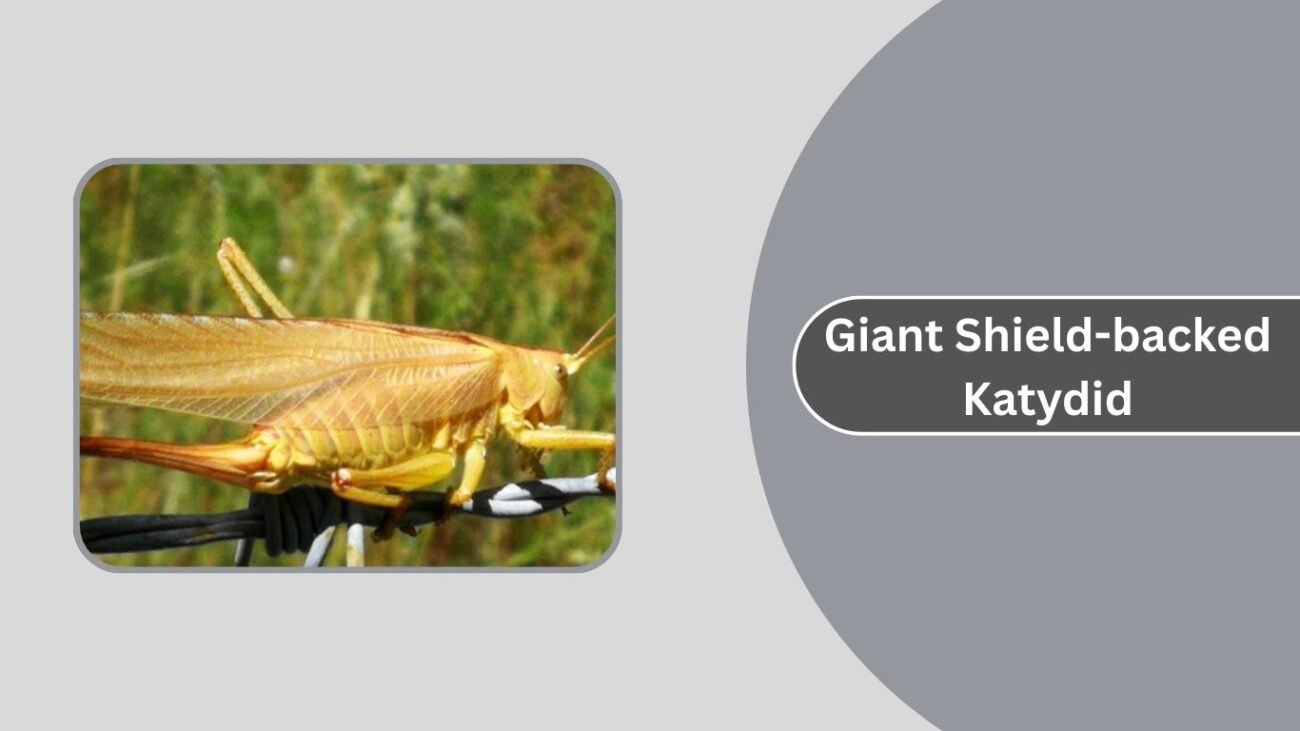
The giant shield-backed katydid is an imposing species known for its large size and the pronounced, shield-like pronotum (the plate covering the thorax) that extends over part of its abdomen. This robust body structure gives it a more armored appearance compared to most katydids, helping protect it from predators.
Identification
- Scientific Name: Tettigoniidae sp. (various species within the subfamily Tettigoniinae)
- Body Size: 5–8 cm long
- Color: Usually green or brown, sometimes mottled for camouflage
- Antennae: Extremely long and slender
- Distinctive Feature: Enlarged shield-like pronotum extending over the thorax and abdomen
Habitat and Distribution
Shield-backed katydids are found in grasslands, scrublands, and forests across parts of North America, Africa, and Australia, depending on the species. They often inhabit areas with tall grasses and shrubs where their bulk and camouflage keep them hidden.
Behavior and Diet
These katydids are omnivorous, feeding on leaves, seeds, flowers, and occasionally small insects. They are strong jumpers and rely on both their size and defensive posture to deter predators. Many species produce deep, resonating calls at night, making them audible over long distances.
19. Bog Bush Katydid
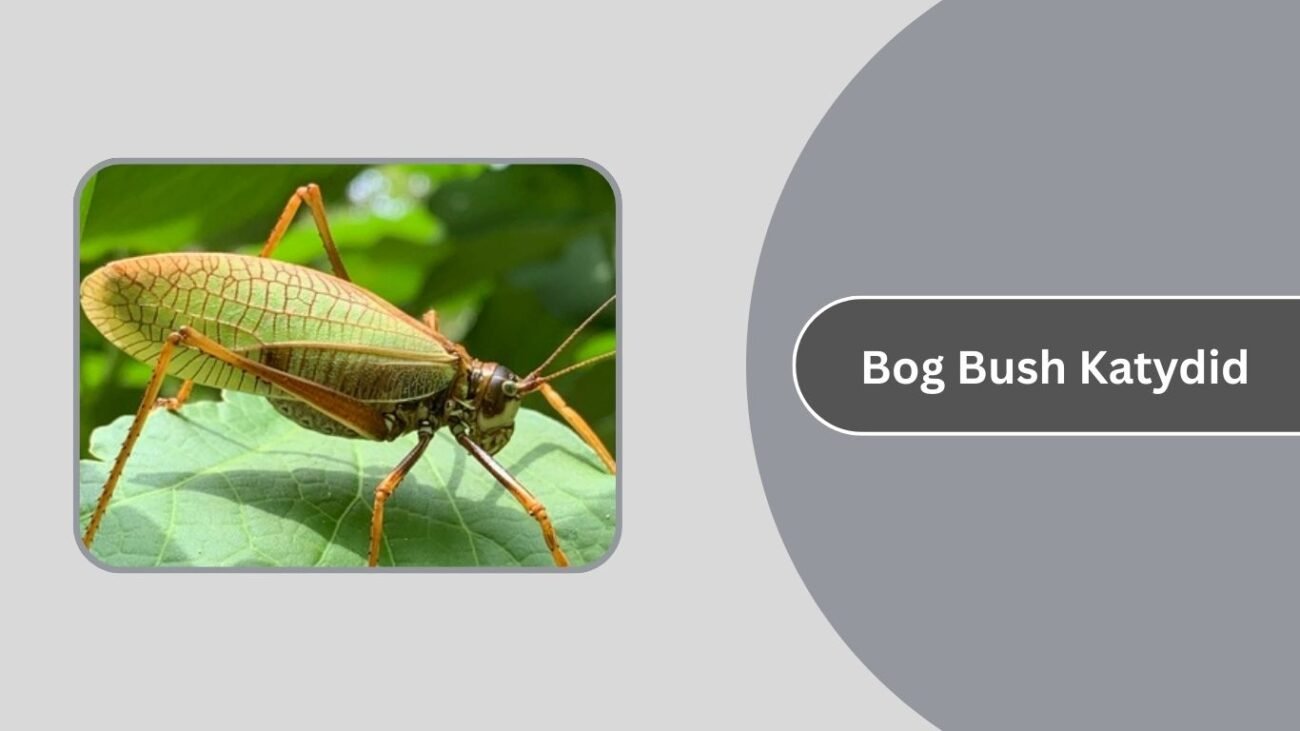
The bog bush katydid is a moisture-loving species adapted to life in wetlands and boggy meadows. Its slender body and long legs help it move effortlessly through dense, waterlogged vegetation. This species is less commonly seen than other meadow katydids, as it prefers specialized habitats that remain damp year-round.
Identification
- Scientific Name: Metrioptera sphagnorum
- Body Size: 1.5–2.5 cm long
- Color: Green or brown with subtle mottling for camouflage
- Antennae: Very long and fine, extending well beyond the body
- Wings: Short to medium length, sometimes not fully covering the abdomen
Habitat and Distribution
Found mainly in northern regions of North America, the bog bush katydid inhabits sphagnum bogs, marsh edges, and wet meadows. Its range overlaps with cooler, moist climates where mosses and sedges dominate the plant community.
Behavior and Diet
These katydids are mostly active in the late summer and early fall. They feed on grass seeds, sedge parts, and small insects. Males produce soft, ticking calls that are often drowned out by louder insect sounds in their wetland environments, making them harder to detect.
20. Greater Angle-wing Katydid
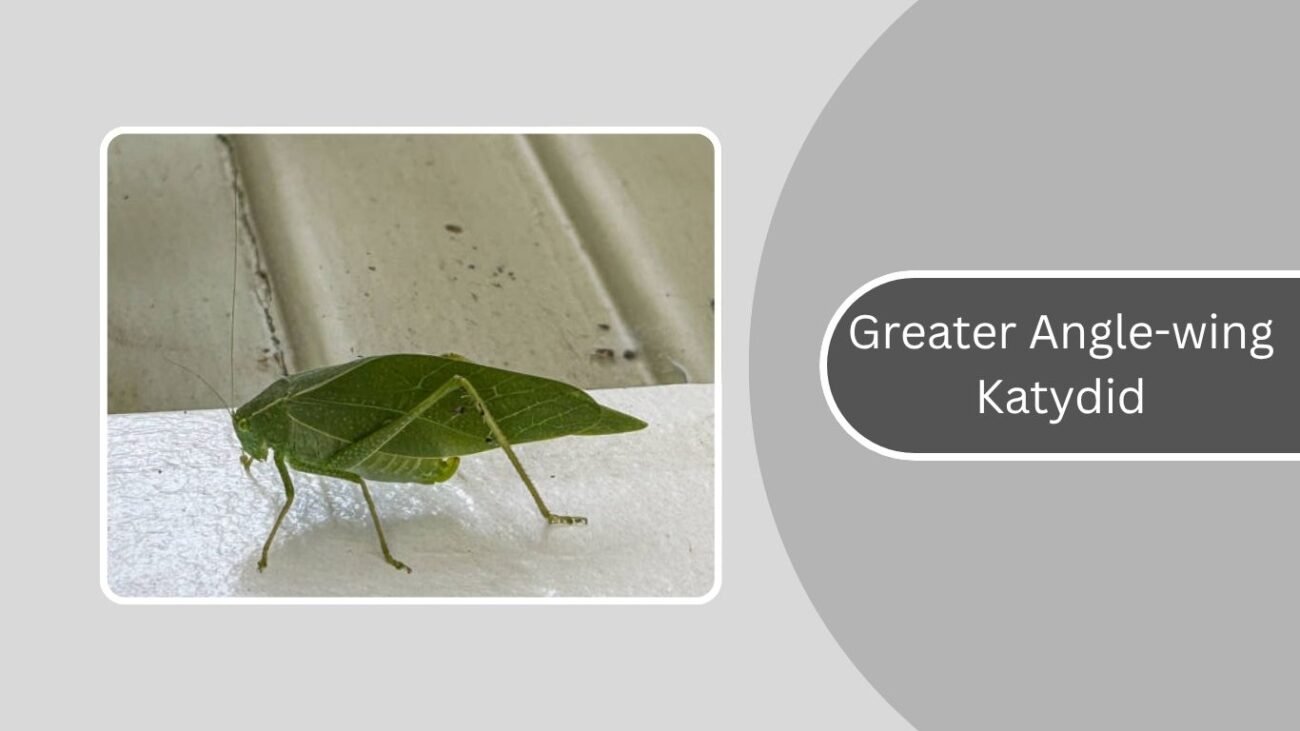
The greater angle-wing katydid is a large, leaf-mimicking species known for its sharply angled wings and vivid green coloration. Its resemblance to a fresh leaf is so convincing that it can easily evade predators while resting in trees or shrubs. It is one of the most common katydids in wooded and suburban areas, especially during late summer.
Identification
- Scientific Name: Microcentrum rhombifolium
- Body Size: 4.5–6 cm long
- Color: Bright green with prominent, leaf-like veins on the wings
- Antennae: Long, fine, and extending well past the body length
- Wings: Angular and flat, mimicking fresh leaves almost perfectly
Habitat and Distribution
This species is found throughout much of the eastern and southern United States, living in forests, gardens, and areas with dense shrubs. It prefers habitats with plenty of leafy cover to hide during the day.
Behavior and Diet
Greater angle-wing katydids are nocturnal, with males producing distinctive, loud clicking or ticking calls to attract females. They feed on a variety of leaves, flowers, and soft fruits, and occasionally nibble on ornamental plants in gardens.
21. Lesser Meadow Katydid
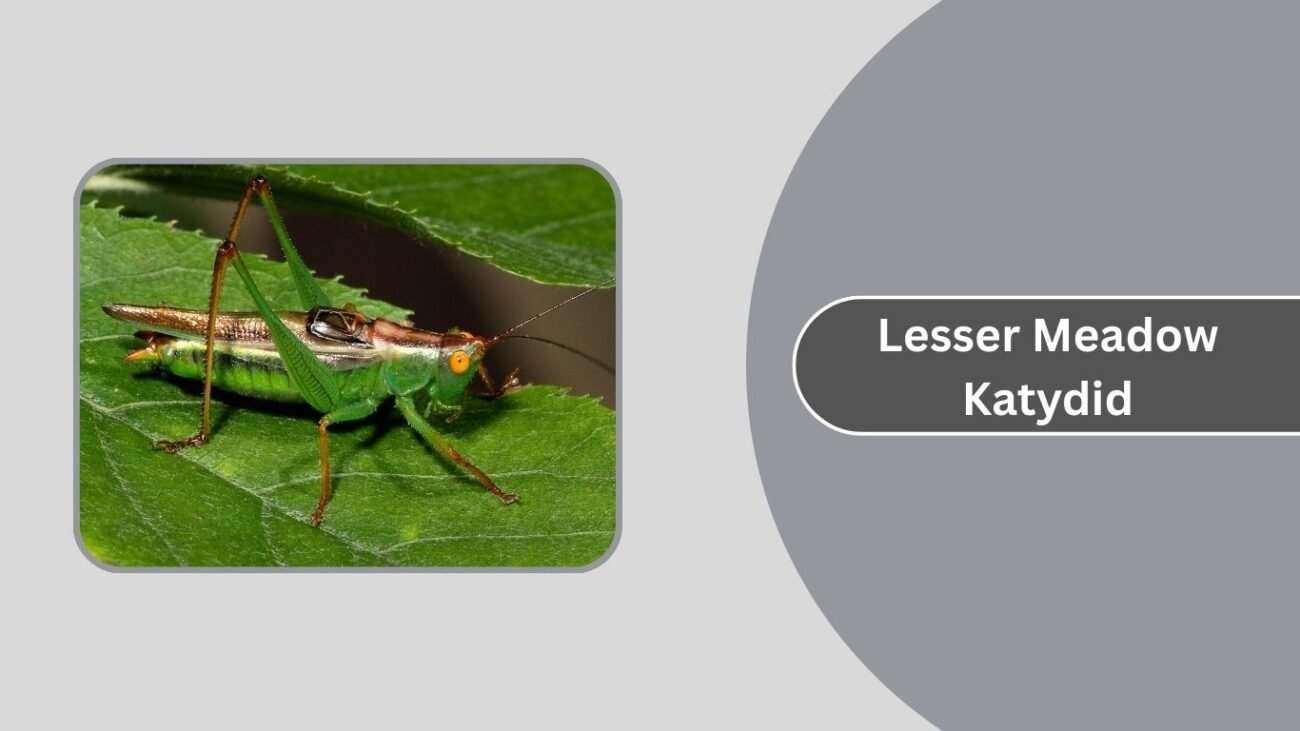
The lesser meadow katydid is a small, active species often found in grassy habitats, where its size and coloration allow it to blend seamlessly with its surroundings. Despite its name, it is not necessarily less common than other meadow katydids—its “lesser” label refers mainly to its smaller size compared to similar species.
Identification
- Scientific Name: Conocephalus nigropleurum
- Body Size: 1.2–2 cm long
- Color: Green with some brown or reddish tinges on wings and legs
- Antennae: Long, thin, and whip-like, extending well past the body length
- Wings: Short to medium length, often not covering the entire abdomen
Habitat and Distribution
This species is found throughout much of North America, inhabiting meadows, grassy wetlands, and the edges of streams or ponds. They thrive in areas with dense, low vegetation where they can hide from predators.
Behavior and Diet
Lesser meadow katydids are active during warm months, especially late summer. They produce high-pitched, rapid trills that can be difficult for humans to hear. Their diet consists mainly of seeds, tender leaves, and small insects, making them both herbivorous and opportunistically carnivorous.