Underwing moths (Catocala species) are fascinating nocturnal insects known for their cryptic forewings and vividly colored hindwings, which they reveal to startle predators. These moths play an important role in forest ecosystems as both pollinators and prey for birds and bats. Found mainly in North America, underwing moths display unique patterns, behaviors, and lifecycles that make them a captivating group for study and identification.
1. Catocala amatrix (Sweetheart Underwing)
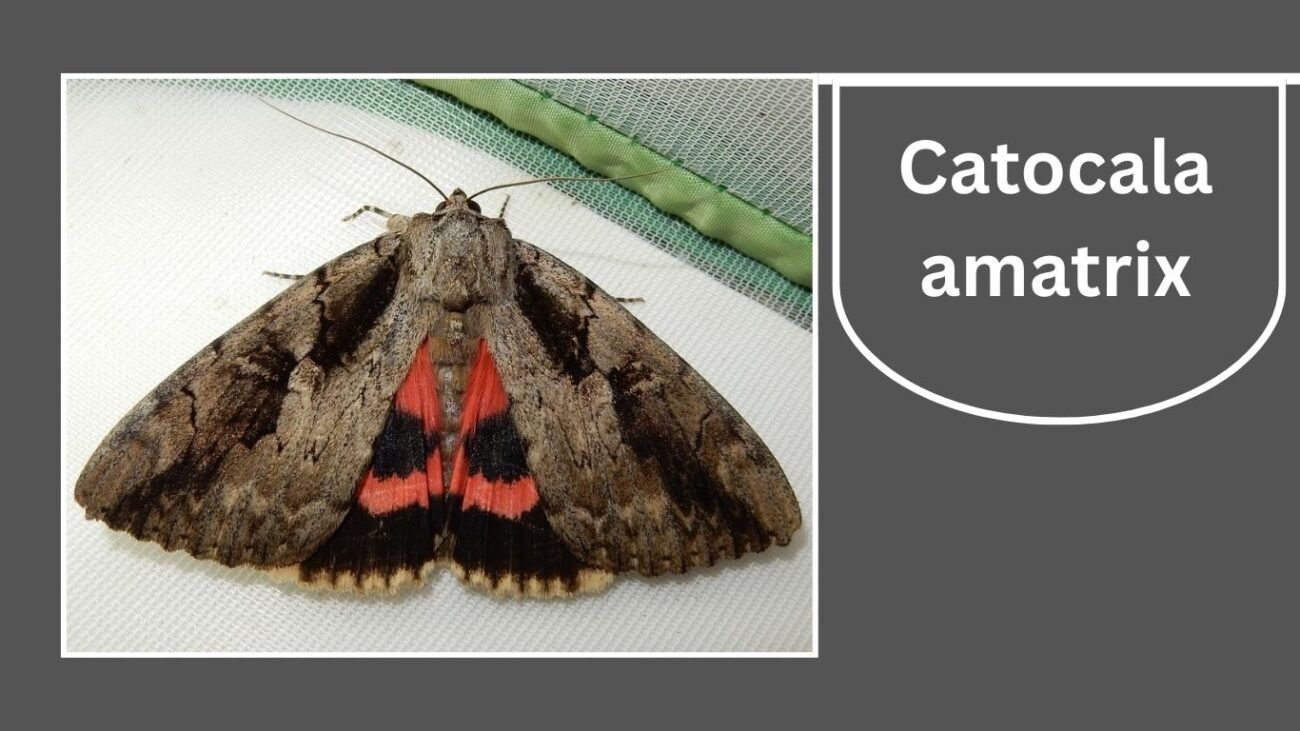
The Sweetheart Underwing (Catocala amatrix) is one of the most striking and largest underwing moths in North America. It is well known for its cryptic forewings that blend into tree bark and its vivid pink hindwings, which it flashes to startle predators.
Identification
- Large wingspan, typically 75–95 mm
- Forewings grayish-brown with intricate patterns for camouflage
- Hindwings bright pink with bold black bands
- Robust body covered in fine scales
- Antennae slender and thread-like (filiform)
Habitat
This species is commonly found in deciduous forests, woodlands, and areas near water bodies. It prefers habitats with an abundance of willow, poplar, and cottonwood trees, which serve as host plants for its larvae.
Behavior
The moth is primarily nocturnal, resting during the day against tree trunks where its forewings provide excellent camouflage. When disturbed, it reveals its pink hindwings to startle predators before quickly hiding again. Adults are attracted to light and also feed on tree sap and fermenting fruit.
Lifecycle
The lifecycle consists of egg, larva (caterpillar), pupa, and adult stages. Eggs are laid on host trees in late summer and overwinter until spring. Caterpillars emerge to feed on leaves, pupate in soil or leaf litter, and adults emerge in late summer. Typically, there is one generation per year.
2. Catocala ilia (Ilia Underwing)

The Ilia Underwing (Catocala ilia) is a medium-to-large moth known for its diverse wing patterns and bold orange or yellow hindwings. This species shows significant variation in forewing markings, making it one of the more variable underwings to identify.
Identification
- Wingspan ranges from 60–80 mm
- Forewings highly variable: mottled gray, brown, or black with distinct banding or blotches
- Hindwings bright orange or yellow with solid black bands
- Body stout with fine scales aiding in camouflage
- Antennae thin and thread-like, typical of underwing moths
Habitat
The Ilia Underwing inhabits hardwood forests, woodlots, and riparian zones. It is especially associated with oak trees, which serve as the primary host plants for its larvae.
Behavior
This moth is nocturnal, resting by day on tree trunks where its forewings provide excellent concealment. When threatened, it flashes its hindwings to deter predators. Adults are often drawn to artificial light sources, tree sap, and fermenting fruit.
Lifecycle
Eggs are laid on host trees in late summer and remain dormant over winter. Caterpillars emerge in spring and feed mainly on oak leaves. Pupation occurs in leaf litter or soil, with adults emerging in mid-to-late summer. Usually, there is one generation per year.
3. Catocala relicta (White Underwing)

The White Underwing (Catocala relicta) is a large and visually striking moth, notable for its contrasting black-and-white wing patterns. Its bold coloration makes it one of the easiest underwings to recognize.
Identification
- Wingspan ranges from 70–85 mm
- Forewings patterned in white, black, and gray, resembling lichen or birch bark
- Hindwings pure white with bold black bands
- Stout, furry body with muted coloration for blending against bark
- Filiform (thread-like) antennae typical of moths in this genus
Habitat
This species is commonly found in mixed and deciduous forests, especially in northern regions. It is closely associated with poplar and birch trees, which serve as larval host plants.
Behavior
Primarily nocturnal, the White Underwing rests by day on tree trunks where its forewings mimic bark and lichen patterns. When disturbed, it reveals its bright hindwings to startle predators. Adults are attracted to lights and often visit tree sap flows and fermenting fruit.
Lifecycle
Eggs are deposited on host trees in late summer and overwinter until spring. Caterpillars feed on leaves of poplar and birch throughout the growing season. Pupation occurs in the soil or among leaf litter, with adults emerging in midsummer. There is generally one generation per year.
4. Catocala piatrix (Penitent Underwing)

The Penitent Underwing (Catocala piatrix) is a large and robust species of underwing moth. It is well known for its cryptic forewings that help it remain hidden against tree bark and its striking orange hindwings that serve as a defense mechanism against predators.
Identification
- Wingspan typically 70–85 mm
- Forewings grayish-brown with mottled patterns resembling bark
- Hindwings bright orange with bold, dark black bands
- Thick, furry thorax aiding in camouflage
- Slender, thread-like antennae characteristic of underwings
Habitat
This moth is usually found in deciduous forests, woodlands, and riparian habitats. Oaks, hickories, and other hardwood trees are its primary larval host plants.
Behavior
The Penitent Underwing is nocturnal, spending the day resting on tree trunks where it blends seamlessly with its surroundings. When startled, it flashes its orange hindwings to surprise predators, then quickly hides them again. Adults are strongly attracted to lights, tree sap, and fermenting fruits.
Lifecycle
Eggs are laid on tree bark or branches in late summer and overwinter until spring. Caterpillars emerge to feed on leaves of hardwood trees, especially oaks and hickories. Pupation occurs in soil or leaf litter, with adults emerging in midsummer. There is typically one generation per year.
5. Catocala ultronia (Ultronia Underwing)
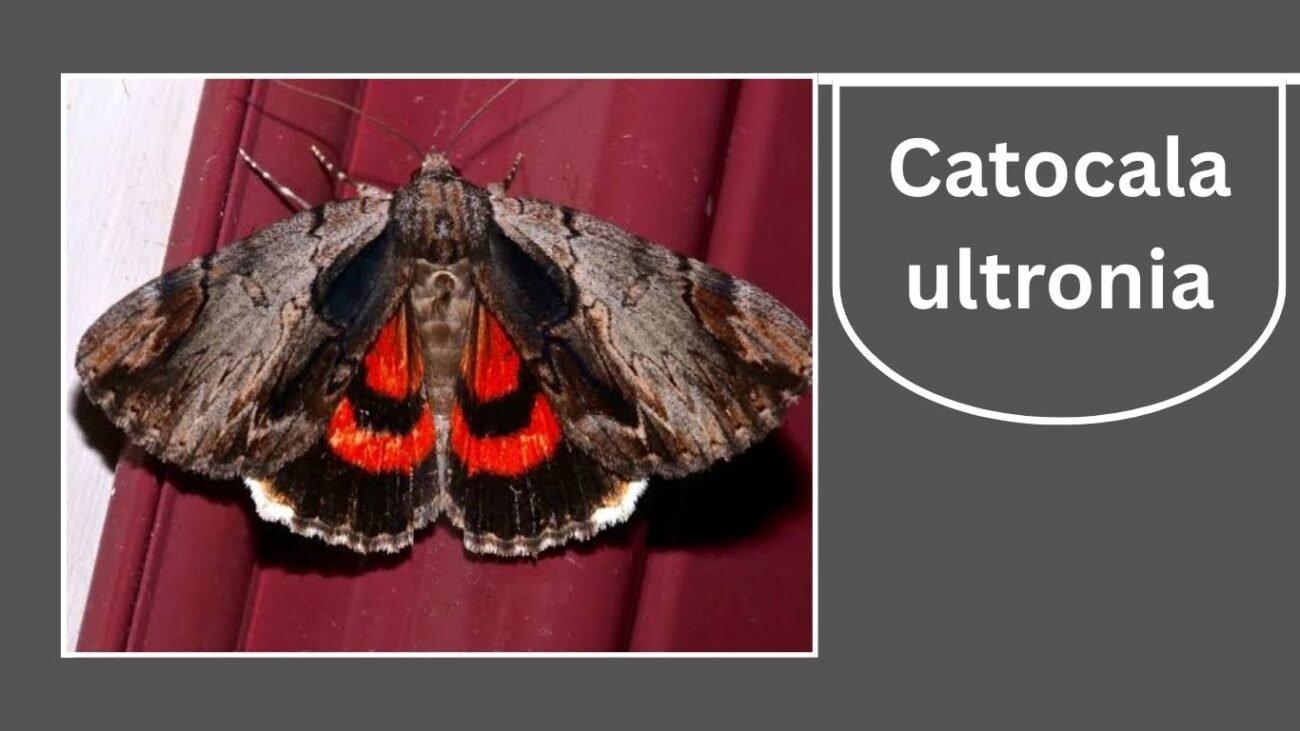
The Ultronia Underwing (Catocala ultronia) is a medium-to-large species recognized for its cryptic forewings and its orange-yellow hindwings accented with bold black bands. It is one of the more widely distributed underwings across eastern North America.
Identification
- Wingspan ranges from 60–75 mm
- Forewings gray to brown with intricate lines and mottled bark-like patterns
- Hindwings bright orange-yellow with two strong black bands
- Body stout and covered in fine scales for concealment
- Antennae filiform (thread-like), typical of most Catocala species
Habitat
The Ultronia Underwing is found in mixed and deciduous forests, open woodlands, and along streams or rivers. Its larvae primarily feed on apple, hawthorn, willow, and cherry trees, making it common in both wild and semi-urban areas.
Behavior
This species is nocturnal and hides during the day on tree trunks where its forewings blend with bark. When disturbed, it reveals its bright hindwings to startle predators before retreating. Adults are often attracted to lights, tree sap, and fermenting fruits at night.
Lifecycle
Eggs are laid in late summer on branches of host trees and overwinter until spring. Caterpillars emerge in early spring and feed on leaves of fruit and hardwood trees. Pupation occurs in soil or leaf litter, and adults emerge in midsummer. There is generally one generation per year.
6. Catocala parta (Mother Underwing)
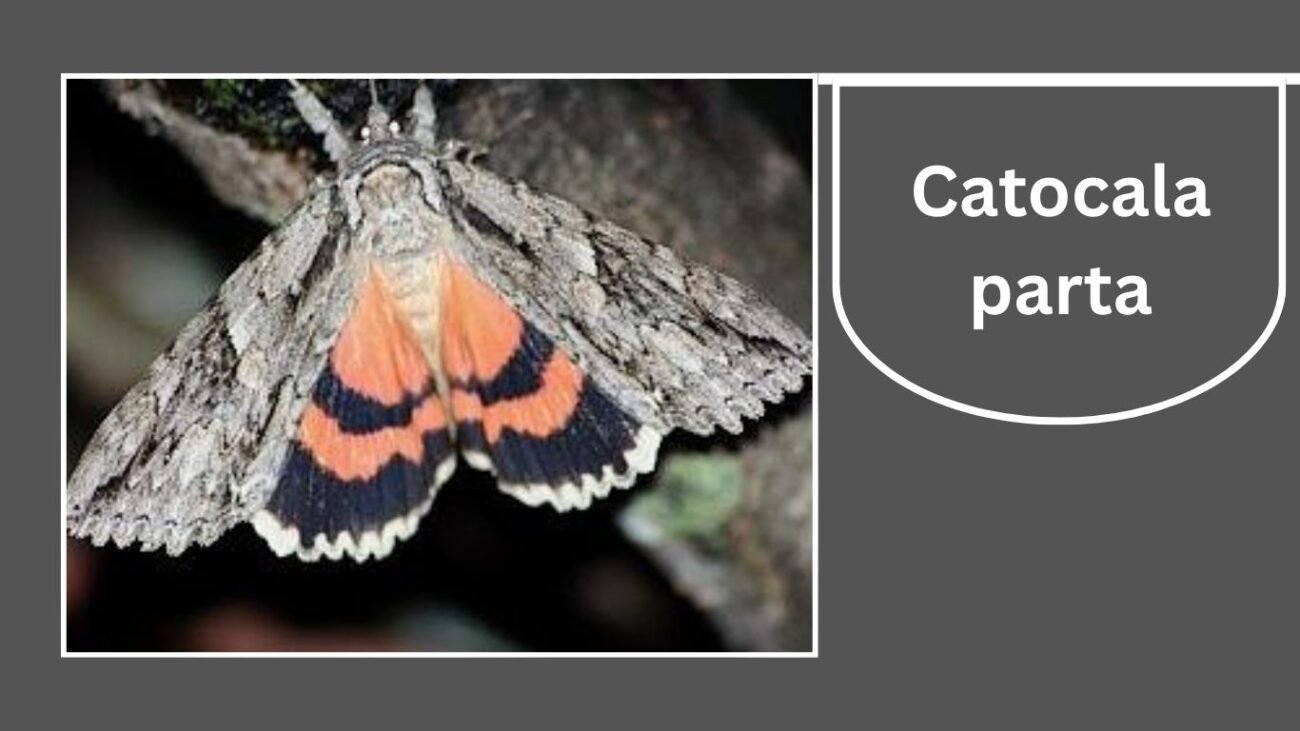
The Mother Underwing (Catocala parta) is a striking species known for its well-camouflaged forewings and the bright orange-red hindwings that it reveals when threatened. Its name is said to reflect its large size and protective presence in wooded habitats.
Identification
- Wingspan ranges from 70–85 mm
- Forewings grayish to dark brown with wavy black lines and mottled bark-like patterns
- Hindwings vivid orange-red with two bold black bands
- Body robust and furry, aiding in camouflage against tree trunks
- Antennae slender and thread-like, typical of underwing moths
Habitat
This moth inhabits deciduous forests, woodlands, and forest edges across much of eastern North America. Larvae feed primarily on oak, walnut, and hickory trees, making these habitats especially important for its survival.
Behavior
The Mother Underwing is nocturnal and rests during the day on bark, blending almost seamlessly into its surroundings. When disturbed, it flashes its bright hindwings to startle predators. Adults are drawn to lights at night and often feed on tree sap and fermenting fruit.
Lifecycle
Eggs are laid on the bark of host trees in late summer and overwinter through the cold months. Caterpillars hatch in spring and feed on leaves of oak, walnut, and hickory. Pupation takes place in soil or leaf litter, with adults emerging in mid-to-late summer. There is usually one generation per year.
7. Catocala concumbens (Sleepy Underwing)
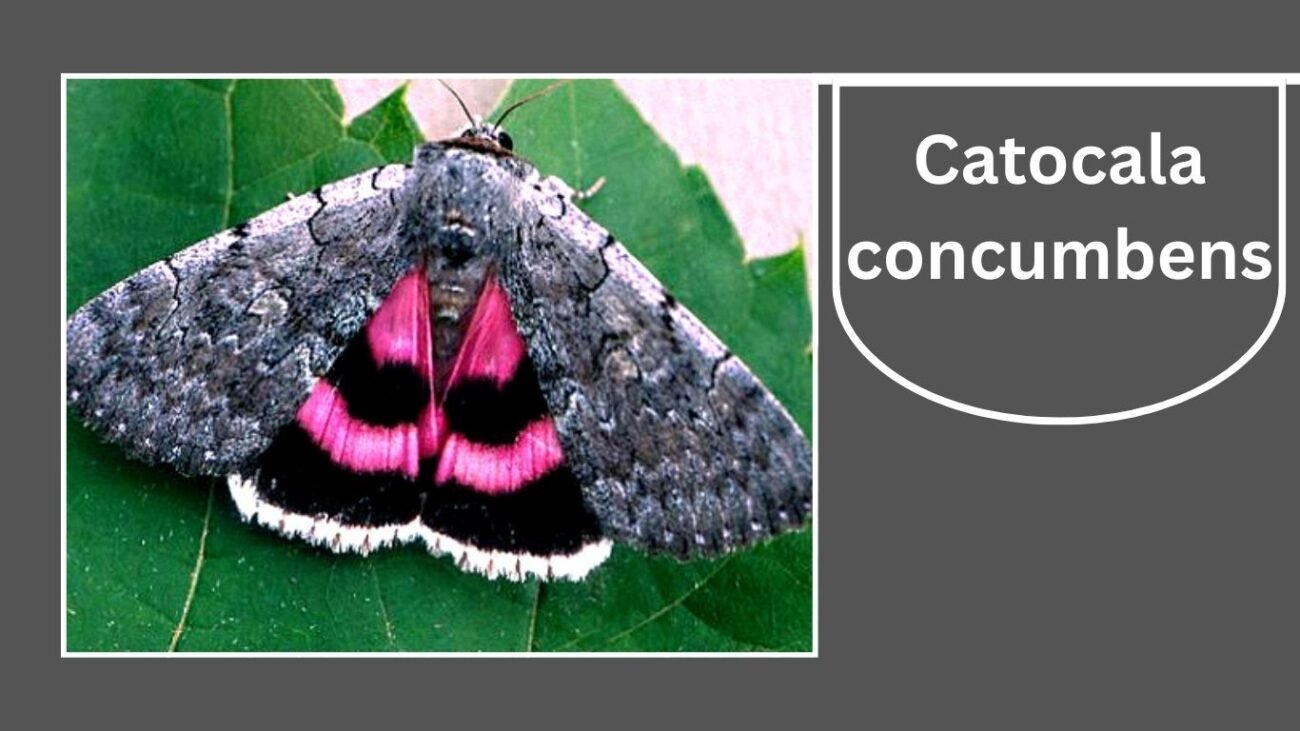
The Sleepy Underwing (Catocala concumbens) is a medium-to-large moth named for its tendency to remain motionless and well-hidden during the day. Its soft gray forewings provide excellent camouflage, while its hindwings display a subtle yet striking yellow coloration.
Identification
- Wingspan ranges from 65–80 mm
- Forewings pale gray to ashy white, with fine black lines and subtle mottling
- Hindwings yellow with broad black bands, less vivid than many other underwings
- Body relatively slender compared to other large Catocala species
- Antennae filiform (thread-like) and delicate
Habitat
This species favors northern hardwood forests, particularly areas where poplars and willows grow, as these are its primary larval host plants. It is commonly found in wooded river valleys and forest edges.
Behavior
The Sleepy Underwing is nocturnal and spends the day resting against tree bark, relying on its muted gray forewings for concealment. When startled, it reveals its yellow hindwings before quickly hiding them again. Adults are often attracted to lights, tree sap flows, and fermenting fruit.
Lifecycle
Eggs are laid in late summer on host plants and overwinter until spring. Caterpillars feed on the leaves of poplar and willow during spring and early summer. Pupation occurs in soil or leaf litter, with adults emerging in mid-to-late summer. This species generally has one generation per year.
8. Catocala habilis (Habilis Underwing)
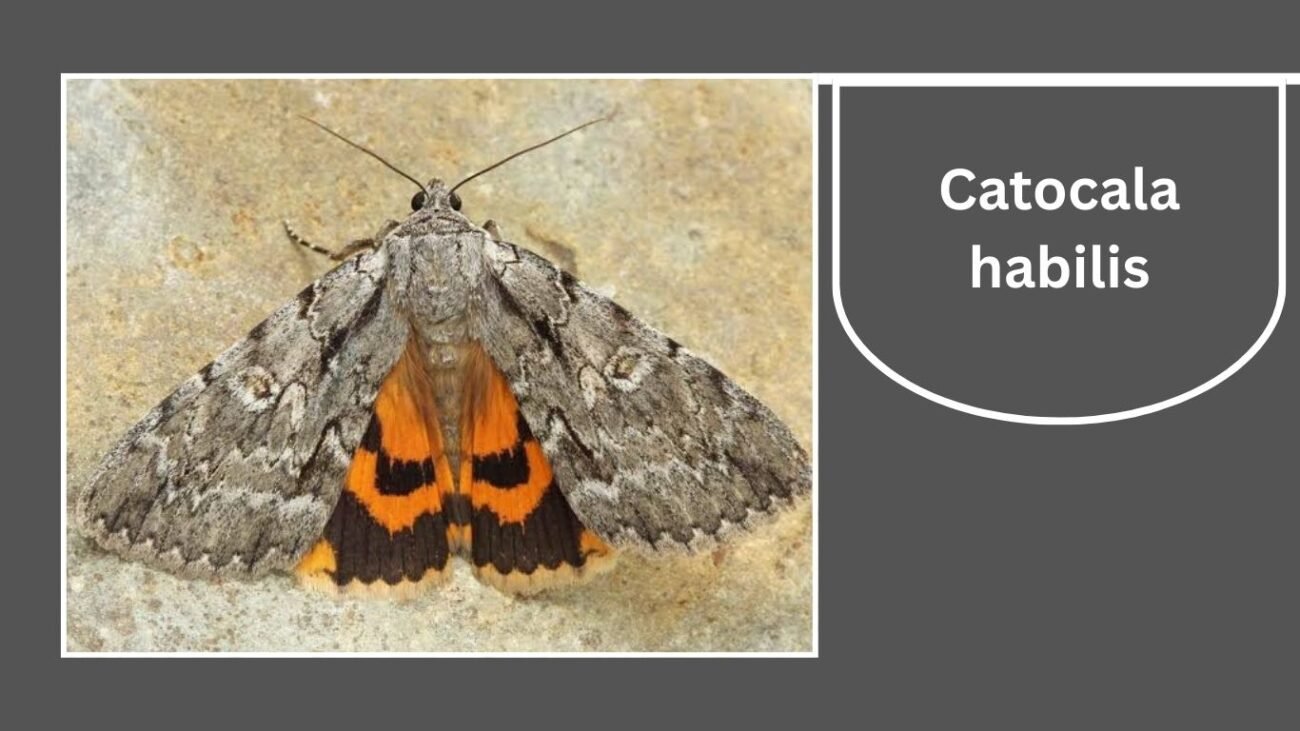
The Habilis Underwing (Catocala habilis) is a large and impressive moth with beautifully patterned forewings that allow it to remain nearly invisible on tree bark. Its bright orange hindwings, revealed only when disturbed, make it one of the more eye-catching members of the underwing group.
Identification
- Wingspan typically 70–85 mm
- Forewings grayish-brown with wavy black lines and mottled bark-like patterns
- Hindwings bright orange with thick black bands
- Body stout and furry, blending well against tree trunks
- Filiform (thread-like) antennae
Habitat
This species is found in deciduous forests, woodlands, and forest edges. Its caterpillars primarily feed on hickory, walnut, and oak, making these hardwood trees essential to its life cycle.
Behavior
The Habilis Underwing is nocturnal, resting by day in perfect camouflage on tree bark. When startled, it exposes its vivid orange hindwings to surprise predators, then quickly conceals them again. Adults are strongly attracted to lights, tree sap, and fermenting fruit at night.
Lifecycle
Eggs are deposited on host trees in late summer and overwinter through the cold season. Caterpillars hatch in spring and feed on hardwood leaves before pupating in soil or leaf litter. Adults emerge in midsummer and are active through early autumn, producing one generation per year.
9. Catocala cara (Darling Underwing)
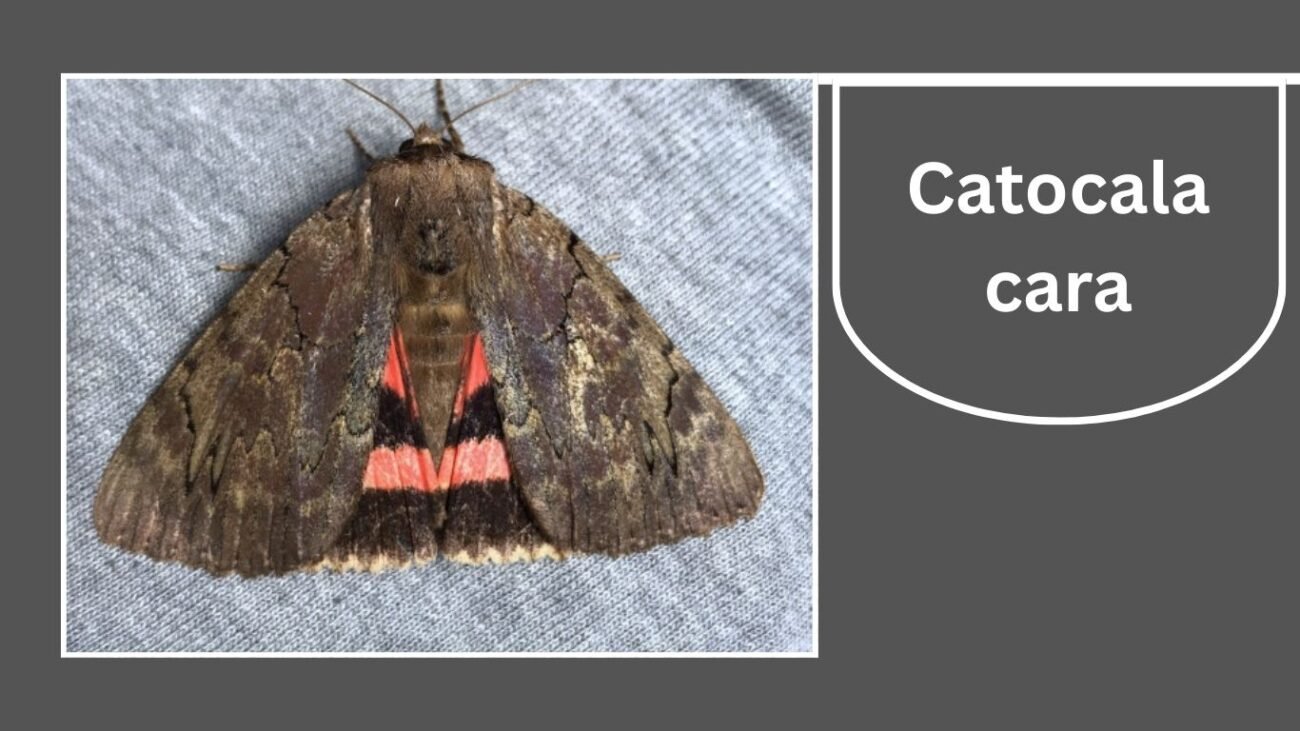
The Darling Underwing (Catocala cara) is a large and striking moth, admired for its colorful hindwings and strong camouflage abilities. Its combination of cryptic forewings and vivid hindwings makes it both elusive and spectacular when spotted.
Identification
- Wingspan ranges from 75–95 mm
- Forewings gray to brown, intricately patterned with wavy lines and mottling resembling tree bark
- Hindwings deep pink to reddish with bold black bands
- Stout, furry body adapted for resting motionless against bark
- Antennae filiform (thread-like)
Habitat
This species inhabits deciduous forests, woodlands, and riparian areas across much of eastern North America. Larvae feed primarily on walnut, willow, and cottonwood, making these trees essential to its distribution.
Behavior
The Darling Underwing is nocturnal, remaining well-camouflaged by day on tree trunks. If disturbed, it reveals its vibrant hindwings to startle predators, then quickly conceals them again. Adults are attracted to artificial lights, tree sap, and fermenting fruits during nighttime activity.
Lifecycle
Eggs are laid on host trees in late summer and overwinter until spring. Caterpillars hatch in spring and feed heavily on walnut, willow, and cottonwood leaves. Pupation takes place in soil or leaf litter, with adults emerging in midsummer. Typically, one generation occurs per year.
10. Catocala neogama (The Bride)
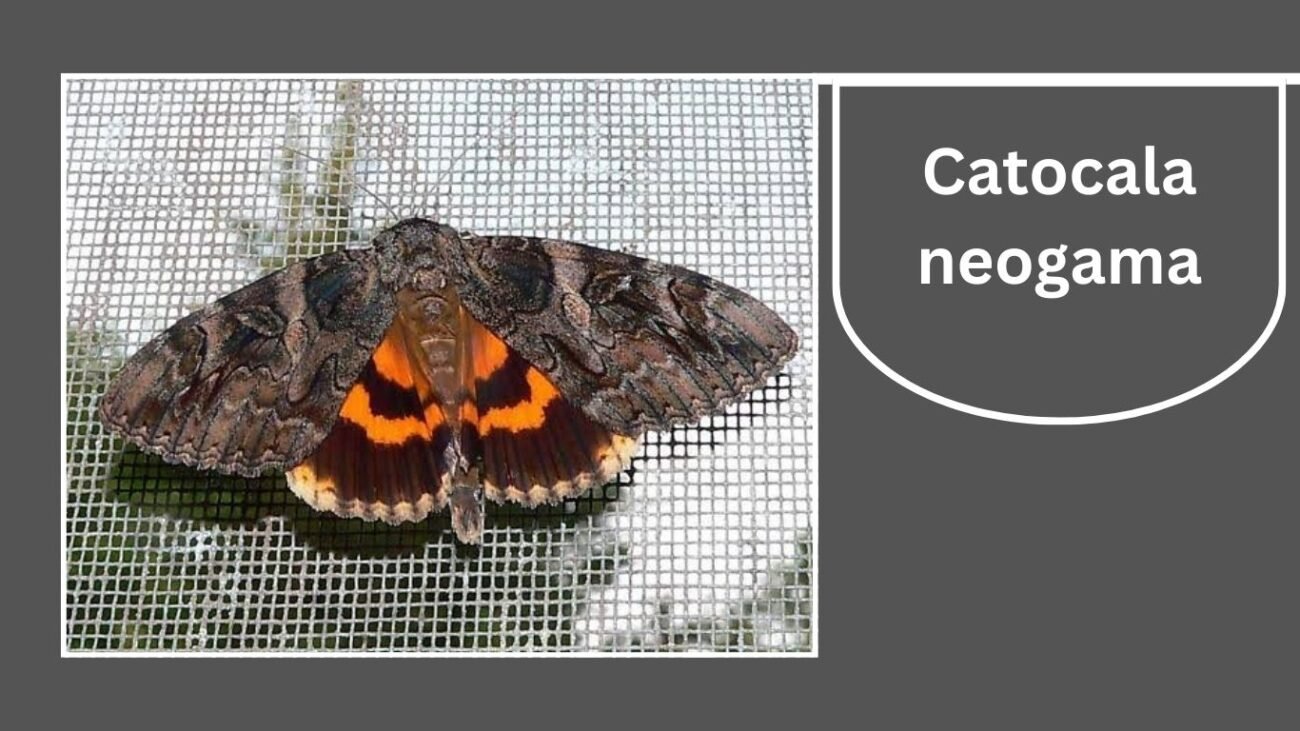
The Bride (Catocala neogama) is a bold and impressive underwing moth, recognized for its large size and vibrant hindwings. Its name likely refers to the striking “dressed-up” appearance of its orange and black wing pattern.
Identification
- Wingspan ranges from 70–90 mm
- Forewings grayish-brown with dark mottling and fine wavy lines resembling bark
- Hindwings bright orange with two broad black bands
- Stout body covered in scales, blending well with tree trunks
- Filiform (thread-like) antennae, typical of underwing moths
Habitat
This species is found in hardwood forests, woodlots, and riparian corridors across much of eastern and central North America. Larvae feed primarily on walnut and hickory trees, making these hosts critical for its survival.
Behavior
The Bride is nocturnal, spending the day resting motionless against bark where it is nearly invisible. When threatened, it flashes its bright hindwings to surprise predators. Adults are strongly drawn to lights and also feed on tree sap and fermenting fruits at night.
Lifecycle
Eggs are laid on host trees in late summer and overwinter through the cold season. Caterpillars emerge in spring, feeding on the leaves of walnut and hickory. Pupation occurs in soil or leaf litter, and adults appear in midsummer. Usually, one generation occurs annually.
11. Catocala cerogama (Yellow-banded Underwing)
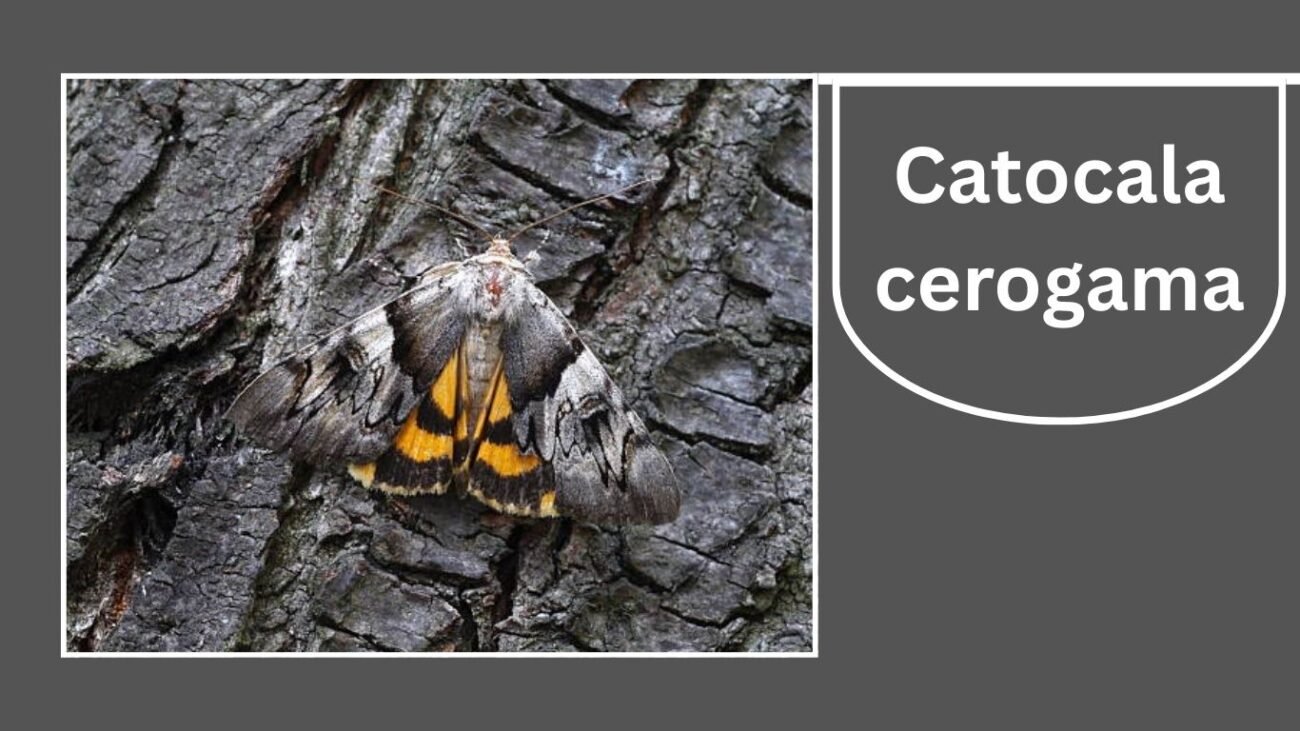
The Yellow-banded Underwing (Catocala cerogama) is a beautiful species recognized for its boldly contrasting hindwings and bark-like forewings. Its yellow and black bands make it one of the more distinctive underwings in North America.
Identification
- Wingspan ranges from 70–85 mm
- Forewings gray to brown with mottled patterns that resemble lichen or bark
- Hindwings bright yellow with two bold black bands
- Stout, furry body that helps with camouflage
- Antennae filiform (thread-like)
Habitat
This moth is commonly found in deciduous forests and woodland habitats throughout eastern North America. The larvae feed mainly on American basswood (linden), making this tree an important host plant for the species.
Behavior
The Yellow-banded Underwing is nocturnal, resting during the day on tree trunks where its forewings provide excellent concealment. When disturbed, it exposes its bright hindwings as a defense mechanism. Adults are drawn to artificial lights, tree sap, and fermenting fruits at night.
Lifecycle
Eggs are laid on host trees in late summer and remain dormant through winter. Caterpillars hatch in spring and feed on basswood leaves until pupation in soil or leaf litter. Adults emerge in midsummer, with typically one generation per year.
12. Catocala unijuga (Once-married Underwing)
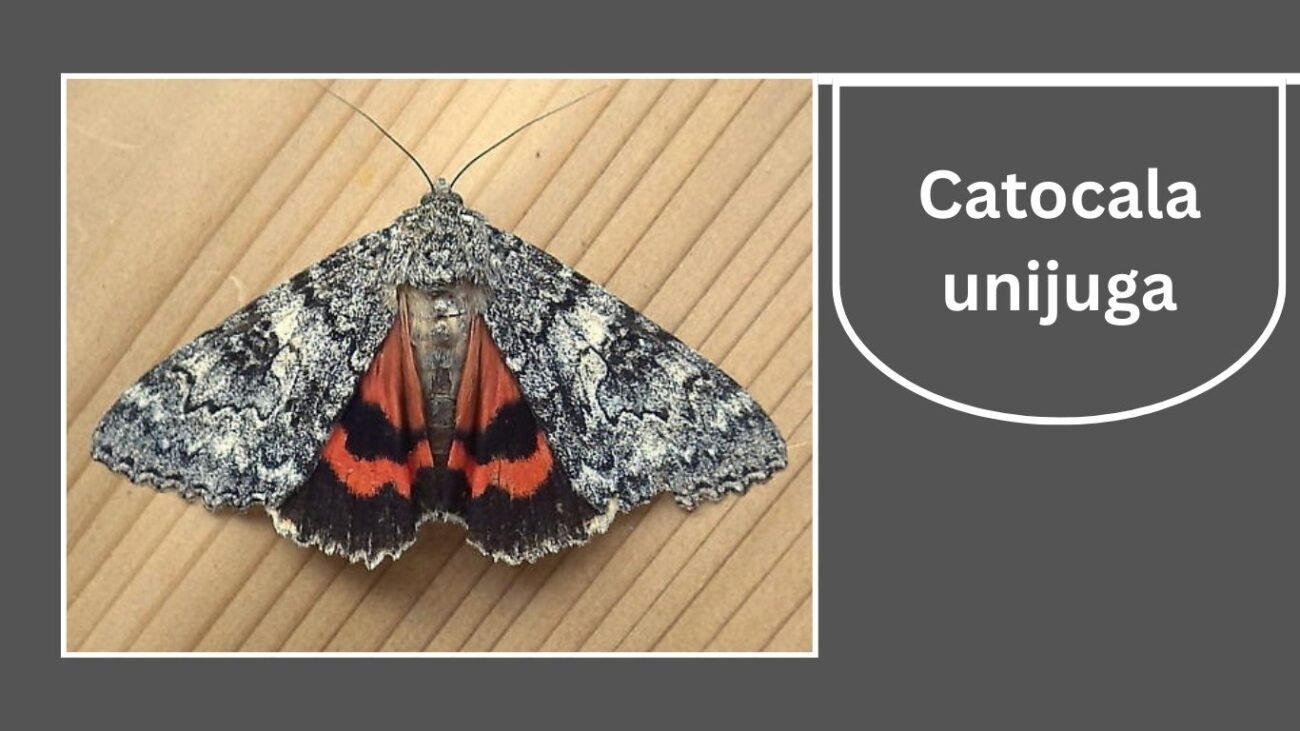
The Once-married Underwing (Catocala unijuga) is a large and widespread underwing moth, admired for its vivid hindwings and reliable camouflage. It is one of the more common Catocala species across northern and eastern North America.
Identification
- Wingspan ranges from 75–95 mm
- Forewings grayish to brown with wavy lines and mottled bark-like markings
- Hindwings bright red-orange with two solid black bands
- Stout, furry body adapted for concealment
- Filiform (thread-like) antennae typical of the genus
Habitat
This moth thrives in deciduous and mixed forests, particularly in areas where aspen, poplar, and willow trees grow, as these serve as its main larval host plants.
Behavior
The Once-married Underwing is nocturnal, hiding by day on tree bark where it blends in seamlessly. When startled, it flashes its colorful hindwings to deter predators. Adults are strongly attracted to lights, tree sap flows, and fermenting fruit during summer nights.
Lifecycle
Eggs are deposited on host trees in late summer and overwinter until spring. Caterpillars hatch in spring and feed on aspen, willow, and poplar leaves. Pupation occurs in soil or leaf litter, with adults appearing in midsummer. This species usually completes one generation per year.