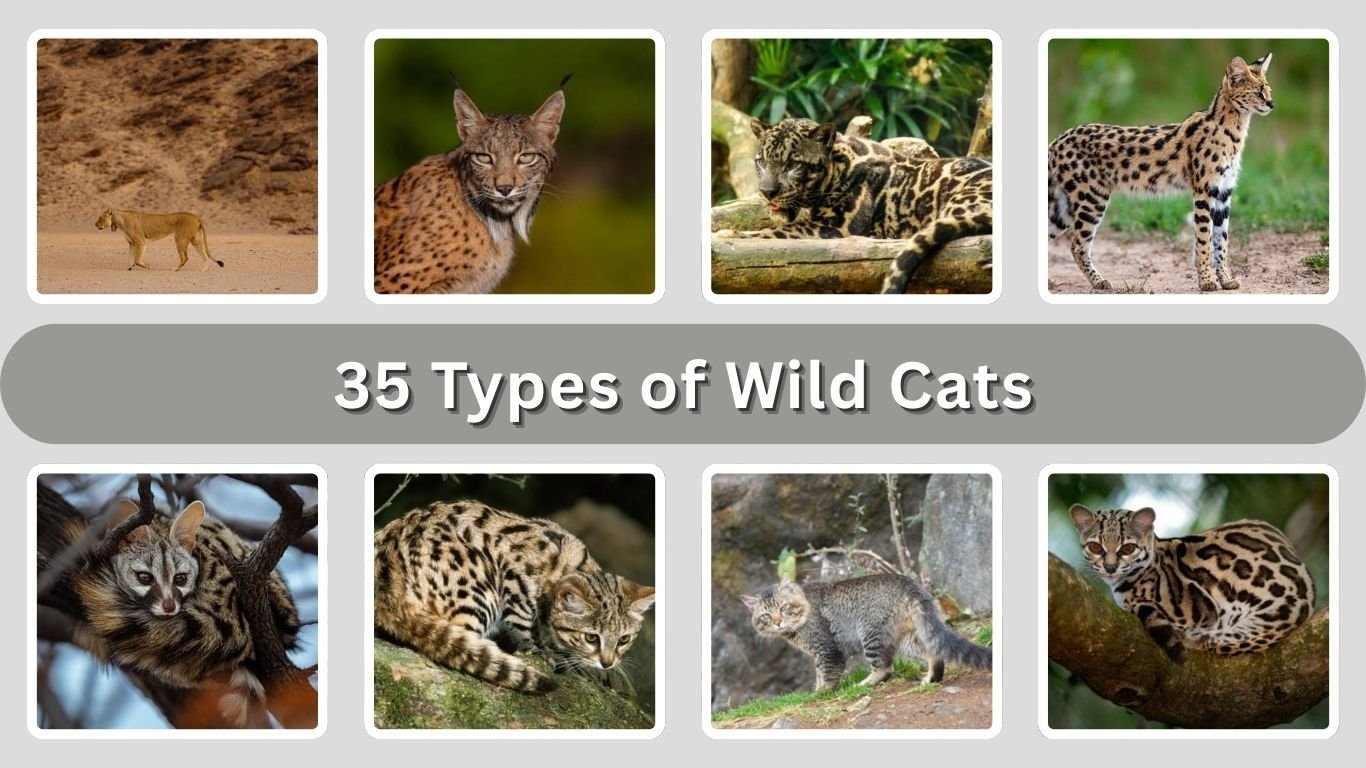
Wild cats are among the most fascinating predators on Earth, ranging from powerful big cats like lions and tigers to rare, small forest cats that few people ever see. These animals live across almost every continent, adapting to deserts, rainforests, mountains, wetlands, and grasslands. Each wild cat species has unique physical traits, hunting skills, and behaviors that help it survive in its environment. This guide explores 35 remarkable types of wild cats found around the world.
1. Lion (Panthera leo)
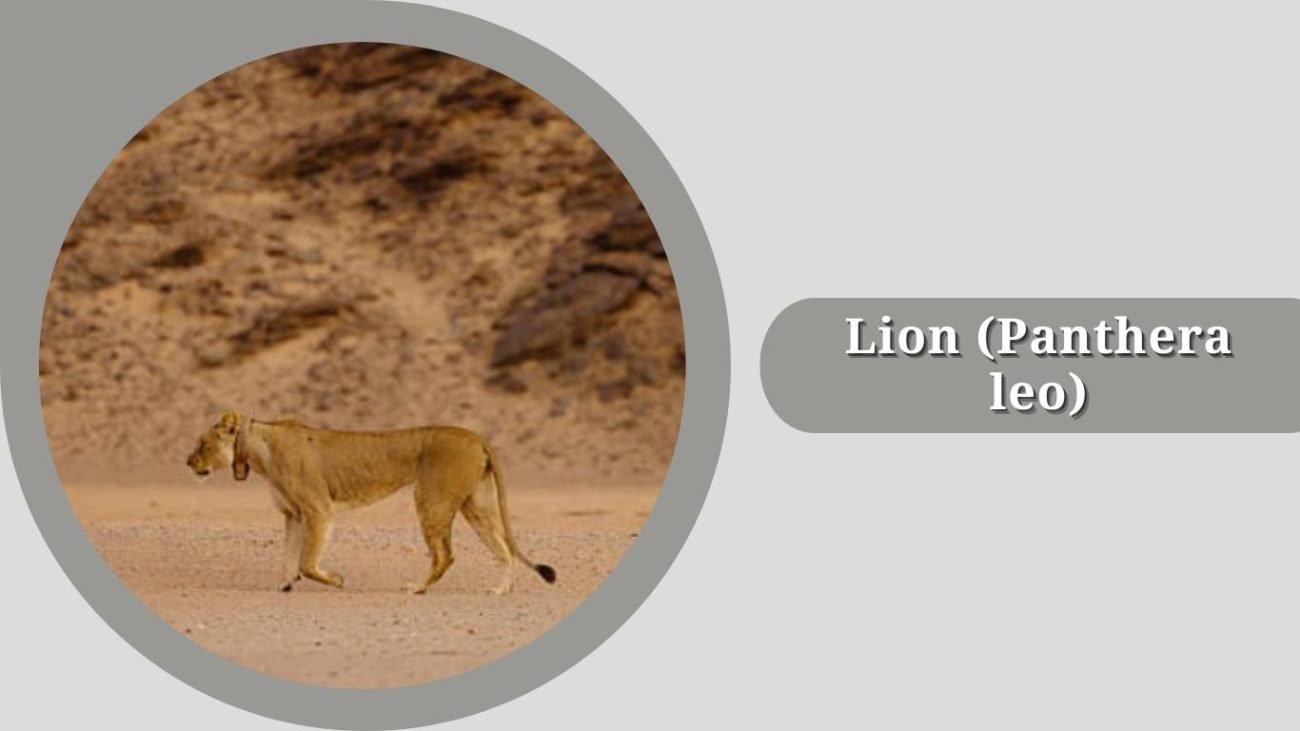
The lion is one of the most iconic wild cats in the world and is often called the “king of the jungle,” although it mainly lives in grasslands and savannas. Known for its muscular build, social lifestyle, and the male’s impressive mane, the lion is the only truly social big cat, living in groups called prides.
Identification
- Large, muscular body with powerful shoulders and chest
- Males have a thick mane around the head and neck; females do not
- Coat color ranges from light buff to deep golden
- Long tail with a dark tuft of hair at the tip
- Rounded ears and a broad face with strong jaws
Habitat and Distribution
Lions are primarily found in sub-Saharan Africa, with a small remaining population in India’s Gir Forest. They inhabit open woodlands, savannas, scrub, and grasslands where prey is abundant and visibility is good for hunting and social interaction.
Diet and Hunting Behavior
Lions are carnivores that mainly hunt large herbivores such as zebras, wildebeest, buffalo, and antelope. They often hunt cooperatively, especially females, using teamwork and stealth rather than long chases. Males usually defend territory and prides but also participate in feeding.
Behavior and Life Cycle
Lions live in prides made up of related females, their cubs, and a few adult males. Females usually raise cubs together, sharing protection and sometimes nursing. Cubs are born blind and depend on the pride for survival. In the wild, lions typically live 10–14 years, with males often having shorter lifespans due to territorial conflicts.
2. Tiger (Panthera tigris)
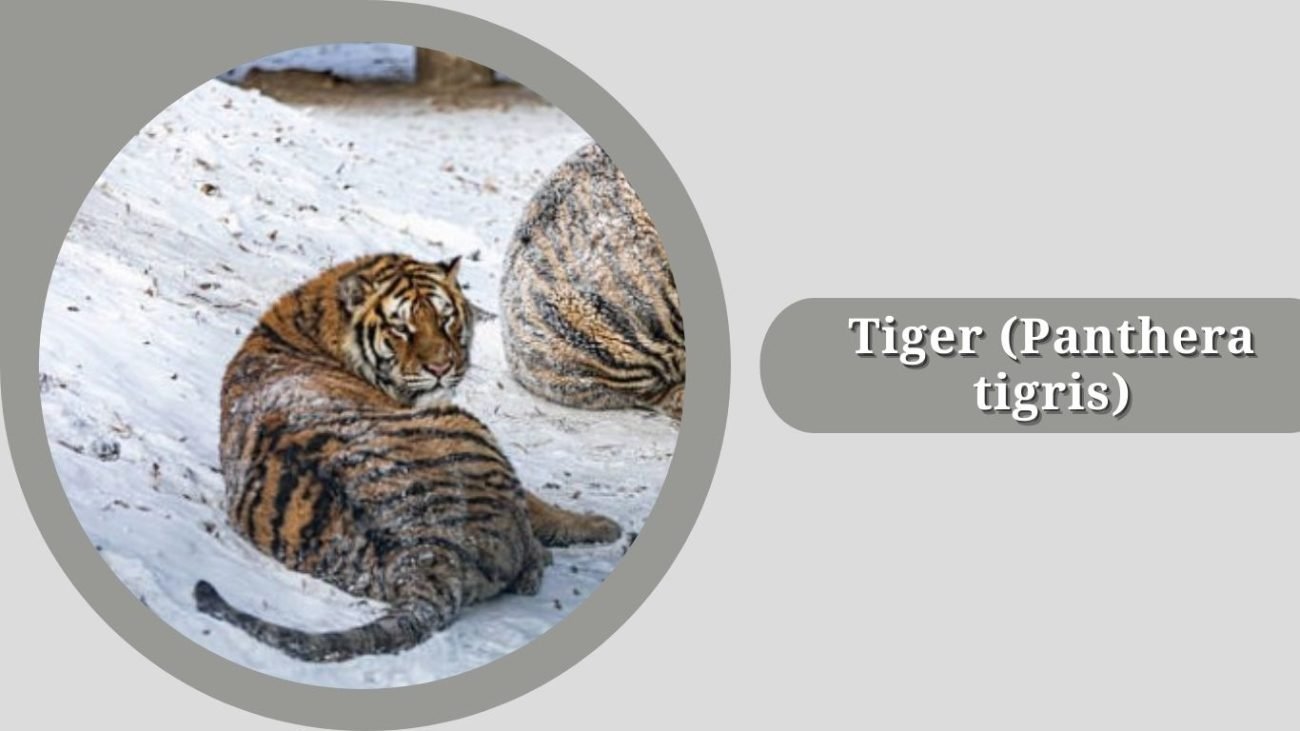
The tiger is the largest living wild cat and is famous for its striking black stripes on a deep orange coat. Unlike lions, tigers are solitary and highly territorial, relying on stealth, strength, and short bursts of speed to ambush prey. Each tiger’s stripe pattern is unique, much like a human fingerprint.
Identification
- Very large, muscular body with powerful forelimbs
- Orange to reddish coat with bold black vertical stripes
- White fur on the belly, chest, and parts of the face
- Broad head with strong jaws and long canine teeth
- Thick tail used for balance during movement and hunting
Habitat and Distribution
Tigers live across parts of Asia, including India, Russia, China, and Southeast Asia. Their habitats range from tropical rainforests and mangrove swamps to grasslands and snowy forests. They usually stay near water sources, as they are strong swimmers and often cool off in rivers and lakes.
Diet and Hunting Behavior
Tigers are carnivores that hunt deer, wild boar, buffalo, and other medium-to-large mammals. They rely on camouflage and patience, stalking prey quietly before launching a sudden, powerful attack. A tiger typically hunts alone and can drag heavy prey over long distances.
Behavior and Life Cycle
Tigers are solitary except during mating or when a mother is raising cubs. Females give birth to two to four cubs, which remain with her for up to two years while learning to hunt. In the wild, tigers can live around 10–15 years, depending on habitat and human pressures.
3. Leopard (Panthera pardus)
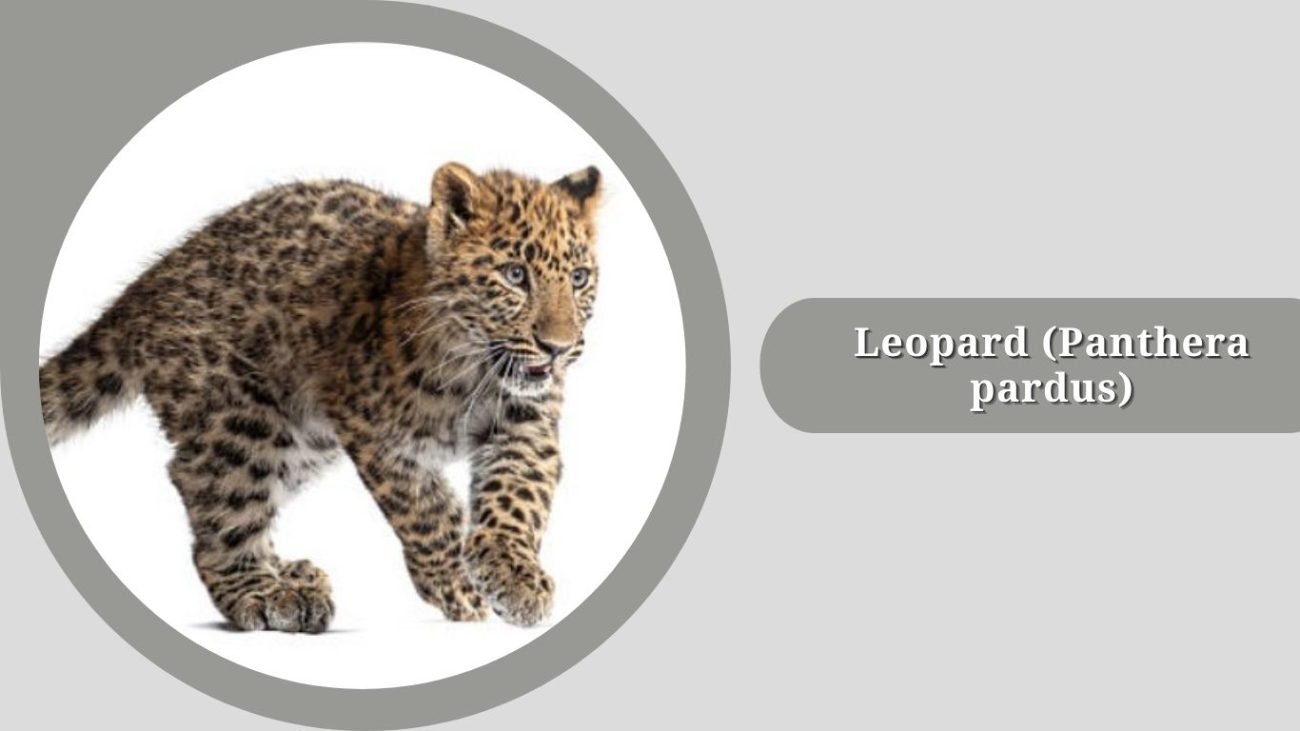
The leopard is one of the most adaptable wild cats, known for its beautiful rosette-spotted coat and incredible climbing ability. It is both a skilled hunter and an excellent tree climber, often dragging prey into trees to keep it safe from scavengers like hyenas and lions.
Identification
- Medium-to-large, muscular body with long legs
- Golden yellow coat covered in dark rosette-shaped spots
- White underside and inner limbs
- Long tail for balance while climbing and running
- Strong jaw and sharp, retractable claws
Habitat and Distribution
Leopards have the widest range of any big cat, living across sub-Saharan Africa and parts of Asia. They inhabit forests, savannas, mountains, grasslands, and even areas near human settlements. Their adaptability allows them to survive in both dense cover and open landscapes.
Diet and Hunting Behavior
Leopards are opportunistic carnivores that eat deer, antelope, monkeys, birds, and even rodents. They hunt mostly at night, using stealth and surprise. After killing prey, leopards often carry it into trees to avoid competition from other predators.
Behavior and Life Cycle
Leopards are solitary and territorial, marking large home ranges. Females usually give birth to two or three cubs, hiding them in dense vegetation or rocky shelters. Cubs stay with their mother for about 18–24 months. In the wild, leopards can live around 12–17 years.
4. Snow Leopard (Panthera uncia)
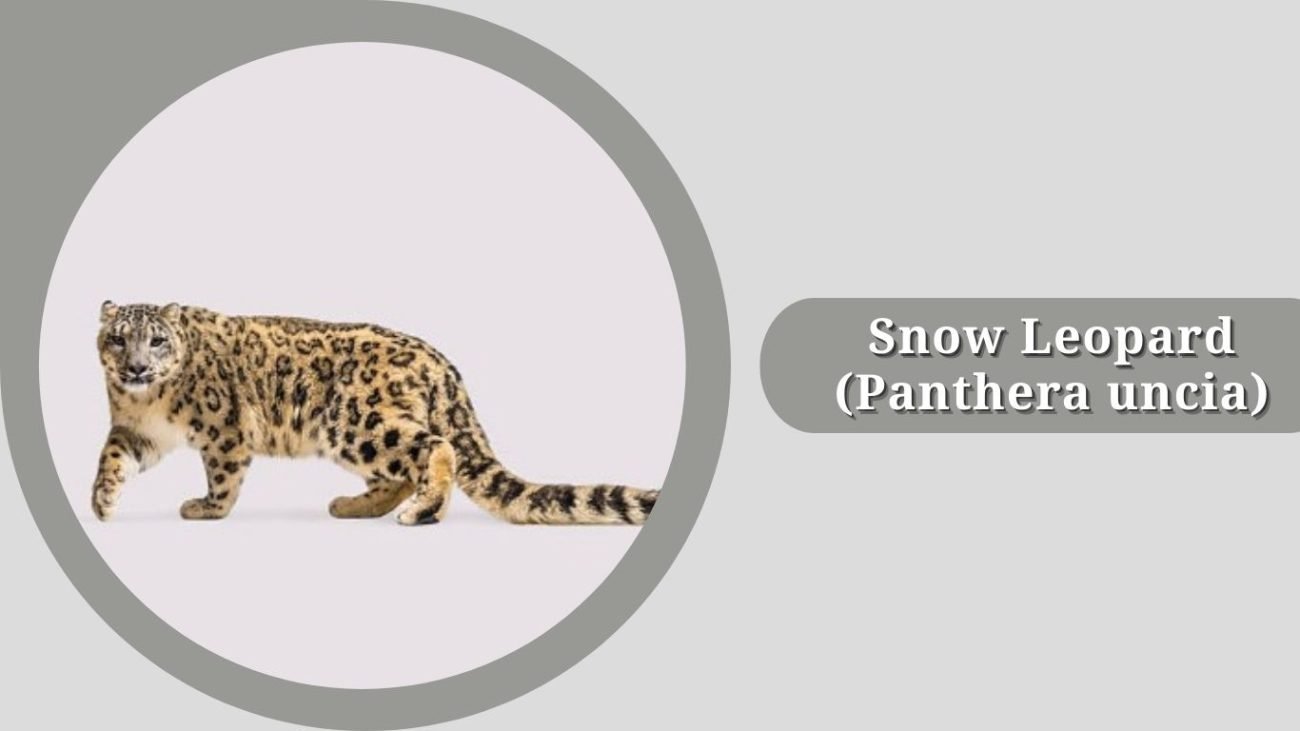
The snow leopard is a mysterious wild cat adapted to life in cold, rugged mountain regions. With its thick fur, long tail, and powerful limbs, it is perfectly built for climbing steep cliffs and surviving in some of the harshest environments on Earth. Its smoky gray coat with dark rosettes provides excellent camouflage among rocks and snow.
Identification
- Thick, smoky-gray fur with dark rosettes and spots
- Long, bushy tail used for balance and warmth
- Broad paws that act like natural snowshoes
- Short legs with powerful hind muscles for long jumps
- Small rounded ears that reduce heat loss
Habitat and Distribution
Snow leopards live in high-altitude mountain ranges of Central and South Asia, including the Himalayas, Tian Shan, and Altai Mountains. They prefer rocky slopes, alpine meadows, and remote cliffs, usually at elevations between 3,000 and 5,500 meters.
Diet and Hunting Behavior
Snow leopards mainly hunt mountain animals such as blue sheep, ibex, marmots, and hares. They rely on stealth, blending into the rocky terrain before leaping great distances to ambush prey. A single successful kill can feed a snow leopard for several days.
Behavior and Life Cycle
Snow leopards are solitary and highly elusive. Females give birth to one to three cubs in well-hidden rocky dens. Cubs stay with their mother for up to two years while learning survival skills. In the wild, snow leopards usually live 12–15 years.
5. Jaguar (Panthera onca)
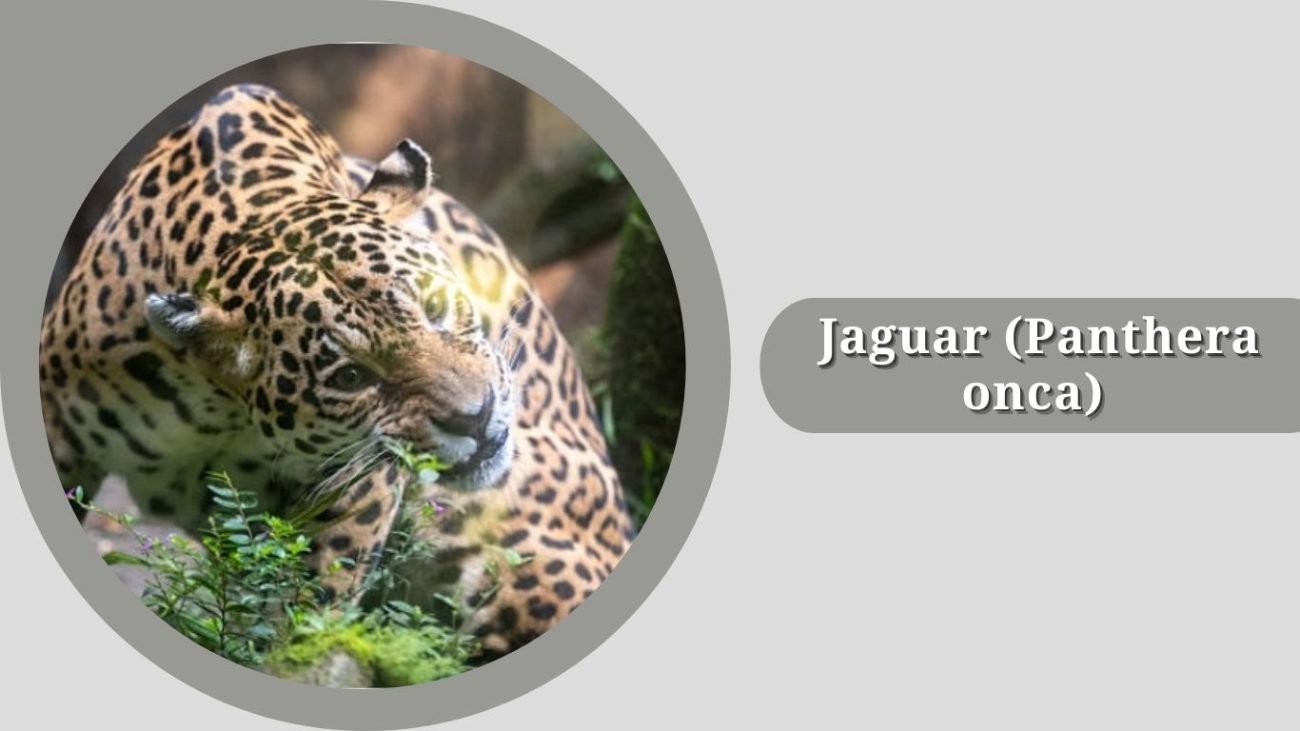
The jaguar is the largest wild cat in the Americas and is known for its extremely powerful bite, which can pierce the skulls or shells of prey. Its golden coat with bold black rosettes makes it look similar to a leopard, but jaguars are more heavily built and have larger, darker spots.
Identification
- Stocky, muscular body with a broad chest
- Golden-yellow coat with large black rosettes and central spots
- Short, powerful legs and a thick neck
- Broad head with exceptionally strong jaws
- Relatively short tail compared to other big cats
Habitat and Distribution
Jaguars are found from Mexico through Central America and into South America, especially in the Amazon Basin. They prefer dense rainforests, wetlands, and river systems, but can also live in grasslands and dry forests, as long as water is nearby.
Diet and Hunting Behavior
Jaguars are carnivores that eat deer, capybaras, peccaries, fish, turtles, and even caimans. They are excellent swimmers and often hunt near water. Instead of a throat bite, jaguars usually kill prey with a powerful bite directly through the skull.
Behavior and Life Cycle
Jaguars are solitary and territorial. Females usually give birth to one to four cubs, raising them alone. Cubs stay with their mother for about two years, learning to hunt. In the wild, jaguars typically live around 12–15 years.
6. Cheetah (Acinonyx jubatus)
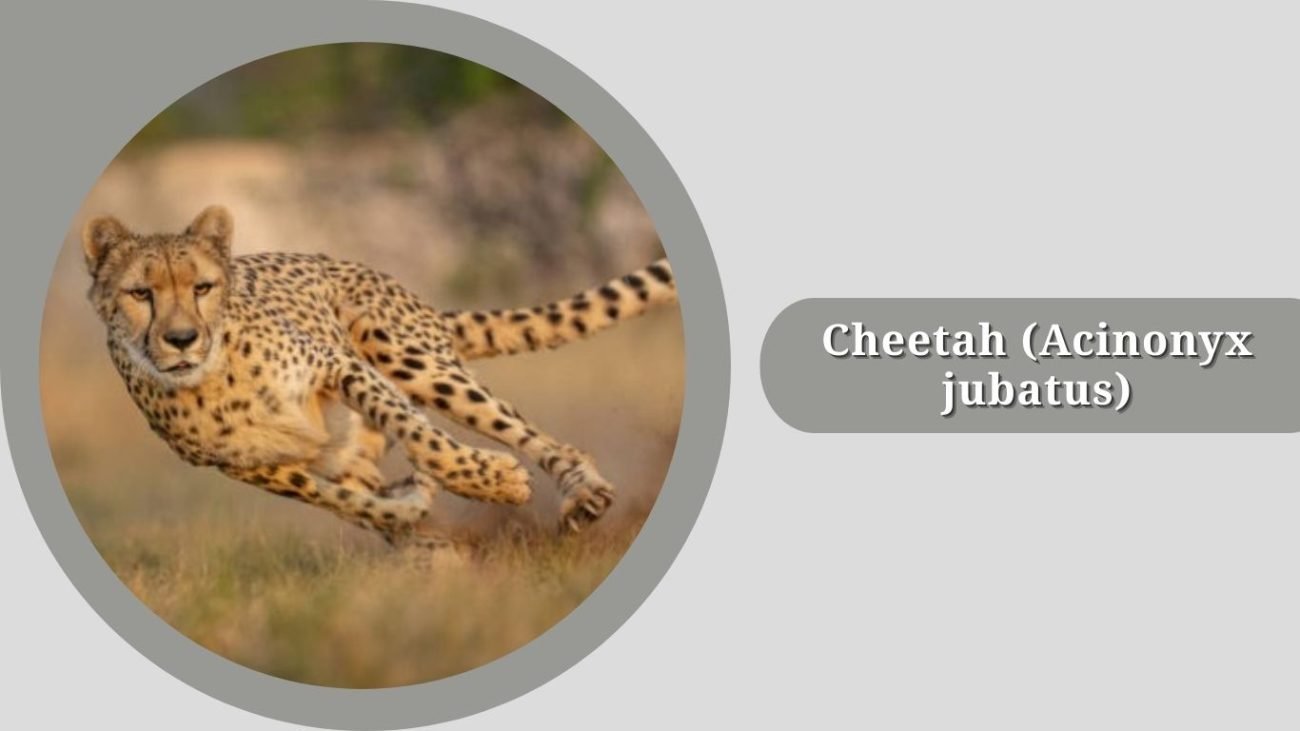
The cheetah is the fastest land animal in the world, capable of reaching speeds up to about 100–120 km/h in short bursts. Unlike other big cats, cheetahs rely on speed rather than strength, with a slim body, long legs, and a flexible spine that allows huge strides while chasing prey across open land.
Identification
- Slim, lightweight body with long legs and small head
- Golden-yellow coat covered in solid black spots
- Distinct black “tear marks” running from eyes to mouth
- Long tail with black rings near the tip
- Semi-retractable claws that provide extra grip while running
Habitat and Distribution
Cheetahs mainly live in eastern and southern Africa, with a small remaining population in Iran. They prefer open savannas, grasslands, and semi-deserts where they can use their speed and wide vision to spot prey from a distance.
Diet and Hunting Behavior
Cheetahs hunt medium-sized antelopes such as gazelles and impalas, as well as hares and birds. They stalk quietly before launching an explosive sprint. Because of the intense effort, cheetahs must rest after a chase and often lose their kills to stronger predators.
Behavior and Life Cycle
Cheetahs are mostly solitary, though males sometimes form small coalitions. Females give birth to two to five cubs. Cubs have a long, grayish mantle of fur on their backs for camouflage. In the wild, cheetahs usually live around 10–12 years.
7. Cougar / Mountain Lion (Puma concolor)
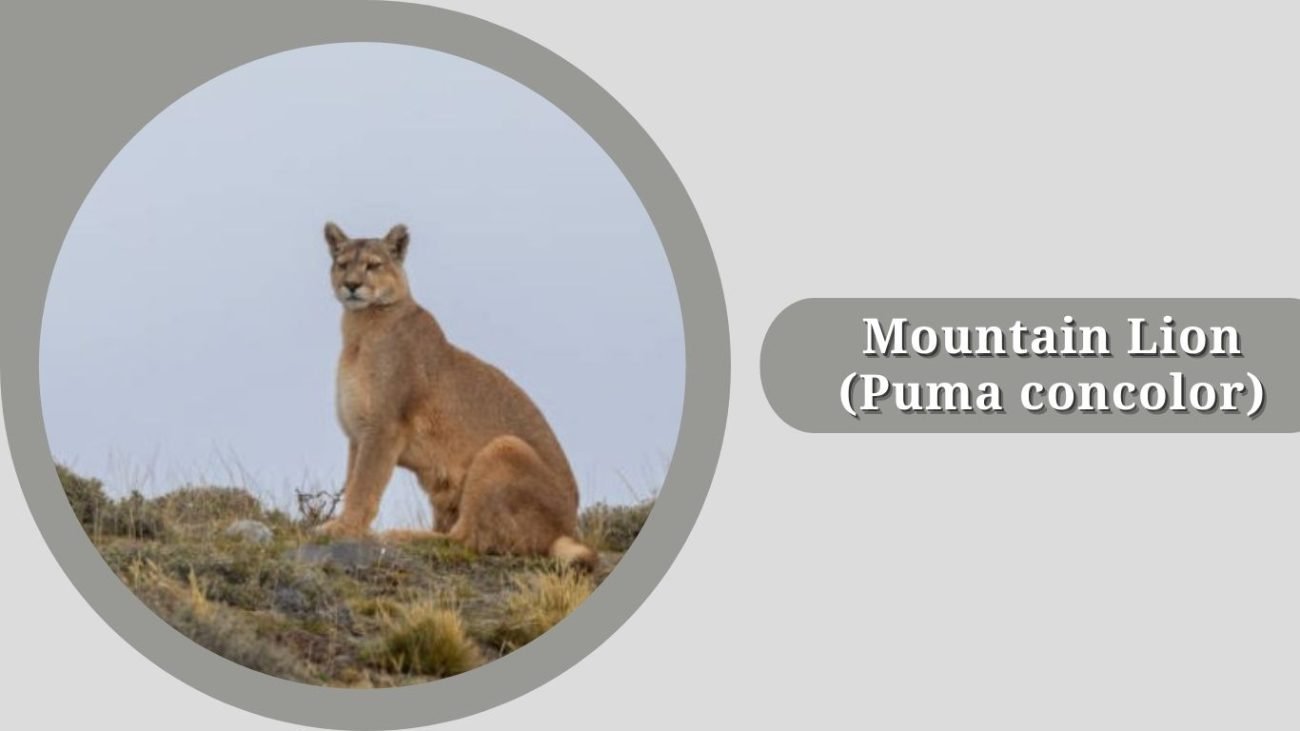
The cougar, also known as the mountain lion, puma, or panther, is one of the most widespread wild cats in the world. It is highly adaptable and can live in mountains, forests, deserts, and even near human settlements. Despite its large size, it cannot roar like true big cats.
Identification
- Large, slender body with powerful hind legs
- Uniform tan, brown, or grayish coat
- Long tail making up nearly one-third of its length
- Small head with rounded ears
- Strong jaws and sharp retractable claws
Habitat and Distribution
Cougars range from Canada through the United States and Central America down to southern South America. They live in forests, rocky mountains, grasslands, swamps, and deserts, showing remarkable adaptability to different climates and terrains.
Diet and Hunting Behavior
Cougars are ambush predators that mainly hunt deer, but they also eat elk, moose calves, rodents, and birds. They rely on stealth and powerful leaps, usually killing prey with a bite to the neck.
Behavior and Life Cycle
Cougars are solitary and territorial. Females give birth to one to four cubs, which have spotted coats that fade as they grow. Cubs stay with their mother for up to two years. In the wild, cougars typically live 8–13 years.
8. Lynx (Genus: Lynx)
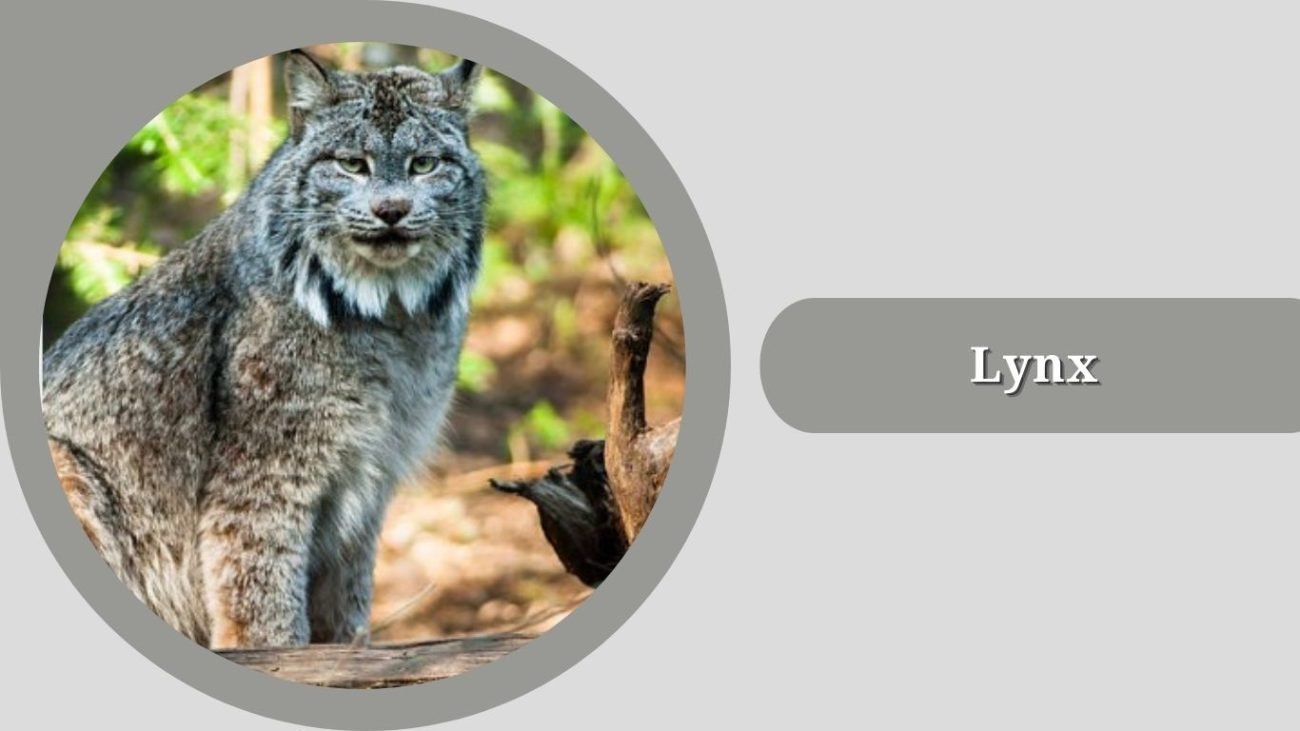
The lynx refers to a group of medium-sized wild cats known for their tufted ears, short tails, and thick fur. These cats are well adapted to cold climates and are excellent hunters in forests and mountainous regions. Their large, padded paws help them move quietly and efficiently, even over snow.
Identification
- Medium-sized body with long legs and broad paws
- Short tail with a black tip
- Distinctive black ear tufts
- Thick fur, often gray, brown, or reddish
- Prominent facial ruff around the cheeks
Habitat and Distribution
Lynx species are found across North America, Europe, and Asia. They mainly inhabit boreal forests, mountainous woodlands, and cold, remote regions. These cats prefer dense cover where they can stalk prey and avoid human activity.
Diet and Hunting Behavior
Lynx primarily hunt small to medium-sized animals such as hares, rabbits, birds, and rodents. Some larger species also take deer. They rely on silent movement and sudden pounces rather than long chases.
Behavior and Life Cycle
Lynx are solitary and territorial. Females usually give birth to one to four kittens in hidden dens. The young remain with their mother for several months while learning to hunt. In the wild, lynx generally live 10–15 years.
9. Eurasian Lynx (Lynx lynx)
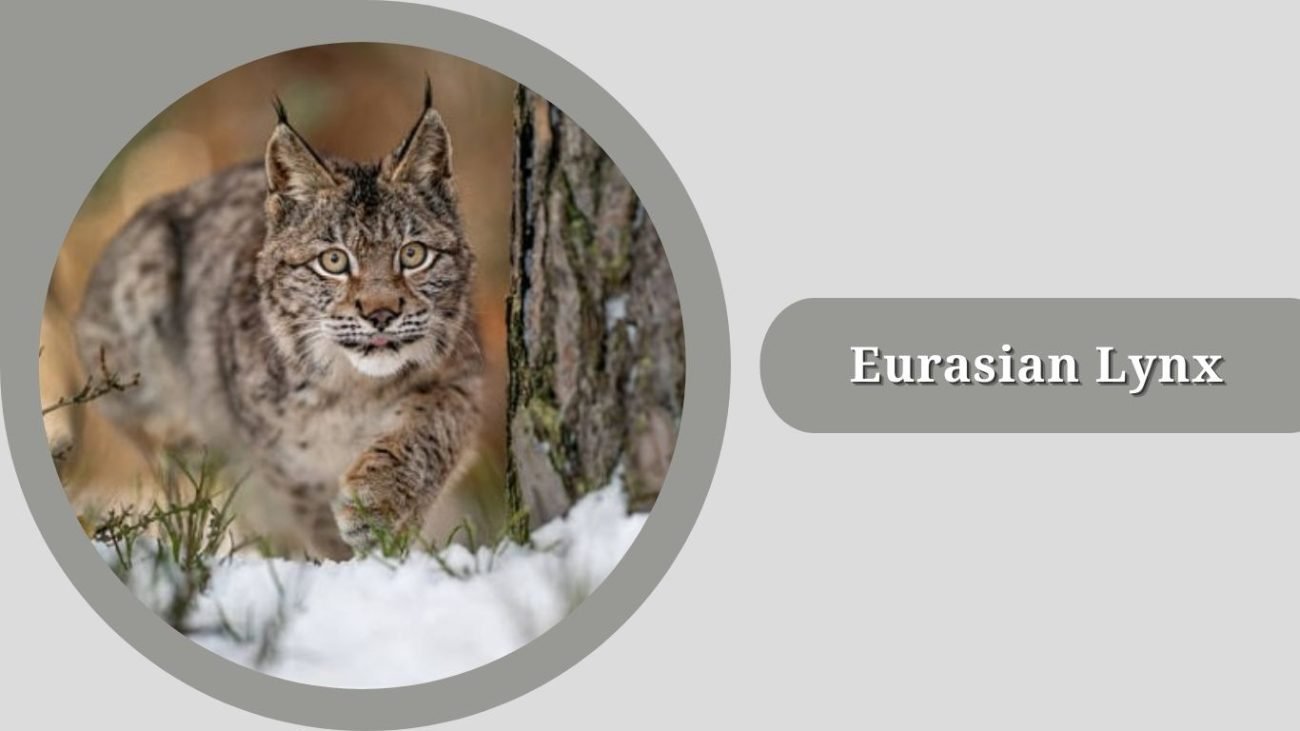
The Eurasian lynx is the largest of the lynx species and one of the top predators in European forests. It has a powerful build, long legs, and thick winter fur, allowing it to survive harsh, snowy environments. Its spotted coat provides excellent camouflage in woodland habitats.
Identification
- Large, robust body with long legs
- Reddish-brown to gray coat with dark spots
- Short tail with a black tip
- Long black ear tufts
- Thick facial ruff around the cheeks
Habitat and Distribution
Eurasian lynx live across parts of Europe, Russia, Central Asia, and Siberia. They prefer dense forests, rocky mountains, and remote wilderness areas where prey is plentiful and human disturbance is low.
Diet and Hunting Behavior
Eurasian lynx hunt roe deer, hares, birds, and small mammals. They are powerful ambush predators, using stealth and surprise to overpower prey. Unlike many smaller cats, they can regularly take animals larger than themselves.
Behavior and Life Cycle
These lynx are solitary and highly territorial. Females give birth to one to four kittens in spring. The young stay with their mother through their first winter, learning essential hunting skills. Eurasian lynx can live up to 17 years in the wild.
10. Iberian Lynx (Lynx pardinus)
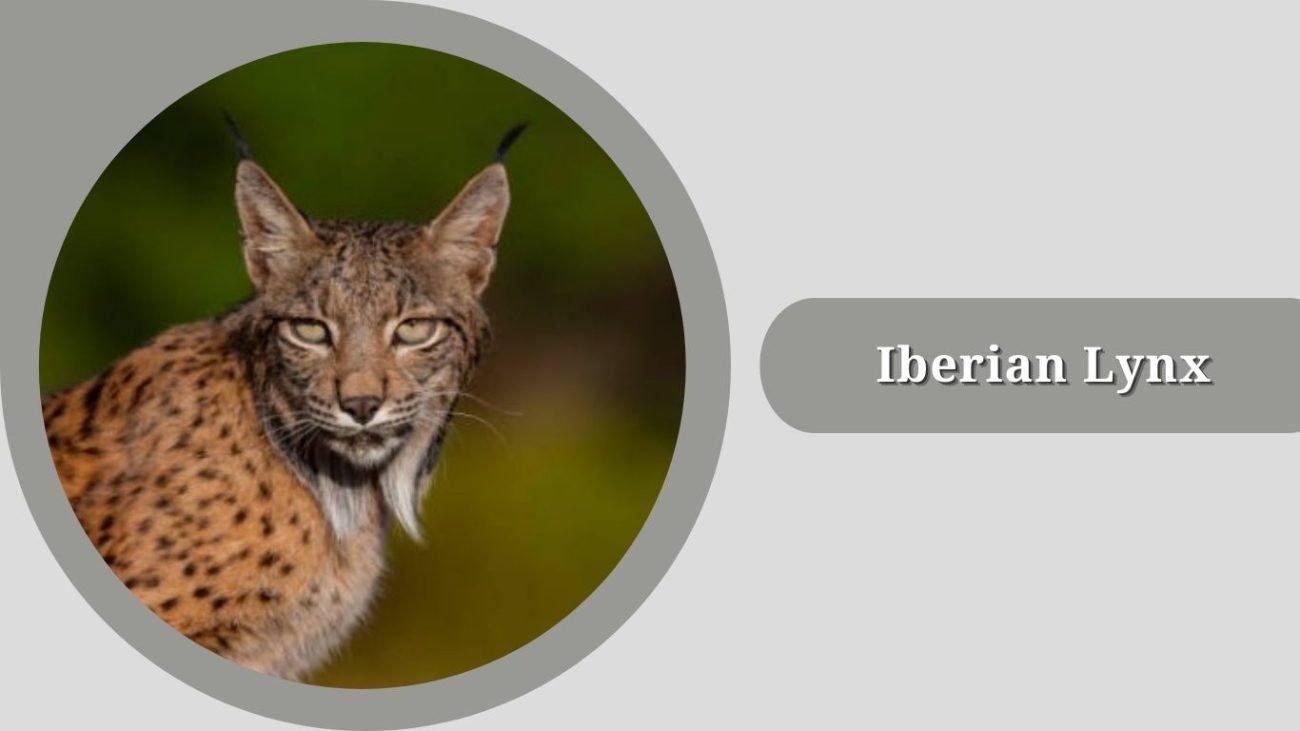
The Iberian lynx is one of the rarest wild cats in the world and is native to the Iberian Peninsula. It is slightly smaller than the Eurasian lynx and is well known for its spotted coat, long ear tufts, and pronounced facial “beard.” Conservation efforts have helped stabilize its population in recent years.
Identification
- Medium-sized, compact body
- Light brown to yellowish coat with dark spots
- Very long black ear tufts
- Short tail with a black tip
- Prominent facial ruff giving a bearded look
Habitat and Distribution
The Iberian lynx lives mainly in southern Spain and small parts of Portugal. It prefers Mediterranean scrublands, open forests, and areas with dense bushes that support its primary prey.
Diet and Hunting Behavior
This lynx specializes in hunting European rabbits, which make up most of its diet. It hunts by stalking quietly through thick vegetation before making a sudden, short attack. When rabbit populations decline, Iberian lynx numbers are strongly affected.
Behavior and Life Cycle
Iberian lynx are solitary and territorial. Females usually give birth to one to three kittens in well-hidden dens. The young remain with their mother for about a year while learning to hunt. In the wild, Iberian lynx can live around 10–13 years.
11. Bobcat (Lynx rufus)
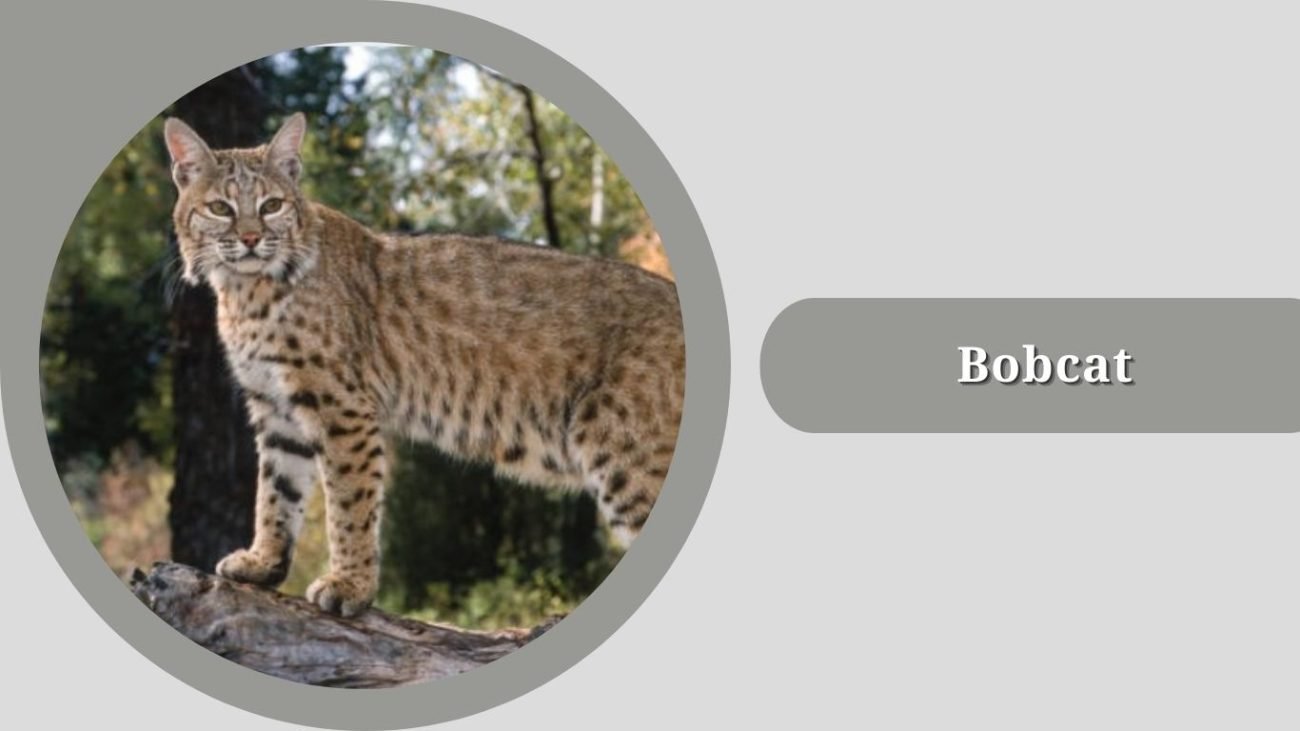
The bobcat is a highly adaptable wild cat found across North America. It is named for its short, “bobbed” tail and is known for its stealth, climbing ability, and wide range of habitats. Bobcats thrive in both wild landscapes and areas close to human settlements.
Identification
- Medium-sized body with muscular legs
- Short tail with black and white bands
- Reddish-brown or gray coat with dark spots and streaks
- Tufted ears with black tips
- White underside and inner legs
Habitat and Distribution
Bobcats range from southern Canada through the United States and into northern Mexico. They live in forests, deserts, swamps, grasslands, and mountainous regions, often adapting well to changing environments.
Diet and Hunting Behavior
Bobcats hunt rabbits, hares, rodents, birds, and occasionally deer. They are ambush predators that rely on patience and sudden leaps to catch prey. They may hunt both day and night, depending on food availability.
Behavior and Life Cycle
Bobcats are solitary and territorial. Females give birth to one to four kittens in dens made in caves, hollow logs, or dense thickets. Kittens stay with their mother for several months. In the wild, bobcats typically live 7–10 years.
12. Canada Lynx (Lynx canadensis)
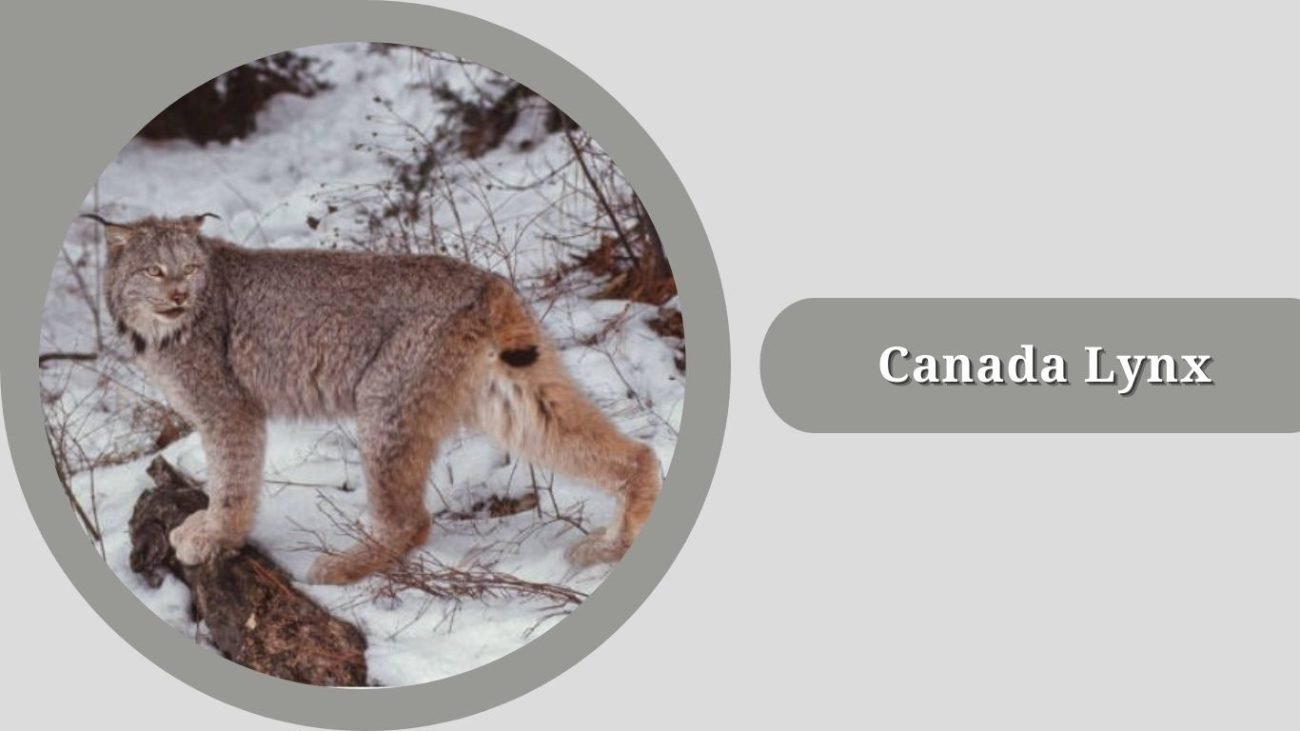
The Canada lynx is a wild cat strongly adapted to cold, snowy environments. It closely resembles the Eurasian lynx but has longer legs, thicker fur, and much larger, fur-covered paws that act like snowshoes. This species is closely linked to the population cycles of snowshoe hares, its main prey.
Identification
- Medium-sized body with long legs
- Very large, fur-covered paws for walking on snow
- Thick grayish-silver coat
- Long black ear tufts
- Short tail with a completely black tip
Habitat and Distribution
Canada lynx are found mainly across Alaska and Canada, with some populations extending into the northern United States. They live in boreal forests, dense conifer woodlands, and cold mountainous regions.
Diet and Hunting Behavior
Canada lynx primarily hunt snowshoe hares, which make up most of their diet. They also eat birds, squirrels, and small mammals. They hunt by quietly stalking and then pouncing, using their strong hind legs to leap onto prey.
Behavior and Life Cycle
Canada lynx are solitary and territorial. Females give birth to one to five kittens, depending on food availability. The kittens stay with their mother until the next breeding season. In the wild, Canada lynx often live 10–15 years.
13. Clouded Leopard (Neofelis nebulosa)
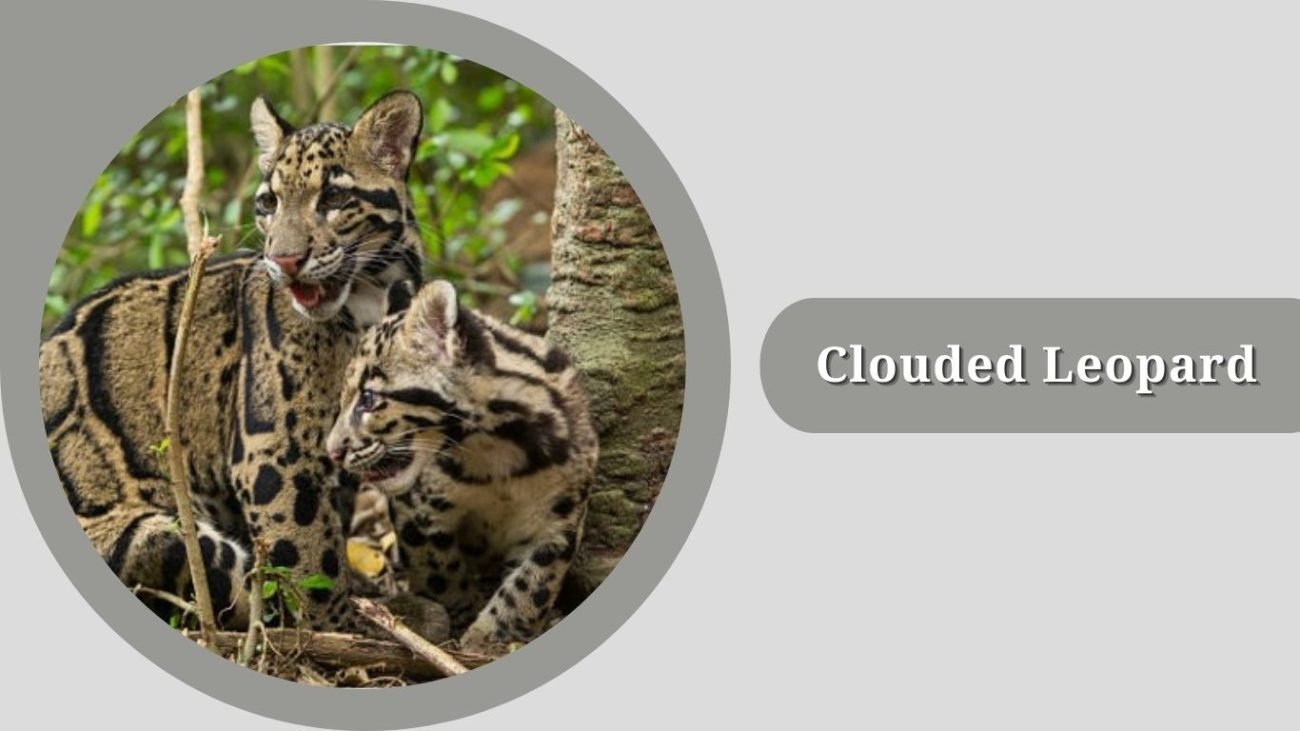
The clouded leopard is a medium-sized wild cat known for its striking cloud-shaped markings and exceptional climbing ability. It has relatively short legs, a very long tail, and flexible ankle joints, allowing it to climb headfirst down trees and even hang from branches.
Identification
- Medium-sized, stocky body with short legs
- Pale yellow to gray coat with large cloud-shaped blotches
- Very long tail for balance
- Large canine teeth relative to skull size
- Broad head with short muzzle
Habitat and Distribution
Clouded leopards live in Southeast Asia, southern China, and parts of the Himalayan foothills. They inhabit tropical rainforests, evergreen forests, and sometimes mangroves and grasslands.
Diet and Hunting Behavior
Clouded leopards hunt monkeys, birds, deer, wild pigs, and small mammals. They are skilled climbers and often hunt both on the ground and in trees. Their powerful bite helps them quickly subdue prey.
Behavior and Life Cycle
Clouded leopards are solitary and elusive. Females give birth to one to five cubs in tree hollows or dense vegetation. Cubs stay with their mother for several months while learning to hunt. In the wild, clouded leopards usually live around 11–13 years.
14. Sunda Clouded Leopard (Neofelis diardi)
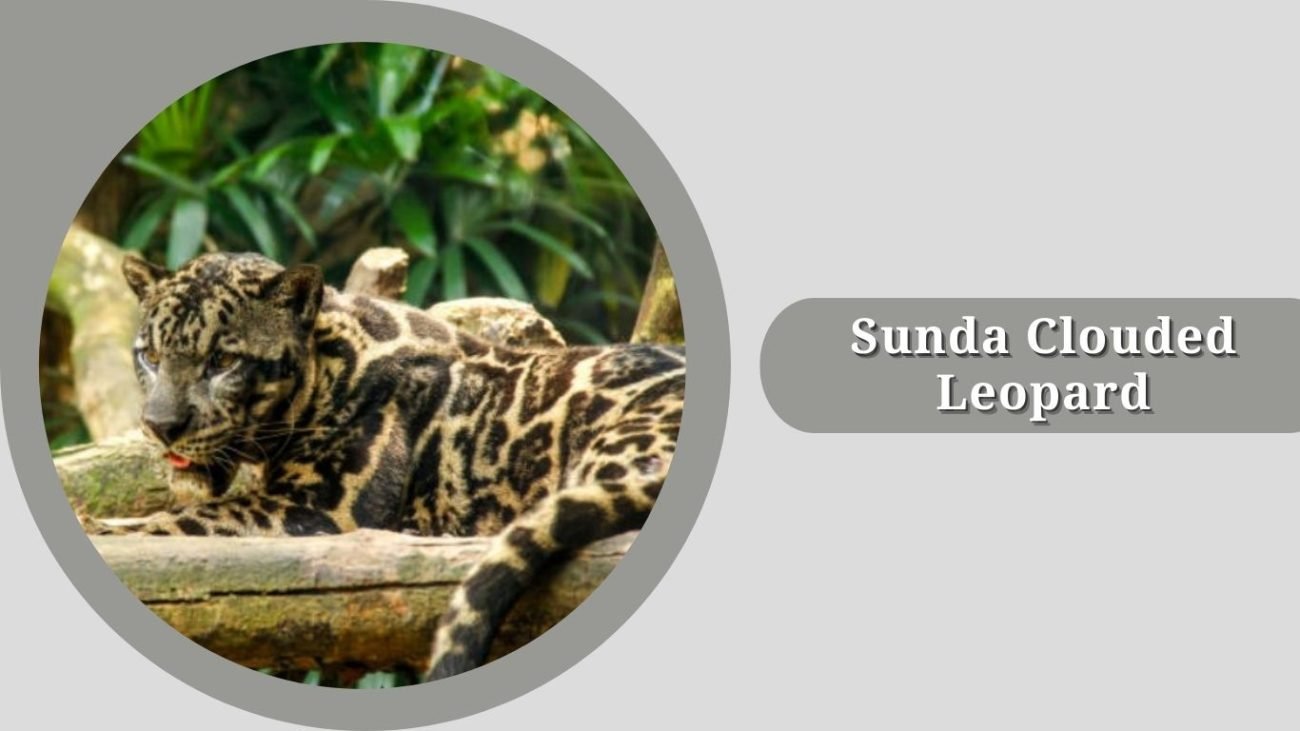
The Sunda clouded leopard is closely related to the clouded leopard but is a separate species found only on the islands of Borneo and Sumatra. It has darker, larger cloud-shaped markings and a longer tail, which helps it balance while moving through dense forest canopies.
Identification
- Medium-sized, muscular body
- Darker coat with large cloud-like blotches
- Very long, thick tail for balance
- Large canine teeth
- Broad head with short muzzle
Habitat and Distribution
This wild cat lives in the rainforests of Borneo and Sumatra. It prefers dense lowland forests, hill forests, and sometimes swamp forests, where it can climb easily and hunt in both trees and on the ground.
Diet and Hunting Behavior
Sunda clouded leopards prey on monkeys, deer, birds, wild pigs, and small mammals. They are excellent climbers and often ambush prey from above. Their strong jaws allow them to kill relatively large animals for their size.
Behavior and Life Cycle
They are solitary and very elusive. Females usually give birth to one to four cubs in well-hidden dens. Cubs stay with the mother for many months while learning to hunt. In the wild, Sunda clouded leopards are thought to live around 11–14 years.
15. Caracal (Caracal caracal)
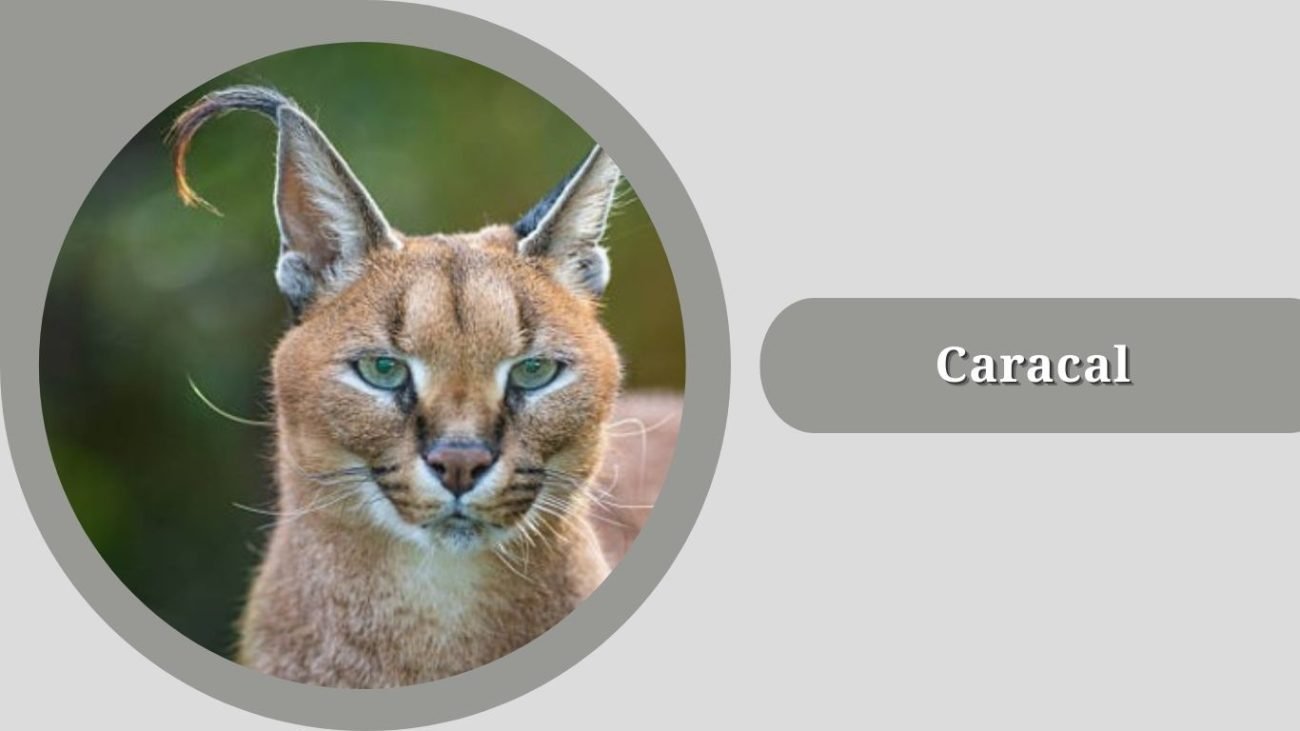
The caracal is a striking wild cat famous for its long black ear tufts and powerful jumping ability. It is sometimes called the “desert lynx,” although it is not a true lynx. Caracals are agile, fast, and highly skilled at catching birds in midair.
Identification
- Medium-sized, slim but muscular body
- Reddish-gold to sandy-brown coat
- Very long black ear tufts
- Short, strong face with black facial markings
- Long hind legs adapted for leaping
Habitat and Distribution
Caracals are found across Africa, the Middle East, Central Asia, and parts of India. They inhabit savannas, dry woodlands, scrublands, and semi-deserts, often avoiding dense rainforests.
Diet and Hunting Behavior
Caracals hunt birds, rodents, hares, and small antelopes. They are famous for their ability to leap several meters into the air to knock birds down with their paws. They hunt alone, mainly at night.
Behavior and Life Cycle
Caracals are solitary and territorial. Females give birth to one to three kittens in hidden dens. The kittens stay with their mother for up to a year. In the wild, caracals generally live 10–12 years.
16. Serval (Leptailurus serval)
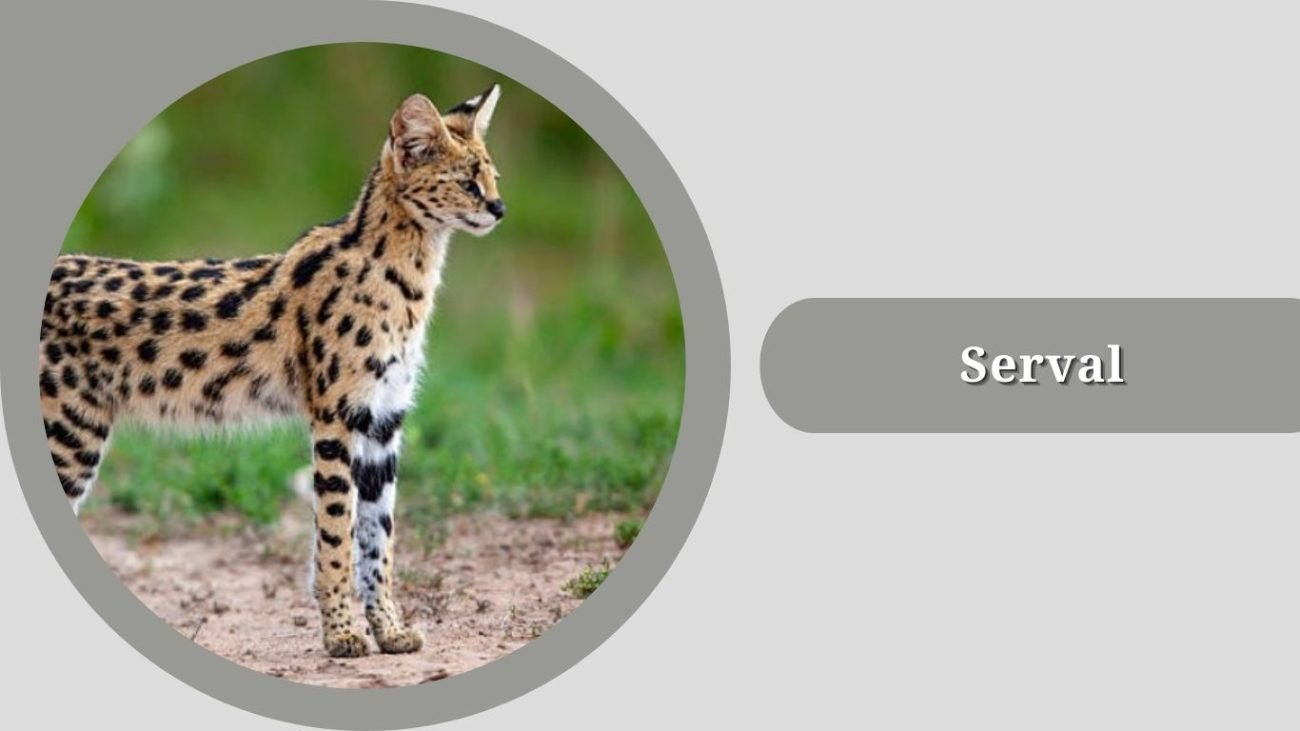
The serval is a slender, long-legged wild cat best known for its oversized ears and incredible jumping ability. It is specially adapted for hunting in tall grass, where it uses its sharp hearing to locate hidden prey before making high, precise leaps to capture it.
Identification
- Slim body with very long legs
- Large rounded ears with black-and-white markings
- Golden-yellow coat with black spots and stripes
- Small head and long neck
- Short tail with dark rings
Habitat and Distribution
Servals are found throughout much of sub-Saharan Africa. They prefer wetlands, savannas, reed beds, and grasslands near water, where rodents, frogs, and birds are plentiful.
Diet and Hunting Behavior
Servals mainly eat rodents, birds, frogs, insects, and small reptiles. They hunt by listening carefully for movement, then jumping high and pouncing straight down on prey. Their hunting success rate is one of the highest among wild cats.
Behavior and Life Cycle
Servals are solitary and territorial. Females give birth to one to three kittens in thick vegetation or abandoned burrows. The kittens remain with their mother for several months while learning to hunt. In the wild, servals can live around 10–12 years.
17. African Golden Cat (Caracal aurata)
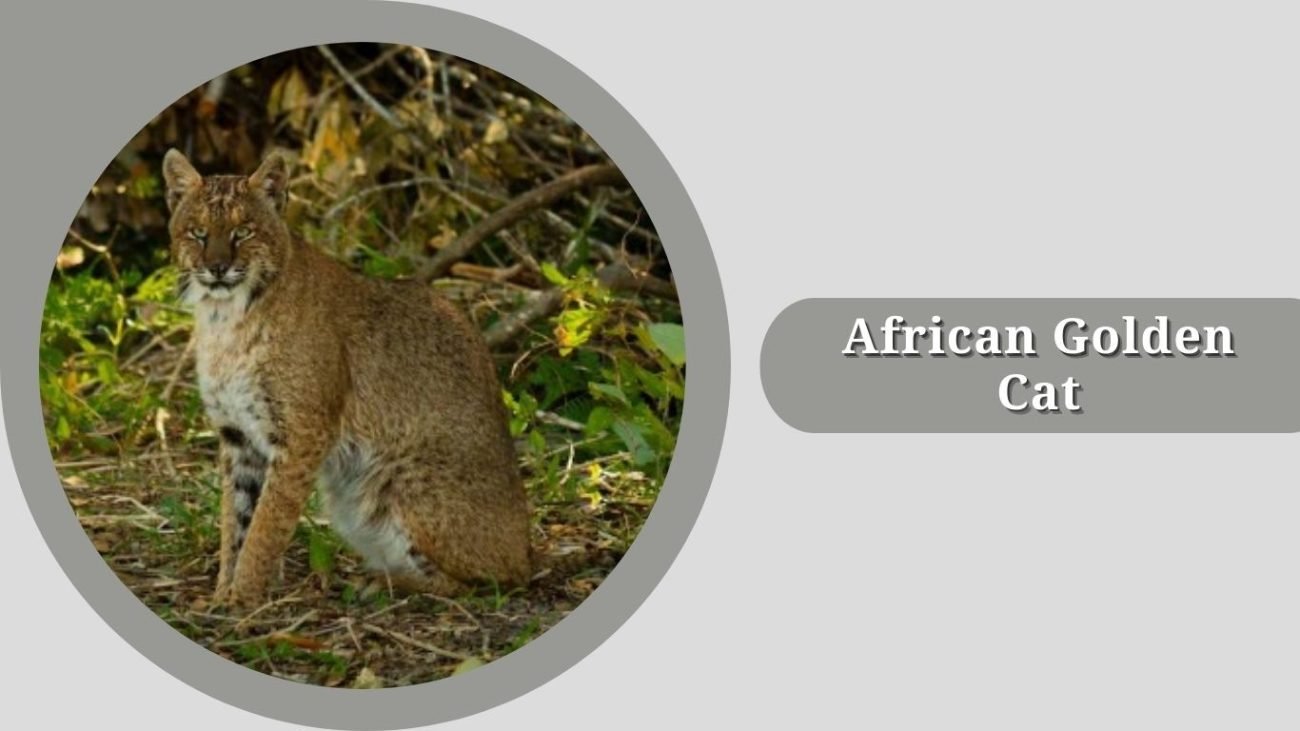
The African golden cat is a rare and secretive wild cat that lives in the dense forests of Central and West Africa. It is closely related to the caracal and serval but is more heavily built and adapted to life in thick rainforest habitats.
Identification
- Medium-sized, stocky body
- Coat color varies from reddish-gold to gray
- Faint spots may be present, especially on the belly
- Short, rounded ears
- Relatively short tail
Habitat and Distribution
African golden cats inhabit tropical rainforests, cloud forests, and bamboo forests of Central and West Africa. They are rarely seen and prefer remote, densely vegetated areas.
Diet and Hunting Behavior
They hunt small to medium-sized animals such as rodents, birds, monkeys, and small antelopes. African golden cats are stealthy ambush predators, moving quietly through undergrowth to surprise prey.
Behavior and Life Cycle
African golden cats are solitary and poorly studied. Females give birth to one or two kittens in hidden dens. Little is known about their social behavior, but in the wild they are believed to live around 10–12 years.
18. Asiatic Golden Cat (Catopuma temminckii)
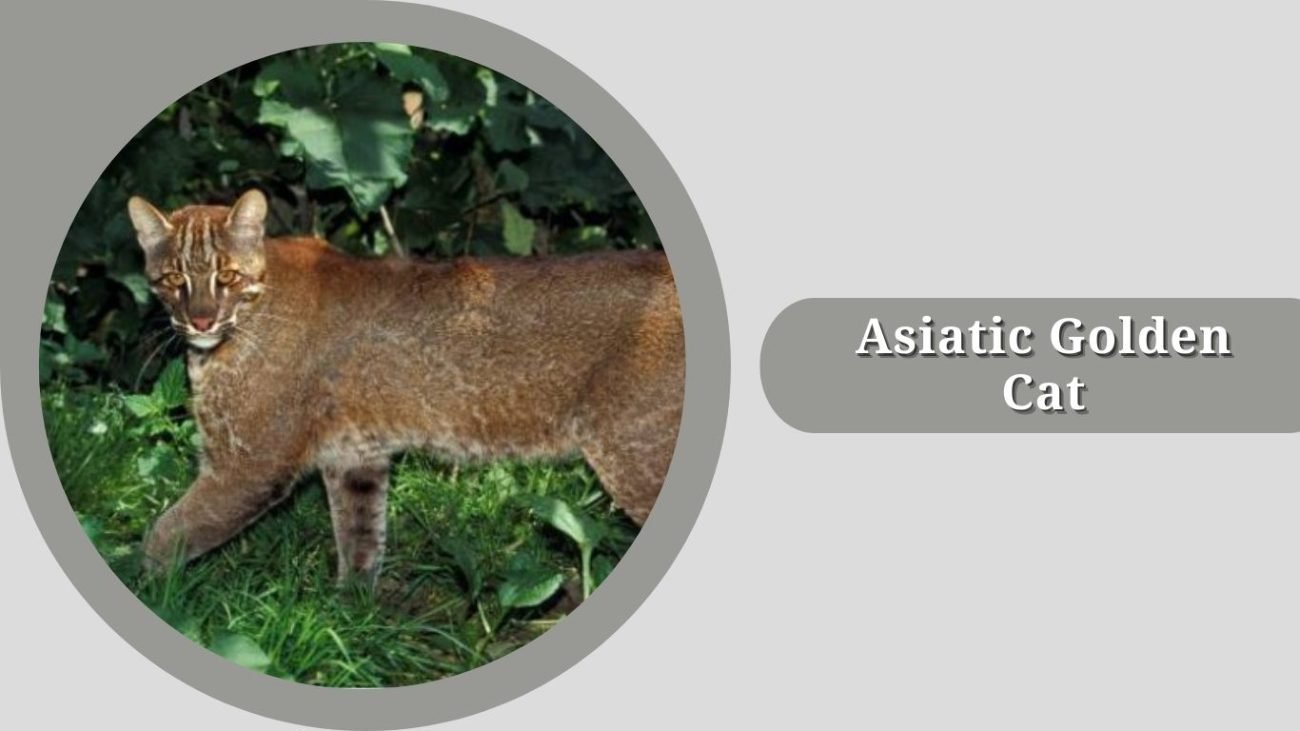
The Asiatic golden cat is a medium-sized wild cat known for its beautiful coat, which can range from golden red to gray, brown, or even nearly black. It is elusive and rarely seen, living deep within the forests of South and Southeast Asia.
Identification
- Medium-sized, muscular body
- Coat color varies widely: golden, reddish, gray, or dark brown
- Faint spots or stripes may appear on some individuals
- Rounded ears with darker backs
- Thick tail, often lighter underneath
Habitat and Distribution
Asiatic golden cats are found from the eastern Himalayas through China and into Southeast Asia. They inhabit tropical rainforests, evergreen forests, and mountainous woodlands, sometimes at high elevations.
Diet and Hunting Behavior
They prey on birds, rodents, hares, reptiles, and small deer. Asiatic golden cats hunt alone, using stealth and sudden attacks to capture prey both on the ground and occasionally in trees.
Behavior and Life Cycle
These cats are solitary and territorial. Females usually give birth to one to three kittens in hidden dens. The young stay with their mother for many months while learning hunting skills. In the wild, they are believed to live around 12–15 years.
19. Jungle Cat (Felis chaus)
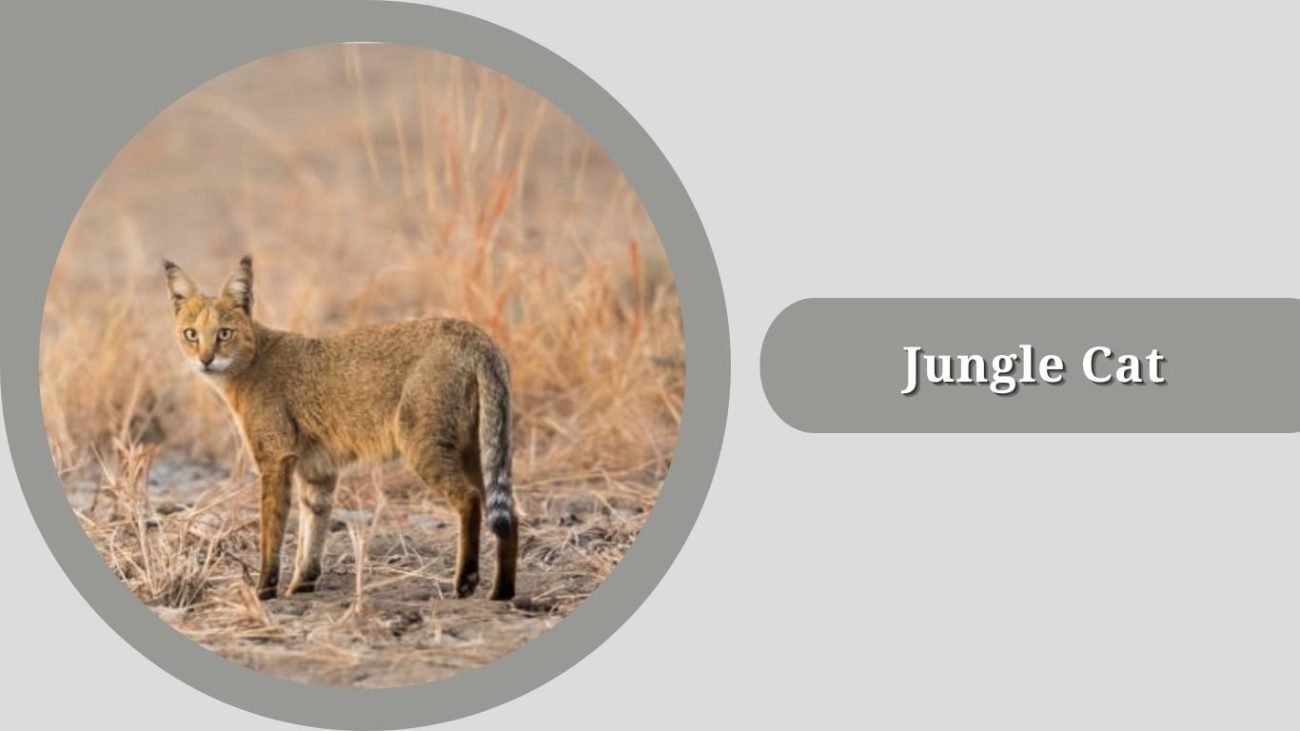
The jungle cat is a tall, long-legged wild cat often found near wetlands and river systems. Despite its name, it is not restricted to jungles and is highly adaptable, living in grasslands, scrub, and agricultural landscapes.
Identification
- Medium-sized body with long legs
- Sandy brown to gray coat with faint stripes
- Short tail with dark rings near the tip
- Small ear tufts
- Slender face with long muzzle
Habitat and Distribution
Jungle cats range from Egypt and the Middle East through India and into Southeast Asia. They prefer areas near water such as marshes, reed beds, riverbanks, and open forests.
Diet and Hunting Behavior
Jungle cats eat rodents, birds, frogs, reptiles, and occasionally fish. They are skilled hunters that often leap to catch birds and may hunt both day and night.
Behavior and Life Cycle
Jungle cats are mostly solitary. Females give birth to two to four kittens in dense vegetation or burrows. Kittens stay with their mother for several months. In the wild, jungle cats usually live 10–12 years.
20. Fishing Cat (Prionailurus viverrinus)
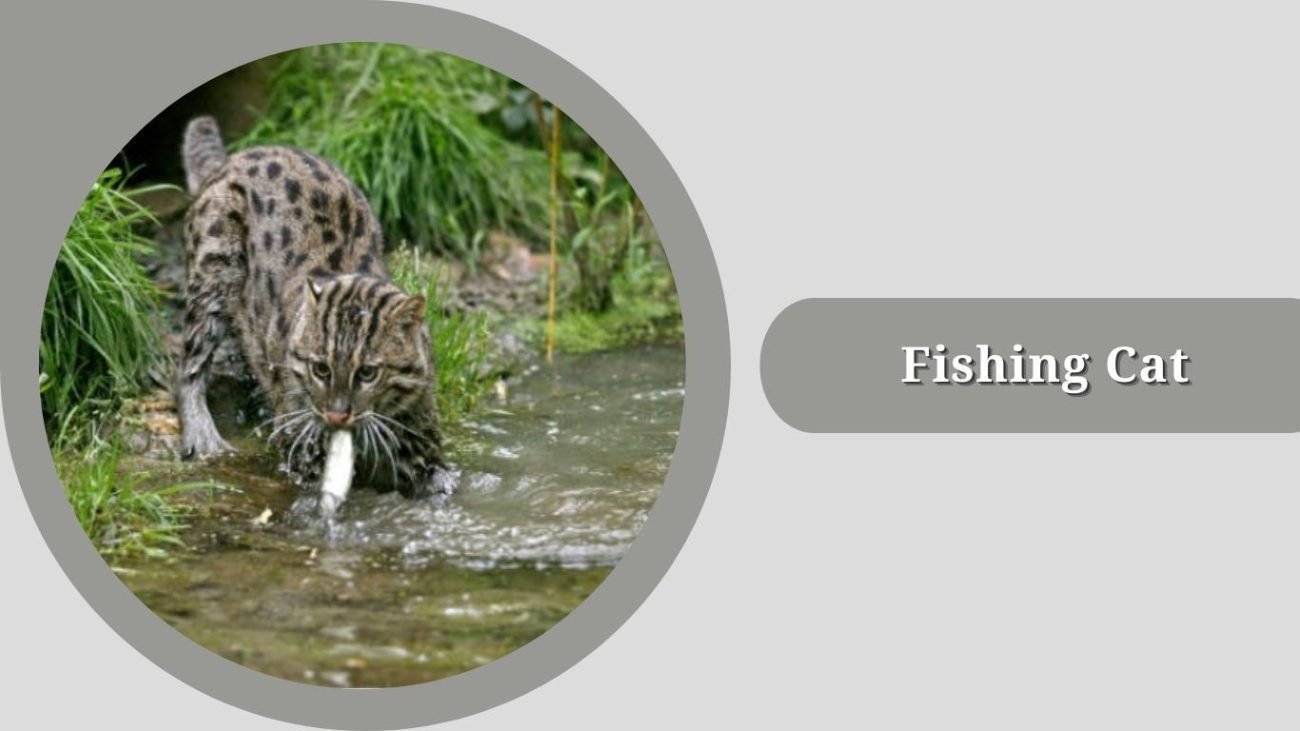
The fishing cat is a unique wild cat specially adapted for life around water. It has a stocky build, short legs, and partially webbed feet that make it an excellent swimmer. Unlike most cats, it willingly enters water to hunt fish and other aquatic animals.
Identification
- Medium-sized, stocky body with short legs
- Grayish coat with dark spots and stripes
- Flattened head with small ears
- Partially webbed toes
- Thick, short tail
Habitat and Distribution
Fishing cats live in South and Southeast Asia, especially around wetlands, mangroves, rivers, and swamps. They depend heavily on healthy freshwater and coastal ecosystems.
Diet and Hunting Behavior
Fishing cats mainly eat fish, frogs, crabs, and other aquatic animals, but they also hunt birds and small mammals. They often sit quietly by the water’s edge and scoop fish out with their paws or dive in to catch prey.
Behavior and Life Cycle
Fishing cats are mostly solitary and active at night. Females give birth to one to four kittens in dense reed beds or hollow trees. Kittens stay with their mother for several months. In the wild, fishing cats can live around 10–12 years.
21. Leopard Cat (Prionailurus bengalensis)
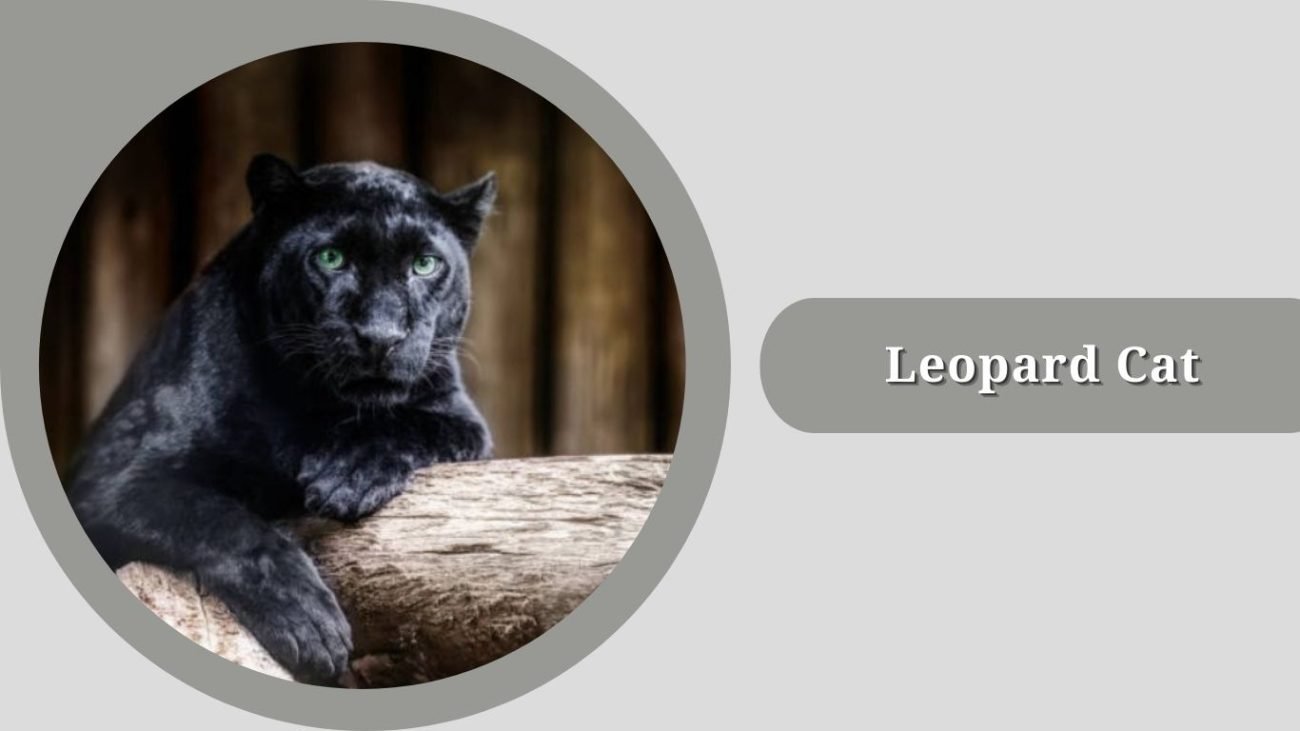
The leopard cat is a small, agile wild cat with a beautiful spotted coat, resembling a miniature leopard. It is one of the most widespread small wild cats in Asia and is highly adaptable to different environments.
Identification
- Small, slender body with long legs
- Yellowish to gray coat covered in black spots
- White underside and throat
- Long tail with dark rings
- Relatively large eyes and rounded ears
Habitat and Distribution
Leopard cats are found across South, East, and Southeast Asia. They live in tropical forests, temperate woodlands, grasslands, and even agricultural areas near human settlements.
Diet and Hunting Behavior
They hunt rodents, birds, reptiles, amphibians, and insects. Leopard cats are skilled climbers and swimmers and often hunt at night, using stealth and quick pounces to capture prey.
Behavior and Life Cycle
Leopard cats are solitary. Females usually give birth to one to three kittens in tree hollows or dense vegetation. The kittens remain with their mother for several months while learning to hunt. In the wild, leopard cats can live about 10–13 years.
22. Flat-headed Cat (Prionailurus planiceps)
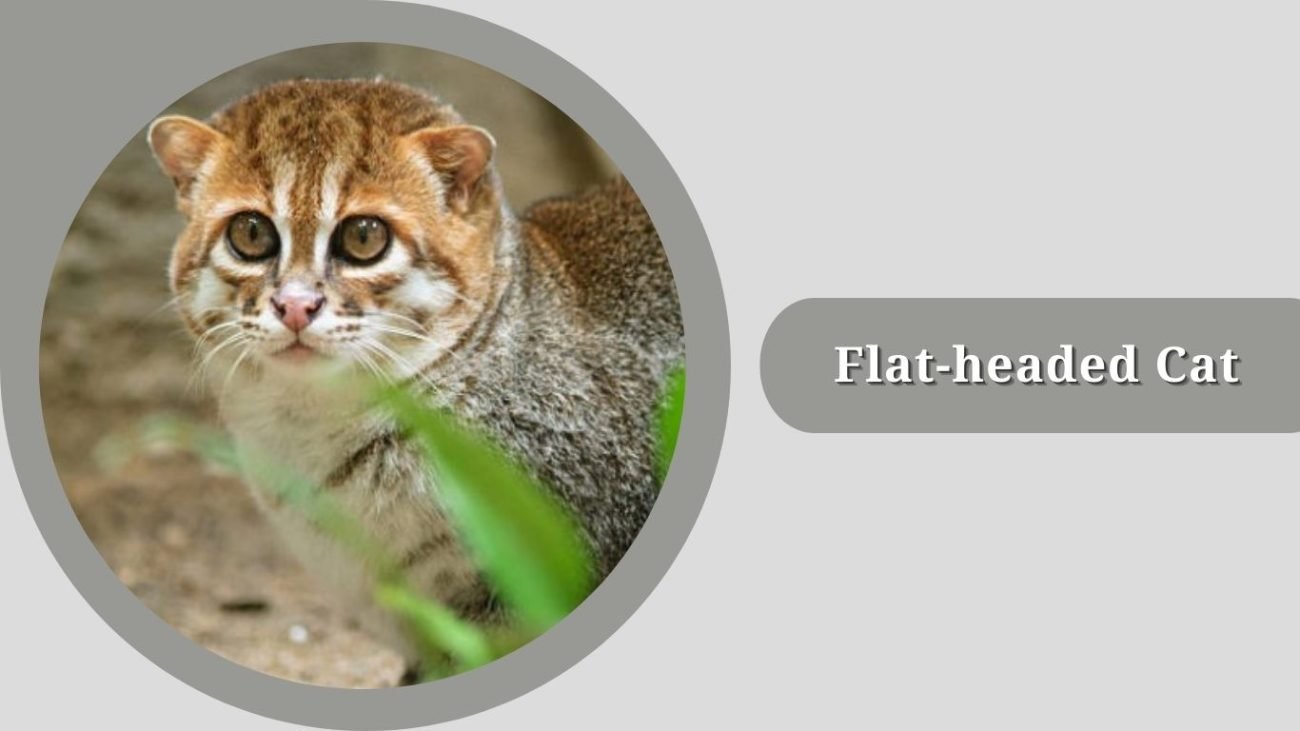
The flat-headed cat is one of the rarest and most unusual wild cats. It has a low, elongated head, small ears, and eyes positioned forward, giving it excellent vision for catching prey near water. This cat is strongly adapted to wetland environments.
Identification
- Small, slim body with short legs
- Distinctively flat, elongated head
- Reddish-brown coat with lighter underparts
- Small rounded ears set low on the head
- Long, narrow tail
Habitat and Distribution
Flat-headed cats are found in Malaysia, Thailand, and the islands of Borneo and Sumatra. They live near rivers, peat swamps, marshes, and lowland rainforests, always close to freshwater.
Diet and Hunting Behavior
They mainly hunt fish, frogs, crustaceans, and small mammals. Flat-headed cats are excellent swimmers and often scoop prey from the water. Their sharp teeth are well suited for gripping slippery animals.
Behavior and Life Cycle
These cats are solitary and very secretive. Females give birth to one or two kittens in hidden nests near water. Very little is known about their behavior, but in the wild they are believed to live around 10–12 years.
23. Rusty-spotted Cat (Prionailurus rubiginosus)
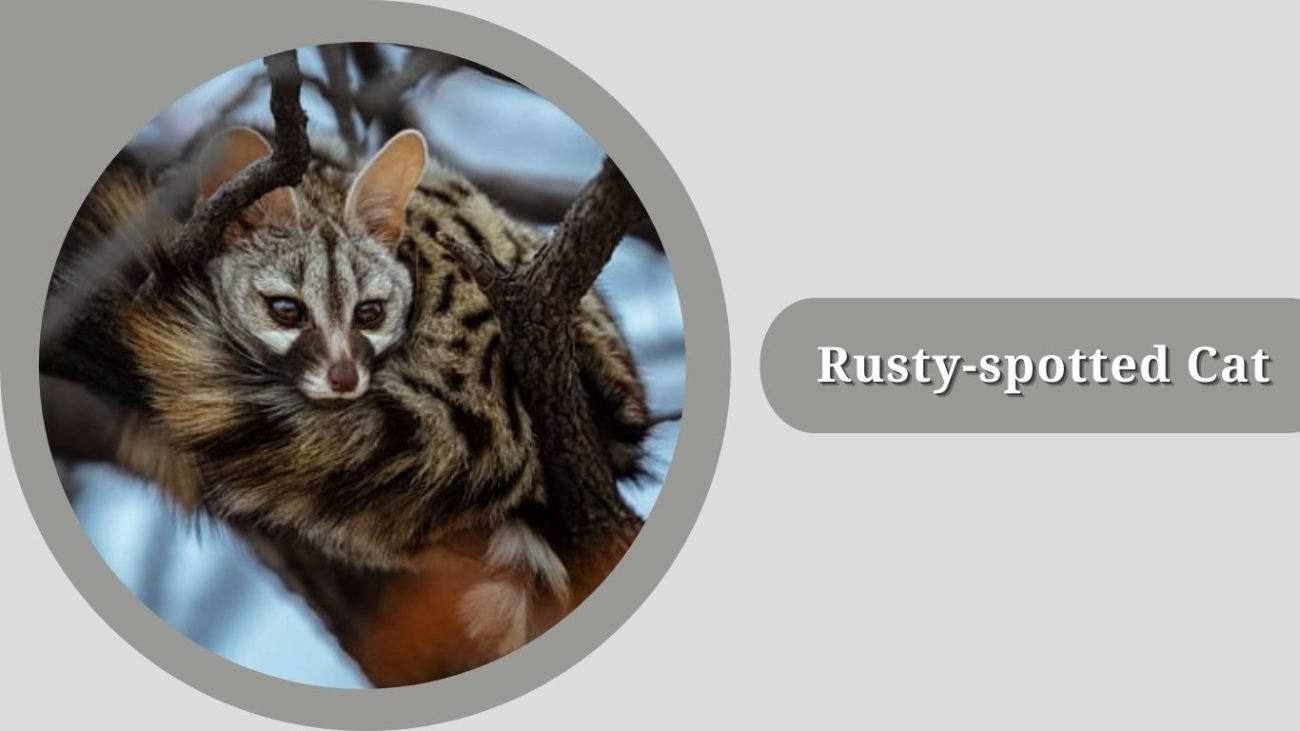
The rusty-spotted cat is one of the smallest wild cats in the world. Despite its tiny size, it is a fierce and agile hunter. Its coat is covered with rusty-colored spots, giving it a delicate but striking appearance.
Identification
- Very small, slender body
- Grayish-brown coat with rusty-red spots
- White underside and throat
- Large eyes relative to head size
- Long tail with faint markings
Habitat and Distribution
Rusty-spotted cats live mainly in India and Sri Lanka. They inhabit dry forests, scrublands, grasslands, and sometimes rocky areas or farmland edges.
Diet and Hunting Behavior
They feed on rodents, birds, lizards, frogs, and insects. Rusty-spotted cats are excellent climbers and often hunt in trees as well as on the ground, mostly at night.
Behavior and Life Cycle
These cats are solitary and nocturnal. Females usually give birth to one or two kittens in tree hollows or rock crevices. In the wild, rusty-spotted cats may live around 8–12 years.
24. Sand Cat (Felis margarita)
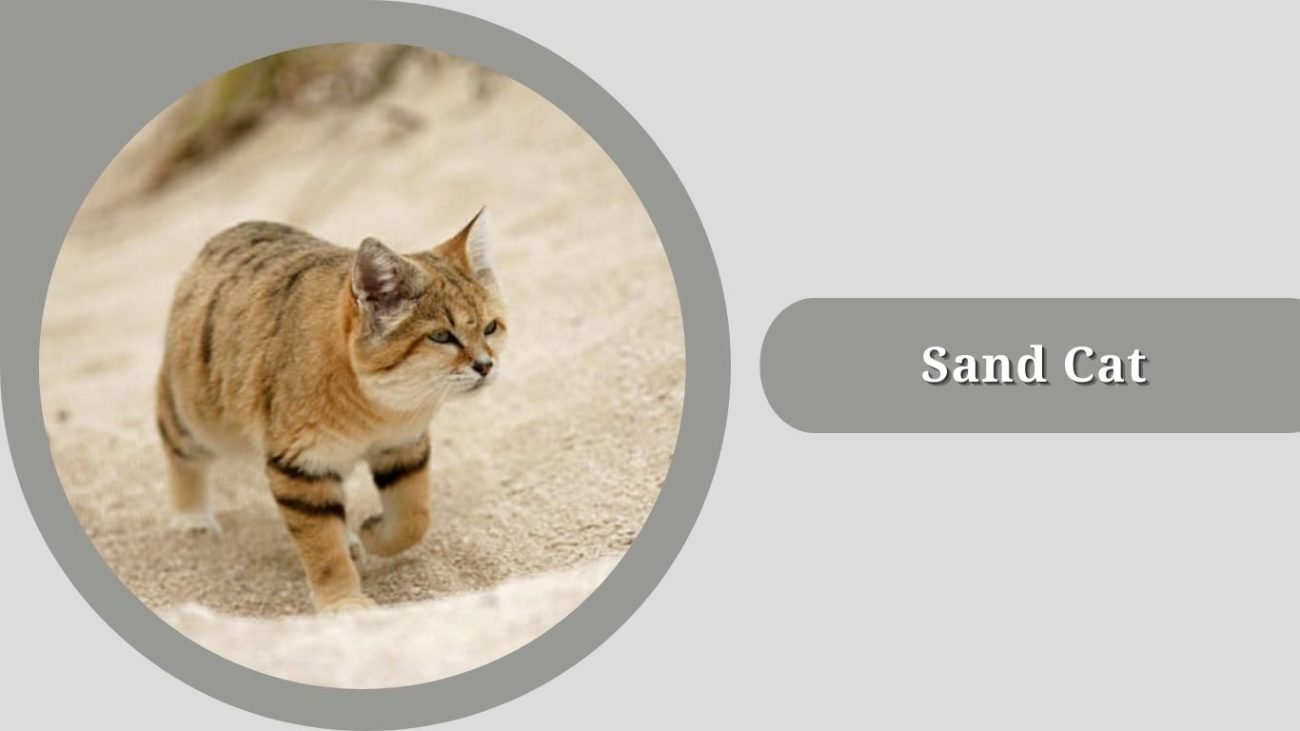
The sand cat is a small wild cat perfectly adapted to desert life. It can survive in some of the hottest and driest places on Earth, going long periods without direct water. Its thick fur and fur-covered paws protect it from extreme temperatures and hot sand.
Identification
- Small, compact body with short legs
- Pale sandy or light gray coat
- Very large, wide-set ears
- Fur-covered paw pads for insulation
- Thick tail with dark rings near the tip
Habitat and Distribution
Sand cats live in deserts of North Africa, the Middle East, and Central Asia. They inhabit sandy and stony deserts, dunes, and arid plains where vegetation is sparse.
Diet and Hunting Behavior
They hunt rodents, birds, reptiles, and insects. Sand cats are excellent diggers and often dig prey out of burrows. They hunt mostly at night to avoid extreme daytime heat.
Behavior and Life Cycle
Sand cats are solitary and nocturnal. Females give birth to two to four kittens in underground dens. Kittens grow quickly and begin hunting within a few months. In the wild, sand cats can live around 10–13 years.
25. Black-footed Cat (Felis nigripes)
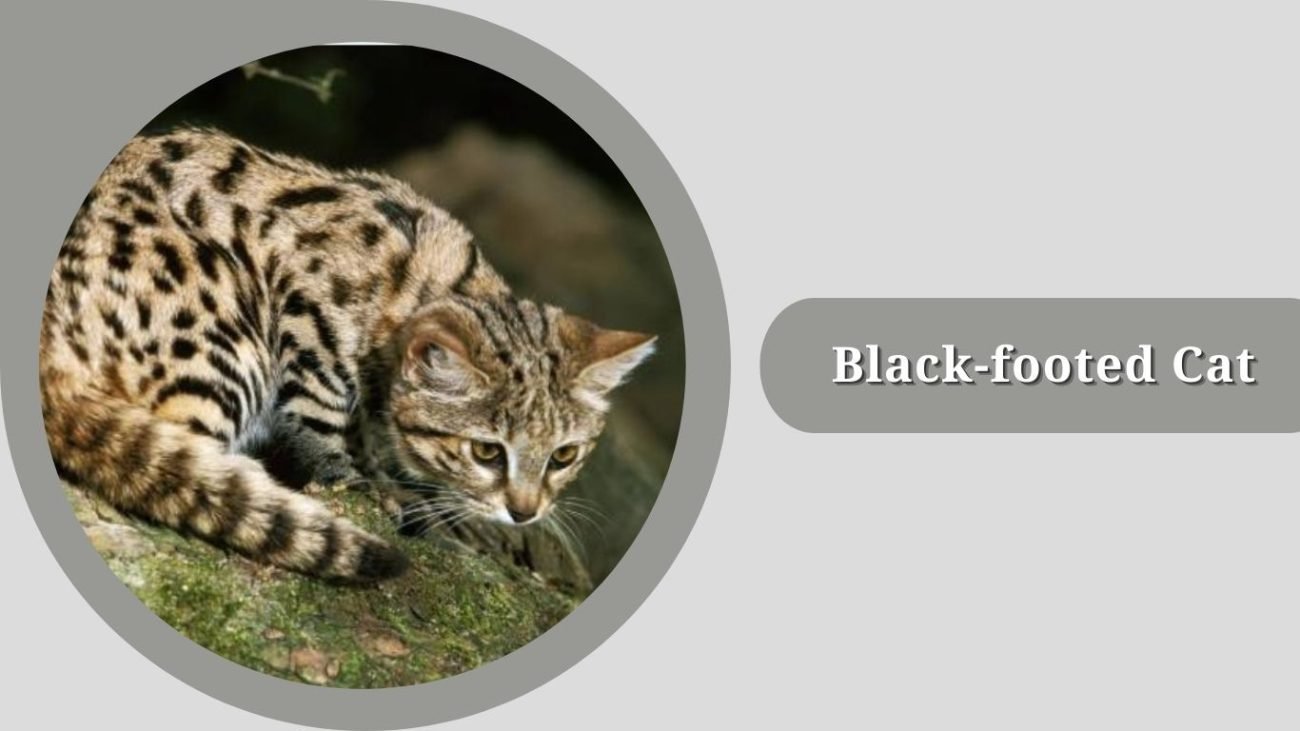
The black-footed cat is one of Africa’s smallest wild cats but also one of the deadliest hunters. Despite its tiny size, it has an extremely high hunting success rate and is capable of killing prey larger than itself.
Identification
- Very small, stocky body
- Tawny coat with dark spots and stripes
- Distinct black or dark brown soles on the feet
- Large eyes and rounded ears
- Short tail with dark rings
Habitat and Distribution
Black-footed cats are found in southern Africa. They prefer dry savannas, grasslands, and semi-desert regions with low vegetation.
Diet and Hunting Behavior
They hunt rodents, birds, insects, and small reptiles. Black-footed cats are relentless nocturnal hunters, making many kills in a single night and using both stalking and rapid chasing.
Behavior and Life Cycle
Black-footed cats are solitary and very secretive. Females give birth to one or two kittens in burrows or dense grass. In the wild, they usually live around 7–10 years.
26. Pallas’s Cat / Manul (Otocolobus manul)
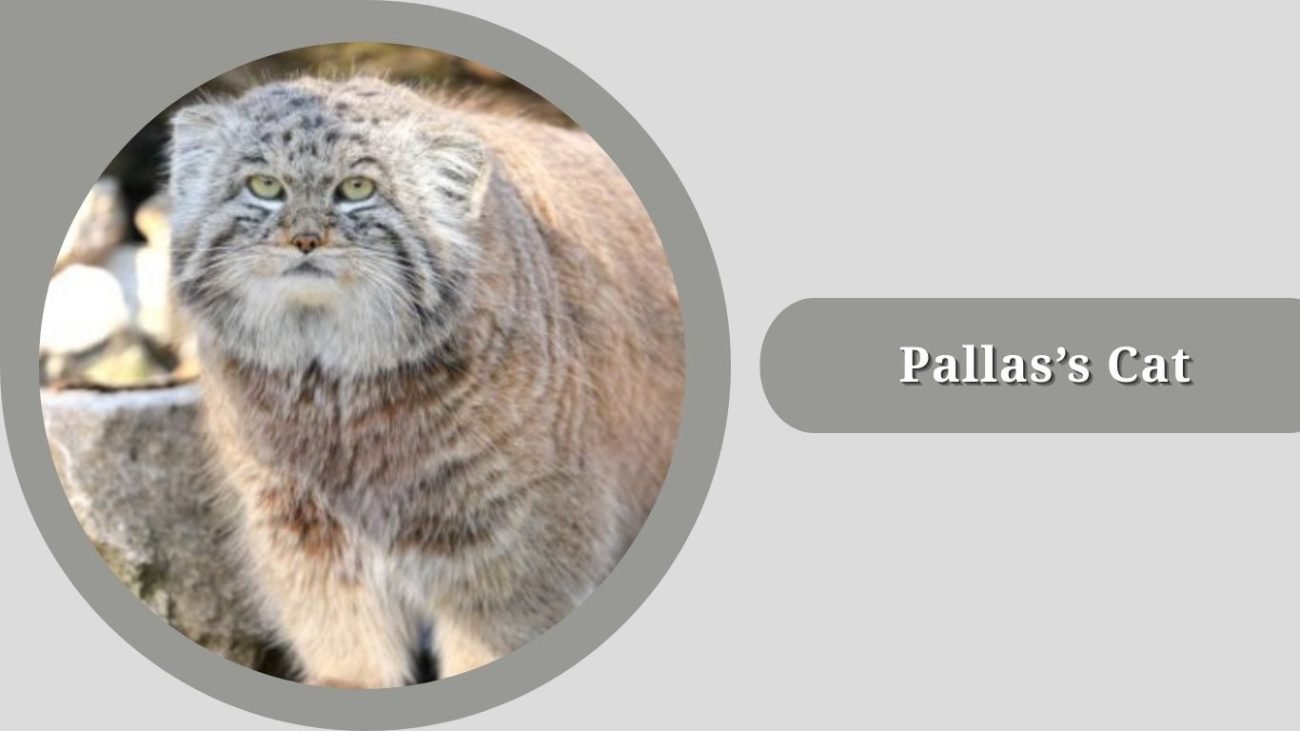
Pallas’s cat, also known as the manul, is a small wild cat with a unique flat face and extremely thick fur. It looks larger than it really is because of its dense coat, which helps it survive the harsh, cold climates of Central Asia.
Identification
- Small, stocky body with very dense fur
- Flat, broad face with low-set ears
- Gray to pale brown coat with faint stripes
- Thick, bushy tail with dark rings
- Short legs and compact build
Habitat and Distribution
Pallas’s cats live across Mongolia, China, Russia, and Central Asia. They prefer cold, rocky grasslands, steppe, and mountain slopes where they can hide among rocks and burrows.
Diet and Hunting Behavior
They mainly hunt pikas, rodents, birds, and insects. Pallas’s cats are ambush predators that rely on camouflage and patience rather than speed.
Behavior and Life Cycle
These cats are solitary and territorial. Females give birth to two to six kittens in rock crevices or abandoned burrows. In the wild, Pallas’s cats usually live around 8–11 years.
27. Andean Mountain Cat (Leopardus jacobita)
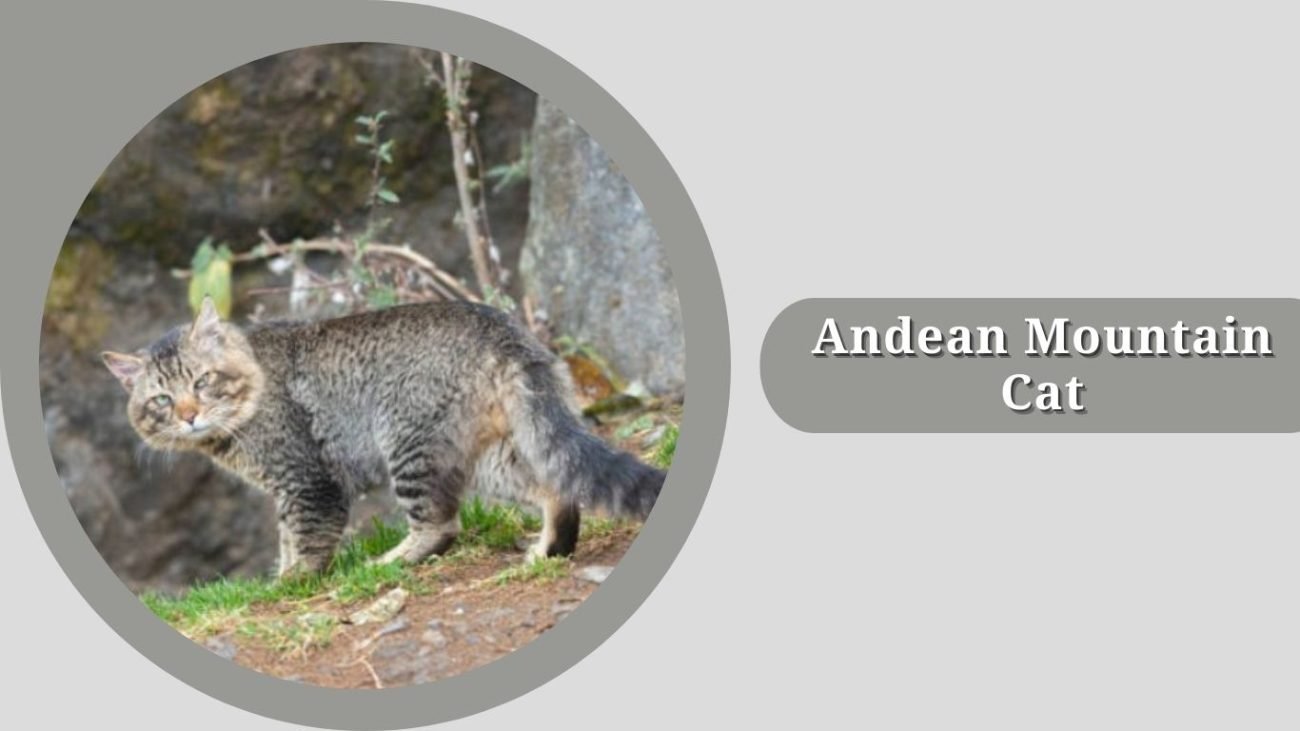
The Andean mountain cat is one of the rarest wild cats in the world. It lives in high-altitude regions of the Andes Mountains and is specially adapted to cold, dry environments with sparse vegetation.
Identification
- Small to medium-sized body with thick fur
- Pale gray coat with dark stripes and spots
- Very long, bushy tail with broad dark rings
- Rounded ears and short muzzle
- Strong hind legs for rocky terrain
Habitat and Distribution
This species is found in the Andes of Argentina, Bolivia, Chile, and Peru. It inhabits rocky, arid mountain slopes and high plateaus, often above 3,000 meters.
Diet and Hunting Behavior
Andean mountain cats mainly hunt mountain rodents such as viscachas, along with birds and reptiles. They stalk prey quietly among rocks before making short, sudden attacks.
Behavior and Life Cycle
Very little is known about their behavior. They are believed to be solitary. Females likely give birth to one or two kittens in rocky dens. In the wild, their lifespan is estimated to be around 9–13 years.
28. Margay (Leopardus wiedii)
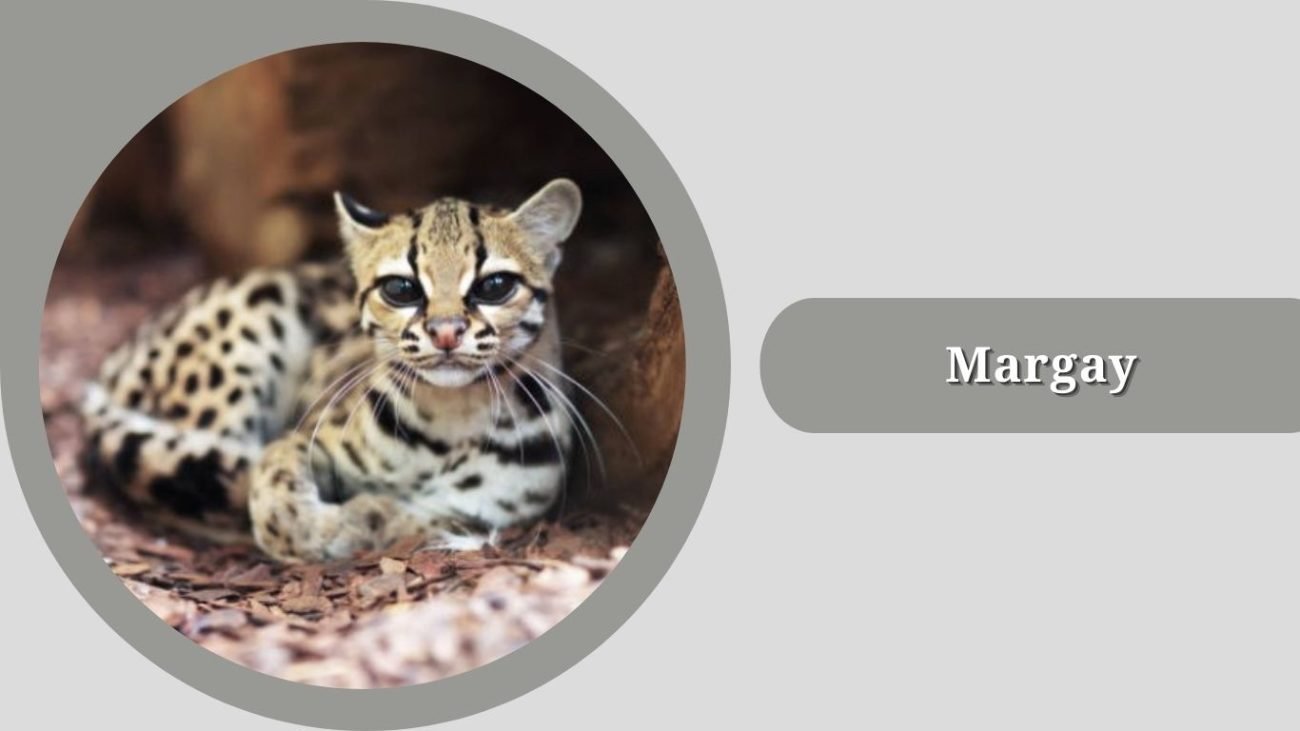
The margay is a small, beautifully patterned wild cat known for its extraordinary climbing ability. It can rotate its ankles almost 180 degrees, allowing it to climb down trees headfirst and move easily through forest canopies, where it spends much of its time.
Identification
- Small, slender body with very long tail
- Large eyes adapted for night vision
- Yellowish-brown coat with dark rosettes and spots
- Rounded ears and short muzzle
- Extremely flexible ankles for tree climbing
Habitat and Distribution
Margays live in Central and South America, from Mexico to Brazil. They prefer dense tropical rainforests and cloud forests, rarely venturing into open habitats.
Diet and Hunting Behavior
They hunt birds, monkeys, squirrels, reptiles, and small mammals. Margays are highly arboreal and often hunt in trees, leaping between branches to surprise prey.
Behavior and Life Cycle
Margays are solitary and nocturnal. Females usually give birth to one kitten, rarely two, in tree hollows or dense vegetation. In the wild, margays can live around 10–14 years.
29. Ocelot (Leopardus pardalis)
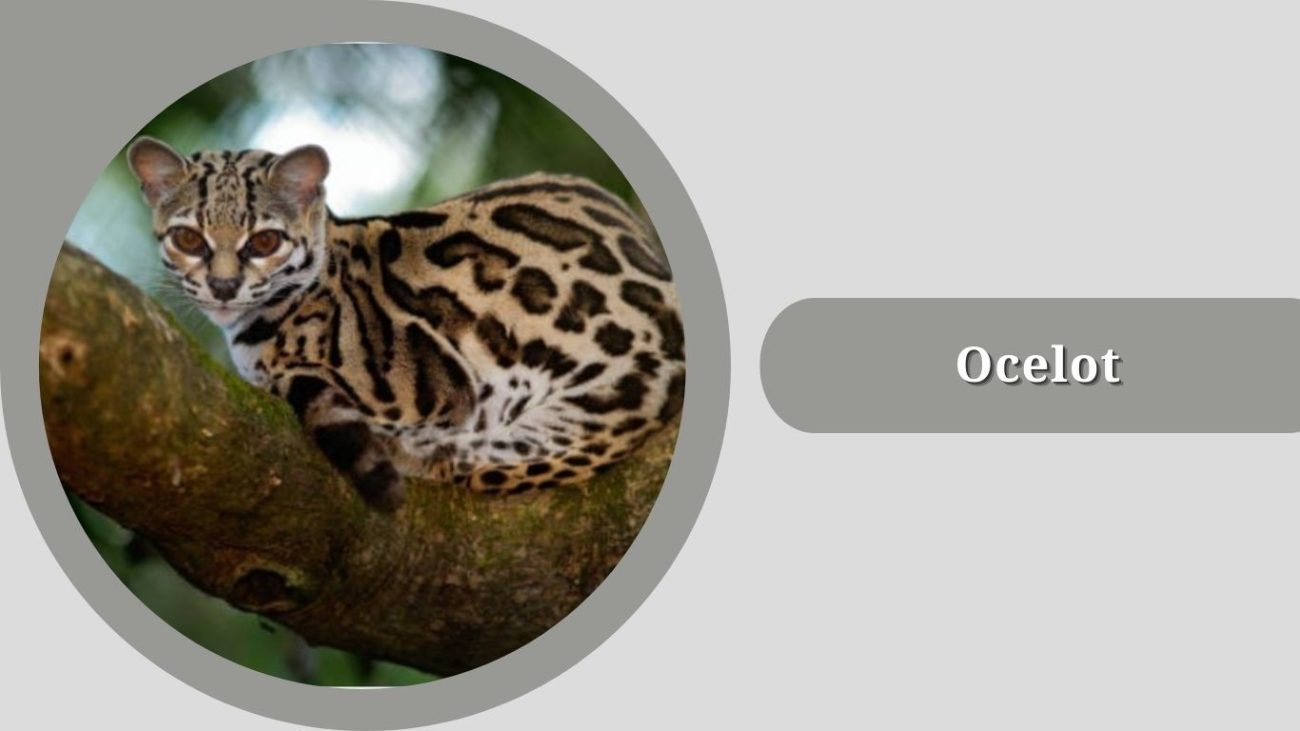
The ocelot is a medium-sized wild cat with a striking coat of bold stripes and rosettes. It is more ground-dwelling than the margay but is still an excellent climber and swimmer. Ocelots are secretive and mostly active at night.
Identification
- Medium-sized, muscular body
- Cream to golden coat with bold black rosettes and stripes
- White underside and inner limbs
- Long tail with dark bands
- Large eyes and rounded ears
Habitat and Distribution
Ocelots range from southern Texas through Central America and into South America. They inhabit rainforests, mangroves, dry forests, and thorn scrub, preferring dense cover.
Diet and Hunting Behavior
Ocelots eat rodents, birds, reptiles, fish, and small mammals. They hunt mainly at night, stalking quietly before pouncing. They are skilled climbers and sometimes hunt in trees.
Behavior and Life Cycle
Ocelots are solitary and territorial. Females usually give birth to one or two kittens in hidden dens. Kittens stay with their mother for up to two years. In the wild, ocelots can live around 12–15 years.
30. Oncilla / Little Spotted Cat (Leopardus tigrinus)
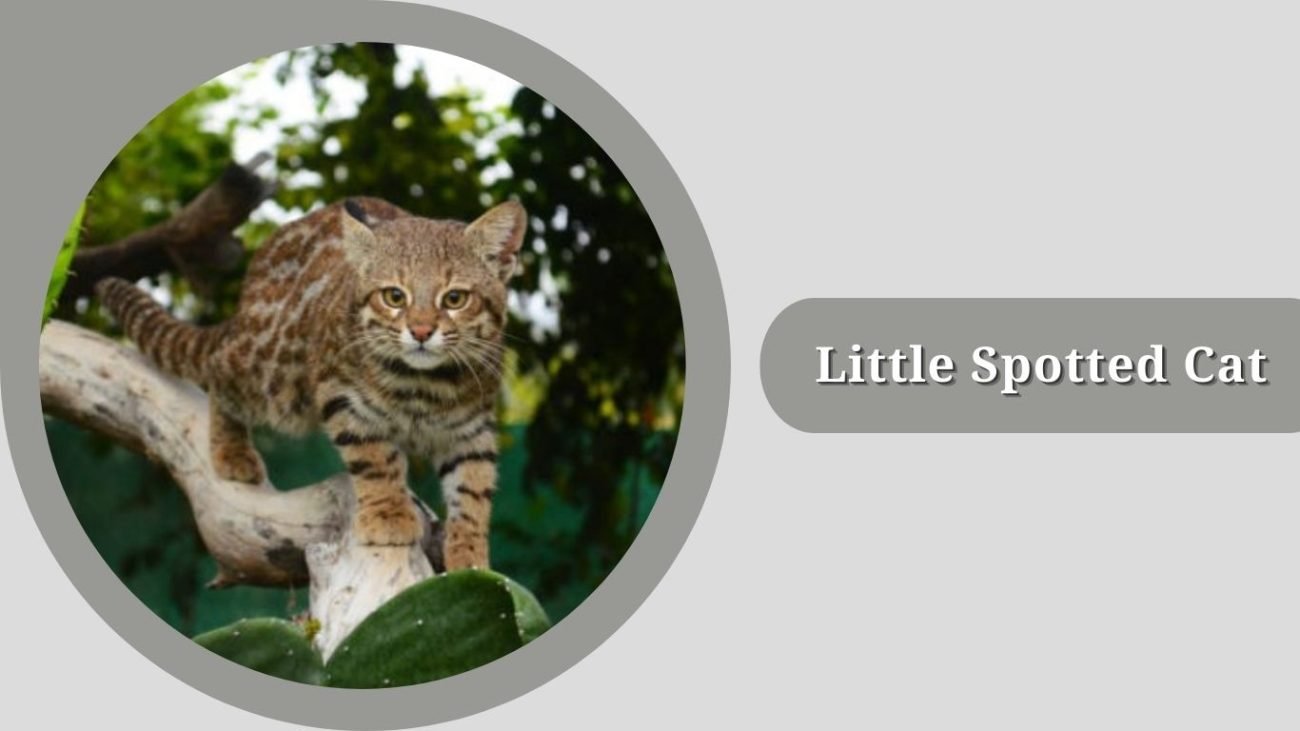
The oncilla is a small, delicate-looking wild cat with a coat covered in fine rosettes and spots. It closely resembles a miniature ocelot but is more slender and secretive. This cat is mainly nocturnal and spends much of its life hidden in dense vegetation.
Identification
- Small, slim body with long legs
- Yellowish to brown coat with small rosettes and spots
- White underside and chest
- Long tail with dark rings
- Large eyes and rounded ears
Habitat and Distribution
Oncillas live in Central America and northern South America. They prefer cloud forests, tropical rainforests, and montane forests, often at higher elevations.
Diet and Hunting Behavior
They hunt small mammals, birds, lizards, frogs, and insects. Oncillas rely on stealth and quick pounces, hunting both on the ground and in trees, mainly at night.
Behavior and Life Cycle
Oncillas are solitary and elusive. Females usually give birth to one or two kittens in hidden dens. In the wild, they are believed to live around 9–13 years.
31. Pampas Cat (Leopardus colocola complex)
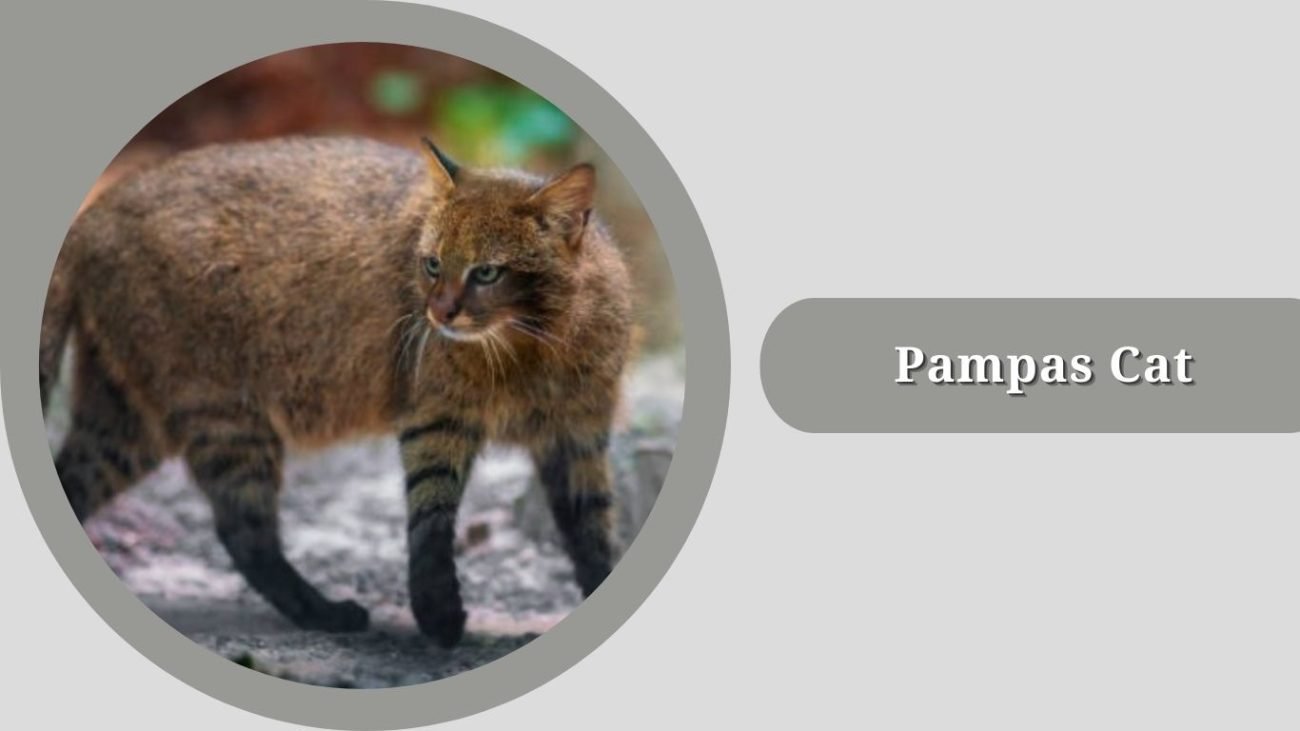
The Pampas cat is a small wild cat native to South America with highly variable coat patterns and colors. It was long thought to be a single species, but scientists now recognize several closely related forms within the Pampas cat group.
Identification
- Small to medium-sized body
- Coat varies from gray and yellowish to reddish-brown
- May have stripes, spots, or nearly plain fur
- Short, thick tail with dark rings
- Rounded ears with darker backs
Habitat and Distribution
Pampas cats live across much of South America, from grasslands and scrub to forests and mountain slopes. They are especially common in open habitats such as pampas grasslands and dry shrublands.
Diet and Hunting Behavior
They hunt rodents, birds, reptiles, and insects. Pampas cats stalk prey quietly through grass and low vegetation, using sudden attacks rather than long pursuits.
Behavior and Life Cycle
These cats are solitary and mostly nocturnal. Females usually give birth to one to three kittens in hidden dens. In the wild, Pampas cats may live around 9–12 years.
32. Geoffroy’s Cat (Leopardus geoffroyi)
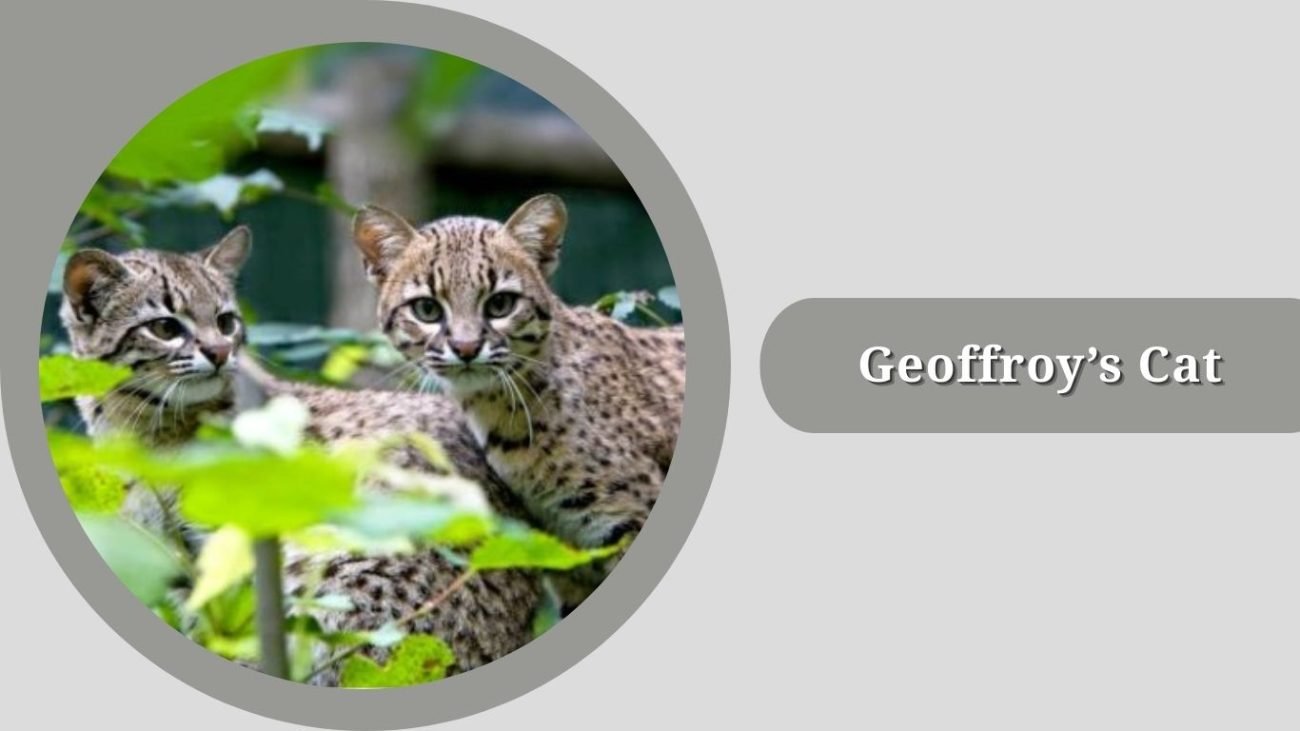
Geoffroy’s cat is a small wild cat of South America known for its bold black spots and adaptability to different habitats. It is a strong climber and swimmer and is often seen standing on its hind legs to scan surroundings.
Identification
- Small, compact body with relatively short legs
- Silver-gray to yellowish coat with solid black spots
- White underside and throat
- Short tail with dark bands
- Rounded ears with black backs and white spots
Habitat and Distribution
This species lives across southern South America, including Argentina, Chile, Bolivia, Brazil, Paraguay, and Uruguay. It inhabits grasslands, savannas, open woodlands, scrub, and even mountainous areas.
Diet and Hunting Behavior
Geoffroy’s cats hunt rodents, birds, reptiles, insects, and occasionally fish. They are flexible hunters, active both day and night, and may climb trees or hunt on the ground.
Behavior and Life Cycle
Geoffroy’s cats are solitary and territorial. Females give birth to one to three kittens in tree hollows or dense vegetation. In the wild, they usually live around 10–14 years.
33. Kodkod (Leopardus guigna)
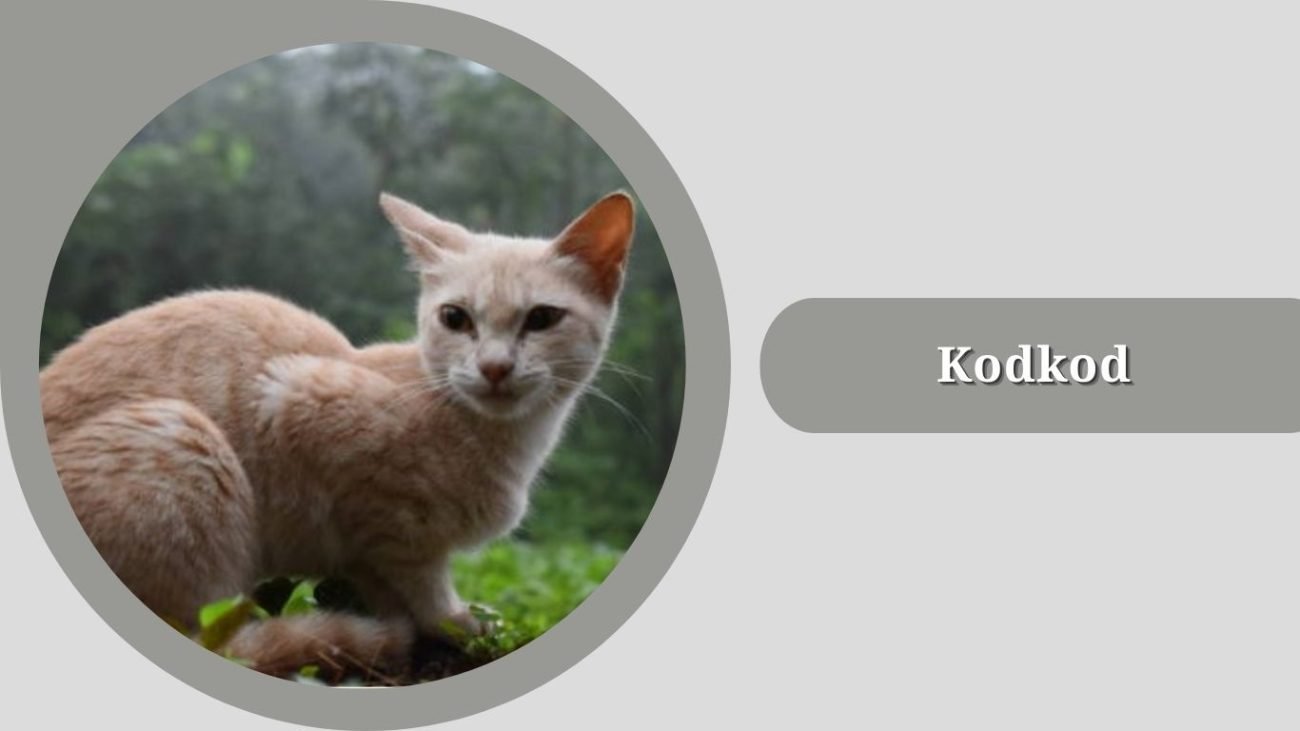
The kodkod is the smallest wild cat in the Americas and one of the smallest in the world. It is secretive and mainly nocturnal, with a beautiful spotted coat and excellent climbing skills.
Identification
- Very small, compact body
- Thick grayish-brown coat with round black spots
- Large head relative to body size
- Short, thick tail with dark rings
- Rounded ears with white markings
Habitat and Distribution
Kodkods are found mainly in southern Chile and Argentina. They inhabit temperate rainforests, bamboo thickets, and dense woodlands.
Diet and Hunting Behavior
They feed on rodents, birds, reptiles, and insects. Kodkods are skilled climbers and often hunt in trees, as well as on the forest floor, mostly at night.
Behavior and Life Cycle
Kodkods are solitary and elusive. Females usually give birth to one or two kittens in hollow trees or dense vegetation. In the wild, kodkods may live around 10–12 years.
34. Marbled Cat (Pardofelis marmorata)
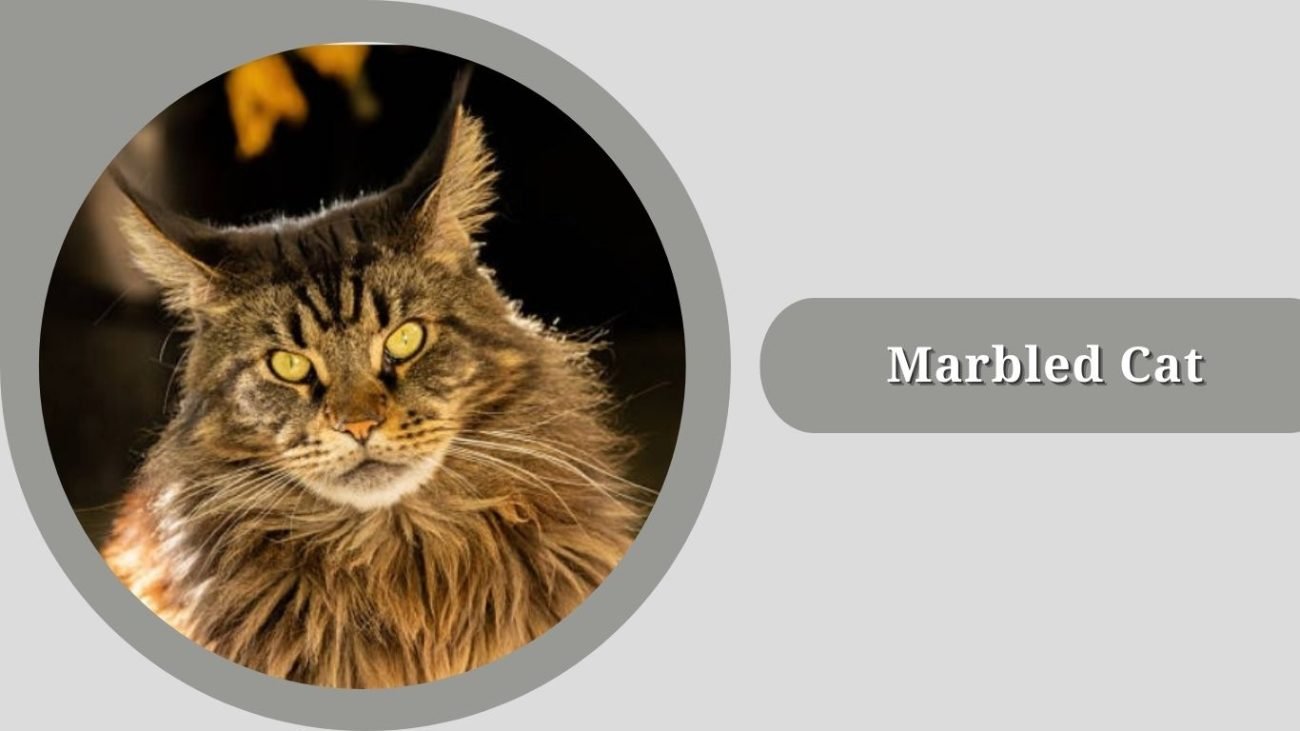
The marbled cat is a beautifully patterned wild cat that looks somewhat like a small clouded leopard. It is highly arboreal and extremely agile, spending much of its time in trees. Its long tail and flexible body help it move easily through forest canopies.
Identification
- Medium-small, slender body
- Pale gray to yellowish coat with large marbled blotches
- Very long, bushy tail for balance
- Rounded ears and short muzzle
- Large eyes adapted for forest light
Habitat and Distribution
Marbled cats are found in South and Southeast Asia, including the Himalayas, southern China, and Southeast Asian forests. They inhabit tropical rainforests, evergreen forests, and hill forests.
Diet and Hunting Behavior
They hunt birds, squirrels, rodents, and other small mammals. Marbled cats are excellent climbers and often hunt in trees, stalking prey along branches.
Behavior and Life Cycle
Marbled cats are solitary and rarely seen. Females give birth to one or two kittens in tree hollows or dense vegetation. In the wild, they are thought to live around 10–13 years.
35. Bay Cat (Catopuma badia)
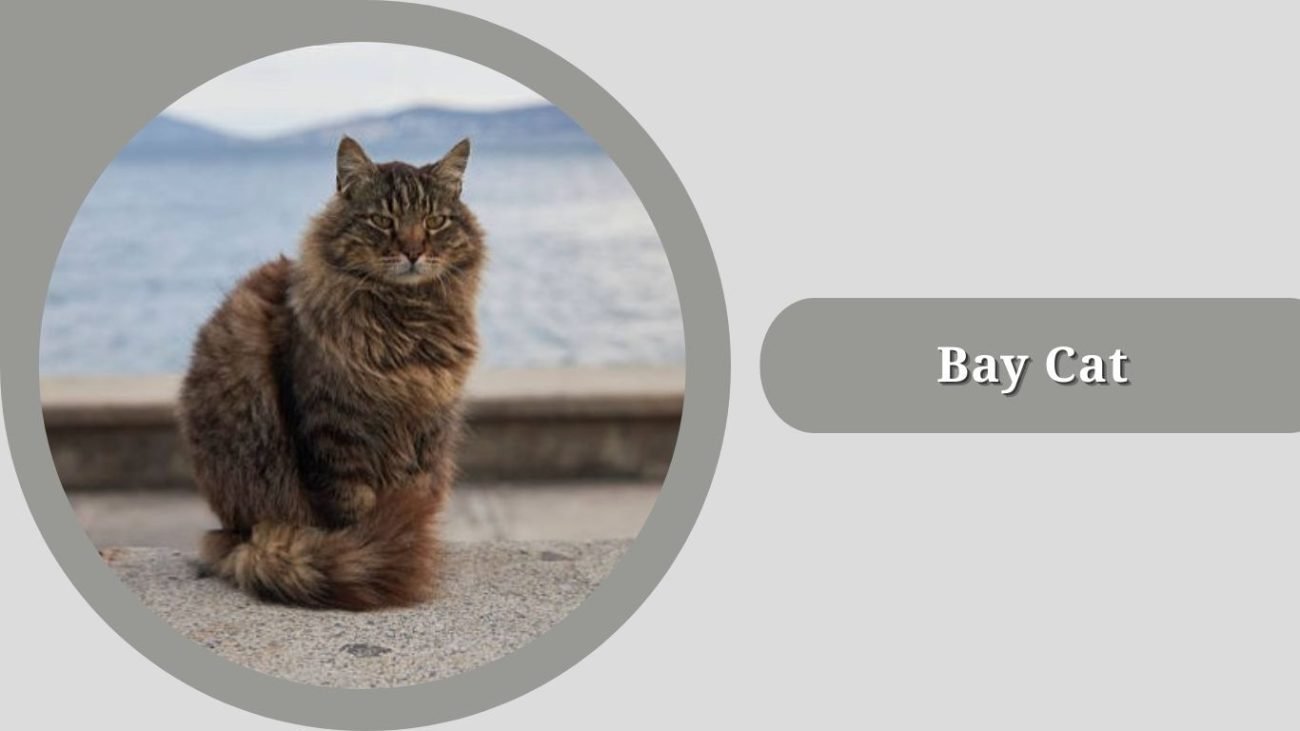
The bay cat is one of the least known wild cats in the world. Endemic to the island of Borneo, it is extremely rare and secretive. Its rich reddish-brown coat makes it very distinctive among wild cats.
Identification
- Medium-small body with slender build
- Rich chestnut-red to grayish coat
- Long tail, often lighter underneath
- Rounded ears
- White or pale markings on the face
Habitat and Distribution
Bay cats live only on the island of Borneo. They inhabit tropical rainforests, swamp forests, and remote mountainous regions.
Diet and Hunting Behavior
Very little is known about their natural diet, but they are believed to hunt small mammals, birds, and possibly reptiles. They are thought to be stealthy forest hunters.
Behavior and Life Cycle
Almost nothing is known about their breeding in the wild. They are assumed to be solitary. Based on related species, their lifespan is estimated to be around 10–12 years