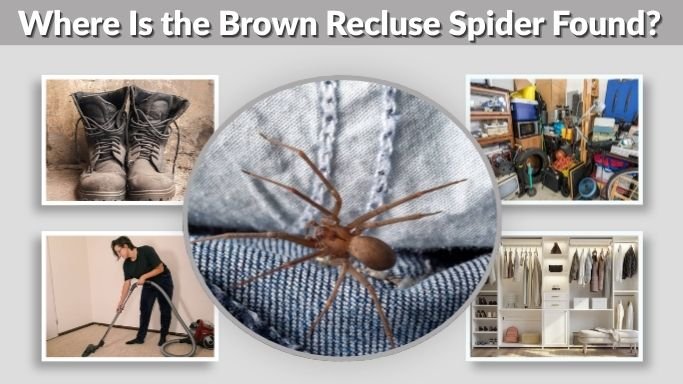
The brown recluse spider is mostly found in the south-central and Midwestern United States. It prefers warm, dry, quiet places where it can hide during the day and hunt at night. Indoors, it may live in basements, attics, closets, garages, storage boxes, shoes, and behind furniture. Outdoors, it hides under rocks, logs, bark, boards, and debris. Many people report brown recluses in places where they are not truly established, so location is one of the most important clues when identifying this spider.
Where Is the Brown Recluse Spider Found in the United States?
The brown recluse spider has a limited natural range. It is not found everywhere in the United States, even though many people believe it is common across the whole country. Its strongest populations are in the central and south-central states, where the climate and habitat suit its survival.
Main U.S. Range
The brown recluse is most strongly associated with the south-central and Midwestern United States. It is commonly connected with states such as Missouri, Kansas, Oklahoma, Arkansas, Texas, Tennessee, Kentucky, Louisiana, Mississippi, Alabama, Illinois, Indiana, Iowa, Nebraska, Ohio, and Georgia.
However, its abundance can vary within each state. It may be common in one part of a state and rare or absent in another. For example, in some border states, brown recluse spiders are more common in western or southern regions than in eastern or northern areas.
This is why a state name alone is not always enough. The exact region, habitat, and repeated sightings matter more than one single spider report.
Why Location Matters
Location is one of the easiest ways to avoid misidentification. Many harmless brown spiders are mistaken for brown recluses. If you live far outside the known range, a brown spider in your home is more likely to be a different species.
Brown recluses can sometimes be transported in boxes, furniture, luggage, or stored items. But accidental transport does not always mean a breeding population has become established. In many areas outside the main range, isolated spiders may appear, but long-term infestations are uncommon.
Brown Recluse Spider Distribution by Region
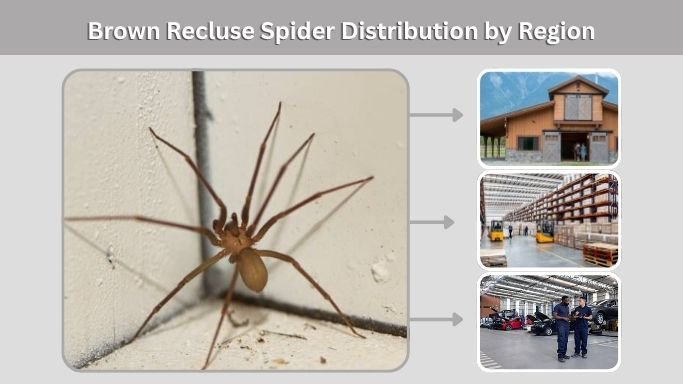
Brown recluse distribution is not random. These spiders prefer regions with suitable temperature, shelter, and indoor hiding opportunities. Their range is centered more in the middle of the country than along the far coasts.
Central and South-Central States
The strongest brown recluse populations are usually found in central and south-central states. Missouri, Arkansas, Kansas, Oklahoma, and parts of Texas are often considered core areas. In these places, brown recluses may be found inside homes, barns, sheds, warehouses, garages, and other quiet structures.
They may also occur outdoors in protected natural hiding places. However, people most often notice them indoors because homes and buildings provide dry shelter, insects to eat, and many hiding spots.
Midwest and Border Areas
Brown recluses are also found in parts of the Midwest. States such as Illinois, Indiana, Iowa, Nebraska, Ohio, and Kentucky may have established populations, especially in areas closer to the central part of the range.
In these regions, infestations are more likely in undisturbed storage areas. Homes with basements, old boxes, cluttered closets, and unused rooms may provide suitable shelter. Still, not every brown spider in these states is a brown recluse.
Southern States
Brown recluse spiders also occur in several southern states, including Tennessee, Alabama, Mississippi, Louisiana, Georgia, Arkansas, and parts of Texas. Warm temperatures can support their activity, and they may survive well in indoor spaces.
However, they are not equally common across the entire South. Some southern areas have other recluse species or many look-alike spiders. This can make identification confusing without checking physical features and range together.
Are Brown Recluse Spiders Found Outside Their Normal Range?
Brown recluse spiders are often reported far outside their established range. Many of these reports are caused by misidentification. Other brown spiders may look similar at first glance, especially to people who only know about the violin-shaped mark.
Accidental Transport
A brown recluse may occasionally travel outside its range in moving boxes, furniture, storage containers, or shipments. This can happen when people move from a state where brown recluses are common to a new location.
However, one transported spider does not mean the species has become common in that area. For an infestation to become established, the spiders need suitable conditions, food, shelter, and multiple individuals that can reproduce.
Misidentified Spiders
Many spiders are mistaken for brown recluses. Wolf spiders, cellar spiders, grass spiders, southern house spiders, and common house spiders may all be blamed. Some are brown, some have markings, and some appear indoors.
This is why range is so important. If the spider is found far outside the normal brown recluse region, identification should be checked carefully. A clear photo or specimen can help an extension office, pest expert, or spider specialist confirm it.
Where Do Brown Recluse Spiders Live Indoors?
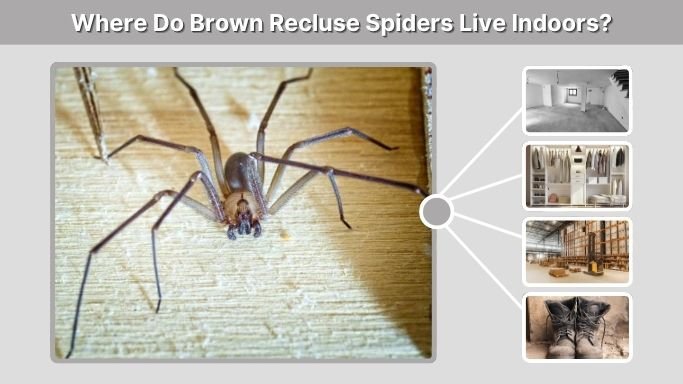
Brown recluse spiders do very well in indoor spaces because buildings offer dry, dark, and quiet hiding places. They are not usually found in bright, busy areas during the day. They prefer places where they are rarely disturbed.
Common Indoor Hiding Places
Brown recluse spiders may hide in many indoor areas, including:
- Basements
- Attics
- Garages
- Closets
- Storage rooms
- Crawl spaces
- Cardboard boxes
- Shoes and boots
- Folded clothing
- Bedding stored for long periods
- Behind furniture
- Under shelves
- Inside wall voids
- Around baseboards
- Sheds and barns
They are called “recluse” spiders because they avoid activity and prefer hiding. People are more likely to encounter them when moving stored items, putting on unused shoes, or cleaning cluttered spaces.
Why They Like Storage Areas
Storage areas are ideal for brown recluses because they are quiet and full of hiding spots. Cardboard boxes, old clothes, papers, furniture, and unused materials create small spaces where spiders can rest during the day.
These places may also attract insects, which provide food for the spiders. A cluttered basement or garage can support many small insects, and those insects may attract hunting spiders.
Where Are Brown Recluse Spiders Found Outdoors?
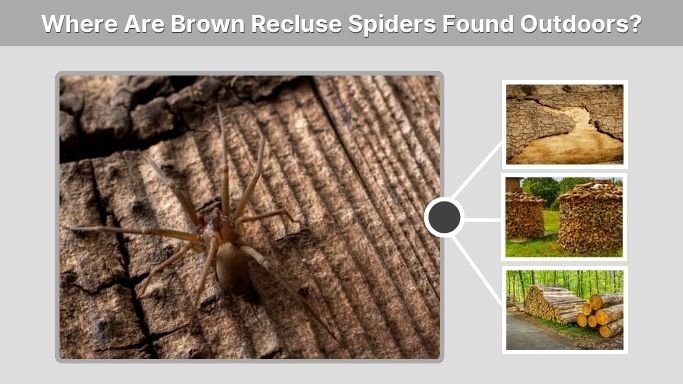
Brown recluse spiders can live outdoors, but they are often noticed less often outside because they hide well. Their outdoor habitats usually provide protection from sunlight, weather, and predators.
Outdoor Hiding Places
Outdoors, brown recluse spiders may be found under:
- Rocks
- Logs
- Tree bark
- Boards
- Firewood
- Leaf litter
- Old lumber
- Outdoor debris
- Sheds
- Barn materials
- Stored equipment
- Piles of bricks or stones
They prefer dry, sheltered locations rather than wet or exposed areas. If outdoor clutter is close to a house, spiders may eventually enter through gaps, cracks, vents, or doors.
Around Homes and Buildings
Brown recluses can live around the outside of homes, especially where materials are stacked and rarely moved. Firewood piles, old boards, garden debris, and storage sheds can create suitable hiding areas.
Keeping outdoor materials away from the foundation may reduce the chance of spiders entering the home. Sealing cracks, repairing door sweeps, and reducing clutter can also help lower indoor spider activity.
What Type of Habitat Do Brown Recluse Spiders Prefer?
Brown recluse spiders prefer habitats that are dry, dark, sheltered, and low in disturbance. They do not usually choose open sunny areas or wet environments. They survive best where they can hide during the day and hunt at night.
Preferred Conditions
Brown recluses are more likely to live in places that have stable shelter. Indoors, they can survive in homes, apartments, barns, warehouses, schools, and storage buildings. Outdoors, they use natural cover like rocks, bark, and logs.
They are nocturnal hunters, so they move around mostly at night. During the day, they stay hidden in retreats or small spaces.
Food Sources
Brown recluse spiders eat small insects and other arthropods. If a building has many insects, it may be more attractive to spiders. Reducing insect activity can make a home less suitable for them.
They do not build large prey-catching webs like orb-weavers. Instead, they use loose silk retreats and hunt in hidden areas. Their webbing is usually irregular and tucked away in corners, cracks, or storage spaces.
Brown Recluse Range vs Look-Alike Spiders
Many people think they have found a brown recluse because the spider is brown. But color alone is not enough. Several common spiders share similar brown coloring, and many are harmless.
Spiders Often Mistaken for Brown Recluses
Wolf spiders are commonly mistaken for brown recluses. They are usually larger, hairier, and more patterned. Grass spiders may also look brown, but they often have visible stripes and long spinnerets. Cellar spiders have very long legs and thin bodies, making them different from brown recluses.
Southern house spiders, hobo spiders, and other common house spiders may also cause confusion. Some may have body markings that look similar from a distance.
How Range Helps Identification
If you are outside the brown recluse’s established region, a brown spider is more likely to be a look-alike. If you are inside the range, the spider may be a brown recluse, but you still need physical clues.
A true brown recluse usually has six eyes arranged in three pairs, plain unbanded legs, a violin-shaped mark on the cephalothorax, and a plain abdomen. These details should be checked together, not separately.
Brown Recluse Location and Risk Level
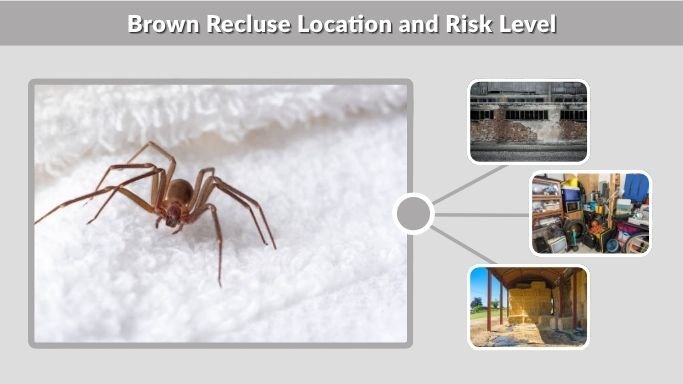
The risk of finding a brown recluse depends heavily on where you live. Someone in Missouri or Arkansas has a higher chance of encountering one than someone in a far coastal state where established populations are not known.
High-Risk Areas
Higher-risk areas are usually within the established range and include places with many indoor hiding spots. Older homes, cluttered storage areas, barns, sheds, and warehouses may provide suitable habitat.
A single spider does not always mean a major infestation. But repeated sightings, especially in storage areas or bedrooms, may suggest a larger indoor population.
Low-Risk Areas
Low-risk areas include regions far outside the natural range. In these places, most brown recluse reports are likely misidentifications. A transported spider may occasionally appear, but established indoor populations are unusual.
If someone in a low-risk area thinks they found a brown recluse, they should confirm the spider before taking action. Local pest control experts, university extension services, or arachnology groups may help with identification.
How to Know If Brown Recluses Are in Your Home
Brown recluse spiders are secretive, so you may not see them often. They hide during the day and become active at night. If they are present, signs may appear in quiet corners or storage spaces.
Possible Signs
Possible signs of brown recluse activity include seeing plain brown spiders in basements or closets, finding irregular silk retreats in dark areas, or catching similar spiders on sticky traps. You may also notice them when moving boxes, cleaning storage rooms, or shaking out old clothing.
Sticky traps can help monitor spider activity. Place them along walls, behind furniture, near storage areas, and in corners. However, the spider should still be properly identified before assuming it is a brown recluse.
When to Get Help
Professional help may be useful if you repeatedly find suspected brown recluses indoors. A pest professional can inspect hiding areas, confirm identification, and suggest safe control methods.
This is especially important if spiders are appearing in bedrooms, children’s rooms, clothing, or shoes. Reducing clutter, sealing gaps, and using monitoring traps may help manage activity.
How to Reduce Brown Recluse Habitat Around Your Home
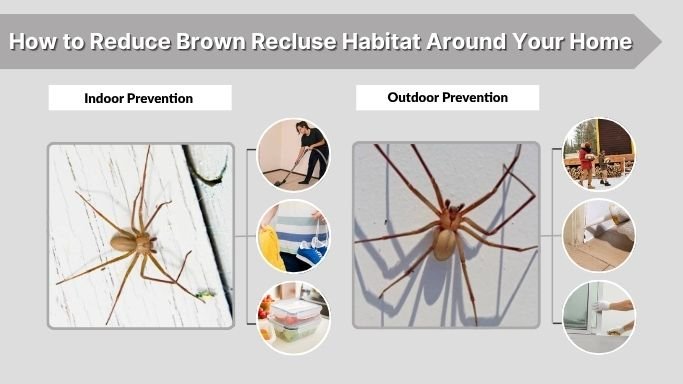
If you live in a brown recluse region, habitat reduction can make your home less attractive to them. The goal is to remove hiding places and reduce insect prey.
Indoor Prevention
Keep storage areas organized and avoid leaving clothing, towels, and shoes on the floor. Use sealed plastic containers instead of cardboard boxes when possible. Move beds away from walls, reduce clutter under beds, and vacuum corners, baseboards, and closets.
Shake out shoes, gloves, and stored clothing before use. This is especially important in garages, basements, and closets.
Outdoor Prevention
Move firewood, lumber, stones, and debris away from the house. Seal cracks around windows, doors, foundations, and utility openings. Install door sweeps and repair damaged screens.
Outdoor lights may attract insects, which can attract spiders. Reducing insect activity near entrances can help lower the chance of spiders moving indoors.
FAQs
Where is the brown recluse spider found?
The brown recluse spider is mainly found in the south-central and Midwestern United States. Its range includes parts of states such as Missouri, Kansas, Oklahoma, Arkansas, Texas, Tennessee, Kentucky, Illinois, Indiana, Iowa, Nebraska, Ohio, Louisiana, Mississippi, Alabama, and Georgia.
Are brown recluse spiders found in houses?
Yes, brown recluse spiders can live inside houses, especially in quiet, dry, dark areas. They may hide in basements, attics, closets, garages, cardboard boxes, shoes, folded clothes, and behind furniture. They are most often noticed when people move stored items.
Do brown recluse spiders live outside?
Yes, they can live outside under rocks, logs, bark, boards, firewood, and outdoor debris. They prefer sheltered places where they can avoid sunlight and disturbance. Outdoor clutter near a home can give them hiding places and may increase the chance of indoor entry.
Are brown recluse spiders found everywhere in the U.S.?
No, brown recluse spiders are not found everywhere in the United States. They have a limited established range. Many reports from areas outside that range are misidentified spiders or rare transported individuals rather than true local populations.
Why are brown recluse spiders often misidentified?
Brown recluses are often misidentified because many harmless spiders are brown and have body markings. People may focus only on color or a dark mark. Correct identification should include location, six-eye pattern, violin mark, plain legs, and body shape together.