







White geese are not only beautiful to look at, but many of them are also prized for their meat, eggs, and calm temperament. From large commercial breeds like the Embden to elegant ornamental types like the Sebastopol, there are several domestic goose varieties that grow up to be fully white. In this guide, you’ll find 14 goose breeds that are completely white as adults, with clear identification points, diet and habitat needs, and answers to common questions like what color they are as babies and when they turn white.
1. Embden Goose
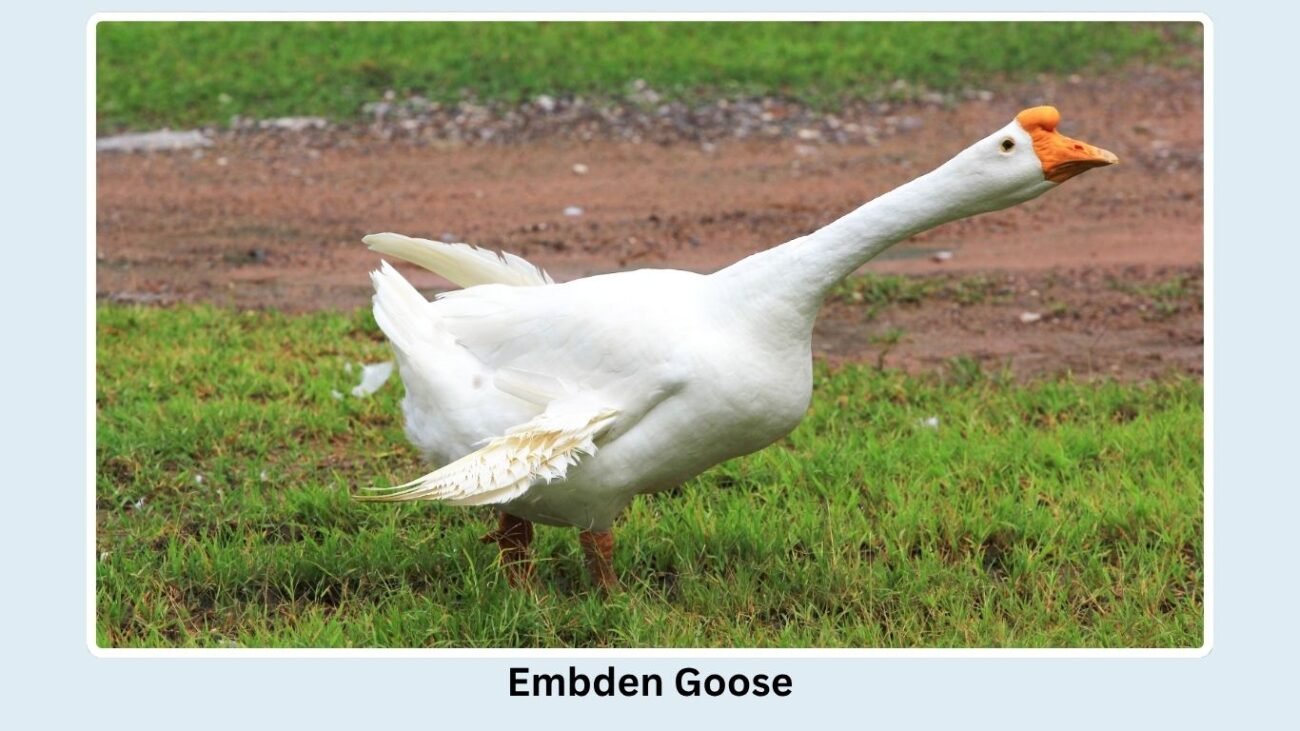
The Embden Goose is a large, all-white domestic breed originally developed in Germany. It’s popular for its rapid growth, impressive size, and pure white feathers. Calm in nature and easy to manage, the Embden is a top choice for both commercial farming and backyard poultry setups.
Identification
- Fully white plumage in adults
- Bright orange bill and legs
- Blue eyes
- Long, thick neck with a deep chest
- Males weigh up to 30 pounds; females around 20 pounds
Diet and Habitat
Embden Geese feed mainly on grass, grains, and leafy greens. They enjoy foraging and grazing in open areas but also benefit from supplemental feed like waterfowl pellets to support growth and health. Access to clean water is essential for digestion and grooming.
They do best in wide, fenced areas with grassy pasture and a nearby water source such as a pond. A secure, dry shelter should be provided for nesting and protection from harsh weather. They adapt well to temperate climates but need shade in summer and shelter in winter.
What Color Are Baby Embden Geese?
Embden goslings hatch with soft yellow down and may show pale gray shading on the back or wings. This faint gray disappears as they mature, giving way to their trademark white feathers.
When Do They Turn White?
White feathers begin appearing at about 3 to 4 weeks old. By the age of 8 to 10 weeks, most goslings are fully covered in bright white feathers.
Do They Stay White for Life?
Yes, once they develop their adult plumage, Embden Geese remain white throughout their lives. If any feather discoloration occurs later, it’s typically due to dirt, staining, or molting—not a natural change in color.
2. White Chinese Goose
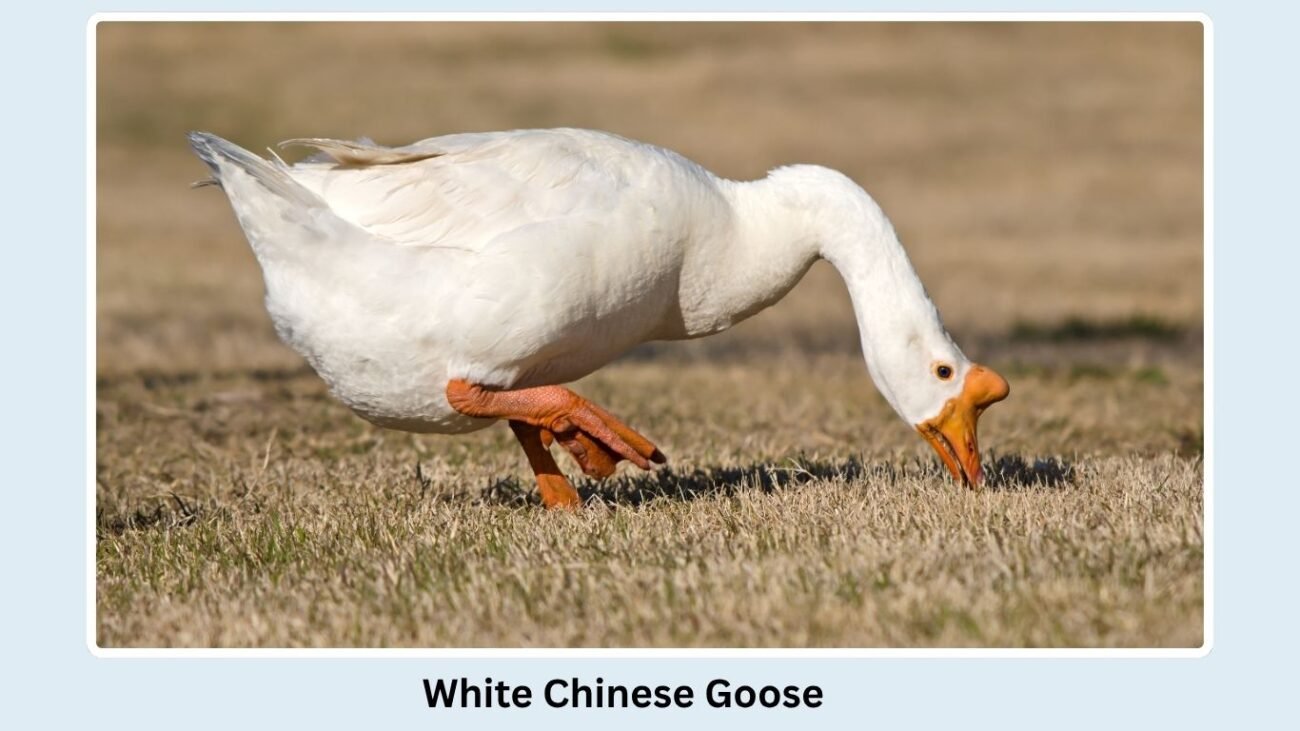
The White Chinese Goose is a slender, elegant domestic breed known for its long neck and loud voice. Originally derived from the wild Swan Goose, it has been selectively bred into a completely white variety with an upright stance and graceful appearance. It’s a popular breed for ornamental purposes and egg production.
Identification
- Pure white feathers
- Long, curved neck
- Prominent black knob at the base of the bill
- Orange bill and legs
- Slim, upright body shape
Diet and Habitat
White Chinese Geese feed on grasses, grains, greens, and aquatic plants. They also enjoy commercial waterfowl feed for balanced nutrition. They are active foragers and will graze throughout the day.
They thrive in open, grassy areas with access to shallow water for swimming and cleaning. Shelter should be provided for nesting, shade, and protection from predators. They are adaptable but require secure fencing, as they are more energetic and mobile than heavier breeds.
What Color Are Baby White Chinese Geese?
Goslings are typically yellow with a slight orange or cream tint. Their bill and legs may already show a hint of orange.
When Do They Turn White?
White feathers begin developing around 2 to 3 weeks old, and most goslings are fully white by 8 weeks.
Do They Stay White for Life?
Yes, White Chinese Geese remain white once their adult plumage grows in. Feather discoloration can occur due to staining but not due to genetic color change.
3. American White Embden
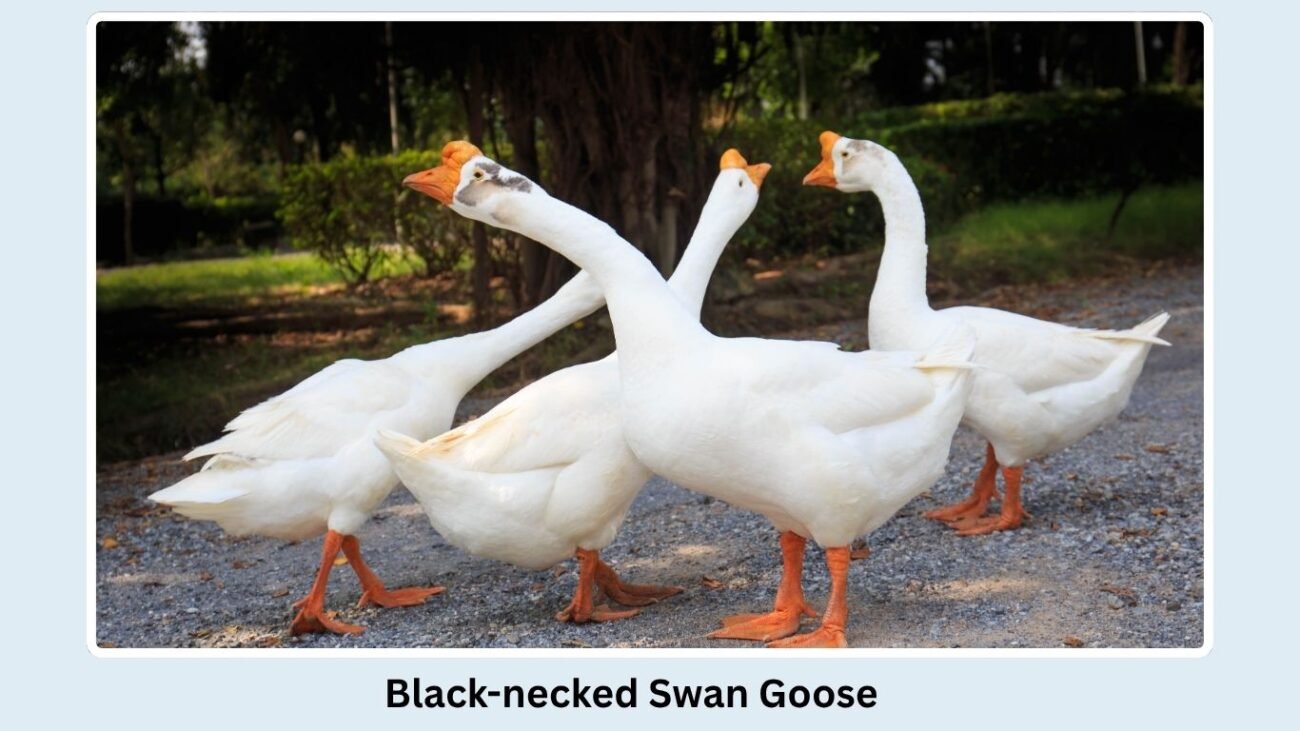
The American White Embden is a regional variant of the traditional Embden Goose, developed and standardized in the United States. It is very similar to the European Embden but may have slight differences in body shape and size. It is raised primarily for meat and show purposes.
Identification
- Bright white plumage
- Strong, heavy body
- Orange bill, legs, and feet
- Blue eyes
- Shorter and slightly more compact than some European lines
Diet and Habitat
They feed on pasture grass, grains like corn and wheat, leafy greens, and commercial feed. Access to fresh water is necessary for digestion and feather maintenance.
They require spacious, grassy areas with clean water access for swimming and preening. A dry, sheltered coop should be available for nesting and roosting. Proper fencing helps protect them from predators due to their heavier, less mobile build.
What Color Are Baby American White Embden Geese?
Goslings are yellow at hatch, sometimes with faint gray markings, especially around the back and wings.
When Do They Turn White?
White feathering begins at 3–4 weeks of age and is usually complete by 9–10 weeks.
Do They Stay White for Life?
Yes, once matured, they retain their white feathers permanently unless affected by dirt, molting, or environmental factors.
4. White Roman Goose

The White Roman Goose is a compact, calm, and friendly breed known for its completely white feathers and tufted or smooth head. Originating from Italy, it is widely kept as a pet or ornamental bird and is also used for meat and egg production.
Identification
- Short, rounded body
- Completely white plumage
- Orange bill and legs
- Blue or brown eyes
- May have a small feather tuft on the head (tufted variety)
Diet and Habitat
White Roman Geese thrive on a mixed diet of grasses, grains, and greens. They benefit from supplemental waterfowl pellets, especially during the breeding season.
They prefer calm, fenced spaces with grassy ground and shallow water sources for bathing. A secure shelter is needed for nesting and protection from weather and predators. They adapt well to backyard settings due to their manageable size and gentle nature.
What Color Are Baby White Roman Geese?
Goslings are yellow and soft when hatched. Some may show a pale beige or cream tint early on.
When Do They Turn White?
They start developing white feathers around 2 to 3 weeks old and are fully white by about 8 weeks.
Do They Stay White for Life?
Yes, White Roman Geese maintain their white coloration throughout life, provided they are healthy and clean.
5. Tufted Roman Goose
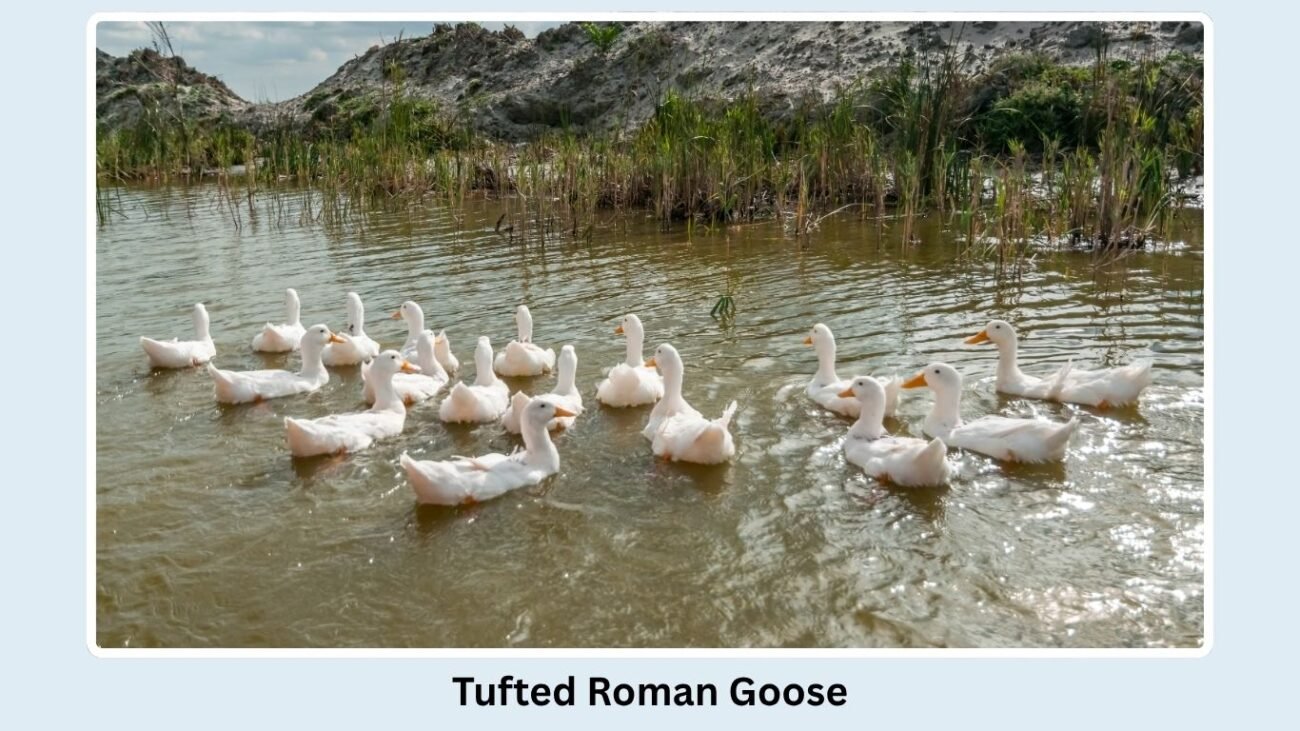
The Tufted Roman Goose is a variety of the White Roman breed, distinguished by a noticeable tuft of feathers on its head. It shares all the core traits of the Roman Goose but is favored for its ornamental look and gentle disposition.
Identification
- White body and feathers
- Prominent feather tuft on top of the head
- Compact, rounded body shape
- Orange bill and feet
- Calm temperament
Diet and Habitat
This breed feeds on a mix of fresh greens, pasture grass, grains, and supplemental feed. They are good grazers and require access to clean water.
Tufted Roman Geese are best kept in small flocks in calm, protected environments with grassy areas. They need shelter for nesting and are well suited for urban or backyard settings due to their small size and quiet nature.
What Color Are Baby Tufted Roman Geese?
They hatch with soft yellow down and often show a tiny feather nub on the head where the tuft will develop.
When Do They Turn White?
White feathers begin forming by the 3rd week, and full white plumage is usually present by 8 to 9 weeks of age.
Do They Stay White for Life?
Yes, they remain completely white, and the head tuft becomes more defined as they mature.
6. White African Goose

The White African Goose is a large, domesticated breed developed from the wild Swan Goose. Though often confused with the Chinese Goose, it is heavier and has a more pronounced dewlap. The white variant is selectively bred and known for its size and distinct knob.
Identification
- All-white feathers in the adult stage
- Large black knob at the top of the orange bill
- Prominent throat dewlap
- Thick neck and heavy body
- Orange legs and feet
Diet and Habitat
White African Geese eat a diet rich in grasses, grains, greens, and commercial waterfowl feed. They need a constant supply of clean water for both drinking and bathing.
They do best in spacious areas with grass and shallow water. A secure, covered shelter is essential for nesting and protection. They are cold-hardy but require shade during hot weather due to their size and thick neck.
What Color Are Baby White African Geese?
Goslings are mostly yellow with a hint of orange or cream, and the dewlap and knob develop more clearly as they grow.
When Do They Turn White?
Feathering starts turning white by the 3rd week. By 9 to 10 weeks, the transformation is complete.
Do They Stay White for Life?
Yes, once mature, they stay white permanently. Occasional feather staining can occur but does not affect their natural color.
7. White Pilgrim Goose (Female)

The White Pilgrim Goose is part of an auto-sexing breed—males are white, and females are gray. However, there are cases where females appear entirely white due to selective breeding or mutation. These white females are rarer and can resemble Roman or Embden geese in appearance.
Identification
- White feathers (in select females)
- Slightly smaller and slimmer than males
- May have pale gray patches in rare cases
- Orange bill and legs
- Calm and gentle temperament
Diet and Habitat
They feed on grass, grains, and leafy vegetables. Their diet should be supplemented with protein-rich feed during laying season.
These geese do well in fenced pastures with access to water and dry shelters. They are ideal for small farms and backyard settings, especially due to their gentle nature and ability to forage well.
What Color Are Baby White Pilgrim Geese?
White female goslings may appear light yellow or cream, but often have a slightly darker tint than their male siblings.
When Do They Turn White?
Feather whitening progresses from week 3 and may take up to 10 weeks for full coloration.
Do They Stay White for Life?
If born white, they typically remain white, although very slight gray patches may appear depending on genetics.
8. White Pomeranian Goose

The White Pomeranian Goose is a rare color variety of the traditional Pomeranian breed, originally from northern Germany and Poland. While the standard Pomeranian is gray or saddleback, selective breeding has produced a pure white strain with the same strong build and utility.
Identification
- Completely white plumage
- Large, rounded body
- Short, stout neck
- Orange bill and legs
- Single-lobed abdomen
Diet and Habitat
White Pomeranian Geese eat a diet of pasture grass, grains, weeds, and leafy vegetables. Supplemental feed improves egg-laying and growth, especially in confinement.
They require open grassy areas for foraging and shallow water for cleaning. A secure, covered shelter is needed for protection and nesting. They tolerate various climates well and are known for their hardiness.
What Color Are Baby White Pomeranian Geese?
They hatch soft yellow, sometimes with very faint pale shading that fades quickly.
When Do They Turn White?
White feathers begin forming by 3 weeks and are usually fully visible by 9 to 10 weeks of age.
Do They Stay White for Life?
Yes, the white variety of Pomeranian Goose remains white throughout adulthood.
9. White Sebastopol Goose

The White Sebastopol Goose is a unique and ornamental breed known for its soft, curly white feathers. Originally from Eastern Europe, this goose is highly prized for its elegant appearance rather than utility.
Identification
- Pure white feathers with long, curly or spiraled texture
- Medium-sized body
- Orange bill and legs
- Blue eyes
- Compact frame and gentle disposition
Diet and Habitat
Sebastopol Geese graze on grass, weeds, and grains. Due to their feather structure, they benefit from a clean, dry environment and require protein-rich feed during molting.
They thrive in well-kept areas with short grass, dry ground, and shallow water access. Because of their unique feathers, they cannot fly well and must be protected from predators and rough terrain.
What Color Are Baby White Sebastopol Geese?
Goslings are fluffy yellow and look similar to other breeds but are identifiable later by early feather curl.
When Do They Turn White?
They begin to develop their white and curly feathers around 4 weeks of age and are usually fully white by 10 to 12 weeks.
Do They Stay White for Life?
Yes, adult White Sebastopol Geese retain their beautiful white, curly feathers throughout life.
10. White Toulouse Goose (Selective Breed)
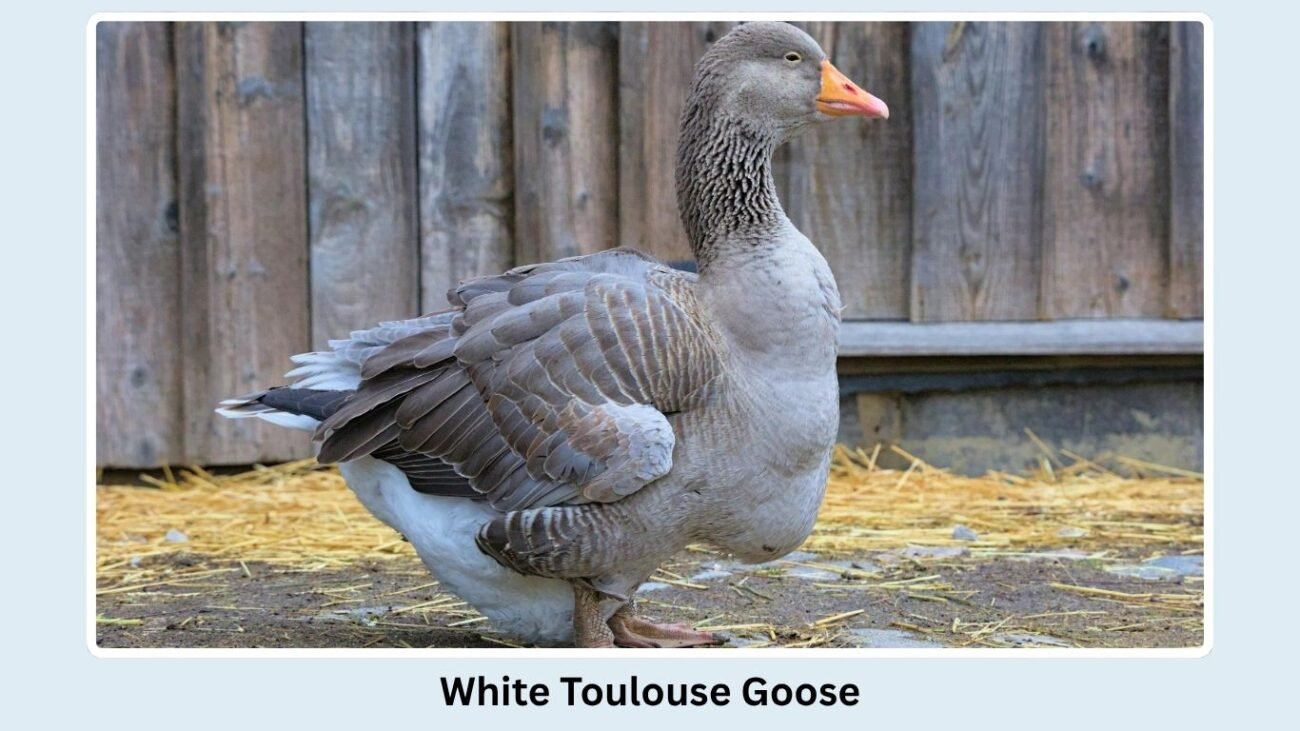
While the traditional Toulouse Goose is gray, a selectively bred white variant exists, developed primarily for ornamental and exhibition purposes. This white Toulouse retains the same heavy build and docile temperament as its gray counterpart.
Identification
- All-white plumage (in the white variant)
- Very large, broad body
- Deep keel and loose skin
- Orange bill and legs
- Gentle, slow-moving disposition
Diet and Habitat
White Toulouse Geese feed on pasture grass, grains, greens, and formulated feed. They need a high-energy diet during cold months due to their heavy size.
They prefer flat, open spaces with ample grass and shaded shelters. Water access is necessary for hygiene but not as essential for swimming. Due to their size, they are not agile and require predator-proof fencing.
What Color Are Baby White Toulouse Geese?
Goslings are typically yellow with a soft texture and often appear larger than other breeds at hatch.
When Do They Turn White?
White feathers emerge around 3 to 4 weeks, and most are fully white by 10 weeks.
Do They Stay White for Life?
Yes, the white form of Toulouse Goose remains completely white throughout its life.
11. Leine Goose (White Variant)
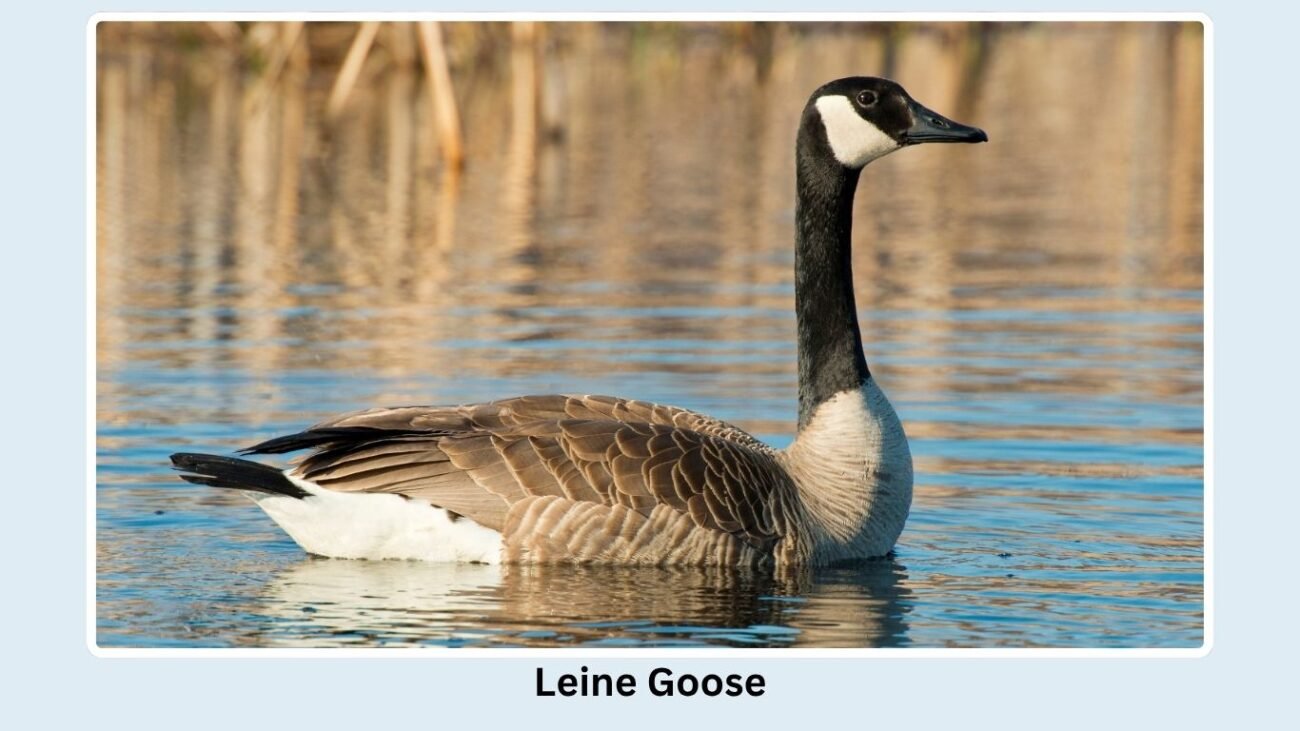
The Leine Goose is a rare German heritage breed, traditionally white. It is valued for both meat and egg production and is known for being hardy and active. Conservation efforts are ongoing due to its endangered status.
Identification
- Entirely white feathers
- Medium-sized, upright body
- Strong legs and sturdy build
- Orange bill and legs
- Active and good foragers
Diet and Habitat
Leine Geese feed well on natural pasture, weeds, and grains. They are independent foragers and can thrive with minimal supplemental feed in the right environment.
They are best kept in free-range settings with access to grassy areas, shallow water, and a dry, ventilated shelter. Their active nature makes them more suited to farms than confined spaces.
What Color Are Baby Leine Geese?
Leine goslings hatch yellow and fluffy, with a fast growth rate in the early weeks.
When Do They Turn White?
They begin turning white from 3 weeks onward and are usually completely white by 9 to 10 weeks.
Do They Stay White for Life?
Yes, the breed maintains its white plumage permanently once adult feathers develop.
12. White Czech Goose

The White Czech Goose is a traditional Central European breed, appreciated for its utility and striking white feathers. It’s known for good egg production, calm behavior, and adaptability to different farm conditions.
Identification
- Pure white plumage
- Medium-sized, well-proportioned body
- Orange bill and legs
- Upright posture
- Calm and friendly disposition
Diet and Habitat
They feed on a mix of grass, vegetables, grains, and commercial feed. Their diet supports both egg-laying and steady weight gain.
White Czech Geese prefer open, grassy spaces with access to water. They adapt well to backyard or small-scale farms, as long as there is secure shelter and protection from predators.
What Color Are Baby White Czech Geese?
Goslings hatch soft yellow, with no noticeable gray or dark marks.
When Do They Turn White?
White feathering starts around 3 weeks and is usually complete by 8–9 weeks.
Do They Stay White for Life?
Yes, they remain fully white once their adult feathers grow in.
13. White Italian Goose

The White Italian Goose is a fast-growing, productive breed developed mainly for meat and egg production. Originating from Italy, it is entirely white and has a slim, clean body structure.
Identification
- Snow-white adult plumage
- Medium to large body
- Orange bill, legs, and feet
- Straight back and firm stance
- Blue eyes
Diet and Habitat
They eat pasture grass, cereal grains, weeds, and commercial waterfowl feed. Their feed intake increases significantly during fattening periods.
They need open fields or paddocks, water access for bathing, and simple, clean shelters. They adapt well to both intensive and free-range systems.
What Color Are Baby White Italian Geese?
They hatch yellow and soft, often with bright orange beaks and legs from day one.
When Do They Turn White?
White feathers develop by the 3rd week, and they are completely white by around 8–10 weeks.
Do They Stay White for Life?
Yes, White Italian Geese remain white into adulthood without any natural color change.
14. White Hungarian Goose

The White Hungarian Goose is a heritage breed used historically in Central Europe for down, feathers, and meat. It is entirely white and has a robust frame with good cold-weather tolerance.
Identification
- Fully white plumage
- Medium-sized, strong body
- Orange bill and legs
- Dense feathering
- Adaptable and hardy
Diet and Habitat
Their diet includes natural forage like grasses and herbs, along with grains and vegetable scraps. They are economical grazers and good foragers.
They are ideal for farmsteads with access to pasture, water, and insulated housing for winter. This breed thrives in cool climates and benefits from protected, dry bedding areas.
What Color Are Baby White Hungarian Geese?
They hatch yellow and fluffy, sometimes with a stronger body compared to other goslings.
When Do They Turn White?
White plumage begins forming around 3 to 4 weeks, reaching full color by 9 to 10 weeks.
Do They Stay White for Life?
Yes, the White Hungarian Goose retains its snow-white appearance for life.


